|
|
|
Anon
Rare Japanese Manuscript: [Kaei Ni-nen Tori-uru Shi-gatsu: Angeria-sen Toraiki. "Record of the Arrival of a Ship from Anglia, Fourth Month of 1849"]
Manuscript record of the unexpected arrival of the British HMS Mariner led by Commander Charles Mitchell Mathison in Japan, in 1849, with interest in making surveys around Edo (Tokyo), four years prior to Commodore Perry's arrival, and during Japan's period of isolation (Sakoku) during which most foreigners were prohibited entry in to the country and locals prohibited exit; containing also a description of Japanese castaway Otokichi who was on the British vessel, disguised as a Chinese to evade capital punishment, who later assisted Admiral James Stirling in establishing the 1854 Anglo-Japanese Friendship Treaty. Text is in Japanese. 8vo. 44 pages in manuscript, plus title page, on 23 unpaginated double leaves. Traditional karitoji binding ("semi-bound" meaning title page and contents without a book cover) string-stitched at spine, fukurotoji style ("bound-pocket" with folded leafs bound into spine), and opening from left to right. Complete in a single volume, measuring approximately 24 x 17 cm. A scant few ink marks to rear leaf margin, indication of some burrowing, unobtrusive to legibility, otherwise in very good condition, beautifully preserved, clean and bright, an exceedingly scarce work. Certainly an assertive manoeuvre, for the British to show up unannounced in the harbour of Edo, Japan was in the state of Sakoku ("locked country"), the isolationist foreign policy of the Tokugawa shogunate under which relations and trade between Japan and other countries were severely limited, and nearly all foreign nationals were barred from entering Japan, while common Japanese people were kept from leaving the country. The long-standing policy had been in place for over two centuries, since 1603, and would last a few more years after the departure of HMS Mariner. It was Commodore Perry in 1853, and his equally brazen arrival with his American Black Ships, that would force the opening of Japan to American trade through a series of treaties called the Convention of Kanagawa, ultimately ending the island's declaration of Sakoku, and facilitating other trade relations with Western nations. On 14 October, 1854, the first limited Anglo-Japanese Friendship Treaty was signed by Admiral Sir James Stirling and representatives of the Tokugawa shogunate (Bakufu). Yamamoto Otokichi (1818-1867), who was onboard HMS Mariner disguised as a Chinese interpreter during the ship's attempted entry in Japan, later played an instrumental role in establishing this treaty, providing Stirling with intel on language and culture during the negotiations. On 26 August 1858, the Anglo-Japanese Treaty of Amity and Commerce was signed by the Scotsman Lord Elgin and representatives of the Tokugawa shogunate for Japan, after the Harris Treaty was concluded. Britain obtained extraterritorial rights on Japanese with the British Supreme Court for China and Japan, in Shanghai. A British iron paddle schooner named Enpiroru was presented to the Tokugawa administration by Bruce as a present for the Emperor from Queen Victoria. A scarce compilation of records from the Japanese perspective on a pre-Perry interaction between Bakufu authorities and a British ship, with references to Otokichi. This manuscript collates four Japanese reports of the British ship the HMS Mariner, which arrived in Japan from Shanghai in May of 1849 to make a topographical survey of the area around Edo (modern-day Tokyo), led by Commander Charles Mitchell Mathison, who had entered the Royal Navy on 5 August 1819. The event marks a very early British appearance at Japan, also pre-dating by four years the imposing arrival of Commodore Perry and his American Black ships also intent on making surveys. The first record briefly describes the layout of the Mariner and the aim of its visit to Japan. It also mentions the considerable Japanese language abilities of the Chinese interpreter on board who explained things in a way that is easy to understand, he in fact being the Japanese castaway Yamamoto Otokichi (1818-1867). The second section records foreign ship sightings from daimyo with guardhouses on the Miura Peninsula. [daimto were the most powerful landholding magnates holding the largest sections of land] The third report describes the meeting of Commander Mathison and the Bakufu intendant Egawa Tarozaemon (1801-1855), a dispute over a map of Japan, and Japanese observations of the ship and the crew. The last report is a copy of Isenokami Abe's (Masahiro Abe: 1819-1857) message to the bugyo (magistrates) and metsuke (censors/inspectors) in which, with HMS Mariner in mind, he expresses concern about the increase in the number of foreign ship arrivals in recent years and the abandoning of the Edict to Repel Foreign Ships. Abe notes that if the edict is enforced again, while there is no illegality on the part of the foreign ships, a dispute could arise, thus cautioning the noble families on the coast to prepare defenses. [Only a few years after the arrival of HMS Mariner, Isenokami would play a major role in the signing of the Convention of Kanagawa, as a result of pressure from the Perry Expedition.]
|
|
|
Anon
Rare Slavery Document: Wisselbrief [Bill of Exchange, Promissory Note].
A numbered (278) and printed document granting financial compensation to a slave owner in Suriname, by the Dutch government, signed in the original by numerous parties including the Gouverneur de Kolonie Suriname [Governor of Suriname] Van Lansberge, the Administrateur van Financienvan Het Ministerie van Kolonien te s-Gravenhague [Finance Administrator for the Ministry of the Colonies, at The Hague], and the recipient of the funds who is not only a slave owner but well-known chirurgeon A.D. Charlouis. Text is in Dutch. With steel engraved colonial coat of arms, official ink stamps, the embossed stamp of the "Klein Kolonie Suriname" government. Single leaf measuring approximately 26,5 x 13 cm. Very good condition, beautifully preserved, a scarce and historical slavery document with notable signature. The present document is interesting, as is was made almost two years after the official abolition of slave ownership in Suriname, which reveals the lengthy time period over which this process was stretched. The government's primary concern was not the freedom of the enslaved people; it was the preservation of the plantation economy, lest there be a mass exodus of workers leaving the plantations. The latter was cited as the reason and justification for the mandatory employment contract which accompanied 'free status' of a slave. Chirurgeon Andries Daniel Charlouis (Emden, Lower Saxony 1820 - Paramaribo, Suriname 1880) is the recipient of this compensation. Historical evidence reveals that he had more slaves than what is represented with this document, and that he released them gradually. He was well-known in the field of medical science, particularly for his studies on medicinal matters and the indigenous people of South America; his name appears in numerous medical journals of the period. Reinhart Frans Cornelius van Lansberge (1804-1873), whose signature authorizes this document, was the Governor-General of Suriname from 1 August 1859 to 29 June 1867. Slavery was abolished in the Dutch West Indies during his governorship. Previous to this post, he was Governor of Curacao from 1855 to 1859, and formerly Dutch Consul-General Venezuela. Doctor Charlouis, whose original signature is found to verso, received 1935 guilders with this promissory note effective 15 August 1865. This figure represents the release of approximately 6 slaves. A manuscript annotation to upper left margin, penned in a West Germanic language, refers to the abolition act: "Opheffing der slavernij... 1863" [Elimination of slavery... 1863]. Red ink annotations reveal that this document was registered on 16 September 1865, and signed by a Geregistreerde referendaris J.C. Jaunen [registered secretary]. Additional annotations to the upper margin suggest that the funds were cashed in on 16 October 1865 "Betaalbaar te Amsterdam" [paybale to Amsterdam]. Also interesting to note, two of the signed annotations to verso, those of Charlouis and a witness, make reference to German plantation owner, banker Wilhelm Eduard Ruhmann at Paramaribo. As such, this transaction was most likely transacted at Surinaamsche Bank which had been founded earlier the same year, and the funds dispatched from there to the Dutch government in The Netherlands. The Netherlands abolished the Atlantic slave-trade in 1814. However, localized slavery continued for over half a decade. Slavery was finally abolished in Suriname and the Dutch West Antilles on 1 July 1863 with the Emancipation Act. On that day, about 35,000 slaves in Suriname and 12,000 slaves on the Dutch islands in the Caribbean were given their freedom, or rather a modified version of freedom. Freed men in Suriname come under state supervision for ten years with a mandatory employment contract on the plantations. The slave owners received financial compensation from the government upon releasing their slaves to this system. The Dutch government paid 300 guilders per slave to the owner for the "lost property". (In the Dutch East Indies, payments were far lower, 50 to 350 guilders depending on the age of the slave). The abolition of slavery was referred to as 'emancipation'. Parties were organized in which King William III was presented as a key figure and benefactor of the freed slaves.
|
|
|
Anon
Zokui Yosan Shinron. [Additional New Theories on Sericulture]
Historically significant and exceedingly scarce nineteenth century Japanese treatise on sericulture (the making of silk), by the man who remembered as "the father of modern sericulture and silkworm rearing methods", describing and illustrating his then revolutionary methods for better nurturing of the silk worms from which the fine thread is harvested, and ultimately producing higher quality silk, the inventions having become the standard for the industry and still employed today, produced in woodblock print. 8vo. 3 volumes, 278 pages combined, plus publisher's details to yellow frontis leaf in first volume. The complete text, illustrated with 10 pages of wood printed illustrations, two of which are fully hand coloured, and two being partially hand coloured. Traditional karitoji binding ("semi-bound" meaning title page and contents without a book cover) string-stitched at spine, fukurotoji style ("bound-pocket" with folded leafs bound into spine), and opening from left to right. Black paper covers, with title label to front, the first volume with a red ink stamp to publisher's detail leaf. All text is in Japanese. Together the volumes measure approximately 14,5 x 22 x 3 cm. Minor wear to boards, otherwise very good and original condition, internally bright, a pleasing historic work dealing with silk production in Japan. Tajima Yahei (1822-1898) was an influential silk farmer in the early Meiji period, whose legacy is that of a tremendously prosperous impact on the sericulture industry of Japan, with his development of a ventilation theory and method which proved to be highly successful and subsequently laid the foundations for modern sericultural production, and the most efficient design of a sericulture space. He had a small laboratory where he researched silkworm hybridization and silkworm diseases with the aid of a microscope, which was unusual in Japan at the time. Yahei's experiments in creating an ideal sericulture space led to his invention of a new sericulture theory and technique, the seiryo-iku. He concluded that sericulture is best carried out in a space with efficient cross ventilation, which includes a roof system and openings on four walls. He perfected these procedures at his own home, the farmhouse known as 'omoya' built in 1863, referred to today as the Tajima Yahei Sericulture Farm (Tajima Yahei kyu-taku), which is located in the Sakaishima neighborhood of the city of Isesaki, in the southern part of Gunma Prefecture. Silkworm growers travelled from far and wide to observe and learn the techniques and processes developed and implemented on this revolutionary farm. Yahei was also involved in exporting silkworm eggs and earned large profits from it. Yahei's techniques later became a foundation for the secchu-iku theorized by Takayama Chogoro, founder of Takayama-sha Sericulture School, which acted as a training centre and formal education institution for sericulture. Yahei also became one of the leading figures who developed the village of Shimamura through his achievement in sericulture. Born in 1822 as Tajima Kuniyasu and Yahei (the second), throughout his childhood, he travelled to advanced sericulture areas with his father in order to gain skills and experience in silkworm breeding, production and sales. Yahei's silkworm farm is one of the earliest examples of architecture specifically designed to improve sericulture.
|
|
|
Anon.
Banpaku Shimoda nyuko kikigaki. [Oral Accounts on Foreign Ships which Entered Shimoda Port.]
Invaluable manuscript chronology of the earliest ships entering the port of Shimoda after the implementation of the Japanese-American treaty which opened up foreign trade with the previously isolationist nation, covering two years from February 1854 to February 1856, presented in the meticulous hand of a contemporary observer who compiled firsthand information as well as his own, together with a manuscript drawing of a Dutch sea captain in naval attire, made by Kitajima Toen. Manuscript: 8vo. 30 pages plus titled cover, string-tied at center of spine with rolled up paper, opening from left to right, measuring approximately 17 x 24 cm. Text is in Japanese, with occasional annotations in red ink. Drawing: Single leaf measuring approximately 24 x 33 cm, titled and signed in manuscript, with red ink stamp. Some creasing and indication of burrowing, otherwise in very good and original condition, clean and bright internally, an invaluable log of the earliest trade activity from the onset of the Convention of Kanagawa. With precise details, the writer keeps a record of vessels from America, Russia and France, arriving at Edo Bay, beginning with the return of Commodore Perry in February 1854 for the signing of what would be the Kanagawa Treaty, and continuing for two full years, featuring descriptions of the ships including dimensions and armament, repairs and supplies procured, captains' names and crew sizes, and their activities in Shimoda. This document is not only an invaluable historical log of the first and most significant foreign vessels to interact with Japan during the formative years of the Unequal Treaties, it may have been used in the Japanese study of foreign ships for their own benefit. Immediately after bowing to the demands of the powerful Western ships and their commanders, an active assimilation of Western technological advances in warships ensued in the Japanese Navy. In 1855 Japan acquired its first steam driven warship, and in 1857 its first screw driven warship. Japanese Naval students were sent abroad to naval schools in England, France, the Netherlands, and the like. By the end of the Tokugawa Shogunate in 1867, its navy would possess eight western-style steam warships. The first vessels mentioned in the manuscript are from Perry's daunting and expanded 'Black Ships' fleet, including the Mississippi which had been one of the original four, as well the Vandalia, the Southampton, the Powhatan, and the Supply, the latter of which joined the squadron after the actual landing on 8 March. The Russian vessels being described in 1854, include the Russian Imperial Navy flagship frigate 'Diana' commanded by Vice-Admiral Euphimy Vasil'evich Putiatin, and possibly his former flagship frigate 'Pallada' which had been performing survey missions around the Japanese coast since 1853 and whose crew was transferred to Diana upon her arrival. The crew members of the Diana are listed by name, including her Imperial Navy officers, a cook, a waiter, and an interpreter. The earliest French vessel to arrive after Commodore Perry's successful treaty implementation, was a cruiser that arrived in Shimoda in February 1855, being 'Le Lion' which also landed at the Ryukyu Islands with the French missionaries from the 'Missions Étrangères de Paris', Girard, Furet and Mermet, hoping to discuss their interests in evangilizing. Catholicism was strictly forbidden in Japan. They also landed at Naha, the main port of Okinawa, on 26 February. The cruiser was denied any official communication as a formal agreement did not exist between France and Japan. On this voyage, Father Louis Théodore Furet, an apostolic missionary, carried out instrumental observations at Nafa [Naha, Okinawa] on the Ryûkyû Islands. A set of the meteorological manuscripts by Father Furet was given to Jean Barthe, the physician onboard the French frigate 'La Sibylle', who forwarded them to the 'Académie des Sciences' in Paris and to the 'Société Météorologique de France'. Meteorological observations were also carried out by Jean Barthe from 'La Sibylle'. Although negotiations were denied, the two French warships were permitted at the port of Hakodate, in Hokkaido, and members of the crew of La Sibylle who suffered severely from dysentery and scurvy received medical aid and food in a Buddhist temple. In Spring 1855, France sent an embassy under Commander-in-Chief of the French Oriental Naval Force, Captain Nicolas Francois Guerin, commanding the French warship 'La Virginie', in order to obtain similar advantages to those of other Western powers. Guerin is known for playing the primary role on behalf of the French, in pressing for, obtaining the first negotiations, and then signing a Treaty of Amity between France and the Ryûkyû Kingdom.
|
|
|
Anon.
Illustrated Latin Manuscript Leaf, Hand Painted With Symbolism of Anti-Slavery, Introducing an Early Work of Translation by a Franciscan Friar of the Third Order.
Manuscript leaf introducing an early work of translation by a Franciscan Friar of the Third Order, hand painted in full colour and featuring fascinating symbolism. Text is in Latin. Leaf measures approximately 34 x 49 cm. One soft fold, minor age-toning, otherwise in very good condition, a beautifully preserved hand painted document made at the turn of the 18th century. The present document suggests that as membership of the Franciscan Third Order grew rapidly, and no formal papal education was being received by those preaching in the streets, there was a need for some form of instruction or guidance. As such, some of the key and simple canonical documents began being written for the laymen/women to understand the principles. The symbolism features intimation of anti-slavery. Purposed with works of teaching the gospel, providing charity, and social well-being for the public, early members of the Franciscan Third Order were a community focused on truth and humility, striving to emulate Christ and model a pure life. The symbolism in the manuscript illustration of the present document is fascinating and enlightening, in particular the focal image top and center. This is an armorial motif depicting slavery, rather the Catholic church's purported desire to slavery. Unlike the standard Moor's head seen in the papal coat of arms seen since early days, the imagery here features an African tribal warrior chief, all seen but his legs, with a confident stance and holding a spear up high in declaration; this is drawn inside of a gold shield topped with the pope's mitre simplex headdress. As a whole, this could be interpreted as the Franciscan Third Order's support to abolish slavery. Some of the more common instances of symbolism are the red ribbons to signify the Blood which Christ, and the laurel leafs in a circular placement as in the ancient Greek custom of symbolising victory, honor, and peace, in this case being victory over sin, honor to the Holy one, and peace on earth. There are also two large gilt fleur-de-lis, which is often said to from 1244 in the arms of the Kings of France, although clearly used earlier as this document precedes the latter event by 40 years. In early Catholic-based examples such as the present leaf, the fleur-de-lis is believed to represent either the Trinity, or the lancehead of a spear such as which would have pierced the side of Jesus on the Cross. Manuscript
|
|
|
Anon.
Manuscript Watercolour Map Illustrating the Village of Ashinazawa Tamayamababa and Its Environs, Depicting Japanese Samurai Horse Breeding Grounds
Large manuscript watercoloured map to illustrate the village of Ashinazawa Tamayamababa and its environs (in present-day Morioka, Iwate Prefecture), showing lands used by samurai of the ruling Nanbu Clan for raising and breeding horses, also highlighting three mountains in relief by way of tipped-in folding cutouts. Place names and text is in Japanese. Signed in manuscript by a Samurai named Sakura Baba, as well as three other notable officials. Map measures approximately 135 x 82 cm. Some creasing, otherwise in very good condition, a very unique manuscript painted map from the feudal Morioka Domain. The village shown is Ashinazawa Tamayamababa, situated within 30 km from Morioka, which was then the Morioka Domain (Morioka-han), a tozama feudal domain of Edo period, under the rule of the Nanbu Clan (Nanbu-shi) of samurai whose territory spanned most of northeastern Honshu in the Tohoku region. [Today, Morioka (Morioka-shi) is the capital city of Iwate Prefecture located in the Tohoku region of northern Japan. Ashinazawa is considered part of the Morioka district.] Ashinazawa Tamayamababa is also near, only 90 km, from Kakunodate (in present-day Akita Prefecture), also a former castle town and samurai stronghold. While Kakunodate Castle no longer remains, the town is famous for its samurai tradition and its hundreds of weeping cherry trees (shidarezakura). Apart from the loss of its castle, Kakunodate remains remarkably unchanged since its founding in 1620. The town was built with two distinct areas, the samurai district and the merchant district. Once home to 80 families, the samurai district still has some of the best examples of samurai architecture in all of Japan. Among the hills and near the village, some rather expansive horse-breeding fields are drawn on the map, presumably belonging to or at least managed by the Nanbu-shi samurai who signed the document. The horses would have been used by samurai warriors for military equestrianism, including bajutsu (a distinct form of martial art), for yabusame (mounted archery), and other practices of skilled battle on horse-back. Three mountains illustrated two-dimentionally, are all stratovolcanos forming part of the Ou Mountain range in the Tohoku region of northern Honshu. They appear to be illustrating Mount Iwate - the active volcano situated only 22 km from Ashinazawa, Mount Hachimantai - the highest peak in the Ou Mountains and only 46 km from Ashinazawa, and the active stratovolcano Akita-Komagatake located some 70 km from Ashinazawa. In red paint, several roadways are delineated, one of them reaching and following the summit line of one of the mountains. At the head of one of these roads, is a drawing of a cherry blossom trees, and an inscription which likely reads 'sakura', the term for of a group of cherry blossom trees, collectively. The flow of the Kakkonda and Shizukuishi rivers into the Kitakami is traced from the hills. In the distance, on the opposite side of the mountain ranges, a larger river is drawn, depicting the wider Tama River, which would eventually lead to Lake Tazawa. The Akita-Komagatake region is exceptionally lush, with several hundred species of alpine flora and would surely be an excellent place for horses to graze. Mount Hachimantai is especially characterized with hot springs, possibly being used as a source of warm water for cleaning or healing. In general, the vast region would be superb as a horse breeding ground. Horsemanship was an important duty and respected skill of the samurai. There were two classes of Samurai, and only upper-class samurai were allowed horses, although the lower class samurai who could find a way to possess their own horse, did so, with the belief that every samurai should have the honour and the benefit. Being on horse-back aided in part to best perform archery, spearmanship, and swordsmanship in battle. Horse-mounted samurai often fought by charging their horses at their opponent, in some cases causing a collision that would unbalance or even injure the other's steed.
|
|
|
Anon.
Shozoku Chakuyo Zu [illustration of Garments] - Traditional Japanese Samurai Attire.
An outstanding illustrative work to record the details of traditional Japanese samurai attire, produced by Imaizumi Sadasuke, a scholar of the Kokugaku movement which emphasized Japanese classical studies who evidently researched the works of the eighteenth century noble Heizo Sadatake Ise. Woodblock print. The complete work. 8vo. 2 volumes, opening from left to right, 40 pages combined, with 35 woodcut images, all of which are beautifully hand-painted in full colour. Text is in Japanese. Each volume with red ink stamp to margin of first leaf, and title noted in manuscript to bottom fore-edge. In publisher's original yellow striped paper boards, each volume with title slip to front. Traditional karitoji binding ("semi-bound" meaning title page and contents without a book cover) string-stitched at spine, fukurotoji style ("bound-pocket" with folded leafs bound into spine), and opening from left to right. Each volume measures approximately 18 x 25 x 1 cm. Indication of additional small label removed from covers, otherwise in very good and original condition, a stellar work with vivid, meticulously coloured, woodcut illustration, internal crisp and clean. Striking woodcut illustrations of samurai clothing, painted with such meticulous detail to bring depth and vibrant colour, each featuring explanatory text, numerous styles are shown. Variants between the social classes are explained, ranging from lower samurai with simple garments and accoutrements such as banners and ogi (folding fan), to upper officers whose kimono was made of the highest quality decorative fabric and who carried various military arms including the katana (curved sword), the tachi (traditional sword). We also see the shaku - a narrow board held in the right hand when one wears sokutai - traditional ceremonial court dress. Based on the hand-painted manuscript scroll produced in Anei 8 (1779) by Japanese noble and scholar Heizo Sadatake Ise, and his famous guidebook for samurai, the present work serves as a vestige of hereditary eminence. Imaizumi Sadasuke (1863-1944), sometimes seen as Imaizumi Teisuke, was a Kokugaku scholar, an educator and shintoist of the Meiji, Taisho and Showa periods.
|
|
|
Anon. - Japan
Large Japanese Woodblock Broadside Illustrating the Arrival of Commodore Perry's Four American Vessels at Uraga in 8 July 1853.
Woodblock "kawaraban" broadside illustrating the arrival of Commodore Perry's four American vessels at Uraga in 8 July 1853, featuring a prominent stylized portrait of Perry himself and one of his formidable "black ships". All text is in Japanese. Thin hand-made laid paper measuring approximately 35,5 x 27cm. Small tears at folds and margins, some professional repair to verso, otherwise in very good condition, with clear imagery. A pleasing example of an uncommon variant. A contemporary broadside to alert Japanese civilians of the arrival of Commodore Perry's formidable American vessels. News was travelling fast by word of mouth along the coast and trade routes, and also began being illustrated with the "kawaraban" - broadsides with woodblock prints - for distribution. Naturally, Edo commoners were curious to learn about the imposing vessels that suddenly appeared within sight of their city.] The Japanese named the American vessels "kurofune" (black ships) for the colour of the hulls which were covered in tar and for the black smoke from the coal-fired steam engines. four "Black Ships"
|
|
|
ANONYM TALE. E. Huseynov
Sengülüm süngülüm mengülüm. [LATINIZED TEXT IN TURKEY TURKISH]. Illustrated by E. Hüseynov. Translated by E. Emiraslan.
Very Good Turkish Paperback. Oblong large demy 8vo. (16 x 22 cm). In Turkish (Latinized Turkey Turkish). [20] p., color ills. Printed in Soviet Azerbaijan in Turkey Turkish. A traditional anonym folk tale from Azerbaijan. One of 3000 copies. Extremely rare. No copy in OCLC and Azerbaijan libraries.
|
|
|
Anonymous
A Knack to Know a Knave
Oxford College: Malone Society Reprints 1964 Uncut unpaginated original facsimilie of title page dated 1594. Malone Society Reprints hardcover
Referencia librero : 2016
|
|
|
Anonymous
Dictionary Cambodian - English English - Cambodian
<p>Co So Xuat Ban Dai Nam. Hardcover. Good . Green cloth hardcover in glassine dust protector. No date or author listed appears to be from the early 70's. Wear at the spine tips and minor bumping at the top edge of the boards. Top board slightly bowed. Interior clean and unmarked other than ESL stamps to the endpapers. Binding and hinges solid. Glassine wrapper is somewhat soiled but nicely fit to the book and keeps it clean. 358 pp.</p> Co So Xuat Ban Dai Nam hardcover
Referencia librero : 328

|
|
|
Anonymous
English as She is Wrote Showing Curious Ways in Which the English Language May be Made to Convey Ideas or Obscure Them. a Companion to "English as She is Spoke."
NY: D. Appleton & Co. Good with no dust jacket. 1883. First Edition. Original Wraps. Original DJ is present. This is a parchment or vellum covering over the wraps. Upper 1/3 of the book is stained. Cover is Uniformly browned/soiled. Appears to be aged vellum A pencil mark on the upper front cover.; 4 1/2x6 . D. Appleton & Co. paperback
Referencia librero : 12
|
|
|
anonymous
HISTOIRE DES GIRONDINS 2 VOL SET - COMPLETE
not stated c. 1860. Hardcover. Very Good. 6 1/2 x 9 1/2 in. Half brown morocco with marbled paper boards matching marbled sides to text block. 5 raised bands and gilt lettering on spines. Author and printer not stated. Condition is VERY GOOD ; mild edge wear leather very good gilt bright. Paper boards lightly rubbed. Bindings tight and text very clean no markings. Text in French. RGR. not stated hardcover
Referencia librero : 11005

|
|
|
Anonymous
Telltale The
Oxford College: Malone Society Reprints 1960 119 pages uncut. Malone Society Reprints hardcover
Referencia librero : 2017
|
|
|
Anonymous
Zum Goldenen Jubiläum der evang. luth. Evangelisch Lutherische Dreieinigkeits - Gemeinde zu Middle Village L I Long Island am 8 Juni 1913 Datum des Brandes der Kirche 8 Juni 1906
Middle Village L I Long Island NY: Evangelisch Lutherische 1913. Bound in the original tan wrappers. Front cover separated but present. Edges chipped. Rear wrapper perished. Tied scrapbook style with a gold cord. Internally Good-Very Good. Oblong 4to. 12" wide by 10" tall. Contains 8 pages of text in German 18 pages of mounted photos. Photos of: Neue Kirche 1907; Pastor D. W. Peterson seit 1880; Pastor F. W. A. Ernst 1863-1868; Pastor T. Korner 1868-1871; Pastor G. H. W. Quern 1872-1879; Kirchenrat und Jubilaums Kommittee; Inneres der Neuen Kirche; Orgel; Taufstein; 10 photos of stain glass windows e. g.: Das Scherflein der Wittwe; Bergpredigt; Herr ich Versinke; and Frauenverein Gliederzahl 110. Keyword: Long Island NY Evangelical Lutheran Church. First Edition 1. Auflage. Soft Cover. Fair-Good condition. [Evangelisch Lutherische?] Paperback
Referencia librero : 014599
|
|
|
Anouilh, Jean
Becket
In French Clean Copy
|
|
|
Ansari, Khizar Humayun & Jackson, June
Managing Cultural Diversity at Work (Better Management Skills S.)
Appears unread. Trace of label removal inside front board. No other marks or inscriptions. No creasing to covers or to spine. A very clean very tight copy with bright unmarked boards and no bumping to corners. 127pp. a study of the factors which affect an organisation's efficiency as a multicultural entity. Covers recial discrimination, language barriers, preferential promotion, different behavioural norms and religious customs.

|
|
|
Anselmo Giovanni, Art & Language, Boetti Alighiero, Buren Daniel, Darboven Hanne, Dibbets jan, Fulton Hamish, Long Richard, Merz
De Europa
John Weber Gallery New York 1972. paperback. fine. John Weber Gallery, New York unknown
Referencia librero : OP-0622

|
|
|
ANSTEY, F
A Bayard from Bengal. Being some account of the magnificent and spanking career of Chunder Bindabun Bhosh, Esq., B.A., Cambridge, by Hurry Bungsho Jabberjee, B.A., Calcutta University, author of 'Jottings and Tittlings', etc., etc. , to which is appended the parables and proverbs of Piljosh, freely translated from the original Styptic by another hand, with introduction, notes and appendix by the above Hurry Bungsho Jabberjee, B.A., the whole edited and revised by F. Anstey. (Reprinted from 'Punch').
London, Methuen, 1902. 14, 137 S., 1 Bl., 40 S. Anz. Mit 8 Taf. OLwd.
Referencia librero : 1095299
|
|
|
Anthony Bulger J.-L. Goussé
Englisch in der praxis
Assimil 1998 666 pages 17 8x2x11 2cm. 1998. Broché. 666 pages.
Referencia librero : 500132783

|
|
|
Antonio Rigo, Niccol Zorzi (eds)
I libri di Bessarione. Studi sui manoscritti del Cardinale a Venezia e in Europa
, Brepols, 2022 Hardback, 432 pages, Size:216 x 280 mm, Illustrations:80 b/w, 4 col., Language(s):Italian, English, French. ISBN 9782503589534.
Referencia librero : 65054
|
|
|
Antal, L. (Hrsg.)
Aspekte d. Semantik. Zu ihrer Theorie u. Geschichte 1662-1970.
(Frankfurt/.M.), Athenäum, (1972). IX, 348 S. OPp. Bibliotheksex. m. Sign. a. Umschl. St. a. Vorsatz.
Referencia librero : 154865
|
|
|
ANTEL, Jacques.
Le Tout de mon Cru.
in-8, 183 pp., broché, trou circulaire au 1er plat (en accord avec le titre). Bel exemplaire. [CA28-2] 500 contrepèteries originales… suivies de leurs solutions figurées.
|
|
|
Anthologie, JUdische
Jisrael Volk und Land
German language hardcover (no jacket) in good condition. The hardcover is tanned and worn with bumped and frayed spine ends and leading corners. 1-2cm splits on the rear spine side. Light tanning and foxing on the page block and some pages. The FEP has been removed. Minor creases on a few pages. The binding is sound and the text is clear. CM Used
|
|
|
Anthon, Charles
A Grammar of the Greek Language for the Use of Schools and Colleges
NY: Harper & Brothers. Very Good with no dust jacket. 1843. First Edition; Second Printing. Hardcover. Bound in the original full leather. Rubbing at the edges and one signature toward the rear has been bumped at the upper corner one section of pages have been bent. ; 8vo 8" - 9" tall; 284ads pages . Harper & Brothers hardcover
Referencia librero : 26134
|
|
|
Anthon, Charles
Q. Horath Flacci: Opera Omnia
Hardcover, half-bound in brown leather with 5 shallow raised bands, gilt decoration and 2 title pieces to the spine. Text in Latin. Previous owner's details penned to second end page. Further penned and pencilled annotations to blank internal pages and some marginalia alongside the text. Board edges are worn; boards and spine have a few marks. Spine and binding are tight and straight. AD Used
|
|
|
Antia, Bassey Edem
Terminology and Language Planning An Alternative Framework of Practice and Discourse
John Benjamins Publishing Co. Fine with no dust jacket. 2000. First Edition. Hardcover. 1556197713 . Tight clean bright unmarked book with tiny bump to lower corners. ; Terminology and Lexicography Research and Practice; 0.8 x 8.8 x 6.1 Inches; 264 pages . John Benjamins Publishing Co hardcover
Referencia librero : 24110 ISBN : 1556197713 9781556197710

|
|
|
Antimachus; Bernhard Wyss (Ed )
ANTIMACHI COLOPHONII RELIQUIAE; Collegit Disposuit Explicavit Bernhardus Wyss ; Adiecta Est Tabula
Weidmann. 1974. Hardcover. Very Good in No Dust Jacket dust jacket. Light discoloration to spine and part of front board.; Text in Greek; prefatory notes and commentary in Latin. Reprint of 1936 edition.; 106 pages . Weidmann hardcover
Referencia librero : 11854
|
|
|
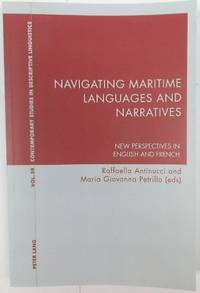
Antinucci, Raffaella; Petrillo, Maria Giovanna (eds)
Navigating Maritime Languages and Narratives: New Perspectives in English and French Contemporary Studies in Descriptive Linguistics Volume 39
Oxford: Peter Lang 2017. Paperback in like new condition. New shop stock with minor shelf wear no other faults. TA. Paperback. New. Used. Peter Lang Paperback
Referencia librero : 527083 ISBN : 1787073874 9781787073876
|
|
|
Antinucci, Raffaella; Petrillo, Maria Giovanna (eds.)
Navigating Maritime Languages and Narratives: New Perspectives in English and French (Contemporary Studies in Descriptive Linguistics, Volume 39)
Paperback in like new condition. New shop stock with minor shelf wear, no other faults. TA Used
|
|
|
Antiphon, Andocides; Michael Gagarin & Douglas MacDowell (translated by)
ANTIPHON & ANDOCIDES
Spine slightly sunned else book is fine. ; Xxvii, 174pp. This volume contains the works of the two earliest surviving orators, Antiphon and Andocides. Antiphon (ca. 480-411) was a leading Athenian intellectual and creator of the profession of logography ("speech writing") , whose special interest was law and justice. His six surviving works all concern homicide cases. Andocides (ca. 440-390) was involved in two religious scandals—the mutilation of the Herms (busts of Hermes) and the revelation of the Eleusinian Mysteries—on the eve of the fateful Athenian expedition to Sicily in 415. His speeches are a defense against charges relating to those events. ; Oratory of Classical Greece Volume 1; 174 pages
|
|
|
Antiphon, Andocides; Michael Gagarin & Douglas MacDowell (translated by)
ANTIPHON & ANDOCIDES
Spine slightly sunned. ; Xxvii, 174pp. This volume contains the works of the two earliest surviving orators, Antiphon and Andocides. Antiphon (ca. 480-411) was a leading Athenian intellectual and creator of the profession of logography ("speech writing") , whose special interest was law and justice. His six surviving works all concern homicide cases. Andocides (ca. 440-390) was involved in two religious scandals—the mutilation of the Herms (busts of Hermes) and the revelation of the Eleusinian Mysteries—on the eve of the fateful Athenian expedition to Sicily in 415. His speeches are a defense against charges relating to those events. ; Oratory of Classical Greece Volume 1; 174 pages
|
|
|
Antkowski, F
La chronologie de la monophtongaison des diphtongues dans les languesindo-européennes.
Poznan, 1956. 55 S. (Prace Komisji Filologicznej 16,4).
Referencia librero : 706245
|
|
|
Anton, G. u. G. Augst
Textoptimierung. Das Verständlichermachen v. Texten als linguistisches, psychologisches u. praktisches Problem.
Frankfurt/M. Lang, (1989). 177 S. OKart. Bibliotheksex. m. Sign. a. Umschl. St. a. Tit. Schnitt farb. markiert. (Theorie u. Vermittlung d. Sprache 11)
Referencia librero : 155244
|
|
|
Antoniazzi, Mariela Morales; Arroyo, CEsar Landa; Von Bogdandy, Armin (eds.)
¿IntegraciOn Suramericana a TravEs Del Derecho? Un anAlisis Interdisciplinario y Multifocal (Cuadernos y Debates)
Paperback in very good condition. Text in Spanish. Covers are lightly edge-worn. Pages are clean and text is clear throughout. HCW Used
|
|
|
Antonini, A
Dictionaire Francois, Latin et Italien; Contenant, tout ce qu'il y a de plus remarquable dans les meilleurs Lexicographes, Etymologistes & Glossaires; qui ont paru en différentes Langues. Bd. 2 (v. 2).
Paris, Prault fils, 1743. 4°. M. gest. Tit.-Vign. 5 Bl., 600 S. Pp. d. Zt. m. Rsch. Einbd. lichtrandig, fleckig u. etwas angeschmutzt. Gebräunt, teils leicht braunfl. Titel in Rot u. Schwarz. Dreispaltiger Druck.
Referencia librero : 162875
|
|
|
Antonino Sernagiotto, P.; Pizzolato, Egidio
Un Francescano in China 1947 - 1954
Paperback. Text is in Italian. Marks and scores on covers. Vertical crease on spine. Leading corners, edges and spine ends are worn and bumped. Pen writing on FEP. Binding is intact, contents are clean and clear. AM Used
|
|
|
Antonio Sanchez, Tomas , Jose Pidal, Pedro
Biblioteca De Autores Espanoles. Tomo LVII. Poetas Castellanos Anteriores al Siglo XV
Library stamps and stickers. Yellowing. Slightly shaken Ex - Library
|
|
|
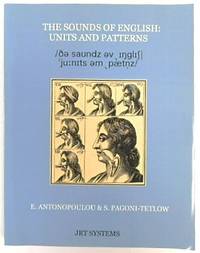
Antonopoulou, E; Pagoni-Tetlow, S
The Sounds of English: Units and Patterns
Potters Bar: JRT Systems 2004. Paperback with light edgewear to covers and gift dedication penned to title page. No other faults. AD. Paperback. Very Good. Used. JRT Systems Paperback
Referencia librero : 530941 ISBN : 0954738403 9780954738402
|
|
|
Antonopoulou, E.; Pagoni-Tetlow, S.
The Sounds of English: Units and Patterns
Paperback with light edgewear to covers and gift dedication penned to title page. No other faults. AD Used
|
|
|
ANWANDER, Anton
Die Religionen Der Menschheit
Einführung in Wesn und Geschichte der Ausserchristlichen Gottesvorstellungen. Nebst einem Religionsgeschichtlichen Lesebuch. Frieberg im Briesgau, large 8vo; xx + 567pp; illustrated with a folding colour map and b/w plates; bound in publ. cloth dec. in red/gilt; head-band worn, spine sl. sunned, cloth sl. dust-soiled. Spine head bumped and nicked. Binding exposed at title page. Creases and pencil on some pages.
|
|
|
Anward, Jan; Nordberg, Bengt; Steensland, Lars; Thelander, Mats; Wande, Erling (eds.)
Aspects of Multilingualism: Proceedings from the Fourth Nordic Symposium on Bilingualism, 1984 (Acta Universitatis Upsaliensis: Studia Multiethnica Upsaliensia)
Paperback in good condition. Text in English and Swedish. From the collection of linguistics professor Suzanne Romaine. Romaine's details penned on front inside cover. Covers are lightly marked and edge worn. Light bumps and creases on leading corners and spine, slightly affecting pages. Pages are clean and text is clear throughout. Binding is sound. HCW Used
|
|
|
ANZIEU, Didier
Une peau pour les pensées. Entretiens avec Gilbert Tarrab.
1991 Editions Apsygée, Paris - 1991 - In-8 broché - 151 pages
Referencia librero : 123275

|
|
|
Aomori Prefecture Elementary School Education Research Association Japanese Language Section
Children's Literary Fudoki of Aomori
Nipponhyojun 1983. Soft Cover. Fine. Volume: 1 Nipponhyojun paperback
Referencia librero : 2080502106505754
|
|
|
Aoustin Jean-Pierre Barnes Julian
Quand tout est deja arrive
Mercure de France 2014 144 pages 14x1 4x20 4cm. 2014. Broché. 144 pages.
Referencia librero : 500091914

|
|
|
Aoun, Michel
Une Certain Vision Du Liban: Entretiens Avec Frédéric Dumont
Paperback in very good condition, contents clean, sound, bright. Used
|
|
|
Apollinaire Guillaume
Alcools
Editions Belin 2009 224 pages 12 4x1 2x17 6cm. 2009. Broché. 224 pages.
Referencia librero : 500065123

|
|
|
Apollinaire Guillaume Cain-Roullier Sylvie Miloux Samuel
Alcools: PROGRAMME NOUVEAU BAC 2021 1ère - Parcours "Modernité poétique ?"
Flammarion 2019 224 pages 12 4x17 6x0 8cm. 2019. pocket_book. 224 pages.
Referencia librero : 500245816

|
|
|
Apollinaire, Guillaume
Correspondance Avec Son Frère et sa Mère
French. Good paperback. Cover shows lights scoring, rubbing and discolouration, with minor creasing to edges and corners. Page block tanned and rought cut. Well bound. Occasional paragraph location marks penned within, no notes made. Text clean and clear. CN Used
|
|
|
Apollinaire, Sidoine; Baret, Eugene
Oeuvres De Sidoine Apollinaire: Texte Latin
Hardcover in acceptable condition. No jacket. Ex - university library. From the Queen's College Library, Oxford. Text in Latin. Introduction in French. Half - vellum binding. Pages in good condition for age. Boards and spine are marked, scored and worn. Spine ends are bumped. Paper covers on edges and front lower leading corner are torn and chipped. Labels on spine and front pastedown. Page block and pages are marked and foxed. Stamps on reverse of title and final pages. Lower leading corner of page 195 is torn away. Minor tears and creases on a few pages. Text remains clear throughout. Binding remains intact. HCW Ex - Library
|
|
|

 Recibir por correo electrónico
 Descargar en documento PDF
 Flujo RSS
 Link permanente


