|
|
|
M. SADI ÇÖGENLI.
Arapça fiillerinin sarf yönünden incelenmesi.
Fine English Paperback., Fine., 20 x 14 cm., [8], 47 p., "In Arabic fiillerinin sarf yönünden incelenmesi.", M. Sadi Çögenli, Atatürk Üniversitesi Yayinlari, Erzurum, 1991.
|
|
|
M. SADI ÇÖGENLI.
Garîbü'l-fikh ve lügat kitaplari.
Fine English Paperback. Pbo. Cr. 8vo. (20 x 14 cm). In Turkish. 24 p. Garîbü'l-fikh ve lügat kitaplari. A bibliographic essay on Islamic law and dictionaries in the Arabic language.
|
|
|
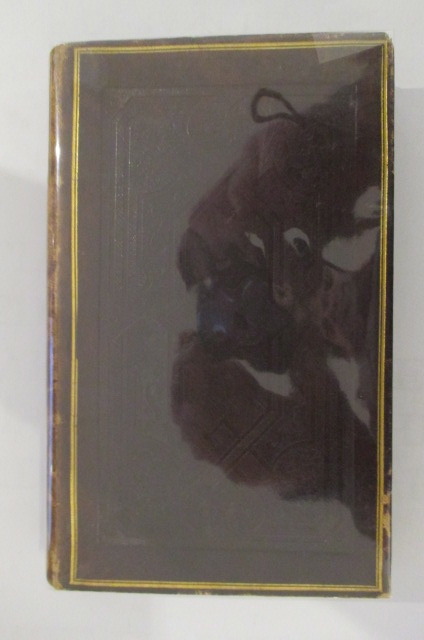
M. T. Bachelet
MAHOMET et LES ARABES
Avec un frontispice de Mahomet. 286 pages / non daté, a reçu le Prix d'Histoire de 1923. Editions Mégard et Cie.
Référence libraire : REL081M
|
|
|
M. UGUR DERMAN.
Harflerin aski: Kerem Kiyak ve Mustafa Balci koleksiyonlarindan.
New Turkish Original bdg. HC. Folio. (33 x 28 cm) In Turkish. Harflerin aski: Kerem Kiyak ve Mustafa Balci koleksiyonlarindan. 443 p., color ills. Masterpieces of Islamic calligraphic art of two private collections.
|
|
|
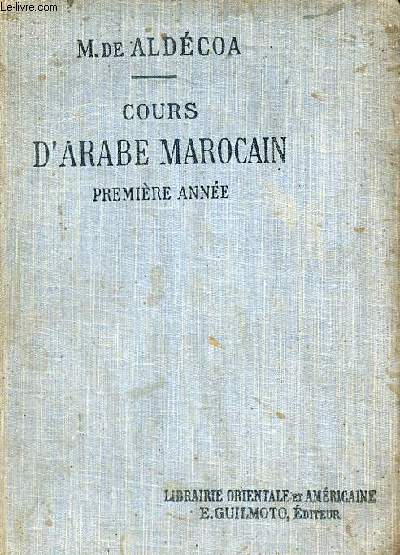
M.de Aldécoa
Cours d'arabe marocain (première année).
Imprimerie nationale / E.Guilmoto. 1914. In-8. Cartonné. Etat d'usage, Tâchée, Dos satisfaisant, Papier jauni. 150 pages - tampon sur la page de titre - ouvrage en français et en arabe.. . . . Classification Dewey : 492.7-Arabe
Référence libraire : R320173280
|
|
|
M[USTAFA] SABRI SÖZERI.
Senferâ ve Lâmiyyetu'l-'Arab (Yazma bir nüshanin fotokopisi ile). [i.e. Al-Shanfarâ and Lamiyyat al-Arab with facsimile plates of a manuscript].
Very Good Turkish Paperback. Roy. 8vo. (24 x 17 cm). In Turkish with facsimile plates of an Arabic manuscript. 10 p. text, [26] pages in [13] plates of original Arabic manuscript from the Ayasofya Kütüphanesi [i.e. St. Sophia Library of Istanbul] preserved in 2926 / 18-31, dated 829 AH. [1412-1413 AD]. Al-Shanfarâ (?-525 CE) was a semi-legendary pre-Islamic poet tentatively associated with ?âif, and the supposed author of the celebrated poem Lâmiyyât al-Arab. He enjoys a status as a figure of an archetypal outlaw antihero (su'luk), critiquing the hypocrisies of his society from his position as an outsider. Al-Shanfarâ is most famous for, supposedly, composing the Lamiyyat al-'Arab, or "L-poem" of the Arabs. Although its attribution has been disputed ever since medieval times, the memorable first-person figure of the misanthropic brigand celebrating his position on the edge of society that the poem draws has strongly influenced views of al-Shanfarâ. We can if nothing else say that if the Lâmiyyât is a later composition, it positions al-Shanfarâ as the archetypal outlaw of a pre-Islamic heroic age, viewed nostalgically from a later era. (Source: Wikipedia).
|
|
|
Ma`had al-Idarah al-`Ammah (Riyadh, Saudi Arabia)
al-Kashshaf al-mawdu`i li-majallatay Ma`had al-Idarah al-`Ammah kashshaf alibati bi-muhtawayat majallatay: al-Idarah al-`ammah wa-Maktabat al-idarah
Paperback light green quarto. 226 pages ; 24 cm In Arabic || Idarah al-`ammah -- Indexes. Maktabat al-idarah.
|
|
|
MAALOUF Amin
Origines.
Paris, Le Grand Livre du Mois, 2004. 16 x 24, 487 pp., reliure souple d'édition, très bon état.
Référence libraire : 41538
|
|
|
MAALOUF, Amin.
Les Croisades vues par les Arabes.
1 vol in-16, 317 pages, carte, notes, broché, couverture illustrée. Bel exemplaire. [JL-1][@]
|
|
|
MAATAR HABIBA, ALI MOULAÏ
NOS HEROS A TRAVERS L'HISTOIRE, IAUDAS
Chihab. 1993. In-4. Broché. Bon état, Couv. convenable, Dos satisfaisant, Intérieur frais. Plaquette d'env. 25 pages, illustrée de nombreux dessins en noir et blanc. Texte en arabe et en français.. . . . Classification Dewey : 492.7-Arabe
Référence libraire : RO60118428
|
|
|
MAATAR HABIBA, ALI MOULAÏ
NOS HEROS A TRAVERS L'HISTOIRE, JUGURTHA (160-105 AV. J.-C.)
Chihab. 1993. In-4. Broché. Bon état, Couv. convenable, Dos satisfaisant, Intérieur frais. Plaquette d'env. 25 pages, illustrée de nombreux dessins en noir et blanc. Texte en arabe et en français.. . . . Classification Dewey : 492.7-Arabe
Référence libraire : RO60118425
|
|
|
MAATAR HABIBA, ALI MOULAÏ
NOS HEROS A TRAVERS L'HISTOIRE, TACFARINAS (17-24 AP. J.-C.)
Chihab. 1993. In-4. Broché. Bon état, Couv. convenable, Dos satisfaisant, Intérieur frais. Plaquette d'env. 10 pages, illustrée de nombreux dessins en noir et blanc. Texte en arabe et en français.. . . . Classification Dewey : 492.7-Arabe
Référence libraire : RO60118427
|
|
|
Mach, Rudolf and Ormsby, Eric L.
HANDLIST OF ARABIC MANUSCRIPTS. (New Series) In The Princeton University Library.
pp. xiv, 402. 8vo. Original black cloth binding. Concise description of 1,626 Arabic works in the Princeton University Library's collection of Arabic Manuscripts known as the New Series. Originally Published at $ 99.00 **PRICE JUST REDUCED REF6
|
|
|
Machuel (L.).
L'Arabe sans Maître. Ou guide de conversation arabe en Tunisie et en Algérie à l'usage des colons et des voyageurs.
Paris, Armand Colin, 1912. Un volume de format in 12° de 144 pp. Reliure de l'éditeur en percaline brune, titres en noir. Percaline légèrement défraîchie, peu commun.
|
|
|
MaCHUEL L.
Grammaire Elémentaire D'arabe Régulier
Alger Adolphe Jourdan 1878 Petit In-8 VIII+199 pp, (.) Contenant des tableaux pour la conjugaison de tous les verbes irréguliers et des modèles d'analyses. Quelques rousseurs et traces de doigts, dos déboité. Percaline épidermée, coins émoussés.
Référence libraire : 13941
|
|
|
MACHUEL L.
Grammaire élémentaire d'arabe régulier. Contenant des tableaux pour la conjugaison de tous les verbes irréguliers et des modèles d'analyse.
Percaline de l'éditeur. 199 pages. Couverture passée.
|
|
|
MACHUEL L.
L'ARABE SANS MAITRE - OU GUIDE DE LA CONVERSATION ARABE EN TUNISIE, EN ALGERIE ET AU MAROC.
COLIN ARMAND. 1956. In-16. Broché. Etat d'usage, Couv. convenable, Coiffe en tête abîmée, Intérieur acceptable. 143 pages - coiffe en pied abimée.. . . . Classification Dewey : 492.7-Arabe
Référence libraire : R320033493

|
|
|
MACHUEL L.
L'ARABE SANS MAITRE OU GUIDE DE LA CONVERSATION ARABE EN TUNISIE, EN ALGERIE ET AU MAROC - A L'USAGE DES COLONS, DES MILITAIRES ET DES VOYAGEURS.
COLIN. 1937. In-16. Broché. Etat d'usage, Couv. convenable, Dos satisfaisant, Intérieur acceptable. 143 pages - Petite annotation sur la page de titre.. . . . Classification Dewey : 492.7-Arabe
Référence libraire : R320028256
|
|
|
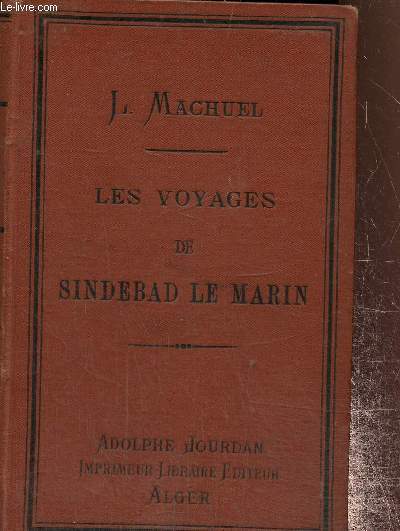
Machuel L.
Les voyages de Sindebad le marin. Texte en arabe, troisième édition
Adolphe jourdan. 1910. In-8. Cartonnage d'éditeurs. Bon état, Couv. convenable, Dos satisfaisant, Intérieur frais. Environ 150 pages.. . . . Classification Dewey : 492.7-Arabe
Référence libraire : RO80234817
|
|
|
MACHUEL L.
L’ARABE SANS MAITRE
Librairie Armand Colin, Paris, 1940.
Référence libraire : 23337
|
|
|
MACHUEL L.
METHODE POUR L'ETUDE DE L'ARABE PARLE - (IDIOME ALGERIEN) -
JOURDAN A.. 1875. In-12. Broché. Etat d'usage, Couv. convenable, Dos satisfaisant, Intérieur frais. XVI + 364 pages - 1 etiquette collée en coiffe en pied - Tampon sur la page de titre et 1er plat. . . . Classification Dewey : 492.7-Arabe
Référence libraire : R320060252
|
|
|
Machuel L.
Méthode pour l'étude de l'arabe parlé (idiome algérien)
Adolphe jourdan. Non daté. In-12. Cartonnage d'éditeurs. Etat d'usage, Couv. convenable, Dos satisfaisant, Intérieur acceptable. 455 pages. Plusizeurs pages sont désolidarisées. Couverture partiellement désolidarisée.. . . . Classification Dewey : 492.7-Arabe
Référence libraire : RO80236521
|
|
|
MACHUEL L.
Méthode pour l'étude de l'arabe parlé.
Percaline de l'éditeur. 462 pages. Couverture passée.
|
|
|
Machuel, L.
L'Arabe sans Maître ou guide de la conversation arabe en Tunisie, en Algérie et au Maroc
PARIS, A. Colin, 1940 - In-12 - Cartonnage éditeur gris - petit manque en page de titre - 144 pages - Propre
Référence libraire : 25979
|
|
|
Machuel, L.
L'Arabe sans Maître ou guide de la conversation arabe en Tunisie, en Algérie et au Maroc
PARIS, A. Colin, 1940 - In-12 - Cartonnage éditeur gris - petit manque en page de titre - 144 pages - Propre
|
|
|
MACHUEL, L.
LE GUIDE DE L'INTERPRETE. RECUEIL DE LETTRES ARABES ADMINISTRATIVES, JUDICIAIRES ET PERSONNELLES, DE CIRCULAIRES ET DE RAPPORTS. ACCOMPAGNES D'UN VOCABULAIRE DES MOTS CONTENUS DANS LES TEXTES.
22x14. 170p.+183p. Mancha en cubierta. Textos en francés y árabe.

|
|
|
MACHUEL, L. ( Louis Pierre )
MÉTHODE POUR L'ÉTUDE DE L'ARABE PARLÉ ( Idiome algérien )
Alger Adolphe Jourdan, éditeur 1880 in 12 (19x12) 1 volume reliure pleine percaline verte de l'éditeur, dos et plat supérieur titrés, 416 pages. Troisième édition. Bel exemplaire
Référence libraire : 46595
|
|
|
MacLEAN, Alistair
Lawrence d'Arabie. Adapte' par Noelle Brun
1 Vol. In-16 t. editoriale, ill. applicata al piatto pag. 160 num. ill. fotogr. e cart. n.t PROG 19877 CATT_ATT 31
|
|
|
MACRET
DESCRIPTION DE L'EGYPTE. Botanique. Fucus antennulatus, Fucus denticulatus. (Histoire Naturelle, planche 55)
Imprimerie Impériale | Paris 1809-1829 | 71 x 54 cm | une feuille
Référence libraire : 26423
|
|
|
MACRET
DESCRIPTION DE L'EGYPTE. Botanique. Scirpus fimbrisetus, Andropogon annulatum, Scirpus mucronatus. (Histoire Naturelle, planche 7)
Imprimerie Impériale | Paris 1809-1829 | 71 x 54 cm | une feuille
Référence libraire : 26483
|
|
|
MACRET
DESCRIPTION DE L'EGYPTE. Botanique. Sinapis allionii, Hesperis acris, Lunaria parviflora. (Histoire Naturelle, planche 35)
Imprimerie Impériale | Paris 1809-1829 | 71 x 54 cm | une feuille
Référence libraire : 26451
|
|
|
MACRET
DESCRIPTION DE L'EGYPTE. Botanique. Adonis dentata, Parmelia maciformis, Galega apollinea, Zostera bullata, Gymnostomum niloticum. (Histoire Naturelle, planche 53)
- Imprimerie Impériale, Paris 1809-1829, 71x54cm, une feuille. - Original, unshaved, full-page etching from the "Imperial edition" of the Description de l'Égypte, or 'Recueil des observations et recherches faites en Égypte pendant l'expédition française, publié par les ordres de Sa Majesté l'Empereur Napoléon le Grand [A Collection of the observations and research carried out in Egypt during the French expedition, published on the orders of his Majesty the Emperor Napoleon the Great]'. Produced between February 1802 and 1830 on the orders of Naopleon Bonaparte and published between 1809 and 1828, 1,000 copies were printed and distributed to institutions, on vergé paper with an 'Égypte ancienne et moderne' watermark, visible when held up to the light. Light marginal spotting not touching image, otherwise in very fresh, fine condition. An engraving from the Description de l'Egypte, one of the masterpieces of French printing and the birth of a new field: Egyptology. A gigantic survey of Egypt at the time of Bonaparte's conquests in 1798 and 1799, the work is divided into 13 volumes of engravings making up 892 plates, of which 72 colored, as well as presenting the splendors of the Egypt of the Pharaohs in 9 volumes. The other volumes discuss natural history and present a fascinating portrait of Coptic and Islamic Egypt as it was seen by Bonaparte's Eastern Armies. The 'Egyptian campaign', militarily a disaster, demonstrates, through the engravings of the Description d'Egypte, the scientific success it nonetheless became thanks to the 167 expert members of the Commission of the Sciences and Arts of the Institut d'Egypte [Egyptian Institute] who followed Napoleon's army. The Institut gathered together in Egypt the mathematician Monge, the chemist Berthollet, the naturalist Geoffroy Saint-Hilaire as well as numerous artists, engineers, architects and doctors. They were tasked with re-discovering modern and ancient Egypt and displaying its natural treasures as well as the know-how of its inhabitants. This edition, the so-called "Imperial" edition of the plates for the Description de l'Egypte was printed in four large formats, two of which were specially created for it and christened "Moyen-Egypte" and "Grand-Egypte". A special press was built to print it, the process extending over 20 years, from 1809 to 1829. The "Imperial" edition proved so popular that a second edition, this time in black and white and without the "Egypte ancienne et moderne" watermark - known as the "Royal Edition" - was published during the Restoration by the printing house of C.-L.-F. Panckoucke (Paris). The engravings of the Description d'Egypte owe a great deal to Baron Dominique-Vivant Denon, illustrator, diplomat, collector and later Director of the Musée Napoléon (the Louvre). His exploration of the South of Egypt gave Bonaparte the idea of sending the experts of the Institut there, thus creating a faithful and complete portrait of the area. This was the research gathered together from 1802 in the mammoth Description de L'Egypte. Denon embarked on this story of archeological exploration at the age of 51, reaching first Alexandria and then Cairo before exploring Upper Egypt. Along with the members of the Institut d'Egypte, the Natural History Museum's painter H.J. Redouté (brother of Pierre-Joseph Redouté, author of Roses), the mineralogist Dolomiue, and the draughtsman Joly, Denon then explored the Nile Delta and Lower Egypt. When, however, he joined the 21st Light Infantry Regiment as it marched across Upper Egypt in pursuit of the retreating Mameluks in November 1798, he found himself the only civilian. In the very midst of the battle itself, he reeled off sketches of the works of art that peppered his path right up to the threshold of the Sudan. He said that he had crossed "a country that is, apart from its name, entirely unknown to Europeans, and therefore everything was worth describing" (Voyages dans la Basse et la Haute Egypte pendant le

|
|
|
MACRET
DESCRIPTION DE L'EGYPTE. Botanique. Balsamita tridentata, Filago mareotica, Anthemis indurata, Cotula cinerea. (Histoire Naturelle, planche 47)
- Imprimerie Impériale, Paris 1809-1829, 71x54cm, une feuille. - Original, unshaved, full-page etching from the "Imperial edition" of the Description de l'Égypte, or 'Recueil des observations et recherches faites en Égypte pendant l'expédition française, publié par les ordres de Sa Majesté l'Empereur Napoléon le Grand [A Collection of the observations and research carried out in Egypt during the French expedition, published on the orders of his Majesty the Emperor Napoleon the Great]'. Produced between February 1802 and 1830 on the orders of Naopleon Bonaparte and published between 1809 and 1828, 1,000 copies were printed and distributed to institutions, on vergé paper with an 'Égypte ancienne et moderne' watermark, visible when held up to the light. Light marginal spotting not touching image, otherwise in very fresh, fine condition. An engraving from the Description de l'Egypte, one of the masterpieces of French printing and the birth of a new field: Egyptology. A gigantic survey of Egypt at the time of Bonaparte's conquests in 1798 and 1799, the work is divided into 13 volumes of engravings making up 892 plates, of which 72 colored, as well as presenting the splendors of the Egypt of the Pharaohs in 9 volumes. The other volumes discuss natural history and present a fascinating portrait of Coptic and Islamic Egypt as it was seen by Bonaparte's Eastern Armies. The 'Egyptian campaign', militarily a disaster, demonstrates, through the engravings of the Description d'Egypte, the scientific success it nonetheless became thanks to the 167 expert members of the Commission of the Sciences and Arts of the Institut d'Egypte [Egyptian Institute] who followed Napoleon's army. The Institut gathered together in Egypt the mathematician Monge, the chemist Berthollet, the naturalist Geoffroy Saint-Hilaire as well as numerous artists, engineers, architects and doctors. They were tasked with re-discovering modern and ancient Egypt and displaying its natural treasures as well as the know-how of its inhabitants. This edition, the so-called "Imperial" edition of the plates for the Description de l'Egypte was printed in four large formats, two of which were specially created for it and christened "Moyen-Egypte" and "Grand-Egypte". A special press was built to print it, the process extending over 20 years, from 1809 to 1829. The "Imperial" edition proved so popular that a second edition, this time in black and white and without the "Egypte ancienne et moderne" watermark - known as the "Royal Edition" - was published during the Restoration by the printing house of C.-L.-F. Panckoucke (Paris). The engravings of the Description d'Egypte owe a great deal to Baron Dominique-Vivant Denon, illustrator, diplomat, collector and later Director of the Musée Napoléon (the Louvre). His exploration of the South of Egypt gave Bonaparte the idea of sending the experts of the Institut there, thus creating a faithful and complete portrait of the area. This was the research gathered together from 1802 in the mammoth Description de L'Egypte. Denon embarked on this story of archeological exploration at the age of 51, reaching first Alexandria and then Cairo before exploring Upper Egypt. Along with the members of the Institut d'Egypte, the Natural History Museum's painter H.J. Redouté (brother of Pierre-Joseph Redouté, author of Roses), the mineralogist Dolomiue, and the draughtsman Joly, Denon then explored the Nile Delta and Lower Egypt. When, however, he joined the 21st Light Infantry Regiment as it marched across Upper Egypt in pursuit of the retreating Mameluks in November 1798, he found himself the only civilian. In the very midst of the battle itself, he reeled off sketches of the works of art that peppered his path right up to the threshold of the Sudan. He said that he had crossed "a country that is, apart from its name, entirely unknown to Europeans, and therefore everything was worth describing" (Voyages dans la Basse et la Haute Egypte pendant le

|
|
|
MACRET
DESCRIPTION DE L'EGYPTE. Botanique. Fucus antennulatus, Fucus denticulatus. (Histoire Naturelle, planche 55)
- Imprimerie Impériale, Paris 1809-1829, 71x54cm, une feuille. - Original, unshaved, full-page etching from the "Imperial edition" of the Description de l'Égypte, or 'Recueil des observations et recherches faites en Égypte pendant l'expédition française, publié par les ordres de Sa Majesté l'Empereur Napoléon le Grand [A Collection of the observations and research carried out in Egypt during the French expedition, published on the orders of his Majesty the Emperor Napoleon the Great]'. Produced between February 1802 and 1830 on the orders of Naopleon Bonaparte and published between 1809 and 1828, 1,000 copies were printed and distributed to institutions, on vergé paper with an 'Égypte ancienne et moderne' watermark, visible when held up to the light. Light marginal spotting not touching image, otherwise in very fresh, fine condition. An engraving from the Description de l'Egypte, one of the masterpieces of French printing and the birth of a new field: Egyptology. A gigantic survey of Egypt at the time of Bonaparte's conquests in 1798 and 1799, the work is divided into 13 volumes of engravings making up 892 plates, of which 72 colored, as well as presenting the splendors of the Egypt of the Pharaohs in 9 volumes. The other volumes discuss natural history and present a fascinating portrait of Coptic and Islamic Egypt as it was seen by Bonaparte's Eastern Armies. The 'Egyptian campaign', militarily a disaster, demonstrates, through the engravings of the Description d'Egypte, the scientific success it nonetheless became thanks to the 167 expert members of the Commission of the Sciences and Arts of the Institut d'Egypte [Egyptian Institute] who followed Napoleon's army. The Institut gathered together in Egypt the mathematician Monge, the chemist Berthollet, the naturalist Geoffroy Saint-Hilaire as well as numerous artists, engineers, architects and doctors. They were tasked with re-discovering modern and ancient Egypt and displaying its natural treasures as well as the know-how of its inhabitants. This edition, the so-called "Imperial" edition of the plates for the Description de l'Egypte was printed in four large formats, two of which were specially created for it and christened "Moyen-Egypte" and "Grand-Egypte". A special press was built to print it, the process extending over 20 years, from 1809 to 1829. The "Imperial" edition proved so popular that a second edition, this time in black and white and without the "Egypte ancienne et moderne" watermark - known as the "Royal Edition" - was published during the Restoration by the printing house of C.-L.-F. Panckoucke (Paris). The engravings of the Description d'Egypte owe a great deal to Baron Dominique-Vivant Denon, illustrator, diplomat, collector and later Director of the Musée Napoléon (the Louvre). His exploration of the South of Egypt gave Bonaparte the idea of sending the experts of the Institut there, thus creating a faithful and complete portrait of the area. This was the research gathered together from 1802 in the mammoth Description de L'Egypte. Denon embarked on this story of archeological exploration at the age of 51, reaching first Alexandria and then Cairo before exploring Upper Egypt. Along with the members of the Institut d'Egypte, the Natural History Museum's painter H.J. Redouté (brother of Pierre-Joseph Redouté, author of Roses), the mineralogist Dolomiue, and the draughtsman Joly, Denon then explored the Nile Delta and Lower Egypt. When, however, he joined the 21st Light Infantry Regiment as it marched across Upper Egypt in pursuit of the retreating Mameluks in November 1798, he found himself the only civilian. In the very midst of the battle itself, he reeled off sketches of the works of art that peppered his path right up to the threshold of the Sudan. He said that he had crossed "a country that is, apart from its name, entirely unknown to Europeans, and therefore everything was worth describing" (Voyages dans la Basse et la Haute Egypte pendant le

|
|
|
MACRET
DESCRIPTION DE L'EGYPTE. Botanique. Scirpus fimbrisetus, Andropogon annulatum, Scirpus mucronatus. (Histoire Naturelle, planche 7)
- Imprimerie Impériale, Paris 1809-1829, 71x54cm, une feuille. - Original, unshaved, full-page etching from the "Imperial edition" of the Description de l'Égypte, or 'Recueil des observations et recherches faites en Égypte pendant l'expédition française, publié par les ordres de Sa Majesté l'Empereur Napoléon le Grand [A Collection of the observations and research carried out in Egypt during the French expedition, published on the orders of his Majesty the Emperor Napoleon the Great]'. Produced between February 1802 and 1830 on the orders of Naopleon Bonaparte and published between 1809 and 1828, 1,000 copies were printed and distributed to institutions, on vergé paper with an 'Égypte ancienne et moderne' watermark, visible when held up to the light. Light marginal spotting not touching image, otherwise in very fresh, fine condition. An engraving from the Description de l'Egypte, one of the masterpieces of French printing and the birth of a new field: Egyptology. A gigantic survey of Egypt at the time of Bonaparte's conquests in 1798 and 1799, the work is divided into 13 volumes of engravings making up 892 plates, of which 72 colored, as well as presenting the splendors of the Egypt of the Pharaohs in 9 volumes. The other volumes discuss natural history and present a fascinating portrait of Coptic and Islamic Egypt as it was seen by Bonaparte's Eastern Armies. The 'Egyptian campaign', militarily a disaster, demonstrates, through the engravings of the Description d'Egypte, the scientific success it nonetheless became thanks to the 167 expert members of the Commission of the Sciences and Arts of the Institut d'Egypte [Egyptian Institute] who followed Napoleon's army. The Institut gathered together in Egypt the mathematician Monge, the chemist Berthollet, the naturalist Geoffroy Saint-Hilaire as well as numerous artists, engineers, architects and doctors. They were tasked with re-discovering modern and ancient Egypt and displaying its natural treasures as well as the know-how of its inhabitants. This edition, the so-called "Imperial" edition of the plates for the Description de l'Egypte was printed in four large formats, two of which were specially created for it and christened "Moyen-Egypte" and "Grand-Egypte". A special press was built to print it, the process extending over 20 years, from 1809 to 1829. The "Imperial" edition proved so popular that a second edition, this time in black and white and without the "Egypte ancienne et moderne" watermark - known as the "Royal Edition" - was published during the Restoration by the printing house of C.-L.-F. Panckoucke (Paris). The engravings of the Description d'Egypte owe a great deal to Baron Dominique-Vivant Denon, illustrator, diplomat, collector and later Director of the Musée Napoléon (the Louvre). His exploration of the South of Egypt gave Bonaparte the idea of sending the experts of the Institut there, thus creating a faithful and complete portrait of the area. This was the research gathered together from 1802 in the mammoth Description de L'Egypte. Denon embarked on this story of archeological exploration at the age of 51, reaching first Alexandria and then Cairo before exploring Upper Egypt. Along with the members of the Institut d'Egypte, the Natural History Museum's painter H.J. Redouté (brother of Pierre-Joseph Redouté, author of Roses), the mineralogist Dolomiue, and the draughtsman Joly, Denon then explored the Nile Delta and Lower Egypt. When, however, he joined the 21st Light Infantry Regiment as it marched across Upper Egypt in pursuit of the retreating Mameluks in November 1798, he found himself the only civilian. In the very midst of the battle itself, he reeled off sketches of the works of art that peppered his path right up to the threshold of the Sudan. He said that he had crossed "a country that is, apart from its name, entirely unknown to Europeans, and therefore everything was worth describing" (Voyages dans la Basse et la Haute Egypte pendant le

|
|
|
MACRET
DESCRIPTION DE L'EGYPTE. Botanique. Sinapis allionii, Hesperis acris, Lunaria parviflora. (Histoire Naturelle, planche 35)
- Imprimerie Impériale, Paris 1809-1829, 71x54cm, une feuille. - Original, unshaved, full-page etching from the "Imperial edition" of the Description de l'Égypte, or 'Recueil des observations et recherches faites en Égypte pendant l'expédition française, publié par les ordres de Sa Majesté l'Empereur Napoléon le Grand [A Collection of the observations and research carried out in Egypt during the French expedition, published on the orders of his Majesty the Emperor Napoleon the Great]'. Produced between February 1802 and 1830 on the orders of Naopleon Bonaparte and published between 1809 and 1828, 1,000 copies were printed and distributed to institutions, on vergé paper with an 'Égypte ancienne et moderne' watermark, visible when held up to the light. Light marginal spotting not touching image, otherwise in very fresh, fine condition. An engraving from the Description de l'Egypte, one of the masterpieces of French printing and the birth of a new field: Egyptology. A gigantic survey of Egypt at the time of Bonaparte's conquests in 1798 and 1799, the work is divided into 13 volumes of engravings making up 892 plates, of which 72 colored, as well as presenting the splendors of the Egypt of the Pharaohs in 9 volumes. The other volumes discuss natural history and present a fascinating portrait of Coptic and Islamic Egypt as it was seen by Bonaparte's Eastern Armies. The 'Egyptian campaign', militarily a disaster, demonstrates, through the engravings of the Description d'Egypte, the scientific success it nonetheless became thanks to the 167 expert members of the Commission of the Sciences and Arts of the Institut d'Egypte [Egyptian Institute] who followed Napoleon's army. The Institut gathered together in Egypt the mathematician Monge, the chemist Berthollet, the naturalist Geoffroy Saint-Hilaire as well as numerous artists, engineers, architects and doctors. They were tasked with re-discovering modern and ancient Egypt and displaying its natural treasures as well as the know-how of its inhabitants. This edition, the so-called "Imperial" edition of the plates for the Description de l'Egypte was printed in four large formats, two of which were specially created for it and christened "Moyen-Egypte" and "Grand-Egypte". A special press was built to print it, the process extending over 20 years, from 1809 to 1829. The "Imperial" edition proved so popular that a second edition, this time in black and white and without the "Egypte ancienne et moderne" watermark - known as the "Royal Edition" - was published during the Restoration by the printing house of C.-L.-F. Panckoucke (Paris). The engravings of the Description d'Egypte owe a great deal to Baron Dominique-Vivant Denon, illustrator, diplomat, collector and later Director of the Musée Napoléon (the Louvre). His exploration of the South of Egypt gave Bonaparte the idea of sending the experts of the Institut there, thus creating a faithful and complete portrait of the area. This was the research gathered together from 1802 in the mammoth Description de L'Egypte. Denon embarked on this story of archeological exploration at the age of 51, reaching first Alexandria and then Cairo before exploring Upper Egypt. Along with the members of the Institut d'Egypte, the Natural History Museum's painter H.J. Redouté (brother of Pierre-Joseph Redouté, author of Roses), the mineralogist Dolomiue, and the draughtsman Joly, Denon then explored the Nile Delta and Lower Egypt. When, however, he joined the 21st Light Infantry Regiment as it marched across Upper Egypt in pursuit of the retreating Mameluks in November 1798, he found himself the only civilian. In the very midst of the battle itself, he reeled off sketches of the works of art that peppered his path right up to the threshold of the Sudan. He said that he had crossed "a country that is, apart from its name, entirely unknown to Europeans, and therefore everything was worth describing" (Voyages dans la Basse et la Haute Egypte pendant le

|
|
|
MADANI ALI
L'EXPRESSION ORALE EN LANGUE ARABE MODERNE
La Maison des Livres, Alger. 1985. In-8. Broché. Bon état, Couv. convenable, Dos satisfaisant, Intérieur frais. 167 pages. Texte en français et en arabe.. . . . Classification Dewey : 492.7-Arabe
Référence libraire : RO40204580
|
|
|
MADANI ALI
L'EXPRESSION ORALE EN LANGUE ARABE MODERNE
La Maison des Livres, Alger. 1985. In-8 Carré. Broché. Bon état. Couv. convenable. Dos satisfaisant. Intérieur frais. 167 pages. Texte en français et en arabe. Ali MADANI, Professeur de Lettres Arabes.

|
|
|
MAGALI-BOISNARD
Le roman de Khaldoun. Extrait en mani?re de pr?face de E.-F. Gautier.
Broch?. 176 pages. L?g?res rousseurs.
|
|
|
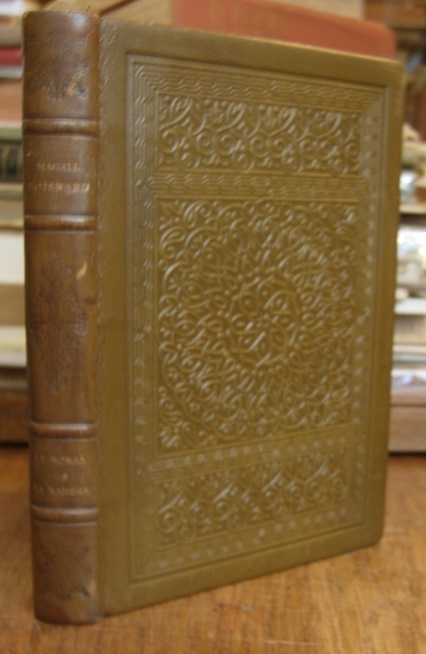
Magali-Boisnard
Le Roman de la Kahena, d'après les anciens textes arabes.
Paris Piazza 1925 Un volume in-8 reliure de l'éditeur en pleine basane brune, dos à nerfs, titre doré, décor estampé sur le dos et sur les plats, tête dorée, couverture conservée, 182 pp. et table. Ex-libris manuscrit en page de faux-titre, dos légèrement frotté, néanmoins bel exemplaire.
Référence libraire : 10284
|
|
|
MAGE Abdon Eugène
Voyage dans le Soudan occidental (Sénégambie - Niger)
- Librairie de Hachette, Paris 1868, Grd. in-8 (16,5x24,5cm), 693pp., relié. - Edition originale illustrée de 6 cartes (2 dépliantes et 4 sur double page) et 2 plans, ainsi que de 81 figures sur bois in-texte et hors-texte. Reliure en demi chagrin bordeaux d'époque. Dos à nerfs orné. Les plats ont été retendus d'un papier marbré ainsi que les gardes intérieures. Traces brunes sur les premiers feuillets, ensuite quelques brunissures sur certains feuillets. Bon exemplaire. Un des meilleurs livres illustrés sur l'Afrique de l'ouest. En 1863, le général Faidherbe, gouverneur du Soudan, missionna le lieutenant Mage pour une expédition d'exploration le long du Niger en Afrique de L'ouest, et au Sénégal. Ce voyage d'exploration, destinée également à installer des routes commerciales dura trois années. Mage pénétra dans des régions jamais encore explorées, et donna la première description de l'empire Toucouleur de Ségou. [ENGLISH DESCRIPTION ON DEMAND]

|
|
|
Mahasini, Zaki
Tahiyah wa-dhikra, al-Duktur Zaki al-Mahasini
Large octavo in white illus wraps; 176 p. : facsim., ports. ; 25 cm In Arabic. Scarce. Inscribed by the author to Anne Marie Schimmel. Schimmel's copy. || Poets, Arab -- Syria -- Biography. Arabic poetry -- Syria -- History and criticism. Arabic poetry -- 20th century -- History and criticism. Arabic poetry -- Palestine -- History and criticism. Palestinian Arabs -- Syria -- Biography.
|
|
|
Mahbubah, Qassi
al-Qaid bayna al-siyasah wa-al-sultah wa-al-nufudh : sira al-mafahim wa-al-shakhsiyat fi al-umam wa-al-duwal wa-al-muassasat
Black octavo; 487 p ; 25 cm. In Arabic. Uncommon || Politics. Macht. Politik. Politische F¸hrung. Politische Wissenschaft.
|
|
|
MAHFOUZ (Naguib).-
Passage des miracles. Roman traduit de larabe par Antoine Cottin. Troisième édition.
P., Sindbad (La Bibliothèque Arabe), 1988, in 8° broché, 315 pages ; petite trace de scotch sur la garde blanche.
Référence libraire : 28699
|
|
|
MAHFOUZ (Naguib).-
Récits de notre quartier. Roman traduit de larabe par Khaled Osman.
P., Sindbad (La Bibliothèque Arabe), 1988, in 8° broché, 198 pages.
Référence libraire : 28700
|
|
|
MAHFOUZ Naguib
"Le jour de l'assassinat du leader; roman suivi de quatre nouvelles."
Paris, Editions Sindbad, 1989. 14 x 22, 175 pp., broché, bon état.
Référence libraire : 69566
|
|
|
MAHFOUZ Naguib
Dérives sur le Nil (roman).
Paris, Denoël/Alif, 1989. 14 x 20, 189 pp., broché, très bon état.
Référence libraire : 17331
|
|
|
MAHFOUZ Naguib
L'amante du pharaon
Nouveau Monde, 2005, 239 pp., broché, légère salissure sur la tranche latérale, bon état général.
|
|
|
MAHFOUZ Naguib
L'amour au pied des pyramides. Nouvelles traduites de l'artabe par Richard Jacquemond.
Broch?. 187 pages. Tr?s bon ?tat.
|
|
|
MAHFOUZ Naguib
Le cort?ge des vivants. Khan al-Khalili. Roman traduit de l'arabe (Egypte) par Fa?za et Gilles Ladkany.
Broch?. 358 pages. Tr?s bon ?tat.
|
|
|

 Recevoir par e-mail
 Télécharger en PDF
 Flux RSS
 Lien permanent


