|
|
|
Schurr Cathleen
Le petit chat timide (version arabe)
Cocorico Un petit livre d'or Album cartonné 1953 In-8 (16,8 x 20 cm), album cartonné, non paginé, illustrations en couleurs, texte en arabe ; frottements sur les bords des plats et au papier doré au dos, par ailleurs intérieur frais, bon état. Livraison a domicile (La Poste) ou en Mondial Relay sur simple demande.
Referenz des Buchhändlers : fl1615
|
|
|
Schuré, Edouard :
Sanctuaires d'Orient. Egypte, Grèce, Palestine.
Paris, Perrin, 1898 ; in-8, demi-velin ivoire, dos lisse, fleuron décoratif et titre rouge, plat conservé (reliure de l'époque), XI pages (dédicace, préface), 436 pages.
Referenz des Buchhändlers : 1986

|
|
|
SCHWERDTFEGER Gerlinde
Das Buch der gepflückten Blumen aus der Gabe des Allgütigen - Kitab Az-Zahr Al-Maqtuf Min Fath Ar-Ra'Uf. Übersetzung und Einleitung
141pp., 21cm., softcover, text in German, Doctoral dissertation (Inaugural-Dissertation zur Erlangung der Doktorwürde der Philosophischen Fakultät der Rheinischen Friedrich-Wilhelms-Universität zu Bonn), stamp at verso of title page, text is clean and bright, good condition, [Contains the German translation, with an introduction], X109932
|
|
|
SCHWERDTFEGER Gerlinde
Das Buch der gepflückten Blumen aus der Gabe des Allgütigen - Kitab Az-Zahr Al-Maqtuf Min Fath Ar-Ra'Uf. Übersetzung und Einleitung
Bonn, 1966 141pp., 21cm., softcover, text in German, Doctoral dissertation (Inaugural-Dissertation zur Erlangung der Doktorwürde der Philosophischen Fakultät der Rheinischen Friedrich-Wilhelms-Universität zu Bonn), stamp at verso of title page, text is clean and bright, good condition, [Contains the German translation, with an introduction], X109932
Referenz des Buchhändlers : X109932
|
|
|
SEBAG Paul
La grande Mosquée de Kairouan. Collection : Le génie du lieu.
Paris, Delpire éditeur, 1963. 26 x 24, 125 pp., nombreuses illustrations en couleurs et en N/B, reliure d'édition carton imprimé, bon état.
Referenz des Buchhändlers : 46143
|
|
|
SEBBAK BUHAR'I, (1909-) [SHEIKH ABDULKADIR KERÂMETULLAH].
Sebbak Buharî'nin siirlerinden seçmeler.
Fine English Paperback. Pbo. Cr. 8vo. (20 x 14 cm). In Turkish (with Arabic letters), Persian and Arabic. [13], 63 p., 1 b/w portrait. Sebbak Buharî'nin siirlerinden seçmeler.
|
|
|
SEDOV, S.
Sionisme : mise sur la terreur.
in-12 (12,5 x 16,5 cm), 83 p., broché, couv. Bel exemplaire. [CA30-6]
|
|
|
SEFOUANE, Fatiha.
L"Enfant de la Haine.
in-8, 176 pp., broché, couv. ill. Tres bon etat. TX-4
|
|
|
SEFRIOUI Ahmed
Rêver du Maroc.
Paris, Editions Vilo, 1981. 19 x 20, 119 pp., très nombreuses illustrations en N/B, reliure carton blanc illustré, bon état.
Referenz des Buchhändlers : 93430
|
|
|
SELAMI BAKIRCI, M. SADI ÇÖGENLI.
Sâhid Beyitler tercümesi.= [Câmiu'd-durûsi'l-Arabiy'y'e]. 3 volumes set.
Fine English Paperback., Very good., 24 x 16 cm., [6], 126, [8] p., "Sâhid beyitler tercümesi.= [Câmiu'd-durûsi'l-Arabiy'y'e].", Selami Bakirci, Sadi Çögenli, Atatürk Üniversitesi Yayinlari, Erzurum, 1995.
|
|
|
SELDEN WILLMORE J.
The Spoken Arabic of Egypt. Gramar, Exercices, Vocabularies
London, David Nutt, 1905. In-8 reliure éditeur plein cuir vert. XXVIII + 454 pages. Bon exemplaire.
|
|
|
SELIGO Hans
Maroc. Collection : Panorama.
Paris, La Bibliothèque des Arts, 1966. 17 x 17, 60 pp., 30 photos en couleurs, reliure d'édition pleine toile + jaquette, très bon état.
Referenz des Buchhändlers : 82514
|
|
|
SELLIER PèRE
DESCRIPTION DE L'EGYPTE. Botanique. Polycarpea fragilis, Polycarpea memphitica, Alsine succulenta, Alsine prostrata. (Histoire Naturelle, planche 24)
Imprimerie Impériale | Paris 1809-1829 | 71 x 54 cm | une feuille
Referenz des Buchhändlers : 26443
|
|
|
SELLIER PèRE
DESCRIPTION DE L'EGYPTE. Botanique. Hedysarum ptolemaicum, Astragalus longiflorus, Astragalus mareoticus. (Histoire Naturelle, planche 39)
- Imprimerie Impériale, Paris 1809-1829, 71x54cm, une feuille. - Gravure originale à l'eau-forte in plano, non rognée, extraite de l'édition dite « Impériale » de la Description de l'Égypte ou Recueil des observations et recherches faites en Égypte pendant l'expédition française, publié par les ordres de Sa Majesté l'Empereur Napoléon le Grand. Réalisée entre février 1802 et 1829 sur ordre de Napoléon Bonaparte et publiée à partir de 1809 [en réalité 1810], elle fut tirée à 1000 exemplaires sur Vergé filigrané « Égypte ancienne et moderne » et offerte aux institutions. Légères et marginales rousseurs sans atteinte à la gravure, sinon très bel état de fraîcheur et de conservation. Volume HISTOIRE NATURELLE, botanique : Ces gravures montrent le génie scientifique des savants français à l'uvre sur le sol égyptien, préparant celui-ci à devenir une colonie française. Ce projet colonisateur en gestation depuis le règne de Louis XIV s'accompagne avec l'arrivée de Bonaparte d'une étude approfondie de la faune et la flore à travers les travaux des plus grands naturalistes, minéralogistes, entomologistes de l'époque. La Description de l'Egypte révèle l'intégralité de cette immense entreprise scientifique au fil de ses gravures, d'après les dessins des membres de l'Académie des sciences dont Etienne Geoffroy Saint-Hillaire, Alire Raffenau-Delile ou Henri-Joseph Redouté. Selon les mots de Geoffroy Saint-Hilaire « Nous avons recueilli les matériaux du plus bel ouvrage qu'une nation ait pu faire entreprendre. En déplorant le sort de tant de braves guerriers, qui après tant de glorieux exploits ont succombé en Egypte, on se consolera par l'existence d'ouvrages aussi précieux. » LA DESCRIPTION DE L'EGYPTE, édition IMPERIALE (1809-1829) : La Description de l'Egypte est un des chefs d'uvre de l'édition française et le point de départ d'une nouvelle science : l'égyptologie. Titanesque exposé de l'Egypte au temps des conquêtes de Bonaparte entre 1798 et 1799, elle est répartie en 23 volumes dont 13 volumes de gravures rassemblant près de 1000 planches en noir et 72 en couleur. Les 6 volumes de planches intitulées Antiquités sont consacrés aux splendeurs de l'Egypte pharaonique. L'Histoire naturelle est répartie en 3 volumes de gravures. Un volume est consacré aux Cartes géographiques et topographiques tandis que les 3 volumes : Etat Moderne dressent un portrait saisissant de l'Egypte copte et islamique telle qu'elle était vue par les armées d'Orient de Bonaparte. La « campagne d'Egypte », désastre militaire, dévoile à travers les gravures de la Description de l'Egypte la réussite scientifique qu'elle est devenue, grâce aux quelques 167 savants membres de la Commission des sciences et des arts de l'Institut d'Egypte qui suivaient l'armée de Napoléon. L'Institut a réuni en Egypte le mathématicien Monge, le chimiste Berthollet, le naturaliste Geoffroy Saint-Hilaire, ainsi que de nombreux artistes, ingénieurs, architectes, médecins... Ils eurent la charge de redécouvrir l'Egypte moderne et antique, d'en montrer les richesses naturelles, et le savoir-faire de ses habitants. L'édition originale, dite « Impériale », de la Description de l'Egypte fut réalisée sur quatre formats de grande taille, deux d'entre eux spécialement créés pour elle et baptisés formats « Moyen-Egypte » et « Grand-Egypte ». On construisit une presse spécifique pour son impression, qui s'étala sur vingt ans, entre 1809 et 1829. L'édition Impériale s'avéra si populaire qu'une deuxième édition en 37 volumes entièrement en noir et sans le filigrane « Egypte ancienne et moderne », dite édition « Panckoucke », fut publiée à partir de 1821 par l'imprimerie C.-L.-F. Panckoucke (Paris). La réalisation de ce monument d'érudition doit beaucoup au baron Dominique Vivant Denon, illustrateur, diplomate, collectionneur et par la suite directeur du musée Napoléon du Louvre qui accompagna Napoléon en Egypte avec de nombreux autres savants mais décida seul de s'aventurer dans le Sud du p

|
|
|
SELLIER PèRE
DESCRIPTION DE L'EGYPTE. Botanique. Pennisetum dichotomum, Adropogon foveolatum, Pennisetum typhoideum. (Histoire Naturelle, planche 8)
- Imprimerie Impériale, Paris 1809-1829, 71x54cm, une feuille. - Original, unshaved, full-page etching from the "Imperial edition" of the Description de l'Égypte, or 'Recueil des observations et recherches faites en Égypte pendant l'expédition française, publié par les ordres de Sa Majesté l'Empereur Napoléon le Grand [A Collection of the observations and research carried out in Egypt during the French expedition, published on the orders of his Majesty the Emperor Napoleon the Great]'. Produced between February 1802 and 1830 on the orders of Naopleon Bonaparte and published between 1809 and 1828, 1,000 copies were printed and distributed to institutions, on vergé paper with an 'Égypte ancienne et moderne' watermark, visible when held up to the light. Light marginal spotting not touching image, otherwise in very fresh, fine condition. An engraving from the Description de l'Egypte, one of the masterpieces of French printing and the birth of a new field: Egyptology. A gigantic survey of Egypt at the time of Bonaparte's conquests in 1798 and 1799, the work is divided into 13 volumes of engravings making up 892 plates, of which 72 colored, as well as presenting the splendors of the Egypt of the Pharaohs in 9 volumes. The other volumes discuss natural history and present a fascinating portrait of Coptic and Islamic Egypt as it was seen by Bonaparte's Eastern Armies. The 'Egyptian campaign', militarily a disaster, demonstrates, through the engravings of the Description d'Egypte, the scientific success it nonetheless became thanks to the 167 expert members of the Commission of the Sciences and Arts of the Institut d'Egypte [Egyptian Institute] who followed Napoleon's army. The Institut gathered together in Egypt the mathematician Monge, the chemist Berthollet, the naturalist Geoffroy Saint-Hilaire as well as numerous artists, engineers, architects and doctors. They were tasked with re-discovering modern and ancient Egypt and displaying its natural treasures as well as the know-how of its inhabitants. This edition, the so-called "Imperial" edition of the plates for the Description de l'Egypte was printed in four large formats, two of which were specially created for it and christened "Moyen-Egypte" and "Grand-Egypte". A special press was built to print it, the process extending over 20 years, from 1809 to 1829. The "Imperial" edition proved so popular that a second edition, this time in black and white and without the "Egypte ancienne et moderne" watermark - known as the "Royal Edition" - was published during the Restoration by the printing house of C.-L.-F. Panckoucke (Paris). The engravings of the Description d'Egypte owe a great deal to Baron Dominique-Vivant Denon, illustrator, diplomat, collector and later Director of the Musée Napoléon (the Louvre). His exploration of the South of Egypt gave Bonaparte the idea of sending the experts of the Institut there, thus creating a faithful and complete portrait of the area. This was the research gathered together from 1802 in the mammoth Description de L'Egypte. Denon embarked on this story of archeological exploration at the age of 51, reaching first Alexandria and then Cairo before exploring Upper Egypt. Along with the members of the Institut d'Egypte, the Natural History Museum's painter H.J. Redouté (brother of Pierre-Joseph Redouté, author of Roses), the mineralogist Dolomiue, and the draughtsman Joly, Denon then explored the Nile Delta and Lower Egypt. When, however, he joined the 21st Light Infantry Regiment as it marched across Upper Egypt in pursuit of the retreating Mameluks in November 1798, he found himself the only civilian. In the very midst of the battle itself, he reeled off sketches of the works of art that peppered his path right up to the threshold of the Sudan. He said that he had crossed "a country that is, apart from its name, entirely unknown to Europeans, and therefore everything was worth describing" (Voyages dans la Basse et la Haute Egypte pendant le

|
|
|
SELLIER PèRE
DESCRIPTION DE L'EGYPTE. Botanique. Polycarpea fragilis, Polycarpea memphitica, Alsine succulenta, Alsine prostrata. (Histoire Naturelle, planche 24)
- Imprimerie Impériale, Paris 1809-1829, 71x54cm, une feuille. - Original, unshaved, full-page etching from the "Imperial edition" of the Description de l'Égypte, or 'Recueil des observations et recherches faites en Égypte pendant l'expédition française, publié par les ordres de Sa Majesté l'Empereur Napoléon le Grand [A Collection of the observations and research carried out in Egypt during the French expedition, published on the orders of his Majesty the Emperor Napoleon the Great]'. Produced between February 1802 and 1830 on the orders of Naopleon Bonaparte and published between 1809 and 1828, 1,000 copies were printed and distributed to institutions, on vergé paper with an 'Égypte ancienne et moderne' watermark, visible when held up to the light. Light marginal spotting not touching image, otherwise in very fresh, fine condition. An engraving from the Description de l'Egypte, one of the masterpieces of French printing and the birth of a new field: Egyptology. A gigantic survey of Egypt at the time of Bonaparte's conquests in 1798 and 1799, the work is divided into 13 volumes of engravings making up 892 plates, of which 72 colored, as well as presenting the splendors of the Egypt of the Pharaohs in 9 volumes. The other volumes discuss natural history and present a fascinating portrait of Coptic and Islamic Egypt as it was seen by Bonaparte's Eastern Armies. The 'Egyptian campaign', militarily a disaster, demonstrates, through the engravings of the Description d'Egypte, the scientific success it nonetheless became thanks to the 167 expert members of the Commission of the Sciences and Arts of the Institut d'Egypte [Egyptian Institute] who followed Napoleon's army. The Institut gathered together in Egypt the mathematician Monge, the chemist Berthollet, the naturalist Geoffroy Saint-Hilaire as well as numerous artists, engineers, architects and doctors. They were tasked with re-discovering modern and ancient Egypt and displaying its natural treasures as well as the know-how of its inhabitants. This edition, the so-called "Imperial" edition of the plates for the Description de l'Egypte was printed in four large formats, two of which were specially created for it and christened "Moyen-Egypte" and "Grand-Egypte". A special press was built to print it, the process extending over 20 years, from 1809 to 1829. The "Imperial" edition proved so popular that a second edition, this time in black and white and without the "Egypte ancienne et moderne" watermark - known as the "Royal Edition" - was published during the Restoration by the printing house of C.-L.-F. Panckoucke (Paris). The engravings of the Description d'Egypte owe a great deal to Baron Dominique-Vivant Denon, illustrator, diplomat, collector and later Director of the Musée Napoléon (the Louvre). His exploration of the South of Egypt gave Bonaparte the idea of sending the experts of the Institut there, thus creating a faithful and complete portrait of the area. This was the research gathered together from 1802 in the mammoth Description de L'Egypte. Denon embarked on this story of archeological exploration at the age of 51, reaching first Alexandria and then Cairo before exploring Upper Egypt. Along with the members of the Institut d'Egypte, the Natural History Museum's painter H.J. Redouté (brother of Pierre-Joseph Redouté, author of Roses), the mineralogist Dolomiue, and the draughtsman Joly, Denon then explored the Nile Delta and Lower Egypt. When, however, he joined the 21st Light Infantry Regiment as it marched across Upper Egypt in pursuit of the retreating Mameluks in November 1798, he found himself the only civilian. In the very midst of the battle itself, he reeled off sketches of the works of art that peppered his path right up to the threshold of the Sudan. He said that he had crossed "a country that is, apart from its name, entirely unknown to Europeans, and therefore everything was worth describing" (Voyages dans la Basse et la Haute Egypte pendant les campa

|
|
|
SELMI Habib
La nuit de l'?tranger. Roman traduit de l'arabe (Tunisie) par E. Largu?che et bF. Neyrod.
Broch?. 190 pages. Tr?s bon ?tat.
|
|
|
SELMI Habib
Les amoureux de Bayya. Traduit de l'arabe (Tunisie) par Yves Gonzalez-Quijano.
Broch?. 154 pages. Tr?s bon ?tat.
|
|
|
SEMAVI EYICE, (1922-2018).
Galatada Arab camii.
Very Good Turkish Paperback. 4to. (26 x 19 cm). In Turkish. 27 p., b/w ills. Galatada Arab camii. Extremely rare separatum on Arab Mosque in Galata.
|
|
|
SEROUYA Henri
La pensée arabe. Collection : Que sais-je ? N° 915.
Paris, Presses Universitaires de France (PUF), 1960. 11 x 18, 127 pp., broché, bon état.
Referenz des Buchhändlers : 94671
|
|
|
SEROUYA Henri
Maïmonide, sa vie, son uvre avec un exposé de sa philosophie par Henri Sérouya. Collection : Philosophes.
Paris, Presses Universitaires de France, PUF, 1964. 12 x 19, 156 pp., broché, non coupé, très bon état.
Referenz des Buchhändlers : 99329
|
|
|
SEVERUS IBN AL MUQAFFA (& SEYBOLD Christian Friedrich, ed.)
Alexandrinische Patriarchengeschichte [Patriarchen-geschichte] von S. Marcus bis Michael I 61-767, nach der altesten 1266 geschriebenen Hamburger Handschrift, im arabischen Urtext herausgegeben
IX pp. (introduction in German) + 208 pp. (Arabic text) + 5 plates out of text, 1st edition, 27cm., original softcover, in the series "Veröffentlichungen aus der Hamburger Stadtbibliothek" Band 3, copy from the belgian orientalist Arnold Van Lantschoot O.Praem (with his signature and 1 stamp on blanco endpaper), text clean and bright, good condition, R103707
|
|
|
SHAH Idries
"Chercheur de vérité; soufisme. Collection : Siritualités vivantes."
Paris, Albin Michel, 1984. 13 x 20, 279 pp., broché, bon état.
Referenz des Buchhändlers : 84036
|
|
|
SHAH Idries
Caravane de rêves.
Paris, Le Courrier du Livre, 1978. 13 x 22, 254 pp., broché, couverture à rabats, bon état (couverture légèrement défraîchie).
Referenz des Buchhändlers : 84421
|
|
|
Shamah, Sama'in
al-Nizam al-qanuni al-Jazairi lil-tawjih al-'aqari : dirasah wasfiyah wa-tahliliyah
Large octavo in pink glossy paper wraps; 315 p., bibliographical references (p. 295-309). ; 23 cm. In Arabic // Real estate law , Algeria. Real property; land tenure; laws and legislations; Algeria. Real property -- Algeria. Land tenure -- Law and legislation -- Algeria.
|
|
|
SHAMMA HAMAD AL SAWAI
A moitie sombre - roman - ouvrage en arabe
MADAAR. 2022. In-8. Broché. Bon état, Couv. convenable, Dos satisfaisant, Intérieur frais. 160 pages - en arabe, sens de lecture inversé. . . . Classification Dewey : 492.7-Arabe
Referenz des Buchhändlers : RO20255724

|
|
|
SHAMS AD-DÎN ABÛ AL-'ABBÂS AHMD IBN MUHAMMED IBN KHALLIKAN, (1211-1282).
Ibn Khallikan's biographical dictionary. [= Wafayat al-a'yan wa anba' abna' al-zaman]. Translated from the Arabic by Bn. (Baron) William Mac Guckin de Slane, (1801-1878). First 3 volumes.
Very Good English Original leather bdg. Folio. First 3 volumes of 5: ([xL], 688 p.; [xvi], 695 p.; 384 p.). Ibn Khallikan's biographical dictionary. [= Translated from the Arabic by Bn. (Baron) William Mac Guckin de Slane, (1801-1878). First 3 volumes of 5 volumes set. Muslim judge and author of a classic Arabic biographical dictionary. Ibn Khallikân studied in Irbîl, Aleppo, and Damascus. Ibn Khallikan was an assistant to the chief judge of Egypt until 1261, when he became qâ?î al-qu?ât (chief judge) of Damascus. He adhered to the Shâfi'î branch of Muslim law, and for the first years had deputy judges of the other three main branches. In 1271 he was dismissed. He taught in Cairo until he regained his judgeship and returned to Damascus in 1278. Ibn Khallikân's fame rests on his biographical dictionary Wafayât al-a'yân wa-anbâ' abnâ' az-zamaân ('Deaths of Eminent Men and History of the Sons of the Epoch'; trans. by Baron de Slane, Ibn Khallikan's Biographical Dictionary, 1842-74). He began arranging material for it in 1256 and worked on it until 1274, continuing to improve it with marginal notes. He excluded the Prophet Mu?ammad, the caliphs, and other subjects about whom adequate information already existed. Ibn Khallikân selected factual material for his biographies with intelligence and scholarship and rounded them out with poetry and anecdotes. His book is a valuable source for his contemporaries and contains excerpts from earlier biographies no longer extant. (Source: Encyclopediæ Britrannica).
|
|
|
SHAMS AD-DÎN ABÛ AL-'ABBÂS AHMED IBN MUHAMMED IBN KHALLIKAN, (1211-1282).
[IBN KHALLIKAN'S BIOGRAPHICAL DICTIONARY] Tercüme-i vefayatü'l-ayan li-Ibn Hallikan. 2 volumes set. Translated by Rodosizâde Mehmed.
Very Good Turkish, Ottoman (1500-1928) ?Original decorative leather bdg. with five and four raised bands to spine. Seconds have lettering gilt. Traditional decorations on spines. Roy. 8vo. (23 x 16 cm). In Ottoman script (Old Turkish with Arabic letters). 2 volumes set: ([vi], 353 p.; [5], 361 p.). A well-preserved set. First Ottoman edition of the famous Khallikan's biographical dictionary, is a valuable source for his contemporaries and contains excerpts from earlier Middle Eastern biographies no longer extant, translated by Mehmed [or Muhammed] Rodosîzâde (?-1701), who was an Ottoman scholar from Ayasulug of Smyrna, and son of an Ottoman statesman from Rhodes. Muslim judge and author of a classic Arabic biographical dictionary. Ibn Khallikân studied in Irbîl, Aleppo, and Damascus. Ibn Khallikan was an assistant to the chief judge of Egypt until 1261 when he became "qâdî al-qudât" (i.e. chief judge) of Damascus. He adhered to the Shâfi'î branch of Muslim law, and for the first years had deputy judges of the other three main branches. In 1271 he was dismissed. He taught in Cairo until he regained his judgeship and returned to Damascus in 1278. Ibn Khallikân's fame rests on his biographical dictionary Wafayât al-a'yân wa-anbâ' abnâ' az-zamaân ('Deaths of Eminent Men and History of the Sons of the Epoch'; trans. by Baron de Slane, Ibn Khallikan's Biographical Dictionary, 1842-74). He began arranging material for it in 1256 and worked on it until 1274, continuing to improve it with marginal notes. He excluded the Prophet Muhammad, the caliphs, and other subjects about whom adequate information already existed. Ibn Khallikân selected factual material for his biographies with intelligence and scholarship and rounded them out with poetry and anecdotes. (Source: Encyclopediæ Britannica). Hegira: 1280. Gregorian: 1864. Not located in OCLC libraries outside Turkey.; Özege 20691.
|
|
|
Sharafu-d-Dîn Al Bûsîri
Alburda (le manteau). Poème consacré à l'éloge du prophète de l'Islam (Dieu le bénisse et le sauve).
français In-8 de 74 pp.; broché de l'éditeur. Texte arabe traduit et commenté en français par le Cheikh Hamza Boubakeur, Recteur de l'Institut Musulman de la Mosquée de Paris.
|
|
|
Sharon (Moshe)
Corpus Inscriptionum Arabicarum Palaestinae, volume 1, -A-.
français In-4 de XVII-220 pp. + nombreuses illustrations hors-texte in fine ; album de l'éditeur, sous jaquette.
|
|
|
Sharon (Moshe)
Corpus Inscriptionum Arabicarum Palaestinae, volume 2, -B-C.
français In-4 de XIX-325 pp. + nombreuses illustrations hors-texte in fine ; album de l'éditeur, sous jaquette.
|
|
|
SHCHOLL-LATOUR Peter
Au cur de l'Islam, au nom d'Allah.
Paris, France Loisirs, 1991. 18 x 25, 208 pp., nombreuses illustrations et cartes en couleurs, cartonnage d'édition + jaquette, état neuf.
Referenz des Buchhändlers : 20737
|
|
|
SHEIKH MUSTAFA Al-SAFTÎ WA AL-SHEIKH MUHAMMAD AL-NESHAR WA SAYYID EFENDI MUHAMMAD WA AL-SHEIKH MOHAMMAD AL-HUSAINI WA AL-SHEIKH AHMAD AL-ADAVÎ, (Professor in Medrese't al-Nasiriyye).
[TRACTATE OF ARABIC SYNONYMS / BULAQ IMPRINT] Risâla fî al-mutarâdifât.
Very Good Arabic Original wrappers in dark green cloth spine. Demy 8vo. (21 x 14 cm). In Arabic 40 p. First and Only Edition in book form of this work on synonyms in the Arabic language, printed for the Arabic universities as an early textbook in Bulaq Printing House. The Bulaq or El-Amiriya Press is the first official and governmental printing press to be established in Egypt, and function according to industrial printing basis, causing not just a qualitative but also a quantitative and knowledgeable leap in science throughout the Arab region. The Bulaq Press was part of Mohamed Aly's inclusive development plans for the modernization of Egypt. The Khedive, first initiated his plans by establishing a strong Egyptian army; one that is capable of strengthening his grip on the country. It thus became essential that this army be provided with the necessary instructive and educational books and material, by which to learn military plans and techniques, as well as the different types of artillery and laws that define a soldier's duties and rights. A pressing need eventually developed for establishing a governmental press; one that should provide such material. By 1815 CE., Mohamed Aly initiated the process of bringing the art of printing to Egypt by sending the first official delegation, headed by Nicole El Masabki, to Milan in Italy, to learn the principles of printing. The same delegation was later able to return and establish the first official press in Egypt. Only three copies located in OCLC: 978241754.
|
|
|
SHELL
Guide du tourisme automobile au Sahara.
Alger, Shell, 1956. 14 x 22, 345 pp., très nombreuses illustrations, cartonnage d'édition imprimé, bon état.
Referenz des Buchhändlers : 26149
|
|
|
SHIBLI Adania
Reflets sur un mur blanc. Roman traduit de l'arabe (Palestine) par S. Dujols.
Broch?. 107 pages. Tr?s bon ?tat.
|
|
|
Shukri, Muhammad (Mohamed Choukri)
Majnun al-ward : qisas qaddama laha Muhammad Baradah
Octavo in offwhite wraps illus & titled in red & blue; 127p. In Arabic. Arabic fiction -- 20th century. Short stories, Arabic -- 20th century. Roman arabe -- 20e siËcle. Nouvelles arabes -- 20e siËcle. Arabic fiction. Short stories, Arabic. Madman of the Roses. "Mohamed Choukri (15 July 1935 ñ 15 November 2003, was a Moroccan author and novelist who is best known for his internationally acclaimed autobiography For Bread Alone (al-Khubz al-Hafi), which was described by the American playwright Tennessee Williams as "A true document of human desperation, shattering in its impact". Choukri was born in 1935 in Ayt Chiker (Ayt Chiker, hence his adopted family name: Choukri / Chikri), a small village in the Rif mountains in the Nador province, Morocco. He was raised in a very poor family. He ran away from his tyrannical father and became a homeless child living in the poor neighbourhoods of Tangier, surrounded by misery, prostitution, violence and drug abuse. At the age of 20, he decided to learn how to read and write and became later a schoolteacher. His family name Choukri is connected to the name Ayt Chiker which is the Berber tribe cluster he belonged to before fleeing hunger to Tangier. It is most likely that he adopted this name later in Tangier because in the rural Rif family names were rarely registered. In the 1960s, in the cosmopolitan Tangier, he met Paul Bowles, Jean Genet and Tennessee Williams. Choukri's first writing was published in Al-adab (monthly review of Beirut) in 1966, a story entitled "Al-Unf ala al-shati" ("Violence on the Beach"). International success came with the English translation of Al-khoubz Al-Hafi (For Bread Alone, Telegram Books) by Paul Bowles in 1973. The book was translated to French by Tahar Ben Jelloun in 1980 (…ditions Maspero), published in Arabic in 1982 and censored in Morocco from 1983 to 2000. The book later was translated into 30 languages. His main works are his autobiographic trilogy, beginning with For Bread Alone, followed by Zaman Al-Akhta‚ aw Al-Shouttar (Time of Mistakes or Streetwise, Telegram Books) and finally Faces. He also wrote collections of short stories in the 1960s/1970s (Majnoun Al-Ward, The Flower Freak, 1980; Al-Khaima, The Tent, 1985). Likewise, he is known for his accounts of his encounters with the writers Paul Bowles, Jean Genet and Tennessee Williams (Jean Genet and Tennessee Williams in Tangier, 1992, Jean Genet in Tangier, 1993, Jean Genet, Suite and End, 1996, Paul Bowles: Le Reclus de Tanger, 1997). See also In Tangier, Telegram Books, 2008, for all three in one volume. Mohamed Choukri died of cancer on 15 November 2003 at the military hospital of Rabat. He was buried on 17 November at the Marshan cemetery in Tangier, with the audience of the minister of culture, numerous government officials, personalities and the spokesman of the king of Morocco. Before he died, Choukri created a foundation, Mohamed Choukri (president, Mohamed Acha‚ri), owning his copyrights, his manuscripts and personal writings. Before his death, he provided for his servant of almost 22 years." óWikipedia
|
|
|
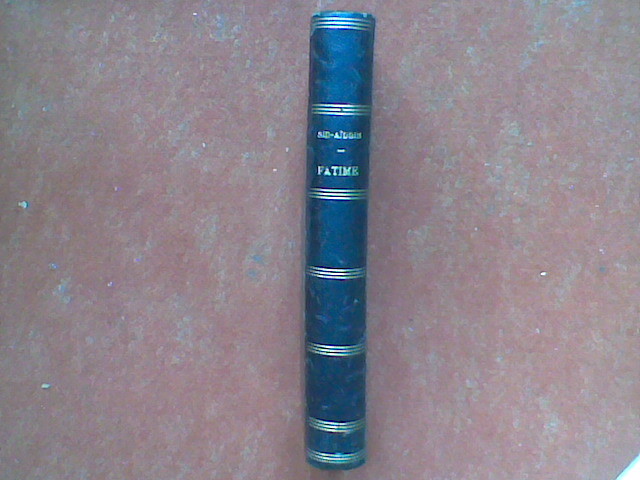
SID-AÏDDIN - HERVIER (Capitaine)
Fatime, ou les soirées du Génie Azaël
Moreau, 1846, 457 p., in-8 rel., E.O., 1/2 peau, tranches marbrées, envoi de l'auteur, plats un peu frottés sinon bonne reliure solide, bon état
Referenz des Buchhändlers : QWA-3855
|
|
|
SIEUR D'ANVILLE
DESCRIPTION DE L'EGYPTE. Carte dépliante de l'Egypte nommée dans le pays Missir, par le Sieur d'Anville de l'Académie Royale des Belles Lettres et de celle des Sciences de Petersbourg, secrétaire de S.A.S. Mgr le Duc d'Orléans, 1765.
Imprimerie Impériale | Paris 1809-1829 | 53.50 x 80 cm | une feuille
Referenz des Buchhändlers : 25338
|
|
|
SIEUR D'ANVILLE
DESCRIPTION DE L'EGYPTE. Carte dépliante de l'Egypte nommée dans le pays Missir, par le Sieur d'Anville de l'Académie Royale des Belles Lettres et de celle des Sciences de Petersbourg, secrétaire de S.A.S. Mgr le Duc d'Orléans, 1765.
- Imprimerie Impériale, Paris 1809-1829, 53,5x80cm, une feuille. - Original, unshaved, full-page etching from the "Imperial edition" of the Description de l'Égypte, or 'Recueil des observations et recherches faites en Égypte pendant l'expédition française, publié par les ordres de Sa Majesté l'Empereur Napoléon le Grand [A Collection of the observations and research carried out in Egypt during the French expedition, published on the orders of his Majesty the Emperor Napoleon the Great]'. Produced between February 1802 and 1830 on the orders of Naopleon Bonaparte and published between 1809 and 1828, 1,000 copies were printed and distributed to institutions, on vergé paper with an 'Égypte ancienne et moderne' watermark, visible when held up to the light. Light marginal spotting not touching image, otherwise in very fresh, fine condition. An engraving from the Description de l'Egypte, one of the masterpieces of French printing and the birth of a new field: Egyptology. A gigantic survey of Egypt at the time of Bonaparte's conquests in 1798 and 1799, the work is divided into 13 volumes of engravings making up 892 plates, of which 72 colored, as well as presenting the splendors of the Egypt of the Pharaohs in 9 volumes. The other volumes discuss natural history and present a fascinating portrait of Coptic and Islamic Egypt as it was seen by Bonaparte's Eastern Armies. The 'Egyptian campaign', militarily a disaster, demonstrates, through the engravings of the Description d'Egypte, the scientific success it nonetheless became thanks to the 167 expert members of the Commission of the Sciences and Arts of the Institut d'Egypte [Egyptian Institute] who followed Napoleon's army. The Institut gathered together in Egypt the mathematician Monge, the chemist Berthollet, the naturalist Geoffroy Saint-Hilaire as well as numerous artists, engineers, architects and doctors. They were tasked with re-discovering modern and ancient Egypt and displaying its natural treasures as well as the know-how of its inhabitants. This edition, the so-called "Imperial" edition of the plates for the Description de l'Egypte was printed in four large formats, two of which were specially created for it and christened "Moyen-Egypte" and "Grand-Egypte". A special press was built to print it, the process extending over 20 years, from 1809 to 1829. The "Imperial" edition proved so popular that a second edition, this time in black and white and without the "Egypte ancienne et moderne" watermark - known as the "Royal Edition" - was published during the Restoration by the printing house of C.-L.-F. Panckoucke (Paris). The engravings of the Description d'Egypte owe a great deal to Baron Dominique-Vivant Denon, illustrator, diplomat, collector and later Director of the Musée Napoléon (the Louvre). His exploration of the South of Egypt gave Bonaparte the idea of sending the experts of the Institut there, thus creating a faithful and complete portrait of the area. This was the research gathered together from 1802 in the mammoth Description de L'Egypte. Denon embarked on this story of archeological exploration at the age of 51, reaching first Alexandria and then Cairo before exploring Upper Egypt. Along with the members of the Institut d'Egypte, the Natural History Museum's painter H.J. Redouté (brother of Pierre-Joseph Redouté, author of Roses), the mineralogist Dolomiue, and the draughtsman Joly, Denon then explored the Nile Delta and Lower Egypt. When, however, he joined the 21st Light Infantry Regiment as it marched across Upper Egypt in pursuit of the retreating Mameluks in November 1798, he found himself the only civilian. In the very midst of the battle itself, he reeled off sketches of the works of art that peppered his path right up to the threshold of the Sudan. He said that he had crossed "a country that is, apart from its name, entirely unknown to Europeans, and therefore everything was worth describing" (Voyages dans la Basse et la Haute Egypte pendant

|
|
|
SIMONIN L.
La presqu'île d'Aden et la politique anglaise dans les mers arabiques
- Extrait de la Revue des deux mondes, s.l. (Paris) 1861, 15,5x25cm, agrafé. - First edition. Plain paper cover. Rare. [FRENCH VERSION FOLLOWS] Edition originale. Sous couevrtur emuette. Rare.
|
|
|
Simsar, Muhammed Ahmed
ORIENTAL MANUSCRIPTS OF THE JOHN FREDERICK LEWIS COLLECTION IN THE FREE LIBRARY OF PHILADELPHIA; A DESCRIPTIVE CATALOGUE WITH FORTY-EIGHT ILLUSTRATIONS
Hardcover, xix, 248 pages, xlviii illustrations (includes facsims. ) . 8vo, 26 cm. Includes Hebrew manuscripts. SUBJECT(S) : Manuscripts, Oriental -- Catalogs. Manuscrits orientaux -- Pennsylvanie -- Philadelphie -- Catalogues. Named Corp: Free Library of Philadelphia -- Catalogues. Bibliography on pages 221-224. Includes some Hebrew manuscripts. Water stain throughout book. Staining to inner and outer covers. Wear to cover binding. Otherwise, good condition. (BIB-15-1)
|
|
|
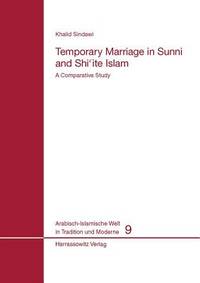
Sindawi, Department of Arabic Language and Literat
Temporary Marriage in Sunni and Shiite Islam: A Comparative Study Arabisch-Islamische Welt in Tradition Und Moderne
paperback. Good. Access codes and supplements are not guaranteed with used items. May be an ex-library book. paperback
Referenz des Buchhändlers : 3447069872.G ISBN : 3447069872 9783447069878
|
|
|
SINOUE Gilbert
Avicenne, ou La route d'Ispahan. Collection : Folio, N° 2212.
Paris, Denoël, Folio, 1999. 11 x 18, 533 pp., 1 carte, broché, bon état.
Referenz des Buchhändlers : 49253 ISBN : 2070383024
|
|
|
SINOUE Gilbert
Le dernier pharaon, Méhémet-Ali, 1770-1849.
Paris, Pygmalion, Gérard Watelet, 1997. 16 x 24, 508 pp., broché, très bon état.
Referenz des Buchhändlers : 30886
|
|
|
Sinoué Gilbert
Le sabre d'Allah
Robert Laffont 2016 306 pages 13 46x21 34x3 05cm. 2016. Broché. 306 pages.
Referenz des Buchhändlers : 500201591

|
|
|
SIR [ALEXANDER ROSSKEEN] HAMILTON GIBB, (1895-1971).
Al-medhal fî al-adâb al-Arabiyye. [= Arabic literature. An introduction]. Translated by Kazim Sadaddin.
Very Good Arabic Paperback. Roy. 8vo. (24 x 17 cm). In Arabic. 192 p. Al-medhal fî al-adâb al-Arabiyye. [= Arabic literature. An introduction]. Translated by Kazim Sadaddin.
|
|
|
SJÖSTEDT Dr. Yngve & AURIVILLIUS Dr. Chr.
Dem Kilimandjaro, dem Meru und den umgebenden Massaisteppen Deutsch-Ostafrikas. Coleoptera 21. Curculionidae
- P. Palmquists, Stockholm 1910, 25x32cm, broché. - Edition originale. Brochure illustrée de 8 figures dans le texte. Quelques manques marginaux. [ENGLISH DESCRIPTION ON DEMAND]
|
|
|
Skalli (Khadija), née Chrifi Alaoui.
Les idées morales et philosophiques d'Abou Tayyib Al Moutanabbi.
français In-4 de 72 pp.; broché. Mémoire dirigé par Dominique Sourdel.
|
|
|
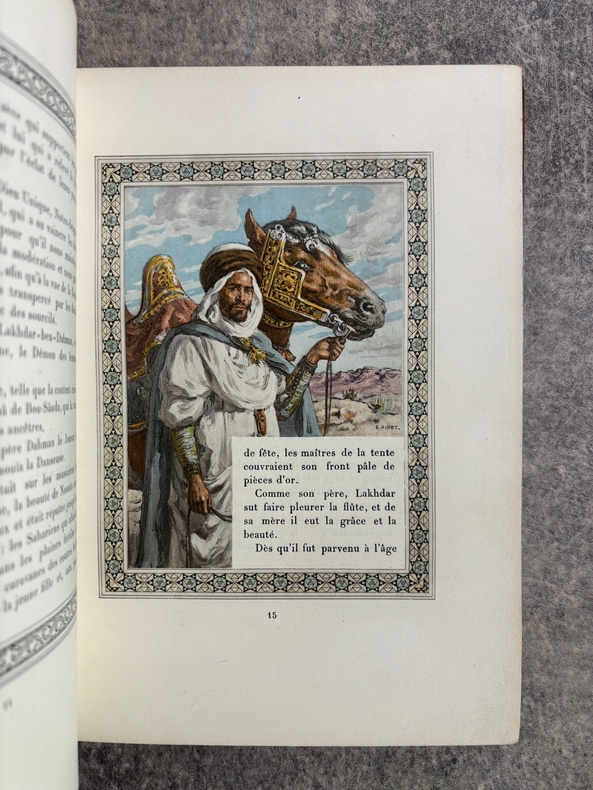
SLIMAN BEN IBRAHIM. (1870-1953). DINET ETIENNE (1861-1929).
RABIA EL KOULOUB OU LE PRINTEMPS DES COEURS. LEGENDES SAHARIENNES RECUEILLIES PAR SLIMAN-BEN-IBRAHIM. TRADUITES ET ILLUSTREES PAR E. DINET.
PARIS. L’EDITION D’ART. H. PIAZZA, EDITEUR. 1902. IN-8 (17,5 X 23,5 X 3 CENTIMETRES ENVIRON) DE 175 ET (5) PAGES, RELIURE D’EPOQUE 1/2 MAROQUIN HAVANE A COINS, DOS LISSE ORNE D’UN DECOR MOSAIQUE, TITRE DORE SUR ETIQUETTE MAROQUIN VERT, TETE DOREE, COUVERTURE ILLUSTREE EN COULEURS CONSERVEE (KAUFFMANN-HORCLOIS RELIEUR). ILLUSTRE DE 52 COMPOSITIONS EN OR ET EN COULEURS, DONT 6 A PLEINE PAGE. CHAQUE PAGE DE TEXTE ENCADREE D’UN DECOR GEOMETRIQUE EN NOIR OU EN COULEURS. PREMIER TIRAGE LIMITE A 300 EXEMPLAIRES NUMEROTES. UN DES 260 SUR PAPIER VELIN A LA CUVE, CELUI-CI HORS COMMERCE, IMPRIME POUR M. E. GRENINGAIRE. “LE PLUS RARE DES OUVRAGES DE DINET” (CARTERET. IV. 141). EX-LIBRIS GRAVE “E. BRUELL”. TRES BEL EXEMPLAIRE.
Referenz des Buchhändlers : 3834
|
|
|
SMITH Anthony
"La Perse et ses mystères; à la recherche du poisson blanc aveugle."
Paris, Librairie Plon, 1957. 14 x 20, 267 pp., 14 illustrations en N/B, broché, bon état (couverture défraîchie).
Referenz des Buchhändlers : 76206
|
|
|

 Per e-mail erhalten
 Als pdf-Dokument herunterladen
 RSS feed
 Permanenter link


