|
|
|
CAIX Robert de
Le Maroc français et la question indigène
- Extrait de la Revue des deux mondes, s.l. (Paris) 1914, 15,5x25cm, agrafé. - First edition. Plain paper cover. Rare. [FRENCH VERSION FOLLOWS] Edition originale. Sous couverture muette. Rare.
|
|
|
CALLEBAUT Nicole et Paul-Jacques
Rites et mystères au Proche-Orient, sur les traces d'Abraham.
Bruxelles, Hayez, 1979. 16 x 24, 256 pp., illustrations en N/B et en couleurs, broché, très bon état.
Référence libraire : 15786
|
|
|
Camps-Fabrer Henriette
Bijoux Berberes D'Algerie. Grande Kabylie, Aures
Relié, 143 pages, illustré en couleur, très bon état : jaquette à peine abîmé sinon parfait état.
Référence libraire : art1427m

|
|
|
Camille LEYNADIER - Bertrand CLAUSEL
Histoire de l'Algérie française
Chez H. Morel | Paris 1848 | 15 x 24 cm | 3 volumes reliés
Référence libraire : 84439
|
|
|
Camille ROUSSET
La conquête d'Alger
Plon & Cie | Paris 1879 | 14.50 x 23 cm | relié
Référence libraire : 30479
|
|
|
Camille ROUSSET
La conquête d'Alger
Plon | Paris 1880 | 13.50 x 22 cm | relié
Référence libraire : 46549
|
|
|
Camargo ( Christovam De )
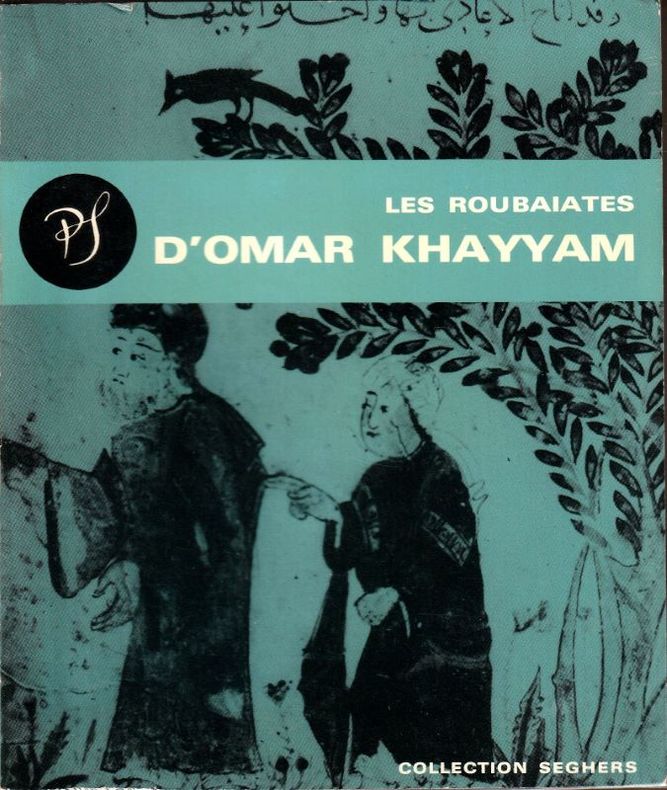
Les Roubaïates d'Omar Khayyam.
Collection Seghers, 1961 - broché 13.5 X 16 cm, couverture illustré dune image ancienne, louvrage est émaillé de planches ht en noir hors texte , 22 pages de présentation, 222 pages dont des poèsies de K. exemplaire en très bonne condition couvert par les soins du libraire.
Référence libraire : 16661
|
|
|
CANAMAS, NEYRENEUF et VILLET
Cours d'arabe maghrébin
L'HARMATTAN. 1983. In-12. Broché. Bon état, Couv. convenable, Dos satisfaisant, Intérieur frais. 193 pages. Nombreux dessins en noir et blanc dans le texte.. . . . Classification Dewey : 492.7-Arabe
Référence libraire : RO80047146
|
|
|
CAN Turhan
Istanbul, porte de l'Orient.
Istanbul, Touristic Publishing Service, 1993. 17 x 23, 128 pp., 160 illustrations en couleurs et 11 cartes, broché, bon état.
Référence libraire : 36026
|
|
|
CANETTI Elias
Les voix de Marrakech, journal d'un voyage. Collection : Les grandes traductions.
Paris, Albin Michel, 1980. 13 x 20, 161 pp., broché, très bon état (sauf une petite tache sur une tranche).
Référence libraire : 89313
|
|
|
CANDIOTI, Alberto M.
El Jardín del Amor. (Jadikat ul Jubb). Vida de un joven emir damasceno del siglo VI de la héjira. Por ? según el dictado del alfaquí Omar Caon Teirif Abd Alí, teniendo a la vista el viejo manuscrito árabe de Tomarot Ibn Aledic.
Buenos Aires, M. Gleizer, 1933, 20 x 14,5 cm., tela de época, 510 págs. con ilustraciones intercaladas de Ivan Schenchine + 1 hoja.
|
|
|
Capitaine Nouahed AMMAR
Méthode d'arabe pratique à l'usage des officiers et sous-officiers français servant dans les troupes indigènes nord-africaines - Ouvrage orné d'une préface de M. Le Maréchal Franchet d'Espérey
1938 A Niort, A. Nicolas, Imprimeur-éditeur - 1938 - 1 vol in-8 - cartonnage illustré de l'éditeur ( reliure fragile ) - 208 pages - Illustrations en noir & blanc dans le texte
Référence libraire : 121792

|
|
|
CAROZ Yaacov
"Moukhabarat; les Services Secrets arabes."
Québec, Editions Stanké, 1978. 15 x 23, 348 pp., broché, bon état.
Référence libraire : 48880
|
|
|
CARISTIE - Alexandre-Charles GEISSLER DORMIER
DESCRIPTION DE L'EGYPTE. Fayoum. Vue et détails de l'obélisque de Begyg. (ANTIQUITES, volume IV, planche 71)
Imprimerie Impériale | Paris 1809-1829 | 70 x 51.50 cm | une feuille
Référence libraire : 23419
|
|
|
CARRE Olivier (dir.)
Islam état dans monde d'aujourd'hui
PUF, Politique d'aujourd'hui, 1982, 270 pp., broché, tampon de service de presse sur la tranche latérale, plis de lecture sur le dos, état correct.
Référence libraire : 63929

|
|
|
CARBOU HENRI
METHODE PRATIQUE POUR L'ETUDE DE L'ARABE PARLE AU OUADAY ET A L'EST DU TCHAD.
LIBRAIRIE ORIENTALISTE PAUL GEUTHNER. 1954. In-12. Broché. Etat d'usage, Couv. défraîchie, Dos satisfaisant, Intérieur acceptable. 251 pages -. . . . Classification Dewey : 492.7-Arabe
Référence libraire : R320037727
|
|
|
CARRE Olivier et DUMONT Paul
Radicalisme islamique, tome 1 : Iran, Liban,Turquie.
Paris, l'Harmattan, 1988. 13 x 21, 259 pp., broché, très bon état (1 cachet et 1 signature d'ex-particulier sur la page de faux-titre).
Référence libraire : 84965
|
|
|
CARISTIE & GEISSLER DORMIER Alexandre-Charles
DESCRIPTION DE L'EGYPTE. Fayoum. Vue et détails de l'obélisque de Begyg. (ANTIQUITES, volume IV, planche 71)
- Imprimerie Impériale, Paris 1809-1829, 70x51,5cm, une feuille. - Original, unshaved, full-page etching from the "Imperial edition" of the Description de l'Égypte, or 'Recueil des observations et recherches faites en Égypte pendant l'expédition française, publié par les ordres de Sa Majesté l'Empereur Napoléon le Grand [A Collection of the observations and research carried out in Egypt during the French expedition, published on the orders of his Majesty the Emperor Napoleon the Great]'. Produced between February 1802 and 1830 on the orders of Naopleon Bonaparte and published between 1809 and 1828, 1,000 copies were printed and distributed to institutions, on vergé paper with an 'Égypte ancienne et moderne' watermark, visible when held up to the light. Light marginal spotting not touching image, otherwise in very fresh, fine condition. An engraving from the Description de l'Egypte, one of the masterpieces of French printing and the birth of a new field: Egyptology. A gigantic survey of Egypt at the time of Bonaparte's conquests in 1798 and 1799, the work is divided into 13 volumes of engravings making up 892 plates, of which 72 colored, as well as presenting the splendors of the Egypt of the Pharaohs in 9 volumes. The other volumes discuss natural history and present a fascinating portrait of Coptic and Islamic Egypt as it was seen by Bonaparte's Eastern Armies. The 'Egyptian campaign', militarily a disaster, demonstrates, through the engravings of the Description d'Egypte, the scientific success it nonetheless became thanks to the 167 expert members of the Commission of the Sciences and Arts of the Institut d'Egypte [Egyptian Institute] who followed Napoleon's army. The Institut gathered together in Egypt the mathematician Monge, the chemist Berthollet, the naturalist Geoffroy Saint-Hilaire as well as numerous artists, engineers, architects and doctors. They were tasked with re-discovering modern and ancient Egypt and displaying its natural treasures as well as the know-how of its inhabitants. This edition, the so-called "Imperial" edition of the plates for the Description de l'Egypte was printed in four large formats, two of which were specially created for it and christened "Moyen-Egypte" and "Grand-Egypte". A special press was built to print it, the process extending over 20 years, from 1809 to 1829. The "Imperial" edition proved so popular that a second edition, this time in black and white and without the "Egypte ancienne et moderne" watermark - known as the "Royal Edition" - was published during the Restoration by the printing house of C.-L.-F. Panckoucke (Paris). The engravings of the Description d'Egypte owe a great deal to Baron Dominique-Vivant Denon, illustrator, diplomat, collector and later Director of the Musée Napoléon (the Louvre). His exploration of the South of Egypt gave Bonaparte the idea of sending the experts of the Institut there, thus creating a faithful and complete portrait of the area. This was the research gathered together from 1802 in the mammoth Description de L'Egypte. Denon embarked on this story of archeological exploration at the age of 51, reaching first Alexandria and then Cairo before exploring Upper Egypt. Along with the members of the Institut d'Egypte, the Natural History Museum's painter H.J. Redouté (brother of Pierre-Joseph Redouté, author of Roses), the mineralogist Dolomiue, and the draughtsman Joly, Denon then explored the Nile Delta and Lower Egypt. When, however, he joined the 21st Light Infantry Regiment as it marched across Upper Egypt in pursuit of the retreating Mameluks in November 1798, he found himself the only civilian. In the very midst of the battle itself, he reeled off sketches of the works of art that peppered his path right up to the threshold of the Sudan. He said that he had crossed "a country that is, apart from its name, entirely unknown to Europeans, and therefore everything was worth describing" (Voyages dans la Basse et la Haute Egypte pendant

|
|
|
CARNE John BARTLETT William Henry
Syria, the holy land, Asia minor, &c.. illustrated. In a series of views drawn from nature
- Fisher, son, & co., London 1836, Pet. in-4 (21x28,5cm), 3 volumes reliés. - Edition originale, abondamment illustrée de 2 cartes et de 121 gravures sur acier par Bartlett, dont 3 titres gravés avec vignettes. Volume 1 : 38, Volume 2 : 37, Volume 3 : 46. Impression sur vélin teinté, planches sur velin fort. Plusieurs graveurs ont participé à la réalisation de cet ouvrage : Jorden, sand, finsbury, Higham, Finden... Cartonnage de l'éditeur réalisée en demi chagrin vert aux plats de percaline vert sapin gauffrés. Dos lisse orné d'une plaque spéciale avec divers ornements, une femme vêtue à l'orientale, un croissant et 2 chameaux. Plats repoussés d'une grande plaque décorative formée d'entrelacs de fruits et de fleurs, eux-mêmes composant 4 médaillons avec cavaliers, caravane, chameaux... et d'un grand fer central : une urne flanquée de 2 chameaux. Dos éclaircis uniformément. Traces de frottement sur les dos. Le long du mors supérieur du tome 2, manque de percaline sur 2,5cm. Coins repliés. Une tache blanchâtre sur le plat supérieur du tome 1 (un cercle de 8mn de diamètre). Des zones décolorées sur 2 plats. P.43 au tome 2, une déchirure en marge. Les 2 dernières planches du tome 2 avec trace de mouillure sur un coin. Ensemble frais mais quelques rousseurs sur les titres gravés, au dos de quelques planches et sur certaines planches, notamment à la fin du tome 2. Bel exemplaire. Ex-libris Bibliothèque Castletown dans le premier tome. Second ex-libris dans les 2 autres tomes : Thomas Conolly. Composé de 121 vues du Moyen-orient, scènes animées avec des personnages en costumes, on y voit des représentations de Damas, Jerusalem, Tripoli, Jaffa, Acre, Alexandrie, les temples, les antiquités, les rivières et les sites remarquables. Toutes les gravures sont finement exécutées et, bien que marquées par un souci réaliste et naturaliste, engendrent une perception romantique et exotique du monde arabe. [ENGLISH DESCRIPTION ON DEMAND]

|
|
|
CART L?on
Au Sina? et dans l'Arabie P?tr?e. Cartes et photos hors texte. Num?ro du Bulletin de la Soci?t? Neuchateloise de G?ographie.
Broch?. 252 pages.
|
|
|
CASTEX - REDOUTE (delineavit) - LECLERC
DESCRIPTION DE L'EGYPTE. Collection d'antiques. Figures en bronze, Figures et fragments en terre cuite émaillée. (ANTIQUITES, volume V, planche 62)
Imprimerie Impériale | Paris 1809-1829 | 53.50 x 71 cm | une feuille
Référence libraire : 26223
|
|
|
CASTEX - REDOUTE (delineavit) - HULK (sculpsit)
DESCRIPTION DE L'EGYPTE. Collection d'antiques. Bustes en basalte noir, Tête en albâtre, Buste en stéatite. (ANTIQUITES, volume V, planche 61)
Imprimerie Impériale | Paris 1809-1829 | 53.50 x 71 cm | une feuille
Référence libraire : 26224
|
|
|
CASTEX - REDOUTE (delineavit) - Jean Joseph François TASSAERT
DESCRIPTION DE L'EGYPTE. Collection d'antiques. Figures et amulettes en terre cuite, en bronze, en serpentine, en verre. (ANTIQUITES, volume V, planche 67)
Imprimerie Impériale | Paris 1809-1829 | 53.50 x 71 cm | une feuille
Référence libraire : 26227
|
|
|
CASTEX - GAUTHIER AINE (sculpsit)
DESCRIPTION DE L'EGYPTE. Collection d'antiques. Figures en bronze, Buste en basalte gris. (ANTIQUITES, volume V, planche 63)
Imprimerie Impériale | Paris 1809-1829 | 53.50 x 71 cm | une feuille
Référence libraire : 26230
|
|
|
CASTEX - GAUTHIER AINE (sculpsit)
DESCRIPTION DE L'EGYPTE. Collection d'antiques. Figures en bronze, Figure en basalte, Figure en terre cuite émaillée. (ANTIQUITES, volume V, planche 65)
Imprimerie Impériale | Paris 1809-1829 | 53.50 x 71 cm | une feuille
Référence libraire : 26232
|
|
|
CASTEX - REDOUTE (delineavit) - GAUTHIER JEUNE (sculpsit)
DESCRIPTION DE L'EGYPTE. Collection d'antiques. Figure en granit noir, Fragments en albâtre. (ANTIQUITES, volume V, planche 60)
Imprimerie Impériale | Paris 1809-1829 | 53.50 x 71 cm | une feuille
Référence libraire : 26234
|
|
|
CASTEX - REDOUTE (delineavit) - HULK (sculpsit)
DESCRIPTION DE L'EGYPTE. Collection d'antiques. Amulette en cornaline, Amulettes et figures en terre cuite, en jade, en bronze, en stéatite. (ANTIQUITES, volume V, planche 85)
Imprimerie Impériale | Paris 1809-1829 | 53.50 x 71 cm | une feuille
Référence libraire : 26244
|
|
|
CASTEX - REDOUTE (delineavit) - HULK (sculpsit)
DESCRIPTION DE L'EGYPTE. Collection d'antiques. Lampes en bronze, Pierres gravées. (ANTIQUITES, volume V, planche 77)
Imprimerie Impériale | Paris 1809-1829 | 53.50 x 71 cm | une feuille
Référence libraire : 26253
|
|
|
CASTELEIN (S.J.)
L'islamisme.
Bruxelles, Société Belge de Librairie, 1897. 16 x 24, 33 pp., broché, non coupé, bon état (rousseurs uniquement sur la couverture).
Référence libraire : 24631
|
|
|
Cassarino, Mirella
Traduzioni e traduttori arabi dall'VIII all'XI secolo
Mm 150x210 Brossura editoriale di 160 pagine, in stato di nuovo e sigillata. SPEDIZIONE IN 24 ORE DALLA CONFERMA DELL'ORDINE.

|
|
|
CASTELLANE Pierre de
La vie militaire en Afrique. Episode d'une course dans la province d'Oran
- Extrait de la Revue des deux mondes, s.l. (Paris) 1850, 15,5x25cm, agrafé. - First edition. Plain paper cover. Rare. [FRENCH VERSION FOLLOWS] Edition originale. Sous couverture muette. Rare.
|
|
|
CASTELLANE Pierre de
La vie militaire en Afrique. Zouaves et Spahis
- Extrait de la Revue des deux mondes, s.l. (Paris) 1850, 15,5x25cm, agrafé. - First edition. Plain paper cover. Rare. [FRENCH VERSION FOLLOWS] Edition originale. Sous couverture muette. Rare.
|
|
|
CASTEX & GAUTHIER AINE (sculpsit)
DESCRIPTION DE L'EGYPTE. Collection d'antiques. Figures en bronze, Buste en basalte gris. (ANTIQUITES, volume V, planche 63)
- Imprimerie Impériale, Paris 1809-1829, 53,5x71cm, une feuille. - Original, unshaved, full-page etching from the "Imperial edition" of the Description de l'Égypte, or 'Recueil des observations et recherches faites en Égypte pendant l'expédition française, publié par les ordres de Sa Majesté l'Empereur Napoléon le Grand [A Collection of the observations and research carried out in Egypt during the French expedition, published on the orders of his Majesty the Emperor Napoleon the Great]'. Produced between February 1802 and 1830 on the orders of Naopleon Bonaparte and published between 1809 and 1828, 1,000 copies were printed and distributed to institutions, on vergé paper with an 'Égypte ancienne et moderne' watermark, visible when held up to the light. Light marginal spotting not touching image, otherwise in very fresh, fine condition. An engraving from the Description de l'Egypte, one of the masterpieces of French printing and the birth of a new field: Egyptology. A gigantic survey of Egypt at the time of Bonaparte's conquests in 1798 and 1799, the work is divided into 13 volumes of engravings making up 892 plates, of which 72 colored, as well as presenting the splendors of the Egypt of the Pharaohs in 9 volumes. The other volumes discuss natural history and present a fascinating portrait of Coptic and Islamic Egypt as it was seen by Bonaparte's Eastern Armies. The 'Egyptian campaign', militarily a disaster, demonstrates, through the engravings of the Description d'Egypte, the scientific success it nonetheless became thanks to the 167 expert members of the Commission of the Sciences and Arts of the Institut d'Egypte [Egyptian Institute] who followed Napoleon's army. The Institut gathered together in Egypt the mathematician Monge, the chemist Berthollet, the naturalist Geoffroy Saint-Hilaire as well as numerous artists, engineers, architects and doctors. They were tasked with re-discovering modern and ancient Egypt and displaying its natural treasures as well as the know-how of its inhabitants. This edition, the so-called "Imperial" edition of the plates for the Description de l'Egypte was printed in four large formats, two of which were specially created for it and christened "Moyen-Egypte" and "Grand-Egypte". A special press was built to print it, the process extending over 20 years, from 1809 to 1829. The "Imperial" edition proved so popular that a second edition, this time in black and white and without the "Egypte ancienne et moderne" watermark - known as the "Royal Edition" - was published during the Restoration by the printing house of C.-L.-F. Panckoucke (Paris). The engravings of the Description d'Egypte owe a great deal to Baron Dominique-Vivant Denon, illustrator, diplomat, collector and later Director of the Musée Napoléon (the Louvre). His exploration of the South of Egypt gave Bonaparte the idea of sending the experts of the Institut there, thus creating a faithful and complete portrait of the area. This was the research gathered together from 1802 in the mammoth Description de L'Egypte. Denon embarked on this story of archeological exploration at the age of 51, reaching first Alexandria and then Cairo before exploring Upper Egypt. Along with the members of the Institut d'Egypte, the Natural History Museum's painter H.J. Redouté (brother of Pierre-Joseph Redouté, author of Roses), the mineralogist Dolomiue, and the draughtsman Joly, Denon then explored the Nile Delta and Lower Egypt. When, however, he joined the 21st Light Infantry Regiment as it marched across Upper Egypt in pursuit of the retreating Mameluks in November 1798, he found himself the only civilian. In the very midst of the battle itself, he reeled off sketches of the works of art that peppered his path right up to the threshold of the Sudan. He said that he had crossed "a country that is, apart from its name, entirely unknown to Europeans, and therefore everything was worth describing" (Voyages dans la Basse et la Haute Egypte pendant

|
|
|
CASTEX & GAUTHIER AINE (sculpsit)
DESCRIPTION DE L'EGYPTE. Collection d'antiques. Figures en bronze, Figure en basalte, Figure en terre cuite émaillée. (ANTIQUITES, volume V, planche 65)
- Imprimerie Impériale, Paris 1809-1829, 53,5x71cm, une feuille. - Gravure originale à l'eau-forte in plano, non rognée, extraite de l'édition dite « Impériale » de la Description de l'Égypte ou Recueil des observations et recherches faites en Égypte pendant l'expédition française, publié par les ordres de Sa Majesté l'Empereur Napoléon le Grand. Réalisée entre février 1802 et 1829 sur ordre de Napoléon Bonaparte et publiée à partir de 1809 [en réalité 1810], elle fut tirée à 1000 exemplaires sur Vergé filigrané « Égypte ancienne et moderne » et offerte aux institutions. Infimes et marginales piqûres sans aucune atteinte à la gravure, un petit trou de ver en marge gauche, sinon très bel état de fraîcheur et de conservation. Volume ANTIQUITES, V : Ces gravures fournissent à Jean-François Champollion une documentation épigraphique fondamentale pour le déchiffrage des hiéroglyphes et inspirent une lignée d'archéologues comme Mariette, Maspero et Carter qui donnent un nouveau visage à l'Egypte ancienne. Elles suscitent un engouement tel qu'elles donnent naissance au phénomène de l'égyptomanie et à l'orientalisme de Delacroix, Fromentin, Marilhat, Decamps mais aussi Théophile Gautier... Financiers, politiciens, marchands, et fouilleurs de tous ordres se presseront sur les rives du Nil en quête de bonnes affaires à la suite de cette redécouverte de l'Egypte. A l'origine de l'égyptologie, ces planches connaîtront une postérité immense. LA DESCRIPTION DE L'EGYPTE, édition IMPERIALE (1809-1829) : La Description de l'Egypte est un des chefs d'uvre de l'édition française et le point de départ d'une nouvelle science : l'égyptologie. Titanesque exposé de l'Egypte au temps des conquêtes de Bonaparte entre 1798 et 1799, elle est répartie en 23 volumes dont 13 volumes de gravures rassemblant près de 1000 planches en noir et 72 en couleur. Les 6 volumes de planches intitulées Antiquités sont consacrés aux splendeurs de l'Egypte pharaonique. L'Histoire naturelle est répartie en 3 volumes de gravures. Un volume est consacré aux Cartes géographiques et topographiques tandis que les 3 volumes : Etat Moderne dressent un portrait saisissant de l'Egypte copte et islamique telle qu'elle était vue par les armées d'Orient de Bonaparte. La « campagne d'Egypte », désastre militaire, dévoile à travers les gravures de la Description de l'Egypte la réussite scientifique qu'elle est devenue, grâce aux quelques 167 savants membres de la Commission des sciences et des arts de l'Institut d'Egypte qui suivaient l'armée de Napoléon. L'Institut a réuni en Egypte le mathématicien Monge, le chimiste Berthollet, le naturaliste Geoffroy Saint-Hilaire, ainsi que de nombreux artistes, ingénieurs, architectes, médecins... Ils eurent la charge de redécouvrir l'Egypte moderne et antique, d'en montrer les richesses naturelles, et le savoir-faire de ses habitants. L'édition originale, dite « Impériale », de la Description de l'Egypte fut réalisée sur quatre formats de grande taille, deux d'entre eux spécialement créés pour elle et baptisés formats « Moyen-Egypte » et « Grand-Egypte ». On construisit une presse spécifique pour son impression, qui s'étala sur vingt ans, entre 1809 et 1829. L'édition Impériale s'avéra si populaire qu'une deuxième édition en 37 volumes entièrement en noir et sans le filigrane « Egypte ancienne et moderne », dite édition « Panckoucke », fut publiée à partir de 1821 par l'imprimerie C.-L.-F. Panckoucke (Paris). La réalisation de ce monument d'érudition doit beaucoup au baron Dominique Vivant Denon, illustrateur, diplomate, collectionneur et par la suite directeur du musée Napoléon du Louvre qui accompagna Napoléon en Egypte avec de nombreux autres savants mais décida seul de s'aventurer dans le Sud du pays, alors que les autres scientifiques conviés restaient confinés dans la région du Caire. Les fabuleux croquis rapportés par Denon lors de sa romanesque chevauchée donnèrent l'idée à Bonaparte d'y envoyer les autres membres de l'Institut e

|
|
|
CASTEX & NOEL (sculpsit)
DESCRIPTION DE L'EGYPTE. Collection d'antiques. Groupe en basalte. (ANTIQUITES, volume V, planche 64)
- Imprimerie Impériale, Paris 1809-1829, 53,5x71cm, une feuille. - Original, unshaved, full-page etching from the "Imperial edition" of the Description de l'Égypte, or 'Recueil des observations et recherches faites en Égypte pendant l'expédition française, publié par les ordres de Sa Majesté l'Empereur Napoléon le Grand [A Collection of the observations and research carried out in Egypt during the French expedition, published on the orders of his Majesty the Emperor Napoleon the Great]'. Produced between February 1802 and 1830 on the orders of Naopleon Bonaparte and published between 1809 and 1828, 1,000 copies were printed and distributed to institutions, on vergé paper with an 'Égypte ancienne et moderne' watermark, visible when held up to the light. Light marginal spotting not touching image, otherwise in very fresh, fine condition. An engraving from the Description de l'Egypte, one of the masterpieces of French printing and the birth of a new field: Egyptology. A gigantic survey of Egypt at the time of Bonaparte's conquests in 1798 and 1799, the work is divided into 13 volumes of engravings making up 892 plates, of which 72 colored, as well as presenting the splendors of the Egypt of the Pharaohs in 9 volumes. The other volumes discuss natural history and present a fascinating portrait of Coptic and Islamic Egypt as it was seen by Bonaparte's Eastern Armies. The 'Egyptian campaign', militarily a disaster, demonstrates, through the engravings of the Description d'Egypte, the scientific success it nonetheless became thanks to the 167 expert members of the Commission of the Sciences and Arts of the Institut d'Egypte [Egyptian Institute] who followed Napoleon's army. The Institut gathered together in Egypt the mathematician Monge, the chemist Berthollet, the naturalist Geoffroy Saint-Hilaire as well as numerous artists, engineers, architects and doctors. They were tasked with re-discovering modern and ancient Egypt and displaying its natural treasures as well as the know-how of its inhabitants. This edition, the so-called "Imperial" edition of the plates for the Description de l'Egypte was printed in four large formats, two of which were specially created for it and christened "Moyen-Egypte" and "Grand-Egypte". A special press was built to print it, the process extending over 20 years, from 1809 to 1829. The "Imperial" edition proved so popular that a second edition, this time in black and white and without the "Egypte ancienne et moderne" watermark - known as the "Royal Edition" - was published during the Restoration by the printing house of C.-L.-F. Panckoucke (Paris). The engravings of the Description d'Egypte owe a great deal to Baron Dominique-Vivant Denon, illustrator, diplomat, collector and later Director of the Musée Napoléon (the Louvre). His exploration of the South of Egypt gave Bonaparte the idea of sending the experts of the Institut there, thus creating a faithful and complete portrait of the area. This was the research gathered together from 1802 in the mammoth Description de L'Egypte. Denon embarked on this story of archeological exploration at the age of 51, reaching first Alexandria and then Cairo before exploring Upper Egypt. Along with the members of the Institut d'Egypte, the Natural History Museum's painter H.J. Redouté (brother of Pierre-Joseph Redouté, author of Roses), the mineralogist Dolomiue, and the draughtsman Joly, Denon then explored the Nile Delta and Lower Egypt. When, however, he joined the 21st Light Infantry Regiment as it marched across Upper Egypt in pursuit of the retreating Mameluks in November 1798, he found himself the only civilian. In the very midst of the battle itself, he reeled off sketches of the works of art that peppered his path right up to the threshold of the Sudan. He said that he had crossed "a country that is, apart from its name, entirely unknown to Europeans, and therefore everything was worth describing" (Voyages dans la Basse et la Haute Egypte pendant

|
|
|
CASTEX & REDOUTE (delineavit) & GAUTHIER AINE (sculpsit)
DESCRIPTION DE L'EGYPTE. Collection d'antiques. Lampe et figure en bronze, Figures en pierre calcaire, en terre cuite, en cuivre. (ANTIQUITES, volume V, planche 78)
- Imprimerie Impériale, Paris 1809-1829, 53,5x71cm, une feuille. - Original, unshaved, full-page etching from the "Imperial edition" of the Description de l'Égypte, or 'Recueil des observations et recherches faites en Égypte pendant l'expédition française, publié par les ordres de Sa Majesté l'Empereur Napoléon le Grand [A Collection of the observations and research carried out in Egypt during the French expedition, published on the orders of his Majesty the Emperor Napoleon the Great]'. Produced between February 1802 and 1830 on the orders of Naopleon Bonaparte and published between 1809 and 1828, 1,000 copies were printed and distributed to institutions, on vergé paper with an 'Égypte ancienne et moderne' watermark, visible when held up to the light. Light marginal spotting not touching image, otherwise in very fresh, fine condition. An engraving from the Description de l'Egypte, one of the masterpieces of French printing and the birth of a new field: Egyptology. A gigantic survey of Egypt at the time of Bonaparte's conquests in 1798 and 1799, the work is divided into 13 volumes of engravings making up 892 plates, of which 72 colored, as well as presenting the splendors of the Egypt of the Pharaohs in 9 volumes. The other volumes discuss natural history and present a fascinating portrait of Coptic and Islamic Egypt as it was seen by Bonaparte's Eastern Armies. The 'Egyptian campaign', militarily a disaster, demonstrates, through the engravings of the Description d'Egypte, the scientific success it nonetheless became thanks to the 167 expert members of the Commission of the Sciences and Arts of the Institut d'Egypte [Egyptian Institute] who followed Napoleon's army. The Institut gathered together in Egypt the mathematician Monge, the chemist Berthollet, the naturalist Geoffroy Saint-Hilaire as well as numerous artists, engineers, architects and doctors. They were tasked with re-discovering modern and ancient Egypt and displaying its natural treasures as well as the know-how of its inhabitants. This edition, the so-called "Imperial" edition of the plates for the Description de l'Egypte was printed in four large formats, two of which were specially created for it and christened "Moyen-Egypte" and "Grand-Egypte". A special press was built to print it, the process extending over 20 years, from 1809 to 1829. The "Imperial" edition proved so popular that a second edition, this time in black and white and without the "Egypte ancienne et moderne" watermark - known as the "Royal Edition" - was published during the Restoration by the printing house of C.-L.-F. Panckoucke (Paris). The engravings of the Description d'Egypte owe a great deal to Baron Dominique-Vivant Denon, illustrator, diplomat, collector and later Director of the Musée Napoléon (the Louvre). His exploration of the South of Egypt gave Bonaparte the idea of sending the experts of the Institut there, thus creating a faithful and complete portrait of the area. This was the research gathered together from 1802 in the mammoth Description de L'Egypte. Denon embarked on this story of archeological exploration at the age of 51, reaching first Alexandria and then Cairo before exploring Upper Egypt. Along with the members of the Institut d'Egypte, the Natural History Museum's painter H.J. Redouté (brother of Pierre-Joseph Redouté, author of Roses), the mineralogist Dolomiue, and the draughtsman Joly, Denon then explored the Nile Delta and Lower Egypt. When, however, he joined the 21st Light Infantry Regiment as it marched across Upper Egypt in pursuit of the retreating Mameluks in November 1798, he found himself the only civilian. In the very midst of the battle itself, he reeled off sketches of the works of art that peppered his path right up to the threshold of the Sudan. He said that he had crossed "a country that is, apart from its name, entirely unknown to Europeans, and therefore everything was worth describing" (Voyages dans la Basse et la Haute Egypte pendant

|
|
|
CASTEX & REDOUTE (delineavit) & GAUTHIER JEUNE (sculpsit)
DESCRIPTION DE L'EGYPTE. Collection d'antiques. Figure en granit noir, Fragments en albâtre. (ANTIQUITES, volume V, planche 60)
- Imprimerie Impériale, Paris 1809-1829, 53,5x71cm, une feuille. - Original, unshaved, full-page etching from the "Imperial edition" of the Description de l'Égypte, or 'Recueil des observations et recherches faites en Égypte pendant l'expédition française, publié par les ordres de Sa Majesté l'Empereur Napoléon le Grand [A Collection of the observations and research carried out in Egypt during the French expedition, published on the orders of his Majesty the Emperor Napoleon the Great]'. Produced between February 1802 and 1830 on the orders of Naopleon Bonaparte and published between 1809 and 1828, 1,000 copies were printed and distributed to institutions, on vergé paper with an 'Égypte ancienne et moderne' watermark, visible when held up to the light. Light marginal spotting not touching image, otherwise in very fresh, fine condition. An engraving from the Description de l'Egypte, one of the masterpieces of French printing and the birth of a new field: Egyptology. A gigantic survey of Egypt at the time of Bonaparte's conquests in 1798 and 1799, the work is divided into 13 volumes of engravings making up 892 plates, of which 72 colored, as well as presenting the splendors of the Egypt of the Pharaohs in 9 volumes. The other volumes discuss natural history and present a fascinating portrait of Coptic and Islamic Egypt as it was seen by Bonaparte's Eastern Armies. The 'Egyptian campaign', militarily a disaster, demonstrates, through the engravings of the Description d'Egypte, the scientific success it nonetheless became thanks to the 167 expert members of the Commission of the Sciences and Arts of the Institut d'Egypte [Egyptian Institute] who followed Napoleon's army. The Institut gathered together in Egypt the mathematician Monge, the chemist Berthollet, the naturalist Geoffroy Saint-Hilaire as well as numerous artists, engineers, architects and doctors. They were tasked with re-discovering modern and ancient Egypt and displaying its natural treasures as well as the know-how of its inhabitants. This edition, the so-called "Imperial" edition of the plates for the Description de l'Egypte was printed in four large formats, two of which were specially created for it and christened "Moyen-Egypte" and "Grand-Egypte". A special press was built to print it, the process extending over 20 years, from 1809 to 1829. The "Imperial" edition proved so popular that a second edition, this time in black and white and without the "Egypte ancienne et moderne" watermark - known as the "Royal Edition" - was published during the Restoration by the printing house of C.-L.-F. Panckoucke (Paris). The engravings of the Description d'Egypte owe a great deal to Baron Dominique-Vivant Denon, illustrator, diplomat, collector and later Director of the Musée Napoléon (the Louvre). His exploration of the South of Egypt gave Bonaparte the idea of sending the experts of the Institut there, thus creating a faithful and complete portrait of the area. This was the research gathered together from 1802 in the mammoth Description de L'Egypte. Denon embarked on this story of archeological exploration at the age of 51, reaching first Alexandria and then Cairo before exploring Upper Egypt. Along with the members of the Institut d'Egypte, the Natural History Museum's painter H.J. Redouté (brother of Pierre-Joseph Redouté, author of Roses), the mineralogist Dolomiue, and the draughtsman Joly, Denon then explored the Nile Delta and Lower Egypt. When, however, he joined the 21st Light Infantry Regiment as it marched across Upper Egypt in pursuit of the retreating Mameluks in November 1798, he found himself the only civilian. In the very midst of the battle itself, he reeled off sketches of the works of art that peppered his path right up to the threshold of the Sudan. He said that he had crossed "a country that is, apart from its name, entirely unknown to Europeans, and therefore everything was worth describing" (Voyages dans la Basse et la Haute Egypte pendant

|
|
|
CASTEX & REDOUTE (delineavit) & HULK (sculpsit)
DESCRIPTION DE L'EGYPTE. Collection d'antiques. Amulette en cornaline, Amulettes et figures en terre cuite, en jade, en bronze, en stéatite. (ANTIQUITES, volume V, planche 85)
- Imprimerie Impériale, Paris 1809-1829, 53,5x71cm, une feuille. - Original, unshaved, full-page etching from the "Imperial edition" of the Description de l'Égypte, or 'Recueil des observations et recherches faites en Égypte pendant l'expédition française, publié par les ordres de Sa Majesté l'Empereur Napoléon le Grand [A Collection of the observations and research carried out in Egypt during the French expedition, published on the orders of his Majesty the Emperor Napoleon the Great]'. Produced between February 1802 and 1830 on the orders of Naopleon Bonaparte and published between 1809 and 1828, 1,000 copies were printed and distributed to institutions, on vergé paper with an 'Égypte ancienne et moderne' watermark, visible when held up to the light. Light marginal spotting not touching image, otherwise in very fresh, fine condition. An engraving from the Description de l'Egypte, one of the masterpieces of French printing and the birth of a new field: Egyptology. A gigantic survey of Egypt at the time of Bonaparte's conquests in 1798 and 1799, the work is divided into 13 volumes of engravings making up 892 plates, of which 72 colored, as well as presenting the splendors of the Egypt of the Pharaohs in 9 volumes. The other volumes discuss natural history and present a fascinating portrait of Coptic and Islamic Egypt as it was seen by Bonaparte's Eastern Armies. The 'Egyptian campaign', militarily a disaster, demonstrates, through the engravings of the Description d'Egypte, the scientific success it nonetheless became thanks to the 167 expert members of the Commission of the Sciences and Arts of the Institut d'Egypte [Egyptian Institute] who followed Napoleon's army. The Institut gathered together in Egypt the mathematician Monge, the chemist Berthollet, the naturalist Geoffroy Saint-Hilaire as well as numerous artists, engineers, architects and doctors. They were tasked with re-discovering modern and ancient Egypt and displaying its natural treasures as well as the know-how of its inhabitants. This edition, the so-called "Imperial" edition of the plates for the Description de l'Egypte was printed in four large formats, two of which were specially created for it and christened "Moyen-Egypte" and "Grand-Egypte". A special press was built to print it, the process extending over 20 years, from 1809 to 1829. The "Imperial" edition proved so popular that a second edition, this time in black and white and without the "Egypte ancienne et moderne" watermark - known as the "Royal Edition" - was published during the Restoration by the printing house of C.-L.-F. Panckoucke (Paris). The engravings of the Description d'Egypte owe a great deal to Baron Dominique-Vivant Denon, illustrator, diplomat, collector and later Director of the Musée Napoléon (the Louvre). His exploration of the South of Egypt gave Bonaparte the idea of sending the experts of the Institut there, thus creating a faithful and complete portrait of the area. This was the research gathered together from 1802 in the mammoth Description de L'Egypte. Denon embarked on this story of archeological exploration at the age of 51, reaching first Alexandria and then Cairo before exploring Upper Egypt. Along with the members of the Institut d'Egypte, the Natural History Museum's painter H.J. Redouté (brother of Pierre-Joseph Redouté, author of Roses), the mineralogist Dolomiue, and the draughtsman Joly, Denon then explored the Nile Delta and Lower Egypt. When, however, he joined the 21st Light Infantry Regiment as it marched across Upper Egypt in pursuit of the retreating Mameluks in November 1798, he found himself the only civilian. In the very midst of the battle itself, he reeled off sketches of the works of art that peppered his path right up to the threshold of the Sudan. He said that he had crossed "a country that is, apart from its name, entirely unknown to Europeans, and therefore everything was worth describing" (Voyages dans la Basse et la Haute Egypte pendant

|
|
|
CASTEX & REDOUTE (delineavit) & HULK (sculpsit)
DESCRIPTION DE L'EGYPTE. Collection d'antiques. Bustes en basalte noir, Tête en albâtre, Buste en stéatite. (ANTIQUITES, volume V, planche 61)
- Imprimerie Impériale, Paris 1809-1829, 53,5x71cm, une feuille. - Original, unshaved, full-page etching from the "Imperial edition" of the Description de l'Égypte, or 'Recueil des observations et recherches faites en Égypte pendant l'expédition française, publié par les ordres de Sa Majesté l'Empereur Napoléon le Grand [A Collection of the observations and research carried out in Egypt during the French expedition, published on the orders of his Majesty the Emperor Napoleon the Great]'. Produced between February 1802 and 1830 on the orders of Naopleon Bonaparte and published between 1809 and 1828, 1,000 copies were printed and distributed to institutions, on vergé paper with an 'Égypte ancienne et moderne' watermark, visible when held up to the light. Light marginal spotting not touching image, otherwise in very fresh, fine condition. An engraving from the Description de l'Egypte, one of the masterpieces of French printing and the birth of a new field: Egyptology. A gigantic survey of Egypt at the time of Bonaparte's conquests in 1798 and 1799, the work is divided into 13 volumes of engravings making up 892 plates, of which 72 colored, as well as presenting the splendors of the Egypt of the Pharaohs in 9 volumes. The other volumes discuss natural history and present a fascinating portrait of Coptic and Islamic Egypt as it was seen by Bonaparte's Eastern Armies. The 'Egyptian campaign', militarily a disaster, demonstrates, through the engravings of the Description d'Egypte, the scientific success it nonetheless became thanks to the 167 expert members of the Commission of the Sciences and Arts of the Institut d'Egypte [Egyptian Institute] who followed Napoleon's army. The Institut gathered together in Egypt the mathematician Monge, the chemist Berthollet, the naturalist Geoffroy Saint-Hilaire as well as numerous artists, engineers, architects and doctors. They were tasked with re-discovering modern and ancient Egypt and displaying its natural treasures as well as the know-how of its inhabitants. This edition, the so-called "Imperial" edition of the plates for the Description de l'Egypte was printed in four large formats, two of which were specially created for it and christened "Moyen-Egypte" and "Grand-Egypte". A special press was built to print it, the process extending over 20 years, from 1809 to 1829. The "Imperial" edition proved so popular that a second edition, this time in black and white and without the "Egypte ancienne et moderne" watermark - known as the "Royal Edition" - was published during the Restoration by the printing house of C.-L.-F. Panckoucke (Paris). The engravings of the Description d'Egypte owe a great deal to Baron Dominique-Vivant Denon, illustrator, diplomat, collector and later Director of the Musée Napoléon (the Louvre). His exploration of the South of Egypt gave Bonaparte the idea of sending the experts of the Institut there, thus creating a faithful and complete portrait of the area. This was the research gathered together from 1802 in the mammoth Description de L'Egypte. Denon embarked on this story of archeological exploration at the age of 51, reaching first Alexandria and then Cairo before exploring Upper Egypt. Along with the members of the Institut d'Egypte, the Natural History Museum's painter H.J. Redouté (brother of Pierre-Joseph Redouté, author of Roses), the mineralogist Dolomiue, and the draughtsman Joly, Denon then explored the Nile Delta and Lower Egypt. When, however, he joined the 21st Light Infantry Regiment as it marched across Upper Egypt in pursuit of the retreating Mameluks in November 1798, he found himself the only civilian. In the very midst of the battle itself, he reeled off sketches of the works of art that peppered his path right up to the threshold of the Sudan. He said that he had crossed "a country that is, apart from its name, entirely unknown to Europeans, and therefore everything was worth describing" (Voyages dans la Basse et la Haute Egypte pendant

|
|
|
CASTEX & REDOUTE (delineavit) & HULK (sculpsit)
DESCRIPTION DE L'EGYPTE. Collection d'antiques. Lampes en bronze, Pierres gravées. (ANTIQUITES, volume V, planche 77)
- Imprimerie Impériale, Paris 1809-1829, 53,5x71cm, une feuille. - Original, unshaved, full-page etching from the "Imperial edition" of the Description de l'Égypte, or 'Recueil des observations et recherches faites en Égypte pendant l'expédition française, publié par les ordres de Sa Majesté l'Empereur Napoléon le Grand [A Collection of the observations and research carried out in Egypt during the French expedition, published on the orders of his Majesty the Emperor Napoleon the Great]'. Produced between February 1802 and 1830 on the orders of Naopleon Bonaparte and published between 1809 and 1828, 1,000 copies were printed and distributed to institutions, on vergé paper with an 'Égypte ancienne et moderne' watermark, visible when held up to the light. Light marginal spotting not touching image, otherwise in very fresh, fine condition. An engraving from the Description de l'Egypte, one of the masterpieces of French printing and the birth of a new field: Egyptology. A gigantic survey of Egypt at the time of Bonaparte's conquests in 1798 and 1799, the work is divided into 13 volumes of engravings making up 892 plates, of which 72 colored, as well as presenting the splendors of the Egypt of the Pharaohs in 9 volumes. The other volumes discuss natural history and present a fascinating portrait of Coptic and Islamic Egypt as it was seen by Bonaparte's Eastern Armies. The 'Egyptian campaign', militarily a disaster, demonstrates, through the engravings of the Description d'Egypte, the scientific success it nonetheless became thanks to the 167 expert members of the Commission of the Sciences and Arts of the Institut d'Egypte [Egyptian Institute] who followed Napoleon's army. The Institut gathered together in Egypt the mathematician Monge, the chemist Berthollet, the naturalist Geoffroy Saint-Hilaire as well as numerous artists, engineers, architects and doctors. They were tasked with re-discovering modern and ancient Egypt and displaying its natural treasures as well as the know-how of its inhabitants. This edition, the so-called "Imperial" edition of the plates for the Description de l'Egypte was printed in four large formats, two of which were specially created for it and christened "Moyen-Egypte" and "Grand-Egypte". A special press was built to print it, the process extending over 20 years, from 1809 to 1829. The "Imperial" edition proved so popular that a second edition, this time in black and white and without the "Egypte ancienne et moderne" watermark - known as the "Royal Edition" - was published during the Restoration by the printing house of C.-L.-F. Panckoucke (Paris). The engravings of the Description d'Egypte owe a great deal to Baron Dominique-Vivant Denon, illustrator, diplomat, collector and later Director of the Musée Napoléon (the Louvre). His exploration of the South of Egypt gave Bonaparte the idea of sending the experts of the Institut there, thus creating a faithful and complete portrait of the area. This was the research gathered together from 1802 in the mammoth Description de L'Egypte. Denon embarked on this story of archeological exploration at the age of 51, reaching first Alexandria and then Cairo before exploring Upper Egypt. Along with the members of the Institut d'Egypte, the Natural History Museum's painter H.J. Redouté (brother of Pierre-Joseph Redouté, author of Roses), the mineralogist Dolomiue, and the draughtsman Joly, Denon then explored the Nile Delta and Lower Egypt. When, however, he joined the 21st Light Infantry Regiment as it marched across Upper Egypt in pursuit of the retreating Mameluks in November 1798, he found himself the only civilian. In the very midst of the battle itself, he reeled off sketches of the works of art that peppered his path right up to the threshold of the Sudan. He said that he had crossed "a country that is, apart from its name, entirely unknown to Europeans, and therefore everything was worth describing" (Voyages dans la Basse et la Haute Egypte pendant

|
|
|
CASTEX & REDOUTE (delineavit) & LECLERC
DESCRIPTION DE L'EGYPTE. Collection d'antiques. Figures en bronze, Figures et fragments en terre cuite émaillée. (ANTIQUITES, volume V, planche 62)
- Imprimerie Impériale, Paris 1809-1829, 53,5x71cm, une feuille. - Gravure originale à l'eau-forte in plano, non rognée, extraite de l'édition dite « Impériale » de la Description de l'Égypte ou Recueil des observations et recherches faites en Égypte pendant l'expédition française, publié par les ordres de Sa Majesté l'Empereur Napoléon le Grand. Réalisée entre février 1802 et 1829 sur ordre de Napoléon Bonaparte et publiée à partir de 1809 [en réalité 1810], elle fut tirée à 1000 exemplaires sur Vergé filigrané « Égypte ancienne et moderne » et offerte aux institutions. Infimes et marginales piqûres sans aucune atteinte à la gravure, un petit trou de ver en marge gauche, sinon très bel état de fraîcheur et de conservation. Volume ANTIQUITES, V : Ces gravures fournissent à Jean-François Champollion une documentation épigraphique fondamentale pour le déchiffrage des hiéroglyphes et inspirent une lignée d'archéologues comme Mariette, Maspero et Carter qui donnent un nouveau visage à l'Egypte ancienne. Elles suscitent un engouement tel qu'elles donnent naissance au phénomène de l'égyptomanie et à l'orientalisme de Delacroix, Fromentin, Marilhat, Decamps mais aussi Théophile Gautier... Financiers, politiciens, marchands, et fouilleurs de tous ordres se presseront sur les rives du Nil en quête de bonnes affaires à la suite de cette redécouverte de l'Egypte. A l'origine de l'égyptologie, ces planches connaîtront une postérité immense. LA DESCRIPTION DE L'EGYPTE, édition IMPERIALE (1809-1829) : La Description de l'Egypte est un des chefs d'uvre de l'édition française et le point de départ d'une nouvelle science : l'égyptologie. Titanesque exposé de l'Egypte au temps des conquêtes de Bonaparte entre 1798 et 1799, elle est répartie en 23 volumes dont 13 volumes de gravures rassemblant près de 1000 planches en noir et 72 en couleur. Les 6 volumes de planches intitulées Antiquités sont consacrés aux splendeurs de l'Egypte pharaonique. L'Histoire naturelle est répartie en 3 volumes de gravures. Un volume est consacré aux Cartes géographiques et topographiques tandis que les 3 volumes : Etat Moderne dressent un portrait saisissant de l'Egypte copte et islamique telle qu'elle était vue par les armées d'Orient de Bonaparte. La « campagne d'Egypte », désastre militaire, dévoile à travers les gravures de la Description de l'Egypte la réussite scientifique qu'elle est devenue, grâce aux quelques 167 savants membres de la Commission des sciences et des arts de l'Institut d'Egypte qui suivaient l'armée de Napoléon. L'Institut a réuni en Egypte le mathématicien Monge, le chimiste Berthollet, le naturaliste Geoffroy Saint-Hilaire, ainsi que de nombreux artistes, ingénieurs, architectes, médecins... Ils eurent la charge de redécouvrir l'Egypte moderne et antique, d'en montrer les richesses naturelles, et le savoir-faire de ses habitants. L'édition originale, dite « Impériale », de la Description de l'Egypte fut réalisée sur quatre formats de grande taille, deux d'entre eux spécialement créés pour elle et baptisés formats « Moyen-Egypte » et « Grand-Egypte ». On construisit une presse spécifique pour son impression, qui s'étala sur vingt ans, entre 1809 et 1829. L'édition Impériale s'avéra si populaire qu'une deuxième édition en 37 volumes entièrement en noir et sans le filigrane « Egypte ancienne et moderne », dite édition « Panckoucke », fut publiée à partir de 1821 par l'imprimerie C.-L.-F. Panckoucke (Paris). La réalisation de ce monument d'érudition doit beaucoup au baron Dominique Vivant Denon, illustrateur, diplomate, collectionneur et par la suite directeur du musée Napoléon du Louvre qui accompagna Napoléon en Egypte avec de nombreux autres savants mais décida seul de s'aventurer dans le Sud du pays, alors que les autres scientifiques conviés restaient confinés dans la région du Caire. Les fabuleux croquis rapportés par Denon lors de sa romanesque chevauchée donnèrent l'idée à Bonaparte d'y envoyer les autres membres de l'Institut e

|
|
|
CASTEX & REDOUTE (delineavit) & TASSAERT Jean Joseph François
DESCRIPTION DE L'EGYPTE. Collection d'antiques. Figures et amulettes en terre cuite, en bronze, en serpentine, en verre. (ANTIQUITES, volume V, planche 67)
- Imprimerie Impériale, Paris 1809-1829, 53,5x71cm, une feuille. - Original, unshaved, full-page etching from the "Imperial edition" of the Description de l'Égypte, or 'Recueil des observations et recherches faites en Égypte pendant l'expédition française, publié par les ordres de Sa Majesté l'Empereur Napoléon le Grand [A Collection of the observations and research carried out in Egypt during the French expedition, published on the orders of his Majesty the Emperor Napoleon the Great]'. Produced between February 1802 and 1830 on the orders of Naopleon Bonaparte and published between 1809 and 1828, 1,000 copies were printed and distributed to institutions, on vergé paper with an 'Égypte ancienne et moderne' watermark, visible when held up to the light. Light marginal spotting not touching image, otherwise in very fresh, fine condition. An engraving from the Description de l'Egypte, one of the masterpieces of French printing and the birth of a new field: Egyptology. A gigantic survey of Egypt at the time of Bonaparte's conquests in 1798 and 1799, the work is divided into 13 volumes of engravings making up 892 plates, of which 72 colored, as well as presenting the splendors of the Egypt of the Pharaohs in 9 volumes. The other volumes discuss natural history and present a fascinating portrait of Coptic and Islamic Egypt as it was seen by Bonaparte's Eastern Armies. The 'Egyptian campaign', militarily a disaster, demonstrates, through the engravings of the Description d'Egypte, the scientific success it nonetheless became thanks to the 167 expert members of the Commission of the Sciences and Arts of the Institut d'Egypte [Egyptian Institute] who followed Napoleon's army. The Institut gathered together in Egypt the mathematician Monge, the chemist Berthollet, the naturalist Geoffroy Saint-Hilaire as well as numerous artists, engineers, architects and doctors. They were tasked with re-discovering modern and ancient Egypt and displaying its natural treasures as well as the know-how of its inhabitants. This edition, the so-called "Imperial" edition of the plates for the Description de l'Egypte was printed in four large formats, two of which were specially created for it and christened "Moyen-Egypte" and "Grand-Egypte". A special press was built to print it, the process extending over 20 years, from 1809 to 1829. The "Imperial" edition proved so popular that a second edition, this time in black and white and without the "Egypte ancienne et moderne" watermark - known as the "Royal Edition" - was published during the Restoration by the printing house of C.-L.-F. Panckoucke (Paris). The engravings of the Description d'Egypte owe a great deal to Baron Dominique-Vivant Denon, illustrator, diplomat, collector and later Director of the Musée Napoléon (the Louvre). His exploration of the South of Egypt gave Bonaparte the idea of sending the experts of the Institut there, thus creating a faithful and complete portrait of the area. This was the research gathered together from 1802 in the mammoth Description de L'Egypte. Denon embarked on this story of archeological exploration at the age of 51, reaching first Alexandria and then Cairo before exploring Upper Egypt. Along with the members of the Institut d'Egypte, the Natural History Museum's painter H.J. Redouté (brother of Pierre-Joseph Redouté, author of Roses), the mineralogist Dolomiue, and the draughtsman Joly, Denon then explored the Nile Delta and Lower Egypt. When, however, he joined the 21st Light Infantry Regiment as it marched across Upper Egypt in pursuit of the retreating Mameluks in November 1798, he found himself the only civilian. In the very midst of the battle itself, he reeled off sketches of the works of art that peppered his path right up to the threshold of the Sudan. He said that he had crossed "a country that is, apart from its name, entirely unknown to Europeans, and therefore everything was worth describing" (Voyages dans la Basse et la Haute Egypte pendant

|
|
|
Catalogue exposition Institut du Monde Arabe, Paris 2009.
Art de l'Islam. Chefs d'oeuvre de la collection Khalili.
Paris, 2009 Hazan 400 p., nombreuses illustrations, broché. 23 x 31
Référence libraire : 12990
|
|
|
Catalogue de l’exposition à l’Institut du Monde arabe, à Paris du 14 novembre 2016 au 5 mars 2017 et au musée des Civilisations de l’Europe et de la Méditerranée à Marseille du 7 juin au 9 octobre 2017.
Aventuriers des mers. VIIe-XVIIe siècle.
<p>De Sindbad le marin à Marco Polo, puis d’Ibn Battûta et Vasco de Gama jusqu’aux Compagnies des Indes orientales, d’extraordinaires récits de voyages ont conté la richesse des échanges maritimes entre les mers de l’Ancien Monde. Cette exposition, qui ouvrira ses portes à l’Institut du Monde Arabe en novembre prochain, puis au MuCEM dès le mois de mai 2017, et son catalogue conduiront le visiteur et le lecteur au croisement de l’or d’Afrique et de l’argent d’Occident, des diamants de Golconde et des verreries de Venise, des porcelaines, des soieries et des épices venues de Chine et des Moluques. Loin de faire obstacle entre les hommes et les civilisations, les mers et les océans sont des espaces partagés qui permettent d’aller à la rencontre des autres, et de commercer avec eux. Après avoir longtemps pensé la mer comme un espace périlleux, les hommes ont ensuite appris à surmonter leurs craintes pour mieux y voyager, en développant de multiples savoirs tout d’abord empiriques, bientôt revisités par les progrès techniques et le développement des connaissances scientifiques. Forts de ces acquis, les navigateurs sont allés toujours plus loin, plus sûrement et plus vite pour étendre et resserrer la trame des réseaux d’échanges. Cette exposition sera ainsi centrée sur les voyages et les routes maritimes parcourues par des marins, des voyageurs et des marchands, tous à la recherche de fortunes à faire, d’âmes à convertir, de nouveautés à découvrir. À l’heure où l’intensification des processus de mondialisation interpelle les sciences humaines, cet ouvrage présente une histoire globale de l’Ancien monde. Tout en reliant entre elles les différentes histoires des cités, des États et des empires, il témoigne de leurs échanges, de leurs relations et, finalement, de leur convergence dans une histoire connectée. </p> Paris, 2017 Hazan 224 p., broché à rabats. 20,3 x 26
Référence libraire : 23320
|
|
|
Catalogue d'exposition présenté à l'Institut du monde arabe du 18 mai au 29 aout 1999.
Barheïn. La civilisation des deux mers, de Dilmoun à Tylos.
Paris, 1999 SDZ / Institut du monde arabe 227 p., 367 fig. couleur, broché
Référence libraire : 31862
|
|
|
Catalogue d'exposition du 21 octobre 2021 au 20 février 2022. Institut du Monde Arabe.
Cartier et les arts de l'Islam. Aux sources de la modernité.
<p>Catalogue d'exposition <meta charset="utf-8"><span class="dates"><span class="nobreak">du 21<span></span></span>octobre 2021<span></span><span class="nobreak">au 20 février 2022. Institut du Monde Arabe, Paris.</span></span></p><p><meta charset="utf-8"><span>Découvrez les joyaux de la maison Cartier inspirés par les arts de l'Islam grâce à ce catalogue de l'exposition éponyme du Louvre Abu Dhabi, co-organisée par le musée des Arts décoratifs de Paris, le musée du Louvre et France Muséums. Au début du XXe siècle, la maison Cartier découvre les motifs merveilleux des arts de l'Islam. Cette rencontre époustouflante donne naissance à de nouvelles associations de couleurs, de matières et de formes qui font entrer la maison dans la modernité. Ce catalogue explore le processus créatif à l'origine de certains des plus grands chefs-d'œuvre de la joaillerie française.</span></p> Paris, 2021 Skira 248 p., cartonnage éditeur 23,5 x 29,5
Référence libraire : 33437
|
|
|
Catalogue d'exposition, Institut du Monde Arabe, du 26 septembre 2017 au 14 janvier 2018.
Chrétiens d'Orient. 2000 ans d'histoire.
Paris, 2017 Gallimard 208 p., illustrations, broché. 22 x 26
Référence libraire : 20979
|
|
|
Catalogue exposition, Institut du Monde Arabe, Paris 2018.
Cités millénaires. Voyage virtuel de Palmyre à Mossoul.
<p>Palmyre, Alep, Mossoul, Leptis Magna : autant de noms qui résonnent comme les symboles millénaires du fabuleux patrimoine du monde arabe, vestiges des plus grandes civilisations. Autant de sites martyrs, victimes du fondamentalisme et des conflits armés. L’exposition « Cités millénaires. Voyage virtuel de Palmyre à Mossoul présentée à l’Institut du monde arabe, conçue en collaboration avec la start-up Iconem et en partenariat avec l’Unesco, est un manifeste pour la défense de ces cités extraordinaires. L’ouvrage dresse un état des lieux des sites menacés et liste les moyens mis en oeuvre pour leur sauvegarde. La parole est donnée à des témoins directs de l’histoire récente de ces pays impactés par les conflits à répétition : des archéologues, des historiens, mais aussi des porteurs d’initiatives en faveur de la défense du patrimoine, qu’ils soient rattachés à des institutions internationales, des organisations civiles ou privées. De grands écrivains et bédéistes posent également un regard personnel et poétique sur le devenir de ces vestiges. Les photographies d’archive, qui nous rappellent la splendeur passée de ces villes saccagées, sont mises en regard d’images contemporaines prises par drones et de restitutions 3D nous donnant à voir l’état actuel de ces sites. Cette plongée dans ces hauts lieux du patrimoine mondial de l’humanité est une sensibilisation aux enjeux de la préservation de richesses fragiles, où qu’elles soient situées. </p> Paris, 2018 Hazan 120 p., nombreuses illustrations, broché. 20 x 26
Référence libraire : 21503
|
|
|
Catalogue exposition, Institut du Monde Arabe, Paris, 1997.
Jordanie: sur les pas des archéologues.
<p>Livre soldé par l'éditeur, ancien prix: 28€</p> Paris, 1999 186 p., nombreuses illustrations couleur, broché 21 x 21
Référence libraire : 13154
|
|
|
Catalogue exposition, Institut du monde arabe, Paris, 2021.
Juifs d'Orient, une histoire plurimillénaire.
<meta charset="utf-8"><span data-mce-fragment="1">Plusieurs siècles avant le début de l'ère chrétienne, les juifs vivaient autour de la Méditerranée, le long des bords de l'Euphrate. Des siècles précédant l'avènement de l'islam aux premières dynasties du monde musulman, de l'expulsion des juifs d'Espagne en 1492 à l'essor de centres juifs dans l'Empire ottoman, et enfin de l'influence croissante de l'Europe dans le monde méditerranéen à l'exil des juifs du monde arabe, cet ouvrage met en lumière les expressions les plus signifiantes des cultures juives en terres d'islam et les échanges remarquables entre les deux communautés tout au long de l'histoire.</span> Paris, 2021 Gallimard 224 p., très nombreuses illustrations couleur, broché. 20 x 26 cm
Référence libraire : 25198
|
|
|

 Recevoir par e-mail
 Télécharger en PDF
 Flux RSS
 Lien permanent


