|
|
|
Edmund Sharpe (1809-1877) of Lancaster, English architect, architectural historian, railway engineer [ Henry Heathcote Statham (
Edmund Sharpe of Lancaster architect and architectural historian. Autograph Letter Signed 'Edm: Sharpe. -' to fellow-architect H. Heathcote Statham offering to change his plans so as to assist the Liverpool Architectural Society.
The Higher Greaves Lancaster. 9 July 1864. 2pp. 12mo. Bifolium. In fair condition lightly aged and worn. He very much regrets that his 'occupation and residence for 1/3rd of the year in the South. of France render it almost impossible for me to be of use in the way you propose to the Liverpool. Architectural. Society: for your Session commencing just at the time when I ought to set out for the Continent.' He will do his best to delay his departure for that year 'so as to enable me to comply with your request if you can manage to give me the first week in October'. The Higher Greaves, Lancaster. 9 July 1864. unknown
Référence libraire : 20692
|
|
|
EDMUND STEVENS
IL N'Y A PAS D'ENIGME RUSSE
NAGEL / DOCUMENTS CONTEMPORAINS. 1946. In-8. Broché. Etat d'usage, Couv. défraîchie, Dos frotté, Intérieur frais. 378 pages. Auréoles au dos, manque un rempli de la couverture.. . . . Classification Dewey : 810-Littérature américaine
Référence libraire : R260115587

|
|
|
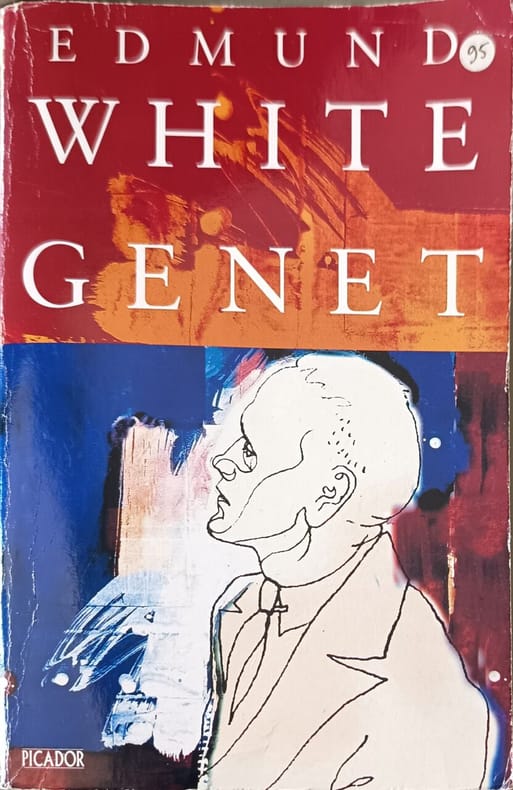
Edmund White
Genet
Picador 1994 864 pages 15 748x4 572x23 114cm. 1994. Broché. 864 pages.
Référence libraire : 15639 ISBN : 330306227
|
|
|
Edna Best [Edna Clara Best] (1900-1974), English stage and screen actress who made films for Gainsborough Studios, and starred i
Edna Best English stage and screen actress who made films for Gainsborough Studios and starred in Hitchcock’s 1934 version of ‘The Man Who Knew Too Much’. Signed publicity photograph.
Without date but from the 1930s. No place. Not present among the twelve portraits of Best on the National Portrait Gallery inventory. A black and white collotype print covering a 13 x 17.5 cm piece of matt paper with no border. Lightly aged and in good condition apart from the thinnest of strips no more than half a centimetre deep along the top of the image taken up when the print was removed from its mount. This negligibe loss only affects the background and would be easily hidden on the photograph being mounted. A head and shoulders shot of an anxious-looking Best staring to her left with short hair style and side parting plucked eyebrows prim lips and sensible outfit against blurred background. Without date, but from the 1930s. No place. unknown
Référence libraire : 25952
|
|
|
EDNA LEE - endrebe maurice bernard (traduction)
La trame des jours - the web of days
PRESSES DE LA CITE. 1948. In-12. Cartonné. Etat d'usage, Couv. convenable, Dos satisfaisant, Quelques rousseurs. 381 PAGES - jaquette en état d'usage. Avec Jaquette. . . Classification Dewey : 810-Littérature américaine
Référence libraire : RO20254846

|
|
|
EDNA SHERRY.
DISCRETION ASSUREE... .
S.E.P.E.. 1950.. In-12. Broché. Etat passable, Couv. légèrement passée, Dos abîmé, Quelques rousseurs. 251 pages. 1ère decouverture illustrée en couleurs. Manque le dos de l'ouvrage et le 2nd plat de couverture. 1er plat de couverture abîmé. Manques sur le coin des page de 235 à 251.. . . . Classification Dewey : 810-Littérature américaine
Référence libraire : RO20075160

|
|
|
Edward A. Freeman
The Reign of William Rufus and the Accession of Henry the First - VOLUME 1
Henry Frowde / Oxford University Press Warehouse / At the Clarendon Press 1882 in8. 1882. Relié. Cette œuvre historique en deux volumes d'Edward A. Freeman publiée en 1882 examine en détail le règne de Guillaume II (William Rufus) roi d'Angleterre de 1087 à 1100 et l'accession au trône de son frère Henri Ier. L'ouvrage analyse les dynamiques complexes du pouvoir médiéval les relations entre la monarchie la noblesse et l'Église ainsi que les ambitions territoriales de l'Angleterre durant cette période
Référence libraire : 100145648

|
|
|
Edward Askew Sothern (1826-1881), English actor:
Edward Askew Sothern actor Autograph Letter Signed 'E. A. Sothern' to 'Davis'.
Undated. On letterhead of the Theatre Royal Haymarket. 12mo 2 pp. On bifolium. 12 lines. Text clear and complete. Good on lightly-aged paper. Part of the leaf to which the item was attached in an autograph album adhering to blank part of reverse of second leaf. 'Miss Cross' has written to him again 'desiring me to use my influence in obtaining an engagement for her. - She states she is "quite disengaged now" '. Sothern states that when she made a similar request on a previous occasion 'there was some little misunderstanding' so he considers it best to 'drop you a line'. Undated. On letterhead of the Theatre Royal, Haymarket. unknown
Référence libraire : 8851
|
|
|
Edward Augustus Freeman (1823-1892), English historian and Liberal politician [Rupert Simms (1853-1937), bookseller and Stafford
Autograph Letter Signed 'Edward A Freeman' from the historian and politician Edward Augustus Freeman to the Staffordshire antiquary Rupert Simms correcting his list of Freeman's books for Simms's 'Bibliotheca Staffordiensis'.
Somerlease Wells. 23 February 1884. Freeman's letter is on the last of five folio pages each on a separate leaf sent to him by Simms giving for correction the proposed entry on Freeman in the future 'Bibliotheca Staffordiensis'. In fair condition on aged paper. On the first page Simms has given a brief biographical description of Freeman; the middle three pages comprise a numbered list of twenty-three of Freeman's books with dates and the last page carries a rather optimistic request by Simms for information regarding 'Contribution to Periodicals Magazines &c. Giving Number a year of Serial - Pages occupied - &c'. Freeman has corrected a couple of titles in the list and on the fifth page of the document he gives the names of what he calls in the letter his five 'latest books'. The letter begins 'Sir I have added my latest books which are not on the list. I suppose everything that is wanted to be known would be found in the books themselves. I certainly have no time to go through the pages of all or to make a list say of my <> contributions to the Saturday Review which seems to be asked for.' He concludes 'It is quite impossible for me to undertake all the labour that I am asked.' Although not published until 1894 ten years after this letter Freeman's entry in the 'Bibliotheca Staffordiensis' does no more than incorporate Freeman's emendations. Somerlease, Wells. 23 February 1884. unknown
Référence libraire : 11945
|
|
|
Edward Bulwer-Lytton, Lord Lytton [ Edward George Earle Lytton Bulwer-Lytton, 1st Baron Lytton ] (1803-1873), English novelist,
Edward Bulwer-Lytton Lord Lytton author and politician. Autograph Letter Signed 'Lytton' inviting the unnamed recipient presumably F.W. Farrer and 'Mrs. Farrer' to extend their forthcoming stay.
12 Grosvenor Square London . 21 July no year . 1p. 12mo. In good condition lightly aged. Reads: 'My dear Sir/ I think it is the 28th. thar you proposed to come to me & I hope that you & Mrs. Farrer may find it not interfering with more agreeable <> please to stay at least till the following Monday or Tuesday Aug 1st'. 12 Grosvenor Square [ London ]. 21 July [ no year ]. unknown
Référence libraire : 19920
|
|
|
Edward Bulwer-Lytton, Lord Lytton [Edward George Earle Lytton Bulwer-Lytton, 1st Baron Lytton] (1803-1873), English author and p
Lord Lytton Edward Bulwer Lytton Victorian novelist and friend of Dickens. Autograph Letter Signed 'E B L' to Lady Ann Cullum regarding arrangements with his solicitor regarding a 'Deed'.
12 May 1855; Park Lane London on letterhead of the House of Commons. 3pp 12mo. Bifolium. In good condition lightly aged with traces of paper from mount adhering to blank reverse of second leaf. Folded twice. Written in his usual difficult hand. He begins by stating that her note was forwarded to him from Knebworth. The letter continues: 'I had previously requested my Solicitor. to arrange some plan if possible by which the tenets of the Deed might be performed without your intervention or occasioning you any personal trouble &c.' The solicitor has informed Lytton that he has 'not quite effected that object in a mode which will you from all anxiety.' A reference to 'Mr. Greene' follows and he continues by explaining why he was 'desirous of this' with a possible and only partially-legible reference to his long-suffering wife as 'Lady L' and 'the mother'. He ends in the hope that she will visit him at Knebworth. From the papers of Lady Ann Cullum 1807-1875 wife of Sir Thomas Gery Cullum 1777-1855 of Hardwick House. 12 May 1855; Park Lane [London], on letterhead of the House of Commons. unknown
Référence libraire : 22455
|
|
|
Edward Cahn (director); Russ Bender, VI Voss (screenwriters); Marla English, Tom Conway, Mike Connors (starring) V I
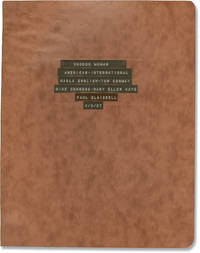
Voodoo Woman Black Voodoo Original screenplay for the 1957 film
Los Angeles: American International Pictures AIP 1957. Draft script for the 1957 film. <br /> <br /> The members of a gold expedition in the jungle are inadvertently drawn into the evil schemes of a scientist seeking to create an indestructible being. American International Pictures recycled the monster design from their 1956 film "The She-Creature" to create the Voodoo Woman character with a redesigned face and sporting a blonde wig. The final film of actress Marla English.<br /> <br /> Red titled wrappers noted as copy No. 7. Distribution page present with receipt intact. Title page present undated with credits for director Edward Cahn and actors Marla English Tom Conway Mike Connors and others. 105 leaves with last page of text numbered 102. Mimeograph duplication rectos only. Pages Near Fine wrapper Very Good plus with a tide mark on the top left corner bound with a silver prong. Housed in brown wrappers with the film's title lead actors and release date noted on a label. American International Pictures [AIP] unknown
Référence libraire : 158054
|
|
|
Edward Duncan (1803-1882), English engraver and watercolour painter [The Chalcographic Society; John Paget]:
Autograph Letter Signed 'E Duncan' from the engraver and watercolour painter Edward Duncan inviting John Paget to a meeting of the Chalcographic Society at his house.
110 Adelaide Road Haverstock Hill. 17 August 1863. 2pp. 12mo. In fair condition on lightly-aged paper with a couple of small spots of glue from mount. Numbered in another hand at the foot of the second page. He writes: 'The Chalcographic Society meet at my house on Friday evening next 21st inst If you can favor me with your company on that evening it will give me great pleasure.' For information about the Chalcographic Society founded in 1807 see Dennis M. Read's biography of 'R. H. Cromek' 2011. 110 Adelaide Road, Haverstock Hill. 17 August 1863. unknown
Référence libraire : 12341
|
|
|
Edward Engelberg (University of Michigan English Professor).
TLS Edward Engelberg to Thomas Parkinson February 10 1964. RE: Yeats.
Ann Arbor Michigan: Edward Engelberg 1964. Typed Signed Letter. 7" x 8.5" Oblong Single Page Front & Back on University of Michigan letterhead with some MS notes inked in margins. Very Good. Provenance: Peter Howard Serendipity Books Berkeley. Ann Arbor, Michigan: Edward Engelberg, 1964. unknown
Référence libraire : 63-4851

|
|
|
Edward Engelberg (University of Michigan English Professor).
TLS Edward Engelberg to Thomas Parkinson March 8 1964. RE: Yeats.
Ann Arbor Michigan: Edward Engelberg 1964. Typed Signed Letter. 11" x 8.5" 2 pp. on University of Michigan letterhead with some MS notes inked in margins. Very Good. Provenance: Peter Howard Serendipity Books Berkeley Thomas Parkinson archive. Ann Arbor, Michigan: Edward Engelberg, 1964. unknown
Référence libraire : 63-4877

|
|
|
Edward Fitzball (1792-1873), English playwright specialising in melodrama [ Benjamin Nottingham Webster (1797-1882), actor-manag
Edward Fitzball writer of melodramas. Autograph Letter Signed 'Fitzball' to an unnamed recipient regarding changes to the last scene of his play 'The Haunted Hulk'.
'Monday Evng.' London 1831. . 1p. 12mo. In fair condition on aged and worn paper. He has had a conversation with 'Tomkins' and as a consequence has 'made a few alterations in the last scene of the "Hulk"'. He asks him to read the last scene and 'manage if possible to get the Prompter's Copy set right before the reading of the Piece'. He feels his changes make the play 'more original and more likely to render the Piece effective'. With postscript. 'The Haunted Hulk' a Nautical Drama in two Acts was performed at the Adelphi in 1831. 'Monday Evng.' [ London?, 1831. ] unknown
Référence libraire : 17429
|
|
|
Edward Fitzball (1792-1873), English playwright [ Charles Kean (1811-1868), English actor, born in Ireland; Walter James Macquee
Edward Fitzball English playwright. Autograph Letter Signed 'E. Fitzball.' to Charles Kean requesting a box for a performance of King Lear at the Princess's Theatre .
9 Upper Fitzroy Street Fitzroy Square London . 18 May 1858. 1p. 16mo. In fair condition on aged paper laid down on damaged leaf from album. At head in another hand: 'for Saturday'. Reads: 'My dear Sir: I shd. feel greatly obliged if you could without inconvenience to yr interest give me a box any night this week to see King Lear.' At head is note in another hand see below: 'for Saturday'. From the collection of Macqueen-Pope who has written at the foot of the leaf on which the letter is mounted: 'To Chas Kean Princess's Theatre Note at top either by CK or Massingham the boxoffice manager.' 9 Upper Fitzroy Street, Fitzroy Square [ London ]. 18 May 1858. unknown
Référence libraire : 17767
|
|
|
Edward Garrard Marsh (1783-1862), English poet and Anglican clergyman, son of the composer John Marsh, and associate of William
Edward Garrard Marsh poet and clergyman. Autograph Letter Signed regarding communications to the Maidstone Clerical Society.
9 February 1853; Aylesford. See his father’s entry in the Oxford DNB. 2p 12mo. Neatly written over 26 lines. With mourning border. In good condition lightly aged. Folded twice for postage. Signed ‘E. G. Marsh’. Recipient not named ‘My dear Sir’. He explains that having happened on the previous day to be in the chair ‘at the monthly meeting of our clerical society in Maidstone’ he was present when the recipient’s ‘two letters to Dr. Maitland’ were presented and is requested to convey the meeting’s gratitude not only for the letters but for his history of Rome ‘received by them on a former occasion’. Having brought the letters home Marsh expects to be ‘fully satisfied by your proofs of the position concerning the Cyprianic letters’. He hopes the recipient will renew his ‘suspended I will not say forgotten habit of attending the meetings of the society’. 9 February 1853; Aylesford. unknown
Référence libraire : 24452
|
|
|
EDWARD GIBBON, English Historian & Member of Parliament , Born 1737 at Putney, Educated Oxford, TOURED ITALY 1764-5, DIED IN 179
DECLINE & FALL OF ROMAN EMPIRE BY GIBBON Volumes 1-4 IN MIXED SET DUSTJACKETS EVERYMAN’S LIBRARY # 434 435 436 DATED 1966 & OTHER VOL 4 DATED 1969 EVERYMAN’S LIBRARY # 474 VOL 1-3 PURPLE B/W DJ HAS ROMAN SOLDIER CORNERING A MAN
HBDJ Volumes 1-4 IN MIXED SET DUSTJACKETSWITH DIFFERENT ILLUSTRATOR ON VOL. 4 EVERYMAN'S LIBRARY # 434 435 436 DATED 1966 & OTHER VOL 4 EVERYMAN'S LIBRARY # 474 DATED 1969 HAS BLUE TOPSTAIN VOL 1-3 PURPLE B/W DJ HAS ROMAN SOLDIER CORNERING A MAN DEATH OF AN EMPEROR DJ DRAWN BY Tom Poulton & OTHER 2 VOLS HAVE DIFFERENT ILLUSTRATIONS ON PURPLE DJ'S VOL 4 DATED 1969 Emperor Justinian on the WHITE DUSTJACKET WITH BLUE & WHITE Drawing by Eric Fraser RedOrange cloth hardcover WITH GOLD GILT ON SPINE CVR with dustjacket 4 3/4 X 7 1/4 in. VG/VG Approx . clean bright tight unmarked copy ! Text clean and unmarked . The binding is tight and square .BACK OF DJ SAYS FEW OF 500 AUTHORS 534 PGS NO ADS IN BACK DUSTJACKET drawing by Eric Fraser Plain blue Endpapers ON VOL 4 & VOL 1 2 & 3 HAVE GOLD & WHITE DECORATED ENDPAPERS. VOL 1-3 PURPLE B/W DJ HAS ROMAN SOLDIER CORNERING A MAN DEATH OF AN EMPEROR DJ DRAWN BY Tom Poulton & OTHER 2 VOLS HAVE DIFFERENT ILLUSTRATIONS ON PURPLE DJ';S VOL 4 DATED 1969 Emperor Justinian on the WHITE DUSTJACKET WITH BLUE & WHITE Drawing by Eric Fraser Masterpiece of Organized Detail ANCIENT HISTORY GIBBON'S blames Christianity for its Fall. Once North Africa was seized from Rome there was a lack of trade & STABLE CROPS WHICH FED ROMANS. Gibbon became the first modern historian of ancient Rome. It covers a singular subject ranging over 14 centuries and half the globe. focused on the Romans and despite moving at lightning speed only manages to get to the year 640 by the end of volume 4 .Augustus is "at first the enemy and at last the father" of Rome. WRITTEN AROUND TIME AMERICAN REVOLUTION 476AD WAS FALL. ROMULUS AUGUSTUS REMOVED FROM POWER. COVERED 9000000 MILES AT 1 TIME. END OF ROMAN EMPERORS. THUS ROMAN REPUBLIC FORMED. <br /><br /><br /> EVERYMAN’S LIBRARY J. M. DENT PRINTED IN GREAT BRITAIN hardcover
Référence libraire : 29798
|
|
|
EDWARD GIBBON, English Historian & Member of Parliament , Born 1737 at Putney, Educated Oxford, TOURED ITALY 1764-5, DIED IN 179
DECLINE & FALL OF ROMAN EMPIRE BY GIBBON VOLS 2 & 3 ONLY EVERYMAN’S LIBRARY ARE SMALLER REDDISH LEATHER & DATE 1925 & 1926 IN OLIVE GREEN DUSTJACKETS VOLS 2 & 3 # 435 & 436 Top Spine DJ NF VG- AS-IS 1ST EDITION EARLY ISSUE REPRINT VOLS 2 & 3 HAVE DARK OLIVE DJS WITH ROUND EMBOSSED SYMBOL FRONT BTM RT
HBDJ VOLS 2 & 3 ONLY ARE SMALLER REDDISH LEATHER & DATE 1925 & 1926 IN OLIVE GREEN DUSTJACKETS VOLS 2 & 3 # 435 & 436 Top Spine DJ NF VG- AS-IS 1ST EDITION EARLY ISSUE REPRINT VOLS 2 & 3 HAVE DARK OLIVE DJS WITH ROUND EMBOSSED SYMBOL FRONT BTM RT WITH INITIALS J M D Gold Gilt FRONT OF COVER & DJ DJ WHICH HAS TINY CHIPS WEAR TO EXTREMITIES & SMALL CHIP FRONT DJ ON VOL3 THESE ARE SMALLER REDDISH LEATHER & HAVE SAME SYMBOL WITH INITIALS J M D GOLD GILT AS THE DUSTJACKETS DO ON VOL2 & 3 41/4 X 6 3/4 IN. APPROXTITLED & DECORATED IN GOLD GILT ON SPINE CVR Back of DJ lists dickens little dorrit thru poe's Tales & dickens great expectations Thru MILTONS POEMS 462 PGS NO ADS IN BACK & 523 PGS NO ADS IN BACK GOLD GILT TOPSTAIN ON PGS OUTER EDGES VOLS 2 & 3 HAVE DARK OLIVE DJS WITH ROUND EMBOSSED SYMBOL FRONT BTM RT WITH INITIALS J M D Gold Gilt FRONT OF COVER & DJ .Masterpiece of Organized Detail ANCIENT HISTORY GIBBON'S blames Christianity for its Fall. Once North Africa was seized from Rome there was a lack of trade & STABLE CROPS WHICH FED ROMANS. Gibbon became the first modern historian of ancient Rome. It covers a singular subject ranging over 14 centuries and half the globe. focused on the Romans and despite moving at lightning speed only manages to get to the year 640 by the end of volume 4 .Augustus is "at first the enemy and at last the father" of Rome. WRITTEN AROUND TIME AMERICAN REVOLUTION 476AD WAS FALL. ROMULUS AUGUSTUS REMOVED FROM POWER. COVERED 9000000 MILES AT 1 TIME. END OF ROMAN EMPERORS. THUS ROMAN REPUBLIC FORMED. <br /><br /> EVERYMAN’S LIBRARY J. M. DENT PRINTED IN GREAT BRITAIN hardcover
Référence libraire : 29817
|
|
|
Edward Hogg (1783-1848), English doctor and travel writer, a friend of poet laureate Robert Southey [ George Dyer (1755-1841), a
Edward Hogg doctor and travel writer. Autograph Letter Signed 'Edwd. Hogg' to 'Dear Dyer' George Dyer written while en route to 'Mr. Fry's'.
'Hendon Saturday.' No date. 16mo. 1p. In fair condition with slight traces of glue from mount. He has received Dyer's 'parcel per Coach' and informs him that his party is 'expected at Mr. Fry's' on the following day. He is returning with the letter 'all the Books you first forwarded for Mrs Jacksons inspection'. 'Hendon, Saturday.' No date. unknown
Référence libraire : 16455
|
|
|
Edward Hull (1829-1917), Anglo-Irish geologist [John Hall Gladstone (1827-1902), English physical chemist]:
Edward Hull geologist Autograph Letter Signed to Gladstone.
19 May 1902; on letterhead of the Victoria Institute 8 Adelphi Terrace London W.C. 12mo 3 pp. Very good on lightly aged paper. Asking whether Gladstone would consent to the placing of his name on the list of the Institute's Council 'to fill one of the vacancies'. 'You would be of great service to us in so doing - and the calls on your time would not be numerous - about a dozen times a year'. Six lines in shorthand by Gladstone on the reverse of the second leaf of the bifolium. 19 May 1902; on letterhead of the Victoria Institute, 8 Adelphi Terrace, London W.C. unknown
Référence libraire : 6719
|
|
|
Edward James Mortimer Collins (1827-1876), English nineteenth-century novelist, journalist and poet:
Mortimer Collins novelist Autograph Letter Signed 'Mortimer Collins' to Edward Draper; together with a printed poem produced on the occasion of Collins's death.
The letter: undated 'Knowsley <> of L. Derby'. Letter: 12mo 4 pp. Bifolium. Text clear and entire but with the outer pages grubby. He has 'no wish to annoy other members of the Court family' so it will 'go no further'. 'It is cool of Miss Court to talk thhe confidence of her own home when she made the statement to Mrs Bulkeley in her own drawing-room.' Suggests that Draper send 'the Postmistress' a 'reminder'. 'She is so accustomed to threatening letters from her creditors' lawyers that she possibly may disregard this.' Asks him to 'make her understand that withholding an apology may have sharp consequences'. There will be 'a few quiet folk here in the Whitsun week' and the Collinses will be 'delighted to see you'. Card: attractively printed in light brown purple and gold on one side of a piece of shiny paper 12 x 14 cm. Gives Collins's name and dates above an anonymous two-stanza 16-line poem beginning 'The poet may tread earth sadly Yet is he Dreamland's king; And the fays at his bidding gladly Visions of beauty bring.' The refrain is 'Comes of age.' The letter: undated, 'Knowsley, <?> of L. Derby' unknown
Référence libraire : 6802
|
|
|
Edward Jesse (1780-1868), English naturalist and author [Edward Walford (1823-1897)]:
Edward Jesse naturalist Two Autograph Letters Signed 'Edwd. Jesse' and 'Edward Jesse' to Edward Walford.
13 October 1863 16 Belgrave Place; 30 July 1867 Brighton. Letter One 12mo 2 pp; good with glue from previous mounting to reverse of blank second leaf of bifolium: Jesse hears 'that there has been a violent attack made on my lectures to the Brighton Fishermen in "the Field" of last Saturday'. He 'published these lectures in the hopes that they might be useful to many people'. He 'gave the Copyright to Mr. Booth the publisher & never recovered one farthing profit for them'. 'They were written for an ignorant club of men without any pretension'. Jesse wrote what he thought would 'amuse or insstruct them partly from my own head & partly from different books in my library. I made no secret of this.' He thinks it is 'hard that I shd. have been so attacked' and asks Walford to 'find out who has done it'. The Field would not publish a reply by Jesse. 'My only aim in my lectures was to do good & so far I have succeeded'. Letter Two 12mo 1 p; good with glue and paper from mount adhering to blank reverse. He has sent 'by to day's Book post' his 'papers on Dame Juliana Berners & her Book of St. Albans' and he hopes Walford will approve of them. He will be glad to see Walford 'whenever you want a mouth full of Sea air'. Signed 'very truly yrs but nearly blind signed Edward Jesse'. 13 October 1863, 16 Belgrave Place; 30 July 1867, Brighton. unknown
Référence libraire : 6684
|
|
|
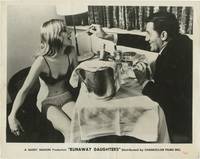
Edward L Cain (director); Lou Rusoff (screenwriter); Marla English, Anna Sten, John Litel (starring)
Runaway Daughters Three original photographs from the 1956 film
N.p.: Chancellor Films 1956. Three vintage studio still photographs from the 1956 film. Two photographs with provenance stamps on the versos<br /> <br /> A surprisingly nuanced depiction of three teenage girls from troubled homes who leave home in search of new lives in Los Angeles. <br /> <br /> Shot on location in Los Angeles. <br /> <br /> 8 x 10 inches. Very Good plus one with even faint toning and pinholes and one with light soiling. Chancellor Films unknown
Référence libraire : 162197
|
|
|
Edward Le Bas (1904-1966), English painter and collector [Jean Winifred Inglis (1884-1959), artist]:
Edward Le Bas painter and collector Two Autograph Letters Signed from Edward Le Bas to 'Miss Inglis'.
Letter One: 14 January 1934; 6 Fitzroy Square London. Letter Two:4 August 1945; on letterhead of 53 Bedford Square London. Letter One: 12mo 2 pp. Good on lightly-aged paper. The 'delightful drawing' she left for him is a 'wonderful surprise'. He has been 'trying some life drawing direct with the brush' and is surprised that she was able 'to put it down like that!' Letter Two: 4to 2 pp. Fair on lightly-aged and creased paper. He apologizes for the delay in answering her letter and thanking her for sending one on by 'Bloggins'. He is 'an abominable letter writer though that does not mean a change of feelings to one's old friends'. He has received a letter f'rom C. B. himself about the Academy'. Advises her against getting rooms in London; it is 'most unwise as we seem to be about to raid Berlin and are sure to get it back on London'. He hopes she is 'getting some painting done'; he does a little at weekends 'but it's very depressing having to go back to the office just when things get going'. Feels that the war 'might end all of a sudden'. Letter One: 14 January 1934; 6 Fitzroy Square, London. Letter Two:4 August [1945?]; on letterhead of 53 Bedford Square, London. unknown
Référence libraire : 9803
|
|
|
Edward Lytton, Lord Lytton [ Edward George Earle Lytton Bulwer-Lytton ] (1803-1873), 1st Baron Lytton, English novelist and poli
Edward Lytton Lord Lytton. Autograph Letter Signed 'L.' to 'Mr. Pearson' offering him a present.
Without place or date. On his monogrammed letterhead. 1p. 12mo. In good condition lightly-aged. He writes that he has had 'a very fine p<iece>' sent to him and asks if Pearson might accept it. 'If you dont care about it yourself you may have friends here to whom you might like to give it. Only unluckily I must have back the top'. He ends with a complaint regarding a 'Bronchial cough'. Without place or date. On his monogrammed letterhead. unknown
Référence libraire : 17165
|
|
|
Edward Norgate ; Jeffrey M. Muller ; Jim Murrell
Miniatura or the Art of Limning
Hardcover, 312 pages, English, 240 x 165 mm, cover has some traces of being used before, book however is in very fine condition, and not unimportant, with a signature and greeting from the author, !!. ISBN 9780300069136. Edward Norgate, aristocratic friend of Charles I and the Earl of Arundel, made his mark in seventeenth-century England as musician, herald, and courtier. He also wrote Miniatura, a widely circulated study of miniature painting in his era that serves today as both a guide to materials and techniques and a record of the artistic knowledge and taste of Charles' court. This new edition of Norgate's treatise, the first since 1919, introduces and fully annotates the text from technical and art historical perspectives, firmly establishing the prime importance of Norgate's work. The book provides a detailed account of Norgate's life and many interests, his readership, and his technique. The editors-a noted scholar of seventeenth-century art and an authority on the techniques and materials of miniature painting-closely examine Norgate's text and compare it with other contemporary treatises, placing his techniques in the context of the period. The treatise itself, first written in 1627-28 and then substantially revised in 1648, sets forth in great detail the methods of English miniaturists, from the composition and preparation of pigments and brushes to lighting in the studio. Norgate acknowledges indebtedness to Hilliard, comments on other artists' styles and techniques, and reveals through his own views the English aristocracy's interest in and assimilation of European artistic culture.

|
|
|
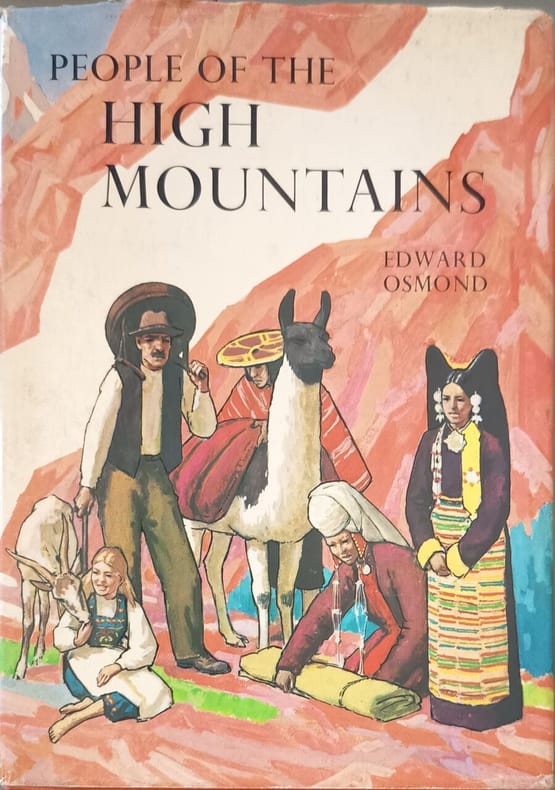
Edward Osmond
People of the High Mountains
Odhams Books LTD 1965 45 pages in8. 1965. broché. 45 pages.
Référence libraire : 14875
|
|
|
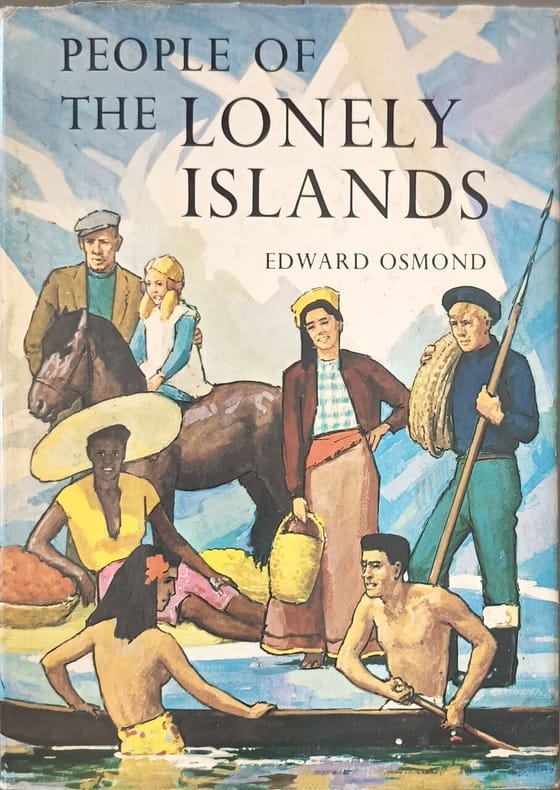
Edward Osmond
People of the Lonely Islands
Odhams Books LTD 1965 45 pages in8. 1965. cartonné avec jaquette. 45 pages.
Référence libraire : 14874
|
|
|
EDWARD RONNS
LES MILLIONS DU CRIME (MILLIONS DOLLAR MURDER)
EDITIONS FERENCZI. 1953. In-12. Broché. Etat d'usage, Couv. légèrement passée, Dos satisfaisant, Intérieur frais. 159 pages. Dos partiellement détaché.. . . . Classification Dewey : 810-Littérature américaine
Référence libraire : RO20130038
|
|
|
EDWARD S. AARONS
LES MAILLES DU FILET
LIBRAIRIE DES CHAMPS ELYSEES EDITIONS LE CLUB DES MASQUES N°0376. 1979. In-12. Broché. Bon état, Couv. convenable, Dos satisfaisant, Intérieur frais. 186 pages. . . . Classification Dewey : 810-Littérature américaine
Référence libraire : RO90009376
|
|
|
EDWARD S. AARONS
UNE OMBRE SUR LA VILLE
LIBRAIRIE DES CHAMPS ELYSEES. 1976. In-12. Broché. Bon état, Couv. convenable, Dos satisfaisant, Intérieur frais. 186 Pages. . . . Classification Dewey : 810-Littérature américaine
Référence libraire : RO90006425
|
|
|
Edward Shanks, born in 1892, in London English author and poet, Blank endpapers Former Owner Name
THE RICHEST MAN in Blue & Yellow Dustjacket of 2 String Puppets on stage 1 in Top Hat & Tails & other in Officers Uniform with Hat & Mustache STATED PUBLISHED JUNE 1924 1ST EDITIONin Blue & Yellow Dustjacket of 2 String Puppets on stage 1 in Top Hat & Tails & other in Officers Uniform with Hat & Mustache As Fresh & Jolly a Tale
<p>Alfred A. Knopf NY Borzoi Books 1924 HBDJ 1924 on Title & COPYRIGHT PG STATED PUBLISHED JUNE 1924 1ST EDITION FINE-/GOOD-. Fine- grey cloth hardcover with blue Decoration & Red Title first edition copy with dust jacket. GOOD- DJ is worn but bright with small chip on front left top edge with tiny chip tears wear Edges Extremities. Book square and firmly bound. Sharp text on heavy white pages. Original owner's signature. Grey cloth cvr with Green Design & Red Titles DJ Protected Clear Mylar As Fresh & Jolly a Tale of Adventure As any Modern has Composed Romance of the Most Exciting variety may force its Way into the Life of Even the Least Adventurous of men. P. Edward Daubney Professor of History at Cambridge suffering from Shell Shock after the War takes a Holiday in Italy & then the Startling Events Begin to happen with even more Startling Rapidity. He meets a Soldier of Fortune & with him Discovers the Richest man in the world a Man so Wealthy & so Powerful that Nations are Mere Pawns in the Game He Plays. Quite Unwittingly Daubney blunders into the Storm Centre pf post-War European Politics & is Instrumental in Aiding Williams the Richest Man in preventing the Re-Establishment of the German Monarchy thus averting another Great War Incidentally all 3 Daubney williams & Hollis the Adventurer fall in Love with the Same Beautiful Italian GIRL. Narrative of Adventure in Modern Europe. 1st Edition. Hard Cover. Fine/Good.</p> Alfred A. Knopf, NY Borzoi Books hardcover
Référence libraire : 27915

|
|
|
Edward Spencer Beesly (1831-1915), philosophe anglais, historien, militant syndical, positiviste. Elève de Richard Congreve, il rompt lors du schisme de 1878 et dirigera la London positivist Society à la suite de Congreve.
Lettre autographe signée au docteur Jean-François Robinet
Edward Spencer Beesly (1831-1915), philosophe anglais, historien, militant syndical, positiviste. Elève de Richard Congreve, il rompt lors du schisme de 1878 et dirigera la London positivist Society à la suite de Congreve. L.A.S., 25 Descartes 90 [1er novembre 1878], 1p in-12. Au docteur Jean-François Robinet (1825-1899), médecin d'Auguste Comte et important positiviste français, sur carte postale : « I authorise you to print my manifeste if you think it worth while. I will write to Mr Lushington for a similar authorisation. I am glad there is such unanimity among you. Here it is difficult to say how the struggle for the school will be decided. Some who condemn Dr Congreve blame us nevertheless for refusing to share the room with him. But if we are beaten on Sunday, we mean to leave the room. I will send you back the Séméri & Audiffrent manifestus. The former is disgraceful. I will not fail to write to you on Sunday night. E.S.B. ». Essai de traduction : « Je vous autorise à imprimer mon manifeste si vous le jugez utile. J'écrirai à M. Lushington pour obtenir une autorisation similaire. Je suis heureux de constater une telle unanimité parmi vous. Ici, il est difficile de dire comment se décidera la lutte pour l'école. Certains qui condamnent le Dr Congreve nous reprochent néanmoins de refuser de partager la même pièce que lui. Mais si nous sommes battus dimanche, nous quitterons la pièce. Je vous renverrai le manifeste de Séméri et Audiffrent. Le premier est honteux. Je ne manquerai pas de vous écrire dimanche soir. » Cette lettre est intéressante car il s'agit ici de publier un manifeste contre Richard Congreve (1818-1899) qui était jusque là le chef du positivisme en Angleterre. C'est à ce moment-là que le schisme latent sera assumé. C'est au même moment que Sémérie et Audiffrent finissent de s'éloigner de la Société positiviste dont ils seront exclus en 1879. Parmi les noms cités : Godfrey Lushington (1832-1907) était un haut fonctionnaire anglais ; Eugène Sémérie (1832-1884) était un médecin, positiviste, proche du docteur Robinet ; Georges Audiffrent (1823-1909) était un médecin, positiviste, très proche d'Auguste Comte, il prendra la tête d'un schisme. Les lettres entre positivistes sont rares. [184]
Référence libraire : 018553

|
|
|
Edward Spencer Beesly (1831-1915), philosophe anglais, historien, militant syndical, positiviste. Elève de Richard Congreve, il rompt lors du schisme de 1878 et dirigera la London positivist Society.
Lettre autographe signée au docteur Jean-François Robinet
Edward Spencer Beesly (1831-1915), philosophe anglais, historien, militant syndical, positiviste. Elève de Richard Congreve, il rompt lors du schisme de 1878 et dirigera la London positivist Society. L.A.S., 17 Moïse 90 [17 janvier 1878], 4p in-8. Au docteur Jean-François Robinet (1825-1899), médecin d'Auguste Comte et important positiviste français. « Cher & honoré confrère, C'est désolant ce que vous me dites des demandes de M.M. Sémérie & Audiffrent. Mais pour que nous soyons en mesure de demander à M. Congreve des explications sur leur langage, il faut, ou que vous nous permissiez de vous citer comme autorité, ou bien que vous nous fournissiez des pièces justificatives. C'est-à-dire des copies conformes des lettres de ces messieurs, dans lesquelles ils ont proféré les menaces et se sont vantés du support de M. Congreve. Sans cela, il serait inutile d'aborder celui-ci. En effet, un ami à qui j'ai parlé à ce sujet, sans vous nommer bien entendu, m'a reproché ma crédulité. M. Congreve m'a écrit, avant Noël, qu'il n'était pas responsable de ce que pourrait faire M. Sémérie. Toutefois si celui-ci s'est permis d'employer le nom de M. Congreve, je ne vois pas comment le chef Britannique pourra continuer de se taire. La destitution de Ducrot me parait l'acte le plus rassurant du nouveau gouvernement. J'espère que les Radicaux sauront suivre les conseils de M. Gambetta, en agissant qu'avec la plus grande circonspection jusqu'aux élections sénatoriales. Du moment qu'il y aura une solide majorité républicaine dans le Sénat, les parties seront à refondre. A vous de coeur. E.S. Beesly ». Eugène Sémérie (1832-1884) était un médecin, positiviste, proche du docteur Robinet. Georges Audiffrent (1823-1909) était un médecin, positiviste, très proche d'Auguste Comte, il prendra la tête d'un schisme et sera exclus de la Société positiviste. Auguste-Alexandre Ducrot (1817-1882) est un général qui, ayant émis l'idée d'un coup d'état royaliste, sera épuré avec d'autres. Les lettres entre positivistes sont rares. [446]
Référence libraire : 018972

|
|
|
Edward Spencer Beesly (1831-1915), philosophe anglais, historien, militant syndical, positiviste. Elève de Richard Congreve, il rompt lors du schisme de 1878 et dirigera la London positivist Society.
Lettre autographe signée au docteur Jean-François Robinet
Edward Spencer Beesly (1831-1915), philosophe anglais, historien, militant syndical, positiviste. Elève de Richard Congreve, il rompt lors du schisme de 1878 et dirigera la London positivist Society. L.A.S., 24 Frédéric 90 [18 novembre 1878], 2p in-8. Au docteur Jean-François Robinet (1825-1899), médecin d'Auguste Comte et important positiviste français. « Cher & honoré Confrère, Je vous ai envoyé l'épreuve de M. Bridges corrigée de sa main, avec la mienne. Ne l'avez-vous pas remarquée ? Vous aurez reçu probablement celle de M. Lushington. Voilà une signature à l'adresse que je n'ai pu déchiffrer. [Signature coupée et collée, peut-être celle de Georges Audiffrent très mal écrite] 23 rue du mail. Et qui par conséquence ne se trouvais pas dans l'épreuve. Veuillez me le fournir. M. Dubuisson dans une lettre d'hier me dit que l'éloignement ou l'absence de Paris de certains Positivistes vous a empêché de recueillir leurs signatures. Ne serait-il bon de tâcher de les obtenir, celles des Parisiens en tout cas ? Si M. Congreve remarque les absents, il se flattera, à coup sûr, de les avoir ébranlés. J'ai souvent remarqué qu'il a une faculté extraordinaire de se tromper de cette façon. En comparant les signatures de l'adresse avec une liste des Positivistes connus fournie à M. Bridges par M. Dubuisson, je ne vois que quatre parisiens qui manquent. Ce sont MM. Allemeyer, Boll, L'Heureux, Mignoneau. J'apprends avec plaisir de M. Morison qu'il va passer quelques jours à Paris le mois prochain. Il pourra vous expliquer plusieurs choses qui ne s'écrivent pas facilement, et j'espère qu'à son retour il nous en dira réciproquement de votre part. Il vient de publier une biographie de notre grand historien Gibbon qui est un chef-d'oeuvre. M. Albert Crompton a donné son adhésion définitive à M. Congreve. M. Henri Crompton dit qu'il attendra la prochaine circulaire de M. Laffitte avant de se prononcer définitivement. J'espère que cette circulaire fera justice des sophismes de M. Congreve. Je vous serre cordialement la main. E.S. Beesly. Je déférerai le tirage de l'adresse jusqu'à ce que vous m'aurez répondu quant aux autres signatures ». John Henry Bridges (1832-1906) est un médecin anglais, exécuteur testamentaire d'Auguste Comte. Godfrey Lushington (1832-1907) était un haut fonctionnaire anglais. Paul Dubuisson (1847-1908) est un médecin et psychiatre, gendre du docteur Robinet. James Augustus Cotter Morison (1832-1888), historien et écrivain anglais. Henry Crompton (1836-1904) est un avocat anglais, ami et beau-frère de Beesly, assistant de Congreve. Albert Crompton (1844-1908) est l'un des frères d'Henry. Les lettres entre positivistes sont rares. [446]
Référence libraire : 018973

|
|
|
Edward Spencer Beesly (1831-1915), philosophe anglais, historien, militant syndical, positiviste. Elève de Richard Congreve, il rompt lors du schisme de 1878 et dirigera la London positivist Society.
Lettre autographe signée au docteur Jean-François Robinet
Edward Spencer Beesly (1831-1915), philosophe anglais, historien, militant syndical, positiviste. Elève de Richard Congreve, il rompt lors du schisme de 1878 et dirigera la London positivist Society. L.A.S., 8 Frédéric 90 [12 novembre 1878], 4p in-8. Au docteur Jean-François Robinet (1825-1899), médecin d'Auguste Comte et important positiviste français. « Cher & honoré Confrère, L'adresse des 61 positivistes français que j'ai reçu hier m'a beaucoup consolé & encouragé. J'enverrai une réponse à M. Magnin. Je pense à faire imprimer l'adresse avec toutes les signatures, si vous n'y voyez pas d'inconvénient. Puisque nous touchons à la fin de l'année, vous êtes probablement en mesure de m'informer à peu près exactement quel sera le montant des souscriptions au subside. Veuillez me fournir la liste des souscriptions britanniques pour 1878 que vous avez reçu en spécifiant le chiffre de chacune. J'écrirai aux souscripteur de 1877 qui manquent jusqu'ici à la liste de 1878. Leurs réponses éclairciront la situation. Il parait qu'en 1877 vous avez reçu environ £262 des souscripteurs anglais. Je crains que sur cette somme, M. Congreve m'emporte environ £150. Veuillez me dire aussi si le montant des souscriptions françaises a pris de l'accroissement cette année. Permettez-moi d'émettre une idée sur la forme du résumé général des souscriptions dans la circulaire annuelle. Au lieu de masser les souscriptions françaises dans la catégorie "occidentale", n'est-ce pas que le temps est venu de spécifier la somme contribuée par chaque nation où existe un foyer positiviste ? Cela ferait voir que le Positivisme devient vraiment catholique puisqu'il comment à pénétrer en Suède, Brésil, Chili, les Etats Unis, &c. Est-ce que vous recevez des souscriptions du foyer positiviste de New York - messieurs Mills, Croly &c ?je me suis mis en communication avec eux, & je les pousserai à contribuer. Connaissez-vous un M. Valleton, journaliste résidant à Londres qui me dit qu'il a suivi un cours d'Auguste Comte en 1847 ? Il a vu M. Laffitte le mois dernier qui lui a donné mon adresse. Il désire se joindre à notre groupe. Veuillez présenter mes hommages à madame Robinet. À vous bien sincèrement. E.S. Beesly ». Fabien Magnin (1810-1884) est un ouvrier, fondateur des cercles des prolétaires positivistes et fervent disciple d'Auguste Comte. David G Croly (1829-1889) est un journaliste irlando-américain, cofondateur de la branche américaine du Positivisme. John G Mills n'est pas identifié clairement mais il a publié un volume, Positivist prayer en 1877. Henri Valleton (1825-1886) est un révolutionnaire franc-maçon exilé à Londres. Les lettres entre positivistes sont rares. [447]
Référence libraire : 018974

|
|
|
Edward Spencer Beesly (1831-1915), philosophe anglais, historien, militant syndical, positiviste. Elève de Richard Congreve, il rompt lors du schisme de 1878 et dirigera la London positivist Society.
Lettre autographe signée au docteur Jean-François Robinet
Edward Spencer Beesly (1831-1915), philosophe anglais, historien, militant syndical, positiviste. Elève de Richard Congreve, il rompt lors du schisme de 1878 et dirigera la London positivist Society. L.A.S., 15 Moïse 91 [15 janvier 1879], 4p in-8. Au docteur Jean-François Robinet (1825-1899), médecin d'Auguste Comte et important positiviste français. « Cher & honoré Confrère, Il parait que 19 souscripteurs (en ne comptant pas les Irlandais) manquent à l'an dernier. Il n'est que trop possible que pour 1879 nous perdrons aussi Twigg, Mrs L. Call, Starling, Baxlin, [nom illisible], Barton, A[lbert] Crompton qui ont versé dans le premier semestre de 1878. La perte de M. A. Crompton serait très grande pour le subside. Ses intentions me sont complètement inconnues. J'avais crû que les Positivistes Brésiliens étaient nombreux. Nous ferons notre possible pour gagner de nouveaux souscripteurs cette année. C'est un devoir qu'il faut rappeler à tout Positiviste. J'ai reçu les réponses de M.M. Sémérie & Audiffrent. Elles me paraissent très puériles et hors de propos. Evidemment, M. Congreve a toujours joui d'une réputation plus imposante en France que chez nous qui le voyions de plus près. Sans doute il avait de grandes qualités. Mais tout le monde ici - et surtout ses amis les plus intimes - connaissaient ses défauts. J'ai écrit à M. Laffitte il y a cinq ans pour lui représenter que la succession de M. Congreve serait funeste, quoique je l'aurais acceptée sans hésitation si M. Laffitte l'avait nommé. Je vous conjure de prier instamment M. Laffitte de reformer son testament. Si une fatalité quelconque laisserait la direction vacante, M. Congreve appuyé du testament (& même sans cet appui) nous donnerait assez d'embarras. Pourquoi exposer le Positivisme à un tel hasard ? Espérons que la vie de M. Laffitte sera prolongée et qu'avant peu, il trouvera quelque positiviste de la jeune génération qu'il peut former. Mais en attendant, il faut pourvoir à la succession, ou, pour le moins, ) un gouvernement provisoire. J'accepterais M. Bridges volontiers. Il en est bien digne. Sa supériorité mentale & morale à nous autres positivistes Britanniques est incontestable. Quant aux positivistes Français, je ne suis pas à même d'établir une comparaison. Je ne possède pas les circulaires de M. Laffitte 14, 15, 16, 20, 21, 25. Si vous pouviez me procurer des exemplaires de ces numéros sans trop vous déranger, vous m'obligeriez. A vous de coeur. E.S. Beesly ». Les lettres entre positivistes sont rares. [447]
Référence libraire : 018975

|
|
|
Edward Spencer Beesly (1831-1915), philosophe anglais, historien, militant syndical, positiviste. Elève de Richard Congreve, il rompt lors du schisme de 1878 et dirigera la London positivist Society.
Lettre autographe signée au docteur Jean-François Robinet
Edward Spencer Beesly (1831-1915), philosophe anglais, historien, militant syndical, positiviste. Elève de Richard Congreve, il rompt lors du schisme de 1878 et dirigera la London positivist Society. L.A.S., 25 César 91 [17 mai 1879], 4p in-8. Au docteur Jean-François Robinet (1825-1899), médecin d'Auguste Comte et important positiviste français. « Cher Docteur Robinet, J'étais sûr & j'ai prédit que M. Congreve en allant à Paris s'efforcerait de rétablir des relations amicales avec le monde positiviste, vous & votre famille exceptés, & qu'il tâcherait de réduire les proportions de la scission à une querelle personnelle entre vous & lui. J'étais sûr que le succès - du reste assez médiocre - qu'il a obtenu en Angleterre ne compenserait à ses yeux en aucune façon la perte entière de la considération dont il jouissait autrefois à Paris. Voilà pourquoi il affiche tant de modération. Sa proposition de contribuer aux deux sommes du subside m'est suspect. Il prétend établir une distribution entre le revenu affecté aux frais de l'exécution testamentaire et le subside sacerdotal de M. Laffitte. Ainsi d'une part il acquerrait le droit - au moins moral - d'intervenir dans la gestion de l'appartement d'Auguste Comte, et de l'autre il aurait l'air de constituer M. Laffitte en pensionnaire pour une somme variable. Selon moi, le plus sûr c'est de refuser toute condition ou explication. Si M. Congreve veut contribuer une somme grande ou petite, qu'elle soit acceptée comme toute autre contribution, sans aucune obligation de l'affecter à tel ou tel dépens. Il ne faut pas prendre la moindre note d'aucune déclaration qu'il pourra faire à cet égard et surtout il faut attendre d'an en an la cessation abrupte de ce don, et d'employer tous nos efforts pour augmenter le nombre des souscripteurs au subside. Je n'ai jamais vu la réponse de M. Congreve à votre lettre collective. Quelle était "l'hypothèse" et "les termes dont il s'est servi" ? Je vous félicite tous sur la fermeté de votre attitude. Adieu cher & honoré confrère. Veuillez présenter mes hommages affectueux à madame Robinet. E.S. Beesly. Dans le "résumé général des souscriptions", la somme contribuée par M. Congreve doit rentrer dans la masse de "occidentales" dont elle constituerait naturellement le "maximum". On ne doit pas lui accorder aucune mention spéciale ». Les lettres entre positivistes sont rares. [447]
Référence libraire : 018976

|
|
|
Edward Spencer Beesly (1831-1915), philosophe anglais, historien, militant syndical, positiviste. Elève de Richard Congreve, il rompt lors du schisme de 1878 et dirigera la London positivist Society.
Lettre autographe signée au docteur Jean-François Robinet
Edward Spencer Beesly (1831-1915), philosophe anglais, historien, militant syndical, positiviste. Elève de Richard Congreve, il rompt lors du schisme de 1878 et dirigera la London positivist Society. L.A.S., 25 César 91 [17 mai 1879], 4p in-8. Au docteur Jean-François Robinet (1825-1899), médecin d'Auguste Comte et important positiviste français. « Cher Docteur Robinet, J'étais sûr & j'ai prédit que M. Congreve en allant à Paris s'efforcerait de rétablir des relations amicales avec le monde positiviste, vous & votre famille exceptés, & qu'il tâcherait de réduire les proportions de la scission à une querelle personnelle entre vous & lui. J'étais sûr que le succès - du reste assez médiocre - qu'il a obtenu en Angleterre ne compenserait à ses yeux en aucune façon la perte entière de la considération dont il jouissait autrefois à Paris. Voilà pourquoi il affiche tant de modération. Sa proposition de contribuer aux deux sommes du subside m'est suspect. Il prétend établir une distribution entre le revenu affecté aux frais de l'exécution testamentaire et le subside sacerdotal de M. Laffitte. Ainsi d'une part il acquerrait le droit - au moins moral - d'intervenir dans la gestion de l'appartement d'Auguste Comte, et de l'autre il aurait l'air de constituer M. Laffitte en pensionnaire pour une somme variable. Selon moi, le plus sûr c'est de refuser toute condition ou explication. Si M. Congreve veut contribuer une somme grande ou petite, qu'elle soit acceptée comme toute autre contribution, sans aucune obligation de l'affecter à tel ou tel dépens. Il ne faut pas prendre la moindre note d'aucune déclaration qu'il pourra faire à cet égard et surtout il faut attendre d'an en an la cessation abrupte de ce don, et d'employer tous nos efforts pour augmenter le nombre des souscripteurs au subside. Je n'ai jamais vu la réponse de M. Congreve à votre lettre collective. Quelle était "l'hypothèse" et "les termes dont il s'est servi" ? Je vous félicite tous sur la fermeté de votre attitude. Adieu cher & honoré confrère. Veuillez présenter mes hommages affectueux à madame Robinet. E.S. Beesly. Dans le "résumé général des souscriptions", la somme contribuée par M. Congreve doit rentrer dans la masse de "occidentales" dont elle constituerait naturellement le "maximum". On ne doit pas lui accorder aucune mention spéciale ». Les lettres entre positivistes sont rares. [447]
Référence libraire : 018977

|
|
|
Edward Spencer Beesly (1831-1915), philosophe anglais, historien, militant syndical, positiviste. Elève de Richard Congreve, il rompt lors du schisme de 1878 et dirigera la London positivist Society.
Lettre autographe signée au docteur Jean-François Robinet
Edward Spencer Beesly (1831-1915), philosophe anglais, historien, militant syndical, positiviste. Elève de Richard Congreve, il rompt lors du schisme de 1878 et dirigera la London positivist Society. L.A.S., 7 Archimède 91 [1er avril 1879], 4p in-8. Au docteur Jean-François Robinet (1825-1899), médecin d'Auguste Comte et important positiviste français. « Cher & honoré Confrère, Nous avons reçu les épreuves de la circulaire jeudi soir. M. Bridges a envoyé la sienne vendredi à M. Harrison avec des observations, lequel l'a tramise à moi ainsi que les observation de M. Bridges. Samedi, Dimanche, il n'y a pas de poste à Londres. Lundi (hier) j'ai renvoyé l'épreuve à M. Bridges avec mes observations, en le priant de l'expédier à M. Laffitte au plus tôt possible, ce qu'il fera probablement aujourd'hui. Vous verrez donc que nous n'avons pas perdu de temps. Les distances sont si immenses à Londres que les communications se font ordinairement par la poste. La circulaire de M. Laffitte est admirable de magnanimité. Celle de M. Congreve, malgré la douceur qu'elle étale révèle des traits aigres [mot illisible] de sa haine contre M. Laffitte. [citation latine illisible]. Il est évident que M. Congreve a l'intention d'offrir une partie de son subside au subside central. À mon avis, vous pourriez, l'accepter comme tout autre souscription sans accorder à M. Congreve rien d'exceptionnel dans la forme ou les conditions de versement. J'avais évalué les adhérents anglais de M. Congreve à 35 y compris les dames. Mais qui sont les 9 Français ? M. Pradeau & Madame Perier & Mademoiselle Perier y figurent probablement. Je vous félicite pour le notable accroissement des souscriptions françaises. Je n'ai pas, jusqu'ici, trouvé une salle pour nos conférences. On demande 3 guinées (75fr.) par heure, pour une modeste salle. Toutes les salles de musique et de dans sont occupées par des sectes religieuses les dimanches. A vous de coeur, E.S. Beesly Je m'associe aux observations de M. Bridges sur la circulaire. Aussi je ne vous renvoie pas l'épreuve ». John Henry Bridges (1832-1906) est un médecin anglais, exécuteur testamentaire d'Auguste Comte. Frederic Harrison (1831-1923) est un avocat anglais, influencé par Congreve, cofondateur de la Société positiviste de Londres. Il prit s'éloigna de Congreve à partir de 1870. Gustave Pradeau (1845-1914) est un pianiste, compositeur. Les lettres entre positivistes sont rares. [447]
Référence libraire : 018978

|
|
|
Edward Spencer Beesly (1831-1915), philosophe anglais, historien, militant syndical, positiviste. Elève de Richard Congreve, il rompt lors du schisme de 1878 et dirigera la London positivist Society.
Lettre autographe signée au docteur Jean-François Robinet
Edward Spencer Beesly (1831-1915), philosophe anglais, historien, militant syndical, positiviste. Elève de Richard Congreve, il rompt lors du schisme de 1878 et dirigera la London positivist Society. L.A.S., 14 avril 1879, 1p in-12. Au docteur Jean-François Robinet (1825-1899), médecin d'Auguste Comte et important positiviste français. En anglais. « In page 12 line 19 on the circular are not the words "mes collègues" a typographical error for "ses collègues" ? I delay distribution the circular tell I hear from you within I should make this little correction with the pen. I write to you because I fear M. Laffitte may have left Paris for the Easter vacation. E.S.B. ». Les lettres entre positivistes sont rares. [448]
Référence libraire : 018979

|
|
|
Edward Spencer Beesly (1831-1915), philosophe anglais, historien, militant syndical, positiviste. Elève de Richard Congreve, il rompt lors du schisme de 1878 et dirigera la London positivist Society.
Lettre autographe signée au docteur Jean-François Robinet
Edward Spencer Beesly (1831-1915), philosophe anglais, historien, militant syndical, positiviste. Elève de Richard Congreve, il rompt lors du schisme de 1878 et dirigera la London positivist Society. L.A.S., 16 Archimède 91 [10 avril 1879], 4p in-8. Au docteur Jean-François Robinet (1825-1899), médecin d'Auguste Comte et important positiviste français. « Mon cher Docteur Robinet, Soyez convaincu que je partage vos regrets au sujet des hésitations de M. Bridges. C'est fâcheux mais il est inutile d'en parler. J'ai enfin trouvé une salle moyennant un prix relativement modeste (26 schillings par heure), et nous allons donner six conférences. Chaque membre du comité en fera une. Cela nous mettra un peu en évidence. Il était grandement temps. Les partisans de M. Congreve commencent à s'étonner de ce qu'ils appellent notre inaction. Nous commencerons ces conférences le 18 mai. C'est à vous que j'envoie une traduction d'une pétition à la Chambre des Communes, pour le bulletin parce qu'elle a besoin d'être corrigée par Madame Robinet. Je lui serais très reconnaissant si elle voudrait comparer ma traduction avec l'original & faire tous les changements qu'elle pourra trouver nécessaires. La forme d'une pétition à la chambre est un peu archaïque et le style est lourd. Je l'ai trouvé très difficile à traduire. Veuillez prévenir M. Dubuisson que vous l'avez reçu. M. Blake n'a pas quitté notre société positiviste. Il n'y a pas assisté depuis octobre mais on me dit qu'il a l'intention d'y venir encore. M. Crompton a reçu des souscriptions pour le maintien de la salle de Chapel Street qui montent à £80. Il proclame que la salle est un champ neutre, et il nous invite d'y donner nos conférences. Mais puisque nous avons déclaré d'avance que nous ne voulions pas la partager avec M. Congreve, cette somme de £80 est en effet un subside à M. Congreve. M. Crompton lui-même souscrit 3 schillings au subside de M. Congreve et autant au nôtre. À la salle, il souscrit £15. En faisant cela, il se croit strictement impartial ! C'est à faire pitié ! La plupart de ses souscripteurs sont des amis de M. Congreve mais quelques uns (MM. Hutton, Ingram, Allman, Warr, Harris[on], Kellock) ont souscrit au subside de M. Laffitte. On dit que l'auditoire de M. Congreve, les dimanches, est de douze à vingt personnes y compris sa famille ! Mon beau-frère doit être satisfait de l'emploi de son argent ! A vous bien sincèrement. E.S. Beesly Nous espérons que vous allez protester fermement contre la loi Ferry en ce qui concerne les Jésuites. Nous devons demander pour les Jésuites la liberté d'instruction que nous réclamons pour nous-mêmes ». John Henry Bridges (1832-1906) est un médecin anglais, exécuteur testamentaire d'Auguste Comte. Paul Dubuisson (1847-1908) est un médecin et psychiatre, gendre du docteur Robinet. Henry Crompton (1836-1904) est un avocat anglais, ami et beau-frère de Beesly, assistant de Congreve. Les lettres entre positivistes sont rares. [448]
Référence libraire : 018980

|
|
|
Edward Spencer Beesly (1831-1915), philosophe anglais, historien, militant syndical, positiviste. Elève de Richard Congreve, il rompt lors du schisme de 1878 et dirigera la London positivist Society.
Lettre autographe signée au docteur Jean-François Robinet
Edward Spencer Beesly (1831-1915), philosophe anglais, historien, militant syndical, positiviste. Elève de Richard Congreve, il rompt lors du schisme de 1878 et dirigera la London positivist Society. L.A.S., 9 Descartes 90 [16 octobre 1878], 4p in-8. Au docteur Jean-François Robinet (1825-1899), médecin d'Auguste Comte et important positiviste français. « Cher & honoré Confrère, Je vous envoie ci-inclus un chèque pour ma contribution & celle de M. Godfrey Lushington au subside - c'est à dire : M. G. Lushington £20 E.S. Beesly contribution ordinaire £5 contribution extraordinaire £5. Je vous prie d'en accuser réception. Je ne puis pas promettre une contribution extraordinaire pour l'année prochaine parce que j'attends à une diminution considérable de mon revenu ; et nos cotisations à des objets positivistes ici deviendront plus grandes à la raison de la diminution de notre groupe. Mais je désirerais que le [mot illisible] des souscriptions dans la prochain circulaire de M. Laffitte ne montre pas d'amaigrissement sérieux. Nous allons nous réunir cet après-midi MM. Bridges, Harrison, Lushington & moi. J'espère que quelqu'un de nous aura reçu des nouvelles de votre réunion de mercredi dernier. En m'écrivant, veuillez me dire quel est le jour de l'année avant lequel les souscriptions pour le subside doivent être payées à vous. J'ai eu l'habitude, je ne sais pas pourquoi, d'envoyer la mienne à M. Congreve en novembre. J'espère que tous mes confrères à Paris restent fermes & réprouvent toute transaction. Est-ce que vous attendez à voir MM. Audiffrent & Sémérie à Paris ? Veuillez présenter mes hommages respectueux à madame Robinet & aussi mes remerciements empressés d'avoir voulu bien se charger de la traduction de mon article. J'ai honte de lui avoir imposé cette lourde tâche. A vous de coeur. E.S. Beesly. Il faut signer votre nom au dos du chèque ». Godfrey Lushington (1832-1907) était un haut fonctionnaire anglais. Les lettres entre positivistes sont rares. [448]
Référence libraire : 018981

|
|
|
Edward Spencer Beesly (1831-1915), philosophe anglais, historien, militant syndical, positiviste. Elève de Richard Congreve, il rompt lors du schisme de 1878 et dirigera la London positivist Society.
Lettre autographe signée au docteur Jean-François Robinet
Edward Spencer Beesly (1831-1915), philosophe anglais, historien, militant syndical, positiviste. Elève de Richard Congreve, il rompt lors du schisme de 1878 et dirigera la London positivist Society. L.A.S., 20 Frédéric 90 [24 novembre 1878], 2p in-8. Au docteur Jean-François Robinet (1825-1899), médecin d'Auguste Comte et important positiviste français. La lettre commence en bas de la première page, sous les corrections de Beesly. « Cher & honoré Confrère, Je vous envoie les épreuves corrigées de l'appel de M. Bridges & de mes remarques. M. Lushington vous aura remis l'épreuve de sa note. J'ajoute ci-dessus quelques corrections que je n'ai pas osé écrire sur l'épreuve vu mon imparfaite connaissance de votre langue. Je vous prie de les examiner. Je vous envoie aussi l'épreuve de l'adresse. Veuillez la corriger. Combien d'exemplaire désirez-vous ? J'ai lu avec grand plaisir la "Question de fait" de MM.M. Boudeau et Monier. Pourquoi le nom de celui-ci ne se trouve-t-il pas parmi les signataires de l'adresse ? M. Albert Crompton a donné son adhésion définitive au groupe Congreve. M. Congreve m'a envoyé la lettre de M. Audiffrent dans laquelle il proteste contre la réimpression de la Philosophie Positive. Nous sommes décidés de n'imprimer aucune réplique à la réponse de M. Congreve laquelle est beaucoup plus nuisible à lui qu'à nous. A vous de coeur. E.S. Beesly ». Les lettres entre positivistes sont rares. [448]
Référence libraire : 018982

|
|
|
EDWARD STEWART
PRIVILEGES. ROMAN.
PROFRANCE / MAXI-LIVRES. 1992. In-8. Broché. Etat d'usage, Couv. légèrement passée, Dos satisfaisant, Intérieur frais. 514 pages. Premier plat illustré en couleurs.. . . . Classification Dewey : 810-Littérature américaine
Référence libraire : R260136254
|
|
|
Edward Verrall Lucas (1868-1938), English author; Grant Richards (1872-1948), English publisher:
E.V. Lucas author Eight items relating to royalties due from Richards for Lucas's 'The Open Road' following Richards' bankruptcy.
London; 9 March to 7 April 1905. The collection as a whole is in good condition although lightly creased in places and somewhat dusty and aged. All items have unobtrusive pinholes and Item Seven has fraying and closed tears to extremities. An interesting correspondence casting light on publishing practices at the turn of the nineteenth century. ITEMS ONE TO FIVE: 12mo letters from Lucas's solicitors Field Roscoe & Co. each on the firm's letterhead to the 'Receiver and Manager appointed to carry on Richards' business' H. C. K. Stileman dated 9 11 18 and 21 March and 1 April 1905. ITEM SIX: unsigned one-page 12mo typescript copy of letter from Stileman of 10 March 1905 replying to Item One. ITEM SEVEN: one-page quarto typescript copy with manuscript additions and corrections of letter of 5 April 1905 from Richards to Field Roscoe & Co on his letterhead replying to Item Five. ITEM EIGHT: one-page octavo manuscript copy of letter of 7 April 1905 from Field Roscoe & Co. to Stileman. Item One is a three-page letter in which Lucas's solicitors point out that Stileman has 'been selling to booksellers' copies of 'The Open Road' despite the fact that 'the Copyright of this book is the property of Mr. Lucas who merely granted to Mr. Richards a personal licence to sell on certain terms. Such a right is of course not assignable. . We are at a loss to understand in respect of what right you have sold the volumes in question & as at present advised have informed Mr. Lucas that in our opinion the Sales are a breach of his copyright'. In Item Six Stileman replies 'I fail to see how any damage can have been done to your client in carrying out the arrangement . Am I to understand that it is your client's desire that no further copies should be sold' In Item Two two pages Lucas's solicitors ask for 'a list of all Sales with dates & the numbers of Copies sold & the names of the purchasers'. In Item Three one page they ask for the 'usual account'. In Item Four one page they ask for 'the statement upon which the half profit . is brought out at £29. 6. 10.' In Item Five three pages they ask whether Stileman intends to pay royalties on the books of Lucas Thomas Cobb and Thompson Seton. 'We may as well point out now that in our opinion upon no view of Lucas's case can the charge of £13. 2. 6 for lien be upheld - Your rights as receiver cannot be greater than those of Mr Grant Richards & he clearly could not have made such a deduction as against the author. It is in effect charging part of his general debts against this particular book.' In Item Seven Richards claims that the 'arrangement' corrected in manuscript from 'verbal agreement' was that 'Mr. Lucas was to have half profits on the sale of the book and as I had to pay lien in order to continue the sale I included it in the account.' He concludes by setting out conditions under which he is willing to delete the item. In Item Eight Lucas's solicitors dismiss 'the lien charge' as 'entirely wrong in principle': 'we cannot make its deletion dependent on the assent of the Trustee. You will doubtless communicate with the Trustee if you think it desirable for your own protection to do so but this has nothing to do with Mr. Lucas. . We had hoped by this time to have been able to tell you what we were prepared to do but we cannot get the figures we want from Mr. Moncrieff.' 'The Open Road' was published by Richards in 1899 and reprinted in 1904. An edition was published by Methuen the firm of which Lucas later became chairman in 1905. London; 9 March to 7 April 1905. unknown
Référence libraire : 4980
|
|
|
Edward Weiss M. D. et O. Spurgeon English M. D
Médecine psychosomatique L'application de la psychopathologie aux problèmes cliniques de la médecine générale
Delachaux & niestlé 1952 in8. 1952. Cartonné. Les Enfants terribles est un roman de Jean Cocteau paru en 1929 considéré comme son chef-d'œuvre romanesque. Il raconte l'histoire de Paul et Élisabeth un frère et une sœur enfermés dans une relation fusionnelle toxique et tragique au sein d'un univers imaginaire et destructeur. Le récit explore les thèmes de l'amour de la folie et de la destruction
Référence libraire : 100146270

|
|
|
Edward Weiss, M.D.et O. Spurgeon English, M.D.
Médecine Psychosomatique lApplication de la Psychopathologie aux Problèmes cliniques de la Médecine Générale
Delachaux & Niestlé 1952
Référence libraire : 6601
|
|
|

 Recevoir par e-mail
 Télécharger en PDF
 Flux RSS
 Lien permanent


