|
[ROUSSEAU] - RITTER (Eugène).-
La famille et la jeunesse de Jean-Jacques Rousseau.
P., Hachette, 1896, in 12 broché, VII-307pp.
Référence libraire : 14962
|
|
|
[ROUSSEAU (Pierre)] - POUCHKINE (Alexandre).-
La fille du capitaine. Traduction de Rurik de Kotzebue. Illustrations de Pierre ROUSSEAU.
1950 Paris, Editions G.P. (Bibliothèque "Rouge et Or"), 1950, in 8° broché, couverture rempliée, 191 pages ; couverture illustrée en couleurs.
Référence libraire : 29319
|
|
|
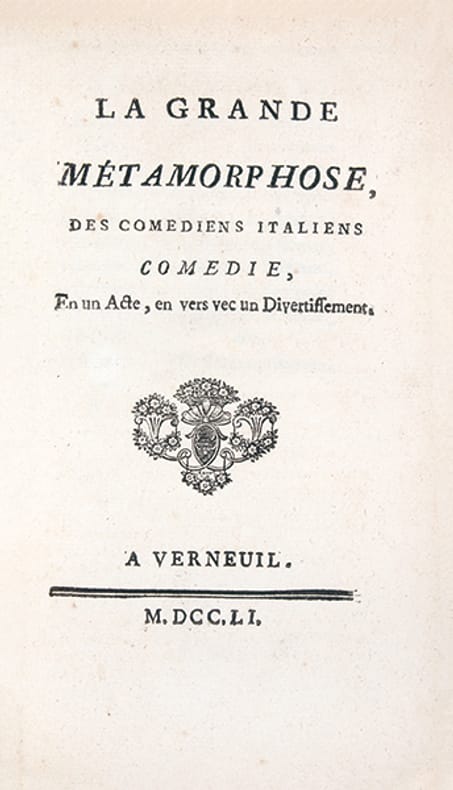
[ROUSSEAU (Pierre)]
La Grande Métamorphose des Comédiens Italiens, comédie, En un Acte, en vers vec [sic] un Divertissement,
1751 In-8, broché, couverture de papier bleu moderne, (4), 77 p. Verneuil, s. n., 1751.
Référence libraire : 38399
|
|
|
[Rousseau] Collectif:
La route Rousseau. Guide régional Rhône-Alpes - Suisse Romande No 1.
Genève, Editions Tansversales, 1991. In-8 broché de 79 page, couverture illustrée. Illustration in-texte en noir.
Référence libraire : 17719

|
|
|
[ROUSSEAU (Pierre)] DAUDET (Alphonse) :
Le Nabab.
P. “Collection Française”, Henri Cyral 1938. In-8° broché, couverture illustrée en couleurs rempliée.
Référence libraire : LIQ-6920

|
|
|
[ROUSSEAU Le douanier] Roger Shattuck, Henri Béhar, Michel Hoog, Carolyn Lanchner et William Rubin.
LE DOUANIER ROUSSEAU.
Paris, Éditions de la réunion des musées nationaux, 1984. Catalogue in-8 carré, broché, reproductions.
Référence libraire : 7604
|
|
|
[ROUSSEAU Douanier] Robert Shattuck, Henri Béhar, Michel Hoog, Carlyn Lanchner, William Rubin.
Le Douanier Rousseau.
Paris, Galeries nationales du Grand Palais, 1984. In-8 carré, broché, reproductions.
Référence libraire : 10176
|
|
|
[ROUSSEAU] - CASSIRER (Ernest).-
Le problème Jean-Jacques Rousseau. Traduit par Marc B. de Launay. Préface de Jean Starobinski.
P., Hachette (Collection "Textes du XXe siècle"), 1987, in 12 broché, XIX-132 pages.
Référence libraire : 70721
|
|
|
[ROUSSEAU (Pierre)] - GAUTIER (Théophile).-
Le Capitaine Fracasse. Edition illustrée [par Pierre ROUSSEAU].
Bruxelles, Editions du Houblon, sans date, in 8° broché, 269 pages ; non coupé ; jaquette illustrée.
Référence libraire : 72780
|
|
|
[ROUSSEAU (Jean-Jacques)] - SABATIER, de Castres (L'Abbé).-
Le véritable esprit de J. J. Rousseau ou choix d'observations de maximes et de principes sur la morale, la religion, la politique et la littérature, tirés des oeuvres de cet écrivain et accompagné de Notes de l'Editeur.
1804 Paris, Collignon, 1804, An XII, 3 volumes in 8°, cartonnages d'attente de l'éditeur (carton marbré), XCVI-336, 392 et 383 pages ; à totues marges ; infimes frottis.
Référence libraire : 78037
|
|
|
[ROUSSEAU Henri, dit Le Douanier]. THARAUD Jérôme et Jean.
LE GENTIL DOUANIER et UN ARTISTE MAUDIT. Avec un portrait par Pierre Payen.
Aux éditions des Cahiers Libres. 1929. In-8° broché. Couverture rempliée. 47 pages. E.O. 1/875 sur vélin. [30 japon / 875 vélin].
Référence libraire : 6651
|
|
|
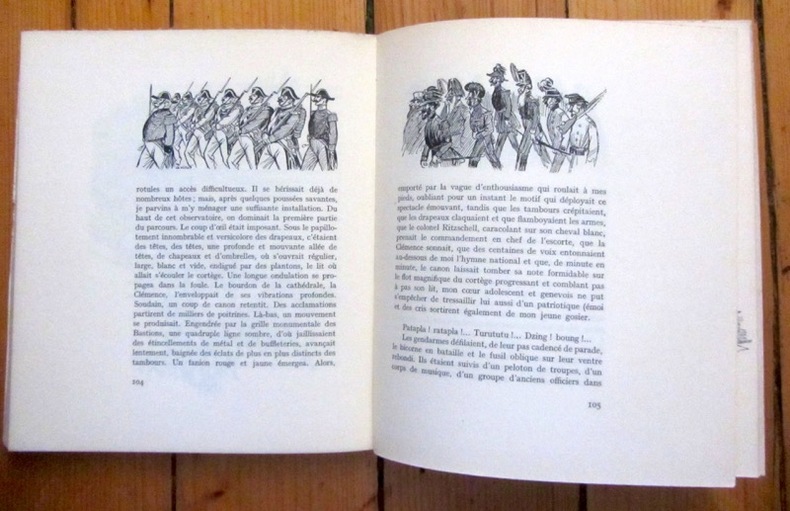
[Rousseau] Louis Dumur, J.-D. Candaux (postface):
Le centenaire de Jean-Jacques. Roman.
Genève, Alexandre Jullien, 1962. In-8 broché de 126 pages, couverture illustrée en deux tons. Légèrement insolé en bords. Illustré de dessins in-texte de Gustave Wendt.
Référence libraire : 2123
|
|
|
[Rousseau] Alexis François:
Le premier baiser de l'amour ou Jean-Jaques Rousseau inspirateur d'estampes.
A Genève et se trouve à Paris, Sonor / Georges Crès, 1920 (achevé d'imprimer 1919). In-4 broché, couverture ornée d'une vignette de titre contrecollée. Nombreux accrocs en bords de la couverture, intérieur frais (mise à part une serpente avec un pli).
Référence libraire : 12300

|
|
|
[Rousseau] Louis Dumur, Gustave Wendt (ill.):
Le centenaire de Jean-Jacques. Roman.
Genève, Editions du Journal de Genève, 1962. In-8, pleine toile titrée. Illustré de dessins in-texte de Gustave Wendt.
Référence libraire : 22098

|
|
|
[ROUSSEAU] - GENOUX (Claude)
Les enfants de J.-J. Rousseau.
Paris, Serriere, 1857. In-8°, X-250p. Broché, couverture illustrée.
Référence libraire : 14117
|
|
|
[ROUSSEAU] - EIGELDINGER (Marc)
Les cartes à jouer de Jean-Jacques Rousseau.
Neuchâtel, Revue Neuchâteloise N° 51, 1970. Gr. in-8°, 24p. Broché, couverture illustrée.
Référence libraire : 43107

|
|
|
[ROUSSEAU] - FAGUET (Emile).-
Les amies de Rousseau.
Paris, Société Française dImprimerie, sans date, in 12, broché, 427pp
Référence libraire : 6931
|
|
|
[ROMAN] - ROUSSEAU (Francois-olivier) -
Les enfants dusiècle.
Paris, Seuil, 1999 ; in-8, 238 pp., br. Avec jaquette, exemplaire surligné au crayon.
Référence libraire : 201611986
|
|
|
[ROUSSEAU] - STAEL (Germaine, Mademe de)
Lettres sur les ouvrages et le caractère de J. J. Rousseau. Nouvelle édition augmentée.
Sans lieu et sans nom (Genève ou Paris), 1789. In-12, [4]-141-[2]-10p. Brochure d'attente muette, avec nom de l'auteur manuscrit en première de couverture.
Référence libraire : 12095
|
|
|
[ROUSSEAU] - PIGUET (Henri)
Mélange de littérature.
Lausanne, Hignou Ainé - Hignou & Comp., 1816. In-8°, IX-568p. Brochure d'attente.
Référence libraire : 35043

|
|
|
[ROUSSEAU] - [WARENS (Louise Eléonore de la Tour, baronne de)- DOPPET (François-Amédée)]
Mémoires de Madame de Warens, suivis de ceux de Claude Anet, Pour servir de suite aux Confessions de J.-J. Rousseau.
A Chambéry & se trouve à Paris, chez Leroy, 1786. In-8°, [6]-XVI-237p. Reliure demi-veau, dos lisse orné d'un décor doré sur fond noir, tranches marbrées.
Référence libraire : 28918

|
|
|
[ROUSSEAU] - [WARENS (Louise Eléonore de la Tour, baronne de)- DOPPET (François-Amédée)]
Mémoires de Madame de Warens, suivis de ceux de Claude Anet. Publiés par un C.D.M.D.P. pour servir d'apologie aux Confessions de J.-J. Rousseau.
Chambéry, sans nom, 1786. In-8°, IV-XX-258-[4]p. Reliure demi-veau, dos lisse orné de fleurons dorés, pièce de titre maroquin rouge, tranches rouges.
Référence libraire : 36021

|
|
|
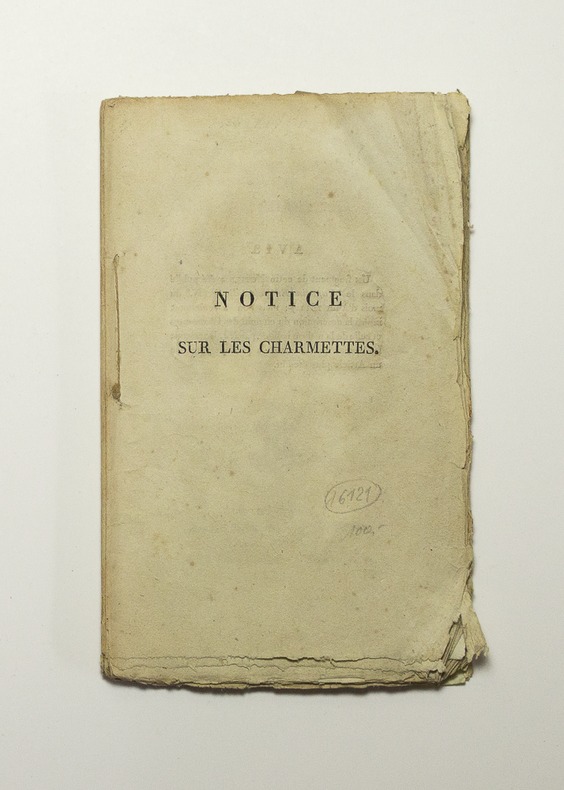
[ROUSSEAU Jean-Jacques; RAYMOND Georges-Marie]:
Notice sur les Charmettes, vallon des environs de Chambéry; à l'usage des voyageurs qui visitent la retraite de J. J. Rousseau.
A Genève et à Paris, Chez Paschoud, 1811. Plaquette in-8 brochée de 69-[3] pages, constituée de 5 cahiers cousus d'un fil.
Référence libraire : 16121
|
|
|
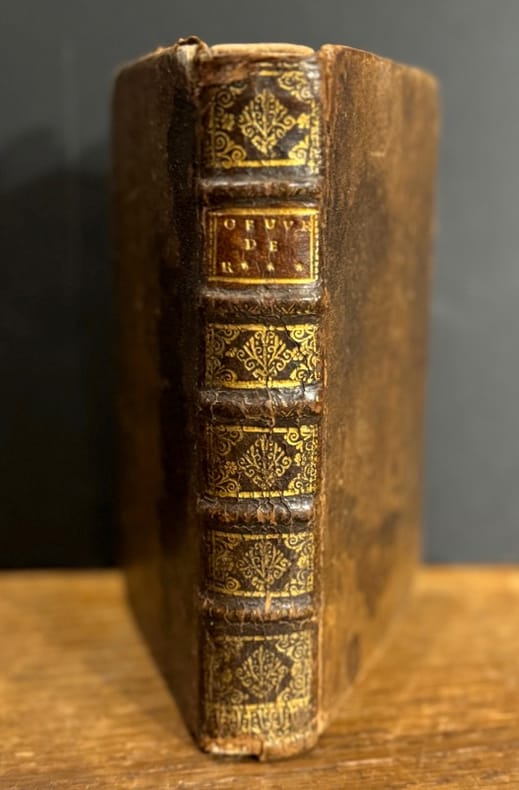
[Rousseau, Jean-Baptiste ]
Oeuvres diverses du Sieur R.**
Chez Urfus Heuberger 1712 A Soleure, Chez Ursus Heuberger, 1712., In-12, XXVIII, 318 pp., (1) (table) Pleine basane, dos à 5 nerfs orné de fleurons, coiffes fragiles. Trous de vers en début et fin de volume (sans manque).
Référence libraire : 681
|
|
|
[ROUSSEAU Jean-Jacques; NOLIVOS de Saint-Cyr Paul-Antoine-Nicolas ]:
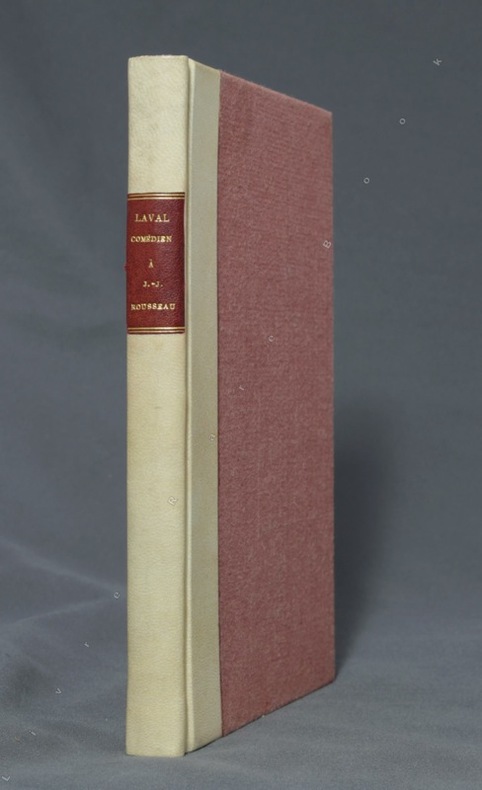
P. A. Laval comédien, à M. J. J. Rousseau, citoyen de Genève. Sur les raisons qu'il expose pour réfuter M. d'Alambert, qui dans le VII. volume de l'Encyclopédie, article Genève, prouve que l'établissement d'une comédie dans cette ville y ferait réunir la sagesse de Lacédémone à la politesse d'Athénes.
La Haye, [sans nom], 1758. In-8 de [2]-VIII- de 3 à 189-[1] pages, demi vélin blanc à la Bradel, dos lisse, pièce de titre bordeaux, tranches rouges, reliure moderne.
Référence libraire : 9087
|
|
|
[ROUSSEAU] - GUYOT (Charly)
Plaidoyer pour Thérèse Levasseur.
Neuchâtel, Ides et Calendes, 1962. In-8°, 201p. Broché, couverture rempliée.
Référence libraire : 16361
|
|
|
[ROUSSEAU] - GUYOT (Charly)
Plaidoyer pour Thérèse Levasseur.
Neuchâtel, Ides et Calendes, 1962. In-8°, 201p. Broché, couverture rempliée.
Référence libraire : 24926
|
|
|
[ROUSSEAU J.-B.]
Prophétie du roi David accomplie en la personne de Louis Auguste Seizième du nom, roi de France et de Navarre.
(P.), Grangé, 1774. 8 pp. in 8, couverture papier marbré de l'époque.
Référence libraire : 5431
|
|
|
[ROUSSEAU] - GUYOT (Charly)
Pèlerins de Môtiers et prophètes de 89. De Rousseau à Mirabeau.
Neuchâtel & Paris, Victor Attinger, 1936. In-8°, 208p. Broché.
Référence libraire : 39643
|
|
|
[ROUSSEAU (Jean-Jacques) & WARENS (Madame de)] - [CHAS (François)]
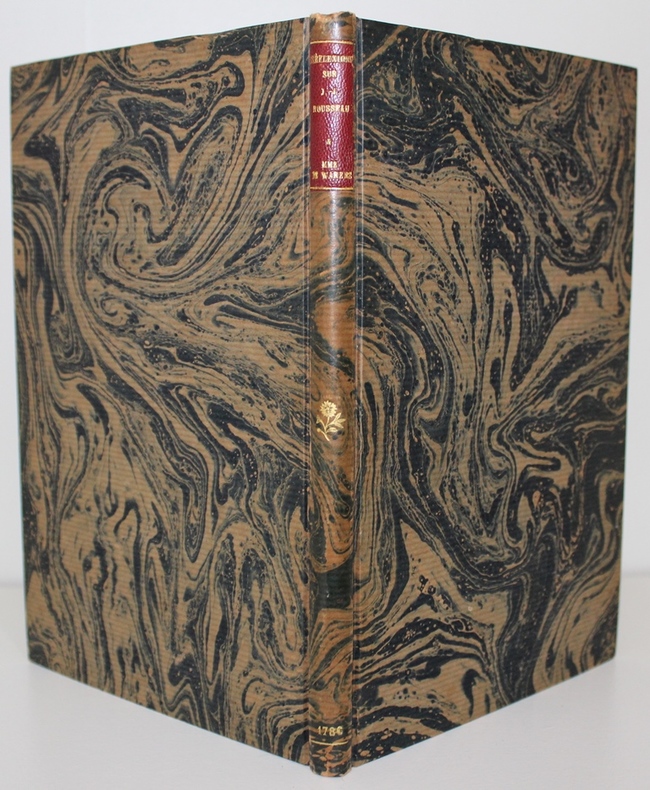
Reflexions philosophiques et impartiales sur J. J. Rousseau & Mad. de Warens.
A Genève, 1786, 1 vol. in-8° (220 x 137) relié plein cartonnage papier marbré bleu à la Bradel, pièce de titre en maroquin rouge, petit fleuron et date en queue dorés, couvertures d'attentes bleues conservées, (reliure moderne), de 78 pp. Dos légèrement viré au marron, bel exemplaire non rogné par ailleurs.
Référence libraire : 11305
|
|
|
[ROUSSEAU] - JOST (François)
Rousseau et la Suisse.
Neuchâtel, Ed. du Griffon (coll. "Trésors de mon pays"), 1962. Gr. in-8°, 52p. Broché, couverture illustrée rempliée.
Référence libraire : 35390
|
|
|
[ROUSSEAU (Pierre)] - TCHEKOFF (A.).-
Roussette. Le beau voyage. Adaptation de M. Alexandre. Illustrations de Pierre ROUSSEAU.
Paris, Delagrave, 1939, in 8° broché, 64 pages ; non coupé ; couverture rempliée illustrée en couleurs.
Référence libraire : 72779
|
|
|
[ROUSSEAU (Pierre) DAUDET (Alphonse) :
Sapho.
P. Henry Cyral 1929. IN-12° broché, couverture illustrée en couleurs rempliée.
Référence libraire : LIQ-6918

|
|
|
[Rousseau Decelle, G] Claude Lemaire
Succession G. Rousseau Decelle. Superbe collection de papillons des faune paléarctique, indo-australienne, africaine et américaine.
1966 76 p., 3 photographs on recto and verso of covers, paperbound. With annotations (final auction prices) in the sections Morpho and Charaxes.Catalogue of the important auction of the Lepidoptera collection of Georges Rousseau Decelle.
Référence libraire : EL42666
|
|
|
[ROUSSEAU] - VALLIER (Dora)
Tout l'oeuvre peint de Henri Rousseau
Paris, Flammarion (coll. "Les classiques de l'art"), 1970. In-4°, 128p. Reliure pleine toile d'éditeur, sous jaquette illustrée.
Référence libraire : 38318
|
|
|
[ROUSSEAU] - GUILLEMIN (Henri)
Un homme. deux ombres. (Jean-Jacques - Sophie - Julie).
Genève, Editions du Milieu du Monde (coll. "Les Amitiés amoureuses"), 1943. In-8°, 323p. Broché.
Référence libraire : 27051
|
|
|
[ROUSSEAU] - GUILLEMIN (Henri)
Un homme. deux ombres. (Jean-Jacques - Sophie - Julie).
Genève, Editions du Milieu du Monde (coll. "Les Amitiés amoureuses"), 1943. In-8°, 323p. Broché.
Référence libraire : 29673
|
|
|
[ROUSSEAU] - GUILLEMIN (Henri).-
Un homme, deux ombres (Jean-Jacques - Sophie - Julie).
Genève, Milieu du Monde, 1943, in 12, broché, 325 pages
Référence libraire : 9708
|
|
|
[ROUSSEAU] - VAN LAERE (François)
Une lecture du temps dans la Nouvelle Héloïse.
Neuchâtel, Baconnière (coll. "Langages"), 1968. In-8°, 230p. Broché, couverture rempliée.
Référence libraire : 20337
|
|
|
[ROUSSEAU] - FAGUET (Emile).-
Vie de Rousseau.
Paris, Société Française dimprimerie, sans date (vers 1910), in 12, broché, 419 pages
Référence libraire : 6765
|
|
|
[ROUSSEAU (Jean-Jacques)] - GAILLARD (E.).-
Visite aux Charmettes.
Chambéry, Dardel, in 12 broché, 44 pages de texte et 13 planches hors-texte.
Référence libraire : 67999
|
|
|
[ROUSSEAU]
Vues de différentes habitations de J. J. Rousseau. avec son portrait et le fac simile d'un air de sa composition, pour faire suite à ses Oeuvres
Paris, Imprimerie lithographique de C. de L ... [Lasteyrie], 1819 in-4, 27 pp., avec 13 planches hors-texte (un portrait-frontispice, 11 vues de demeures successives, une planche de musique notée en dépliant), demi-basane bouteille à coins, dos lisse orné de filets, pointillés, grecques et fleurons dorés (reliure de l'époque). Restaurations habiles aux coiffes et aux coins, mors frottés, rousseurs. Cachet d'une institution religieuse.
Référence libraire : 194867
|
|
|
[ROUSSEAU (Jean-Baptiste)]
Œuvres diverses du Sieur R.**
1712 basane, dos à nerf (reliure rapée). (quelques ff. intervertis dans la préface sans manque). in-16, XXVIII-318pp., (3ff. table), A Soleure chez Ursus Heuberger, 1712,
Référence libraire : 11787
|
|
|
[Rousseau Jean-Jacques].
Livres de France. Jean-Jacques Rousseau. Revue Littéraire Mensuelle, N°8 d'octobre 1962.
Paris, Hachette, 1962. Une revue de format in 4° de 38 pp., nombreuses illustrations. Parfait état. Numéro essentiellement consacré à Jean-Jacques Rousseau, articles de Guéhénno, Bauër…, chronologie des œuvres et de la vie de cet auteur, bilbiographie des essais sur.
|
|
|
[ROUSSEAU, Samuel].
A Dictionary of Words used in the East Indies with full explanations the leading word in each article being printed in a new nustaleek type. To which is added Mohammedan Law and Bengal revenue terms.
London James Asperne 1805. . Second edition; 8vo 175 x 115 mm; printed in English and Farsi considerable near-contemporary manuscript notes to margins and spaces in first and last few leaves as well as intermittent in text title page a little frayed with small marginal repair inner hinges strengthened; contemporary calf rebacked and recornered gilt lettering piece to spine well annotated otherwise a very good restored copy; lxiv 13-267pp.<br /> One of the earliest attempts to produce a compendium and dictionary of legal terms used in India by one of the pioneers in Arabic printing in Europe. One of the earliest texts printed in England with nastaliq script which Samuel Russeau had initially commissioned for The Flowers of Persian Literature 1801. <br /><br />Samuel Russeau 17631820 established the Arabic Press in London published some of the first English translations of several important Arabic and Persian works and compiled some of the earliest Arabic-English and Persian-English language texts of which this is one. His works contributed significantly to early study in Persian texts and his dictionaries were vital to the East India Company and their officers acting in India.<br /><br />This volume was evidently in the hands of an English traveller in India to be used as a working dictionary for their time spent there. It is adorned throughout in near-contemporary annotations which pertain to the use of certain words in context or alternative meanings as well as notes for their personal use relating to the East India Company.<br /> London, James Asperne, 1805. unknown
Référence libraire : 112680
|
|
|
[Rousseau, Jean-Jacques]
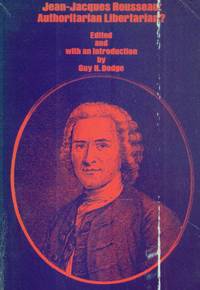
Authoritarian Libertarian
1971. Lexington and others D.C. Heath and Company 1971. 23.2cm x 16cm. xix 2 100 6 pages. Original illustrated softcover Paperback. Excellent condition with only minor signs of external wear. From the library of german political scientist Klaus von Beyme. With his name on the endpaper. Rare ! Includes for Example: Rousseau in the Eighteenth Century: The Evolution of his Solution to the "Great Problem of Politics"/ A Discourse on Political Economy 1755/ The Social Contract or Principles of Political Right 1762/ Letters Written from the Mountain 1764/ Letter to M. Le Marquis de Mirabeau 1767/ Rousseau in the Nineteenth Century: The Liberal and the Conservative Appraisal/ Benjamin Constant: Supporter of Despotism/ Thomas Hill Green: Precursor of Philosophical Idealism/ Hippolyte Taine: Builder of the "Democratic Event"/ John W. Chapman: Forerunner of Modern Liberalism/ Robert Derathe: Guarantor of Individual Rights/ Joan McDonald: Exponent of Conservatism/ Sir Ernest Barker: Opponent of Parliamentary Democracy/ Jacob L. Talmon: Harbinger of Totalitarian Democracy/ Lester G. Crocker: Proponent of "Guided" Democracy etc. paperback
Référence libraire : 41156AB
|
|
|
[ROUSSEAU, Madeleine]
Hans Hartung Volume 1 Of An International Series On New Art
Stuttgart: Domnick-Verlag c1949. 1949. oblong 4to. pp. 2 p.l. 55 4 leaves. Text in English French & German. 25 plates some colour 22 double-sided. biblio. quartercloth small tapestain to upper front extremities slightly worn. First Edition. Freitag 4148. F. Hardcover. [Stuttgart: Domnick-Verlag, c1949]. Hardcover
Référence libraire : AOUns[RO84
|
|
|
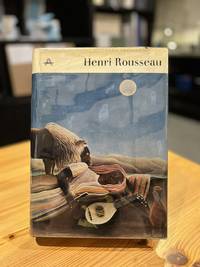
[Rousseau, Henri] Vallier, Dora
Henri Rousseau
Harry N. Abrams 1962. Hardcover. Very Good/Good. Short tears few small nicks slight rubbing and browning to jacket; slight internal browning to edges. 327 1 pages. Includes 2 excerpts from Rousseau's own writings plus biographical chronology bibliography and index of names. Not to be confused with the author's 1979 monograph on the artist see Freitag #8446; originally published in Germany. 29 Color & 181 b/w Illustrations. Harry N. Abrams hardcover
Référence libraire : 0256080
|
|
|
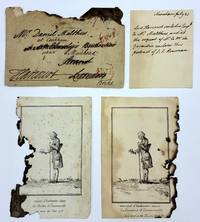
[ROUSSEAU, Jean Jacques]; [MALTHUS, Daniel]; [GIRARDIN, Rene de, Marquis of Vauvray]; MEYER, Georg Friedrich; HARCOURT, George,
INK PORTRAIT OF ROUSSEAU SENT FOLLOWING HIS DEATH BY HIS LAST PUPIL TO THE FATHER OF THOMAS MALTHUS
Original manuscript / ink drawing. c.1779-1788. Pen and ink portrait of Jean Jacques Rousseau in the garden at Ermenonville titled beneath "venant d'herboriser dans les Jardins d'Ermenonville au mois de Juin 1778" along with a printed version of the image signed Mayer Georg Friedrich Meyer engraved by J. M. Moreau in 1779. Each 15 x 10cm. Accompanied by an ink manuscript letter 10.5 x 8cm headed "Nuneham July 21" presenting the images: "Lord Harcourt sends his compts. to Mr. Malthus and at the request of Mr. le Mqs. de Girardin encloses this portrait of J: J: Rousseau". Contained within the original postal cover addressed to Mr. Daniel Malthus redirected from his London address to Cookham signed at the foot by Harcourt under the parliamentary privilege franking system with additional "free" handstamps to the front panel and further postal markings to the reverse the specific types of postal markings on the cover indicate a date range of 1779-1788. The ink portrait engraved portrait and postal cover all have historical burn marks and associated loss as well as toning and light foxing; the letter remains in good order. A fascinating and intimate gift linking several late eighteenth-century intellectuals all connected to the French philosopher Jean Jacques Rousseau in the form of two portraits of the philosopher one ink one engraved sent from Rousseau's last pupil René de Girardin Marquis of Vauvray 1735-1808 via the radically-inclined politician and gardener George Harcourt 2nd Earl Harcourt 1736-1809 to the father of the famous economist Thomas Malthus Daniel Malthus 1730-1800 himself a friend of Rousseau.</p><p>The present portrait depicts Rousseau in the final weeks of his life 'botanizing' in the garden at Ermenonville the first French landscape garden created by his pupil René de Girardin who here sends the portrait. Ermenonville was itself inspired by Rousseau's ideas created by Girardin as an illustration of his philosophical and social beliefs regarding the place of man in nature. Within the garden Girardin began construction of a house for Rousseau modelled after the "Élysée" of Julie in Rousseau's novel <em>La Nouvelle Héloïse</em>. Rousseau himself visited the garden in May 1778 staying in a small thatched cottage where he remained until his death in July that year. Girardin subsequently made a tomb for Rousseau at Ermenonville which became a destination of pilgrimage for his admirers until his body was re-interred at the Pantheon in Paris in October 1794. Following Rousseau's death Girardin and two other of his friends of prepared a complete edition of his works using the manuscripts of some of his most important writings including <em>Les Confessions </em>and <em>Les Rêveries du promeneur solitaire</em> which he had left behind at Ermenonville. This new edition was published in Geneva between 1780 and 1782 and contributed greatly to the spread of Rousseau's ideas throughout France and beyond in the years leading up to the French Revolution.</p><p>The original drawing of Rousseau at Ermenonville was executed by the German artist Georg Friedrich Meyer 1733-1779 who also resided with Girardin at Eremenonville during his final years and where he became well acquainted with Rousseau. Other similar versions of this drawing by Meyer exist one being in the collection of the Fine Art Museum of San Francisco and it is unclear as to whether the present pen and ink drawing is an original work by Meyer or a contemporary copy of the engraving - either way its origin from the hands of Girardin himself provide it with sufficient interest. </p><p>The present two portraits subsequently made their way to the politician George Harcourt 2nd Earl Harcourt previously Viscount Nuneham a supporter of John Wilkes friend of Catherine Macaulay opponent of the war against the American colonies and pioneering garden designer. Here he apparently acted as an intermediary in this distinguished friendship circle sending the pictures on to Daniel Malthus - enlightened gentlemen friend of David Hume and Rousseau and father to Thomas Malthus.</p><p>Daniel Malthus had first become acquainted with Rousseau when he visited him at Môtiers in May 1764. He later invited Rousseau and his wife Thérèse to stay at his estate "The Rookery" near Dorking Surrey during the couple's visit to England in 1766 with Malthus hoping to find them a place to settle nearby. They visited the Malthus home for a day with Hume about three weeks after Thomas's birth but ultimately settled in Derbyshire for the remainder of their visit. Daniel and several family members subsequently went north to visit Rousseau joining him on botanical expeditions - a shared passion. Rousseau and Malthus maintained a lifelong correspondence and botanical exchange with the pair enthusiastically swapping English and French literature botanical specimens and philosophical musings. Later in life Rousseau would divide his personal herbarium among his friends sending parts of it to Daniel who also ultimately purchased his botanical library.</p><p>Daniel Malthus was - like Girardin - a dedicated Rousseauist using like many enlightened families of the period Rousseau's <em>Émile</em> as a guide to the education of his children; as he described in a letter to Rousseau of 1768 his children botanized in their local area went on nature walks carried out farm work and conducted their own little experiments. Indeed in his last known letter to Rousseau he declared "if I am ever known it will be as the friend of Rousseau". He would however ultimately be best known by his progeny Thomas who would go on to famously argue against the writings of the thinkers who proclaimed humanity's perfectibility preferred by his father including Rousseau William Godwin and the Marquis de Condorcet. Regardless of this Daniel keenly supported his adult son's endeavours with Thomas's earlier unorthodox education itself also having played a key role in shaping his knowledge of natural law and mathematics. MacDonald J. Marc "Malthus and the Philanthropists 1764–1859: The Cultural Circulation of Political Economy Botany and Natural Knowledge" Social Sciences 2017 61 4. [Original manuscript / ink drawing]. unknown
Référence libraire : 1748
|
|
|
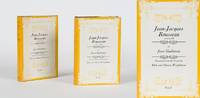
[Rousseau, Jean-Jacques] Guehenno, Jean
Jean-Jacques Rousseau. Volume I - 1712 - 1758 / Volume II - 1758 - 1778.
1966. Two Volumes complete set. London / New York Routledge and Kegan Paul / Columbia University Press 1966. Octavo. XVI 460 XI 316 pages Original Hardcover with dustjacket in protective Mylar. Very good condition with only minor signs of external wear. Name of preowner on endpaper. This is an established work ofmajor importance by the distinguished left wing French writer. It is a detailed biographical study which takes an objective view of Rousseau's life and what he said about it based on a close reading of his complete correspondence and the Confessions. Dustjacket Includes for example the following essays: Childhood / Mistaken Love / The False Idyll of Les Charmettes / First Experiences of Society / The Road to Fame / The First Discourse / Jean Jacques' 'Reform' / Relapses into being a professional writer / The Difficult Art of Sincerity / The Cause of God / The Genevan Controversy / The Trial / The Solitary Walker / etc. etc. Jean-Jacques Rousseau 28 June 1712 2 July 1778 was a Francophone Genevan philosopher writer and composer of the 18th century. His political philosophy influenced the Enlightenment in France and across Europe as well as aspects of the French Revolution and the overall development of modern political and educational thought. Rousseau's novel Emile or On Education is a treatise on the education of the whole person for citizenship. His sentimental novel Julie or the New Heloise was of importance to the development of pre-romanticism and romanticism in fiction. Rousseau's autobiographical writingshis Confessions which initiated the modern autobiography and his Reveries of a Solitary Walkerexemplified the late 18th-century movement known as the Age of Sensibility and featured an increased focus on subjectivity and introspection that later characterized modern writing. His Discourse on Inequality and The Social Contract are cornerstones in modern political and social thought. During the period of the French Revolution Rousseau was the most popular of the philosophes among members of the Jacobin Club. He was interred as a national hero in the Panthéon in Paris in 1794 16 years after his death. Wikipedia hardcover
Référence libraire : 29934AB
|
|

 Recevoir par e-mail
 Télécharger en PDF
 Flux RSS
 Lien permanent


