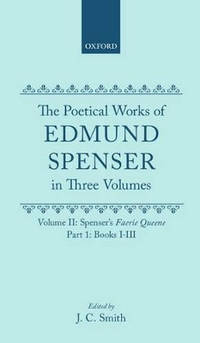
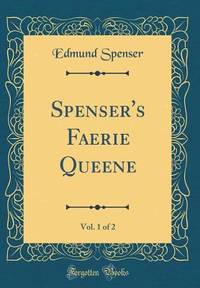
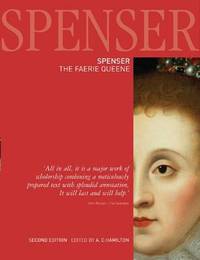
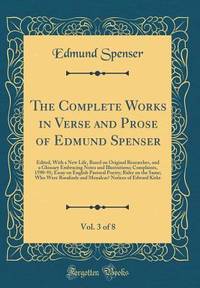
Hardback. New. A scholarly edition of The Faerie Queene by Edmund Spenser. The edition presents an authoritative text together with an introduction commentary notes and scholarly apparatus. hardcover
Referenz des Buchhändlers : A9780199679690 ISBN : 019967969x 9780199679690
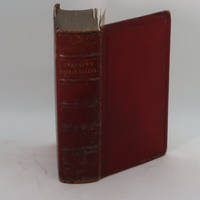
<p>Red leather binding with gilt lettering and raised banding on the spine. All edges gilt.</p><p>This book also has "Epithalamion" added. <strong><em>The Faery Queene</em></strong> is an English epic poem by Edmund Spenser. Books I–III were first published in 1590 then republished in 1596 together with books IV–VI. <em>The Faerie Queene</em> is notable for its form: at over 36000 lines and over 4000 stanzas it is one of the longest poems in the English language; it is also the work in which Spenser invented the verse form known as the Spenserian stanza. On a literal level the poem follows several knights as a means to examine different virtues and though the text is primarily an allegorical work it can be read on several levels of allegory including as praise or later criticism of Queen Elizabeth I. In Spenser's "Letter of the Authors" he states that the entire epic poem is "cloudily enwrapped in Allegorical devices" and that the aim of publishing <em>The Faerie Queene</em> was to "fashion a gentleman or noble person in virtuous and gentle discipline". Spenser presented the first three books of <em>The Faerie Queene</em> to Elizabeth I in 1589 probably sponsored by Sir Walter Raleigh. The poem was a clear effort to gain court favour and as a reward Elizabeth granted Spenser a pension for life amounting to £50 a year though there is no further evidence that Elizabeth I ever read any of the poem. This royal patronage elevated the poem to a level of success that made it Spenser's defining work. <strong>Edmund Spenser</strong> 1552/1553 – 13 January 1599 was an English poet best known for <em>The Faerie Queene</em> an epic poem and fantastical allegory celebrating the Tudor dynasty and Elizabeth I. He is recognized as one of the premier craftsmen of nascent Modern English verse and is often considered one of the greatest poets in the English language. Though Spenser was well-read in classical literature scholars have noted that his poetry does not rehash tradition but rather is distinctly his. This individuality may have resulted to some extent from a lack of comprehension of the classics. Spenser strove to emulate such ancient Roman poets as Virgil and Ovid whom he studied during his schooling but many of his best-known works are notably divergent from those of his predecessors. The language of his poetry is purposely archaic reminiscent of earlier works such as <em>The Canterbury Tales</em> of Geoffrey Chaucer and <em>Il Canzoniere</em> of Francesco Petrarca whom Spenser greatly admired. An Anglican and a devotee of the Protestant Queen Elizabeth Spenser was particularly offended by the anti-Elizabethan propaganda that some Catholics circulated. Like most Protestants near the time of the Reformation Spenser saw a Catholic church full of corruption and he determined that it was not only the wrong religion but the anti-religion. This sentiment is an important backdrop for the battles of <em>The Faerie Queene</em>. Spenser was called "the Poet's Poet" by Charles Lamb and was admired by John Milton William Blake William Wordsworth John Keats Lord Byron Alfred Tennyson and others. Among his contemporaries Walter Raleigh wrote a commendatory poem to <em>The Faerie Queene</em> in 1590 in which he claims to admire and value Spenser's work more so than any other in the English language. John Milton in his <em>Areopagitica</em> mentions "our sage and serious poet Spenser whom I dare be known to think a better teacher than Scotus or Aquinas". In the eighteenth century Alexander Pope compared Spenser to "a mistress whose faults we see but love her with them all."</p> Routedge Warnes. hardcover
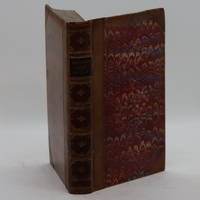
<p>Tan calf binding with red and blue marbled boards. Black title plate with gilt lettering banding and decoration on the spine. From the Chandos Classics Library published circa 1868<strong>.</strong></p><p><strong><em>The Faery Queene</em></strong> is an English epic poem by Edmund Spenser. Books I–III were first published in 1590 then republished in 1596 together with books IV–VI. <em>The Faerie Queene</em> is notable for its form: at over 36000 lines and over 4000 stanzas it is one of the longest poems in the English language; it is also the work in which Spenser invented the verse form known as the Spenserian stanza. On a literal level the poem follows several knights as a means to examine different virtues and though the text is primarily an allegorical work it can be read on several levels of allegory including as praise or later criticism of Queen Elizabeth I. In Spenser's "Letter of the Authors" he states that the entire epic poem is "cloudily enwrapped in Allegorical devices" and that the aim of publishing <em>The Faerie Queene</em> was to "fashion a gentleman or noble person in virtuous and gentle discipline". Spenser presented the first three books of <em>The Faerie Queene</em> to Elizabeth I in 1589 probably sponsored by Sir Walter Raleigh. The poem was a clear effort to gain court favour and as a reward Elizabeth granted Spenser a pension for life amounting to £50 a year though there is no further evidence that Elizabeth I ever read any of the poem. This royal patronage elevated the poem to a level of success that made it Spenser's defining work.</p><p><strong>Edmund Spenser</strong> 1552/1553 – 13 January 1599 was an English poet best known for <em>The Faerie Queene</em> an epic poem and fantastical allegory celebrating the Tudor dynasty and Elizabeth I. He is recognized as one of the premier craftsmen of nascent Modern English verse and is often considered one of the greatest poets in the English language. Though Spenser was well-read in classical literature scholars have noted that his poetry does not rehash tradition but rather is distinctly his. This individuality may have resulted to some extent from a lack of comprehension of the classics. Spenser strove to emulate such ancient Roman poets as Virgil and Ovid whom he studied during his schooling but many of his best-known works are notably divergent from those of his predecessors. The language of his poetry is purposely archaic reminiscent of earlier works such as <em>The Canterbury Tales</em> of Geoffrey Chaucer and <em>Il Canzoniere</em> of Francesco Petrarca whom Spenser greatly admired. An Anglican and a devotee of the Protestant Queen Elizabeth Spenser was particularly offended by the anti-Elizabethan propaganda that some Catholics circulated. Like most Protestants near the time of the Reformation Spenser saw a Catholic church full of corruption and he determined that it was not only the wrong religion but the anti-religion. This sentiment is an important backdrop for the battles of <em>The Faerie Queene</em>. Spenser was called "the Poet's Poet" by Charles Lamb and was admired by John Milton William Blake William Wordsworth John Keats Lord Byron Alfred Tennyson and others. Among his contemporaries Walter Raleigh wrote a commendatory poem to <em>The Faerie Queene</em> in 1590 in which he claims to admire and value Spenser's work more so than any other in the English language. John Milton in his <em>Areopagitica</em> mentions "our sage and serious poet Spenser whom I dare be known to think a better teacher than Scotus or Aquinas". In the eighteenth century Alexander Pope compared Spenser to "a mistress whose faults we see but love her with them all."</p> Frederick Warne & Co. hardcover
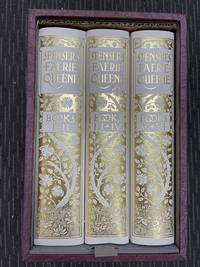
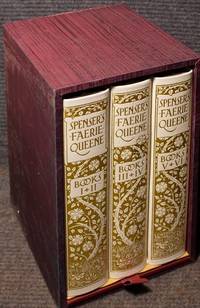
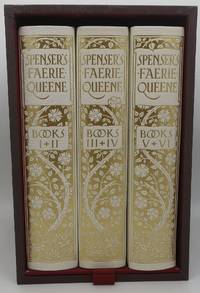
London: The Folio Society. As New. Hardcover. 2011. Collectors set - 6 volumes bound in 3 in wooden slipcase with sliding tray. no 884 of 1000 copies.<br><p>Profusely illustrated with 88 large illustrations and 135 illustrative head a nd tailpieces</p> . The Folio Society hardcover
London: The Folio Society. Fine with no dust jacket. 2011. First thus. Goatskin. Inventory Box; Drawings; quarto; Folio Society. Poem in six books; with the Fragment Mutabilitie edited by Thomas J. Wise pictured by Walter Crane 3 volumes facsimile edition 2011 reproduced from the 1897 George Allen edition numerous black & white illustrations many full-page top edge gilt original cream morocco goatskin gilt-stamped pictorial designs to front covers and spines contained together in original cloth-covered slipcase 4to. Bslipcase is covered in a sating cloth which chages colors according to the angle of the light. Books rest on a sliding panel with a pull out ribbon at their bottom. Case is as new with cloth crackling by design. Appearance is as new except for minor wear to sllp case back edge. 406/1000 . The Folio Society unknown
London: THE FOLIO SOCIETY 2011. Limited Edition. HARDCOVER. Fine. A FINE THREE VOLUME SET IN A FINE WOOD BOX COVERED IN SILK. LIMITED EDITION NUMBER 651/1000 Copies. Bound in full Nigerian goatskin based on Walter Crane's original edition. Tope edge gold gilt. Set is essentially as new. No flaws. No signatures no bookplates. A very large and heavy volume weighing over twenty pounds. Extra shipping required. No oversea orders. THE FOLIO SOCIETY unknown
Oxford University Press Clarendon 1972. Hardcover. Used-Very Good. Cloth dj. Two volume set. V.1: books 1-3; V.2: Books 4-7. First published 1909 here reprinted from sheets of the first impression. Prev. owner's bookplates; dust jackets price-clipped; modest sunning to jacket spines. A very sound set with no underlining or other internal flaws. Oxford University Press (Clarendon) hardcover
Longman 2006-08-21. Paperback. Good. Textbook May Have Highlights Notes and/or Underlining BOOK ONLYNO ACCESS CODE NO CD Ships with Emailed Tracking Longman paperback
Referenz des Buchhändlers : SKU0496795 ISBN : 1405832819 9781405832816
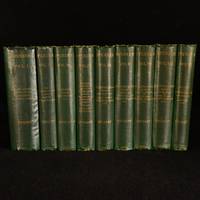
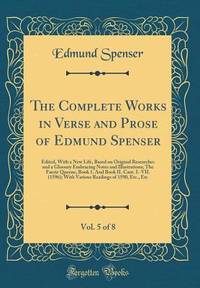
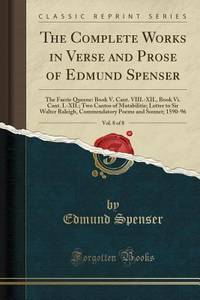
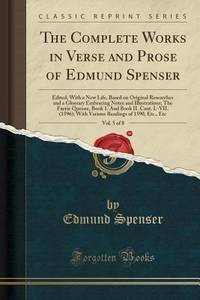
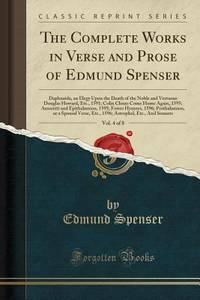
-: Printed for Private Circulation 1844-1884. First edition. Cloth. Good Only. 8" by 5". None. A privately printed set of the complete works of Edmund Spenser. With illustrations and a biographical introduction to the sixteenth century poet. A privately printed set of the complete works of Edmund Spenser with an autobiographical introduction by the literary editor Alexander Grossart. With four illustrations to volume I collated but Hamerton's Woodcuts and the facsimile called for. With three illustrations to volume III collated but lacking frontispiece. With two illustrations to volume V collated and complete. Only 150 copies of this set were printed for private circulation only. Complete in nine volumes. Whilst the title pages in the set state ten volumes the final book was not published. Grossart provides a detailed biographical introduction to the sixteenth century poet in the first volume which is followed by Spenser's first major work The Shepheardes Calendar. This is followed by Complaints his collection of poems that mournfully or mockingly express the poet's grievances and his narrative elegy for the heiress Douglas Howar Daphnaida. Spenser's celebrates the Tudor dynasty in allegorical poem The Faerie Queen which can be found in volumes five to seven followed by a collection of his letters. The prior owner's pencil inscription can be found to the half title or the recto of the front endpaper of the volumes 'S. B. M. In a full green cloth binding. Externally generally smart. Bumped to the head and the tail of the spines with some closed tears to each across the set. Lightly bumped to the extremities. The front hinge has failed to volumes I and IX and the rear hinge has failed to volume IV but the spines have been re-adhered to all three volumes. Both hinges are starting but firm to volume II the front hinge is starting to volume VII and the rear hinges is starting but firm to volumes V and IX. Internally the binding is strained to volumes I IV and IX with the front endpaper disbound to the latter volume. Otherwise the volumes are generally firmly bound. Pages are bright and clean across the set. Good Only Printed for Private Circulation hardcover

 Per e-mail erhalten
 Als pdf-Dokument herunterladen
 RSS feed
 Permanenter link