Unknown. Good. Pages can have notes/highlighting. Spine may show signs of wear. ~ ThriftBooks: Read More Spend Less.Dust jacket quality is not guaranteed. unknown
NASA. Used - Good. Good condition. Hubble Space Telescope NASA Space A copy that has been read but remains intact. May contain markings such as bookplates stamps limited notes and highlighting or a few light stains. NASA unknown
National Aeronautics and Space Administration. New. Brand New! Shrink wrapped! Hubble Space Telescope Space Exploration A brand new unused and unread copy in perfect condition. National Aeronautics and Space Administration unknown
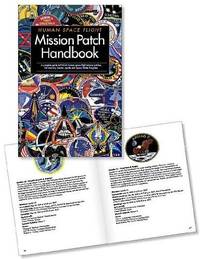
Bradenton Fla: AeroGraphics Inc 2012. First printing stated. Paperback. Extremely subtle wear to spine head and foot faint soiling to top fore-edge very bright pages in tight binding else Near fine. Small blue octavo 173 pages color illustrations; 21 cm. Space Missions. A comprehensive guide to NASA's human space flight mission patches for Mercury Gemini Apollo and the Space Shuttle programs. The book features a collection of 168 mission patches printed in full-color. Details are included about each mission patch design as well as about the mission itself - including launch and landing dates and times crew members and payload. This handbook provides a complete reference for the colorful emblems of NASA's manned missions. Scarce. AeroGraphics, Inc paperback
Referenz des Buchhändlers : 87989 ISBN : 0981783856 9780981783857
Washington DC: National Aeronautics & Space Administration 1962. 1st Edition . Stapled. Fine. Fine in wrappers. Like new 46p. Book honoring the Moon Mission with many color photographs laid out in 18 steps with a detailed explanation and photo's for each. Quite scarce. <br/> <br/> National Aeronautics & Space Administration unknown
National Aeronautics and Spa. 1988. Hardcover. UsedGood. Hardcover; Volume 4 only; NASA RP-1190; prepared under the auspices of the Joint IRAS Science Working Group; fading scuffing and shelf wear to exter ior; former owner's stamping on front endpaper; in good condition with clea n text firm binding. No dust jacket. . National Aeronautics and Spa hardcover
National Aeronautics and Spa. 1988. Hardcover. UsedGood. Hardcover; Volume 3 only; NASA RP-1190; prepared under the auspices of the Joint IRAS Science Working Group; fading scuffing and shelf wear to exter ior; former owner's stamping on front endpaper; in good condition with clea n text firm binding. No dust jacket. . National Aeronautics and Spa hardcover
National Aeronautics and Spa. 1988. Hardcover. UsedGood. Hardcover; Volume 6 only; NASA RP-1190; prepared under the auspices of the Joint IRAS Science Working Group; fading scuffing and shelf wear to exter ior; former owner's stamping on front endpaper; in good condition with clea n text firm binding. No dust jacket. . National Aeronautics and Spa hardcover
National Aeronautics and Spa. 1988. Hardcover. UsedGood. Hardcover; Volume 2 only; NASA RP-1190; prepared under the auspices of the Joint IRAS Science Working Group; fading scuffing and shelf wear to exter ior; former owner's stamping on front endpaper; discolored spot to side pag e edge; in good condition with clean text firm binding. No dust jacket. . National Aeronautics and Spa hardcover
National Aeronautics and Spa. 1988. Hardcover. UsedGood. Hardcover; Volume 5 only; NASA RP-1190; prepared under the auspices of the Joint IRAS Science Working Group; fading scuffing and shelf wear to exter ior; former owner's stamping on front endpaper; in good condition with clea n text firm binding. No dust jacket. . National Aeronautics and Spa hardcover
Washington DC: National Aeronautics and Space Administration 1999. Presumed First Edition First printing. Presumed one of multiple originals produced. Single sheet printed on both sides. Very good. The format is approximately 8 inches by 10 inches. This is a single sheet with printing/imagery on both sides in a plastic sleeve. On the front side is a large color drawing of the International Space Station being assembled. Components from the United States Russia Japan Europe Canada Italy and Brazil are color coded. Items are captioned/tagged. The other side is in a three-column format with a small illustrations of the assembled International Space Station in the third column. The text discusses elements of the assembly process and that 'Further assembly will see the ISS completed as a premier research facility in space." The ISS was originally intended to be a laboratory observatory and factory while providing transportation maintenance and a low Earth orbit staging base for possible future missions to the Moon Mars and asteroids. However not all of the uses envisioned in the initial memorandum of understanding between NASA and Roscosmos have been realized. In the 2010 United States National Space Policy the ISS was given additional roles of serving commercial diplomatic and educational purposes. The International Space Station ISS is a large space station assembled and maintained in low Earth orbit by a collaboration of five space agencies and their contractors: NASA United States Roscosmos Russia JAXA Japan ESA Europe and CSA Canada. The ISS is the largest space station ever built. Its primary purpose is to perform microgravity and space environment experiments. Operationally the station is divided into two sections: the Russian Orbital Segment ROS assembled by Roscosmos and the US Orbital Segment USOS assembled by NASA JAXA ESA and CSA. A striking feature of the ISS is the Integrated Truss Structure which connects the large solar panels and radiators to the pressurized modules. The pressurized modules are specialized for research habitation storage spacecraft control and airlock functions. Visiting spacecraft dock at the station via its eight docking and berthing ports. The ISS maintains an orbit with an average altitude of 250 miles and circles the Earth in roughly 93 minutes completing 15.5 orbits per day. The ISS program combines two prior plans to construct crewed Earth-orbiting stations: Space Station Freedom planned by the United States and the Mir-2 station planned by the Soviet Union. The first ISS module was launched in 1998. Major modules have been launched by Proton and Soyuz rockets and by the Space Shuttle launch system. The first long-term residents Expedition 1 arrived on November 2 2000. Since then the station has been continuously occupied the longest continuous human presence in space. As of March 2024 279 individuals from 22 countries have visited the space station. The ISS is expected to have additional modules the Axiom Orbital Segment for example and will be in service until the end of 2030 after which it will be de-orbited by a dedicated NASA spacecraft. National Aeronautics and Space Administration unknown
Washington DC: National Astronautics and Space Administration 2003. Presumed First Edition First printing. One of multiple originals issued. Single sheet printed on both sides. Very good. The format is approximately 8 inches by 10 inches. This is a single sheet with printing/imagery on both sides in a plastic sleeve. On the front side is a large color photograph of the International Space Station above the Earth wish sun gleaming off two of its solar panels. The other side is in a two column format with text on Why Have an International Space Station and Key NASA Web Sites. The graphic of the International Space Station has a number of specific features labeled. The ISS was originally intended to be a laboratory observatory and factory while providing transportation maintenance and a low Earth orbit staging base for possible future missions to the Moon Mars and asteroids. However not all of the uses envisioned in the initial memorandum of understanding between NASA and Roscosmos have been realized. In the 2010 United States National Space Policy the ISS was given additional roles of serving commercial diplomatic and educational purposes. The International Space Station ISS is a large space station assembled and maintained in low Earth orbit by a collaboration of five space agencies and their contractors: NASA United States Roscosmos Russia JAXA Japan ESA Europe and CSA Canada. The ISS is the largest space station ever built. Its primary purpose is to perform microgravity and space environment experiments. Operationally the station is divided into two sections: the Russian Orbital Segment ROS assembled by Roscosmos and the US Orbital Segment USOS assembled by NASA JAXA ESA and CSA. A striking feature of the ISS is the Integrated Truss Structure which connects the large solar panels and radiators to the pressurized modules. The pressurized modules are specialized for research habitation storage spacecraft control and airlock functions. Visiting spacecraft dock at the station via its eight docking and berthing ports. The ISS maintains an orbit with an average altitude of 250 miles and circles the Earth in roughly 93 minutes completing 15.5 orbits per day. The ISS program combines two prior plans to construct crewed Earth-orbiting stations: Space Station Freedom planned by the United States and the Mir-2 station planned by the Soviet Union. The first ISS module was launched in 1998. Major modules have been launched by Proton and Soyuz rockets and by the Space Shuttle launch system. The first long-term residents Expedition 1 arrived on November 2 2000. Since then the station has been continuously occupied the longest continuous human presence in space. As of March 2024 279 individuals from 22 countries have visited the space station. The ISS is expected to have additional modules the Axiom Orbital Segment for example and will be in service until the end of 2030 after which it will be de-orbited by a dedicated NASA spacecraft. National Astronautics and Space Administration unknown
Washington DC: National Aeronautics and Space Administration c2000. Presumed First Edition First printing. Pamphlet. Very good. Unpaginated 8 pages. Illustrations 8 pages. This is a NASA Fact Sheet. Each NASA center creates and updates Fact Sheets covering its mission facilities and projects. The ISS was originally intended to be a laboratory observatory and factory while providing transportation maintenance and a low Earth orbit staging base for possible future missions to the Moon Mars and asteroids. However not all of the uses envisioned in the initial memorandum of understanding between NASA and Roscosmos have been realized. In the 2010 United States National Space Policy the ISS was given additional roles of serving commercial diplomatic and educational purposes. This Fact Sheet was produced after Phase I was completed and presumably Phase 2 was on-going. The International Space Station ISS is the largest modular space station in low Earth orbit. The project involves five space agencies: the United States' NASA Russia's Roscosmos Japan's JAXA Europe's ESA and Canada's CSA. The ownership and use of the space station is established by intergovernmental treaties and agreements. The station serves as a microgravity and space environment research laboratory in which scientific research is conducted in astrobiology astronomy meteorology physics and other fields. The ISS is suited for testing the spacecraft systems and equipment required for possible future long-duration missions to the Moon and Mars. The ISS program evolved from the Space Station Freedom a 1984 American proposal conceived by Ronald Reagan to construct a permanently crewed Earth-orbiting station and the contemporaneous Soviet/Russian Mir-2 proposal from 1976 with similar aims. The ISS is the ninth space station to be inhabited by crews following the Soviet and later Russian Salyut Almaz and Mir stations and the American Skylab. It is the largest artificial object in the Solar System and the largest satellite in low Earth orbit regularly visible to the naked eye from Earth's surface. It maintains an orbit with an average altitude of 250 miles by means of reboost maneuvers using the engines of the Zvezda Service Module or visiting spacecraft. The ISS circles the Earth in roughly 93 minutes completing 15.5 orbits per day. The station is divided into two sections: the Russian Orbital Segment ROS is operated by Russia while the United States Orbital Segment USOS is run by the United States as well as other countries. The Russian segment includes six habitable modules. The US segment includes seven habitable modules whose support services are distributed 76.6% for NASA 12.8% for JAXA 8.3% for ESA and 2.3% for CSA. The length along the major axis of the pressurized sections is 218 ft and the total habitable volume of these sections is 13696 cu ft. National Aeronautics and Space Administration unknown
Washington DC: NASA 1973. Reprint Edition. good. 26 wraps xerox copy stapled in upper left corner illus. pencil erasure on index. This is intended to be a fact sheet for media editors. It includes the following statement--"Editors: This fact sheet contains information on NASA's international activities. It is suggested that it be retained in your files. " Cover is the Sortie Lab. Shown in the payload bay of the Space Shuttle Orbiter is a model of the Spacelab European designate of Sortie lab. NASA paperback

 Per e-mail erhalten
 Als pdf-Dokument herunterladen
 RSS feed
 Permanenter link