|
Office of Price Administration
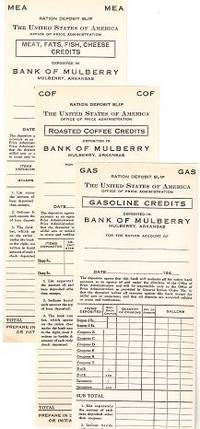
Three Ration Deposit Slips for credits deposited in the Bank of Mulberry Arkansas
Washington: OPA 1943. Fine. Three items on one sheet: Printed forms for Gasoline Credits Roasted Coffee Credits and Meat-Fats-Fish-Cheese Credits. 9.25" x 3.5 OPA unknown
Référence libraire : BOOKS010088I
|
|
|
Office of the Federal Register National Archives and Records Administration
Title 44 Emergency Management and Assistance: Revised as of October 1 2022
Paperback. LIKE NEW/LIKE NEW. <br/> <br/> paperback
Référence libraire : Pazz39127 ISBN : 9798396307888 9798396307
|
|
|
OFFICE OF THE SECRETARY OF DEFENSE WASHINGTON DC DIRECTOR OF ADMINISTRATION A ND MANAGEMENT
Uniformed Services University of the Health Sciences USUHS
PN. New. 1991. Soft Cover. Date is original print. This is a reprint edition . PN paperback
Référence libraire : 244345
|
|
|
Office of Price Administration
War Ration Book Two; No. 495033 EX OPA Form No. R-121
Washington DC: Office of Price Administration U.S. Government Printing Office 1943. Presumed First Edition First issuance to this individual. Single sheet printed on one side. Fair. The format is approximately 11.25 inches by 4.25 inches folded in half with removable stamps originally within. No War Ration stamps remain. Issued by Local Board Wayne 1-2-28-242. This was issued by Betty Bochwood . This was issued undated. Signed by both the issuing official and Alena Alta Smith. War ration books varied in design and content throughout the war years. Some were simple booklets with basic information while others included more elaborate instructions and patriotic messages. The stamps inside were often brightly colored and featured images of everyday items like shoes and cooking oil serving as a constant reminder of the sacrifices being made for the war effort. War Ration Book Two - January 1943 was the property of the United States Government. It is unlawful to sell or give it to any other person or to use it or permit anyone else to use it except to obtain rationed goods for the person to whom it was issued. Persons who violate Rationing Regulations are subject to $10000 fine or imprisonment or both. By 1944 whisky had disappeared from liquor store shelves as distilleries converted to the production of industrial alcohol. New car production was banned beginning January 1 1942 as former auto plants switched to the production of military vehicles. Thirty percent of all cigarettes produced were allocated for service men making cigarettes a scarce commodity on the home front by 1944. By the end of the war rationing limited consumption of almost every product with the exception of eggs and dairy foods. Civilians first received ration books—War Ration Book Number One or the "Sugar Book"—on 4 May 1942 through more than 100000 schoolteachers PTA groups and other volunteers. Sugar was the first consumer commodity rationed with all sales ended on 27 April 1942 and resumed on 5 May with a ration of 1 2 pound 8 oz per person per week half of normal consumption. Bakeries ice cream makers and other commercial users received rations of about 70% of normal usage. Coffee was rationed nationally on 29 November 1942 to 1 pound every five weeks about half of normal consumption in part because of German attacks on shipping from Brazil. As of 1 March 1942 dog food could no longer be sold in tin cans and manufacturers switched to dehydrated versions. As of 1 April 1942 anyone wishing to purchase a new toothpaste tube then made from metal had to turn in an empty one. By June 1942 companies also stopped manufacturing metal office furniture radios television sets phonographs refrigerators vacuum cleaners washing machines and sewing machines for civilians. By the end of 1942 ration coupons were used for nine other items: typewriters gasoline bicycles shoes rubber footwear silk nylon fuel oil and stoves. Meat lard shortening and food oils cheese butter margarine processed foods canned bottled and frozen dried fruits canned milk firewood and coal jams jellies and fruit butter were rationed by November 1943. Many retailers welcomed rationing because they were already experiencing shortages of many items due to rumors and panics such as flashlights and batteries after Pearl Harbor. Ration Book Number Five is a very rare ration book only issued to very few people. By the end of 1942 ration coupons were used for nine other items: typewriters gasoline bicycles shoes rubber footwear silk nylon fuel oil and stoves. Meat lard shortening and food oils cheese butter margarine processed foods canned bottled and frozen dried fruits canned milk firewood and coal jams jellies and fruit butter were rationed by November 1943. Many retailers welcomed rationing because they were already experiencing shortages of many items due to rumors and panics such as flashlights and batteries after Pearl Harbor. Ration Book Number Five is a very rare ration book only issued to very few people. Office of Price Administration, U.S. Government Printing Office unknown
Référence libraire : 89890
|
|
|
Office of Price Administration
War Ration Book Two; No. 144930 EL OPA Form No. R-121
Washington DC: Office of Price Administration U.S. Government Printing Office 1942. Presumed First Edition First issuance to this individual. Single sheet printed on one side. Fair. The format is approximately 11.25 inches by 4.25 inches folded in half with removable stamps originally within. No War Ration stamps remain. Issued by Local Board 551 of Macon Illinois. This was issued by Robert R. Snell. This was issued undated. Signed by the issuing official and Amy Josephine Dwyer. War ration books varied in design and content throughout the war years. Some were simple booklets with basic information while others included more elaborate instructions and patriotic messages. The stamps inside were often brightly colored and featured images of everyday items like shoes and cooking oil serving as a constant reminder of the sacrifices being made for the war effort. War Ration Book Two - January 1943 was the property of the United States Government. It is unlawful to sell or give it to any other person or to use it or permit anyone else to use it except to obtain rationed goods for the person to whom it was issued. Persons who violate Rationing Regulations are subject to $10000 fine or imprisonment or both. By 1944 whisky had disappeared from liquor store shelves as distilleries converted to the production of industrial alcohol. New car production was banned beginning January 1 1942 as former auto plants switched to the production of military vehicles. Thirty percent of all cigarettes produced were allocated for service men making cigarettes a scarce commodity on the home front by 1944. By the end of the war rationing limited consumption of almost every product with the exception of eggs and dairy. The 1943 war ration book is a unique and valuable collectible item that offers a glimpse into the United States’ war effort during World War II. The 1943 war ration book was issued to the American public in 1943 as part of the United States’ war effort. It was used to allocate food fuel and other essential resources to ensure fair distribution and minimize waste. The book contained a series of coupons which could be redeemed for specific goods and services such as gasoline tires sugar and coffee. Civilians first received ration books—War Ration Book Number One or the "Sugar Book"—on 4 May 1942 through more than 100000 schoolteachers PTA groups and other volunteers. Sugar was the first consumer commodity rationed with all sales ended on 27 April 1942 and resumed on 5 May with a ration of 1 2 pound 8 oz per person per week half of normal consumption. Bakeries ice cream makers and other commercial users received rations of about 70% of normal usage. Coffee was rationed nationally on 29 November 1942 to 1 pound every five weeks about half of normal consumption in part because of German attacks on shipping from Brazil. As of 1 March 1942 dog food could no longer be sold in tin cans and manufacturers switched to dehydrated versions. As of 1 April 1942 anyone wishing to purchase a new toothpaste tube then made from metal had to turn in an empty one. By June 1942 companies also stopped manufacturing metal office furniture radios television sets phonographs refrigerators vacuum cleaners washing machines and sewing machines for civilians. By the end of 1942 ration coupons were used for nine other items: typewriters gasoline bicycles shoes rubber footwear silk nylon fuel oil and stoves. Meat lard shortening and food oils cheese butter margarine processed foods canned bottled and frozen dried fruits canned milk firewood and coal jams jellies and fruit butter were rationed by November 1943. Many retailers welcomed rationing because they were already experiencing shortages of many items due to rumors and panics such as flashlights and batteries after Pearl Harbor. Ration Book Number Five is a very rare ration book only issued to very few people. By the end of 1942 ration coupons were used for nine other items: typewriters gasoline bicycles shoes rubber footwear silk nylon fuel oil and stoves. Meat lard shortening and food oils cheese butter margarine processed foods canned bottled and frozen dried fruits canned milk firewood and coal jams jellies and fruit butter were rationed by November 1943. Many retailers welcomed rationing because they were already experiencing shortages of many items due to rumors and panics such as flashlights and batteries after Pearl Harbor. Ration Book Number Five is a very rare ration book only issued to very few people. Office of Price Administration, U.S. Government Printing Office unknown
Référence libraire : 89907
|
|
|
Office of Price Administration
War Ration Book One; No. 65864 - 194
Washington DC: Office of Price Administration 1942. Presumed First Edition First issuance to this individual. Single sheet printed on one side. Fair. The format is approximately 5.25 inches by 6.5 inches folded--with War Ration stamps 19 and 20 still attached. . Stamp of Christian County Illinois Board 6211-1. This includes the Certificate of Registrar made out to Cathryn Eileen Galvin of the city of Assumption. She is reported to be 5 footm 7 inches 130 pounds with blue eyes brown hair and 25 years old. She has signed the Certificate of Book Holder that is part of this sheet. This was issued on May 5 1942 by Oma Rammel of Local Board No. 11-1. This is believed to be the Cathryn E Woolard Galvin born 10 Feb 1917 died 25 Dec 1992 aged 75. who was buried in Price Cemetery Oconee Shelby County Illinois USA. This was issued on the second day of distribution! The registrar is believe to be the Oma M Allison Rammel 1895 - 1995 who was born 19 Jun 1895 in Effingham Effingham Illinois and who died 26 Jul 1995 at age 100 in Pana Christian Illinois. Civilians first received ration books—War Ration Book Number One or the "Sugar Book"—on 4 May 1942 through more than 100000 schoolteachers PTA groups and other volunteers. Sugar was the first consumer commodity rationed with all sales ended on 27 April 1942 and resumed on 5 May with a ration of 1 2 pound 8 oz per person per week half of normal consumption. Bakeries ice cream makers and other commercial users received rations of about 70% of normal usage. Coffee was rationed nationally on 29 November 1942 to 1 pound every five weeks about half of normal consumption in part because of German attacks on shipping from Brazil. As of 1 March 1942 dog food could no longer be sold in tin cans and manufacturers switched to dehydrated versions. As of 1 April 1942 anyone wishing to purchase a new toothpaste tube then made from metal had to turn in an empty one. By June 1942 companies also stopped manufacturing metal office furniture radios television sets phonographs refrigerators vacuum cleaners washing machines and sewing machines for civilians. By the end of 1942 ration coupons were used for nine other items: typewriters gasoline bicycles shoes rubber footwear silk nylon fuel oil and stoves. Meat lard shortening and food oils cheese butter margarine processed foods canned bottled and frozen dried fruits canned milk firewood and coal jams jellies and fruit butter were rationed by November 1943. Many retailers welcomed rationing because they were already experiencing shortages of many items due to rumors and panics such as flashlights and batteries after Pearl Harbor. Ration Book Number Five is a very rare ration book only issued to very few people. By the end of 1942 ration coupons were used for nine other items: typewriters gasoline bicycles shoes rubber footwear silk nylon fuel oil and stoves. Meat lard shortening and food oils cheese butter margarine processed foods canned bottled and frozen dried fruits canned milk firewood and coal jams jellies and fruit butter were rationed by November 1943. Many retailers welcomed rationing because they were already experiencing shortages of many items due to rumors and panics such as flashlights and batteries after Pearl Harbor. Ration Book Number Five is a very rare ration book only issued to very few people. Office of Price Administration unknown
Référence libraire : 89888
|
|
|
Office of Price Administration
War Ration Book No. 3 Book 4 written in ink at lower right front corner.; No. 853877 CS OPA Form No. R-130
Washington DC: Office of Price Administration U.S. Government Printing Office 1943. Presumed First Edition First issuance to this individual. Front and back covers printed on one side with stamp sheets inside. Fair. The format is approximately 11.5 inches by 4.25 inches This has sheets of removable stamps originally within. MANY War Ration stamps remain some with numbers and letter some with numbers and illustrations. Office of Price Administration stamp present on front with number 144930EL different from number on the booklet! This was issued undated. Signed by Arcelia C. Ditzler. War ration books varied in design and content throughout the war years. Some were simple booklets with basic information while others included more elaborate instructions and patriotic messages. The stamps inside were often brightly colored and featured images of everyday items like shoes and cooking oil serving as a constant reminder of the sacrifices being made for the war effort. War Ration Book Two - January 1943 was the property of the United States Government. It is unlawful to sell or give it to any other person or to use it or permit anyone else to use it except to obtain rationed goods for the person to whom it was issued. Persons who violate Rationing Regulations are subject to $10000 fine or imprisonment or both. By 1944 whisky had disappeared from liquor store shelves as distilleries converted to the production of industrial alcohol. New car production was banned beginning January 1 1942 as former auto plants switched to the production of military vehicles. This is believed to belong to Arcelia Ceora “Celia†Chapman Ditzler Born 8 Sep 1854 in Ohio who died Aug 1952 Shelby County Illinois. This War Ration Books listed Shelbyville Illinois as Mrs. Ditzler's city and state. The 1943 war ration book is a unique and valuable collectible item that offers a glimpse into the United States’ war effort during World War II. The 1943 war ration book was issued to the American public in 1943 as part of the United States’ war effort. It was used to allocate food fuel and other essential resources to ensure fair distribution and minimize waste. The book contained a series of coupons which could be redeemed for specific goods and services such as gasoline tires sugar and coffee. Civilians first received ration books—War Ration Book Number One or the "Sugar Book"—on 4 May 1942 through more than 100000 schoolteachers PTA groups and other volunteers. Sugar was the first consumer commodity rationed with all sales ended on 27 April 1942 and resumed on 5 May with a ration of 1 2 pound 8 oz per person per week half of normal consumption. Bakeries ice cream makers and other commercial users received rations of about 70% of normal usage. Coffee was rationed nationally on 29 November 1942 to 1 pound every five weeks about half of normal consumption in part because of German attacks on shipping from Brazil. As of 1 March 1942 dog food could no longer be sold in tin cans and manufacturers switched to dehydrated versions. As of 1 April 1942 anyone wishing to purchase a new toothpaste tube then made from metal had to turn in an empty one. By June 1942 companies also stopped manufacturing metal office furniture radios television sets phonographs refrigerators vacuum cleaners washing machines and sewing machines for civilians. By the end of 1942 ration coupons were used for nine other items: typewriters gasoline bicycles shoes rubber footwear silk nylon fuel oil and stoves. Meat lard shortening and food oils cheese butter margarine processed foods canned bottled and frozen dried fruits canned milk firewood and coal jams jellies and fruit butter were rationed by November 1943. Many retailers welcomed rationing because they were already experiencing shortages of many items due to rumors and panics such as flashlights and batteries after Pearl Harbor. Ration Book Number Five is a very rare ration book only issued to very few people. By the end of 1942 ration coupons were used for nine other items: typewriters gasoline bicycles shoes rubber footwear silk nylon fuel oil and stoves. Meat lard shortening and food oils cheese butter margarine processed foods canned bottled and frozen dried fruits canned milk firewood and coal jams jellies and fruit butter were rationed by November 1943. Many retailers welcomed rationing because they were already experiencing shortages of many items due to rumors and panics such as flashlights and batteries after Pearl Harbor. Ration Book Number Five is a very rare ration book only issued to very few people. Office of Price Administration, U.S. Government Printing Office unknown
Référence libraire : 89911
|
|
|
Office of Price Administration
War Ration Book Three; No. 86074 AJ OPA Form No. R-130
Washington DC: Office of Price Administration U.S. Government Printing Office 1943. Presumed First Edition First issuance to this individual. Single sheet printed on one side. Fair. The format is approximately 11.25 inches by 4.25 inches folded in half with removable stamps originally within. Many War Ration stamps remain. First sheet has ration stamps 1-48 intact with an artillery piece illustration . Sheet 2 is 1-48 with a tank illustration. Sheet 3 is 1-48 with a ship illustration. Sheet 4 has 4-48 illustrated with an airplane illustrations. Four stamps laid in G1 H 1 H2 and H3 with a torch illustration laid in may not have been part of Book Three. This was issued undated. Signed Alena A. Smith. Ms. Smith was 38 years of age a female weighing 195 pounds and standing 5 foot six inches. Her occupation was an Inspector. War ration books varied in design and content throughout the war years. Some were simple booklets with basic information while others included more elaborate instructions and patriotic messages. The stamps inside were often brightly colored and featured images of everyday items like shoes and cooking oil serving as a constant reminder of the sacrifices being made for the war effort. War Ration Book Two - January 1943 was the property of the United States Government. It is unlawful to sell or give it to any other person or to use it or permit anyone else to use it except to obtain rationed goods for the person to whom it was issued. Persons who violate Rationing Regulations are subject to $10000 fine imprisonment or both. By 1944 whisky had disappeared from stores as distilleries converted to the production of industrial alcohol. New car production was banned as of January 1 1942 as former auto plants switched to the production of military vehicles. Civilians first received ration books—War Ration Book Number One or the "Sugar Book"—on 4 May 1942 through more than 100000 schoolteachers PTA groups and other volunteers. Sugar was the first consumer commodity rationed with all sales ended on 27 April 1942 and resumed on 5 May with a ration of 1 2 pound 8 oz per person per week half of normal consumption. Bakeries ice cream makers and other commercial users received rations of about 70% of normal usage. Coffee was rationed nationally on 29 November 1942 to 1 pound every five weeks about half of normal consumption in part because of German attacks on shipping from Brazil. As of 1 March 1942 dog food could no longer be sold in tin cans and manufacturers switched to dehydrated versions. As of 1 April 1942 anyone wishing to purchase a new toothpaste tube then made from metal had to turn in an empty one. By June 1942 companies also stopped manufacturing metal office furniture radios television sets phonographs refrigerators vacuum cleaners washing machines and sewing machines for civilians. By the end of 1942 ration coupons were used for nine other items: typewriters gasoline bicycles shoes rubber footwear silk nylon fuel oil and stoves. Meat lard shortening and food oils cheese butter margarine processed foods canned bottled and frozen dried fruits canned milk firewood and coal jams jellies and fruit butter were rationed by November 1943. Many retailers welcomed rationing because they were already experiencing shortages of many items due to rumors and panics such as flashlights and batteries after Pearl Harbor. Ration Book Number Five is a very rare ration book only issued to very few people. By the end of 1942 ration coupons were used for nine other items: typewriters gasoline bicycles shoes rubber footwear silk nylon fuel oil and stoves. Meat lard shortening and food oils cheese butter margarine processed foods canned bottled and frozen dried fruits canned milk firewood and coal jams jellies and fruit butter were rationed by November 1943. Many retailers welcomed rationing because they were already experiencing shortages of many items due to rumors and panics such as flashlights and batteries after Pearl Harbor. Ration Book Number Five is a very rare ration book only issued to very few people. Office of Price Administration, U.S. Government Printing Office unknown
Référence libraire : 89909
|
|
|
Office of Price Administration
War Ration Book Three Ink notation at bottom front as Book 4; No. 284919 CN OPA Form No. R-130
Washington DC: Office of Price Administration U.S. Government Printing Office 1943. Presumed First Edition First issuance to this individual. Single sheet printed on one side with stamps inside. Fair. The format is approximately 11.25 inches by 4.25 inches folded in half with removable stamps originally within. Many War Ration stamps remain. First sheet has ration stamps 1-48 intact with an artillery piece illustration . Sheet 2 is 1-48 with a tank illustration. Sheet 3 is 1-48 with a ship illustration. Sheet 4 has 2-48 illustrated with an airplane. This was issued undated. Signed Elmer Schurtze. Not otherwise filled out. Ink notation at bottom front as Book 4. War ration books varied in design and content throughout the war years. Some were simple booklets with basic information while others included more elaborate instructions and patriotic messages. The stamps inside were often brightly colored and featured images of everyday items like shoes and cooking oil serving as a constant reminder of the sacrifices being made for the war effort. War Ration Book Two - January 1943 was the property of the United States Government. It is unlawful to sell or give it to any other person or to use it or permit anyone else to use it except to obtain rationed goods for the person to whom it was issued. Persons who violate Rationing Regulations are subject to $10000 fine imprisonment or both. By 1944 whisky had disappeared from stores as distilleries converted to the production of industrial alcohol. New car production was banned as of January 1 1942 as former auto plants switched to the production of military vehicles. The official War Ration book four was released in late 1943. Form No. R-145 Civilians first received ration books—War Ration Book Number One or the "Sugar Book"—on 4 May 1942 through more than 100000 schoolteachers PTA groups and other volunteers. Sugar was the first consumer commodity rationed with all sales ended on 27 April 1942 and resumed on 5 May with a ration of 1 2 pound 8 oz per person per week half of normal consumption. Bakeries ice cream makers and other commercial users received rations of about 70% of normal usage. Coffee was rationed nationally on 29 November 1942 to 1 pound every five weeks about half of normal consumption in part because of German attacks on shipping from Brazil. As of 1 March 1942 dog food could no longer be sold in tin cans and manufacturers switched to dehydrated versions. As of 1 April 1942 anyone wishing to purchase a new toothpaste tube then made from metal had to turn in an empty one. By June 1942 companies also stopped manufacturing metal office furniture radios television sets phonographs refrigerators vacuum cleaners washing machines and sewing machines for civilians. By the end of 1942 ration coupons were used for nine other items: typewriters gasoline bicycles shoes rubber footwear silk nylon fuel oil and stoves. Meat lard shortening and food oils cheese butter margarine processed foods canned bottled and frozen dried fruits canned milk firewood and coal jams jellies and fruit butter were rationed by November 1943. Many retailers welcomed rationing because they were already experiencing shortages of many items due to rumors and panics such as flashlights and batteries after Pearl Harbor. Ration Book Number Five is a very rare ration book only issued to very few people. By the end of 1942 ration coupons were used for nine other items: typewriters gasoline bicycles shoes rubber footwear silk nylon fuel oil and stoves. Meat lard shortening and food oils cheese butter margarine processed foods canned bottled and frozen dried fruits canned milk firewood and coal jams jellies and fruit butter were rationed by November 1943. Many retailers welcomed rationing because they were already experiencing shortages of many items due to rumors and panics such as flashlights and batteries after Pearl Harbor. Ration Book Number Five is a very rare ration book only issued to very few people. Office of Price Administration, U.S. Government Printing Office unknown
Référence libraire : 89910
|
|
|
Office of Price Administration
War Ration Book Two; No. 686366 EP OPA Form No. R-121
Washington DC: Office of Price Administration U.S. Government Printing Office 1942. Presumed First Edition First issuance to this individual. Front and back covers printed on one side staple bound. Fair. The format is approximately 5.75 inches by 4.25 inches Front and back stapled with sheets of removable stamps originally within. MANY War Ration stamps remain Red E F R S T Blue N P Q R S T E F M L K J H G Z Y X W V U Numbers include 1 2 5 and 8. One Blue 5 is detached by present! Office of Price Administration stamp present on front. . Issued by Local Board 6286-1 of Shelby Illinois. This was issued by F. E. Galbreath. This was issued undated. Signed by the issuing official and William A. Ditzler. War ration books varied in design and content throughout the war years. Some were simple booklets with basic information while others included more elaborate instructions and patriotic messages. The stamps inside were often brightly colored and featured images of everyday items like shoes and cooking oil serving as a constant reminder of the sacrifices being made for the war effort. War Ration Book Two - January 1943 was the property of the United States Government. It is unlawful to sell or give it to any other person or to use it or permit anyone else to use it except to obtain rationed goods for the person to whom it was issued. Persons who violate Rationing Regulations are subject to $10000 fine or imprisonment or both. By 1944 whisky had disappeared from liquor store shelves as distilleries converted to the production of industrial alcohol. New car production was banned beginning January 1 1942 as former auto plants switched to the production of military vehicles. The 1943 war ration book is a unique and valuable collectible item that offers a glimpse into the United States’ war effort during World War II. The 1943 war ration book was issued to the American public in 1943 as part of the United States’ war effort. It was used to allocate food fuel and other essential resources to ensure fair distribution and minimize waste. The book contained a series of coupons which could be redeemed for specific goods and services such as gasoline tires sugar and coffee. Civilians first received ration books—War Ration Book Number One or the "Sugar Book"—on 4 May 1942 through more than 100000 schoolteachers PTA groups and other volunteers. Sugar was the first consumer commodity rationed with all sales ended on 27 April 1942 and resumed on 5 May with a ration of 1 2 pound 8 oz per person per week half of normal consumption. Bakeries ice cream makers and other commercial users received rations of about 70% of normal usage. Coffee was rationed nationally on 29 November 1942 to 1 pound every five weeks about half of normal consumption in part because of German attacks on shipping from Brazil. As of 1 March 1942 dog food could no longer be sold in tin cans and manufacturers switched to dehydrated versions. As of 1 April 1942 anyone wishing to purchase a new toothpaste tube then made from metal had to turn in an empty one. By June 1942 companies also stopped manufacturing metal office furniture radios television sets phonographs refrigerators vacuum cleaners washing machines and sewing machines for civilians. By the end of 1942 ration coupons were used for nine other items: typewriters gasoline bicycles shoes rubber footwear silk nylon fuel oil and stoves. Meat lard shortening and food oils cheese butter margarine processed foods canned bottled and frozen dried fruits canned milk firewood and coal jams jellies and fruit butter were rationed by November 1943. Many retailers welcomed rationing because they were already experiencing shortages of many items due to rumors and panics such as flashlights and batteries after Pearl Harbor. Ration Book Number Five is a very rare ration book only issued to very few people. By the end of 1942 ration coupons were used for nine other items: typewriters gasoline bicycles shoes rubber footwear silk nylon fuel oil and stoves. Meat lard shortening and food oils cheese butter margarine processed foods canned bottled and frozen dried fruits canned milk firewood and coal jams jellies and fruit butter were rationed by November 1943. Many retailers welcomed rationing because they were already experiencing shortages of many items due to rumors and panics such as flashlights and batteries after Pearl Harbor. Ration Book Number Five is a very rare ration book only issued to very few people. Office of Price Administration, U.S. Government Printing Office unknown
Référence libraire : 89908
|
|
|
Office of Price Administration
War Ration Book One; No. 117334 - 114 OPA Form No. R-302
Washington DC: Office of Price Administration U.S. Government Printing Office 1942. Presumed First Edition First issuance to this individual. Single sheet printed on one side. Fair. The format is approximately 5.25 inches by 6.5 inches folded--with War Ration stamps 19 20 and 22 still attached. Issued by Local Board 82-82 of Wayne County Michigan. This includes the Certificate of Registrar made out to Alena Alta Smith of the city of Detroit. She is reported to be 5 foot 6 inches 190 pounds with black eyes brown hair and 36 years old. She has signed the Certificate of Book Holder that is part of this sheet. This was issued on May 4 1942 by Oscar G. Christensen of Local Board No. 82-82 This was issued on the FIRST day of distribution! Detroit and the industrial region surrounding it was plunged into semi-darkness as all except street lights and in war factories went out for fifteen minutes during a blackout drill on May 4 1942. Civilians first received ration books—War Ration Book Number One or the "Sugar Book"—on 4 May 1942 through more than 100000 schoolteachers PTA groups and other volunteers. Sugar was the first consumer commodity rationed with all sales ended on 27 April 1942 and resumed on 5 May with a ration of 1 2 pound 8 oz per person per week half of normal consumption. Bakeries ice cream makers and other commercial users received rations of about 70% of normal usage. Coffee was rationed nationally on 29 November 1942 to 1 pound every five weeks about half of normal consumption in part because of German attacks on shipping from Brazil. As of 1 March 1942 dog food could no longer be sold in tin cans and manufacturers switched to dehydrated versions. As of 1 April 1942 anyone wishing to purchase a new toothpaste tube then made from metal had to turn in an empty one. By June 1942 companies also stopped manufacturing metal office furniture radios television sets phonographs refrigerators vacuum cleaners washing machines and sewing machines for civilians. By the end of 1942 ration coupons were used for nine other items: typewriters gasoline bicycles shoes rubber footwear silk nylon fuel oil and stoves. Meat lard shortening and food oils cheese butter margarine processed foods canned bottled and frozen dried fruits canned milk firewood and coal jams jellies and fruit butter were rationed by November 1943. Many retailers welcomed rationing because they were already experiencing shortages of many items due to rumors and panics such as flashlights and batteries after Pearl Harbor. Ration Book Number Five is a very rare ration book only issued to very few people. By the end of 1942 ration coupons were used for nine other items: typewriters gasoline bicycles shoes rubber footwear silk nylon fuel oil and stoves. Meat lard shortening and food oils cheese butter margarine processed foods canned bottled and frozen dried fruits canned milk firewood and coal jams jellies and fruit butter were rationed by November 1943. Many retailers welcomed rationing because they were already experiencing shortages of many items due to rumors and panics such as flashlights and batteries after Pearl Harbor. Ration Book Number Five is a very rare ration book only issued to very few people. Office of Price Administration, U.S. Government Printing Office unknown
Référence libraire : 89889
|
|
|
Office of Price Administration
War Ration Book Two; No. 144929 EL OPA Form No. R-121
Washington DC: Office of Price Administration U.S. Government Printing Office 1942. Presumed First Edition First issuance to this individual. Single sheet printed on one side. Fair. The format is approximately 11.25 inches by 4.25 inches folded in half with removable stamps originally within. No War Ration stamps remain. Issued by Local Board 551 of Macon Illinois. This was issued by Robert R. Snell. This was issued undated. Signed by the issuing official and Richard Patrick Dwyer and Amy Dwyer presumed on behalf of Richard Patrick Dwyer. War ration books varied in design and content throughout the war years. Some were simple booklets with basic information while others included more elaborate instructions and patriotic messages. The stamps inside were often brightly colored and featured images of everyday items like shoes and cooking oil serving as a constant reminder of the sacrifices being made for the war effort. War Ration Book Two - January 1943 was the property of the United States Government. It is unlawful to sell or give it to any other person or to use it or permit anyone else to use it except to obtain rationed goods for the person to whom it was issued. Persons who violate Rationing Regulations are subject to $10000 fine or imprisonment or both. By 1944 whisky had disappeared from liquor store shelves as distilleries converted to the production of industrial alcohol. New car production was banned beginning January 1 1942 as former auto plants switched to the production of military vehicles. Thirty percent of all cigarettes produced were allocated for service men making cigarettes a scarce commodity on the home front by 1944. By the end of the war rationing limited consumption of almost every product with the exception of eggs and dairy. The 1943 war ration book is a unique and valuable collectible item that offers a glimpse into the United States’ war effort during World War II. The 1943 war ration book was issued to the American public in 1943 as part of the United States’ war effort. It was used to allocate food fuel and other essential resources to ensure fair distribution and minimize waste. The book contained a series of coupons which could be redeemed for specific goods and services such as gasoline tires sugar and coffee. Civilians first received ration books—War Ration Book Number One or the "Sugar Book"—on 4 May 1942 through more than 100000 schoolteachers PTA groups and other volunteers. Sugar was the first consumer commodity rationed with all sales ended on 27 April 1942 and resumed on 5 May with a ration of 1 2 pound 8 oz per person per week half of normal consumption. Bakeries ice cream makers and other commercial users received rations of about 70% of normal usage. Coffee was rationed nationally on 29 November 1942 to 1 pound every five weeks about half of normal consumption in part because of German attacks on shipping from Brazil. As of 1 March 1942 dog food could no longer be sold in tin cans and manufacturers switched to dehydrated versions. As of 1 April 1942 anyone wishing to purchase a new toothpaste tube then made from metal had to turn in an empty one. By June 1942 companies also stopped manufacturing metal office furniture radios television sets phonographs refrigerators vacuum cleaners washing machines and sewing machines for civilians. By the end of 1942 ration coupons were used for nine other items: typewriters gasoline bicycles shoes rubber footwear silk nylon fuel oil and stoves. Meat lard shortening and food oils cheese butter margarine processed foods canned bottled and frozen dried fruits canned milk firewood and coal jams jellies and fruit butter were rationed by November 1943. Many retailers welcomed rationing because they were already experiencing shortages of many items due to rumors and panics such as flashlights and batteries after Pearl Harbor. Ration Book Number Five is a very rare ration book only issued to very few people. By the end of 1942 ration coupons were used for nine other items: typewriters gasoline bicycles shoes rubber footwear silk nylon fuel oil and stoves. Meat lard shortening and food oils cheese butter margarine processed foods canned bottled and frozen dried fruits canned milk firewood and coal jams jellies and fruit butter were rationed by November 1943. Many retailers welcomed rationing because they were already experiencing shortages of many items due to rumors and panics such as flashlights and batteries after Pearl Harbor. Ration Book Number Five is a very rare ration book only issued to very few people. Office of Price Administration, U.S. Government Printing Office unknown
Référence libraire : 89906
|
|
|
Office of Price Administration
War Ration Book No. 3 Identification Stub; 437015 BH
Washington DC: Office of Price Administation 1942. Presumed First Edition First printing thus. Single sheet printed on both sides. Good. The format is approximately 5 inches by 1.375 inches. Rare surviving item of War Rationing ephemera. This was originally attached to an application to obtain War Ration Book No. 3. The Office of Price Administration OPA was established within the Office for Emergency Management of the United States government by Executive Order 8875 on August 28 1941. The functions of the OPA were originally to control money price controls and rents after the outbreak of World War II. President Franklin D. Roosevelt inaugurated the Council of National Defense Advisory Commission on May 29 19404 to include Price Stabilization and Consumer Protection Divisions. Both divisions merged to become the Office of Price Administration and Civilian Supply OPACS within the Office for Emergency Management by Executive Order 8734 on April 11 1941. Civil supply functions were transferred to the Office of Production Management. It became an independent agency under the Emergency Price Control Act January 30 1942. The OPA had the power to place ceilings on all prices except agricultural commodities and to ration scarce supplies of other items including tires automobiles shoes nylon sugar gasoline fuel oil coffee meats and processed foods. At the peak almost 90% of retail food prices were frozen. It could also authorize subsidies for production of some of those commodities. Rationing is the controlled distribution of scarce resources goods or services or an artificial restriction of demand. Rationing controls the size of the ration which is one person's allotted portion of the resources being distributed on a particular day or at a particular time.<br /> Rationing in the United States was introduced in stages during World War II with the last of the restrictions ending in June 1947. In the summer of 1941 rationing in the United Kingdom increased because of military needs and German attacks on shipping in the Battle of the Atlantic. The British government appealed to Americans to conserve food to help the UK. The Office of Price Administration OPA warned Americans of potential gasoline steel aluminum and electricity shortages. It believed that with factories converting to military production and consuming many critical supplies rationing would become necessary if the country entered the war. The OPA established a rationing system after the attack on Pearl Harbor on 7 December. The work of issuing ration books and exchanging used stamps for certificates was handled by some 5500 local ration boards of mostly volunteer workers selected by local officials. Many levels of rationing went into effect. Some items such as sugar were distributed evenly based on the number of people in a household. Other items like gasoline or fuel oil were rationed only to those who could justify a need. Restaurant owners and other merchants were accorded more availability but had to collect ration stamps to restock their supplies. In exchange for used ration stamps ration boards delivered certificates to restaurants and merchants to authorize procurement of more products. Each ration stamp had a generic drawing of an airplane gun tank aircraft carrier ear of wheat fruit etc. and a serial number. Some stamps also had alphabetic lettering. The kind and amount of rationed commodities were not specified on most of the stamps and were not defined until later when local newspapers published for example that beginning on a specified date one airplane stamp was required in addition to cash to buy one pair of shoes and one stamp number 30 from ration book four was required to buy five pounds of sugar. The commodity amounts changed from time to time depending on availability. Red stamps were used to ration meat and butter and blue stamps were used to ration processed foods. <br /> To enable making change for ration stamps the government issued "red point" tokens to be given in change for red stamps and "blue point" tokens in change for blue stamps. The red and blue tokens were about the size of dimes 0.63 in and were made of thin compressed wood fiber material because metals were in short supply. There was a black market in stamps. To prevent this the OPA ordered vendors not to accept stamps that they themselves did not tear out of books. Buyers however circumvented this by saying sometimes accurately as the books were not well-made that the stamps had "fallen out". In actuality they may have acquired stamps from other family members or friends or the black market. Most rationing restrictions ended in August 1945 except for sugar rationing which lasted until 1947 in some parts of the country. Office of Price Administation unknown
Référence libraire : 89902
|
|
|
OFFICE OF THE SECRETARY OF DEFENSE WASHINGTON DC DIRECTOR OF ADMINISTRATION A ND MANAGEMENT
Washington Local Commuting Area
PN. New. 1989. Soft Cover. Date is original print. This is a reprint edition. . PN paperback
Référence libraire : 793055
|
|
|
OFFICE OF THE SECRETARY OF DEFENSE WASHINGTON DC DIRECTOR OF ADMINISTRATION A ND MANAGEMENT
Washington Headquarters Services WHS
PN. New. 1991. Soft Cover. Date is original print. This is a reprint edition . PN paperback
Référence libraire : 245326
|
|
|
Office of Price Administration
Mileage Ration --Identification Folder "T" Coupons enclosed
Washington DC / King City CA Board 83.8.3: War Price and Rationing Board 1945. Cardstock folder 3.5x5 inch printed form with enclosed inch-square gasoline coupons over 40 of these on a perforated sheet with perhaps as many missing or used up. Mild wear and tear good condition. OPA form R-577. This exemplar was filled out by a resident of San Ardo CA. War Price and Rationing Board unknown books
Référence libraire : 188956

|
|
|
OFFICE OF WAR INFORMATION / WAR FOOD ADMINISTRATION
Make Food Fight for Freedom By Adequate On-the-Job Feeding of Industrial Workers
Washington: Office of War Information / War Food Administration 1944. First Edition. Quarto ca. 27cm.; printed staplebound self-wrappers; 16pp.; text printed in double columns. Minor toning else Fine. "This information supplements the basic wartime facts on food as presented in the Food Fights for Freedom program book" upper cover. Office of War Information / War Food Administration unknown books
Référence libraire : 48319

|
|
|
Ogilvie, Vivian
The English public school
B.T. Batsford 1957-01-01. hardcover. Good/No Jacket. 19 to 25 cm tall Octavo 8vo. . Posted within 1 working day. 1st class tracked post to the UK Airmail tracked worldwide. Robust recyclable packaging. B.T. Batsford hardcover
Référence libraire : 244101
|
|
|
Ogorodnikow, Schimbirjew:
Lehrbuch der Pädagogik / 2 Band
Schulzesche Hof Buchhandlung Oldenburg 1910. Hardcover Gut 303 Seiten / Schulzesche Hof Buchhandlung Oldenburg, hardcover
Référence libraire : 142752
|
|
|
Ohio Board of Administration
Laws Governing the Ohio Board of Administration: With Addenda Citing Sections Referring Thereto and Including References to Opinions of the Attorney General Classic Reprint
paperback. Good. Access codes and supplements are not guaranteed with used items. May be an ex-library book. paperback
Référence libraire : 0243116063.G ISBN : 0243116063 9780243116065
|
|
|
Ohio Department Of Transportation In Cooperation with The Federal Highway Administration
THE OHIO HISTORIC BRIDGE INVENTORY EVALUATION AND PRESERVATION PLAN 2 VOLUME SET. INCLUDES THE SECOND OHIO HISTORIC BRIDGE INVENTORY EVALUATION AND PRESERVATION PLAN
Administration. VG. 1983 1990. Hardcover. Hardbacks in Very Good condition without dust jackets. . 4to 11" - 13" tall. 270 235 pages. Quick Shipping All Books Mailed in Boxes Free Tracking Provided . Administration hardcover
Référence libraire : 47683
|
|
|
Ohio Work Projects Administration
The National Road: In Song and Story Classic Reprint
paperback. Good. Access codes and supplements are not guaranteed with used items. May be an ex-library book. paperback
Référence libraire : 1528007239.G ISBN : 1528007239 9781528007238

|
|
|
Ohio Work Projects Administration
The National Road: In Song and Story Classic Reprint
hardcover. Good. Access codes and supplements are not guaranteed with used items. May be an ex-library book. hardcover
Référence libraire : 0265947227.G ISBN : 0265947227 9780265947227
|
|
|
Ohler, Aloys Karl:
Lehrbuch der Erziehung und des Unterrichtes. Eine systematische Darstellung des gesammten katholischen Volksschulwesens für Geistliche und Lehrer
Verlag von Franz Kirchheim Mainz 1870. Hardcover mit Leinenrücken und -ecken und Marmorschnitt ohne Schutzumschlag 6. Auflage Zustand: keine Beschädigungen keine Eintragungen. Rücken Ecken Kanten sehr gut. Etwas angestaubt Kopfschnitt staubig ansonsten sauber und sehr gut erhalten. Mit Kennungen einer Klosterbibliothek. Verlag von Franz Kirchheim, Mainz, hardcover
Référence libraire : 254420
|
|
|
Oita Agricultural Administration Bureau Cultivated Land Division
Oita Prefecture Land Improvement History Revised Edition
Not Available 1979. Soft Cover. Fine. The book is in fine condition. Not Available paperback
Référence libraire : 2080302106809371
|
|
|
Okayama Railway Administration
Station personnel calculation data based on standard work time table
Not Available 1956. Soft Cover. Fine. Number of pages: Transcription gari version 90p Size: 24x35 cm Not Available paperback
Référence libraire : 2091502135500222
|
|
|
Okinawa Agriculture, Forestry and Fisheries Department Agricultural Administration Division
Okinawa Agricultural Promotion Basic Plan
Okinawa Agriculture Forestry and Fisheries Department Agricultural Administration Division N.A. Soft Cover. Fine. Page number: 627p Size: 26cm Okinawa Agriculture, Forestry and Fisheries Department Agricultural Administration Division paperback
Référence libraire : 2080202102300902
|
|
|
Okinawa Prefectural Archives Administration Department Historical Materials Editing Room
10-year history of the South Seas Bureau
Oki Education Committee 2001. Soft Cover. Fine. Size: A5 size Oki Education Committee paperback
Référence libraire : 2080202102707754
|
|
|
Okinawa Prefectural Archives Administration Department Historical Materials Editing Room
Bulletin of Historical Materials Editing Room 29
Oki Education Committee 2004. Soft Cover. Fine. Page size: 230 pages Size: B5 size Oki Education Committee paperback
Référence libraire : 2080202102707889
|
|
|
Okinawa Prefectural Archives Administration Department Historical Materials Editing Room
Bulletin of Historical Materials Editing Room 23
Oki Education Committee 1998. Soft Cover. Fine. Page size: 229 pages Size: B5 size Oki Education Committee paperback
Référence libraire : 2080202102707977
|
|
|
Okinawa Prefectural Archives Administration Department Historical Materials Editing Room
Bulletin of Historical Materials Editing Room 24
Oki Education Committee 1999. Soft Cover. Fine. Page size: 220 pages Size: B5 size Oki Education Committee paperback
Référence libraire : 2080202102707572
|
|
|
Okinawa Prefectural Archives Administration Department Historical Materials Editing Room
Bulletin of Historical Materials Editing Room 25
Oki Education Committee 2000. Soft Cover. Fine. Page size: 219 pages Size: B5 size Oki Education Committee paperback
Référence libraire : 2080202102707954
|
|
|
Okinawa Prefectural Archives Administration Department Historical Materials Editing Room
Nanyo Pioneer Yearbook Okinawa History Research Series 13
Oki Education Committee 2002. Soft Cover. Fine. Page size: 239 pages Size: A5 size Oki Education Committee paperback
Référence libraire : 2080202102707042
|
|
|
Okinawa Prefectural Archives Administration Department Historical Materials Editing Room
Okinawa Archaeological Bibliography Catalog of Okinawa History Research Series 9
Oki Education Committee 2000. Soft Cover. Fine. Page size: 95 pages Size: B5 size Oki Education Committee paperback
Référence libraire : 2080202102707343
|
|
|
Okinawa Prefectural Archives Administration Department Historical Materials Editing Room Edition
Ryukyu China Japan Korea Chronological Comparison Table Historical Materials Editing Material
Okinawa Prefectural Archives Administration Department Historical Materials Editing Room 1997. Soft Cover. Fine. Page size: 154 pages Size: B5 size Okinawa Prefectural Archives Administration Department Historical Materials Editing Room paperback
Référence libraire : 2080202102702030
|
|
|
Okura Ministry Administration Bureau
Confidential: A Historical Investigation of Japanese Overseas Activities Volume 22 Manshu Volume 1
Not Available N.A. Soft Cover. Fine. Number of pages: 297 pages Size: 16 x 23 cm Not Available paperback
Référence libraire : 2091502135500771
|
|
|
OLIPHANT, George Henry Hewit
The metropolitan interments act. With explanatory notes, an appendix and index.
London, Longman, Brown, Green and Longmans, 1850. VIII, 100 pp. New half cloth (stamp on title page).
Référence libraire : 3468118
|
|
|
Oliver, Albert I.
Curriculum Improvement: A Guide to Problems Principles and Procedures
New York: Dodd Mead & Company 1965. Condition would be FINE but for previous owner's name in two places and a paper clip mark in the margin of a couple leaves. Sharp corners. Square and tight. All other pages are crisp clean and unmarked. NO highlighting. NO underlining. NO margin notes. NOT a library discard. 1965. First Edition. Footnotes. Bibliographical references after each chapter. Index. Bound in the original gray cloth stamped in bright red on the spine. First Edition. Hardcover. Near Fine condition/No dust jacket. 8vo. xiii 504pp. Great Packaging Fast Shipping. Dodd, Mead & Company Hardcover
Référence libraire : 022214
|
|
|
Olivier-Martin François
L'Administration provinciale à la fin de l'Ancien Régime
L.G.D.J. Collection Reprint Broché 1997 In-8 (14,5 x 22 cm), broché, 436 pages ; très bon état général. Livraison a domicile (La Poste) ou en Mondial Relay sur simple demande.
Référence libraire : gb925
|
|
|
Ollendorf, HG.: H. G.
Neue Methode eine Sprache in sechs Monaten lesen schreiben und sprechen zu lernen. Für das Französische
Voigt & Günther Leipzig 1856. Hardcover mit Leinenrücken Zweite Ausgabe Zustand: keine Beschädigungen keine Eintragungen. Rücken Ecken Kanten sehr gut. Voigt & Günther, Leipzig, hardcover
Référence libraire : 236076
|
|
|
Ollenhauer, Erich:
An der Wende der deutschen Politik.
Vorstand der SPD. Bonn o.J. Taschenbuch Buchzustand: Gut Vorstand der SPD. Bonn, unknown
Référence libraire : 18918
|
|
|
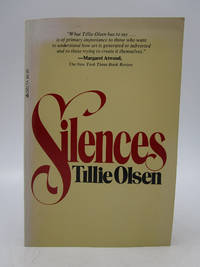
Olsen, Tillie
Silences Association Copy
New York: Delta/Seymour Lawrence Edition Dell Publ 1978. Paperback. Very Good . Inscribed by Doris Betts a novelist and short-story writer who is mentioned in a footnote on p. 32 to Ann Ross author of the New York Times best-selling "Miss Julia" series. Otherwise interior is clean and unmarked. Pages lightly tanned from age. Covers show minimal wear with faded/faintly creased spine. A nice tight copy. Full refund if not satisfied. Delta/Seymour Lawrence Edition, Dell Publ paperback
Référence libraire : 015618 ISBN : 0440577985 9780440577980
|
|
|
Oneil Robert M
Discrimination Against Discrimination: Preferential Admissions and the "Defunis" Case
Indiana University Press 1975 288 pages in8. 1975. Cartonné jaquette. 288 pages.
Référence libraire : 100133298

|
|
|
Onfroy, Jules
Rapport sur la Proposition de M. le Maire de Marseille pour l'Exécution de Grands Travaux d'Utilité Communale
Imprimerie Jules Barile, Marseille, 1858. In-4, cartonnage, couverture conservée, 59 pages.Séance du 10 Novembre 1858
Référence libraire : 1269
|
|
|
Ontario Training and Adjustment Board
An Information Guide to Adult Literacy Education in Ontario Version Francaise au Verso: Guide d'information sur l'alphabétisation des adultes en Ontario
Toronto Canada: Ontario Training and Adjustment Board OTAB Queen's Printer for Ontario 1996. Near Fine condition. Bright clean tight copy. The spine is square and flat. NO owner's name or bookplate. NO remainder mark. Pages are fresh and crisp. NO underlining. NO highlighting. NO margin notes. Softcover. 8.5" wide by 11" tall. 116pp. in English 90pp. in French. Bound in the original greenish-blue wrappers with a black spine. 1st ed No additional printings listed. Oversize Softcover. Near Fine condition. 116pp in English 90pp in French. Ontario Training and Adjustment Board (OTAB), Queen's Printer for Ontario Paperback
Référence libraire : 015140
|
|
|
Oomen, G., G. Richter und G. Vitalis:
Initia. Lateinisches Lehrbuch Latein als 3. Fremdsprache. Ãœbungsbuch
Verlag Ferdinand Schöningh Paderborn Blutenburg-Verlag München 1957. Hardcover kartoniert ohne Schutzumschlag Nur Übungsbuch. Zustand: keine Eintragungen. Bei ca. 3 Seiten wurde die Hälfte abgeschnitten. Rücken Ecken Kanten gut. Verlag Ferdinand Schöningh, Paderborn + Blutenburg-Verlag, München, hardcover
Référence libraire : 312045
|
|
|
Oomen, G., G. Richter und G. Vitalis:
Initia. Lateinisches Lehrbuch Latein als 3. Fremdsprache. Sprachlehre.
Verlag Ferdinand Schöningh Paderborn Blutenburg-Verlag München 1957. Hardcover Pappe ohne Schutzumschlag Nur Latein als 3. Fremdsprache nur Sprachlehre. Zustand: Keine Beschädigungen keine Eintragungen. Rücken Ecken Kanten gut. Verlag Ferdinand Schöningh, Paderborn + Blutenburg-Verlag, München, hardcover
Référence libraire : 302921
|
|
|
Oomen, G., G. Richter und G. Vitalis:
Initia. Lateinisches Lehrbuch. Latein als 3. Fremdsprache. Sprachlehre.
Verlag Ferdinand Schöningh PaderbornBlutenburg-Verlag München 1957. Hardcover Leinen ohne Schutzumschlag Zustand: Keine Beschädigungen mit einer Namenseintragung. Rücken Ecken Kanten gut. Mit einem zusätzlichen Folieneinband und Klebespuren im Vorsatz. Verlag Ferdinand Schöningh, Paderborn+Blutenburg-Verlag, München, hardcover
Référence libraire : 272386
|
|
|
OPPLER, Kurt, Erich ROSENTHAL-PELLDRAM
Die Neugestaltung des öffentlichen Dienstes. Grundlagen und Probleme.
Frankfurt, Verlag Kommentator, 1950. 79 S. OKart.
Référence libraire : 3386617
|
|
|
Oracle 8 Dba: Database Administration Exam Cram
2
Coriolis Group Books: Academic & Professional India. Paperback/Brand New. 9781576106037. P. Collins. Academic & Professional paperback
Référence libraire : STM-9781576106037
|
|

 Recevoir par e-mail
 Télécharger en PDF
 Flux RSS
 Lien permanent


