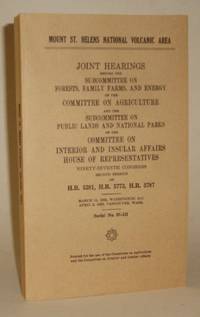
Washington DC: U.S. Government Printing Office 1980. Presumed First Edition First Printing. Wraps. Good. vi 372 6 pages Illustrations. Tabular data. Cover has some wear and soiling. Among the witnesses were Herbert Gardner J. D. Minutilli Ted Taubeneck Lloyd Bentsen Anthony Newton James Summers Erland Higinbotham Jerry Hester Lawrence Fox John Liebman Charles Levy Thomas Rees Ruth Scheuler Philip Klutznick Robert Hormats Fred Bergsten and Deane Hinton. The Export Trading Company Act ETCA of 1980 was initially proposed as a legislative effort to encourage and promote the formation of U.S. export trading companies ETC. By allowing banking institutions to invest in these trading companies the Act sought to help small and medium-sized American businesses expand globally. The original bills introduced in the 96th Congress eventually evolved into the finalized Export Trading Company Act of 1982 Pub. L. 97-290. This landmark legislation is designed to boost American exports by tackling three major hurdles: access to financing antitrust restrictions and promotion. The finalized legislation accomplished these goals across several core Titles:Banking and Financing Title II: It breached the historical separation of banking and commerce by permitting eligible banking entities-such as bank holding companies and Edge Act corporations-to acquire equity in export trading companies. It also improved exporters' access to working capital by establishing a loan guarantee program through the Export-Import Bank. Antitrust Exemption / Certification Title III: It established a certification procedure overseen by the Department of Commerce and the Department of Justice. If granted a Certificate of Review exporters receive immunity from federal and state antitrust suits for specified export conduct drastically reducing the risk of private treble-damage antitrust lawsuits. Antitrust Clarification Title IV: It amended the Sherman Act and the Federal Trade Commission Act to clarify that the antitrust laws generally do not apply to conduct involving foreign commerce unless it has a "direct substantial and reasonably foreseeable effect" on U.S. domestic commerce. Trade Promotion Title I: It directed the Secretary of Commerce to promote ETCs and facilitate connections between producers of exportable goods and companies providing export services. Today the program is administered by the International Trade Administration. It allows U.S. companies to form export joint ventures to share resources such as negotiating volume freight rate discounts or participating in large-volume sales without the fear of violating antitrust laws. U.S. Government Printing Office paperback
Washington DC: U.S. Government Printing Office 1982. Presumed First Edition First Printing. Wraps. Good. iii 1 404 pages. Footnotes. Tabular data. Cover has some wear and soiling. Mailing label residue on the back page. This includes statements from Wilbur Campbell Ken Cory Charles DiBona Ed Gabriel Saul Goodman David Linowes Charles Mankin William Pendley Pete Smith Laurence Steenberg and Malcolm Wallop. The Federal Energy and Mineral Resources Act of 1982 S. 2305 hearings were held before the Senate Committee on Energy and Natural Resources during the 97th Congress. They addressed severe revenue shortfalls and accounting problems in the collection of mineral royalties from federal and Indian lands.The legislation responded to findings by the Commission on Fiscal Accountability of the Nation's Energy Resources which highlighted lax site security and ineffective royalty collection. The Government Accountability Office GAO testified in support of the bill noting that historical site security on federal and Indian lands was "extremely lax". The GAO urged the Department of Interior to take the lead in developing strict site security and inspection strategies. The hearings centered on modernizing the accounting and control of royalties establishing minimum standards for site security plans and mandating record-keeping for mineral transport. Proposals included provisions allowing the Secretary of the Interior to delegate audit and inspection responsibilities to states provided a uniform and effective accounting system was used. The bill also required strict protections for Indian lands requiring permission from affected tribes for such delegation. U.S. Government Printing Office paperback
Washington DC: GPO 1995. good. 135 illus. boards heavily spotted. Printed by authority of S. Res. 235 103d Congress. Senate Document 103-32. Includes statements by Senators and Representatives tributes and eulogies at the memorial services and commentary and tributes from various newspapers and magazines. GPO hardcover
Washington D.C.: U.S. Senate 1956. Hardcover. Very Good/No Jacket. 8vo - over 7¾" - 9¾" tall. 849pp.; SC green w/blk.; rubbed & sunned on spine&edges; PONinscript.inside cover; cleantight pgs. "A survey of the extent to which the rights guaranteed by the First Amendment are being respected and enforced in the various government loyalty-security programs. <br/> <br/> U.S. Senate hardcover
Washington DC: GPO 1981. very good. 518 references index. Senate Document No. 96-63. The first ten essays offer personal assessments of the meaning and significance of Hoover's life and career or relate to Hoover the person. The remaining essays focus on Hoover's domestic policies including essays on Hoover's antitrust policy Hoover as the father of our present-day bureaucratic state Hoover and American labor and Hoover as the bridge between Wilsonian and New Deal progressivism. GPO unknown
Washington DC: U. S. Government Printing Office 1979. Presumed First Edition First printing. Wraps. Good. iii 1 49 3 pages. Wraps. Distribution label residue on the front cover. Publication No. 96-19. Front cover has a soft crease. The Impact Reduction of Energy Resources Act of 1979 H.R. 3771 was a proposed legislative measure from the 96th Congress 1979-1980 designed to protect coal transportation infrastructure during rail bankruptcies. The Act tasked the Secretary of Energy with evaluating the impact of rail abandonments on coal shipments providing financial assistance to maintain such services and opposing actions that curtail coal transportation. The purpose was to prevent the reduction of energy resources specifically coal caused by bankruptcy reorganization or abandonment of railroad lines. The text directed the Secretary of Energy to study rail abandonment petitions/reorganizations and intervene if they negatively impact coal shipments. It provided for loans or grants to applicants for the maintenance of coal transportation services. This bill would have amended the Railroad Revitalization and Regulatory Reform Act of 1976 and the Powerplant and Industrial Fuel Use Act of 1978 to make railroads eligible for assistance under this Act. The Act was subject to Senate hearings on S.267 before the Committee on Energy and Natural Resources. The bill was introduced on April 26 1979 during a period focused on managing energy supply interruptions occurring shortly after the Emergency Energy Conservation Act of 1979. U. S. Government Printing Office paperback
Place_Pub: Washington DC: GPO 1999. very good. 440 wraps Volume XV only footnotes minor wear and soiling to covers. Volume XV subtitled Committee Report to Accompany H. Res. 611 Impeaching the President of the United States H. Rept. 105-830. Printed at the direction of Gary Sisco Secretary of the Senate pursuant to S. Res. 16 106th Cong. 1st Sess. 1999. 106th Congress 1st Session Senate Document 106-3. GPO paperback
Place_Pub: Washington DC: GPO 1999. very good. 211 wraps Volume II only footnotes. Volume II subtitled Referral from Independent Counsel Kenneth W. Starr House Document 105-310. Printed at the direction of Gary Sisco Secretary of the Senate pursuant to S. Res. 16 106th Cong. 1st Sess. 1999. 106th Congress 1st Session. Senate Document 106-3. GPO paperback
Place_Pub: Washington DC: GPO 1999. very good. 1618 wraps Volume III Part 1 of 2 only footnotes. Volume III Part 1 of 2 subtitled Appendices to the Referral From Independent Counsel Kenneth W. Starr House Document 105-311 Part 1. Printed at the direction of Gary Sisco Secretary of the Senate pursuant to S. Res. 16 106th Cong. 1st Sess. 1999. 106th Congress 1st Session. Senate Document 106-3. GPO paperback
Place_Pub: Washington DC: GPO 1999. very good. 1564 wraps Volume III Part 2 of 2 only illus. footnotes. Volume III Part 2 of 2 is subtitled Appendices to the Referral From Independent Counsel Kenneth W. Starr House Document 105-311 Part 2. Printed at the direction of Gary Sisco Secretary of the Senate pursuant to S. Res. 16 106th Cong. 1st Sess. 1999. 106th Congress 1st Session. Senate Document 106-3. GPO paperback
Place_Pub: Washington DC: GPO 1999. very good. 94 wraps Volume XVII only footnotes minor wear and soiling to covers. Volume XVII subtitled "Constitutional Grounds for Presidential Impeachment: Modern Precendents " Committee Print Ser. No. 9 November 1998. Printed at the direction of Gary Sisco Secretary of the Senate pursuant to S. Res. 16 106th Cong. 1st Sess. 1999. 106th Congress 1st Session Senate Document 106-3. GPO paperback
Place_Pub: Washington DC: GPO 1999. very good. 263 wraps Volume XVI only footnotes minor wear and soiling to covers. Volume XVI subtitled Debate of the House on H. Res. 611 December 18 and 19 1998 Congressional Record at H11774-12043. Printed at the direction ofGary Sisco Secretary of the Senate pursuant to S. Res. 16 106th Cong. 1st Sess. 1999. 106th Congress 1st Session Senate Document 106-3. GPO paperback
Place_Pub: Washington DC: GPO 1999. very good. 745 wraps Volume XII only footnotes minor wear and soiling to covers. Volume XII subtitled Transcript of December 10 11 and 12 1998 Debate on Articles of Impeachment and Censure Resolution Hearing Ser. No. 18. Printed at the direction of Gary Sisco Secretary of the Senate pursuant to S. Res. 16 106th Cong. 1st Sess. 1999. 106th Congress 1st Session Senate Document 106-3. GPO paperback
Referenz des Buchhändlers : 51859 ISBN : 016057966X 9780160579660
Place_Pub: Washington DC: GPO 1999. good. 1614 wraps Volume IV Part 1 of 3 only illus. minor wear and soiling to covers. Volume IV Part 1 of 3 is subtitled Supplemental Materials to the Referral From Independent Counsel Kenneth W. Starr House Document 105-316 Part 1. Printed at the direction of Gary Sisco Secretary of the Senate pursuant to S. Res. 16 106th Cong. 1st Sess. 1999. 106th Congress 1st Session. Senate Document 106-3. GPO paperback
Place_Pub: Washington DC: GPO 1999. very good. 388 wraps Volume XX only footnotes minor wear and soiling to covers. Volume XX subtitled Hearing of the Subcommittee on the Constitution--"Background and History of Impeachment" November 9 1998 Ser. No. 63. Printed at the direction of Gary Sisco Secretary of the Senate pursuant to S. Res. 16 106th Cong. 1st Sess. 1999. 106th Congress 1st Session Senate Document 106-3. GPO paperback
Referenz des Buchhändlers : 51864 ISBN : 0160578299 9780160578298
Place_Pub: Washington DC: GPO 1999. good. 1567 wraps Volume IV Part 2 of 3 only illus. minor wear and soiling to covers. Volume IV Part 2 of 3 is subtitled Supplemental Materials to the Referral From Independent Counsel Kenneth W. Starr House Document 105-316 Part 2. Printed at the direction of Gary Sisco Secretary of the Senate pursuant to S. Res. 16 106th Cong. 1st Session. 1999 106th Congress 1st Session Senate Document 106-3. GPO paperback
Place_Pub: Washington DC: GPO 1999. very good. 98 wraps Volume XXII only footnotes minor wear and soiling to covers. Volume XXII subtitled Publically Available Portions of the Deposition of William Jefferson Clinton in Jones v. Clinton and All Documents Publicly Available from the Docket in Jones v. Clinton and Errata Material to Referral from Independent Counsel Kenneth Starr House Document 105-310. Printed at the direction of Gary Sisco Secretary of the Senate pursuant to S. Res. 16 106th Cong. 1st Sess. 1999. 106th Congress 1st Session Senate Document 106-3. GPO paperback
Washington DC: U.S. Government Printing Office 1981. Presumed First Edition First Printing. Wraps. Very good. iv 120 1 pages. Wraps. Tabular Data. The 1981 Senate hearings regarding the implementation of the nine-digit ZIP code ZIP4 were marked by intense debate over automation costs and mandatory versus voluntary usage. The hearings primarily held before the Subcommittee on Civil Service Post Office and General Services aimed to address public and Congressional concerns that the system was premature and overly burdensome. A major focus was ensuring the new longer code would be voluntary specifically for residential users to alleviate public fear of forced compliance. Postmaster General Bolger testified that he supported making it voluntary except for bulk mailers seeking discounts. Critics in the Senate such as Senator David Durenberger and Senator Roger Jepsen argued that the system was not fully tested might increase costs and that the public did not want it. The program was designed to cut costs through automated mail sorting using optical character readers OCRs. In April 1981 Congress considered legislation to block the June 1 1981 implementation date proposed by the Postal Service with leaders calling for a cost-benefit analysis. Despite the contention the Senate moved forward with the program with the legislative battle continuing through the end of the year eventually leading to the authorization of the program by late 1981 with full implementation planned for subsequent years. The hearings highlighted the transition from manual to automated mail processing and the friction caused by requiring the public to adopt a more detailed addressing system. The nine-digit zip code ZIP4 was introduced by the USPS in 1983 to improve mail sorting automation and speed up delivery. It adds a four-digit suffix to the original five-digit code identifying specific geographic segments—such as a city block apartment building or individual high-volume receiver. The first five digits define the region and local post office. The added 4 indicates a sector several blocks and a segment one side of a street. The system allows automated machinery to sort mail to smaller more precise delivery areas reducing manual handling. While proposed earlier the extended code was officially introduced in 1983. Initial uptake was slow due to a at the time small incentive for large-scale mailers. It provided increased accuracy faster delivery times sometimes up to two days faster and reduced costs for bulk mailers. While not mandatory for citizens it is heavily used by businesses for address verification mailing efficiency and better logistical analytics. The system evolved from the original 1963 five-digit Zone Improvement Plan ZIP to handle growing mail volumes. U.S. Government Printing Office paperback
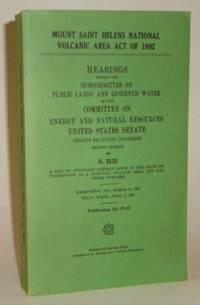
U.S. Government Printing Office 1982. First Edition. Softcover. Very Good/No dust jacket. Washington D.C.: U.S. Government Printing Office 1982 no statement of edition. Publication No. 97-93. Thick trade paperback in VG condition; no marks tears folds etc. 5.75 x 9.25 in. 680 pp. Record of hearings held in Washington D.C. on March 12 1982 and Kelso Washington on April 7 1982. U.S. Government Printing Office paperback
U.S. Government Printing Office 1982. First Edition. Softcover. Near fine/No dust jacket. Washington D.C.: U.S. Government Printing Office 1982 no statement of edition. Serial No. 97-III. Trade paperback in near fine condition. 5.5 x 9.25 in. 510 pp. Record of hearings held in Washington D.C. on March 11 1982 and Vancouver Washington on April 3 1982. U.S. Government Printing Office paperback
Washington DC: U. S. Government Printing Office 1982. Presumed First Edition First printing. Wraps. Very good. iii 1 67 1 pages. Wraps. Tabular data. Erasure residue on front cover. Serial No. 97-105. This hearing was part of the legislative process to authorize appropriations for the NSF for the 1983 fiscal year. The United States National Science Foundation NSF is an independent agency of the United States federal government that supports fundamental research and education in all the non-medical fields of science and engineering. Its medical counterpart is the National Institutes of Health. With an annual budget of about $9.9 billion fiscal year 2023 the NSF funds approximately 25% of all federally supported basic research conducted by the United States' colleges and universities. In some fields such as mathematics computer science economics and the social sciences the NSF is the major source of federal backing. NSF's director and deputy director are appointed by the president of the United States and confirmed by the United States Senate whereas the 24 president-appointed members of the National Science Board NSB do not require U.S. Senate confirmation. The director and deputy director are responsible for administration planning budgeting and day-to-day operations of the foundation while the NSB meets six times a year to establish its overall policies. The U.S. National Science Foundation NSF was established by the National Science Foundation Act of 1950.8 Its stated mission is "to promote the progress of science to advance the national health prosperity and welfare and to secure the national defense".9 The NSF's scope has expanded over the years to include many areas that were not in its initial portfolio including the social and behavioral sciences engineering and science and mathematics education. The NSF is the only U.S. federal agency with a mandate to support all non-medical fields of research. Since the technology boom of the 1980s the U.S. Congress has generally embraced the premise that government-funded basic research is essential for the nation's economic health and global competitiveness and for national defense. This support has manifested in an expanding National Science Foundation budget from $1 billion in 1983 to $8.28 billion in 2020. NSF has published annual reports since 1950 which since the new millennium have been two reports variously called "Performance Report" and "Accountability Report" or "Performance Highlights" and "Financial Highlights"; the latest available FY 2013 Agency Financial Report was posted December 16 2013 and the six-page FY 2013 Performance and Financial Highlights was posted March 25 2013. More recently the NSF has focused on obtaining high return on investment from their spending on scientific research. Various bills have sought to direct funds within the NSF. In 1981 the Office of Management and Budget OMB introduced a proposal to reduce the NSF social sciences directorate's budget by 75%. Economist Robert A. Moffit suggests a connection between this proposal and Democratic senator William Proxmire's Golden Fleece Award series criticizing "frivolous" government spending — Proxmire's first Golden Fleece had been awarded to the NSF in 1975 for granting $84000 to a social science project investigating why people fall in love. Ultimately the OMB's 75% reduction proposal failed but the NSF Economics Program budget did fall 40%. In 2012 political science research was barred from NSF funding by the passage of the Flake Amendment breaking the precedent of granting the NSF autonomy to determine its own priorities. U. S. Government Printing Office paperback
Washington D.C.: U.S. Govt. Printing Office 1990. Book. Near Fine. Printed Wrappers. First Printing. 599 pages. Near Fine front wrapper lightly soiled and first section has 9 pages with sparse marginal notations. A scarce document from this historic hearing. U.S. Govt. Printing Office Paperback
Washington DC: U. S. Government Printing Office 1978. Presumed First Edition First printing. Wraps. Good. 175 pages. Wraps. Publication No. 95-140. Small hole in title page which is also curling at the bottom right corner. The FY 1979 budget request for Natural Resources particularly within the Department of the Interior and related agencies emphasized expanding environmental protection energy conservation and research. Key areas included doubling toxic substance control funding increasing pesticide management and focusing on strategic petroleum reserves with overall federal energy funding increasing by 23%. The 1979 EPA proposal requested over billion for operating programs with significant increases for toxic substances doubling to million and pesticide programs. The budget pushed for a National Energy Plan to reduce dependence on foreign oil heavily emphasizing conservation non-nuclear R&D and nuclear waste management. The overall federal budget was designed to strengthen economic recovery with total spending of approximately billion with a major focus on energy education and national defense. Hearings: The U.S. Senate Committee on Energy and Natural Resources held hearings in 1978 specifically regarding the FY 1979 request for Natural Resources. A detailed discussion covering these hearings can be found in the 1978 hearing record. U. S. Government Printing Office paperback

 Per e-mail erhalten
 Als pdf-Dokument herunterladen
 RSS feed
 Permanenter link