|
Napoleon Bonaparte
Mémoires Pour Servir À l'Histoire de France Sous Le Règne de Napoléon Écrits À Sainte-Hélène Sous Sa Dictée Par Les Généraux Qui Ont Partagé Sa Captivité Vol. 6 Classic Reprint French Edition
hardcover. Good. Access codes and supplements are not guaranteed with used items. May be an ex-library book. hardcover
Référence libraire : 1396635769.G ISBN : 1396635769 9781396635762

|
|
|
Napoleon Bonaparte
Mémoires Pour Servir À l'Histoire de France Sous Le Règne de Napoléon Écrits À Ste.-Hélène Sous Sa Dictée Par Les Généraux Qui Ont Partagé Sa Captivité Vol. 5 Classic Reprint French Edition
hardcover. Good. Access codes and supplements are not guaranteed with used items. May be an ex-library book. hardcover
Référence libraire : 1396573801.G ISBN : 1396573801 9781396573804

|
|
|
Napoleon Bonaparte
Mémoires Pour Servir À l'Histoire de France Sous Le Règne de Napoléon Écrits À Ste.-Hélène Sous Sa Dictée Par Les Généraux Qui Ont Partagé Sa Captivité Vol. 5 Classic Reprint French Edition
paperback. Good. Access codes and supplements are not guaranteed with used items. May be an ex-library book. paperback
Référence libraire : 1391554507.G ISBN : 1391554507 9781391554501

|
|
|
NAPOLEON BONAPARTE
Mémoires pour servir a L'Histoire de France sous le Regne de Napoléon écrits a Ste.-Hélene sous sa dicté arles Génèraux qui ont Partage sa Captivité. Deuxieme Edition disposée dans un nouvel Ordre et augmentée de Chapitres inédits etc. etc. 9 v.
Paris Bassange Père 1830. Bound in 9 uniform hcalf. Spines with gilt lettering. Remains of a paperlabel to spines of two volumes. Sporadic light browning scattered brownspots. unknown
Référence libraire : 41106
|
|
|
Napoleon Bonaparte
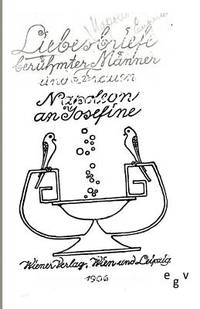
Napoleon an Josefine German Edition
paperback. Good. Access codes and supplements are not guaranteed with used items. May be an ex-library book. paperback
Référence libraire : 386382234X.G ISBN : 386382234X 9783863822347
|
|
|
Napoleon Bonaparte
Napoleon Bonaparte the Corsican a Diary of Napoleons Life in His Own Words
Hardcover. New. hardcover
Référence libraire : riggs 50 092824
|
|
|
Napoleon Bonaparte Visual Archive
Napoleon Bonaparte Visual Biography Archive of 55 illustrated French "Carte Postale" Documenting Napoleonic Wars and Imperial France Late 19th to Early 20th Century
1890. Napoleon Bonaparte postcard series late nineteenth to early twentieth century presents a structured sequence of illustrated scenes depicting specific military political and dynastic events that defined the Napoleonic era and reshaped European power between 1796 and 1815. The cards isolate decisive moments such as the Egyptian campaign the Battle of Marengo the triumph at Austerlitz the occupation of Berlin the Peninsular War in Madrid the invasion of Russia and the retreat from Moscow alongside ceremonial and dynastic episodes including the presentation of captured standards and the birth of the King of Rome. This series presents a chronological reconstruction of the rise consolidation and collapse of Napoleonic rule likely created in part due to the renewed national investment in Napoleon during the late nineteenth and early twentieth centuries when post Franco Prussian War recovery expanded state education and centennial commemorations encouraged the circulation of his campaigns as models of military success national identity and historical continuity.<br /> Archive of 55 illustrated French "Carte Postale" postcards ca. 1890s to early 1900s printed primarily in black and white with several colorized postcards many with printed captions in French. While most are from France some of the postcards are from other European countries. Each measure roughly 3.5" x 5.5". Topics include early career representations such as "Napoléon Bonaparte Lieutenant Colonel" attributed to Henri Félix Emmanuel Philippoteaux alongside campaign scenes including "Napoléon aux Pyramides" 1798 Egyptian campaign "La Garde Consulaire à Marengo - 14 Juin 1800" and "Entrée de Napoléon à Berlin - 27 Octobre 1806." The sequence continues with "Reddition de Madrid - 1808" "Réception des Drapeaux d'Austerlitz" and major turning points such as "Passage du Niemen - Juin 1812" and "Retour de Moscou - 1812." Dynastic and personal subjects include "Naissance du Roi de Rome - 20 Mars 1811" views associated with the Château de Malmaison and Joséphine de Beauharnais and scenes of exile on Saint Helena. The sequence contains imagery of Napoleon's tomb at the Hôtel des Invalides following the 1840 reinterment.<br /> <br /> The series reflects the expansion of illustrated postcards as instruments of historical transmission in France during the late nineteenth and early twentieth centuries when inexpensive printed imagery disseminated standardized narratives of national history to a broad audience. Coinciding with renewed state and popular investment in Napoleonic history during the late nineteenth and early twentieth centuries particularly under the French Third Republic education reforms and mass print culture expanded access to national historical narratives. Light edge wear and occasional minor creasing consistent with handling; overall very good condition. The centennial cycles of the Revolution and Napoleonic Wars combined with the political need to stabilize national identity after the Franco Prussian War encouraged the circulation of cohesive chronological interpretations of France's imperial past. Illustrated postcards translated large-scale history painting and official commemoration into accessible collectible formats allowing repeated engagement with key campaigns and figures. unknown
Référence libraire : 21440

|
|
|
Napoleon Bonaparte
Napoleon Bonaparte 3 original CDVs photographs
Three Carte de Visite CDV photographs of Napoleon Bonaparte. The carte de visites are original albumen photographic prints from a collodion negative. One of the CDVs is a close-up portrait of the Napoleon from Paul Delaroche's Napoleon at Fontainebleau. There is also an image of Napoleon with child in his study which is from an engraving by Alexandre Vincent Sixdeniers. The last CDV is from a lithograph by Johann Jakob Frey. He is pictured with this military uniform hat sword and appears to be holding a decree or manuscript. In the background are some of his Mamluk bodyguards. These CDVs are from the 1860s-early 1870s. All in very good condition overall. All three CDVs have pencil captions on verso. unknown
Référence libraire : 18007

|
|
|
Napoleon Bonaparte - Armand Dayot
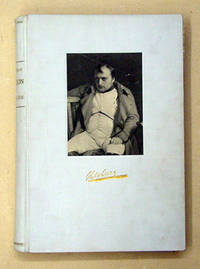
Napoleon I. in Bild und Wort.
Leipzig H. Schmidt & C. Günther 1897. 4° 503 S. zahlr Abb. Rundum-Rotschnitt nach erster LAge im Gelenk geplatzt Dt. EA. «Mit über 500 Textillustrationen Vollbildern KArikaturen und Autographen darunter verschiedene noch nicht veröffentlichte Bilder nach den berühmtesten Malern Bildhauern und Stechern». 010 Leipzig, H. Schmidt & C. Günther, 1897 unknown
Référence libraire : 80630
|
|
|
Napoleon Bonaparte
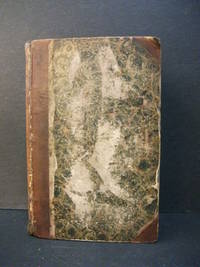
Napoleon In The Other World: A Narrative Written By Himself: and found near his tomb in the Islands of St. Helena by Xongo-Tee-Foh-Tchi Mandarin of the Third Class
London: Henry Colburn 1827. 1st Edition . Half-Leather. Good. Half-leather hardcover marbled boards and fore-edge foxing on the title page and frontispiece. Front hinge starting. Foot of spine splitting along spine. PO signature. Text clean binding secure. Questions welcome. We ship internationally from the United States and Canada every week. If buying internationally please be aware that additional charges may apply for heavier books. We guarantee a safe quick and secure transaction. 10 years in online bookselling experience. <br/> <br/> Henry Colburn hardcover
Référence libraire : 015357
|
|
|
Napoleon Bonaparte
Napoleon on the Defining Character of a Great Leader: ""it is advantageous for the good of the service to be liked.""
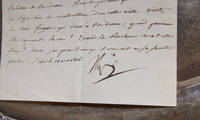
14/08/1806. <blockquote><p>He aims to build back the Navy after the defeat of the Trafalgar Campaign and worries about saboteurs in Bordeaux</p><p> </p><p>A letter never before offered for sale acquired from the direct descendants of the recipient</p></blockquote><p>https://vimeo.com/916159720share=copy</p><p> </p><p>Napoleon’s appeal to his men is legendary. More than almost any other person he embodied the nationalism of the 19th century; his soldiers revered him and for generations after he was studied for his populist leadership. He was a man of the people. Many books have been written on this subject movies produced tracking his magnetic and popular character. Ralph Waldo Emerson spoke for many when he wrote of Napoleon in his essay focused on the General ""Among the eminent persons of the nineteenth century Bonaparte is far the best known and the most powerful; and owes his predominance to the fidelity with which he expresses the tone of thought and belief the aims of the masses of active and cultivated men.""</p><p>Zacharie Allemand was a French naval man who won great victories for Napoleon but did not endear himself to his superiors or the sailors under his command. After attacks in the Atlantic on British outposts he returned to Brest one of the main French naval ports and upon his arrival there he was relieved of duty for ""brutality towards his crews"" and ""rudeness towards his passengers"". He was reinstated and eventually earned a larger command and operated a major Atlantic campaign as a diversionary affair to the Trafalgar campaign which ended without the loss of a single ship in his fleet. This is now referred to as ""Allemand's expedition"" of 1805. In spite of complaints against his character he was made Rear Admiral in January 1806.</p><p><img class=""alignnone size-post-window wp-image-30604"" src=""https://cdn.raabcollection.com/wp-content/uploads/20240216141859/Napoleon-1806-1-1600x783.jpg"" alt="""" width=""1600"" height=""783"" /></p><p>Napoleon was intent on laying low the British. His defeats at sea had made him all the more certain that the Atlantic venue must not be ignored. He had major ports for his fleet at Brest Rochefort and the Gironde in Bordeaux where there were frigates under construction among them the Penelope. The Battle of Trafalgar had seen the loss of 20 ships more or less and well over a thousand sailors. Napoleon was anxious to see a return to strength of his fleet.</p><p>General Mouton the Count of Lobau was a prominent general and later Marshall of the Empire for Napoleon. Mouton means ""lamb"" in French the source of Napoleon's now famous statement on Mouton: ""My lamb is a lion."" Napoleon valued Mouton to the extent that for his great Russia campaign he made him senior aide de camp. In 1806 Mouton was a Brigade General. He would remain in Napoleon's service until the end of the Empire during which time he showed himself to be forthright direct “he's no fawner†Napoleon is noted to have said but also disciplined loyal meticulous and highly organized. He was at Austerlitz with Napoleon and was charged with the preparation of the campaigns in Spain 1808 Russia 1812 Germany 1813 and Belgium 1815. Napoleon also wrote “Mouton is the best colonel to have ever commanded a French regiment.â€</p><p><strong>Letter signed</strong> St. Cloud August 14 1806 to General Mouton Compte de Lobau.</p><p><em>""General Mouton I desire that you speak with Rear Admiral Allemand. He is too harsh. His captains and officers do not like him and they leave him. Attempt to make him understand that it is advantageous for the good of the service to be liked.</em></p><p><em>""Go see the site at Rochefort. Things go slowly there. How many vessels will we be able to send to sea this year When will the vessel now in the armament for fitting be able to go to harbor</em></p><p><img class=""alignnone size-post-window wp-image-30605"" src=""https://cdn.raabcollection.com/wp-content/uploads/20240216142042/Napoleon-1806-4-1-1600x682.jpg"" alt="""" width=""1600"" height=""682"" /></p><p><em>""Go to Bordeaux. Examine the most of the Gironde and visit the batteries. Visit Blaye up the river from Bordeaux. Observe the spirit of the inhabitants of Bordeaux. I have heard from people who have assured me that there are malevolent actors in this town.</em></p><p><em>""Visit the three frigates which are in Bordeaux. When can we launch them to sea The Penelope - when will she be completed""</em></p><p>Never before offered for sale acquired in the US from the direct descendants of the recipient residing in the states.</p><p><img class=""alignnone size-post-window wp-image-25018"" src=""https://cdn.raabcollection.com/wp-content/uploads/20231204144051/Folder-site-11-1600x1327.jpg"" alt="""" width=""1600"" height=""1327"" /></p> unknown
Référence libraire : 30445
|
|
|
Napoleon Bonaparte
Napoleon si Memorii vol. 12
Used. For more details please contact me unknown
Référence libraire : feb91780
|
|
|
Napoleon Bonaparte
Napoleon Writes from the Kremlin in Moscow During His Ill-Fated Invasion
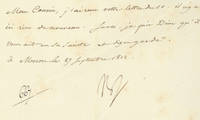
27/09/1812. <p>In 1812 Napoleon was still at the height of his fortunes. The Peninsular War in Spain against Britain he believed would soon end in triumph. All that remained to complete his “Continental Systemâ€â€“a unilateral European blockade designed to economically isolate Britain and force its subjugation–was the cooperation of Russia. Czar Alexander I kept a tenuous peace but was unwilling to submit to the Continental System which would be ruinous to the Russian economy. To intimidate Alexander Napoleon massed his forces in Poland in the spring of 1812 but still the Czar resisted.</p><p>Napoleon determined to act. On June 24 Napoleon commenced his famed campaign in Russia ordering his Grande Armée the largest European military force ever assembled to that date into Russia. The enormous army featured more than 500000 soldiers and staff and included contingents from Prussia Austria and other countries under the sway of the French empire. The campaign would be characterized by the massive toll on human life: in less than six months Napoleon lost near half of his men because of the extreme weather conditions battle disease and hunger. On both sides nearly a million soldiers and civilians died.</p><p>Napoleon’s military successes traditionally lay in his ability to move his armies rapidly and strike quickly but he was instead forced to pursue the Russian army which was refusing to give in and was falling back. The fleeing Russian forces adopted a “scorched earth†strategy seizing or burning any supplies that the French might utilize as they pillaged from the countryside. Meanwhile Napoleon’s supply lines became overextended as he advanced deeper and deeper into the Russian expanse.</p><p>Many in Russia were critical of the Russian army’s refusal to engage Napoleon in a more direct confrontation. Under public pressure in late August Alexander named General Mikhail Kutuzov supreme commander but initially the veteran of earlier defeats against Napoleon continued the retreat. Finally Kutuzov agreed to halt at the town of Borodino about 70 miles west of Moscow and engage the French. The Russians built fortifications and on September 7 the Grande Armée attacked. Napoleon was uncharacteristically cautious that day; he didn’t try to outflank the Russians and he declined to send much-needed reinforcements into the fray. His exhausted Grand Armée was unable to encircle and destroy the opposing force as it had done in Napoleon’s earlier campaigns. Instead Napoleon’s direct attacks against entrenchments resulted in heavy losses. He failed to destroy the Russian army and as a result he was not in the position of overwhelming superiority he had hoped to achieve. After the battle Kutuzov decided not to defend Moscow but to launch a general withdrawal to save the Russian army.</p><p>Napoleon was sure that once Moscow was taken Alexander would be forced to capitulate. On September 14 the French entered Moscow only to find it abandoned. All but a few thousand of the city’s 275000 people were gone. Napoleon retired to a house on the outskirts of the city for the night but two hours after midnight he was informed that a fire had broken out in the city. He went to the Kremlin where he watched the flames continue to grow. Reports began to come in telling of Russians starting the fires and stoking the flames. Suddenly a fire broke out within the Kremlin apparently set by a Russian military policeman who was immediately executed. With the firestorm spreading Napoleon and his entourage were forced to flee down burning streets to Moscow’s outskirts and narrowly avoided being asphyxiated. When the flames died down three days later more than two-thirds of the city was destroyed.</p><p>On September 18 Napoleon wrote Jean-Jacques Régis de Cambacérès his trusted advisor who was constantly consulted for advice saying the fires were calming down and “I have taken up lodging in the residence of the Tsars the Kremlin…â€</p><p>Nine days later he updated his advisor. <strong>Letter signed</strong> Moscow September 27. 1812 to Jean-Jacques Régis de Cambacérès. <em>“My cousin I have received your letter. There is nothing new at present. I pray that God keeps you in his holy and worth guard.â€</em></p><p>A very uncommon letter of Napoleon in Moscow during the great invasion.</p><p><img class=""alignnone wp-image-25018 size-post-window"" src=""https://cdn.raabcollection.com/wp-content/uploads/20231204144051/Folder-site-11-1600x1327.jpg"" alt="""" width=""1600"" height=""1327"" /></p> unknown
Référence libraire : 35462
|
|
|
Napoleon Bonaparte
Napoleon With this Document Launches the Napoleonic Era
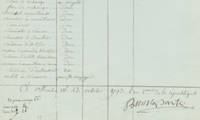
23/10/1793. <blockquote><p>Written just days after his first ever promotion</p><p> </p><p>One of only 4 documents of Bonaparte stretching back a century we can find during the siege signed with the early Italian form his signature Buonaparte</p></blockquote><p>The French Revolution had not only overthrown a monarch it had pitted Europe against France. Austria and more distantly England saw a revolutionary France as a transcendental threat. So as Paris was engaged in a massive upheaval it faced an ongoing state of hostilities with its neighbors. This led to a series of executive governments the most famous of which was the Committee of Public Safety established in April 1793 after the King had already been beheaded. In July of that year Maximilien Robespierre was elected to the Committee; and so under his leadership began the Reign of Terror so named because terror was in fact a policy instrument recognized by the state as an extension of the Revolution which must be maintained at all costs. This control extended everywhere; they controlled the police and the army and their agents went nationwide to do Robespierre’s bidding.</p><p><a href=""https://cdn.raabcollection.com/wp-content/uploads/20231204170943/buonapartebody.jpg""><img class=""alignnone size-post-window wp-image-21845"" src=""https://cdn.raabcollection.com/wp-content/uploads/20231204170943/buonapartebody-1600x567.jpg"" alt="""" width=""1600"" height=""567"" /></a></p><p>Among the gravest threats to the new government under Robespierre was the royalist sentiment in the South along the coast which just so happened to be within reach of the British Royal Navy. Here in open defiance of the Republicans royalists hoisted the “flour de lys†flag in the fall of 1793 in the city of Toulon. By that time French troops were already on their way to that city where they would confront 13000 men from the combined forces of England Spain Naples and Piedmont. The French generals were in control of their troops but Robespierre also sent to this key battleground his brother Augustin and Antoine Saliceti a Corsican like Napoleon and like him close to the French cause. These two were to report on the loyalties of generals the extent of success and to advise Paris in all matters. They had final say in the South and in reality controlled life and death.</p><p>At the time when the siege of Toulon began the Chief of Artillery was wounded and since Toulon would require a strong bombardment this deficit had to be filled. Napoleon Buonaparte as he spelled his name then had until then mainly been involved in provincial battles in his native Corsica. He was a relative unknown in France and had no high title although he had studied in the military academy there and was in service to the national army. His family had in fact fled Corsica because of its allegiance to France. In what may go down as one of the great coincidences in history he happened to be in the area as the French gathered for the assault on Toulon and was given the command of artillery by Augustin Robespierre and Saliceti whom he knew from Corsica. This seemingly insignificant event at the time would make his career and changed the history of Western Europe.</p><p>The siege itself began in mid September. He was dissatisfied by the sole battery—called the ""Mountain"" positioned on the height of Saint-Laurent since September 19. He established another on the shore of Brégallion called the ""sans-culottes"". On the first of October after a failure of General La Poype against the ""Eastern Fort"" of Faron Bonaparte was asked to bombard the large fort of Malbousquet whose fall would be required to enable the capture of the city. He therefore requisitioned artillery from all of the surrounding countryside. Promoted to Chief of Battalion on October 18 he set about strengthening his battery for the great push.</p><p><a href=""https://cdn.raabcollection.com/wp-content/uploads/20231204170934/Buonapartebody2.jpg""><img class=""alignnone size-post-window wp-image-21847"" src=""https://cdn.raabcollection.com/wp-content/uploads/20231204170934/Buonapartebody2-1600x506.jpg"" alt="""" width=""1600"" height=""506"" /></a></p><p><strong>Document signed</strong> October 23 1793 Ollioules near Toulon signed Buonaparte an early Italian form of his signature just days after being promoted to Chief of Battalion. ""<em>Statement of the pieces of artillery and other necessary effects to complete the army for the Siege of Toulon.""</em> The document continues us columns to note the type of weapon what would be necessary what they have now and what is missing along with any observations.</p><p>Napoleon performed with great skill and Toulon was taken a significant defeat to the royalists and to England. Buonaparte was credited with French success. Where soldiers who failed Paris were guillotined those who won were feted and promoted. Augustin reported back to his brother Maximilien Robespierre that Napoleon was an exceptional commander. The elder brother decided that he would be named brigadier general in December 1793.</p> unknown
Référence libraire : 21827
|
|
|
Napoleon Bonaparte
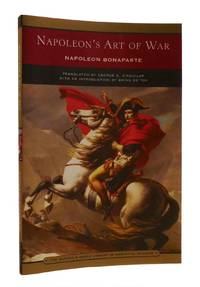
NAPOLEON'S ART OF WAR
New York: Barnes & Noble 2005. Barnes and Noble Edition; Third Printing. Softcover. Near Fine in wraps. Barnes & Noble unknown
Référence libraire : 193834
|
|
|
Napoleon Bonaparte; Charles de la Ronciere [fwd]
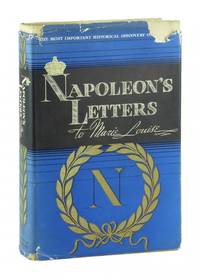
Napoleon's Letters to Marie Louise
New York: Farrar & Rinehart 1935. Very Good/Good. New York: Farrar & Rinehart 1935. First American Edition. Octavo; publisher's cloth in blue decorative price-clipped dust jacket black topstain; xxviii292pp.; frontispiece sixteen leaves of illus. printed on rectos and versos. Jacket extremities rather chipped and worn at extremities with coin-sized loss at top margin of front jacket panel affecting text with brief loss of meaning rear panel dust-soiled light toning to textblock else Very Good in a Good copy of the uncommon jacket.<br /> <br /> The first published appearance of a trove of some 300 letters only recently discovered in the archives of an Austrian family auctioned off in December 1934 and purchased by the Bibliothèque Nationale with the aide of the French government. Farrar & Rinehart unknown
Référence libraire : 10836
|
|
|
Napoleon Bonaparte; J M Thompson
Napoleon's Letters Everyman's Library 995
London: J. M. Dent Everyman's Library 1954. Book. Near Fine. Hardcover. 2nd Edition. First Printing of 2nd Edition. Tips pointed and clean and odor free throughout. Spine stiff boards rigid appears unread. Jacket is price clipped with faded spine crumple to top and bottom of dust jacket spine ends and at point tips.Back jacket flap has a couple small holes. Looks presentable in a shiny mylar dust protector. J. M. Dent Everyman's Library Hardcover
Référence libraire : 001361
|
|
|
NAPOLEON BONAPARTE] LENZ, Max
NAPOLEON: A BIOGRAPHICAL STUDY
LONDON HUTCHINSON 1909 1909. ORIGINAL DARK RED CLOTH 'POPULAR EDITION' VERY GOOD. Hardcover. LONDON, HUTCHINSON, 1909 hardcover
Référence libraire : 15086
|
|
|
Napoleon Bonaparte
Napoléon en Exil ou l'Écho de Ste.-Hélène Vol. 2: Journal des Dernières Années de l'Empereur Contenant les Opinions Et les Jugements de Napoléon . Son Époque Classic Reprint French Edition
hardcover. Good. Access codes and supplements are not guaranteed with used items. May be an ex-library book. hardcover
Référence libraire : 0365093246.G ISBN : 0365093246 9780365093244
|
|
|
Napoleon Bonaparte
Napoléon Vol. 2: Recueil Par Ordre Chronologique de Ses Lettres Proclamations Bulletins Discours Sur Les Matières Civiles Et Politiques Etc. . Son Regne Classic Reprint French Edition
hardcover. Good. Access codes and supplements are not guaranteed with used items. May be an ex-library book. hardcover
Référence libraire : 1396448918.G ISBN : 1396448918 9781396448911
|
|
|
Napoleon Bonaparte
Napoléon Vol. 2: Recueil Par Ordre Chronologique de Ses Lettres Proclamations Bulletins Discours Sur Les Matières Civiles Et Politiques Etc. . Son Regne Classic Reprint French Edition
paperback. Good. Access codes and supplements are not guaranteed with used items. May be an ex-library book. paperback
Référence libraire : 1396448616.G ISBN : 1396448616 9781396448614
|
|
|
Napoleon Bonaparte
Napoléon: Raconté par Lui-Même 1807-1821 Classic Reprint French Edition
hardcover. Good. Access codes and supplements are not guaranteed with used items. May be an ex-library book. hardcover
Référence libraire : 0267172885.G ISBN : 0267172885 9780267172887
|
|
|
Napoleon Bonaparte
Napoléon: Raconté par Lui-Même 1807-1821 Classic Reprint French Edition
paperback. Good. Access codes and supplements are not guaranteed with used items. May be an ex-library book. paperback
Référence libraire : 0259131245.G ISBN : 0259131245 9780259131243
|
|
|
Napoleon Bonaparte
Oeuvres Choisies de Napoléon Bonaparte Vol. 2 Classic Reprint French Edition
hardcover. Good. Access codes and supplements are not guaranteed with used items. May be an ex-library book. hardcover
Référence libraire : 0267030215.G ISBN : 0267030215 9780267030217
|
|
|
Napoleon Bonaparte
Oeuvres Choisies de Napoléon Bonaparte Vol. 2 Classic Reprint French Edition
paperback. Good. Access codes and supplements are not guaranteed with used items. May be an ex-library book. paperback
Référence libraire : 0483965790.G ISBN : 0483965790 9780483965799

|
|
|
Napoleon Bonaparte
Oeuvres de Napoléon Bonaparte; Tome I
Hardcover. New. New Book; Fast Shipping from UK; Not signed; Not First Edition; This work has been selected by scholars as being culturally important and is part of the knowledge base of civilization as we know it.This work is in the "public domain in the United States of America and possibly other nations. Withi hardcover
Référence libraire : ria9781016647533_inp ISBN : 1016647530 9781016647533

|
|
|
Napoleon Bonaparte
Oeuvres de Napoléon Bonaparte Tome I.
Paperback. New. New Book; Fast Shipping from UK; Not signed; Not First Edition; N/A paperback
Référence libraire : ria9783849135959_inp ISBN : 3849135950 9783849135959
|
|
|
Napoleon Bonaparte
Oeuvres de Napoléon Bonaparte Tome I.
Hardcover. New. New Book; Fast Shipping from UK; Not signed; Not First Edition; N/A hardcover
Référence libraire : ria9783849146955_inp ISBN : 3849146952 9783849146955
|
|
|
Napoleon Bonaparte
Oeuvres de Napoléon Bonaparte Tome II.
Hardcover. New. New Book; Fast Shipping from UK; Not signed; Not First Edition; N/A hardcover
Référence libraire : ria9783849146498_inp ISBN : 3849146499 9783849146498
|
|
|
Napoleon Bonaparte
Oeuvres de Napoléon Bonaparte Tome IV.
Hardcover. New. New Book; Fast Shipping from UK; Not signed; Not First Edition; N/A hardcover
Référence libraire : ria9783849146542_inp ISBN : 3849146545 9783849146542
|
|
|
Napoleon Bonaparte
Oeuvres de Napoléon Bonaparte Tome V.
Hardcover. New. New Book; Fast Shipping from UK; Not signed; Not First Edition; N/A hardcover
Référence libraire : ria9783849144456_inp ISBN : 3849144453 9783849144456
|
|
|
Napoleon Bonaparte
Oeuvres de Napoléon Bonaparte Tome III.
Hardcover. New. New Book; Fast Shipping from UK; Not signed; Not First Edition; N/A hardcover
Référence libraire : ria9783849146627_inp ISBN : 3849146626 9783849146627
|
|
|
Napoleon Bonaparte
Oeuvres de Napoléon Bonaparte Vol. 1 Classic Reprint French Edition
hardcover. Good. Access codes and supplements are not guaranteed with used items. May be an ex-library book. hardcover
Référence libraire : 1391200098.G ISBN : 1391200098 9781391200095
|
|
|
Napoleon Bonaparte
Oeuvres de Napoléon Bonaparte Vol. 2 Classic Reprint French Edition
hardcover. Good. Access codes and supplements are not guaranteed with used items. May be an ex-library book. hardcover
Référence libraire : 1391687868.G ISBN : 1391687868 9781391687865
|
|
|
Napoleon Bonaparte
Oeuvres de Napoléon Bonaparte Vol. 4 Classic Reprint French Edition
hardcover. Good. Access codes and supplements are not guaranteed with used items. May be an ex-library book. hardcover
Référence libraire : 1396487689.G ISBN : 1396487689 9781396487682
|
|
|
Napoleon Bonaparte
Oeuvres de Napoléon Bonaparte Vol. 5 Classic Reprint French Edition
hardcover. Good. Access codes and supplements are not guaranteed with used items. May be an ex-library book. hardcover
Référence libraire : 1391082877.G ISBN : 1391082877 9781391082875
|
|
|
Napoleon Bonaparte
Oeuvres de Napoléon Bonaparte Vol. 5 Classic Reprint French Edition
paperback. Good. Access codes and supplements are not guaranteed with used items. May be an ex-library book. paperback
Référence libraire : 1391025415.G ISBN : 1391025415 9781391025414

|
|
|
Napoleon Bonaparte
Oeuvres de Napoléon Bonaparte Vol. 4 Classic Reprint French Edition
paperback. Good. Access codes and supplements are not guaranteed with used items. May be an ex-library book. paperback
Référence libraire : 1391111966.G ISBN : 1391111966 9781391111964

|
|
|
Napoleon Bonaparte
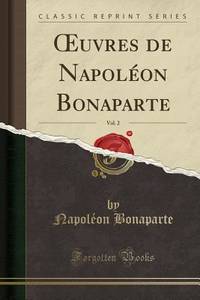
Oeuvres de Napoléon Bonaparte Vol. 2 Classic Reprint French Edition
paperback. Good. Access codes and supplements are not guaranteed with used items. May be an ex-library book. paperback
Référence libraire : 1390857247.G ISBN : 1390857247 9781390857245
|
|
|
Napoleon Bonaparte
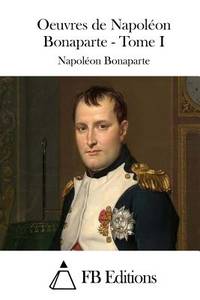
Oeuvres de Napoléon Bonaparte - Tome I Oeuvres De Napoleon Bonaparte French Edition
paperback. Good. Access codes and supplements are not guaranteed with used items. May be an ex-library book. paperback
Référence libraire : 1511943947.G ISBN : 1511943947 9781511943949
|
|
|
Napoleon Bonaparte
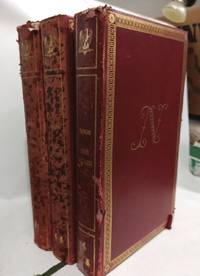
Oeuvres littéraires et écrits militaires - TOME I II III
Société encyclopédique française 1968. couvertures frottées écorchées par endroits intérieurs propres. in4. 1968. Reliure editeur. 3 volumes. Société encyclopédique française unknown
Référence libraire : 100140339
|
|
|
Napoleon Bonaparte
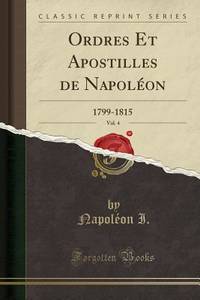
Ordres Et Apostilles de Napoléon Vol. 4: 1799-1815 Classic Reprint
paperback. Good. Access codes and supplements are not guaranteed with used items. May be an ex-library book. paperback
Référence libraire : 1390025160.G ISBN : 1390025160 9781390025163
|
|
|
Napoleon Bonaparte
Original Unpublished Notes for Napoleon's Invasion of Russia Prepared for the Invasion from the Archives of Napoleon's Senior Aide de Camp Charged with Planning that Invasion
1812. <blockquote><p>It is based on an 1809 intelligence operation that Napoleon commissioned to chart Persia Russia and the steppes</p><p> </p><p>A remarkable and apparently unpublished manuscript documenting Russia and its environs in the early 1800s fascinating for that purpose as well</p><p> </p><p>Acquired from the direct descendants and never before offered for sale</p></blockquote><blockquote><p>""Resistance could only result in the burning by the assailant of a large part of the wooden houses of Moscow""</p></blockquote><blockquote><p> </p><p>""Minsk is a town of 10000 inhabitants of which two thirds are Jewish.""</p></blockquote><p> </p><p>https://vimeo.com/916160568share=copy</p><p>In 1803 Camille Alphonse Trezel obtained the rank of lieutenant in the corps of topographical engineers. The next year he was promoted to assistant engineer geographer. After the Polish campaign as a lieutenant he was appointed acting aide to General Gardanne in the embassy of France to Persia. He was commissioned at this time by Napoleon to take extensive notes topographical geographical and otherwise of Persia and its environs. On his return he came through Russia. On his return to France he was promoted to Captain in late 1810 / early 1811 and assigned as an aide-de-camp to General Armand Charles Guilleminot; he became lieutenant-commander in 1813. Napoleon aimed to defeat not only Russia but England and the latter in part through India. Trezel and Gardanne in 1809 were tasked to survey the vast regions that would have to be crossed and to probe the dispositions of the populations and as evidenced here did so.</p><p>Trezel's notes on Persia are published and important primary resources for the period and region. We found no record of the publication of his notes on Russia.</p><p>In May and June 1812 Napoleon turned to mapping the pending invasion of Russia and finding the correct route. He had few great options. As the published papers of Napoleon state ""Despite the efforts of his geographical engineers Napoleon never had good maps of Russia throughout the campaign. To compensate for this shortage the Paris topographical office should have drawn large numbers of the few available maps and given them to the corps commanders. This was not done on the scale that the emperor wanted.†He complained during this stretch that he needed more routes to Russia that one would not suffice for planning and he wrote to Generals Clarke and Berthier complaining on this subject.</p><p><img class=""alignnone size-post-window wp-image-30623"" src=""https://cdn.raabcollection.com/wp-content/uploads/20240216175221/Mouton-Russia-Manuscript-1812-L-1-1600x740.jpg"" alt="""" width=""1600"" height=""740"" /></p><p>On June 24 1812 Napoleon commenced his famed campaign in Russia ordering his Grande Armée the largest European military force ever assembled to that date into Russia. The enormous army featured more than 500000 soldiers and staff and included contingents from Prussia Austria and other countries under the sway of the French empire. The campaign would be characterized by the massive toll on human life: in less than six months Napoleon lost near half of his men because of the extreme weather conditions battle disease and hunger. On both sides nearly a million soldiers and civilians died.</p><p><img class=""alignnone size-post-window wp-image-30624"" src=""https://cdn.raabcollection.com/wp-content/uploads/20240216175843/Mouton-Russia-Manuscript-1812-J-1-1600x820.jpg"" alt="""" width=""1600"" height=""820"" /></p><p>General Mouton the Count of Lobau was a prominent general and later Marshall of the Empire for Napoleon. Mouton means ""lamb"" in French the source of Napoleon's now famous statement on Mouton: ""My lamb is a lion."" Napoleon valued Mouton to the extent that for his great Russia campaign he made him senior aide to camp. In 1806 Mouton was a Brigade General. He would remain in Napoleon's service until the end of the Empire during which time he showed himself to be forthright direct “he's no fawner†Napoleon is noted to have said but also disciplined loyal meticulous and highly organized. He was at Austerlitz with Napoleon and was charged with the preparation of the campaigns in Spain 1808 Russia 1812 Germany 1813 and Belgium 1815. Napoleon also wrote “Mouton is the best colonel to have ever commanded a French regiment.†In 1812 Mouton took an active part in the planning and enacting of the Russian campaign. When Napoleon left the army during the retreat and returned to Paris Mouton accompanied him.</p><p><strong>Manuscript</strong> in the hand of an intelligence officer likely from the topographical department from the Library of Georges Mouton no date but likely late Spring 1812. The manuscript notes the position of Trezel as Captain and aide to camp for Guilleminot a position Trezel effectively occupied between 1811 and 1812. It appears to be a shortened version of the report from the 1809 intelligence operation that Napoleon commissioned. Our gratitude to the Fondation Napoleon for their generous assistance.</p><p><em>""Notes on the Route from Warsaw to Moscow by Tykoezinn frontier of the Grand Duchy of Warsaw 47 leagues Grodno 77 leagues Mir 133 Mink 158 Orzay 208 Smolensk 237 and Moscow 333. Extracts from a voyage made in July 1809 by Captain Trezel aid de camp of General Guilleminot.""</em></p><p><strong>The following are quotes from the report:</strong></p><p><em>""The country between Warsaw and Moscow can be divided in three distinct parts separated from each other by large rivers or by old political limits recent changed by a great usurpation but which remains in the hearts of the inhabitants of old Poland.""</em></p><p><em>""The first part enclosed by the Vistule and the Niemen has 77 leagues of length and the Neiman has 77 leagues of length. The route that goes through it passes by a good number of little towns among them the towns of the route that goes through it passes by a good number of little towns among them the towns of Siroska Pultuska Ostrolenka and Byalistok are the largest.""</em></p><p> </p><p><em>""The second from Grodno to Orzay has 125 leagues. It includes old Palatinate of Troki Minsk part of that of Vitebsk all the high parts of the Niemen and also those of the Dnieper to the right bank of the Pleure beyond which starts the Russian government of Smolensk. The route passes by the towns of Norogrodek Mir Minsk Barisow Toloezinn Orzay and Doubrovka.""</em></p><p><em>""The third part between Smolensk and Moscow is entirely in old Russia. It's length by the route is 131 leagues. One finds in succession the towns of Dorogouer Viarnie Gradsk and Moyaiska. This last part is the most fertile and the most populated.""</em></p><p><em>""All these countries present more or less the same aspect. There are still immense plains in which the slopes are nearly undetectable and which offer everywhere swamps and prairies grand forests of birch and fir trees sandy fields.""</em></p><p><img class=""alignnone size-post-window wp-image-30625"" src=""https://cdn.raabcollection.com/wp-content/uploads/20240216180100/Mouton-Russia-Manuscript-1812-G-1-1600x828.jpg"" alt="""" width=""1600"" height=""828"" /></p><p><em>""Care is particularly necessary and the third part which forms a sandy field elevated between the sources of the Duna the Dnieper the Locka and the Volga. From Warsaw to the Dnieper at Orzay the routes are generally very difficult for the carts and because even impassible at a great number of points during times of thaw and great rains. It would be necessary to make them viable in these seasons by burying a part of the wood found there. A regular system of works would find few difficulties in the execution because the Polish countrymen is accustomed to it and their hatred toward Russia would serve them to work in the hopes of a return to the former limits.</em></p><p><em>""Resources for provisioning are unequally spread along this long route. Strong and vigilant administration would certainly succeeded in nourishing a grand Army from Warsaw to Norogrodek. But the swampy forests of the government of Minsk offers only a few groups of large cattle. And difficulties of all types become their much larger and more numerous than any other part. It is necessary that the fertile government of Vilna suffices. In any case one no longer finds to the right of the route anything except immense swamps of Pinsk on which one must travel by boat during half of the year. One only exits this beyond Toloczinn a small town distance from Minsk by around 40 leagues.""</em></p><p>The manuscript continues to discuss the dedication of national spirit <em>""in all classes""</em>. Only the poorest nobility it states would want to join the Russian Army. Many it continues are unmoved by any advantages offered them by Tsar Paul I ruler until 1801 and <em>""remain far from all public functions and hide very poorly their aversion for anything Russian. All the officers of the government are forced to live completely isolated. Beyond Toloczinn the columns would march with along the beautiful routes of the government of Smolensk and of Mohilow both abundant with grain and cattle.""</em></p><p>One finds still fewer animals approaching Moscow and this town pulls all its provisions of cattle from Ukraine and above all from the government of Pultava.</p><p><em>""The river passages are many but the majority are easy to execute because beyond the Vistule one finds no longer any impediments. Nearly all the bridges are firm. Pontoon bridges could nearly everywhere be employed at least for the passage and movement of artillery and field baggage because the rivers have such a tranquil course that the pontoons could be very close to one another without causing any accident.""</em></p><p><img class=""alignnone size-post-window wp-image-30626"" src=""https://cdn.raabcollection.com/wp-content/uploads/20240216180205/Mouton-Russia-Manuscript-1812-C-1-1600x702.jpg"" alt="""" width=""1600"" height=""702"" /></p><p><em>""The best points of passage are:""</em></p><p>The manuscript now moves to the rivers and the possible bridge crossings of Warsaw Syroska Ostrolenka Tykoczinn Grodon Barisow Orzay and Smolensk. This includes the Dnieper and Vistule and other waterways along with the size and strength of the bridges.</p><p>""Itinerary from Warsaw to Moscow by Grodno and Smolensk""</p><p>The bulk of the manuscript begins here by listing the post stations of locale along with its distance in the antiquated Russian measure of Werstes and also in Leagues and population in number of houses. This is accomplished using a charge which lists left to right distance name of location number of homes and 'observations.' The indication of the number of houses of each one is only an approximation and relates solely to groups of habitations that could be perceived on the route.</p><p>What follows is a remarkable 5 two-page spreads of each station between Warsaw and Moscow with observations intended to instruct an invading army. They are at once military observations and a fascinating cultural demographic and geographical account of the region. The names are in some cases obscure or antiquated spellings including Moscow which is Mouscou and not Moscou as one would expect in French.</p><p>Manuscript: The manuscript begins in Warsaw or Varsovie: <em>""In leaving Warsaw one crosses the Vistule on a boat bridge. The length of the river is around 300. It is very quick the banks are accessible and a little elevated.""</em> The manuscript notes it is a town of 10000 houses.</p><p>The march to Russia: On June 24 1812 and subsequent days the initial wave of the Napoleon's Grande Armée crossed the Niemen River marking the entry from the Duchy of Warsaw.</p><p>Manuscript: Trezel notes that at Miaskovo in Poland still and beyond Ostrolenka <em>""The Russians had established a hospital for 300 sick"".</em> The next large town is Bialystock. Here he notes <em>""A great village named Vassilkoff around halfway down the path from Bialystock to Boukstell. The path is in a sandy plain for an hour after which one passes on a fixed bridge over a river of 25 toises of length with a reed rope. The final league is follows on the right a sandy and rocky field. They have planted ash and other trees. Two batallions of grenadiers were camped a half league from Trokolska.""</em></p><p>The chart now takes us into Belarus and toward Grodno. <em>""Grodno is an open town on the right bank of the Niemen. To enter one crosses the river on a large boat bridge. The banks are strongly inclined.Immediately above the bridge on the right is a large amphitheater surrounded by homes. One sees on the other side of town on the right and to the left of the route from Smolensk ruins of defensive fortifications. It is fertile in grain.""</em> The manuscript notes 2000 houses.</p><p>The march to Russia. On July 1 Jerome Bonaparte’s right flank crossed the Niemen at Grodno. The VII Corps stayed in the Grodno region to protect the Duchy of Warsaw.</p><p>The manuscript: <em>""There are many swamps between Lyda and Lipini. Exiting Lyda one crosses a bridge in the middle of which is an old ruined chateau. The post house of Lapini is immediately beyond a river of 16 or 17 toises.One crosses the bridge on a large square boat that could carry two strong carts.""</em></p><p>The march to Russia: On June 27 the Russian corps stationed between Lida and Grodno was almost cut off by the Grande Armée's crossing of the Niemen and Gen. Davout's troops making for Minsk.</p><p>The manuscript: <em>""Mir is the last town of the government of Grodno. I did not enter here because the post is outside and near an old abandoned chateau belonging to the Prince of Radniville. It is flanked by 4 paths a grassy rampe. The door has been removed the rest falls into ruins.""</em></p><p>The march to Russia: With Jerome's troops trailing the retreating Russian Army Platov's cossacks ambushed Jerome's advanced Polish lancers on July 8 - 10 near the village and Mir. These clashes were the first real combat of the campaign and saw the Polish troops defeated.</p><p>The manuscript: <em>""Minsk is a town of 10000 inhabitants of which two thirds are Jewish. It is located on a little river of 20-35 toises of length bordered by a lovely promenade. One crosses on a good bridge. The roads are straight and wide and the houses spaced between each other. They are nearly all in wood. The territory is without comparison the worst path of those that one pases to go to Moscow. The population has retained the Polish cavalry. The entire population of all classes retains the most pronounced aversion to the Russians. There are only the poorest nobility who wanted to take up service.""</em></p><p><img class=""alignnone size-post-window wp-image-30627"" src=""https://cdn.raabcollection.com/wp-content/uploads/20240216181202/Mouton-Russia-Manuscript-1812-E-2-1600x740.jpg"" alt="""" width=""1600"" height=""740"" /></p><p>The march to Russia: On July 8 Davout's troops reached Minsk. He lost many troops on the way there. Large store houses were constructed here.</p><p>The manuscript: <em>""We are approaching Russia. Near Zadinn and Barisow he notes the river Bereczina whose ""right bank forms an sandy escarpment of which the slope is steep but practicable to cars. There is on this bank a settlement of around 30 homes. I found there an artillery park of the 25th miitary division Siberia.""</em></p><p>In approaching Smolensk he passes through a tiny town he calls ""Reritnia."" He notes a rampart ""flanked by by a few towers. Its height is around 30 feet and thickness around 6 feet at most. It is entirely vested and supported in the interior by brick arcades. It's only defense would be a fusillade by the large pines that crown it and one could ruin this all in less than one hour with canons. One would seize very easily the high neighborhood and two beautiful churches one of which is surrounded by a wall crenelated with bricks. The passage from the Dnieper would not present much difficulty because one could crush anyone who remained in the settlement on the right bank.""</p><p>The march to Russia: On the afternoon of August 15 troops under Murat and Ney arrived at the western edge of Smolensk. Over the course of the next two days Ney's and Murat's troops along with Poniatowski's Polish Corps clashed with the Russians pitched in Smolensk. About 11000 Russians died defending the city which fell to the French and was a major depot for the troops heading east.</p><p>The manuscript: <em>""Moscow is enclosed only an earthen rise of 3 feet in height. One could attempt to defend the passage from Moskova. but this resistance could only result in the burning by the assailant of a large part of the wooden houses of Moscow. One could hold up there peacefully occupying the interior chateau called the Kremts Kremlin which is situated on the Moskwa more or less in the middle of the town. It contains 2 churches the arsenal several considerable columns.""</em></p><p>The march to Russia: On September 14 the French entered Moscow only to find it abandoned. All but a few thousand of the city’s 275000 people were gone. Napoleon retired to a house on the outskirts of the city for the night but two hours after midnight he was informed that a fire had broken out in the city. He went to the Kremlin where he watched the flames continue to grow. Reports began to come in telling of Russians starting the fires and stoking the flames. Suddenly a fire broke out within the Kremlin apparently set by a Russian military policeman who was immediately executed. With the firestorm spreading Napoleon and his entourage were forced to flee down burning streets to Moscow’s outskirts and narrowly avoided being asphyxiated. When the flames died down three days later more than two-thirds of the city was destroyed. The images of Moscow on fire are iconic; many great works of art depict the event.</p><p>The 14-page manuscript is an extraordinary piece of history the survival of which was unknown until now: notes used to plan and help guide Napoleon and his Grand Armees in their invasion of Russia.</p><p><img class=""alignnone size-post-window wp-image-25018"" src=""https://cdn.raabcollection.com/wp-content/uploads/20231204144051/Folder-site-11-1600x1327.jpg"" alt="""" width=""1600"" height=""1327"" /></p> unknown
Référence libraire : 30609
|
|
|
Napoleon Bonaparte
Porte-Feuille de Buonaparte Pris à Charleroi le 18 Juin 1815 Vol. 1
paperback. Good. Access codes and supplements are not guaranteed with used items. May be an ex-library book. paperback
Référence libraire : 0259444391.G ISBN : 0259444391 9780259444398

|
|
|
Napoleon Bonaparte
Porte-Feuille de Buonaparte Pris à Charleroi le 18 Juin 1815 Vol. 1: Le 2eme ou le 3eme Cahier Contiendra un Fac-Simile d'une Lettre de Buonaparte Classic Reprint French Edition
hardcover. Good. Access codes and supplements are not guaranteed with used items. May be an ex-library book. hardcover
Référence libraire : 0332198227.G ISBN : 0332198227 9780332198224
|
|
|
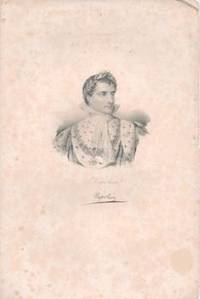
Napoleon Bonaparte
Portrait of Napoleon Bonaparte Emperor of the French 1769-1821.
Paris: Francois-Baptiste Delpech circa 1830. Lithograph. 27.3 x 18 cm. sheet. Facsimile signature below image. Very Good. Foxing throughout. Paris: Francois-Baptiste Delpech, circa 1830. unknown
Référence libraire : 71-4166
|
|
|
Napoleon Bonaparte
REBUILDING NAPOLEON'S LAST HOME 'LONGWOOD' ON ST HELENA: 1860-1950
St Helena: Unpublished 1952. An extensive collection of diaries photographs blueprints letters and documents - and even a painted sample sheet of Longwood's famous wallpaper from the 1920s - which together record the rescue and rebuilding of Napoleon Bonaparte's dilapidated home on St Helena. Longwood housed Napoleon from December 1815 to his death in 1821 was bought by the French government but fell into disastrous disrepair by the time Basil Lennox Hart took charge of its renovation in the 1950s. His - this - archive includes his St Helena personal diaries blueprints and plans for the building works and a large number of his photographs of Longwood before during and after its semi-demolition and rebuilding. Informing this process is a series of otherwise unknown copy photographs from the 1850s which were given to Hart by a grandson of his predecessor as Commissioner on St Helena John Charles Mellis. These otherwise unknown images add significantly to the visual record of Longwood. The decision to rebuild Napoleon's last home was prompted by the visit of King George VI to the island; he summoned the French Ambassador on his return to London prompting a joint effort by Britain which controlled St. Helena as a Crown Colony and France which had owned the French Domains of Saint-Helena since 1858 to restore the buildings. The archive includes reports on the disastrous state of Longwood House with further plans made for reconditioning the residence of the French Consul and the area around Napoleon's Tomb. Hart's pocket diaries from 1952 1953 and early 1954 c10000 words record his arrival in St Helena in February 1952 and the process of surveying producing plans hiring workmen and the minutiae of the reconstructive works: 'Longwood started stripping Old House Roof Library & dining R.' 'Longwood all day men cutting concrete curb away around rafters Library & Dining R. & concrete gutters & East Dormer down had consul up about concrete trusses' 'Longwood pulling down N. wall Library completed & new concrete foundations to be put in.' Hart records delays to wages endless rain and the liberal application of Rentokil to combat termites. Most revealing are Hart's photographs of the process which have been mounted on sheets as if for display purposes; alongside these is a small group of photographs from a century earlier which were submitted to him by John Charles Mellis's grandson. One final evocative item is a painted replica of the wallpaper inside Longwood reproduced by a French official in the 1920s and submitted to Hart to help inform his restoration project. Are we looking at an image of the wallpaper that killed Napoleon Alongside these items are copies of monthly accounts with tabulated material costs rates of pay and day-to-day expenses towards final reopening in 1955. The archive comprises: 1. Application and Acceptance Letters 1951: Correspondence between Hart and the Crown Agents for the Colonies. 2. Collection of 10 Government Publications 1951- 1952: Documents on passport application inoculation insurance and living conditions in St. Helena. 3 Diaries 1952-1954: Written on an almost daily basis documenting his work on the project detailing the progress incidents visits and problems as the work progressed. 4 Employment Agreement 1952: Copy of the employment agreement between Hart and the ViceConsul of St. Helena. 5 Reconstruction Report April 1952: Report on the work necessary for the reconstruction of Longwood 'Old House. 6 Letter from H.J. Melliss 1952: Enclosing copies of photographs taken of Longwood House in 1858 when his father as consul handed the site over to the French government. 7 RSVP Group 1952-1954: A collection of RSVP responses from various islanders tickets to events press cuttings and releases. 8 Brochures and Documents on Termites 1953 and later: A collection of brochures and advice documents on killing and preventing termites. 9 7 Extensive Typed Copies 1954: Addressed to Mons G.E. Peugent the French Vice-Consul at St. Helena detailing the progress of ongoing work payments for materials subsistence costs weekly employment of local workmen together with their names and countersignatures on receipt of their wages. 10 2 Blueprints 1952: Blueprints of the 'French Domain St. Helena Island New House adjacent to Emperor Napoleon's tomb 11. Sample Sheet of Wallpaper: Reproduced from fragments of the original by the French Government in the 1920s. 12. Collection of 11 Income Tax Documents 1952-1954: Related to St. Helena and the United Kingdom. 13. 56 Postcard-Size Photographs 1952-1954: Mounted on album sheets depicting various views of the work being carried out on the site captioned in French. These were possibly produced for official and important visitors to the site to help explain the ongoing work. Please contact Christian White Rare Books Ltd for more information or images of this item 1952 Unpublished unknown
Référence libraire : 9122
|
|
|
Napoleon Bonaparte
Recueil de Pièces Authentiques sur le Captif de Ste.-Hélène
hardcover. Good. Access codes and supplements are not guaranteed with used items. May be an ex-library book. hardcover
Référence libraire : 0364612398.G ISBN : 0364612398 9780364612392
|
|
|
Napoleon Bonaparte
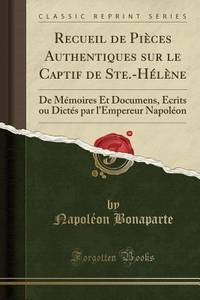
Recueil de Pièces Authentiques sur le Captif de Ste.-Hélène: De Mémoires Et Documens Écrits ou Dictés par l'Empereur Napoléon Classic Reprint French Edition
paperback. Good. Access codes and supplements are not guaranteed with used items. May be an ex-library book. paperback
Référence libraire : 0666393818.G ISBN : 0666393818 9780666393814
|
|
|
Napoleon Bonaparte
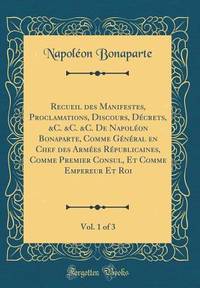
Recueil des Manifestes Proclamations Discours Décrets &C. &C. &C. De Napoléon Bonaparte Comme Général en Chef des Armées Républicaines Comme . 1 of 3 Classic Reprint French Edition
hardcover. Good. Access codes and supplements are not guaranteed with used items. May be an ex-library book. hardcover
Référence libraire : 0332721477.G ISBN : 0332721477 9780332721477
|
|

 Recevoir par e-mail
 Télécharger en PDF
 Flux RSS
 Lien permanent


