|
|
|
GOYA Y LUCIENTES, Francisco (1746-1828)
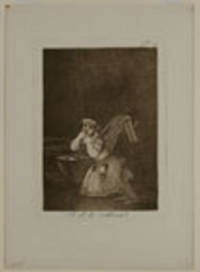
El de la rollona
Calcografía for the Real Academia 1878. Etching and aquatint. From the 4th edition of "Los Caprichos" - plate 4. Goya's pitiless caricature of a grown-up "nanny's boy."<br/> <br/> Los Caprichos was Goya's first collection of completely original etchings. They were and remain startlingly original in style and frequently shocking in their satirical assaults. They are strikingly modern and are his most popular prints today though they were received with little favor in 1799 when they first appeared for sale. But even within Goya's lifetime enthusiasm grew. El de la rollona is uncompromising in its mockery of the mama's boy who is dressed in baby clothes has his fingers in his mouth and a look of terror in his eyes though he's bearded and obviously strong. The nanny or mother grieves in the shadow behind him so disappointed in his failure to become a man. Goya's textual comment about this engraving is: "Negligence tolerance and spoiling make children capricious naughty vain greedy lazy and insufferable. They grow up and yet remain childish. Thus is nanny's little boy." The fourth edition of Caprichos from which this print comes was made about 1878 as witnessed by the beveled platemark and the "strong absorbent wove paper" and "dark umber ink".<br/> <br/> Harris v. 1 95-109; v.II p. 74; Delteil 41; Hind p.253 - 5. Calcografía for the Real Academia unknown
Référence libraire : 24584
|
|
|
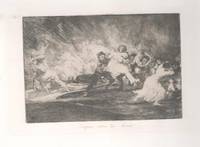
Goya y Lucientes, Francisco Jose de (Spanish, 1746-1828).
Escapan Entre la Llamas Plate 41 from Los Desastres de la Guerra 1808-1823. from the Third Edition made in the Calcografia for Real Academia in 1903.
Madrid: Real Academia 1903. Etching aquatint and drypoint on wove paper. 24 x 33 cm sheet. Limited edition to 100. Very Good light specks of foxing in the margins.Ref.: Harris 161; Delteil 160. Madrid: Real Academia, 1903. unknown
Référence libraire : 76-0144
|
|
|
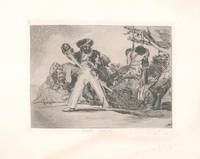
Goya y Lucientes, Francisco Jose de (Spanish, 1746-1828).
Fuerte Cosa Es! Plate 31 from Los Desastres de la Guerra 1808-1823. probably from the Fourth Edition.
Madrid: Real Academia circa 1906. Etching aquatint and drypoint on laid paper. 23.5 x 32 cm sheet. Very Good light toning in the margins.Ref.: Harris 151; Delteil 160. Madrid: Real Academia, [circa 1906]. unknown
Référence libraire : 76-0145
|
|
|
Goya y Lucientes, , Francisco Jos e de (1746-1828)
Goya drawings from the Prado. / Franciso Jos e de Goya y Lucientes. ; transl. by Edward Sackwille-West. ; introduction by André Malraux
London : Horizon 1947. First Edition. Softcover. Near fine paperback copy; edges very slightly dust-dulled and nicked. Remains particularly well-preserved overall; tight bright and clean. Physical description; xlii pages 195 pages of plates : chiefly illustrations ; 29 cm. Subjects; Goya Francisco 1746-1828 Drawings. Goya Francisco 1746-1828 Notebooks sketchbooks etc. Drawing Spain Madrid ; Catalogs. Drawing Spanish 18th-19th centuries ; Catalogs. Drawing Spanish 18th-19th centuries Catalogs. Museo del Prado Art collections ; Catalogs. London : Horizon paperback
Référence libraire : 367136
|
|
|
Goya Y Lucientes, Francisco Jose De
Goya The Disparates or The Proverbios
paperback. Good. Access codes and supplements are not guaranteed with used items. May be an ex-library book. paperback
Référence libraire : 0486223191.G ISBN : 0486223191 9780486223193
|
|
|
Goya Y Lucientes, Francisco Jose De
Goya The Disparates or The Proverbios
Dover Pubns 1969-06-01. Paperback. New. In shrink wrap. Looks like an interesting title! Dover Pubns paperback
Référence libraire : Q-0486223191 ISBN : 0486223191 9780486223193
|
|
|
Goya y Lucientes, Francisco Jose de (Illustrator) und Genoveva Dieterich:
Goya und Velázquez das königliche Portrait : Städtische Galerie im Städelschen Kunstinstitut Frankfurt am Main 7. Oktober 1991 bis 9. Januar 1992 = Goya y Velázquez el retrato real.
Frankfurt am Main : Städtische Galerie 1991. <br/><br/>Kunst Frankfurt am Main : Städtische Galerie unknown
Référence libraire : BN47476 ISBN : 8487317057 9788487317057
|
|
|
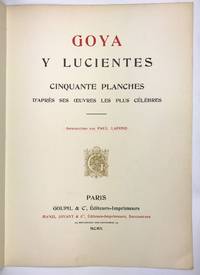
GOYA Y LUCIENTES, Francisco
Goya y Lucientes cinquante planches d'après ses oeuvres les plus célèbres
Paris: Goupil and Manzi Joyant 1910. Limited edition copy number 1 of 500 copies. Portfolio with one joint separated otherwise a fine set. Folio. Fifty photographic reproductions of Goya's works. Text printed in red and black. Text and plates loose as issued in five printed paper portfolios; half cloth portfolio. Introduction by Paul Lafond. Goupil and Manzi, Joyant unknown
Référence libraire : 401874
|
|
|
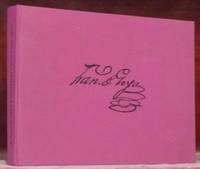
GOYA Y LUCIENTES, Francisco
La Tauromaquia. Les 33 eaux-fortes du Tirage original suivies de 11 planches inÂŽdites avec 15 ÂŽpreuves dՎtat 42 esquisses prÂŽparatoires et 7 dessins et gravures divers. Introduction ÂŽtude et prÂŽsentation par Enrique Lafuente Ferrari. Traduction de Mathilde PomÂs.
Paris : Club du Livre FranÂais 1963. 215x270mm. Un des 10Õ000 exemplaires numÂŽrotÂŽs n¡ 9896. 1130 Club du Livre FranÂais unknown
Référence libraire : 60871
|
|
|
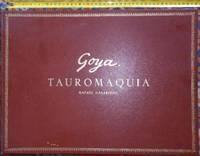
Goya y Lucientes, Francisco de
La Tauromaquia. Colección de un frontispicio y 40 estampas en las que se representan los principios progresos suertes y actitudes del arte de lidiar los toros. Edicion facsimil. Estudio preliminar por Rafael Casariego
Madrid: Ediciones de Arte y Bibliofilia 1978. Imitación piel editorial con dorados. 45.5x33 apaisado. Ediciones de Arte y Bibliofilia unknown
Référence libraire : 17.1827
|
|
|
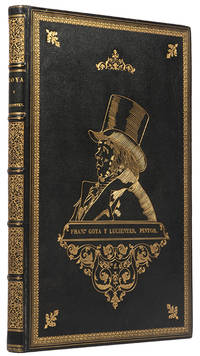
GOYA Y LUCIENTES, Francisco de
Los Caprichos.
Madrid Rafael Esteve for the artist 1799. . First edition one of approximately 300 copies; quarter broadsheets 311 x 205mm; 80 plates on a single uniform stock of unwatermarked laid paper; etchings with burnished aquatint many with drypoint and/or burin fine impressions printed in sepia printing with great contrasts and bright highlights the aquatint just beginning to show a little wear on some plates with the scratch on plate 45 with wide margins some pale spotting mainly on the first few pages otherwise in very good condition; black morocco binding by Lebrun signed on the spine and dated Paris 1844 on the rear cover tooled in gilt with the Self-Portrait of plate 1 and the name of the artist on the front cover the motif and title of plate 32 on the back cover marbled endpapers; within a matching red morocco box with the name of the artist the title and the name of the binder on the spine the inside with a black and gilt morocco inlay showing all the tools used for the binding.<br /> The complete set of eighty etchings with burnished aquatint drypoint and engraving 1797-1798 on laid paper. A very good set from the first edition published by the artist in an edition of approximately three hundred copies. With Los Caprichos Goya for the first time made his vision of the more sinister side of Spanish society and the human soul in general accessible to a wider audience beyond his small group of friends and patrons. Goya was commercially ambitious and set himself an enormous undertaking prepared over several years and based on hundreds of drawings. Harris has estimated that he produced 300 sets i.e. 24000 impressions of the Caprichos making it at the time the largest series of prints ever conceived by a single artist. But the bitter reality was that perhaps only some thirty sets of this first and only lifetime edition were sold. In 1803 the artist gave the plates and the remaining impressions to the King presumably to escape the wrath of the Inquisition.<br /><br />In hindsight Los Caprichos is the pivotal work of Goya's entire oeuvre. In one grandiose dark symphony he unleashes both his unsparing satirical sense and his wild imagination plate after plate tied loosely together by related motifs and laconic often mysterious titles. The only plate without an engraved title is perhaps the most famous of all: the artist overcome by sleep with his head resting on a table is surrounded by creatures of the night: owls bats a cat and a lynx. On the front of the table the following words appear vaguely out of the aquatint surface: El sueño de la razon produce monstruos. The phrase is ultimately untranslatable as sueño can mean both 'sleep' and 'dream'. This ambiguity does Reason dream up monsters or do monsters arise as Reason sleeps is characteristic of the entire series. Having first conceived it as the title page Goya changed his mind and placed it as plate 43 right in the middle of the series dividing the series roughly into two parts. The first part is largely devoted to satires of courtship and prostitution mocking the vanities and pretensions of the young and old. It is in the nightmarish second part that the monsters arise witches and demons fly and goblins awake. Beyond the mere evocation and critique of superstition and witchcraft the precise meaning of these later plates is even more cryptic. Concealed through visual puns word play and allusions to proverbs they often ridicule the idle and ruling classes the clerics and the nobility.<br /><br />Wickedly satirical and subversive as the Caprichos are in their imagery and content they also represent a technical revolution. Having previously created a number of competent yet ultimately conventional etchings after Velazquez Goya in this series suddenly and completely mastered the aquatint method. In particular through his use of blank paper for glowing highlights among dense shades of grey and black he created images of dramatic and disturbing beauty. What makes Los Caprichos one of the greatest unified series of images ever produced is not just his extraordinary draughtsmanship or his technical mastery nor his sharp satirical wit but the intensity of his imagination and the depth of his humanity.<br /> Madrid, Rafael Esteve (?) for the artist, 1799. unknown
Référence libraire : 110154
|
|
|
GOYA Y LUCIENTES, Francisco Jose de
Los Caprichos.
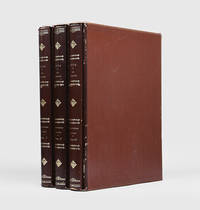
Madrid: Ediciones de la Mota 1978. Goya's acerbic critique of the decline of society Commemorative limited edition number 147 of 250 copies with a hand-engraved sterling silver replica of the plate used to print the portrait of Goya from a total edition of 280 copies. This copy unusually has a signed and notarized certificate of authenticity from the publisher apparently acquired after publication. Goya created Los Caprichos between 1797 and 1798 shortly after becoming deaf from a prolonged illness. As a result he was increasingly withdrawn and isolated a state reflected in the etchings first published as an album in 1799. They criticize "the innumerable foibles and follies to be found in any civilized society and from the common prejudices and deceitful practices which custom ignorance or self-interest have made usual" Goya quoted by Gussak p. 84. 3 vols folio. Original leather portfolios 525 x 405 mm spines lettered and tooled in gilt floral gilt borders on covers. Vol. I: 2 blank bifolia 5 text bifolia plates 1-20 each within bifolium of printed text etched metal plate 165 x 119 mm window-mounted within brown moire silk-covered board 205 x 385 mm; Vol. II: 2 blank bifolia plates 21-50 each within bifolium of printed text; Vol. III: 2 blank bifolia plates 51-80 each within bifolium of printed text. In original leather-entry cloth slipcases. Plates and contents fine and bright; spines of portfolios and extremities of slipcases rubbed small numbered stickers to slipcases of Vols. I and II small repaired abrasion to spine of Vol. III portfolio minor damp stain at foot not affecting contents edges of slipcase a little worn. A very good set. David Gussak The Frenzied Dance of Art and Violence 2022. hardcover
Référence libraire : 175246
|
|
|
GOYA Y LUCIENTES, Don Francisco de
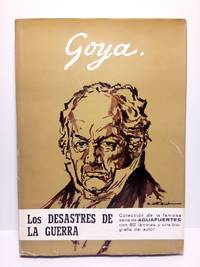
Los Desastres de la Guerra. Colección completa de la famosa colección de aguafuertes de. Con comentarios a cada una de las 82 láminas y una biografía del pintor
Barcelona: Ed. Tartessos s.a. ca. 1957.- 180 páginas sin numerar siendo las 16 primeras de texto y las 164 restantes ilustradas con 82 láminas a una sola cara; Folio 335 x 239 cm; Portada a dos tintas con el título en grandes letras en tinta roja; Cartoné Ed. con camisa. Libro en excelente estado a excepción de la camisa que está ligeramente ajada. PINTURA DIBUJO Y GRABADO ESPAÑOLES Libro en español Ed. Tartessos hardcover
Référence libraire : 28231
|
|
|
Goya y Lucientes, Francisco Jose de (Spanish, 1746-1828).
Que locura! Plate 68 from Los Desastres de la Guerra 1808-1823. from the Third Edition made in the Calcografia for Real Academia in 1903.
Madrid: Real Academia 1903. Etching aquatint and drypoint on wove paper. 23.5 x 33 cm sheet. Limited edition to 100. Good light specks of foxing throughout.Ref.: Harris 188; Delteil 187. Madrid: Real Academia, 1903. unknown
Référence libraire : 76-0142
|
|
|
Goya Y Lucientes, Francisco
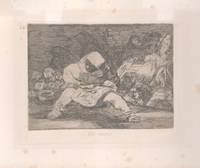
Que pico de Oro! What a golden beak!; Plate 53 from "Los Caprichios
1799. Francisco Goya Y Lucientes. Original engraving. unknown
Référence libraire : 20419
|
|
|
Goya y Lucientes, Francisco Jose de (After, Spanish, 1746-1828); Jules Jacquemard (1837-1880).
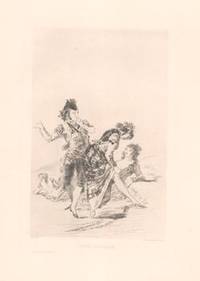
Scene espagnole d’apes Goya.
Paris: Gazette des Beaux Arts circa 1860s. Etching on shield watermarked laid paper. 37 x 27 cm sheet. Very Good light specks of foxing in left margin. Paris: Gazette des Beaux Arts, [circa 1860s]. unknown
Référence libraire : 76-0148
|
|
|
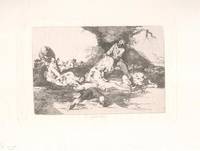
Goya y Lucientes, Francisco Jose de (Spanish, 1746-1828).
Se Aprovechan Plate 16 from Los Desastres de la Guerra 1808-1823. probably from the Fourth Edition.
Madrid: Real Academia circa 1906. Etching aquatint and drypoint on laid paper. 23.5 x 32 cm sheet. Very Good.Ref.: Harris 136; Delteil 135. Madrid: Real Academia, [circa 1906]. unknown
Référence libraire : 76-0146
|
|
|
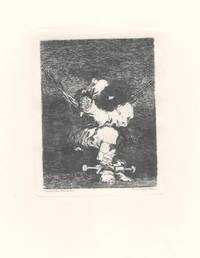
Goya y Lucientes, Francisco Jose de (Spanish, 1746-1828).
The Little Prisoner or Tan barbara la seguridad come el delito The custody is as barbarous as the crime 1867.
Paris: Gazette des Beaux Arts Vol. XXII page 196 1867. Etching and burin on laid paper. 26 x 17 cm sheet. First Edition Posthumous impression with letters masked. Printed by Delatre Pars. Very Good.Ref.: Harris 26; Delteil 312. Paris: Gazette des Beaux Arts, Vol. XXII, page 196, 1867. unknown
Référence libraire : 76-0147
|
|
|
Goya y Lucientes, Francisco; Eugenio Lucas
Un mendiant A Beggar.
Paris: Revue de l'art ancien et moderne 1901. Sepia etching in sepia formerly attributed to Goya Eugenio Lucas now the most talented followers Goya. Published in the Revue de l'art ancien et moderne printed by Louis Fort. Image measures 9 x 12 cm. Paris: Revue de l'art ancien et moderne, 1901. unknown
Référence libraire : 10-0275

|
|
|
GOYA Y LUCIENTES Francisco
Goya y Lucientes cinquante planches d'après ses oeuvres les plus célèbres
Paris: Goupil and Manzi Joyant 1910. Limited edition copy number 1 of 500 copies. Portfolio with one joint separated otherwise a fine set. Folio. Fifty photographic reproductions of Goya's works. Text printed in red and black. Text and plates loose as issued in five printed paper portfolios; half cloth portfolio. Introduction by Paul Lafond. <br/><br/> Goupil and Manzi, Joyant hardcover books
Référence libraire : 401874
|
|
|
Goya Y Lucientes Francisco
Que pico de Oro! What a golden beak!; Plate 53 from "Los Caprichios"
1799. Francisco Goya Y Lucientes. Original engraving. <br/><br/> unknown books
Référence libraire : 20419
|
|
|
GOYA Y LUCIENTES Francisco 1746 1828
El de la rollona
CalcografÃa for the Real Academia 1878. Etching and aquatint. From the 4th edition of "Los Caprichos" - plate 4. Goya's pitiless caricature of a grown up "mama's boy."<br/> <br/>Los Caprichos was Goya's first collection of completely original etchings. They were and remain startlingly original in style and frequently shocking in their satirical assaults. They are strikingly modern and are his most popular prints today though they were received with little favor in 1799 when they first appeared for sale. But even within Goya's lifetime enthusiasm grew. El de la rollona is uncompromising in its mockery of the mama's boy who is dressed in baby clothes has his fingers in his mouth and a look of terror in his eyes though he's bearded and obviously strong. The nanny or mother grieves in the shadow behind him so disappointed in his failure to become a man. Goya's textual comment about this engraving is: "Negligence tolerance and spoiling make children capricious naughty vain greedy lazy and insufferable. They grow up and yet remain childish. Thus is nanny's little boy." The fourth edition of Caprichos from which this print comes was made about 1878 as witnessed by the beveled platemark and the "strong absorbent wove paper" and "dark umber ink".<br/> <br/>Harris v. 1 95-109; v.II p. 74; Delteil 41; Hind p.253 - 5. CalcografÃa for the Real Academia unknown books
Référence libraire : 24584
|
|
|
GOYA Y LUCIENTES (Francisco)
Los Caprichos. [Les Caprices].
[Paris, Jean de Bonnot, 1970]. In-folio (45 X 30 cm), 81 ff. en feuilles, sous étui-boîte recouvert de soie moirée noire avec titre doré au dos.
Référence libraire : 39324
|
|
|
GOYA Y LUCIENTES (Francisco).
La Tauromaquia.
Introduction, étude et présentation par Enrique Lafuente Ferrari. Traduction de Mathilde Pomès. P., Le Club Français du Livre, 1963, in-8 format à l’italienne, toilé, rhodoïd, 214 p. Edition hors commerce réservée aux membres du Club Français du Livre. 32 eaux-fortes du tirage original suivies de 11 planches inédites avec 15 épreuves d’état, 42 esquisses préparatoires et 7 dessins et gravures divers.
Référence libraire : 11499
|
|
|
GOYA Y LUCIENTES FRANCISCO
La Tauromaquia and the Bulls of Bordeaux
4° bross. edit. figur. pp. (8), con 33 tavole incise fuori testo (tratte dalla prima ediz. del 1816) della serie Tauromachia, e aggiunte altre 10 tavole supplementari non pubblicate (a grandezza originale), e altre 5 tavole raff. i Tori di Bordeaux" (ridotti del 32%).

|
|
|
GOYA Y LUCIENTES Francisco
La Tauromaquia, Les 33 Eaux Fortes Du Tirage Original Suivies De 11 Planches Inédites , Avec 15 Épreuves D'état et 42 Esquisses Préparatoires et 7 Dessins et Gravures Divers
Paris Club Français Du Livre 1963 In-8 à L'italienne 210 pp. Introduction, étude et orésentation de Enrique Lafuente Ferrari, traduction de Mathilde Pomès. Bel état de fraicheur, malgré l'absence de jaquette ( rodhoïd ? )
Référence libraire : 27236
|
|
|
GOYA Y LUCIENTES Francisco / LAFUENTE FERRARI Enrique (introduction, étude, présentation)
La tauromaquia : les 33 eaux-fortes du tirage original suivies de 11 planches inédites, avec 15 épreuves d'état, 42 esquisses préparatoires et 7 dessins et gravures divers.
Club Français du Livre 1963 Club Français du Livre, 1963, 209 p., cartonnage éditeur oblong, environ 21x27cm, exemplaire numéroté, bon état.
Référence libraire : 107711
|
|
|
GOYA Y Lucientes Francisco de (Fuente de Todos 1746 - Bordeaux 1828)
Al Conde Palatino
Opera tratta dai "Los Caprichos", per la prima volta pubblicati nel 1799. Prova della quarta edizione di dodici, stampata dalla calcografia di Madrid, circa 1870. Aquaforte, acquatinta brunita e puntasecca, in perfetto stato di conservazione. La serie chiamata Los Caprichos, è composta da ottanta incisioni, la cui prima edizione [l’unica a non essere pubblicata postuma] venne alla luce ne 1799. Curata in fase d’edizione dallo stesso artista, la serie fu commercializzata e dopo poco tempo ritirata dal mercato. Infatti, a causa dei numerosi soggetti che ironizzavano sulla società spagnola di fine secolo, il Goya subì una censura. L’interpretazione dei soggetti rappresentati su queste lastre, sempre enigmatiche, è spesso controversa. Etching with burnished aquatint and engraving, 1799. From the fourth edition of twelve of the so-called "Los Caprichos" series, edited by the Madrid Calcografia [circa 1870].A very good impression, with good contrast, printed on contemporary paper, customary margins, in very good conditions. The series called Los Caprichos, consists of eighty etchings. This first edition of 1799, the only one not to be published posthumously, is imprinted on soft laid pape. Cured in phase edition by the same artist, the series was marketed and before long withdrawn from the market. In fact, because of the many subjects that mocked the Spanish society of the century, Goya suffered censorship. The interpretation of the subjects represented on these plates, always enigmatic, is often controversial. Harris 68, Delteil 70

|
|
|
GOYA Y Lucientes Francisco de (Fuente de Todos 1746 - Bordeaux 1828)
Al Conde Palatino
Opera tratta dai Los Caprichos, per la prima volta pubblicati nel 1799.Prova della quarta edizione di dodici, stampata dalla calcografia di Madrid, circa 1870.Acquaforte, acquatinta brunita e puntasecca, in perfetto stato di conservazione.La serie chiamata Los Caprichos, è composta da ottanta incisioni, la cui prima edizione [l’unica a non essere pubblicata postuma] venne alla luce ne 1799. Curata in fase d’edizione dallo stesso artista, la serie fu commercializzata e dopo poco tempo ritirata dal mercato.Infatti, a causa dei numerosi soggetti che ironizzavano sulla società spagnola di fine secolo, il Goya subì una censura. L’interpretazione dei soggetti rappresentati su queste lastre, sempre enigmatiche, è spesso controversa. Etching with burnished aquatint and engraving, 1799.From the fourth edition of twelve of the so-called Los Caprichos series, edited by the Madrid Calcografia [circa 1870].A very good impression, with good contrast, printed on contemporary paper, usual wide margins, in very good conditions.The series called Los Caprichos, consists of eighty etchings. This first edition of 1799, the only one not to be published posthumously, is imprinted on soft laid pape.Cured in phase edition by the same artist, the series was marketed and before long withdrawn from the market. In fact, because of the many subjects that mocked the Spanish society of the century, Goya suffered censorship.The interpretation of the subjects represented on these plates, always enigmatic, is often controversial. Harris 68, Delteil 70.

|
|
|
GOYA Y Lucientes Francisco de (Fuente de Todos 1746 - Bordeaux 1828)
Aquarda que te unten
Opera tratta dai "Los Caprichos", per la prima volta pubblicati nel 1799. Prova della quarta edizione di dodici, stampata dalla calcografia di Madrid, circa 1870. Aquaforte, acquatinta brunita e puntasecca, in perfetto stato di conservazione. La serie chiamata Los Caprichos, è composta da ottanta incisioni, la cui prima edizione [l’unica a non essere pubblicata postuma] venne alla luce ne 1799. Curata in fase d’edizione dallo stesso artista, la serie fu commercializzata e dopo poco tempo ritirata dal mercato. Infatti, a causa dei numerosi soggetti che ironizzavano sulla società spagnola di fine secolo, il Goya subì una censura. L’interpretazione dei soggetti rappresentati su queste lastre, sempre enigmatiche, è spesso controversa. Etching with burnished aquatint and engraving, 1799. From the fourth edition of twelve of the so-called "Los Caprichos" series, edited by the Madrid Calcografia [circa 1870].A very good impression, with good contrast, printed on contemporary paper, customary margins, in very good conditions. The series called Los Caprichos, consists of eighty etchings. This first edition of 1799, the only one not to be published posthumously, is imprinted on soft laid pape. Cured in phase edition by the same artist, the series was marketed and before long withdrawn from the market. In fact, because of the many subjects that mocked the Spanish society of the century, Goya suffered censorship. The interpretation of the subjects represented on these plates, always enigmatic, is often controversial. Harris 102, Delteil 104.

|
|
|
GOYA Y Lucientes Francisco de (Fuente de Todos 1746 - Bordeaux 1828)
Autoritratto
Opera tratta dai "Los Caprichos", per la prima volta pubblicati nel 1799. Prova della quinta edizione di dodici, stampata dalla calcografia di Madrid, circa 1883. Acquaforte, acquatinta brunita e puntasecca, in perfetto stato di conservazione. La serie chiamata Los Caprichos è composta da ottanta incisioni, la cui prima edizione [l’unica a non essere pubblicata postuma] venne alla luce nel 1799. Curata in fase d’edizione dallo stesso artista, la serie fu commercializzata e dopo poco tempo ritirata dal mercato. Infatti, a causa dei numerosi soggetti che ironizzavano sulla società spagnola di fine secolo, il Goya subì una censura. L’interpretazione dei soggetti rappresentati su queste lastre, sempre enigmatiche, è spesso controversa Plate 1: portrait of the artist wearing hat, bust-length to left; Fifth Edition c.1883 impression. 1799 Etching, aquatint, drypoint and burinFrom the fifth edition of twelve of the so-called "Los Caprichos" series, edited by the Madrid Calcografia [circa 1883].A very good impression, with good contrast, printed on contemporary paper, customary margins, in very good conditions. The series called Los Caprichos, consists of eighty etchings. This first edition of 1799, the only one not to be published posthumously, is imprinted on soft laid pape. Cured in phase edition by the same artist, the series was marketed and before long withdrawn from the market. In fact, because of the many subjects that mocked the Spanish society of the century, Goya suffered censorship. The interpretation of the subjects represented on these plates, always enigmatic, is often controversial. Harris 36, Delteil 38.

|
|
|
GOYA Y Lucientes Francisco de (Fuente de Todos 1746 - Bordeaux 1828)
Bellos Consejos
Acquaforte, acquatinta brunita e bulino, 1799. Dalla rara prima edizione di dodici della serie detta Los Caprichos, tavola 15. Magnifica prova, particolarmente nitida, impressa su carta vergata coeva, con usuali ampli margini, piccoli strappi di carta alle estremità dei margini, per il resto in perfetto stato di conservazione. La serie chiamata Los Caprichos, è composta da ottanta incisioni. Questa prima edizione del 1799, l’unica a non essere pubblicata postuma, è impressa su soffice carta vergata di gran qualità ed è stampata usando un delicato inchiostro seppia. Curata in fase d’edizione dallo stesso artista, la serie fu commercializzata e dopo poco tempo ritirata dal mercato. Infatti, a causa dei numerosi soggetti che ironizzavano sulla società spagnola di fine secolo, il Goya subì una censura. Per questo ne sono stimati solo circa 300 esemplari. L’interpretazione dei soggetti rappresentati su queste lastre, sempre enigmatiche, è spesso controversa - First edition -Etching, burnished aquatint and engraving, 1799. From the rare first edition (of twelve) of Los Caprichos, plate 15. A very fine impression, showing a good contrast, on contemporary paper, with usual wide margins, small tears at left white margin, otherwise in perfect condition. The series called Los Caprichos, consists of eighty etchings. This first edition of 1799, the only one not to be published posthumously, is imprinted on soft laid paper of great quality and is printed using a delicate sepia ink. Cured in phase edition by the same artist, the series was marketed and before long withdrawn from the market. In fact, because of the many subjects that mocked the Spanish society of the century, Goya suffered censorship. For this it is estimated only about 300 copies. The interpretation of the subjects represented on these plates, always enigmatic, is often controversial. The title can be translated into: Pretty teachings. Harris 50, Delteil 52.

|
|
|
GOYA Y Lucientes Francisco de (Fuente de Todos 1746 - Bordeaux 1828)
Chiton
Opera tratta dai "Los Caprichos", per la prima volta pubblicati nel 1799. Prova della quarta edizione di dodici, stampata dalla calcografia di Madrid, circa 1870. Aquaforte, acquatinta brunita e puntasecca, in perfetto stato di conservazione. La serie chiamata Los Caprichos, è composta da ottanta incisioni, la cui prima edizione [l’unica a non essere pubblicata postuma] venne alla luce ne 1799. Curata in fase d’edizione dallo stesso artista, la serie fu commercializzata e dopo poco tempo ritirata dal mercato. Infatti, a causa dei numerosi soggetti che ironizzavano sulla società spagnola di fine secolo, il Goya subì una censura. L’interpretazione dei soggetti rappresentati su queste lastre, sempre enigmatiche, è spesso controversa Etching with burnished aquatint and engraving, 1799. From the fourth edition of twelve of the so-called "Los Caprichos" series, edited by the Madrid Calcografia [circa 1870].A very good impression, with good contrast, printed on contemporary paper, customary margins, in very good conditions. The series called Los Caprichos, consists of eighty etchings. This first edition of 1799, the only one not to be published posthumously, is imprinted on soft laid pape. Cured in phase edition by the same artist, the series was marketed and before long withdrawn from the market. In fact, because of the many subjects that mocked the Spanish society of the century, Goya suffered censorship. The interpretation of the subjects represented on these plates, always enigmatic, is often controversial. Harris 63, Delteil 65.

|
|
|
GOYA Y Lucientes Francisco de (Fuente de Todos 1746 - Bordeaux 1828)
Despacha, que dispièrtan
Opera tratta dai "Los Caprichos", per la prima volta pubblicati nel 1799. Prova della quarta edizione di dodici, stampata dalla calcografia di Madrid, circa 1870. Aquaforte, acquatinta brunita e puntasecca, in perfetto stato di conservazione. La serie chiamata Los Caprichos, è composta da ottanta incisioni, la cui prima edizione [l’unica a non essere pubblicata postuma] venne alla luce ne 1799. Curata in fase d’edizione dallo stesso artista, la serie fu commercializzata e dopo poco tempo ritirata dal mercato. Infatti, a causa dei numerosi soggetti che ironizzavano sulla società spagnola di fine secolo, il Goya subì una censura. L’interpretazione dei soggetti rappresentati su queste lastre, sempre enigmatiche, è spesso controversa. Etching with burnished aquatint and engraving, 1799. From the fourth edition of twelve of the so-called "Los Caprichos" series, edited by the Madrid Calcografia [circa 1870].A very good impression, with good contrast, printed on contemporary paper, customary margins, in very good conditions. The series called Los Caprichos, consists of eighty etchings. This first edition of 1799, the only one not to be published posthumously, is imprinted on soft laid pape. Cured in phase edition by the same artist, the series was marketed and before long withdrawn from the market. In fact, because of the many subjects that mocked the Spanish society of the century, Goya suffered censorship. The interpretation of the subjects represented on these plates, always enigmatic, is often controversial. Harris 113, Delteil 115.

|
|
|
GOYA Y Lucientes Francisco de (Fuente de Todos 1746 - Bordeaux 1828)
El Vergognoso
Acquaforte, acquatinta brunita e bulino, 1799.Dalla rara prima edizione di dodici della serie detta Los Caprichos, tavola 54.Magnifica prova, particolarmente nitida, impressa su carta vergata coeva, con usuali ampli margini, in perfetto stato di conservazione.La serie chiamata Los Caprichos, è composta da ottanta incisioni. Questa prima edizione del 1799, l’unica a non essere pubblicata postuma, è impressa su soffice carta vergata di gran qualità ed è stampata usando un delicato inchiostro seppia. Curata in fase d’edizione dallo stesso artista, la serie fu commercializzata e dopo poco tempo ritirata dal mercato. Infatti, a causa dei numerosi soggetti che ironizzavano sulla società spagnola di fine secolo, il Goya subì una censura. Per questo ne sono stimati solo circa 300 esemplari. L’interpretazione dei soggetti rappresentati su queste lastre, sempre enigmatiche, è spesso controversa In questo soggetto Goya affronta il tema del mondo alla rovescia. Nella scena ci sono tre personaggi, il centro dell'attenzione è l'uomo che sta mangiando, e che cerca di evitare tutti gli sguardi, vergognandosi dei tratti osceni del suo viso. L'artista ha chiaramente indicato il suo pensiero disegnando la cintura di un paio di pantaloni sopra la testa del personaggio. I nasi sono una presenza notevole sul viso, e nel linguaggio popolare "nasi" è un chiaro eufemismo sessuale. Il modo in cui il viso è costruito, in modo che sopracciglia, occhi e naso evochino l'apparato genitale maschile, rafforzerebbe lo stesso senso. Altri commenti insinuano che la figura, nel piano superiore, con i suoi grandi pugni serrati, stia commettendo sodomia con la figura che tiene il vaso da cui mangia l'uomo vergognoso. L'anno 1799 è uno dei momenti chiave nella vita e nel lavoro di Francisco de Goya. Oltre ad essere nominato primo pittore da camera di Goya, a godere di un crescente prestigio come ritrattista e ad inaugurare la cappella di San Antonio de la Florida, che aveva decorato, il 6 febbraio il Diario de Madrid pubblicò un annuncio in cui venivano messe in vendita le ottanta stampe che compongono la serie dei Caprichos. Bellissimo esemplare. Al verso timbro di collezione HENRI MARIE PETIET (Saint-Prix, Seine-et-Oise, 1894-1980), editore, libraio e mercante di stampe a Parigi (Lugt 5031). - The rare first edition -Etching, burnished aquatint and engraving, 1799.From the rare first edition (of twelve) of Los Caprichos, plate 54.A very fine impression, showing a good contrast, on contemporary paper, with usual wide margins, perfect condition.The series called Los Caprichos, consists of eighty etchings. This first edition of 1799, the only one not to be published posthumously, is imprinted on soft laid paper of great quality and is printed using a delicate sepia ink. Cured in phase edition by the same artist, the series was marketed and before long withdrawn from the market. In fact, because of the many subjects that mocked the Spanish society of the century, Goya suffered censorship. For this it is estimated only about 300 copies. The interpretation of the subjects represented on these plates, always enigmatic, is often controversial. In this print Goya approaches the theme of the world upside down. In the scene there are three characters, being the focus of attention the man who is eating, and tries to avoid all eyes, ashamed of the obscene features of his face. The artist has clearly indicated his thinking by drawing above the character's head the waistband of a pair of pants. The noses take on a notable presence on the face, and in popular language "noses" is a clear sexual euphemism. The way the face is constructed, so that eyebrows, eyes and nose evoke the male genital apparatus, would reinforce the same sense. Other comments insinuate that the figure, in the upper plane, with his large clenched fists, is committing sodomy with the figure holding the vessel from which the shameful man eats. The year 1799 is one of the key moments in the life and work of Francisco de Goya. In addition to being named first chamber painter, enjoying a growing prestige as a portrait painter and the inauguration of the chapel of San Antonio de la Florida, which he had decorated, on February 6 the announcement of the sale of the eighty prints that form the series of the Caprichos was published in the Diario de Madrid. Here, Goya focuses his social criticism on the bestiality of a deformed man whose head emerges from his breeches. Among the slight variations between the print and the preparatory drawing, the most striking is that, in the former, he wears his trousers, but in the latter, he does not. As a result, the latter came to be known as The satire of man’s lechery. Moreover, this is the only drawing in the series to mix red-ink wash with pen. Valentín Carderera’s handwritten commentaries on the Caprichos, which are in both the Biblioteca Nacional and the Museo del Prado, further clarify this subject. The first reads: Men with large noses also tend to have large arrows [here, “arrow” is a euphemism for penis] and fat gandumbas [testicles]. As they are often sodomites, this one is depicted with his breeches on his head, with his pudenda hanging out as he lies on top of a poor devil and pulls up his skirts. The second commentary completes the information: There are men whose face is the most indecent part of their body, and it would be good if those whose face is that disgraceful and ridiculous would stick it in their breeches. Example from the HENRI MARIE PETIET (Saint-Prix, Seine-et-Oise, 1894-1980) collection (Lugt 5031). Harris 1964, 89.

|
|
|
GOYA Y Lucientes Francisco de (Fuente de Todos 1746 - Bordeaux 1828)
El Vergognoso
Opera tratta dai Los Caprichos, per la prima volta pubblicati nel 1799.Prova della quarta edizione di dodici, stampata dalla calcografia di Madrid, circa 1870.Acquaforte, acquatinta brunita e puntasecca, in perfetto stato di conservazione.La serie chiamata Los Caprichos, è composta da ottanta incisioni, la cui prima edizione [l’unica a non essere pubblicata postuma] venne alla luce ne 1799. Curata in fase d’edizione dallo stesso artista, la serie fu commercializzata e dopo poco tempo ritirata dal mercato.Infatti, a causa dei numerosi soggetti che ironizzavano sulla società spagnola di fine secolo, il Goya subì una censura. L’interpretazione dei soggetti rappresentati su queste lastre, sempre enigmatiche, è spesso controversa. In questo soggetto Goya affronta il tema del mondo alla rovescia. Nella scena ci sono tre personaggi, il centro dell'attenzione è l'uomo che sta mangiando, e che cerca di evitare tutti gli sguardi, vergognandosi dei tratti osceni del suo viso. L'artista ha chiaramente indicato il suo pensiero disegnando la cintura di un paio di pantaloni sopra la testa del personaggio. I nasi assumono una presenza notevole sul viso, e nel linguaggio popolare "nasi" è un chiaro eufemismo sessuale. Il modo in cui il viso è costruito, in modo che sopracciglia, occhi e naso evochino l'apparato genitale maschile, rafforzerebbe lo stesso senso. Altri commenti insinuano che la figura, nel piano superiore, con i suoi grandi pugni serrati, stia commettendo sodomia con la figura che tiene il vaso da cui mangia l'uomo vergognoso. L'anno 1799 è uno dei momenti chiave nella vita e nel lavoro di Francisco de Goya. Oltre ad essere nominato primo pittore da camera di Goya, a godere di un crescente prestigio come ritrattista e ad inaugurare la cappella di San Antonio de la Florida, che aveva decorato, il 6 febbraio il Diario de Madrid pubblicò un annuncio in cui venivano messe in vendita le ottanta stampe che compongono la serie dei Caprichos. Etching with burnished aquatint and engraving, 1799.From the fourth edition of twelve of the so-called Los Caprichos series, edited by the Madrid Calcografia [circa 1870].A very good impression, with good contrast, printed on contemporary paper, usual wide margins, in very good conditions.The series called Los Caprichos, consists of eighty etchings. This first edition of 1799, the only one not to be published posthumously, is imprinted on soft laid pape.Cured in phase edition by the same artist, the series was marketed and before long withdrawn from the market. In fact, because of the many subjects that mocked the Spanish society of the century, Goya suffered censorship.The interpretation of the subjects represented on these plates, always enigmatic, is often controversial. In this print Goya approaches the theme of the world upside down. In the scene there are three characters, being the focus of attention the man who is eating, and tries to avoid all eyes, ashamed of the obscene features of his face. The artist has clearly indicated his thinking by drawing above the character's head the waistband of a pair of pants. The noses take on a notable presence on the face, and in popular language "noses" is a clear sexual euphemism. The way the face is constructed, so that eyebrows, eyes and nose evoke the male genital apparatus, would reinforce the same sense. Other comments insinuate that the figure, in the upper plane, with his large clenched fists, is committing sodomy with the figure holding the vessel from which the shameful man eats. The year 1799 is one of the key moments in the life and work of Francisco de Goya. In addition to being named first chamber painter, enjoying a growing prestige as a portrait painter and the inauguration of the chapel of San Antonio de la Florida, which he had decorated, on February 6 the announcement of the sale of the eighty prints that form the series of the Caprichos was published in the Diario de Madrid. Here, Goya focuses his social criticism on the bestiality of a deformed man whose head emerges from his breeches. Among the slight variations between the print and the preparatory drawing, the most striking is that, in the former, he wears his trousers, but in the latter, he does not. As a result, the latter came to be known as The satire of man’s lechery. Moreover, this is the only drawing in the series to mix red-ink wash with pen. Valentín Carderera’s handwritten commentaries on the Caprichos, which are in both the Biblioteca Nacional and the Museo del Prado, further clarify this subject. The first reads: Men with large noses also tend to have large arrows [here, “arrow” is a euphemism for penis] and fat gandumbas [testicles]. As they are often sodomites, this one is depicted with his breeches on his head, with his pudenda hanging out as he lies on top of a poor devil and pulls up his skirts. The second commentary completes the information: There are men whose face is the most indecent part of their body, and it would be good if those whose face is that disgraceful and ridiculous would stick it in their breeches. Example fomr the HENRI MARIE PETIET (Saint-Prix, Seine-et-Oise, 1894-1980) collection (Lugt 5031). Harris 89; Delteil 91.

|
|
|
GOYA Y Lucientes Francisco de (Fuente de Todos 1746 - Bordeaux 1828)
Estan calientes
Opera tratta dai "Los Caprichos", per la prima volta pubblicati nel 1799. Prova della quarta edizione di dodici, stampata dalla calcografia di Madrid, circa 1870. Aquaforte, acquatinta brunita e puntasecca, in perfetto stato di conservazione. La serie chiamata Los Caprichos, è composta da ottanta incisioni, la cui prima edizione [l’unica a non essere pubblicata postuma] venne alla luce ne 1799. Curata in fase d’edizione dallo stesso artista, la serie fu commercializzata e dopo poco tempo ritirata dal mercato. Infatti, a causa dei numerosi soggetti che ironizzavano sulla società spagnola di fine secolo, il Goya subì una censura. L’interpretazione dei soggetti rappresentati su queste lastre, sempre enigmatiche, è spesso controversa Etching with burnished aquatint and engraving, 1799. From the fourth edition of twelve of the so-called "Los Caprichos" series, edited by the Madrid Calcografia [circa 1870].A very good impression, with good contrast, printed on contemporary paper, customary margins, in very good conditions. The series called Los Caprichos, consists of eighty etchings. This first edition of 1799, the only one not to be published posthumously, is imprinted on soft laid pape. Cured in phase edition by the same artist, the series was marketed and before long withdrawn from the market. In fact, because of the many subjects that mocked the Spanish society of the century, Goya suffered censorship. The interpretation of the subjects represented on these plates, always enigmatic, is often controversial. Harris 48, Delteil 50

|
|
|
GOYA Y Lucientes Francisco de (Fuente de Todos 1746 - Bordeaux 1828)
Està Um..pues, Como digo..eh! Cuidado! Si nò…
Opera tratta dai "Los Caprichos", per la prima volta pubblicati nel 1799. Prova della quarta edizione di dodici, stampata dalla calcografia di Madrid, circa 1870. Aquaforte, acquatinta brunita e puntasecca, in perfetto stato di conservazione. La serie chiamata Los Caprichos, è composta da ottanta incisioni, la cui prima edizione [l’unica a non essere pubblicata postuma] venne alla luce ne 1799. Curata in fase d’edizione dallo stesso artista, la serie fu commercializzata e dopo poco tempo ritirata dal mercato. Infatti, a causa dei numerosi soggetti che ironizzavano sulla società spagnola di fine secolo, il Goya subì una censura. L’interpretazione dei soggetti rappresentati su queste lastre, sempre enigmatiche, è spesso controversa. Etching with burnished aquatint and engraving, 1799. From the fourth edition of twelve of the so-called "Los Caprichos" series, edited by the Madrid Calcografia [circa 1870].A very good impression, with good contrast, printed on contemporary paper, customary margins, in very good conditions. The series called Los Caprichos, consists of eighty etchings. This first edition of 1799, the only one not to be published posthumously, is imprinted on soft laid pape. Cured in phase edition by the same artist, the series was marketed and before long withdrawn from the market. In fact, because of the many subjects that mocked the Spanish society of the century, Goya suffered censorship. The interpretation of the subjects represented on these plates, always enigmatic, is often controversial. Harris 111

|
|
|
GOYA Y Lucientes Francisco de (Fuente de Todos 1746 - Bordeaux 1828)
Hasta la muerte
Opera tratta dai "Los Caprichos", per la prima volta pubblicati nel 1799. Prova della quarta edizione di dodici, stampata dalla calcografia di Madrid (circa 1870).Acquaforte, acquatinta brunita e puntasecca, in perfetto stato di conservazione. La serie chiamata Los Caprichos è composta da ottanta incisioni, la cui prima edizione [l’unica a non essere pubblicata postuma] venne alla luce nel 1799. Curata in fase d’edizione dallo stesso artista, la serie fu commercializzata e dopo poco tempo ritirata dal mercato. Infatti, a causa dei numerosi soggetti che ironizzavano sulla società spagnola di fine secolo, il Goya subì una censura. L’interpretazione dei soggetti rappresentati su queste lastre, sempre enigmatiche, è spesso controversa. Plate 55: old woman prettifying herself at mirror, maid and two male servants watching; from an album of the fourth edition. 1799 Etching, burnished aquatint and drypoint.From the fourth edition of twelve of the so-called "Los Caprichos" series, edited by the Madrid Calcografia.A very good impression, with good contrast, printed on contemporary paper, customary margins, in very good conditions. The series called Los Caprichos, consists of eighty etchings. This first edition of 1799, the only one not to be published posthumously, is imprinted on soft laid pape. Cured in phase edition by the same artist, the series was marketed and before long withdrawn from the market. In fact, because of the many subjects that mocked the Spanish society of the century, Goya suffered censorship. The interpretation of the subjects represented on these plates, always enigmatic, is often controversial. Harris 90; Delteil 92.

|
|
|
GOYA Y Lucientes Francisco de (Fuente de Todos 1746 - Bordeaux 1828)
No grites, tonta
Opera tratta dai "Los Caprichos", per la prima volta pubblicati nel 1799. Prova della quarta edizione di dodici, stampata dalla calcografia di Madrid, circa 1870. Aquaforte, acquatinta brunita e puntasecca, in perfetto stato di conservazione. La serie chiamata Los Caprichos, è composta da ottanta incisioni, la cui prima edizione [l’unica a non essere pubblicata postuma] venne alla luce ne 1799. Curata in fase d’edizione dallo stesso artista, la serie fu commercializzata e dopo poco tempo ritirata dal mercato. Infatti, a causa dei numerosi soggetti che ironizzavano sulla società spagnola di fine secolo, il Goya subì una censura. L’interpretazione dei soggetti rappresentati su queste lastre, sempre enigmatiche, è spesso controversa Etching with burnished aquatint and engraving, 1799. From the fourth edition of twelve of the so-called "Los Caprichos" series, edited by the Madrid Calcografia [circa 1870].A very good impression, with good contrast, printed on contemporary paper, customary margins, in very good conditions. The series called Los Caprichos, consists of eighty etchings. This first edition of 1799, the only one not to be published posthumously, is imprinted on soft laid pape. Cured in phase edition by the same artist, the series was marketed and before long withdrawn from the market. In fact, because of the many subjects that mocked the Spanish society of the century, Goya suffered censorship. The interpretation of the subjects represented on these plates, always enigmatic, is often controversial. Harris 109, Delteil 111.

|
|
|
GOYA Y Lucientes Francisco de (Fuente de Todos 1746 - Bordeaux 1828)
Obsequio à el maestro
Opera tratta dai "Los Caprichos", per la prima volta pubblicati nel 1799. Prova della quarta edizione di dodici, stampata dalla calcografia di Madrid, circa 1870. Aquaforte, acquatinta brunita e puntasecca, in perfetto stato di conservazione. La serie chiamata Los Caprichos, è composta da ottanta incisioni, la cui prima edizione [l’unica a non essere pubblicata postuma] venne alla luce ne 1799. Curata in fase d’edizione dallo stesso artista, la serie fu commercializzata e dopo poco tempo ritirata dal mercato. Infatti, a causa dei numerosi soggetti che ironizzavano sulla società spagnola di fine secolo, il Goya subì una censura. L’interpretazione dei soggetti rappresentati su queste lastre, sempre enigmatiche, è spesso controversa. Etching with burnished aquatint and engraving, 1799. From the fourth edition of twelve of the so-called "Los Caprichos" series, edited by the Madrid Calcografia [circa 1870].A very good impression, with good contrast, printed on contemporary paper, customary margins, in very good conditions. The series called Los Caprichos, consists of eighty etchings. This first edition of 1799, the only one not to be published posthumously, is imprinted on soft laid pape. Cured in phase edition by the same artist, the series was marketed and before long withdrawn from the market. In fact, because of the many subjects that mocked the Spanish society of the century, Goya suffered censorship. The interpretation of the subjects represented on these plates, always enigmatic, is often controversial. Harris 82, Delteil 84.

|
|
|
GOYA Y Lucientes Francisco de (Fuente de Todos 1746 - Bordeaux 1828)
Porque esconderlos?
Opera tratta dai "Los Caprichos", per la prima volta pubblicati nel 1799. Prova della quarta edizione di dodici, stampata dalla calcografia di Madrid, circa 1870. Aquaforte, acquatinta brunita e puntasecca, in perfetto stato di conservazione. La serie chiamata Los Caprichos, è composta da ottanta incisioni, la cui prima edizione [l’unica a non essere pubblicata postuma] venne alla luce ne 1799. Curata in fase d’edizione dallo stesso artista, la serie fu commercializzata e dopo poco tempo ritirata dal mercato. Infatti, a causa dei numerosi soggetti che ironizzavano sulla società spagnola di fine secolo, il Goya subì una censura. L’interpretazione dei soggetti rappresentati su queste lastre, sempre enigmatiche, è spesso controversa. Etching with burnished aquatint and engraving, 1799. From the fourth edition of twelve of the so-called "Los Caprichos" series, edited by the Madrid Calcografia [circa 1870].A very good impression, with good contrast, printed on contemporary paper, customary margins, in very good conditions. The series called Los Caprichos, consists of eighty etchings. This first edition of 1799, the only one not to be published posthumously, is imprinted on soft laid pape. Cured in phase edition by the same artist, the series was marketed and before long withdrawn from the market. In fact, because of the many subjects that mocked the Spanish society of the century, Goya suffered censorship. The interpretation of the subjects represented on these plates, always enigmatic, is often controversial. Harris 65

|
|
|
GOYA Y Lucientes Francisco de (Fuente de Todos 1746 - Bordeaux 1828)
Qual la descañonan!
Opera tratta dai "Los Caprichos", per la prima volta pubblicati nel 1799. Prova della quarta edizione di dodici, stampata dalla calcografia di Madrid, circa 1870. Aquaforte, acquatinta brunita e puntasecca, in perfetto stato di conservazione. La serie chiamata Los Caprichos, è composta da ottanta incisioni, la cui prima edizione [l’unica a non essere pubblicata postuma] venne alla luce ne 1799. Curata in fase d’edizione dallo stesso artista, la serie fu commercializzata e dopo poco tempo ritirata dal mercato. Infatti, a causa dei numerosi soggetti che ironizzavano sulla società spagnola di fine secolo, il Goya subì una censura. L’interpretazione dei soggetti rappresentati su queste lastre, sempre enigmatiche, è spesso controversa. Etching with burnished aquatint and engraving, 1799. From the fourth edition of twelve of the so-called "Los Caprichos" series, edited by the Madrid Calcografia [circa 1870].A very good impression, with good contrast, printed on contemporary paper, customary margins, in very good conditions. The series called Los Caprichos, consists of eighty etchings. This first edition of 1799, the only one not to be published posthumously, is imprinted on soft laid pape. Cured in phase edition by the same artist, the series was marketed and before long withdrawn from the market. In fact, because of the many subjects that mocked the Spanish society of the century, Goya suffered censorship. The interpretation of the subjects represented on these plates, always enigmatic, is often controversial. Harris 56, Delteil 78.

|
|
|
GOYA Y Lucientes Francisco de (Fuente de Todos 1746 - Bordeaux 1828)
Subir y bajar
Opera tratta dai "Los Caprichos", per la prima volta pubblicati nel 1799. Prova della seconda edizione di dodici, stampata dalla calcografia di Madrid. Acquaforte, acquatinta brunita e puntasecca, in perfetto stato di conservazione. La serie chiamata Los Caprichos è composta da ottanta incisioni, la cui prima edizione [l’unica a non essere pubblicata postuma] venne alla luce nel 1799. Curata in fase d’edizione dallo stesso artista, la serie fu commercializzata e dopo poco tempo ritirata dal mercato. Infatti, a causa dei numerosi soggetti che ironizzavano sulla società spagnola di fine secolo, il Goya subì una censura. L’interpretazione dei soggetti rappresentati su queste lastre, sempre enigmatiche, è spesso controversa. Plate 56: figures falling through air, including satyr; from a bound album of the second edition impressions. 1799 Etching and burnished aquatint.From the second edition of twelve of the so-called "Los Caprichos" series, edited by the Madrid Calcografia.A very good impression, with good contrast, printed on contemporary paper, customary margins, in very good conditions. The series called Los Caprichos, consists of eighty etchings. This first edition of 1799, the only one not to be published posthumously, is imprinted on soft laid pape. Cured in phase edition by the same artist, the series was marketed and before long withdrawn from the market. In fact, because of the many subjects that mocked the Spanish society of the century, Goya suffered censorship. The interpretation of the subjects represented on these plates, always enigmatic, is often controversial. Harris 91; Delteil 93.

|
|
|
GOYA Y Lucientes Francisco de (Fuente de Todos 1746 - Bordeaux 1828)
Tan barbara la seguridad como el delito (Il prigioniero)
Acquaforte e bulino, circa 1810/15. Il titolo dell’opera è tratto da una scrittura a mano in una prova di stampa dell’opera che Goya include nell’album dei “Disastri della guerra” che donò al suo amico Ceán Bermúdez e che ora è conservato al British Museum di Londra. Il disegno preparatorio dell’opera è conservato al Prado di Madrid. Esemplare nel terzo stato di quattro, inserito nella Gazette des Beaux-Arts (1867); si tratta della prima vera edizione dell’opera, conosciuta altrimenti solo attraverso due prove di stampa. "A seated prisoner raises his clasped hands, both fastened with chains, in a gesture of supplication. We cannot see his features since his face is hidden beneath his long, dark hair. His feet are fastened in large shackles. Both the chains and the shackles are of considerable size, underlining their importance in any interpretation of the print. In fact, just as the title of the etching shows, the painter is comparing the excessive zeal employed in preventing the prisoner from escaping to the brutality of the crime he is accused of. It is possible that the way in which the prisoner is secured in this work by Goya was habitual at the time, an idea which is supported by certain passages of Forensic Discourses (Discursos forenses), by Juan Meléndez Valdés (Ribera del Fresno, Badajoz, 1754- Montpellier, 1814), whose portrait Goya painted in 1797. This book, published in Madrid in 1821, speaks of the cumbersome chains and shackles used to hold one María Vicente, put to death on the 23rd April 1798. Goya could well have known of her story: "But it is said that Doña María Vicente must have been treated, as the noblewoman that she is, in a very different manner, and not locked in shackles; and even thus fettered it was the judge's responsibility to examine their state and quality beforehand, to order them put on correctly". The painter has made extensive use of the etching technique here, building up the background with short, horizontal lines, whilst leaving large areas on the prisoner's clothing untouched and white, underlining his innocence. This etching would have been made at the same time as two others: The custody of a prisoner does not call for torture and If he is guilty, let him die quickly. In these images, Goya openly expresses his repulsion of the way in which prisoners were treated, as well as his opposition to the death penalty, echoing the ideas of Cesare Beccaria (Milan, 1738- Milan, 1794). In the pages of the work entitled Dei deliti e delle pene, published between 1763 and 1764, the Milanese talks of the need to modify the penal system, to lessen the severity of punishments and to seek out mechanisms for preventing crime. It is possible that these etchings also contributed to the debate on the abolition of torture which was being discussed in the Courts of Cádiz. Goya reiterates this same topic in some of the prints in his Disasters of War series, such as no. 15, And it can't be helped, no. 31, That's tough!, no. 32, Why?, no. 34, On account of a knife, no. 35, One can't tell why and no. 36, Not in this case either. Despite the gritty subject matter, the figure depicted in this etching possesses great dignity, recalling some earlier precedents which Goya may have been familiar with. One of these is an anonymous print based on Interior of a Prison (16th century, Museum of Fine Arts, Boston), by Giulio Romano (Rome, 1499-Mantua, 1596). When he was making this print, Goya may also have had in mind the disturbing, gloomy ambience of the prisons of Giambattista Piranesi (Mogliano Veneto, Treviso, 1720- Roma, 1778)." (cfr. https://fundaciongoyaenaragon.es/eng/obra/tan-barbara-la-seguridad-como-el-delito/712). Tomás Harris ritiene che la matrice di rame si trovi in una collezione privata di Parigi. Bibliografia Harris 26 III/IV; Delteil 31. Etching and engraving, circa 1810/15. The title of this work is taken from the handwritten title of a state proof that Goya included in the album of his Disasters of War prints which he gave to his friend Ceán Bermúdez and which is now in the British Museum, London. The preparatory drawing for this etching is in the Prado Museum, Madrid. Example of the third state of four, form the Gazette des Beaux-Arts (1867), firts edition of this work, before known only for proof states. "A seated prisoner raises his clasped hands, both fastened with chains, in a gesture of supplication. We cannot see his features since his face is hidden beneath his long, dark hair. His feet are fastened in large shackles. Both the chains and the shackles are of considerable size, underlining their importance in any interpretation of the print. In fact, just as the title of the etching shows, the painter is comparing the excessive zeal employed in preventing the prisoner from escaping to the brutality of the crime he is accused of. It is possible that the way in which the prisoner is secured in this work by Goya was habitual at the time, an idea which is supported by certain passages of Forensic Discourses (Discursos forenses), by Juan Meléndez Valdés (Ribera del Fresno, Badajoz, 1754- Montpellier, 1814), whose portrait Goya painted in 1797. This book, published in Madrid in 1821, speaks of the cumbersome chains and shackles used to hold one María Vicente, put to death on the 23rd April 1798. Goya could well have known of her story: "But it is said that Doña María Vicente must have been treated, as the noblewoman that she is, in a very different manner, and not locked in shackles; and even thus fettered it was the judge's responsibility to examine their state and quality beforehand, to order them put on correctly". The painter has made extensive use of the etching technique here, building up the background with short, horizontal lines, whilst leaving large areas on the prisoner's clothing untouched and white, underlining his innocence. This etching would have been made at the same time as two others: The custody of a prisoner does not call for torture and If he is guilty, let him die quickly. In these images, Goya openly expresses his repulsion of the way in which prisoners were treated, as well as his opposition to the death penalty, echoing the ideas of Cesare Beccaria (Milan, 1738- Milan, 1794). In the pages of the work entitled Dei deliti e delle pene, published between 1763 and 1764, the Milanese talks of the need to modify the penal system, to lessen the severity of punishments and to seek out mechanisms for preventing crime. It is possible that these etchings also contributed to the debate on the abolition of torture which was being discussed in the Courts of Cádiz. Goya reiterates this same topic in some of the prints in his Disasters of War series, such as no. 15, And it can't be helped, no. 31, That's tough!, no. 32, Why?, no. 34, On account of a knife, no. 35, One can't tell why and no. 36, Not in this case either. Despite the gritty subject matter, the figure depicted in this etching possesses great dignity, recalling some earlier precedents which Goya may have been familiar with. One of these is an anonymous print based on Interior of a Prison (16th century, Museum of Fine Arts, Boston), by Giulio Romano (Rome, 1499-Mantua, 1596). When he was making this print, Goya may also have had in mind the disturbing, gloomy ambience of the prisons of Giambattista Piranesi (Mogliano Veneto, Treviso, 1720- Roma, 1778)." (cf. https://fundaciongoyaenaragon.es/eng/obra/tan-barbara-la-seguridad-como-el-delito/712). Tomás Harris believes that the plate for this etching may be in a private collection in Paris. Literature Harris 26 III/IV; Delteil 31. Harris 26, III/IV; Delteil 31.

|
|
|
GOYA Y Lucientes Francisco de (Fuente de Todos 1746 - Bordeaux 1828)
Y aun no se van!
Opera tratta dai "Los Caprichos", per la prima volta pubblicati nel 1799. Prova della quarta edizione di dodici, stampata dalla calcografia di Madrid, circa 1870. Aquaforte, acquatinta brunita e puntasecca, in perfetto stato di conservazione. La serie chiamata Los Caprichos, è composta da ottanta incisioni, la cui prima edizione [l’unica a non essere pubblicata postuma] venne alla luce ne 1799. Curata in fase d’edizione dallo stesso artista, la serie fu commercializzata e dopo poco tempo ritirata dal mercato. Infatti, a causa dei numerosi soggetti che ironizzavano sulla società spagnola di fine secolo, il Goya subì una censura. L’interpretazione dei soggetti rappresentati su queste lastre, sempre enigmatiche, è spesso controversa. Etching with burnished aquatint and engraving, 1799. From the fourth edition of twelve of the so-called "Los Caprichos" series, edited by the Madrid Calcografia [circa 1870].A very good impression, with good contrast, printed on contemporary paper, customary margins, in very good conditions. The series called Los Caprichos, consists of eighty etchings. This first edition of 1799, the only one not to be published posthumously, is imprinted on soft laid pape. Cured in phase edition by the same artist, the series was marketed and before long withdrawn from the market. In fact, because of the many subjects that mocked the Spanish society of the century, Goya suffered censorship. The interpretation of the subjects represented on these plates, always enigmatic, is often controversial. Harris 94, Delteil 96.

|
|
|
GOYA Y Lucientes Francisco de (Fuente de Todos 1746 - Bordeaux 1828)
Ysele quema la Casa
Opera tratta dai "Los Caprichos", per la prima volta pubblicati nel 1799. Prova della quarta edizione di dodici, stampata dalla calcografia di Madrid, circa 1870. Aquaforte, acquatinta brunita e puntasecca, in perfetto stato di conservazione. La serie chiamata Los Caprichos, è composta da ottanta incisioni, la cui prima edizione [l’unica a non essere pubblicata postuma] venne alla luce ne 1799. Curata in fase d’edizione dallo stesso artista, la serie fu commercializzata e dopo poco tempo ritirata dal mercato. Infatti, a causa dei numerosi soggetti che ironizzavano sulla società spagnola di fine secolo, il Goya subì una censura. L’interpretazione dei soggetti rappresentati su queste lastre, sempre enigmatiche, è spesso controversa. Etching with burnished aquatint and engraving, 1799. From the fourth edition of twelve of the so-called "Los Caprichos" series, edited by the Madrid Calcografia [circa 1870].A very good impression, with good contrast, printed on contemporary paper, customary margins, in very good conditions. The series called Los Caprichos, consists of eighty etchings. This first edition of 1799, the only one not to be published posthumously, is imprinted on soft laid pape. Cured in phase edition by the same artist, the series was marketed and before long withdrawn from the market. In fact, because of the many subjects that mocked the Spanish society of the century, Goya suffered censorship. The interpretation of the subjects represented on these plates, always enigmatic, is often controversial. Harris 53, Delteil 55.

|
|
|
Goya y Lucientes Francisco Jose de.
Late Caprichos of Goya Fragments from a Series Commentary and Notes by Eleanor Sayre.
Slim small folio. New York: Philip Hofer 1971. Slim small folio 46 pp. With a frontispiece and 32 illustrations. Original full brown morocco by Arno Werner the extra suite of plates in a cloth folder all contained in a quarter brown morocco clamshell box. The second suite of plates are archivally matted and framed. § Limited edition this being number VIII of XXV super de luxe copies with 2 additional suites of original prints from an edition limited to 150 copies. This super de luxe edition includes a double suite of the 6 original etchings 12 total six of which are loose in a blue cloth folding case and 6 of which are beautifully framed. The three double-sided copper plates from which the plates were printed passed from Goya's grandson Mariano to John Savile Lumley then to Colnaghi from whom Philip Hofer acquired them in the 1930s. He in turn gave them in 1970 to the Museum of Fine Arts Boston after the present edition of 150 sets had been printed by David Godine. No further prints will ever be pulled from these plates. They depict “Warlock†“Witch†two “Majas†and two “Smugglersâ€. Philip Hofer hardcover books
Référence libraire : 106722
|
|
|
GOYA Y LUCIENTES, Francisco
LA TAUROMAQUIA. Les 33 eaux-fortes du tirage original suives de 11 planches inédites, avec 15 epreuves d'etat, 42 esquisses preparatoires et 7 dessins et gravures divers. Introduction, etude et presentation par Enrique Lafuente Ferrari [Hardcover] GOYA Y LUCIENTES, Francisco
Relié bon état .Exemplaire numéroté . Contenu propre . 1963. 209 pages . PHOTOS SUR DEMANDE
Référence libraire : W6909BLW ISBN : 182
|
|
|
GOYA Y LUCIENTES, Francisco
Los Proverbios. Colleccion de diez y ocho laminas invetadas y grabadas al agua fuerte. La suite complète de « Los Proverbios » de Goya
Los Proverbios de Goya. Publicala la Real Academia de Nobles Artes de San Fernando, Madrid, 1891. Album in-folio comprenant un titre et la suite complète de 18 eaux-fortes publiées sous le titre « Los Proverbios » mais dont le titre prévu par Goya était « Disparates » (Extravagances). Brochure verte de l’époque défraichie. 315 mm x 490 mm.
Référence libraire : LCS-17041
|
|
|

 Recevoir par e-mail
 Télécharger en PDF
 Flux RSS
 Lien permanent


