|
Adam
Selbstheilung durch Visualisierung
perfect. Good. Access codes and supplements are not guaranteed with used items. May be an ex-library book. unknown
Référence libraire : 3936855544.G ISBN : 3936855544 9783936855548
|
|
|
ADAM
SI J' ETAIS ROI N°244 J'IGNORE SON NOM, SA NAISSANCE
MARCEL LABBE. non daté. In-12. Broché. Bon état, Couv. convenable, Dos satisfaisant, Intérieur frais. Non paginé, environ 4 pages. Partition pour chant seul + paroles. Tampons sur les plats n'altérant pas la lecture de la partition.. . . . Classification Dewey : 780.26-Partitions
Référence libraire : RO50039125
|
|
|
ADAM
SI J'ETAIS ROI - N°4bis
NON PRECISE. NON DATE. In-Folio. Broché. Bon état, Couv. convenable, Dos satisfaisant, Intérieur frais. 4 pages de partitions manuscrit - clé de sol et clé de fa. . . . Classification Dewey : 780.26-Partitions
Référence libraire : RO50062124
|
|
|
Adam
Stéphanie
Charpentier 1913 in12. 1913. Broché.
Référence libraire : 269761

|
|
|
Adam
Sur les Rives du Fini Adam
Benevent Broché, comme neuf
Référence libraire : BAZ10531
|
|
|
Adam
The Chinese: Or Some Short Accounts of the Country and People of China Classic Reprint
hardcover. Good. Access codes and supplements are not guaranteed with used items. May be an ex-library book. hardcover
Référence libraire : 048392217X.G ISBN : 048392217X 9780483922174

|
|
|
ADAM
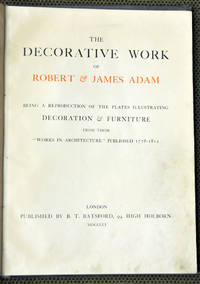
The decorative work of Robert & James Adam. Being a reproduction of the plates illustrating Decoration & Furniture from their "Works in Architecture" published 1778-1812.
London Batsford 1901. 2°. 3 Bl. 30 faksim. Taf. OHPgmt. Lagen gelöst. London, Batsford 1901. unknown
Référence libraire : 1916-11
|
|
|
ADAM
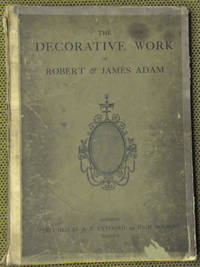
The decorative work of Robert & James Adam. Being a reproduction of the plates illustrating Decoration & Furniture from their "Works in Architecture" published 1778-1812.
London Batsford 1901. 2°. 3 Bl. 30 faksim. Taf. OPbd. Finger- bzw. staubfleckig Einbd. beschäd. Lagerspuren. London, Batsford 1901. unknown
Référence libraire : 3088-01
|
|
|
Adam
The Edinburgh Review Vol. 140: Or Critical Journal; For July 1874 October 1874 to Be Continued Quarterly Classic Reprint
hardcover. Good. Access codes and supplements are not guaranteed with used items. May be an ex-library book. hardcover
Référence libraire : 0484015079.G ISBN : 0484015079 9780484015073
|
|
|
Adam
The Emerging DreamHealer
Plume 2006-09-29. Paperback. New. New. In shrink wrap. Looks like an interesting title! Plume paperback
Référence libraire : Q-0452287308 ISBN : 0452287308 9780452287303

|
|
|
Adam
The Path of the DreamHealer: My Journey Through the Miraculous World of Energy Healing
Plume 2007-06-26. Paperback. New. New. In shrink wrap. Looks like an interesting title! Plume paperback
Référence libraire : Q-0452288460 ISBN : 0452288460 9780452288461

|
|
|
Adam
The Path of the Dream Healer: My Journey Through the Miraculous World of Energy Healing Adam
Dutton 2006-07-06. Hardcover. New. New. In shrink wrap. Looks like an interesting title! Dutton hardcover
Référence libraire : Q-0525949488 ISBN : 0525949488 9780525949480

|
|
|
Adam
The revelation to the monk of Evesham. 1196 English reprints Adam
AMS Press 24108. New. In shrink wrap. AMS Press unknown
Référence libraire : 20-04028
|
|
|
Adam
The Son is Truly Son: The Trinitarian and Christological Theology of Eusebius of Caesarea Studia Traditionis Theologiae: Explorations in Early and Medieval Theology 46
paperback. Good. Access codes and supplements are not guaranteed with used items. May be an ex-library book. paperback
Référence libraire : 2503594980.G ISBN : 2503594980 9782503594989
|
|
|
Adam
Thomas Percy Conspirator in the Gunpowder Plot.
London: I. Caulfield & Herbert 1794. Engraving by Adam after an unknown artist of Thomas Percy conspirator in the Gunpowder Plot of 1605 in protest of anti-Catholic laws under James I. Image: 189 x 115 mm. London: I. Caulfield & Herbert, 1794. unknown
Référence libraire : 59-0615

|
|
|
ADAM
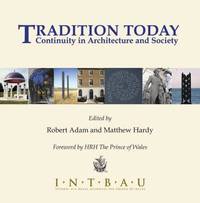
TRADITION TODAY : CONTINUITY IN ARCHITECTURE & SOCIETY
WIT PRESS 2008. Hardcover. New. WIT PRESS hardcover
Référence libraire : SBS-9781845640668 ISBN : 1845640667 9781845640668
|
|
|
ADAM
TRADITION TODAY : CONTINUITY IN ARCHITECTURE & SOCIETY
WIT PRESS 2008. Hardcover. New. WIT PRESS hardcover
Référence libraire : SBS-9781845640668 ISBN : 1845640667 9781845640668
|
|
|
Adam
Transport of the Critical Care Patient
Jones & Bartlett 2011. Hardcover. New. 1st edition. 456 pages. 11.00x8.50x0.75 inches. Jones & Bartlett hardcover
Référence libraire : 1-0323082726 ISBN : 0323082726 9780323082723

|
|
|
Adam
Who's Who In British Opera
Misclenious Publishers. New. Misclenious Publishers unknown
Référence libraire : CBS-9781859280447 ISBN : 1859280447 9781859280447
|
|
|
Adam
Who's Who In British Opera
Misclenious Publishers. New. Misclenious Publishers unknown
Référence libraire : CBS-9781859280447 ISBN : 1859280447 9781859280447
|
|
|
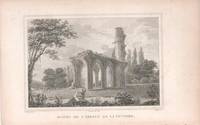
Adam (Engraver); After Civeton
Ruines de L’Abbaye de La Victoire.
Paris: French Publisher circa 1838. Steel engraving. 5 x 8 in. sheet. Good toning and foxing in the margins. [Paris: French Publisher, circa 1838]. unknown
Référence libraire : 71-2767
|
|
|
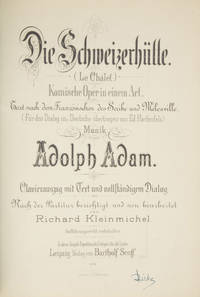
ADAM Adolphe 1803 1856
Die Schweizerhüttfe. Le Châlet. Komische Oper in einem Act. Text nach dem Französischen des Scribe und Melesville. Für den Dialog in's Deutsche übertragen von Ed. Hartenfels. Clavierauszug mit Text und vollständigem Dialog. Nach der Partitur berichtigt und neu bearbeitet von Richard Kleinmichel. Piano-vocal score
Leipzig: Bartholf Senff PN 2209 1891. Octavo. Original publisher's black cloth-backed blue wrappers with titling within decorative borders. 1 title 2 cast list and contents 3-122 ii blank pp.<br/><br/>Wrappers somewhat worn. Signature to title in blue ink. An opéra comique in one act to a libretto by Eugène Scribe and Mélesville A.-H.-J.-Duveyrier after Johann Wolfgang von Goethe Singspiel Jery und Bätely Le Chalet was first performed in Paris at the Opéra-Comique Salle de la Bourse on September 25 1834.<br/><br/>"Le chalet Adam's first significant success incorporates the music from Ariane à Naxos the cantata written for the 1825 Prix de Rome competition but the opera is distinguished by its freshness of invention as indeed are all his best works. Le chalet was Adam's most popular opera in France throughout the 19th century." Elizabeth Forbes in Grove Music Online. Bartholf Senff [PN 2209] unknown books
Référence libraire : 28233
|
|
|
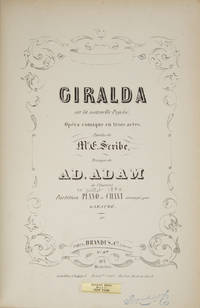
ADAM Adolphe 1803 1856
Giralda ou la nouvelle Psyché Opéra comique en trois actes Paroles de Mr. E. Scribe. Piano-vocal score
Paris: Brandus PN 5303 1851. Large octavo. Quarter red leather with red textured cloth boards titling gilt to spine. 1f. title 1f. named cast list and contents 293 i blank.<br/><br/>Named cast includes Meyer Bussine Siante-Foy Felix Miolan Ricquier Audran Adolphe Lejeune and Marie.<br/><br/>With small charming musical bookplate of the noted French composer Charles Lecocq 1832-1918 to front pastedown.<br/><br/>Binding slightly worn and rubbed. Slightly worn and faded; small handstamp to title. First Edition second issue. <br/><br/>"In July 1850 one of Adam's best works the opera Giralda ou La nouvelle Psyché with a text by Scribe originally intended for Auber was produced at the Opéra-Comique with an unknown soprano Marie Félix-Miolan in the title role: as Miolan-Carvalho she was to be Gounod's first Marguerite Mireille and Juliette." Elizabeth Forbes in Grove Music Online. Brandus [PN 5303] unknown books
Référence libraire : 28230
|
|
|
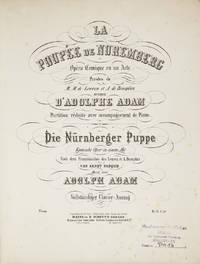
ADAM Adolphe 1803 1856
La Poupée de Nuremberg Opéra Comique en un Acte Paroles de M. M. de Leuven et A. de Beauplan. Partition réduite avec accompagnement de Piano. Die Nürnberger Puppe Komische Oper in einem-Akt Nach dem Französischen des Leuven et A. Beauplan von Ernst Paque. Vollständiger Clavier-Auszug. Pr. M. 8.50. Piano-vocal score
Mainz: B. Schott's Söhnen PN 11908 1870. Folio. Original publisher's black cloth-backed dark blue-grey printed wrappers.1f. title 1 cast list and contents 63 i blank pp. Engraved. Text in French and German. <br/><br/>Wrappers somewhat worn and soiled with minor chipping to edges tear to upper margin of lower wrapper small circular cataloguing label to spine at lower library handstamps and markings to upper wrapper. Occasional light foxing; library handstamp to lower margin of first two leaves; tsmall ear to inner margin of title; occasional performance markings in pencil and blue crayon. A re-issue of the first German edition of 1853. B. Schott's Söhnen [PN 11908] unknown books
Référence libraire : 28268
|
|
|
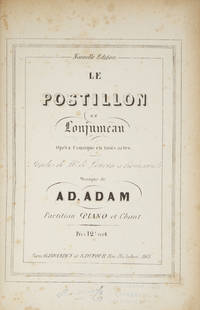
ADAM Adolphe 1803 1856
Le Postillon de Lonjumeau Opéra Comique en trois actes Paroles de Mr. de Leuven et Brunswick. Piano-vocal score
Paris: G. Brandus et S. Dufour PN M.S. 3189 1865. Large octavo. Full textured brown cloth with titling gilt to spine. 1f. title 1f. cast list and thematic contents 191 i blank pp. Lithographed. <br/><br/>Some foxing; small handstamps to first two leaves and last page of music. Printed from Schlesinger plates. <br/><br/>"Adam composed more than 80 stage works some of which especially those written for the Paris Opéra-Comique obtained considerable and lasting success." Elizabeth Forbes in Grove Music Online. G. Brandus et S. Dufour [PN M.S. 3189] unknown books
Référence libraire : 28228
|
|
|
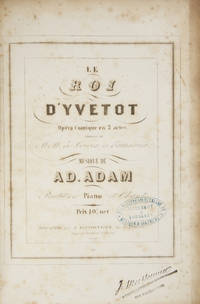
ADAM Adolphe 1803 1856
Le Roi d'Yvetot Opéra Comique en 3 actes. Paroles de MM de Leuven et Brunswick. Piano-vocal score
Paris: J. Meissonnier PN 1770 1843. Large octavo. Quarter black leather with dark green textured cloth boards with decorative blindstamping and lyre-like motif to center of upper panel titling and decorative gilt to spine. 1f. title 1f. named cast list and thematic index 74 74 bis-75 75 bis-76 76 bis-77 77 bis-197 i blank i publisher's advertisement i blank pp. Engraved.<br/><br/>Named cast includes Chollet Audran Grard Mocker Darcier and Rouvroy.<br/><br/>Binding somewhat worn and rubbed. Minor to moderate foxing and browning; publisher's and musicseller's handstamps to title; pp. 147-150 bound upside down and in reverse order. First Edition.<br/><br/>Le Roi d'Yvetot was first performed at the Opéra-Comique in Paris on October 13 1842. <br/><br/>"Adam composed more than 80 stage works some of which especially those written for the Paris Opéra-Comique obtained considerable and lasting success." Elizabeth Forbes in Grove Music Online. J. Meissonnier [PN 1770] unknown books
Référence libraire : 28236
|
|
|
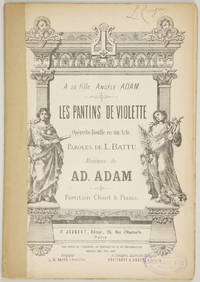
ADAM Adolphe 1803 1856
Les Pantins de Violette Opèrette Bouffe en un Acte. Paroles de L. Battu. A sa fille Angèle Adam. Partition Chant & Piano. Piano-vocal score
Paris: C. Joubert PN B. & Cie. 9681 1900. Large octavo. i title i publishing note 1f. named cast list and contents 46 1f. blank pp. Lithographed.<br/><br/>Occasional performance annotations in blue crayon and pencil.<br/><br/>Wrappers lacking; spine reinforced with brown paper tape. Minor staining to lower portions of some pages; small oval music seller's handstamp to title; former owner's signature to title cast list and first page of music with transfer to facing blank page; small tear to lower margin of p. 9; vertical crease to pp. 35-38. Printed from Brandus plates.<br/><br/>'Adam's final dramatic work the charming one-act operetta Les pantins de Violette was produced at the Bouffes-Parisiens where it shared the bill with Offenbach's Le thé de Polichinelle on 29 April 1856. Four nights later Adam died in his sleep." Elizabeth Forbes in Grove Music Online. C. Joubert [PN B. & Cie. 9681] unknown books
Référence libraire : 28259
|
|
|
ADAM Adolphe 1803 1856
Wenn ich König Wär' Si j'étais roi Oper in 3 Akten von A. Dennery uud J. Brésil Ins Deutsche übertragen und eingerichtet von Karlheinz Gutheim und Wilhelm Reinking Klavierauszug mit Singstimmen. Piano-vocal score
Wien: Universal Edition PN U.E. 12225 1954. Folio. Original publisher's light ivory wrappers with titling in sepia. i title i copyright information i cast list i contents 232 pp. With errata leaf laid in.<br/><br/>Small bookseller's label to corner of upper wrapper; spine slightly worn. Universal Edition [PN U.E. 12225] unknown books
Référence libraire : 28256

|
|
|
ADAM After Robert 1728 1792
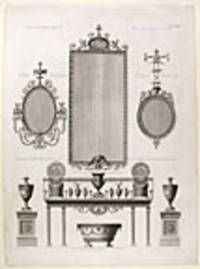
Design for furnishings
London 1775. Engraving by P. Begbie. In excellent condition with the exception of two tears on right margin. A fine architectural engraving of ornate mirrors and tables from Robert Adam's seminal work on British architecture.<br/> <br/>Robert and his brother James Adam forever changed the face of British architecture by introducing innovative Classical design ideas. From 1754-57 Robert lived in Italy where he had a long productive friendship with Piranesi which was inspirational for both men. Adam's first book on Diocletian's palace in Dalmatia is clearly very like the archaeological investigations Piranesi was making at the same time of similar ruins. Piranesi's friendship and passion for Roman Classicism were seminal influences on Adam and the greatest single factor other than his own talent in the work Adam produced on his return to England. Upon his return the brothers launched their career by building the Adelphi from the Thames to the Strand in London which although not a commercial success at the time included one of London's most cherished buildings the Adlephi Theatre. Together the Adam brothers designed and built some of the most famous buildings in England including such bastions of English architecture as Kenwood House Keddlestone Manor and Syon House. To the interiors of their English country houses the Adams brought wonderful ornamental elements in niches lunettes festoons and reliefs. Their classically designed buildings were so numerous in London that they changed the prevailing feel of the city and established their brand of neo-Classicism as the model of elegance and importance. It is asserted that the brothers originated the concept of the uniform facade attached to the typical English row house an architectural device that distinguishes London buildings. This monumental contribution is evidenced in the Adams' designs for Portland Place and Fitzroy Square and these were used as architectural models for the whole city. The brothers brought their talents into other areas by designing furniture to complement their beautiful interiors and by creating and publishing a treatise of design entitled 'Works in Architecture'. The work was published in three volumes over an extended span of time beginning in 1773 with the final volume being published posthumously in 1822.<br/> <br/>Cf. Brunet I.47; cf. Lowndes I p.8; DNB; Wilton-Ely The Mind and Art of Giovanni Battista Piranesi. unknown books
Référence libraire : 17573
|
|
|
ADAM After Robert 1728 1792
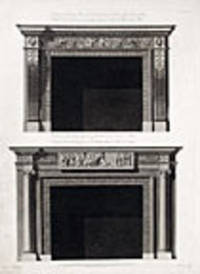
Design of a Chimney Piece executed in the Great Saloon of the Queens House / A Chimney Piece Designed for one of the Rooms in St. James's Palace
London 1775. Engraving by D. Cunego. In excellent condition with the exception of being trimmed just outside the platemark on left margin. Some paper discolouration on left margin and 1" loss lower left corner. A fine engraving of the fireplaces at St. James's Palace and the Queen's House in London.<br/> <br/>Robert and his brother James Adam forever changed the face of British architecture by introducing innovative Classical design ideas. From 1754-57 Robert lived in Italy where he had a long productive friendship with Piranesi which was inspirational for both men. Adam's first book on Diocletian's palace in Dalmatia is clearly very like the archaeological investigations Piranesi was making at the same time of similar ruins. Piranesi's friendship and passion for Roman Classicism were seminal influences on Adam and the greatest single factor other than his own talent in the work Adam produced on his return to England. Upon his return the brothers launched their career by building the Adelphi from the Thames to the Strand in London which although not a commercial success at the time included one of London's most cherished buildings the Adlephi Theatre. Together the Adam brothers designed and built some of the most famous buildings in England including such bastions of English architecture as Kenwood House Keddlestone Manor and Syon House. To the interiors of their English country houses the Adams brought wonderful ornamental elements in niches lunettes festoons and reliefs. Their classically designed buildings were so numerous in London that they changed the prevailing feel of the city and established their brand of neo-Classicism as the model of elegance and importance. It is asserted that the brothers originated the concept of the uniform facade attached to the typical English row house an architectural device that distinguishes London buildings. This monumental contribution is evidenced in the Adams' designs for Portland Place and Fitzroy Square and these were used as architectural models for the whole city. The brothers brought their talents into other areas by designing furniture to complement their beautiful interiors and by creating and publishing a treatise of design entitled 'Works in Architecture'. The work was published in three volumes over an extended span of time beginning in 1773 with the final volume being published posthumously in 1822.<br/> <br/>Cf. Brunet I.47; cf. Lowndes I p.8; DNB; Wilton-Ely The Mind and Art of Giovanni Battista Piranesi. unknown books
Référence libraire : 17099
|
|
|
ADAM After Robert 1728 1792
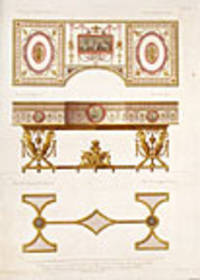
Design of a Harpsichord executed in London with different coloured woods for the Empress of Russia
London 1775. Copper engraving with hand colour. Engraving by P. Begbie. In excellent condition with the exception of being trimmed just on the platemark on the left margin. Mild soiling mostly marginal. A fine engraving of an ornate harpsichord designed for the Empress of Russia.<br/> <br/>Robert and his brother James Adam forever changed the face of British architecture by introducing innovative Classical design ideas. From 1754-57 Robert lived in Italy where he had a long productive friendship with Piranesi which was inspirational for both men. Adam's first book on Diocletian's palace in Dalmatia is clearly very like the archaeological investigations Piranesi was making at the same time of similar ruins. Piranesi's friendship and passion for Roman Classicism were seminal influences on Adam and the greatest single factor other than his own talent in the work Adam produced on his return to England. Upon his return the brothers launched their career by building the Adelphi from the Thames to the Strand in London which although not a commercial success at the time included one of London's most cherished buildings the Adlephi Theatre. Together the Adam brothers designed and built some of the most famous buildings in England including such bastions of English architecture as Kenwood House Keddlestone Manor and Syon House. To the interiors of their English country houses the Adams brought wonderful ornamental elements in niches lunettes festoons and reliefs. Their classically designed buildings were so numerous in London that they changed the prevailing feel of the city and established their brand of neo-Classicism as the model of elegance and importance. It is asserted that the brothers originated the concept of the uniform facade attached to the typical English row house an architectural device that distinguishes London buildings. This monumental contribution is evidenced in the Adams' designs for Portland Place and Fitzroy Square and these were used as architectural models for the whole city. The brothers brought their talents into other areas by designing furniture to complement their beautiful interiors and by creating and publishing a treatise of design entitled 'Works in Architecture'. The work was published in three volumes over an extended span of time beginning in 1773 with the final volume being published posthumously in 1822.<br/> <br/>Cf. Brunet I.47; cf. Lowndes I p.8; DNB; Wilton-Ely The Mind and Art of Giovanni Battista Piranesi. unknown books
Référence libraire : 17101
|
|
|
ADAM After Robert 1728 1792
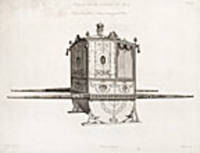
Design of a Sedan Chair as executed for Her Majesty
London 1775. Engraving by P. Begbie. In excellent condition with the exception of some paper discolouration on the upper margin. A fine engraving of the sedan chair designed for Queen Charlotte.<br/> <br/>Robert and his brother James Adam forever changed the face of British architecture by introducing innovative Classical design ideas. From 1754-57 Robert lived in Italy where he had a long productive friendship with Piranesi which was inspirational for both men. Adam's first book on Diocletian's palace in Dalmatia is clearly very like the archaeological investigations Piranesi was making at the same time of similar ruins. Piranesi's friendship and passion for Roman Classicism were seminal influences on Adam and the greatest single factor other than his own talent in the work Adam produced on his return to England. Upon his return the brothers launched their career by building the Adelphi from the Thames to the Strand in London which although not a commercial success at the time included one of London's most cherished buildings the Adlephi Theatre. Together the Adam brothers designed and built some of the most famous buildings in England including such bastions of English architecture as Kenwood House Keddlestone Manor and Syon House. To the interiors of their English country houses the Adams brought wonderful ornamental elements in niches lunettes festoons and reliefs. Their classically designed buildings were so numerous in London that they changed the prevailing feel of the city and established their brand of neo-Classicism as the model of elegance and importance. It is asserted that the brothers originated the concept of the uniform facade attached to the typical English row house an architectural device that distinguishes London buildings. This monumental contribution is evidenced in the Adams' designs for Portland Place and Fitzroy Square and these were used as architectural models for the whole city. The brothers brought their talents into other areas by designing furniture to complement their beautiful interiors and by creating and publishing a treatise of design entitled 'Works in Architecture'. The work was published in three volumes over an extended span of time beginning in 1773 with the final volume being published posthumously in 1822.<br/> <br/>Cf. Brunet I.47; cf. Lowndes I p.8; DNB; Wilton-Ely The Mind and Art of Giovanni Battista Piranesi. unknown books
Référence libraire : 17100
|
|
|
ADAM After Robert 1728 1792
Design of the Ceiling of the Library or Great Room at Kenwood
London 1774. Engraving by B. Pastorini. A fine engraving of a painted plaster and stucco ceiling from the interior at Kenwood House in Hampstead London re-modelled in 1761-1773 and now home to the Iveagh Bequest picture collection.<br/> <br/>Robert and his brother James Adam forever changed the face of British architecture by introducing innovative Classical design ideas. From 1754-57 Robert lived in Italy where he had a long productive friendship with Piranesi which was inspirational for both men. Adam's first book on Diocletian's palace in Dalmatia is clearly very like the archaeological investigations Piranesi was making at the same time of similar ruins. Piranesi's friendship and passion for Roman Classicism were seminal influences on Adam and the greatest single factor other than his own talent in the work Adam produced on his return to England. Upon his return the brothers launched their career by building the Adelphi from the Thames to the Strand in London which although not a commercial success at the time included one of London's most cherished buildings the Adlephi Theatre. Together the Adam brothers designed and built some of the most famous buildings in England including such bastions of English architecture as Kenwood House Keddlestone Manor and Syon House. To the interiors of their English country houses the Adams brought wonderful ornamental elements in niches lunettes festoons and reliefs. Their classically designed buildings were so numerous in London that they changed the prevailing feel of the city and established their brand of neo-Classicism as the model of elegance and importance. It is asserted that the brothers originated the concept of the uniform facade attached to the typical English row house an architectural device that distinguishes London buildings. This monumental contribution is evidenced in the Adams' designs for Portland Place and Fitzroy Square and these were used as architectural models for the whole city. The brothers brought their talents into other areas by designing furniture to complement their beautiful interiors and by creating and publishing a treatise of design entitled 'Works in Architecture'. The work was published in three volumes over an extended span of time beginning in 1773 with the final volume being published posthumously in 1822.<br/> <br/>Cf. Brunet I.47; cf. Lowndes I p.8; DNB; Wilton-Ely The Mind and Art of Giovanni Battista Piranesi. unknown books
Référence libraire : 31062
|
|
|
ADAM After Robert 1728 1792
Design of the Ceiling of the Library or Great Room at Kenwood
London 1774. Engraving coloured by hand by B. Pastorini old dampstain to upper left margin. A fine engraving with contemporary hand colouring of a painted plaster and stucco ceiling from the interior at Kenwood House in Hampstead London re-modelled in 1761-1773 and now home to the Iveagh Bequest picture collection.<br/> <br/>Robert and his brother James Adam forever changed the face of British architecture by introducing innovative Classical design ideas. From 1754-57 Robert lived in Italy where he had a long productive friendship with Piranesi which was inspirational for both men. Adam's first book on Diocletian's palace in Dalmatia is clearly very like the archaeological investigations Piranesi was making at the same time of similar ruins. Piranesi's friendship and passion for Roman Classicism were seminal influences on Adam and the greatest single factor other than his own talent in the work Adam produced on his return to England. Upon his return the brothers launched their career by building the Adelphi from the Thames to the Strand in London which although not a commercial success at the time included one of London's most cherished buildings the Adlephi Theatre. Together the Adam brothers designed and built some of the most famous buildings in England including such bastions of English architecture as Kenwood House Keddlestone Manor and Syon House. To the interiors of their English country houses the Adams brought wonderful ornamental elements in niches lunettes festoons and reliefs. Their classically designed buildings were so numerous in London that they changed the prevailing feel of the city and established their brand of neo-Classicism as the model of elegance and importance. It is asserted that the brothers originated the concept of the uniform facade attached to the typical English row house an architectural device that distinguishes London buildings. This monumental contribution is evidenced in the Adams' designs for Portland Place and Fitzroy Square and these were used as architectural models for the whole city. The brothers brought their talents into other areas by designing furniture to complement their beautiful interiors and by creating and publishing a treatise of design entitled 'Works in Architecture'. The work was published in three volumes over an extended span of time beginning in 1773 with the final volume being published posthumously in 1822.<br/> <br/>Cf. Brunet I.47; cf. Lowndes I p.8; DNB; Wilton-Ely The Mind and Art of Giovanni Battista Piranesi. unknown books
Référence libraire : 34076

|
|
|
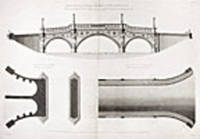
ADAM After Robert 1728 1792
Geometrical elevation of a Bridge to be built over the River in the Garden at Sion. Plan of the Foundations of the Bridge. Plan of the Carriage and Footways of the Bridge
London 1775. Engraving by T. Miller. In excellent condition with the exception of some very faint off-setting. A fine engraving of a proposed bridge over the river at Sion House in London.<br/> <br/>Robert and his brother James Adam forever changed the face of British architecture by introducing innovative Classical design ideas. From 1754-57 Robert lived in Italy where he had a long productive friendship with Piranesi which was inspirational for both men. Adam's first book on Diocletian's palace in Dalmatia is clearly very like the archaeological investigations Piranesi was making at the same time of similar ruins. Piranesi's friendship and passion for Roman Classicism were seminal influences on Adam and the greatest single factor other than his own talent in the work Adam produced on his return to England. Upon his return the brothers launched their career by building the Adelphi from the Thames to the Strand in London which although not a commercial success at the time included one of London's most cherished buildings the Adlephi Theatre. Together the Adam brothers designed and built some of the most famous buildings in England including such bastions of English architecture as Kenwood House Keddlestone Manor and Syon House. To the interiors of their English country houses the Adams brought wonderful ornamental elements in niches lunettes festoons and reliefs. Their classically designed buildings were so numerous in London that they changed the prevailing feel of the city and established their brand of neo-Classicism as the model of elegance and importance. It is asserted that the brothers originated the concept of the uniform facade attached to the typical English row house an architectural device that distinguishes London buildings. This monumental contribution is evidenced in the Adams' designs for Portland Place and Fitzroy Square and these were used as architectural models for the whole city. The brothers brought their talents into other areas by designing furniture to complement their beautiful interiors and by creating and publishing a treatise of design entitled 'Works in Architecture'. The work was published in three volumes over an extended span of time beginning in 1773 with the final volume being published posthumously in 1822.<br/> <br/>Cf. Brunet I.47; cf. Lowndes I p.8; DNB; Wilton-Ely The Mind and Art of Giovanni Battista Piranesi. unknown books
Référence libraire : 17103
|
|
|
ADAM After Robert 1728 1792
Section of one end of the Library or great Room at Kenwood. Design of the Chimney for the Library or great Room at Kenwood
London 1774. Engraving by J. Roberts. Expert repairs to lower left corner. A fine architectural engraving of the interior of Kenwood House in Hampstead London re-modelled in 1761-1773 and now home to the Iveagh Bequest picture collection.<br/> <br/>Robert and his brother James Adam forever changed the face of British architecture by introducing innovative Classical design ideas. From 1754-57 Robert lived in Italy where he had a long productive friendship with Piranesi which was inspirational for both men. Adam's first book on Diocletian's palace in Dalmatia is clearly very like the archaeological investigations Piranesi was making at the same time of similar ruins. Piranesi's friendship and passion for Roman Classicism were seminal influences on Adam and the greatest single factor other than his own talent in the work Adam produced on his return to England. Upon his return the brothers launched their career by building the Adelphi from the Thames to the Strand in London which although not a commercial success at the time included one of London's most cherished buildings the Adlephi Theatre. Together the Adam brothers designed and built some of the most famous buildings in England including such bastions of English architecture as Kenwood House Keddlestone Manor and Syon House. To the interiors of their English country houses the Adams brought wonderful ornamental elements in niches lunettes festoons and reliefs. Their classically designed buildings were so numerous in London that they changed the prevailing feel of the city and established their brand of neo-Classicism as the model of elegance and importance. It is asserted that the brothers originated the concept of the uniform facade attached to the typical English row house an architectural device that distinguishes London buildings. This monumental contribution is evidenced in the Adams' designs for Portland Place and Fitzroy Square and these were used as architectural models for the whole city. The brothers brought their talents into other areas by designing furniture to complement their beautiful interiors and by creating and publishing a treatise of design entitled 'Works in Architecture'. The work was published in three volumes over an extended span of time beginning in 1773 with the final volume being published posthumously in 1822.<br/> <br/>Cf. Brunet I.47; cf. Lowndes I p.8; DNB; Wilton-Ely The Mind and Art of Giovanni Battista Piranesi. unknown books
Référence libraire : 5594

|
|
|
ADAM After Robert 1728 1792
Section of one of the sides of the Great Room or Library at Kenwood
London 1774. Engraving by J. Zucchi. A fine architectural engraving of the interior of Kenwood House in Hampstead London re-modelled in 1761-1773 and now home to the Iveagh Bequest picture collection.<br/> <br/>Robert and his brother James Adam forever changed the face of British architecture by introducing innovative Classical design ideas. From 1754-57 Robert lived in Italy where he had a long productive friendship with Piranesi which was inspirational for both men. Adam's first book on Diocletian's palace in Dalmatia is clearly very like the archaeological investigations Piranesi was making at the same time of similar ruins. Piranesi's friendship and passion for Roman Classicism were seminal influences on Adam and the greatest single factor other than his own talent in the work Adam produced on his return to England. Upon his return the brothers launched their career by building the Adelphi from the Thames to the Strand in London which although not a commercial success at the time included one of London's most cherished buildings the Adelphi Theatre. Together the Adam brothers designed and built some of the most famous buildings in England including such bastions of English architecture as Kenwood House Keddlestone Manor and Syon House. To the interiors of their English country houses the Adams brought wonderful ornamental elements in niches lunettes festoons and reliefs. Their classically designed buildings were so numerous in London that they changed the prevailing feel of the city and established their brand of neo-Classicism as the model of elegance and importance. It is asserted that the brothers originated the concept of the uniform facade attached to the typical English row house an architectural device that distinguishes London buildings. This monumental contribution is evidenced in the Adams' designs for Portland Place and Fitzroy Square and these were used as architectural models for the whole city. The brothers brought their talents into other areas by designing furniture to complement their beautiful interiors and by creating and publishing a treatise of design entitled 'Works in Architecture'. The work was published in three volumes over an extended span of time beginning in 1773 with the final volume being published posthumously in 1822.<br/> <br/>Cf. Brunet I.47; cf. Lowndes I p.8; DNB; Wilton-Ely The Mind and Art of Giovanni Battista Piranesi. unknown books
Référence libraire : 5385

|
|
|
ADAM After Robert 1728 1792 & James d1794 d. 17
Elevation of the North Front of Kenwood towards the Court. Elevation of the South Front of Kenwood towards the Gardens
London 1774. Engraving by T. Miller expert repairs to old fold touching image area. A fine architectural engraving of Kenwood House in Hampstead London re-modelled in 1761-1773 and now home to the Iveagh Bequest picture collection.<br/> <br/>Robert and his brother James Adam forever changed the face of British architecture by introducing innovative Classical design ideas. From 1754-57 Robert lived in Italy where he had a long productive friendship with Piranesi which was inspirational for both men. Adam's first book on Diocletian's palace in Dalmatia is clearly very like the archaeological investigations Piranesi was making at the same time of similar ruins. Piranesi's friendship and passion for Roman Classicism were seminal influences on Adam and the greatest single factor other than his own talent in the work Adam produced on his return to England. Upon his return the brothers launched their career by building the Adelphi from the Thames to the Strand in London which although not a commercial success at the time included one of London's most cherished buildings the Adlephi Theatre. Together the Adam brothers designed and built some of the most famous buildings in England including such bastions of English architecture as Kenwood House Keddlestone Manor and Syon House. To the interiors of their English country houses the Adams brought wonderful ornamental elements in niches lunettes festoons and reliefs. Their classically designed buildings were so numerous in London that they changed the prevailing feel of the city and established their brand of neo-Classicism as the model of elegance and importance. It is asserted that the brothers originated the concept of the uniform facade attached to the typical English row house an architectural device that distinguishes London buildings. This monumental contribution is evidenced in the Adams' designs for Portland Place and Fitzroy Square and these were used as architectural models for the whole city. The brothers brought their talents into other areas by designing furniture to complement their beautiful interiors and by creating and publishing a treatise of design entitled 'Works in Architecture'. The work was published in three volumes over an extended span of time beginning in 1773 with the final volume being published posthumously in 1822.<br/> <br/>Cf. Brunet I.47; cf. Lowndes I p.8. unknown books
Référence libraire : 5327

|
|
|
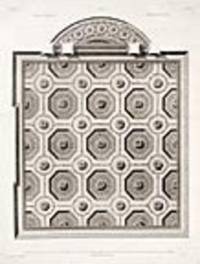
ADAM After Robert 1728 1792 and James ADAM d1794 d. 17
Ceiling of the Eating - Room
London 1777. Copper engraving. Engraved by Roe. In excellent condition. An elegant engraving of the elaborate ceiling in the dining room of Sir Watkin Williams Wynn's celebrated house in St. James's Square London.<br/> <br/>Robert and his brother James Adam forever changed the face of British architecture by introducing innovative Classical design ideas. From 1754-57 Robert lived in Italy where he had a long productive friendship with Piranesi which was inspirational for both men. Adam's first book on Diocletian's palace in Dalmatia is clearly very like the archaeological investigations Piranesi was making at the same time of similar ruins. Piranesi's friendship and passion for Roman Classicism were seminal influences on Adam and the greatest single factor other than his own talent in the work Adam produced on his return to England. Upon his return the brothers launched their career by building the Adelphi from the Thames to the Strand in London which although not a commercial success at the time included one of London's most cherished buildings the Adlephi Theatre. Together the Adam brothers designed and built some of the most famous buildings in England including such bastions of English architecture as Kenwood House Keddlestone Manor and Syon House. To the interiors of their English country houses the Adams brought wonderful ornamental elements in niches lunettes festoons and reliefs. Their classically designed buildings were so numerous in London that they changed the prevailing feel of the city and established their brand of neo-Classicism as the model of elegance and importance. It is asserted that the brothers originated the concept of the uniform facade attached to the typical English row house an architectural device that distinguishes London buildings. This monumental contribution is evidenced in the Adams' designs for Portland Place and Fitzroy Square and these were used as architectural models for the whole city. The brothers brought their talents into other areas by designing furniture to complement their beautiful interiors and by creating and publishing a treatise of design entitled 'Works in Architecture'. The work was published in three volumes over an extended span of time beginning in 1773 with the final volume being published posthumously in 1822.<br/> <br/>Cf. Brunet I.47; cf. Lowndes I p.8; DNB; Wilton-Ely The Mind and Art of Giovanni Battista Piranesi. unknown books
Référence libraire : 17132
|
|
|
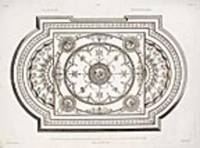
ADAM After Robert 1728 1792 and James ADAM d1794 d. 17
Ceiling of the Music Room
London 1777. Copper engraving. Engraved by T. Morris. In excellent condition with the exception of a small area of foxing in the sheet. An elegant engraving of the elaborate ceiling in the music room of Sir Watkin Williams Wynn's celebrated house in St. James' Square London.<br/> <br/>Robert and his brother James Adam forever changed the face of British architecture by introducing innovative Classical design ideas. From 1754-57 Robert lived in Italy where he had a long productive friendship with Piranesi which was inspirational for both men. Adam's first book on Diocletian's palace in Dalmatia is clearly very like the archaeological investigations Piranesi was making at the same time of similar ruins. Piranesi's friendship and passion for Roman Classicism were seminal influences on Adam and the greatest single factor other than his own talent in the work Adam produced on his return to England. Upon his return the brothers launched their career by building the Adelphi from the Thames to the Strand in London which although not a commercial success at the time included one of London's most cherished buildings the Adlephi Theatre. Together the Adam brothers designed and built some of the most famous buildings in England including such bastions of English architecture as Kenwood House Keddlestone Manor and Syon House. To the interiors of their English country houses the Adams brought wonderful ornamental elements in niches lunettes festoons and reliefs. Their classically designed buildings were so numerous in London that they changed the prevailing feel of the city and established their brand of neo-Classicism as the model of elegance and importance. It is asserted that the brothers originated the concept of the uniform facade attached to the typical English row house an architectural device that distinguishes London buildings. This monumental contribution is evidenced in the Adams' designs for Portland Place and Fitzroy Square and these were used as architectural models for the whole city. The brothers brought their talents into other areas by designing furniture to complement their beautiful interiors and by creating and publishing a treatise of design entitled 'Works in Architecture'. The work was published in three volumes over an extended span of time beginning in 1773 with the final volume being published posthumously in 1822.<br/> <br/>Cf. Brunet I.47; cf. Lowndes I p.8; DNB; Wilton-Ely The Mind and Art of Giovanni Battista Piranesi. unknown books
Référence libraire : 17133
|
|
|
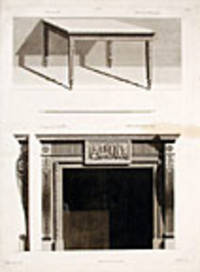
ADAM After Robert 1728 1792 and James ADAM d1794 d. 17
Chimneypiece and Table in the Hall of Shelburne House
London 1778. Copper engraving. Engraved by Caldwell. In excellent condition with the exception of a waterstain in middle of sheet. Left margin is trimmed just outside platemark. An elegant engraving of a fireplace and table at Shelburne House in Berkeley Square in London.<br/> <br/>Robert and his brother James Adam forever changed the face of British architecture by introducing innovative Classical design ideas. From 1754-57 Robert lived in Italy where he had a long productive friendship with Piranesi which was inspirational for both men. Adam's first book on Diocletian's palace in Dalmatia is clearly very like the archaeological investigations Piranesi was making at the same time of similar ruins. Piranesi's friendship and passion for Roman Classicism were seminal influences on Adam and the greatest single factor other than his own talent in the work Adam produced on his return to England. Upon his return the brothers launched their career by building the Adelphi from the Thames to the Strand in London which although not a commercial success at the time included one of London's most cherished buildings the Adlephi Theatre. Together the Adam brothers designed and built some of the most famous buildings in England including such bastions of English architecture as Kenwood House Keddlestone Manor and Syon House. To the interiors of their English country houses the Adams brought wonderful ornamental elements in niches lunettes festoons and reliefs. Their classically designed buildings were so numerous in London that they changed the prevailing feel of the city and established their brand of neo-Classicism as the model of elegance and importance. It is asserted that the brothers originated the concept of the uniform facade attached to the typical English row house an architectural device that distinguishes London buildings. This monumental contribution is evidenced in the Adams' designs for Portland Place and Fitzroy Square and these were used as architectural models for the whole city. The brothers brought their talents into other areas by designing furniture to complement their beautiful interiors and by creating and publishing a treatise of design entitled 'Works in Architecture'. The work was published in three volumes over an extended span of time beginning in 1773 with the final volume being published posthumously in 1822.<br/> <br/>Cf. Brunet I.47; cf. Lowndes I p.8; DNB; Wilton-Ely The Mind and Art of Giovanni Battista Piranesi. unknown books
Référence libraire : 17139
|
|
|
ADAM After Robert 1728 1792 and James ADAM d1794 d. 17
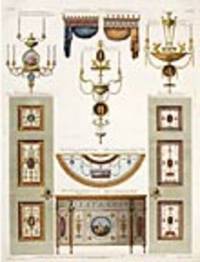
Contains some of the Parts at large of the Finishing and Furniture of the Earl of Derby's House
London 1777. Copper engraving with lovely early colour. Engraved by B. Pastorini. In excellent condition. An elegant engraving depicting a collection of ornate furniture in the Earl of Derby's celebrated house in Grosvenor Square London.<br/> <br/>Robert and his brother James Adam forever changed the face of British architecture by introducing innovative Classical design ideas. From 1754-57 Robert lived in Italy where he had a long productive friendship with Piranesi which was inspirational for both men. Adam's first book on Diocletian's palace in Dalmatia is clearly very like the archaeological investigations Piranesi was making at the same time of similar ruins. Piranesi's friendship and passion for Roman Classicism were seminal influences on Adam and the greatest single factor other than his own talent in the work Adam produced on his return to England. Upon his return the brothers launched their career by building the Adelphi from the Thames to the Strand in London which although not a commercial success at the time included one of London's most cherished buildings the Adlephi Theatre. Together the Adam brothers designed and built some of the most famous buildings in England including such bastions of English architecture as Kenwood House Keddlestone Manor and Syon House. To the interiors of their English country houses the Adams brought wonderful ornamental elements in niches lunettes festoons and reliefs. Their classically designed buildings were so numerous in London that they changed the prevailing feel of the city and established their brand of neo-Classicism as the model of elegance and importance. It is asserted that the brothers originated the concept of the uniform facade attached to the typical English row house an architectural device that distinguishes London buildings. This monumental contribution is evidenced in the Adams' designs for Portland Place and Fitzroy Square and these were used as architectural models for the whole city. The brothers brought their talents into other areas by designing furniture to complement their beautiful interiors and by creating and publishing a treatise of design entitled 'Works in Architecture'. The work was published in three volumes over an extended span of time beginning in 1773 with the final volume being published posthumously in 1822.<br/> <br/>Cf. Brunet I.47; cf. Lowndes I p.8; DNB; Wilton-Ely The Mind and Art of Giovanni Battista Piranesi. unknown books
Référence libraire : 17127
|
|
|
ADAM After Robert 1728 1792 and James ADAM d1794 d. 17
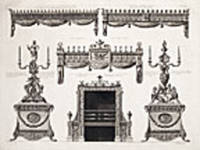
Designs for the Chimney Piece and Curtain Cornice at Sutton Park
London 1775. Engraving by B. Pastorini. In excellent condition. An elegant engraving showing the decorations of the chimney piece and curtain cornices at Sutton Park House in North Yorkshire.<br/> <br/>Robert and his brother James Adam forever changed the face of British architecture by introducing innovative Classical design ideas. From 1754-57 Robert lived in Italy where he had a long productive friendship with Piranesi which was inspirational for both men. Adam's first book on Diocletian's palace in Dalmatia is clearly very like the archaeological investigations Piranesi was making at the same time of similar ruins. Piranesi's friendship and passion for Roman Classicism were seminal influences on Adam and the greatest single factor other than his own talent in the work Adam produced on his return to England. Upon his return the brothers launched their career by building the Adelphi from the Thames to the Strand in London which although not a commercial success at the time included one of London's most cherished buildings the Adlephi Theatre. Together the Adam brothers designed and built some of the most famous buildings in England including such bastions of English architecture as Kenwood House Keddlestone Manor and Syon House. To the interiors of their English country houses the Adams brought wonderful ornamental elements in niches lunettes festoons and reliefs. Their classically designed buildings were so numerous in London that they changed the prevailing feel of the city and established their brand of neo-Classicism as the model of elegance and importance. It is asserted that the brothers originated the concept of the uniform facade attached to the typical English row house an architectural device that distinguishes London buildings. This monumental contribution is evidenced in the Adams' designs for Portland Place and Fitzroy Square and these were used as architectural models for the whole city. The brothers brought their talents into other areas by designing furniture to complement their beautiful interiors and by creating and publishing a treatise of design entitled 'Works in Architecture'. The work was published in three volumes over an extended span of time beginning in 1773 with the final volume being published posthumously in 1822.<br/> <br/>Cf. Brunet I.47; cf. Lowndes I p.8; DNB; Wilton-Ely The Mind and Art of Giovanni Battista Piranesi. unknown books
Référence libraire : 17116
|
|
|
ADAM After Robert 1728 1792 and James ADAM d1794 d. 17
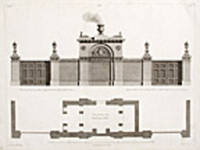
Elevation and Plans of the Gateway and Porter's Lodge of Ashburnham House in Dover Street
London 1778. Copper engraving. Engraved by Robert Blyth. In excellent condition. An elegant engraving of the gateway and porters lodge at Ashburnham House on Dover Street in London.<br/> <br/>Robert and his brother James Adam forever changed the face of British architecture by introducing innovative Classical design ideas. From 1754-57 Robert lived in Italy where he had a long productive friendship with Piranesi which was inspirational for both men. Adam's first book on Diocletian's palace in Dalmatia is clearly very like the archaeological investigations Piranesi was making at the same time of similar ruins. Piranesi's friendship and passion for Roman Classicism were seminal influences on Adam and the greatest single factor other than his own talent in the work Adam produced on his return to England. Upon his return the brothers launched their career by building the Adelphi from the Thames to the Strand in London which although not a commercial success at the time included one of London's most cherished buildings the Adlephi Theatre. Together the Adam brothers designed and built some of the most famous buildings in England including such bastions of English architecture as Kenwood House Keddlestone Manor and Syon House. To the interiors of their English country houses the Adams brought wonderful ornamental elements in niches lunettes festoons and reliefs. Their classically designed buildings were so numerous in London that they changed the prevailing feel of the city and established their brand of neo-Classicism as the model of elegance and importance. It is asserted that the brothers originated the concept of the uniform facade attached to the typical English row house an architectural device that distinguishes London buildings. This monumental contribution is evidenced in the Adams' designs for Portland Place and Fitzroy Square and these were used as architectural models for the whole city. The brothers brought their talents into other areas by designing furniture to complement their beautiful interiors and by creating and publishing a treatise of design entitled 'Works in Architecture'. The work was published in three volumes over an extended span of time beginning in 1773 with the final volume being published posthumously in 1822.<br/> <br/>Cf. Brunet I.47; cf. Lowndes I p.8; DNB; Wilton-Ely The Mind and Art of Giovanni Battista Piranesi. unknown books
Référence libraire : 17144
|
|
|
ADAM After Robert 1728 1792 and James ADAM d1794 d. 17
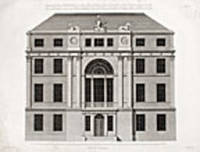
Elevation of a House at Whitehall Restore as a Board Room for the Paymaster General & Commissioners of Chelsea Hospital & Office for Invalids
London 1775. Engraving by R. Blyth. In excellent condition except for mild discolouration lower left. An elegant engraving showing the facade of a house in Whitehall used as the offices for Chelsea Hospital.<br/> <br/>Robert and his brother James Adam forever changed the face of British architecture by introducing innovative Classical design ideas. From 1754-57 Robert lived in Italy where he had a long productive friendship with Piranesi which was inspirational for both men. Adam's first book on Diocletian's palace in Dalmatia is clearly very like the archaeological investigations Piranesi was making at the same time of similar ruins. Piranesi's friendship and passion for Roman Classicism were seminal influences on Adam and the greatest single factor other than his own talent in the work Adam produced on his return to England. Upon his return the brothers launched their career by building the Adelphi from the Thames to the Strand in London which although not a commercial success at the time included one of London's most cherished buildings the Adlephi Theatre. Together the Adam brothers designed and built some of the most famous buildings in England including such bastions of English architecture as Kenwood House Keddlestone Manor and Syon House. To the interiors of their English country houses the Adams brought wonderful ornamental elements in niches lunettes festoons and reliefs. Their classically designed buildings were so numerous in London that they changed the prevailing feel of the city and established their brand of neo-Classicism as the model of elegance and importance. It is asserted that the brothers originated the concept of the uniform facade attached to the typical English row house an architectural device that distinguishes London buildings. This monumental contribution is evidenced in the Adams' designs for Portland Place and Fitzroy Square and these were used as architectural models for the whole city. The brothers brought their talents into other areas by designing furniture to complement their beautiful interiors and by creating and publishing a treatise of design entitled 'Works in Architecture'. The work was published in three volumes over an extended span of time beginning in 1773 with the final volume being published posthumously in 1822.<br/> <br/>Cf. Brunet I.47; cf. Lowndes I p.8; DNB; Wilton-Ely The Mind and Art of Giovanni Battista Piranesi. unknown books
Référence libraire : 17117
|
|
|
ADAM After Robert 1728 1792 and James ADAM d1794 d. 17
Elevation of the House of the Society for the Encouragement of Arts Manufacturers & Commerce Situated in John Street Adelphi
London 1775. Engraving by T. Vivares. In excellent condition with the exception of some paper discolouration in the bottom right corner of the sheet. A fine architectural engraving of a part of the vast Adelphi development in London; the largest project undertaken by the Adam brothers.<br/> <br/>Robert and his brother James Adam forever changed the face of British architecture by introducing innovative Classical design ideas. From 1754-57 Robert lived in Italy where he had a long productive friendship with Piranesi which was inspirational for both men. Adam's first book on Diocletian's palace in Dalmatia is clearly very like the archaeological investigations Piranesi was making at the same time of similar ruins. Piranesi's friendship and passion for Roman Classicism were seminal influences on Adam and the greatest single factor other than his own talent in the work Adam produced on his return to England. Upon his return the brothers launched their career by building the Adelphi from the Thames to the Strand in London which although not a commercial success at the time included one of London's most cherished buildings the Adlephi Theatre. Together the Adam brothers designed and built some of the most famous buildings in England including such bastions of English architecture as Kenwood House Keddlestone Manor and Syon House. To the interiors of their English country houses the Adams brought wonderful ornamental elements in niches lunettes festoons and reliefs. Their classically designed buildings were so numerous in London that they changed the prevailing feel of the city and established their brand of neo-Classicism as the model of elegance and importance. It is asserted that the brothers originated the concept of the uniform facade attached to the typical English row house an architectural device that distinguishes London buildings. This monumental contribution is evidenced in the Adams' designs for Portland Place and Fitzroy Square and these were used as architectural models for the whole city. The brothers brought their talents into other areas by designing furniture to complement their beautiful interiors and by creating and publishing a treatise of design entitled 'Works in Architecture'. The work was published in three volumes over an extended span of time beginning in 1773 with the final volume being published posthumously in 1822.<br/> <br/>Cf. Brunet I.47; cf. Lowndes I p.8; DNB; Wilton-Ely The Mind and Art of Giovanni Battista Piranesi. unknown books
Référence libraire : 17118

|
|
|
ADAM After Robert 1728 1792 and James ADAM d1794 d. 17
Elevation of the North End of Suton Park House / Elevation of the South End of Suton Park House
London 1775. Engraving by T. Vivares. In excellent condition. An elegant elevation of the north and southe sides of Sutton Park in North Yorkshire the seat of the Earl of Bute.<br/> <br/>Robert and his brother James Adam forever changed the face of British architecture by introducing innovative Classical design ideas. From 1754-57 Robert lived in Italy where he had a long productive friendship with Piranesi which was inspirational for both men. Adam's first book on Diocletian's palace in Dalmatia is clearly very like the archaeological investigations Piranesi was making at the same time of similar ruins. Piranesi's friendship and passion for Roman Classicism were seminal influences on Adam and the greatest single factor other than his own talent in the work Adam produced on his return to England. Upon his return the brothers launched their career by building the Adelphi from the Thames to the Strand in London which although not a commercial success at the time included one of London's most cherished buildings the Adlephi Theatre. Together the Adam brothers designed and built some of the most famous buildings in England including such bastions of English architecture as Kenwood House Keddlestone Manor and Syon House. To the interiors of their English country houses the Adams brought wonderful ornamental elements in niches lunettes festoons and reliefs. Their classically designed buildings were so numerous in London that they changed the prevailing feel of the city and established their brand of neo-Classicism as the model of elegance and importance. It is asserted that the brothers originated the concept of the uniform facade attached to the typical English row house an architectural device that distinguishes London buildings. This monumental contribution is evidenced in the Adams' designs for Portland Place and Fitzroy Square and these were used as architectural models for the whole city. The brothers brought their talents into other areas by designing furniture to complement their beautiful interiors and by creating and publishing a treatise of design entitled 'Works in Architecture'. The work was published in three volumes over an extended span of time beginning in 1773 with the final volume being published posthumously in 1822.<br/> <br/>Cf. Brunet I.47; cf. Lowndes I p.8; DNB; Wilton-Ely The Mind and Art of Giovanni Battista Piranesi. unknown books
Référence libraire : 17114

|
|
|
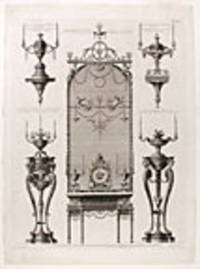
ADAM After Robert 1728 1792 and James ADAM d1794 d. 17
Miscellaneous Designs of Various Pieces of Furniture done for Different Persons which are here Introduced in Order to Give More Utility and Diversity to the Work and Contains as Follows
London 1775. Engraving by B. Pastorini. In excellent condition. A fine engraving of various pieces of ornate furniture from Robert Adam's seminal work on British architecture.<br/> <br/>Robert and his brother James Adam forever changed the face of British architecture by introducing innovative Classical design ideas. From 1754-57 Robert lived in Italy where he had a long productive friendship with Piranesi which was inspirational for both men. Adam's first book on Diocletian's palace in Dalmatia is clearly very like the archaeological investigations Piranesi was making at the same time of similar ruins. Piranesi's friendship and passion for Roman Classicism were seminal influences on Adam and the greatest single factor other than his own talent in the work Adam produced on his return to England. Upon his return the brothers launched their career by building the Adelphi from the Thames to the Strand in London which although not a commercial success at the time included one of London's most cherished buildings the Adlephi Theatre. Together the Adam brothers designed and built some of the most famous buildings in England including such bastions of English architecture as Kenwood House Keddlestone Manor and Syon House. To the interiors of their English country houses the Adams brought wonderful ornamental elements in niches lunettes festoons and reliefs. Their classically designed buildings were so numerous in London that they changed the prevailing feel of the city and established their brand of neo-Classicism as the model of elegance and importance. It is asserted that the brothers originated the concept of the uniform facade attached to the typical English row house an architectural device that distinguishes London buildings. This monumental contribution is evidenced in the Adams' designs for Portland Place and Fitzroy Square and these were used as architectural models for the whole city. The brothers brought their talents into other areas by designing furniture to complement their beautiful interiors and by creating and publishing a treatise of design entitled 'Works in Architecture'. The work was published in three volumes over an extended span of time beginning in 1773 with the final volume being published posthumously in 1822.<br/> <br/>Cf. Brunet I.47; cf. Lowndes I p.8; DNB; Wilton-Ely The Mind and Art of Giovanni Battista Piranesi. unknown books
Référence libraire : 17575
|
|
|
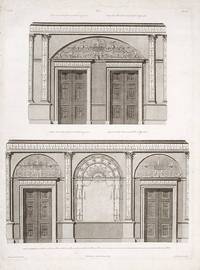
ADAM After Robert 1728 1792 and James ADAM d1794 d. 17
Section of One end and One Side of the Second Withdrawing-room
London 1775. Engraving by Joshua Record. In excellent condition with the exception of some minor foxing across the sheet and some waterstaining along the upper margin. A decorative engraving by the celebrated architect Robert Adam depicting an elegant room in Lord Derby's house in Grosvenor Square London.<br/> <br/>Robert and his brother James Adam forever changed the face of British architecture by introducing innovative Classical design ideas. From 1754-57 Robert lived in Italy where he had a long productive friendship with Piranesi which was inspirational for both men. Adam's first book on Diocletian's palace in Dalmatia is clearly very like the archaeological investigations Piranesi was making at the same time of similar ruins. Piranesi's friendship and passion for Roman Classicism were seminal influences on Adam and the greatest single factor other than his own talent in the work Adam produced on his return to England. Upon his return the brothers launched their career by building the Adelphi from the Thames to the Strand in London which although not a commercial success at the time included one of London's most cherished buildings the Adlephi Theatre. Together the Adam brothers designed and built some of the most famous buildings in England including such bastions of English architecture as Kenwood House Keddlestone Manor and Syon House. To the interiors of their English country houses the Adams brought wonderful ornamental elements in niches lunettes festoons and reliefs. Their classically designed buildings were so numerous in London that they changed the prevailing feel of the city and established their brand of neo-Classicism as the model of elegance and importance. It is asserted that the brothers originated the concept of the uniform facade attached to the typical English row house an architectural device that distinguishes London buildings. This monumental contribution is evidenced in the Adams' designs for Portland Place and Fitzroy Square and these were used as architectural models for the whole city. The brothers brought their talents into other areas by designing furniture to complement their beautiful interiors and by creating and publishing a treatise of design entitled 'Works in Architecture'. The work was published in three volumes over an extended span of time beginning in 1773 with the final volume being published posthumously in 1822.<br/> <br/>Cf. Brunet I.47; cf. Lowndes I p.8; DNB; Wilton-Ely The Mind and Art of Giovanni Battista Piranesi. unknown books
Référence libraire : 17124
|
|
|
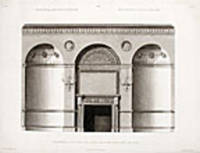
ADAM After Robert 1728 1792 and James ADAM d1794 d. 17
Section of the Chimneyside of the Antichamber in the Principal Story
London 1775. Engraving by Joshua Record. In excellent condition. An elegant engraving showing the chimney in the anteroom of Lord Derby's house in Grosvenor Square London.<br/> <br/>Robert and his brother James Adam forever changed the face of British architecture by introducing innovative Classical design ideas. From 1754-57 Robert lived in Italy where he had a long productive friendship with Piranesi which was inspirational for both men. Adam's first book on Diocletian's palace in Dalmatia is clearly very like the archaeological investigations Piranesi was making at the same time of similar ruins. Piranesi's friendship and passion for Roman Classicism were seminal influences on Adam and the greatest single factor other than his own talent in the work Adam produced on his return to England. Upon his return the brothers launched their career by building the Adelphi from the Thames to the Strand in London which although not a commercial success at the time included one of London's most cherished buildings the Adlephi Theatre. Together the Adam brothers designed and built some of the most famous buildings in England including such bastions of English architecture as Kenwood House Keddlestone Manor and Syon House. To the interiors of their English country houses the Adams brought wonderful ornamental elements in niches lunettes festoons and reliefs. Their classically designed buildings were so numerous in London that they changed the prevailing feel of the city and established their brand of neo-Classicism as the model of elegance and importance. It is asserted that the brothers originated the concept of the uniform facade attached to the typical English row house an architectural device that distinguishes London buildings. This monumental contribution is evidenced in the Adams' designs for Portland Place and Fitzroy Square and these were used as architectural models for the whole city. The brothers brought their talents into other areas by designing furniture to complement their beautiful interiors and by creating and publishing a treatise of design entitled 'Works in Architecture'. The work was published in three volumes over an extended span of time beginning in 1773 with the final volume being published posthumously in 1822.<br/> <br/>Cf. Brunet I.47; cf. Lowndes I p.8; DNB; Wilton-Ely The Mind and Art of Giovanni Battista Piranesi. unknown books
Référence libraire : 17122
|
|

 Recevoir par e-mail
 Télécharger en PDF
 Flux RSS
 Lien permanent


