|
|
|
BRUGNOLI, Maria Vittoria
Palazzo Ruggieri
32 p. con 24 tavole fuori testo; 24,5 cm. Brossura editoriale. Copertina polverosa, ma buona copia
|
|
|
Bruhns, Hinnerk - Nippel, Wilfried - David, Jean-Michel
Die Spate Romische Republik - La Fin de la Republique Romaine. Un Débat Franco-Allemand d'Histoire et d'Historiographie
Mm 170x240 "Collection de l'Ecole française de Rome - 235". Brossura editoriale con bandelle, pagine 282. Opera in stato di nuovo. Testo in lingua francese e tedesca - french and german text. SPEDIZIONE IN 24 ORE DALLA CONFERMA DELL'ORDINE. WORLDWIDE DELIVERY.
|
|
|
Bruhns, Leo
Die Kunst der Stadt Rom. Ihre Geschichte von den frühesten Anfängen bis in die Zeit der Romantik. Erster (und Zweiter) Halbband (Text) und 'Bilderband'. Mit (zus. 480) Abbildungen.
Wien, Schroll 1951. 3 Bände. 4°. 1 Bl., 292 S.; 2 Bll., (293)-662 S., 1 Bl., 2 Tafeln; XIII, (3) S., 126 Tafeln. Rotes OHLdr. Gelenke teils restauriert, Kapitale farblich angepaßt teils etwas ergänzt.
Referencia librero : 54059AB
|
|
|
BRUN Friederike:
Tagebuch über Rom.
Zürich, bey Orell, Füsli und Compagnie, 1801. In-8 de [2]-414 pages, demi-veau brun à coins, dos lisse, étiquette de titre et tomaison rouge et verte, tranches mouchetées.
Referencia librero : 20368

|
|
|
BRUN Giovanni (Roma 1745 - 1800)
Urbis Ichnographiam A Leonardo Bufalino
Urbis Ichnographiam A Leonardo Bufalino Ligneis formis Evulgatam Servata Proportione contractam Atq. Aeri incsam Jo. Bapta. Nolli. . Pianta geometrica con elevazione, pubblicata a Roma dalla tipografia di Carlo Losi nel 1785. Si tratta di una rielaborazione, senza alcun aggiornamento, dell'importante rilievo di Leonardo Bufalini (1551), riportato in voga da Giovan Battista Nolli nel 1748. La legenda di 307 rimandi in latino è ripesa proprio dalla riduzione di Nolli, e ne dimostra la diretta derivazione. T "La pianta di Roma di Leonardo Bufalini è la prima rappresentazione coerente della città e la più importante raffigurazione ortogonale fino alla pianta grande di Giambattista Nolli (1748). Bufalini si occupò di tutte le fasi della sua realizzazione, dal rilievo all’incisione, impiegando un lungo tempo: sette anni, secondo Onofrio Panvinio, venti secondo l’editore Antonio Trevisi. La Pianta di Roma fu stampata presso il tipografo Antonio Blado il 26 maggio 1551 a Roma, con privilegio decennale della Repubblica di Venezia e la dedica a Carlo V e a papa Giulio III. Si tratta di un’opera monumentale: una xilografia in dodici fogli e quattro strisce laterali. Nessun esemplare della prima edizione è noto; se ne conoscono solo tre della seconda edizione, pubblicata sempre a Roma, dall’editore Antonio Trevisi da Lecce, due conservati alla Biblioteca Vaticana (di cui uno incompleto) e un terzo alla British Library di Londra. Sebbene la pianta sia basata su rilievi effettuati dall’autore con grande perizia, non mancano elementi di fantasia: molti monumenti antichi sono stati aggiunti, completati e ricostruiti liberamente. Del resto, è lo stesso autore a sottolineare questa ambivalenza, dichiarando di voler presentare “la città che oggi è abitata…aggiungendo la [città] antica, un tempo sovrana del mondo…” Bufalini incluse nella pianta anche un autoritratto in cui è raffigurato con in mano il compasso a due punte, mentre a sinistra sono rappresentati i suoi strumenti di lavoro, fra cui la squadra e la bussola nautica. Per una più completa trattazione degli strumenti di misurazione utilizzati e per l’accuratezza della pianta bufaliniana si rimanda ai numerosi studi pubblicati. La fonte primaria utilizzata da Bufalini è la Roma antica di Bartolomeo Marliano, inserita nella sua Urbis Romae Topographia, che ha lo stesso orientamento e la stessa precisione nei particolari. Fin dalla sua pubblicazione nel 1551, la pianta del Bufalini esercitò una notevole influenza sulle successive piante della città fino al 1748, anno in cui Giambattista Nolli ne pubblicò una copia ridotta insieme alla sua pianta grande, che si impose quale nuovo modello" (cfr. B/R p. 2372). Nel margine inferiore, la sottoscrizione dell'editore C. Losi e, nell'angolo opposto, quella dell'incisore Giovanni Brun. In basso, a sinistra, il Pantheon e il Foro di Nerva; a destra, l'arco di Giano quadrifronte. Acquaforte e bulino, impressi su carta vergata coeva, applicata su tela, più volte ripiegata. Astuccio di custodia originale, in cartonato. In ottimo stato di conservazione. Geometric plan with elevation, published in Rome by Carlo Losi in 1785 and engraved by Giovanni Brun. It is a reworking, without any updating, of the important relief by Leonardo Bufalini (1551), brought back by Giovan Battista Nolli in 1748. The key-legend of 307 references in Latin is taken from Nolli's reduction, and demonstrates its direct derivation. Leonardo Bufalini's map of Rome is the first coherent representation of the city and the most important orthogonal representation up to the large plan by Giambattista Nolli (1748). Bufalini took care of all the phases of its realization, from relief to engraving, using a long time: seven years, according to Onofrio Panvinio, twenty according to the publisher Antonio Trevisi. The Map of Rome was printed at the typographer Antonio Blado on May 26, 1551 in Rome, with the ten-year privilege of the Republic of Venice and dedicates it to Charles V and Pope Julius III. It is a monumental work: a woodcut in twelve sheets and four lateral strips. Although the map is based on reliefs made by the author, there is no lack of elements of fantasy: many ancient monuments have been added, completed and rebuilt freely. The primary source used by Bufalini is Bartolomeo Marliano's ancient Rome, inserted in his Urbis Romae Topographia, which has the same orientation and the same precision in detail. Since its publication in 1551, Bufalini's map exerted a notable influence on the subsequent plans of the city until 1748, the year in which Giambattista Nolli published a reduced copy together with his large plan, which became the new model. Below, left, the Pantheon and the Forum of Nerva; right, the four-sided Arch of Janus. Etching and engraving, printed on contemporary laid paper, applied to cloth, folded several times. Original slipcase, in hardback. In excellent state of preservation. Hulsen, p. 40, d. Per la pianta del Bufalini: Bifolco/Ronca (2018), Cartografia e topografia italiana del XVI secolo, pp. 2372-73, tav. 1221.

|
|
|
Brunck, Richard-François-Philippe; Schäfer, Gottfried Heinrich [Schaefer]; Erfurdt, Carl Gottlob August [Karl] [Eds.] [Sophokles/Sophocles]
Sophoclis Tragoediae Septem; et Deperditarum Fragmenta, ex Editionibus et cum Annotatione Integra Brunckii et Schaeferi, cui intertextae sunt Glossae ex Eustathio et Suida Excerptae [Sophokles; Sophocles] [TWO VOLUME SET]. Accedunt Notae Carol. Gottlob August. Erfurdtii.
TWO VOLUME SET. RARE critical edition of the original Greek text of all seven tragedies and excerpts by the great ancient Greek tragedian Sophocles. Contains extensive notes in Latin under the Greek text in both volumes, and many variant readings and additional notes at the end of vol.2. [BOTH VOLUMES]: 215x140mm. XVI+847 pages (pagination: XVI+335/336-847). Quarter-leather marbled board Hardcover with gilt spine. Two title-stickers on spine. Text block edges marbled. Cover yellowing, slightly curved, rubbed and dirty. Cover corners bumped and worn. Spine dirty and somewhat stained. Spine edges slightly bumped. Pencil notes on several pages. Many pages age-stained/water-stained - NO damage to text. Pages yellowing and wavy. [VOL.I]: [VOL.II]: Rear inner cover and whitepage age-stained. [SUMMARY]: This extremely rare and influential 19th-century two-volume critical edition of works by Sophocles is otherwise in good condition.
|
|
|
BRUNETTI, Luca (Roma, 1990)
No More Man
Roma: Yogurt 2022. Rilegato tela cloth. Ottimo Fine. Fotografie a colori a piena pagina di Luca Brunetti. Cm 205 x 125. pp. 110. Ottimo Fine. Prima edizione di 100 esemplari First edition of 100 copies. <em>Un <strong>corpo</strong> non appartiene a sè"; stesso ma all'<strong>immaginario</strong> che lo abita. E un immaginario ammalato di orge di corpi spezzati di decadenti pornografie di fiabe d'amore morente si ammala. Muore lentamente. Strozzando i propri <strong>istinti</strong>. Le proprie pulsioni. E perde il proprio diritto al desiderio. Abbandonati da uno schermo vuoto a volte ci si chiede se si è" ancora uomini.</em> Yogurt, hardcover
Referencia librero : 230246 ISBN : 8894634892 9788894634891

|
|
|
Bruni
Casa alla Garbatella. Roma
Foto in buono stato di dimensioni 18x24

|
|
|
Bruni
Roma via dei Prefetti
Foto in buono stato di dimensioni 18x24

|
|
|
Bruni
Roma, La scuola della Garbatella
Foto in buono stato di dimensioni 18x24. Parte del cielo con colore marrone

|
|
|
Bruni
Roma, salone d'accesso al palazzo senatorio
Foto in buono stato di dimensioni 18x24

|
|
|
BRUNI Bruno -
L'altro Camaldoli.
Milano, 1925, estratto con copertina posticcia muta, pp. 308/310 con ill. (Al Tuscolo) - !! ATTENZIONE !!: Con il termine estratto (o stralcio) intendiamo riferirci ad un fascicolo contenente un articolo di rivista, sia che esso sia stato stampato a parte utilizzando la stessa composizione sia che provenga direttamente da una rivista. Le pagine sono indicate come "da/a", ad esempio: 229/231 significa che il testo è composto da tre pagine. Quando la rivista di provenienza non viene indicata é perchè ci è sconosciuta. - !! ATTENTION !!: : NOT A BOOK : “estratto” or “stralcio” means simply a few pages, original nonetheless, printed in a magazine. Pages are indicated as in "from” “to", for example: 229/231 means the text comprises three pages (229, 230 and 231). If the magazine that contained the pages is not mentioned, it is because it is unknown to us.

|
|
|
BRUNI Bruno -
L'incendio della Basilica Ostiense.
Milano, 1925, estratto con copertina posticcia muta, pp. 865/868 con ill. - !! ATTENZIONE !!: Con il termine estratto (o stralcio) intendiamo riferirci ad un fascicolo contenente un articolo di rivista, sia che esso sia stato stampato a parte utilizzando la stessa composizione sia che provenga direttamente da una rivista. Le pagine sono indicate come "da/a", ad esempio: 229/231 significa che il testo è composto da tre pagine. Quando la rivista di provenienza non viene indicata é perchè ci è sconosciuta. - !! ATTENTION !!: : NOT A BOOK : “estratto” or “stralcio” means simply a few pages, original nonetheless, printed in a magazine. Pages are indicated as in "from” “to", for example: 229/231 means the text comprises three pages (229, 230 and 231). If the magazine that contained the pages is not mentioned, it is because it is unknown to us.

|
|
|
BRUNI Bruno -
Santa Maria degli Angeli.
Milano, 1929, estratto con copertina posticcia muta, pp. 926/928 con ill. - !! ATTENZIONE !!: Con il termine estratto (o stralcio) intendiamo riferirci ad un fascicolo contenente un articolo, completo in se, sia che esso sia stato stampato a parte utilizzando la stessa composizione sia che provenga direttamente da una rivista. Le pagine sono indicate come "da/a", ad esempio: 229/231 significa che il testo è composto da tre pagine. Quando la rivista di provenienza non viene indicata é perché ci è sconosciuta. - !! ATTENTION !!: : NOT A BOOK : “extract” or “excerpt” means simply a few pages, original nonetheless, printed in a magazine. Pages are indicated as in "from” “to", for example: 229/231 means the text comprises three pages (229, 230 and 231). If the magazine that contained the pages is not mentioned, it is because it is unknown to us.

|
|
|
Bruni Foto Agenzia
La fontana del Gianicolo
Foto in buono stato di dimensioni 18x24 su carta lucida

|
|
|
Bruni Foto Agenzia
Roma, la via del Mare è percorribile
Foto in buono stato di dimensioni 18x24

|
|
|
Bruni Foto Agenzia
Roma, parata militare al Circo Massimo
Foto in buono stato di dimensioni 18x24

|
|
|
Bruni Illustrazioni
Roma, celebrazione per l'anniversario delle Fosse Ardeatine
Foto di dimensioni 18x13, Buono stato

|
|
|
Bruni Nova Foto
Roma\Piazza Barberini
Foto in buono stato di dimensioni 18x24. Interessante foto molto animata di veicoli e passanti che testimonia l'evoluzione nel tempo della mobilità all'interno di questa parte del centro storico, oggi chiusa al traffico

|
|
|
Brunings Christian
Compendium antiquitatum graecarum e profanis sacrarum Collegit, naturali ordine disposuit, ad sacrarum literarum illustrationem passim accomodavit indicesque necessarios adiecit Christianus Brunings... Editio altera auctior et emendatior accessit Appendix De triumpho romanorum.
in latino legatura in mezza pelle con piatti marmorizzati, titoli e fregi oro al dorso, frontespizio in rosso e nero, lievi spellature al dorso, specchio delle pag. ossidato e con fioriture sparse
|
|
|
Brunner
Roma, Monumento a Vittorio Emanuele
Foto in buono stato di dimensioni 20x27

|
|
|
Bruno Brizzi
Ancient Rome yesterday and today The City in the times of Constantine and the present-day archeological monuments
in 16° quadrato, tela edit. muta con sovrac. ill. - volume in lingua inglese - riccamente illustrato in b.n. e a colori nel testo

|
|
|
BRUNO BRIZZI
IL TEVERE UN SECOLO DI IMMAGINI
LEGATURA EDITORIALE RIGIDA CON SOVRACCOPERTINA E COFANETTO ILLUSTRATI. MOLTISSIME IMMAGINI D'EPOCA numero pagine: 278 formato: 30.7X25 stato conservazione: BUONO traduttore: CON UN SAGGIO DI PIERO BECCHETTI SULL'ACQUA MARIANA
|
|
|
BRUNO BRIZZI
LE FONTANE DI ROMA
LEGATURA EDITORIALE RIGIDA CON SOVRACCOPERTINA ILLUSTRATA, INTERNO CON MOLTE ILLUSTRAZIONI IN BIANCO E NERO E A COLORI numero pagine: 335 formato: 28.1X22 stato conservazione: BUONO
|
|
|
BRUNO BRIZZI
LE FONTANE DI ROMA
LEGATURA EDITORIALE RIGIDA CON SOVRACCOPERTINA ILLUSTRATA, INTERNO CON MOLTE ILLUSTRAZIONI IN BIANCO E NERO ED A COLORI numero pagine: 335 formato: 28.1X21.9 stato conservazione: BUONO
|
|
|
BRUNO BRIZZI
LE FONTANE DI ROMA
Dall'antichità ai nostri giorni la più completa rassegna mai pubblicata sulle fontane di Roma. Come nuovo<br/>Legatura rilegato in tela editoriale con sovracoperta<br/>Formato Quarto<br/>Num Pagine 335<br/>Illustrazioni 439 fotografie in b/n e a colori<br/>Prima Edizione

|
|
|
BRUNO BRIZZI
ROMA CENTO ANNI FA NELLE FOTOGRAFIE DELLA RACCOLTA PARKER
LEGATURA EDITORIALE RIGIDA CON SOVRACCOPERTINA ILLUSTRATA. BELLE LE RIPRODUZIONI DI FOTO ANTICHE numero pagine: 262 formato: 32X25 stato conservazione: BUONO, MARGINI DI SOVRACCOPERTINA CON LIEVI USURE ED UN PAIO DI TAGLIETTI
|
|
|
BRUNO BRIZZI
ROMA FINE SECOLO NELLE FOTOGRAFIE DI ETTORE ROESLER FRANZ
LEGATURA EDITORIALE RIGIDA CON SOVRACCOPERTINA ILLUSTRATA, MOLTISSIME RIPRODUZIONI DI FOTOGRAFIE DI ROMA ANTICA numero pagine: 247 formato: 31.8X24.8 stato conservazione: BUONO, SOVRACCOPERTINA NELLA PARTE INFERIORE CON PIEGHETTA E MINIMO TAGLIETTO
|
|
|
Bruno Brizzi
Roma: i monumenti antichi
Bruno Brizzi Roma: i monumenti antichi. , Colombo 1973, A cura di B. Brizzi. Presentazione di Guglielmo Gatti. Illustrato; con sovracopertina. 334 p. Ottimo (Fine) fioriture nell'interno della sovracopertina e sul taglio di testa, pagine in ottimo stato. <br> <br> cartonato <br> <br>

|
|
|
Bruno Brizzi
Roma: le fontane
Volume rilegato in tutta tela con titoli al dorso, coperta in buono stato, sovraccoperta leggermente imbrunita e minimamente segnata da fattore tempo ai margini, alle punte e alle cuffie, legatura fortemente allentata, tagli imbruniti, pagine con imbrunitura maggiormente diffusa ai bordi, testo fruibile, con presentazione di Mario Guidotti, presenti numerosissime illustrazioni a colori e in nero nel testo, numero pagine 253 (XI, 242); da segnalare: annotazione a penna ai risguardi anteriori USATO

|
|
|
Bruno Brizzi (a cura di) - Liliana Barroero - Daniela Gallavotti Cavallero (testi di)
Le chiese di Roma negli acquerelli di Achille Pinelli
Legatura in tela, sopraccoperta illustrata a colori, custodia, cm. 30 x 25, pp.344.<BR>Con molte illustrazioni a colori.

|
|
|
Bruno Brizzi, a cura di
Album di Roma
Volume rilegato in cartoncino rigido telato con sovraccoperta illustrata, con alette. Ricca documentazione fotografica in bianco e nero con didascalie. Buono lo stato di conservazione con pagine color seppia, così i tagli. Numero pagine 208. USATO

|
|
|
Bruno Brizzi, a cura di
Album di Roma
Buono stato, sovraccoperta originale illustrata in carta patinata, su recto di fotografo anonimo Piazza Barberini, circa 1870, pochi segni d'uso, margini appena ingialliti, coperta rigida in tessuto, caratteri argentati in bassorilievo su piatto anteriore e dorso, minima ammaccatura, taglio concavo con leggera macchia, pagine, in carta patinata, perfettamente conservate. Presenta antiporta-frontespizio con illustrazione in b. e n. a tutta pagina, riccamente illustrato con disegni in nero e fotografie in b. e n., testo posto su due colonne. Testi di: Emma Perodi, Piero Becchetti, Roberto Vighi, Filippo Coarelli, Mario Bosi, Bruno Brizzi. Numero pagine 208 USATO

|
|
|
BRUNO F. -
Are the historical Botanic Gardens suitable institutions for biodiversity conservation? .
Trento, ANMS, 1998, 8vo stralcio con copertina posticcia muta, pp. 371/376. - !! ATTENZIONE !!: Con il termine estratto (o stralcio) intendiamo riferirci ad un fascicolo contenente un articolo di rivista, sia che esso sia stato stampato a parte utilizzando la stessa composizione sia che provenga direttamente da una rivista. Le pagine sono indicate come "da/a", ad esempio: 229/231 significa che il testo è composto da tre pagine. Quando la rivista di provenienza non viene indicata é perchè ci è sconosciuta. - !! ATTENTION !!: : NOT A BOOK : “estratto” or “stralcio” means simply a few pages, original nonetheless, printed in a magazine. Pages are indicated as in "from” “to", for example: 229/231 means the text comprises three pages (229, 230 and 231). If the magazine that contained the pages is not mentioned, it is because it is unknown to us.

|
|
|
Bruno Federico
L'AGRICOLTURA NELLA TRADIZIONE ROMANA E NELLA POLITICA DELLO STATO ITALIANO (1952)
In 8, br., pp. 54.Segno a penna al piatto ant., piccoli strappi alla base e alla testa del dorso, nell'insieme buone condizioni.Luogo di pubblicazione MilanoEditore Fratelli BoccaAnno pubblicazione 1952Materia/Argomento Agricoltura, Roma, Storia

|
|
|
BRUNO Franco et aa. -
Characterization of mineral content in Quercus ilex leaves by photon and neutron activation analysis.
Firenze, 1980, stralcio con copertina posticcia muta, pp. 175/186 con una tavola ripiegata f.t. - !! ATTENZIONE !!: Con il termine estratto (o stralcio) intendiamo riferirci ad un fascicolo contenente un articolo di rivista, sia che esso sia stato stampato a parte utilizzando la stessa composizione sia che provenga direttamente da una rivista. Le pagine sono indicate come "da/a", ad esempio: 229/231 significa che il testo è composto da tre pagine. Quando la rivista di provenienza non viene indicata é perchè ci è sconosciuta. - !! ATTENTION !!: : NOT A BOOK : “estratto” or “stralcio” means simply a few pages, original nonetheless, printed in a magazine. Pages are indicated as in "from” “to", for example: 229/231 means the text comprises three pages (229, 230 and 231). If the magazine that contained the pages is not mentioned, it is because it is unknown to us.

|
|
|
Bruno LAGRANGE
HISTOIRE des PAPES, de SAINT PIERRE à JEAN-PAUL II
Un ouvrage de 158 pages, format 255 x 295 mm, illustré, relié cartonnage, publié en 2000, bon état
Referencia librero : LFA-126722290
|
|
|
Bruno Migliorini
Sull'origine del nome di Roma. (estratto)
Bruno Migliorini Sull'origine del nome di Roma. (estratto). , Fratelli Palombi - Roma 1928, Sull'origine del nome di Roma. Estratto dalla rivista "Roma", Anno VI, Fassc. X. Brossura editoriale brunita e stanca ai bordi, interno ingiallito e livemente sgualcito ma in buono stato.Sul piatto timbro di proprietà. Buono (Good) . <br> <br> <br> 6<br>

|
|
|
Bruno Molajoli
Roma dal cielo
In 8°, pp. 38. Brossura editoriale.
|
|
|
Bruno Nardi
Il canto XI del Paradiso
Bruno Nardi Il canto XI del Paradiso. , Bonacci 1979, Commento di Bruno Nardi al canto XI del Paradiso. Pagine ingiallite lievemente. Copertina flessibile cartonata. Buono (Good) . <br> <br> <br> 329<br>

|
|
|
BRUNO. F.
Romanità e modernità del pensiero di Machiavelli.
In-8° pp. 464, bross. edit. con targhetta di biblioteca al dorso. Esempl. intonso, taglio sulla pag. 458. Annotaz. a penna e timbro su frontesp. Buono stato.
|
|
|
BRUNORI, Enzo (Perugia 1924 - Roma 1993),
Senza titolo 1958
. Acrilico e acquerello su carta. Cm 472x64. . Galleria Pogliani di Roma. . , unknown
Referencia librero : 51616

|
|
|
Brunt Peter Astbury
La caduta della Repubblica romana
trad. di Franco Salvatorelli bross. edit. ill.

|
|
|
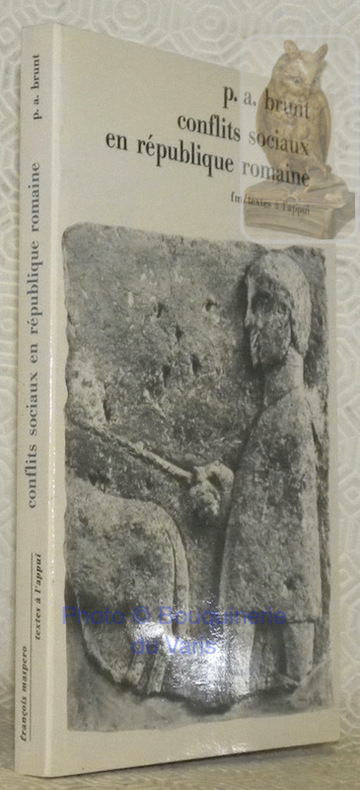
BRUNT, P. A.
Conflits sociaux en république romaine. Traduit de l’anglais par Micheline Legras-Wechsler. Collection Textes à l’appui.
Paris, François Maspero 1979, 220x135mm, 196pages, broché. Couverture à rabats. Bel exemplaire.
Referencia librero : 95428
|
|
|
Brunt, P. A.
ITALIAN MANPOWER 225 B.C.-A.D. 14
Light dustsoiling to top of textblock. Minor shelfwear to book. Dustjacket has edgewear with chipping and a few small tears. 1 large tear crudely repaired with cellotape. DJ spine is sunned. Rubbing to DJ. ; 1.92 x 9.1 x 6.94 Inches; 784 pages; This study of the size of the Italian population from 225 B. C. To A. D. 14 draws on early Roman census figures and yearly estimates of the number of men under arms to assess the nature of Italian emigration, the effects of wars and land settlements in the peninsula, and the economy of Cisalpine Gaul and other regions.
|
|
|
BRUSCHI Renato, RICCI Saverio (a cura di)
GAETANO FILANGIERI. Lo Stato secondo ragione. Mostra bibliografica e documentaria. Napoli, Palazzo Serra di Cassano, 18 Novembre - 20 Dicembre 1989. Roma, Biblioteca Nazionale Centrale, 29 Gennaio - 16 Febbraio 1990. Milano, Museo di Storia Contemporanea, 30 Novembre - 30 Dicembre 1991.
In-8 (cm. 22.50), brossura illustrata, pp. 225, (9), con illustrazioni in bianco e nero e a colori nel testo. In ottimo stato (nice copy).
|
|
|
BRUSTOLON Giambattista (Venezia 1716 – 1796)
Arco di Giano e San Giorgio al Velabro
Acquaforte e bulino, firmata in lastra in basso a destra. Da un disegno del Canaletto.Magnifica prova, impressa su carta vergata coeva con filigrana “tre mezze lune”, con ampi margini, in perfetto stato di conservazione. Il Museo Correr possiede una raccolta di quindici fogli raffiguranti vedute di Roma incise da Brustolon su disegno del Canaletto; il frontespizio, manoscritto, reca l’iscrizione Vari Prospetti di Roma Antica e Moderna. Il catalogo della tipografia Remondini del 1817 elenca sempre 15 soggetti “romani”. Tuttavia secondo il Moschini le vedute di Roma del Brustolon sarebbero addirittura venticinque. Rarissima. Etching and engraving, signed on lower right. After a drawing of Canaletto.Magnificent proof, printed on contemporary laid paper with "three crescents" watermark, wide margins, in perfect conditions.The Correr Museum owns a collection of fifteen sheets depicting views of Rome engraved by Brustolon after drawings of Canaletto; the front page, handwritten, bears the inscription Vari Prospetti di Roma Antica e Moderna. The 1817 catalogue of the typography of Remondini lists 15 “Roman” subjects; nonetheless, according to Meschini, Brustolon’s views of Rome are not less than twenty five. Very rare. Succi pagina 82.

|
|
|
BRUSTOLON Giambattista (Venezia 1716 – 1796)
Arco di Settimio Severo e Chiesa di Santa Martina
Acquaforte e bulino, firmata in lastra in basso a destra. Da un disegno del Canaletto.Magnifica prova, impressa su carta vergata coeva con filigrana “tre mezze lune”, con ampi margini, in perfetto stato di conservazione. Il Museo Correr possiede una raccolta di quindici fogli raffiguranti vedute di Roma incise da Brustolon su disegno del Canaletto; il frontespizio, manoscritto, reca l’iscrizione Vari Prospetti di Roma Antica e Moderna. Il catalogo della tipografia Remondini del 1817 elenca sempre 15 soggetti “romani”. Tuttavia secondo il Moschini le vedute di Roma del Brustolon sarebbero addirittura venticinque. Rarissima. Etching and engraving, signed on lower right plate. After a drawing of Canaletto.Magnificent proof, printed on contemporary laid paper with "three crescents" watermark, wide margins, in perfect conditions.The Correr Museum owns a collection of fifteen sheets depicting views of Rome engraved by Brustolon after drawings of Canaletto; the front page, handwritten, bears the inscription Vari Prospetti di Roma Antica e Moderna. The 1817 catalogue of the typography of Remondini lists 15 “Roman” subjects; nonetheless, according to Meschini, Brustolon’s views of Rome are not less than twenty five. Very rare. Succi pagina 82.

|
|
|
BRUSTOLON Giambattista (Venezia 1716 – 1796)
Circi maximi Thermarumque exhibentur prospiciendae ruinae
Acquaforte e bulino, firmata in lastra in basso a destra.Da un disegno del Canaletto.Magnifica prova, impressa su carta vergata coeva con filigrana “tre mezze lune”, con ampi margini, in perfetto stato di conservazione.Il Museo Correr possiede una raccolta di quindici fogli raffiguranti vedute di Roma incise da Brustolon su disegno del Canaletto; il frontespizio, manoscritto, reca l’iscrizione Vari Prospetti di Roma Antica e Moderna.Il catalogo della tipografia Remondini del 1817 elenca sempre 15 soggetti “romani”. Tuttavia secondo il Moschini le vedute di Roma del Brustolon sarebbero addirittura venticinque.Rarissima. Etching and engraving, signed on lower right. After a drawing of Canaletto.Magnificent proof, printed on contemporary laid paper with "three crescents" watermark, wide margins, in perfect conditions.The Correr Museum owns a collection of fifteen sheets depicting views of Rome engraved by Brustolon after drawings of Canaletto; the front page, handwritten, bears the inscription Vari Prospetti di Roma Antica e Moderna. The 1817 catalogue of the typography of Remondini lists 15 “Roman” subjects; nonetheless, according to Meschini, Brustolon’s views of Rome are not less than twenty five. Very rare.Etching and engraving, signed on lower right. After a drawing of Canaletto.Magnificent proof, printed on contemporary laid paper with "three crescents" watermark, wide margins, in perfect conditions.The Correr Museum owns a collection of fifteen sheets depicting views of Rome engraved by Brustolon after drawings of Canaletto; the front page, handwritten, bears the inscription Vari Prospetti di Roma Antica e Moderna. The 1817 catalogue of the typography of Remondini lists 15 “Roman” subjects; nonetheless, according to Meschini, Brustolon’s views of Rome are not less than twenty five. Very rare.Etching and engraving, signed on lower right. After a drawing of Canaletto.Magnificent proof, printed on contemporary laid paper with "three crescents" watermark, wide margins, in perfect conditions.The Correr Museum owns a collection of fifteen sheets depicting views of Rome engraved by Brustolon after drawings of Canaletto; the front page, handwritten, bears the inscription Vari Prospetti di Roma Antica e Moderna. The 1817 catalogue of the typography of Remondini lists 15 “Roman” subjects; nonetheless, according to Meschini, Brustolon’s views of Rome are not less than twenty five. Very rare.Etching and engraving, signed on lower right. After a drawing of Canaletto.Magnificent proof, printed on contemporary laid paper with "three crescents" watermark, wide margins, in perfect conditions.The Correr Museum owns a collection of fifteen sheets depicting views of Rome engraved by Brustolon after drawings of Canaletto; the front page, handwritten, bears the inscription Vari Prospetti di Roma Antica e Moderna. The 1817 catalogue of the typography of Remondini lists 15 “Roman” subjects; nonetheless, according to Meschini, Brustolon’s views of Rome are not less than twenty five. Very rare.Etching and engraving, signed on lower right. After a drawing of Canaletto.Magnificent proof, printed on contemporary laid paper with "three crescents" watermark, wide margins, in perfect conditions.The Correr Museum owns a collection of fifteen sheets depicting views of Rome engraved by Brustolon after drawings of Canaletto; the front page, handwritten, bears the inscription Vari Prospetti di Roma Antica e Moderna. The 1817 catalogue of the typography of Remondini lists 15 “Roman” subjects; nonetheless, according to Meschini, Brustolon’s views of Rome are not less than twenty five. Very rare.Etching and engraving, signed on lower right. After a drawing of Canaletto.Magnificent proof, printed on contemporary laid paper with "three crescents" watermark, wide margins, in perfect conditions.The Correr Museum owns a collection of fifteen sheets depicting views of Rome engraved by Brustolon after drawings of Canaletto; the front page, handwritten, bears the inscription Vari Prospetti di Roma Antica e Moderna. The 1817 catalogue of the typography of Remondini lists 15 “Roman” subjects; nonetheless, according to Meschini, Brustolon’s views of Rome are not less than twenty five. Very rare.Etching and engraving, signed on lower right. After a drawing of Canaletto.Magnificent proof, printed on contemporary laid paper with "three crescents" watermark, wide margins, in perfect conditions.The Correr Museum owns a collection of fifteen sheets depicting views of Rome engraved by Brustolon after drawings of Canaletto; the front page, handwritten, be...

|
|
|
BRUSTOLON Giambattista (Venezia 1716 – 1796)
Exterior Theatri Flavii Prospectus
Acquaforte e bulino, firmata in lastra in basso a destra.Da un disegno del Canaletto.Magnifica prova, impressa su carta vergata coeva con filigrana “tre mezze lune”, con ampi margini, in perfetto stato di conservazione.Il Museo Correr possiede una raccolta di quindici fogli raffiguranti vedute di Roma incise da Brustolon su disegno del Canaletto; il frontespizio, manoscritto, reca l’iscrizione Vari Prospetti di Roma Antica e Moderna.Il catalogo della tipografia Remondini del 1817 elenca sempre 15 soggetti “romani”. Tuttavia secondo il Moschini le vedute di Roma del Brustolon sarebbero addirittura venticinque.Rarissima. Etching and engraving, signed on lower right. After a drawing of Canaletto.Magnificent proof, printed on contemporary laid paper with "three crescents" watermark, wide margins, in perfect conditions.The Correr Museum owns a collection of fifteen sheets depicting views of Rome engraved by Brustolon after drawings of Canaletto; the front page, handwritten, bears the inscription Vari Prospetti di Roma Antica e Moderna. The 1817 catalogue of the typography of Remondini lists 15 “Roman” subjects; nonetheless, according to Meschini, Brustolon’s views of Rome are not less than twenty five. Very rare.Etching and engraving, signed on lower right. After a drawing of Canaletto.Magnificent proof, printed on contemporary laid paper with "three crescents" watermark, wide margins, in perfect conditions.The Correr Museum owns a collection of fifteen sheets depicting views of Rome engraved by Brustolon after drawings of Canaletto; the front page, handwritten, bears the inscription Vari Prospetti di Roma Antica e Moderna. The 1817 catalogue of the typography of Remondini lists 15 “Roman” subjects; nonetheless, according to Meschini, Brustolon’s views of Rome are not less than twenty five. Very rare.Etching and engraving, signed on lower right. After a drawing of Canaletto.Magnificent proof, printed on contemporary laid paper with "three crescents" watermark, wide margins, in perfect conditions.The Correr Museum owns a collection of fifteen sheets depicting views of Rome engraved by Brustolon after drawings of Canaletto; the front page, handwritten, bears the inscription Vari Prospetti di Roma Antica e Moderna. The 1817 catalogue of the typography of Remondini lists 15 “Roman” subjects; nonetheless, according to Meschini, Brustolon’s views of Rome are not less than twenty five. Very rare.Etching and engraving, signed on lower right. After a drawing of Canaletto.Magnificent proof, printed on contemporary laid paper with "three crescents" watermark, wide margins, in perfect conditions.The Correr Museum owns a collection of fifteen sheets depicting views of Rome engraved by Brustolon after drawings of Canaletto; the front page, handwritten, bears the inscription Vari Prospetti di Roma Antica e Moderna. The 1817 catalogue of the typography of Remondini lists 15 “Roman” subjects; nonetheless, according to Meschini, Brustolon’s views of Rome are not less than twenty five. Very rare.Etching and engraving, signed on lower right. After a drawing of Canaletto.Magnificent proof, printed on contemporary laid paper with "three crescents" watermark, wide margins, in perfect conditions.The Correr Museum owns a collection of fifteen sheets depicting views of Rome engraved by Brustolon after drawings of Canaletto; the front page, handwritten, bears the inscription Vari Prospetti di Roma Antica e Moderna. The 1817 catalogue of the typography of Remondini lists 15 “Roman” subjects; nonetheless, according to Meschini, Brustolon’s views of Rome are not less than twenty five. Very rare.Etching and engraving, signed on lower right. After a drawing of Canaletto.Magnificent proof, printed on contemporary laid paper with "three crescents" watermark, wide margins, in perfect conditions.The Correr Museum owns a collection of fifteen sheets depicting views of Rome engraved by Brustolon after drawings of Canaletto; the front page, handwritten, bears the inscription Vari Prospetti di Roma Antica e Moderna. The 1817 catalogue of the typography of Remondini lists 15 “Roman” subjects; nonetheless, according to Meschini, Brustolon’s views of Rome are not less than twenty five. Very rare.Etching and engraving, signed on lower right. After a drawing of Canaletto.Magnificent proof, printed on contemporary laid paper with "three crescents" watermark, wide margins, in perfect conditions.The Correr Museum owns a collection of fifteen sheets depicting views of Rome engraved by Brustolon after drawings of Canaletto; the front page, handwritten, be...

|
|
|

 Recibir por correo electrónico
 Descargar en documento PDF
 Flujo RSS
 Link permanente


