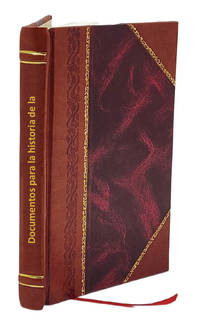
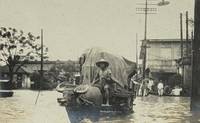
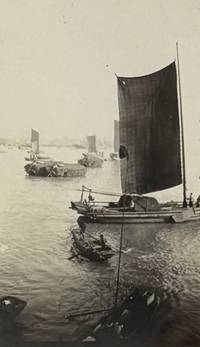
2020. Leather Bound. New. Size: 14.60 x 22.86 cms Presenting an Exquisite Leather-Bound Edition expertly crafted by the prestigious organization “Rare Biblio” with Original Natural Leather that gracefully adorns the spine and corners. The allure continues with Golden Leaf Printing that adds a touch of elegance while Hand Embossing on the rounded spine lends an artistic flair. This masterpiece has been meticulously reprinted in 2020 utilizing the invaluable guidance of the original edition published many years ago in 1899. The contents of this book are presented in classic black and white. Its durability is ensured through a meticulous sewing binding technique enhancing its longevity. Imprinted on top-tier quality paper. A team of professionals has expertly processed each page delicately preserving its content without alteration. Due to the vintage nature of these books every page has been manually restored for legibility. However in certain instances occasional blurriness missing segments or faint black spots might persist. We sincerely hope for your understanding of the challenges we faced with these books. Recognizing their significance for readers seeking insight into our historical treasure we've diligently restored and reissued them. Our intention is to offer this valuable resource once again. We eagerly await your feedback hoping that you'll find it appealing and will generously share your thoughts and recommendations. Lang: - Spanish Pages:- 53. If it is a multi-volume set then it is only a single volume. Product Disclaimer: Kindly be informed that owing to the inherent nature of leather as a natural material minor discolorations or textural variations may be perceptible. Explore the FOLIO EDITION 12x19 Inches: Available Upon Request. hardcover
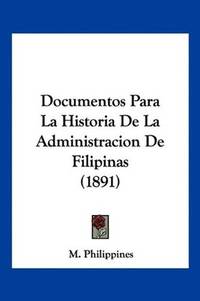
Komisyon ng Wikang Filipino 1998. Unknown. Like New. Pages are clean and are not marred by notes or folds of any kind. ~ ThriftBooks: Read More Spend Less.Dust jacket quality is not guaranteed. Komisyon ng Wikang Filipino unknown
Referenz des Buchhändlers : G9718705325I2N00 ISBN : 9718705325 9789718705322
2021. Leather Bound. New. Size: 14.60 x 22.86 cms This book is available in 5 different Leather color without any extra cost. Explore More Options by Clicking on 'More Images' and Notify Us of Your Choice via Email within 24 hours of placing the order. Presenting an Exquisite Leather-Bound Edition expertly crafted by the prestigious organization “Rare Biblio” with Original Natural Leather that gracefully adorns the spine and corners. The allure continues with Golden Leaf Printing that adds a touch of elegance while Hand Embossing on the rounded spine lends an artistic flair. This masterpiece has been meticulously reprinted in 2021 utilizing the invaluable guidance of the original edition published many years ago in 1891. The contents of this book are presented in classic black and white. Its durability is ensured through a meticulous sewing binding technique enhancing its longevity. Imprinted on top-tier quality paper. A team of professionals has expertly processed each page delicately preserving its content without alteration. Due to the vintage nature of these books every page has been manually restored for legibility. However in certain instances occasional blurriness missing segments or faint black spots might persist. We sincerely hope for your understanding of the challenges we faced with these books. Recognizing their significance for readers seeking insight into our historical treasure we've diligently restored and reissued them. Our intention is to offer this valuable resource once again. We eagerly await your feedback hoping that you'll find it appealing and will generously share your thoughts and recommendations. Lang: - spa Vol:- Pages:- 195 If it is a multi-volume set then it is only a single volume. Product Disclaimer: Kindly be informed that owing to the inherent nature of leather as a natural material minor discolorations or textural variations may be perceptible. Explore the FOLIO EDITION 12x19 Inches: Available Upon Request. hardcover
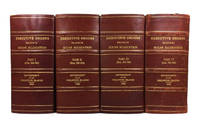
Manila: Bureau of Printing 1936. Hardcover. Very Good. Parts 1-4 in 4 vols. Red 1/2 leather with marbled boards. 19cm. Edges rubbed. No Jackets. These four very thick volumes contain Executive Orders Nos. 543-895; each Executive Order is separately paginated. Bureau of Printing hardcover
All volumes near fine in blue cloth. First editions thus. Consisting of the following: Volume 1: GIRONIERE PAUL DE LA. Twenty Years in the Philippines. Frontispiece is "Una Mestiza de Manila" with tissue guard intact. 1962. Volume 2: CARERI GIOVANNI FRANCESCO GEMELLI. A Voyage to the Philippines. Frontispiece is a water color by Alfredo Carmelo b.1896 depicting Manila galleons moored at the mouth of the Pasig River. 1963. Volume 3: BOWRING SIR JOHN. A Visit To The Philippine Islands. Frontispiece is a black and white portrait of Bowring. 1963. Volume 4: SALEEBY NAJEEB M. The History of Sulu. Frontispiece is black and white photo of Saleeby. 1963. The Filipiniana Book Guild publications expanded to 24 volumes in the first series. These first four volumes are extremely rare. The Princeton library has all volumes except these four. Only digital copies are located in the National Archives of the Philippines. Manila, Philippines, Filipiniana Book Guild, 1962-1963. hardcover
<p>Oblong Quarto album ca.18x29 cm. 38 paper album leaves 19 blank . With ca. 90 mounted original gelatin silver photographs and 2 postcards from ca. 14x85 cm 5 ½x3¼ in to ca. 109x65 cm 4 ¼ x 2½ in. Some photos with period caption in negative citing ‘Banzon photos’ likely a local studio the others without captions. </p><p>Two Real Photo Color Postcards in The Collection Show the Subano Women and Nagasaki View. Both are mounted with a strong glue the previous owner tried to un-glue one to reveal the signature ‘P.J.’ possible date ‘1919’ and readdress ‘To U.S.N.Radio Station’. Other images might be captioned at the back this is subject to further research. The Tatoosh group of photos are loose one of them captioned ‘This is the most lonesome place in the world’. Binding worn several photos missing few images loose one of the postcards with tears but otherwise a very good album of strong interesting photos.</p><p>Historically important collection of original photographs illustrating the life of American Navy Officer Serving at Navy Radio Station in Washington and Philippines. He likely received his training at Tatoosh before being sent to Philippines. Tatoosh station existed since late 1900s being one of the first Island Naval Radio Stations on West Coast following the first station on Mare Island that has been established in 1904. The album is divided into three group of photos the first one being from WA the second - from Philippines one of them dated in negative as of 1913 which suggests the arrival of the officer to Philippines around that time or in late 1910s. The same group of photos are taken in variety of places in the Philippines but already include a number of photos of Las Baños including the panorama of Los Baños Laguna with U.S. Ambulance & Signal Corp Camp Eldridge on it. The image of thecamp is a good verification for the dating of the photos of the first group: it has been photographed in a very early stage of its establishment while later photos from before Japanese invasion show more buildings and more developed territory. This group of photos which are larger include 17 images.</p><p>The third group of photos is dedicated entirely to Las Baños its radio facilities and the life of the officer: his home his wife his friends the locals he has photographed. In this series the photographer is likely climbed one of the radio towers and took aerial shots in the process of his climb as well as from the top. As a result a series of photographed has survived showing the laguna and the operation in Los Baños in the early stage.</p><p>US Naval Radio Control Station was built in 1917 including three 600' towers by 1930 it was operating at a significant capacity as the photos published by navy-radio <a href= "https://www.navy-radio.com/commsta/los-banos.htm ">website demonstrate.</a></p><p>It is likely our group of photos is taken earlier as the territory shown on the photos from 1930 is developed more significantly and the pathway to operation building and the gate is not constructed yet. were built in 1917 - one destroyed in 1941 attack two demolished in 1945.</p><p>1920s was the early days for US Navy Communication Stations abroad the US: in 1924 there was a shore-based site at Shanghai as early as 1924 but its operations had been shifted to the USS General Alva in 1927; Guam in 1929 had one-person intercept site. Oahu had two stations established in 1924 and 1925.</p><p>The precent station in Los Baños probably was playing a significant role in the region. Civilian radio in the Philippines started in June 1922 with the establishment of KZKZ AM in Manila Philippines by Henry Herman Sr. owner of the Electrical Supply Company in Manila.</p><p>One radio tower destroyed in 1941 attack two demolished in 1945. During Japanese occupation Los Baños became known for an agricultural school campus turned Japanese internment camp. In famous ‘Raid on Los Baños’ United States Army Airborne and Filipino guerrilla task force have liberated 2147 Allied civilian and military internees from the camp. Likely the operation affected the Radio Control Station that was not re-started after 1945. </p><p>Overall an important photographic evidence of the US Navy Radio operations in the Pacific. </p> unknown
<p>Oblong Folio album ca. 275x365 cm or 11x14 in. 25 card stock leaves 11 blank. With 128 mounted original gelatin silver photographs from ca. 10x125 cm 4x5 in to ca. 65x11 cm 2 ½ x 4 ¼ in. All but two photos with period ink manuscript captions on the margins. With two mounted postcards one real photo and one printed both ca. 85x135 cm 3 ¼ x 5 ¼ in both with studio captions on the margins. The printed postcard with a period manuscript text and address on verso. Period Japanese lacquered album with a brown gilt-tooled spine. The front board with a gilt-painted scene showing a rickshaw driver carrying a geisha and a typical Japanese landscape in the background Mount Fuji sea coast with boars and a temple a Japanese pine &c.; the scene is decorated with pieces of mother-of-pearl. Binding slightly rubbed on extremities several images with creases on the margins one with a minor tear two photos possibly previously removed from the album a few photos mildly faded but overall a very good album of interesting photos.</p><p>Historically significant collection of original gelatin silver snapshot photographs taken by a U.S. military medical officer who served in the Sternberg General Hospital in Manila Philippines in the late 1930s. Named after U.S. Army Surgeon General George Sternberg in 1920 the hospital was the main U.S. military medical facility in the Philippines until it was destroyed during WW2.</p><p>Compiled in the years leading to WW2 apparently between 1937 and 1939 the album contains about ninety photos of the Philippines – mostly Manila and its environs. A series of images related to Sternberg General Hospital includes views of its grounds and facilities two photos of a Christmas tree inside the hospital lab where the compiler most likely worked three group portraits of the members of “basketball team Sternberg Gen. Hospital” and an individual portrait of the team member captioned “Gilchrist Sternberg Gen. Hospital.” Several photos portray the compiler’s friends and colleagues in Manila: “Harvey G. Thomas” “Yeager” and “Edward G. Ziel” “in courtyard at Sternberg” “in Lab window Sternberg” on board the Japanese steamer “M.S. Chichibu Maru” – renamed “Kamakura Maru” in 1939 &c.</p><p>The photos of Manila show the “dock where or boats tied up” “old tin church” San Sebastian Basilica built in 1891 the only steel building church in the Philippines Manila Bay featuring Manila Hotel and Government Buildings naval ships and tankers in the harbour Intramuros District general views “part of old wall” San Agustin Church “street inside old Manila” five views of “old Spanish ruins” actually ruins of the Nuestra Senora de Gracia Church in modern-day Makati City Metro Manila burned during the initial skirmishes of the Philippine-American War in 1899 Manila cemetery “burial crypts Manila” “vaults in cemetery Manila” “monument in Manila” “street scenes in Philippines” “stone quarry not far from Manila P.I.” &c.</p><p>Very interesting are a dozen photos of the American military installations in Manila Bay. The images show artillery guns in “Fort Drum entrance to Manila Bay” El Fraile Island and a series of views of Corregidor Island facilities Parade Grounds military barracks “buildings on Corregidor” artillery guns and personnel “14” disappearing gun”.</p><p>The album also contains about twenty-five photos of the U.S. hill station of Baguio in central Luzon Island including several views taken from the train on the way to town railway station in Damortis and others images of “Army Hospital at Baguio” bungalows rooftops and famous local pines “scene from road to Antamoc mine near Baguio” Antamok gold mine near Itogon town southwest of Baguio “Filipino dwellings Antamoc gold mine near Baguio” three photos of traditional Filipino burial sites with the remains laid in between tree branches or special structures on the mountain side mountainous scenery &c. Five images portray native Filipino women and girls in traditional outfits “Ifugao girl” “native washing clothes” “Filipino girls” &c.</p><p>The album closes with thirty-six photos of Chinese port cities of Shanghai and Chingwangtao Qinhuangdao Bohai Sea taken during the compiler’s voyage on board the USAT “U.S. Grant” after the beginning of the Second Sino-Japanese War 1937-45 and Japanese capture of Shanghai November 1937. A series of views of the Yangtze River taken from the deck of the “U.S. Grant” in Shanghai shows Japanese war and transport ships “Jap soldiers on river bank Shanghai” ruins of Zhabei district destroyed during the Battle of Shanghai “ruins of Chapei district Shanghai” “Chapei section of Shanghai showing shell craters & ruined blds.” &c. Chinese sail and merchant boats International Settlement seen from the river &c. At least two images feature “U.S. Grant’s” lifebuoy with the name of the ship on it. There are also views of the “Dollar Lines dock Shanghai Chinese laborers fighting for money thrown on dock” a closer view of the International Settlement with a docked naval cruiser a city street &. Very interesting are seven snapshot photos taken during the ship’s stop in Chingwangtao showing “merchants near dock” four street scenes and two scenes with U.S. soldiers during “a few minutes rest on hike near Chingwangtao China.”</p><p>Overall a historically significant original visual source on the history of the U.S. military in Manila shortly before WW2 and the Japanese occupation of Shanghai in 1937-1945.</p> hardcover

 Per e-mail erhalten
 Als pdf-Dokument herunterladen
 RSS feed
 Permanenter link