|
Jean-Baptiste Prosper JOLLOIS - Edouard DEVILLIERS (delineavit) - COQUET
DESCRIPTION DE L'EGYPTE. Esné Latopolis. Plans et élévations de six chapiteaux du portique. ANTIQUITES volume I planche 76
Paris: Imprimerie Impériale 1809. Fine. Imprimerie Impériale Paris 1809-1829 54 x 71 cm une feuille Original unshaved full-page etching from the Imperial edition of the Description de l'Égypte or Recueil des observations et recherches faites en Égypte pendant l'expédition française publié par les ordres de Sa Majesté l'Empereur Napoléon le Grand A Collection of the observations and research carried out in Egypt during the French expedition published on the orders of his Majesty the Emperor Napoleon the Great'.Produced between February 1802 and 1830 on the orders of Naopleon Bonaparte and published between 1809 and 1828 1000 copies were printed and distributed to institutions on vergé paper with an 'Égypte ancienne et moderne' watermark visible when held up to the light. Light marginal spotting not touching image otherwise in very fresh fine condition. An engraving from the Description de l'Egypte one of the masterpieces of French printing and the birth of a new field: Egyptology. A gigantic survey of Egypt at the time of Bonaparte's conquests in 1798 and 1799 the work is divided into 13 volumes of engravings making up 892 plates of which 72 colored as well as presenting the splendors of the Egypt of the Pharaohs in 9 volumes. The other volumes discuss natural history and present a fascinating portrait of Coptic and Islamic Egypt as it was seen by Bonaparte's Eastern Armies. The Egyptian campaign' militarily a disaster demonstrates through the engravings of the Description d'Egypte the scientific success it nonetheless became thanks to the 167 expert members of the Commission of the Sciences and Arts of the Institut d'Egypte Egyptian Institute who followed Napoleon's army. The Institut gathered together in Egypt the mathematician Monge the chemist Berthollet the naturalist Geoffroy Saint-Hilaire as well as numerous artists engineers architects and doctors. They were tasked with re-discovering modern and ancient Egypt and displaying its natural treasures as well as the know-how of its inhabitants.This edition the so-called Imperial edition of the plates for the Description de l'Egypte was printed in four large formats two of which were specially created for it and christened Moyen-Egypte and Grand-Egypte. A special press was built to print it the process extending over 20 years from 1809 to 1829. The Imperial edition proved so popular that a second edition this time in black and white and without the Egypte ancienne et moderne watermark known as the Royal Edition was published during the Restoration by the printing house of C.-L.-F. Panckoucke Paris.The engravings of the Description d'Egypte owe a great deal to Baron Dominique-Vivant Denon illustrator diplomat collector and later Director of the Musée Napoléon the Louvre. His exploration of the South of Egypt gave Bonaparte the idea of sending the experts of the Institut there thus creating a faithful and complete portrait of the area. This was the research gathered together from 1802 in the mammoth Description de L'Egypte.Denon embarked on this story of archeological exploration at the age of 51 reaching first Alexandria and then Cairo before exploring Upper Egypt. Along with the members of the Institut d'Egypte the Natural History Museum's painter H.J. Redouté brother of Pierre-Joseph Redouté author of Roses the mineralogist Dolomiue and the draughtsman Joly Denon then explored the Nile Delta and Lower Egypt. When however he joined the 21st Light Infantry Regiment as it marched across Upper Egypt in pursuit of the retreating Mameluks in November 1798 he found himself the only civilian. In the very midst of the battle itself he reeled off sketches of the works of art that peppered his path right up to the threshold of the Sudan. He said that he had crossed a country that is apart from its name entirely unknown to Europeans and therefore everything was worth describing Voyages dans la Basse et la Haute Egypte pendant les campagnes de Imprimerie Impériale unknown
Referencia librero : 25838

|
|
|
Jean-Baptiste Prosper JOLLOIS - FAYE (delineavit) - Louis-Alexandre DE BUIGNE
DESCRIPTION DE L'EGYPTE. Rosette et environs. Plans élévations et détails de plusieurs maisons de Rosette & Vues de plusieurs tombeaux des environs. ETAT MODERNE volume I planche 82
Paris: Imprimerie Impériale 1809. Fine. Imprimerie Impériale Paris 1809-1829 70 x 53.50 cm une feuille Original unshaved full-page etching from the Imperial edition of the Description de l'Égypte or Recueil des observations et recherches faites en Égypte pendant l'expédition française publié par les ordres de Sa Majesté l'Empereur Napoléon le Grand A Collection of the observations and research carried out in Egypt during the French expedition published on the orders of his Majesty the Emperor Napoleon the Great'.Produced between February 1802 and 1830 on the orders of Naopleon Bonaparte and published between 1809 and 1828 1000 copies were printed and distributed to institutions on vergé paper with an 'Égypte ancienne et moderne' watermark visible when held up to the light. Light marginal spotting not touching image otherwise in very fresh fine condition. An engraving from the Description de l'Egypte one of the masterpieces of French printing and the birth of a new field: Egyptology. A gigantic survey of Egypt at the time of Bonaparte's conquests in 1798 and 1799 the work is divided into 13 volumes of engravings making up 892 plates of which 72 colored as well as presenting the splendors of the Egypt of the Pharaohs in 9 volumes. The other volumes discuss natural history and present a fascinating portrait of Coptic and Islamic Egypt as it was seen by Bonaparte's Eastern Armies. The Egyptian campaign' militarily a disaster demonstrates through the engravings of the Description d'Egypte the scientific success it nonetheless became thanks to the 167 expert members of the Commission of the Sciences and Arts of the Institut d'Egypte Egyptian Institute who followed Napoleon's army. The Institut gathered together in Egypt the mathematician Monge the chemist Berthollet the naturalist Geoffroy Saint-Hilaire as well as numerous artists engineers architects and doctors. They were tasked with re-discovering modern and ancient Egypt and displaying its natural treasures as well as the know-how of its inhabitants.This edition the so-called Imperial edition of the plates for the Description de l'Egypte was printed in four large formats two of which were specially created for it and christened Moyen-Egypte and Grand-Egypte. A special press was built to print it the process extending over 20 years from 1809 to 1829. The Imperial edition proved so popular that a second edition this time in black and white and without the Egypte ancienne et moderne watermark known as the Royal Edition was published during the Restoration by the printing house of C.-L.-F. Panckoucke Paris.The engravings of the Description d'Egypte owe a great deal to Baron Dominique-Vivant Denon illustrator diplomat collector and later Director of the Musée Napoléon the Louvre. His exploration of the South of Egypt gave Bonaparte the idea of sending the experts of the Institut there thus creating a faithful and complete portrait of the area. This was the research gathered together from 1802 in the mammoth Description de L'Egypte.Denon embarked on this story of archeological exploration at the age of 51 reaching first Alexandria and then Cairo before exploring Upper Egypt. Along with the members of the Institut d'Egypte the Natural History Museum's painter H.J. Redouté brother of Pierre-Joseph Redouté author of Roses the mineralogist Dolomiue and the draughtsman Joly Denon then explored the Nile Delta and Lower Egypt. When however he joined the 21st Light Infantry Regiment as it marched across Upper Egypt in pursuit of the retreating Mameluks in November 1798 he found himself the only civilian. In the very midst of the battle itself he reeled off sketches of the works of art that peppered his path right up to the threshold of the Sudan. He said that he had crossed a country that is apart from its name entirely unknown to Europeans and therefore everything was worth describing Voyages dans la Basse et la Haute Egypte pendant les campagnes Imprimerie Impériale unknown
Referencia librero : 25443

|
|
|
Jean-Baptiste Prosper JOLLOIS - Edouard DEVILLIERS (delineavit) - SCHROEDER (sculpsit)
DESCRIPTION DE L'EGYPTE. Ile de Philae. Détails de coiffures symboliques Plan et élévation d'un petit portique à l'est du grand temple Plan élévation coupe et vue perspective d'une construction romaine. ANTIQUITES volume I planche 29
Paris: Imprimerie Impériale 1809. Fine. Imprimerie Impériale Paris 1809-1829 54 x 71 cm une feuille Original unshaved full-page etching from the Imperial edition of the Description de l'Égypte or Recueil des observations et recherches faites en Égypte pendant l'expédition française publié par les ordres de Sa Majesté l'Empereur Napoléon le Grand A Collection of the observations and research carried out in Egypt during the French expedition published on the orders of his Majesty the Emperor Napoleon the Great'.Produced between February 1802 and 1830 on the orders of Naopleon Bonaparte and published between 1809 and 1828 1000 copies were printed and distributed to institutions on vergé paper with an 'Égypte ancienne et moderne' watermark visible when held up to the light. Light marginal spotting not touching image otherwise in very fresh fine condition. An engraving from the Description de l'Egypte one of the masterpieces of French printing and the birth of a new field: Egyptology. A gigantic survey of Egypt at the time of Bonaparte's conquests in 1798 and 1799 the work is divided into 13 volumes of engravings making up 892 plates of which 72 colored as well as presenting the splendors of the Egypt of the Pharaohs in 9 volumes. The other volumes discuss natural history and present a fascinating portrait of Coptic and Islamic Egypt as it was seen by Bonaparte's Eastern Armies. The Egyptian campaign' militarily a disaster demonstrates through the engravings of the Description d'Egypte the scientific success it nonetheless became thanks to the 167 expert members of the Commission of the Sciences and Arts of the Institut d'Egypte Egyptian Institute who followed Napoleon's army. The Institut gathered together in Egypt the mathematician Monge the chemist Berthollet the naturalist Geoffroy Saint-Hilaire as well as numerous artists engineers architects and doctors. They were tasked with re-discovering modern and ancient Egypt and displaying its natural treasures as well as the know-how of its inhabitants.This edition the so-called Imperial edition of the plates for the Description de l'Egypte was printed in four large formats two of which were specially created for it and christened Moyen-Egypte and Grand-Egypte. A special press was built to print it the process extending over 20 years from 1809 to 1829. The Imperial edition proved so popular that a second edition this time in black and white and without the Egypte ancienne et moderne watermark known as the Royal Edition was published during the Restoration by the printing house of C.-L.-F. Panckoucke Paris.The engravings of the Description d'Egypte owe a great deal to Baron Dominique-Vivant Denon illustrator diplomat collector and later Director of the Musée Napoléon the Louvre. His exploration of the South of Egypt gave Bonaparte the idea of sending the experts of the Institut there thus creating a faithful and complete portrait of the area. This was the research gathered together from 1802 in the mammoth Description de L'Egypte.Denon embarked on this story of archeological exploration at the age of 51 reaching first Alexandria and then Cairo before exploring Upper Egypt. Along with the members of the Institut d'Egypte the Natural History Museum's painter H.J. Redouté brother of Pierre-Joseph Redouté author of Roses the mineralogist Dolomiue and the draughtsman Joly Denon then explored the Nile Delta and Lower Egypt. When however he joined the 21st Light Infantry Regiment as it marched across Upper Egypt in pursuit of the retreating Mameluks in November 1798 he found himself the only civilian. In the very midst of the battle itself he reeled off sketches of the works of art that peppered his path right up to the threshold of the Sudan. He said that he had crossed a country that is apart from its name entirely unknown to Europeans and therefore everything was worth describing Voyages dans la Basse et la Haute Egypte pendant les campagnes de Imprimerie Impériale unknown
Referencia librero : 25938

|
|
|
Jean-Baptiste Prosper JOLLOIS - Edouard DEVILLIERS (delineavit) - BENOIST (sculpsit)
DESCRIPTION DE L'EGYPTE. Edfou Apollinopolis magna. Détails d'architecture du grand temple. ANTIQUITES volume I planche 56
Paris: Imprimerie Impériale 1809. Fine. Imprimerie Impériale Paris 1809-1829 71 x 54 cm une feuille Original unshaved full-page etching from the Imperial edition of the Description de l'Égypte or Recueil des observations et recherches faites en Égypte pendant l'expédition française publié par les ordres de Sa Majesté l'Empereur Napoléon le Grand A Collection of the observations and research carried out in Egypt during the French expedition published on the orders of his Majesty the Emperor Napoleon the Great'.Produced between February 1802 and 1830 on the orders of Naopleon Bonaparte and published between 1809 and 1828 1000 copies were printed and distributed to institutions on vergé paper with an 'Égypte ancienne et moderne' watermark visible when held up to the light. Light marginal spotting not touching image otherwise in very fresh fine condition. An engraving from the Description de l'Egypte one of the masterpieces of French printing and the birth of a new field: Egyptology. A gigantic survey of Egypt at the time of Bonaparte's conquests in 1798 and 1799 the work is divided into 13 volumes of engravings making up 892 plates of which 72 colored as well as presenting the splendors of the Egypt of the Pharaohs in 9 volumes. The other volumes discuss natural history and present a fascinating portrait of Coptic and Islamic Egypt as it was seen by Bonaparte's Eastern Armies. The Egyptian campaign' militarily a disaster demonstrates through the engravings of the Description d'Egypte the scientific success it nonetheless became thanks to the 167 expert members of the Commission of the Sciences and Arts of the Institut d'Egypte Egyptian Institute who followed Napoleon's army. The Institut gathered together in Egypt the mathematician Monge the chemist Berthollet the naturalist Geoffroy Saint-Hilaire as well as numerous artists engineers architects and doctors. They were tasked with re-discovering modern and ancient Egypt and displaying its natural treasures as well as the know-how of its inhabitants.This edition the so-called Imperial edition of the plates for the Description de l'Egypte was printed in four large formats two of which were specially created for it and christened Moyen-Egypte and Grand-Egypte. A special press was built to print it the process extending over 20 years from 1809 to 1829. The Imperial edition proved so popular that a second edition this time in black and white and without the Egypte ancienne et moderne watermark known as the Royal Edition was published during the Restoration by the printing house of C.-L.-F. Panckoucke Paris.The engravings of the Description d'Egypte owe a great deal to Baron Dominique-Vivant Denon illustrator diplomat collector and later Director of the Musée Napoléon the Louvre. His exploration of the South of Egypt gave Bonaparte the idea of sending the experts of the Institut there thus creating a faithful and complete portrait of the area. This was the research gathered together from 1802 in the mammoth Description de L'Egypte.Denon embarked on this story of archeological exploration at the age of 51 reaching first Alexandria and then Cairo before exploring Upper Egypt. Along with the members of the Institut d'Egypte the Natural History Museum's painter H.J. Redouté brother of Pierre-Joseph Redouté author of Roses the mineralogist Dolomiue and the draughtsman Joly Denon then explored the Nile Delta and Lower Egypt. When however he joined the 21st Light Infantry Regiment as it marched across Upper Egypt in pursuit of the retreating Mameluks in November 1798 he found himself the only civilian. In the very midst of the battle itself he reeled off sketches of the works of art that peppered his path right up to the threshold of the Sudan. He said that he had crossed a country that is apart from its name entirely unknown to Europeans and therefore everything was worth describing Voyages dans la Basse et la Haute Egypte pendant les campagnes de Imprimerie Impériale unknown
Referencia librero : 25904

|
|
|
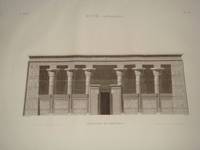
Jean-Baptiste Prosper JOLLOIS - Edouard DEVILLIERS (delineavit) - LOUVET (sculpsit)
DESCRIPTION DE L'EGYPTE. Esné Latopolis. Élévation du portique. ANTIQUITES volume I planche 73
Paris: Imprimerie Impériale 1809. Fine. Imprimerie Impériale Paris 1809-1829 71 x 54 cm une feuille Original etching in plano uncut from the ""Imperial"" edition of the Description de l'Égypte ou Recueil des observations et recherches faites en Égypte pendant l'expédition française publié par les ordres de Sa Majesté l'Empereur Napoléon le Grand. Produced between February 1802 and 1829 by order of Napoleon Bonaparte and published from 1809 actually 1810 it was printed in 1000 copies on watermarked laid paper ""Égypte ancienne et moderne"" and presented to institutions. Minor and marginal worming with no damage to the engraving otherwise excellent fresh condition and preservation. ESNA AND ITS SURROUNDINGS: The city of Esna Esneh or Latopolis at the time of Bonaparte is located fifty kilometers south of Luxor. The scholars of the Institute document their discovery of its temple dedicated to Khnum the creator god potter with a ram's head responsible for the life-saving floods of the Nile bringing fertility. He is associated with Nebout mistress of the Countryside and Menhyt a lioness-headed goddess. This temple partially reconstructed in the Ptolemaic period was embellished until the reign of Tiberius. The draughtsmen also produced numerous views of neighboring temples notably the smaller temple of Contra-Latopolis north of Esna. Volume ANTIQUITIES I: These engravings provided Jean-François Champollion with fundamental epigraphic documentation for deciphering hieroglyphs and inspired a lineage of archaeologists like Mariette Maspero and Carter who gave a new face to ancient Egypt. They aroused such enthusiasm that they gave birth to the phenomenon of Egyptomania and to the orientalism of Delacroix Fromentin Marilhat Decamps but also Théophile Gautier. Financiers politicians merchants and diggers of all kinds would flock to the banks of the Nile in search of good business following this rediscovery of Egypt. At the origin of Egyptology these plates would have an immense posterity. THE DESCRIPTION OF EGYPT IMPERIAL edition 1809-1829: La Description de l'Egypte is one of the masterpieces of French publishing and the starting point of a new science: Egyptology. A titanic exposition of Egypt at the time of Bonaparte's conquests between 1798 and 1799 it is divided into 23 volumes including 13 volumes of engravings gathering nearly 1000 plates in black and 72 in color. The 6 volumes of plates entitled Antiquités are devoted to the splendors of pharaonic Egypt. L'Histoire naturelle is divided into 3 volumes of engravings. One volume is devoted to Cartes géographiques et topographiques while the 3 volumes : Etat Moderne present a striking portrait of Coptic and Islamic Egypt as it was seen by Bonaparte's armies of the Orient. The ""Egyptian campaign"" military disaster reveals through the engravings of the Description de l'Egypte the scientific success it became thanks to the some 167 scholars members of the Commission of sciences and arts of the Institute of Egypt who followed Napoleon's army. The Institute brought together in Egypt the mathematician Monge the chemist Berthollet the naturalist Geoffroy Saint-Hilaire as well as numerous artists engineers architects doctors. They were charged with rediscovering modern and ancient Egypt showing its natural riches and the know-how of its inhabitants. The first edition called ""Imperial"" of the Description de l'Egypte was produced in four large formats two of them specially created for it and named ""Moyen-Egypte"" and ""Grand-Egypte"" formats. A specific press was built for its printing which stretched over twenty years between 1809 and 1829. The Imperial edition proved so popular that a second edition in 37 volumes entirely in black and without the ""Egypte ancienne et moderne"" watermark called the ""Panckoucke"" edition was published from 1821 by the C.-L.-F. Panckoucke printing house Paris. The realization of this monument of erudition owes much to Baron Dominique Vivan Imprimerie Impériale unknown
Referencia librero : 25840
|
|
|
Jean-Baptiste Prosper JOLLOIS - Edouard DEVILLIERS (delineavit) - COQUET
DESCRIPTION DE L'EGYPTE. Détails du chapiteau du temple de l'ouest. ANTIQUITES volume I planche 21
Paris: Imprimerie Impériale 1809. Fine. Imprimerie Impériale Paris 1809-1829 54 x 71 cm une feuille Original unshaved full-page etching from the Imperial edition of the Description de l'Égypte or Recueil des observations et recherches faites en Égypte pendant l'expédition française publié par les ordres de Sa Majesté l'Empereur Napoléon le Grand A Collection of the observations and research carried out in Egypt during the French expedition published on the orders of his Majesty the Emperor Napoleon the Great'.Produced between February 1802 and 1830 on the orders of Naopleon Bonaparte and published between 1809 and 1828 1000 copies were printed and distributed to institutions on vergé paper with an 'Égypte ancienne et moderne' watermark visible when held up to the light. Light marginal spotting not touching image otherwise in very fresh fine condition. An engraving from the Description de l'Egypte one of the masterpieces of French printing and the birth of a new field: Egyptology. A gigantic survey of Egypt at the time of Bonaparte's conquests in 1798 and 1799 the work is divided into 13 volumes of engravings making up 892 plates of which 72 colored as well as presenting the splendors of the Egypt of the Pharaohs in 9 volumes. The other volumes discuss natural history and present a fascinating portrait of Coptic and Islamic Egypt as it was seen by Bonaparte's Eastern Armies. The Egyptian campaign' militarily a disaster demonstrates through the engravings of the Description d'Egypte the scientific success it nonetheless became thanks to the 167 expert members of the Commission of the Sciences and Arts of the Institut d'Egypte Egyptian Institute who followed Napoleon's army. The Institut gathered together in Egypt the mathematician Monge the chemist Berthollet the naturalist Geoffroy Saint-Hilaire as well as numerous artists engineers architects and doctors. They were tasked with re-discovering modern and ancient Egypt and displaying its natural treasures as well as the know-how of its inhabitants.This edition the so-called Imperial edition of the plates for the Description de l'Egypte was printed in four large formats two of which were specially created for it and christened Moyen-Egypte and Grand-Egypte. A special press was built to print it the process extending over 20 years from 1809 to 1829. The Imperial edition proved so popular that a second edition this time in black and white and without the Egypte ancienne et moderne watermark known as the Royal Edition was published during the Restoration by the printing house of C.-L.-F. Panckoucke Paris.The engravings of the Description d'Egypte owe a great deal to Baron Dominique-Vivant Denon illustrator diplomat collector and later Director of the Musée Napoléon the Louvre. His exploration of the South of Egypt gave Bonaparte the idea of sending the experts of the Institut there thus creating a faithful and complete portrait of the area. This was the research gathered together from 1802 in the mammoth Description de L'Egypte.Denon embarked on this story of archeological exploration at the age of 51 reaching first Alexandria and then Cairo before exploring Upper Egypt. Along with the members of the Institut d'Egypte the Natural History Museum's painter H.J. Redouté brother of Pierre-Joseph Redouté author of Roses the mineralogist Dolomiue and the draughtsman Joly Denon then explored the Nile Delta and Lower Egypt. When however he joined the 21st Light Infantry Regiment as it marched across Upper Egypt in pursuit of the retreating Mameluks in November 1798 he found himself the only civilian. In the very midst of the battle itself he reeled off sketches of the works of art that peppered his path right up to the threshold of the Sudan. He said that he had crossed a country that is apart from its name entirely unknown to Europeans and therefore everything was worth describing Voyages dans la Basse et la Haute Egypte pendant les campagnes de Imprimerie Impériale unknown
Referencia librero : 25962

|
|
|
Jean-Baptiste Prosper JOLLOIS - Edouard DEVILLIERS (delineavit) - Edme-Francois JOMARD
DESCRIPTION DE L'EGYPTE. Ile d'Eléphantine et Syene. Vue de l'île et des environs Vue de Syène Vue d'un rocher de granit portant les traces de l'exploitation. ANTIQUITES volume I planche 32
Paris: Imprimerie Impériale 1809. Fine. Imprimerie Impériale Paris 1809-1829 54 x 71 cm une feuille Original unshaved full-page etching from the Imperial edition of the Description de l'Égypte or Recueil des observations et recherches faites en Égypte pendant l'expédition française publié par les ordres de Sa Majesté l'Empereur Napoléon le Grand A Collection of the observations and research carried out in Egypt during the French expedition published on the orders of his Majesty the Emperor Napoleon the Great'.Produced between February 1802 and 1830 on the orders of Naopleon Bonaparte and published between 1809 and 1828 1000 copies were printed and distributed to institutions on vergé paper with an 'Égypte ancienne et moderne' watermark visible when held up to the light. Light marginal spotting not touching image otherwise in very fresh fine condition. An engraving from the Description de l'Egypte one of the masterpieces of French printing and the birth of a new field: Egyptology. A gigantic survey of Egypt at the time of Bonaparte's conquests in 1798 and 1799 the work is divided into 13 volumes of engravings making up 892 plates of which 72 colored as well as presenting the splendors of the Egypt of the Pharaohs in 9 volumes. The other volumes discuss natural history and present a fascinating portrait of Coptic and Islamic Egypt as it was seen by Bonaparte's Eastern Armies. The Egyptian campaign' militarily a disaster demonstrates through the engravings of the Description d'Egypte the scientific success it nonetheless became thanks to the 167 expert members of the Commission of the Sciences and Arts of the Institut d'Egypte Egyptian Institute who followed Napoleon's army. The Institut gathered together in Egypt the mathematician Monge the chemist Berthollet the naturalist Geoffroy Saint-Hilaire as well as numerous artists engineers architects and doctors. They were tasked with re-discovering modern and ancient Egypt and displaying its natural treasures as well as the know-how of its inhabitants.This edition the so-called Imperial edition of the plates for the Description de l'Egypte was printed in four large formats two of which were specially created for it and christened Moyen-Egypte and Grand-Egypte. A special press was built to print it the process extending over 20 years from 1809 to 1829. The Imperial edition proved so popular that a second edition this time in black and white and without the Egypte ancienne et moderne watermark known as the Royal Edition was published during the Restoration by the printing house of C.-L.-F. Panckoucke Paris.The engravings of the Description d'Egypte owe a great deal to Baron Dominique-Vivant Denon illustrator diplomat collector and later Director of the Musée Napoléon the Louvre. His exploration of the South of Egypt gave Bonaparte the idea of sending the experts of the Institut there thus creating a faithful and complete portrait of the area. This was the research gathered together from 1802 in the mammoth Description de L'Egypte.Denon embarked on this story of archeological exploration at the age of 51 reaching first Alexandria and then Cairo before exploring Upper Egypt. Along with the members of the Institut d'Egypte the Natural History Museum's painter H.J. Redouté brother of Pierre-Joseph Redouté author of Roses the mineralogist Dolomiue and the draughtsman Joly Denon then explored the Nile Delta and Lower Egypt. When however he joined the 21st Light Infantry Regiment as it marched across Upper Egypt in pursuit of the retreating Mameluks in November 1798 he found himself the only civilian. In the very midst of the battle itself he reeled off sketches of the works of art that peppered his path right up to the threshold of the Sudan. He said that he had crossed a country that is apart from its name entirely unknown to Europeans and therefore everything was worth describing Voyages dans la Basse et la Haute Egypte pendant les campagnes de Imprimerie Impériale unknown
Referencia librero : 25935

|
|
|
Jean-Baptiste Prosper JOLLOIS - Edouard DEVILLIERS (delineavit) - CHABROL
DESCRIPTION DE L'EGYPTE. Koum Omboû Ombos. Plan coupe et élévation du grand temple Bas-reliefs du même temple Détails de hiéroglyphes. ANTIQUITES volume I planche 41
Paris: Imprimerie Impériale 1809. Fine. Imprimerie Impériale Paris 1809-1829 71 x 54 cm une feuille Original unshaved full-page etching from the Imperial edition of the Description de l'Égypte or Recueil des observations et recherches faites en Égypte pendant l'expédition française publié par les ordres de Sa Majesté l'Empereur Napoléon le Grand A Collection of the observations and research carried out in Egypt during the French expedition published on the orders of his Majesty the Emperor Napoleon the Great'.Produced between February 1802 and 1830 on the orders of Naopleon Bonaparte and published between 1809 and 1828 1000 copies were printed and distributed to institutions on vergé paper with an 'Égypte ancienne et moderne' watermark visible when held up to the light. Light marginal spotting not touching image otherwise in very fresh fine condition. An engraving from the Description de l'Egypte one of the masterpieces of French printing and the birth of a new field: Egyptology. A gigantic survey of Egypt at the time of Bonaparte's conquests in 1798 and 1799 the work is divided into 13 volumes of engravings making up 892 plates of which 72 colored as well as presenting the splendors of the Egypt of the Pharaohs in 9 volumes. The other volumes discuss natural history and present a fascinating portrait of Coptic and Islamic Egypt as it was seen by Bonaparte's Eastern Armies. The Egyptian campaign' militarily a disaster demonstrates through the engravings of the Description d'Egypte the scientific success it nonetheless became thanks to the 167 expert members of the Commission of the Sciences and Arts of the Institut d'Egypte Egyptian Institute who followed Napoleon's army. The Institut gathered together in Egypt the mathematician Monge the chemist Berthollet the naturalist Geoffroy Saint-Hilaire as well as numerous artists engineers architects and doctors. They were tasked with re-discovering modern and ancient Egypt and displaying its natural treasures as well as the know-how of its inhabitants.This edition the so-called Imperial edition of the plates for the Description de l'Egypte was printed in four large formats two of which were specially created for it and christened Moyen-Egypte and Grand-Egypte. A special press was built to print it the process extending over 20 years from 1809 to 1829. The Imperial edition proved so popular that a second edition this time in black and white and without the Egypte ancienne et moderne watermark known as the Royal Edition was published during the Restoration by the printing house of C.-L.-F. Panckoucke Paris.The engravings of the Description d'Egypte owe a great deal to Baron Dominique-Vivant Denon illustrator diplomat collector and later Director of the Musée Napoléon the Louvre. His exploration of the South of Egypt gave Bonaparte the idea of sending the experts of the Institut there thus creating a faithful and complete portrait of the area. This was the research gathered together from 1802 in the mammoth Description de L'Egypte.Denon embarked on this story of archeological exploration at the age of 51 reaching first Alexandria and then Cairo before exploring Upper Egypt. Along with the members of the Institut d'Egypte the Natural History Museum's painter H.J. Redouté brother of Pierre-Joseph Redouté author of Roses the mineralogist Dolomiue and the draughtsman Joly Denon then explored the Nile Delta and Lower Egypt. When however he joined the 21st Light Infantry Regiment as it marched across Upper Egypt in pursuit of the retreating Mameluks in November 1798 he found himself the only civilian. In the very midst of the battle itself he reeled off sketches of the works of art that peppered his path right up to the threshold of the Sudan. He said that he had crossed a country that is apart from its name entirely unknown to Europeans and therefore everything was worth describing Voyages dans la Basse et la Haute Egypte pendant les campagnes de Imprimerie Impériale unknown
Referencia librero : 25952
|
|
|
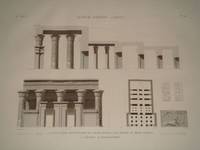
Jean-Baptiste Prosper JOLLOIS - Edouard DEVILLIERS (delineavit) - COQUET
DESCRIPTION DE L'EGYPTE. Esné Latopolis. Plans et élévations de six chapiteaux du portique. ANTIQUITES volume I planche 77
Paris: Imprimerie Impériale 1809. Fine. Imprimerie Impériale Paris 1809-1829 54 x 71 cm une feuille Original unshaved full-page etching from the Imperial edition of the Description de l'Égypte or Recueil des observations et recherches faites en Égypte pendant l'expédition française publié par les ordres de Sa Majesté l'Empereur Napoléon le Grand A Collection of the observations and research carried out in Egypt during the French expedition published on the orders of his Majesty the Emperor Napoleon the Great'.Produced between February 1802 and 1830 on the orders of Naopleon Bonaparte and published between 1809 and 1828 1000 copies were printed and distributed to institutions on vergé paper with an 'Égypte ancienne et moderne' watermark visible when held up to the light. Light marginal spotting not touching image otherwise in very fresh fine condition. An engraving from the Description de l'Egypte one of the masterpieces of French printing and the birth of a new field: Egyptology. A gigantic survey of Egypt at the time of Bonaparte's conquests in 1798 and 1799 the work is divided into 13 volumes of engravings making up 892 plates of which 72 colored as well as presenting the splendors of the Egypt of the Pharaohs in 9 volumes. The other volumes discuss natural history and present a fascinating portrait of Coptic and Islamic Egypt as it was seen by Bonaparte's Eastern Armies. The Egyptian campaign' militarily a disaster demonstrates through the engravings of the Description d'Egypte the scientific success it nonetheless became thanks to the 167 expert members of the Commission of the Sciences and Arts of the Institut d'Egypte Egyptian Institute who followed Napoleon's army. The Institut gathered together in Egypt the mathematician Monge the chemist Berthollet the naturalist Geoffroy Saint-Hilaire as well as numerous artists engineers architects and doctors. They were tasked with re-discovering modern and ancient Egypt and displaying its natural treasures as well as the know-how of its inhabitants.This edition the so-called Imperial edition of the plates for the Description de l'Egypte was printed in four large formats two of which were specially created for it and christened Moyen-Egypte and Grand-Egypte. A special press was built to print it the process extending over 20 years from 1809 to 1829. The Imperial edition proved so popular that a second edition this time in black and white and without the Egypte ancienne et moderne watermark known as the Royal Edition was published during the Restoration by the printing house of C.-L.-F. Panckoucke Paris.The engravings of the Description d'Egypte owe a great deal to Baron Dominique-Vivant Denon illustrator diplomat collector and later Director of the Musée Napoléon the Louvre. His exploration of the South of Egypt gave Bonaparte the idea of sending the experts of the Institut there thus creating a faithful and complete portrait of the area. This was the research gathered together from 1802 in the mammoth Description de L'Egypte.Denon embarked on this story of archeological exploration at the age of 51 reaching first Alexandria and then Cairo before exploring Upper Egypt. Along with the members of the Institut d'Egypte the Natural History Museum's painter H.J. Redouté brother of Pierre-Joseph Redouté author of Roses the mineralogist Dolomiue and the draughtsman Joly Denon then explored the Nile Delta and Lower Egypt. When however he joined the 21st Light Infantry Regiment as it marched across Upper Egypt in pursuit of the retreating Mameluks in November 1798 he found himself the only civilian. In the very midst of the battle itself he reeled off sketches of the works of art that peppered his path right up to the threshold of the Sudan. He said that he had crossed a country that is apart from its name entirely unknown to Europeans and therefore everything was worth describing Voyages dans la Basse et la Haute Egypte pendant les campagnes de Imprimerie Impériale unknown
Referencia librero : 25887

|
|
|
Jean-Baptiste Prosper JOLLOIS - Edouard DEVILLIERS (delineavit) - MONSALDY (sculpsit)
DESCRIPTION DE L'EGYPTE. Esné Latopolis. Face latérale de l'intérieur du portique. ANTIQUITES volume I planche 74
Paris: Imprimerie Impériale 1809. Fine. Imprimerie Impériale Paris 1809-1829 71 x 54 cm une feuille Original unshaved full-page etching from the Imperial edition of the Description de l'Égypte or Recueil des observations et recherches faites en Égypte pendant l'expédition française publié par les ordres de Sa Majesté l'Empereur Napoléon le Grand A Collection of the observations and research carried out in Egypt during the French expedition published on the orders of his Majesty the Emperor Napoleon the Great'.Produced between February 1802 and 1830 on the orders of Naopleon Bonaparte and published between 1809 and 1828 1000 copies were printed and distributed to institutions on vergé paper with an 'Égypte ancienne et moderne' watermark visible when held up to the light. Light marginal spotting not touching image otherwise in very fresh fine condition. An engraving from the Description de l'Egypte one of the masterpieces of French printing and the birth of a new field: Egyptology. A gigantic survey of Egypt at the time of Bonaparte's conquests in 1798 and 1799 the work is divided into 13 volumes of engravings making up 892 plates of which 72 colored as well as presenting the splendors of the Egypt of the Pharaohs in 9 volumes. The other volumes discuss natural history and present a fascinating portrait of Coptic and Islamic Egypt as it was seen by Bonaparte's Eastern Armies. The Egyptian campaign' militarily a disaster demonstrates through the engravings of the Description d'Egypte the scientific success it nonetheless became thanks to the 167 expert members of the Commission of the Sciences and Arts of the Institut d'Egypte Egyptian Institute who followed Napoleon's army. The Institut gathered together in Egypt the mathematician Monge the chemist Berthollet the naturalist Geoffroy Saint-Hilaire as well as numerous artists engineers architects and doctors. They were tasked with re-discovering modern and ancient Egypt and displaying its natural treasures as well as the know-how of its inhabitants.This edition the so-called Imperial edition of the plates for the Description de l'Egypte was printed in four large formats two of which were specially created for it and christened Moyen-Egypte and Grand-Egypte. A special press was built to print it the process extending over 20 years from 1809 to 1829. The Imperial edition proved so popular that a second edition this time in black and white and without the Egypte ancienne et moderne watermark known as the Royal Edition was published during the Restoration by the printing house of C.-L.-F. Panckoucke Paris.The engravings of the Description d'Egypte owe a great deal to Baron Dominique-Vivant Denon illustrator diplomat collector and later Director of the Musée Napoléon the Louvre. His exploration of the South of Egypt gave Bonaparte the idea of sending the experts of the Institut there thus creating a faithful and complete portrait of the area. This was the research gathered together from 1802 in the mammoth Description de L'Egypte.Denon embarked on this story of archeological exploration at the age of 51 reaching first Alexandria and then Cairo before exploring Upper Egypt. Along with the members of the Institut d'Egypte the Natural History Museum's painter H.J. Redouté brother of Pierre-Joseph Redouté author of Roses the mineralogist Dolomiue and the draughtsman Joly Denon then explored the Nile Delta and Lower Egypt. When however he joined the 21st Light Infantry Regiment as it marched across Upper Egypt in pursuit of the retreating Mameluks in November 1798 he found himself the only civilian. In the very midst of the battle itself he reeled off sketches of the works of art that peppered his path right up to the threshold of the Sudan. He said that he had crossed a country that is apart from its name entirely unknown to Europeans and therefore everything was worth describing Voyages dans la Basse et la Haute Egypte pendant les campagnes de Imprimerie Impériale unknown
Referencia librero : 25839

|
|
|
Jean-Baptiste Prosper JOLLOIS - Edouard DEVILLIERS (delineavit) - LE ROY
DESCRIPTION DE L'EGYPTE. Thèbes. Bybân el Molouk. Statues et fragments de granit noir et de granit rouge trouvés dans les tombeaux des rois à l'ouest Couvercles de vases trouvés dans les hypogées. ANTIQUITES volume II planche 81
Paris: Imprimerie Impériale 1809. Fine. Imprimerie Impériale Paris 1809-1829 71 x 53.50 cm une feuille Original unshaved full-page etching from the Imperial edition of the Description de l'Égypte or Recueil des observations et recherches faites en Égypte pendant l'expédition française publié par les ordres de Sa Majesté l'Empereur Napoléon le Grand A Collection of the observations and research carried out in Egypt during the French expedition published on the orders of his Majesty the Emperor Napoleon the Great'.Produced between February 1802 and 1830 on the orders of Naopleon Bonaparte and published between 1809 and 1828 1000 copies were printed and distributed to institutions on vergé paper with an 'Égypte ancienne et moderne' watermark visible when held up to the light. Light marginal spotting not touching image otherwise in very fresh fine condition. An engraving from the Description de l'Egypte one of the masterpieces of French printing and the birth of a new field: Egyptology. A gigantic survey of Egypt at the time of Bonaparte's conquests in 1798 and 1799 the work is divided into 13 volumes of engravings making up 892 plates of which 72 colored as well as presenting the splendors of the Egypt of the Pharaohs in 9 volumes. The other volumes discuss natural history and present a fascinating portrait of Coptic and Islamic Egypt as it was seen by Bonaparte's Eastern Armies. The Egyptian campaign' militarily a disaster demonstrates through the engravings of the Description d'Egypte the scientific success it nonetheless became thanks to the 167 expert members of the Commission of the Sciences and Arts of the Institut d'Egypte Egyptian Institute who followed Napoleon's army. The Institut gathered together in Egypt the mathematician Monge the chemist Berthollet the naturalist Geoffroy Saint-Hilaire as well as numerous artists engineers architects and doctors. They were tasked with re-discovering modern and ancient Egypt and displaying its natural treasures as well as the know-how of its inhabitants.This edition the so-called Imperial edition of the plates for the Description de l'Egypte was printed in four large formats two of which were specially created for it and christened Moyen-Egypte and Grand-Egypte. A special press was built to print it the process extending over 20 years from 1809 to 1829. The Imperial edition proved so popular that a second edition this time in black and white and without the Egypte ancienne et moderne watermark known as the Royal Edition was published during the Restoration by the printing house of C.-L.-F. Panckoucke Paris.The engravings of the Description d'Egypte owe a great deal to Baron Dominique-Vivant Denon illustrator diplomat collector and later Director of the Musée Napoléon the Louvre. His exploration of the South of Egypt gave Bonaparte the idea of sending the experts of the Institut there thus creating a faithful and complete portrait of the area. This was the research gathered together from 1802 in the mammoth Description de L'Egypte.Denon embarked on this story of archeological exploration at the age of 51 reaching first Alexandria and then Cairo before exploring Upper Egypt. Along with the members of the Institut d'Egypte the Natural History Museum's painter H.J. Redouté brother of Pierre-Joseph Redouté author of Roses the mineralogist Dolomiue and the draughtsman Joly Denon then explored the Nile Delta and Lower Egypt. When however he joined the 21st Light Infantry Regiment as it marched across Upper Egypt in pursuit of the retreating Mameluks in November 1798 he found himself the only civilian. In the very midst of the battle itself he reeled off sketches of the works of art that peppered his path right up to the threshold of the Sudan. He said that he had crossed a country that is apart from its name entirely unknown to Europeans and therefore everything was worth describing Voyages dans la Basse et la Haute Egypte pendant les campagnes Imprimerie Impériale unknown
Referencia librero : 26089

|
|
|
Jean-Baptiste Prosper JOLLOIS - Edouard DEVILLIERS (delineavit) - CORABOEUF (delineavit)
DESCRIPTION DE L'EGYPTE. Thèbes. Memnomium. Plan topographique du tombeau d'Osymandyas des deux colosses de la plaine et des ruines environnantes. ANTIQUITES volume II planche 19
Paris: Imprimerie Impériale 1809. Fine. Imprimerie Impériale Paris 1809-1829 71 x 53.50 cm une feuille Original unshaved full-page etching from the Imperial edition of the Description de l'Égypte or Recueil des observations et recherches faites en Égypte pendant l'expédition française publié par les ordres de Sa Majesté l'Empereur Napoléon le Grand A Collection of the observations and research carried out in Egypt during the French expedition published on the orders of his Majesty the Emperor Napoleon the Great'.Produced between February 1802 and 1830 on the orders of Naopleon Bonaparte and published between 1809 and 1828 1000 copies were printed and distributed to institutions on vergé paper with an 'Égypte ancienne et moderne' watermark visible when held up to the light. Light marginal spotting not touching image otherwise in very fresh fine condition. An engraving from the Description de l'Egypte one of the masterpieces of French printing and the birth of a new field: Egyptology. A gigantic survey of Egypt at the time of Bonaparte's conquests in 1798 and 1799 the work is divided into 13 volumes of engravings making up 892 plates of which 72 colored as well as presenting the splendors of the Egypt of the Pharaohs in 9 volumes. The other volumes discuss natural history and present a fascinating portrait of Coptic and Islamic Egypt as it was seen by Bonaparte's Eastern Armies. The Egyptian campaign' militarily a disaster demonstrates through the engravings of the Description d'Egypte the scientific success it nonetheless became thanks to the 167 expert members of the Commission of the Sciences and Arts of the Institut d'Egypte Egyptian Institute who followed Napoleon's army. The Institut gathered together in Egypt the mathematician Monge the chemist Berthollet the naturalist Geoffroy Saint-Hilaire as well as numerous artists engineers architects and doctors. They were tasked with re-discovering modern and ancient Egypt and displaying its natural treasures as well as the know-how of its inhabitants.This edition the so-called Imperial edition of the plates for the Description de l'Egypte was printed in four large formats two of which were specially created for it and christened Moyen-Egypte and Grand-Egypte. A special press was built to print it the process extending over 20 years from 1809 to 1829. The Imperial edition proved so popular that a second edition this time in black and white and without the Egypte ancienne et moderne watermark known as the Royal Edition was published during the Restoration by the printing house of C.-L.-F. Panckoucke Paris.The engravings of the Description d'Egypte owe a great deal to Baron Dominique-Vivant Denon illustrator diplomat collector and later Director of the Musée Napoléon the Louvre. His exploration of the South of Egypt gave Bonaparte the idea of sending the experts of the Institut there thus creating a faithful and complete portrait of the area. This was the research gathered together from 1802 in the mammoth Description de L'Egypte.Denon embarked on this story of archeological exploration at the age of 51 reaching first Alexandria and then Cairo before exploring Upper Egypt. Along with the members of the Institut d'Egypte the Natural History Museum's painter H.J. Redouté brother of Pierre-Joseph Redouté author of Roses the mineralogist Dolomiue and the draughtsman Joly Denon then explored the Nile Delta and Lower Egypt. When however he joined the 21st Light Infantry Regiment as it marched across Upper Egypt in pursuit of the retreating Mameluks in November 1798 he found himself the only civilian. In the very midst of the battle itself he reeled off sketches of the works of art that peppered his path right up to the threshold of the Sudan. He said that he had crossed a country that is apart from its name entirely unknown to Europeans and therefore everything was worth describing Voyages dans la Basse et la Haute Egypte pendant les campagnes Imprimerie Impériale unknown
Referencia librero : 26041

|
|
|
Jean-Baptiste Prosper JOLLOIS - Edouard DEVILLIERS (delineavit) - COQUET
DESCRIPTION DE L'EGYPTE. Ile de Philae. Détails de quatorze chapiteaux des deux colonnades Chapiteaux ébauchés Chapiteau de l'édifice du midi. ANTIQUITES volume I planche 8
Paris: Imprimerie Impériale 1809. Fine. Imprimerie Impériale Paris 1809-1829 71 x 54 cm une feuille Original unshaved full-page etching from the Imperial edition of the Description de l'Égypte or Recueil des observations et recherches faites en Égypte pendant l'expédition française publié par les ordres de Sa Majesté l'Empereur Napoléon le Grand A Collection of the observations and research carried out in Egypt during the French expedition published on the orders of his Majesty the Emperor Napoleon the Great'.Produced between February 1802 and 1830 on the orders of Naopleon Bonaparte and published between 1809 and 1828 1000 copies were printed and distributed to institutions on vergé paper with an 'Égypte ancienne et moderne' watermark visible when held up to the light. Light marginal spotting not touching image otherwise in very fresh fine condition. An engraving from the Description de l'Egypte one of the masterpieces of French printing and the birth of a new field: Egyptology. A gigantic survey of Egypt at the time of Bonaparte's conquests in 1798 and 1799 the work is divided into 13 volumes of engravings making up 892 plates of which 72 colored as well as presenting the splendors of the Egypt of the Pharaohs in 9 volumes. The other volumes discuss natural history and present a fascinating portrait of Coptic and Islamic Egypt as it was seen by Bonaparte's Eastern Armies. The Egyptian campaign' militarily a disaster demonstrates through the engravings of the Description d'Egypte the scientific success it nonetheless became thanks to the 167 expert members of the Commission of the Sciences and Arts of the Institut d'Egypte Egyptian Institute who followed Napoleon's army. The Institut gathered together in Egypt the mathematician Monge the chemist Berthollet the naturalist Geoffroy Saint-Hilaire as well as numerous artists engineers architects and doctors. They were tasked with re-discovering modern and ancient Egypt and displaying its natural treasures as well as the know-how of its inhabitants.This edition the so-called Imperial edition of the plates for the Description de l'Egypte was printed in four large formats two of which were specially created for it and christened Moyen-Egypte and Grand-Egypte. A special press was built to print it the process extending over 20 years from 1809 to 1829. The Imperial edition proved so popular that a second edition this time in black and white and without the Egypte ancienne et moderne watermark known as the Royal Edition was published during the Restoration by the printing house of C.-L.-F. Panckoucke Paris.The engravings of the Description d'Egypte owe a great deal to Baron Dominique-Vivant Denon illustrator diplomat collector and later Director of the Musée Napoléon the Louvre. His exploration of the South of Egypt gave Bonaparte the idea of sending the experts of the Institut there thus creating a faithful and complete portrait of the area. This was the research gathered together from 1802 in the mammoth Description de L'Egypte.Denon embarked on this story of archeological exploration at the age of 51 reaching first Alexandria and then Cairo before exploring Upper Egypt. Along with the members of the Institut d'Egypte the Natural History Museum's painter H.J. Redouté brother of Pierre-Joseph Redouté author of Roses the mineralogist Dolomiue and the draughtsman Joly Denon then explored the Nile Delta and Lower Egypt. When however he joined the 21st Light Infantry Regiment as it marched across Upper Egypt in pursuit of the retreating Mameluks in November 1798 he found himself the only civilian. In the very midst of the battle itself he reeled off sketches of the works of art that peppered his path right up to the threshold of the Sudan. He said that he had crossed a country that is apart from its name entirely unknown to Europeans and therefore everything was worth describing Voyages dans la Basse et la Haute Egypte pendant les campagnes de Imprimerie Impériale unknown
Referencia librero : 25823

|
|
|
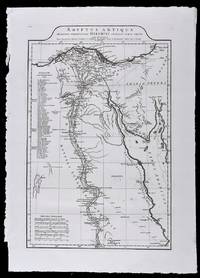
Jean-Baptiste-Bourguignon D'ANVILLE
DESCRIPTION DE L'EGYPTE. Aegyptus Antiqua mandato serenissimi Delphini publici juris facta. ANTIQUITES volume I planche 1
Paris: Imprimerie Impériale 1809. Fine. Imprimerie Impériale Paris 1809 d'après une carte de 1765 42 x 58 cm Original etching untrimmed extracted from the'' Imperial Edition 'of the Description of Egypt or Collection of Observations and research done in Egypt during the French expedition published by order of His Majesty the Emperor Napoleon the Great. Conducted between 1802 and 1830 and published between 1809 and 1828 she was taken in 1000 copies available to institutions. Map of Ancient Egypt and set the caption in Latin prepared by Jean-Baptiste Bourguignon d'Anville 1697-1782 famous French cartographer. Tiny and marginal bites without any damage to the engraving otherwise excellent freshness and preservation. The monumental first edition of the Description of Egypt in 13 volumes contained 892 colored plates of which 72 including 9 volumes involved antiquity. Other volumes dealt with the Natural History and modern Egypt as Napoleon Bonaparte had brought with him a commission of scholars from all disciplines so that it was said in his description was stored the richest museum of universe. This book was written in part by Baron Dominique Vivant Denon before he is appointed Managing Director of the Louvre Museum Napoleon. More than 80 artists and 400 writers were hired for this huge project. The unusually large size boards necessitated the creation of a special press and a specific piece of furniture to keep them .! Imprimerie Impériale hardcover
Referencia librero : 25983
|
|
|
Jean-Baptiste Prosper JOLLOIS - Edouard DEVILLIERS (delineavit) - LEGENTIL (delineavit)
DESCRIPTION DE L'EGYPTE. Esné Latopolis. Plans des environs d'Esné et d'une partie de la ville Plan du temple Coupe du portique. ANTIQUITES volume I planche 72
Paris: Imprimerie Impériale 1809. Fine. Imprimerie Impériale Paris 1809-1829 54 x 71 cm une feuille Original etching etching in plano untrimmed extracted from the 'Imperial Edition' of the Description of Egypt or Series observations and research conducted in Egypt during the French expedition published by order of His Majesty the Emperor Napoleon the Great. Conducted between 1802 and 1830 and published between 1809 and 1828 she was taken in 1000 copies available to institutions. Laid the watermark visible by transparency ancient and modern Egypt paper. Tiny bites and marginal without breach engraving otherwise excellent freshness and preservation. The monumental first edition of the Description of Egypt in 13 volumes contained 892 colored plates of which 72 including 9 volumes involved antiquity. The other volumes dealt with the Natural History and modern Egypt as Napoleon Bonaparte had brought with him a commission of scholars from all disciplines so that they said in his description was stored the richest museum of universe. The work was written in part by Baron Dominique Vivant Denon before he became DG of Napoleon in the Louvre Museum. More than 80 artists and 400 writers were hired for this huge project. The dimensions of the exceptionally large boards necessitated the creation of a special press and a specific piece of furniture to keep them .! Imprimerie Impériale hardcover
Referencia librero : 25856
|
|
|
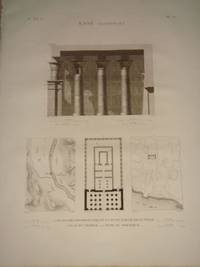
Jean-Baptiste Prosper JOLLOIS - Edouard DEVILLIERS (delineavit) - SAINT GENIS (delineavit)
DESCRIPTION DE L'EGYPTE. Thèbes. Memnomium. Plan topographique de divers monuments situés au nord du tombeau d'Osymandyas. ANTIQUITES volume II planche 38
Paris: Imprimerie Impériale 1809. Fine. Imprimerie Impériale Paris 1809-1829 71 x 53.50 cm une feuille Original unshaved full-page etching from the Imperial edition of the Description de l'Égypte or Recueil des observations et recherches faites en Égypte pendant l'expédition française publié par les ordres de Sa Majesté l'Empereur Napoléon le Grand A Collection of the observations and research carried out in Egypt during the French expedition published on the orders of his Majesty the Emperor Napoleon the Great'.Produced between February 1802 and 1830 on the orders of Naopleon Bonaparte and published between 1809 and 1828 1000 copies were printed and distributed to institutions on vergé paper with an 'Égypte ancienne et moderne' watermark visible when held up to the light. Light marginal spotting not touching image otherwise in very fresh fine condition. An engraving from the Description de l'Egypte one of the masterpieces of French printing and the birth of a new field: Egyptology. A gigantic survey of Egypt at the time of Bonaparte's conquests in 1798 and 1799 the work is divided into 13 volumes of engravings making up 892 plates of which 72 colored as well as presenting the splendors of the Egypt of the Pharaohs in 9 volumes. The other volumes discuss natural history and present a fascinating portrait of Coptic and Islamic Egypt as it was seen by Bonaparte's Eastern Armies. The Egyptian campaign' militarily a disaster demonstrates through the engravings of the Description d'Egypte the scientific success it nonetheless became thanks to the 167 expert members of the Commission of the Sciences and Arts of the Institut d'Egypte Egyptian Institute who followed Napoleon's army. The Institut gathered together in Egypt the mathematician Monge the chemist Berthollet the naturalist Geoffroy Saint-Hilaire as well as numerous artists engineers architects and doctors. They were tasked with re-discovering modern and ancient Egypt and displaying its natural treasures as well as the know-how of its inhabitants.This edition the so-called Imperial edition of the plates for the Description de l'Egypte was printed in four large formats two of which were specially created for it and christened Moyen-Egypte and Grand-Egypte. A special press was built to print it the process extending over 20 years from 1809 to 1829. The Imperial edition proved so popular that a second edition this time in black and white and without the Egypte ancienne et moderne watermark known as the Royal Edition was published during the Restoration by the printing house of C.-L.-F. Panckoucke Paris.The engravings of the Description d'Egypte owe a great deal to Baron Dominique-Vivant Denon illustrator diplomat collector and later Director of the Musée Napoléon the Louvre. His exploration of the South of Egypt gave Bonaparte the idea of sending the experts of the Institut there thus creating a faithful and complete portrait of the area. This was the research gathered together from 1802 in the mammoth Description de L'Egypte.Denon embarked on this story of archeological exploration at the age of 51 reaching first Alexandria and then Cairo before exploring Upper Egypt. Along with the members of the Institut d'Egypte the Natural History Museum's painter H.J. Redouté brother of Pierre-Joseph Redouté author of Roses the mineralogist Dolomiue and the draughtsman Joly Denon then explored the Nile Delta and Lower Egypt. When however he joined the 21st Light Infantry Regiment as it marched across Upper Egypt in pursuit of the retreating Mameluks in November 1798 he found himself the only civilian. In the very midst of the battle itself he reeled off sketches of the works of art that peppered his path right up to the threshold of the Sudan. He said that he had crossed a country that is apart from its name entirely unknown to Europeans and therefore everything was worth describing Voyages dans la Basse et la Haute Egypte pendant les campagnes Imprimerie Impériale unknown
Referencia librero : 26062

|
|
|
Jean-Baptiste Prosper JOLLOIS - Edouard DEVILLIERS (delineavit) - DUTERTRE (delineavit)
DESCRIPTION DE L'EGYPTE. Thèbes. Bybân el Molouk. Peintures recueillies dans le cinquième tombeau des rois à l'est Autres peintures des tombeaux. ANTIQUITES volume II planche 85
Paris: Imprimerie Impériale 1809. Fine. Imprimerie Impériale Paris 1809-1829 53.50 x 71 cm une feuille Original unshaved full-page etching from the Imperial edition of the Description de l'Égypte or Recueil des observations et recherches faites en Égypte pendant l'expédition française publié par les ordres de Sa Majesté l'Empereur Napoléon le Grand A Collection of the observations and research carried out in Egypt during the French expedition published on the orders of his Majesty the Emperor Napoleon the Great'.Produced between February 1802 and 1830 on the orders of Naopleon Bonaparte and published between 1809 and 1828 1000 copies were printed and distributed to institutions on vergé paper with an 'Égypte ancienne et moderne' watermark visible when held up to the light. Light marginal spotting not touching image otherwise in very fresh fine condition. An engraving from the Description de l'Egypte one of the masterpieces of French printing and the birth of a new field: Egyptology. A gigantic survey of Egypt at the time of Bonaparte's conquests in 1798 and 1799 the work is divided into 13 volumes of engravings making up 892 plates of which 72 colored as well as presenting the splendors of the Egypt of the Pharaohs in 9 volumes. The other volumes discuss natural history and present a fascinating portrait of Coptic and Islamic Egypt as it was seen by Bonaparte's Eastern Armies. The Egyptian campaign' militarily a disaster demonstrates through the engravings of the Description d'Egypte the scientific success it nonetheless became thanks to the 167 expert members of the Commission of the Sciences and Arts of the Institut d'Egypte Egyptian Institute who followed Napoleon's army. The Institut gathered together in Egypt the mathematician Monge the chemist Berthollet the naturalist Geoffroy Saint-Hilaire as well as numerous artists engineers architects and doctors. They were tasked with re-discovering modern and ancient Egypt and displaying its natural treasures as well as the know-how of its inhabitants.This edition the so-called Imperial edition of the plates for the Description de l'Egypte was printed in four large formats two of which were specially created for it and christened Moyen-Egypte and Grand-Egypte. A special press was built to print it the process extending over 20 years from 1809 to 1829. The Imperial edition proved so popular that a second edition this time in black and white and without the Egypte ancienne et moderne watermark known as the Royal Edition was published during the Restoration by the printing house of C.-L.-F. Panckoucke Paris.The engravings of the Description d'Egypte owe a great deal to Baron Dominique-Vivant Denon illustrator diplomat collector and later Director of the Musée Napoléon the Louvre. His exploration of the South of Egypt gave Bonaparte the idea of sending the experts of the Institut there thus creating a faithful and complete portrait of the area. This was the research gathered together from 1802 in the mammoth Description de L'Egypte.Denon embarked on this story of archeological exploration at the age of 51 reaching first Alexandria and then Cairo before exploring Upper Egypt. Along with the members of the Institut d'Egypte the Natural History Museum's painter H.J. Redouté brother of Pierre-Joseph Redouté author of Roses the mineralogist Dolomiue and the draughtsman Joly Denon then explored the Nile Delta and Lower Egypt. When however he joined the 21st Light Infantry Regiment as it marched across Upper Egypt in pursuit of the retreating Mameluks in November 1798 he found himself the only civilian. In the very midst of the battle itself he reeled off sketches of the works of art that peppered his path right up to the threshold of the Sudan. He said that he had crossed a country that is apart from its name entirely unknown to Europeans and therefore everything was worth describing Voyages dans la Basse et la Haute Egypte pendant les campagnes Imprimerie Impériale unknown
Referencia librero : 26092

|
|
|
Jean-Baptiste Prosper JOLLOIS - Edouard DEVILLIERS (delineavit) - ROUSSEAU (sculpsit)
DESCRIPTION DE L'EGYPTE. Environs d'Esné Latopolis. Vue perspective du temple au nord d'Esné. ANTIQUITES volume I planche 88
Paris: Imprimerie Impériale 1809. Fine. Imprimerie Impériale Paris 1809-1829 71 x 54 cm une feuille Original unshaved full-page etching from the Imperial edition of the Description de l'Égypte or Recueil des observations et recherches faites en Égypte pendant l'expédition française publié par les ordres de Sa Majesté l'Empereur Napoléon le Grand A Collection of the observations and research carried out in Egypt during the French expedition published on the orders of his Majesty the Emperor Napoleon the Great'.Produced between February 1802 and 1830 on the orders of Naopleon Bonaparte and published between 1809 and 1828 1000 copies were printed and distributed to institutions on vergé paper with an 'Égypte ancienne et moderne' watermark visible when held up to the light. Light marginal spotting not touching image otherwise in very fresh fine condition. An engraving from the Description de l'Egypte one of the masterpieces of French printing and the birth of a new field: Egyptology. A gigantic survey of Egypt at the time of Bonaparte's conquests in 1798 and 1799 the work is divided into 13 volumes of engravings making up 892 plates of which 72 colored as well as presenting the splendors of the Egypt of the Pharaohs in 9 volumes. The other volumes discuss natural history and present a fascinating portrait of Coptic and Islamic Egypt as it was seen by Bonaparte's Eastern Armies. The Egyptian campaign' militarily a disaster demonstrates through the engravings of the Description d'Egypte the scientific success it nonetheless became thanks to the 167 expert members of the Commission of the Sciences and Arts of the Institut d'Egypte Egyptian Institute who followed Napoleon's army. The Institut gathered together in Egypt the mathematician Monge the chemist Berthollet the naturalist Geoffroy Saint-Hilaire as well as numerous artists engineers architects and doctors. They were tasked with re-discovering modern and ancient Egypt and displaying its natural treasures as well as the know-how of its inhabitants.This edition the so-called Imperial edition of the plates for the Description de l'Egypte was printed in four large formats two of which were specially created for it and christened Moyen-Egypte and Grand-Egypte. A special press was built to print it the process extending over 20 years from 1809 to 1829. The Imperial edition proved so popular that a second edition this time in black and white and without the Egypte ancienne et moderne watermark known as the Royal Edition was published during the Restoration by the printing house of C.-L.-F. Panckoucke Paris.The engravings of the Description d'Egypte owe a great deal to Baron Dominique-Vivant Denon illustrator diplomat collector and later Director of the Musée Napoléon the Louvre. His exploration of the South of Egypt gave Bonaparte the idea of sending the experts of the Institut there thus creating a faithful and complete portrait of the area. This was the research gathered together from 1802 in the mammoth Description de L'Egypte.Denon embarked on this story of archeological exploration at the age of 51 reaching first Alexandria and then Cairo before exploring Upper Egypt. Along with the members of the Institut d'Egypte the Natural History Museum's painter H.J. Redouté brother of Pierre-Joseph Redouté author of Roses the mineralogist Dolomiue and the draughtsman Joly Denon then explored the Nile Delta and Lower Egypt. When however he joined the 21st Light Infantry Regiment as it marched across Upper Egypt in pursuit of the retreating Mameluks in November 1798 he found himself the only civilian. In the very midst of the battle itself he reeled off sketches of the works of art that peppered his path right up to the threshold of the Sudan. He said that he had crossed a country that is apart from its name entirely unknown to Europeans and therefore everything was worth describing Voyages dans la Basse et la Haute Egypte pendant les campagnes de Imprimerie Impériale unknown
Referencia librero : 25828

|
|
|
Jean-Baptiste Prosper JOLLOIS - Edouard DEVILLIERS (delineavit) - LOUVET (sculpsit)
DESCRIPTION DE L'EGYPTE. Abydus. Plan élévation et coupes du palais. ANTIQUITES volume IV planche 36
Paris: Imprimerie Impériale 1809. Fine. Imprimerie Impériale Paris 1809-1829 71 x 54 cm une feuille Original unshaved full-page etching from the Imperial edition of the Description de l'Égypte or Recueil des observations et recherches faites en Égypte pendant l'expédition française publié par les ordres de Sa Majesté l'Empereur Napoléon le Grand A Collection of the observations and research carried out in Egypt during the French expedition published on the orders of his Majesty the Emperor Napoleon the Great'.Produced between February 1802 and 1830 on the orders of Naopleon Bonaparte and published between 1809 and 1828 1000 copies were printed and distributed to institutions on vergé paper with an 'Égypte ancienne et moderne' watermark visible when held up to the light. Light marginal spotting not touching image otherwise in very fresh fine condition. An engraving from the Description de l'Egypte one of the masterpieces of French printing and the birth of a new field: Egyptology. A gigantic survey of Egypt at the time of Bonaparte's conquests in 1798 and 1799 the work is divided into 13 volumes of engravings making up 892 plates of which 72 colored as well as presenting the splendors of the Egypt of the Pharaohs in 9 volumes. The other volumes discuss natural history and present a fascinating portrait of Coptic and Islamic Egypt as it was seen by Bonaparte's Eastern Armies. The Egyptian campaign' militarily a disaster demonstrates through the engravings of the Description d'Egypte the scientific success it nonetheless became thanks to the 167 expert members of the Commission of the Sciences and Arts of the Institut d'Egypte Egyptian Institute who followed Napoleon's army. The Institut gathered together in Egypt the mathematician Monge the chemist Berthollet the naturalist Geoffroy Saint-Hilaire as well as numerous artists engineers architects and doctors. They were tasked with re-discovering modern and ancient Egypt and displaying its natural treasures as well as the know-how of its inhabitants.This edition the so-called Imperial edition of the plates for the Description de l'Egypte was printed in four large formats two of which were specially created for it and christened Moyen-Egypte and Grand-Egypte. A special press was built to print it the process extending over 20 years from 1809 to 1829. The Imperial edition proved so popular that a second edition this time in black and white and without the Egypte ancienne et moderne watermark known as the Royal Edition was published during the Restoration by the printing house of C.-L.-F. Panckoucke Paris.The engravings of the Description d'Egypte owe a great deal to Baron Dominique-Vivant Denon illustrator diplomat collector and later Director of the Musée Napoléon the Louvre. His exploration of the South of Egypt gave Bonaparte the idea of sending the experts of the Institut there thus creating a faithful and complete portrait of the area. This was the research gathered together from 1802 in the mammoth Description de L'Egypte.Denon embarked on this story of archeological exploration at the age of 51 reaching first Alexandria and then Cairo before exploring Upper Egypt. Along with the members of the Institut d'Egypte the Natural History Museum's painter H.J. Redouté brother of Pierre-Joseph Redouté author of Roses the mineralogist Dolomiue and the draughtsman Joly Denon then explored the Nile Delta and Lower Egypt. When however he joined the 21st Light Infantry Regiment as it marched across Upper Egypt in pursuit of the retreating Mameluks in November 1798 he found himself the only civilian. In the very midst of the battle itself he reeled off sketches of the works of art that peppered his path right up to the threshold of the Sudan. He said that he had crossed a country that is apart from its name entirely unknown to Europeans and therefore everything was worth describing Voyages dans la Basse et la Haute Egypte pendant les campagnes de Imprimerie Impériale unknown
Referencia librero : 26542

|
|
|
Jean-Baptiste Prosper JOLLOIS - [Edouard de VILLIERS DU TERRAGE] DEVILLIERS
Description de l'Egypte. Antiquités. Description de Thèbes. Deuxième livraison
à Paris: Imprimerie Impériale 1812. Fine. Imprimerie Impériale à Paris 1812 27 x 42.50 cm Un Vol. broché First edition printed on strong laid paper containing the second fascicle of the Antiquities section corresponding to chapter IX. The first fascicle containing chapters I to VIII appeared in 1809 and the third in 1818 Our copy lacks both the half-title page and the general title of the Description de l'Egypte. Full vellum-style paper boards binding smooth spine black shagreen title label with a very slight loss. This general description of Thebes forms the most important and voluminous chapter of the Antiquities section occupying an entire volume and fascicle and containing both in situ descriptions of monuments and archaeological sites Karnak Luxor. and historical and geographical research considerations on mummies symbols. In appendix a description of the quarries used for construction and a second on astronomical monuments. Imprimerie Impériale hardcover
Referencia librero : 27103

|
|
|
Jean-Baptiste Prosper JOLLOIS - DEVILLIERS - LOUVET (sculpsit)
DESCRIPTION DE L'EGYPTE. Denderah Tentyris. Plan élévation et coupes du Typhonium. ANTIQUITES volume IV planche 32
Paris: Imprimerie Impériale 1809. Fine. Imprimerie Impériale Paris 1809-1829 71 x 54 cm une feuille Original in plano etching untrimmed extracted from the so-called ""Imperial"" edition of the Description de l'Égypte ou Recueil des observations et recherches faites en Égypte pendant l'expédition française publié par les ordres de Sa Majesté l'Empereur Napoléon le Grand. Executed between February 1802 and 1829 by order of Napoleon Bonaparte and published from 1809 actually 1810 it was printed in 1000 copies on watermarked laid paper ""Égypte ancienne et moderne"" and offered to institutions. Light and marginal foxing not affecting the engraving otherwise very fine condition and preservation. DENDERAH: The scholars executed views and surveys of the temples of Denderah or Tentyris a city in Upper Egypt situated 60 km north of Luxor. They rendered with exceptional graphic quality the thick and round aspect of the sculpted reliefs of the great temple of Hathor built under the Ptolemies during the first half of the 1st century BCE. They also provided interesting views of the neighboring temples as well as a selection of reliefs from ""l'appartement du zodiaque"" a chapel dedicated to Osiris and situated above the temple of Hathor. Its famous astronomical relief was discovered by General Desaix dispatched by Napoleon in 1798 but was only brought back to France by Claude Lelorrain in 1821. It is now displayed at the Louvre Museum. Another astronomical and cosmological relief covering the ceiling of the hypostyle hall of the temple of Hathor is the subject of a magnificent plate executed by Jollois and Devilliers. They documented the seven soffits coffers of the ceiling an immense allegorical representation that describes several levels of knowledge: that of cosmogony of constellations and their reflection on Earth of the creation of Man and of the nomes of Egypt symbolized by 21 pairs of wings crowned with the red crown of Lower Egypt or the white tiara of Upper Egypt. Volume ANTIQUITES IV: These engravings provided Jean-François Champollion with fundamental epigraphic documentation for the decipherment of hieroglyphs and inspired a lineage of archaeologists such as Mariette Maspero and Carter who gave a new face to ancient Egypt. They aroused such enthusiasm that they gave birth to the phenomenon of Egyptomania and the orientalism of Delacroix Fromentin Marilhat Decamps but also Théophile Gautier. Financiers politicians merchants and diggers of all kinds would rush to the banks of the Nile in search of good deals following this rediscovery of Egypt. At the origin of Egyptology these plates would have an immense posterity. LA DESCRIPTION DE L'EGYPTE IMPERIAL edition 1809-1829: La Description de l'Egypte is one of the masterpieces of French publishing and the starting point of a new science: Egyptology. Titanic exposition of Egypt at the time of Bonaparte's conquests between 1798 and 1799 it is divided into 23 volumes including 13 volumes of engravings gathering nearly 1000 plates in black and 72 in color. The 6 volumes of plates entitled Antiquités are devoted to the splendors of pharaonic Egypt. L'Histoire naturelle is divided into 3 volumes of engravings. One volume is devoted to Cartes géographiques et topographiques while the 3 volumes : Etat Moderne present a striking portrait of Coptic and Islamic Egypt as it was seen by Bonaparte's armies of the Orient. The ""Egyptian campaign"" military disaster revealed through the engravings of the Description de l'Egypte the scientific success it had become thanks to the some 167 scholars members of the Commission des sciences et des arts de l'Institut d'Egypte who followed Napoleon's army. The Institute brought together in Egypt the mathematician Monge the chemist Berthollet the naturalist Geoffroy Saint-Hilaire as well as numerous artists engineers architects doctors. They were charged with rediscovering modern and ancient Egypt showing its natural riches and the know-how of Imprimerie Impériale unknown
Referencia librero : 26538
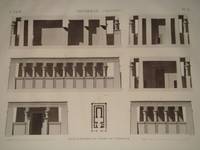
|
|
|
Jean-Baptiste Prosper JOLLOIS - Edme-Francois JOMARD - DUBOIS-AYME
Description de l'Egypte. Antiquités. Description générale de Memphis et des pyramides par M. Jomard. Description de la Babylone d'Egypte par M. Du Bois-Aymé. Description d'Héliopolis par MM. Lancret et Du Bois-Aymé. Description des ruines de Sân Tanis des Anciens par M. Louis Cordier. Description des principales ruines situées dans la portion de l'ancien delta par MM. Jollois et Du Bois-Aymé
à Paris: Imprimerie Impériale 1818. Fine. Imprimerie Impériale à Paris 1818 27 x 42.50 cm relié First edition of these four memoirs extracted from Volume II of the 3rd installment Antiquities Section of the Description de l'Egypte. The memoirs are noted as chapters XVIII XIX XXI XXIII XXV one should not be surprised that the chapters do not follow consecutively as the apparently missing chapters are found in another volume of the third installment published at a different date. Each article is separated from another by a blank leaf. Modern cream parchment paper boards. Black sheep title label. Uncut copy with full margins. Very precise descriptions of monuments by eyewitnesses based on their notes surveys and drawings taken in situ numerous notes and historical geographical and other considerations. The descriptions are often introduced by a travel narrative. Imprimerie Impériale hardcover
Referencia librero : 27138

|
|
|
Jean-Baptiste Prosper JOLLOIS - Edouard DEVILLIERS (delineavit) - SCHROEDER (sculpsit)
DESCRIPTION DE L'EGYPTE. Thèbes. Med-A'Moud. Plan topographique des ruines plan et élévation des restes d'un portique. ANTIQUITES volume III planche 68
Paris: Imprimerie Impériale 1809. Fine. Imprimerie Impériale Paris 1809-1829 71 x 54 cm une feuille Original unshaved full-page etching from the Imperial edition of the Description de l'Égypte or Recueil des observations et recherches faites en Égypte pendant l'expédition française publié par les ordres de Sa Majesté l'Empereur Napoléon le Grand A Collection of the observations and research carried out in Egypt during the French expedition published on the orders of his Majesty the Emperor Napoleon the Great'.Produced between February 1802 and 1830 on the orders of Naopleon Bonaparte and published between 1809 and 1828 1000 copies were printed and distributed to institutions on vergé paper with an 'Égypte ancienne et moderne' watermark visible when held up to the light. Light marginal spotting not touching image otherwise in very fresh fine condition. An engraving from the Description de l'Egypte one of the masterpieces of French printing and the birth of a new field: Egyptology. A gigantic survey of Egypt at the time of Bonaparte's conquests in 1798 and 1799 the work is divided into 13 volumes of engravings making up 892 plates of which 72 colored as well as presenting the splendors of the Egypt of the Pharaohs in 9 volumes. The other volumes discuss natural history and present a fascinating portrait of Coptic and Islamic Egypt as it was seen by Bonaparte's Eastern Armies. The Egyptian campaign' militarily a disaster demonstrates through the engravings of the Description d'Egypte the scientific success it nonetheless became thanks to the 167 expert members of the Commission of the Sciences and Arts of the Institut d'Egypte Egyptian Institute who followed Napoleon's army. The Institut gathered together in Egypt the mathematician Monge the chemist Berthollet the naturalist Geoffroy Saint-Hilaire as well as numerous artists engineers architects and doctors. They were tasked with re-discovering modern and ancient Egypt and displaying its natural treasures as well as the know-how of its inhabitants.This edition the so-called Imperial edition of the plates for the Description de l'Egypte was printed in four large formats two of which were specially created for it and christened Moyen-Egypte and Grand-Egypte. A special press was built to print it the process extending over 20 years from 1809 to 1829. The Imperial edition proved so popular that a second edition this time in black and white and without the Egypte ancienne et moderne watermark known as the Royal Edition was published during the Restoration by the printing house of C.-L.-F. Panckoucke Paris.The engravings of the Description d'Egypte owe a great deal to Baron Dominique-Vivant Denon illustrator diplomat collector and later Director of the Musée Napoléon the Louvre. His exploration of the South of Egypt gave Bonaparte the idea of sending the experts of the Institut there thus creating a faithful and complete portrait of the area. This was the research gathered together from 1802 in the mammoth Description de L'Egypte.Denon embarked on this story of archeological exploration at the age of 51 reaching first Alexandria and then Cairo before exploring Upper Egypt. Along with the members of the Institut d'Egypte the Natural History Museum's painter H.J. Redouté brother of Pierre-Joseph Redouté author of Roses the mineralogist Dolomiue and the draughtsman Joly Denon then explored the Nile Delta and Lower Egypt. When however he joined the 21st Light Infantry Regiment as it marched across Upper Egypt in pursuit of the retreating Mameluks in November 1798 he found himself the only civilian. In the very midst of the battle itself he reeled off sketches of the works of art that peppered his path right up to the threshold of the Sudan. He said that he had crossed a country that is apart from its name entirely unknown to Europeans and therefore everything was worth describing Voyages dans la Basse et la Haute Egypte pendant les campagnes de Imprimerie Impériale unknown
Referencia librero : 23411

|
|
|
Jean-Baptiste Prosper JOLLOIS - Antoine PHELIPPEAUX - Edouard DEVILLIERS (delineavit)
DESCRIPTION DE L'EGYPTE. Thèbes. Karnak. Harnachement d'un cheval combat sculpté sur les murs extérieurs du Palais. ANTIQUITES volume III planche 39
Paris: Imprimerie Impériale 1809. Fine. Imprimerie Impériale Paris 1809-1829 71 x 54 cm une feuille Original unshaved full-page etching from the Imperial edition of the Description de l'Égypte or Recueil des observations et recherches faites en Égypte pendant l'expédition française publié par les ordres de Sa Majesté l'Empereur Napoléon le Grand A Collection of the observations and research carried out in Egypt during the French expedition published on the orders of his Majesty the Emperor Napoleon the Great'.Produced between February 1802 and 1830 on the orders of Naopleon Bonaparte and published between 1809 and 1828 1000 copies were printed and distributed to institutions on vergé paper with an 'Égypte ancienne et moderne' watermark visible when held up to the light. Light marginal spotting not touching image otherwise in very fresh fine condition. An engraving from the Description de l'Egypte one of the masterpieces of French printing and the birth of a new field: Egyptology. A gigantic survey of Egypt at the time of Bonaparte's conquests in 1798 and 1799 the work is divided into 13 volumes of engravings making up 892 plates of which 72 colored as well as presenting the splendors of the Egypt of the Pharaohs in 9 volumes. The other volumes discuss natural history and present a fascinating portrait of Coptic and Islamic Egypt as it was seen by Bonaparte's Eastern Armies. The Egyptian campaign' militarily a disaster demonstrates through the engravings of the Description d'Egypte the scientific success it nonetheless became thanks to the 167 expert members of the Commission of the Sciences and Arts of the Institut d'Egypte Egyptian Institute who followed Napoleon's army. The Institut gathered together in Egypt the mathematician Monge the chemist Berthollet the naturalist Geoffroy Saint-Hilaire as well as numerous artists engineers architects and doctors. They were tasked with re-discovering modern and ancient Egypt and displaying its natural treasures as well as the know-how of its inhabitants.This edition the so-called Imperial edition of the plates for the Description de l'Egypte was printed in four large formats two of which were specially created for it and christened Moyen-Egypte and Grand-Egypte. A special press was built to print it the process extending over 20 years from 1809 to 1829. The Imperial edition proved so popular that a second edition this time in black and white and without the Egypte ancienne et moderne watermark known as the Royal Edition was published during the Restoration by the printing house of C.-L.-F. Panckoucke Paris.The engravings of the Description d'Egypte owe a great deal to Baron Dominique-Vivant Denon illustrator diplomat collector and later Director of the Musée Napoléon the Louvre. His exploration of the South of Egypt gave Bonaparte the idea of sending the experts of the Institut there thus creating a faithful and complete portrait of the area. This was the research gathered together from 1802 in the mammoth Description de L'Egypte.Denon embarked on this story of archeological exploration at the age of 51 reaching first Alexandria and then Cairo before exploring Upper Egypt. Along with the members of the Institut d'Egypte the Natural History Museum's painter H.J. Redouté brother of Pierre-Joseph Redouté author of Roses the mineralogist Dolomiue and the draughtsman Joly Denon then explored the Nile Delta and Lower Egypt. When however he joined the 21st Light Infantry Regiment as it marched across Upper Egypt in pursuit of the retreating Mameluks in November 1798 he found himself the only civilian. In the very midst of the battle itself he reeled off sketches of the works of art that peppered his path right up to the threshold of the Sudan. He said that he had crossed a country that is apart from its name entirely unknown to Europeans and therefore everything was worth describing Voyages dans la Basse et la Haute Egypte pendant les campagnes de Imprimerie Impériale unknown
Referencia librero : 23341

|
|
|
Jean-Baptiste Prosper JOLLOIS - Edouard DEVILLIERS (delineavit) - Constantin SMITH (aqua forti)
DESCRIPTION DE L'EGYPTE. Syout Lycopolis. Plans coupes élévations et décorations hiéroglyphiques de divers hypogées. ANTIQUITES volume IV planche 48
Paris: Imprimerie Impériale 1809. Fine. Imprimerie Impériale Paris 1809-1829 70 x 51.50 cm une feuille Original unshaved full-page etching from the Imperial edition of the Description de l'Égypte or Recueil des observations et recherches faites en Égypte pendant l'expédition française publié par les ordres de Sa Majesté l'Empereur Napoléon le Grand A Collection of the observations and research carried out in Egypt during the French expedition published on the orders of his Majesty the Emperor Napoleon the Great'.Produced between February 1802 and 1830 on the orders of Naopleon Bonaparte and published between 1809 and 1828 1000 copies were printed and distributed to institutions on vergé paper with an 'Égypte ancienne et moderne' watermark visible when held up to the light. Light marginal spotting not touching image otherwise in very fresh fine condition. An engraving from the Description de l'Egypte one of the masterpieces of French printing and the birth of a new field: Egyptology. A gigantic survey of Egypt at the time of Bonaparte's conquests in 1798 and 1799 the work is divided into 13 volumes of engravings making up 892 plates of which 72 colored as well as presenting the splendors of the Egypt of the Pharaohs in 9 volumes. The other volumes discuss natural history and present a fascinating portrait of Coptic and Islamic Egypt as it was seen by Bonaparte's Eastern Armies. The Egyptian campaign' militarily a disaster demonstrates through the engravings of the Description d'Egypte the scientific success it nonetheless became thanks to the 167 expert members of the Commission of the Sciences and Arts of the Institut d'Egypte Egyptian Institute who followed Napoleon's army. The Institut gathered together in Egypt the mathematician Monge the chemist Berthollet the naturalist Geoffroy Saint-Hilaire as well as numerous artists engineers architects and doctors. They were tasked with re-discovering modern and ancient Egypt and displaying its natural treasures as well as the know-how of its inhabitants.This edition the so-called Imperial edition of the plates for the Description de l'Egypte was printed in four large formats two of which were specially created for it and christened Moyen-Egypte and Grand-Egypte. A special press was built to print it the process extending over 20 years from 1809 to 1829. The Imperial edition proved so popular that a second edition this time in black and white and without the Egypte ancienne et moderne watermark known as the Royal Edition was published during the Restoration by the printing house of C.-L.-F. Panckoucke Paris.The engravings of the Description d'Egypte owe a great deal to Baron Dominique-Vivant Denon illustrator diplomat collector and later Director of the Musée Napoléon the Louvre. His exploration of the South of Egypt gave Bonaparte the idea of sending the experts of the Institut there thus creating a faithful and complete portrait of the area. This was the research gathered together from 1802 in the mammoth Description de L'Egypte.Denon embarked on this story of archeological exploration at the age of 51 reaching first Alexandria and then Cairo before exploring Upper Egypt. Along with the members of the Institut d'Egypte the Natural History Museum's painter H.J. Redouté brother of Pierre-Joseph Redouté author of Roses the mineralogist Dolomiue and the draughtsman Joly Denon then explored the Nile Delta and Lower Egypt. When however he joined the 21st Light Infantry Regiment as it marched across Upper Egypt in pursuit of the retreating Mameluks in November 1798 he found himself the only civilian. In the very midst of the battle itself he reeled off sketches of the works of art that peppered his path right up to the threshold of the Sudan. He said that he had crossed a country that is apart from its name entirely unknown to Europeans and therefore everything was worth describing Voyages dans la Basse et la Haute Egypte pendant les campagnes Imprimerie Impériale unknown
Referencia librero : 23474

|
|
|
Jean-Baptiste Prosper JOLLOIS - Edouard DEVILLIERS (delineavit)
DESCRIPTION DE L'EGYPTE. Antinoë. Plans élévations et détails de divers portiques plan et détail d'un bâtiment de bains colonnade de la rue principale. ANTIQUITES volume IV planche 61
Paris: Imprimerie Impériale 1809. Fine. Imprimerie Impériale Paris 1809-1829 70 x 51.50 cm une feuille Original unshaved full-page etching from the Imperial edition of the Description de l'Égypte or Recueil des observations et recherches faites en Égypte pendant l'expédition française publié par les ordres de Sa Majesté l'Empereur Napoléon le Grand A Collection of the observations and research carried out in Egypt during the French expedition published on the orders of his Majesty the Emperor Napoleon the Great'.Produced between February 1802 and 1830 on the orders of Naopleon Bonaparte and published between 1809 and 1828 1000 copies were printed and distributed to institutions on vergé paper with an 'Égypte ancienne et moderne' watermark visible when held up to the light. Light marginal spotting not touching image otherwise in very fresh fine condition. An engraving from the Description de l'Egypte one of the masterpieces of French printing and the birth of a new field: Egyptology. A gigantic survey of Egypt at the time of Bonaparte's conquests in 1798 and 1799 the work is divided into 13 volumes of engravings making up 892 plates of which 72 colored as well as presenting the splendors of the Egypt of the Pharaohs in 9 volumes. The other volumes discuss natural history and present a fascinating portrait of Coptic and Islamic Egypt as it was seen by Bonaparte's Eastern Armies. The Egyptian campaign' militarily a disaster demonstrates through the engravings of the Description d'Egypte the scientific success it nonetheless became thanks to the 167 expert members of the Commission of the Sciences and Arts of the Institut d'Egypte Egyptian Institute who followed Napoleon's army. The Institut gathered together in Egypt the mathematician Monge the chemist Berthollet the naturalist Geoffroy Saint-Hilaire as well as numerous artists engineers architects and doctors. They were tasked with re-discovering modern and ancient Egypt and displaying its natural treasures as well as the know-how of its inhabitants.This edition the so-called Imperial edition of the plates for the Description de l'Egypte was printed in four large formats two of which were specially created for it and christened Moyen-Egypte and Grand-Egypte. A special press was built to print it the process extending over 20 years from 1809 to 1829. The Imperial edition proved so popular that a second edition this time in black and white and without the Egypte ancienne et moderne watermark known as the Royal Edition was published during the Restoration by the printing house of C.-L.-F. Panckoucke Paris.The engravings of the Description d'Egypte owe a great deal to Baron Dominique-Vivant Denon illustrator diplomat collector and later Director of the Musée Napoléon the Louvre. His exploration of the South of Egypt gave Bonaparte the idea of sending the experts of the Institut there thus creating a faithful and complete portrait of the area. This was the research gathered together from 1802 in the mammoth Description de L'Egypte.Denon embarked on this story of archeological exploration at the age of 51 reaching first Alexandria and then Cairo before exploring Upper Egypt. Along with the members of the Institut d'Egypte the Natural History Museum's painter H.J. Redouté brother of Pierre-Joseph Redouté author of Roses the mineralogist Dolomiue and the draughtsman Joly Denon then explored the Nile Delta and Lower Egypt. When however he joined the 21st Light Infantry Regiment as it marched across Upper Egypt in pursuit of the retreating Mameluks in November 1798 he found himself the only civilian. In the very midst of the battle itself he reeled off sketches of the works of art that peppered his path right up to the threshold of the Sudan. He said that he had crossed a country that is apart from its name entirely unknown to Europeans and therefore everything was worth describing Voyages dans la Basse et la Haute Egypte pendant les campagnes Imprimerie Impériale unknown
Referencia librero : 23448

|
|
|
Jean-Baptiste Prosper JOLLOIS - Edouard DEVILLIERS (delineavit) - Constantin SMITH (aqua forti)
DESCRIPTION DE L'EGYPTE. Syout Lycopolis. Décorations hiéroglyphiques et bas-reliefs recueillis dans les hypogées. ANTIQUITES volume IV planche 49
Paris: Imprimerie Impériale 1809. Fine. Imprimerie Impériale Paris 1809-1829 70 x 51.50 cm une feuille Original unshaved full-page etching from the Imperial edition of the Description de l'Égypte or Recueil des observations et recherches faites en Égypte pendant l'expédition française publié par les ordres de Sa Majesté l'Empereur Napoléon le Grand A Collection of the observations and research carried out in Egypt during the French expedition published on the orders of his Majesty the Emperor Napoleon the Great'.Produced between February 1802 and 1830 on the orders of Naopleon Bonaparte and published between 1809 and 1828 1000 copies were printed and distributed to institutions on vergé paper with an 'Égypte ancienne et moderne' watermark visible when held up to the light. Light marginal spotting not touching image otherwise in very fresh fine condition. An engraving from the Description de l'Egypte one of the masterpieces of French printing and the birth of a new field: Egyptology. A gigantic survey of Egypt at the time of Bonaparte's conquests in 1798 and 1799 the work is divided into 13 volumes of engravings making up 892 plates of which 72 colored as well as presenting the splendors of the Egypt of the Pharaohs in 9 volumes. The other volumes discuss natural history and present a fascinating portrait of Coptic and Islamic Egypt as it was seen by Bonaparte's Eastern Armies. The Egyptian campaign' militarily a disaster demonstrates through the engravings of the Description d'Egypte the scientific success it nonetheless became thanks to the 167 expert members of the Commission of the Sciences and Arts of the Institut d'Egypte Egyptian Institute who followed Napoleon's army. The Institut gathered together in Egypt the mathematician Monge the chemist Berthollet the naturalist Geoffroy Saint-Hilaire as well as numerous artists engineers architects and doctors. They were tasked with re-discovering modern and ancient Egypt and displaying its natural treasures as well as the know-how of its inhabitants.This edition the so-called Imperial edition of the plates for the Description de l'Egypte was printed in four large formats two of which were specially created for it and christened Moyen-Egypte and Grand-Egypte. A special press was built to print it the process extending over 20 years from 1809 to 1829. The Imperial edition proved so popular that a second edition this time in black and white and without the Egypte ancienne et moderne watermark known as the Royal Edition was published during the Restoration by the printing house of C.-L.-F. Panckoucke Paris.The engravings of the Description d'Egypte owe a great deal to Baron Dominique-Vivant Denon illustrator diplomat collector and later Director of the Musée Napoléon the Louvre. His exploration of the South of Egypt gave Bonaparte the idea of sending the experts of the Institut there thus creating a faithful and complete portrait of the area. This was the research gathered together from 1802 in the mammoth Description de L'Egypte.Denon embarked on this story of archeological exploration at the age of 51 reaching first Alexandria and then Cairo before exploring Upper Egypt. Along with the members of the Institut d'Egypte the Natural History Museum's painter H.J. Redouté brother of Pierre-Joseph Redouté author of Roses the mineralogist Dolomiue and the draughtsman Joly Denon then explored the Nile Delta and Lower Egypt. When however he joined the 21st Light Infantry Regiment as it marched across Upper Egypt in pursuit of the retreating Mameluks in November 1798 he found himself the only civilian. In the very midst of the battle itself he reeled off sketches of the works of art that peppered his path right up to the threshold of the Sudan. He said that he had crossed a country that is apart from its name entirely unknown to Europeans and therefore everything was worth describing Voyages dans la Basse et la Haute Egypte pendant les campagnes Imprimerie Impériale unknown
Referencia librero : 23472

|
|
|
Jean-Baptiste Prosper JOLLOIS - Edouard DEVILLIERS (delineavit) - ROUSSEAU (sculpsit)
DESCRIPTION DE L'EGYPTE. Coupes transversales du Palais et détails recueills dans les salles intérieures. ANTIQUITES volume III planche 9
Paris: Imprimerie Impériale 1809. Fine. Imprimerie Impériale Paris 1809-1829 71 x 54 cm une feuille Original unshaved full-page etching from the Imperial edition of the Description de l'Égypte or Recueil des observations et recherches faites en Égypte pendant l'expédition française publié par les ordres de Sa Majesté l'Empereur Napoléon le Grand A Collection of the observations and research carried out in Egypt during the French expedition published on the orders of his Majesty the Emperor Napoleon the Great'.Produced between February 1802 and 1830 on the orders of Naopleon Bonaparte and published between 1809 and 1828 1000 copies were printed and distributed to institutions on vergé paper with an 'Égypte ancienne et moderne' watermark visible when held up to the light. Light marginal spotting not touching image otherwise in very fresh fine condition. An engraving from the Description de l'Egypte one of the masterpieces of French printing and the birth of a new field: Egyptology. A gigantic survey of Egypt at the time of Bonaparte's conquests in 1798 and 1799 the work is divided into 13 volumes of engravings making up 892 plates of which 72 colored as well as presenting the splendors of the Egypt of the Pharaohs in 9 volumes. The other volumes discuss natural history and present a fascinating portrait of Coptic and Islamic Egypt as it was seen by Bonaparte's Eastern Armies. The Egyptian campaign' militarily a disaster demonstrates through the engravings of the Description d'Egypte the scientific success it nonetheless became thanks to the 167 expert members of the Commission of the Sciences and Arts of the Institut d'Egypte Egyptian Institute who followed Napoleon's army. The Institut gathered together in Egypt the mathematician Monge the chemist Berthollet the naturalist Geoffroy Saint-Hilaire as well as numerous artists engineers architects and doctors. They were tasked with re-discovering modern and ancient Egypt and displaying its natural treasures as well as the know-how of its inhabitants.This edition the so-called Imperial edition of the plates for the Description de l'Egypte was printed in four large formats two of which were specially created for it and christened Moyen-Egypte and Grand-Egypte. A special press was built to print it the process extending over 20 years from 1809 to 1829. The Imperial edition proved so popular that a second edition this time in black and white and without the Egypte ancienne et moderne watermark known as the Royal Edition was published during the Restoration by the printing house of C.-L.-F. Panckoucke Paris.The engravings of the Description d'Egypte owe a great deal to Baron Dominique-Vivant Denon illustrator diplomat collector and later Director of the Musée Napoléon the Louvre. His exploration of the South of Egypt gave Bonaparte the idea of sending the experts of the Institut there thus creating a faithful and complete portrait of the area. This was the research gathered together from 1802 in the mammoth Description de L'Egypte.Denon embarked on this story of archeological exploration at the age of 51 reaching first Alexandria and then Cairo before exploring Upper Egypt. Along with the members of the Institut d'Egypte the Natural History Museum's painter H.J. Redouté brother of Pierre-Joseph Redouté author of Roses the mineralogist Dolomiue and the draughtsman Joly Denon then explored the Nile Delta and Lower Egypt. When however he joined the 21st Light Infantry Regiment as it marched across Upper Egypt in pursuit of the retreating Mameluks in November 1798 he found himself the only civilian. In the very midst of the battle itself he reeled off sketches of the works of art that peppered his path right up to the threshold of the Sudan. He said that he had crossed a country that is apart from its name entirely unknown to Europeans and therefore everything was worth describing Voyages dans la Basse et la Haute Egypte pendant les campagnes de Imprimerie Impériale unknown
Referencia librero : 23282

|
|
|
Jean-Baptiste Prosper JOLLOIS - Edouard DEVILLIERS (delineavit) - HELUIS
DESCRIPTION DE L'EGYPTE. Suite des coupes transversales. Détails d'une colonne et d'une frise et d'une corniche d'un palais. ANTIQUITES volume III planche 10
Paris: Imprimerie Impériale 1809. Fine. Imprimerie Impériale Paris 1809-1829 71 x 54 cm une feuille Original etching in plano uncut extracted from the so-called ""Imperial"" edition of the Description de l'Égypte ou Recueil des observations et recherches faites en Égypte pendant l'expédition française publié par les ordres de Sa Majesté l'Empereur Napoléon le Grand. Produced between February 1802 and 1829 by order of Napoleon Bonaparte and published from 1809 actually 1810 it was printed in 1000 copies on watermarked laid paper ""Égypte ancienne et moderne"" and presented to institutions. Detail of sections through the porticoes surrounding the palace courtyard different types of lotiform columns enlarged detail at the center of the plate friezes and cornices engraved with ornamental motifs. These views complement the previous plates 6 7 and 8 and the precise coordinates of the sections are indicated on the general plan at the beginning of the volume. No foxing perfect state of conservation. Volume ANTIQUITES III: These engravings provided Jean-François Champollion with fundamental epigraphic documentation for deciphering hieroglyphs and inspired a lineage of archaeologists such as Mariette Maspero and Carter who gave ancient Egypt a new face. They aroused such enthusiasm that they gave birth to the phenomenon of Egyptomania and to the orientalism of Delacroix Fromentin Marilhat Decamps but also Théophile Gautier. Financiers politicians merchants and excavators of all kinds flocked to the banks of the Nile in search of good business following this rediscovery of Egypt. At the origin of Egyptology these plates would have an immense posterity. THE DESCRIPTION DE L'EGYPTE IMPERIAL edition 1809-1829: The Description de l'Egypte is one of the masterpieces of French publishing and the starting point of a new science: Egyptology. A titanic exposition of Egypt at the time of Bonaparte's conquests between 1798 and 1799 it is distributed across 23 volumes including 13 volumes of engravings containing nearly 1000 plates in black and 72 in color. The 6 volumes of plates entitled Antiquités are devoted to the splendors of pharaonic Egypt. Natural History is distributed across 3 volumes of engravings. One volume is devoted to Geographical and topographical maps while the 3 volumes : Modern State present a striking portrait of Coptic and Islamic Egypt as it was seen by Bonaparte's armies of the Orient. The ""Egyptian campaign"" a military disaster reveals through the engravings of the Description de l'Egypte the scientific success it became thanks to the some 167 scholars members of the Commission of sciences and arts of the Institute of Egypt who followed Napoleon's army. The Institute brought together in Egypt the mathematician Monge the chemist Berthollet the naturalist Geoffroy Saint-Hilaire as well as numerous artists engineers architects doctors. They were charged with rediscovering modern and ancient Egypt showing its natural riches and the know-how of its inhabitants. The first edition called ""Imperial"" of the Description de l'Egypte was produced in four large formats two of them specially created for it and named ""Moyen-Egypte"" and ""Grand-Egypte"" formats. A specific press was built for its printing which stretched over twenty years between 1809 and 1829. The Imperial edition proved so popular that a second edition in 37 volumes entirely in black and without the watermark ""Egypte ancienne et moderne"" called the ""Panckoucke"" edition was published from 1821 by the C.-L.-F. Panckoucke printing house Paris. The realization of this monument of erudition owes much to Baron Dominique Vivant Denon illustrator diplomat collector and subsequently director of Napoleon's Louvre museum who accompanied Napoleon to Egypt with many other scholars but decided alone to venture into the South of the country while the other invited scientists remained confined to the Cairo region. The fabulous sketches brought back by Denon from hi Imprimerie Impériale unknown
Referencia librero : 23285
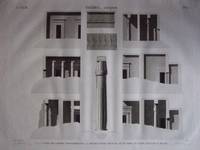
|
|
|
Jean-Baptiste Prosper JOLLOIS - Edouard DEVILLIERS (delineavit) - Constantin SMITH (aqua forti)
DESCRIPTION DE L'EGYPTE. Syout Lycopolis. Plans coupes élévation et détails de divers hypogées. ANTIQUITES volume IV planche 47
Paris: Imprimerie Impériale 1809. Fine. Imprimerie Impériale Paris 1809-1829 70 x 51.50 cm une feuille Original unshaved full-page etching from the Imperial edition of the Description de l'Égypte or Recueil des observations et recherches faites en Égypte pendant l'expédition française publié par les ordres de Sa Majesté l'Empereur Napoléon le Grand A Collection of the observations and research carried out in Egypt during the French expedition published on the orders of his Majesty the Emperor Napoleon the Great'.Produced between February 1802 and 1830 on the orders of Naopleon Bonaparte and published between 1809 and 1828 1000 copies were printed and distributed to institutions on vergé paper with an 'Égypte ancienne et moderne' watermark visible when held up to the light. Light marginal spotting not touching image otherwise in very fresh fine condition. An engraving from the Description de l'Egypte one of the masterpieces of French printing and the birth of a new field: Egyptology. A gigantic survey of Egypt at the time of Bonaparte's conquests in 1798 and 1799 the work is divided into 13 volumes of engravings making up 892 plates of which 72 colored as well as presenting the splendors of the Egypt of the Pharaohs in 9 volumes. The other volumes discuss natural history and present a fascinating portrait of Coptic and Islamic Egypt as it was seen by Bonaparte's Eastern Armies. The Egyptian campaign' militarily a disaster demonstrates through the engravings of the Description d'Egypte the scientific success it nonetheless became thanks to the 167 expert members of the Commission of the Sciences and Arts of the Institut d'Egypte Egyptian Institute who followed Napoleon's army. The Institut gathered together in Egypt the mathematician Monge the chemist Berthollet the naturalist Geoffroy Saint-Hilaire as well as numerous artists engineers architects and doctors. They were tasked with re-discovering modern and ancient Egypt and displaying its natural treasures as well as the know-how of its inhabitants.This edition the so-called Imperial edition of the plates for the Description de l'Egypte was printed in four large formats two of which were specially created for it and christened Moyen-Egypte and Grand-Egypte. A special press was built to print it the process extending over 20 years from 1809 to 1829. The Imperial edition proved so popular that a second edition this time in black and white and without the Egypte ancienne et moderne watermark known as the Royal Edition was published during the Restoration by the printing house of C.-L.-F. Panckoucke Paris.The engravings of the Description d'Egypte owe a great deal to Baron Dominique-Vivant Denon illustrator diplomat collector and later Director of the Musée Napoléon the Louvre. His exploration of the South of Egypt gave Bonaparte the idea of sending the experts of the Institut there thus creating a faithful and complete portrait of the area. This was the research gathered together from 1802 in the mammoth Description de L'Egypte.Denon embarked on this story of archeological exploration at the age of 51 reaching first Alexandria and then Cairo before exploring Upper Egypt. Along with the members of the Institut d'Egypte the Natural History Museum's painter H.J. Redouté brother of Pierre-Joseph Redouté author of Roses the mineralogist Dolomiue and the draughtsman Joly Denon then explored the Nile Delta and Lower Egypt. When however he joined the 21st Light Infantry Regiment as it marched across Upper Egypt in pursuit of the retreating Mameluks in November 1798 he found himself the only civilian. In the very midst of the battle itself he reeled off sketches of the works of art that peppered his path right up to the threshold of the Sudan. He said that he had crossed a country that is apart from its name entirely unknown to Europeans and therefore everything was worth describing Voyages dans la Basse et la Haute Egypte pendant les campagnes Imprimerie Impériale unknown
Referencia librero : 23478

|
|
|
Jean-Baptiste DELAWARDE
Essai sur l'installation humaine dans les mornes de la Martinique
Fort-de-France: S. n. 1935. Fine. S. n. Fort-de-France 1935 16.50 x 25 cm broché First edition. Pamphlet illustrated with 3 photographic plates. Gift inscription in pen from a previous owner to the head of the first cover handsome copy. Rare. S. n. unknown
Referencia librero : 39534

|
|
|
Jean-Baptiste LABAT
Etudes philosophiques et morales sur l'histoire de la musique ou recherches analytiques sur les éléments constitutifs de cet artà toutes les époques sur la signification de ses transform
Paris: J. Techener 1852. Fine. J. Techener Paris 1852 14 x 22 cm 2 volumes brochés First edition. The origin of music its importance among ancient peoples music of the Greeks of the Romans the origin of plainchant Gregorian chant the bards the troubadours minstrelsy music in France and England in the Middle Ages and the Renaissance the Oratorio opera Lully Bach and Handel the fortepiano the symphony the founding of the conservatory music in France in the nineteenth century among others. Two small lacks at the head of both volumes otherwise rare and handsome copies. J. Techener unknown
Referencia librero : 6736

|
|
|
Jean-Baptiste DEPERTHES
Histoire de l'art du paysage depuis la Renaissance jusqu'au dix-huitième siècle ou recherches sur l'origine et les progrès de ce genre de peinture et sur la vie les ouvrages et le talent distinctif des principaux paysagistes des différentes écoles
Paris: Le Normant 1822. Fine. Le Normant Paris 1822 12.50 x 21 cm relié First edition. Half red Russia morocco binding with small corners spine with four raised bands set with black and gilt fillets decorated with black typographic motifs and a gilt allegory in the center gilt friezes at head and foot light scratches of no consequence to joints marbled boards marginally discolored pebbled paper endpapers and pastedowns all edges marbled contemporary binding. Ink gift inscription in blue on endpaper bookplate pasted on facing page. Handsome copy despite visible adhesive paper offsetting on pastedowns. Le Normant hardcover
Referencia librero : 81554
|
|
|
Jean-Baptiste DU HAMEL - PETIT
Histoire de l'Académie royale des sciences. Année 1728
A Amsterdam: Chez Pierre Mortier 1732. Fine. Chez Pierre Mortier A Amsterdam 1732 10 x 17 cm 2 volumes reliés Illustrated edition with 5 plates for volume 1 18 for volume 2 most folding totaling 23 plates. Title pages in red and black. Contemporary full brown marbled calf binding. Decorated spine with raised bands. Red morocco title labels and black wax volume labels. One lack at head of volume 2. Rubbing. 2 corners slightly bumped. Handsome copy. Notable articles to be retained in each of the mentioned sections include: Dissertation on the estimation & motive force of bodies by M. de Mairan. On the movement of Saturn by M. Cassini. Physical explanation of a disease that kills several plants in Gatinois & particularly saffron by M. Du Hamel. On movement accelerated by springs and forces that reside in moving bodies by M. l'Abbé Camus. Demonstrating that the uvea is flat in man by M. Petit. General laws of movement in the spherical vortex by M. l'Abbé de Molières. Different ways of knowing the size of the chambers of aqueous humor in human eyes. Research on the causes of multiplication of fruit species by M. Du Hamel. Chez Pierre Mortier hardcover
Referencia librero : 61453
|
|
|
Jean-Baptiste Benoit EYRIES
Histoire des naufrages délaissements de matelots hivernages incendies de navires et autres désastres de mer
Paris: Laplace Sanchez & Cie 1880. Fine. Laplace Sanchez & Cie Paris s. d. circa 1880 16.50 x 25.50 cm reliure de l'éditeur New edition illustrated with 8 hors-texte plates by Rouargue frères. Publisher's binding in half wine-red shagreen spine slightly faded with four raised bands decorated with triple gilt compartments enhanced with gilt decorative motifs covers framed with cold-stamped fillets on wine-red paper boards white watered silk endpapers and pastedowns gilt edges. Some foxing. Laplace, Sanchez & Cie hardcover
Referencia librero : 47774
|
|
|
Jean-Baptiste DUBOS
Histoire de la ligue faite a Cambray entre Jules II pape Maximilien I emperereur Louis XII roy de France Ferdinand V roy d'Aragon & tous les princes d'Italie contre la République de Venise
à Paris: Chez Chaubert 1728. Fine. Chez Chaubert à Paris 1728 9.50 x 16.50 cm 2 volumes reliés New edition after the original of 1710. Illustrated with 2 frontispieces representing Louis XII and Henry VIII in medallions. Contemporary full calf bindings. Spine with raised bands decorated. Red morocco title and volume labels. 3 headcaps worn. Joints cracked and split at foot and headcaps. Rubbing. The League of Cambrai was formed on the initiative of Julius II and brought together all the princes of Europe with the aim of dismembering the Venetian empire. Julius II had secret intentions to turn the league against France after gaining the advantage over Venice. The conflict ended with the battle of Agnadel where Julius II won victory against the Venetians; despite numerous concessions from Venice the Republic continued to prosper and shine while the King of France was led to war against his former allies. Chez Chaubert hardcover
Referencia librero : 24571
|
|
|
Jean-Baptiste CHRISTYN
Histoire generale des Pais-Bas contenant la description des XVII provinces Pays-Bas
A Brusselle Brussels: Chez la veuve Foppens 1743. Fine. Chez la veuve Foppens A Brusselle Brussels 1743 9.50 x 16.50 cm 4 volumes reliés New edition illustrated with 144 figures including 4 frontispieces most of them folding. Title pages in red and black. Copy with ermines heraldic device of a branch of the Rohan family. The Rohan de Strasbourg or the Rohan Chabot had their books bound in full blonde calf with lozenges and ermines. Full blonde calf binding speckled and glazed. Spine with raised bands decorated with ermines. Red morocco title label brown morocco volume label. Restorations to headcaps and joints of volumes I II. Headcap of volume IV worn. Corners slightly bumped. Traces of rubbing. Fresh overall. Famous edition whose description then included Belgium the duchy of Luxembourg Holland and the part of the Netherlands that became French in the Arras region. Chez la veuve Foppens hardcover
Referencia librero : 86931
|
|
|
Jean-Baptiste HARANG
L'art est difficile
Paris: René Julliard 2004. Fine. René Julliard Paris 2004 13 x 20.50 cm broché first edition for which it was not taken from large papers. A beautiful autograph signed and full-page sent by Jean-Baptiste Harang to Pierre Dumayet: "". Pierre thank you for being here twice by my fault pages 178 and following thanks to you to enter the I do not know if there is anything to boast about but I am proud and very touched that you have agreed to be associated with this work I hope to have the audacity and especially the I'm a shy person but I'm shy your text is a real dessert served as a starter a real dumayeterie . I kiss you Françoise and you. Pleasant full copy of his trailer. René Julliard unknown
Referencia librero : 60647
|
|
|
Jean-Baptiste Benoit EYRIES
L'Autriche Costumes Moeurs et Usages des Autrichiens. Suite de gravures coloriées avec leurs explications
Paris: Gide fils 1825. Fine. Gide fils Paris s. d. circa 1825 - relié First edition illustrated with 24 hand-colored plates hors-texte depicting Austrians dressed in various period costumes. Half red Russian morocco binding smooth spine with cold-stamped fleurons and gilt title boards with double cold-stamped fillet frame and roulette decoration front joint cracked at head headcaps lightly rubbed contemporary binding. Some discreet foxing otherwise handsome and rare work describing the Austrian people in the 19th century abundantly illustrated with hand-colored engraved plates. Gide fils hardcover
Referencia librero : 36720
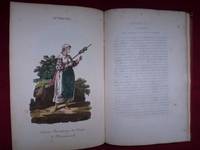
|
|
|
Jean-Baptiste CORDIER
L'ave et le credo du Tiers-Etat par M. C.R roturier angevin
s. l.: S. n. 1789. Fine. S. n. s. l. 1789 12 x 19.50 cm relié First edition of this pamphlet published anonymously. Full cardboard Bradel binding late 19th century. Pink handmade paper. Spine lightly sunned. On the leitmotiv of the Ave 'Hail Mary' an apology for freedom and equality. S. n. unknown
Referencia librero : 20457

|
|
|
Jean-Baptiste-Alexis DURAND
La forêt de Fontainebleau poème en quatre chants suivis de poésies diverses
Fontainebleau & Paris: Chez l'auteurDelaunay 1836. Fine. Chez l'auteur Delaunay Fontainebleau & Paris 1836 15 x 24 cm broché First edition published in a small number of copies. Two lacks at head and foot of spine one cracked joint an angular lack to the first cover very slight marginal lacks not touching text affecting the last pages foxing. Rare. Chez l'auteurDelaunay unknown
Referencia librero : 15116

|
|
|
Jean-Baptiste VIDAILLET
La perception ou l'art de recouvrer l'impôt direct poème en six chants
Paris & Saint-Flour: P. DupontViallefont 1855. Fine. P. Dupont Viallefont Paris & Saint-Flour 1855 13 x 21 cm broché First edition. Autograph inscription from J.B. Vidaillet two manuscript corrections by the author in the text. A lack at head of spine some minor foxing. P. DupontViallefont unknown
Referencia librero : 18468

|
|
|
Jean-Baptiste de Boyer ARGENS
La philosophie du bon sens
à La Haye The Hague: Chez Pierre Paupie 1747. Fine. Chez Pierre Paupie à La Haye The Hague 1747 9.50 x 17 cm 2 volumes reliés New edition reprint of the augmented edition of the second volume from 1740. It is illustrated with a portrait and a curious allegorical figure in the first volume as well as a large title vignette to the epistle. Title pages in red and black. Contemporary full glazed marbled calf binding. Red morocco title label and volume labels. 3 corners slightly bumped. Light crack to the upper joint of volume II. Despite the noted defects handsome copy with very fine appearance. Work of a free thinker of the Enlightenment the philosophy of common sense is an examination of prejudices and all branches of knowledge in light of the postulate of scepticism; for the author this postulate of uncertainty is salutary as to the truth of things; the book was judged sufficiently dangerous to be banned by Parliament and d'Argens thus wrote most of his books in Holland safe from arrest. Though praised by Voltaire the work was condemned by Kant. Chez Pierre Paupie unknown
Referencia librero : 36079
|
|
|
Jean-Baptiste Baron de ROISSARD DE BELLET
La Sardaigne à vol d'oiseau en 1882. Son histoire ses moeurs sa géologie ses richesses métallifères et ses productions de toutes sortes
Paris: E. Plon Nourrit & Cie 1884. Fine. E. Plon Nourrit & Cie Paris 1884 17.50 x 26 cm relié First edition. Half fir-green shagreen binding darkened spine with five raised bands initials with faded gilding at foot of spine one joint split then reglued at foot marbled paper boards marbled endpapers and pastedowns one corner slightly bumped without consequence contemporary binding. Work complete with its 11 lithographs or wood engravings: 1 folding plate of a view of Cagliari at the beginning of the volume 1 folding map at the end as well as 9 plates of which 4 are heightened in watercolor representing Sardinians in traditional costumes ceramics and sculptures. Some minor foxing without consequence a lack without consequence and not touching the text at the foot of pages 285 to 296. Rare. E. Plon, Nourrit & Cie hardcover
Referencia librero : 44630

|
|
|
Jean-Baptiste-Alexis DURAND
Le château de Fontainebleau esquisses en vers suivies de poésies diverses
Fontainebleau: Chez l'auteur 1840. Fine. Chez l'auteur Fontainebleau 1840 16 x 24 cm broché The first edition published in a small number of copies. With frontispiece portrait of the author by C. Lelièvre. Spine clumsily restored with tape repair tears and slight marginal lacks to boards foxing. Rare. Chez l'auteur hardcover
Referencia librero : 15115

|
|
|
Jean-Baptiste-Michel MESAIZE
Le fédéralisme en Normandie : journal du quartier-maître du 6ème bataillon bis des volontaires du Calvados
Caen: Louis Jouan 1909. Fine. Louis Jouan Caen 1909 12 x 19 cm broché First edition published and annotated by R.N. Sauvage. Spine and covers uniformly faded occasional foxing affecting mainly the edges. Louis Jouan unknown
Referencia librero : 30723

|
|
|
Jean-Baptiste-Francois RAUCOURT
Le livre de raison d'Elisabeth Renault 1789-1795
Paris: Paul Ollendorff 1911. Fine. Paul Ollendorff Paris s. d. 1911 13 x 19 cm relié First edition one of 5 numbered copies on Holland paper the only deluxe copies after 1 on Japan paper. Half marbled havana sheep binding with corners smooth spine decorated with richly decorated gilt compartments as well as gilt allegories red morocco title label gilt fillet frame on marbled paper boards marbled endpapers and pastedowns top edge gilt retaining deckled edges covers and spine preserved contemporary binding signed by Capelle. Some foxing affecting mainly the margins of certain leaves. Rare. Paul Ollendorff hardcover
Referencia librero : 59621
|
|
|
Jean-Baptiste GAIL
Le philologue : Theocriti quae exstant omnia. Textum recognovit ad fidemique codicum mss. quattuor et viginti bbliothecaereglae recensuit: item ad proprias copias adjunxit apparatum criticum H. Stephani Valckenarii Brunkii H. Gaisfordii Kiesslingui Aliorumque; Latinam interpretationem non semei correxit
Lutetia Paris Parisiorum Paris Paris: PanckouckeDelalainTreuttel et Würtz 1828. Fine. Panckoucke Delalain Treuttel et Würtz Lutetia Paris Parisiorum Paris Paris 1828 21 x 13 cm 2 volumes reliés First edition. These two volumes are numbers I II III IV Volumes XXIII of the Le Philologue collection which comprises ""7 to 8 volumes"". Missing the third volume from the year 1828 which forms the Theocriti Quae Exstant Omnia. Half fawn sheep binding smooth spine decorated with plant motifs and gilt fillets tears to joints spine partially stained marbled edges. Scattered foxing. Rare. PanckouckeDelalainTreuttel et Würtz unknown
Referencia librero : 31044

|
|
|
Jean-Baptiste LOUVET DE COUVRAY
Les aventures du chevalier de Faublas
Paris: J. Mallet & Cie 1842. Fine. J. Mallet & Cie Paris 1842 16 x 24 cm relié Illustrated edition in first printing with 300 in-text wood-engraved vignettes by Nanteuil Baron Français. Text within a decorative border. Contemporary half midnight blue shagreen binding with corners. Smooth spine decorated with romantic elongated ornaments. Ornaments and fillets on boards and corners. Very fine marbled paper. Green moiré endpapers. Slight traces of fading without consequence. Some scattered foxing but on white paper despite some browned gatherings in the first volume. Very handsome copy solidly bound. Fine edition with romantic vignettes that takes its place among the other editions of classics produced by the illustrator duo Baron and Nanteuil who participated in the renewal of the art of wood-engraved vignettes; they had already produced Télémaque by Fénelon Roland furieux. J. Mallet & Cie hardcover
Referencia librero : 46052
|
|
|
Jean-Baptiste LOUVET DE COUVRAY
Les aventures du chevalier de Faublas
Paris: J. Mallet & Cie 1842. Fine. J. Mallet & Cie Paris 1842 16 x 24 cm 2 volumes reliés Illustrated edition with 300 wood-engraved vignettes in the text first printing by Nanteuil Baron Français. Half long-grain dark brown morocco with corners spine with four raised bands richly decorated with gilt and blind romantic ornamental motifs light rubbing of no significance to top headcaps marbled paper boards marbled endpapers and pastedowns gilt edges light rubbing to corners elegant unsigned romantic pastiche binding. Some minor foxing of little significance. Engraved bookplates of an Armenian bibliophile mounted facing the pastedowns. Handsome copy handsomely bound in a superb romantic pastiche binding. J. Mallet & Cie hardcover
Referencia librero : 24999
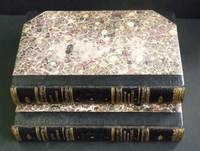
|
|

 Recibir por correo electrónico
 Descargar en documento PDF
 Flujo RSS
 Link permanente


