|
PL Jacob, Bibliophile [ie, Paul Lacroix] P L i e
Recherches bibliographiques sur des livres rares et curieux
Paris: Edouard Rouveyre 1880. First and only edition of this collection of bibliographical articles by one of the great bibliographers of the 19th century. Includes three articles about editions of Rabelais a bibliography of the books printed by Francois Juste a bibliography of French books printed in Alsace from 1547 to 1619 a bibliography of lost or unique French books and lots more. Focus is on 16th and 17th centuries. Very good and uncut in original parchment wraps professionally restored. One of 550 copies on laid paper from a total edition of 600. Very fresh internally. 8vo. <br/><br/> Paris: Edouard Rouveyre, 1880 paperback
Referenz des Buchhändlers : 287
|
|
|
Placide BOUE
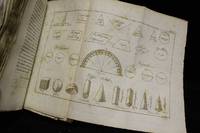
Traité d'orfévrerie bijouterie et joaillerie ; contenant la description détaillée des caractères physiques et chimiques des métaux et pierres précieuses qui constituent les matières premières de cette belle branche de l'industrie française; de leur extraction du sein de la terre ; de l'art de les essayer de les évaluer et de les mettre en oeuvre ; et généralement tout ce qui se rapporte à la théorie ou à la pratique de ces trois arts qui par leur analogie n'en font qu'un
Paris: DelaunayMarteauBorely ainéJoanne frèresLevasseurPailhiezVallory 1832. Fine. Delaunay Marteau Borely ainé Joanne frères Levasseur Pailhiez Vallory Paris 1832 14.50 x 22 cm relié First edition. Half red shagreen over marbled paper boards spine in six compartments with black fillets to bands foot of spine scratched the initials of a former owner which have been scratched out brown shagreen title label covers preserved a little rubbing to edges. Retaining its seven folding plates. Occasional spotting principally affecting the plates of the second volume. Rare. DelaunayMarteauBorely ainéJoanne frèresLevasseurPailhiezVallory hardcover
Referenz des Buchhändlers : 52157
|
|
|
Plakos, Marie; Artese, Sally Anne; Parrish, Justine Limpus; et al
Belle Armoire Magazine - Art To Wear January / February 2005 Vol. 5 Issue 1: Justine Limpus Parrish's Peacock Coat
USA: Stampington & Company. Good. 2005. First Edition. Single Issue Magazine. Features: Dina Buckey's Dog Tag Pendants; Carryl Brown's Precious Pieces - A Shrink-Art Necklace; "Artrageous" Paper Purses; Material Differences - Faille de Chine; Threads - Exploring Fabric Painting & Collage - The Organza Peacock Fantasy Coat; Clay Arts - China-Painted Pins & Pendants; On the Surface - Digital Imagery and Surface Design - Putting Your Photos on Fabric; Accoutrements - Les Sculptures de Chapeaux par Veronique Follet; Designer Collection - Laura McCabe; and more. 96 pages. Clean and unmarked with moderate wear. A sound copy.; 4to . Stampington & Company unknown
Referenz des Buchhändlers : 447h1947

|
|
|
Planas, Miquel, Pilar Velez, D Moli
Miquel Plana: Llibres de bibliofil / Llibres de bibliofilia 1972-1989
Olot 1989. The complete catalogue of books illustrated and published by the leading contemporary producer of Catalan livres d'artiste. Dozens of items illustrated and described in detail. One of 1400 copies printed. Laid in are the announcement of an exhibition of his illustrated books April 1989 and an invitation to the opening of that exhibition both printed on fine wove paper. 4to. Bound in heavy fine paper Guarro aquarelle wraps the front cover printed by Planas in polychrome with wooden types. As new with no defects. <br/><br/> Olot, 1989 paperback
Referenz des Buchhändlers : 2161
|
|
|
Planche, J R
The Recollections and Reflections of J. R. Planché: A Professional Autobiography Vol. 1 2 Complete
Cambridge University Press 2011. Book. New. Soft cover. 1st Edition. 8vo - over 7¾" - 9¾" tall. Complete in two 2 volumes brand new unopened in original publisher's shrinkwrap. Cambridge University Press Paperback
Referenz des Buchhändlers : 067245 ISBN : 1108038840 9781108038843
|
|
|
Planchon, Jean-Pierre
Pierre-Benoit Marcion 1769-1840: Ébéniste de Napoléon
Saint-Rémy-en-l'Eau: Éditions Monelle Hayot 2007. 1st. Hardcover. New/New. 12.0x9.6x1.0in. Profusely illustrated in color. Text in French. <br>240pp 3.50lb 12.0x9.6x1.0in Éditions Monelle Hayot hardcover
Referenz des Buchhändlers : 29057 ISBN : 290382455X 9782903824556

|
|
|
Planck, Max; Translation By Alexander Ogg
Treatise On Thermodynamics. Third Edition From The Seventh German Edition
London: Longmans Green And Co. 1927. 3rd Edition 1st Printing. Hardcover. Near Fine/No Jacket. Xiv Errata 297 Pp. Green Cloth Gilt Spine Blind Stamping To Front Cover. First Printing Of Third Edition 1927. Near Fine Lightly Used No Names Or Marks Gilt Brilliant Cloth Clean Very Slight Fading To Spine Cloth. <br/> <br/> Longmans, Green And Co. hardcover
Referenz des Buchhändlers : 036020

|
|
|
Planisheck, Frances Florenz
Behind Prison Walls
<p>An uncommon title in exceptional condition. First Edition; First Printing. Hardcover. Green pebbled cloth gilt. Name on the front pastedown tanning else unmarked. B/W photo frontis of the author. Chapter headings include: Prisons and prison life women prisoners paroles the beginning of human betterment humane prisons vs. Hell holes prison exceptions. 208 pages 8 1/4" tall</p> Meador hardcover
Referenz des Buchhändlers : 3225bx113

|
|
|
Plank, Rudolf
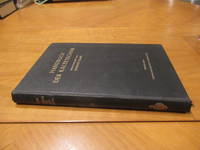
Thermodynamische Grundlagen . Handbuch Der Kaltetechnik Zweiter Band
Berlin / Gottingen / Heidelberg: Springer-Verlag 1953. Hardcover. Near Fine. 169 Figures. Xii 384 Pp With Errata Slip Befiore Title Page. Black Cloth Gilt With Original Black Endpapers. Near Fine-Bright And Clean Gilt Complete And Brilliant But Page Block Cracked In Front Of Title Page Binding Nevertheless Strong And Secure. No Names Or Marks Or Bookplates. <br/> <br/> Springer-Verlag hardcover
Referenz des Buchhändlers : 032489
|
|
|
PLANTA (comp) J
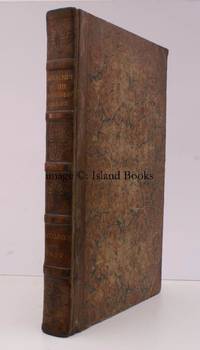
A Catalogue of the Manuscripts in the Cottonian Library deposited in the British Museum. ANTHONY WAGNER'S COPY
Printed by Luke Hansard at Great Turnstile Lincoln's Inn Fields 1802. Folio First Edition on laid paper some minor spotting mainly marginal and some light offsetting in the text; mid-nineteenth century half calf marbled boards with some shelf-scuffing to paper surfaces sprinkled edges back tooled in gilt and blind with five raised bands very neatly rebacked with old backstrip laid down a very good clean copy. THIS COPY WAS FORMERLY IN THE LIBRARY OF SIR ANTHONY WAGNER ARGUABLY THE TWENTIETH CENTURY'S MOST EMINENT GARTER KING OF ARMS. ITS BEARS HIS SIGNED HOLOGRAPH INSCRIPTION 'Anthony R. Wagner Portcullis Pursuivant of Arms 4 Oct 1933' ON FRONT FREE ENDPAPER. In the late eighteenth century the BM thoroughly revised the previous Cottonian catalogue Smith 1696 under the principal editorship of Planta. The mammoth revision was completed in 1800 and published on the instructions of the Royal Commission on public records. It remains the best published catalogue. Joseph Planta 1744-1827 succeeded his father as assistant librarian at the BM in 1773 was promoted to Keeper of Manuscripts in 1776 and finally to Principal Librarian from 1799-1827. See CDNB: III 1397. Interestingly the printer Luke Hansard began printing the 'House of Commons Journal' in 1774; it is commonly known as 'Hansard' to this day. A SPLENDID ASSOCIATION COPY. Gross/Graves 994. Printed by Luke Hansard at Great Turnstile, Lincoln's Inn Fields, hardcover
Referenz des Buchhändlers : 3437
|
|
|
Plante Julian G.
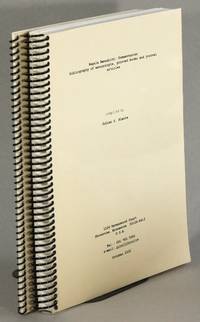
Regula Benedicti: commentaries. Bibliography of manuscripts printed books and journal articles
Shoreview MN 2002. Two volumes 4to; text printed from typescript; original spiral-bound clear plastic and buff printed wrappers; fine. Second volume devoted to translations. Privately printed bibliography. Not in OCLC. <br/><br/> unknown books
Referenz des Buchhändlers : 43282
|
|
|
Plante, Julian G
Regula Benedicti: commentaries. Bibliography of manuscripts printed books and journal articles
Shoreview MN 2002. Two volumes 4to; text printed from typescript; original spiral-bound clear plastic and buff printed wrappers; fine. Second volume devoted to translations. Privately printed bibliography. Not in OCLC. unknown
Referenz des Buchhändlers : 43282
|
|
|
PLANTU
Cassettes Mensonges et Vidéos
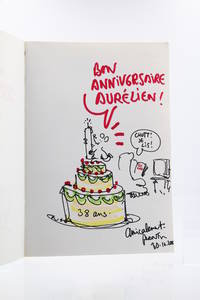
Paris: Seuil 2000. Fine. Seuil Paris 2000 16.50 x 24 cm broché First edition. Handsome copy. Autograph inscription dated and signed by Plantu to someone named Aurélien wishing him happy birthday for his 38th birthday enhanced with an original full-page drawing depicting a large birthday cake topped with a mouse brandishing a lit stick of dynamite and exclaiming ""Bon anniversaire Aurélien !"" ""Happy birthday Aurélien!"" while a bear busy reading Télérama in front of his TV cries out: ""Chutt ! Je lis !"" ""Shh! I'm reading!"" Seuil unknown
Referenz des Buchhändlers : 76703
|
|
|
PLANTU
La Présidentielle 2007 vue par Plantu
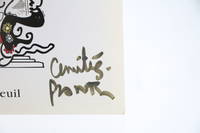
Paris: Seuil 2007. Fine. Seuil Paris 2007 16.50 x 24 cm broché First edition. Handsome copy. Humorous autograph inscription signed by Plantu to Frédéric Ferney integrated into a comic strip speech bubble escaping from the mouth of the presidential candidate standing on the steps of the Elysée Palace and chanting ""Vote Frédéric Ferney"". Seuil unknown
Referenz des Buchhändlers : 77431
|
|
|
PLANTU
Les Conseils de Tonton DSK
Paris: Seuil 2011. Fine. Seuil Paris 2011 16.50 x 24 cm broché First edition. Handsome copy. Humorous autograph inscription signed by Plantu to Frédéric Ferney integrated into a comic strip speech bubble escaping from DSK's mouth and enhanced with two drawn hearts. Seuil unknown
Referenz des Buchhändlers : 77430

|
|
|
Plasman, Louis-C de
Les Luttes D'un Chretien entre son coeur et sa foi The Struggles of Chretien Between his Heart and His Faith
Paris: Eide Soye. Near Fine with no dust jacket. 1869. Second Edition. 1. Half Leather. Half calf over marbbled boards spine in six compartments separated by raised bands gilt lettering on red and green labels in two compartments intricate gilt tooling in three compartments gilt medallion in one compartment; gilt borders on cover marbled endpapers t.e.g. . Very slight shelf-wear very mild foxing throughout else unmarked tight square and clean. NEAR FINE. 12mo 7" - 7½" tall. iii 177 pp . Eide Soye hardcover
Referenz des Buchhändlers : 10389
|
|
|
Plates Engraved By Edward Francis Finden And William Finden After Various Artists; From Library Of Hosmer Johnson
Illustrations Of The Life And Works Of Byron First Hardcover Issue 120 Plates In 2 Volumes
John Murray 1835. First Hardcover Edition . Hardcover. Very Good. Two Volumes. Full Black Calf With "Illustrations Of Byron" And Volume Numbers On Spine In Gilt Covers And Spine Elaborately Stamped In Blind Yellow Silk Endpapers. No Text. Simple Half-Title Followed By Table Of Contents In Each Volume 53 Plates In First Volume And 67 Plates In The Second Volume; Originally Issued In 24 Parts 1833-1834 With 120 Plates In Total Then This First Hardcover Issue Undated But 1835 With All Plates Bound In Two Volumes. Later The Complete Set Of 123 Plates With 3 Vignettes Was Published In 3 Volumes And Still Later It Was Enlarged To 126 And Then 130 Illustrations And Incorporated Into Sets With Explanatory Text Included. Slight Wear At Lower Edges And Corners And Fresh But Volume I Has A1/2" X 1/2" Chip At Upper Right Corner Of Spine And Volume Ii Has A 1" X 3/4" Chip Which Is Detached And Laid In Loosely. No Marks But Gift Card Of Mrs. Hosmer A. Johnson Dated In 1899 To Her Granddaughter. Hosmer Allen Johnson M.D. L.L.D. 1822 - 1891 Was An American Physician Academic And Mason From New York. After Graduating From The University Of Michigan He Moved To Chicago Illinois To Attend Rush Medical College. There He Became An Understudy Of William B. Herrick And Joined His Medical Practice. Receiving A Doctor Of Medicine In 1852 Johnson Was Named Lecturer On Physiology At Rush Eventually Chairing A Department There. In 1859 He Co-Founded The Chicago Medical College At Lind University Which Later Became The Feinberg School Of Medicine Of Northwestern University. During The Civil War Johnson Was The Top Medical Aide In The State Presiding Over The Board Of Medical Examiners For The State Of Illinois. Hosmer Johnson Was Initiated Into The Masonic Order In 1853 And Rose To Become Grand Orator Of The Grand Lodge Of Illinois. He Organized A Knights Templar Chapter For Illinois And Was First Officer Of That Branch For Two Terms. He Became A Member Of The Supreme Council Of The Scottish Rite Northern Jurisdiction In 1861 Later Becoming And Officer. He Could Speak Seven Foreign Languages Fluently And Also Had A Strong Knowledge Of The Ojibwe Language. He Served On The Board Of Trustees Of The University Of Chicago And Northwestern University. <br/> <br/> John Murray hardcover
Referenz des Buchhändlers : 036268

|
|
|
Plates From Drawings By Various Artists, Engraved By Clouet, Blondeau, Tibo, Allet, Benedictus Fariat, Dorigny, Auden Aerd, Arno
Effigies Nomina Et Cognomina S.D.N. Innocentii Pp. Xi. Et Rr. Dd. S.R.E. Cardd. Nunc Viventium. Engraved Portrait Plates Of 30 Catholic Cardinals And The Pope
Roma / Rome 1700. First Edition Thus Printing Unknown. Hardcover. Poor. Title Page And 31 Portrait Plates13 1/4" X 8 7/8" Of Cardinals And Two Of The Pope. Antique Worn Marbled Boards Covers Detached But Present Spine Perished. Defective- Lacking Half Of Pages Which Were Removed By A Decorator- "Breaker" But The Remaining 33 Portrait Plates And Title Are Fine. This Title First Published 1676 But As The Portrait Plates For The Pope Indicate A Date Of 1700 This Example Published Circa 1700. Very Large Engraved Bookplate Of Thomas Anson Showing His Arms "Nil Desperandem" And Two Putti. Per Wikipedia Thomas Anson Frs C. 1695 - 1773 Was A British Member Of Parliament Traveler And Amateur Architect From The Anson Family. Anson Was The Son Of William Anson 1656-1720 And Isabella Carrier Sister-In-Law To Thomas Parker 1St Earl Of Macclesfield. The Family Estate Was Shugborough Hall In Staffordshire. Admiral George Anson 1St Baron Anson Was His Younger Brother And Along With Their Cousin George Parker 2Nd Earl Of Macclesfield They Were Taught Mathematics And Navigation By Isaac Newton's Friend The Mathematician William Jones Who Was Later To Propose Anson's Membership For The Royal Society In 1730. Anson Went Up To St John's College Oxford And Later Studied Law At The Inner Temple. Upon His Father's Death Anson Abandoned Law And Began The First Of Many Travels To The Continent As Was Then The Fashion For Young Men Of Fortune And Taste. In 1732 Anson And His Friend The Earl Of Sandwich Formed A Riotous Dining-Club Called The Society Of The Dilettanti Which Also Had The More Serious Purpose Of Encouraging Study Of Greek Architecture. In 1740 Thomas Briefly Joined His Brother George On The Centurion As He And His Crew Began Their Circumnavigation Of The Globe. Anson Left Them In Order To Travel To Egypt. This Qualified Him For The Egyptian Society And The Divan Society The Latter Being A Wild Drinking-Club Of Which Lord Dashwood And Lady Mary Wortley Montagu Were Avid Members. He Was Elected To The House Of Commons For Lichfield In 1747 A Seat He Held Until 1770. In 1748 Anson Was Sent To Versailles By Lord Sandwich With Secret Correspondence For The Duc De Choiseul And Madame De Pompadour. In Paris He Bought Crayons For His Friend The Duchess Of Bedford And His Sister-In-Law Lady Anson Sent Him A Long List Of Presents She Desired. In 1762 He Succeeded To The Vast Fortune Of Spanish Treasure Amassed By His Admiral Brother. This Enabled Him To Further Indulge His Passion For Architecture At Shugborough. Anson And Another Member Of The Society Of The Diletantti Rebuilt The House In The Greek Revival Style That The Pair Were Championing In England. Anson Filled Shugborough With Paintings Books And Objets D'art And Had Vasalli Paint Allegories Upon The Ceilings. The Park Was Strewn With Temples And Follies Including The Mysterious Shepherd's Monument The Pagoda Pigeon House And The Tower Of The Winds. The Park Has Been Described By Some As A Metaphor For Lord Anson's Circumnavigation Of The Globe. Others Contend That It Engages Aspects Of Many Cultures Both As A Tribute To Admiral Anson's Voyage And As A Representation Of Thomas Anson's Interest In Syncretic Philosophies. Anson Died Unmarried In March 1773. The Anson Estates Were Passed On To His Nephew George Adams Who Assumed The Surname Of Anson And Was Ancestor Of The Earls Of Lichfield. <br/> <br/> hardcover
Referenz des Buchhändlers : 037597
|
|
|
Plato
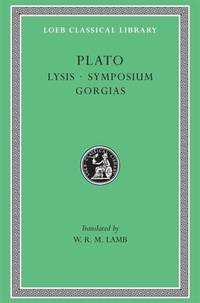
Lysis or Friendship the Symposium Phaedrus
Norwark CT: Easton Press 1979 Book. As New. Leather. Collector's Edition. Limited Collector's Edition the "The 100 Greatest Books Ever Written' series. Translated from the Greek with introductory analyses by Benjamin Jowett with a preface by Whintney J. Oakes. Illustrations by Eugene Karlin. In a handsome decorated leather binding raised bands gilt titles and page edges silk bookmark and moire endpapers. xiv 208208p. illus. Easton Press hardcover
Referenz des Buchhändlers : 044854 ISBN : 0674991842 9780674991842
|
|
|
PLATO
Platonis opera quae extant omnia. The Complete Works of Plato
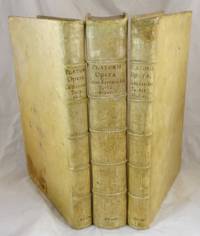
Geneva: Henr. Stephani 1578. First Edition. vellum. Very good. The STEPHANUS Plato <br />The Book That Established the UNIVERSAL REFERENCE System for Platos Writings <br /><br />PLATO. Platonis opera quae extant omnia. The Complete Works of Plato Title also in Greek Henr. Stephani Geneva 1578. First Greek/Latin Edition. <br />Volume 1: TP 16 unnumbered leaves handwritten replacement preliminaries circa 18th c = Dedication to Queen Elizabeth Studioso Lectori Platone Epigrammata Catalogus Dialogorum half title with first page of text - unnumbered - on the verso 1 469 471 471 542. <br /><br />Volume 2: Half-title blank leaf lettered AA.i. 3 unnumbered leaves printed replacement preliminaries circa 18th c. = Dedication to King James the Sixth of Scotland later James the First of England Two Poems 3-701 672 673 704 992. <br /><br />Volume 3: Half-title 3 unnumbered leaves handwritten replacement preliminaries circa 18th c. = Dedication to the Republic of Bern Poem AAAA.i. = Contents Page 3-374 375 368 377-416 1-139; Folio. <br /><br />Three vols. 10.25 x 15.5 in. text block sheets are 10 x 15 in. Folio. <br /><br />"A great Renaissance author and scholar as well as a member of one of Europe's most illustrious families of printers Henri Estienne II himself edited his grand Plato for which he commissioned a new Latin translation by Jean de Serres. Together with his monumental 1572 Thesaurus graecae linguae the lavish Plato was responsible according to Schreiber for securing both Estienne's scholarly reputation and his financial ruin" Garden Ltd. #40. <br />First Greek/Latin edition printed in parallel text with translation and commentary by Jean de Serres noted French historian and advisor to King Henry IV during the reformation. The famous Stephanus edition which has served as the universal reference system for all other editions of Plato's writing since its publication. In every translation of Plato there are small numbers in the margin which refer to the pagination in this edition affording scholars the opportunity to cross-reference each other's work in any language - they are called the "Stephanus numbers." For example Socrates major speech in the Symposium completes at 212c. <br /><br />Some preliminary pages dedication poems etc. are not original but rather were printed and inserted sometime in the 18th century. Because the preliminary pages included dedications to Queen Elizabeth copies of the Stephanus Plato circulating in countries hostile to the throne at the time of publication 1578 often had these pages removed. Some copies of the Stephanus Plato have appeared at auction lacking preliminaries altogether. In 2008 Sokol Books Ltd. catalogued the missing prelims: their absence is the works most common defect. Others like this copy had the preliminaries replacedsometimes by hand other times by a local printeronce relations with England had improved. This is one of those rare copies with replacements. Thus not only is this an important and rare antiquarian book The Stephanus Plato! but also an important historical artifact given its unique history and provenance. <br /><br />CONDITION: Very Good in uniformly bound contemporary possibly early 17th c. vellum with manuscript lettering to spines. Minor repairs to vellum on head and heel of spine mostly on volume 3. Expert old paper repairs to title page of volume I and half-titles of vols. II & III with bookplates on all three pastedowns: Inter Libros Josephi Mariae Parascandolo Antecessoris Regii A.L.N. of Naples. Woodcut-engraved printers vignette on title woodcut-engraved decorated initials head-pieces & tail-pieces. Large paper 15 x 10. Handwritten and printed preliminaries replaced sometime in the 18th c. A tightly bound historically important copy of one of the most important books in the history of philosophy. Henr. Stephani hardcover
Referenz des Buchhändlers : 620
|
|
|
PLATON
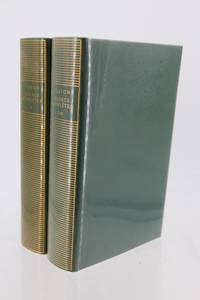
Oeuvres complètes I & II - Complet en 2 volumes
Paris: Gallimard Bibliothèque de La Pléiade 1984. Fine. Gallimard Bibliothèque de La Pléiade Paris 1984 10.50 x 17.50 cm 2 volumes en reliures de l'éditeur Pléiade library edition printed on India paper. Publisher's bindings in full green grained sheep grey top edges smooth spines decorated with gilt fillets. Fine complete set retaining its cellophane wrappers but lacking its soft cases. Gallimard, Bibliothèque de La Pléiade unknown
Referenz des Buchhändlers : 81727
|
|
|
PLATON
Pensées de Platon. Texte grec. Platonis eclogae. De deo de homine de legibus
Lutetiae Parisiorum Paris Paris: Ex typis Augusti Delalain 1823. Fine. Ex typis Augusti Delalain Lutetiae Parisiorum Paris Paris 1823 12 x 20 cm relié Second edition. Contemporary half cloth. Bluish paper boards. Title label with lack. Corners slightly bumped. Ex exergue: this work has been adopted for rhetoric and humanities classes by the public instruction commission. Decree of November 13 1818. Ex typis Augusti Delalain hardcover
Referenz des Buchhändlers : 36211

|
|
|
Platon Alexandrowitch HEYSMAN
La guerre son importance dans la vie du peuple et de l'état
Paris & Limoges: Henri Charles-Lavauzelle 1898. Fine. Henri Charles-Lavauzelle Paris & Limoges 1898 14 x 22.50 cm broché First edition of the French translation by Captain Niessel. First cover marginally and slightly faded gift inscription in pen at head handsome interior condition. Rare. Henri Charles-Lavauzelle unknown
Referenz des Buchhändlers : 25536

|
|
|
Platt, John R (editor), Clifford Geertz, Willard F Libby, Derek J De Solla Price, James M Redfield, Roger W Sperry, George Wald
New Views Of The Nature Of Man: The Monday Lectures Spring 1965
Chicago: University of Chicago Press 1965. First Edition First Printing . Green Cloth. Fine/Near Fine Dustjacket. 152 Pp. Olive Green Cloth Gilt. First Printing. Fine Clean No Names Or Marks. Foxing To Rear Panel Of Near Fine Dj.Dj Priced $5.00. The Hardcover Issue Scarce In Dust Jacket. <br/> <br/> University of Chicago Press hardcover
Referenz des Buchhändlers : 023751

|
|
|
Platt, John R ( Rader)
The Excitement Of Science
Boston: Houghton Mifflin 1962. 1st Edition 1st Printing. Hardcover. Near Fine/Very Good DJ. Viii 174 Pp. Red Cloth Stamped In Gilt And Black. Near New Just A Touch Of Rubbing To Book.Light Wear At Edges Of Dj Which Is Not Price-Clipped. No Names Or Marks. John Rader Platt 1918 - 1992 Was An American Physicist And Biophysicist Noted For His Pioneering Work On Strong Inference In The 1960S And His Analysis Of Social Science In The 1970S. Platt Was Born In Jacksonville Florida. He Received A B.A. From Northwestern University In 1936 And A Phd In Physics From The University Of Michigan In 1941. From 1945 To 1965 He Was Assistant Professor At The University Of Chicago. In The 1940S He Supervised The Lab Work Of Benjamin Drake Wright. He Also Taught At The Marine Biological Laboratory And At Stanford Medical School. From 1965 To 1977 He Was Professor Of Physics At The University Of Michigan And Associate Director Of The Mental Health Research Institute. He Was Also Visiting Professor At Harvard M.I.T. The Hebrew University Of Jerusalem And At The Salk Institute For Biological Studies. His Research Interests Since The 1940S Were In The Field Of Molecular Biophysics And Biophysics And In The 1960S Shifted To Philosophy Of Science Vision And Perception And Social Trends . In The 1970S He Participated In The Club Of Rome. <br/> <br/> Houghton Mifflin hardcover
Referenz des Buchhändlers : 054737

|
|
|
PLATT, Jonas (1769-1834)
Autograph Document Signed
This New York attorney and politician served that state as a Federalist in Congress 1799-1801 and in the state assembly 1796 and state senate 1810-13 though he lost the gubernatorial race in 1810; in later years he served as a New York Supreme Court justice 1814-21. Interesting ADS 1p 8" X 5" New York NY 1796 February 26. Very good. Large triangular chip at lower left not affecting text and other minor edgewear. The 27-year-old brand-new state legislator requests his salary -- and likely his very first since he served in the New York State Assembly only in 1796 and this request comes in February: "The Treasurer of the State of New York willl please to pay. the Sum which shall be certified to be due to me by the Speaker of the House of Assembly for my Services as a Member of that House during the Session of 1796." Boldly and attractively penned in brown ink. unknown
Referenz des Buchhändlers : 40517

|
|
|
PLATT, Thomas C (1833-1910)
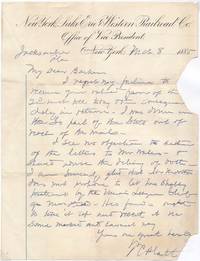
Autograph Letter Signed
Nicknamed "The Easy Boss" as well as "Me Too" for petulantly resigning his U.S. Senate seat in 1881 at Roscoe Conkling's urging this powerful New York Republican party political boss served as Congressman 1873-77 and Senator 1881 1897-1909 -- but is remembered not for legislative prowess but rather for the political clout that made him Theodore Roosevelt's political godfather. ALS 1p 7 3/4" X 10½" Jacksonville FL 8 March 1885. Addressed to "My Dear Barker" possibly New York and Sea Beach Railroad official John Barker or politico and future New York representative and governor Benjamin Barker Odell Jr. 1854-1926. Good plus. Strong folds though none weakened; small paper loss at right upper margin slightly affects a couple words and small triangular chip at lower right corner not affecting text. On "New York Lake Erie & Western Railroad Co. / Office of Vice President" letterhead Platt crosses out the printed "New York" and substitutes Jacksonville he boldly pens regrets at "my failure to receive your valued favor of the 2d. inst till today & the consequent delay in return -- I was down in the So part of the State out of reach of the mails." And likely pertaining to future New York politician and then-current Minister to France Levi P. Morton future New York representative and governor and U.S. vice president he remarks: "I am sincerely glad that Mr. Morton does not propose to let his shabby treatment by the Union League Club go unnoticed. His friends ought to take it up and resent it in some marked and earnest way." Morton was a Union League Club member but what their offense against him was is not known. An interesting fairly attractive letter. unknown
Referenz des Buchhändlers : 40751
|
|
|
PLATT, Thomas C (1833-1910)
Free-Franked Signature
Nicknamed "The Easy Boss" as well as "Me Too" for petulantly resigning his U.S. Senate seat in 1881 at Roscoe Conkling's urging this powerful New York Republican party political boss served as Congressman 1873-77 and Senator 1881 1897-1909 -- but is remembered not for legislative prowess but rather for the political clout that made him Theodore Roosevelt's political godfather. Large and bold free-franked signature "Free TC Platt" in dark brown ink on an irregular-shaped 4" X 1½" slip clipped from envelope n.p. n.y. Very good. A super example. unknown
Referenz des Buchhändlers : 42530

|
|
|
PLAUTE
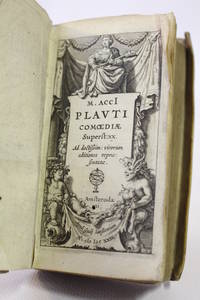
Comoediae
Amstelodami Amsterdam Amsterdam: Apud Gulj Jansonium 1629. Fine. Apud Gulj Jansonium Amstelodami Amsterdam Amsterdam 1629 5.50 x 11.50 cm relié First Elzevier-type edition by Jansonium. With title-frontispiece. Contemporary Dutch rigid vellum binding with flaps. Smooth spine with handwritten title. Holes on boards intended for ties. Front board detached from binding same for spine. Endpapers detached from boards. Spine soiled. Complete set of Plautus's 20 comedies. Apud Gulj Jansonium hardcover
Referenz des Buchhändlers : 55313
|
|
|
PLAUTE
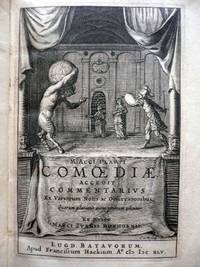
M. Acci Plauti comediae accedit commentarius. Marci Zverii Boxhornii
Lugduni Batavorum Leiden Leyde Leiden: Apud Franciscum Hackum 1645. Fine. Apud Franciscum Hackum Lugduni Batavorum Leiden Leyde Leiden 1645 11.50 x 19.50 cm relié First edition. Illustrated with a handsome frontispiece title. This edition is distinguished by learned and studied typography the text is in italics and the notes at the bottom of pages. Contemporary full vellum binding with overlapping flaps. Smooth spine. Title label added to headcap and partly detached. Good overall condition. Very fresh copy. Edition established by Marc Zuerius Boxhornius 1612-1653 celebrated Dutch critic and scholar who was professor of eloquence at 19 years old at Leiden and succeeded Daniel Heinsius in the chair of history. Handsome and interesting edition by Hacke in Leiden. Apud Franciscum Hackum hardcover
Referenz des Buchhändlers : 25101
|
|
|
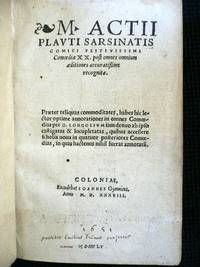
PLAUTE
M. Actii Plauti Comediae XX. Post omnes omnium aéditiones accuryissime recognitae. Praeter reliquas commoditates habes hic lector optime annotationes in omnes comoedias per G. Longolium.
Coloniae Cologne Cologne: Excudebat Ioannes Gymnicus 1538. Fine. Excudebat Ioannes Gymnicus Coloniae Cologne Cologne 1538 16 x 10.50 cm relié First edition. Edition not found in German libraries which possess an edition of 1535 in Basel with another commentator nor in French and English libraries. Fine italic printing in small type. The first edition of Plautus is from 1472. Edition not cited in Brunet. Later full vellum binding perhaps 18th century. Spine with raised bands. Manuscript title in black ink in the 19th century. The comedies of Plautus constitute the largest collection of works that we possess from antiquity. A manuscript note on the title page ""Possedet Emilius Friaud professor anno 1855."" Engraved bookplate Jean Baptiste Peyer seigneur de Fontenelle. Library label of Dr Broca. Manuscript gift inscription from 1651 at the bottom of the title page: Emilius Frinaut professor. Excudebat Ioannes Gymnicus hardcover
Referenz des Buchhändlers : 12409
|
|
|
PLAUTUS
M. Acci Plauti Comoediae. Accedit commentarius ex Variorum notis & observationibus. Quarum plurimae nunc primum eduntur. Ex recensione Ioh. Frederici Gronovii.
Leiden Lugd. Batavorum Ex officina Hackiana 1664. 8vo. XVI115452 index p. Calf 20.5 cm Ref: STCN ppn 840013841; Schweiger 2766; Dibdin 2312: 'Gronovius by the assistance of 6 ancient MSS. and his own sagacious conjectures has improved the text in many places and given some ingenious and successful explanations of difficult passages'; Moss 2461/2; Fabricius/Ernesti 121; Neue Pauly Supplement Band 2 Geschichte der antiken Texte Darmstadt 2007 p. 477; Graesse 5329; Ebert 17202 Details: Gilt back with 5 raised bands. Engraved title. Commentary in 2 columns beneath the text Condition: Binding scuffed and scratched. Shield on the back gone. Paper of the front pastdown wrinkled. Titlepage cut out and mounted on blank flyleaf expertly with removal of the blank margins. Small hole in blank lower margin of the second leaf. Lower margin of the second half partly and very faintly waterstained Note: The 21 surviving comedies of the Roman playwright Titus Maccius Plautus ca. 254-184 B.C. have never been out of fashion since the publication of the 'editio princeps' in 1472. Plautus' influence on world literature is huge. The comedies feature stock situations and characters from everyday life. 'Plautine comedy is inventive exuberant varied full of rollicking eavesdropping scenes lyrical meters slapstick and verbal fireworks.' Early editors commentators and translators ransacked the plays for rhetorical and moral examples. Ever since the first post-classical performances at the end of the 15th century Plautus never left the stage. The Italian 'commedia erudita' and the popular improvisatory 'commedia dell'arte' developed through imitations of the Roman New Comedy. Probably best known is Carlo Goldoni's adaptation of the Menaechmi 1748 'I duo gemelli veneziani' The Venetian Twins. Spain saw the development of 'comedias elegíacas' Latin verse that incorporated Plautine passages into dialogue. Authors like Calderón adopted many New Comedy stage conventions to Spanish taste. In Germany the great dramatist Andreas Gryphius adapted the Miles Gloriosus. And in France Molière the greatest comic playwright of his age imitated Plautus in his Amphitryon and in l'Avare. English playwrights like Ben Johnson and Shakespeare reworked plays of Plautus. 'Plautine comedy provided Shakespeare with character and action throughout his career beginning with direct imitation of the Menaechmi with the Comedy of Errors'. A Midsummer Night's Dream The Taming of the Shrew The Merry Wives of Windsor The Tempest they all adapt themes situations and persons of Plautus. During the Golden Age of the Netherlands P.C. Hooft wrote Warenar 1617 an adaptation of Plautus' Aulularia. Plautus enjoyes also a new modern life on the screen. Rodgers and Hart created the music for the Boys from Syracuse 1938. Big Business 1988 inspired by the Menaechmi tells the story of 2 sets of female twins Bette Midler & Lily Tomlin separated at birth. Pseudolus and Miles Gloriosus can be found in the hilarious musical and film A funny thing happened on the way to the Forum 1962 Source of the quotations: The Classical Tradition Cambr. Mass. 2010 s.v. Plautus § At school Plautus was never in fashion. The plays were full of immorality and Plautus' language was too indecent and too difficult for young boys. Plautus was studied however widely in the 17th century at universities throughout Europe. Schweiger lists 37 editions of the Opera of Plautus for this 17thcentury 15 were published in Germany 13 in the Netherlands 5 in Geneva and 4 in France. Popular among scholars and students were the socalled 'Variorum editions'. They offered the 'textus receptus' which was widely accepted accompanied with the commentary and the annotations of specialists taken from earlier useful normative or renewing editions. This Plautus edition was produced by the Dutch classicist of German origin Johann Friedrich Gronov or Gronovius 1611-1671. He was the successor of Heinsius at the University of Leiden and was influenced by Vossius Grotius Heinsius & Scriverius. 'His editions mark an epoch in the study of Livy of Seneca Tacitus & Gellius. . His interest to the textual criticism of Latin poetry was due to the discovery of the Florentine MS of the tragedies of Seneca. . In his riper years the acumen exhibited in his handling of prose is also exemplified in his treatment of the text of poets such as Phaedrus and Martial Seneca and Statius'. Sandys History of Classical Scholarship 2321 With regard to his Plautus Sandys shows less enthousiasm. 'His edition of Plautus is marred by an imperfect knowledge of metre which has been noticed by Bentley'. The work on Plautus by Gronovius is however highly valued by modern scholarship. Wolfgang de Melo the editor of the new Loeb edition of 2011 places him among the great Plautus-scholars. He calls him 'an important editor of Plautus' . who particularly valued meter as the basis of emendations; his edition was published in 1664'. Plautus Vol. 1 Loeb Classical Library no. 60 Cambr. Mass. 2011 p. CXIV/CXV Further proof of its importance for the history of Plautine scholarship is its listing in 'Supplement Band 2: Geschichte der antiken Texte' of the Neue Pauly. There seven important pre-1848 Plautus editions are mentioned among which this edition of Gronovius Provenance: On the title the name of 'K.H.E. Schutter'. The owner once was Klaas Herman Eltjo Schutter who wrote a dissertation 'Quibus annis comoediae Plautinae primum actae sint quaeritur' Groningen 1952 Collation: 8 A-4F8 4G4 minus blank leaf 4G4 Photographs on request Heavy book may require extra shipping costs hardcover
Referenz des Buchhändlers : 130438
|
|
|
PLAUTUS
M. Acci Plauti Comoediae XX. superstites nunc denuo post omnium editiones ad fidem meliorem codd. & inprimis vetustissimis MSS. Camerarii seu Camerario-Palatinorum ut & doctissimis virorum curas accuratius exactae & novis commentariis illustratae. . Plautina item fragmenta ad similem faciem concinnata & Plauto denique supposita omnia studio & industria Frid. Taubmanni Franci.
Wittenberg Apud Zachariam Schurerum typis Johannis Gormanni 1612. 4to. 2 volumes: XVIXXIV1320122 index1 printer's mark1 blank p. 19th cent. boards. 24 cm Ref: VD17 1:043513Q. Schweiger p. 764/5: 'Gänzliche Umarbeitung seiner Ausg. . T.'s Commentar ist höchst schätzbar'. Dibdin 2311: Taubmann 'has greatly contributed towards the restoration of the true text of Plautus'. Fabricius/Ernesti Bibl. Lat. 1773 I19/20: 'Praestantissimae ad intelligendum hunc Comicum sunt editiones Taubmannianae . contextum pluribus locis exhibent meliorem ac praeter luculentos commentarios omnium quique ante Plauto manus admoverant industriam delibantes ac vincentes'; Brunet 4708/09; Graesse 5328; Ebert 17191 Details: 19th cent. uniform black boards with red morocco letterpiece on the back. Printer's mark on the title which depicts an intertwined snake feather & laurel with a soaring bird a pigeon on top and is repeated at the end with the addition 'Wittenbergae typis Johannis Gormanni'. The motto reads: 'Simplicitas astu bene fermentata triumphat' Condition: Binding very scuffed worn at extremities. Paper on the boards & the backs partly worn away. Joints of the second volume cracking. Small inkstain on the upper edge of the first 100 pages. Title browned. Regularly old ink underlinings occasional ink annotations by a German hand. Ownership entries on the front endpapers Note: The German humanist Friedrich Taubmann 1565-1613 a man of humble origin was 'Professor Poeseos' Latin at the University of Wittenberg from 1595. He was also an accomplished Neolatin poet. His favorite author meum poeticum cor was the Roman playwright Plautus ca. 250-184 B.C. He considered his much critized first edition of Plautus of 1605 a disaster and asked the publisher to destroy the remainder 2/3 of the copies printed and to replace it by a revised second edition which was indeed published in 1612. Taubmann was above all a compiler of the commentaries of others. He employed the Plautus text of Camerarius for his edition and new material provided by the Flemish classical scholar Janus Gruterus or in Dutch Jan Gruter since 1602 Keeper of the Bibliotheca Palatina at Heidelberg. Gruter had bought from the sons of Joachim Camerarius 1500-1574 for his library 2 manuscripts the 'codex vetus' and 'codex decurtatus' because he realized more than Camerarius himself the exceptional worth of both manuscripts. Taubmann received valuable help from the Keeper who collated the Palatine manuscripts and made good use of them in his second edition. 'In der That beruht der Werth der Taubmann'schen Edition in dem ausserordentlichen Reichthume der commentatorischen Parallelen; nach dieser Hinsicht mag sie heute noch mehr als geschichtliche Aufmerksamkeit beanspruchen. Die zweite Ausgabe war textlich viel sorgsamer und übertraf in Correctheit Typenwahl und Ausstattung die über alle Maassen liederliche erste erklecklich' ADB 37433-440. This second edition of 1612 receives also much praise from Schweiger Dibdin and Fabricius/Ernesti. At the end are added 2 treatises the first by J. Camerarius 'De Fabulis Plautinis' and the second by J.C. Scaliger 'De carminibus Comicis'. Taubmann died the year after the appearance of this great edition leaving a wife and 5 young children. His edition's fame survived him Provenance: On the front flyleaf: 'Laurenz Lersch 1835'. Johann Heinrich Laurenz Lersch 1811-1849 was a German archaeologist and classical philologist. He has a lemma in Wikipedia § Also the name of 'Paul Weiland stud. phil. 1883' Collation: a-b4 2-44; A-4Z4; a-4t4 4u2 Photographs on request Heavy set may require extra shipping costs hardcover
Referenz des Buchhändlers : 140114 ISBN : XXX1320122 978XXX1320123
|
|
|
PLAUTUS
M. Accius Plautus ex fide atque auctoritate complurium librorum manuscriptorum opera Dionys. Lambini Monstroliensis emendatus; ab eodemque commentariis explicatus. Nunc denuo plurimis quae in praecedentibus editionibus irrepserant mendis repurgatus; multisque in locis in gratiam antiquariorum illustratus.
Geneva Coloniae Allobrogum Apud Petrum & Iacobum Chouët 1622. 4to. VIII92051 index1 blank p. Overlapping vellum. 24 cm Ref: Schweiger 2765; Fabricius/Ernesti 118; Moss 2461; Ebert 17188: 'Bloss Nachdruck der Lambinischen Ausgabe'; cf. GLN-3810 Details: 6 thongs laced through both joints. Title with broad woodcut architectural borders. Woodcut headpieces. Woodcut initials. At the end 2 indices one 'verborum locutionum & sententiarum' the other on the commentary of Lambinus Condition: Vellum age-toned & soiled. On the titlepage the place of printing: 'Coloniae Allobrogum' Latin name of Geneva has been made illegible with ink and was replaced by 'Genevae' 'at Geneva'. Why this was done is not clear. Some slight foxing. Right lower corner faintly waterstained. Some old ink underlinings Note: The 21 surviving comedies of the Roman playwright Titus Maccius Plautus ca. 254-184 B.C. have never been out of fashion since the publication of the 'editio princeps' in 1472. Plautus' influence on world literature is huge. The comedies feature stock situations and characters from everyday life. 'Plautine comedy is inventive exuberant varied full of rollicking eavesdropping scenes lyrical meters slapstick and verbal fireworks.' Early editors commentators and translators ransacked the plays for rhetorical and moral examples. Ever since the first post-classical performances at the end of the 15th century Plautus never left the stage. The Italian 'commedia erudita' and the popular improvisatory 'commedia dell'arte' developed through imitations of the Roman New Comedy. Probably best known is Carlo Goldoni's adaptation of the Menaechmi 1748 'I duo gemelli veneziani' The Venetian Twins. Spain saw the development of 'comedias elegíacas' Latin verse that incorporated Plautine passages into dialogue. Authors like Calderón adopted many New Comedy stage conventions to Spanish taste. In Germany the great dramatist Andreas Gryphius adapted the Miles Gloriosus. And in France Molière the greatest comic playwright of his age imitated Plautus in his Amphitryon and in l'Avare. English playwrights like Ben Johnson and Shakespeare reworked plays of Plautus. 'Plautine comedy provided Shakespeare with character and action throughout his career beginning with direct imitation of the Menaechmi with the Comedy of Errors'. A Midsummer Night's Dream The Taming of the Shrew The Merry Wives of Windsor The Tempest they all adapt themes situations and persons of Plautus. During the Golden Age of the Netherlands P.C. Hooft wrote Warenar 1617 an adaptation of Plautus' Aulularia. Plautus enjoyes also a new modern life on the screen. Rodgers and Hart created the music for the Boys from Syracuse 1938. Big Business 1988 inspired by the Menaechmi tells the story of 2 sets of female twins Bette Midler & Lily Tomlin separated at birth. Pseudolus and Miles Gloriosus can be found in the hilarious musical and film A funny thing happened on the way to the Forum 1962 Source of the quotations: The Classical Tradition Cambr. Mass. 2010 s.v. Plautus § The French scholar Dionysius Lambinus 1520-1572 earned his fame in the field of Latin scholarship with his masterly editions of Horace 1561 Lucretius 1564 and Cicero 1566. He was Professor Regius of Greek at the Collège de France from 1561 till his death. The 19th century English editor and commentator of Lucretius H.A.J. Munro ranks him as one of the best scholars of his time. He says that 'The quickness of his intellect united with his exquisite knowledge of the language gave him great power in the field of conjecture and for nearly 3 centuries his remained the standard text'. Munro DRN 4th ed. vol. 1 p.14/15. Lambinus' 'reading was as vast as accurate and its results are given in a style of unsurpassed clearness and beauty' Munro adds. In 1576/77 4/5 years after his death appeared at last his edition of the comedies written by the Roman playwright Plautus 250-184 B.C. It is his last great work in which he showed great critical learning and ability to discover hidden meanings and innuendo. Lambinus fell ill exhausted by the weight of his studies and had only time to complete 13 of the 21 plays. This is told in an address to the reader by Iacobus Helias or Jacques Hélias or Jacques Hélie who was the successor of Lambinus as Regius professor of Greek literature from 1572 till 1590 and who completed the work of his colleague. The difficulties Helias says in collating manuscripts mending the text of Plautus and writing a commentary are enormous. The text is corrupt and deformed by mistakes and there is a host of different readings caused by the ignorance and negligence of later generations. Helias lists the humanist scholars who shared with Lambinus their observations on difficult places not forgetting himself. Lambinus had not left his work on Plautus ready to print. Helias completed the work partly by transcribing what remained of the observations of Lambinus on the subsequent comedies. He complemented what was left open and supplied and corrected many quotations. Sometimes he had to work out what Lambinus had only sketched. Finally Helias added 2 indices one for the text of Plautus and the other for the commentary. Lambinus collated for his edition a number of manuscripts and collected many passages from the ancient grammarians. This is how Lambinus' Plautus is valued in modern scholarship: 'Many valuable emendations go back to Denis Lambin .; his later comments reveal that he had lost energy and acumen due to his ailments'. Plautus Vol. 1 Loeb Classical Library no. 60 Cambr. Mass. 2011 p. CXIV Lambinus' successor Helias left no trace in the history of scholarship except for completing the Plautus edition of his colleague. Our edition of 1622 produced by Chouët is a reissue of the important edition of 1576/77 Collation: ¶4 A-Z8; Aa-Zz8 AA-KK8 LL4 MM-PP8 QQ2 leaf QQ2 verso blank Photographs on request Heavy book may require extra shipping costs hardcover
Referenz des Buchhändlers : 140137
|
|
|
PLAUTUS
M. Accius Plautus ex fide atque auctoritate complurium librorum manuscriptorum opera Dionys. Lambini Monstroliensis emendatus; ab eodemque commentariis explicatus. Nunc denuo plurimis quae in praecedentibus editionibus irrepserant mendis repurgatus; multisque in locis in gratiam antiquariorum illustratus. Additi quoque sunt duo indices copiosissimi. Prior verborum locutionum & sententiarum; posterior eorum quae commentariis D. Lambini continentur.
Geneva Coloniae Allobrogum Apud Petrum & Iacobum Chouët 1622. 4to. VIII92051 index1 blank p. Calf 25 cm Ref: Schweiger 2765; Fabricius/Ernesti 118; Moss 2461; Ebert 17188; cf. GLN 15-16 no. 3810; cf. Dibdin 2310/11; Graesse 5328; Ebert 17188 Details: Back with 4 raised bands. Gilt letterpiece in the second compartment. Boards blindtooled. Title with woodcut architectural borders. Occasional woodcut headpieces and initials Condition: Binding very scuffed that is: hinges cracked head & tail of the spine chafed back rubbed boards scratched corners bumped outer edge of upper board abraded. Paper age-toned occasionally foxed. Small inscription on the front flyleaf Note: The French scholar Denys Lambin Dionysius Lambinus in Latin 1520-1572 earned his fame in the field of Latin scholarship with his great editions of Horace 1561 Lucretius 1564 and Cicero 1566. He was 'Professor Regius' of Greek at the 'Collège de France' from 1561 till his death. The 19th century English editor and commentator of Lucretius H.A.J. Munro ranks him as one of the best scholars of his time. He says that 'The quickness of his intellect united with his exquisite knowledge of the language gave him great power in the field of conjecture and for nearly 3 centuries his remained the standard text'. Munro DRN 4th ed. vol. 1 p.14/15. Lambinus' 'reading was as vast as accurate and its results are given in a style of unsurpassed clearness and beauty' Munro adds. In 1576/77 4/5 years after his death appeared at last his edition of the comedies written by the Roman playwright Plautus 250-184 B.C. It is his last great work in which he showed great critical learning and ability to discover hidden meanings and innuendo. He fell ill exhausted by the weight of his studies and had only time to complete 13 of the 21 plays. This is told in an address to the reader by Iacobus Helias or Jacques Hélias or Jacques Hélie who was the successor of Lambinus as 'Regius professor' of Greek literature from 1572 till 1590 and who completed the work of his colleague. The difficulties Helias says in collating manuscripts mending the text of Plautus and writing a commentary are enormous. The text is corrupt and deformed by mistakes and there is a host of different readings caused by the ignorance and negligence of later generations. Helias lists the humanist scholars who shared with Lambinus their observations on difficult places not forgetting himself. Lambinus had not left his work on Plautus ready to print. Helias completed the work partly by transcribing what remained of the observations of Lambinus on the subsequent comedies. He complemented what was left open and supplied and corrected many quotations. Sometimes he had to work out what Lambinus had only sketched. Finally Helias added 2 indices one for the text of Plautus and the other for the commentary. Lambinus collated for his edition a number of manuscripts and collected many passages from the ancient grammarians. This is how Lambinus' Plautus is valued in modern scholarship: 'Many valuable emendations go back to Denis Lambin .; his later comments reveal that he had lost energy and acumen due to his ailments'. Plautus Vol. 1 Loeb Classical Library no. 60 Cambr. Mass. 2011 p. CXIV. Lambinus' successor Helias left no trace in the history of scholarship except for completing the work of his colleague. This edition of 1622 produced by Chouët is a reissue of this important edition of 1576/77. Provenance: Written on the front flyleaf: 'Sum H. S.s J.U. doctoris anno 1642'. Who the 'juris utriusque doctor' was who acquired this book in 1642 we cannot decipher; he was probably a Dutchman or someone from the Rhine valley for the same hand wrote at the top of the same page: 'Emptus quatuor florinos'. § In another hand: 'Ex Biblioth. V. Ampl. J. van Buuren' Collation: q4 A-Z8 Aa-Zz8 AA-KK8 LL4 MM-PP8 QQ2 leaf QQ2 verso blank Photographs on request hardcover
Referenz des Buchhändlers : 140110
|
|
|
PLAUTUS
Pseudolus ein Lustspiel des Plautus in alten Sylbenmaassen verdeutscht. Zur Anhörung feyerlicher Reden bey der öffentlichen Entlassung einiger Schüler von der Thomasschule auf die Universität am 17. April 1823 früh um 9 Uhr laded die hohen Patrone und theilnehmenden Freunde der Schule gehorsamst und ergebenst ein Prof. Friedrich Wilhelm Ehrenfried Rost Rector.
Leipzig Gedruckt bey Wilhelm Staritz 1823. 60 p. Plain wrappers 21.5 cm On the last 3 pages: 'Kurze Nachrichten zur Geschichte der Thomasschule'. Cover worn. Frontcover faded and with some small spots. Title dustsoiled The Thomasschule the 'Schola Thomana Lipsiensis' is a public boarding school in Leipzig Saxony. It was founded in 1212 and is one of the oldest schools in the world. Cultivating classical languages is an old tradition at St. Thomas School. See Wikipedia: 'Thomasschule zu Leipzig' unknown
Referenz des Buchhändlers : 154798
|
|
|
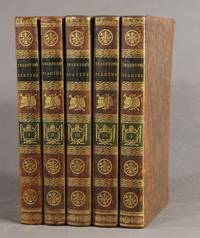
Plautus Titus Maccius
The comedies of Plautus translated into familiar blank verse by Bonnell Thornton . Second edition revised and corrected
London: T. Becket and P. A. De Hondt 1769. 2 volumes 8vo; pp. xxviii 4 320; 4 386; preliminary blanks preserved engraved title pages; together with: Comedies of Plautus translated in familiar blank verse by the gentleman who translated The Captives. London: T. Becket and P. A. De Hondt 1772-4. 3 volumes 8vo pp. 6 viii 400; 4 399 1 ads; 6 416; preliminary blanks preserved engraved title pages; uniformly bound in handsome contemporary tree calf smooth gilt decorated spines with 6 panels black and green morocco labels in 2 circular tools incorporating a harp a sceptre and a cornucopia in the others; very slightly rubbed else a fine attractive set. Early 19th century oval Stradbroke bookplates. Second edition of the first two volumes and first edition of the last 3. This is the first complete translation into English of the early Roman comedies of Plautus. This project was begun by Thornton near the end of his life an appropriately witty man whom Samuel Johnson found highly diverting. Thornton was inspired by the edition of the plays of Terence prepared by his friend George Coleman the elder. Two volumes appeared in 1767 just before Thornton's death; these contained 5 plays translated by Thornton himself one by Coleman and one by Richard Warner. In the end it was Warner a literary scholar and botanist who undertook to complete the project; his final text as represented here provides one of the most successful English translations from the Latin in the 18th century. "Thornton's versions are held to be the best being highly praised by Southey for their playfulness and ingenuity" DNB. "The language of Plautus is all his own; here his claims to greatnesss are undeniable. No one ever exploited more fully the resources of Latin for expressions of endearment and abuse for animated dialogue and effective repartee" OCD. <br/><br/> T. Becket and P. A. De Hondt unknown books
Referenz des Buchhändlers : 34124
|
|
|
Plautus, Titus Maccius
The comedies of Plautus translated into familiar blank verse by Bonnell Thornton . Second edition revised and corrected
London: T. Becket and P. A. De Hondt 1769. 2 volumes 8vo; pp. xxviii 4 320; 4 386; preliminary blanks preserved engraved title pages; together with: Comedies of Plautus translated in familiar blank verse by the gentleman who translated The Captives. London: T. Becket and P. A. De Hondt 1772-4. 3 volumes 8vo pp. 6 viii 400; 4 399 1 ads; 6 416; preliminary blanks preserved engraved title pages; uniformly bound in handsome contemporary tree calf smooth gilt decorated spines with 6 panels black and green morocco labels in 2 circular tools incorporating a harp a sceptre and a cornucopia in the others; very slightly rubbed else a fine attractive set. Early 19th century oval Stradbroke bookplates. Second edition of the first two volumes and first edition of the last 3. This is the first complete translation into English of the early Roman comedies of Plautus. This project was begun by Thornton near the end of his life an appropriately witty man whom Samuel Johnson found highly diverting. Thornton was inspired by the edition of the plays of Terence prepared by his friend George Coleman the elder. Two volumes appeared in 1767 just before Thornton's death; these contained 5 plays translated by Thornton himself one by Coleman and one by Richard Warner. In the end it was Warner a literary scholar and botanist who undertook to complete the project; his final text as represented here provides one of the most successful English translations from the Latin in the 18th century. "Thornton's versions are held to be the best being highly praised by Southey for their playfulness and ingenuity" DNB. "The language of Plautus is all his own; here his claims to greatnesss are undeniable. No one ever exploited more fully the resources of Latin for expressions of endearment and abuse for animated dialogue and effective repartee" OCD. T. Becket and P. A. De Hondt unknown
Referenz des Buchhändlers : 34124
|
|
|
Playfair, William
British Family Antiquity;
London: Thomas Reynolds 1811. original boards. Dis-Bound. 4to - over 9¾" - 12" tall. Illustrative of the Origin and Progress of theRank Honours and Personal Merits of the Nobility of the United Kingdom:Volume VI.xxvii831cxcvi appendix. Lacks title-page and charts. An excellent reading copy of the England volume of the nine volume set. Contents clean and crisp. Binding loose and worn <br/> <br/> Thomas Reynolds hardcover
Referenz des Buchhändlers : F0141
|
|
|
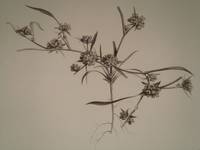
PLEE
DESCRIPTION DE L'EGYPTE. Botanique. Traganum nudatum Buplevrum proliferum Cornulaca monacantha. Histoire Naturelle planche 22
Paris: Imprimerie Impériale 1809. Fine. Imprimerie Impériale Paris 1809-1829 71 x 54 cm une feuille Original etching in plano untrimmed extracted from the 'Imperial Edition' of the Description of Egypt or Series observations and research made in Egypt during the French expedition published by order of His Majesty the Emperor Napoleon Great. Conducted between 1802 and 1830 and published between 1809 and 1828 she was taken in 1000 copies available to institutions. Laid the watermark visible by transparency ancient and modern Egypt paper. Light foxing and marginal with discrete affect the etching a small repaired tear in upper margin 1 cm otherwise very good freshness and preservation. Board belonging to the Botany section the study was conducted by Alire Raffeneau-Delile 1778-1850 French botanist who took part in the Egyptian campaign and in particular brought the lotus and papyrus. The monumental first edition of the Description of Egypt in 13 volumes contained 892 colored plates of which 72 including 9 volumes involved antiquity. The other volumes dealt with the Natural History and modern Egypt as Napoleon Bonaparte had brought with him a commission of scholars from all disciplines so that they said in his description was stored the richest museum of universe. The work was written in part by Baron Dominique Vivant Denon before he became DG of Napoleon in the Louvre Museum. More than 80 artists and 400 writers were hired for this huge project. The dimensions of the exceptionally large boards necessitated the creation of a special press and a specific piece of furniture to keep them .! Imprimerie Impériale hardcover
Referenz des Buchhändlers : 26486
|
|
|
PLEE
DESCRIPTION DE L'EGYPTE. Botanique. Artemisia monosperma Artemisia inculta Atremisia judaica. Histoire Naturelle planche 43
Paris: Imprimerie Impériale 1809. Fine. Imprimerie Impériale Paris 1809-1829 71 x 54 cm une feuille Original unshaved full-page etching from the Imperial edition of the Description de l'Égypte or Recueil des observations et recherches faites en Égypte pendant l'expédition française publié par les ordres de Sa Majesté l'Empereur Napoléon le Grand A Collection of the observations and research carried out in Egypt during the French expedition published on the orders of his Majesty the Emperor Napoleon the Great'.Produced between February 1802 and 1830 on the orders of Naopleon Bonaparte and published between 1809 and 1828 1000 copies were printed and distributed to institutions on vergé paper with an 'Égypte ancienne et moderne' watermark visible when held up to the light. Light marginal spotting not touching image otherwise in very fresh fine condition. An engraving from the Description de l'Egypte one of the masterpieces of French printing and the birth of a new field: Egyptology. A gigantic survey of Egypt at the time of Bonaparte's conquests in 1798 and 1799 the work is divided into 13 volumes of engravings making up 892 plates of which 72 colored as well as presenting the splendors of the Egypt of the Pharaohs in 9 volumes. The other volumes discuss natural history and present a fascinating portrait of Coptic and Islamic Egypt as it was seen by Bonaparte's Eastern Armies. The Egyptian campaign' militarily a disaster demonstrates through the engravings of the Description d'Egypte the scientific success it nonetheless became thanks to the 167 expert members of the Commission of the Sciences and Arts of the Institut d'Egypte Egyptian Institute who followed Napoleon's army. The Institut gathered together in Egypt the mathematician Monge the chemist Berthollet the naturalist Geoffroy Saint-Hilaire as well as numerous artists engineers architects and doctors. They were tasked with re-discovering modern and ancient Egypt and displaying its natural treasures as well as the know-how of its inhabitants.This edition the so-called Imperial edition of the plates for the Description de l'Egypte was printed in four large formats two of which were specially created for it and christened Moyen-Egypte and Grand-Egypte. A special press was built to print it the process extending over 20 years from 1809 to 1829. The Imperial edition proved so popular that a second edition this time in black and white and without the Egypte ancienne et moderne watermark known as the Royal Edition was published during the Restoration by the printing house of C.-L.-F. Panckoucke Paris.The engravings of the Description d'Egypte owe a great deal to Baron Dominique-Vivant Denon illustrator diplomat collector and later Director of the Musée Napoléon the Louvre. His exploration of the South of Egypt gave Bonaparte the idea of sending the experts of the Institut there thus creating a faithful and complete portrait of the area. This was the research gathered together from 1802 in the mammoth Description de L'Egypte.Denon embarked on this story of archeological exploration at the age of 51 reaching first Alexandria and then Cairo before exploring Upper Egypt. Along with the members of the Institut d'Egypte the Natural History Museum's painter H.J. Redouté brother of Pierre-Joseph Redouté author of Roses the mineralogist Dolomiue and the draughtsman Joly Denon then explored the Nile Delta and Lower Egypt. When however he joined the 21st Light Infantry Regiment as it marched across Upper Egypt in pursuit of the retreating Mameluks in November 1798 he found himself the only civilian. In the very midst of the battle itself he reeled off sketches of the works of art that peppered his path right up to the threshold of the Sudan. He said that he had crossed a country that is apart from its name entirely unknown to Europeans and therefore everything was worth describing Voyages dans la Basse et la Haute Egypte pendant les campagnes de Imprimerie Impériale unknown
Referenz des Buchhändlers : 26432

|
|
|
PLEE
DESCRIPTION DE L'EGYPTE. Botanique. Utricularia inflexa Peplidium humifusum Cyperus dives. Histoire Naturelle planche 4
Paris: Imprimerie Impériale 1809. Fine. Imprimerie Impériale Paris 1809-1829 71 x 54 cm une feuille Original unshaved full-page etching from the Imperial edition of the Description de l'Égypte or Recueil des observations et recherches faites en Égypte pendant l'expédition française publié par les ordres de Sa Majesté l'Empereur Napoléon le Grand A Collection of the observations and research carried out in Egypt during the French expedition published on the orders of his Majesty the Emperor Napoleon the Great'.Produced between February 1802 and 1830 on the orders of Naopleon Bonaparte and published between 1809 and 1828 1000 copies were printed and distributed to institutions on vergé paper with an 'Égypte ancienne et moderne' watermark visible when held up to the light. Light marginal spotting not touching image otherwise in very fresh fine condition. An engraving from the Description de l'Egypte one of the masterpieces of French printing and the birth of a new field: Egyptology. A gigantic survey of Egypt at the time of Bonaparte's conquests in 1798 and 1799 the work is divided into 13 volumes of engravings making up 892 plates of which 72 colored as well as presenting the splendors of the Egypt of the Pharaohs in 9 volumes. The other volumes discuss natural history and present a fascinating portrait of Coptic and Islamic Egypt as it was seen by Bonaparte's Eastern Armies. The Egyptian campaign' militarily a disaster demonstrates through the engravings of the Description d'Egypte the scientific success it nonetheless became thanks to the 167 expert members of the Commission of the Sciences and Arts of the Institut d'Egypte Egyptian Institute who followed Napoleon's army. The Institut gathered together in Egypt the mathematician Monge the chemist Berthollet the naturalist Geoffroy Saint-Hilaire as well as numerous artists engineers architects and doctors. They were tasked with re-discovering modern and ancient Egypt and displaying its natural treasures as well as the know-how of its inhabitants.This edition the so-called Imperial edition of the plates for the Description de l'Egypte was printed in four large formats two of which were specially created for it and christened Moyen-Egypte and Grand-Egypte. A special press was built to print it the process extending over 20 years from 1809 to 1829. The Imperial edition proved so popular that a second edition this time in black and white and without the Egypte ancienne et moderne watermark known as the Royal Edition was published during the Restoration by the printing house of C.-L.-F. Panckoucke Paris.The engravings of the Description d'Egypte owe a great deal to Baron Dominique-Vivant Denon illustrator diplomat collector and later Director of the Musée Napoléon the Louvre. His exploration of the South of Egypt gave Bonaparte the idea of sending the experts of the Institut there thus creating a faithful and complete portrait of the area. This was the research gathered together from 1802 in the mammoth Description de L'Egypte.Denon embarked on this story of archeological exploration at the age of 51 reaching first Alexandria and then Cairo before exploring Upper Egypt. Along with the members of the Institut d'Egypte the Natural History Museum's painter H.J. Redouté brother of Pierre-Joseph Redouté author of Roses the mineralogist Dolomiue and the draughtsman Joly Denon then explored the Nile Delta and Lower Egypt. When however he joined the 21st Light Infantry Regiment as it marched across Upper Egypt in pursuit of the retreating Mameluks in November 1798 he found himself the only civilian. In the very midst of the battle itself he reeled off sketches of the works of art that peppered his path right up to the threshold of the Sudan. He said that he had crossed a country that is apart from its name entirely unknown to Europeans and therefore everything was worth describing Voyages dans la Basse et la Haute Egypte pendant les campagnes de Imprimerie Impériale unknown
Referenz des Buchhändlers : 26480

|
|
|
PLEE
DESCRIPTION DE L'EGYPTE. Botanique. Inula undulata Chrysocoma candicans Chrysocoma spinosa. Histoire Naturelle planche 46
Paris: Imprimerie Impériale 1809. Fine. Imprimerie Impériale Paris 1809-1829 71 x 54 cm une feuille Original unshaved full-page etching from the Imperial edition of the Description de l'Égypte or Recueil des observations et recherches faites en Égypte pendant l'expédition française publié par les ordres de Sa Majesté l'Empereur Napoléon le Grand A Collection of the observations and research carried out in Egypt during the French expedition published on the orders of his Majesty the Emperor Napoleon the Great'.Produced between February 1802 and 1830 on the orders of Naopleon Bonaparte and published between 1809 and 1828 1000 copies were printed and distributed to institutions on vergé paper with an 'Égypte ancienne et moderne' watermark visible when held up to the light. Light marginal spotting not touching image otherwise in very fresh fine condition. An engraving from the Description de l'Egypte one of the masterpieces of French printing and the birth of a new field: Egyptology. A gigantic survey of Egypt at the time of Bonaparte's conquests in 1798 and 1799 the work is divided into 13 volumes of engravings making up 892 plates of which 72 colored as well as presenting the splendors of the Egypt of the Pharaohs in 9 volumes. The other volumes discuss natural history and present a fascinating portrait of Coptic and Islamic Egypt as it was seen by Bonaparte's Eastern Armies. The Egyptian campaign' militarily a disaster demonstrates through the engravings of the Description d'Egypte the scientific success it nonetheless became thanks to the 167 expert members of the Commission of the Sciences and Arts of the Institut d'Egypte Egyptian Institute who followed Napoleon's army. The Institut gathered together in Egypt the mathematician Monge the chemist Berthollet the naturalist Geoffroy Saint-Hilaire as well as numerous artists engineers architects and doctors. They were tasked with re-discovering modern and ancient Egypt and displaying its natural treasures as well as the know-how of its inhabitants.This edition the so-called Imperial edition of the plates for the Description de l'Egypte was printed in four large formats two of which were specially created for it and christened Moyen-Egypte and Grand-Egypte. A special press was built to print it the process extending over 20 years from 1809 to 1829. The Imperial edition proved so popular that a second edition this time in black and white and without the Egypte ancienne et moderne watermark known as the Royal Edition was published during the Restoration by the printing house of C.-L.-F. Panckoucke Paris.The engravings of the Description d'Egypte owe a great deal to Baron Dominique-Vivant Denon illustrator diplomat collector and later Director of the Musée Napoléon the Louvre. His exploration of the South of Egypt gave Bonaparte the idea of sending the experts of the Institut there thus creating a faithful and complete portrait of the area. This was the research gathered together from 1802 in the mammoth Description de L'Egypte.Denon embarked on this story of archeological exploration at the age of 51 reaching first Alexandria and then Cairo before exploring Upper Egypt. Along with the members of the Institut d'Egypte the Natural History Museum's painter H.J. Redouté brother of Pierre-Joseph Redouté author of Roses the mineralogist Dolomiue and the draughtsman Joly Denon then explored the Nile Delta and Lower Egypt. When however he joined the 21st Light Infantry Regiment as it marched across Upper Egypt in pursuit of the retreating Mameluks in November 1798 he found himself the only civilian. In the very midst of the battle itself he reeled off sketches of the works of art that peppered his path right up to the threshold of the Sudan. He said that he had crossed a country that is apart from its name entirely unknown to Europeans and therefore everything was worth describing Voyages dans la Basse et la Haute Egypte pendant les campagnes de Imprimerie Impériale unknown
Referenz des Buchhändlers : 26429

|
|
|
PLEE
DESCRIPTION DE L'EGYPTE. Botanique. Anthemis melampodina Inula crispa Senecio belbeysius. Histoire Naturelle planche 45
Paris: Imprimerie Impériale 1809. Fine. Imprimerie Impériale Paris 1809-1829 71 x 54 cm une feuille Original unshaved full-page etching from the Imperial edition of the Description de l'Égypte or Recueil des observations et recherches faites en Égypte pendant l'expédition française publié par les ordres de Sa Majesté l'Empereur Napoléon le Grand A Collection of the observations and research carried out in Egypt during the French expedition published on the orders of his Majesty the Emperor Napoleon the Great'.Produced between February 1802 and 1830 on the orders of Naopleon Bonaparte and published between 1809 and 1828 1000 copies were printed and distributed to institutions on vergé paper with an 'Égypte ancienne et moderne' watermark visible when held up to the light. Light marginal spotting not touching image otherwise in very fresh fine condition. An engraving from the Description de l'Egypte one of the masterpieces of French printing and the birth of a new field: Egyptology. A gigantic survey of Egypt at the time of Bonaparte's conquests in 1798 and 1799 the work is divided into 13 volumes of engravings making up 892 plates of which 72 colored as well as presenting the splendors of the Egypt of the Pharaohs in 9 volumes. The other volumes discuss natural history and present a fascinating portrait of Coptic and Islamic Egypt as it was seen by Bonaparte's Eastern Armies. The Egyptian campaign' militarily a disaster demonstrates through the engravings of the Description d'Egypte the scientific success it nonetheless became thanks to the 167 expert members of the Commission of the Sciences and Arts of the Institut d'Egypte Egyptian Institute who followed Napoleon's army. The Institut gathered together in Egypt the mathematician Monge the chemist Berthollet the naturalist Geoffroy Saint-Hilaire as well as numerous artists engineers architects and doctors. They were tasked with re-discovering modern and ancient Egypt and displaying its natural treasures as well as the know-how of its inhabitants.This edition the so-called Imperial edition of the plates for the Description de l'Egypte was printed in four large formats two of which were specially created for it and christened Moyen-Egypte and Grand-Egypte. A special press was built to print it the process extending over 20 years from 1809 to 1829. The Imperial edition proved so popular that a second edition this time in black and white and without the Egypte ancienne et moderne watermark known as the Royal Edition was published during the Restoration by the printing house of C.-L.-F. Panckoucke Paris.The engravings of the Description d'Egypte owe a great deal to Baron Dominique-Vivant Denon illustrator diplomat collector and later Director of the Musée Napoléon the Louvre. His exploration of the South of Egypt gave Bonaparte the idea of sending the experts of the Institut there thus creating a faithful and complete portrait of the area. This was the research gathered together from 1802 in the mammoth Description de L'Egypte.Denon embarked on this story of archeological exploration at the age of 51 reaching first Alexandria and then Cairo before exploring Upper Egypt. Along with the members of the Institut d'Egypte the Natural History Museum's painter H.J. Redouté brother of Pierre-Joseph Redouté author of Roses the mineralogist Dolomiue and the draughtsman Joly Denon then explored the Nile Delta and Lower Egypt. When however he joined the 21st Light Infantry Regiment as it marched across Upper Egypt in pursuit of the retreating Mameluks in November 1798 he found himself the only civilian. In the very midst of the battle itself he reeled off sketches of the works of art that peppered his path right up to the threshold of the Sudan. He said that he had crossed a country that is apart from its name entirely unknown to Europeans and therefore everything was worth describing Voyages dans la Basse et la Haute Egypte pendant les campagnes de Imprimerie Impériale unknown
Referenz des Buchhändlers : 26430

|
|
|
PLEE
DESCRIPTION DE L'EGYPTE. Botanique. Panicum obtusifolium Cervicina campanuloides Cyperus proctractus. Histoire Naturelle planche 5
Paris: Imprimerie Impériale 1809. Fine. Imprimerie Impériale Paris 1809-1829 71 x 54 cm une feuille Original unshaved full-page etching from the Imperial edition of the Description de l'Égypte or Recueil des observations et recherches faites en Égypte pendant l'expédition française publié par les ordres de Sa Majesté l'Empereur Napoléon le Grand A Collection of the observations and research carried out in Egypt during the French expedition published on the orders of his Majesty the Emperor Napoleon the Great'.Produced between February 1802 and 1830 on the orders of Naopleon Bonaparte and published between 1809 and 1828 1000 copies were printed and distributed to institutions on vergé paper with an 'Égypte ancienne et moderne' watermark visible when held up to the light. Light marginal spotting not touching image otherwise in very fresh fine condition. An engraving from the Description de l'Egypte one of the masterpieces of French printing and the birth of a new field: Egyptology. A gigantic survey of Egypt at the time of Bonaparte's conquests in 1798 and 1799 the work is divided into 13 volumes of engravings making up 892 plates of which 72 colored as well as presenting the splendors of the Egypt of the Pharaohs in 9 volumes. The other volumes discuss natural history and present a fascinating portrait of Coptic and Islamic Egypt as it was seen by Bonaparte's Eastern Armies. The Egyptian campaign' militarily a disaster demonstrates through the engravings of the Description d'Egypte the scientific success it nonetheless became thanks to the 167 expert members of the Commission of the Sciences and Arts of the Institut d'Egypte Egyptian Institute who followed Napoleon's army. The Institut gathered together in Egypt the mathematician Monge the chemist Berthollet the naturalist Geoffroy Saint-Hilaire as well as numerous artists engineers architects and doctors. They were tasked with re-discovering modern and ancient Egypt and displaying its natural treasures as well as the know-how of its inhabitants.This edition the so-called Imperial edition of the plates for the Description de l'Egypte was printed in four large formats two of which were specially created for it and christened Moyen-Egypte and Grand-Egypte. A special press was built to print it the process extending over 20 years from 1809 to 1829. The Imperial edition proved so popular that a second edition this time in black and white and without the Egypte ancienne et moderne watermark known as the Royal Edition was published during the Restoration by the printing house of C.-L.-F. Panckoucke Paris.The engravings of the Description d'Egypte owe a great deal to Baron Dominique-Vivant Denon illustrator diplomat collector and later Director of the Musée Napoléon the Louvre. His exploration of the South of Egypt gave Bonaparte the idea of sending the experts of the Institut there thus creating a faithful and complete portrait of the area. This was the research gathered together from 1802 in the mammoth Description de L'Egypte.Denon embarked on this story of archeological exploration at the age of 51 reaching first Alexandria and then Cairo before exploring Upper Egypt. Along with the members of the Institut d'Egypte the Natural History Museum's painter H.J. Redouté brother of Pierre-Joseph Redouté author of Roses the mineralogist Dolomiue and the draughtsman Joly Denon then explored the Nile Delta and Lower Egypt. When however he joined the 21st Light Infantry Regiment as it marched across Upper Egypt in pursuit of the retreating Mameluks in November 1798 he found himself the only civilian. In the very midst of the battle itself he reeled off sketches of the works of art that peppered his path right up to the threshold of the Sudan. He said that he had crossed a country that is apart from its name entirely unknown to Europeans and therefore everything was worth describing Voyages dans la Basse et la Haute Egypte pendant les campagnes de Imprimerie Impériale unknown
Referenz des Buchhändlers : 26481

|
|
|
PLEE
DESCRIPTION DE L'EGYPTE. Botanique. Cordia crenata Cynanchum argel Cynanchum pyrotechnicum. Histoire Naturelle planche 20
Paris: Imprimerie Impériale 1809. Fine. Imprimerie Impériale Paris 1809-1829 71 x 54 cm une feuille Original unshaved full-page etching from the Imperial edition of the Description de l'Égypte or Recueil des observations et recherches faites en Égypte pendant l'expédition française publié par les ordres de Sa Majesté l'Empereur Napoléon le Grand A Collection of the observations and research carried out in Egypt during the French expedition published on the orders of his Majesty the Emperor Napoleon the Great'.Produced between February 1802 and 1830 on the orders of Naopleon Bonaparte and published between 1809 and 1828 1000 copies were printed and distributed to institutions on vergé paper with an 'Égypte ancienne et moderne' watermark visible when held up to the light. Light marginal spotting not touching image otherwise in very fresh fine condition. An engraving from the Description de l'Egypte one of the masterpieces of French printing and the birth of a new field: Egyptology. A gigantic survey of Egypt at the time of Bonaparte's conquests in 1798 and 1799 the work is divided into 13 volumes of engravings making up 892 plates of which 72 colored as well as presenting the splendors of the Egypt of the Pharaohs in 9 volumes. The other volumes discuss natural history and present a fascinating portrait of Coptic and Islamic Egypt as it was seen by Bonaparte's Eastern Armies. The Egyptian campaign' militarily a disaster demonstrates through the engravings of the Description d'Egypte the scientific success it nonetheless became thanks to the 167 expert members of the Commission of the Sciences and Arts of the Institut d'Egypte Egyptian Institute who followed Napoleon's army. The Institut gathered together in Egypt the mathematician Monge the chemist Berthollet the naturalist Geoffroy Saint-Hilaire as well as numerous artists engineers architects and doctors. They were tasked with re-discovering modern and ancient Egypt and displaying its natural treasures as well as the know-how of its inhabitants.This edition the so-called Imperial edition of the plates for the Description de l'Egypte was printed in four large formats two of which were specially created for it and christened Moyen-Egypte and Grand-Egypte. A special press was built to print it the process extending over 20 years from 1809 to 1829. The Imperial edition proved so popular that a second edition this time in black and white and without the Egypte ancienne et moderne watermark known as the Royal Edition was published during the Restoration by the printing house of C.-L.-F. Panckoucke Paris.The engravings of the Description d'Egypte owe a great deal to Baron Dominique-Vivant Denon illustrator diplomat collector and later Director of the Musée Napoléon the Louvre. His exploration of the South of Egypt gave Bonaparte the idea of sending the experts of the Institut there thus creating a faithful and complete portrait of the area. This was the research gathered together from 1802 in the mammoth Description de L'Egypte.Denon embarked on this story of archeological exploration at the age of 51 reaching first Alexandria and then Cairo before exploring Upper Egypt. Along with the members of the Institut d'Egypte the Natural History Museum's painter H.J. Redouté brother of Pierre-Joseph Redouté author of Roses the mineralogist Dolomiue and the draughtsman Joly Denon then explored the Nile Delta and Lower Egypt. When however he joined the 21st Light Infantry Regiment as it marched across Upper Egypt in pursuit of the retreating Mameluks in November 1798 he found himself the only civilian. In the very midst of the battle itself he reeled off sketches of the works of art that peppered his path right up to the threshold of the Sudan. He said that he had crossed a country that is apart from its name entirely unknown to Europeans and therefore everything was worth describing Voyages dans la Basse et la Haute Egypte pendant les campagnes de Imprimerie Impériale unknown
Referenz des Buchhändlers : 26488

|
|
|
PLEE
DESCRIPTION DE L'EGYPTE. Botanique. Elatine luxurians Sodada decidua. Histoire Naturelle planche 26
Paris: Imprimerie Impériale 1809. Fine. Imprimerie Impériale Paris 1809-1829 71 x 54 cm une feuille Original unshaved full-page etching from the Imperial edition of the Description de l'Égypte or Recueil des observations et recherches faites en Égypte pendant l'expédition française publié par les ordres de Sa Majesté l'Empereur Napoléon le Grand A Collection of the observations and research carried out in Egypt during the French expedition published on the orders of his Majesty the Emperor Napoleon the Great'.Produced between February 1802 and 1830 on the orders of Naopleon Bonaparte and published between 1809 and 1828 1000 copies were printed and distributed to institutions on vergé paper with an 'Égypte ancienne et moderne' watermark visible when held up to the light. Light marginal spotting not touching image otherwise in very fresh fine condition. An engraving from the Description de l'Egypte one of the masterpieces of French printing and the birth of a new field: Egyptology. A gigantic survey of Egypt at the time of Bonaparte's conquests in 1798 and 1799 the work is divided into 13 volumes of engravings making up 892 plates of which 72 colored as well as presenting the splendors of the Egypt of the Pharaohs in 9 volumes. The other volumes discuss natural history and present a fascinating portrait of Coptic and Islamic Egypt as it was seen by Bonaparte's Eastern Armies. The Egyptian campaign' militarily a disaster demonstrates through the engravings of the Description d'Egypte the scientific success it nonetheless became thanks to the 167 expert members of the Commission of the Sciences and Arts of the Institut d'Egypte Egyptian Institute who followed Napoleon's army. The Institut gathered together in Egypt the mathematician Monge the chemist Berthollet the naturalist Geoffroy Saint-Hilaire as well as numerous artists engineers architects and doctors. They were tasked with re-discovering modern and ancient Egypt and displaying its natural treasures as well as the know-how of its inhabitants.This edition the so-called Imperial edition of the plates for the Description de l'Egypte was printed in four large formats two of which were specially created for it and christened Moyen-Egypte and Grand-Egypte. A special press was built to print it the process extending over 20 years from 1809 to 1829. The Imperial edition proved so popular that a second edition this time in black and white and without the Egypte ancienne et moderne watermark known as the Royal Edition was published during the Restoration by the printing house of C.-L.-F. Panckoucke Paris.The engravings of the Description d'Egypte owe a great deal to Baron Dominique-Vivant Denon illustrator diplomat collector and later Director of the Musée Napoléon the Louvre. His exploration of the South of Egypt gave Bonaparte the idea of sending the experts of the Institut there thus creating a faithful and complete portrait of the area. This was the research gathered together from 1802 in the mammoth Description de L'Egypte.Denon embarked on this story of archeological exploration at the age of 51 reaching first Alexandria and then Cairo before exploring Upper Egypt. Along with the members of the Institut d'Egypte the Natural History Museum's painter H.J. Redouté brother of Pierre-Joseph Redouté author of Roses the mineralogist Dolomiue and the draughtsman Joly Denon then explored the Nile Delta and Lower Egypt. When however he joined the 21st Light Infantry Regiment as it marched across Upper Egypt in pursuit of the retreating Mameluks in November 1798 he found himself the only civilian. In the very midst of the battle itself he reeled off sketches of the works of art that peppered his path right up to the threshold of the Sudan. He said that he had crossed a country that is apart from its name entirely unknown to Europeans and therefore everything was worth describing Voyages dans la Basse et la Haute Egypte pendant les campagnes de Imprimerie Impériale unknown
Referenz des Buchhändlers : 26445

|
|
|
PLEE
DESCRIPTION DE L'EGYPTE. Botanique. Avena arundinacea Avena forskalii Trisetaria linearis. Histoire Naturelle planche 12
Paris: Imprimerie Impériale 1809. Fine. Imprimerie Impériale Paris 1809-1829 71 x 54 cm une feuille Original unshaved full-page etching from the Imperial edition of the Description de l'Égypte or Recueil des observations et recherches faites en Égypte pendant l'expédition française publié par les ordres de Sa Majesté l'Empereur Napoléon le Grand A Collection of the observations and research carried out in Egypt during the French expedition published on the orders of his Majesty the Emperor Napoleon the Great'.Produced between February 1802 and 1830 on the orders of Naopleon Bonaparte and published between 1809 and 1828 1000 copies were printed and distributed to institutions on vergé paper with an 'Égypte ancienne et moderne' watermark visible when held up to the light. Light marginal spotting not touching image otherwise in very fresh fine condition. An engraving from the Description de l'Egypte one of the masterpieces of French printing and the birth of a new field: Egyptology. A gigantic survey of Egypt at the time of Bonaparte's conquests in 1798 and 1799 the work is divided into 13 volumes of engravings making up 892 plates of which 72 colored as well as presenting the splendors of the Egypt of the Pharaohs in 9 volumes. The other volumes discuss natural history and present a fascinating portrait of Coptic and Islamic Egypt as it was seen by Bonaparte's Eastern Armies. The Egyptian campaign' militarily a disaster demonstrates through the engravings of the Description d'Egypte the scientific success it nonetheless became thanks to the 167 expert members of the Commission of the Sciences and Arts of the Institut d'Egypte Egyptian Institute who followed Napoleon's army. The Institut gathered together in Egypt the mathematician Monge the chemist Berthollet the naturalist Geoffroy Saint-Hilaire as well as numerous artists engineers architects and doctors. They were tasked with re-discovering modern and ancient Egypt and displaying its natural treasures as well as the know-how of its inhabitants.This edition the so-called Imperial edition of the plates for the Description de l'Egypte was printed in four large formats two of which were specially created for it and christened Moyen-Egypte and Grand-Egypte. A special press was built to print it the process extending over 20 years from 1809 to 1829. The Imperial edition proved so popular that a second edition this time in black and white and without the Egypte ancienne et moderne watermark known as the Royal Edition was published during the Restoration by the printing house of C.-L.-F. Panckoucke Paris.The engravings of the Description d'Egypte owe a great deal to Baron Dominique-Vivant Denon illustrator diplomat collector and later Director of the Musée Napoléon the Louvre. His exploration of the South of Egypt gave Bonaparte the idea of sending the experts of the Institut there thus creating a faithful and complete portrait of the area. This was the research gathered together from 1802 in the mammoth Description de L'Egypte.Denon embarked on this story of archeological exploration at the age of 51 reaching first Alexandria and then Cairo before exploring Upper Egypt. Along with the members of the Institut d'Egypte the Natural History Museum's painter H.J. Redouté brother of Pierre-Joseph Redouté author of Roses the mineralogist Dolomiue and the draughtsman Joly Denon then explored the Nile Delta and Lower Egypt. When however he joined the 21st Light Infantry Regiment as it marched across Upper Egypt in pursuit of the retreating Mameluks in November 1798 he found himself the only civilian. In the very midst of the battle itself he reeled off sketches of the works of art that peppered his path right up to the threshold of the Sudan. He said that he had crossed a country that is apart from its name entirely unknown to Europeans and therefore everything was worth describing Voyages dans la Basse et la Haute Egypte pendant les campagnes de Imprimerie Impériale unknown
Referenz des Buchhändlers : 26472

|
|
|
PLEE
DESCRIPTION DE L'EGYPTE. Botanique. Croton oblongifolium Menispermum leaeba femina Menispermum leaeba masc. Histoire Naturelle planche 51
Paris: Imprimerie Impériale 1809. Fine. Imprimerie Impériale Paris 1809-1829 71 x 54 cm une feuille Original unshaved full-page etching from the Imperial edition of the Description de l'Égypte or Recueil des observations et recherches faites en Égypte pendant l'expédition française publié par les ordres de Sa Majesté l'Empereur Napoléon le Grand A Collection of the observations and research carried out in Egypt during the French expedition published on the orders of his Majesty the Emperor Napoleon the Great'.Produced between February 1802 and 1830 on the orders of Naopleon Bonaparte and published between 1809 and 1828 1000 copies were printed and distributed to institutions on vergé paper with an 'Égypte ancienne et moderne' watermark visible when held up to the light. Light marginal spotting not touching image otherwise in very fresh fine condition. An engraving from the Description de l'Egypte one of the masterpieces of French printing and the birth of a new field: Egyptology. A gigantic survey of Egypt at the time of Bonaparte's conquests in 1798 and 1799 the work is divided into 13 volumes of engravings making up 892 plates of which 72 colored as well as presenting the splendors of the Egypt of the Pharaohs in 9 volumes. The other volumes discuss natural history and present a fascinating portrait of Coptic and Islamic Egypt as it was seen by Bonaparte's Eastern Armies. The Egyptian campaign' militarily a disaster demonstrates through the engravings of the Description d'Egypte the scientific success it nonetheless became thanks to the 167 expert members of the Commission of the Sciences and Arts of the Institut d'Egypte Egyptian Institute who followed Napoleon's army. The Institut gathered together in Egypt the mathematician Monge the chemist Berthollet the naturalist Geoffroy Saint-Hilaire as well as numerous artists engineers architects and doctors. They were tasked with re-discovering modern and ancient Egypt and displaying its natural treasures as well as the know-how of its inhabitants.This edition the so-called Imperial edition of the plates for the Description de l'Egypte was printed in four large formats two of which were specially created for it and christened Moyen-Egypte and Grand-Egypte. A special press was built to print it the process extending over 20 years from 1809 to 1829. The Imperial edition proved so popular that a second edition this time in black and white and without the Egypte ancienne et moderne watermark known as the Royal Edition was published during the Restoration by the printing house of C.-L.-F. Panckoucke Paris.The engravings of the Description d'Egypte owe a great deal to Baron Dominique-Vivant Denon illustrator diplomat collector and later Director of the Musée Napoléon the Louvre. His exploration of the South of Egypt gave Bonaparte the idea of sending the experts of the Institut there thus creating a faithful and complete portrait of the area. This was the research gathered together from 1802 in the mammoth Description de L'Egypte.Denon embarked on this story of archeological exploration at the age of 51 reaching first Alexandria and then Cairo before exploring Upper Egypt. Along with the members of the Institut d'Egypte the Natural History Museum's painter H.J. Redouté brother of Pierre-Joseph Redouté author of Roses the mineralogist Dolomiue and the draughtsman Joly Denon then explored the Nile Delta and Lower Egypt. When however he joined the 21st Light Infantry Regiment as it marched across Upper Egypt in pursuit of the retreating Mameluks in November 1798 he found himself the only civilian. In the very midst of the battle itself he reeled off sketches of the works of art that peppered his path right up to the threshold of the Sudan. He said that he had crossed a country that is apart from its name entirely unknown to Europeans and therefore everything was worth describing Voyages dans la Basse et la Haute Egypte pendant les campagnes de Imprimerie Impériale unknown
Referenz des Buchhändlers : 26460
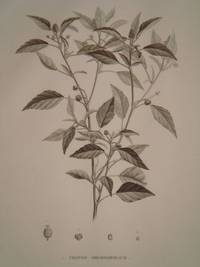
|
|
|
PLEE
DESCRIPTION DE L'EGYPTE. Botanique. Fucus trinodis Fucus latifolus. Histoire Naturelle planche 54
Paris: Imprimerie Impériale 1809. Fine. Imprimerie Impériale Paris 1809-1829 71 x 54 cm une feuille Original unshaved full-page etching from the Imperial edition of the Description de l'Égypte or Recueil des observations et recherches faites en Égypte pendant l'expédition française publié par les ordres de Sa Majesté l'Empereur Napoléon le Grand A Collection of the observations and research carried out in Egypt during the French expedition published on the orders of his Majesty the Emperor Napoleon the Great'.Produced between February 1802 and 1830 on the orders of Naopleon Bonaparte and published between 1809 and 1828 1000 copies were printed and distributed to institutions on vergé paper with an 'Égypte ancienne et moderne' watermark visible when held up to the light. Light marginal spotting not touching image otherwise in very fresh fine condition. An engraving from the Description de l'Egypte one of the masterpieces of French printing and the birth of a new field: Egyptology. A gigantic survey of Egypt at the time of Bonaparte's conquests in 1798 and 1799 the work is divided into 13 volumes of engravings making up 892 plates of which 72 colored as well as presenting the splendors of the Egypt of the Pharaohs in 9 volumes. The other volumes discuss natural history and present a fascinating portrait of Coptic and Islamic Egypt as it was seen by Bonaparte's Eastern Armies. The Egyptian campaign' militarily a disaster demonstrates through the engravings of the Description d'Egypte the scientific success it nonetheless became thanks to the 167 expert members of the Commission of the Sciences and Arts of the Institut d'Egypte Egyptian Institute who followed Napoleon's army. The Institut gathered together in Egypt the mathematician Monge the chemist Berthollet the naturalist Geoffroy Saint-Hilaire as well as numerous artists engineers architects and doctors. They were tasked with re-discovering modern and ancient Egypt and displaying its natural treasures as well as the know-how of its inhabitants.This edition the so-called Imperial edition of the plates for the Description de l'Egypte was printed in four large formats two of which were specially created for it and christened Moyen-Egypte and Grand-Egypte. A special press was built to print it the process extending over 20 years from 1809 to 1829. The Imperial edition proved so popular that a second edition this time in black and white and without the Egypte ancienne et moderne watermark known as the Royal Edition was published during the Restoration by the printing house of C.-L.-F. Panckoucke Paris.The engravings of the Description d'Egypte owe a great deal to Baron Dominique-Vivant Denon illustrator diplomat collector and later Director of the Musée Napoléon the Louvre. His exploration of the South of Egypt gave Bonaparte the idea of sending the experts of the Institut there thus creating a faithful and complete portrait of the area. This was the research gathered together from 1802 in the mammoth Description de L'Egypte.Denon embarked on this story of archeological exploration at the age of 51 reaching first Alexandria and then Cairo before exploring Upper Egypt. Along with the members of the Institut d'Egypte the Natural History Museum's painter H.J. Redouté brother of Pierre-Joseph Redouté author of Roses the mineralogist Dolomiue and the draughtsman Joly Denon then explored the Nile Delta and Lower Egypt. When however he joined the 21st Light Infantry Regiment as it marched across Upper Egypt in pursuit of the retreating Mameluks in November 1798 he found himself the only civilian. In the very midst of the battle itself he reeled off sketches of the works of art that peppered his path right up to the threshold of the Sudan. He said that he had crossed a country that is apart from its name entirely unknown to Europeans and therefore everything was worth describing Voyages dans la Basse et la Haute Egypte pendant les campagnes de Imprimerie Impériale unknown
Referenz des Buchhändlers : 26422

|
|

 Per e-mail erhalten
 Als pdf-Dokument herunterladen
 RSS feed
 Permanenter link


