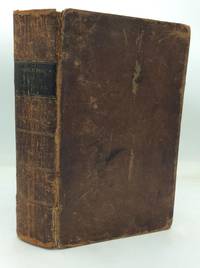
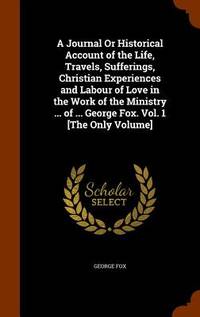
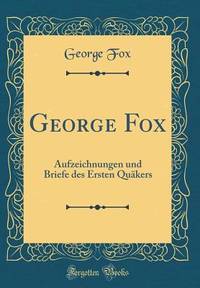
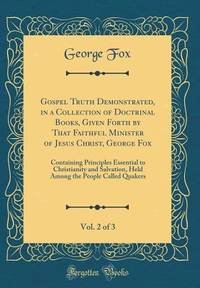
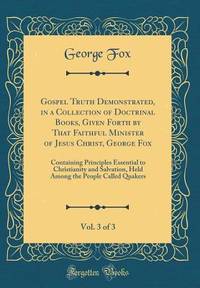
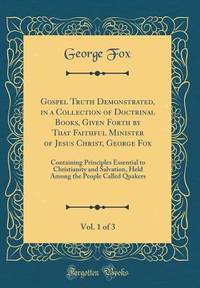
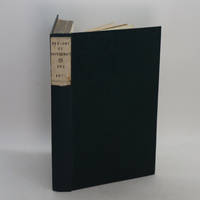
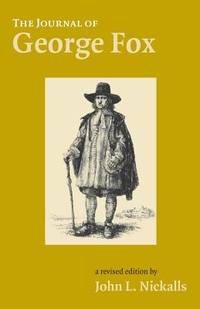
Philadelphia: Kimber & Sharpless Uriah Hunt and Nathan Kite 1832. Leather. Good. 672p. A hardcover book bound in full brown leather. Good condition overall. Edges scuffed rub marks on the surfaces of the boards and vertical crinkles all over the spine. Early owner's ink inscription on front endpaper. All pages foxed margins dampstained and some corners bent. Text is otherwise unmarked and the binding is tight. Religious memoir of the founder of the Society of Friends the Quakers. Kimber & Sharpless, Uriah Hunt, and Nathan Kite unknown
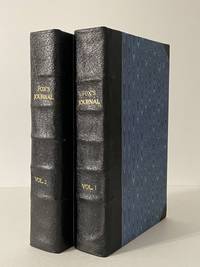
B. & T. Kite 1709. hardcover. Very Good. 0x0x0. J. Sowle; London 1709. Hardcover. Second Edition. Complete 2 Volume Set. The First Edition was published in 1694. A Very Good newer quarter leather binding decorative boards gilt lettering on spine binding sturdy original text block new endpapers and pastedowns previous owner handwritten ink name on title page Volume 1 age toning/discoloration to pages heavy discoloration to text block edges moisture stain top corner first few pages Volume 2 cracked rear hinge Volume 2 commentary by William Penn and others few dog-eared pages original text block shows usual signs of aging without Dust wrapper. A nice and overall clean set. 8vooctavo or approx. 6 x 9 Vol.1 592pp. Vol.2 580pp. indexed. We pack securely and ship daily with delivery confirmation on every book. The picture on the listing page is of the actual book for sale. Additional Scans are available for any item please inquire. B. & T. Kite hardcover
B. & T. Kite. Acceptable. 1808; Volumes 1 & 2; Fifth Edition Corrected; brown leather boards; boards are worn heavier at edges; no jackets; some chipping to spine; interior foxing and toning; penned name on title pages; no markings in text but pages are toned; binding is strong considering the age of the books; Volume 1 is 542 pages; Volume 2 is 485 pages followed by the Index; 8vo - over 7 3/4" - 9 3/4" Tall; Additional shipping charges may be required for International and Expedited orders B. & T. Kite hardcover
Simon & Schuster 1978-06-15. 1st. Hardcover. New. 8x5x1. Remainder copy. Black remainder stamp on bottom edge. Dust jacket fair not original dust jacket that came with the book although correct. Free shipping in USA. Simon & Schuster hardcover
Referencia librero : 329211126013 ISBN : 0671226819 9780671226817
Script Format reprint. Like New. / 1974 DRAFT /I HAVE MORE TITLES LET ME KNOW IF YOU ARE LOOKING FOR OTHER TITLES /THE SCRIPT IS PRINTED ON THREE-HOLE PUNCHED PAPER AND BOUND WITH 2 BRASS BRADSSHIPS WITHIN 24HRS!! unknown
<p>Green cloth binding with white title plate on the spine.</p><p>Originally sold by John Fox. Pontefract</p><p>Green cloth binding with white title plate on the spine. Fine plates with superb pull out map of early Pontefract</p><p>First edition of this scarce work.</p><p>A history of the market town of Pontefract in West Yorkshire England. With reference to the sieges upon its castle and the Royalist sympathies of the town during the English Civil War. Written by George Fox.</p><p>Pontefract is a historic market town in the Metropolitan Borough of Wakefield in West Yorkshire England east of Wakefield and south of Castleford. Historically part of the West Riding of Yorkshire it is one of the towns in the City of Wakefield district and had a population of 30881 at the 2011 Census. Pontefract's motto is Post mortem patris pro filio Latin for "After the death of the father support the son" a reference to the town's Royalist sympathies in the English Civil War. Small villages and settlements in the immediate area include Stapleton.</p><p>Painting of Pontefract Castle in the early 17th century</p><p>by Alexander Keirincx</p><p>After the Norman conquest in 1066 almost all of Yorkshire came under the ownership of followers of William the Conqueror one of whom was Ilbert de Lacy who became the owner of Tateshale Tanshelf where he began to build a castle. Pontefract Castle began as a wooden motte and bailey castle built before 1086 and later rebuilt in stone. The de Lacys lived in the castle for more than two centuries and were holders of the castle and the Honour of Pontefract from 1067 until the death of Alice de Lacy in 1348.</p><p>King Richard II was murdered at the castle in 1400. Little is known of the precise nature of his demise; in particular Shakespeare may have "adjusted" the facts for his own purposes. There are at least three theories which attempt to explain his death: either he was starved to death by his keepers he starved himself to death or he was murdered by Sir Piers Peter Exton on 14 February 1399 or 1400.</p><p>Robin Hood and the outlaw's Pontefract connection: The town of Pontefract and the village of Wentbridge are of central importance to the legend of Robin Hood as it was told in the Middle Ages. The Fifteenth century Robin Hood ballads place the outlaw's activities in the forest of Barnsdale the southern edge of which bordered modern Wakefield. The earliest surviving manuscript of a Robin Hood ballad "Robin Hood and the Potter" makes reference to Wentbridge: "'Y mete hem bot at Went breg' seyde Lytyll John" 'I met him but at Wentbridge' said Little John. Likewise the Fifteenth Century ballad "A Gest of Robyn Hode" appears to make a cryptic reference to the village by depicting a friendly knight explaining to Robin that he 'went at a brydge' where there was 'a wraste-lyng' wrestling. Significantly the Gest of Robyn Hode makes a very specific reference to a location within Wentbridge known as 'the Saylis' and 'the Sayles' as in a four line stanza the outlaw chief instructs his Merry Men to</p><p>Walk up to the Saylis And so to Watling Street And wait after some uncouth guest Upon Chance you may them meet</p><p>The 19th-century antiquarian Joseph Hunter identified the site of the Saylis: a small tenancy of one-tenth of a knight's fee i.e. a knight's annual income located on high ground 500 yards 457.2 metres to the east of the village of Wentbridge in the manor of Pontefract. The Saylis is recorded as having contributed towards the aid that was granted to King Edward III in 1346–47 for the knighting of his son the Black Prince. The late great historians Richard Barrie Dobson and John Taylor indicated that this location provides a very specific clue to Robin Hood's Pontefract heritage noting that such evidence of continuity makes it virtually certain that the Saylis or Sayles which was so well known to the Robin Hood of the "Gest'' survived into modern times as the 'Sayles Plantation' near Wentbridge. To commemorate this English Heritage has located a Blue Plaque on the bridge that stands in the heart of the village above the River Went lending weight to Pontefract's claims to be the true home of Robin Hood.</p><p>Woodcut of Robin Hood from a 17th-century broadside</p><p>Wentbridge is a small village in the City of Wakefield district of West Yorkshire England. It lies around 3 miles 5 km southeast of its nearest town of size Pontefract close to the A1 road. During the Middle Ages the village of Wentbridge was itself sometimes referred to by the name of Barnsdale because it was the main settlement in the Forest of Barnsdale. The county boundary follows the A1 from the River Went to Barnsdale Bar which is the southernmost point of North Yorkshire. Close by to the southwest is the Roman Ridge a Roman road known in the Middle Ages as Watling Street closely follows the course of the modern-day A639. It was at one time prior to modern construction works being completed possible to look down from the Saylis upon Watling Street as it snaked through the village of Wentbridge and it is upon this stretch of highway that Robin Hood and his Merry Men are believed to have committed their famous heists. Earlier historians have usually assumed that this district was heavily wooded. However aerial photography and excavation have shown that the region has always been a largely pastoral landscape dotted with occasional settlements. In close proximity to the village of Wentbridge there are or were some notable landmarks which relate to Robin Hood. The earliest-known Robin Hood place-name reference – in Yorkshire or anywhere else – occurs in a deed of 1322 from the two cartularies of Monk Bretton Priory near the town of Barnsley. The cartulary deed refers in Latin to a landmark named 'the Stone of Robert Hode' Robin Hood's Stone which was located in the Barnsdale area. According to J. W. Walker this was on the eastern side of the Great North Road a mile south of Barnsdale Bar. On the opposite side of the road once stood Robin Hood's Well which has since been relocated six miles north-west of Doncaster on the south-bound side of the Great North Road.</p><p>Further evidence of Robin Hood's Wakefield connections comes by way of Michael Drayton's Poly-Olbion Song 28 67–70 composed in 1622. The poem strengthens Robin Hood's connections to Pontefract because it speaks of the outlaw's death and clearly states that the outlaw died at 'Kirkby'. Kirkby was an Anglo-Saxon settlement upon which the modern town Pontefract stands. In 2014 the historian Dr S. A. La' Chance published a thesis that detailed how a notorious medieval outlaw named Swein-Son-Of-Sicga and styled by contemporaries as 'The Prince of Thieves' inhabited the forested areas of Barnsdale on the outskirts of Pontefract and made a living by robbing amongst others Abbot Benedict of Selby. Professor J. Green indicates that Hugh Fitz Baldric the late eleventh century Sheriff of Nottingham and Yorkshire held responsibility for bringing Swein-Son-Of-Sicga to justice. Acknowledging this La' Chance suggested that the Robin Hood legend is loosely based upon the deeds of Swein-Son-Of-Sicga. La' Chance closed his thesis by suggesting that in all likelihood the outlaw drew his final breath at Saint Nicholas's hospital Kirkby modern day Pontefract which would account for the reference to Robin Hood's death in the Poly-Olbion.</p> Longman, Rees, Orme & Brown. hardcover
Circa 1880. 'The Music Published by Messrs Hutchins & Romer Conduit Street Regent Street'. Small 4to 4 pp. Bifolium. Text clear and complete. Fair on browned high-acidity paper. Neat strip of stub from mounting in album still adhering to inner margin of verso of second leaf. Headed 'Words.' All but first chorus in double-column. A mixture of the original 'House that Jack built' with 'Jack and Jill'. Begins with 'Chorus. - "This is the house that Jack built."' the first lines of which are 'Our labours are done our recompense won And anger has been on no back spilt So now with one voice we'll laugh and rejoice As this is the house that Jack built.' Characters are: Mr. Jack Workmen Architect The Man all Tattered and Torn Monks Priest and Arietta. Songs include 'Fair is my love' 'How now what's the reason' 'This is the Rat' 'The Milkmaid all forlorn' and They call me the man all tattered and torn'. Scarce: no copy on COPAC which does list two copies British Library and Oxford of a 52-page vocal score for 'The House That Jack Built. A Dramatic Cantata For Children's Voices with full orchestral and separate pianoforte accompaniment. Composed by George Fox.' also published by Hutchins and Romer. [Circa 1880.] 'The Music Published by Messrs Hutchins & Romer, Conduit Street, Regent Street'. unknown

 Recibir por correo electrónico
 Descargar en documento PDF
 Flujo RSS
 Link permanente