|
|
|
Drago Antonietta
Donne donne... costume, sorrisi, allegorie e sogni proibiti nelle cartoline postali 1880-1940
Collana Libri illustrati Mondadori - '...intende offrire, un po' sul filo della nostalgia, un po' su quello dell'ironia, un panorama vasto e colorito del pianeta donna visto attraverso oltre mezzo secolo di quello straodinario veicolo di messaggi chiamato cartolina' 1 26x21 cm., legatura in piena tela, sopraccoperta con illustrazione, pp. 197 (2), riccamente illustrato con centinaia di cartoline, complete di didascalie, prima edizione, in italiano, buone condizioni.
|
|
|
E. I. Bitsakis, Philip S. Foner, Sheila Delany, on politics of allegory in 14th century, Neil Talbot, on tourism in West Indies
Science & Society An Independent Journal of Marxism Fall 1974 includes: Voice for Black Equality 1864-1867 Boston Daily Evening Voice by Philip S. Foner
Paperback. Good. Fall 1974 Vol. XXXVIII No. 3. Softcover. Cover shows some sun-fading. Pages clean. Binding sound. paperback
Bookseller reference : 8IW-NZX-FKX
|
|
|
Eber
Bücherzeichen des 15. Jahrhunderts (Eberwein/Eberwin). Handkolorierter Druck auf getöntem gerippten Bütten.
[ca. 1880]. Bildgröße ca. 9 x 10 cm, Blattgröße 16 x 15 cm.
Bookseller reference : 81600

|
|
|
Ecole Fran?aise
Pierre-Paul Prud'hon 1760-1823
sc.: Gusman S., Dujardin - del. Cabasson, Hadamard 1 36x27 cm., estratto di 24 pagine, in francese con la biografie illustrata da ritratto dell'A. in testa (disegnato da DuJardin) e da 9 magnifiche incisioni eseguite dall'Artista stesso, mancano le pagine 19-20-21-22, ma ? allegata una bellissima incisione del ritratto di Prud'hon disegnato da Sabeta nell'aprile del 1837.
|
|
|
FALDA Giovanni Battista (Valduggia, Novara, 1643; Rome, 1678)
(Frontespizio)
Frontespizio della serie Palazzi di Roma de' più celebri architetti designati da Pietro Ferrerio pittore et architetto. L'opera fu progettata e iniziata da Pietro Ferrerio nel 1638 circa; il secondo libro, Nuovi disegni delle architetture e piante dei palazzi di Roma de' più celebri architetti..., fu realizzato da G. B. Falda, che ne fu anche l'intagliatore, e venne pubblicato nel 1655 da G. G. De Rossi. Riguardo al primo libro non si conosce il nome dell'incisore: il Ferrerio firma le tavole solo in qualità di disegnatore. Le più importanti tipologie edilizie romane sono illustrate dal Ferrerio sia in alzato sia in pianta, a partire dall'età d'oro di Bramante, Raffaello, Peruzzi e Michelangelo per poi passare a Vignola, Ammannati, Ligorio, Della Porta, dedicando infine un modesto spazio agli architetti del nuovo secolo, quali Bernini, Borromini o Domenico Fontana: segnale evidente, questo, di quanto l'orientamento della cultura e del gusto del Seicento maturo tendesse verso un recupero ed una preferenza nei riguardi del classicismo cinquecentesco o del tardo manierismo controriformato. Ogni tavola è corredata da un'iscrizione di carattere storica che riporta sempre, tra le altre notizie, il nome dell'architetto che progettò l'opera, e l'anno di inizio della costruzione. Le incisioni si caratterizzano per la precisione del disegno, l'attenzione verso il particolare e la nitidezza dell'immagine. L'opera costituisce una sorta di guida all'architettura romana tra cinquecento e seicento, di grande valore storico-documentario. Acquaforte, stampata su carta vergata coeva, in buono stato di conservazione. Plate from the series Palazzi di Roma de' più celebri architetti designate da Pietro Ferrerio pittore et architetto. The work was projected and begun by Pietro Ferrerio in about 1638; the second book, Nuovi disegni delle architetture e piante dei palazzi di Roma de' più celebri architetti..., was done by G. B. Falda, who was also the engraver, and was published in 1655 by G. G. De Rossi. Regarding the first book we do not know the name of the engraver: Ferrerio signs the plates only as a draftsman. The most important Roman building typologies are illustrated by Ferrerio both in elevation and in plan, starting from the golden age of Bramante, Raphael, Peruzzi and Michelangelo and then moving on to Vignola, Ammannati, Ligorio, Della Porta, finally dedicating a modest space to the architects of the new century, such as Bernini, Borromini or Domenico Fontana: This is an evident sign of how much the orientation of the culture and taste of the mature seventeenth century tended towards a recovery and a preference for sixteenth-century classicism or late counter-reformed Mannerism. Each panel is accompanied by a historical inscription that always reports, among other information, the name of the architect who designed the work, and the year in which construction began. The engravings are characterized by the precision of the drawing, the attention to detail and the sharpness of the image. The work constitutes a sort of guide to Roman architecture between the sixteenth and seventeenth centuries, of great historical-documentary value. Etching, printed on contemporary laid paper, in good condition.

|
|
|
FRANCE, Anatole
L'Ile des Pingouins, illustrations de Georges VILLA
Paris La Connaissance 1922 In-4 illustré de nombreuses vignettes en noir et de 8 lithographies demi-ton hors-texte, 390p. Couverture illustrée.
Bookseller reference : 27320
|
|
|
Francis-Joachim Roy
Les chiens
Robert Laffont 1961 in12. 1961. Broché. Le roman "Les chiens" de Francis-Joachim Roy publié en 1961 décrit l'invasion de Port-au-Prince par des chiens errants qui créent le chaos et la panique. Cette arrivée massive sert d'allégorie pour représenter les masses exclues et misérables d'Haïti sur fond de régime dictatorial de corruption et de répression. L'œuvre aborde les thèmes éternels d'Haïti dans un esprit tragi-comique
Bookseller reference : 100148529
|
|
|
Fénelon
Aventures de Télémaque suivies des aventures d'Aristonoüs avec des observations générales par A. Mazure
Belin Frères 423 pages Paris. in-12. Sans date. Dos en percaline. 423 pages. Nouvelle édition non datée
Bookseller reference : 25091
|
|
|
GALLE Philippe (Haarlem, 1537; Anversa, 12 o 29 Marzo 1612)
Spectandum dedit Ortelius mortalib. obdem, Orbi spectandum Galleus Ortelium
Questo famoso ritratto di Ortelius, all'età di circa 50 anni, fu inciso da Philippe Galle e apparve nel Theatrum a partire dal 1579. Pochi altri ritratti del grande cartografo sono sopravvissuti. La traduzione latina del titolo è: "Guardando, Ortelius ha dato agli esseri mortali il mondo, guardando il suo volto, Galle ha dato loro Ortelius". Il ritratto è circondato da una cornice di cinghie e ghirlande. Senza dubbio il più famoso di tutti i ritratti di Ortelius. Abraham Ortelius è forse il più noto di tutti i cartografi del XVI secolo. Il 20 maggio 1570, il Theatrum Orbis Terrarum di Ortelius apparve per la prima volta in un'edizione di 70 mappe. Al momento della sua morte, nel 1598, erano state pubblicate un totale di 25 edizioni, incluse quelle in latino, italiano, tedesco, francese e olandese. Edizioni successive sarebbero state pubblicate anche in spagnolo e inglese dai successori di Ortelius, Vrients e Plantin, il primo dei quali aggiunse un certo numero di mappe all'atlante, la cui edizione finale fu pubblicata nel 1612. La maggior parte delle mappe del Theatrum di Ortelius furono tratte dai lavori di un certo numero di altri cartografi di tutto il mondo; una lista di 87 autori è data dallo stesso Ortelius. Incisione in rame con bel colore a mano più tardi, ottime condizioni. This famous portrait of Ortelius, at the age of about 50, was engraved by Philippe Galle and appeared in the Theatrum from 1579 onwards. Few other portraits of the great cartographer have survived. The Latin title translation is, "By looking, Ortelius gave to mortal beings the world, by looking at his face, Galleus gave them Ortelius." The portrait is surrounded in a strapwork and garland frame. Without question the most famous of all Ortelius portraits. Abraham Ortelius is perhaps the best known and most frequently collected of all sixteenth-century mapmakers. Ortelius started his career as a map colorist. On May 20, 1570, Ortelius’ Theatrum Orbis Terrarum first appeared in an edition of 70 maps. By the time of his death in 1598, a total of 25 editions were published including editions in Latin, Italian, German, French, and Dutch. Later editions would also be issued in Spanish and English by Ortelius’ successors, Vrients and Plantin, the former adding a number of maps to the atlas, the final edition of which was issued in 1612. Most of the maps in Ortelius' Theatrum were drawn from the works of a number of other mapmakers from around the world; a list of 87 authors is given by Ortelius himself Copper engraving with fine later hand colour, very good condition.

|
|
|
GIULIO CAGLIUNO
RITORNO ALLE CAVERNE INIZIAZIONE E RINASCITA
Dalle caverne si spalanca il Mistero e la Saggezza. Leggende, credenze, parabole, riti. Una incursione in un universo inesplorato con sfide mortali, profezie, esoterismo., misteri. Accanto a un Budda scandaloso, all'illuminato Cagliostro, a infidi demoni e seducenti maghe, sentiremo la voce dello Spirito, percorreremo la via della Verità AGARTTHA 1989 368 PP. FONDO DI MAGAZZINO, LIEVI SEGNI DEL TEMPO, VOLUME INTONSO.

|
|
|
GIULIO CAGLIUNO
RITORNO ALLE CAVERNE. INIZIAZIONE E RINASCITA
NUOVO. Dalle caverne si spalanca il Mistero e la Saggezza. Leggende, credenze, parabole, riti. Una incursione in un universo inesplorato con sfide mortali, profezie, esoterismo, misteri. Accanto a un Budda scandaloso, all'illuminato Cagliostro, a infidi demoni e seducenti maghe, sentiremo la voce dello Spirito, percorreremo la via della Verità. Un libro altamente suggestivo. Informazioni bibliografiche Titolo: Ritorno alle caverne. Iniziazione e rinascita Autore: Giulio Cagliuno Editore: Mazzo di Rho: Agarttha, 1989 Lunghezza: 368 pagine; 23 cm Soggetti: Esoterismo, New Age, Simbolismo, Profezie, Malta, Teosofia, Massoneria, Enigmistica, Allegorie, Dogòn, Iniziati, Buddhismo, Buddha, Giordano Bruno, Maestri, Religioni, Spiritualità, Occultismo, egizi, Fenice, Acacia, Olivo, Vite, Morte, Paranormale, Mistero, Parabole, Credenze, Miti, Astrologia

|
|
|
Grass Günter
Le tambour
Le seuil / Cadre vert 1979 526 pages in8. 1979. broché. 526 pages. Le Tambour de Günter Grass raconte l'histoire d'Oskar Matzerath un garçon qui décide de ne plus grandir à l'âge de trois ans et exprime sa révolte en jouant du tambour en étain. À travers son récit autobiographique le roman offre un regard grotesque et fantastique sur environ un demi-siècle d'histoire allemande de 1899 aux années 1950 mêlant critique sociale humour noir et symbolisme
Bookseller reference : 13706 ISBN : 2020014300
|
|
|
Grazzini Antonfrancesco ed altri
TUTTI I TRIONFI, CARRI, MASCHERATE O CANTI CARNASCIALESCHI ANDATI PER FIRENZE DAL TEMPO DEL MAGNIFICO LORENZO DE' MEDICI FINO ALL'ANNO 1559 in questa seconda edizione corretti, ... , e co' ritratti di ciascun poeta adornati
Due volumi in 8° grande legati in mezza pelle con unghie, titolo ai tasselli ai dorsi (restauri), sguardie, occhielli, frontespizi incisi davvero molto animati, LX, 594 pp. in numerazione continua, 42 (di 43, manca un ritratto nel primo volume), tavole incise in rame, alcune ripiegate. Di questa raccolta s'ha solo da dir bene. L'insieme è fantasmagorico e gustoso quanto gli squisiti manicaretti fiorentini. Nei 341 canti di questa raccolta, tra cui la celeberrima "Quant'e" bella giovinezza" del Magnifico ed una canzone del Machiavelli pubblicata per la prima volta nel 1553. ve ne sono diversi che trattano di argomenti di caccia quasi tutti allegorici e con palesi doppi sensi, comunque importanti per la conoscenza del modo di cacciare di quell'epoca. E poi tutta la giocosa sfrontatezza fiorentina: esemplare in barbe, in bello stato, fresco malgrado qualche sporadica brunitura. Importante e raro a reperirsi
|
|
|
Grimm, Ludwig Emil - 1790 Hanau - Kassel 1863
Drei Mädchen in bergiger Landschaft, sinnend um ein Stundenglas sitzend.
o.J. Radierung mit zartem Plattenton, ?inv. 1824?, auf chamoisfarbenem Velin. 15,4:17 cm. Provenienz: Doublette Königliches Kupferstichkabinett, Berlin, mit Veräußerungsstempel, vgl. Lugt 1610. Literatur: Stoll 138. - Sehr guter Abdruck mit vollem Rand. Mehrere Feder- und Bleistiftstudien belegen, wie sich Ludwig Emil Grimm mit seiner Bildidee, die Vergänglichkeit alles Irdischen darzustellen, auseinandersetzte. Nach mehreren Entwicklungsstadien entstand schließlich die vorliegende Fassung, ein ?Memento mori?, ikonographisch eigenwillig und ungewohnt.
Bookseller reference : 0407-B

|
|
|
Grummt, Christina
Adolph Menzel - zwischen Kunst und Konvention : die Allegorie in der Adressenkunst des 19. Jahrhunderts.
Berlin : Reimer, 2001. 383 S. : Ill. ; 24 cm broschiert
Bookseller reference : 46015
|
|
|
Guillaume de Lorris et Jean de Meun
Le Roman de la Rose
Garnier-flammarion 1974 in12. 1974. Broché. Le Roman de la Rose est un long poème allégorique du XIIIe siècle écrit d'abord par Guillaume de Lorris (vers 1230) puis complété par Jean de Meun (vers 1270-1280). Il raconte sous la forme d'un songe la quête d'un jeune homme (l'Amant) pour atteindre une Rose symbole de l'objet de son désir amoureux dans un jardin peuplé de personnages allégoriques comme Danger et Jalousie. L'œuvre présente deux visions contrastées de l'amour : une première partie idéalisée et courtoise et une seconde plus cynique et érudite
Bookseller reference : 100149241
|
|
|
Hagenow, Elisabeth von
Bildniskommentare : Allegorisch gerahmte Herrscherbildnisse in der Graphik des Barock: Entstehung und Bedeutung. Studien zur Kunstgeschichte ; Bd. 79.
Hildesheim ; Zürich ; New York : Olms., 1999. 247 S. : Ill. ; 21 cm Broschiert.
Bookseller reference : 1199678

|
|
|
Hankins, John Erskine
Source and Meaning in Spenser's Allegory. Study of the "Faerie Queene". [By John Erskine Hankins].
Oxford: The Clarendon Press 1971. VIII, 337 Seiten. 8° (17,5-22,5 cm). Orig.-Pappband mit Orig.-Schutzumschlag. [Hardcover / fest gebunden].
Bookseller reference : 105138

|
|
|
Harms, Wolfgang (Hrsg.), Klaus Speckenbach (Hrsg.) und Herfried Vögel (Mitarb.)
Bildhafte Rede in Mittelalter und früher Neuzeit. Probleme ihrer Legitimation und ihrer Funktion. [Herausgegeben von Wolfgang Harms und Klaus Speckenbach in Verbindung mit Herfried Vögel]. Widmungsexemplar.
Tübingen: Niemeyer 1992. VIII, 297 Seiten. Gr. 8° (23 x 15,5 cm). Illustrierte Orig.-Broschur. [Softcover / Paperback].
Bookseller reference : 2132112

|
|
|
Harms, Wolfgang, Klaus Speckenbach und Herfried Vögel (Hgg.)
Bildhafte Rede in Mittelalter und früher Neuzeit. Probleme ihrer Legitimation und ihrer Funktion.
Tübingen, Niemeyer 1992. VIII, 297 Seiten. Softcover/Paperback
Bookseller reference : 91182

|
|
|
Hartmann, Reinildis
Allegorisches Wörterbuch zu Otfrieds von Weißenburg Evangeliendichtung.
München, Fink, 1975. 559 S. Lex-8°, OLwd.
Bookseller reference : 23710
|
|
|
Haug, Walter (Hg.)
Formen und Funktionen der Allegorie. Symposion Wolfenbüttel 1978. (Germanistische Symposien-Berichtsbände, Band 3.)
Stuttgart, Metzler 1979. X, 810 Seiten. Leinen
Bookseller reference : 91975

|
|
|
HELLMUT RITTER.
Dogu mitolojisinin edebiyata etkisi. Karsilastirmali edebiyat metinleri. Edited by: Mehmet Kanar
Fine English Dogu mitolojisinin edebiyata etkisi. Karsilastirmali edebiyat metinleri., Prof. Dr. Hellmut Ritter, edit by: Mehmet Kanar, Ayrinti yayinlari (Schola dizisi), Ist., 2011. Paperback. Pbo. Demy 8vo. 240 p. Fine. A study on effect of Middle-Eastern mythology to literature. =[Texts comparative literature.]
|
|
|
HELLMUT RITTER.
Dogu mitolojisinin edebiyata etkisi. Karsilastirmali edebiyat metinleri. Edited by: Mehmet Kanar
New English Paperback. Pbo. Mint. Demy 8vo. (21 x 14 cm). In Turkish. 240 p. A study on effect of Middle-Eastern mythology to literature. =[Texts comparative literature.] Dogu mitolojisinin edebiyata etkisi. Karsilastirmali edebiyat metinleri. Edited by: Mehmet Kanar
|
|
|
HELM, Albert
Symbole.Profane Sinnbilder, Embleme und Allegorien.Eine Motiv und Formensammlung. Einfürung & 64 Tafeln
1 Vol. In-folio p t. editoriale, piatto ill pag. 32 64 tavv.col.sciolte in cartella editoria PROG 32366 CATT_ATT 44
|
|
|
Hemingway Ernest
Le Vieil homme et la mer
Editions Gallimard 1988 11x1 4x18cm. 1988. Broché. Le roman raconte l'histoire de Santiago un vieux pêcheur cubain qui après une longue période de malchance part seul en mer et engage une lutte épique contre un énorme marlin. Cette bataille d'abord contre le poisson puis contre les requins qui l'attaquent devient un symbole de la persévérance humaine du courage et de la dignité face à l'adversité et à la nature
Bookseller reference : 500349005
|
|
|
Henze, Helene
Die Allegorie bei Hans Sachs. Mit besonderer Berücksichtigung ihrer Beziehungen zur graphischen Kunst. [Von Helene Henze]. (= Hermaea, Bd. 11).
Halle (Saale): Verlag Max Niemeyer 1912. XVI, 168. Mit 8 Lichtdrucktafeln im Anhang. Lagen unbeschnitten. Gr. 8° (23,5 x 15 cm). Orig.-Interimsbroschur. [Softcover / Paperback].
Bookseller reference : 4104257

|
|
|
Hirdt, Willi
Giovanni Bellinis "Allegoria sacra". Romanica et comparatistica Bd. 35.
Tübingen : Stauffenburg, 2001. 154 S. Mit zahlr. farb. Abb. Originalbroschur.
Bookseller reference : 1115039

|
|
|
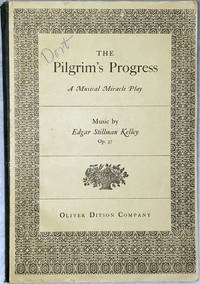
Hodgkinson, Elizabeth and Edgar Stillman Kelley (Text Based on the Allegory of John Bunyan)
The Pilgrim's Progress: A Musical Miracle Play for Soli Chorus & Orchestra
<p>Boston: Oliver Ditson Company Copyrights are 1917 and 1920. 317 pages. Penciled name on top cover. Volume shows some spine lean. Corners are a little curled. Volume remains tight and contents are generally clean. . Soft Cover. Good/No Dust Jacket.</p> Oliver Ditson Company paperback
Bookseller reference : 041798
|
|
|
HONDIUS Jr. Jodocus (Amsterdam 1594 -1629)
Nova et Accurata Italiae Hodiernae Descriptio
Frontespizio del Nova et accurata Italiae hodiernae descriptio in qua omnium eius regionum, vrbium, pagorum, dominiorum, castellorum, montium, fluviorum, fontium, lacuum, et portuum, historia exhibetur. Geographicis tabulis et vrbium praecipuarum iconibus illustrata a Iudoco Hondio addita est Siciliae, Sardiniae, Corsicae, et itinerariorum per Italiam brevis delineatio, stampato a Leida dalla tipografia Elzevir nel 1627. Si tratta di un atlante geografico unito ad una raccolta di cartografia urbana, esclusivamente dedicato alla penisola. L’opera consta di 31 carte geografiche e 67 vedute o piante di città. Le carte derivano dall’Atlas Minor del Mercator, mentre la cartografia urbana è basata sui modelli introdotti a Venezia da Francesco Valegio e da quelli del Civitates Orbis Terrarum di G.Braun e F. Hogenberg. L’opera è relativa al periodo in cui Jodocus Hondius II si era appena diviso dal fratello Hendrick. Secondo la letteratura esisterebbe una prima edizione della raccolta, stampata ad Amsterdam nel 1626. Incisione in rame, finemente colorata a mano, in ottimo stato di conservazione. Bibliografia Cremonini, pp. 23/25, n. 18; Fossati Bellani; n. 320; Willems; n. 279. Title page taken from Nova et accurata Italiae hodiernae descriptio in qua omnium eius regionum, vrbium, pagorum, dominiorum, castellorum, montium, fluviorum, fontium, lacuum, et portuum, historia exhibetur. Geographicis tabulis et vrbium praecipuarum iconibus illustrata a Iudoco Hondio addita est Siciliae, Sardiniae, Corsicae, et itinerariorum per Italiam brevis delineatio, printed in Leiden by the printing house Elzevir in 1627. This is a geographical atlas combined with a town book, exclusively dedicated to Italy. The work consists of 31 maps and 67 views or plans of cities. The maps derive from Mercator's Atlas Minor, while the plans are based on the models introduced in Venice by Francesco Valegio and those of Civitates Orbis Terrarum by G. Braun and F. Hogenberg. The work is related to the period in which Jodocus Hondius II had just separated from his brother Hendrick. According to the literature there is a first edition of the collection, printed in Amsterdam in 1626. Copper engraving, finely hand-colored, in excellent condition. Literature Cremonini, pp. 23/25, n. 18; Fossati Bellani; n. 320. Willems; n. 279.

|
|
|
HUGO Hermann
PIA DESIDERIA. Authore Hermanno Hugone Societatis Iesu.
In-24 p. (mm. 110x77), elegante legatura mod. in p. pelle stile seicentesco, decoraz. oro ai piatti e al dorso a cordoni, pp. 274 (mal num. 272, omesse nella numeraz. le pp. 193-194.), con un bel frontespizio figurato e 46 deliziose tavole di emblemi inc. in rame, eseguite da Carolus Blancus, tutte nel testo. L’opera è introdotta da una lettera dedicatoria alla Madre Angelica Lucrezia Maria Sfondrati (priora del Convento di S. Paolo) e a Papa Urbano VIII. Al colophon: “Mediolani, Typis Philippi Ghisulfij Anno 1633”. Cfr. Praz “Studies in 17th Century Imagery”, pp. 376-377: “Between 1624 and 1757 no less than 42 Latin editions are recorded” - De Backer “Bibliothèque des écrivains de la Compagnie des Jésus”,I, p. 407: “Herman Hugo (1588-1629), né a Bruxelles. Il fut d’abord professeur des humanités à Anvers, et préfet des études à Bruxelles. Plus tard, il suivit en Espagne le duc d’Arschot qui l’avait nommé son confesseur..”. Esempl. leggerm. rifilato; fori di tarlo margin. su circa 30 cc. (in alc. punti intaccano una o due lettere del testo) ma complessivam. ben conservato.
|
|
|
JAMIN Philip:
L'escalade de Genève 1602. [broché avec] La Restauration de Genève 1813-1816.
Genève, Paris, Chez tout les libraires, 1887 [et] 1886. Plaquette grand in-8 oblong de 8 feuillets et une planche sous couverture jaune d'éditeur imprimée en rouge. La seconde publication à 12 pages.
Bookseller reference : 20086

|
|
|
JANSSONIUS Johannes (1588-1664)
(Frontespizio Atlas Novus)
Frontespizio dell'atlante di Janssonius. Incisione in rame in ottimo stato di conservazione. Joannes Janssonius, figlio dell'editore di Arnhem Jan Janssen, sposò Elisabeth Hondius, figlia di Jodocus Hondius, ad Amsterdam nel 1612. Dopo il suo matrimonio, si stabilì in questa città come libraio ed editore di materiale cartografico. Nel 1618 si stabilì ad Amsterdam accanto alla libreria di Willem Jansz. Blaeu, entrando in una seria competizione. Le sue attività non riguardavano solo la pubblicazione di atlanti e libri, ma anche di mappe singole e un vasto commercio di libri con filiali a Francoforte, Danzica, Stoccolma, Copenaghen, Berlino, Koningsbergen, Ginevra e Lione. Nel 1631 iniziò a pubblicare atlanti insieme a Henricus Hondius. Nei primi anni 1640 Henricus Hondius lasciò l'attività di pubblicazione di atlanti completamente a Janssonius. La concorrenza con Joan Blaeu, figlio e successore di Willem, nella produzione di atlanti spinse Janssonius ad ampliare il suo Atlas Novus finalmente in un'opera di sei volumi, in cui furono inseriti un atlante marino e un atlante del Vecchio Mondo. Dopo la morte di Joannes Janssonius, il negozio e la casa editrice furono continuati dagli eredi sotto la direzione di Johannes van Waesbergen (c. 1616-1681), genero di Joannes Janssonius. Le matrici degli atlanti di Janssonius furono in seguito vendute a Schenk e Valck. Title page of Atlas Novus. Copperplate, in good conditions. Joannes Janssonius (Arnhem, 1588-1664), son of the Arnhem publisher Jan Janssen, married Elisabeth Hondius, daughter of Jodocus Hondius, in Amsterdam in 1612. After his marriage, he settled down in this town as a bookseller and publisher of cartographic material. In 1618 he established himself in Amsterdam next door to Blaeu’s book shop. He entered into serious competition with Willem Jansz. Blaeu.. His activities not only concerned the publication of atlases and books, but also of single maps and an extensive book trade with branches in Frankfurt, Danzig, Stockholm, Copenhagen, Berlin, Koningsbergen, Geneva, and Lyon. In 1631 he began publishing atlases together with Henricus Hondius. In the early 1640s Henricus Hondius left the atlas publishing business completely to Janssonius. Competition with Joan Blaeu, Willem’s son and successor, in atlas production prompted Janssonius to enlarge his Atlas Novus finally into a work of six volumes, into which a sea atlas and an atlas of the Old World were inserted. After the death of Joannes Janssonius, the shop and publishing firm were continued by the heirs under the direction of Johannes van Waesbergen (c. 1616-1681), son-in-law of Joannes Janssonius. The copperplates from Janssonius’s atlases were afterwards sold to Schenk and Valck.

|
|
|
JANSSONIUS Johannes (1588-1664)
Atlas Novus sive Theatrum orbis terrarum In quo Hspaniae, Italiae, Asiae…tomus tertius
Frontespizio del "Atlas Novus" di Janssonius. Joannes Janssonius, figlio dell'editore di Arnhem Jan Janssen, sposò Elisabeth Hondius, figlia di Jodocus Hondius, ad Amsterdam nel 1612. Dopo il suo matrimonio, si stabilì in questa città come libraio ed editore di materiale cartografico. Nel 1618 si stabilì ad Amsterdam accanto alla libreria di Willem Jansz. Blaeu, entrando in una seria competizione. Le sue attività non riguardavano solo la pubblicazione di atlanti e libri, ma anche di mappe singole e un vasto commercio di libri con filiali a Francoforte, Danzica, Stoccolma, Copenaghen, Berlino, Koningsbergen, Ginevra e Lione. Nel 1631 iniziò a pubblicare atlanti insieme a Henricus Hondius. Nei primi anni 1640 Henricus Hondius lasciò l'attività di pubblicazione di atlanti completamente a Janssonius. La concorrenza con Joan Blaeu, figlio e successore di Willem, nella produzione di atlanti spinse Janssonius ad ampliare il suo Atlas Novus finalmente in un'opera di sei volumi, in cui furono inseriti un atlante marino e un atlante del Vecchio Mondo. Dopo la morte di Joannes Janssonius, il negozio e la casa editrice furono continuati dagli eredi sotto la direzione di Johannes van Waesbergen (c. 1616-1681), genero di Joannes Janssonius. Le matrici degli atlanti di Janssonius furono in seguito vendute a Schenk e Valck. Incisione in rame, coloritura coeva, in buono stato di conservazione. Title page of Janssonius' "Atlas Novus". Joannes Janssonius (Arnhem, 1588-1664), son of the Arnhem publisher Jan Janssen, married Elisabeth Hondius, daughter of Jodocus Hondius, in Amsterdam in 1612. After his marriage, he settled down in this town as a bookseller and publisher of cartographic material. In 1618 he established himself in Amsterdam next door to Blaeu’s book shop. He entered into serious competition with Willem Jansz. Blaeu.. His activities not only concerned the publication of atlases and books, but also of single maps and an extensive book trade with branches in Frankfurt, Danzig, Stockholm, Copenhagen, Berlin, Koningsbergen, Geneva, and Lyon. In 1631 he began publishing atlases together with Henricus Hondius. In the early 1640s Henricus Hondius left the atlas publishing business completely to Janssonius. Competition with Joan Blaeu, Willem’s son and successor, in atlas production prompted Janssonius to enlarge his Atlas Novus finally into a work of six volumes, into which a sea atlas and an atlas of the Old World were inserted. After the death of Joannes Janssonius, the shop and publishing firm were continued by the heirs under the direction of Johannes van Waesbergen (c. 1616-1681), son-in-law of Joannes Janssonius. The copperplates from Janssonius’s atlases were afterwards sold to Schenk and Valck. Copperplate with fine original colouring, very good condition.

|
|
|
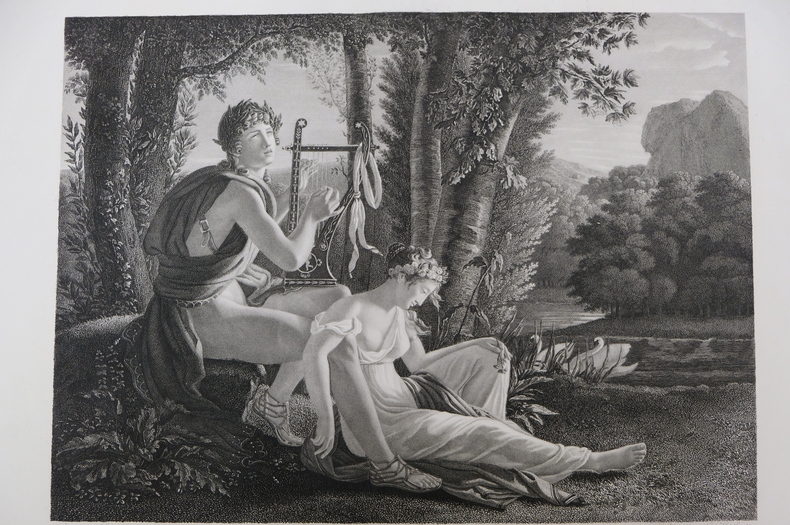
Jean Marie Gudin (1782-18..)
L'origine de la Musique
Dimension extérieur 44,5 x 55,5 cm, cuvette 43 x 53,5 cm. Très belle gravure, d'après Jean-Louis Ducis (1775-1847) et gravée par Jean Marie Gudin (1782-18..), représentant Orphée et Eurydice. En excellent état, épreuve réalisée peu de temps après le tableau de Ducis (1826).
Bookseller reference : est164t3
|
|
|
Jean Marie Gudin (1782-18..)
L'origine du Dessin
Dimension extérieur 44,5 x 55 cm, cuvette 42,5 x 53 cm. Très belle gravure, d'après Jean-Louis Ducis (1775-1847) et gravée par Jean Marie Gudin, représentant le mythe de Boutadès, raconté par Pline qui dit que Callirrhoé avait imaginé de tracer l'ombre de son amant au charbon sur une pierre. En excellent état, épreuve réalisée peu de temps après le tableau de Ducis (1826).
Bookseller reference : est165t3

|
|
|
Jean Couvay (1622-1680)
Le Printemps
Dimension extérieur 40 x 31 cm. Image : 30,5 x 21 cm. Petite gravure sympathique, à caractère allégorique, mettant en scène le printemps au travers d'une femme. On y trouve un petit texte qui loue les avantages et bienfaits de cette saison. Gravure dans son jus, contrecollée sur carton. Présence d'une déchirure (voir photos) mais restaurée.
Bookseller reference : est227t3

|
|
|
Jeremias Gotthelf
Die schwarze Spinne
Erich Bewel in Krailling vor München 2026 131 pages in8. 2026. Reliure editeur cartonnée. 131 pages. Die schwarze Spinne est une nouvelle de Jeremias Gotthelf publiée en 1942. Elle utilise un cadre narratif idyllique et des légendes anciennes pour créer une allégorie sur les conceptions chrétiennes et humanistes du bien et du mal. L'histoire se déroule dans un village suisse où une célébration de baptême se transforme en terreur face à l'arrivée d'une menace surnaturelle
Bookseller reference : 8860

|
|
|
Jesuiten - (anonym: Hofstaeter Felix Franz)
Wahrmund, oder Antwort auf alte Verleumdungen wider Jesuiten, wie sie in den neuesten Schmähschriften wiederholt sind. Erster Band (nur dieser).
Augsburg, bei Nicolaus Doll. 1793. Eine Kupfertafel, XVI, 380 Seiten (Blatt 379/380 "Erklärung des Kupferstiches" vorne eingeheftet). Brauner Halbleder-Einband der Zeit mit Rückentitel. (Bibl.-Exemplar. Einband an den Kanten berieben). 16x10 cm
Bookseller reference : 121941

|
|
|
Kaulbach, Hans.Martin / Schleider, Reinhart
'Der Welt Lauf ' : Allegorische Graphikserien des Manierismus. (Publikation zur Ausstellung Staatsgalerie Stuttgart - Graphiscche Sammlung, 18. Oktober 1997 bis 25. Januar 1998; Museum Bochum, 17. Maki bis 5. Juli 1998).
Ostfildern-Ruit, Verlag Gerd Hatje, 1997. 4° (28x21), 181 S., 1 Bl., reich illustriert, ill OKart (KlappenBrosch), nahezu ungelesen, schönes gepflegtes Exemplar,
Bookseller reference : 55981AB

|
|
|
Kraneis, Michael und Magdalene Krumbeck
BaumKinder.
Vellmar, Verlag Moeller & Panick, 1984. o. S. 4° Quart, Hardcover/Pappeinband
Bookseller reference : 96782

|
|
|
LA DIXMERIE M
de La Sibyle Gauloise
ou la France telle qu’elle fut, telle qu’elle est et à peu-près telle qu’elle pourra être, Ouvrage traduit du Celte & suivi d’un commentairein 8 plein cuir fauve raciné à nerfs pièce de titre chagrin rouge,fers dorés.frontispice gravé (L. DESRAIS)XXVII, 26 pages,tranches rouges,à Londres,Paris Valleyre l’ainé Lacombe 1775.édition originale.Coiffes restaurées ; " Allégorie politique à travers laquelle l’auteur exprime ses critiques sociales et politiques présentée comme le récit prophétique d’une druidesse gauloise.Proche des philosophes des Lumières,franc-maçon c’est lui qui fit l’éloge funèbre de Voltaire lors de l’hommage rendu par sa loge (Loge des Neuf Sœurs)." Très rare
Bookseller reference : 2390

|
|
|
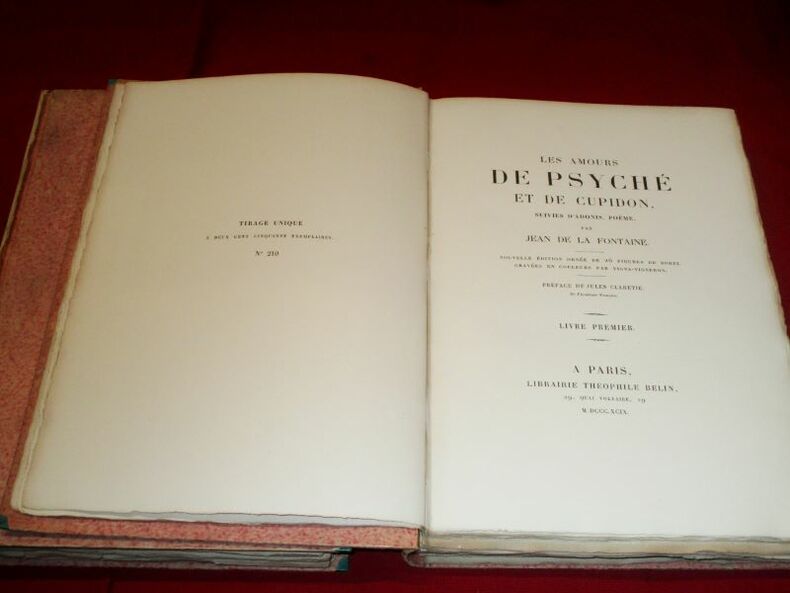
LA FONTAINE, Jean de
Les Amours de Psyché et de Cupidon, suivies d'Adonis, Poëme. Nouvelle édition ornée de 26 figures de Borel gravées en couleurs par Vigna-Vigneron.
A Paris, Librairie Théophile Belin, 1899, 2 volumes in-4 de 310 x 220 mm environ, 2 ff. blancs, 2 ff. (faux-titre, titre), xxiv pages (Avant-propos, Epitre, Préface), 96 pages, 2ff. - 2 ff. blancs, 2 ff. ( faux-titre, titre), 144 pages, 2 ff. blancs. Cartonnages roses, dos bruns lisses portant titres dorés sur pièces de cuir bordeaux.Tirage unique à deux-cent-cinquante exemplaires, celui-ci porte le numéro 210. Complet des 26 figures sous serpente, en 3 états (avant la lettre, en noir, en couleurs), en sus chaque volume comprend in-fine une décomposition couleurs en 4 planches d'une figure reproduite dans l'ouvrage. Cartonnages solides mais peu esthétiques (dos griffés et salis, mors apparents), tranches et gardes brunies ainsi que des rousseurs sur les feuillets liminaires et en fin de volume, en revanche corps de texte en bon état et planches d'une grande fraîcheur.
Bookseller reference : 111298
|
|
|
Larmessin de Nicolas
Gerard Mercator
Ritratto, in ovale, del celebre cartografo Gerard Mercator (1512-1594).Probabilmente è una copia di un'incisione attribuita a Hendrik Goltzius o a Frans Hogenberg. Il ritratto è uno dei numerosi realizzati per i due volumi di Isaac Bullerts "Académie des Sciences et Arts contenant les vies et éloges his. des hommes illustres qui ony excellé en ces professions depuis environ quatre siècles", editi a Brussles nel 1682 da François Foppens.Molti dei ritratti furono incisi da Nicolas de Larmessin I (1638-1694) e/o II (ca. 1645 - 1725).Alcune lastre furono anche utilizzate per stampe separate dal volume, che si distinguono per il verso bianco, come nel caso del presente esemplare.Bulino, rifilato alla linea marginale, in ottimo stato di conservazione. Portrait engraving of the cartographer Gerard Mercator (1512-1594), bust directed to left, wearing a flat cap and buttoned jacket; in an oval;Gerard Mercator.Probably copied after the engraving attributed to Hendrik Goltzius or Hogenberg.This print is one of the portraits engraved for the two volumes of Isaac Bullerts's "Académie des Sciences et Arts contenant les vies et éloges his. des hommes illustres qui ony excellé en ces professions depuis environ quatre siècles" (François Foppens: Brussels, 1682). Most of the engraved portraits are by Nicolas de Larmessin I and II.Some of the portraits were also printed seperatly, and have a blanc verso, as the present example.Engraving, blanc verso, trimmed to the platemark, in very good condition New Hollstein (Dutch & Flemish) 36 (Frans Hogenberg; copy undescribed); New Hollstein (Dutch & Flemish) D8 (Hendrick Goltzius; doubtful attributions; copy undescribed)

|
|
|
LAURO Giacomo (1561-1645/50)
Heroico Splendore delle Città del Mondo
Frontespizio di Heroico Splendore delle Città del Mondo, rarissima pubblicazione stampata per la prima volta a Roma nel 1639, e successivamente, ampliata con l’aggiunta di dieci nuove opere, nel 1642. Giacomo Lauro, fu incisore, stampatore e conoscitore di antichità attivo prevalentemente in ambito romano tra il 1583 e il 1645. Non si conosce la data e il luogo di nascita, ma il fatto che egli firmasse le sue opere come "Jacobus Laurus Romanus" lascia presumere che fosse originario di Roma. Nulla si conosce della sua formazione. La prima testimonianza documentaria che attesta la sua presenza a Roma, in cui è definito "intagliatore di rame romano", risale al 1583; mentre la sua prima stampa conosciuta è un Tiberio con la daga (o Il gladiatore), pubblicata da Claudio Duchetti nel 1585. Nonostante abbia affrontato tematiche storiche, mitologiche, devozionali, il Lauro è noto soprattutto per la produzione di piante e vedute di città, a cominciare dalla veduta a volo d'uccello di Rocca Contrada (Arcevia), realizzata nel 1594 per Angelo Rocca su disegno di Ercole Ramazzani. Negli anni 1630-45, Lauro si dedicò alla pubblicazione di una serie di piante e descrizioni di città italiane e straniere in forma di piccoli opuscoli, alcuni dei quali furono raccolti nel 1639 sotto il titolo di Heroico splendore delle città del mondo. Le piante di Lauro, dunque, furono il frutto di un lungo lavoro di ricerca, basato su fonti primarie, e pubblicato per la prima volta in libri o opuscoli con testo relativo alla storia della città. Scrive Thomas Ashby: “Negli anni 1630-1645 il Lauro pubblicò un numero rilevante di descrizioni di città in tanti opuscoli col testo, tutti in folio piccolo oblungo. Le piante non sono tutte originali […] Molte volte sono state adoperate come fonti, s’intende, le belle tavole dell’atlante del Lafrèry. Ma anche altre piante sono state messe sotto contributo - molto è stato preso o dall’opera di Braun e Hogenberg, Civitales Orbis Terrarum, oppure anche in questo caso da fonti comuni. Non mancano i contatti con Matteo Florimi di Siena, il quale in nessun caso compì di opera propria, ma copiò sempre i lavori degli altri. La pianta di Viterbo, finalmente, è derivata dalla pianta di Tarquinio Ligustri di Viterbo, fatta nel 1596 e dedicata al Cardinale Odoardo Farnese, Alcune di queste piante furono raccolte sotto il titolo seguente, inciso nel 1639; HEROICO SPLENDORE DELLE CITTA DEL MONDO LIBRO PRIMO DI IACOMO LAURO ROMANO Dove si uedono le piante di molte Citta Ill.ri e di molte non più state alla stampa con le loro origini et atti segnalati, et quanto si estende il dominio di esse sino alli presenti tempi in Roma l’Anno di nostra salute 1639” (cfr. Thomas Ashby, L'Heroico splendore delle città del mondo, in “La Bibliofilia”, XXXI (1929), pp. 105-122). L’opera venne ristampata nel 1642 con imprint in Roma l’Anno di nostra salute 1642 /Con priuilegio del somo Pontefice, et d'altri Potent.ti Con licenza de Superiori. Sebbene nel frontespizio si parli di “Libro primo” un secondo volume della raccolta non venne mia pubblicato. Incisione in rame, stampata su carta vergata coeva, con margini, leggerissime ossidazioni, per il resto in ottimo stato di conservazione. Rarissima. Bibliografia Thomas Ashby, Un incisore antiquario del Seicento, I, Note intorno alla vita ed opere di Giacomo Lauro, in “La Bibliofilia”, XXVIII (1926-27), pp. 361-373; II, L'opera "Antiquae Urbis splendor", ibid., pp. 453-460; III, ibid., XXIX (1927), pp. 356-369; IV, L'Heroico splendore delle città del mondo, ibid., XXXI (1929), pp. 105-122. Title page of Heroico Splendore delle Città del Mondo, a very rare publication printed for the first time in Rome in 1639, and later, expanded with the addition of ten new works, in 1642. Giacomo Lauro, was an engraver, printer and connoisseur of antiquities active mainly in Rome between 1583 and 1645. We do not know the date and place of birth, but the fact that he signed his works as "Jacobus Laurus Romanus" suggests that he was a native of Rome. Nothing is known about his education. The first documentary evidence of his presence in Rome, in which he is defined as a "Roman copper engraver", dates back to 1583; while his first known print is a Tiberius with a dagger (or The Gladiator), published by Claudio Duchetti in 1585. Although he dealt with historical, mythological, devotional themes, Lauro is mainly known for the production of plans and views of cities, starting with the bird's eye view of Rocca Contrada (Arcevia), made in 1594 for Angelo Rocca on a drawing by Ercole Ramazzani. In the years 1630-45, Lauro dedicated himself to the publication of a series of maps and descriptions of Italian and foreign cities in the form of small pamphlets, some of which were collected in 1639 under the title of Heroico Splendore delle Città del Mondo. Lauro's plans, therefore, were the result of a long research work, based on primary sources, and published for the first time in books or pamphlets with text related to the history of the city. Thomas Ashby writes: "In the years 1630-1645 the Lauro published a considerable number of descriptions of cities in many pamphlets with text, all in small oblong folio. The plants are not all original [...] Many times have been used as sources, of course, the beautiful plates of the Atlas of Lafrèry. But other maps were also contributed - much was taken either from the work of Braun and Hogenberg, Civitales Orbis Terrarum, or even in this case from common sources. There is no lack of contact with Matteo Florimi of Siena, who in no case did his own work, but always copied the work of others. Some of these maps were collected under the following title, engraved in 1639; HEROICO SPLENDORE DELLE CITTA DEL MONDO LIBRO PRIMO DI IACOMO LAURO ROMANO Dove si uedono le piante di molte Citta Ill.ri e di molte non più state alla stampa con le loro origini et atti segnalati, et quanto si estende il dominio di esse sino alli presenti tempi in Roma l’Anno di nostra salute 1639” (see Thomas Ashby, L'Heroico splendore delle città del mondo, in "La Bibliofilia", XXXI (1929), pp. 105-122). The work was reprinted in 1642 with imprint in Roma l’Anno di nostra salute 1642 /Con priuilegio del somo Pontefice, et d'altri Potent.ti Con licenza de Superiori. Although the title page speaks of "Book one" a second volume of the collection was not published. Copper engraving, printed on contemporary laid paper, with margins, very light oxidation, otherwise in excellent condition. Very rare. Bibliografia Thomas Ashby, Un incisore antiquario del Seicento, I, Note intorno alla vita ed opere di Giacomo Lauro, in “La Bibliofilia”, XXVIII (1926-27), pp. 361-373; II, L'opera "Antiquae Urbis splendor", ibid., pp. 453-460; III, ibid., XXIX (1927), pp. 356-369; IV, L'Heroico splendore delle città del mondo, ibid., XXXI (1929), pp. 105-122.

|
|
|
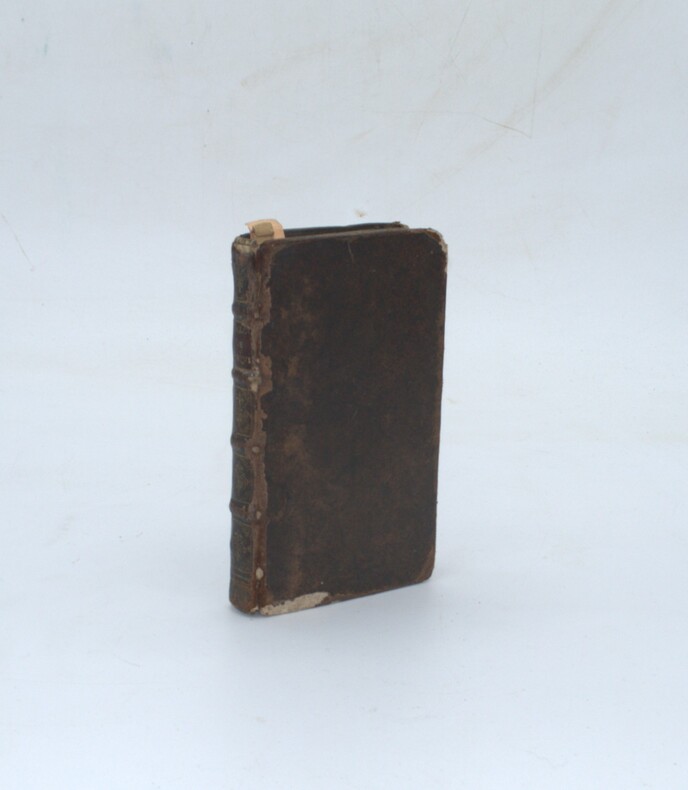
LE NOBLE (Eustache)
Le Cibisme. Premier dialogue entre Pasquin & Marforio sur les Affaires du temps suivi Le songe de Pasquin, ou le Bal de l'Europe, Second dialogue.... Suivi de Le couronnement de Guillemot et de Guillemette. Troisième dialogue... Suivi de Le festin de Guillemot. Quatrieme dialogue... Suivi de La chambre des comptes d’Innocent XI, dialogue entre Saint Pierre et le Pape…
Londres, Rome, se, Francophile Alethophile, 1689, in-12 (15x8,5cm), 32pp.-48pp.54pp.-44pp.-54pp., veau époque, dos à nerfs orné avec pièce de titre, frottements, coins émoussés, coiffes usées, mouillure, manque la page de titre du premier dialogue, manque les pages 35-36 au second dialogue.
Bookseller reference : PHO-2384
|
|
|
LE BLANC D'AMBONNE Prosper
Traité d'allégorie scripturale.
1892 Imp. Emile Grimaud, Nantes, 1892, 324 p., bas du dos émoussé, dos insolé, quelques rousseurs sur les pages.
Bookseller reference : 84832
|
|
|
LEWIS C. S.
The Allegory of Love. A Study in Medieval Tradition. BRIGHT, CLEAN COPY IN DUSTWRAPPER
8vo., some mild offsetting from fold-ins to free endpapers; navy cloth, gilt back, a very good, bright, clean copy in price-clipped, lightly age-soiled dustwrapper, the latter with small loss (not affecting lettering) at head of backstrip. Unusually bright copy of Lewis's classic study, first published in 1936. Hooper 4 (recording the first edition).
|
|
|
LEWIS C. S.
The Allegory of Love. A Study in Medieval Tradition. [Fourth Impression.] BRIGHT, CLEAN COPY
8vo., Fourth Impression, some light offsetting to front free endpaper, tiny contemporary signature on front free endpaper; navy cloth, gilt back, a very good, bright, clean copy. With a relevant cutting loosely inserted, and the trade ticket of Watkins of Cecil Court on front free endpaper. Unusually bright copy of Lewis's classic study, first published in 1936. Hooper 4 (recording the first edition).
|
|
|
LINSCHOTEN Jan Huygen van (Haarlem, ca. 1563 - Enkhuizen 1611)
Description de l'Amerique
Frontespizio inserito nel famoso itinerario del Lonschoten, edizione del 1638 curata da Evert Cloppenburgh. Incisione in rame, rifilata al margin destro, per il resto ottime condizioni. Title page of the famous Itinerario, voyage ofte schipvaert van J.H. van Linschoten naar Oost ofte Portugaels Indien. This plate appeared in Linschoten's book in 1596, once he came back from the Indies. The engraver for this map was Baptista van Doetechum. Published by Cloppenburgh in 1638. Trimmed al the right edge, otherwise good conditions. Schilder, Gunter, Monumenta Cartographica Neerlandica, vol VII.

|
|
|

 Receive by email
 Download as PDF document
 RSS feed
 Permanent link
