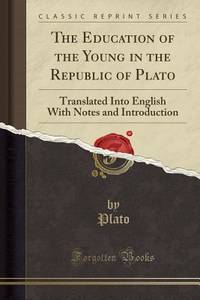
1970. Reprinted Edition. London Sphere Books 1970. Octavo. 285 pages. Original Softcover. Very good condition with only minor signs of external wear. Plato 428/427 or 424/423b 348/347 BC was a philosopher in Classical Greece and the founder of the Academy in Athens the first institution of higher learning in the Western world. He is widely considered the most pivotal figure in the development of philosophy especially the Western tradition. Unlike nearly all of his philosophical contemporaries Plato's entire uvre is believed to have survived intact for over 2400 years. Plato was the innovator of the written dialogue and dialectic forms in philosophy which originate with him. Plato appears to have been the founder of Western political philosophy with his Republic and Laws among other dialogues providing some of the earliest extant treatments of political questions from a philosophical perspective. Plato's own most decisive philosophical influences are usually thought to have been Socrates Parmenides Heraclitus and Pythagoras although few of his predecessors' works remain extant and much of what we know about these figures today derives from Plato himself. Wikipedia. paperback
NY: National Library Company n.d. Edition de Luxe limited to one thousand sets this is No. 51. 8vo. Four volumes bound in matching full black leather. Top edges gilt. Edition de Luxe limited to one thousand sets this is No. 51. Frontis piece. Unique early binding by Ernest Hassbaum. Full black leather with spine overlays in black & tan spelling out Plato in Greek. New end papers. Some of the spine lettering starting to peel. Else in very good condition. NY: National Library Company (n.d.) hardcover
Oxford: Clarendon Press 1875. 5 volumes 8vo original terracotta cloth; a bit rubbed and with an occasional crack in the cloth vol. 1 rebacked. Clarendon Press unknown
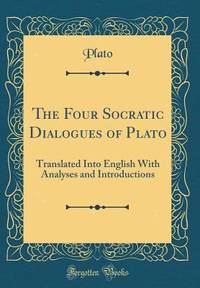
London: Humphrey Milford Oxford University Press 1931. Translated into English with analyses and introductions by B. Jowett. 3d edition revised and corrected throughout with marginal analyses and an index of subjects and proper names. 5 volumes complete original burgundy cloth. Humphrey Milford, Oxford University Press unknown
LOndon: Humphrey Milford Oxford University Press 1931. Translated into English with analyses and introductions by B. Jowett. 3d edition revised and corrected throughout with marginal analyses and an index of subjects and proper names. 5 volumes complete original burgundy cloth. Humphrey Milford, Oxford University Press unknown books
Oxford: Clarendon Press 1875. 5 volumes 8vo original terracotta cloth; a bit rubbed and with an occasional crack in the cloth vol. 1 rebacked. <br/><br/> Clarendon Press hardcover books
Oxford: at the Clarendon Press 1875. Second edition Revised and Corrected Throughout with Additions and an Index of Subjects and Proper Names. 11 vols. 8vo. Bound in half brown contemporary calf and marbled boards black title labels marbled edges. Binding suffering from red rot. Spine ends slightly chipped some light marginal notations some in ink. Good only. Second edition Revised and Corrected Throughout with Additions and an Index of Subjects and Proper Names. 11 vols. 8vo. at the Clarendon Press unknown books
Norwalk Connecticut: The Easton Press. Near Fine with no dust jacket. 1995. Hardcover. Translated with Notes and an Interpretive Essay by Thomas L. Pangle. Collector's Edition. Full red leather spine with black spine label three raised bands and gilt lettering boards with gilt decorations all edges gilt peach moire endpapers silk bookmark.; 6" x 9"; xiv 562 pp; Fine unworn condition apart from faint scratches to the gilt along the page edges. . The Easton Press hardcover
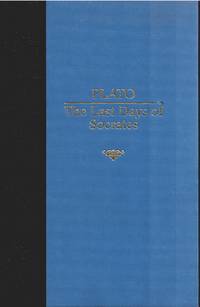
London: Guild Publishing. 1992. 1st Guild Edition. Original quarter leather. Very Good in No Dust Jacket dust jacket. Light tanning to text block. Light soiling to top edge. ; With placeholder ribbon. ; 21.6 x 14.2 x 2.5 cms; Plato’s The Last Days of Socrates—a grouping of the dialogues Euthyphro Apology Crito and Phaedo—offers a powerful and enduring portrait of Socrates’ final days capturing his trial imprisonment and death. Often published together including in The Guild Books edition these texts explore central philosophical themes such as justice piety duty and the immortality of the soul. Euthyphro takes place shortly before Socrates' trial. He meets Euthyphro a man prosecuting his own father for impiety and together they debate the nature of piety. Socrates challenges Euthyphro’s definitions asking whether the gods love the pious because it is pious or whether it is pious because the gods love it. The dialogue ends unresolved as Socrates finds Euthyphro’s arguments lacking in clarity and consistency. In the Apology Socrates stands before the Athenian court defending himself against accusations of corrupting the youth and impiety. He speaks plainly and with conviction asserting that he is guided by a divine mission to encourage critical thought and virtue. Socrates refuses to pander to the jury ultimately accepting the guilty verdict and the death sentence rather than compromise his principles. Crito is set in Socrates’ prison cell where his friend Crito urges him to escape. Socrates calmly refuses arguing that to break the laws of Athens would be unjust even if the laws themselves have condemned him unfairly. He explains that he has benefited from and agreed to live under these laws and to flee would be to undermine the moral and legal foundation of the city. Phaedo recounts Socrates’ final conversation before his death. In the company of his friends and disciples he offers a series of arguments for the immortality of the soul including the theory of opposites the doctrine of recollection and the soul’s affinity with the divine and unchanging. The dialogue ends with Socrates taking the poison hemlock and dying peacefully confident that the soul lives on after death. Together these four dialogues trace a coherent philosophical journey—from ethical questioning to legal reasoning civic responsibility and metaphysical reflection. They not only memorialise Socrates’ death but also exemplify the principles by which he lived. The Guild Books edition presents these works in an accessible and enduring format allowing readers to engage with one of the foundational figures of Western thought. . Guild Publishing hardcover

 Recevoir par e-mail
 Télécharger en PDF
 Flux RSS
 Lien permanent