|
Richard Dahl -
The Military Law Dictionary -
1960. Hardcover. Good. Hardcover/pub. 1960/Gd. condition/190 pages - Military law defined. TI64770z hardcover
Référence libraire : 4770z
|
|
|
Department of Defense
North Korea : Country Handbook -
2000. Soft Cover. Good. PB/pub. 2000/Gd. condition - North Korea Country Handbook and Reference. Loaded with details.AI24738z paperback
Référence libraire : 4738z
|
|
|
Stanley Kubrick -
Dr. Strangelove -
1998. Hardcover. Good. Hardcover/pub. 1998/Gd. condition/160 pages - Going nuclear toe-to-toe with the ruskies. TR64837z hardcover
Référence libraire : 4837z
|
|
|
L Donato, Editor -
Labelled Proteins in Tracer Studies -
1966. Hardcover. Good. Hardcover/pub. 1966/Gd. condition/438 pages - On problems connected with the preparation and use of Labelled Proteins in Tracer Studies. G74830z hardcover
Référence libraire : 4830z
|
|
|
Lita Lee -
Radiation Protection Manual -
1990. Soft Cover. Good. PB/pub. 1990/Gd. condition/151 pages - Sources Fallout Irradiated Food. AI94842z paperback
Référence libraire : 4842z
|
|
|
Editor
The Gatefold Book of World War II Warplanes -
1995. Hardcover. Good. Hardcover/pub.1995/Gd. condition - 36 superb pull-out gatefolds. KT24914z hardcover
Référence libraire : 4914z
|
|
|
A Day -
Coronado's Quest -
1964. Soft Cover. Good. PB/pub.1964/Gd. condition/400 pages - The history making adventure of the first white men to invade the southwest. KI45009z paperback
Référence libraire : 5009z
|
|
|
National Research Council -
Bits of Power -
1997. Hardcover. Good. Hardcover/pub1997/Gd. condition/235 pages - Issues in Global Access to Scientific Data. TK45255z hardcover
Référence libraire : 5255z ISBN : 0309056357 9780309056359

|
|
|
Loch Johnson -
A Season of Inquiry -
1985. Hardcover. Good. Hardcover/pub.1985/Gd. conditionex-lib/307 pages - The Senate Intelligence Investigation. AT65320z hardcover
Référence libraire : 5320z
|
|
|
Asher, Meira
Face_WSLOT: Woman See Lot of Things With CD -
2004. Soft Cover. Good. PB/pub. 2004/Gd. condition/160 pages - Female ex-child combatants in Sierra Leone. TI15808z paperback
Référence libraire : 5808z ISBN : 8886784279 9788886784276
|
|
|
John A Warden -
The War Campaign : Planning for Combat -
1988. Soft Cover. Good. PB/pub. 1988/Gd. condition/201 pages - The strategy and planning for combat . TI46126z paperback
Référence libraire : 6126z
|
|
|
Grafton Chase -
Experiments in Nuclear Science -
1966. Soft Cover. Good. PB/pub.1966/Gd. condition/166 pages - Nuclear Science explored. KI64351z paperback
Référence libraire : 4351z
|
|
|
Iku Kiriyama -
Nanka Kikkei Voices -
1998. Soft Cover. Good. PB/pub. 1998/Gd. condition/109 pages - Resettlement Years 1945-1955. KI54292z paperback
Référence libraire : 4292z
|
|
|
United States Navy Department
The Bluejacket's Manual : Tenth Edition 1940 -
1940. Hardcover. Good. Hardcover/pub. 1940/ Gd. condition/784 pages - The Navy's Bluejacket Manual. J92389z hardcover
Référence libraire : 2389z
|
|
|
[World War II – Occupied Japan – Art] Smith, Cpl Perring F
Three Illustrations by Cartoonist Perring Smith of the 1689th Engineering Combat Battalion for Thanksgiving 1945
Japan 1945. 8 x 10 ½ inch double-sided mimeographed sheet with damage to margins and tape at corners; very good plus. With one 3 ¾ x 3 ¼ inch photograph of an illustration; Fine. Overall excellent. Three illustrations—two of which are for a Thanksgiving menu—by cartoonist Perring Smith of the 1689th Engineering Combat Battalion stationed in occupied Japan. One side of the Thanksgiving menu has caricatures of several men in the unit and the menu for Thanksgiving dinner at “Stew’s Hash House†and the other shows a woman in a kimono and geta in front of a pagoda carrying serving trays with drinks and a roast turkey. The other illustration is a cartoon dog mascot for the battalion who carries besides his gun a shovel pickaxe and metal detector. Though not strictly trench art these items will be of interest to historians of art produced by deployed soldiers particularly in the Second World War. unknown
Référence libraire : List3249

|
|
|
War Department
War Department Circulars 1946 circulars 1 thru 251
Washingtion DC: War Dept. 1946. Hardcover. Very Good/No Jacket. 8vo - over 7¾" - 9¾" tall. unpaginated; HB blue Remington Rand 8¾x6½" style 'HW' Kanvas binder; rubbed&scuffed w/wear on edges&corners; some pencil; bound by cord; some lt.tan w/cleantight pgs. Circulars from January 1 1946 #1: List of War Dept. circulars 1945 thru August 20 1946 #251: Settlement Under the Armed Forces Leave Act of 1946 for Compensable Furlough <br/> <br/> War Dept. hardcover
Référence libraire : 060790
|
|
|
Guerra, Chelsea
Writing Conversational Korean For Beginners
paperback. Good. Access codes and supplements are not guaranteed with used items. May be an ex-library book. paperback
Référence libraire : 1737677776.G ISBN : 1737677776 9781737677772

|
|
|
US War Department U S
Basic Field Manual Volume I Field Service Pocketbook Chapter 8 Defense Against Chemical Attack
Washington DC: United States Government Printing Office 1938. Presumed First Edition First printing thus. Wraps. Good. v 1 96 2 pages. Wraps. Illustrations. Tabular Data. Index. The cover has some wear and soiling. Chemical warfare is different from the use of conventional weapons or nuclear weapons because the destructive effects of chemical weapons are not primarily due to any explosive force. The offensive use of living organisms such as anthrax is considered biological warfare rather than chemical warfare; however the use of nonliving toxic products produced by living organisms e.g. toxins such as botulinum toxin ricin and saxitoxin is considered chemical warfare under the provisions of the Chemical Weapons Convention CWC. Under this convention any toxic chemical regardless of its origin is considered a chemical weapon unless it is used for purposes that are not prohibited an important legal definition known as the General Purpose Criterion. About 70 different chemicals have been used or were stockpiled as chemical warfare agents during the 20th century. The entire class known as Lethal Unitary Chemical Agents and Munitions has been scheduled for elimination by the CWC. Among the topics addressed are Chemical Warfare Chemical Agent Military Training Chemical Land Mines Chemical Agents Gas Mask Protective Clothing Shelter Gas Alarms Decontamination First Aid Tactical Protection. It was not until the 19th century that the modern conception of chemical warfare emerged as various scientists and nations proposed the use of asphyxiating or poisonous gasses. Fritz Haber is considered the "father of chemical warfare" for his years of pioneering work developing and weaponizing chlorine and other poisonous gases during World War I. Multiple international treaties were passed banning chemical weapons based upon the alarm of nations and scientists. This however did not prevent the extensive use of chemical weapons in World War I. Chlorine gas among other chemicals was used by both the Allied and Central powers to try to break the stalemate of trench warfare. In most cases the gasses used did not kill but instead incapacitated or caused permanent or temporary injuries. Historians have reached a wide range of estimates on gas casualties ranging from 500k to 1.3 million casualties directly caused by chemical warfare agents during the course of the war of which 2-4% died. A minimum of around 1300 civilians were injured due to the use of the weapons and at least around 4000 were injured during weapon production. Gas casualties were a small fraction of the overall human impact of the war but the horrifying effects of such weapons gave them a strong psychological impact. The interwar years saw the occasional use of chemical weapons during the Second Italo-Ethiopian War by the Italians while the Japanese made use of chloroacetophenone to suppress a native rebellion in Formosa in 1930 and later made use of mustard gas lewisite and irritant agents during the Second Sino-Japanese War. The Chinese often lacking protective gear such as gas masks were usually forced to retreat against CW attacks. Although significant effort went into the development and stockpiling of chemical weapons in World War II they saw no battlefield use in the European Theater. Nazi Germany dedicated much research to the development of nerve agents but never used them even during the final defense of the fatherland. It has been suggested that Adolf Hitler's own experience with poison gas during WWI and fears that the Allies would retaliate with their own chemical weapons were the main reasons. According to military historian Ian V. Hogg the Germans were reluctant to use nerve agents since they couldn't find any defense or antidote for them. They also feared that the ban on scientific journals about organophosphates in Britain meant that the Allies also discovered nerve agents. In reality they were unaware of the G-series until an ammunition dump captured in April 1945 was examined while the ban on scientific publications was meant to prevent Axis nations from learning about advances on the development of insecticides and herbicides to boost food production; nonetheless the Allies made comprehensive plans for defensive and retaliatory use of chemical weapons and stockpiled large quantities. United States Government Printing Office paperback
Référence libraire : 90587
|
|
|
Flinn, Frank M
CAMPAIGNING WITH BANKS IN LOUISIANA '63 AND '64 AND WITH SHERIDAN IN THE SHENANDOAH VALLEY IN '64 AND '65 Original Ed.
Lynn MA: Press of Thos. P. Nichols 1887. HC. good original black cloth hardcover. Nice clean and tight copy of the ORIGINAL EDITION. Images available. 239pp. Press of Thos. P. Nichols unknown
Référence libraire : BOOKS069243I
|
|
|
[Revolutionary War].
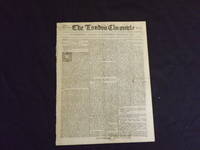
American Account of the Battle of Camden. From the New Jersey Gazette September 13th-in The London Chronicle.
<p>Entire issue small folio 8 1/2" x 11 1/2" removed disbound 473-480 pp. slight offsetting A few small holes affecting a some letters holes look like a slight tear in right column some aging and browning; otherwise about very good. At the Battle of Camden in South Carolina the Americans suffered a major defeat at the hands of the British. The British General Cornwallis defeated the American General Gates on August 16 1780 causing the American to lose 2000 men in the process. Despite its publication in a London newspaper this is an American account of the Battle of Camden which includes a letter from General Gates. history american-revolution/battle-of-camden website.</p>
Référence libraire : 106380
|
|
|
Canfield, S S Captain
History of the 21st Regiment Ohio Volunteer Infantry in the War of the Rebellion
Toledo OH: Vrooman Anderson Bateman Printers 1893. First edition. hardcover in library binding. good. Octavo standard size. Slight wear to edges and corners of boards. No dust jacket. NOT ex-library but in library type binding. One photo portrait has been torn and repaired with tape. 192 p. w/ frontis 19 photo portraits and 47 p. roster of men in the regiment noting promotion discharge capture or death. This volunteer regiment fought from the end of 1861 thru the end of the war. It fought at such battles as Stones River Chickamauga Kennesaw Mountain Atlanta Savannah and more. <br/><br/> Vrooman, Anderson, Bateman Printers hardcover
Référence libraire : 17639
|
|
|
[Civil War].
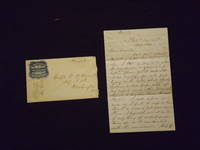
Manuscript Letter from General Andrew Porter to Captain William W. Averell.
<p>Folded letter sheet 2 1/2 pages of text with original mailing envelope no stamp. Light wear normal aging legible hand; overall near fine. General Andrew Porter 1820-1872 was born in Pennsylvania and was the grandson of Revolutionary War General Andrew Porter. Porter was also related to Mary Todd Lincoln. He served in the Mexican War and was a Brigadier General at the Battle of Bull Run. Porter was appointed Provost Marshall General of the Army of the Potomac in 1862 and left the service in 1864 for health reasons. This letter to Captain William Averell appears to be written in somewhat secretive style. He tells Averell to mail a letter to a Mrs. P. that is under a newspaper. " I will return when it is safe to leave Mrs. P. or sooner if pub." He tells the captain to "please telegraph me at once if anything of importance turns up or I am needed with the command." He goes on to tell Averell keep the s pol.service with us. Much reputation is to be gained by carrying it on or aiding it successfully. This is probably a reference to the Secret Police that was headed by Allan Pinkerton at that time and who were very busy hunting down Confederate spies at that time. He also talks a little about other military matters including a troop build-up in Philadelphia. find a grave website.</p>
Référence libraire : 104033
|
|
|
[Civil War]
Two Manuscript Letters Signed by a New Jersey Soldier to His Family Describing Conditions in Virginia.
Three leaves two 8 x10 sheets and one 5x10 text on all sides and comes with typed transcripts. Normal aging and browning and a few tears at folds. The letters were written by George Roden who was born in 1841 from Newark New Jersey who was the son of English immigrants and served in the 2nd New Jersey Infantry regiment. He was a corporal at the time these letters were written. The letters talk about the desolation of the Virginia countryside. "Not a fence or a decent house is to be seen for miles… the black remains of Camp fires with the filth of the many camps of both armies are seen on most every farm. I tell you Va. is suffering for her folly." The letters are from Alexandria and Stafford Court House Virginia. See guide to Roden family papers at the William L. Clements Library.
Référence libraire : 101900
|
|
|
[Civil War].
Manuscript Letter Signed by a New Jersey Soldier to His Family Describing Battle Action in the Civil War.
4 pages on one leaf 4to with original envelope and typed transcript. Normal aging and browning slight separation at folds. The letters were written by George Roden who was born in 1841 from Newark New Jersey who was the son of English immigrants and served in the 2nd New Jersey Infantry regiment. He was a corporal when this letter was written. The letter is addressed "Dear Folks at home" and tells his family how happy he was to receive their letters after waiting so long but he also includes a description of the Battle of Gaines' Mills; 'Our four companies left as they were without any support whatever to contend with over a brigade of the enemy surrounding us on three sides they poured in an awful cross fire but even amid that and their insane yells our boys rallied around the dear old flag three times. Once They were taken but as the fellow a Lieut. grasped it from our wounded color sergeant a ball went through his heart and again they were retaken." He also adds an interesting account of his company's reserve role in the Battle of White Old Swamp. See guide to Roden family papers at the William L. Clements Library.
Référence libraire : 101901
|
|
|
[Civil War].
Manuscript Letter from George H. Bostwick to his Brother Orramell T. Bostwick.
<p>Four pages on one leaf. Light folds text slightly faded on first page normal aging and browning minor wear at folds. Overall in very good condition. This letter offers a graphic account of the Battle of Liberty Mills. The Bostwick brothers both served in the 2nd New York Cavalry for most of the war. George 1836-1913 was a private and his brother Orramell 1840-1922 was a sergeant. After the war both brothers returned to their home town of Stillwater Saratoga County New York. George wrote this letter while his brother was recovering from wounds he received at Culpeper Court House on September 13th and updates him in great detail of the regiment's recent actions at Liberty Mills. In part "It was hand to hand part of the time. A. Laugholm shot a captain in neck he drop dead as a stone. I was hit with a sabre but it did not mont to eney thing. It was a fight for dear life you can bet." Henry A Bostwick: Genealogy of the Bostwick Family; New York 1901.</p>
Référence libraire : 1002017
|
|
|
[World War II]
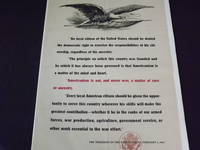
“America is not and never was a matter of race or ancestry.â€
<p>Wartime poster 27 ¾ x19 ¾ large eagle engraving at the top of the poster printed in red and black. Creases where folded. This rare U.S. Government wartime poster attempts to promote equality by reminding Americans that race and ancestry shouldn’t matter in our country. It reminds us that every American "should be given the opportunity to serve the country" and help the war effort. While this was certainly a noble goal this poster was printed at a time when our armed forces were still largely segregated.</p> U.S. Government Printing Office:
Référence libraire : 100607
|
|
|
[Civil War]
Collection of Fifty-Two Manuscript Newark City Council Resolutions on the Civil War
52 folded and docketed uniform manuscript resolutions mostly 4to typically written on one side and docketed on the back includes a contemporary cover sheet that originally held resolutions together two small pictures of Lincoln and Grant included housed in modern photo album. A few with folds at the top and minor chips normal aging and browning; overall in very good condition. These resolutions were passed by the Public Aid Committee which was created by the Newark City Council at the beginning of the Civil War to advance money to soldiers' families. These resolutions would then be given to a clerk for filing. This clerk seems to have had strong anti war or Copperhead sympathies and gradually began editorializing as he wrote out the docketing on the back of each folded document. He titled the 31 March 1862 resolution "For aid to families. in the war to abolish slavery." On 2 September it was "the war for the ruin of the country." On 26 November it became "the Negro War" and 2 December it says "the Army of Abm. Lincoln to subjugate the Southern States." This obscure city clerk took things a step further after the Emancipation Proclamation. On 4 February 1863 he titled a resolution "In aid of families of volunteers. in the Nigger War!" He must have been spoken to after this remark because he drifts into sarcasm rather than outright racism. In a later resolution he states "for the benefit of our coloured fellow citizens of African decent." However by 14 September 1863 he was back to his old tricks again referring to "Lincoln's nigger war." He continued his editorializing through June 1864. These docketed resolutons were found in the included wrapper on which a a Union soldier later wrote: "The name if it can be found out of the miserable traitor who booked the within resolutions should go down in posterity as one who should receive the contempt of loyal men." The name of that Union soldier appears to be Major W. W. Morris.
Référence libraire : 100657
|
|
|
[English Civil War]
An Act for Several Lands and Estates Forfeited to the Commonwealth for Treason Appointed to be Sold for the Use of the Navy
2 volumes 4to however one volume is slightly larger than the other modern calf and boards printed in black leter and Roman types 2 1369-1417 & 2 1677-1689 pp. Last leaf in both volumes moderately worn and some repairs to one of those leafs pages in both volumes creased in the middle library plate on both front pastedowns early owners inscrpition on back of last leaf in one volume normal aging and browning; otherwise very good. This is a scarce item that was probably removed from a larger work however the sjubect is the same. Basically these acts focus on the seizure of lands during the English Civil War following the execution of Charles I in 1649 and just before the installation of Oliver Cromwell as Lord Protector in 1653. The text is primarily lists of nobility who remained loyal to the crown and whose lands were forfeited to the commonwealth for "treasons against the parliament and the people of England." John Field, hardcover
Référence libraire : 100670
|
|
|
Civil War
What Jeff Davis Thinks of the War
Small broadside 11 1/2x 9 printed on one side. A little darkened with a few spots and some light dampstaining; else very good. This broadside is a response to the Democratic Party platform which suggests the war is all but lost and advises meeting with the Confederate government to talk peace terms. The National Union Ticket supporting Abraham Lincoln quotes at length from speeches of Jefferson Davis revealing the difficult circumstances facing the Confederacy concluding ".Vote For Lincoln! This is the most effecfive way of EndingThe War And Restoring The Union." National Union Executive Committee unknown
Référence libraire : 100734
|
|
|
Civil War
Proclamation… I hereby notify all citizens that they must connect themselves with some company of
<p> Small broadside about 6 x 8 1/2 printed on one side about ten partial lines of text including title Proclamation!. Minor toning slight creasing a little uneven small margin on the left side a couple of minor nicks; overall very good. While Kentucky may have been neutral at the start of the war after the Confederates invaded the state they turned toward the Union. This small broadside reminds people they needed to register with the "home guard." It also reminds people that failure to register will result in being disarmed. This order was passed under the threat of an impending invasion of Kentucky by General Braxton Bragg's Army of Tennessee. The broadside is signed in print by Major P. G. Bracht. </p> Observer and Reporter Power Press Print
Référence libraire : 100733

|
|
|
Department, War
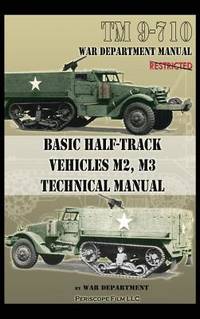
Basic Half-Track Vehicles M2 M3 Technical Manual
hardcover. Good. Access codes and supplements are not guaranteed with used items. May be an ex-library book. hardcover
Référence libraire : 1940453534.G ISBN : 1940453534 9781940453538
|
|
|
United States War Department
Technical Manual: Cleaning Preserving Lubricating and Welding Materials and Similar Items Issues by the Ordnance Department; TM 9-850 August 21 1941
Washington DC: War Department 1941. Presumed First Edition First printing thus. Wraps. Good. 116 4 pages. plus covers. Tabular information. Index pages 95-116. Front cover has wear and soiling and is stamped Ordnance School Small Arms. The was printed by the Publications Department at Raritan Arsenal. A second edition was apparently issued on April 13 1942. Other editions were apparently issued in 1944 and 1951 Korean War era. Consequently relatively few of this initial edition are believed to have survived. Ordnance is another word for military supplies like guns rockets or armor. The word ordinance for “command†lost an i in the 1500’s and became ordnance meaning “military materials.†Ordnance helps soldiers fight and protect them. This manual has the following Sections: General; Cleaners and abrasives; Preservatives; Paints and related materials; Lubricants; Fluids for recoil mechanisms and hydraulic Jacks; Welding brazing soldering and cutting materials and Miscellaneous. The purpose of this manual was to present information to the using arms and services concerning the characteristics application and handling of cleaning preserving lubrications welding brazing cutters and other materials issued by the Ordnance Department and listed in SNL's K-1 and K-2. Information and direction herein superseded those given in TR 1395-A or in the various Ordnance Field Service circulars published prior to the publication of this manual and dealing with materials within its scope/ These regulations cover materials listed in par. 1. b. that are issued by the Ordnance Department for use on or with ordnance material. The use of materials other than those authorized for the specific purposes mentioned was strictly forbidden. The Raritan Arsenal originally known as the Raritan River Ordnance Base was established in 1917 in preparation for the United States' entry into World War I. The Arsenal initially a 2150 acre complex with 275 buildings 52 miles of railroad six miles of concrete roads and water access to the Raritan River played a key role in the transport of war materials to both Allied and American armed forces in Europe during World War I. The installation served as a major East Coast storage and transshipment center for munitions an assembly/repair facility for motorized ordnance equipment and an ordnance training camp for 20000 American soldiers. As the United States entered World War II the Arsenal retained and expanded these vital functions and reactivated the ordnance training unit. War Department paperback
Référence libraire : 86448
|
|
|
United States War Department
Infantry and Aircraft Armament U.S. Rifle Caliber .22 M1922 M1922M1 and M2; Technical Regulations No. 1300-22A
Washington DC: United States War Department 1936. Presumed First Edition First printing thus supersedes TR 1300-22A November 1 1927 including C 1 January 2 1930 and C 2 April 30 1932. Wraps. Fair. 42 pages. Illustrations Photographs and drawings. General Notes. Tabular Data. Tear in front repaired from behind with tape. Front page worn torn soiled and chipped. Staple bound and also stapled near spine left side. Additional staple holes present may have been stapled to other military documents. The Springfield Model 1922 is a .22 caliber bolt-action rifle. It features a 24-inch barrel and a 5-round magazine. It was built as a cadet rifle designed to mimic the M1903 Springfield rifle for training purposes. It was produced in several different versions until World War II when shortages of materials made production of a training rifle impractical. The M1922M1 variant was introduced in 1925. This version had a new bolt head an improved firing mechanism modifications to the chambering and a new rear sight. The stock was also modified to incorporate a flat based pistol grip. The M1922M1 NRA variant was introduced in 1927. This rifle basically consisted of the improved M1 version's action in the original 1922 version stock. This version was made for civilian use only and was not purchased by the U.S. Military. The M2 variant was introduced in 1933. This version featured a simplified bolt and a shallower pistol grip on the stock. "M1922" was not included in the M2's designation. All versions of the M1922 used what would be the safety lug on the 1903 bolt as the locking lug. Initial problems with this lug cracking drove further development of the M1922 resulting in the final M2 version. The main change in the M2 variant was the incorporation of an adjustable headspace mechanism in the locking lug. These regulations were published for the information and guidance of the using arms Reserve Officers' Training Corps Reserve Officers and all personnel charged with the maintenance of this materiel. They give a detailed description of the different groups assemblies components and accessories of the rifles with sufficient illustrations to readily identify each component. They explain the mechanical operation and give all necessary information regarding the care and preservation of the rivles. U.S. Army Technical Manuals commonly known as 'Army manuals' are part of a series of official U.S. military manual publications intended to be instructive and informative for all branches of the military. Of interest to military historians curators military enthusiasts re-enactors and collectors army manuals can be used to trace the evolution of the Army's doctrine organizational structure equipment uniforms and weapons. They are also helpful in terms of the care maintenance and preservation of military artifacts. Army manuals include publications on historic U. S. military vehicles including military motorcycles jeeps military trucks scout cars tanks amphibians and aircraft. Subjects of the manuals also include radio cooking language dictionaries and phrase books. Army manuals also included a number of so-called "enemy" manuals. These are manuals which are official U.S. Army publications concerning enemy equipment or forces. The letter E in the manual number indicates that a particular manual is an enemy manual. For example Technical Manual TM E9-803 on the German Volkswagen appears just after Technical Manual TM 9-803 on the Jeep. A number of enemy manuals about foreign forces are included like TM E30-420 Handbook of the Italian Military Forces. The publication of enemy manuals was authorized by Section II. Processing of Captured Material for Intelligence Purposes of War Department Training Circular 81 6 November 1942. The War Department which became the Department of the Army in 1947 issued three major classes of publications -- administrative doctrinal training and organizational and technical and equipment publications. Administrative publications include publications such as Army Regulations Special Regulations Bulletins Circulars General and Special Orders and Pamphlets; doctrinal training and organizational publications contain Field Manuals Army Training and Evaluation Programs Training Circulars Tables of Organization and Equipment and Tables of Allowances; and technical and equipment publications include publications such as Technical Manuals Technical Bulletins Supply Manuals etc. United States War Department paperback
Référence libraire : 86490
|
|
|
United States War Department
Ordnance Maintenance--Infantry and Aircraft Armament Browning Automatic and Machine Rifles; Technical Regulations No. 1400-30E
Washington DC: United States War Department 1928. Presumed First Edition First printing. Wraps. Fair. 17 1 pages. Illustration photographs. Tabular data. Staple bound and also stapled near spine left side. The Browning Automatic Rifle BAR is a family of American automatic rifles and machine guns used by the United States and numerous other countries during the 20th century. The primary variant of the BAR series was the M1918 chambered for the .30-06 Springfield rifle cartridge and designed by John Browning in 1917 for the American Expeditionary Forces in Europe as a replacement for the French-made Chauchat and M1909 Benét–Mercié machine guns that US forces had previously been issued. The BAR was designed to be carried by infantrymen during an assault advance while supported by the sling over the shoulder or to be fired from the hip. This is a concept called "walking fire"—thought to be necessary for the individual soldier during trench warfare. The US Army in practice used the BAR as a light machine gun often fired from a bipod introduced on models after 1938. A variant of the original M1918 BAR the Colt Monitor Machine Rifle remains the lightest production automatic firearm chambered for the .30-06 Springfield cartridge though the limited capacity of its standard 20-round magazine tended to hamper its utility in that role. Although the weapon did see some action in World War I the BAR did not become standard issue in the US Army until 1938 when it was issued to squads as a portable light machine gun. The BAR saw extensive service in both World War II and the Korean War and saw limited service in the Vietnam War. The purpose of these regulations is to furnish suitable instructions for the shop repair inspection and maintenance of the Browning automatic rifle caliber .30 M1918 and the Browning machine rifle caliber .30 M1922 and their accessories. These regulations were intended for the use of ordnance maintenance personnel only and were not intended for use by line organizations. U.S. Army Technical Manuals commonly known as 'Army manuals' are part of a series of official U.S. military manual publications intended to be instructive and informative for all branches of the military. Of interest to military historians curators military enthusiasts re-enactors and collectors army manuals can be used to trace the evolution of the Army's doctrine organizational structure equipment uniforms and weapons. They are also helpful in terms of the care maintenance and preservation of military artifacts. Army manuals include publications on historic U. S. military vehicles including military motorcycles jeeps military trucks scout cars tanks amphibians and aircraft. Subjects of the manuals also include radio cooking language dictionaries and phrase books. Army manuals also included a number of so-called "enemy" manuals. These are manuals which are official U.S. Army publications concerning enemy equipment or forces. The letter E in the manual number indicates that a particular manual is an enemy manual. For example Technical Manual TM E9-803 on the German Volkswagen appears just after Technical Manual TM 9-803 on the Jeep. A number of enemy manuals about foreign forces are included like TM E30-420 Handbook of the Italian Military Forces. The publication of enemy manuals was authorized by Section II. Processing of Captured Material for Intelligence Purposes of War Department Training Circular 81 6 November 1942. The War Department which became the Department of the Army in 1947 issued three major classes of publications -- administrative doctrinal training and organizational and technical and equipment publications. Administrative publications include publications such as Army Regulations Special Regulations Bulletins Circulars General and Special Orders and Pamphlets; doctrinal training and organizational publications contain Field Manuals Army Training and Evaluation Programs Training Circulars Tables of Organization and Equipment and Tables of Allowances; and technical and equipment publications include publications such as Technical Manuals Technical Bulletins Supply Manuals etc. United States War Department paperback
Référence libraire : 86496
|
|
|
United States War Department
Ordnance Maintenance--Infantry and Aircraft Armament Browning Machine Gun Caliber .30 Ground Tank and Antiaircraft Types; Technical Regulations No. 1400-30 C.
Washington DC: United States War Department 1927. Presumed First Edition First printing. Wraps. Fair. 21 3 pages. Illustration photographs and diagram. Front page worn and soiled. Edge soiling. Staple bound and also stapled near spine left side. With Changes No. 1 January 2 1929 3 pages. Stamp of Ordnance School Small Arms. The M1917 Browning machine gun is a heavy machine gun used by the United States armed forces in World War I World War II the Korean War and the Vietnam War; it has also been used by other nations. It was a crew-served belt-fed water-cooled machine gun that served alongside the much lighter air-cooled Browning M1919. It was used at the battalion level and often mounted on vehicles such as a jeep. There were two main iterations: the M1917 which was used in World War I and the M1917A1 which was used thereafter. The M1917 which was used on some aircraft as well as in a ground role had a cyclic rate of 450 rounds per minute. The M1917A1 had a cyclic rate of 450 to 600 rounds per minute. The M1919 Browning is a .30 caliber medium machine gun that was widely used during the 20th century especially during World War II the Korean War and the Vietnam War. The M1919 saw service as a light infantry coaxial mounted aircraft and anti-aircraft machine gun by the U.S. and many other countries. The M1919 was an air-cooled development of the standard US machine gun of World War I the John M. Browning-designed water-cooled M1917. The emergence of general-purpose machine guns in the 1950s pushed the M1919 into secondary roles in many cases especially after the arrival of the M60 in US Army service. The purpose of these regulations is to furnish suitable instructions for the shop repair inspection and maintenance of the Browning machine gun caliber .30 M1917 and the Browning tank machine Gun caliber .30 M1919 and their accessories. These regulations were intended for the use of ordnance maintenance personnel only and were not intended for use by organizations armed with these weapons. U.S. Army Technical Manuals commonly known as 'Army manuals' are part of a series of official U.S. military manual publications intended to be instructive and informative for all branches of the military. Of interest to military historians curators military enthusiasts re-enactors and collectors army manuals can be used to trace the evolution of the Army's doctrine organizational structure equipment uniforms and weapons. They are also helpful in terms of the care maintenance and preservation of military artifacts. Army manuals include publications on historic U. S. military vehicles including military motorcycles jeeps military trucks scout cars tanks amphibians and aircraft. Subjects of the manuals also include radio cooking language dictionaries and phrase books. Army manuals also included a number of so-called "enemy" manuals. These are manuals which are official U.S. Army publications concerning enemy equipment or forces. The letter E in the manual number indicates that a particular manual is an enemy manual. For example Technical Manual TM E9-803 on the German Volkswagen appears just after Technical Manual TM 9-803 on the Jeep. A number of enemy manuals about foreign forces are included like TM E30-420 Handbook of the Italian Military Forces. The publication of enemy manuals was authorized by Section II. Processing of Captured Material for Intelligence Purposes of War Department Training Circular 81 6 November 1942. The War Department which became the Department of the Army in 1947 issued three major classes of publications -- administrative doctrinal training and organizational and technical and equipment publications. Administrative publications include publications such as Army Regulations Special Regulations Bulletins Circulars General and Special Orders and Pamphlets; doctrinal training and organizational publications contain Field Manuals Army Training and Evaluation Programs Training Circulars Tables of Organization and Equipment and Tables of Allowances; and technical and equipment publications include publications such as Technical Manuals Technical Bulletins Supply Manuals etc. United States War Department paperback
Référence libraire : 86495
|
|
|
United States War Department
Infantry and Aircraft Armament Browning Machine Gun Caliber .30 M2 Aircraft Fixed and Flexible Types; Technical Regulations No. 1300-30J
Washington DC: United States War Department 1939. Presumed First Edition First printing thus supersedes TR 1300-30J 1934. Wraps. Fair. 70 pages. Illustrations Photographs and drawings. General Notes. Tabular Data. Front page worn torn soiled and chipped. Edge soiling. Staple bound and also stapled near spine left side. Additional staple holes present may have been stapled to other military documents. The M2 machine gun or Browning .50 caliber machine gun informally "Ma Deuce" is a heavy machine gun that was designed near the end of World War I by John Browning. While similar to Browning's earlier M1919 Browning machine gun which was chambered for the .30-06 cartridge the M2 uses Browning's larger and more powerful .50 BMG cartridge. The design has had many designations; the official U.S. military designation for the current infantry type is Browning Machine Gun Cal. .50 M2 HB Flexible. It is effective against infantry unarmored or lightly armored vehicles and boats light fortifications and low-flying aircraft. The gun has been used extensively as a vehicle weapon and for aircraft armament by the United States since the 1930s. It was heavily used during World War II the Korean War the Vietnam War the Falklands War the Soviet–Afghan War the Gulf War the Iraq War and the War in Afghanistan. At the outbreak of the Second World War the United States had versions of the M2 in service as fixed aircraft guns anti-aircraft defensive guns on aircraft ships or boats infantry tripod-mounted guns and as dual purpose anti-aircraft and anti-vehicular weapons on vehicles. These regulations were intended for the Air Corps and all personnel charged with the maintenance of this materiel. They contain descriptions and figures and instruction in the proper methods of adjustment disassembling assembling and care and preservation of the material/ Nomenclature list of spare parts and equipment and basic spare parts for the Browning machine gun caliber .30 Me aircraft are contained in Standard Nomenclature List No. A-28. U.S. Army Technical Manuals commonly known as 'Army manuals' are part of a series of official U.S. military manual publications intended to be instructive and informative for all branches of the military. Of interest to military historians curators military enthusiasts re-enactors and collectors army manuals can be used to trace the evolution of the Army's doctrine organizational structure equipment uniforms and weapons. They are also helpful in terms of the care maintenance and preservation of military artifacts. Army manuals include publications on historic U. S. military vehicles including military motorcycles jeeps military trucks scout cars tanks amphibians and aircraft. Subjects of the manuals also include radio cooking language dictionaries and phrase books. Army manuals also included a number of so-called "enemy" manuals. These are manuals which are official U.S. Army publications concerning enemy equipment or forces. The letter E in the manual number indicates that a particular manual is an enemy manual. For example Technical Manual TM E9-803 on the German Volkswagen appears just after Technical Manual TM 9-803 on the Jeep. A number of enemy manuals about foreign forces are included like TM E30-420 Handbook of the Italian Military Forces. The publication of enemy manuals was authorized by Section II. Processing of Captured Material for Intelligence Purposes of War Department Training Circular 81 6 November 1942. The War Department which became the Department of the Army in 1947 issued three major classes of publications -- administrative doctrinal training and organizational and technical and equipment publications. Administrative publications include publications such as Army Regulations Special Regulations Bulletins Circulars General and Special Orders and Pamphlets; doctrinal training and organizational publications contain Field Manuals Army Training and Evaluation Programs Training Circulars Tables of Organization and Equipment and Tables of Allowances; and technical and equipment publications include publications such as Technical Manuals Technical Bulletins Supply Manuals etc. United States War Department paperback
Référence libraire : 86491
|
|
|
United States War Department
Infantry and Aircraft Armament U.S. Rifle Caliber .30 M1903 and M1903A1; Technical Regulations No. 1300-30A
Washington DC: United States War Department 1939. Presumed First Edition First printing thus supersedes TR 320-10 March 12 1924 including C 1 January 2 1926 and C 2 January 2 1937. Wraps. Fair. 36 pages. Illustrations Photographs and drawings. Staple bound. Worn and soiled. The M1903 Springfield officially the United States Rifle Caliber .30-06 Model 1903 is an American five-round magazine-fed bolt-action service repeating rifle used primarily during the first half of the 20th century. The M1903 was first used in combat during the Philippine–American War and it was officially adopted by the United States as the standard infantry rifle on June 19 1903 where it saw service in World War I and was replaced by the faster-firing semi-automatic eight-round M1 Garand starting in 1936. However the M1903 remained in service as a standard issue infantry rifle during World War II since the U.S. entered the war without sufficient M1 rifles to arm all troops. It also remained in service as a sniper rifle during World War II the Korean War and the Vietnam War. It remains popular as a civilian firearm historical collector's piece a competitive shooting rifle and as a military drill rifle. Toward the end of the war Springfield turned out the Model 1903 Mark I. The Mark I has a cut on the left hand side of the receiver meant to act as an ejection port for the Pedersen device a modified sear and cutoff to operate the Pedersen device; a specialized insert that replaced the bolt and allowed the user to fire .30 caliber pistol cartridges semi-automatically from a 40-round detachable magazine. The stock was also slightly cut down on the left side to clear the ejection port. Temperature control during forging was improved prior to Mark I production. The receiver alloy was toughened by addition of nickel after Mark I production. These regulations were published for the information and guidance of the using arms and all personnel charged with the maintenance of this materiel. They contain description and illustrations and instruction in the proper methods of disassembling assembling care and preservation of the U.S. rifle caliber .30 M1903 and M1903A1. U.S. Army Technical Manuals commonly known as 'Army manuals' are part of a series of official U.S. military manual publications intended to be instructive and informative for all branches of the military. Of interest to military historians curators military enthusiasts re-enactors and collectors army manuals can be used to trace the evolution of the Army's doctrine organizational structure equipment uniforms and weapons. They are also helpful in terms of the care maintenance and preservation of military artifacts. Army manuals include publications on historic U. S. military vehicles including military motorcycles jeeps military trucks scout cars tanks amphibians and aircraft. Subjects of the manuals also include radio cooking language dictionaries and phrase books. Army manuals also included a number of so-called "enemy" manuals. These are manuals which are official U.S. Army publications concerning enemy equipment or forces. The letter E in the manual number indicates that a particular manual is an enemy manual. For example Technical Manual TM E9-803 on the German Volkswagen appears just after Technical Manual TM 9-803 on the Jeep. A number of enemy manuals about foreign forces are included like TM E30-420 Handbook of the Italian Military Forces. The publication of enemy manuals was authorized by Section II. Processing of Captured Material for Intelligence Purposes of War Department Training Circular 81 6 November 1942. The War Department which became the Department of the Army in 1947 issued three major classes of publications -- administrative doctrinal training and organizational and technical and equipment publications. Administrative publications include publications such as Army Regulations Special Regulations Bulletins Circulars General and Special Orders and Pamphlets; doctrinal training and organizational publications contain Field Manuals Army Training and Evaluation Programs Training Circulars Tables of Organization and Equipment and Tables of Allowances; and technical and equipment publications include publications such as Technical Manuals Technical Bulletins Supply Manuals etc. United States War Department paperback
Référence libraire : 86493
|
|
|
United States War Department
Ordnance Maintenance--Infantry and Aircraft Armament Aircraft Machine Gun Cal. .30; Technical Regulations No. 1400-30G
Washington DC: United States War Department 1928. Presumed First Edition First printing With Changes No. 1 1929. Wraps. Fair. 11 1 pages. Changes No. 1 1 page stapled in front. Illustration photographs and diagram. Tabular data. Staple bound and also stapled near spine left side. The M1917 Browning machine gun is a heavy machine gun used by the United States armed forces in World War I World War II the Korean War and the Vietnam War; it has also been used by other nations. It was a crew-served belt-fed water-cooled machine gun that served alongside the much lighter air-cooled Browning M1919. It was used at the battalion level and often mounted on vehicles such as a jeep. There were two main iterations: the M1917 which was used in World War I and the M1917A1 which was used thereafter. The M1917 which was used on some aircraft as well as in a ground role had a cyclic rate of 450 rounds per minute. The M1917A1 had a cyclic rate of 450 to 600 rounds per minute. The purpose of these regulations is to furnish suitable instructions for the proper adjustment shop repair maintenance and inspection of the Browning aircraft machine gun caliber .30 M1918M1; Browning aircraft machine gun caliber .30 M1919; Lewis aircraft machine gun cal. 30 M1918; and the Marlin aircraft machine gun cal. .30 M1917. These regulations were intended for the use of ordnance maintenance personnel and the armament personnel of the Air Corps. U.S. Army Technical Manuals commonly known as 'Army manuals' are part of a series of official U.S. military manual publications intended to be instructive and informative for all branches of the military. Of interest to military historians curators military enthusiasts re-enactors and collectors army manuals can be used to trace the evolution of the Army's doctrine organizational structure equipment uniforms and weapons. They are also helpful in terms of the care maintenance and preservation of military artifacts. Army manuals include publications on historic U. S. military vehicles including military motorcycles jeeps military trucks scout cars tanks amphibians and aircraft. Subjects of the manuals also include radio cooking language dictionaries and phrase books. Army manuals also included a number of so-called "enemy" manuals. These are manuals which are official U.S. Army publications concerning enemy equipment or forces. The letter E in the manual number indicates that a particular manual is an enemy manual. For example Technical Manual TM E9-803 on the German Volkswagen appears just after Technical Manual TM 9-803 on the Jeep. A number of enemy manuals about foreign forces are included like TM E30-420 Handbook of the Italian Military Forces. The publication of enemy manuals was authorized by Section II. Processing of Captured Material for Intelligence Purposes of War Department Training Circular 81 6 November 1942. The War Department which became the Department of the Army in 1947 issued three major classes of publications -- administrative doctrinal training and organizational and technical and equipment publications. Administrative publications include publications such as Army Regulations Special Regulations Bulletins Circulars General and Special Orders and Pamphlets; doctrinal training and organizational publications contain Field Manuals Army Training and Evaluation Programs Training Circulars Tables of Organization and Equipment and Tables of Allowances; and technical and equipment publications include publications such as Technical Manuals Technical Bulletins Supply Manuals etc. United States War Department paperback
Référence libraire : 86497
|
|
|
United States War Department
Technical Regulation No. 1395-A Ordnance Department Instructions Covering the Characteristics Purpose Handling Etc. of Cleaning and Preserving Materials Tools and Materials for use therewith and oils greases and cutting compounds Issued by the Ordnance Department
Washington DC: War Department printed by the U. S. Government Printing Office 1929. Presumed First Edition First printing thus. Wraps. Fair. 51 1 pages. Tabular information. Index pages 95-116. Ink comments on pages 1 3 38 with pasted in addendum 42 with pasted in addendum and 48 with pasted in addendum. One change dated in 1935. Item as wear tears soiling and chips. First page has tear at bottom of spine. Rear page missing some material at the bottom no loss of text. Some page discoloration. Two holes at spine to permit this to be included into an Army issued document binder/holder. This preceded the issuance in 1941 of Technical Manual 9-850 on the same subject. Relatively few of this initial regulation are believed to have survived. Ordnance is another word for military supplies like guns rockets or armor. The word ordinance for “command†lost an i in the 1500’s and became ordnance meaning “military materials.†Ordnance helps soldiers fight and protect them. This manual has the following Sections: General; Cleaners and abrasives; Preservatives; Paints and related materials; Lubricants; Special oils liquids gas and grease for recoil mechanism hydraulic jacks and variable speed gears; Welding and cutting materials gases and fluxes and Miscellaneous materials and tools. This regulation was issued approximately 10 years after the end of the First World War and approximately 10 years prior to the start of the Second World War and as such it represents both a compilation of lessons learned from the earlier conflict and the state of practice at the time of the later conflict enhanced by updates driven by improvements in technology weaponry maintenance and logistics. The purpose of this regulation was to present information to the using arms and services concerning the characteristics application and handling of various materials issued by the Ordnance Department and classed as cleaners preservatives lubricants paints and related materials cutting and welding liquids gases and compounds recoil oils liquids and gases liquids for hydraulic jacks oils for Waterbury variable speed gears and the application of these materials. War Department, printed by the U. S. Government Printing Office paperback
Référence libraire : 86450
|
|
|
United States War Department
Infantry and Aircraft Armament Browning Machine Gun Caliber .50 M1921 Water-cooled; Technical Regulations No. 1300-50A
Washington DC: United States War Department 1932. Presumed First Edition First printing thus. Wraps. Fair. 54 2 pages. Illustrations Photographs and drawings. Fold-out. Tabular Data. Front page worn torn soiled and chipped. Staple bound and also stapled near spine left side. Additional staple holes present may have been stapled to other military documents. The M1921 Browning machine gun was a water-cooled .50-caliber machine gun designed by John Moses Browning which entered production in 1929. From 1917 to 1918 he developed the prototype Browning Winchester Cal.50 caliber heavy machine gun. It was developed from a water-cooled .30 caliber M1917 Browning machine gun. Machine guns were heavily used in World War I and weapons of larger than rifle caliber began appearing on both sides of the conflict. The larger rounds were needed to defeat the armor that was being introduced to the battlefield both on the ground and in the air. During World War I the Germans introduced a heavily armored airplane the Junkers J.I. Consequently the American Expeditionary Force's commander General John J. Pershing asked for a larger caliber machine gun. Pershing asked the Army Ordnance Department to develop a machine gun with a caliber of at least 0.50 inches and a muzzle velocity of at least 2700 feet per second. Around July 1917 John M. Browning started redesigning his .30-06 M1917 machine gun for a larger and more powerful round. In order to adapt his machine gun to .50 cal Browning had to introduce a proper hydraulic recoil buffer as well as breech block cushioning. Both the US Army and the US Navy adopted the M1921 after World War I. These regulations were published for the information and guidance of the using arms. They contain descriptions and figures; also necessary instructions in the proper methods of adjustment disassembling assembling and care of the material. Nomenclature list of spare parts and equipment and basic spare parts for the Browning machine gun caliber .50 M1921 water-cooled are given in Standard Nomenclature List No. A-28. U.S. Army Technical Manuals commonly known as 'Army manuals' are part of a series of official U.S. military manual publications intended to be instructive and informative for all branches of the military. Of interest to military historians curators military enthusiasts re-enactors and collectors army manuals can be used to trace the evolution of the Army's doctrine organizational structure equipment uniforms and weapons. They are also helpful in terms of the care maintenance and preservation of military artifacts. Army manuals include publications on historic U. S. military vehicles including military motorcycles jeeps military trucks scout cars tanks amphibians and aircraft. Subjects of the manuals also include radio cooking language dictionaries and phrase books. Army manuals also included a number of so-called "enemy" manuals. These are manuals which are official U.S. Army publications concerning enemy equipment or forces. The letter E in the manual number indicates that a particular manual is an enemy manual. For example Technical Manual TM E9-803 on the German Volkswagen appears just after Technical Manual TM 9-803 on the Jeep. A number of enemy manuals about foreign forces are included like TM E30-420 Handbook of the Italian Military Forces. The publication of enemy manuals was authorized by Section II. Processing of Captured Material for Intelligence Purposes of War Department Training Circular 81 6 November 1942. The War Department which became the Department of the Army in 1947 issued three major classes of publications -- administrative doctrinal training and organizational and technical and equipment publications. Administrative publications include publications such as Army Regulations Special Regulations Bulletins Circulars General and Special Orders and Pamphlets; doctrinal training and organizational publications contain Field Manuals Army Training and Evaluation Programs Training Circulars Tables of Organization and Equipment and Tables of Allowances; and technical and equipment publications include publications such as Technical Manuals Technical Bulletins Supply Manuals etc. United States War Department paperback
Référence libraire : 86492
|
|
|
War Department, Ordnance Office
Supervised Articles of Ordnance; Ordnance Field Service Bulletin No. 1-5 OFSB 1-5
Washington DC: War Department Ordnance Office 1941. Presumed First printing thus supersedes OFSB 1-5 March 1 1940. Single sheet printed on both sides. Good. The format is approximately 6 inches by 9 inches. This Bulletin has two sections: I. Designation and II. Disposition. Supervised articles of ordnance were defined as including supplies and equipment stored and issued by the Ordnance Department in which disposition of the articles when placed in inventory and inspection reports was governed by policies announced by the Chief of Ordnance and approved by the Secretary of War. These supervised articles include all ordnance supplies and equipment listed in Standard Nomenclature Lies Nos. A-1 B-1 C-1 D-1 D02 E-1 F-1 F-2 F-3 and G-1. Also included were similar supplies and equipment listed as obsolete but had been retained for possible future use in an emergency or for sale. all ammunition issued to troops. Inert ammunition instruction materials were exempted. Under disposition supervised articles of general supply except for repairable motor vehicles were to be shipped to the ordnance depot from which like supplies were issued. The Chief of Ordnance would give specific instructions in each case for the disposition of ammunition considered safe for handling. When cannon or other firearms were condemned and in a suitable condition for use as trophies they may be so used as any military post with the corps area or department. Machinery mechanical equipment and tools no longer need by the Army could be donated to schools for vocational training and instruction according to regulations and circulars. This provides significant insight into ordnance materiel management practices at the time of the U.S. entry into the World War II. Materiel refers to supplies equipment and weapons in military supply-chain management and typically supplies and equipment in a commercial supply chain context. In a military context the term materiel refers either to the specific needs excluding manpower of a force to complete a specific mission or the general sense of the needs excluding manpower of a functioning army. An important category of materiel is commonly referred to as ordnance especially concerning mounted guns artillery and the shells they consume. Along with fuel and munitions in general the steady supply of ordnance is an ongoing logistical challenge in active combat zones. Materiel management consists of continuing actions relating to planning organizing directing coordinating controlling and evaluating the application of resources to ensure the effective and economical support of military forces. It includes provisioning cataloging requirements determination acquisition distribution maintenance and disposal. The terms "materiel management" "materiel control" "inventory control" "inventory management" and "supply management" are synonymous. Military materiel is often shipped to and used in severe climates without controlled warehouses or fixed material handling equipment. Packaging and labeling often need to meet stringent technical specifications to help ensure proper delivery and final use. War Department, Ordnance Office unknown
Référence libraire : 86452
|
|
|
Cyvette Guerra
The joy robbers
paperback. Good. Access codes and supplements are not guaranteed with used items. May be an ex-library book. paperback
Référence libraire : 0914850393.G ISBN : 0914850393 9780914850397

|
|
|
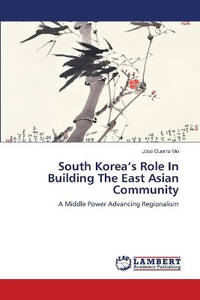
Guerra Vio Jose
South Korea's Role in Building the East Asian Community
Paperback / softback. New. paperback
Référence libraire : B9783659500725 ISBN : 3659500720 9783659500725
|
|
|
Imperial War Museum (Great Britain)
The Special Operations Executive Oral history recordings
Trustees of the Imperial War Museum. Used - Good. Ships from UK in 48 hours or less usually same day. Your purchase helps support Sri Lankan Children's Charity 'The Rainbow Centre'. Shows some signs of wear but in good overall condition. 100% money back guarantee. We are a world class secondhand bookstore based in Hertfordshire United Kingdom and specialize in high quality textbooks across an enormous variety of subjects. We aim to provide a vast range of textbooks rare and collectible books at a great price. Our donations to The Rainbow Centre have helped provide an education and a safe haven to hundreds of children who live in appalling conditions. We provide a 100% money back guarantee and are dedicated to providing our customers with the highest standards of service in the bookselling industry. Trustees of the Imperial War Museum unknown
Référence libraire : Z1-Q-030-02402 ISBN : 1901623041 9781901623048
|
|
|
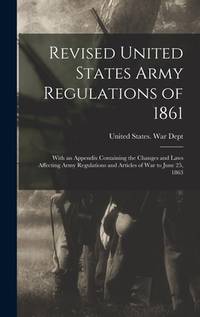
United States War Dept
Revised United States Army Regulations of 1861: With an Appendix Containing the Changes and Laws Affecting Army Regulations and Articles of War to June 25 1863
Hardback. New. hardcover
Référence libraire : B9781016492096 ISBN : 101649209x 9781016492096
|
|
|
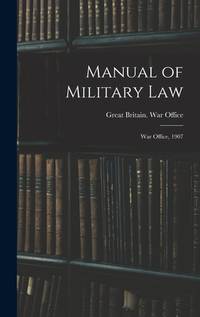
Great Britain War Office
Manual of Military Law: War Office 1907
Hardback. New. hardcover
Référence libraire : B9781016001748 ISBN : 1016001746 9781016001748
|
|
|
United States War Dept Puerto Rico
Report On The Census Of Porto Rico 1899
Hardback. New. hardcover
Référence libraire : B9781015854475 ISBN : 1015854478 9781015854475

|
|
|
CATTON, Bruce
A Stillness at Appomattox
Norwalk CT: Easton Press 1998. Bound in full navy blue decorated leather stamped in gold sans DW as published; moire end sheets; a.e.g.; silk book ribbon; Part of the publisher's "Collector's Edition - Bound in Genuine Leather" series. 438 pp. Part of the author's The Army of the Potomac Trilogy. - An as new unread copy. . Limited. Hard Cover. Fine/No Jacket as published. Easton Press Hardcover
Référence libraire : 5005586
|
|
|
CATTON, Bruce
Glory Road
Norwalk CT: Easton Press 1998. Bound in full navy blue decorated leather stamped in gold sans DW as published; moire end sheets; a.e.g.; silk book ribbon; Part of the publisher's "Collector's Edition - Bound in Genuine Leather" series. 389 pp. Part of the author's "The Army of the Potomac" Trilogy. - An as new unread copy. . Limited. Hard Cover. Fine/No Jacket as published. Easton Press Hardcover
Référence libraire : 5005587
|
|
|
CATTON, Bruce
Mr. Lincoln's Army
Norwalk CT: Easton Press 1998. Bound in full navy blue decorated leather stamped in gold sans DW as published; moire end sheets; a.e.g.; silk book ribbon; Part of the publisher's "Collector's Edition - Bound in Genuine Leather" series. 363 pp. Part of the author's "The Army of the Potomac" Trilogy. - An as new unread copy. . Limited. Hard Cover. Fine/No Jacket as published. Easton Press Hardcover
Référence libraire : 5005585
|
|

 Recevoir par e-mail
 Télécharger en PDF
 Flux RSS
 Lien permanent


