Washington DC: National Archives and Records Administration 1989. First edition presumed; no earlier dates stated. Paperback. Extremely little wear to spine foot & head gently worn & torn binding hole faint sunning to borders else very good. Large yellow quarto in spiral binding; 241 p b&w illus; 28 cm. United States -- History -- Study and teaching Secondary; Education. National Archives and Records Administration paperback
Referenz des Buchhändlers : 81674 ISBN : 0911333797 9780911333794
Washington DC 1960-1961: National Aeronautics and Space Administration. 4to - over 9¾" - 12" tall. F First Editions Used. H Buckram. Very Good ex-library. Technical Translations NASA TT: F-21 to F-40 1960-61 bound Set of 19 Technical Translations 19 Nasa technical publications bound into one volume original wraps bound-in; 4to approx. 500pp. Ex-library with usual marks. in blue buckram with gilt spine titling. Arcitles include: f-21: Lubricating oils for aviation gas turbines; F-22: an approximation method for the integration of the equations of a nonstationary laminar boundary layer in an inconpressible Fluid; f-23: Surface disturbances in magnetohydrodynamics; . f-40: The problem of piercing at cosmic velocities. Alltogether a scarce collection of NASA technical documents. National Aeronautics and Space Administration hardcover
Washington DC: National Aeronautics and Space Administration. 1965. 4to - over 9¾" - 12" tall. F First Editions Used. H Buckram. Very Good ex-library. Technical Translations NASA TT: F-376 to F-378 1965 bound Set of 3 NASA Technical Translations bound into one volume original wraps bound- in; 4to approx. 500pp. Ex-library with usual marks. in blue buckram with gilt spine titling. Arcitles include: F-376: Physiological effects of gravitation: F-377: Photographic recording high-speed processes; F-378: Meteroric Matter In Interplanitary Space. Alltogether a scarce collection of NASA technical documents. National Aeronautics and Space Administration hardcover
Washington DC: NASA c. 1992. First Edition. First Printing. very good. 535 & 537 wraps 2-vol. set illus. diagrams slight wear and soiling to covers. NASA Conference Publication 3136. The Conference was held in San Jose CA and was sponsored by NASA the Technology Utilization Foundation and NASA Tech Briefs Magazine. NASA paperback
Washington DC: NASA 1992. very good. Quarto approx. 400 v.2 only wraps illus. figures tables charts appendices. This workshop was held 17-19 March 1992 in McLean VA. Volume I Workshop Results Summary is not present. NASA paperback
Washington DC: NASA 1991. very good. Quarto 538 v.2 only wraps illus. figures tables charts references small crease to lower corner front cover and a few pages. This conference was jointly sponsored by NASA the Technology Utilization Foundation and NASA Tech Briefs Magazine. This volume contains 60 papers presented during 30 concurrent sessions on topics including materials sciences robotics artificial intelligence electronics software engineering and medical advances. NASA Conference Publication 3136 Vol. 2. NASA paperback
Washington DC: National Aeronautics and Space Administration c2007. Presumed First Edition First printing this. Single sticker sheet printed on both sides peal line is about one third up from the trangle's base. Very good. Michael Okuda. The format is an equilateral triangle with each side measuring approximately 5 inches. Rare surviving copy. One side is the ARES logo designed by Star Trek artist Michael Okuda. The other side has the following text: The Ares Projects The United States is leading the next phase of human Space exploration. The journey begins with two new launch vehicles--the Ares I crew launch vehicle and the Area V cargo launch vehicle--being developed by the Ares Projects managed out of NASA'a Marshall Space Flight Center in Huntsville Alabama. These launch vehicles were for missions to the International Space Station the Moon and beyond. The rockets are part of NASA's Constellation fleet which includes the Orion crew exploration vehicles a lunar lander habitats rovers and scientific equipment. Space exploration propelled by the area rockets promotes leading-edge science leads to innovative technologies and products expands economic opportunities and inspires the next generation of scientists and explorers. Star Trek artist Michael Okuda designed the Ares logo which will adorn both Ares I and Ares V. The Logo's 10 stars represent 10 NASA centers that ware working on the new vehicles. A bright star representing the Ares rocket ascends above Earth's outline depicted in the background. Michael Okuda is an American graphic designer known for his work on Star Trek including designing computer user interfaces known as "okudagrams". His work for NASA's Project Constellation subsequently canceled included logos for the Ares booster the Altair lunar lander and the Orion spacecraft. Ares I was the crew launch vehicle that was being developed by NASA as part of the Constellation program. The name "Ares" refers to the Greek deity Ares who is identified with the Roman god Mars. Ares I was originally known as the "Crew Launch Vehicle" CLV. NASA planned to use Ares I to launch Orion the spacecraft intended for NASA human spaceflight missions after the Space Shuttle was retired in 2011. Ares I was to complement the larger uncrewed Ares V which was the cargo launch vehicle for Constellation. NASA selected the Ares designs for their anticipated overall safety reliability and cost-effectiveness. However the Constellation program including Ares I was canceled by U.S. president Barack Obama in October 2010 with the passage of his 2010 NASA authorization bill. In September 2011 NASA detailed the Space Launch System as its new vehicle for human exploration beyond Earth's orbit. Unlike the Space Shuttle where both crew and cargo were launched simultaneously on the same rocket the plans for Project Constellation outlined having two separate launch vehicles the Ares I and the Ares V for crew and cargo respectively. Having two separate launch vehicles allows for more specialized designs for the crew and heavy cargo launch rockets. The Ares I rocket was specifically being designed to launch the Orion Multi-Purpose Crew Vehicle. Orion was intended as a crew capsule similar in design to the Apollo program capsule to transport astronauts to the International Space Station the Moon and eventually Mars. Ares I might have also delivered some limited resources to orbit including supplies for the International Space Station or subsequent delivery to the planned lunar base. NASA selected Alliant Techsystems the builder of the Space Shuttle Solid Rocket Boosters as the prime contractor for the Ares I first stage. NASA announced that Rocketdyne would be the main subcontractor for the J-2X rocket engine on July 16 2007. NASA selected Boeing to provide and install the avionics for the Ares I rocket on December 12 2007. On August 28 2007 NASA awarded the Ares I Upper Stage manufacturing contract to Boeing. The upper stage of Ares I was to have been built at Michoud Aerospace Factory which was used for the Space Shuttle's External Tank and the Saturn V's S-IC first stage. The Ares V formerly known as the Cargo Launch Vehicle or CaLV was the planned cargo launch component of the canceled NASA Constellation program which was to have replaced the Space Shuttle after its retirement in 2011. Ares V was also planned to carry supplies for a human presence on Mars. The Ares V was to launch the Earth Departure Stage and Altair lunar lander for NASA's return to the Moon which was planned for 2019. It would also have served as the principal launcher for missions beyond the Earth-Moon system including the program's ultimate goal a crewed mission to Mars. The uncrewed Ares V would complement the smaller and human-rated Ares I rocket for the launching of the 4–6 person Orion spacecraft. Both rockets deemed safer than the then-current Space Shuttle would have employed technologies developed for the Apollo program the Shuttle program and the Delta IV EELV program. National Aeronautics and Space Administration unknown
Washington DC: GPO 1989. First Edition. First Printing. very good. 24 wraps. This NASA publication has a two-fold purpose: to document our record in manned space flight and to salute the people who made it happen. GPO paperback
Referenz des Buchhändlers : 40375 ISBN : 0160042445 9780160042447
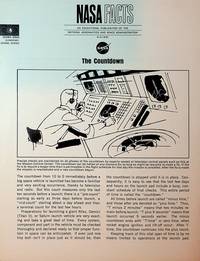
Washington DC: National Aeronautics and Space Administration NASA 1967. Wraps. Near Fine. 4 pages. Self wrappers. 8 x 10 1/4 inches. Illustrated. Wraps. Part of the NASA Facts series - an educational publication of the National Aeronautics and Space Administration NASA Office of Public Affairs Programs Division. <br /> <br /> Illustrated but very basic - targeted to Elementary schools general science. Includes a map of NASA tracking facilities and several abstracted art pieces showing liftoff and the control panels. National Aeronautics and Space Administration (NASA) unknown
Washington D.C.: National Archives and Records Service General Services Administration 1978. 4to. Hard Cover ca. 900 pp. Very good with Age Toning Scuffing Abrasions Spotting. Heavy Volume Additional shipping fees may apply Provenance: From the library of the San Francisco Gallerist Pasquale Iannetti. Washington, D.C.: National Archives and Records Service General Services Administration, 1978 hardcover
Washington DC: U. S. Government Printing Office 1996. Presumed First USGPO Edition First printing. Staplebound. Very good. The format is approximately 8.5 inches by 11 inches. Illustrated front cover. 2 14 pages. Illustrations. . This is one of the NASA Information Summaries series. This covers Project Mercury Project Gemini Project Apollo Skylab Apollo-Soyuz Test Project Manned Spacecraft Manned Launch Vehicles and launches. The National Aeronautics and Space Administration NASA is responsible for unique scientific and technological achievements in human spaceflight aeronautics space science and space applications that have had widespread impacts on our nation and the world. U. S. Government Printing Office unknown
Washington DC: National Aeronautics and Space Administration 1996. Presumed USGPO First Edition First printing. Staplebound. Good. The format is approximately 8.5 inches by 11 inches. Illustrated front cover. 2 14 pages. Illustrations. Top right corner of front cover somewhat curled. This is one of the NASA Information Summaries series. This covers Project Mercury Project Gemini Project Apollo Skylab Apollo-Soyuz Test Project Manned Spacecraft Manned Launch Vehicles and launches. The National Aeronautics and Space Administration NASA is responsible for unique scientific and technological achievements in human spaceflight aeronautics space science and space applications that have had widespread impacts on our nation and the world. National Aeronautics and Space Administration unknown
Washington DC: GPO 1962. good. 10.25" x 7.5" 6 wraps profusely illus. small creases in margins slight wear to covers. Illustrations of Carpenter's flight aboard Aurora 7 and a condensation of his remarks at the press conference two days after the flight. GPO paperback
Washington DC: National Aeronautics and Space Administration. Presumed First Edition First printing. Pamphlet. Very good. 4 pages. Illustrations color. Format is approximately 8.5 inches by 11 inches. This discussed the Joint Dark Energy Mission the Einstein Black Hole Finder and the Einstein Inflation Probe The National Aeronautics and Space Administration NASA is an independent agency of the executive branch of the United States federal government responsible for the civilian space program as well as aeronautics and aerospace research. President Dwight D. Eisenhower established NASA in 1958 with a distinctly civilian rather than military orientation encouraging peaceful applications in space science. The agency became operational on October 1 1958. Since that time most US space exploration efforts have been led by NASA including the Apollo Moon landing missions the Skylab space station and later the Space Shuttle. The agency is also responsible for the Launch Services Program LSP which provides oversight of launch operations and countdown management for unmanned NASA launches. NASA science is focused on better understanding Earth through the Earth Observing System advancing heliophysics through the efforts of the Science Mission Directorate's Heliophysics Research Program exploring bodies throughout the Solar System with advanced robotic spacecraft missions and researching astrophysics topics. National Aeronautics and Space Administration unknown
Washington DC: GPO 1971. Wraps. Good. 352 pages wraps quarto illus. a few in color tables charts footnotes chapter references small 1/2" tear at front top hinge slight wear and soiling to covers The Biosatellite Program was the first serious U.S. attempt to design a spaceflight system tailored to the needs of biologic experimentation and Biosatellite II was the first successfully completed mission. Topics covered include experiments with invertebrates experiments with plants and experiments with cellular systems. GPO paperback
Izdatel'stvo "Nauka 1966. Paperback. Good. A nice copy. Text in mint/unmarked condition. Cover has some wear with owners name on it. Binding is tight. Izdatel'stvo "Nauka paperback
Washington DC: National Archives. 1970. 4to - over 93/4" - 12" tall. 1st ed. Used. Paperback. Very Good-. VG in wraps 4to 80pp A Documentary History Based Upon an Exhibiin the National Archive Building National Archives paperback
Greenbelt MD: National Astronautics and Space Administration Goddard Space Flight Center 2009. Presumed First Edition First printing. This is one of multiple originals issued. Single sheet printed on both sides. Very good. The format is approximately 8 inches by 10 inches. This is a single sheet with printing/imagery on both sides in a plastic sleeve. On the front side is a large color photograph or image of The Hubble Space Telescope orbiting over the curvature of the Earth. The other side is in a two-column format with half of the right column as captioned diagram of the Space Telescope. The text addresses An "Eye" on the Universe How the Telescope Works The Telescope's Name Vocabulary Fast Facts and Instruments. The Hubble Space Telescope often referred to as HST or Hubble is a space telescope that was launched into low Earth orbit in 1990 and remains in operation. It was not the first space telescope but it is one of the largest and most versatile renowned as a vital research tool and as a public relations boon for astronomy. The Hubble telescope is named after astronomer Edwin Hubble and is one of NASA's Great Observatories. The Space Telescope Science Institute STScI selects Hubble's targets and processes the resulting data while the Goddard Space Flight Center GSFC controls the spacecraft. Hubble features a 7 ft 10 inch mirror and its five main instruments observe in the ultraviolet visible and near-infrared regions of the electromagnetic spectrum. Hubble's orbit outside the distortion of Earth's atmosphere allows it to capture extremely high-resolution images with substantially lower background light than ground-based telescopes. It has recorded some of the most detailed visible light images allowing a deep view into space. Many Hubble observations have led to breakthroughs in astrophysics such as determining the rate of expansion of the universe. Space telescopes were proposed as early as 1923 and the Hubble telescope was funded and built in the 1970s by the United States space agency NASA with contributions from the European Space Agency. Its intended launch was in 1983 but the project was beset by technical delays budget problems and the 1986 Challenger disaster. Hubble was finally launched in 1990 but its main mirror had been ground incorrectly resulting in spherical aberration that compromised the telescope's capabilities. The optics were corrected to their intended quality by a servicing mission in 1993. Hubble is the only telescope designed to be maintained in space by astronauts. Five Space Shuttle missions have repaired upgraded and replaced systems on the telescope including all five of the main instruments. The fifth mission was initially canceled on safety grounds following the Columbia disaster 2003 but after NASA administrator Michael D. Griffin approved it the servicing mission was completed in 2009. Hubble completed 30 years of operation in April 2020 and is predicted to last until 2030-2040. Hubble is the visible light telescope in NASA's Great Observatories program; other parts of the spectrum are covered by the Compton Gamma Ray Observatory the Chandra X-ray Observatory and the Spitzer Space Telescope which covers the infrared bands. The mid-IR-to-visible band successor to the Hubble telescope is the James Webb Space Telescope JWST which was launched on December 25 2021 with the Nancy Grace Roman Space Telescope due to follow in 2027. National Astronautics and Space Administration, Goddard Space Flight Center unknown
USGPO/NASA. Used - Very Good. Very Good condition. space history apollo A copy that may have a few cosmetic defects. May also contain light spine creasing or a few markings such as an owner’s name short gifter’s inscription or light stamp. USGPO/NASA unknown
USGPO/NASA. Used - Good. Good condition. John F. Kennedy Space Center history A copy that has been read but remains intact. May contain markings such as bookplates stamps limited notes and highlighting or a few light stains. USGPO/NASA unknown
Cape Canaveral FL: Kennedy Space Center c. 1986. good. 172 wraps illus. map tables price sticker on front cover some wear to spine edges. Kennedy Space Center paperback
Washington D. C.: GPO. First edition. Hard cover in original cloth. Published Washington DC: GPO 1978. Folio 11 1/4" x 14 1/4" vii160pp. illustrated with black and white and color images. Includes unused 3D viewer in pocket at rear. Near fine. . Near Fine. Hard. 1st. 1978. GPO unknown
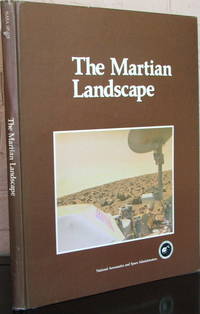
Washington DC: GPO 1978. First Printing. Hardcover. good. 11" x 14" 160 pages profusely illus. some in color tables Cover has some fading. 3D viewer in pocket at rear boards have some edge wear. The Viking program consisted of a pair of American space probes sent to Mars Viking 1 and Viking 2. Each spacecraft was composed of two main parts: an orbiter designed to photograph the surface and a lander designed to study the planet from the surface. The orbiters also served as communication relays for the landers. The Viking program grew from NASA's earlier Voyager Mars program. Viking 1 entered Mars orbit on June 19 1976 with Viking 2 following suit on August 7. After orbiting Mars for more than a month and returning images used for landing site selection the orbiters and landers detached; the landers then soft-landed. The Viking 1 lander touched down on the surface of Mars on July 20 1976 and was joined by the Viking 2 lander on September 3. The orbiters continued imaging and performing other scientific operations from orbit while the landers deployed instruments on the surface. Pictures from the Viking 1 and Viking 2 Landers as well as an account of the decade leading up to the Mars pictures by Tim Mutch leader of the Viking Lander Imaging Team. The Viking landers were the first completely successful spacecrafts to land on Mars. Before Viking arrived at Mars landing sites were chosen for both Viking landers. On July 20 1976 Viking lander 1 arrived at its chosen site in the western part of Chryse Planitia. On August 7 1976 Viking lander 2 touched down on Utopia Planitia. Each of the Viking landers carried a series of science packages which included a weather station a seismometer a chemical analysis package two cameras a soil composition package and a biological experiment package. Within minutes of lander 1's touch down the first picture was taken in case something happened to the spacecraft. This picture showed what looked like a sandy dusty surface with rocks up to 10 cm in diameter. The two cameras on each lander were mounted on opposite sides of the space craft. This allowed stereoscopic images to be taken which could be used to calculate distances from the lander to the features in the pictures. GPO hardcover
Washington DC: GPO 1978. First Printing. good. 11" x 14" 160 profusely illus. many in color tables 3D viewer in pocket at rear of volume boards somewhat scuffed and some edge wear. Pictures from the Viking 1 and Viking 2 Landers as well as an account of the decade leading up to the Mars pictures by Tim Mutch leader of the Viking Lander Imaging Team. GPO hardcover

 Per e-mail erhalten
 Als pdf-Dokument herunterladen
 RSS feed
 Permanenter link