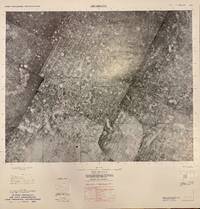
Washington DC: Defense Mapping Agency Topographic Center 1974. unbound. Orthophotograph. 26 1/4" x 25 3/8"<br/> <br/> Aryabhata was produced by the Defense Mapping Agency and is available for viewing through resources supported by NASA such as the Lunar and Planetary Institute. The Aryabhata crater on the Moon is a submerged impact crater in the eastern Mare Tranquillitatis named after the ancient Indian astronomer Aryabhata with only its arc-shaped eastern rim visible above the lunar mare due to lava flows.<br/> <br/> Defense Mapping Agency Topographic Center unknown
Washington DC: National Aeronautics and Space Administration 2011. Xerox-style reproduction. Assumed to be one of only a few produced for media representatives. Stapled at upper left corner. Very good. 63 1 pages. Illustrations. Mars Science Laboratory MSL is a robotic space probe mission to Mars launched by NASA on November 26 2011 which successfully landed Curiosity a Mars rover in Gale Crater on August 6 2012. The overall objectives include investigating Mars' habitability studying its climate and geology and collecting data for a human mission to Mars. The rover carries a variety of scientific instruments designed by an international team. Contents include Media Services Information; Quick Facts; Mars at a Glance: Mars Science Laboratory Investigations; Mission Overview; Comparing Two Mars Rover Projects; Spacecraft; Mars Science Laboratory Landing Site; Recent Current and Upcoming Missions; Mars Science: A Story of Changes; Historical Mars Missions; and Program/Project Management. For several reasons a different landing system was chosen for MSL compared to previous Mars landers and rovers. Curiosity was considered too heavy to use the airbag landing system as used on the Mars Pathfinder and Mars Exploration Rovers. The MSL engineers came up with a novel alternative solution: the sky crane. The sky crane system lowered the rover with a 25 ft tether to a soft landing—wheels down—on the surface of Mars. This system consists of a bridle lowering the rover on three nylon tethers and an electrical cable carrying information and power between the descent stage and rover. As the support and data cables unreeled the rover's six motorized wheels snapped into position. At roughly 25 ft below the descent stage the sky crane system slowed to a halt and the rover touched down. After the rover touched down it waited two seconds to confirm that it was on solid ground by detecting the weight on the wheels and fired several pyros small explosive devices activating cable cutters on the bridle and umbilical cords to free itself from the descent stage. The descent stage then flew away to a crash landing 2100 ft away. The sky crane concept had never been used in missions before. National Aeronautics and Space Administration unknown
Washington DC: National Aeronautics and Space Administration c2012. One of a number of multiple originals. Coin/Medal. Fine. An approximately 2 inch diameter clear plastic case with a 7.75 inch NASA bronze medallion inside. The front side has a colorful center image of the Space Shuttle Orbiter and Launch Vehicle The outer portion has the text "Celebrating the Historic Space Shuttle Program Official Commemorative. The inner text portion states This medallion contains metal flown on a Space Shuttle Mission. The reverse side has an outer ring of text that states: Columbia Challenger Discovery Atlantis Endeavour Mission Complete. The center section is divided into three sections: one depicts the take off of the launch vehicle with orbiter attached; one depicts the orbiter in space with the bay open a satellite deployed and the curve of the earth visible; the final depicts the shuttle landing with parachute deployed. Official NASA Mission Complete Medallion in Antique Bronze contains flown metal material! This official Mission Complete Medallion is 1.75" and commemorates the historic completion of the Space Shuttle Program. In addition this limited edition medallion commemorates the exceptional accomplishments and missions of the first winged-spacecrafts. Minted with the same Shuttle flown ingots included in the NASA Award Medallions this medallion is the second in the series and is also worthy of the program it represents. The official Space Shuttle Program Commemorative Design will be embedded in full color on one side while the other side will dimensionally render a Space Shuttle at work through a launch space mission and landing. These medallions will be plated in Antique Bronze and protected within circular presentation cases with high-density black foam spacers. The Space Shuttle Program was from 1981 to 2011. This design is by Blake Dumesnil. MR. Dumesnil is a senior art director and graphic designer at NASA's Johnson Space Center JSC. Much of the work he does supports the JSC Engineering and Science Directorate as well as the Jacobs-JETS contract. His design work includes all forms of visual presentation and marketing materials used to convey what expertise resources technologies and innovations at JSC in hopes of bringing in new forms of work from a variety of industries. As part of NASA's strive to partner with other industries he has helped represent NASA's involvement in Pumps & Pipes a collaborative effort between the Energy Medical and Aerospace industries in Houston that aims to solve common challenges through new technology and innovation development. In addition to marketing materials he has also had the honor of working with some of the astronaut crews in designing their ISS mission patches and have been personally selected to design some of the agency's anniversary designs as well. National Aeronautics and Space Administration unknown
Washington DC: National Aeronautics and Space Administration c2007. Presumed First Edition First printing. Single sheet sticker of mission patch printed on both sides. Very good. The format is 4.5 inches by 4.5 inches. The design is one square offset over a square of equal size making an eight-pointed 'star'. The base square has the number 122 in the upper left corner the alphanumeric 1E in the upper right corner and part of a graphic design in the lower two corners that blend into the graphic on the main square. The square has an image of the earth and one of a figure of a sailing ship 'morphing' into the space shuttle One the four sides are the crew names of Eyharts o Frick o Poindexter o Walheim o Melvin o Schelgel o Love. On the reverse there is text which reads STS-122 Patch Description The primary objective of the STS-122 mission is to install and outfit the European Space Agency's Columbus laboratory module. Atlantis will rendezvous and dock with the International Space Station ISS on flight day three and Leopold Eyharts will official become a member of the ISS crew replacing Dan Tani who will return to Earth as part of the STS-122 crew. The crew will conduct three spacewalks to prepare the Columbus module and replace a nitrogen tank on the station. The STS-122 patch depicts the continuation of the voyages of early explorers to today's frontier: space. The ship denotes the travels of the early expeditions from the East to the West. The shuttle shows the continuation of that journey along the orbital patch from west to east. A little more than 500 years after Columbus sailed to the new world the STS-122 crew will bring the European laboratory module ":Columbus" to the ISS to usher in a new ear of scientific discovery. NASA and Space Flight Awareness logos. STS-122 was a NASA Space Shuttle mission to the International Space Station ISS flown by the Space Shuttle Atlantis. STS-122 marked the 24th shuttle mission to the ISS and the 121st Space Shuttle flight overall. The mission was also referred to as ISS-1E by the ISS program. The primary objective of STS-122 was to deliver the European Columbus science laboratory built by the European Space Agency ESA to the station. It also returned Expedition 16 Flight Engineer Daniel M. Tani to Earth. Tani was replaced on Expedition 16 by Léopold Eyharts a French Flight Engineer representing ESA. After Atlantis landing the orbiter was prepared for STS-125 the final servicing mission for the Hubble Space Telescope. The original target launch date for STS-122 was December 6 2007 but due to engine cutoff sensor ECO reading errors the launch was postponed to December 9 2007. During the second launch attempt the sensors failed again and the launch was halted. A tanking test on December 18 2007 revealed the probable cause to lie with a connector between the external tank and the shuttle. The connector was replaced and the shuttle launched during the third attempt on February 7 2008. Columbus is a science laboratory that is part of the International Space Station ISS and is the largest single contribution to the ISS made by the European Space Agency ESA. Like the Harmony and Tranquility modules the Columbus laboratory was constructed in Turin Italy by Thales Alenia Space. The functional equipment and software of the lab was designed by EADS in Bremen Germany. It was also integrated in Bremen before being flown to the Kennedy Space Center KSC in Florida in an Airbus Beluga. It was launched aboard Space Shuttle Atlantis on 7 February 2008 on flight STS-122. It is designed for ten years of operation. The module is controlled by the Columbus Control Centre located at the German Space Operations Center part of the German Aerospace Center in Oberpfaffenhofen near Munich Germany. The European Space Agency has spent €1.4 billion about US$2 billion on building Columbus including the experiments it carries and the ground control infrastructure necessary to operate them. National Aeronautics and Space Administration unknown
Washington DC: National Aeronautics and Space Administration 1971. B&W photograph 10" x 8". Very Good. Official NASA letterhead and memo on verso with Photo Numbers. Washington, DC: National Aeronautics and Space Administration, 1971. unknown
Washington DC: National Aeronautics and Space Administration 1971. B&W photograph 10" x 8". Very Good. Official NASA letterhead and memo on verso with Photo Numbers. Washington, DC: National Aeronautics and Space Administration, 1971. unknown
Washington DC: National Aeronautics and Space Administration c1962. Presumed First Edition First printing. Wraps. Good. Format is approximately 10.25 inches by 8.25 inches. 16 pages plus covers. Illustrated some in color. This is a college focused recruitment booklet. The date is assumed as there was an article in Aviation Week and Space Technology of June 2 1962 that used the phrase NASA.spearhead to space. This booklet is an invitation for college graduates with inquiring scientific minds.creative minds.to seek to join NASA's scientific and engineering staff. NASA offered rapid professional advancement early recognition rapid salary advancement support for graduate study and a choice of which NASA facilities to consider joining. The National Aeronautics and Space Administration NASA is an independent agency of the U.S. Federal Government responsible for the civilian space program as well as aeronautics and space research. NASA was established in 1958 succeeding the National Advisory Committee for Aeronautics NACA. The new agency was to have a distinctly civilian orientation encouraging peaceful applications in space science. Since its establishment most US space exploration efforts have been led by NASA including the Apollo Moon landing missions the Skylab space station and later the Space Shuttle. NASA is supporting the International Space Station and is overseeing the development of the Orion spacecraft the Space Launch System and Commercial Crew vehicles. The agency is also responsible for the Launch Services Program which provides oversight of launch operations and countdown management for uncrewed NASA launches. National Aeronautics and Space Administration paperback
Washington DC: National Aeronautics and Space Administration 1963. Presumed first thus. Wraps. Good. Format is approximately 8 inches by 8 inches. Four page insert format is approximately 7.5 inches by 7.25 inches. Rear cover folds out. Primary cover colors are Blue and Gold. The insert is titled "Salute to NASA" and includes a one page narrative a one page program one page of Head Table Guests and the last page lists the sponsor committee and administrative assistance. The interior of the rear foldout presents NASA milestones from 1958 through 1963 and a summary of the Mercury Flight Program. The front cover has a small circular hole that reveals the NASA logo on the first page of the insert. The National Aeronautics and Space Administration NASA is an independent agency of the U.S. Federal Government responsible for the civilian space program as well as aeronautics and space research. The NASA was established in 1958 succeeding the National Advisory Committee for Aeronautics NACA. The new agency was to have a distinctly civilian orientation encouraging peaceful applications in space science. Since its establishment most US space exploration efforts have been led by NASA including the Apollo Moon landing missions the Skylab space station and later the Space Shuttle. NASA is supporting the International Space Station and is overseeing the development of the Orion spacecraft the Space Launch System and Commercial Crew vehicles. The agency is also responsible for the Launch Services Program which provides oversight of launch operations and countdown management for uncrewed NASA launches. NASA science is focused on better understanding Earth through the Earth Observing System; advancing heliophysics through the efforts of the Science Mission Directorate's Heliophysics Research Program; exploring bodies throughout the Solar System with advanced robotic spacecraft such as New Horizons; and researching astrophysics topics such as the Big Bang through the Great Observatories and associated programs. National Aeronautics and Space Administration paperback
Washington DC: NASA 2002. very good CD-ROM's in fair to good plastic cases. 7 CD-ROM disks 7 CD-ROM disks in plastic cases--cases for disks 1 2 5 & 6 are cracked but no damage to CD-ROM's. The Nimbus 7 Limb Infrared Monitor of the Stratosphere LIMS radiance profile dataset of 1978/79 was reconditioned and reprocessed to Version 6 profiles of temperature and species that are improved significantly over those from Version 5. NASA unknown
Washington DC: GPO 1969. fair to good. 238 wraps illus. tables appendices covers and edges foxed some foxing to a few pages mailing label on rear cover. Front cover creased. GPO paperback
Washington DC: National Aeronautics and Space Administration 2007. Presumed First Edition First printing. Comb binding. Very good. 50 pages including covers. Decorative front cover. Phoenix was an uncrewed space probe that landed on the surface of Mars on May 25 2008 and operated until November 2 2008. Phoenix was operational on Mars for 157 sols 161 days. Its instruments were used to assess the local habitability and to research the history of water on Mars. The mission was part of the Mars Scout Program; its total cost was $420 million including the cost of launch. The multi-agency program was led by the Lunar and Planetary Laboratory at the University of Arizona with project management by NASA's Jet Propulsion Laboratory. Academic and industrial partners included universities in the United States Canada Switzerland Denmark Germany the United Kingdom NASA the Canadian Space Agency the Finnish Meteorological Institute Lockheed Martin Space Systems MacDonald Dettwiler & Associates MDA in partnership with Optech Incorporated Optech and other aerospace companies. It was the first NASA mission to Mars led by a public university. Phoenix was NASA's sixth successful landing on Mars from seven attempts and the first in Mars' polar region. The lander completed its mission in August 2008 and made a last brief communication with Earth on November 2 as available solar power dropped with the Martian winter. The mission was declared concluded on November 10 2008 after engineers were unable to re-contact the craft. JPL declared the lander to be dead. The program was considered a success because it completed all planned science experiments and observations. The mission had two goals. One was to study the geological history of water the key to unlocking the story of past climate change. The second was to evaluate past or potential planetary habitability in the ice-soil boundary. Phoenix's instruments were suitable for uncovering information on the geological and possibly biological history of the Martian Arctic. Phoenix was the first mission to return data from either of the poles and contributed to NASA's main strategy for Mars exploration "Follow the water." A press kit often referred to as a media kit is a pre-packaged set of promotional materials that provide information about a person company organization or cause and which is distributed to members of the media for use. Press kits are often distributed to announce a release or for a news conference.<br /> Traditionally the term "press kit" referred to a set of documents photographs such as publicity stills and other relevant materials packaged together and such a kit was designed to be sent to a newspaper or magazine as part of an organization's public relations or promotional program. There is no universal guide to the elements that should be included in a press kit or media kit but the following are common components: Backgrounder with historical information on the company or individual; Fact sheet listing specific features statistics or benefits; Biographies of key executives individuals artists etc.; Past press coverage; Photos or other images; a press release; and media contact information. National Aeronautics and Space Administration unknown
Washington DC: GPO 1974. very good. 10" x 8" 1 print of color photograph of astronauts Donald Slayton Vance Brand and Thomas Stafford signed by commander Thomas Stafford. Explanatory caption on reverse. GPO unknown
Washington DC: GPO 1975. very good. 10" x 8" 1 color photograph of 5 astronauts 2 Russians and 3 Americans signed by Amer. commander Thomas Stafford & Russian V. Kubasov. Explanatory caption on reverse. The five crew members include Americans Thomas Stafford Donald Slayton and Vance Brand and Russians Aleksey Leonov and Valeriy Kubasov. GPO unknown
Washington DC: National Aeronautics and Space Administration 1959. Contemporary print. Photograph. Good. Sheet is approximately 8 inches by 10.5 inches. Black and white photographic image is approximately 9 inches by 6.5 inches. This is printed on photographic paper stock. The image is of a Pilot/Astronaut in a flight suit/spacesuit seated on a chair. Based on comparison with NASA early photographs of the Mercury 7 Astronauts this appears to be an astronaut in their spacesuit. It may be Gordon Cooper in the picture. The photo is contemporary with Project Mercury. Project Mercury was the first human spaceflight program of the United States running from 1958 through 1963. An early highlight of the Space Race its goal was to put a man into Earth orbit and return him safely ideally before the Soviet Union. Taken over from the US Air Force by the newly created civilian space agency NASA it conducted twenty uncrewed developmental flights some using animals and six successful flights by astronauts. The program took its name from Roman mythology. The astronauts were collectively known as the "Mercury Seven" and each spacecraft was given a name ending with a "7" by its pilot. On April 9 1959 NASA's first administrator Dr. Keith Glennan announced the names of the agency's first group of astronauts at a news conference in Washington D.C. Now known as the "Original Seven" they included three Naval aviators M. Scott Carpenter Walter M. Schirra Jr. and Alan B. Shepard Jr.; three Air Force pilots L. Gordon Cooper Jr. Virgil I. Gus Grissom and Donald K. Deke Slayton; along with Marine Corps aviator John H. Glenn Jr. This group photo of the original Mercury astronauts was taken in June 1963 at the Manned Spacecraft Center MSC now Johnson Space Center in Houston Texas. The astronauts are left-to-right: Cooper Schirra Shepard Grissom Glenn Slayton and Carpenter. Project Mercury became NASA's first major undertaking. The objectives of the program were to place a human-rated spacecraft into orbit around Earth observe the astronaut's performance in such conditions and safely recover the astronaut and the spacecraft. The Mercury flights proved that humans could live and work in space and paved the way for the Gemini and Apollo programs as well as for all further human spaceflight. National Aeronautics and Space Administration unknown

 Per e-mail erhalten
 Als pdf-Dokument herunterladen
 RSS feed
 Permanenter link