|
NATIONAL AERONAUTICS AND SPACE ADMINISTRATION WASHINGTON DC
Recommendation for Space Data System Standards. Telecommand: Part 2. Data Routing Service. Blue Book
PN. New. 1992. Soft Cover. Date is original print. This is a reprint edition . PN paperback
Référence libraire : 260028
|
|
|
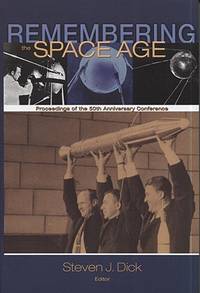
National Aeronautics and Space Administration [Compiler]; Dick, PhD Steven J [Editor]; h D
Remembering the Space Age: Proceedings of the 50th Anniversary Conference: Proceedings on the 50th Anniversary Conference
History Division 2009-02-10. Hardcover. New. In shrink wrap. Looks like an interesting title! History Division hardcover
Référence libraire : Q-0160817234 ISBN : 0160817234 9780160817236
|
|
|
NATIONAL AERONAUTICS AND SPACE ADMINISTRATION WASHINGTON DC
Requesting AVIRIS Data: A Guide for Principal Investigators
PN. New. 1997. . Soft Cover. Date is original print. This is a reprint edition . PN paperback
Référence libraire : 298493
|
|
|
NATIONAL AERONAUTICS AND SPACE ADMINISTRATION WASHINGTON DC
Results of the Second U.S. Manned Suborbital Space Flight July 21 1961
PN. New. 1961. Soft Cover. Date is original print. This is a reprint edition. . PN paperback
Référence libraire : 713695
|
|
|
National Aeronautics and Space Administration, Manned Spacecraft Center
Results of the First United States Manned Orbital Space Flight February 20 1962
Washington DC: GPO 1962. fair to good. Quarto 204 wraps illus. tables charts apps spine & cover edges faded side margin cut off pp. i-10 inner margin cut off pp. 11-18. Chapter 10 "Astronaut Preparation " was written by Scott Carpenter; Chapter 12 "Pilot's Flight Report " was written by John Glenn. GPO paperback
Référence libraire : 11493
|
|
|
NATIONAL AERONAUTICS AND SPACE ADMINISTRATION WASHINGTON DC
Robert H. Goddard World Rocket Pioneer
PN. New. 1960. Soft Cover. Date is original print. This is a reprint edition. . PN paperback
Référence libraire : 707129
|
|
|
National Aeronautics and Space Administration
Rocket and Gantry at night no title on the photograph--description of the image; NASA B-59-714
Washington DC: National Aeronautics and Space Administration 1959. Contemporary print. Photograph. Good. Sheet is approximately 8 inches by 10.5 inches. Black and white photographic image is approximately 9 inches by 6.5 inches. This is printed on photographic paper stock. The image is of a rocket in front of a gantry taken at night. There is a group of people gathered at the base of the rocket. This may be a photograph of the Mercury Redstone or the Mercury Atlas rocket. Mercury-Atlas was a subprogram of Project Mercury that included most of the flights and tests using the Atlas LV-3B launch vehicle. The Atlas was also used for one Mercury flight under the Big Joe subprogram. The photo is contemporary with Project Mercury. Project Mercury was the first human spaceflight program of the United States running from 1958 through 1963. An early highlight of the Space Race its goal was to put a man into Earth orbit and return him safely ideally before the Soviet Union. Taken over from the US Air Force by the newly created civilian space agency NASA it conducted twenty uncrewed developmental flights some using animals and six successful flights by astronauts. The program took its name from Roman mythology. The astronauts were collectively known as the "Mercury Seven" and each spacecraft was given a name ending with a "7" by its pilot. The Mercury-Redstone launch vehicle was the first crewed launch vehicle in the United States space program. The Mercury-Redstone provided NASA with an opportunity understand performance aspects of the Mercury spacecraft the effect of a weightless environment on astronauts and launch and recovery operations at Kennedy Space Center. Development of the Redstone missile began directly after the transfer of the Fort Bliss rocket team to Huntsville Alabama in 1950. The fuselage of the Redstone was developed in-house at the Army's Guided Missile Development Division with Chrysler serving as prime contractor. Peenemunde veteran William A. Mrazek was placed in charge of developing the structure that consisted of pressurized aluminum propellant tanks. The tail unit consisted of a riveted aluminum structure with four stabilizing fins and air rudders with carbon jet vanes extending into the exhaust stream. The initial flight test of the Redstone occurred on August 20 1953 at Cape Canaveral. Between August 1953 and November 1958 37 Redstone missiles were fired altogether with only 13 experiencing any sort of malfunction. On October 7 1958 NASA formally organized Project Mercury to place a manned space capsule in orbital flight around the Earth investigate man's reaction to this new environment and recover the capsule and the pilot safely. The Army agreed to provide ten Redstone and three Jupiter vehicles for NASA's manned space program. Funding for the eight Redstone boosters was provided to the Army Ordnance Missile Command at the Arsenal in January 1959. "Man-rating" for human spaceflight what was previously a ballistic missile was not an easy project. Requirements for the project included launching a two-ton payload to an apogee of 100 nautical miles. The vehicle also had to meet important criteria of safety during launch adequate human factors consideration and necessary performance margins. A key development decision involved using the Jupiter C variation of the Redstone for the project. The Jupiter C design included a propellant tank six feet longer than the Redstone a lighter overall structure and improved performance capable of 78000 pounds of thrust. The elongated tanks of the Jupiter C provided the vehicle with an engine burn time of 143.5 seconds a twenty seconds increase over the Redstone. On July 1 1960 a core group from the Army Ballistic Missile Agency ABMA transferred from the Army to NASA formally creating the Marshall Space Flight Center. With this transfer came overall responsibility for the Mercury-Redstone launch vehicles. By October of that year a status report on Marshall's involvement in Mercury noted that the first two Mercury-Redstones had been assembled by the Marshall Center with many of the components fabricated at Marshall. The Chrysler Corporation had assembled an additional six launch vehicles. The first four of the eight Mercury-Redstone vehicles had been static fired and the first Mercury-Redstone was on the launch pad at Cape Canaveral after a capsule-booster compatibility checkout in Huntsville. National Aeronautics and Space Administration unknown
Référence libraire : 80611
|
|
|
National Aeronautics and Space Administration
Rocket and Gantry and other Tower no title on the photograph--description of the image; NASA B-60-1512
Washington DC: National Aeronautics and Space Administration 1960. Contemporary print. Photograph. Good. Sheet is approximately 8 inches by 10.5 inches. Black and white photographic image is approximately 9 inches by 6.5 inches. This is printed on photographic paper stock. The image is of a rocket between a gantry and another structure/tower. This may be a photograph of the Mercury Redstone or the Mercury Atlas rocket. Mercury-Atlas was a subprogram of Project Mercury that included most of the flights and tests using the Atlas LV-3B launch vehicle. The Atlas was also used for one Mercury flight under the Big Joe subprogram. The photo is contemporary with Project Mercury. Project Mercury was the first human spaceflight program of the United States running from 1958 through 1963. An early highlight of the Space Race its goal was to put a man into Earth orbit and return him safely ideally before the Soviet Union. Taken over from the US Air Force by the newly created civilian space agency NASA it conducted twenty uncrewed developmental flights some using animals and six successful flights by astronauts. The program took its name from Roman mythology. The astronauts were collectively known as the "Mercury Seven" and each spacecraft was given a name ending with a "7" by its pilot. The Mercury-Redstone launch vehicle was the first crewed launch vehicle in the United States space program. The Mercury-Redstone provided NASA with an opportunity understand performance aspects of the Mercury spacecraft the effect of a weightless environment on astronauts and launch and recovery operations at Kennedy Space Center. Development of the Redstone missile began directly after the transfer of the Fort Bliss rocket team to Huntsville Alabama in 1950. The fuselage of the Redstone was developed in-house at the Army's Guided Missile Development Division with Chrysler serving as prime contractor. Peenemunde veteran William A. Mrazek was placed in charge of developing the structure that consisted of pressurized aluminum propellant tanks. The tail unit consisted of a riveted aluminum structure with four stabilizing fins and air rudders with carbon jet vanes extending into the exhaust stream. The initial flight test of the Redstone occurred on August 20 1953 at Cape Canaveral. Between August 1953 and November 1958 37 Redstone missiles were fired altogether with only 13 experiencing any sort of malfunction. On October 7 1958 NASA formally organized Project Mercury to place a manned space capsule in orbital flight around the Earth investigate man's reaction to this new environment and recover the capsule and the pilot safely. The Army agreed to provide ten Redstone and three Jupiter vehicles for NASA's manned space program. Funding for the eight Redstone boosters was provided to the Army Ordnance Missile Command at the Arsenal in January 1959. "Man-rating" for human spaceflight what was previously a ballistic missile was not an easy project. Requirements for the project included launching a two-ton payload to an apogee of 100 nautical miles. The vehicle also had to meet important criteria of safety during launch adequate human factors consideration and necessary performance margins. A key development decision involved using the Jupiter C variation of the Redstone for the project. The Jupiter C design included a propellant tank six feet longer than the Redstone a lighter overall structure and improved performance capable of 78000 pounds of thrust. The elongated tanks of the Jupiter C provided the vehicle with an engine burn time of 143.5 seconds a twenty seconds increase over the Redstone. On July 1 1960 a core group from the Army Ballistic Missile Agency ABMA transferred from the Army to NASA formally creating the Marshall Space Flight Center. With this transfer came overall responsibility for the Mercury-Redstone launch vehicles. By October of that year a status report on Marshall's involvement in Mercury noted that the first two Mercury-Redstones had been assembled by the Marshall Center with many of the components fabricated at Marshall. The Chrysler Corporation had assembled an additional six launch vehicles. The first four of the eight Mercury-Redstone vehicles had been static fired and the first Mercury-Redstone was on the launch pad at Cape Canaveral after a capsule-booster compatibility checkout in Huntsville. National Aeronautics and Space Administration unknown
Référence libraire : 80610
|
|
|
National Aeronautics and Space Administration
Rocket and Gantry at night no title on the photograph--description of the image; NASA B-59-555
Washington DC: National Aeronautics and Space Administration 1959. Contemporary print. Photograph. Good. Sheet is approximately 8 inches by 10.5 inches. Black and white photographic image is approximately 9 inches by 6.5 inches. This is printed on photographic paper stock. The image is of a rocket next to a gantry taken at night. There are many people visible at ground level. This may be a photgraph of the Mercury Redstone rocket. It is contemporary with Project Mercury. Project Mercury was the first human spaceflight program of the United States running from 1958 through 1963. An early highlight of the Space Race its goal was to put a man into Earth orbit and return him safely ideally before the Soviet Union. Taken over from the US Air Force by the newly created civilian space agency NASA it conducted twenty uncrewed developmental flights some using animals and six successful flights by astronauts. The program took its name from Roman mythology. The astronauts were collectively known as the "Mercury Seven" and each spacecraft was given a name ending with a "7" by its pilot. The Mercury-Redstone launch vehicle was the first crewed launch vehicle in the United States space program. The Mercury-Redstone provided NASA with an opportunity understand performance aspects of the Mercury spacecraft the effect of a weightless environment on astronauts and launch and recovery operations at Kennedy Space Center. Development of the Redstone missile began directly after the transfer of the Fort Bliss rocket team to Huntsville Alabama in 1950. The fuselage of the Redstone was developed in-house at the Army's Guided Missile Development Division with Chrysler serving as prime contractor. Peenemunde veteran William A. Mrazek was placed in charge of developing the structure that consisted of pressurized aluminum propellant tanks. The tail unit consisted of a riveted aluminum structure with four stabilizing fins and air rudders with carbon jet vanes extending into the exhaust stream. The initial flight test of the Redstone occurred on August 20 1953 at Cape Canaveral. Between August 1953 and November 1958 37 Redstone missiles were fired altogether with only 13 experiencing any sort of malfunction. On October 7 1958 NASA formally organized Project Mercury to place a manned space capsule in orbital flight around the Earth investigate man's reaction to this new environment and recover the capsule and the pilot safely. The Army agreed to provide ten Redstone and three Jupiter vehicles for NASA's manned space program. Funding for the eight Redstone boosters was provided to the Army Ordnance Missile Command at the Arsenal in January 1959. "Man-rating" for human spaceflight what was previously a ballistic missile was not an easy project. Requirements for the project included launching a two-ton payload to an apogee of 100 nautical miles. The vehicle also had to meet important criteria of safety during launch adequate human factors consideration and necessary performance margins. A key development decision involved using the Jupiter C variation of the Redstone for the project. The Jupiter C design included a propellant tank six feet longer than the Redstone a lighter overall structure and improved performance capable of 78000 pounds of thrust. The elongated tanks of the Jupiter C provided the vehicle with an engine burn time of 143.5 seconds a twenty seconds increase over the Redstone. On July 1 1960 a core group from the Army Ballistic Missile Agency ABMA transferred from the Army to NASA formally creating the Marshall Space Flight Center. With this transfer came overall responsibility for the Mercury-Redstone launch vehicles. By October of that year a status report on Marshall's involvement in Mercury noted that the first two Mercury-Redstones had been assembled by the Marshall Center with many of the components fabricated at Marshall. The Chrysler Corporation had assembled an additional six launch vehicles. The first four of the eight Mercury-Redstone vehicles had been static fired and the first Mercury-Redstone was on the launch pad at Cape Canaveral after a capsule-booster compatibility checkout in Huntsville. National Aeronautics and Space Administration unknown
Référence libraire : 80608
|
|
|
National Aeronautics and Space Administration
Rocket lifting off near Gantry at night no title on the photograph--description of the image; NASA B-59-557
Washington DC: National Aeronautics and Space Administration 1959. Contemporary print. Photograph. Good. Sheet is approximately 8 inches by 10.5 inches. Black and white photographic image is approximately 9 inches by 6.5 inches. This is printed on photographic paper stock. The image is of a rocket lifting off next to a gantry taken at night. This may be a photograph of the Mercury Redstone rocket. It is contemporary with Project Mercury. Project Mercury was the first human spaceflight program of the United States running from 1958 through 1963. An early highlight of the Space Race its goal was to put a man into Earth orbit and return him safely ideally before the Soviet Union. Taken over from the US Air Force by the newly created civilian space agency NASA it conducted twenty uncrewed developmental flights some using animals and six successful flights by astronauts. The program took its name from Roman mythology. The astronauts were collectively known as the "Mercury Seven" and each spacecraft was given a name ending with a "7" by its pilot. The Mercury-Redstone launch vehicle was the first crewed launch vehicle in the United States space program. The Mercury-Redstone provided NASA with an opportunity understand performance aspects of the Mercury spacecraft the effect of a weightless environment on astronauts and launch and recovery operations at Kennedy Space Center. Development of the Redstone missile began directly after the transfer of the Fort Bliss rocket team to Huntsville Alabama in 1950. The fuselage of the Redstone was developed in-house at the Army's Guided Missile Development Division with Chrysler serving as prime contractor. Peenemunde veteran William A. Mrazek was placed in charge of developing the structure that consisted of pressurized aluminum propellant tanks. The tail unit consisted of a riveted aluminum structure with four stabilizing fins and air rudders with carbon jet vanes extending into the exhaust stream. The initial flight test of the Redstone occurred on August 20 1953 at Cape Canaveral. Between August 1953 and November 1958 37 Redstone missiles were fired altogether with only 13 experiencing any sort of malfunction. On October 7 1958 NASA formally organized Project Mercury to place a manned space capsule in orbital flight around the Earth investigate man's reaction to this new environment and recover the capsule and the pilot safely. The Army agreed to provide ten Redstone and three Jupiter vehicles for NASA's manned space program. Funding for the eight Redstone boosters was provided to the Army Ordnance Missile Command at the Arsenal in January 1959. "Man-rating" for human spaceflight what was previously a ballistic missile was not an easy project. Requirements for the project included launching a two-ton payload to an apogee of 100 nautical miles. The vehicle also had to meet important criteria of safety during launch adequate human factors consideration and necessary performance margins. A key development decision involved using the Jupiter C variation of the Redstone for the project. The Jupiter C design included a propellant tank six feet longer than the Redstone a lighter overall structure and improved performance capable of 78000 pounds of thrust. The elongated tanks of the Jupiter C provided the vehicle with an engine burn time of 143.5 seconds a twenty seconds increase over the Redstone. On July 1 1960 a core group from the Army Ballistic Missile Agency ABMA transferred from the Army to NASA formally creating the Marshall Space Flight Center. With this transfer came overall responsibility for the Mercury-Redstone launch vehicles. By October of that year a status report on Marshall's involvement in Mercury noted that the first two Mercury-Redstones had been assembled by the Marshall Center with many of the components fabricated at Marshall. The Chrysler Corporation had assembled an additional six launch vehicles. The first four of the eight Mercury-Redstone vehicles had been static fired and the first Mercury-Redstone was on the launch pad at Cape Canaveral after a capsule-booster compatibility checkout in Huntsville. National Aeronautics and Space Administration unknown
Référence libraire : 80609
|
|
|
National Aeronautics and Space Administration
Rocket lifting off at night no title on the photograph--description of the image; NASA B-60-364
Washington DC: National Aeronautics and Space Administration 1960. Contemporary print. Photograph. Good. Sheet is approximately 8 inches by 10.5 inches. Black and white photographic image is approximately 9 inches by 6.5 inches. This is printed on photographic paper stock. The image is of a rocket taking off at night. This may be a photograph of a sounding rocket. Rocket has two visible fins near that base of the rocket. The photo is contemporary with Project Mercury. Project Mercury was the first human spaceflight program of the United States running from 1958 through 1963. An early highlight of the Space Race its goal was to put a man into Earth orbit and return him safely ideally before the Soviet Union. Taken over from the US Air Force by the newly created civilian space agency NASA it conducted twenty uncrewed developmental flights some using animals and six successful flights by astronauts. The program took its name from Roman mythology. The astronauts were collectively known as the "Mercury Seven" and each spacecraft was given a name ending with a "7" by its pilot. The Mercury-Redstone launch vehicle was the first crewed launch vehicle in the United States space program. The Mercury-Redstone provided NASA with an opportunity understand performance aspects of the Mercury spacecraft the effect of a weightless environment on astronauts and launch and recovery operations at Kennedy Space Center. Development of the Redstone missile began directly after the transfer of the Fort Bliss rocket team to Huntsville Alabama in 1950. The fuselage of the Redstone was developed in-house at the Army's Guided Missile Development Division with Chrysler serving as prime contractor. Peenemunde veteran William A. Mrazek was placed in charge of developing the structure that consisted of pressurized aluminum propellant tanks. The tail unit consisted of a riveted aluminum structure with four stabilizing fins and air rudders with carbon jet vanes extending into the exhaust stream. The initial flight test of the Redstone occurred on August 20 1953 at Cape Canaveral. Between August 1953 and November 1958 37 Redstone missiles were fired altogether with only 13 experiencing any sort of malfunction. On October 7 1958 NASA formally organized Project Mercury to place a manned space capsule in orbital flight around the Earth investigate man's reaction to this new environment and recover the capsule and the pilot safely. The Army agreed to provide ten Redstone and three Jupiter vehicles for NASA's manned space program. Funding for the eight Redstone boosters was provided to the Army Ordnance Missile Command at the Arsenal in January 1959. "Man-rating" for human spaceflight what was previously a ballistic missile was not an easy project. Requirements for the project included launching a two-ton payload to an apogee of 100 nautical miles. The vehicle also had to meet important criteria of safety during launch adequate human factors consideration and necessary performance margins. A key development decision involved using the Jupiter C variation of the Redstone for the project. The Jupiter C design included a propellant tank six feet longer than the Redstone a lighter overall structure and improved performance capable of 78000 pounds of thrust. The elongated tanks of the Jupiter C provided the vehicle with an engine burn time of 143.5 seconds a twenty seconds increase over the Redstone. On July 1 1960 a core group from the Army Ballistic Missile Agency ABMA transferred from the Army to NASA formally creating the Marshall Space Flight Center. With this transfer came overall responsibility for the Mercury-Redstone launch vehicles. By October of that year a status report on Marshall's involvement in Mercury noted that the first two Mercury-Redstones had been assembled by the Marshall Center with many of the components fabricated at Marshall. The Chrysler Corporation had assembled an additional six launch vehicles. The first four of the eight Mercury-Redstone vehicles had been static fired and the first Mercury-Redstone was on the launch pad at Cape Canaveral after a capsule-booster compatibility checkout in Huntsville. National Aeronautics and Space Administration unknown
Référence libraire : 80612
|
|
|
National Aeronautics and Space Administration
Rockets And People: Hot Days Of The Cold War Volume 3 Nasa History
Government Printing Office 2010-05-05. 1st English langua edition. hardcover. New. 6.50x2.00x9.50. Buy with confidence. Excellent Customer Service & Return policy. Government Printing Office hardcover
Référence libraire : DADAX0160817331 ISBN : 0160817331 9780160817335

|
|
|
National Aeronautics and Space Administration
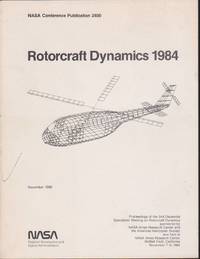
ROTORCRAFT DYNAMICS 1984 NASA Conference Publication 2400
National Aeronautics and Space Administration. VG. 1985. Paperback. Paperback in Very Good condition. 4to 11" - 13" tall. 501 pages. Quick Shipping All Books Mailed in Boxes Free Tracking Provided . National Aeronautics and Space Administration paperback
Référence libraire : 58682
|
|
|
NATIONAL AERONAUTICS AND SPACE ADMINISTRATION WASHINGTON DC
Science and Technology Research Directions for the International Space Station
PN. New. 1999. Soft Cover. Date is original print. This is a reprint edition . PN paperback
Référence libraire : 1317216
|
|
|
NATIONAL AERONAUTICS AND SPACE ADMINISTRATION CLEVELAND OH LEWIS RESEARCH CEN TER
Sealed-Foam Constrictive-Wrapped External Insulation System for Liquid-Hydrogen Tanks of Boost Vehicles
PN. New. 1965. Soft Cover. Date is original print. This is a reprint edition. . PN paperback
Référence libraire : 726412
|
|
|
NATIONAL AERONAUTICS AND SPACE ADMINISTRATION HAMPTON VA LANGLEY RESEARCH CEN TER
Selected Papers on Environmental and Attitude Control of Manned Spacecraft
PN. New. 1966. Soft Cover. Date is original print. This is a reprint edition. . PN paperback
Référence libraire : 731005
|
|
|
NATIONAL AERONAUTICS AND SPACE ADMINISTRATION WASHINGTON DC
Selected Shop Techniques: 71 Selected Suggestions for Machinists Mechanics and Technicians
PN. New. 1965. Soft Cover. Date is original print. This is a reprint edition. . PN paperback
Référence libraire : 727443
|
|
|
NATIONAL AERONAUTICS AND SPACE ADMINISTRATION HUNTSVILLE AL GEORGE C MARSHALL SPACE FLIGHT CENTER
Selected Welding Techniques Part 2
PN. New. 1964. Soft Cover. Date is original print. This is a reprint edition. . PN paperback
Référence libraire : 725014
|
|
|
NATIONAL AERONAUTICS AND SPACE ADMINISTRATION HUNTSVILLE AL GEORGE C MARSHALL SPACE FLIGHT CENTER
Selected Welding Techniques Part II: Technology Utilization Notes. NASA SP-5009
NASA 1964. 34 pp. softcover very good. - If you are reading this this item is actually physically in our stock and ready for shipment once ordered. We are not bookjackers. Buyer is responsible for any additional duties taxes or fees required by recipient's country. NASA paperback
Référence libraire : ZB455960
|
|
|
NATIONAL AERONAUTICS AND SPACE ADMINISTRATION HAMPTON VA LANGLEY RESEARCH CENTER
Semiannual Report: April 1 2000 Through September 20 2000
PN. New. 2001. Soft Cover. Date is original print. This is a reprint edition . PN paperback
Référence libraire : 1329808
|
|
|
National Aeronautics and Space Administration
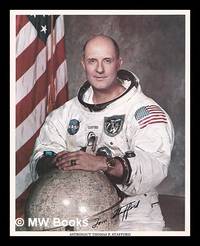
SIGNED colour photograph by Astronaut Thomas P. Stafford
Houston TX USA: National Aeronautics and Space Administration. First Edition. Softcover. One colour photograph SIGNED by Astronaut Thomas P. Stafford. Remains well preserved overall; bright clean and sharp-cornered. Provenance; envelope addressed to Ron Crosby. Physical description; 1 colour photograph. Notes; No publication date given. SIGNED by Astronaut Thomas P. Stafford. Subjects; National Aeronautics and Space Administration NASA. Astronaut Thomas P. Stafford. Houston, TX (USA): National Aeronautics and Space Administration paperback
Référence libraire : 374310
|
|
|
National Aeronautics and Space Administration
Signed Photograph of Crew for the Third Space Shuttle Orbital Test STS-3
Washington DC: GPO n.d. very good. 8" x 10" 1 photo 1 color photograph of Jack R. Lousma Shuttle commander and Charles G. Fullerton Shuttle pilot signed by Fullerton GPO unknown
Référence libraire : 13069
|
|
|
National Aeronautics and Space Administration
Signed Photograph of Astronaut Charles D. Gemar
Washington DC: GPO n.d. very good. 8" x 10" 1 photo 1 signed color photograph. GPO unknown
Référence libraire : 13072
|
|
|
National Aeronautics and Space Administration
Signed Photograph of Astronaut Thomas D. Jones
Washington DC: GPO n.d. very good. 8" x 10" 1 photo 1 signed color photograph. GPO unknown
Référence libraire : 13073
|
|
|
National Aeronautics and Space Administration
Signed Photograph of Astronaut Loren Acton
Washington DC: GPO n.d. very good. 4.75" x 8" 1 photo 1 signed color photograph. GPO unknown
Référence libraire : 13064
|
|
|
National Aeronautics and Space Administration
Signed Photograph of Astronaut Guion S. "Guy" Bluford Jr. Ph.D. Colonel USAF
Washington DC: GPO c. 1992. very good. 8" x 10" 1 photo 1 signed color photograph with short biography on back. GPO unknown
Référence libraire : 13066
|
|
|
National Aeronautics and Space Administration
Signed Photograph of Astronaut Joseph P. Allen
Washington DC: GPO 1980. very good. 8" x 10" 1 photo 1 signed color photograph. GPO unknown
Référence libraire : 13065
|
|
|
National Aeronautics and Space Administration
Signed Photograph of Astronaut Charles J. Precourt
Washington DC: GPO n.d. very good. 8" x 10" 1 photo 1 signed color photograph inscribed to Mindy. GPO unknown
Référence libraire : 13075
|
|
|
National Aeronautics and Space Administration
Signed Photograph of Astronaut Guy S. Gardner
Washington DC: GPO n.d. very good. 8" x 10" 1 photo 1 signed color photograph with inscription. GPO unknown
Référence libraire : 13071
|
|
|
National Aeronautics and Space Administration
Signed Photograph of Astronaut Kenneth D. Cockrell
Washington DC: GPO n.d. very good. 8" x 10" 1 photo 1 signed color photograph. GPO unknown
Référence libraire : 13068
|
|
|
National Aeronautics and Space Administration
Signed Photograph of Astronaut William B. Lenoir
Washington DC: GPO 1980. good. 8" x 10" 1 photo 1 signed color photograph sticker residue on reverse. GPO unknown
Référence libraire : 13074
|
|
|
National Aeronautics and Space Administration
Signed Photograph of Senator Jake Garn
Washington DC: GPO n.d. very good. 8" x 10" 1 photo 1 signed color photograph of Senator Garn in NASA jacket with model rocket. GPO unknown
Référence libraire : 13070
|
|
|
National Aeronautics and Space Administration
Signed Photograph of Astronaut Mark N. Brown
Washington DC: GPO n.d. very good. 8" x 10" 1 photo 1 signed color photograph. GPO unknown
Référence libraire : 13067
|
|
|
National Aeronautics and Space Administration
Significant Achievements in Space Applications 1965
National Aeronautics and Space Administration. Used - Acceptable. Acceptable condition. NASA Space Exploration A readable intact copy that may have noticeable tears and wear to the spine. All pages of text are present but they may include extensive notes and highlighting or be heavily stained. Includes reading copy only books. National Aeronautics and Space Administration unknown
Référence libraire : U13OS-00344
|
|
|
National Aeronautics and Space Administration, Lyndon B Johnson Space Center
Skylab Earth Resources Data Catalog. JSC 09016
Washington DC: GPO 1974. good. Quarto 359 maps wraps illus. some color 6 large fold-out color maps figures tables index some soiling to covers and spine. This book provides a complete index of the Skylab Earth Resources Experiment Package EREP photographs and information on how all EREP datacan be obtained. GPO paperback
Référence libraire : 13035
|
|
|
National Aeronautics and Space Administration
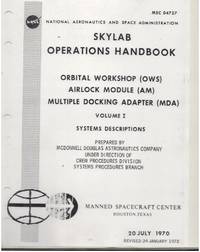
Skylab Operations Handbook: Volume I Systems Descriptions MSC 04727
Houston TX: NASA Manned Space Center. Very Good. 1972. 3-ring binder. 27 pages were missing from the original document. They have been replaced with photocopies. Otherwise very good in very good 3-ring binding; In 3-ring binider. Illustrated with numerous figures diagrams drawings graphs etc. many foldout. January 24 1972 revised copy ; 4to; 950 pages . NASA, Manned Space Center unknown
Référence libraire : 55812
|
|
|
National Aeronautics and Space Administration
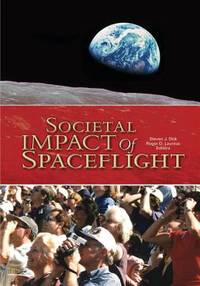
Societal Impact of Spaceflight
new. unknown
Référence libraire : 20543171-n ISBN : 1493586246 9781493586240
|
|
|
National Aeronautics and Space Administration
Societal Impact of Spaceflight
like new. unknown
Référence libraire : 20543171 ISBN : 1493586246 9781493586240
|
|
|
National Aeronautics and Space Administration
Societal Impact of Spaceflight
0000-00-00. hardcover. New. 6.69x1.89x9.69. Buy with confidence. Excellent Customer Service & Return policy. hardcover
Référence libraire : DADAX0160801907 ISBN : 0160801907 9780160801907

|
|
|
NATIONAL AERONAUTICS AND SPACE ADMINISTRATION WASHINGTON DC
SOHO Mission Interruption Joint NASA/ESA Investigation Board
PN. New. 1998. Soft Cover. Date is original print. This is a reprint edition . PN paperback
Référence libraire : 1309018
|
|
|
National Aeronautics and Space Administration
Space Based Astronomy Teacher's Guide with Activities
Publisher: National Aeronautics and Space Adminstration 1994 Good Unbound srink wrap. Educational Product Teachers Grades 5-8. EG-102 August 1994 unknown
Référence libraire : 001359
|
|
|
National Aeronautics and Space Administration, NASA Lewis Research Center, Space Communications Program
Space Communications Technology Link Volume 1 No. 1 Summer 1998
Cleveland OH: National Aeronautics and Space Administration NASA Lewis Research Center Space Communications Program 1998. Presumed First Edition First printing of this Premier Issue. Wraps. Very good. 15 1 pages. Illustrations. Mailing information and ink notation on back cover. Minor wear and soiling noted. This is the premier issue of a quarterly publication of the Space Communications Program at the NASA Lewis Research Center. As such it has become an extremely rare item in the space and the collectibles markets. A substantial amount of this issue's content is related to ACTS the Advance Communications Technology Satellite. NASA is developing architecture technologies communication system technologies and subsystem and component technologies to enable NASA's future missions in science and human exploration. We develop space communication architectures via commercial ventures and international forums and we are a major supporter of extending the Internet into space. Technologies are being developed to support intelligent autonomous communications architectures that enable anytime anywhere operations and provide end-to-end information delivery from space directly to users. Through coordinated studies with other NASA centers government agencies industry and academia our scientists and engineers are designing feasible communication network architectures that enable the storage transmission and dynamic routing of large amounts of data at high rates among space assets and between space and ground assets. National Aeronautics and Space Administration, NASA Lewis Research Center, Space Communications Program paperback
Référence libraire : 77307
|
|
|
NATIONAL AERONAUTICS AND SPACE ADMINISTRATION HAMPTON VA LANGLEY RESEARCH CENTER
Space Durability of Materials Bibliography 1983-1993
PN. New. 1993. Soft Cover. Date is original print. This is a reprint edition . PN paperback
Référence libraire : 261668
|
|
|
National Aeronautics and Space Administration
Space Shuttle Mission STS-132 Finishing Touches; Press Kit May 2010
Washington DC: National Aeronautics and Space Administration 2010. Xerox-style reproduction. Assume relatively few copies made for media representatives. Stapled at upper left corner. Very good. ii 104 pages plus front cover. No rear cover. Illustrations. Three-hole punched. Logo of the United Space Alliance on the front cover. Includes STS-132/ULF4 Mission Overview; STS-132 Timeline Overview; Mission Profile; Mission Objectives; Mission Personnel; STS-132 Crew; Payload Overview; Rendezvous & Docking; Spacewalks; Experiments; History of Space Shuttle Atlantis; Shuttle Reference Data; Launch and Landing; Acronmyns and Abbreviations; Media Assistance; Public Affairs Contacts. STS-132 ISS assembly flight ULF4 was a NASA Space Shuttle mission during which Space Shuttle Atlantis docked with the International Space Station on May 16 2010. STS-132 was launched from the Kennedy Space Center on May 14 2010. The primary payload was the Russian Rassvet Mini-Research Module along with an Integrated Cargo Carrier-Vertical Light Deployable ICC-VLD. Atlantis landed at the Kennedy Space Center on May 26 2010. STS-132 was initially scheduled to be the final flight of Atlantis provided that the STS-335/STS-135 Launch On Need rescue mission would not be needed. However in February 2011 NASA declared that the final mission of Atlantis and of the Space Shuttle program STS-135 would be flown regardless of the funding situation. Also on board Atlantis was a 4-inch long wood sample of Sir Isaac Newton's apple tree. The piece from the original tree that supposedly inspired Newton's theory of gravity along with a picture of Newton were taken into orbit by astronaut Piers Sellers. The wood is part of the collection of the Royal Society archives in London and was returned there following the flight. Additionally a flag from Clarkson University Potsdam New York flew on board shuttle Atlantis. It was there in honor of STS-132 lead shuttle flight director Michael L. Sarafin who is an alumnus of the Clarkson University. The STS-132 mission patch was designed by NASA artist Sean Collins working with astronaut Garrett Reisman. The patch shows Atlantis flying towards a sunset landing with the names of the STS-132 astronauts around the border. During the standard post-flight inspection of Atlantis a United Space Alliance inspector found a STS-132 mission decal accompanied by an inscription "The first last flight of Atlantis left Earth on 14 May 2010 from Pad 39A" together with the crew's signatures. The worker had found it tucked away on the upper side of Locker A-16 while scanning the area with a mirror. Moreover he said the note must have been written in orbit since otherwise the author would have had to stand on their head to write it. At the time the note was written STS-132 was the last planned mission of Atlantis. However one further mission was ultimately approved for the shuttle: STS-135 which was to be the last flight of both Atlantis and the Space Shuttle program. National Aeronautics and Space Administration unknown
Référence libraire : 86124
|
|
|
National Aeronautics and Space Administration
Space Shuttle Mission STS-129 Stocking The Station; Press Kit November 2009
Washington DC: National Aeronautics and Space Administration 2009. Xerox-style reproduction. Assumed only a few copies were made for media representatives. Stapled at upper left corner. Very good. ii 110 pages plus covers. Illustrations. Three-hole punched. The contents include STS-129/ULF-3 Mission Overview; STS-129 Timeline Overview; Mission Profile; Mission Objectives; Mission Personnel; STS-129 Crew; Payload Overview; Rendezvous & Docking; Spacewalks; Experiments; Shuttle Reference Data; Launch and Landing; Acronym and Abbreviations; Media Assistance and Public Affairs Contacts. STS-129 ISS assembly flight ULF3 was a NASA Space Shuttle mission to the International Space Station ISS. Atlantis was launched on November 16 2009 at 14:28 EST and landed at 09:44 EST on November 27 2009 on runway 33 at the Kennedy Space Center's Shuttle Landing Facility. It was also the last Shuttle mission of the 2000s. STS-129 focused on staging spare components outside the station. The 11-day flight included three spacewalks. The payload bay carried two large ExPRESS Logistics Carriers holding two spare gyroscopes two nitrogen tank assemblies two pump modules an ammonia tank assembly a spare latching end effector for the station's robotic arm a spare trailing umbilical system for the Mobile Transporter and a high-pressure gas tank. STS-129 was the first flight of an ExPRESS Logistics Carrier. The STS-129 mission patch was designed by Tim Gagnon and Dr. Jorge Cartes. The unusual shape of the patch resulted from the crew's desire for the patch to signify the mission's payload two ExPRESS Logistics Carriers providing equipment ensuring the longevity of the ISS. The insignia incorporates a number of design elements not typically incorporated into a single patch: the Sun Moon Mars NASA's astronaut symbol the ISS the Shuttle orbiter and the continental United States. The 13 stars on the patch represent the crewmembers' children and the Moon and Mars represent the future of space exploration. The names of the crew members are denoted on the outer band of the patch. The primary payloads were the Express Logistics Carriers designated ELC-1 and ELC-2 for the International Space Station ISS. The units carried a variety of tools and equipment designed to augment and enhance experimentation aboard ISS. Docking between Atlantis and ISS occurred on November 18 2009. Undocking occurred on November 25 2009. There were three spacewalks during the mission. The first spacewalk was conducted on November 19 2009 and lasted 6 hours 37 minutes. Astronauts Foreman and Satcher installed a spare antenna and a bracket for ammonia lines outside ISS. They also performed maintenance activities on the ISS Japanese robotic arm. The second spacewalk was conducted on November 21 2009 and lasted 6 hours 8 minutes. Astronauts Foreman and Bresnik installed the Grappling Adaptor to On-Orbit Railing GATOR to the ISS Columbus Laboratory plus an additional ham radio antenna. They also installed an antenna for wireless helmet camera video and relocated the Floating Potential Measurement Unit which takes electrical measurements outside ISS. The third spacewalk was conducted on November 23 2009 and lasted 5 hours 42 minutes. Astronauts Satcher and Bresnik installed an oxygen filled High Pressure Gas Tank on the ISS Quest Airlock. They also installed experiments to ELC-2 as well as a number of other maintenance activities. National Aeronautics and Space Administration unknown
Référence libraire : 86136
|
|
|
National Aeronautics and Space Administration, Kennedy Space Center
Space Shuttle Mission Chronology 2005-2006; Volume 3 IS-2007-03-005-KSC Information Summary
Kennedy Space Center FL: National Aeronautics and Space Administration Kennedy Space Center 2007. Presumed First Edition First printing. Wraps. Very good. The format is approximately 8.25 inches by 11 inches. 8 pages. Illustrations some in color. This includes information on STS-114 STS-121 STS-115 and STS-116 the 17th 18th 19th and 20th Space Station flights The write-ups include mission highlights EVAs Launch and Landing. A latter version of Volume 3 had 12 pages and included two more missions into 2007. This variant is now quite scarce having been superseded. The International Space Station ISS is the largest modular space station in low Earth orbit. The project involves five space agencies: the United States' NASA Russia's Roscosmos Japan's JAXA Europe's ESA and Canada's CSA. The ownership and use of the space station is established by intergovernmental treaties and agreements. The station serves as a microgravity and space environment research laboratory in which scientific research is conducted in astrobiology astronomy meteorology physics and other fields. The ISS is suited for testing the spacecraft systems and equipment required for possible future long-duration missions to the Moon and Mars. The Space Shuttle was a partially reusable low Earth orbital spacecraft system operated by NASA the National Aeronautics and Space Administration. Its official program name was Space Transportation System STS taken from a 1969 plan for a system of reusable spacecraft of which it was the only item funded for development. Operational missions launched numerous satellites conducted science experiments in orbit and participated in construction and servicing of the International Space Station ISS. The first of four orbital test flights occurred in 1981 leading to operational flights beginning in 1982. From 1981 to 2011 a total of 135 missions were flown all launched from Kennedy Space Center KSC in Florida. During that time period the fleet logged 1322 days 19 hours 21 minutes and 23 seconds of flight time. The longest orbital flight of the Shuttle was STS-80 at 17 days 15 hours while the shortest flight was STS-51-L at one minute 13 seconds when the Space Shuttle Challenger broke apart during launch. The cold morning shrunk an O-Ring on the right Solid Rocket Booster causing the external fuel tank to explode. The shuttles docked with Russian space station Mir nine times and visited the ISS thirty-seven times. The highest altitude apogee achieved by the shuttle was 386 milrd when deploying the Hubble Space Telescope. The program flew a total of 355 people representing 16 countries and with 852 total shuttle fliers. The Kennedy Space Center served as the landing site for 78 missions while 54 missions landed at Edwards Air Force Base in California and one mission landed at White Sands New Mexico. The first orbiter built Enterprise was used for atmospheric flight tests ALT but future plans to upgrade it to orbital capability were ultimately canceled. Four fully operational orbiters were initially built: Columbia Challenger Discovery and Atlantis. Challenger and Columbia were destroyed in mission accidents in 1986 and 2003 respectively killing a total of fourteen astronauts. A fifth operational orbiter Endeavour was built in 1991 to replace Challenger. The Space Shuttle was retired from service upon the conclusion of STS-135 by Atlantis on 21 July 2011. National Aeronautics and Space Administration, Kennedy Space Center paperback
Référence libraire : 86117
|
|
|
National Aeronautics and Administration
Space Shuttle Program Programmatic Environmental Assessment; Transition and Program Property Disposition
Paperback / softback. New. paperback
Référence libraire : B9781481036245 ISBN : 1481036246 9781481036245
|
|
|
National Aeronautics and Space Administration, Goddard Space Flight Center
Space Simulation: The Proceedings of a Symposium Held November 3-5 1975 at the Sheraton Silver Spring Motor Inn. NASA SP-379
Washington DC: NASA 1975. First Edition. First Printing. fair. 859 wraps illus. diagrams references covers worn and soiled slightly cocked damp staining at edges. This was prepared at Goddard Space Flight Center. The Symposium was held in Silver Spring MD and was sponsored by the Institute of Environmental Sciences The American Institute of Aeronautics and Astronautics The American Society for Testing and Materials and the National Aeronautics and Space Administration. NASA paperback
Référence libraire : 46110
|
|
|
National Aeronautics and Space Administration
Space Simulation: The Proceedings of a Symposium held May 1-3 1972 at the Americana Hotel New York City NY. NASA SP-298
Washington DC: NASA 1972. First Edition. First Printing. good. 23 cm 1071 wraps illus. references covers somewhat worn and soiled some edge soiling. This symposium was sponsored by the Institute of Environmental Sciences The American Institute of Aeronautics and Astronautics; The American Society for Testing and Materials; and the National Aeronautics and Space Administration. NASA paperback
Référence libraire : 46119
|
|
|
National Aeronautics and Space Administration, Scientific and Technical Information Office
Space Simulation: The Proceedings of a Symposium held May 1-3 1972 at the Americana Hotel New York City New York
Washington DC: NASA 1972. First Edition. First Printing. fair ex-lib. 1071 illus. references usual library markings front flyleaf removed "withdrawn" stamp on title page bds worn/soiled/faded. NASA SP-298. This symposium was sponsored by the Institute of Environmental Sciences The American Institute of Aeronautics and Astronautics The American Society for Testing and Materials and the National Aeronautics and Space Administration. These proceedings are the sixth of a series of conferences. NASA unknown
Référence libraire : 41200
|
|

 Recevoir par e-mail
 Télécharger en PDF
 Flux RSS
 Lien permanent


