|
National Nuclear Security Administration, Office of Defense Programs
High Explosives Integrated Strategy Team Files 11/12/2002; HE Team Closeout
Washington DC: National Nuclear Security Administration Office of Defense Programs 2002. Copy of Team Files. CD-R. Very good. This CD contains a treasure trove of information on High Explosive operations and facilities at the Lawrence Livermore National Laboratory the Los Alamos National Laboratory Sandia National Laboratories the Nevada Test Site and the Pantex Plant. This CD has the files that are excel spread sheets PDF files JPG files Power Point files and Word files. The material includes the scope team membership information from the sites information on sizing etc. This information was developed to address consolidation options between nuclear weapon laboratories and plants with an aim to reduce some costs. Major high explosive operations included research and development explosive testing detonator and small quantity production and 'main charge' production for nuclear weapons. Posted on-line--Los Alamos demonstrated the first use of plastic-bonded explosives in a nuclear explosion in 1956. This development allowed the shift from precision machined cast explosives to formulations containing high concentrations of high-energy density compounds with reduced sensitivity more uniformity and better mechanical characteristics. Since the 1960s Livermore has been researching and developing safer HE for Livermore-designed weapons. The plastic coating that binds the explosive granules typically 5 to 20% of each formulation by weight is what gives each PBX its distinctive characteristics. Pressing a PBX molding powder converts it into a solid mass with the polymer binder providing both mechanical rigidity and reduced sensitivity to accidental detonation. The choice of binder affects hardness safety and stability. The TATB-based formulations of Livermore's LX-17 and Los Alamos's PBX 9502 are "insensitive" high explosives IHE; others are termed "conventional." National Nuclear Security Administration, Office of Defense Programs unknown
Bookseller reference : 75230
|
|
|
U. S. Department of Energy, National Nuclear Security Administration, Offices of Defense Programs and Office of Science
Analysis and Trending Of Suspect/Counterfeit Items At Department of Energy Facilities
U.S. Department of Energy 2003. Presumed First Edition First printing thus--August 2003 Revision to April 2003 version. Spiral bound wraps. Very good. Various paginations approximately 70 pages. Illustrations some with color. Cover has an identifer--03-GA50854. Clear plastic sheets protect front and back covers. Definitions. Acronyms References. Bibliography. Appendices. This report was prepared in response to Recommendations 3 and 3.b page 18 of the report of the Senior Managers task Group on Suspect/Counterfeit Items S/CI. "Resolution of Outstanding Issues Identified from Inspector General Report DOE/IG-0304" June 21 1996. Specifically the intent of this report is to disseminate information regarding Department of Energy DOE S/CI trends analyses and related procurement/quality assurance issues. The DOE complex is provided with general guidance about controlling S/CI and other procurement/quality security issues while DOE management is provided information on progress within the Department relative to these issues. This annual report is an update to the S/CI report issued in 2002 and includes data on the S/CI reported in the Occurrence Reporting and Processing Systems ORPS between January 1 1991 and December 31 2002. The changes to the April 2003 reports are that 1 the ORPS report counts and analyses that have been added to the database from January 1 2002 through December 31 2002 have been included; 2 New information was added regarding other significant activities related to S/CI; and 3 Section 2.3 has been updated to summarize the findings and discussions for the S/CI videoconferences. U.S. Department of Energy paperback
Bookseller reference : 75104
|
|
|
Federal Aviation Administration, Bureau of Flight Standards, Examination and Records Division
Realm of Flight; Presenting Practical Information About Weather In Relation to the Piloting of Private Aircraft
U. S. Government Printing Office 1959. Revised Edition. Wraps. Good. ii 41 1 pages. Illustrations color. Approximately 10.25 inches by 7.75 inches. Cover has some wear and soiling. Corner bumped. This is one of a series of booklets prepared originally by the Civil Aeronautics Administration to provide the private pilot with information essential to safe operation of the aircraft. These texts by presenting based and elementary information also will serve as a basis for further study of theoretical and technical material already available in many publications. The goal was for thousands of Americans who intend to become active participants in "the air age" to become enabled to acquire facts and guidance essential to that participation. U. S. Government Printing Office paperback
Bookseller reference : 75023
|
|
|
US. Department of Commerce, Civil Aeronautics Administration, Examination Branch U. S.
Path of Flight; Practical Information About Navigation of Private Aircraft
U. S. Government Printing Office 1957. Revised Edition. Wraps. Fair. iv 35 1 pages. Illustrations some with color. Approximately 10.25 inches by 7.75 inches. Cover has wear scuffing and soiling. Corner bumped. This is one of a series of short manuals prepared by the Examination Branch of the Civil Aeronautics Administration to provide the private pilot with information essential to safe navigation of the aircraft. These texts by presenting based and elementary information also will serve as a basis for further study of theoretical and technical material already available in many publications. This revised edition contains new chapters dealing with radio communications radio aid in VTR flying and flight planning. U. S. Government Printing Office paperback
Bookseller reference : 75024
|
|
|
United States Department of Energy, National Nuclear Security Administration
Nevada Test Site-Directed Research Development and Demonstration.; FY 2005 Report
Las Vegas NV: United States Department of Energy National Nuclear Security Administration 2006. Presumed First Edition in CD form of this report. DVD. Very good. This DVD is approximately 4.5 inches in diameter. The Nevada Test Site-Directed Research Development and Demonstration SDRD program completed a very successful year of research and development activities in FY 2005. Fifty new projects were selected for funding this year and five FY 2004 projects were brought to conclusion. The total funds expended by the SDRD program were $5.4 million for an average per project cost of just under $100000. Two external audits of SDRD accounting practices were conducted in FY 2005. Both audits found the program's accounting practices consistent with the requirements of DOE Order 413.2A. Highlights for the year included: the filing of 18 invention disclosures for intellectual property generated by FY 2005 projects; programmatic adoption of 17 FY 2004 SDRD-developed technologies; participation in the tri-lab Laboratory Directed Research and Development LDRD and SDRD program review that was broadly attended; peer reviews of all FY 2005 projects; and the successful completion of 55 R&D projects as presented in this report. United States Department of Energy, National Nuclear Security Administration unknown
Bookseller reference : 74915
|
|
|
United States. Department of Energy. National Nuclear Security Administration. Office of Defense Programs
Defense Programs Strategic Vision for 2030
Washington DC: National Nuclear Security Administration Office of Defense Programs 2005. Presumed first edition/first printing. Pamphlet. Very good. 2 iv 17 1 pages. Illustrations most in color. Acronyms. In 2005 the Nation's nuclear weapons enterprise put forth a vision for evolving the program and its design and production facilities and the underlying technologies and infrastructure for the coming quarter century. This document reflects work performed over the preceding two years that resulted in developing this vision for the future nuclear weapons stockpile and its support NNSA infrastructure. This vision was derived from a number of sources including the 2001 Nuclear Posture Review discussions at the 2003 Stockpile Stewardship Conference held at U.S. STRATCOM the Strategic Capabilities Assessment SCA and Administration guidance on the implementation of the Treaty of Moscow. The result was the issuance of the DP Strategic Vision in May 2004. Additional strategic management retreats and other discussions resulted in this updated version that defines the future state to be used for planning purposes. From the NNSA website: "The NNSA is responsible for the management and security of the nation's nuclear weapons nuclear nonproliferation and naval reactor programs. NNSA has responsibility for strategic and program planning budgeting and oversight of research development and nonproliferation activities. NNSA responds to nuclear and radiological emergencies. NNSA provides safe and secure transportation of nuclear weapons and components and special nuclear materials. NNSA relies on contractors to manage site operations and to adhere to Department of Energy policies when operating the laboratories production plants and other facilities within the complex. NNSA implements an all-encompassing Stockpile Stewardship program that includes operations associated with surveillance assessment maintenance refurbishment manufacture and dismantlement of nuclear weapons as well as research and development and certification efforts. National Nuclear Security Administration, Office of Defense Programs unknown
Bookseller reference : 74754
|
|
|
National Nuclear Security Administration, Savannah River Site
Tritium Extraction Facility Overview
Savannah River Site Aiken SC: National Nuclear Security Administration 2005. Presumed First Edition First printing. Wraps. Very good. 10 pages including covers. Format is 8.5 inches by 11 inches. Wraps. Illustrations most in color. The Savannah River Site is a nuclear reservation in the United States in the state of South Carolina located on land in Aiken Allendale and Barnwell counties adjacent to the Savannah River 25 miles southeast of Augusta Georgia. The site was built during the 1950s to refine nuclear materials for deployment in nuclear weapons. The TEF provides the means to extract tritium from tritium-bearing targets irradiated in commercial light water reactors and is located in SRS's H Area. Approximately 600 workers were employed during peak construction and the facility has an operations staff of approximately 100 permanent employees. There are three major structures: the Remote Handling Building RHB Tritium Processing Building TPB and Tritium Support Building TSB. The U.S. Department of Energy DOE is responsible for ensuring that the nation has a supply of materials sufficient to maintain its nuclear weapons stockpile at levels directed by the President of the United States. One of these materials is tritium - a gaseous isotope of hydrogen that increases the yield of nuclear weapons. None of the weapons in the nuclear arsenal would be capable of functioning as designed without tritium. As long as the United States chooses to maintain a nuclear deterrent - of any size - it will need tritium. The Savannah River Site's SRS Tritium Facilities are designed and operated to supply and process tritium a radioactive form of hydrogen gas that is a vital component of nuclear weapons. These facilities are part of the National Nuclear Security Administration's NNSA Defense Programs operations at SRS. National Nuclear Security Administration paperback
Bookseller reference : 74745
|
|
|
National Aeronautics and Space Administration
Spacelab Life Sciences 1; First Space Laboratory Dedicated to Life Sciences Research NP 120
Lyndon B. Johnson Space Center Houston TX: National Aeronautics and Space Administration 1989. Presumed First Edition First printing. Wraps. Good. vii 1 44 pages plus covers. Illustrations most in color. Cover has some wear and soiling with edge tear at back. Format is approximately 8.5 inches by 11 inches. The Spacelab Life Sciences 1 SLS-1 mission originated with a call to the scientific community for experiments in 1978. Accepted experiments involved humans primates rodents amphibians and plants. The original payload configuration was reduced to include human passive rodent and basic biology experiments and engineering evaluations. Human experiments will address effects of micro-gravity on various physiological parameters during and postflight. Investigations with nonhuman subjects will study microgravity effects on the cardiopulmonary cardiovascular and musculoskeletal systems on the regulation of blood volume and erythropoiesis and on calcium metabolism and gravity receptors. SLS-1 was to serve as a stepping stone in establishing capabilities for flying nonhuman subjects and performing in-flight manipulations on these subjects without jeopardizing the crew environment. Fundamental technology incorporated in the animal holding facilities and laboratory work bench will be used in subsequent missions and in the future Space Station. Space Life Science-1 SLS-1 launched aboard Space Shuttle Orbiter Columbia STS-40 on June 5 1991 was the first Spacelab mission dedicated solely to life sciences research. The laboratory for the research took place in a module shown here carried in the cargo bay of the Columbia. The purpose of the mission was to study the mechanisms magnitudes and time courses of certain physiological changes that occur during space flight to investigate the consequences of the body's adaptation to microgravity and readjustment to Earth's gravity and to bring the benefits back home to Earth. The mission was designed to explore the responses of the heart lungs blood vessels kidneys and hormone-secreting glands to examine the causes of space motion sickness and study changes in the muscles bones and cells. Many studies started during SLS-1 provided data that served as the foundation for investigations on the International Space Station. National Aeronautics and Space Administration paperback
Bookseller reference : 74608
|
|
|
United States, Department of Energy, National Nuclear Security Administration, Office of Nonproliferation and International Secu
2011-2015 Strategic Implementation Plan
Washington DC: United States Department of Energy National Nuclear Security Administration Office of Nonproliferation and International Security NIS c2011. Presumed First Edition First printing thus. Wraps. Good. i. 1 18 pages plus covers. Color illustrations. Map. Cover has some wear and soiling. Ink notation on Figure 1 at page 2. The mission of the Office of Nonproliferation and Arms Control NPAC is to prevent proliferation ensure peaceful nuclear uses and enable verifiable nuclear reductions. NPAC provides a comprehensive approach to strengthen nonproliferation and arms control regimes achieving its mission through four subprograms: International Nuclear Safeguards Nuclear Controls Nuclear Verification Nonproliferation Policy. United States, Department of Energy, National Nuclear Security Administration, Office of Nonproliferation and International Secu paperback
Bookseller reference : 74182
|
|
|
United States, Department of Energy, National Nuclear Security Administration, Office of Nonproliferation and International Secu
International Nonproliferation Export Control Program; Engagement Plan 2011
Washington DC: United States Department of Energy National Nuclear Security Administration Office of Nonproliferation and International Security NIS c2011. Presumed First Edition First printing thus. Wraps. Good. 12 pages counting covers. Illustrations color. Map. Cover has wear soiling and a scuff at upper right corner of front cover. Some scuffing at upper right corners. The mission of the Office of Nonproliferation and Arms Control NPAC is to prevent proliferation ensure peaceful nuclear uses and enable verifiable nuclear reductions. NPAC provides a comprehensive approach to strengthen nonproliferation and arms control regimes achieving its mission through four subprograms: International Nuclear Safeguards Nuclear Controls Nuclear Verification Nonproliferation Policy. There is a complicated network of federal agencies and interrelated regulations that govern exports collectively referred to as "Export Controls." In brief Export Controls regulate the shipment or transfer by whatever means of controlled items software technology or services out of U.S. termed an "Export". In the nonproliferation area nuclear materials and technologies and technical data are subject to such controls. United States, Department of Energy, National Nuclear Security Administration, Office of Nonproliferation and International Secu paperback
Bookseller reference : 74183
|
|
|
United States Department of Energy, National Nuclear Security Administration, Office of Nonproliferation and International Secur
Introduction to International Safeguards
Washington DC: United States Department of Energy National Nuclear Security Administration Office of Nonproliferation and International Security. Presumed First Edition First printing. Wraps. Very good. 13 3 pages counting covers. Illustrations cover. Slight wear and soiling. The purpose of this booklet is to provide background information on how and why International Atomic Energy Agency IAEA safeguards play a central role in international efforts to prevent the spread of nuclear weapons. IAEA safeguards provide assurances to the international community that nuclear material and equipment are not being used for the illicit manufacture of nuclear weapons. The application of IAEA safeguards promotes international confidence that States are using nuclear energy exclusively for peaceful purposes; deters and provides early warning of incipient nuclear weapon programs; and establishes a mechanism through which to make judgments regarding compliance with the Nonproliferation Treaty. The mission of the Office of Nonproliferation and Arms Control NPAC is to prevent proliferation ensure peaceful nuclear uses and enable verifiable nuclear reductions. NPAC provides a comprehensive approach to strengthen nonproliferation and arms control regimes achieving its mission through four subprograms: International Nuclear Safeguards Nuclear Controls Nuclear Verification Nonproliferation Policy. United States Department of Energy, National Nuclear Security Administration, Office of Nonproliferation and International Secur paperback
Bookseller reference : 74181
|
|
|
United States. Department of Energy. National Nuclear Security Administration. Office of Safety and Health
Nuclear Explosive Safety Evaluation Processes; Supplemental Directive NNSA SD 452.2 Approved: xx-xx-xx
Washington DC: United States. Department of Energy. National Nuclear Security Administration. Office of Safety and Health 2014. Review draft. Binder clip at upper left corner. Very good. Approximately 200 sheets printed on one side only. Acronyms and Organizational Designations. Format is approximately 8.5 inches by 11 inches. The final version of this supplemental directive was issued/dated 11-17-14. The evaluations described in this Supplemental Directive comprise a formalized approach to ensuring the nuclear explosive safety NES of all nuclear explosive operations NEOs performed by the National Nuclear Security Administration NNSA and its contractors. This approach requires that all new approved current and proposed changes to NEOs and associated supporting infrastructure receive a commensurate level of review and analysis. The Nuclear Explosive Safety Evaluation Process is a key mission responsibility of the National Nuclear Security Administration and the Office of the Deputy Administrator for Defense Programs. Among the topics and activities covered are: Nuclear Explosive Safety Studies NESS Operations Safety Reviews Contractor Nuclear Explosive Safety Change Evaluations Secure Transportation Security Operations Study Group Technical Advisors Post-Evaluation Process Change Control Process Deliberation Topics Findings Information Evaluation Finding Disposition Qualification Requirements Nuclear Explosive Operations. United States. Department of Energy. National Nuclear Security Administration. Office of Safety and Health unknown
Bookseller reference : 74295
|
|
|
United States. Department of Energy. National Nuclear Security Administration
Develop and Sustain a Highly Capable Security Workforce
Washington DC: United States. Department of Energy. National Nuclear Security Administration 2017. Presumed First Edition First printing. Wraps. Very good. vi 203 1 pages. Illustrations. Acronyms. References. Format us approximately 8.5 inches by 11 inches. Cover has slight wear and soiling. This is the final report on the NNSA's Security Roadmap Key Strategy 4 Develop and Sustain a Highly Capable Security Workforce. The report is the culmination of a year's work by a team of Industrial Organizational Leadership Development professionals from the National Training Center NNSA's Office of Human Capital Management and the Pacific Northwest National Laboratory. The report is a comprehensive states of how the NNSA can significantly improve the recruitment development maturation and retention of the security professional. The report was designed to address the whole-person in that the report uses a competency-modeling concept as a key predictor in human performance. The next steps will include teaming to actively work the approved recommendations as well as establishing working groups to develop action plans for achieving success of each recommendation. The National Nuclear Security Administration NNSA is the U.S. agency responsible for enhancing national security through the military application of nuclear science. NNSA maintains and enhances the safety security and effectiveness of the U.S. nuclear weapons stockpile without nuclear explosive testing; works to reduce the global danger from weapons of mass destruction; provides the U.S. Navy with safe and effective nuclear propulsion; and responds to nuclear and radiological emergencies in the U.S. and abroad. Established by the United States Congress in 2000 NNSA is a semi-autonomous agency within the United States Department of Energy. The National Nuclear Security Administration was created by Congressional action in 1999 in the wake of the Wen Ho Lee spy scandal and other allegations that lax administration by the Department of Energy had resulted in the loss of U.S. nuclear secrets to China. Originally proposed to be an independent agency NNSA gained the reluctant support of the Clinton administration only after it was instead chartered as a sub-agency within the Department of Energy to be headed by an administrator reporting to the Secretary of Energy. The first NNSA administrator appointed was Air Force General and CIA Deputy Director John A. Gordon. NNSA has four missions with regard to national security: · To manage the U.S. nuclear weapon stockpile. · To reduce global danger from weapons of mass destruction and to promote international nuclear safety and nonproliferation. · To provide the United States Navy with safe militarily effective nuclear propulsion plants and to ensure the safe and reliable operation of those plants. · To support United States leadership in science and technology. United States. Department of Energy. National Nuclear Security Administration paperback
Bookseller reference : 74294
|
|
|
United States, Department of Energy, National Nuclear Security Administration, Y-12 Site Office
Y-12 Site Office 2009 Operation Plan
Oak Ridge TN: United States Department of Energy National Nuclear Security Administration Y-12 Site Office 2008. Presumed First Edition First printing. Wraps. Very good. 2 23 3 pages. Illustrations color. The Y-12 Site Office was incorporated into the Nuclear Production Office. The NNSA Production Office NPO ensures the safe secure and cost-effective management of the Pantex Plant Amarillo Texas and the Y-12 National Security Complex Oak Ridge Tenn. Pantex handles nuclear weapons surveillance and life extension programs; weapons dismantlement; the development testing and fabrication of high explosive components; and storage and surveillance of plutonium pits. Y-12 is responsible for uranium storage processing and manufacturing operation the production of uranium feedstock for the U.S. nuclear navy and supports international nuclear nonproliferation programs. NPO was established in June 2012. Mission Statement "Enhancing and ensuring the future of the Nuclear Security Enterprise through effective nuclear production operations"; Mission Execute effective contract management and oversight to safely and securely maintain the nuclear weapon stockpile for the Nuclear Security Enterprise; provide enriched uranium for naval research and isotope production reactors and support nonproliferation activities to reduce the global nuclear threat; Vision Make the world safer by maintaining our nation's nuclear deterrent and reducing global nuclear security threats. Y-12's core mission is to ensure a safe secure and reliable U.S. nuclear deterrent which is essential to national security. Every weapon in the U.S. nuclear stockpile has components manufactured maintained or ultimately dismantled by Y-12 the nation's Uranium Center of Excellence. We employ only the most advanced and failsafe technologies to protect the stockpile. Nuclear nonproliferation - stopping the spread of nuclear materials - is a critical part of creating a safer world. Y 12 has been working in nonproliferation since the early 1990s in more than 25 countries. As the nation reduces the size of its arsenal Y 12 will play a central role in decommissioning weapons systems and providing weapons material for peacetime uses. We are a leader across the National Nuclear Security Administration in implementing technology and current training to ensure materials are protected with the highest degree of confidence. We provide the expertise to secure highly enriched uranium - domestically and around the world - that may be vulnerable to terrorists; store it with the highest security; and make material available for non-weapons uses such as in research reactors and for producing cancer-fighting medical isotopes and commercial power. We train nuclear industry professionals emergency responders and security forces from around the world to safeguard vulnerable materials; and the innovations engineered at Y 12 have applications for allies other government agencies and the private sector. United States, Department of Energy, National Nuclear Security Administration, Y-12 Site Office paperback
Bookseller reference : 74297
|
|
|
National Aeronautics and Space Administration, Office of Aerospace Technology, Commercial Technology Division
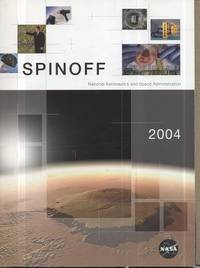
Spinoff 2004; NP-2004-10-374-HQ
Washington DC: National Aeronautics and Space Administration Office of Aerospace Technology Commercial Technology Division 2004. Presumed First Edition First printing thus. Wraps. Very good. Quarto 137 1 pages. Wraps. Profusely illustrated most in color. Maps Cover slightly worn and soiled. Foreword by Administrator Sean O'Keefe. Sean Charles O'Keefe born January 27 1956 is the university professor at Syracuse University Maxwell School former chairman of Airbus Group Inc. former Secretary of the Navy former Administrator of NASA and former chancellor of Louisiana State University LSU. He is a former member of the board of directors of DuPont. O'Keefe became NASA administrator on December 21 2001 after the United States Senate confirmed his nomination. He came to NASA without formal training in science or engineering as was the case with James E. Webb who was NASA administrator from 1961 to 1968. O'Keefe's tenure at NASA can be divided into roughly three equal periods each marked by a single problem or event of overriding importance:; in the period December 2001 through January 2003 O'Keefe eliminated a $5 billion cost overrun in the construction of the International Space Station. In 2003 the Space Shuttle Columbia accident and its aftermath. From January 2004 through February 2005 O'Keefe reorganized NASA to start working on President George W. Bush's newly announced Vision for Space Exploration to send humans to the Moon and Mars. Introduction by Benjamin Neumann Program Director Innovative Partnerships Program. Since its inception in 1958 NASA has accomplished many great scientific and technological feats in air and space. NASA technology also has been adapted for many non-aerospace uses by the private sector. NASA remains a leading force in scientific research and in stimulating public interest in aerospace exploration as well as science and technology in general. Perhaps more importantly our exploration of space has taught us to view Earth ourselves and the universe in a new way. While the tremendous technical and scientific accomplishments of NASA demonstrate vividly that humans can achieve previously inconceivable feats we also are humbled by the realization that Earth is just a tiny "blue marble" in the cosmos. Spinoff profiles NASA technologies that have transformed into commercial products and services. About 50 spinoff technologies are featured annually in the publication demonstrating the wider benefits of America's investment in its space program. NASA has a long history of transferring technology to the private sector. The Technology Transfer Program was formally established in 1964 in response to a congressional mandate to facilitate the process and the program has functioned under various names ever since making it NASA's longest continuously operated mission. Early publications about NASA inventions made available to the scientific and engineering communities resulted in feedback that indicated a broad interest in the private sector in acquiring and adapting NASA technology for commercial uses. As spinoff products began to emerge NASA began preparing annual reports on these successes to present at congressional budget hearings. These black and white Technology Utilization Program Reports published in 1973 and '74 generated so much public interest that NASA decided to turn them into an attractive publication for a general audience. The first four-color edition of Spinoff was published in 1976 and it has been published every year since sharing the stories of nearly 2000 products and services that began as or have benefited from NASA technology. National Aeronautics and Space Administration, Office of Aerospace Technology, Commercial Technology Division paperback
Bookseller reference : 74044 ISBN : 0160731798 9780160731792
|
|
|
National Aeronautics and Space Administration, Office of Aerospace Technology, Commercial Technology Division
Spinoff 2001; NP-2001-04-264-HQ
Washington DC: National Aeronautics and Space Administration Office of Aerospace Technology Commercial Technology Division 2001. Presumed First Edition First printing thus. Wraps. Very good. Quarto 133 1 pages. Wraps. Profusely illustrated most in color. Maps Cover slightly worn and soiled. Special Millennium Feature. Foreword by Administrator Daniel S. Goldin. Daniel Saul Goldin born July 23 1940 served as the 9th and longest-tenured Administrator of NASA from April 1 1992 to November 17 2001. He was appointed by President George H. W. Bush and also served under Presidents Bill Clinton and George W. Bush. He began his career at NASA's Lewis Research Center in Cleveland Ohio that year and worked on electric propulsion systems for human interplanetary travel. Goldin left NASA a few years later to work at the TRW Space and Technology Group in Redondo Beach California. During a 25-year career at TRW Goldin eventually became Vice President and General Manager and led projects that conceptualized and produced advanced communication spacecraft space technologies and scientific instruments. When Goldin returned to NASA as administrator he pioneered the "faster better cheaper" approach that proposed NASA could cut costs while still delivering a wide variety of aerospace programs. Introduction by Robert L. Norwood Director Commercial Technology Division. Since its inception in 1958 NASA has accomplished many great scientific and technological feats in air and space. NASA technology also has been adapted for many non-aerospace uses by the private sector. NASA remains a leading force in scientific research and in stimulating public interest in aerospace exploration as well as science and technology in general. Perhaps more importantly our exploration of space has taught us to view Earth ourselves and the universe in a new way. While the tremendous technical and scientific accomplishments of NASA demonstrate vividly that humans can achieve previously inconceivable feats we also are humbled by the realization that Earth is just a tiny "blue marble" in the cosmos. Spinoff profiles NASA technologies that have transformed into commercial products and services. About 50 spinoff technologies are featured annually in the publication demonstrating the wider benefits of America's investment in its space program. NASA has a long history of transferring technology to the private sector. The Technology Transfer Program was formally established in 1964 in response to a congressional mandate to facilitate the process and the program has functioned under various names ever since making it NASA's longest continuously operated mission. Early publications about NASA inventions made available to the scientific and engineering communities resulted in feedback that indicated a broad interest in the private sector in acquiring and adapting NASA technology for commercial uses. As spinoff products began to emerge NASA began preparing annual reports on these successes to present at congressional budget hearings. These black and white Technology Utilization Program Reports published in 1973 and '74 generated so much public interest that NASA decided to turn them into an attractive publication for a general audience. The first four-color edition of Spinoff was published in 1976 and it has been published every year since sharing the stories of nearly 2000 products and services that began as or have benefited from NASA technology. National Aeronautics and Space Administration, Office of Aerospace Technology, Commercial Technology Division paperback
Bookseller reference : 74042 ISBN : 0160664624 9780160664625
|
|
|
National Aeronautics and Space Administration, Innovative Partnerships Program
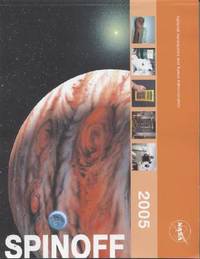
Spinoff 2005; NP-2005-12-419-HQ
Washington DC: National Aeronautics and Space Administration Innovative Partnerships Program 2005. Presumed First Edition First printing thus. Wraps. Very good. Format 8.5 inches by 11 inches oblong. 167 1 pages. Wraps. Profusely illustrated many in color. Maps Cover slightly worn and soiled. Foreword by Administrator Michael D. Griffin. Michael Douglas Griffin born November 1 1949 is an American physicist and aerospace engineer. He served as Administrator of NASA the U.S. space agency from April 13 2005 to January 20 2009. As NASA Administrator Griffin oversaw such areas as the future of human spaceflight the fate of the Hubble telescope and NASA's role in understanding climate change. In April 2009 Griffin who has an academic background was named eminent scholar and a professor of mechanical and aerospace engineering at the University of Alabama in Huntsville. Griffin had worked at NASA prior to serving as NASA Administrator including as Associate Administrator for Exploration. When he was nominated as NASA chief he was head of the Space Department at the Johns Hopkins University Applied Physics Laboratory APL in Laurel Maryland. While he describes himself modestly as a "simple aerospace engineer from a small town" Griffin has held several high-profile political appointments. In 2007 he was included in the TIME 100 the magazine's list of the 100 most influential people. Introduction by Merle McKenzie Acting Director Innovative Partnerships Program. She had previously been manager of JPL's Technology Transfer and Commercialization Program. Since its inception in 1958 NASA has accomplished many great scientific and technological feats in air and space. NASA technology also has been adapted for many non-aerospace uses by the private sector. NASA remains a leading force in scientific research and in stimulating public interest in aerospace exploration as well as science and technology in general. Perhaps more importantly our exploration of space has taught us to view Earth ourselves and the universe in a new way. While the tremendous technical and scientific accomplishments of NASA demonstrate vividly that humans can achieve previously inconceivable feats we also are humbled by the realization that Earth is just a tiny "blue marble" in the cosmos. Spinoff profiles NASA technologies that have transformed into commercial products and services. About 50 spinoff technologies are featured annually in the publication demonstrating the wider benefits of America's investment in its space program. NASA has a long history of transferring technology to the private sector. The Technology Transfer Program was formally established in 1964 in response to a congressional mandate to facilitate the process and the program has functioned under various names ever since making it NASA's longest continuously operated mission. Early publications about NASA inventions made available to the scientific and engineering communities resulted in feedback that indicated a broad interest in the private sector in acquiring and adapting NASA technology for commercial uses. As spinoff products began to emerge NASA began preparing annual reports on these successes to present at congressional budget hearings. These black and white Technology Utilization Program Reports published in 1973 and '74 generated so much public interest that NASA decided to turn them into an attractive publication for a general audience. The first four-color edition of Spinoff was published in 1976 and it has been published every year since sharing the stories of nearly 2000 products and services that began as or have benefited from NASA technology. National Aeronautics and Space Administration, Innovative Partnerships Program paperback
Bookseller reference : 74043 ISBN : 0160752663 9780160752667
|
|
|
National Aeronautics and Space Administration
Apollo 11 Bootprint; NL-2009-06-017-HQ Image dated 7/20/1969
Washington DC: National Aeronautics and Space Administration 2009. Part of Apollo 40 years series. Photograph. Very good. Format approximately 8.5 inches by 11 inches. Image size is approximately 6 inches by 7.25 inches. The caption reads: One of the first steps taken on the Moon this is an image of Buzz Aldrin's bootprint from the Apollo 11 mission. Neil Armstrong and Buzz Aldrin walked on the Moon on July 20 1969. Apollo 11 was the spaceflight that landed the first two humans on the Moon. Mission commander Neil Armstrong and pilot Buzz Aldrin landed the lunar module Eagle on July 20 1969. Armstrong became the first to step onto the lunar surface six hours after landing; Aldrin joined him about 20 minutes later. They collected 47.5 pounds of lunar material to bring back to Earth. Armstrong and Aldrin spent just under a day on the lunar surface before rejoining Columbia in lunar orbit. After being sent toward the Moon by the Saturn V's upper stage the astronauts separated the spacecraft from it and traveled for three days until they entered into lunar orbit. Armstrong and Aldrin then moved into the lunar module Eagle and landed in the Sea of Tranquility. They stayed a total of about 21.5 hours on the lunar surface. The astronauts used Eagle's upper stage to lift off from the lunar surface and rejoin Collins in the command module. They returned to Earth and landed in the Pacific Ocean on July 24. Apollo 11 effectively ended the Space Race and fulfilled a national goal proposed in 1961 by U.S. President John F. Kennedy: "before this decade is out of landing a man on the Moon and returning him safely to the Earth." The Apollo program also known as Project Apollo was the third United States human spaceflight program carried out by the National Aeronautics and Space Administration NASA which accomplished landing the first humans on the Moon from 1969 to 1972. First conceived during Dwight D. Eisenhower's administration as a three-man spacecraft to follow the one-man Project Mercury which put the first Americans in space Apollo was later dedicated to President John F. Kennedy's national goal of "landing a man on the Moon and returning him safely to the Earth" by the end of the 1960s which he proposed in an address to Congress on May 25 1961. Kennedy's goal was accomplished on the Apollo 11 mission when astronauts Neil Armstrong and Buzz Aldrin landed their Lunar Module LM on July 20 1969 and walked on the lunar surface while Michael Collins remained in lunar orbit in the Command/Service Module CSM and all three landed safely on Earth on July 24. Five subsequent Apollo missions also landed astronauts on the Moon the last in December 1972. In these six spaceflights twelve men walked on the Moon. Apollo ran from 1961 to 1972 with the first manned flight in 1968. It achieved its goal of manned lunar landing despite the major setback of a 1967 Apollo 1 cabin fire that killed the entire crew during a prelaunch test. After the first landing sufficient flight hardware remained for nine follow-on landings with a plan for extended lunar geological and astrophysical exploration. Budget cuts forced the cancellation of three of these. Five of the remaining six missions achieved successful landings but the Apollo 13 landing was prevented by an oxygen tank explosion in transit to the Moon which damaged the CSM's propulsion and life support. The crew returned to Earth safely by using the Lunar Module as a "lifeboat" for these functions. Apollo used Saturn family rockets as launch vehicles which were also used for an Apollo Applications Program which consisted of Skylab a space station that supported three manned missions in 1973-74 and the Apollo-Soyuz Test Project a joint Earth orbit mission with the Soviet Union in 1975. Apollo set several major human spaceflight milestones. It stands alone in sending manned missions beyond low Earth orbit. Apollo 8 was the first manned spacecraft to orbit another celestial body while the final Apollo 17 mission marked the sixth Moon landing and the ninth manned mission beyond low Earth orbit. The program returned 842 pounds 382 kg of lunar rocks and soil to Earth greatly contributing to the understanding of the Moon's composition and geological history. The program laid the foundation for NASA's subsequent human spaceflight capability and funded construction of its Johnson Space Center and Kennedy Space Center. Apollo also spurred advances in many areas of technology incidental to rocketry and manned spaceflight including avionics telecommunications and computers. National Aeronautics and Space Administration unknown
Bookseller reference : 74052
|
|
|
National Aeronautics and Space Administration
Walter Cronkite at the Reduced Gravity Simulator; NL-2009-06-019-HQ Image dated 8/13/1968
Washington DC: National Aeronautics and Space Administration 2009. Part of Apollo 40 years series. Photograph. Very good. Format approximately 8.5 inches by 11 inches. Image size is approximately 6 inches by 7.25 inches. The caption reads: Walter Cronkite at the Reduced Gravity Simulator During 1 1968 visit to Langley then-CBS News Anchorman Walter Cronkite tries out the Reduced Gravity Simulator a series of cable-supported slings designed to approximate the Moon's gravity one-sixth that of Earth's. The reduced gravity simulate was a practical system for simulating reduced and zero-gravitational fields such as would be encountered in space stations for determining the effects on the self-locomotive capabilities of man when subjected to a gravitational field less than that of the Earth for a sustained period of time. One of the unknowns of space exploration was the effect of sustained weightlessness experienced by the explorers during orbital flight. In addition the knowledge that the Moon has a reduced gravitational field equal approximately one-sixth to that of the Earth and the knowledge that reduced gravity as well as zero gravity or weightless conditions for sustained periods of time would be experienced by explorers during space exploration created a definite need for a suitable reduced gravity simulation technique for studies on Earth of mans ability to perform needed self-locomotive tasks during interplanetary exploration. The Apollo program also known as Project Apollo was the third United States human spaceflight program carried out by the National Aeronautics and Space Administration NASA which accomplished landing the first humans on the Moon from 1969 to 1972. First conceived during Dwight D. Eisenhower's administration as a three-man spacecraft to follow the one-man Project Mercury which put the first Americans in space Apollo was later dedicated to President John F. Kennedy's national goal of "landing a man on the Moon and returning him safely to the Earth" by the end of the 1960s which he proposed in an address to Congress on May 25 1961. Kennedy's goal was accomplished on the Apollo 11 mission when astronauts Neil Armstrong and Buzz Aldrin landed their Lunar Module LM on July 20 1969 and walked on the lunar surface while Michael Collins remained in lunar orbit in the Command/Service Module CSM and all three landed safely on Earth on July 24. Five subsequent Apollo missions also landed astronauts on the Moon the last in December 1972. In these six spaceflights twelve men walked on the Moon. Apollo ran from 1961 to 1972 with the first manned flight in 1968. It achieved its goal of manned lunar landing despite the major setback of a 1967 Apollo 1 cabin fire that killed the entire crew during a prelaunch test. After the first landing sufficient flight hardware remained for nine follow-on landings with a plan for extended lunar geological and astrophysical exploration. Budget cuts forced the cancellation of three of these. Five of the remaining six missions achieved successful landings but the Apollo 13 landing was prevented by an oxygen tank explosion in transit to the Moon which damaged the CSM's propulsion and life support. The crew returned to Earth safely by using the Lunar Module as a "lifeboat" for these functions. Apollo used Saturn family rockets as launch vehicles which were also used for an Apollo Applications Program which consisted of Skylab a space station that supported three manned missions in 1973-74 and the Apollo-Soyuz Test Project a joint Earth orbit mission with the Soviet Union in 1975. Apollo set several major human spaceflight milestones. It stands alone in sending manned missions beyond low Earth orbit. Apollo 8 was the first manned spacecraft to orbit another celestial body while the final Apollo 17 mission marked the sixth Moon landing and the ninth manned mission beyond low Earth orbit. The program returned 842 pounds 382 kg of lunar rocks and soil to Earth greatly contributing to the understanding of the Moon's composition and geological history. The program laid the foundation for NASA's subsequent human spaceflight capability and funded construction of its Johnson Space Center and Kennedy Space Center. Apollo also spurred advances in many areas of technology incidental to rocketry and manned spaceflight including avionics telecommunications and computers. National Aeronautics and Space Administration unknown
Bookseller reference : 74054
|
|
|
National Aeronautics and Space Administration
Earthwise--Apollo 8; NL-2009-06-016-HQ Image dated 12/29/1968
Washington DC: National Aeronautics and Space Administration 2009. Part of Apollo 40 years series. Photograph. Very good. Format approximately 8.5 inches by 11 inches. Image size is approximately 6 inches by 7.25 inches. The caption reads: This view of the rising Earth greeted the Apollo 8 astronauts as they came from behind the Moon after the lunar orbit insertion burn. The photo is displayed here in its original orientation thought it is more commonly viewed with the lunar surface at the bottom of the photo. In the image is the following quotation from Astronaut William Anders "We came all this way to explore the Moon and the most important thing is that we discovered the Earth." Apollo 8 the second manned spaceflight mission in the United States Apollo space program was launched on December 21 1968 and became the first manned spacecraft to leave Earth orbit reach the Earth's Moon orbit it and return safely to Earth. The three-astronaut crew — Commander Frank Borman Command Module Pilot James Lovell and Lunar Module Pilot William Anders — became the first humans to: travel beyond low Earth orbit; escape Earth's gravity; see Earth as a whole planet; enter the gravity well of another celestial body Earth's moon; orbit another celestial body Earth's moon; directly see the far side of the Moon with their own eyes; witness an Earthrise; escape the gravity of another celestial body Earth's moon; and re-enter the gravitational well of Earth. The crew was named Time magazine's "Men of the Year" for 1968 upon their return. The Apollo program also known as Project Apollo was the third United States human spaceflight program carried out by the National Aeronautics and Space Administration NASA which accomplished landing the first humans on the Moon from 1969 to 1972. First conceived during Dwight D. Eisenhower's administration as a three-man spacecraft to follow the one-man Project Mercury which put the first Americans in space Apollo was later dedicated to President John F. Kennedy's national goal of "landing a man on the Moon and returning him safely to the Earth" by the end of the 1960s which he proposed in an address to Congress on May 25 1961. Kennedy's goal was accomplished on the Apollo 11 mission when astronauts Neil Armstrong and Buzz Aldrin landed their Lunar Module LM on July 20 1969 and walked on the lunar surface while Michael Collins remained in lunar orbit in the Command/Service Module CSM and all three landed safely on Earth on July 24. Five subsequent Apollo missions also landed astronauts on the Moon the last in December 1972. In these six spaceflights twelve men walked on the Moon. Apollo ran from 1961 to 1972 with the first manned flight in 1968. It achieved its goal of manned lunar landing despite the major setback of a 1967 Apollo 1 cabin fire that killed the entire crew during a prelaunch test. After the first landing sufficient flight hardware remained for nine follow-on landings with a plan for extended lunar geological and astrophysical exploration. Budget cuts forced the cancellation of three of these. Five of the remaining six missions achieved successful landings but the Apollo 13 landing was prevented by an oxygen tank explosion in transit to the Moon which damaged the CSM's propulsion and life support. The crew returned to Earth safely by using the Lunar Module as a "lifeboat" for these functions. Apollo used Saturn family rockets as launch vehicles which were also used for an Apollo Applications Program which consisted of Skylab a space station that supported three manned missions in 1973-74 and the Apollo-Soyuz Test Project a joint Earth orbit mission with the Soviet Union in 1975. Apollo set several major human spaceflight milestones. It stands alone in sending manned missions beyond low Earth orbit. Apollo 8 was the first manned spacecraft to orbit another celestial body while the final Apollo 17 mission marked the sixth Moon landing and the ninth manned mission beyond low Earth orbit. The program returned 842 pounds 382 kg of lunar rocks and soil to Earth greatly contributing to the understanding of the Moon's composition and geological history. The program laid the foundation for NASA's subsequent human spaceflight capability and funded construction of its Johnson Space Center and Kennedy Space Center. Apollo also spurred advances in many areas of technology incidental to rocketry and manned spaceflight including avionics telecommunications and computers. National Aeronautics and Space Administration unknown
Bookseller reference : 74051
|
|
|
National Aeronautics and Space Administration
Apollo 13 Spacecraft Splashdown in the Pacific; NL-2009-06-015-HQ Image dated 4/17/1970
Washington DC: National Aeronautics and Space Administration 2009. Part of Apollo 40 years series. Photograph. Very good. Format approximately 8.5 inches by 11 inches. Image size is approximately 6 inches by 7.25 inches. The caption reads: The Apollo 13 Command Module splashed down in the South Pacific at 12:07:44 p.m. on April 17 1970 after a harrowing mission in which a ruptured oxygen tank put the crew in peril. The red and white parachutes were the first signal to Mission Control that astronauts Lovell Haise and Swigert had defied the odds and made it safely back to Earth. Apollo 13 was the seventh manned mission in the Apollo space program and the third intended to land on the Moon. The craft was launched on April 11 1970 from the Kennedy Space Center Florida but the lunar landing was aborted after an oxygen tank exploded two days later crippling the Service Module upon which the Command Module had depended. Despite great hardship caused by limited power loss of cabin heat shortage of potable water and the critical need to make makeshift repairs to the carbon dioxide removal system the crew returned safely to Earth on April 17 1970 six days after launch. The mission was commanded by James A. Lovell with John L. "Jack" Swigert as Command Module Pilot and Fred W. Haise as Lunar Module Pilot. Swigert was a late replacement for the original CM pilot Ken Mattingly who was grounded by the flight surgeon after exposure to German measles. The Apollo program also known as Project Apollo was the third United States human spaceflight program carried out by the National Aeronautics and Space Administration NASA which accomplished landing the first humans on the Moon from 1969 to 1972. First conceived during Dwight D. Eisenhower's administration as a three-man spacecraft to follow the one-man Project Mercury which put the first Americans in space Apollo was later dedicated to President John F. Kennedy's national goal of "landing a man on the Moon and returning him safely to the Earth" by the end of the 1960s which he proposed in an address to Congress on May 25 1961. Kennedy's goal was accomplished on the Apollo 11 mission when astronauts Neil Armstrong and Buzz Aldrin landed their Lunar Module LM on July 20 1969 and walked on the lunar surface while Michael Collins remained in lunar orbit in the Command/Service Module CSM and all three landed safely on Earth on July 24. Five subsequent Apollo missions also landed astronauts on the Moon the last in December 1972. In these six spaceflights twelve men walked on the Moon. Apollo ran from 1961 to 1972 with the first manned flight in 1968. It achieved its goal of manned lunar landing despite the major setback of a 1967 Apollo 1 cabin fire that killed the entire crew during a prelaunch test. After the first landing sufficient flight hardware remained for nine follow-on landings with a plan for extended lunar geological and astrophysical exploration. Budget cuts forced the cancellation of three of these. Five of the remaining six missions achieved successful landings but the Apollo 13 landing was prevented by an oxygen tank explosion in transit to the Moon which damaged the CSM's propulsion and life support. The crew returned to Earth safely by using the Lunar Module as a "lifeboat" for these functions. Apollo used Saturn family rockets as launch vehicles which were also used for an Apollo Applications Program which consisted of Skylab a space station that supported three manned missions in 1973-74 and the Apollo-Soyuz Test Project a joint Earth orbit mission with the Soviet Union in 1975. Apollo set several major human spaceflight milestones. It stands alone in sending manned missions beyond low Earth orbit. Apollo 8 was the first manned spacecraft to orbit another celestial body while the final Apollo 17 mission marked the sixth Moon landing and the ninth manned mission beyond low Earth orbit. The program returned 842 pounds 382 kg of lunar rocks and soil to Earth greatly contributing to the understanding of the Moon's composition and geological history. The program laid the foundation for NASA's subsequent human spaceflight capability and funded construction of its Johnson Space Center and Kennedy Space Center. Apollo also spurred advances in many areas of technology incidental to rocketry and manned spaceflight including avionics telecommunications and computers. National Aeronautics and Space Administration unknown
Bookseller reference : 74050
|
|
|
National Aeronautics and Space Administration
Moon; NL-2009-06-020-HQ Image dated 7/21/1969
Washington DC: National Aeronautics and Space Administration 2009. Part of Apollo 40 years series. Photograph. Very good. Format approximately 8.5 inches by 11 inches. Image size is approximately 6 inches by 7.25 inches. The caption reads: This outstanding view of the full Moon was photographed from the Apollo 11 spacecraft during its trans-Earth journey homeward. When this picture was taken the spacecraft was already 10000 nautical miles away from the Moon. On board Apollo 11 were Commander Neil Armstrong Command Module Pilot Michael Collins and Lunar Module Pilot Buss Aldrin. Apollo 11 was the spaceflight that landed the first two humans on the Moon. Mission commander Neil Armstrong and pilot Buzz Aldrin both American landed the lunar module Eagle on July 20 1969 at 20:18 UTC. Armstrong became the first to step onto the lunar surface six hours after landing on July 21 at 02:56:15 UTC; Aldrin joined him about 20 minutes later. They spent about two and a quarter hours together outside the spacecraft and collected 47.5 pounds 21.5 kg of lunar material to bring back to Earth. Michael Collins piloted the command module Columbia in lunar orbit while they were on the Moon's surface. Armstrong and Aldrin spent just under a day on the lunar surface before rejoining Columbia in lunar orbit. The Apollo program also known as Project Apollo was the third United States human spaceflight program carried out by the National Aeronautics and Space Administration NASA which accomplished landing the first humans on the Moon from 1969 to 1972. First conceived during Dwight D. Eisenhower's administration as a three-man spacecraft to follow the one-man Project Mercury which put the first Americans in space Apollo was later dedicated to President John F. Kennedy's national goal of "landing a man on the Moon and returning him safely to the Earth" by the end of the 1960s which he proposed in an address to Congress on May 25 1961. Kennedy's goal was accomplished on the Apollo 11 mission when astronauts Neil Armstrong and Buzz Aldrin landed their Lunar Module LM on July 20 1969 and walked on the lunar surface while Michael Collins remained in lunar orbit in the Command/Service Module CSM and all three landed safely on Earth on July 24. Five subsequent Apollo missions also landed astronauts on the Moon the last in December 1972. In these six spaceflights twelve men walked on the Moon. Apollo ran from 1961 to 1972 with the first manned flight in 1968. It achieved its goal of manned lunar landing despite the major setback of a 1967 Apollo 1 cabin fire that killed the entire crew during a prelaunch test. After the first landing sufficient flight hardware remained for nine follow-on landings with a plan for extended lunar geological and astrophysical exploration. Budget cuts forced the cancellation of three of these. Five of the remaining six missions achieved successful landings but the Apollo 13 landing was prevented by an oxygen tank explosion in transit to the Moon which damaged the CSM's propulsion and life support. The crew returned to Earth safely by using the Lunar Module as a "lifeboat" for these functions. Apollo used Saturn family rockets as launch vehicles which were also used for an Apollo Applications Program which consisted of Skylab a space station that supported three manned missions in 1973-74 and the Apollo-Soyuz Test Project a joint Earth orbit mission with the Soviet Union in 1975. Apollo set several major human spaceflight milestones. It stands alone in sending manned missions beyond low Earth orbit. Apollo 8 was the first manned spacecraft to orbit another celestial body while the final Apollo 17 mission marked the sixth Moon landing and the ninth manned mission beyond low Earth orbit. The program returned 842 pounds 382 kg of lunar rocks and soil to Earth greatly contributing to the understanding of the Moon's composition and geological history. The program laid the foundation for NASA's subsequent human spaceflight capability and funded construction of its Johnson Space Center and Kennedy Space Center. Apollo also spurred advances in many areas of technology incidental to rocketry and manned spaceflight including avionics telecommunications and computers. National Aeronautics and Space Administration unknown
Bookseller reference : 74055
|
|
|
National Aeronautics and Space Administration
Cernan Salutes Flag; NL-2009-06-018- HQ Image dated 12/13/1972
Washington DC: National Aeronautics and Space Administration 2009. Part of Apollo 40 years series. Photograph. Very good. Format approximately 8.5 inches by 11 inches. Image size is approximately 6 inches by 7.25 inches. The caption reads: Eugene A. Cernan Commander Apollo 17 salutes the flag on the lunar surface during extravehicular activity EVA on NASA's final lunar landing mission. The Lunar Module Challenger is in the left background behind the flag and the Lunar Roving Vehicle LRV is also in the background behind him. Apollo 17 was the final mission of NASA's Apollo program. Launched on December 7 1972 with a crew made up of Commander Eugene Cernan Command Module Pilot Ronald Evans and Lunar Module Pilot Harrison Schmitt. Apollo 17 was the first night launch of a U.S. human spaceflight and the final manned launch of a Saturn V rocket. While Evans remained in lunar orbit in the Command/Service Module Cernan and Schmitt spent just over three days on the moon in the Taurus-Littrow valley and completed three moonwalks taking lunar samples and deploying scientific instruments. The landing site was chosen with the primary objectives of Apollo 17 in mind: to sample lunar highland material older than the impact that formed Mare Imbrium and investigate the possibility of relatively new volcanic activity in the same area. Cernan Evans and Schmitt returned to Earth on December 19 after a 12-day mission. Apollo 17 is the most recent manned Moon landing and was the last time humans travelled beyond low Earth orbit. The mission broke several records: the longest moon landing longest total extravehicular activities moonwalks largest lunar sample and longest time in lunar orbit. The Apollo program also known as Project Apollo was the third United States human spaceflight program carried out by the National Aeronautics and Space Administration NASA which accomplished landing the first humans on the Moon from 1969 to 1972. First conceived during Dwight D. Eisenhower's administration as a three-man spacecraft to follow the one-man Project Mercury which put the first Americans in space Apollo was later dedicated to President John F. Kennedy's national goal of "landing a man on the Moon and returning him safely to the Earth" by the end of the 1960s which he proposed in an address to Congress on May 25 1961. Kennedy's goal was accomplished on the Apollo 11 mission when astronauts Neil Armstrong and Buzz Aldrin landed their Lunar Module LM on July 20 1969 and walked on the lunar surface while Michael Collins remained in lunar orbit in the Command/Service Module CSM and all three landed safely on Earth on July 24. Five subsequent Apollo missions also landed astronauts on the Moon the last in December 1972. In these six spaceflights twelve men walked on the Moon. Apollo ran from 1961 to 1972 with the first manned flight in 1968. It achieved its goal of manned lunar landing despite the major setback of a 1967 Apollo 1 cabin fire that killed the entire crew during a prelaunch test. After the first landing sufficient flight hardware remained for nine follow-on landings with a plan for extended lunar geological and astrophysical exploration. Budget cuts forced the cancellation of three of these. Five of the remaining six missions achieved successful landings but the Apollo 13 landing was prevented by an oxygen tank explosion in transit to the Moon which damaged the CSM's propulsion and life support. The crew returned to Earth safely by using the Lunar Module as a "lifeboat" for these functions. Apollo used Saturn family rockets as launch vehicles which were also used for an Apollo Applications Program which consisted of Skylab a space station that supported three manned missions in 1973-74 and the Apollo-Soyuz Test Project a joint Earth orbit mission with the Soviet Union in 1975. Apollo set several major human spaceflight milestones. It stands alone in sending manned missions beyond low Earth orbit. Apollo 8 was the first manned spacecraft to orbit another celestial body while the final Apollo 17 mission marked the sixth Moon landing and the ninth manned mission beyond low Earth orbit. The program returned 842 pounds 382 kg of lunar rocks and soil to Earth greatly contributing to the understanding of the Moon's composition and geological history. The program laid the foundation for NASA's subsequent human spaceflight capability and funded construction of its Johnson Space Center and Kennedy Space Center. Apollo also spurred advances in many areas of technology incidental to rocketry and manned spaceflight including avionics telecommunications and computers. National Aeronautics and Space Administration unknown
Bookseller reference : 74053
|
|
|
National Aeronautics and Space Administration
Mission Patch; STS-92
Houston TX: National Aeronautics and Space Administration. cloth. Very good. Approximately four-inch diameter with slight bulge for nose of the Space Shuttle. Names of the astronauts ring the image of the Space Shuttle and a piece of space equipment. STS-92 was a Space Shuttle mission to the International Space Station ISS flown by Space Shuttle Discovery. STS-92 marked the 100th mission of the Space Shuttle. It was launched from Kennedy Space Center Florida 11 October 2000. STS-92 was an ISS assembly flight that brought the Z1 truss Control Moment Gyros Pressurized Mating Adapter-3 PMA-3 mounted on a Spacelab pallet and two DDCU Heat pipes to the space station. The Z1 truss was the first exterior framework installed on the ISS and allowed the first U.S. solar arrays to be temporarily installed on Unity for early power during flight 4A. The Ku-band communication system supported early science capabilities and U.S. television on flight 6A. The CMGs Control Moment Gyros weigh about 27 kilograms 60 lb and provide non-propulsive electrically powered attitude control when activated on flight 5A and PMA-3 provides shuttle docking port for solar array installation on flight 4A and Lab installation on flight 5A. The mission included seven days of docked operations with the space station four EVAs and two ingress opportunities. Over the course of four scheduled spacewalks two teams of space walkers and an experienced robot arm operator collaborated to install the Z1 Z for zenith port truss structure on top of the U.S. Unity connecting node on the growing station and to deliver the third Pressurized Mating Adapter PMA 3 to the ISS for the future berthing of new station components and to accommodate shuttle dockings. The Z1 truss was the first permanent lattice-work structure for the ISS very much like a girder setting the stage for the future addition of the station's major trusses or backbones. The Z1 fixture also served as the platform on which the huge U.S. solar arrays were mounted on the next shuttle assembly flight STS-97. The Z1 contains four large gyroscopic devices called Control Moment Gyroscope CMGs which are used to maneuver the space station into the proper orientation on orbit once they were activated following the installation of the U.S. laboratory. During the fourth spacewalk astronauts Wisoff and López-AlegrÃa tested the SAFER jet backpack flying up to 50 feet while remaining tethered to the spacecraft. National Aeronautics and Space Administration hardcover
Bookseller reference : 74084
|
|
|
Department of Energy, National National Security Administration, Nevada Nuclear Security Site
U.S.-U.K. Mutual Defense Agreement Pin Commemorating 50 Years of Collaborated Experiments
Las Vegas NV: Department of Energy National National Security Administration Nevada Nuclear Security Site 2012. Presumed First thus. Other. Very good. Approximately 2.25 inches by 2.5 inches pin in a plastic box of approximately 3 inches by 3 inches. It is shaped like the state of Nevada. It has two pins and backs. The image is the U.K. and U.S. flags above a pair of hands shaking. At the top the text is "NNSS Nevada National Security Site" and at the bottom the text is "50 Years of Collaborated Experiments 2012". The 1958 US-UK Mutual Defense Agreement is a bilateral treaty between the United States and the United Kingdom on nuclear weapons cooperation. It allows the United States and the UK to exchange nuclear materials technology and information. The treaty was signed on 3 July 1958 after the British hydrogen bomb program successfully tested a hydrogen bomb in Operation Grapple on 8 November 1957. The treaty provided for the sale to the UK of one complete nuclear submarine propulsion plant plus ten years' supply of enriched uranium to fuel it. Other nuclear material was also acquired from the United States under the treaty. The treaty paved the way for the Polaris Sales Agreement with the UK Polaris program and Trident nuclear programme using American missiles with British nuclear warheads. The most recent renewal extended it to 31 December 2024. The United States and the United Kingdom have long enjoyed a "special relationship" of close partnership so it seemed natural that the two nations should work together to develop an atomic weapon. Nevertheless the story of U.S.-U.K. nuclear partnership is one of both collaboration and division. Although British scientists played a crucial role in the success of the Manhattan Project a desire for secrecy and security prevented permanent nuclear collaboration until 1958. The British atomic bomb was thus both an offshoot of the American program and an independent project. In 1954 Churchill ordered that Britain commence with the development of thermonuclear weapons and the U.K. successfully tested its first hydrogen bomb on November 8 1957. By this point the Soviet Union was also in possession of the hydrogen bomb and had even advanced beyond American technological capabilities with the launch of the world's first artificial satellite Sputnik 1 in October 1957. Without a clear military advantage the United States finally agreed in 1958 to share nuclear information with the United Kingdom by amending the Atomic Energy Act of 1946. The same year the two sides also signed the U.S.-U.K. Mutual Defense Agreement allowing collaboration on nuclear research as well as the transfer of materials and equipment. After a brief moratorium on nuclear tests the United Kingdom began conducting joint tests together with the United States in Nevada. British atomic weapons were subsequently modeled on American designs made available by the 1958 agreement. The U.K. also went on to purchase weapons from the U.S. including the submarine-based Polaris missile as well as American delivery systems. Department of Energy, National National Security Administration, Nevada Nuclear Security Site unknown
Bookseller reference : 74124
|
|
|
National Nuclear Security Administration, B53 SS-21 Dismantlement Team
B53 SS-21 Dismantlement Team Patch; Last of the Big Dogs
Amarillo TX: National Nuclear Security Administration Pantex Plant c2011. Presumed First thus. Patches. Very good. The patch is about 3.5 inches by 3.5 inches but the top is rounded so it is more like an arched window than a full square. It has a black border. The center has the image of the bomb a big dog and the text "B53" and "Last of the Big Dogs. On an orange border in black letters is "NNSA SS-21 Dismantlement DOE Pantex LANL LLNL SNL Y12 OST" From Wikipedia: The Mk/B53 was a high-yield bunker buster thermonuclear weapon developed by the United States during the Cold War. Deployed on Strategic Air Command bombers the B53 with a yield of 9 megatons was the most powerful weapon in the U.S. nuclear arsenal after the last B41 nuclear bombs were retired in 1976. The B53 was the basis of the W-53 warhead carried by the Titan II Missile which was decommissioned in 1987. Fifty B53s were retained during that time as part of the "hedge" portion of the Enduring Stockpile. The last B53 was disassembled on 25 October 2011 a year ahead of schedule. Development of the weapon began in 1955 by Los Alamos National Laboratory based on the earlier Mk 21 and Mk 46 weapons. In March 1958 the Strategic Air Command issued a request for a new Class C bomb to replace the earlier Mk 41. A revised version of the Mk 46 became the TX-53 in 1959. The Mk 53 entered production in 1962 and was built through June 1965. It entered service aboard B-47 Stratojet B-52G Stratofortress and B-58 Hustler bomber aircraft in the mid-1960s. From 1968 it was redesignated B53. Some early versions of the bomb were dismantled beginning in 1967. The B53 was also intended to be retired in the 1980s but 50 units remained in the active stockpile until the deployment of the B61-11 in 1997. At that point the obsolete B53s were slated for immediate disassembly; however the process of disassembling the units was greatly hampered by safety concerns as well as a lack of resources. In 2010 authorization was given to disassemble the 50 bombs at the Pantex plant in Texas. The process of dismantling the last remaining B53 bomb in the stockpile was completed in 2011. It was intended as a bunker buster weapon using a surface blast after laydown deployment to transmit a shock wave through the earth to collapse its target. Attacks against the Soviet deep underground leadership shelters in the Chekhov/Sharapovo area south of Moscow envisaged multiple B53/W53 exploding at ground level. It has since been supplanted in such roles by the earth-penetrating B61 Mod 11 a bomb that penetrates the surface to deliver much more of its explosive energy into the ground and therefore needs a much smaller yield to produce the same effects. The B53 was intended to be retired in the 1980s but 50 units remained in the active stockpile until the deployment of the B61-11 in 1997. At that point the obsolete B53s were slated for immediate disassembly; however the process of disassembling the units was greatly hampered by safety concerns and a lack of resources. The last remaining B53 bomb began the disassembly processes on Tuesday 25 October 2011 at the Energy Department's Pantex Plant. National Nuclear Security Administration, Pantex Plant unknown
Bookseller reference : 74113
|
|
|
United States, Department of Energy, National Nuclear Security Administration
25th Anniversary U.S.-Russia Joint Verification Experiment Commemorative coin
Washington DC: United States Department of Energy National Nuclear Security Administration 2013. Presumed First thus. Coin. Very good. The Joint Verification Experiments occurred in 1988. One occurred in the U.S. and one in Russia. A 25th anniversary commemoration was held at the National Nuclear Security Site formerly the Nevada Test Site in 2013. This coin was given out to a select few participants officials and organizers. Coin has a 1.5 inch diameter. On one side the center image is the Department of Energy logo with two outer rings with text. The outermost ring text is "Building Trust and Confidence National Nuclear Security Admiistration" The other side has a center image with the dates 1988-2013 Russian and U.S. flags and the atomic symbol and an outer ring with the following text "25th Aniversary U.S.-Russia Joint Verification Experiment". Agreement Between the United States of America and the Union of Soviet Socialist Republics on the Conduct of a Joint Verification Experiment May 31 1988. Reaffirming the statement of the Secretary of State of the United States and the Foreign Minister of the Union of Soviet Socialist Republics of December 9 1987 Proceeding from the agreement to conduct a joint Verification Experiment hereinafter referred to as JVE for the purpose of the elaboration of effective verification measures for the Treaty Between the United States of America and the Union of Soviet Socialist Republics on the Limitation of Underground Nuclear Weapon Tests hereinafter referred to as the 1974 Treaty on the Limitation of Underground Nuclear Weapon Tests the parties have agreed in part as follows: 1. For purposes of the JVE there shall be two nuclear explosions one at the U.S. Nevada Test Site and one at the USSR Semipalatinsk Test Site each hereinafter being referred to as a JVE explosion. 2. The planned yield of the JVE explosion at each test site shall be not less than 100 kilotons and shall approach 150 kilotons. 3. Each Party shall have the opportunity to measure on the basis of reciprocity the yield of the JVE explosion conducted at the other Party's test site using teleseismic methods and at the other's test site using hydrodynamic yield measurement methods. 4. Each Party shall also perform teleseismic measurements with its national seismic station network for both JVE explosions. To assist in teleseismic measurement the Parties shall exchange data on five nuclear explosions conducted after January 1 1978 but before January 1 1988 to include yield date and time geographic coordinates depth of burial and associated geological and geophysical data. For each of these historical explosions the Parties shall exchange teleseismic recordings taken at five designated stations on each side including station corrections and the best network seismic magnitude. 5. Each Party shall perform hydrodynamic yield measurements within the satellite hole provided for that purpose of the JVE explosions at both Parties' test sites using the methods it has identified in this Agreement. DONE at Moscow on May 31 1988 in two copies each in the English and Russian languages both texts being equally authentic. FOR THE UNITED STATES OF AMERICA George P. Shultz FOR THE UNION OF SOVIET SOCIALIST REPUBLICS E. Shevardnadze. United States, Department of Energy, National Nuclear Security Administration unknown
Bookseller reference : 74122
|
|
|
Department of Energy National Nuclear Security Administration
B53 SS-21 Dismantlement Final Unit Sept 2011 coin
Amarillo TX: Department of Energy National Nuclear Security Administration Pantex 2011. Presumed First thus. Coin. Very good. Challenge coin/medal has a two-inch diameter. One side has a center image of the American Bald Eagle with the words Pantex NNSA. Around the central image is the following text "Department of Energy LANL LLNL SNL Y12 OST". On the other side has a center image of the B53 bomb and around the central image is the following text "SS-21 Dismantlement Final Unit Sept 2011". From Wikipedia: The Mk/B53 was a high-yield bunker buster thermonuclear weapon developed by the United States during the Cold War. Deployed on Strategic Air Command bombers the B53 with a yield of 9 megatons was the most powerful weapon in the U.S. nuclear arsenal after the last B41 nuclear bombs were retired in 1976. The B53 was the basis of the W-53 warhead carried by the Titan II Missile which was decommissioned in 1987. Fifty B53s were retained during that time as part of the "hedge" portion of the Enduring Stockpile. The last B53 was disassembled on 25 October 2011 a year ahead of schedule. Development of the weapon began in 1955 by Los Alamos National Laboratory based on the earlier Mk 21 and Mk 46 weapons. In March 1958 the Strategic Air Command issued a request for a new Class C bomb to replace the earlier Mk 41. A revised version of the Mk 46 became the TX-53 in 1959. The Mk 53 entered production in 1962 and was built through June 1965. It entered service aboard B-47 Stratojet B-52G Stratofortress and B-58 Hustler bomber aircraft in the mid-1960s. From 1968 it was redesignated B53. Some early versions of the bomb were dismantled beginning in 1967. The B53 was also intended to be retired in the 1980s but 50 units remained in the active stockpile until the deployment of the B61-11 in 1997. At that point the obsolete B53s were slated for immediate disassembly; however the process of disassembling the units was greatly hampered by safety concerns as well as a lack of resources. In 2010 authorization was given to disassemble the 50 bombs at the Pantex plant in Texas. The process of dismantling the last remaining B53 bomb in the stockpile was completed in 2011. It was intended as a bunker buster weapon using a surface blast after laydown deployment to transmit a shock wave through the earth to collapse its target. Attacks against the Soviet deep underground leadership shelters in the Chekhov/Sharapovo area south of Moscow envisaged multiple B53/W53 exploding at ground level. It has since been supplanted in such roles by the earth-penetrating B61 Mod 11 a bomb that penetrates the surface to deliver much more of its explosive energy into the ground and therefore needs a much smaller yield to produce the same effects. The B53 was intended to be retired in the 1980s but 50 units remained in the active stockpile until the deployment of the B61-11 in 1997. At that point the obsolete B53s were slated for immediate disassembly; however the process of disassembling the units was greatly hampered by safety concerns and a lack of resources. The last remaining B53 bomb began the disassembly processes on Tuesday 25 October 2011 at the Energy Department's Pantex Plant. Department of Energy, National Nuclear Security Administration, Pantex unknown
Bookseller reference : 74121
|
|
|
U. S. Department of Energy, National Nuclear Security Administration, Office of Nonproliferation Research and Engineering
Chemical & Biological National Security Program FY00 Annual Report; DOE/NN-0015
Washington DC: U. S. Department of Energy 2001. Presumed First Edition First printing. Trade paperback. Very good. 217 3 pages. Illustrations. Cover has some wear and soiling. The mission of the Office of Nonproliferation and Arms Control NPAC is to prevent proliferation ensure peaceful nuclear uses and enable verifiable nuclear reductions. NPAC provides a comprehensive approach to strengthen nonproliferation and arms control regimes achieving its mission through four subprograms: International Nuclear Safeguards; Nuclear Controls; Nuclear Verification; Nonproliferation Policy. One of the gravest threats the United States and the international community face is the possibility that terrorists or rogue nations will acquire nuclear weapons or other weapons of mass destruction WMD. NNSA through its Office of Defense Nuclear Nonproliferation DNN works closely with a wide range of international partners key U.S. federal agencies the U.S. national laboratories and the private sector to secure safeguard and/or dispose of dangerous nuclear and radiological material and detect and control the proliferation of related WMD technology and expertise. The Office of Nonproliferation Research and Engineering part of the National Nuclear Security Administration within the Department of Energy conducts wide-ranging research for diverse end users at the federal and local level. As such the Office faces a number of unusual challenges in determining how to best serve its users' needs within its budget. The Chemical & Biological National Security Program was initiated in FY97 in response to the growing awareness of both the chemical and biological weapon capabilities available to potential attackers and the vulnerabilities of the U.S> population to these weapons. From the outset the program has drawn from the deep scientific and engineering talents in the national laboratories as well as from specialized expertise in academia and industry. A basic philosophy of the CBNP is that any near-term impact of research and development requires a mission focus. The program's goal was not just to develop technology but to apply it to solve real problems and to develop demonstrate and deliver technologies and systems to improved domestic defense capabilities and ultimately to save lives in the event of a chemical or biological attack. U. S. Department of Energy paperback
Bookseller reference : 73569
|
|
|
United States, Department of Energy, National Nuclear Security Administration, Office of Defense Programs
Defense Programs Business Process System DPBPS; Reference Manual for Product Realization Processes Issue B: A Compilation of Selected Documents
Albuquerque NM: United States Department of Energy National Nuclear Security Administration Office of Defense Programs 2017. Presumed First Edition First printing if Issue B. Spiral bound. Very good. Various paginations approximately 150 pages. Illustrations. Some pages laminated. This Compilation includes Level 2 Federal Requirements Level 3 Contractor Agreements and Tools for Product Realization. The Defense Programs Business Process System DPBPS Portal as the mechanism for implementing DOE Order O 452.3 Management of the DOE Nuclear Weapons Complex. The Portal delivers business requirements and processes specific to the Deputy Administrator for Defense Programs DP for directing managing operating and executing programs at the nuclear weapons production facilities and laboratories within the Nuclear Security Enterprise NSE. The DPBPS shall be the official web-based repository housing the business requirements processes and tools to perform DP activities within the Enterprise. M&O Contractors develop Level 4 content to specify and further details needed for site compliance. b. Content posted in the DPBPS shall become contractually binding on the effective date informed through the Site Impact Analysis T014 process and authorized by the PADAMA. NNSA publishes the content after PADAMA authorization and before the effective date to allow contractors time to bring site-specific processes into compliance. The DPBPS' content apply to all federal organizations responsible for maintaining and enhancing the safety reliability and performance of the United States nuclear weapons stockpile including the ability to design produce and test in order to meet national security requirements. Field Office Contracting Officers are responsible for including this policy in the Managing & Operating M&O Contractor contracts for the National Security Enterprise sites. The Contractor Requirements Document CRD sets forth requirements of this directive that apply to contracts. The CRD must be included in contracts of National Security Enterprise M&O Contractor sites performing work under the Defense Programs. United States, Department of Energy, National Nuclear Security Administration, Office of Defense Programs unknown
Bookseller reference : 73761
|
|
|
US. Department of Energy, National Nuclear Security Administration U. S.
Uranium Life-Cycle Primer
Washington DC: United States Department of Energy National Nuclear Security Administration 2009. Presumed First Edition First printing. Spiral bound. Very good. iv 30 pages. Illustrations some in color. Maps. Footnote. Includes a section on Nuclear Fuel Cycle Terms. The National Nuclear Security Administration NNSA maintains and enhances the safety security and effectiveness of the U.S. nuclear weapons stockpile without nuclear explosive testing; works to reduce the global danger from weapons of mass destruction; provides the U.S. Navy with safe and effective nuclear propulsion; and responds to nuclear and radiological emergencies in the U.S. and abroad. Established by the United States Congress in 2000 NNSA is a semi-autonomous agency within the United States Department of Energy. The National Nuclear Security Administration was created by Congressional action in 1999 in the wake of the Wen Ho Lee spy scandal and other allegations that lax administration by the Department of Energy had resulted in the loss of U.S. nuclear secrets to China. Originally proposed to be an independent agency NNSA gained the reluctant support of the Clinton administration only after it was instead chartered as a sub-agency within the Department of Energy to be headed by an administrator reporting to the Secretary of Energy. The purpose of this uranium life-cycle primer is to provide a detailed explanation of all facets of uranium processing handling and use 'from cradle to grave'. Both commercial and defense used of uranium are encompassed in this primer. The U.S. uranium life-cycle infrastructure was initiated with the Manhattan project in 1942. The most common isotopes in natural uranium are uranium-238 which accounts for over 99% and uranium-235. Uranium has the highest atomic weight of the primordially occurring elements. Its density is about 70% higher than that of lead and slightly lower than that of gold or tungsten. It occurs naturally in low concentrations of a few parts per million in soil rock and water and is commercially extracted from uranium-bearing minerals such as uraninite. In nature uranium is found as uranium-238 99.2739-99.2752% uranium-235 0.7198-0.7202% and a very small amount of uranium-234 0.0050-0.0059%. Many contemporary uses of uranium exploit its unique nuclear properties. Uranium-235 is the only naturally occurring fissile isotope which makes it widely used in nuclear power plants and nuclear weapons. However because of the tiny amounts found in nature uranium needs to undergo enrichment so that enough uranium-235 is present. Uranium-238 is fissionable by fast neutrons and is fertile meaning it can be transmuted to fissile plutonium-239 in a nuclear reactor. United States Department of Energy, National Nuclear Security Administration unknown
Bookseller reference : 73885
|
|
|
US. Department of Energy, National Nuclear Security Administration U. S.
NNSA Safety Management Functions Responsibilities and Authorities Manual FRAM; Manual NA-1 SD 411.1.-1C Approved: 02-15-08
Washington DC: U.S. Department of Energy National Nuclear Security Administration 2008. Presumed First Edition First printing thus. Wraps. Very good. Various paginations approximately 60 pages. Some color illustrations. Cloth strip binding. PURPOSE AND SCOPE. Define National Nuclear Security Administration NNSA safety management functions responsibilities and authorities and associated delegations to ensure that work is performed safely and efficiently as described in DOE M 411.1-1C Safety Management Functions Responsibilities and Authorities Manual in order to hold Federal personnel accountable for their assigned duties. NNSA's mission requires a delicate balance between safety and security. While this document meets DOE requirements to define essential safety management functions it also provides the functions responsibilities and authorities for nuclear security and other major organizations within NNSA that impact our ability to work safely. The National Nuclear Security Administration's NNSA's Functions Responsibilities and Authorities Manual FRAM assigns responsibilities that are established by the Department of Energy DOE Directives System Policies Orders Manuals Notices Code of Federal Regulations CFR Federal Statutes Acts Executive Orders and other authorities. It complies with the Secretary's direction concerning safety management responsibilities assigns safety responsibilities and authorities in the DOE FRAM DOE M 411.1-1C Safety Management Functions Responsibilities and Authorities Manual to NNSA officials and documents NNSA's roles and responsibilities in implementing safety management. Safety is managed through: a. promulgating and implementing safety requirements through policy statements Federal rules DOE Orders Manuals NNSA Supplemental Directives and lower-tier documents; b. ensuring proper implementation of requirements through DOE/NNSA oversight activities; c. other supporting activities that establish or maintain safety capabilities such as training and qualification lessons learned and corrective action implementation; d. embracing internal and external assessments so that continuous improvement can be realized; and e. clearly delineating and maintaining lines of responsibility. NNSA is responsible and accountable for planning implementation and assessment of the nation's nuclear weapons stockpile stewardship program and nuclear nonproliferation activities. To accomplish NNSA's mission the safety management functions responsibilities and authorities for protecting the public and the environment and for ensuring the health safety and security of workers are founded upon the Integrated Safety Management ISM Guiding Principles and Core Functions. While considering the seven Guiding Principles of ISM several assumptions were used in developing this FRAM that form the basis of NNSA's safety management approach to its mission including work to maintain a safe secure and reliable nuclear weapons stockpile. U.S. Department of Energy, National Nuclear Security Administration paperback
Bookseller reference : 73887
|
|
|
United States. National Aeronautics and Space Administration. Office of Technology Utilization. Scientific and Technical Informa
Gemini Summary Conference; February 1-2 1967 Manned Spacecraft Center Houston Texas NASA SP-138
Washington DC: National Aeronautics and Space Administration Office of Technology Utilization Scientific and Technical Information Division 1967. Presumed First Edition First printing. Wraps. Fair. vi 345 1 pages. Map. Illustrations some in color. Upper corner has gotten wet and some pages were stuck at the top fore-edge but are now separate with minimal impact on page content. Corporate library stamp on front cover. Name in ink on title page. Cover has other wear and soiling. Some page soiling. The Gemini Summary Conference emphasized the highlights of the Gemini Program and especially the flight results of the last five missions. This report contains the 21 technical papers presented at the conference as well as the introduction by George E. Mueller and concluding remarks by George M. Low. This copy once belonged to R. E. McGaughy who is listed as an author on some NASA technical reports. The Conference had sections on Space Orbital Maneuvering Man's Activities in Space Operational ExperienceGemini Onboard Experiments and Gemini summarization. Among the listed authors are: Edwin Aldrin Eugene Cernan Edward White Michael Collins Neil Armstrong Thomas Stafford and Charles Conrad. National Aeronautics and Space Administration, Office of Technology Utilization, Scientific and Technical Information Division paperback
Bookseller reference : 73534
|
|
|
United States Department of Energy, National Nuclear Security Administration
U. S. Department of Energy National Nuclear Security Administration Enterprise Strategic Vision DOE/NA-0032
Washington DC: United States Department of Energy National Nuclear Security Administration 2015. Presumed First Edition/First Printing. Wraps. Very good. 20 pages plus covers. The National Nuclear Security Administration NNSA is the U.S. agency responsible for enhancing national security through the military application of nuclear science. NNSA maintains and enhances the safety security and effectiveness of the U.S. nuclear weapons stockpile without nuclear explosive testing; works to reduce the global danger from weapons of mass destruction; provides the U.S. Navy with safe and effective nuclear propulsion; and responds to nuclear and radiological emergencies in the U.S. and abroad. Established by the United States Congress in 2000 NNSA is a semi-autonomous agency within the United States Department of Energy. The National Nuclear Security Administration was created by Congressional action in 1999. Originally proposed to be an independent agency NNSA gained the reluctant support of the Clinton administration only after it was instead chartered as a sub-agency within the Department of Energy to be headed by an administrator reporting to the Secretary of Energy. The first NNSA administrator appointed was Air Force General and CIA Deputy Director John A. Gordon. NNSA has four missions with regard to national security: To manage the U.S. nuclear weapon stockpile; To reduce global danger from weapons of mass destruction and to promote international nuclear safety and nonproliferation.; To provide the United States Navy with safe militarily effective nuclear propulsion plants and to ensure the safe and reliable operation of those plants; To support United States leadership in science and technology. Defense programs One of NNSA's primary missions is to maintain the safety security and effectiveness of the United States' nuclear weapons stockpile without explosive testing. After the Cold War the U.S. stopped production of new nuclear warheads and voluntarily ended underground nuclear testing. NNSA maintains the existing nuclear deterrent through the use of science experiments engineering audits and high-tech simulations at its three national laboratories: Los Alamos National Laboratory Lawrence Livermore National Laboratory and Sandia National Laboratories. The organization provides safe and secure transportation of nuclear weapons and components and special nuclear materials and conducts other missions supporting national security. It has responsibility to develop operate and manage a system for the safe and secure transportation of all government-owned special nuclear materials in "strategic" or "significant" quantities. Shipments are transported in specially designed equipment and are escorted by armed federal agents. Nonproliferation NNSA works with international partners key U.S. federal agencies national laboratories and the private sector to detect secure and dispose of nuclear and radiological material as well as related WMD technology and expertise. Among its goals are to prevent proliferation ensure peaceful nuclear uses and enable verifiable nuclear reductions. Naval reactors NNSA's Naval Nuclear Propulsion Program provides militarily effective nuclear propulsion plants. It provides the design development and operational support required to power the U.S. Navy's aircraft carriers and nuclear submarines. Emergency response NNSA is responsible for responding to radiological and nuclear emergencies and working with law enforcement agencies to prevent nuclear or radiological terrorism. Experts at its national laboratories maintain a high level of readiness to deploy resources capable of responding to nuclear or radiological incidents worldwide. Key capabilities looking for and identifying radiological material rendering safe nuclear devices and managing the spread of radiological material in the event of a natural or terrorist incident. With support its three national labs the Remote Sensing Laboratory RSL and the Pantex Plant it maintains readiness to respond and manage the resolution of accidents or incidents of significance involving nuclear weapons. Counterterrorism and counter-proliferation NNSA provides expertise practical tools and technically informed policy recommendations to advance U.S. nuclear counterterrorism and counterproliferation objectives. It is responsible for understanding nuclear threat devices and foreign nuclear weapons that cause proliferation concerns. To accomplish these goals NNSA initiates international dialogues on nuclear security and counterterrorism; conducts scientific research to characterize detect and defeat nuclear threat devices; develops and conducts WMD counterterrorism tabletop exercises; and promotes nuclear information security policy and practices. Defense Nuclear Security NNSA is responsible for the development and implementation of security programs including physical and personnel security protective forces nuclear materials control and accountability classified and sensitive information protection and technical security programs. United States Department of Energy, National Nuclear Security Administration paperback
Bookseller reference : 73141
|
|
|
United States Department of Energy, National Nuclear Security Administration
20 Years of Success; Science Technology and the Nuclear Weapons Stockpile DOE/NA-0035
Washington DC: National Nuclear Security Administration 2015. Presumed First Edition First printing. Wraps. Very good. 20 pages plus covers. Illustrations most in color. Map. Timeline of U.S. Stockpile Stewardship Innovation. The National Nuclear Security Administration NNSA is a United States federal agency responsible for safeguarding national security through the military application of nuclear science. NNSA maintains and enhances the safety security and effectiveness of the U.S. nuclear weapons stockpile without nuclear explosive testing; works to reduce the global danger from weapons of mass destruction; provides the United States Navy with safe and effective nuclear propulsion; and responds to nuclear and radiological emergencies in the United States and abroad. Established by the United States Congress in 2000 NNSA is a semi-autonomous agency within the United States Department of Energy. It is led by Lisa Gordon-Hagerty who was confirmed by the United States Senate on February 16 2018. Stockpile stewardship refers to the United States program of reliability testing and maintenance of its nuclear weapons without the use of nuclear testing. Because no new nuclear weapons have been developed by the United States since 1992 even its youngest weapons are at least 24 years old as of 2017. Aging weapons can fail or act unpredictably in a number of ways: the high explosives that condense their fissile material can chemically degrade their electronic components can suffer from decay their radioactive plutonium/uranium cores are potentially unreliable and the isotopes used by thermonuclear weapons may be chemically unstable as well. Since the United States has also not tested nuclear weapons since 1992 this leaves the task of its stockpile maintenance resting on the use of simulations using non-nuclear explosives tests and supercomputers among other methods and applications of scientific knowledge about physics and chemistry to the specific problems of weapons aging the latter method is what is meant when various agencies refer to their work as "science-based". It also involves the manufacture of additional plutonium "pits" to replace ones of unknown quality and finding other methods to increase the lifespan of existing warheads and maintain a confident nuclear deterrent. Most work for stockpile stewardship is undertaken at United States Department of Energy national laboratories mostly at Los Alamos National Laboratory Sandia National Laboratories Lawrence Livermore National Laboratory the Nevada Test Site and Department of Energy productions facilities which employ around 27500 personnel and cost billions of dollars per year to operate. The Stockpile Stewardship and Management Program is a United States Department of Energy program to ensure that the nuclear capabilities of the United States are not eroded as nuclear weapons age. It costs more than $4 billion annually to test nuclear weapons and build advanced science facilities such as the National Ignition Facility NIF. Such facilities have been deemed necessary under the program since President Bill Clinton signed the Comprehensive Test Ban Treaty CTBT in 1997. National Nuclear Security Administration paperback
Bookseller reference : 73140
|
|
|
United States Department of Energy National Nuclear Security Administration
NNSA 10th Anniversary Celebration; Honoring Our Past Securing Our Future
Washington DC: United States Department of Energy National Nuclear Security Administration 2010. Presumed First Edition First printing. Pamphlet. Very good. 9 inches by 5 inches 16 pages counting covers. One page Anniversary Reminder insert 8.5 inches by 5.5 inches. Illustrations some in color. Map. Cover has slight wear and soiling. The National Nuclear Security Administration NNSA is the U.S. agency responsible for enhancing national security through the military application of nuclear science. NNSA maintains and enhances the safety security and effectiveness of the U.S. nuclear weapons stockpile without nuclear explosive testing; works to reduce the global danger from weapons of mass destruction; provides the U.S. Navy with safe and effective nuclear propulsion; and responds to nuclear and radiological emergencies in the U.S. and abroad. Established by the United States Congress in 2000 NNSA is a semi-autonomous agency within the United States Department of Energy. The National Nuclear Security Administration was created by Congressional action in 1999 in the wake of the Wen Ho Lee spy scandal and other allegations that lax administration by the Department of Energy had resulted in the loss of U.S. nuclear secrets to China. Originally proposed to be an independent agency NNSA gained the reluctant support of the Clinton administration only after it was instead chartered as a sub-agency within the Department of Energy to be headed by an administrator reporting to the Secretary of Energy. NNSA has four missions with regard to national security: · To manage the U.S. nuclear weapon stockpile; To reduce global danger from weapons of mass destruction and to promote international nuclear safety and nonproliferation; to provide the United States Navy with safe militarily effective nuclear propulsion plants and to ensure the safe and reliable operation of those plants; and to support United States leadership in science and technology. One of NNSA's primary missions is to maintain the safety security and effectiveness of the United States' nuclear weapons stockpile without explosive testing. After the Cold War the U.S. stopped production of new nuclear warheads and voluntarily ended underground nuclear testing. NNSA maintains the existing nuclear deterrent through the use of science experiments engineering audits and high-tech simulations at its three national laboratories: Los Alamos National Laboratory Lawrence Livermore National Laboratory and Sandia National Laboratories. NNSA assets used to maintain and ensure the effectiveness of the American nuclear weapons stockpile include the National Ignition Facility the Dual-Axis Radiographic Hydrodynamic Test Facility and the Z Machine. NNSA also uses multiple supercomputers to run simulations and validate experimental data. The organization provides safe and secure transportation of nuclear weapons and components and special nuclear materials and conducts other missions supporting national security. It has responsibility to develop operate and manage a system for the safe and secure transportation of all government-owned special nuclear materials in "strategic" or "significant" quantities. Shipments are transported in specially designed equipment and are escorted by armed federal agents. NNSA works with international partners key U.S. federal agencies national laboratories and the private sector to detect secure and dispose of nuclear and radiological material as well as related WMD technology and expertise. Among its goals are to prevent proliferation ensure peaceful nuclear uses and enable verifiable nuclear reductions. NNSA's Naval Nuclear Propulsion Program is responsible for providing militarily effective nuclear propulsion plants. It provides the design development and operational support required to power the U.S. Navy's aircraft carriers and nuclear submarines. NNSA is responsible for responding to radiological and nuclear emergencies and working with law enforcement agencies to prevent nuclear or radiological terrorism. Experts at its national laboratories maintain a high level of readiness to deploy resources capable of responding to nuclear or radiological incidents worldwide. Key capabilities looking for and identifying radiological material rendering safe nuclear devices and managing the spread of radiological material in the event of a natural or terrorist incident. With support its three national labs the Remote Sensing Laboratory RSL and the Pantex Plant it maintains readiness to respond and manage the resolution of accidents or incidents of significance involving nuclear weapons. NNSA provides expertise practical tools and technically informed policy recommendations to advance U.S. nuclear counterterrorism and counterproliferation objectives. It is responsible for understanding nuclear threat devices and foreign nuclear weapons that cause proliferation concerns. To accomplish these goals NNSA initiates international dialogues on nuclear security and counterterrorism; conducts scientific research to characterize detect and defeat nuclear threat devices; develops and conducts WMD counterterrorism tabletop exercises; and promotes nuclear information security policy and practices. NNSA is responsible for the development and implementation of security programs including physical and personnel security protective forces nuclear materials control and accountability classified and sensitive information protection and technical security programs. United States Department of Energy, National Nuclear Security Administration unknown
Bookseller reference : 73152
|
|
|
National Aeronautics and Space Administration, The Viking Lander Imaging Team
The Martian Landscape. NASA SP-425
Washington DC: GPO 1978. First Printing. Hardcover. good. 11" x 14" 160 pages profusely illus. some in color tables Cover has some fading. 3D viewer in pocket at rear boards have some edge wear. The Viking program consisted of a pair of American space probes sent to Mars Viking 1 and Viking 2. Each spacecraft was composed of two main parts: an orbiter designed to photograph the surface and a lander designed to study the planet from the surface. The orbiters also served as communication relays for the landers. The Viking program grew from NASA's earlier Voyager Mars program. Viking 1 entered Mars orbit on June 19 1976 with Viking 2 following suit on August 7. After orbiting Mars for more than a month and returning images used for landing site selection the orbiters and landers detached; the landers then soft-landed. The Viking 1 lander touched down on the surface of Mars on July 20 1976 and was joined by the Viking 2 lander on September 3. The orbiters continued imaging and performing other scientific operations from orbit while the landers deployed instruments on the surface. Pictures from the Viking 1 and Viking 2 Landers as well as an account of the decade leading up to the Mars pictures by Tim Mutch leader of the Viking Lander Imaging Team. The Viking landers were the first completely successful spacecrafts to land on Mars. Before Viking arrived at Mars landing sites were chosen for both Viking landers. On July 20 1976 Viking lander 1 arrived at its chosen site in the western part of Chryse Planitia. On August 7 1976 Viking lander 2 touched down on Utopia Planitia. Each of the Viking landers carried a series of science packages which included a weather station a seismometer a chemical analysis package two cameras a soil composition package and a biological experiment package. Within minutes of lander 1's touch down the first picture was taken in case something happened to the spacecraft. This picture showed what looked like a sandy dusty surface with rocks up to 10 cm in diameter. The two cameras on each lander were mounted on opposite sides of the space craft. This allowed stereoscopic images to be taken which could be used to calculate distances from the lander to the features in the pictures. GPO hardcover
Bookseller reference : 72350
|
|
|
US. Department of Energy, National Nuclear Security Administration, Nevada Field Office U. S.
Operation Clean Desert Volume 1 Number 4 DOE/NV-938 REV4; Activity Book
Las Vegas NV: U.S. Department of Energy National Nuclear Security Administration Nevada Field Office 2012. Presumed first edition thus. Wraps. Very good. 20 pages plus front and back cover. Illustrations color. Maps. Operation Clean Desert is a set of activities following the adventures of Dr. Proton and Adam the Atom as they learn about the NNSS. The activities are geared toward teaching children about ongoing efforts to address environmental challenges such as contaminated groundwater and radioactive waste disposal. The set of activities include an activity book teacher's guide and an interactive computer game. OPERATION CLEAN DESERT ACTIVITY BOOK: The activity book follows the adventures of Adam the Atom Doctor Proton and their friends as they travel to the NNSS. Along the way they share tons of interesting facts about the site including its unique and important history and environmental cleanup activities. The activity book includes illustrations mixed with actual Site photographs which present scientific information an experiment word puzzles and an atom activity. The Nevada National Security Site helps ensure the security of the United States and its allies by supporting the stewardship of the nuclear deterrent providing emergency response capability and training and contributing to key nonproliferation and arms control initiatives. We execute unique national-level experiments support national security customers through work for others manage the legacy of the Cold War nuclear deterrent and provide long-term environmental stewardship for site missions.<br/> <br/> Located in a remote highly secure area of southern Nevada the NNSS is a premier outdoor indoor and underground national laboratory. It is a preferred location for experiments supporting the NNSA's nuclear weapons Stockpile Stewardship Programs national defense programs and national security research development and training programs as well as vital programs of other federal agencies. <br/> <br/> Three significant national missions are executed at the site:<br/> <br/> 1 Nuclear Weapons Science is experimental support for the Stockpile Stewardship Program to ensure the Nation's remaining nuclear weapons stockpile remains safe secure and effective. These activities include breakthrough nuclear experiments the use of world-class diagnostic measurement systems high-tech computer simulations and detailed engineering analysis;<br/> <br/> 2 Global and Homeland Security programs including chemical biological radiological nuclear and explosives CBRNE activities nuclear nonproliferation and counter-proliferation weapons of mass destruction WMD threat reduction nuclear and radiological emergency response treaty verification and monitoring sensor development and cybersecurity; and<br/> <br/> 3 Environmental Management which includes environmental protection compliance and monitoring of the air land water plants animals and cultural resources at the NNSS; investigation and implementation of appropriate cost-effective corrective actions to address legacy contamination from historic nuclear weapons testing at the site; and permanent disposal of low-level and mixed low-level radioactive waste generated by environmental clean-up activities at the NNSS and other sites across the nuclear weapons complex.<br/> <br/> Larger than the state of Rhode Island the 1360-square-mile Nevada National Security Site is located 65 miles northwest of Las Vegas. The contractor-operated site is overseen by the NNSA's Nevada Field Office. Satellite offices are maintained in Los Alamos and Albuquerque New Mexico; Santa Barbara and Livermore California; and Washington D.C. The scientists engineers mathematicians and technicians at the NNSS and its satellite locations partner with colleagues from across the National Security Enterprise including the national laboratories and the defense and intelligence communities to execute a multitude of high-level experimental research and training activities in support of national security. U.S. Department of Energy, National Nuclear Security Administration, Nevada Field Office paperback
Bookseller reference : 72379
|
|
|
United States. National Archives and Records Administration
North of the Border: The Counter Revolution: A Lecture with James Laxer Program and flyer
Washington DC: United States National Archives and Records Administration 2008. Wraps. Very good. No dust jacket as issued. Signed by author. The program is signed on the front cover. 4 1 2 p. Includes a four page program a one page flyer and a tri-folded survey form. James Laxer professor of political science at York University in Toronto presented a lecture on the American Revolution from the Canadian perspective based on his book The Border. This program was presented in partnership by the National Archives Experience and the Embassy of Canada. This program was part of the commemoration of the 225th anniversary of the signing of the Treaty of Paris which formally ended the Revolutionary War. United States, National Archives and Records Administration paperback
Bookseller reference : 61463
|
|
|
United States. Office of Price Administration
Second Report of the Office of Price Administration: Letter from the Administrator Office of Price Administration transmitting the Second Report of the Office of Price Administration Covering the Operations of the Office between May 1 and July 31 1942
Washington DC: United States Government Printing Office 1942. Presumed first edition/first printing. Wraps. Good. No dust jacket as issued. Cover has some wear and soiling. viii 255 p. Includes illustrations. 77th Congress 2d Session. House Document No. 891. This report covers a very difficult period in the development of price control a period inaugurated with the issuance by the Office of the General Manimum Price Regulation and accompanying rent orders the first move in the President's anti-inflation progra. These measures were taken in the expectation that thedirect control of the cost of living thereby established would be reinforced by the control of the basic inflationary forces as contemplated in the President's program. However during this period the inflationary pressures continued to build up. This report contains numerous charts and a wealth of information by commodity groups and other groupings. These documents have becoming increasingly scarce in the secondhand scholarly and collector communities. United States Government Printing Office paperback
Bookseller reference : 62752
|
|
|
United States. Office of Price Administration
Third Report of the Office of Price Administration: Letter from the Administrator Office of Price Administration transmitting the Third Report of the Office of Price Administration Covering the Period Ended October 31 1942
Washington DC: United States Government Printing Office 1943. Presumed first edition/first printing. Wraps. Good. No dust jacket as issued. Signed by previous owner. Cover has some wear and soiling. v 26 p. Includes illustrations. 78th Congress 1st Session. House Document No. 54. This was Leon Henderson's last report. He addressed briefly the initial and at times seemingly insuperable difficulties confronted. He recognized individual hardships but asserted that these were being held to a minimum. This report contains charts and a wealth of information by commodity groups and other groupings. These documents have becoming increasingly scarce in the secondhand scholarly and collector communities. United States Government Printing Office paperback
Bookseller reference : 62753
|
|
|
United States. National Aeronautics and Space Administration
"Beyond the Ionosphere: The Development of Satellite Communications": Book I October 17-18 1995
Washington DC: National Aeronautics and Space Administration 1995. Presumed first edition/first printing. Wraps. Good. No dust jacket. Cover has some wear and soiling. Tabs folced. Includes illustrations. Approximately 200 pages. Contains the two-day agenda and presentations from the first day Sessions 1 and 2. Occasional footnotes. This appears to be the first volume of a two volume proceedings of a NASA sponsored conference held in Washington DC. National Aeronautics and Space Administration paperback
Bookseller reference : 67850
|
|
|
United States. Department of Energy. National Nuclear Security Administration. Office of Defense Nuclear Nonproliferation
Nuclear Terms Handbook
Washington DC: United States Department of Energy 2001. Second revised edition. Trade paperback. Very good. xi 1 152 p. Includes: illustrations diagrams maps index bibliography. With the publication of this 2001 edition of the nuclear terms handbook the Department of Energy hoped to provide information that would improve understanding of terminology processes and other relevant information associated with nuclear weapons illicit trafficking in nuclear materials and related topics. United States Department of Energy paperback
Bookseller reference : 67987
|
|
|
United States. Department of Energy. National Nuclear Security Administration
Uranium LIfe-Cycle Primer
Washignton DC: United States Department of Energy National Nuclear Security Admin 2009. Presumed first edition/first printing. Spiralbound. Very good. No dust jacket. Slight wear and soiling noted. 2 iv 30 p. Includes: illustrations diagrams maps. Acronyms. The dpurpose of this uranium life-cycle primer was to provide a detailed explanation of all the facets of uranium processing handling and use "from cradle to grave." Both commerical and defense uses of uranium are encompassed in tis primer which focuses on uranium in the United States but also provides perspective on uranium facilities worldwide. The primer is organized into two principal sections: the first presente dthe entire uranium life cycle with emphasis on the commercial aspects; the second section presents information on the uranium life cycle as it specifically pertains to DOE/NNSA activities and programs. Because uranium is the primary source for producing plutonium a key material used in nuclear weapons its relationshp to plutonium is also addressed in this primer. United States, Department of Energy, National Nuclear Security Admin unknown
Bookseller reference : 68595
|
|
|
United States. Department of Energy. Directorate of Administration. Office of Contractor Industrial Relations
Comparision of Compensation Paid Scientists and Engineers in Research and Development: DOE National Survey of Compensation: 1977 Data
Washington DC: U. S. Department of Energy; Directorate of Administration 1978. Wraps. Good. No dust jacket. vi 25 p. Includes illustrations. DOE/AD-0008/1. This was prepared by the Oak Ridge Operations Office Oak Ridge Tennessee. This DOE study covers 18 laboratories. Each DOE laboratory agreed that computer tapes of its submission reflecting Survey input would be make available to DOE for this study. The purpose of this study is to compare compenstation and other characteristics of the DOE laboratories with National Survey patterns. U. S. Department of Energy; Directorate of Administration paperback
Bookseller reference : 59569
|
|
|
United States. Department of Energy. Office of Management and Administration. Office of Human Resources Management
Recruitment Strategies: Building a Talented and Diverse Workforce at DOE
Washington DC: United States Department of Energy 1999. Wraps. Very good. No dust jacket. Cover has slight wear and soiling. 38 p. DOE/MA-0004. This guide offers information on how to effectively design develop and implement recruitment strategies that support the Department of Energy Workforce 21 and will ultimately yeild a talented and diverse workforce. United States, Department of Energy paperback
Bookseller reference : 59567
|
|
|
United States. Office of Price Administration
Fourth Report of the Office of Price Administration: Letter from the Administrator Office of Price Administration transmitting the Fourth Report of the Office of Price Administration Covering the Period Ended January 31 1943
Washington DC: United States Government Printing Office 1943. Presumed first edition/first printing. Wraps. Good. No dust jacket as issued. Cover has some wear and soiling. vi 90 p. Includes illustrations. 78th Congress 1st Session. House Document No. 248. The rationing activities of the Office grew during this reporting period. Rationing and price control were essential parts of the broad stabilization program. Price controls assured stability in the value of incomes; rationing provided access to a share of the good in short supply because of the demands of wartime. This report contains charts and a wealth of information by commodity groups and other groupings. These documents have becoming increasingly scarce in the secondhand scholarly and collector communities. United States Government Printing Office paperback
Bookseller reference : 62754
|
|
|
United States. Congress. Senate. Committee on the Judiciary. Subcommittee to Investigate the Administration of the Internal..
Communist Forgeries: Hearing before the Subcommittee to Investigate the Administration of the Internal Security Act and Other Internal Security Laws of the Committee on the Judicary United States Senate: Testimony of Richard Helms Assistant Director.
Washington DC: U.S. Government Printing Office 1961. Presumed first edition/first printing. Wraps. Fair. No dust jacket as issued. Somewhat worn and soiled. Edge tear at front. Stain at last page. Small hole at bottom of last page. ii 121 p. Includes illustrations. Folding charts. This is an extremely scarce Richard Helms/Central Intelligence Agency item. This was sworn testimony before the Congressional subcommittee. U.S. Government Printing Office paperback
Bookseller reference : 63449
|
|
|
United States. Office of Price Administration
The Sixth Report of the Office of Price Administration: Letter from the Administrator Office of Price Administration transmitting the Sixthh Report of the Office of Price Administration Covering the Period Ended June 30 1943
Washington DC: United States Government Printing Office 1943. Presumed first edition/first printing. Wraps. Good. No dust jacket as issued. Cover has some wear and soiling. Ink note on front cover. iii 67 p. Includes illustrations. 78th Congress 1st Session. House Document No. 358. This report addresses price control rationing rent control and enforcement. These documents have becoming increasingly scarce in the secondhand scholarly and collector communities. United States Government Printing Office paperback
Bookseller reference : 62745
|
|
|
United States. Office of Price Administration
Fifth Quarterly Report for the Period Ended April 30 1943: United States of America Office of Price Administration Prentiss M. Brown Administrator
Washington DC: United States Government Printing Office 1943. Presumed first edition/first printing. Wraps. Fair. No dust jacket as issued. Cover nearly separated barely connected at staple. Cover has some soiling. iii 65 p. 78th Congress 1st Session House Document No 302. Includes a statistical summary. United States Government Printing Office paperback
Bookseller reference : 62746
|
|

 Receive by email
 Download as PDF document
 RSS feed
 Permanent link


