|
MARX, CARLO [KARL].
Il Capitale. Critica dell'economia politica. - FIRST ITALIAN TRANSLATION OF MARX' "DAS KAPITAL"
Torino Unione Tipografico-Editrice 1886. Royal8vo. Bound in a contemporary half vellum binding with red and green title label to spine with gilt lettering and ornamentation to spine forming six compartments. In "Biblioteca dell'Economista" Third Series volume 9. wear to extremities and light brownspotting throughout especially to first and least leaves. e copy. Il Capitale: 685 pp. Entire volume: 4 903 1 pp. <br/><br/><em>First full Italian translation of Marx' landmark work constituting what is arguably the greatest revolutionary work of the nineteenth century. The work proved immensely influential in both communist and fascist circles. Antonio Gramsci founding member and one-time leader of the Communist Party of Italy PCI based much of his theoretical and practical work on the present translation of Marx' work and Ezra Pound read this Italian translation which is among the most heavily marked annotated volumes in his personal library and was horrified by the accounts of the exploitation of labor given by Marx which eventually grew into his sympathy for fascism and Mussolini's socialist roots. Rainey Textual Studies in the Cantos.The translation was done in nine installments beginning in 1882 but was not published until 1886. The translation however remained relatively unknown: "It was difficult in Italy during that period late 19th century to obtain Marx's works. With the exception of Cafiero's hard to find summary and some other summarizing pamphlets published by another Southern scholar Pasquale Martiguetti of Benevent those Italians who sought to consult Marx were forced unless they could read the original German to have recourse to the French translation of the first volume of 'Capital' published in 1875. True in 1886 Boccardo had published in Biblioteca dell'Economista an Italian translation of 'Capital' but this was inaccessible to those of modest means." Piccone Italian Marxism.The first edition of the work originally appeared in German in 1867 and only the first part of the work appeared in Marx' lifetime.Bert Andréas 154Einaudi not numbered between no. 3769 and 3770Mattioli 2287 a reprint from 1916. </em> hardcover
Référence libraire : 55015

|
|
|
MARX, CARLOS; ENGELS, FEDERICO
LA GUERRA CIVIL EN LOS ESTADOS UNIDOS. III. Fase política; IV. Victoria y compromiso
Ediciones Roca 1973. paperback. Bueno. México 1973. Ediciones Roca. Colección R nº 32. 160 pp. 19x12. Rústica. Firma anterior propietario. Ediciones Roca paperback
Référence libraire : 68076

|
|
|
Marx, Carlo
Le Lotte Di Classe In Francia Dal 1848 Al 1850 1896 English and Italian Edition
hardcover. Good. Access codes and supplements are not guaranteed with used items. May be an ex-library book. hardcover
Référence libraire : 1160486190.G ISBN : 1160486190 9781160486194

|
|
|
MARX, Carlos-
Manuscritos económicos y filosóficos de 1844.
Editorial Pueblo y Educación 1975 La Habana. 19x12. 223 pgs. Texto en tono amarillento. Cubierta deslucida. 657713 Editorial Pueblo y Educación, 1975, La Habana. unknown
Référence libraire : MP18125M

|
|
|
MARX, CARLOS [KARL] (+) GABRIELLE DEVILLE (+) [Translator:] ALBANO DE MORAES
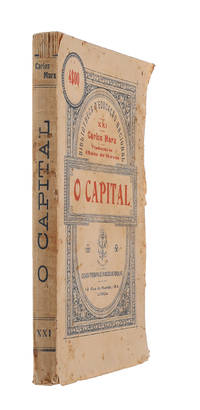
O Capital. i.e. Portuguese: "Das Kapital". - FIRST PORTUGUESE EDITION OF THE MOST IMPORTANT ABRIDGED VERSION OF "THE CAPITAL"
Lisboa De Francisco Luiz Goncalves 1912. 8vo. In the original red printed cloth-binding with black and white lettering. Spine with loss of the white lettering. Paper-label pasted on to lower inner margin of front board. Very light wear to extremities Internally very fine and clean. 240 pp. <br/><br/><em>The exceedingly scarce first Portuguese edition of the most important abridged version of Marx's Capital ever to have appeared published fifty-six years before the first full Portuguese but published in Brazil translation and whole sixy-two years before the first full translation published in Portugal. Curiously two translations of the present work were made 1912 but the present translation seems to have priority see Bastien "Readings and Translations of Karl Marx in Portugal". After the 1933 rise of Salazar's dictatorial Estado Novo regime suppression of the relatively newly founded Communist party grew. Members were arrested tortured and executed and many were sent to the Tarrafal concentration camp in the Cape Verde Islands. Communist literature suffered an equally repressive fate hence the rarity of the present work. Marxism and especially Marxist writing caught on comparatively late in Portugal: "As for the Socialist Party - supposed to be the main expression of Marxism - it revealed itself unable to stimulate effective theoretical and doctrinal efforts. Its existence was an example of ambiguity and inconsequence. Its political programme went on mixing Marxian elements associationist tradition and positivist thinking. Its strategy balanced continuously between an alliance with republican politicians and the maintenance of political autonomy. Its tatics balanced between electoral abstencionism and an involvement in election processes that never led it to a relevant position in parliament. Even its international relations showed a lasting ambiguity: it had been created according to the instructions of the Marxist majority at the Hague Congress when most of its members tended to support political abstencionism. When the formation of the Second lnternacional was taking place in Paris in 1889 Portuguese socialists tried to join the Marxist congress after being present at the possibilist congress. In 1920 they decided to join the Third lnternacional what was not accomplished at the same time that an internal reformist turn was taking place." Bastien "Readings and Translations of Karl Marx in Portugal". "The epitome here translated was published in Paris in 1883 by Gabriel Deville possibly the most brilliant writer among the French Marxians. It is the most successful attempt yet made to popularize Marx's scientific economics. It is by no means free from difficulties for the subject is essentially a complex and difficult subject but there are no difficulties that reasonable attention and patience will not enable the average reader to overcome. There is no attempt at originality. The very words in most cases are Marx's own words and Capital is followed so closely that the first twenty-five chapters correspond in subject and treatment with the first twenty-five chapters of Capital. Chapter XXVI corresponds in the main with Chapter XXVI of Capital but also contains portions of chapter XXX. The last three chapters-XXVII XXVIII and XXIX-correspond to the last three chapters-XXXI XXXII and XXXIII-of Capital." ROBERT RIVES LA MONTE Intruductory Note to the 1899 English translation. Capital de Marx also had a Portuguese edition at this time or better two different editions both in 1912 but only in translation of the survey of Book I published in France by Gabriel Deville in 1883 Marx 1912a and Marx 1912b. This version omitted material dealt with in at least four chapters of the original text and was not particularly appreciated by Engels. It was a simplified text aimed at supporting the training of socialist militants and that made it possible for them to have access indirect to the work of Marx. The other summaries and anthologies of Capital which with a purpose similar to that of Deville circulated in Europe during this period or ignored in Portugal as was the case with Carlo Cafiero or were only occasionally mentioned as was the case with Paul Lafargue and Karl Kautsky in its French versions. OCLC list two copies both in the US. </em> hardcover
Référence libraire : 62679

|
|
|
MARX, CARLOS [KARL] (+) GABRIELLE DEVILLE (+) [Translator:] ALBANO DE MORAES
O Capital. i.e. Portuguese: "Das Kapital". - FIRST PORTUGUESE EDITION OF THE MOST IMPORTANT ABRIDGED VERSION OF "THE CAPITAL"
Lisboa De Francisco Luiz Goncalves 1912. 8vo. Uncut in the original printed wrappers. Wrappers brownpostted and with a few minor nicks and tear. Upper part of spine with loss of paper. Internally fine and clean. A fine and well preserved copy of an otherwise fragile book. 240 pp. <br/><br/><em>The scarce first Portuguese edition of the most important abridged version of Marx's Capital ever to have appeared published fifty-six years before the first full Portuguese but published in Brazil translation and whole sixy-two years before the first full translation published in Portugal. Curiously two translations of the present work were made 1912 but the present translation seems to have priority see Bastien "Readings and Translations of Karl Marx in Portugal". After the 1933 rise of Salazar's dictatorial Estado Novo regime suppression of the relatively newly founded Communist party grew. Members were arrested tortured and executed and many were sent to the Tarrafal concentration camp in the Cape Verde Islands. Communist literature suffered an equally repressive fate hence the rarity of the present work. Marxism and especially Marxist writing caught on comparatively late in Portugal: "As for the Socialist Party - supposed to be the main expression of Marxism - it revealed itself unable to stimulate effective theoretical and doctrinal efforts. Its existence was an example of ambiguity and inconsequence. Its political programme went on mixing Marxian elements associationist tradition and positivist thinking. Its strategy balanced continuously between an alliance with republican politicians and the maintenance of political autonomy. Its tatics balanced between electoral abstencionism and an involvement in election processes that never led it to a relevant position in parliament. Even its international relations showed a lasting ambiguity: it had been created according to the instructions of the Marxist majority at the Hague Congress when most of its members tended to support political abstencionism. When the formation of the Second lnternacional was taking place in Paris in 1889 Portuguese socialists tried to join the Marxist congress after being present at the possibilist congress. In 1920 they decided to join the Third lnternacional what was not accomplished at the same time that an internal reformist turn was taking place." Bastien "Readings and Translations of Karl Marx in Portugal". "The epitome here translated was published in Paris in 1883 by Gabriel Deville possibly the most brilliant writer among the French Marxians. It is the most successful attempt yet made to popularize Marx's scientific economics. It is by no means free from difficulties for the subject is essentially a complex and difficult subject but there are no difficulties that reasonable attention and patience will not enable the average reader to overcome. There is no attempt at originality. The very words in most cases are Marx's own words and Capital is followed so closely that the first twenty-five chapters correspond in subject and treatment with the first twenty-five chapters of Capital. Chapter XXVI corresponds in the main with Chapter XXVI of Capital but also contains portions of chapter XXX. The last three chapters-XXVII XXVIII and XXIX-correspond to the last three chapters-XXXI XXXII and XXXIII-of Capital." ROBERT RIVES LA MONTE Intruductory Note to the 1899 English translation. Capital de Marx also had a Portuguese edition at this time or better two different editions both in 1912 but only in translation of the survey of Book I published in France by Gabriel Deville in 1883 Marx 1912a and Marx 1912b. This version omitted material dealt with in at least four chapters of the original text and was not particularly appreciated by Engels. It was a simplified text aimed at supporting the training of socialist militants and that made it possible for them to have access indirect to the work of Marx. The other summaries and anthologies of Capital which with a purpose similar to that of Deville circulated in Europe during this period or ignored in Portugal as was the case with Carlo Cafiero or were only occasionally mentioned as was the case with Paul Lafargue and Karl Kautsky in its French versions. OCLC list two copies both in the US. </em> unknown
Référence libraire : 63248
|
|
|
Marx, Carl Friedrich Heinrich
Origines contagii cum additamentis. Additamenta ad origines contagii.
1827/26. Caroliruhe & Badae Apud D.R. Marx 1827 8° XX 153 pp.; 1826 XII 51 pp. orig. Broschur; unaufgeschnittenes feines Expl. Wichtige Geschichte der Infektionskrankheiten! Karl Friedrich Heinrich Marx 1796-1877 "Verdienst liegt hauptsächlich auf dem Gebiete der historischen Medizin . und zeigen ausserdem wie einzelne pathologisch-historische Untersuchungen insbesondere der 'Origines contagii' einen grossen Schatz der Belesenheit und Gelehrsamkeit in welchem Marx unbezweifelt die meisten seiner Zeitgenossen überragte." Hirsch IV p.155f. "has dealt with this subject exhaustively and considers that the most ancient traces of the opinion that disease may be communicated by touch is found among the customs of Egyptians and Jaws." Bulloch p. 4 Karl Friedrich Heinrich Marx 1796-1877 "geboren am 10. März 1796 zu Karlsruhe studirte von 1813 in Heidelberg wo 1817 seine akademische Preisschrift: "Diatribe anatomico-physiologica de structura atque vita venarum" Karlsruhe 1819 gekrönt wurde. In Wien wohin er zu ferneren Studien gezogen war wurde er auf Requisition der preuss. Regierung wegen seiner Betheiligung an burschenschaftlichen Bestrebungen verhaftet und 9 Monate im Kerker gehalten. Nachdem er 1820 in Jena Dr. med. geworden ging er nach Göttingen wo er zunächst Accessist an der Universitätsbibliothek wurde und 1822 pro venia legendi disputirte. In Göttingen hat er als Arzt akademischer Lehrer und Schriftsteller bis zu seinem am 2. October 1877 erfolgten Tode gewirkt. Er wurde 1826 a. o. 1831 ord. Prof. 1840 Hofrath. In der ersten Periode seiner Lehrthätigkeit trug er besonders Geschichte der Medicin und allgem. und spec. Pathologie vor in den letzten Jahrzehnten fast ausschliesslich Arzneimittellehre ohne jedoch in letzterem Fache von historischen Forschungen abgesehen jemals eine eigene Untersuchung ausgeführt zu haben und ohne jemals ein Verständniss der physiolog. und ehem. Pharmakodynamik der Neuzeit zu erlangen. Seine "Grundzüge der Arzneimittellehre" Stuttgart 1876 sind ohne Bedeutung; dagegen ist sein Werk: "Die Lehre von den Giften in medic. gerichtl. und polizeil. Hinsicht" Göttingen 1827 wenn es auch keine eigenen Beobachtungen enthält von nicht zu unterschätzendem Werthe indem es sine auf ausgedehntes Studium der reichen Schätze der Göttinger Bibliothek gegründete allgemeine Geschichte der Giftlehre bildet wie sie die Literatur keines anderen Landes besitzt und es ist sehr zu bedauern dass der von Marx vorbereitete specielle Theil dieses Buches wegen des nicht ausreichenden buchhändlerischen Erfolges des allgemeinen den Flammen überliefert wurde. Ueberhaupt liegt Marx's hauptsächlichstes Verdienst auf dem Gebiete der historischen Medicin und seine in den Abhandlungen der Göttinger Societät erschienenen und auch separat herausgegebenen zahlreichen Aufsätze über alte Aerzte oder der Medicin nahestehende Personen Herophilus Theophbast Conring Caspar Hofmann Daniel Ludwig Georg Heinisch Haller Leibniz Antonio della Torre Leonardo da Vinci u. A. m. sind ebenso wie seine Nekrologe von Blumenbach und Stieglitz mit denen ihn enge Freundschaft verband lesenswerth und zeigen ausserdem wie einzelne pathologisch-historische Untersuchungen insbesondere der "Origines contagii" Karlsruhe 1824 und die "Additamenta ad Origines contagii" Ebenda 1826 einen grossen Schatz von Belesenheit und Gelehrsamkeit in welchen Marx unbezweifelt die meisten seiner Zeitgenossen überragte. Auch seine nicht rein historischen Schriften geben davon durchgängig Kunde. Daneben macht sich in denselben namentlich aber in den Arbeiten der früheren Lebensperiode originelle Auffassung und selbständiges oft vom Hergebrachten abweichendes Urtheil geltend. Die Originalität des Urtheils documentirt sich abgesehen von den bereits erwähnten historischen Abhandlungen über Herophilus und Pabacelsus auch in seinen ausserordentlich zahlreichen Recensionen von denen die Mehrzahl nicht weniger als 485 in den Göttinger gelehrten Anzeigen erschienen ist; vergl. darüber seine Schrift: "Ueber die Wirksamkeit der Göttinqischen gelehrten Anzeigen und meine Theilnahne an denselben" Göttingen 1863; ferner im Vereine mit scharfer Beobachtung in seinen "Erinnerungen an England" Braunschweig 1842. Auf eigener Beobachtnng beruht zum Theil auch seine Monographie der Cholera asiatica: "Die Erkenntniss Verhütung und Heilung der ansteckenden Cholera- Karlsruhe 1831 indem Marx sich zum Studium der Krankbeit zu FRICKE in Hamburg begeben hatte wo er die in seiner Schrift niedergelegte Ueberzeugung von der Contagiosität der Affectionen gewann. Seine übrigen auf die spec. Pathologie bezüglichen Schriften. "Zur Lehre der Lähmungen der unteren Gliedmassen" Ebenda 1838 - "Ueber die Anfälle mit dem. Gefühle des Verscheidens Angina pectoris" Göttingen 1872 sind von geringerer Bedeutung. Eine medicinische Topographie Göttingens 1824 hat vorwaltend localen Werth. Der Standpunkt welchen Marx in der allgemeinen Pathologie einnimmt ist ein durchaus selbständiger indem er in seiner "Allgemeinen Krankheitslehre" Göttingen 1833 wie auch später in seinen "Grundzügen der Lehre von der Krankheit und Heilung" Karlsruhe 1838 sich von einseitigem Dynamismus und Materialismus sowohl als von einseitiger Solidar- und Humoralpathnlogie freihielt. Wenn diese Bücher schon den originellen Denker charakterisiren so ist dies noch mehr der Fall mit der Fülle allgemeinmedicinischer Abhandlungen die Marx im Laufe seiner Thätigkeit veröffentlichte und welche die Beziehungen des Arztes zum Collegen zum Publicum im Allgemeinen zu diversen Künsten und Wissenschaften zum Staate u.s.w. zum Vorwurfe haben. Echte Humanität trieb schon früh Max zu dem Interesse für die "Euthanasie" über welche 1826 im Programm zum Antritt der Professur schrieb; sie bildet die Basis seiner Abhandlung "Ueber die Abnahme der Krankheiten durch die Zunahme der Civilisation" Göttingen 1844 und "Ueber das Verdienst der Aerzte um das Verschwinden der dämonischen Krankheiten" Ebenda 1859 von denen die letztere nach Form und Inhalt seine vollendetste Arbeit ist. Die von Marx in seiner eigenen in seinem Jünglings- und Mannesalter sehr ausgedehnten ärztlichen Praxis gewonnene Erkenntniss dass der Arzt nicht bloss als Heilkünstler sondern auch als Mensch am Krankenbette eine segensreiche Wirkung habe die er nur ausüben könne. wenn er die nöthigen sittlichen Eigenschaften dazu besitze ist zuerst im "Akesios. Blicke in die ethischen Beziehungen der Medicin" Ebenda 1848; engl. Uebers. von John Mackness 2 Aufl. ausgesprochen. Dieser Satz ist auch die Grundidee von "Beiträge zur Beurteilung von Personen Ansichten und Thatsachen" 1868 "Mittheilunqen über Zwecke Leiden und Freuden und Gedachtes. Ein Lesebuch für Kranke und Gesunde" 1868. Obwohl die wohlwollende und edle Tendenz dieser Bestrebungen nicht verkannt werden darf so sind dieselben doch nicht im Stande "Marx dem Einzigen" wie sein Schüler H. ROHLFS in seinem rosig gefärbten Panegyricus auf seinen Lehrer Geschichte der deutschen Medicin I 1875 pag. 323 genannt hat die ihm von seinem Biographen vindicirten Ansprüche auf den Titel eines "Gründers der ethischen Medicin" zuzugestehen. Nachweislich hat das literarische "ethische Streben von Marx einen irgendwie wesentlichen und dauernden praktischen Erfolg nicht gehabt. Seine literarische Bizarrerie steht übrigens im Einklänge mit allerlei Sonderbarkeiten in Bezug auf Umgangsformen Leben und Lebensgewohnheiten welche Marx in den letzten 25 Jahren zur Schau trug und die verbunden mit den von ihm häufig verfochtenen antiquirten Anschauungen in Bezug auf alle möglichen Gegenstände den "alten Marx" in seinem Wirkungsbezirke als Sonderling qualificirten. Selbst in den Kreisen der Göttinger Universität und der med. Facultät in welchen Marx abgesehen von persönlichen Beweggründen wegen seiner prononcirten Abneigung gegen jede Neuerung gegen pathologische Anatomie und physiologische Chemie gegen Institute welche nach seiner Ansicht die Freiheit des akademischen Lehrers beschränkten nicht beliebt war ist daher der Kern der Wahrheit in ROHLF'S allerdings übertriebener und daher der Satire alsbald anheimgefallener vergl. K. GOEDEKE in Allg. Zeitg. 1875 10. Beil. Würdigung von Marx's Verdiensten kaum anerkannt worden. Marx starb unverheirathet an den Folgen eines Darmkrebses und hinterliess sein beträchtliches Vermögen seinem Biographen." Th. Husemann Hirsch-H. IV pp.105-107 siehe - Schriftenverzeichniss Bei Bohlfs. - H. Hirsch ADB XX p. 540 Garrison & Morton No.2531 unknown
Référence libraire : 22467
|
|
|
Marx, Carl Friedrich Heinrich
Ueber Euthanasie pp.129-151.
1827. Hecker's Annalen 7. - Berlin im Verlagee von Theod. Christ. Friedr. Enslin 1827 8° VIII 512 pp. 1 Taf. Halbledereinband d.Zt.; feines Expl. Erstdruck! Auf Karl Friedrich Heinrich Marx 1796-1877 geht - mit Berufung auf Bacon als philosophischem Vordenker - die Begriffsfindung "Euthanasie" im unverfälschten Sinne eines Linderns des Sterbens zurück. Marx zufolge hat der Arzt die moralische Aufgabe dem Sterbenden durch Zuspruch Beistand und durch medikamentöse Milderung seiner Leiden das Sterben zu erleichtern. Eine solche "Todeslinderung" entsprach dem damaligen Zeitgeist doch wurde sie von Marx erstmals in den ärztlichen Pflichtenkanon aufgenommen. Marx betonte ebenso die Trennung der theologischen Seelsorge am Kranken von der psychischen Hinwendung und medikamentösen Betreuung durch den Arzt. "Wenn es so unabwendbar beschossen ist daß der Mensch wie jedes andere erschaffende Gebilde untergehe so fragt es sich was er thun kann um den letzten Ausgang wenn dieser nicht durch einen Schlag sondern allmählig heranrückt so erträglich und so leicht als möglich zu machen. Da er in so vielem Meister ist und so unzählige Künste erfunden hat so wird er ja wohl auch eine Kunst zu sterben besitzen und auch hierin eine Meisterschaft vor allen übrigen Geschöpfen behaupten. Der Philosoph und der Geistliche wissen für die Stunde wo der Wille nichts mehr vermag wo es im Geiste dunkelt und wo die Frage über die persönliche Fortdauer keinesweges gelöst wird vielen aufrichtenden Trost; um wie viel mehr mufs der Arzt der beständige Zuschauer des schmerzvollen Zustandes in der höchsten Zeit der Noth wo seine eigene Hoffnung gesunken ist und wo dennoch der Leidende von seiner Kunst um Hülfe fleht eine beruhigende und besänftigende Methode besitzen. Das ist denn die Euthanasie oder diejenige Kunst welche alle drängenden Symptome der Krankheit unterdrückt jeden schmerzlichen Zufall mäßigt und die Todesstunde die nicht abgewehrt werden kann so leicht als möglich vorbereitet." C.F.H. Marx unknown
Référence libraire : 53342
|
|
|
Marx, Carlo
La Guerra Civile in Francia Indirizzo Del Consiglio Generale dell'Associazione Internazionale Dei Lavoratori, Con L'aggiunta Dei Due Indirizzi Del Consiglio Generale Intorno Alla Guerra Franco-Tedesca e D'una Introduzione Di Federico Engels (1870-71)
Mm 110x180 Brossura editoriale di pp. 67. Biblioteca della critica sociale, firma di appartenenza al frontespizio, ristampa anastatica dell'edizione del 1902, senza data. Opera in buone-ottime condizioni. Spedizione in 24 ore dalla conferma dell'ordine.
|
|
|
Marx, Carolin
Nichtorganische Schlafstörungen
Springer Verlag 2016. Paperback. New. 136 pages. German language. 9.45x6.61x0.16 inches. Springer Verlag paperback
Référence libraire : 1-3662502712 ISBN : 3662502712 9783662502716
|
|
|
Marx, Carolin
Nichtorganische Schlafstörungen
paperback. Good. Access codes and supplements are not guaranteed with used items. May be an ex-library book. paperback
Référence libraire : 3662502712.G ISBN : 3662502712 9783662502716
|
|
|
Marx, Carolin
Nichtorganische Schlafstörungen
Springer Verlag 2016. Paperback. New. 136 pages. German language. 9.45x6.61x0.16 inches. Springer Verlag paperback
Référence libraire : __3662502712 ISBN : 3662502712 9783662502716
|
|
|
Marx, Catherine
WFIRST-AFTA Overview Technology needs summary Mirror Technology Conference 2015
NASA. New. 2015. Soft Cover. Reprint Edition . NASA paperback
Référence libraire : 1377781
|
|
|
Marx, CE C E
Elsevier's Dictionary of Aquaculture: In English French Spanish German Italian and Latin
Elsevier 01/10/1991. 1. hardcover. Used: Good. 6.00x1.00x9.00. Buy with confidence. Excellent Customer Service & Return policy. Elsevier hardcover
Référence libraire : SONG044488663X ISBN : 044488663X 9780444886637

|
|
|
Marx, CE C E
Elsevier's Dictionary of Aquaculture: In English French Spanish German Italian and Latin
Elsevier 1991-10-01. 1. hardcover. New. 6.00x1.00x9.00. Buy with confidence. Excellent Customer Service & Return policy. Elsevier hardcover
Référence libraire : DADAX044488663X ISBN : 044488663X 9780444886637
|
|
|
Marx, Christian
Credit Scoring im Privatkundengeschäft German Edition
paperback. Good. Access codes and supplements are not guaranteed with used items. May be an ex-library book. paperback
Référence libraire : 3656072523.G ISBN : 3656072523 9783656072522

|
|
|
Marx, Christian
Customer Processes and their application to Mobile Devices
paperback. Good. Access codes and supplements are not guaranteed with used items. May be an ex-library book. paperback
Référence libraire : 3640630963.G ISBN : 3640630963 9783640630967

|
|
|
Marx, Christine
Das Beobachtungsverfahren SYMLOG in der Praxis: Anwendung Analyse und Kritik DUV Sozialwissenschaft 1 German Edition
paperback. Good. Access codes and supplements are not guaranteed with used items. May be an ex-library book. paperback
Référence libraire : 3824444399.G ISBN : 3824444399 9783824444397

|
|
|
Marx, Christine
Das Beobachtungsverfahren Symlog in Der Praxis: Anwendung Analyse Und Kritik
Deutscher Universitts Verlag 2000. Paperback. New. 299 pages. German language. 8.27x5.83x0.71 inches. Deutscher Universit?ts Verlag paperback
Référence libraire : x-3824444399 ISBN : 3824444399 9783824444397
|
|
|
Marx, Christa
Das Bild der Sowjetunion im westdeutschen Fernsehen: Eine medienkritische Studie zum Reflex des politischen Wandels 1986/1987 in der Sowjetunion aus . Universitaires Européennes German Edition
Peter Lang Gmbh Internationaler Verlag Der Wissenschaften 1990-08-01. New. perfect. Used: Good. 5.94x0.91x8.19. Buy with confidence. Excellent Customer Service & Return policy. Peter Lang Gmbh, Internationaler Verlag Der Wissenschaften unknown
Référence libraire : SONG3631430957 ISBN : 3631430957 9783631430958

|
|
|
Marx, Christian
Die Geographie des Ptolemaios
epubli GmbH 2012. Paperback. New. 200 pages. German language. 9.45x6.69x0.46 inches. epubli GmbH paperback
Référence libraire : 1-3844228098 ISBN : 3844228098 9783844228090
|
|
|
Marx, Christy
Elfquest Reader's Collection #9a: Wolfrider!
paperback. Good. Access codes and supplements are not guaranteed with used items. May be an ex-library book. paperback
Référence libraire : 0936861673.G ISBN : 0936861673 9780936861678

|
|
|
Marx, Christy; Pini, Richard; Pini, Wendy
Elfquest Reader's Collection #9a: Wolfrider!
Warp Graphics Pubns 1999. Paperback. New. In shrink wrap. Looks like an interesting title! Warp Graphics Pubns paperback
Référence libraire : Q-0936861673 ISBN : 0936861673 9780936861678
|
|
|
Marx, Christian
Gewinner und Verlierer nach dem Boom
Vandenhoeck & Ruprecht 2020. 1st. hardcover. New. 104x16x148. Vandenhoeck & Ruprecht hardcover
Référence libraire : 1404471 ISBN : 3525311184 9783525311189

|
|
|
Marx, Christy
Grace Hopper: The First Woman to Program the First Computer in the United States Women Hall of Famers in Mathematics and Science
Rosen Pub Group 2003-01-01. Library Binding. New. New. In shrink wrap. Looks like an interesting title! Rosen Pub Group unknown
Référence libraire : Q-0823938778 ISBN : 0823938778 9780823938773

|
|
|
Marx, Christy
Grace Hopper: The First Woman to Program the First Computer in the United States
paperback. Good. Access codes and supplements are not guaranteed with used items. May be an ex-library book. paperback
Référence libraire : 1435890965.G ISBN : 1435890965 9781435890961

|
|
|
Marx, Christy
Jet Li
paperback. Good. Access codes and supplements are not guaranteed with used items. May be an ex-library book. paperback
Référence libraire : 1435888197.G ISBN : 1435888197 9781435888197

|
|
|
Marx, Christy
Life in the Ocean Depths Life in Extreme Environments
0000-00-00. library. Used: Good. 7.25x0.50x8.75. Buy with confidence. Excellent Customer Service & Return policy. unknown
Référence libraire : SONG082393988X ISBN : 082393988X 9780823939886

|
|
|
Marx, Christian; Marx, Christian
Optimierung Einer Mikrobiellen Transglutaminase: Ein Beispiel Für Aktuelles Protein-Engineering Von Der Expression Bis Zur Optimierung
Südwestdeutscher Verlag Für Hochschulschriften 2009. Paperback. New. 72 pages. German language. 8.66x5.91x0.17 inches. Südwestdeutscher Verlag Für Hochschulschriften paperback
Référence libraire : 1-3838108035 ISBN : 3838108035 9783838108032
|
|
|
Marx, Christoph
Politische Presse im Nachkriegsberlin 1945-1953: Erik Reger und Rudolf Herrnstadt German Edition
paperback. Good. Access codes and supplements are not guaranteed with used items. May be an ex-library book. paperback
Référence libraire : 3838209850.G ISBN : 3838209850 9783838209852

|
|
|
Marx, Christian
Prozyklizität - Regulatorische Anforderung an Finanzmarktkrisen German Edition
paperback. Good. Access codes and supplements are not guaranteed with used items. May be an ex-library book. paperback
Référence libraire : 3640626222.G ISBN : 3640626222 9783640626229

|
|
|
Marx, Christoph
Reeducation und Machtpolitik: Die Neuordnung Der Berliner Presselandschaft 1945-1947 German Edition
mass_market. Good. Access codes and supplements are not guaranteed with used items. May be an ex-library book. unknown
Référence libraire : 3898210855.G ISBN : 3898210855 9783898210850

|
|
|
Marx, Christian (Editor)/ Reitmayer, Morten (Editor)
Rhenish Capitalism: New Insights from a Business History Perspective
Routledge 2024. Paperback. New. 186 pages. 9.69x6.88x0.42 inches. Routledge paperback
Référence libraire : x-1032193174 ISBN : 1032193174 9781032193175

|
|
|
Marx, Christian (Editor)/ Reitmayer, Morten (Editor)
Rhenish Capitalism: New Insights from a Business History Perspective
Routledge 2022. Hardcover. New. 188 pages. 9.69x6.88x0.50 inches. Routledge hardcover
Référence libraire : x-1032193158 ISBN : 1032193158 9781032193151

|
|
|
Marx, Christoph
Risikomanagement für IT-Projekte: Methoden und Werkzeuge German Edition
paperback. Good. Access codes and supplements are not guaranteed with used items. May be an ex-library book. paperback
Référence libraire : 3639446151.G ISBN : 3639446151 9783639446159

|
|
|
Marx, Christoph
Sudafrika: Geschichte Und Gegenwart Landergeschichten German Edition
paperback. Good. Access codes and supplements are not guaranteed with used items. May be an ex-library book. paperback
Référence libraire : 3170410040.G ISBN : 3170410040 9783170410046

|
|
|
Marx, Christophe
Supera tus bloqueos mentales: El método EMDR para liberarse de los traumas Spanish Edition
paperback. Good. Access codes and supplements are not guaranteed with used items. May be an ex-library book. paperback
Référence libraire : 8497359062.G ISBN : 8497359062 9788497359061

|
|
|
Marx, Christy/ Lopresti, Aaron (Illustrator)
Sword and Sorcery 1: Amethyst The New 52
Dc Comics 2013. Paperback. New. the new 52 edition. 328 pages. 10.25x6.75x0.75 inches. Dc Comics paperback
Référence libraire : 1-140124100X ISBN : 140124100X 9781401241001

|
|
|
Marx, Christy
Sword of Sorcery 1: Amethyst
DC Comics 2013-09-03. The New 52. paperback. New. 6.61x0.55x10.16. Buy with confidence. Excellent Customer Service & Return policy. DC Comics paperback
Référence libraire : DADAX140124100X ISBN : 140124100X 9781401241001
|
|
|
Marx, Christy
Teenage Mutant Ninja Turtles Adventures Volume 1
paperback. Good. Access codes and supplements are not guaranteed with used items. May be an ex-library book. paperback
Référence libraire : 1613772890.G ISBN : 1613772890 9781613772898

|
|
|
Marx, Christoph
The Anxieties of White Supremacy: Hendrik Verwoerd and the Apartheid Mindset Africa in Global History 8
new. unknown
Référence libraire : 46711812-n ISBN : 3110787261 9783110787269

|
|
|
Marx, Christoph
The Anxieties of White Supremacy: Hendrik Verwoerd and the Apartheid Mindset Africa in Global History 8
like new. unknown
Référence libraire : 46711812 ISBN : 3110787261 9783110787269
|
|
|
Marx, Christy
The Great Chicago Fire of 1871 Tragic Fires Throughout History
Rosen Pub Group 2004-02-01. Library Binding. New. New. In shrink wrap. Looks like an interesting title! Rosen Pub Group unknown
Référence libraire : Q-0823944875 ISBN : 0823944875 9780823944873

|
|
|
Marx, Christy
The Great Chicago Fire of 1871 Tragic Fires Throughout History
library. Good. Access codes and supplements are not guaranteed with used items. May be an ex-library book. unknown
Référence libraire : 0823944875.G ISBN : 0823944875 9780823944873
|
|
|
Marx, Christy
The Sisterhood of Steel: Boronwe Daughter of Death
paperback. Good. Access codes and supplements are not guaranteed with used items. May be an ex-library book. paperback
Référence libraire : 0913035238.G ISBN : 0913035238 9780913035238

|
|
|
Marx, Christy
The Wachowski Brothers: Creators Of The Matrix Famous Families
library. Good. Access codes and supplements are not guaranteed with used items. May be an ex-library book. unknown
Référence libraire : 1404202641.G ISBN : 1404202641 9781404202641

|
|
|
Marx, Christoph
Trennung und Angst: Hendrik Verwoerd und die Gedankenwelt der Apartheid Studien zur Internationalen Geschichte 50 German Edition
hardcover. Good. Access codes and supplements are not guaranteed with used items. May be an ex-library book. hardcover
Référence libraire : 3110680440.G ISBN : 3110680440 9783110680447

|
|
|
Marx, Christoph
Trennung und Angst: Hendrik Verwoerd und die Gedankenwelt der Apartheid Studien zur Internationalen Geschichte 50 German Edition
Walter de Gruyter Inc 2020-05-05. 1. hardcover. New. 6.14x1.56x9.21. Buy with confidence. Excellent Customer Service & Return policy. Walter de Gruyter, Inc hardcover
Référence libraire : DADAX3110680440 ISBN : 3110680440 9783110680447
|
|
|
Marx, Christoph
Trennung Und Angst: Hendrik Verwoerd Und Die Gedankenwelt Der Apartheid Studien Zur Internationalen Geschichte 50
Walter de Gruyter 2020. Hardcover. New. 614 pages. German language. 9.06x6.10x1.50 inches. Walter de Gruyter hardcover
Référence libraire : __3110680440 ISBN : 3110680440 9783110680447
|
|
|
Marx, Christy
Watson and Crick and DNA
like new. unknown
Référence libraire : 41327571 ISBN : 1435837215 9781435837218

|
|

 Recevoir par e-mail
 Télécharger en PDF
 Flux RSS
 Lien permanent


