|
George BARBIER
Rugby - Costume tailleur de Redfern (pl.39, La Gazette du Bon ton, 1914 n°4)
Paris Avril 1914 | 19 x 24.50 cm | une feuille
Referenz des Buchhändlers : 89440
|
|
|
George BARBIER - VAUDREUIL
Velours et lamé (La Gazette du Bon ton, 1922 n°8)
Lucien Vogel éditeur | Paris 1922 | 19.50 x 24.50 cm | une feuille
Referenz des Buchhändlers : 84836
|
|
|
George BARBIER
Vichy (II) ou Le Jeu des Marionnettes. (La Gazette du Bon ton, n°8-9. Été 1915 - Planche 3 )
Lucien Vogel éditeur | Paris 1915 | 37.60 x 24.20 cm | une feuille
Referenz des Buchhändlers : 51292
|
|
|
George BARBIER
Vichy (II) ou Le Jeu des marionnettes (pl.3, La Gazette du Bon ton, Eté 1915 n°8-9)
Lucien Vogel éditeur | Paris Eté 1915 | 36.50 x 24 cm | une feuille
Referenz des Buchhändlers : 54705
|
|
|
George BARBIER
Vingt-cinq costumes pour le théâtre
Sous étui cartonné. Couverture illustrée rempliée avec petites taches brunes.Illustré d'un portrait de George BARBIER gravé par Charles MARTIN, d'un bandeau gravé sur la couverture et de 25 planches de costumes de théâtre coloriées au pochoir avec rehauts d'or et d'argent par George BARBIER, sous serpentes légendées et montées.
Referenz des Buchhändlers : 75202
|
|
|
Geo . F. Barber
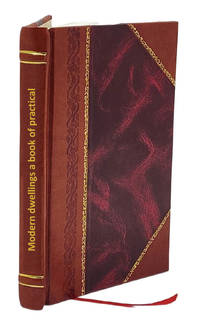
Modern dwellings a book of practical designs and plans for those who wish to build or beautify their homes 1901 Leather Bound
2016. Leather Bound. New. Size: 19.68 x 24.13 cms This book is available in 5 different Leather color without any extra cost. Explore More Options by Clicking on 'More Images' and Notify Us of Your Choice via Email within 24 hours of placing the order. Presenting an Exquisite Leather-Bound Edition expertly crafted by the prestigious organization “Rare Biblio” with Original Natural Leather that gracefully adorns the spine and corners. The allure continues with Golden Leaf Printing that adds a touch of elegance while Hand Embossing on the rounded spine lends an artistic flair. This masterpiece has been meticulously reprinted in 2016 utilizing the invaluable guidance of the original edition published many years ago in 1901. The contents of this book are presented in classic black and white. Its durability is ensured through a meticulous sewing binding technique enhancing its longevity. Imprinted on top-tier quality paper. A team of professionals has expertly processed each page delicately preserving its content without alteration. Due to the vintage nature of these books every page has been manually restored for legibility. However in certain instances occasional blurriness missing segments or faint black spots might persist. We sincerely hope for your understanding of the challenges we faced with these books. Recognizing their significance for readers seeking insight into our historical treasure we've diligently restored and reissued them. Our intention is to offer this valuable resource once again. We eagerly await your feedback hoping that you'll find it appealing and will generously share your thoughts and recommendations. Lang: - English Vol:- Pages:- 179 If it is a multi-volume set then it is only a single volume. Product Disclaimer: Kindly be informed that owing to the inherent nature of leather as a natural material minor discolorations or textural variations may be perceptible. Explore the FOLIO EDITION 12x19 Inches: Available Upon Request. hardcover
Referenz des Buchhändlers : BIBLB002123786
|
|
|
Geo F Barber and Company
Modern Dwellings and Their Proper Construction: A Book of Practical Designs and Information for Those Who Wish to Build or Beautify Their Homes Classic Reprint
Forgotten Books 2018. Paperback. New. 81 pages. 8.98x5.98x0.35 inches. Forgotten Books paperback
Referenz des Buchhändlers : __1334233047 ISBN : 1334233047 9781334233043

|
|
|
Geo F Barber & Co Architects
Modern Dwellings: a Book of Practical Designs and Plans for Those Who Wish to Build or Beautify Their Homes
Hardback. New. hardcover
Referenz des Buchhändlers : B9781013922947 ISBN : 1013922948 9781013922947

|
|
|
Geo F Barber & Co Architects
Modern Dwellings: a Book of Practical Designs and Plans for Those Who Wish to Build or Beautify Their Homes
Paperback / softback. New. paperback
Referenz des Buchhändlers : B9781015280922 ISBN : 1015280927 9781015280922

|
|
|
Geo F Barber & Co Architects
Modern Dwellings: a Book of Practical Designs and Plans for Those Who Wish to Build or Beautify Their Homes
Paperback / softback. New. paperback
Referenz des Buchhändlers : A9781015280922 ISBN : 1015280927 9781015280922
|
|
|
Geo F Barber & Co Architects
Modern Dwellings: a Book of Practical Designs and Plans for Those Who Wish to Build or Beautify Their Homes
Hardback. New. hardcover
Referenz des Buchhändlers : A9781013922947 ISBN : 1013922948 9781013922947
|
|
|
Geo. F. Barber and Co
Modern Dwellings: A Book of Practical Designs and Plans for Those Who Wish to Build or Beautify Their Homes Classic Reprint
hardcover. Good. Access codes and supplements are not guaranteed with used items. May be an ex-library book. hardcover
Referenz des Buchhändlers : 0656032111.G ISBN : 0656032111 9780656032112

|
|
|
Geo. F. Barber and Co
Modern Dwellings: A Book of Practical Designs and Plans for Those Who Wish to Build or Beautify Their Homes Classic Reprint
paperback. Good. Access codes and supplements are not guaranteed with used items. May be an ex-library book. paperback
Referenz des Buchhändlers : 0243076339.G ISBN : 0243076339 9780243076338

|
|
|
Geo. F. Barber
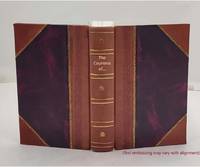
The cottage souvenir no. 2 Containing one hundred and twenty original designs in cottage and detail architecture 1891 Leather Bound
2019. Leather Bound. New. Size: 14.60 x 22.86 cms This book is available in 5 different Leather color without any extra cost. Explore More Options by Clicking on 'More Images' and Notify Us of Your Choice via Email within 24 hours of placing the order. Presenting an Exquisite Leather-Bound Edition expertly crafted by the prestigious organization “Rare Biblio” with Original Natural Leather that gracefully adorns the spine and corners. The allure continues with Golden Leaf Printing that adds a touch of elegance while Hand Embossing on the rounded spine lends an artistic flair. This masterpiece has been meticulously reprinted in 2019 utilizing the invaluable guidance of the original edition published many years ago in 1891. The contents of this book are presented in classic black and white. Its durability is ensured through a meticulous sewing binding technique enhancing its longevity. Imprinted on top-tier quality paper. A team of professionals has expertly processed each page delicately preserving its content without alteration. Due to the vintage nature of these books every page has been manually restored for legibility. However in certain instances occasional blurriness missing segments or faint black spots might persist. We sincerely hope for your understanding of the challenges we faced with these books. Recognizing their significance for readers seeking insight into our historical treasure we've diligently restored and reissued them. Our intention is to offer this valuable resource once again. We eagerly await your feedback hoping that you'll find it appealing and will generously share your thoughts and recommendations. Lang: - english Vol:- Pages:- 331 If it is a multi-volume set then it is only a single volume. Product Disclaimer: Kindly be informed that owing to the inherent nature of leather as a natural material minor discolorations or textural variations may be perceptible. Explore the FOLIO EDITION 12x19 Inches: Available Upon Request. hardcover
Referenz des Buchhändlers : BIBLB009108252
|
|
|
Geoffrey Barber
Country Doctor
The Boydell Press 1974. Hardcover. Good/Acceptable. 1974. No Edition Remarks. 97 pages. Illustrated dust jacket over illustrated paper covered boards. Pages remain clear with minimal tanning and foxing. Text block edge is moderately foxed. Previous owner's inscription to front free end-paper. Binding remains firm. Boards have mild edge-wear with slight rubbing to surfaces. Mild crushing to spine ends. Book has a slight forward lean. Unclipped jacket has moderate edge-wear with chips tears and creasing. Tear to front panel. The Boydell Press hardcover
Referenz des Buchhändlers : 1723023443ABS

|
|
|
Geoffrey Barbier
Provenance Data in Social Media
new. unknown
Referenz des Buchhändlers : 44545658-n ISBN : 303100776x 9783031007767

|
|
|
Geoffrey Barbier
Provenance Data in Social Media
like new. unknown
Referenz des Buchhändlers : 44545658 ISBN : 303100776x 9783031007767
|
|
|
Geoffrey Barbier
Provenance Data in Social Media
Paperback / softback. New. Taking advantage of social media features research in this nascent field spearheads the search for a way to provide provenance data to social media users thus leveraging social media itself by mining it for the provenance data. paperback
Referenz des Buchhändlers : B9783031007767 ISBN : 303100776x 9783031007767
|
|
|
Geoffrey Baker Richard Barber David Preest
The Chronicle of Geoffrey Le Baker of Swinbrook
Boydell & Brewer Group Limited pp. xxvii 155 Maps . Hardback. New. Boydell & Brewer Group, Limited hardcover
Referenz des Buchhändlers : 697484344 ISBN : 1843836912 9781843836919

|
|
|
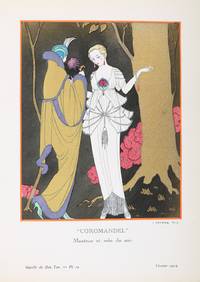
George BARBIER
"Coromandel"". Manteau et robe du soir pl.12 La Gazette du Bon ton 1914 n°2
Paris: Lucien Vogel éditeur 1914. Fine. Lucien Vogel éditeur Paris Février 1914 19 x 24.50 cm une feuille Original colour engraving richly heightened with gold printed on laid paper signed in the plate lower right. An original print used to illustrate the Gazette du bon ton one of the most attractive and influential 20th century fashion magazines featuring the talents of French artists and other contributors from the burgeoning Art Deco movement. A celebrated fashion magazine established in 1912 by Lucien Vogel La Gazette du bon ton appeared until 1925 with a hiatus from 1915 to 1920 due to the war the editor-in-chief having been called up for service. It consisted of 69 issues printed in only 2000 copies each and notably illustrated with 573 color plates and 148 sketches of the models of the great designers. Right from the start this sumptuous publication “was aimed at bibliophiles and fashionable society” Françoise Tétart-Vittu “La Gazette du bon ton” in Dictionnaire de la mode 2016 and was printed on fine vergé paper using a type cut specially for the magazine by Georges Peignot known as Cochin later used in 1946 by Christian Dior. The prints were made using stencils heightened in colors some highlighted in gold or palladium. The story began in 1912 when Lucien Vogel a man of the world involved in fashion he had already been part of the fashion magazine Femina decided with his wife Cosette de Brunhoff – the sister of Jean creator of Babar – to set up the Gazette du bon ton subtitled at the time: “Art fashion frivolities.” Georges Charensol noted the reasoning of the editor-in-chief: “’In 1910’ he observed ‘there was no really artistic fashion magazine nothing representative of the spirit of the time. My dream was therefore to make a luxury magazine with truly modern artists…I was assured of success because when it comes to fashion no country on earth can compete with France.’” “Un grand éditeur d’art. Lucien Vogel” in Les Nouvelles littéraires no. 133 May 1925. The magazine was immediately successful not only in France but also in the United States and Latin America. At first Vogel put together a team of seven artists: André-Édouard Marty and Pierre Brissaud followed by Georges Lepape and Dammicourt as well as eventually his friends from school and the School of Fine Arts like George Barbier Bernard Boutet de Monvel and Charles Martin. Other talented people soon came flocking to join the team: Guy Arnoux Léon Bakst Benito Boutet de Monvel Umberto Brunelleschi Chas Laborde Jean-Gabriel Domergue Raoul Dufy Édouard Halouze Alexandre Iacovleff Jean Émile Laboureur Charles Loupot Chalres Martin Maggie Salcedo. These artist mostly unknown when Lucien Vogel sought them out later became emblematic and sought-after artistic figures. It was also they who worked on the advertising drawings for the Gazette. The plates put the spotlight on and celebrate dresses by seven designers of the age: Lanvin Doeuillet Paquin Poiret Worth Vionnet and Doucet. The designers provided exclusive models for each issue. Nonetheless some of the illustrations are not based on real models but simply on the illustrator’s conception of the fashion of the day. The Gazette du bon ton was an important step in the history of fashion. Combining aesthetic demands with the physical whole it brought together – for the first time – the great talents of the artistic literary and fashion worlds; and imposed through this alchemy a completely new image of women: slender independent and daring which was shared by the new generation of designers including Coco Chanel Jean Patou Marcel Rochas and so on… Taken over in 1920 by Condé Montrose Nast the Gazette du bon ton was an important influence on the new layout and aesthetics of that “little dying paper” that Nast had bought a few years earlier: Vogue. Lucien Vogel éditeur unknown
Referenz des Buchhändlers : 89405
|
|
|
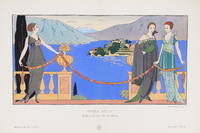
George BARBIER - (John REDFERN)
"Isola Bella"" Robes du soir de Redfern pl.57 La Gazette du Bon ton 1914 n°6
Paris: Lucien Vogel éditeur 1914. Fine. Lucien Vogel éditeur Paris Juin 1914 36.50 x 24 cm une feuille Original double color print heightened with gold and palladium printed on laid paper signed lower left on the plate. Original engraving created for the illustration of La Gazette du bon ton one of the most beautiful and influential fashion magazines of the 20th century celebrating the talent of French creators and artists in the full bloom of Art Deco. Famous fashion magazine founded in 1912 by Lucien Vogel La Gazette du bon ton was published until 1925 with an interruption during the War from 1915 to 1920 due to the mobilization of its editor-in-chief. It consists of 69 issues printed in only 2000 copies and is illustrated notably with 573 color plates and 148 sketches representing models by great couturiers. From their publication these luxurious publications ""address bibliophiles and worldly aesthetes"" Françoise Tétart-Vittu ""La Gazette du bon ton"" in Dictionnaire de la mode 2016. Printed on fine laid paper they use a typeface specially created for the magazine by Georges Peignot the Cochin character adopted in 1946 by Christian Dior. The prints are created using the metal stencil technique heightened in colors and some highlighted with gold or palladium. The adventure begins in 1912 when Lucien Vogel man of the world and fashion - he had already participated in the magazine Femina - decides to found with his wife Cosette de Brunhoff sister of Jean father of Babar the Gazette du bon ton whose subtitle was then ""Art modes et frivolités"". Georges Charensol reports the words of the editor-in-chief: ""In 1910 he observes there existed no fashion journal truly artistic and representative of the spirit of its time. I was therefore thinking of making a luxury magazine with truly modern artists . I was certain of success because for fashion no country can rival France."" ""Un grand éditeur d'art. Lucien Vogel"" in Les Nouvelles littéraires n°133 May 1925. The magazine's success is immediate not only in France but also in the United States and South America. Originally Vogel therefore brings together a group of seven artists: André-Édouard Marty and Pierre Brissaud followed by Georges Lepape and Dammicourt; and finally his friends from the École des beaux-arts who are George Barbier Bernard Boutet de Monvel or Charles Martin. Other talents quickly join the team: Guy Arnoux Léon Bakst Benito Boutet de Monvel Umberto Brunelleschi Chas Laborde Jean-Gabriel Domergue Raoul Dufy Édouard Halouze Alexandre Iacovleff Jean Émile Laboureur Charles Loupot Charles Martin Maggie Salcedo. These artists unknown for the most part when Lucien Vogel calls upon them will subsequently become emblematic and sought-after artistic figures. These same illustrators create the drawings for the Gazette's advertisements. The plates highlight and sublimate the dresses of seven creators of the era: Lanvin Doeuillet Paquin Poiret Worth Vionnet and Doucet. The couturiers provide exclusive models for each issue. Nevertheless some of the illustrations feature no real model but only the idea that the illustrator has of the day's fashion. La Gazette du bon ton is a decisive step in fashion history. Combining aesthetic demand and plastic unity it brings together for the first time the great talents of the worlds of arts letters and fashion and imposes through this alchemy a completely new image of woman slender independent and bold also carried by the new generation of couturiers Coco Chanel Jean Patou Marcel Rochas. Taken over in 1920 by Condé Montrose Nast the Gazette du bon ton would largely inspire the new composition and aesthetic choices of the ""little dying journal"" that Nast had bought a few years earlier: Vogue magazine. Lucien Vogel éditeur unknown
Referenz des Buchhändlers : 84745
|
|
|
George BARBIER - (Jeanne PAQUIN)
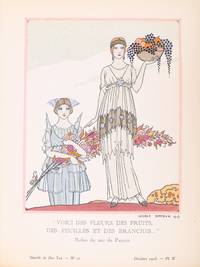
"Voici des fleurs des fruits des feuilles et des branches."". Robes du soir de Paquin pl.10 La Gazette du Bon ton 1913 n°12
Paris 1913. Fine. Paris Octobre 1913 19 x 24.50 cm une feuille Original colour print heightened in palladium printed on laid paper and signed at the bottom right outside the plate. Original engraving produced for the illustration of La Gazette du Bon Ton one of the most beautiful and influential fashion journals of the 20th century celebrating the talent of French designers and artists at the height of the Art Deco era. A celebrated fashion magazine established in 1912 by Lucien Vogel La Gazette du bon ton appeared until 1925 with a hiatus from 1915 to 1920 due to the war the editor-in-chief having been called up for service. It consisted of 69 issues printed in only 2000 copies each and notably illustrated with 573 color plates and 148 sketches of the models of the great designers. Right from the start this sumptuous publication “was aimed at bibliophiles and fashionable society” Françoise Tétart-Vittu “La Gazette du bon ton” in Dictionnaire de la mode 2016 and was printed on fine vergé paper using a type cut specially for the magazine by Georges Peignot known as Cochin later used in 1946 by Christian Dior. The prints were made using stencils heightened in colors some highlighted in gold or palladium. The story began in 1912 when Lucien Vogel a man of the world involved in fashion he had already been part of the fashion magazine Femina decided with his wife Cosette de Brunhoff – the sister of Jean creator of Babar – to set up the Gazette du bon ton subtitled at the time: “Art fashion frivolities.”  Georges Charensol noted the reasoning of the editor-in-chief: “’In 1910’ he observed ‘there was no really artistic fashion magazine nothing representative of the spirit of the time. My dream was therefore to make a luxury magazine with truly modern artists…I was assured of success because when it comes to fashion no country on earth can compete with France.’” “Un grand éditeur d’art. Lucien Vogel” in Les Nouvelles littéraires no. 133 May 1925. The magazine was immediately successful not only in France but also in the United States and Latin America. At first Vogel put together a team of seven artists: André-Édouard Marty and Pierre Brissaud followed by Georges Lepape and Dammicourt as well as eventually his friends from school and the School of Fine Arts like George Barbier Bernard Boutet de Monvel and Charles Martin. Other talented people soon came flocking to join the team: Guy Arnoux Léon Bakst Benito Boutet de Monvel Umberto Brunelleschi Chas Laborde Jean-Gabriel Domergue Raoul Dufy Édouard Halouze Alexandre Iacovleff Jean Émile Laboureur Charles Loupot Chalres Martin Maggie Salcedo. These artist mostly unknown when Lucien Vogel sought them out later became emblematic and sought-after artistic figures. It was also they who worked on the advertising drawings for the Gazette. The plates put the spotlight on and celebrate dresses by seven designers of the age: Lanvin Doeuillet Paquin Poiret Worth Vionnet and Doucet. The designers provided exclusive models for each issue. Nonetheless some of the illustrations are not based on real models but simply on the illustrator’s conception of the fashion of the day.   The Gazette du bon ton was an important step in the history of fashion. Combining aesthetic demands with the physical whole it brought together – for the first time – the great talents of the artistic literary and fashion worlds; and imposed through this alchemy a completely new image of women: slender independent and daring which was shared by the new generation of designers including Coco Chanel Jean Patou Marcel Rochas and so on… Taken over in 1920 by Condé Montrose Nast the Gazette du bon ton was an important influence on the new layout and aesthetics of that “little dying paper” that Nast had bought a few years earlier: Vogue. unknown
Referenz des Buchhändlers : 89500
|
|
|
George BARBIER - (Charles-Frederick WORTH)
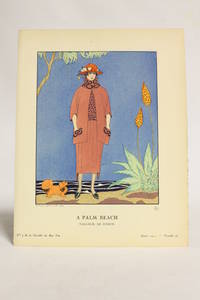
A Palm Beach. Tailleur de Worth pl.40 La Gazette du Bon ton 1921 n°5
Paris: Lucien Vogel éditeur 1921. Fine. Lucien Vogel éditeur Paris 1921 18 x 24 cm une feuille original print in color printed on laid paper signed lower left on the board. Original content produced for the illustration of The Gazette fashionable one of the finest and most influential twentieth century fashion magazines celebrating the talent of creators and artists French burgeoning art deco. Famous fashion magazine founded in 1912 by Lucien Vogel The Gazette fashionable appeared until 1925 with an interruption during the War of 1915 to 1920 due to mobilization of its editor. She is 69 Deliveries from just 2000 copies and is illustrated including 573 color plates and 148 sketches depicting models of fashion designers. Upon publication these luxury publications ""are for bibliophiles and worldly aesthetes"" Françoise Tétart-Vittu ""good Gazette of tone"" in the fashion dictionary 2016. Printed on fine laid paper they use a typeface created specifically for the magazine by Georges Peignot the Cochin character taken in 1946 by Christian Dior. The prints are made with the technique of metal stencil enhanced color and some outlined in gold or palladium. The adventure began in 1912 when Lucien Vogel man of the world and fashion - it has already participated in Femina magazine - decided to found with his wife Cosette de Brunhoff John's sister the father of Babar Gazette good tone in which the subtitle is then ""Art fashions and frivolities."" Georges Charensol quotes the editor: ""In 1910 he observed there was no truly artistic fashion magazine and representative of the spirit of his time. So I thought of making a glossy magazine with truly modern artists . I was certain of success because no country for fashion can compete with France. """" A great art editor. Lucien Vogel ""in Literary News No. 133 May 1925. The success of the magazine is immediate not only in France but also the US and South America. Originally Vogel therefore brings together a group of seven artists: André-Édouard Marty and Pierre Brissaud followed by Georges Lepape and Dammicourt; and finally his friends from the School of Fine Arts as are George Barbier Bernard Boutet de Monvel or Charles Martin. Other talents come quickly reach the equipped Guy Arnoux Léon Bakst Benito Boutet de Monvel Umberto Brunelleschi Chas Laborde Jean-Gabriel Domergue Raoul Dufy Edward Halouze Alexander Iacovleff Jean Emile Laboureur Charles Loupot Charles Martin Maggie Salcedo. These artists mostly unknown when Lucien Vogel appealed to them will eventually become iconic figures and artistic sought. These are the same illustrators who make the drawings advertisements Gazette. The boards highlight the dresses and sublime seven artists of the time: Lanvin Doeuillet Paquin Poiret Worth Vionnet and Doucet. The designers provide for each number of exclusive models. Nevertheless some of Illustrations contained no real model but only the idea that the illustrator is done in the fashion of the day. Gazette fashionable is a milestone in the history of fashion. Combining the aesthetic requirement and plastic unit it brings together for the first time the great talents of the world of arts literature and fashion and imposed by this alchemy a new image of women slender independent and bold also driven by the new generation of designers Coco Chanel Jean Patou Rochas Marcel . Recovery in 1920 by Condé Montrose Nast Gazette fashionable modeled for the new composition and the aesthetic choices of the ""little dying newspaper"" that Nast had bought a few years ago: the Vogue magazine. Lucien Vogel éditeur hardcover
Referenz des Buchhändlers : 57545
|
|
|
George BARBIER - (Charles-Frederick WORTH)
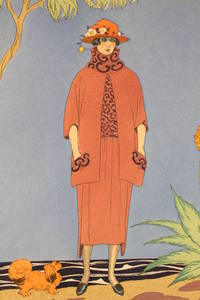
A Palm Beach. Tailleur de Worth pl.40 La Gazette du Bon ton 1921 n°5
Paris: Lucien Vogel éditeur 1921. Fine. Lucien Vogel éditeur Paris 1921 18 x 24 cm une feuille Original color print printed on vergé paper signed in the plate. An original print used to illustrate the Gazette du bon ton one of the most attractive and influential 20th century fashion magazines featuring the talents of French artists and other contributors from the burgeoning Art Deco movement. A celebrated fashion magazine established in 1912 by Lucien Vogel La Gazette du bon ton appeared until 1925 with a hiatus from 1915 to 1920 due to the war the editor-in-chief having been called up for service. It consisted of 69 issues printed in only 2000 copies each and notably illustrated with 573 color plates and 148 sketches of the models of the great designers. Right from the start this sumptuous publication “was aimed at bibliophiles and fashionable society” Françoise Tétart-Vittu “La Gazette du bon ton” in Dictionnaire de la mode 2016 and was printed on fine vergé paper using a type cut specially for the magazine by Georges Peignot known as Cochin later used in 1946 by Christian Dior. The prints were made using stencils heightened in colors some highlighted in gold or palladium. The story began in 1912 when Lucien Vogel a man of the world involved in fashion he had already been part of the fashion magazine Femina decided with his wife Cosette de Brunhoff – the sister of Jean creator of Babar – to set up the Gazette du bon ton subtitled at the time: “Art fashion frivolities.” Georges Charensol noted the reasoning of the editor-in-chief: “’In 1910’ he observed ‘there was no really artistic fashion magazine nothing representative of the spirit of the time. My dream was therefore to make a luxury magazine with truly modern artists…I was assured of success because when it comes to fashion no country on earth can compete with France.’” “Un grand éditeur d’art. Lucien Vogel” in Les Nouvelles littéraires no. 133 May 1925. The magazine was immediately successful not only in France but also in the United States and Latin America. At first Vogel put together a team of seven artists: André-Édouard Marty and Pierre Brissaud followed by Georges Lepape and Dammicourt as well as eventually his friends from school and the School of Fine Arts like George Barbier Bernard Boutet de Monvel and Charles Martin. Other talented people soon came flocking to join the team: Guy Arnoux Léon Bakst Benito Boutet de Monvel Umberto Brunelleschi Chas Laborde Jean-Gabriel Domergue Raoul Dufy Édouard Halouze Alexandre Iacovleff Jean Émile Laboureur Charles Loupot Chalres Martin Maggie Salcedo. These artist mostly unknown when Lucien Vogel sought them out later became emblematic and sought-after artistic figures. It was also they who worked on the advertising drawings for the Gazette. The plates put the spotlight on and celebrate dresses by seven designers of the age: Lanvin Doeuillet Paquin Poiret Worth Vionnet and Doucet. The designers provided exclusive models for each issue. Nonetheless some of the illustrations are not based on real models but simply on the illustrator’s conception of the fashion of the day. The Gazette du bon ton was an important step in the history of fashion. Combining aesthetic demands with the physical whole it brought together – for the first time – the great talents of the artistic literary and fashion worlds; and imposed through this alchemy a completely new image of women: slender independent and daring which was shared by the new generation of designers including Coco Chanel Jean Patou Marcel Rochas and so on… Taken over in 1920 by Condé Montrose Nast the Gazette du bon ton was an important influence on the new layout and aesthetics of that “little dying paper” that Nast had bought a few years earlier: Vogue. Lucien Vogel éditeur unknown
Referenz des Buchhändlers : 54878
|
|
|
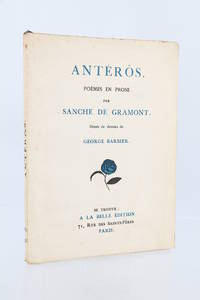
George BARBIER - Sanche de GRAMONT
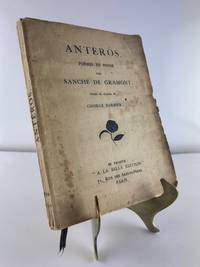
Antéros - Poèmes en prose. Orrnés de dessins de Georges Barbier.
Paris: A la Belle Edition 3 juin 1913. broché. 16x21cm. COUVERTURE DEFRAICHIE. Intérieur frais. 5 dessins en noir. Edition justifiée à 507 exemplaires numérotés. Un des 475 ex. sur vergé. Envoi de l'auteur à J. Borginon. A la Belle Edition, unknown
Referenz des Buchhändlers : 85123
|
|
|
George BARBIER - Sanche de GRAMONT
Antéros - Poèmes en prose
Paris: A la belle édition 1913. Fine. A la belle édition Paris 1913 15.50 x 21 cm broché Edition printed in 507 numbered copies ours one of 475 on laid paper. Some minor foxing otherwise a handsome copy. Work illustrated with 5 black drawings by George Barbier. A la belle édition unknown
Referenz des Buchhändlers : 85304
|
|
|
George Barbier:
Art Deco Costumes.
London: Bracken Books 1988. First edition softcover. Folio 37cm by 28cm 8pp 40 colour plates. Original laminated card wrappers. This book is in very good condition. ISBN 1851701559 London: Bracken Books, 1988. paperback
Referenz des Buchhändlers : 84226 ISBN : 1851701559 9781851701551
|
|
|
George Barbier:
Art Deco Costumes.
London: Bracken Books 1988. First edition softcover. Folio 37cm by 28cm 8pp 40 colour plates. Original laminated card wrappers. Light rippling of the contents else this book is in very good condition. ISBN 1851701559 London: Bracken Books, 1988. paperback
Referenz des Buchhändlers : 82487 ISBN : 1851701559 9781851701551
|
|
|
GEORGE BARBIER
Art Deco Costumes Poster art series
paperback. Good. Access codes and supplements are not guaranteed with used items. May be an ex-library book. paperback
Referenz des Buchhändlers : 1851701559.G ISBN : 1851701559 9781851701551
|
|
|
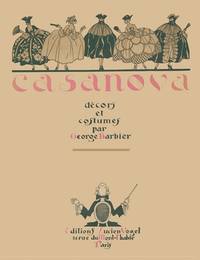
George Barbier
Casanova
new. unknown
Referenz des Buchhändlers : 43203777-n ISBN : 1914311000 9781914311000
|
|
|
George Barbier
Casanova
like new. unknown
Referenz des Buchhändlers : 43203777 ISBN : 1914311000 9781914311000
|
|
|
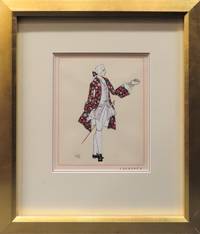
George Barbier
Casanova
<p>Original Barbier pochoir of Casanova with a mask in his hand adorned in floral attire from Panorama Dramatique. Casanova Décors et Costumes. Printed with white red pink blue orange and grey colors. Pink trim surrounds image. Dated in print 1918. Wooden frame with gilt front. Frame: 14.75 x 16.75 inches; Window: 7 x 8.25 inches.</p> Lucien Vogel
Referenz des Buchhändlers : 6619
|
|
|
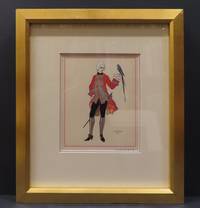
George Barbier
Casanova
<p>Original Barbier pochoir of Casanova with a parrot on his hand adorned in floriated attire. Pochoir from Panorama Dramatique in white red pink blue orange black silver gold brown and grey. Pink trim surrounds image. Dated 1918. Recent beveled gilt fronted wooden frame. Frame: 14.75 x 16.75 inches; Window: 7 x 8.25 inches.</p> Lucien Vogel
Referenz des Buchhändlers : 6641
|
|
|
George BARBIER
Costumes parisiens. Manteau de théâtre pl.71 Journal des Dames et des Modes 1913 n°33
Paris: S. n. 1913. Fine. S. n. Paris 1913 14 x 22.50 cm une feuille original print in color printed on laid paper signed upper right of the board. One of the first French fashion magazines published a few days before the famous Gazette fashionable and bringing together the greatest French artists of the Art Deco movement. The Journal ladies and modes is a trimensuelle illustrated French fashion magazine created in 1797. Its publication was stopped in 1839 before being taken in June 1912 under the leadership of Tommaso Antongini secretary friend and biographer of Gabriele 'Annunzio. It will disappear in August 1914 on the eve of the First World War. The review was drawn to 1279 copies making it for the time a relatively confidential publication. The 186 plates with great finesse are engraved on strong paper and colored stencil. They represent the majority of the time women but also men and children. The models are not unlike those of the Gazette fashionable whose publication will be launched a few months later those renowned couturiers but are the fruit of the imagination of the illustrators themselves. The stencils are mostly executed by George Barbier but other artists collaborating on the magazine: Léon Bakst B. Berty Bernard Boutet de Monvel Roger Broders Jan van Brock Umberto Brunelleschi H. Robert Dammy Etienne Drian Abel Faivre Marie-Madeleine Franc-Nohain Xavier Gosé Paul Iribe Kriegck Victor Lhuer Pierre Legrain Charles Martin Fernand Simeon Ismael Smith Armand Vallee and Gerda Wegener. Many of these illustrators will also be involved in The Gazette fashionable. Their work emblematic of the Art Deco movement emphasize the influence of Orientalism and costumes of the Ballets Russes while registering in the daily activities of affluent French of the time. From the preface of the first issue of 1912 Anatole France said: ""After seventy-five years he is reborn. He is reborn through the efforts of a few ingenious minds and artists. He is reborn for the curious if there is that do not simply modes newspaper fired several thousand and illustrated by photography. And if publishers make us very exactly in its format with its paper printing its processes of etching and coloring the old classic patterns of the past is that they intend to continue the pleasantly and become charming classic fashion of today and tomorrow. "" S. n. unknown
Referenz des Buchhändlers : 57650

|
|
|
George BARBIER
Costumes parisiens. Blouse japonaise en soie sur une jupe plissée. Marin de toile blanche pl.105 Journal des Dames et des Modes 1913 n°47
Paris: S. n. 1913. Fine. S. n. Paris 1913 14 x 22.50 cm une feuille original print in color printed on laid paper signed on the top left of the board. One of the first French fashion magazines published a few days before the famous Gazette fashionable and bringing together the greatest French artists of the Art Deco movement. The Journal ladies and modes is a trimensuelle illustrated French fashion magazine created in 1797. Its publication was stopped in 1839 before being taken in June 1912 under the leadership of Tommaso Antongini secretary friend and biographer of Gabriele 'Annunzio. It will disappear in August 1914 on the eve of the First World War. The review was drawn in 1279 copies making it for the time a relatively confidential publication. The 186 plates with great finesse are engraved on strong paper and colored stencil. They represent the majority of the time women but also men and children. The models are not unlike those of the Gazette fashionable whose publication will be launched a few months later those renowned couturiers but are the fruit of the imagination of the illustrators themselves. The stencils are mostly executed by George Barbier but other artists collaborating on the magazine: Léon Bakst B. Berty Bernard Boutet de Monvel Roger Broders Jan van Brock Umberto Brunelleschi H. Robert Dammy Etienne Drian Abel Faivre Marie-Madeleine Franc-Nohain Xavier Gosé Paul Iribe Kriegck Victor Lhuer Pierre Legrain Charles Martin Fernand Simeon Ismael Smith Armand Vallee and Gerda Wegener. Many of these illustrators will also be involved in The Gazette fashionable. Their work emblematic of the Art Deco movement emphasize the influence of Orientalism and costumes of the Ballets Russes while registering in the daily activities of affluent French of the time. From the preface of the first issue of 1912 Anatole France said: ""After seventy-five years he is reborn. He is reborn through the efforts of a few ingenious minds and artists. He is reborn for the curious if there is that do not simply modes newspaper fired several thousand and illustrated by photography. And if publishers make us very exactly in its format with its paper printing its processes of etching and coloring the old classic patterns of the past is that they intend to continue the pleasantly and become charming classic fashion of today and tomorrow. "" S. n. unknown
Referenz des Buchhändlers : 57771

|
|
|
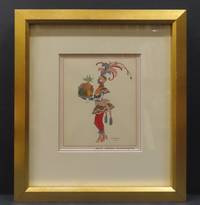
George Barbier
Deux Negres Magnifiques
<p>Original Barbier pochoir of a magnificent African in festive attire. Pochoir in black gold blue red pink green yellow silver purple and orange. Pink trim surrounds image. Dated in print 1918. Archival wooden frame with gilt to front.</p> Lucien Vogel
Referenz des Buchhändlers : 6627
|
|
|
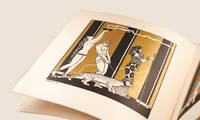
George BARBIER
Dix-sept dessins de George Barbier sur Le cantique des cantiques - Traduction française de 1613 • Seventeen drawings by George Barbier on the Canticle of Canticles
Paris: A la belle édition 1914. Fine. A la belle édition Paris 1914 22.50 x 23.50 cm broché First edition totaling 240 numbered copies ours one of 10 copies on japon à la forme the deluxe issue complete at the end of the volume with its additional complete suite of illustrations in black as stated in the limitation. Illustrated with 17 splendid pochoir plates in black white and gold by George Barbier. A rare and handsome deluxe copy of this George Barbier masterpiece. A la belle édition unknown
Referenz des Buchhändlers : 89054
|
|
|
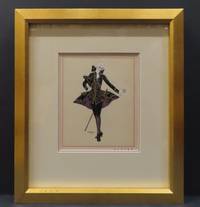
George Barbier
Elvire
<p>Original Barbier pochoir of a man in formal attire holding a hat from Panorama Dramatique. Printed with black gold green red pink light blue grey purple white and colors. Pink trim surrounds image. Dated in print 1918. Circa 1990 archival frame. Frame: 14.75 x 16.75 inches; Window: 7 x 8.25 inches.</p> Lucien Vogel
Referenz des Buchhändlers : 6629
|
|
|
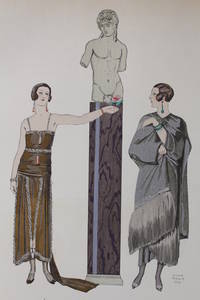
George BARBIER - (Charles-Frederick WORTH)
Eros. Robe et Manteau pour le soir de Worth pl.51 La Gazette du Bon ton 1924 n°9
Paris: Lucien Vogel éditeur 1924. Fine. Lucien Vogel éditeur Paris 1924 18 x 24 cm une feuille Original color print heightened with palladium printed on vergé paper signed in the plate. An original print used to illustrate the Gazette du bon ton one of the most attractive and influential 20th century fashion magazines featuring the talents of French artists and other contributors from the burgeoning Art Deco movement. A celebrated fashion magazine established in 1912 by Lucien Vogel La Gazette du bon ton appeared until 1925 with a hiatus from 1915 to 1920 due to the war the editor-in-chief having been called up for service. It consisted of 69 issues printed in only 2000 copies each and notably illustrated with 573 color plates and 148 sketches of the models of the great designers. Right from the start this sumptuous publication “was aimed at bibliophiles and fashionable society” Françoise Tétart-Vittu “La Gazette du bon ton” in Dictionnaire de la mode 2016 and was printed on fine vergé paper using a type cut specially for the magazine by Georges Peignot known as Cochin later used in 1946 by Christian Dior. The prints were made using stencils heightened in colors some highlighted in gold or palladium. The story began in 1912 when Lucien Vogel a man of the world involved in fashion he had already been part of the fashion magazine Femina decided with his wife Cosette de Brunhoff – the sister of Jean creator of Babar – to set up the Gazette du bon ton subtitled at the time: “Art fashion frivolities.” Georges Charensol noted the reasoning of the editor-in-chief: “’In 1910’ he observed ‘there was no really artistic fashion magazine nothing representative of the spirit of the time. My dream was therefore to make a luxury magazine with truly modern artists…I was assured of success because when it comes to fashion no country on earth can compete with France.’” “Un grand éditeur d’art. Lucien Vogel” in Les Nouvelles littéraires no. 133 May 1925. The magazine was immediately successful not only in France but also in the United States and Latin America. At first Vogel put together a team of seven artists: André-Édouard Marty and Pierre Brissaud followed by Georges Lepape and Dammicourt as well as eventually his friends from school and the School of Fine Arts like George Barbier Bernard Boutet de Monvel and Charles Martin. Other talented people soon came flocking to join the team: Guy Arnoux Léon Bakst Benito Boutet de Monvel Umberto Brunelleschi Chas Laborde Jean-Gabriel Domergue Raoul Dufy Édouard Halouze Alexandre Iacovleff Jean Émile Laboureur Charles Loupot Chalres Martin Maggie Salcedo. These artist mostly unknown when Lucien Vogel sought them out later became emblematic and sought-after artistic figures. It was also they who worked on the advertising drawings for the Gazette. The plates put the spotlight on and celebrate dresses by seven designers of the age: Lanvin Doeuillet Paquin Poiret Worth Vionnet and Doucet. The designers provided exclusive models for each issue. Nonetheless some of the illustrations are not based on real models but simply on the illustrator’s conception of the fashion of the day. The Gazette du bon ton was an important step in the history of fashion. Combining aesthetic demands with the physical whole it brought together – for the first time – the great talents of the artistic literary and fashion worlds; and imposed through this alchemy a completely new image of women: slender independent and daring which was shared by the new generation of designers including Coco Chanel Jean Patou Marcel Rochas and so on… Taken over in 1920 by Condé Montrose Nast the Gazette du bon ton was an important influence on the new layout and aesthetics of that “little dying paper” that Nast had bought a few years earlier: Vogue. Lucien Vogel éditeur unknown
Referenz des Buchhändlers : 55097
|
|
|
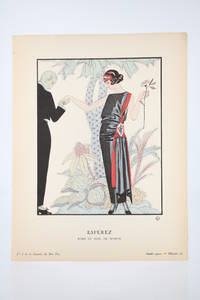
George BARBIER - (Charles-Frederick WORTH)
Espérez. Robe du soir de Worth pl.48 La Gazette du Bon ton 1922 n°6
Paris: Lucien Vogel éditeur 1922. Fine. Lucien Vogel éditeur Paris 1922 18 x 24 cm une feuille Original color print on laid paper signed at top left of the plate. La Gazette du bon ton one of the most beautiful and influential fashion magazines of the twentieth century celebrating the talent of French creators and artists during the flourishing of Art Deco. The famous fashion magazine founded in 1912 by Lucien Vogel La Gazette du bon ton was published until 1925 with an interruption during the War from 1915 to 1920 due to the mobilization of its editor-in-chief. It consists of 69 issues printed in only 2000 copies and is illustrated notably with 573 color plates and 148 sketches representing models by great couturiers. From their publication these luxurious publications « s'adressent aux bibliophiles et aux mondains esthètes » ""are addressed to bibliophiles and worldly aesthetes"" Françoise Tétart-Vittu « La Gazette du bon ton » in Dictionnaire de la mode 2016. Printed on fine laid paper they use a typeface specially created for the magazine by Georges Peignot the Cochin character later adopted in 1946 by Christian Dior. The prints are created using the metallic pochoir technique heightened in colors and some highlighted with gold or palladium. The adventure begins in 1912 when Lucien Vogel a man of society and fashion - he had already participated in the magazine Femina - decides to found with his wife Cosette de Brunhoff sister of Jean the father of Babar the Gazette du bon ton whose subtitle was then « Art modes et frivolités » ""Art fashion and frivolities"". Georges Charensol reports the words of the editor-in-chief: « En 1910 observe-t-il il n'existait aucun journal de mode véritablement artistique et représentatif de l'esprit de son époque. Je songeais donc à faire un magazine de luxe avec des artistes véritablement modernes . J'étais certain du succès car pour la mode aucun pays ne peut rivaliser avec la France. » ""In 1910 he observes there was no fashion journal that was truly artistic and representative of the spirit of its time. I was therefore thinking of making a luxury magazine with truly modern artists . I was certain of success because for fashion no country can rival France."" « Un grand éditeur d'art. Lucien Vogel » in Les Nouvelles littéraires n°133 mai 1925. The magazine's success was immediate not only in France but also in the United States and South America. Originally Vogel assembled a group of seven artists: André-Édouard Marty and Pierre Brissaud followed by Georges Lepape and Dammicourt; and finally his friends from the École des beaux-arts such as George Barbier Bernard Boutet de Monvel or Charles Martin. Other talents quickly joined the team: Guy Arnoux Léon Bakst Benito Boutet de Monvel Umberto Brunelleschi Chas Laborde Jean-Gabriel Domergue Raoul Dufy Édouard Halouze Alexandre Iacovleff Jean Émile Laboureur Charles Loupot Charles Martin Maggie Salcedo. These artists mostly unknown when Lucien Vogel called upon them would later become emblematic and sought-after artistic figures. These same illustrators created the drawings for the Gazette's advertisements. The plates highlight and sublimate the dresses of seven creators of the time: Lanvin Doeuillet Paquin Poiret Worth Vionnet and Doucet. The couturiers provided exclusive models for each issue. Nevertheless some of the illustrations show no real model but only the illustrator's idea of the fashion of the day. La Gazette du bon ton marks a decisive stage in the history of fashion. Combining aesthetic demands and plastic unity it brought together for the first time the great talents from the worlds of arts letters and fashion and imposed through this alchemy a completely new image of woman slender independent and audacious also carried by the new generation of couturiers Coco Chanel Jean Patou Marcel Rochas. Taken over in 1920 by Condé Montrose Nast La Gazette du bon ton would largely inspire the new c Lucien Vogel éditeur unknown
Referenz des Buchhändlers : 77343
|
|
|
George Barbier
Falbalas et Fanfreluches
Bookking International 1988. Softcover. Fine/No jacket. In French. Oversized. Name written on first page. Bookking International unknown
Referenz des Buchhändlers : 104951 ISBN : 2877140121 9782877140126
|
|
|
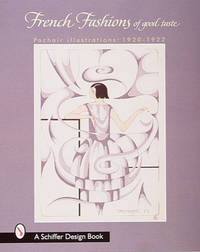
George Barbier
French Fashions "of Good Taste" 1920-1922: From Pochoir Illustrations
Schiffer Pub Ltd 1998. Hardcover. New. illustrated edition. 144 pages. 11.50x9.25x1.00 inches. Schiffer Pub Ltd hardcover
Referenz des Buchhändlers : __0764306049 ISBN : 0764306049 9780764306044
|
|
|
George Barbier
French Fashions "of Good Taste" 1920-1922
Schiffer Publishing Limited pp. 144 . Hardback. New. Schiffer Publishing, Limited hardcover
Referenz des Buchhändlers : 61820680 ISBN : 0764306049 9780764306044
|
|
|
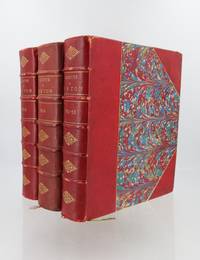
George BARBIER - Raoul DUFY - Andre-Edouard MARTY
Gazette du bon ton - Art mode et frivolités. Collection complète
Paris: Émile Lévy Librairie Centrale des Beaux-Arts 1912. Fine. Émile Lévy Librairie Centrale des Beaux-Arts Paris 1912-1915 puis 1920-1925 20.50 x 25 cm 15 fascicules reliés en 3 volumes puis 55 fascicules en feuilles Exceptional complete first edition of the 70 issues published in 69 issues of this legendary magazine. This complete copy contains six additional prints not listed in Colas making a total of 727 full-page plates. For the first issues 3/4 red half-shagreen bindings some rubbing to spines framed with gilt fillets on the boards corners bent gilt top edges ; the following issues are presented in loose leaves as issued from number 7 of the year 1914 housed in burgundy cardboard slipcases. Exceptional complete collection of this “very rare collection the most important and most interesting for contemporary fashion” Carteret. Launched in November 1912 under the direction of Lucien Vogel the Gazette du Bon Ton was published until December 1925 with a hiatus from 1915 to 1920 due to the war. It remains the main witness to French way of life and taste during the Roaring Twenties. Our set is complete with the 721 plates described in Colas plus 6 unpublished and unnumbered plates i.e. 544 single plates 148 sketches 17 double plates one triple plate 17 unnumbered plates Colas mentions only 11 and numerous colored woodcuts in the text. The most famous illustrators contributed to the magazine: George Barbier Raoul Dufy Pierre Brissaud André Édouard Marty Umberto Brunelleschi Jean-Émile Laboureur etc. Carteret IV 180. –– Colas n° 1202. Collation : -70 leaflets in 69 deliveries in 12 volumes over 7 years. - 3 bound books volume 1 of year 1 / volume 2 of year 1 / volume 1 of year 2. - Total of 727 full-page plates 721 listed in Colas including 148 fashion sketches 17 double page plates 1 plate on three pages 17 unnumbered plates. - First year Nov. 1912 - Oct. 1913: 2 volumes in 12 leaflets 120 full-page plates. - Second year Jan. 1914 - summer 1915: 2 volumes in 9 leaflets 79 full-page plates. - Third year Jan. 1920 - Dec. 1920: 2 volumes in 10 leaflets 132 full-page plates. - Fourth year Jan. 1921 - Dec. 1921: 2 volumes in 10 leaflets 100 full-page plates. - Fifth year Feb. 1922 - Dec. 1922: 2 volumes in 10 leaflets 157 full-page plates. - Sixth year June 1923 - June 1924: 1 volume in 10 leaflets 59 full-page plates. - Seventh year July 1924 - Dec. 1925: 1 volume in 9 leaflets 80 full-page plates. Right from the start this sumptuous publication “was aimed at bibliophiles and fashionable society” Françoise Tétart-Vittu “La Gazette du Bon ton” in Dictionnaire de la mode 2016 and was printed on fine vergé paper using a type cut specially for the magazine by Georges Peignot known as Cochin later used in 1946 by Christian Dior. The prints were made using stencils heightened in colors some highlightened in gold or palladium. The story began in 1912 when Lucien Vogel a man of the world involved in fashion he had already been part of the fashion magazine Femina decided with his wife Cosette de Brunhoff – the sister of Jean creator of Babar – to set up the Gazette du Bon ton subtitled at the time: “Art fashion frivolities.” Georges Charensol noted the reasoning of the editor-in-chief: “‘In 1910' he observed ‘there was no really artistic fashion magazine nothing representative of the spirit of the time. My dream was therefore to make a luxury magazine with truly modern artists…I was assured of success because when it comes to fashion no country on earth can compete with France.” “Un grand éditeur d'art. Lucien Vogel” in Les Nouvelles littéraires n° 133 May 1925. The magazine was immediately successful not only in France but also in the United States and Latin America. At first Vogel put together a team of seven artists: André-Édouard Marty and Pierre Brissaud followed by Georges Lepape and Dammicourt as well as eventually his friends from school and the School of Fine Arts like George Barbi Émile Lévy, Librairie Centrale des Beaux-Arts hardcover
Referenz des Buchhändlers : 84740
|
|
|
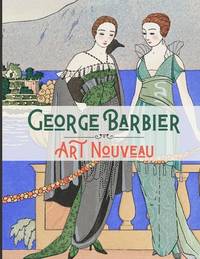
George Barbier
George Barbier Art Nouveau: 20 Amazing Illustrated Artworks
Paperback / softback. New. paperback
Referenz des Buchhändlers : B9798838839787 ISBN : 9798838839781 9798838839
|
|
|
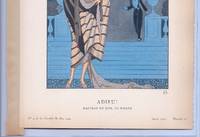
George Barbier
George Barbier Gazette de Bon Ton "Adieu!" 1921
This original lithograph with hand applied color pochoir from the Gazette du Bon Ton 1921 plate 28. It is by George Barbier. A beautiful lithograph in Excellent shape with light age toning along the edges see scansMedium: Lithograph with hand -applied color. pochoirGeorge Barbier 1882-1932 was one of the great French illustrators of the early part of the 20th century. He mounted his first exhibition in 1911 and was subsequently swept to the forefront of his profession with commissions to design theatre and ballet costumes to illustrate books and to produce haute couture fashion illustrations. His prints for the Gazette du Bon Ton are amongst the most desirable produced by that fashion periodical.La Gazette du Bon Ton was a leading fashion magazine published in France from November 1912 to 1925 with a hiatus taken during the war years. Founded by Lucien Vogel the magazine covered the latest developments in fashion lifestyle and beauty. It was available by subscription only published on fine paper and meant to appeal to the upper echelon of Parisian society. The centerpiece of the Gazette were ten full-page fashion plates included with each issue with many featuring pochoir coloring which is accomplished by adding color to a lithograph by means of a stencil. The results are stunningly beautiful works of art by many of the leading fashion designers and artist of that time including George Barbier Andre Marty Charles Martin Brissaud Lepape Thayaht and Benito.Le Bon Ton d'apres-guerre. Art-Modes-Frivolites. Collection de 200 Planches en Couleurs de George Barbier et al. ; extraites des annees 1920 a 1922 De La Gazette du Bon Ton 2 serie 100 Planches Is the title of the work these prints came from. Basically it is a collection of these original plates assembled in book form attached to the binding by a thin tissue like paper see scans.The prints in the scans is the item you shall receive so please examine closely. unknown
Referenz des Buchhändlers : 22880
|
|
|
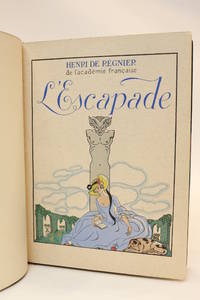
George BARBIER - Henri de REGNIER
L'escapade
Paris: A. & G. Mornay 1931. Fine. A. & G. Mornay Paris 1931 15 x 20.50 cm relié Edition adorned with 65 original pochoir coloured illustrations by George Barbier one of 877 numbered copies on Rives. Bound in half navy blue morocco spine in four compartments gilt date at the foot marbled paper boards iridescent effect paper endpapers wrappers and spine preserved top edge gilt binding signed Semet & Plumelle. Pleasant attractively set copy. A. & G. Mornay hardcover
Referenz des Buchhändlers : 72939
|
|
|
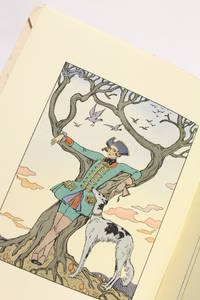
George BARBIER - Henri de REGNIER
L'escapade
Paris: A. & G. Mornay 1931. Fine. A. & G. Mornay Paris 1931 15.50 x 20.50 cm broché Illustrated edition with original compositions by George Barbier hand-colored with pochoir one of 877 numbered copies on Rives laid paper. Handsome copy. A. & G. Mornay unknown
Referenz des Buchhändlers : 62296
|
|
|
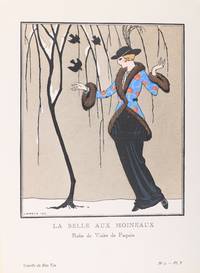
George BARBIER - (Jeanne PAQUIN)
La Belle aux moineaux. Robe de Visite de Paquin pl.5 La Gazette du Bon ton 1912-1913 n°2
Paris: Lucien Vogel éditeur 1912. Fine. Lucien Vogel éditeur Paris 1912-1913 19 x 24.50 cm une feuille Original colour print printed on laid paper and signed in the plate lower left. An original print used to illustrate the Gazette du bon ton one of the most attractive and influential 20th century fashion magazines featuring the talents of French artists and other contributors from the burgeoning Art Deco movement. A celebrated fashion magazine established in 1912 by Lucien Vogel La Gazette du bon ton appeared until 1925 with a hiatus from 1915 to 1920 due to the war the editor-in-chief having been called up for service. It consisted of 69 issues printed in only 2000 copies each and notably illustrated with 573 color plates and 148 sketches of the models of the great designers. Right from the start this sumptuous publication “was aimed at bibliophiles and fashionable society” Françoise Tétart-Vittu “La Gazette du bon ton” in Dictionnaire de la mode 2016 and was printed on fine vergé paper using a type cut specially for the magazine by Georges Peignot known as Cochin later used in 1946 by Christian Dior. The prints were made using stencils heightened in colors some highlighted in gold or palladium. The story began in 1912 when Lucien Vogel a man of the world involved in fashion he had already been part of the fashion magazine Femina decided with his wife Cosette de Brunhoff – the sister of Jean creator of Babar – to set up the Gazette du bon ton subtitled at the time: “Art fashion frivolities.” Georges Charensol noted the reasoning of the editor-in-chief: “’In 1910’ he observed ‘there was no really artistic fashion magazine nothing representative of the spirit of the time. My dream was therefore to make a luxury magazine with truly modern artists…I was assured of success because when it comes to fashion no country on earth can compete with France.’” “Un grand éditeur d’art. Lucien Vogel” in Les Nouvelles littéraires no. 133 May 1925. The magazine was immediately successful not only in France but also in the United States and Latin America. At first Vogel put together a team of seven artists: André-Édouard Marty and Pierre Brissaud followed by Georges Lepape and Dammicourt as well as eventually his friends from school and the School of Fine Arts like George Barbier Bernard Boutet de Monvel and Charles Martin. Other talented people soon came flocking to join the team: Guy Arnoux Léon Bakst Benito Boutet de Monvel Umberto Brunelleschi Chas Laborde Jean-Gabriel Domergue Raoul Dufy Édouard Halouze Alexandre Iacovleff Jean Émile Laboureur Charles Loupot Chalres Martin Maggie Salcedo. These artist mostly unknown when Lucien Vogel sought them out later became emblematic and sought-after artistic figures. It was also they who worked on the advertising drawings for the Gazette. The plates put the spotlight on and celebrate dresses by seven designers of the age: Lanvin Doeuillet Paquin Poiret Worth Vionnet and Doucet. The designers provided exclusive models for each issue. Nonetheless some of the illustrations are not based on real models but simply on the illustrator’s conception of the fashion of the day. The Gazette du bon ton was an important step in the history of fashion. Combining aesthetic demands with the physical whole it brought together – for the first time – the great talents of the artistic literary and fashion worlds; and imposed through this alchemy a completely new image of women: slender independent and daring which was shared by the new generation of designers including Coco Chanel Jean Patou Marcel Rochas and so on… Taken over in 1920 by Condé Montrose Nast the Gazette du bon ton was an important influence on the new layout and aesthetics of that “little dying paper” that Nast had bought a few years earlier: Vogue. Lucien Vogel éditeur unknown
Referenz des Buchhändlers : 89404
|
|
|
George Barbier (1882–1932), Pierre Brissaud (1885-1964)
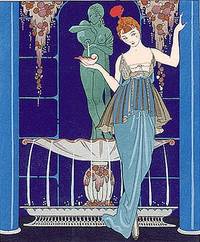
La Fontaine de Coquillages Robe de Soir de Paquin Ta Maman va Bien Sair-Tu Ta Leçon
Barbier: La Fontaine de Coquillages Robe de Soir de Paquin. G.d.B.T. #3 March pl. 27. L'Etourdissant Petit Poisson Robe d'été G.d.B.T. #5 May pl.44.Brissaud: Ta Maman va Bien Tailler du Matin et Robe de filete de Jeanne Lanvin. G.d.B.T. #4 April pl. 37.Sais-Tu Ta Leçon Costumes Tailler de Fantasie de Jeanne Lanvin. Gd.B.T. #5 May pl. 40.A published in G.d.B.T. Gazette du Bon Ton 1914 Gazette du Bon Ton
Referenz des Buchhändlers : 3009
|
|

 Per e-mail erhalten
 Als pdf-Dokument herunterladen
 RSS feed
 Permanenter link


