|
THOMAS Henry
Lithographie originale en couleurs : "L'Eclair. Journal politique indépendant" - Les Maîtres de l'Affiche - planche 222
- Les Maîtres de l'Affiche - imprimerie Chaix, Paris 1900, 29x39,9cm, une affiche lithographiée sur vélin fin. - Lithographie originale en couleurs tirée sur vélin fin. Timbre à sec de l'imprimeur en bas à droite de la planche. Superbe publication mensuelle française, les Maîtres de l'Affiche, parut entre 1895 et 1900 à l'initiative de Jules Chéret. Chaque numéro de la revue comprend quatre affiches reproduites au format cloche et en chromolithographie présentant pour chacune un timbre à sec d'authentification. Très bel exemplaire de cette affiche Art Nouveau réalisée à la suite d'un concours lancé par la revue belge L'Eclair ; Thomas remportant le concours parmi cinq cents autres participants. [ENGLISH DESCRIPTION ON DEMAND]

|
|
|
Thomkins, Andre (1930-1985)
Plakat der Ausstellung im Mannheimer Kunstverein.
1978. Format: 99 x 69 cm. Lithographie.
Referenz des Buchhändlers : 151429

|
|
|
Thouzeau (Christine)
[Sans titre.]
français Gravure à l'eau-forte, numérotée (79/90), signée au crayon par l'artiste. Dimensions du papier : 65 x 25 cm.
|
|
|
Thurz, Udo
Ausstellungsplakat. 1992. Solingen. [Signiertes Plakat / Signed original poster].
o.J. (Udo Thurz, geboren 1950 in Köln. Studium an der Staatlichen Kunstakademie Düsseldorf, Klasse Prof. Beuys. Schüler von Hans Salentin). [3 Warenabbildungen]
Referenz des Buchhändlers : 15667DB

|
|
|
THÉTARD Henri
La Merveilleuse Histoire du Cirque
Julliard 1978 bel état de fraicheur pour ce grand Classique , nombreuses illustrations en noir et en couleurs
Referenz des Buchhändlers : 32788
|
|
|
Thönen, Martin
Konvolut von Druckerzeugnissen der Galerie Art+Vision, Bern. [Ausstellungseinladungen, Plakat / exhibition invitation, poster].
o.J. (Martin Thönen, geb. 05.06.1942 in Thun, Schweizer Holzschneider und Grafiker).
Referenz des Buchhändlers : 66605CB
|
|
|
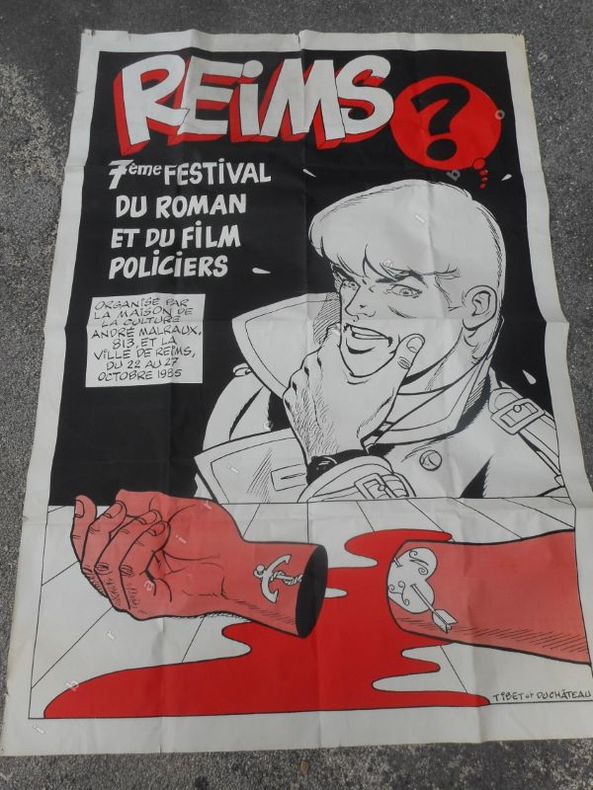
TIBET ET DUCHATEAU
( Affiche ) Reims - 7eme festival du roman et du film policier
1985. Format 120x180 cm environ. Des plis et quelques fentes en marge, pas de manque. Bon etat.
Referenz des Buchhändlers : 44287
|
|
|
TIDWELL (Jeral)
REVEREND HORTON HEAT.
Diesel Fuel Prints, USA. 2004. Impression en sérigraphie. Tirée à 240 exemplaires. Signature originale.
Referenz des Buchhändlers : 2937

|
|
|
TIDWELL (Jeral)
REVEREND HORTON HEAT.
Diesel Fuel Prints, USA. 2004. Impression en sérigraphie. Tirée à 240 exemplaires. Signature originale.
Referenz des Buchhändlers : 2937
|
|
|
TIMOTHY DALTON - MARYAM D'ABO
AFFICHE DE CINEMA - TUER N'EST PAS JOUER
JOHN GLEN. 1987. In-12. Broché. Bon état, Couv. convenable, Dos satisfaisant, Intérieur frais. 60 x 155 cm avec en badeau la date de sortie.. . . . Classification : 0-Affiches Cinéma
Referenz des Buchhändlers : R100000447

|
|
|
TIMOTHY DALTON - MARYAM D'ABO
AFFICHE DE CINEMA - TUER N'EST PAS JOUER
JOHN GLEN. Non daté. In-12. Broché. Bon état, Couv. convenable, Dos satisfaisant, Intérieur frais. Affiche de cinéma 120 cm x160 cm. . . . . Classification : 0-Affiches Cinéma
Referenz des Buchhändlers : R100000093

|
|
|
Tim (ed.) Gadzinski
Postermania: Poster Auctions International, Inc. XXVI
Poster Auctions International, Inc. 1998 Livre en anglais. In-4 relié 31 cm sur 23,5. Très bon état d’occasion.
Referenz des Buchhändlers : 63747
|
|
|
Tinguely, Jean
Affiche: Centre Culturel Suisse.
vers 1985, 75x110 cm.
Referenz des Buchhändlers : 23.1aaf
|
|
|
Tinguely, Jean
Affiche: Stedelijk Museum Amsterdam. 1973. Impression en noir et bleu.
1973, 63.5 x 95 cm,
Referenz des Buchhändlers : 27.1aaf
|
|
|
Tinguely, Jean
Affiche: 14e Championnat. 1987. Impression en couleurs.
70 x 50 cm.
Referenz des Buchhändlers : 35.1aaf
|
|
|
Tinguely, Jean
Affiche: Centre Pompidou. 1988. Impression couleurs sur fond blanc.
70 x 50 cm.
Referenz des Buchhändlers : 43.1aaf
|
|
|
Tinguely, Jean
Affiche: Centre Pompidou. 1977-1978. Impression couleurs sur fond blanc.
67 x 44,5 cm.
Referenz des Buchhändlers : 45.1aaf
|
|
|
Tinguely, Jean
Affiche: Casino Knokke. 1986. Impression en couleurs.
1986 49 x 67 cm
Referenz des Buchhändlers : 46.1aaf
|
|
|
Tinguely, Jean
Affiche: Galerie Iolas, Roma. 1967. impression en noir.
48.4 x 62.4 cm.
Referenz des Buchhändlers : 48.1aaf
|
|
|
Tinguely, Jean
Affiche: Jim Whiting Show. Galerie Litmann in Basel Juli 1988.
1988, 59x84 cm, affiche en couleurs,
Referenz des Buchhändlers : 90.1aaf
|
|
|
Tinguely, Jean
Affiche: Festival d'automne à Paris sept.- décembre 1977.
1977, 100x149
Referenz des Buchhändlers : 104.1aaf
|
|
|
Tinguely, Jean
Affiche: Alfred Hofkunst. Tirage combiné, épreuve non datée (1 dessin machine Jean Tinguely). 2 Ränder rumdherum leicht zerknittert und kleine Risse.
93x129 cm.
Referenz des Buchhändlers : 110.1aaf
|
|
|
Tinguely, Jean
Affiche originale Centre George Pompidou à Paris. 8.12.1988.- 27.3.1989.
Exposition au Musée Pompidou à Paris, 1989, 100x139 cm Affiche pliée envoi ms., intime, a sa femme Micheline au verso signé ‘Jean’ / mehrfach gefaltet - auf der Rückseite persönliche hs. Grüsse an Micheline, von ‘Jean’ (Tinguely). 1 feuille, format mondiale.
Referenz des Buchhändlers : 930.1aaf
|
|
|
Tinguely Jean:
Affiche d'exposition. Tinguely et la Russie.
Fribourg, Musée d'Art et d'Histoire, 1991. Affiche au format 42 x 60 cm. Très légères traces de plis.
Referenz des Buchhändlers : 3088

|
|
|
Tinguely, Jean
Cabinet des Estampes. Genève, vers 1984 . N° 4/100, signé.
64 x 94 cm, Original signed Affiche /Poster.
Referenz des Buchhändlers : 28.1aaf
|
|
|
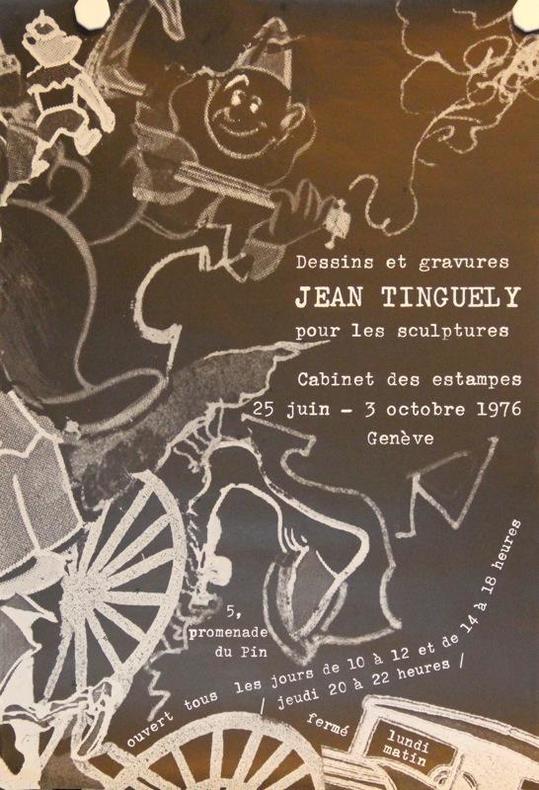
TINGUELY Jean:
Dessins et gravures pour les sculptures. Cabinet des estampes, Genève 1976.
Affiche offset 64 x 94.
Referenz des Buchhändlers : 7862
|
|
|
Tinguely Jean:
Jean Tinguely, exposition 1988-89.
Reproduction au format 31 x 41 cm. 3 tampons au verso.
Referenz des Buchhändlers : 8562

|
|
|
TINGUELY
Le Rotozaza de Tinguely
Paris Iolas 1967 En feuilles
Referenz des Buchhändlers : 015815
|
|
|
TINGUELY, Jean:
Tinguely im Kunsthaus Zürich.
Künstlerplakat im Farbsiebdruck, von Tinguely im Auftrag des Zürcher Kunsthauses und in enger Zusammenarbeit mit dem Berner Seriegrafen Albin Uldry für die erfolgreiche Retrospektive seiner Werke gestaltet, die vom 11. Juni bis 8. August 1982 stattfand. - An den Ecken und Rändern minimale Fehlstellen und Lichtspuren von entfernten Reisszwecken, sonst sauberes Exemplar mit frischen Farben.
|
|
|
Tir - Solothurn
Affiche - Solothurnisches Kantonal - Ehr - u. Freischiessen. Mit Bewilligung des Tit. Regierungs-Rathes ...wird die Schützen-Gesellschaft der Stadt Solothurn den 14ten, 15ten... und 20sten Mai 1843.
Druck von J. Gassmann, Sohn (1843), gefaltet 20x15.5 cm, auf gelbes Papier gedrucktes Plakat, 1 Blatt 78x63 cm.
Referenz des Buchhändlers : 128447aaf
|
|
|
Tir Fédéral - Chur -
Affiche - Tir Fédéral Coire, 1842, le 10, 11, 12, 13, 14, 15, & 16 Juillet
Imprimerie des héritiers de OTTO, co-éditeurs du Bulletin du tir fédéral 1842, pliée 26.5x18 cm, bel en-tête gravée / schöner lithogr. Kopfleiste, 1 feuille de 100x72 cm. Bel état.
Referenz des Buchhändlers : 128448aaf
|
|
|
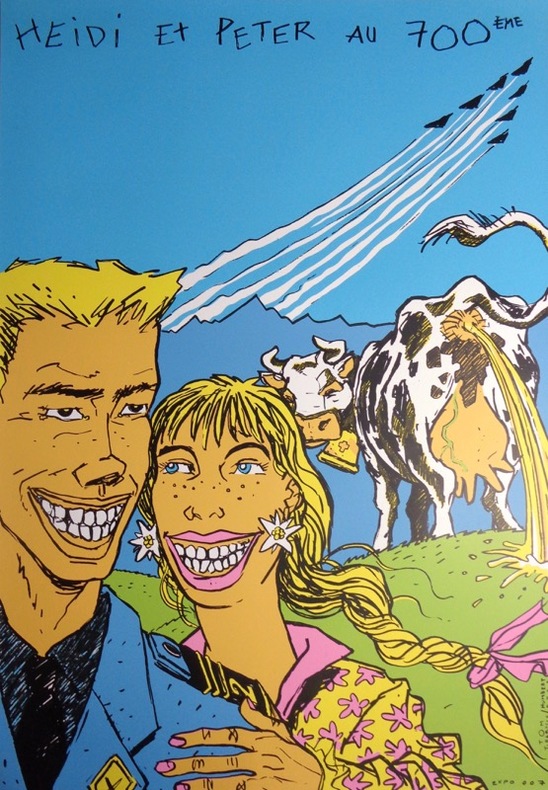
Tirabosco Tom:
Heidi et Peter au 700ème.
Sérigraphie Humbert-Droz, 1991. Affiche sérigraphiée grand format, faisant partie d'une série réalisée par des dessinateurs du cru (toutes au format d'environ 70 x 100 cm.) célébrant à leur manière le 700e anniversaire de la Confédération suisse (1991, vous en souvient-il?).
Referenz des Buchhändlers : 3200
|
|
|
Tisa, John: Editor
The Palette and the Flame - Posters of the Spanish Civil War
162 pages. Index of artists. After years of neglect "... The posters reemerge for the first time in full glory. One Hundred and forty are reproduced here (in glossy colour) - a truly representative collection. This volume is not only a work of documentation, of commemoration, of love and devotion to the epic battle of the republic, it is an art book as well. The often total coherence of the form, content and 'impact' of the communication makes the posters something that goes beyond the purely documentary, datum, on the level of historical and political evidence, and places them squarely in the history of revolutionary art." - from dust jacket. Above-average wear. Usual library markings. Binding intact. A worthy reference copy of this impressive compilation. Book

|
|
|
TISSOT James
La vie de N. S. Jésus Christ. Edition Nationale.
- Alfred Mame et fils, Tours 1902, Grd. in-4 (27x34cm), 272pp. et 279pp., 2 reliés. - Seconde édition par le même éditeur que pour la première qui ne parut qu'à 1000 exemplaires, en tirage de luxe. Cette nouvelle édition, suivant le voeu de l'auteur, se voulait plus accessible. Elle est illustrée de 365 compositions en lithographie & taille-douce, en couleurs et camaïeu, dont 37 planches pleine page hors-texte en couleurs sous serpentes, 15 gravures en taille-douce et 22 lithographies. Très nombreuses vignettes monochromes dans le texte et lettrines ornées. L'édition et l'impression sont particulièrement soignées. Texte de la Vulgate en latin avec la traduction française en regard. Reliures en demi maroquin brun à coin d'époque, aux armes du Collège Stanislas à Paris sur les plats. Dos à nerfs ornés de fers à la grappe de raisins encadrés de feuillages. Filets sur les plats. Dos ayant viré uniformément au brun. 4 coins légèrement émoussés. Quelques traces de frottement, légères. Bel exemplaire, parfaitement frais. C'est en 1888 que james Tissot a une sorte de crise mystique, cette révélation de sa foi l'entraînera en Palestine et à Jerusalem d'où il rapportera 365 gouaches avec lesquelles il réalisera cet ouvrage, véritable livre d'artiste. Cette période religieuse de son oeuvre lui apportera une immense renommée, la plupart des originaux se trouvent à la Librairie du Congrès, aux Etats-Unis ; ils ont été achetés en 1902, année de la mort du peintre par le Brooklyn Museum. [ENGLISH DESCRIPTION ON DEMAND]

|
|
|
Titus Carmel
Poster Roland Garros 87, par Titus CARMEL
Paris Impression en offset sur papier couché. 57 x 74 cm. Bon état.
Referenz des Buchhändlers : 85923

|
|
|
Titus - Carmel, Gerard
Titus - Carmel, Constructions freles, ephémères & regulières. [Plakat / Poster] GALERIE MAEGHT, Paris, 22 janvier - 6 mars 1981.
Paris., Galerie Maeght., 1981. 78 x 50 cm., 645E Sehr gutes Exemplar.
Referenz des Buchhändlers : 645EB

|
|
|
Titus - Carmel, Gerard
Titus - Carmel, Suite Narwa. [Plakat / Poster] GALERIE MAEGHT, Paris, 4 octobre - 17 novembre 1978.
Paris., Galerie Maeght., 1978. 82 x 45 cm., 652E Sehr gutes Exemplar.
Referenz des Buchhändlers : 652EB

|
|
|
Titus-Carmel, Gerard
Gerard Titus-Carmel. Derniers Casques, Ombres, premieres Nuits. Galerie Maeght Lelong 1984. [Plakat, Offsetdruck / poster offset print].
o.J. Gérard Titus-Carmel, geboren am 10. Oktober 1942 in Paris.
Referenz des Buchhändlers : 9796DB

|
|
|
Titus-Carmel, Gerard
Gerard Titus-Carmel. Eclats & Caparacons. Galerie Maeght 1982. [Plakat, Offsetdruck / poster offset print].
o.J. Gérard Titus-Carmel, geboren am 10. Oktober 1942 in Paris.
Referenz des Buchhändlers : 9804DB

|
|
|
Titus-Carmel, Gerard
Titus-Carmel. Constructions freles, ephemeres & regulieres. Galerie Maeght 1981. [Plakat, Offsetdruck / poster offset print].
o.J. Gérard Titus-Carmel, geboren am 10. Oktober 1942 in Paris.
Referenz des Buchhändlers : 9959DB

|
|
|
Titus-Carmel, Gerard
Titus-Carmel. Interieurs 1987/1988. Galerie Lelong 1989. [Plakat, Offsetdruck / poster offset print].
o.J. Gérard Titus-Carmel, geboren am 10. Oktober 1942 in Paris.
Referenz des Buchhändlers : 9797DB

|
|
|
Titus-Carmel, Gerard
Titus-Carmel. Suite Narwa. Galerie Maeght 1978. [Plakat, Offsetdruck / poster offset print].
o.J. Gérard Titus-Carmel, geboren am 10. Oktober 1942 in Paris.
Referenz des Buchhändlers : 9967DB

|
|
|
Titus-Carmel, Gerard
Zeichnungen, Folgen & Serien 1971-1979. [Plakat] Kunsthalle Bielefeld, 3.8. - 21.9.1980.
Bielefeld., Kunsthalle., 1980. 64 x 44 cm. 2 Blatt. Sehr gutes Exemplar.
Referenz des Buchhändlers : 47499AB

|
|
|
TOBIASSE:
Galerie Romanet, Paris 1967.
Affiche, lithographie 54 x 77.
Referenz des Buchhändlers : 7794

|
|
|
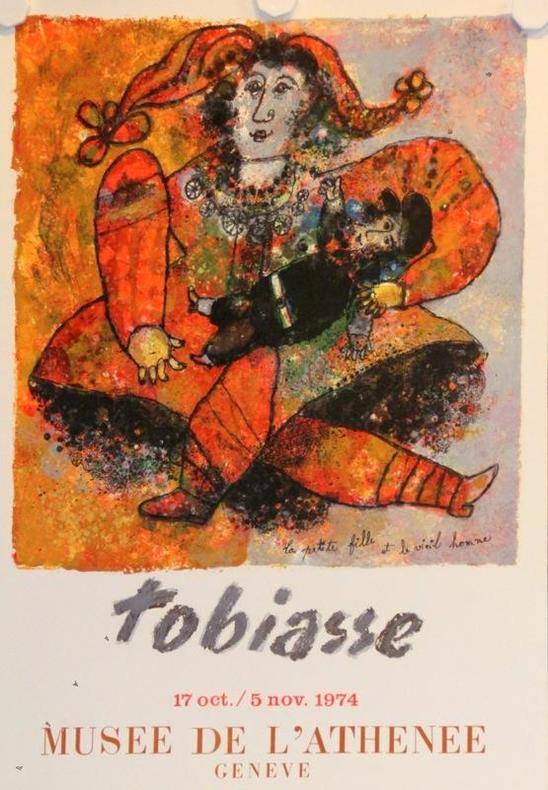
TOBIASSE:
La petite fille et le vieil homme. Musée de l'Athénée, Genève 1974.
Affiche, lithographie 53 x 76.
Referenz des Buchhändlers : 7792
|
|
|
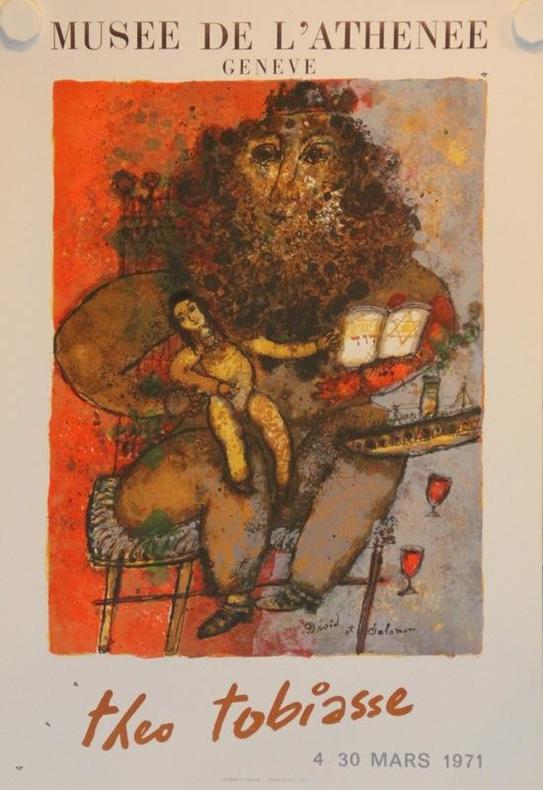
TOBIASSE Theo:
Musée de l'Athénée, Genève 1971.
Affiche, lithographie originale 53 x 76. Imprimée par Pierre Shave, Vence.
Referenz des Buchhändlers : 7795
|
|
|
Tolmer.
Tolmer. Affiche éditée à l'occasion de l'exposition à la Galerie Suillerot du 10 avril au 5mai 1967.
Paris à la Galerie 1967 1 Une affiche de dimensions 50x64,5 cm; lithographie de Fernandez à Rouen.
Referenz des Buchhändlers : 15773
|
|
|
Tolmer.
Tolmer. Affiche éditée à l'occasion de l'exposition à la Galerie Suillerot du 10 avril au 5mai 1967.
Une affiche de dimensions 50x64,5 cm; lithographie de Fernandez à Rouen. Très dis crètes rousseurs en marge inférieure; sinon bel état. Voir photo.
|
|
|
TOM CRUISE - ROBERT DUVAL - RANDY QUAID
AFFICHE DE CINEMA - TONNERRE
TONY SCOTT. Non daté. In-12. Broché. Bon état, Couv. convenable, Dos satisfaisant, Intérieur frais. Affiche de cinéma 40 x 53 cm.. . . . Classification : 0-Affiches Cinéma
Referenz des Buchhändlers : R100000389

|
|
|
TOM CRUISE - NICOLE KIDMAN
AFFICHE DE CINEMA - JOURS DE TONNERRE
TONY SCOTT. 1990. In-12. Broché. Bon état, Couv. convenable, Dos satisfaisant, Intérieur frais. 60 x 155 cm avec en badeau la date de sortie.. . . . Classification : 0-Affiches Cinéma
Referenz des Buchhändlers : R100000428

|
|

 Per e-mail erhalten
 Als pdf-Dokument herunterladen
 RSS feed
 Permanenter link


