|
|
|
Canadian Airlines International (CAI), Kerry Reynolds
Canadian Airlines International (CAI) Advertising Poster - Paris (France) (ADV136 6/90) - With Colour Illustration By Kerry Reynolds
27.4" x 18.5" Vintage Canadian Airlines International advertising poster for their service to Paris, France. Great colour illustration by artist Kerry Reynolds features outdoor cafe scene with Arc de Triomphe in background. Illustration measures 17.6" x 17.8". Moderate wear. Pin hole and small bit of clear tape at each corner. A lovely memento of Canadian Airlines and its Paris service. Will be shipped in a sturdy mailing tube. Similar posters for other Canadian Airlines destinations available. Poster

|
|
|
Canadian Airlines International (CAI), Robert Genn
Canadian Airlines International (CAI) Advertising Poster - Toronto (ADV105 7/87) - With Colour Illustration By Robet Genn
27.4" x 18.5" Vintage Canadian Airlines International advertising poster for their service to Toronto. Colour illustration by Robert Genn shows person in small sailboat in Lake Ontario with downtown Toronto in background. Illustration measures 17.6" x 17.8". Average wear. Pin hole in each corner. A lovely memento of Canadian Airlines and its Toronto service. Will be shipped in a sturdy mailing tube. Similar posters for other Canadian Airlines destinations available. Book

|
|
|
Canadian Airlines International (CAI), Stewart Sherwood
Canadian Airlines International (CAI) Advertising Poster - Buenos Aires (Argentina) (ADV116 7/87) - With Colour Illustration By Stewart Sherwood
27.4" x 18.5" Vintage Canadian Airlines International advertising poster for their service to Buenos Aires, Argentina. Colour illustration by Stewart Sherwood depicts charming (tango?) dance scene in park with capital building in background. Illustration measures 17.6" x 17.8". Average wear. Bits of clear tape at each top corner. Several short openings to periphery, the longest being 1.75" to left side of bottom edge. Possible faint doodling on female dancer's white dress and elsewhere - or perhaps it is the work of the artist? (additional photos available.) A lovely memento of Canadian Airlines and its Buenos Aires service. Will be shipped in a sturdy mailing tube. Similar posters for other Canadian Airlines destinations available. Poster

|
|
|
Canadian Airlines International (CAI), Taka
Canadian Airlines International (CAI) Advertising Poster - Los Angeles (ADV122 6/87) - With Colour Illustration By Taka
27.4" x 18.5" Vintage Canadian Airlines International advertising poster for their service to Los Angeles. Colour illustration by artist Taka shows female bicyclist passing fancy car and man in white cowboy hat. Illustration measures 17.6" x 17.8". Average wear. Small piece of clear tape to top and bottom left corners. Slight bit of loss to top edge at left corner. A lovely memento of Canadian Airlines and its Los Angeles service. Will be shipped in a sturdy mailing tube. Similar posters for other Canadian Airlines destinations available. Poster

|
|
|
Canadian Airlines International (CAI), Veloso, Jorge
Canadian Airlines International (CAI) Advertising Poster - Sao Paulo (Brazil) (ADV122 6/87) - With Colour Illustration By Jorge Veloso
27.4" x 18.5" Vintage Canadian Airlines International advertising poster for their service to Sao Paulo, Brazil. Great colour illustration by artist Jorge Veloso features black man with cigarette and coffee playing acoustic guitar in coffee shop with high-rise office buildings and business people in background. Illustration measures 17.6" x 17.8". Average wear. Slight bit of loss to lower left corner. Pin holes at each corner and halfway down each side. Background colour may have originally been brown but appears to have mostly faded to pale green. A lovely memento of Canadian Airlines and its Sao Paulo service. Will be shipped in a sturdy mailing tube. Similar posters for other Canadian Airlines destinations available. Poster

|
|
|
Capitaine Jean-Louis
AFFICHES du cinéma Français
Seghers/ Archimbaud In-4°, reliure ill (Affiche ), on compte 236 illustrations, 175 pages, mors en pied inférieur frotté, petit manque à la charnière, intérieur remarquablement frais.
Référence libraire : 9814
|
|
|
Capia, Robert.
affiches anciennes.
Rennes, Ouest France, 1983 Broche, couvert. illustr., 32pp., 16.5x23cm., ills. en coul., bon etat.
Référence libraire : 31180
|
|
|
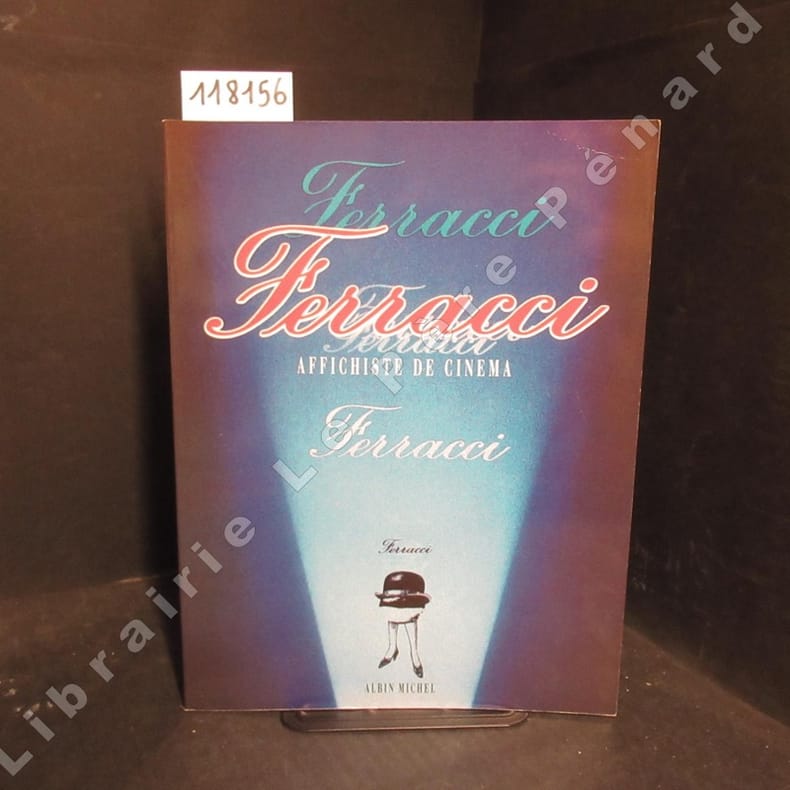
CAPITAINE, Jean-Louis
Ferracci. Affichiste de cinéma.
1990 Editions Albin Michel - 1990 - In-4, broché, couverture illustrée - 142 pages - nombreuses illustrations en couleurs hors-texte
Référence libraire : 118156
|
|
|
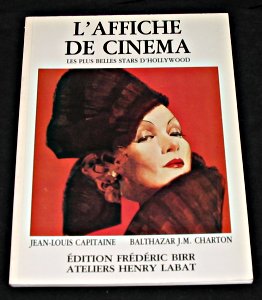
Capitaine J.L.,Charton Balthazar J.M.
L'affiche de cinéma, les plus belles stars d'Hollywood
Editions Frédéric Birr Ciné-Image Dos carré collé 1983 In-4° dos carré collé, couverture illustrée, 95 pp., nombreuses affiches reproduites en couleurs hors-texte ; menus incidents sur la couverture, très bon état Livraison a domicile (La Poste) ou en Mondial Relay sur simple demande.
Référence libraire : tt2245
|
|
|
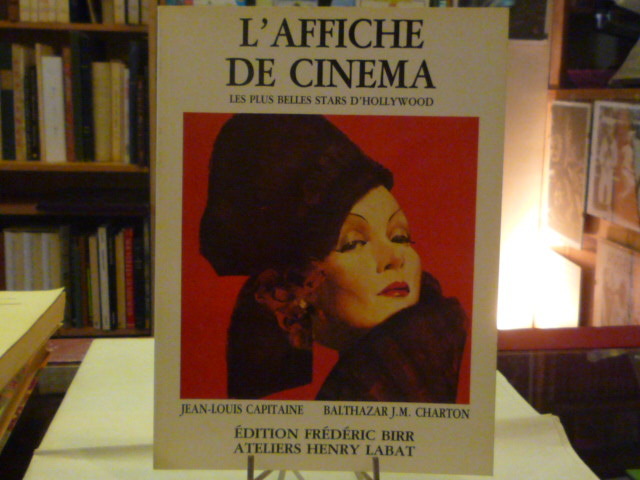
CAPITAINE Jean-Louis - CHARTON Balthazar J.M.
L'AFFICHE DE CINEMA. Les plus belles stars d'Hollywood.
Editions Frederic Birr Ateliers Henry Labat Paris 1983 In-4 ( 300 X 225 mm ) de 95 pages, broché sous couverture illustrée en couleurs.Aavant propos de Maurice Bessy. Superbe et abondante iconographie en couleurs hors-texte. Collection cine images Ateliers Henry Labat. Bel exemplaire.
Référence libraire : 777517
|
|
|
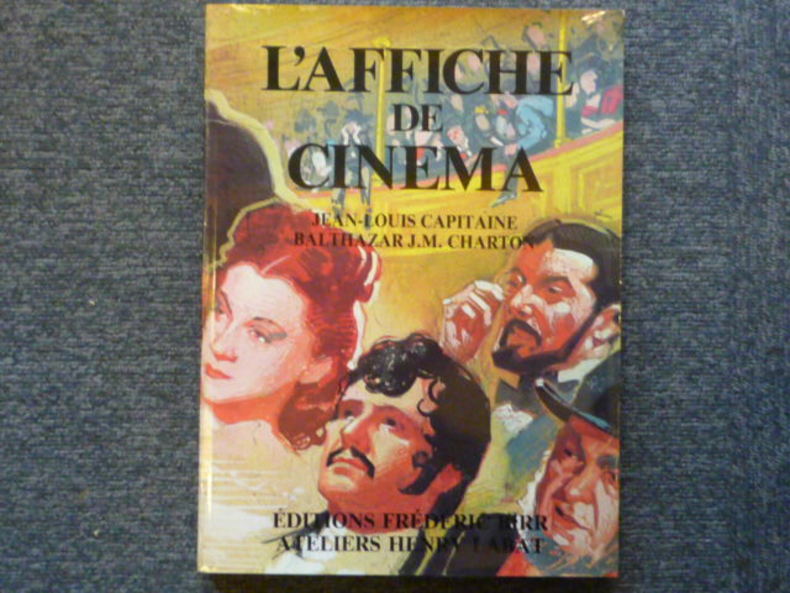
CAPITAINE J.-L. - CHARTON B.J.M.
L'AFFICHE DE CINEMA. Le cinéma français.
Editions Fr. Birr / Ateliers H. Labat S.L. 1983 In-4 ( 300 X 225 mm ) de 159 pages, broché sous couverture illustrée en couleurs. Photographies en noir et en couleurs dans et hors texte. Bel exemplaire.J.-L. Capitaine : A propos de l'affiche de cinéma : Historique : Les origines, Les années 1910 - La caricature, L'après-guerre et l'avant-garde française, Les années 30 et le cinéma parlant, L'occupation, La libération et la naissance du syndicat, Un producteur : André Paulvé, Deux auteurs : Robert Bresson et Henri Georges Clouzot, La fin de la lithographie La vie d'une affiche de cinéma : La naissance, La fabrication, La diffusion et la conservation. Affiches. Index des affiches. Index des affichistes.
Référence libraire : 311962
|
|
|
CAPITAINE (Jean-Louis), ZAGRODZKI (Christophe)
Le Peintre & l'affiche de Lautrec à Warhol.
Paris, Union des Arts décoratifs, 1988 1 volume 22 x 23,9cm Broché sous couverture illustrée couleurs. 133p., 1feuillet, nombreuses illustrations en noir et couleurs, vignettes et pleines pages. Bon état (plis marqués en charnières).
Référence libraire : 1070 ISBN : 286941062
|
|
|
Capia Robert
Les affiches anciennes
Ouest France, coll. « Guides couleurs. Objet d'art », n° 21 1983 In-8 agrafé. 32 pages. Bon état d’occasion.
Référence libraire : 128717
|
|
|
CAPITAINE (Jean-Louis), ZAGRODZKI (Christophe)
Le Peintre & l'affiche de Lautrec à Warhol.
Catalogue de l'exposition présentée en 1988 au Musée de l'affiche et de la publicité de à Paris, à la Fondation Maeght de Saint-Paul-de-Vence, au Cloître des Cordeliers de Tarascon, au Kunstforeningen de Copenhague, et en 1989 à la Fondation Gianadda de Martigny et au Musée d'Art moderne de Villeneuve-d'Ascq, organisée par l'Union des arts décoratifs; textes de Jean-Louis CAPITAINE et Christophe ZAGRODZKI (avec traductions en anglais); nombreuses reproductions en noir et en couleurs. Bilingue anglais / français
|
|
|
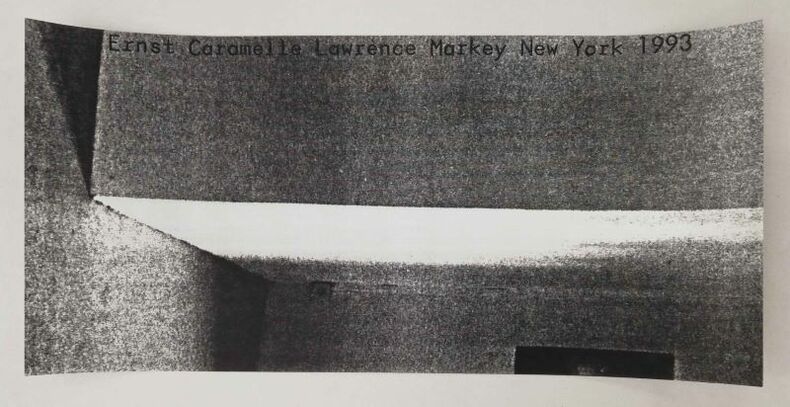
CARAMELLE ERNST (né en 1952)
1993 affiche Galerie Lawrence Markey, New York 1993, affiche 645x310mm. (102913)
Référence libraire : 102913
|
|
|
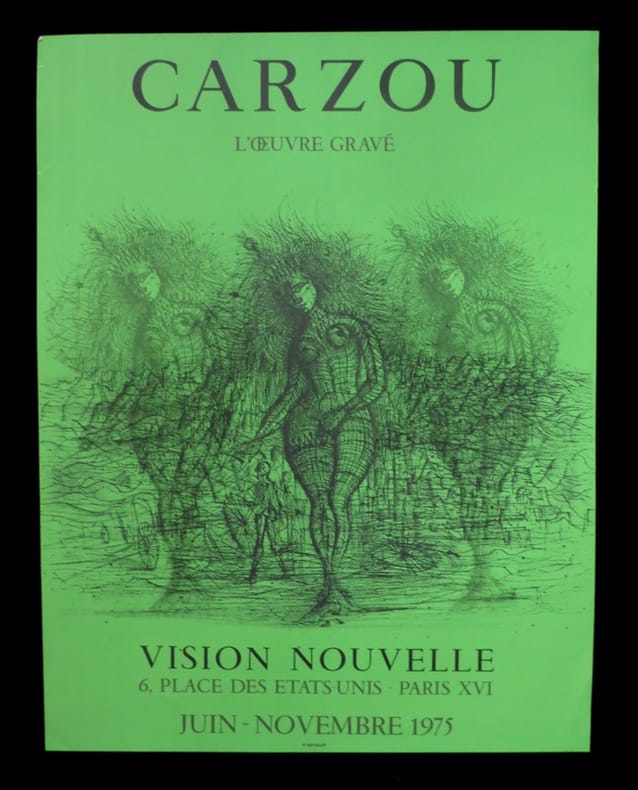
CARZOU (Jean).
[Affiche lithographiée].
S.l., Mourlot, 1975. Dimensions : 642 x 498 mm.
Référence libraire : 23105
|
|
|
CARNEVALE-MAUZAN Mirande
Achille Mauzan. 1883-1952. L'oeuvre Complet (Catalogue raisonné).
2001 Fort in-4 Cartonnage et étui illustrés de l'éditeur
Référence libraire : 009577
|
|
|
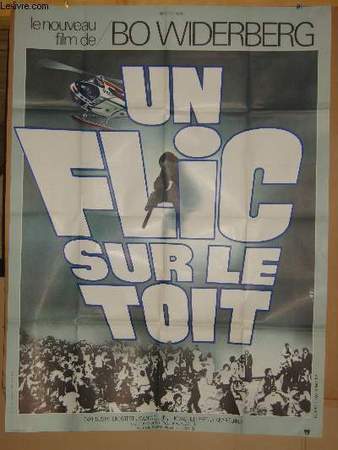
CARL GUSTAF LINDSTEDT - SVEN WOLLTER
AFFICHE DE CINEMA - UN FLIC SUR LE TOIT
BOWIDERBERG. Non daté. In-12. Broché. Bon état, Couv. convenable, Dos satisfaisant, Intérieur frais. Affiche de cinéma 120 cm x160 cm. Présenté par Filmedis.. . . . Classification : 0-Affiches Cinéma
Référence libraire : R100000023
|
|
|
CARRIER Alain
AFFICHE illustrée par Alain CARRIER: TRAINS AUTOS COUCHETTES économisez votre énergie en faisant le plein de sommeil. SNCF, 1980. Affiche 62x100 cm.
On joint deux affiches 80x70 cm. du même illustrateur, sans texte ni signature, provenant pour partie d'affiches de plus grand format du même intitulé: "TRAINS AUTOS COUCHETTES SNCF".
Référence libraire : AFF91

|
|
|
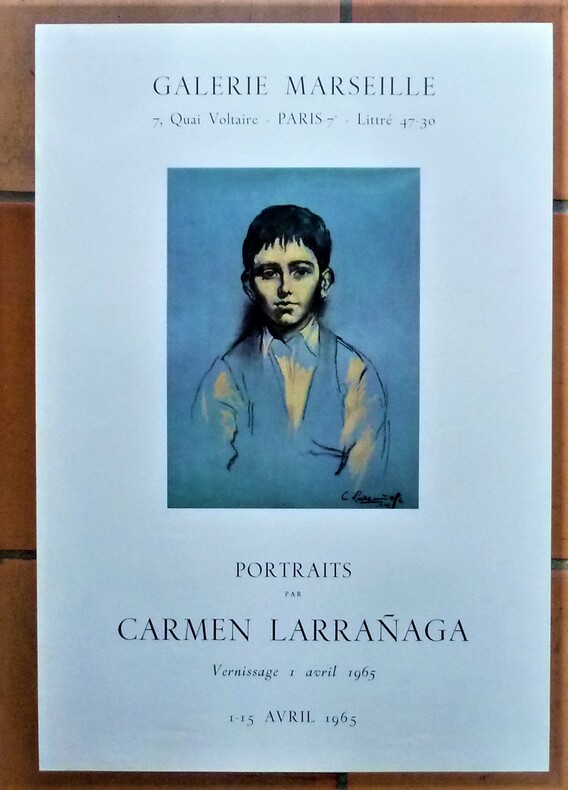
Carmen Larranaga.
Carmen Larranaga. Une affiche éditée à l'occasion de l'exposition "Portraits", à la Galerie Marseille du 1er au 15 avril 1965.
Paris à la Galerie 1965 1 Une seule affiche de dimensions 45 x 64 cm; impression offset sur vélin fort
Référence libraire : 15889
|
|
|
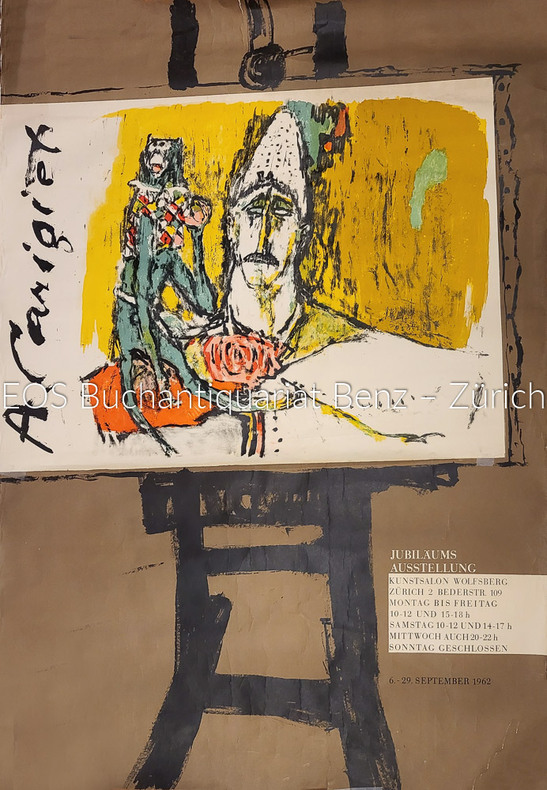
Carigiet, Alois; (1902–1985)
Clown - Ausstellungsplakat
Zürich. Wolfensberger. 1962. Offsetdruck. 127 x 90 cm.
Référence libraire : 886DG
|
|
|
CARAN D'ACHE Caran d'Ache
EXPOSITION RUSSE, Champ-de-Mars. Les Maitres de l'Affiche Pl. 70
0 Planche N°70, format 29 x 40 cm (toutes marges). Chromolithographie d'époque avec le timbre à sec de l'Imprimerie Chaix (Lugt 1777c). Notre exemplaire est une des très rares épreuves imprimées sur papier Japon, une toute petite trace de punaisage angulaire sur l'extrémité de la marge supérieure droite (Our plate is one of the few copies printed on Japanese paper. Original plate in good condition). LES MAITRES DE L'AFFICHE, prestigieuse publication d'art, éditée par l'atelier de lithographie Chaix, dont la parution s'étala de décembre 1895 à novembre 1900. Chaque livraison comportait 4 planches de reproduction en chromolithographie d'une remarquable qualité d'impression des plus belles affiches illustrées des grands artistes français et étrangers (auxquelles il faut ajouter 16 planches de lithographies originales offertes en prime aux abonnés). Lors de l'Exposition universelle de 1889, fut organisée la première exposition rétrospective dévolue à l'affiche, celle-ci devait valider la reconnaissance officielle d'appartenance de l'affiche au monde de l'art. Jules Chéret (1836-1932) y sera sacré '' Maître de l'affiche '', c'est aussi à cette date que Seurat commencera à collectionner les affiches de Chéret. Bel exemplaire ( Photographies sur demande / We can send pictures of this book on simple request )
Référence libraire : 24190
|
|
|
Carpinteri Giorgio:
Fred - Frigidaire.
Affiche au format 68 x 98 cm. Microscopique accroc en bord, pour le reste en belle condition.
Référence libraire : 3109

|
|
|
Carigiet, A.:
Fribourg. ‘Jura bernois, Fribourg, Neuchâtel’. Coll.: ‘La Suisse terre de beauté - Beautiful Switzerland.
Imprim. Wolfsberg Zürich, s.d., vers 1955, 62.5x64 cm. Affiche signé dans l’image ‘A.C. 45’, édité par l’Office Central Suisse du Tourisme.
Référence libraire : 1381.1aaf
|
|
|
Carloz SCHWABE - Lithographe de l'oeuvre reproduite
Maîtres de l'Affiche : Pl. 74. Carloz SCHWABE Salon de la Rose + Croix
paris Imprimerie Chaix 1897 Une Affichette Publicitaire [Fac-similé réduit de l'affiche originale], lithographiée en couleurs, format : 40 x 29 cm, Signé en bas à droite : Carloz SCHWABE, Timbre sec dans le coin inférieur droit : "Les Maîtres de l'affiche // Imprimerie Chaix", 1897 [Paris] : Les Maîtres de l'Affiche Editeur,
Référence libraire : 27104
|
|
|
Caran d'Ache - Lithographe de l'oeuvre reproduite
Maîtres de l'Affiche - Original Plate N°70 - "Exposition Russe" par Caran d'Ache
paris Imprimerie Chaix 1897 Une Affichette Publicitaire [Fac-similé réduit de l'affiche originale], lithographiée en couleurs, format : 40 x 28,6 cm, Signé en bas à droite : Caran d'Ache , Timbre sec dans le coin inférieur droit : "Les Maîtres de l'affiche // Imprimerie Chaix", 1897 [Paris] : Les Maîtres de l'Affiche Editeur,
Référence libraire : 27533
|
|
|
CARNAVAL DE NICE. TOURISME. NICE. AFFICHE. MOSSA (Gustav-Adolf).
Venite, venite tutti, gaudenti di questo mondo, ad assaporare le delizie del lieto vivere, nel mio reame incantevole d'Azzuro, di Fiori e di Gioia !
1912 Affiche entoilée, Nice, Imprimeries Nouvelles Réunies G. Mathieu, 1912-1913, 106 x 76 cm.,
Référence libraire : 24194
|
|
|
CARAFFA Filippo
A TUTTI I CITTADINI DELL’ISOLA DI CORSICA.
Manifesto di cm. 19x29, in lingua italiana. Si tratta di un manifesto a scopo elettorale per le elezioni del 9 Aprile 1848. In buono stato (good copy).

|
|
|
Carigiet, Alois; (1902?1985)
Clown - Ausstellungsplakat
Zürich., Wolfensberger., 1962. Offsetdruck. 127 x 90 cm. + Wichtig: Für unsere Kunden in der EU erfolgt der Versand alle 14 Tage verzollt ab Deutschland / Postbank-Konto in Deutschland vorhanden +, A
Référence libraire : 886DG

|
|
|
Cariplo -
Insetti fantastici che esistono realmente.
Milano, Vallardi, 1978, manifesto con dis. d'insetti a col. su fondo bianco.

|
|
|
Cariplo -
Mammiferi fantastici che esistono realmente.
Milano, Vallardi, 1978, manifesto con dis. di animali a col. su fondo bianco.

|
|
|
Cariplo -
Uccelli fantastici che esistono realmente.
Milano, Vallardi, 1978, manifesto con dis. di uccelli a col. su fondo bianco.

|
|
|
CARLEGLE Charles-Emile
La Rivière. Costume de fantaisie (pl.3, La Gazette du Bon ton, 1912-1913 n°4)
- Lucien Vogel éditeur, Paris Février 1913, 19x24,5cm, une feuille. - Original color print, printed on vergé paper, signed in the plate. An original print used to illustrate the Gazette du bon ton, one of the most attractive and influential 20th century fashion magazines, featuring the talents of French artists and other contributors from the burgeoning Art Deco movement. A celebrated fashion magazine established in 1912 by Lucien Vogel, La Gazette du bon ton appeared until 1925, with a hiatus from 1915 to 1920 due to the war (the editor-in-chief having been called up for service). It consisted of 69 issues printed in only 2,000 copies each and notably illustrated with 573 color plates and 148 sketches of the models of the great designers. Right from the start, this sumptuous publication "was aimed at bibliophiles and fashionable society," (Françoise Tétart-Vittu, "La Gazette du bon ton", in Dictionnaire de la mode, 2016) and was printed on fine vergé paper using a type cut specially for the magazine by Georges Peignot, known as Cochin, later used (in 1946) by Christian Dior. The prints were made using stencils, heightened in colors, some highlighted in gold or palladium. The story began in 1912, when Lucien Vogel, a man of the world involved in fashion (he had already been part of the fashion magazine Femina) decided, with his wife Cosette de Brunhoff - the sister of Jean, creator of Babar - to set up the Gazette du bon ton, subtitled at the time: "Art, fashion, frivolities." Georges Charensol noted the reasoning of the editor-in-chief: "'In 1910,' he observed, 'there was no really artistic fashion magazine, nothing representative of the spirit of the time. My dream was therefore to make a luxury magazine with truly modern artists...I was assured of success, because when it comes to fashion, no country on earth can compete with France.'" ("Un grand éditeur d'art. Lucien Vogel" in Les Nouvelles littéraires, no. 133, May 1925). The magazine was immediately successful, not only in France but also in the United States and Latin America. At first, Vogel put together a team of seven artists: André-Édouard Marty and Pierre Brissaud, followed by Georges Lepape and Dammicourt, as well as eventually his friends from school and the School of Fine Arts, like George Barbier, Bernard Boutet de Monvel and Charles Martin. Other talented people soon came flocking to join the team: Guy Arnoux, Léon Bakst, Benito, Boutet de Monvel, Umberto Brunelleschi, Chas Laborde, Jean-Gabriel Domergue, Raoul Dufy, Édouard Halouze, Alexandre Iacovleff, Jean Émile Laboureur, Charles Loupot, Chalres Martin, Maggie Salcedo. These artist, mostly unknown when Lucien Vogel sought them out, later became emblematic and sought-after artistic figures. It was also they who worked on the advertising drawings for the Gazette. The plates put the spotlight on, and celebrate, dresses by seven designers of the age: Lanvin, Doeuillet, Paquin, Poiret, Worth, Vionnet and Doucet. The designers provided exclusive models for each issue. Nonetheless, some of the illustrations are not based on real models, but simply on the illustrator's conception of the fashion of the day. The Gazette du bon ton was an important step in the history of fashion. Combining aesthetic demands with the physical whole, it brought together - for the first time - the great talents of the artistic, literary, and fashion worlds; and imposed, through this alchemy, a completely new image of women: slender, independent and daring, which was shared by the new generation of designers, including Coco Chanel, Jean Patou, Marcel Rochas, and so on... Taken over in 1920 by Condé Montrose Nast, the Gazette du bon ton was an important influence on the new layout and aesthetics of that "little dying paper" that Nast had bought a few years earlier: Vogue. [FRENCH VERSION FOLLOWS] Estampe originale en couleur, tirée sur papier vergé et signée en bas à droite. Gravure originale réalisée pour l'illustratio

|
|
|
CARLEGLE Charles-Emile
Le Bon Oncle. Costumes d'enfants (pl.2, La Gazette du Bon ton, 1914 n°1)
- Lucien Vogel éditeur, Paris Janvier 1914, 19x24,5cm, une feuille. - Original color print, printed on vergé paper, signed in the plate. An original print used to illustrate the Gazette du bon ton, one of the most attractive and influential 20th century fashion magazines, featuring the talents of French artists and other contributors from the burgeoning Art Deco movement. A celebrated fashion magazine established in 1912 by Lucien Vogel, La Gazette du bon ton appeared until 1925, with a hiatus from 1915 to 1920 due to the war (the editor-in-chief having been called up for service). It consisted of 69 issues printed in only 2,000 copies each and notably illustrated with 573 color plates and 148 sketches of the models of the great designers. Right from the start, this sumptuous publication "was aimed at bibliophiles and fashionable society," (Françoise Tétart-Vittu, "La Gazette du bon ton", in Dictionnaire de la mode, 2016) and was printed on fine vergé paper using a type cut specially for the magazine by Georges Peignot, known as Cochin, later used (in 1946) by Christian Dior. The prints were made using stencils, heightened in colors, some highlighted in gold or palladium. The story began in 1912, when Lucien Vogel, a man of the world involved in fashion (he had already been part of the fashion magazine Femina) decided, with his wife Cosette de Brunhoff - the sister of Jean, creator of Babar - to set up the Gazette du bon ton, subtitled at the time: "Art, fashion, frivolities." Georges Charensol noted the reasoning of the editor-in-chief: "'In 1910,' he observed, 'there was no really artistic fashion magazine, nothing representative of the spirit of the time. My dream was therefore to make a luxury magazine with truly modern artists...I was assured of success, because when it comes to fashion, no country on earth can compete with France.'" ("Un grand éditeur d'art. Lucien Vogel" in Les Nouvelles littéraires, no. 133, May 1925). The magazine was immediately successful, not only in France but also in the United States and Latin America. At first, Vogel put together a team of seven artists: André-Édouard Marty and Pierre Brissaud, followed by Georges Lepape and Dammicourt, as well as eventually his friends from school and the School of Fine Arts, like George Barbier, Bernard Boutet de Monvel and Charles Martin. Other talented people soon came flocking to join the team: Guy Arnoux, Léon Bakst, Benito, Boutet de Monvel, Umberto Brunelleschi, Chas Laborde, Jean-Gabriel Domergue, Raoul Dufy, Édouard Halouze, Alexandre Iacovleff, Jean Émile Laboureur, Charles Loupot, Chalres Martin, Maggie Salcedo. These artist, mostly unknown when Lucien Vogel sought them out, later became emblematic and sought-after artistic figures. It was also they who worked on the advertising drawings for the Gazette. The plates put the spotlight on, and celebrate, dresses by seven designers of the age: Lanvin, Doeuillet, Paquin, Poiret, Worth, Vionnet and Doucet. The designers provided exclusive models for each issue. Nonetheless, some of the illustrations are not based on real models, but simply on the illustrator's conception of the fashion of the day. The Gazette du bon ton was an important step in the history of fashion. Combining aesthetic demands with the physical whole, it brought together - for the first time - the great talents of the artistic, literary, and fashion worlds; and imposed, through this alchemy, a completely new image of women: slender, independent and daring, which was shared by the new generation of designers, including Coco Chanel, Jean Patou, Marcel Rochas, and so on... Taken over in 1920 by Condé Montrose Nast, the Gazette du bon ton was an important influence on the new layout and aesthetics of that "little dying paper" that Nast had bought a few years earlier: Vogue. [FRENCH VERSION FOLLOWS] Estampe originale en couleur, tirée sur papier vergé, signée en bas à gauche de la planche. Gravure originale réalisée pour l

|
|
|
Carlo Emanuele III.
(Manifesto originale) LA REGIA CAMERA DE' CONTI. Sendo stati riuniti al Regio Patrimonio dopo il Manifesto nostro de' 29 Luglio 1752 diversi Feudi, Beni, Dritti, Redditi, ed Effetti demaniali... Dat.i Torino li 20 dicembre 1754 [documento originale]
(Codice LO/5777) Grande manifesto di cm 132x36 su carta vergata avorio, ampi margini e barbe, grande stemma sabaudo (lieve mancanza per strappetto marginale) e capolettera ornato. Manifesto Camerale riguardante la vendita di feudi, beni, redditi demaniali, svariate proprietà (terreni, cascinali, borgate, castelli, botteghe ecc.) situate in tutto il territorio del Regno, con dettagliato elenco per zona. Nota coeva d'archivio al retro. Lievi ingialliture e macchiette, antichi segni di piegatura. In ottimo stato. Spedizione: arrotolato in solido tubo di cartone. ~~~ SPEDIZIONE IN ITALIA SEMPRE TRACCIATA

|
|
|
Carmen Larranaga.
Carmen Larranaga. Une affiche éditée à l'occasion de l'exposition "Portraits", à la Galerie Marseille du 1er au 15 avril 1965.
Une seule affiche de dimensions 45 x 64 cm; impression offset sur vélin fort Parfait état. Voir photo. Peu fréquente.

|
|
|
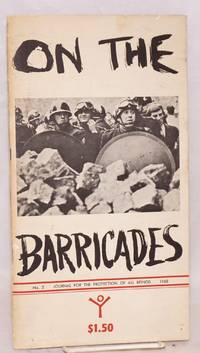
Caron photos Topor Cartoons translations by Mary Beach Posters by students of the Ex Beaux Arts
Journal for the Protection of All Beings no. 2: On the barricades: revolution & repression
San Francisco: City Lights Books & Beach Books Texts & Documents 1968. 37p 6.5x12 inches texts from anonymous slogans graffitti and poems on the walls of Paris illustrated with b&w photos of the May Day Uprising in Paris and cartoons; covers mildly toned and scuffed interior unmarked and very good. Photo essay on the May 1968 uprising in Paris. Published on Bastille Day. Herbert Marcuse quote on rear panel. City Lights Books & Beach Books, Texts & Documents unknown books
Référence libraire : 208987
|
|
|
CASSIGNEUL
50 Affiches de Cassigneul
s.l, Enrico Navarra (réalisé par André Sauret), 1990 grand in 8 étroit couverture à rabats illustrée
Référence libraire : 7892
|
|
|
CASSIGNEUL
50 Affiches de Cassigneul
s.l, Enrico Navarra (réalisé par André Sauret), 1990 grand in 8 étroit couverture à rabats illustrée
Référence libraire : 7892
|
|
|
CASABIANCA (François-Xavier-Joseph de)
Aux électeurs du département de la Corse.
Marseille, Imprimerie de Jules Barile, s.d. (mai 1848) placard in-folio (49 x 33 cm), texte sur deux colonnes, imprimé sur papier bleu.
Référence libraire : 207202
|
|
|
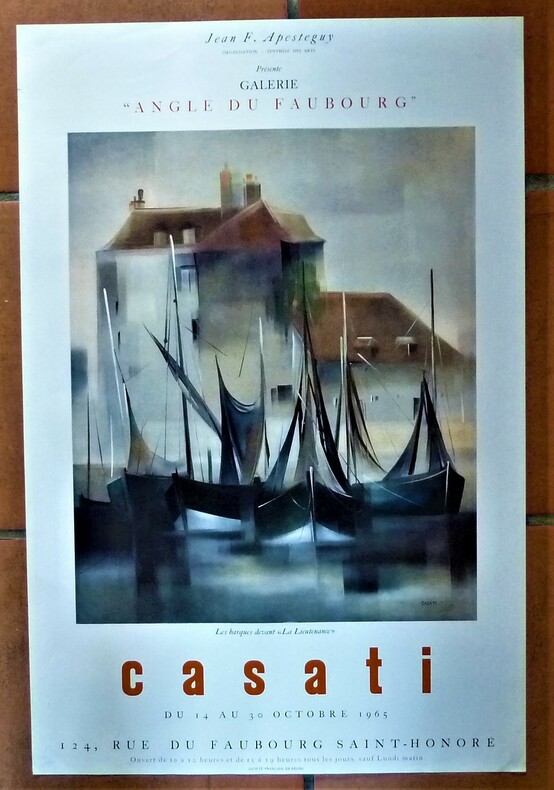
Casati.
Casati. Affiche éditée à l'occasion de l'exposition à la Galerie"Angle du Faubourg" , du 14 au 30 octobre 1965.
Paris à la Galerie 1965 1 Une seule affiche de dimensions 47 x 70 cm; belle impression offset de la Société Française de Régies.
Référence libraire : 15878
|
|
|
CASCELLA (Pietro)
Exposition Palais des Beaux Arts Bruxelles
Impression en sérigraphie. sans mention d'éditeur. 1971. Dim: 472 x 582 mm. Parfait état.
Référence libraire : 2328

|
|
|
CASCELLA (Pietro)
Exposition Palais des Beaux Arts Bruxelles
Impression en sérigraphie. sans mention d'éditeur. 1971. Dim: 472 x 582 mm. Parfait état.
Référence libraire : 2328
|
|
|
Casaril, Guy
Les novices
1970 60 x 80 LE DUO DE CHOC : Affiche originale (1970) du film Les Novices. Quand Brigitte Bardot rencontre Annie Girardot, l'étincelle est immédiate. Une composition graphique radieuse et pleine d'esprit qui célèbre une amitié hors du commun. Présentée dans un état exceptionnel, cette affiche est un hommage souverain au charme, au rire et à l'élégance du cinéma populaire français des années 70.
Référence libraire : LCI-6616

|
|
|
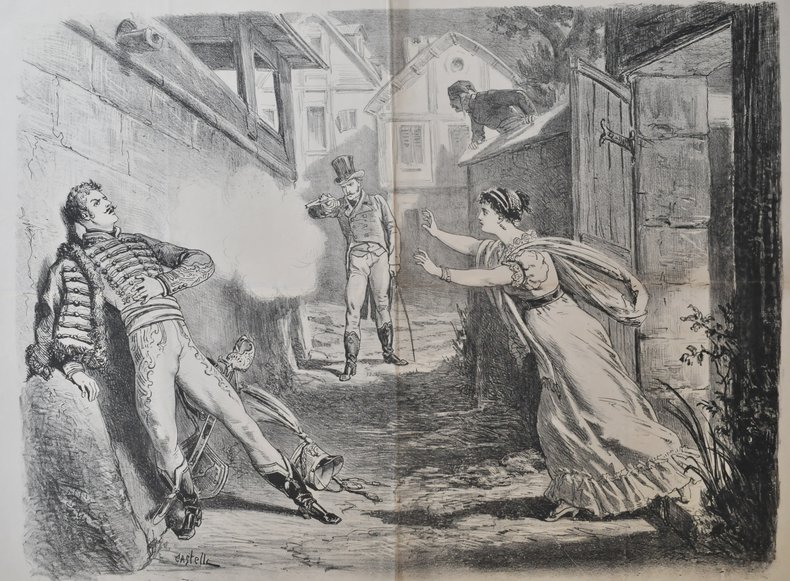
CASTELLI (Horace).
Projet d’affiche. Épreuve lithographique en noir.
, (vers 1876) ; 57 x 40 cm. sur une feuille de 65 x 50 cm., Épreuve avant la lettre d’un projet d’affiche pour un roman populaire. L’affiche semble n’avoir jamais paru. Une scène de rue montre un homme qui tire sur un officier tandis qu’une femme se précipite vers la victime, un troisième homme observe le drame. La scène pourrait appartenir au roman de la comtesse de Ségur Gribouille. Manuscrit à l’époque dans la marge : “Dessin destiné à une affiche, Autorisé le 29 septembre 1876”. Marque de pliure fendue à un bord sans manque.
Référence libraire : 46405191
|
|
|
Castiglioni, Luigi
VIIème Festival international d'Avoriaz du Film Fantastique du 17 au 21 janvier 1979
1979 Affiche - Avec le concours de la Fondation Philippe Morris pour le cinéma - 1979 - 62 cm x 48 cm - Poster illustré en couleurs
Référence libraire : 122490

|
|
|
Casati.
Casati. Affiche éditée à l'occasion de l'exposition à la Galerie"Angle du Faubourg" , du 14 au 30 octobre 1965.
Une seule affiche de dimensions 47 x 70 cm; belle impression offset de la Société Française de Régies. Très bel état. Voir photo.

|
|
|
CASELLA Georges
(Nouveaux ajustements pour les sports d'hiver in La Gazette du bon ton)
- Lucien Vogel éditeur, Paris s.d. [circa 1920], 18x24,5cm, deux doubles feuillets. - Extrait original tiré de La Gazette du bon ton, illustré de treize dessins en couleurs signés M.T. Célèbre revue de mode fondée en 1912 par Lucien Vogel, La Gazette du bon ton a paru jusqu'en 1925 avec une interruption durant la Guerre de 1915 à 1920, pour cause de mobilisation de son rédacteur en chef. Elle se constitue de 69 livraisons tirées à seulement 2000 exemplaires et est illustrée notamment de 573 planches en couleurs et de 148 croquis représentant des modèles de grands couturiers. Dès leur parution, ces luxueuses publications « s'adressent aux bibliophiles et aux mondains esthètes » (Françoise Tétart-Vittu « La Gazette du bon ton » in Dictionnaire de la mode, 2016). Imprimées sur beau papier vergé, elles utilisent une police typographique spécialement créée pour la revue par Georges Peignot, le caractère Cochin, repris en 1946 par Christian Dior. Les estampes sont réalisées grâce à la technique du pochoir métallique, rehaussées en couleurs et pour certaines soulignées à l'or ou au palladium. L'aventure commence en 1912 lorsque Lucien Vogel, homme du monde et de la mode - il a déjà participé à la revue Femina - décide de fonder avec sa femme Cosette de Brunhoff (sur de Jean, le père de Babar) La Gazette du bon ton dont le sous-titre est alors « Art, modes et frivolités ». Georges Charensol rapporte les propos du rédacteur en chef : « En 1910, observe-t-il, il n'existait aucun journal de mode véritablement artistique et représentatif de l'esprit de son époque. Je songeais donc à faire un magazine de luxe avec des artistes véritablement modernes [...] J'étais certain du succès car pour la mode aucun pays ne peut rivaliser avec la France. » (« Un grand éditeur d'art. Lucien Vogel » in Les Nouvelles littéraires, n°133, mai 1925). Le succès de la revue est immédiat, non seulement en France, mais aussi aux Etats-Unis et en Amérique du Sud. À l'origine, Vogel réunit donc un groupe de sept artistes : André-Édouard Marty et Pierre Brissaud, suivis de Georges Lepape et Dammicourt ; et enfin ses amis de l'École des beaux-arts que sont George Barbier, Bernard Boutet de Monvel, ou Charles Martin. D'autres talents viennent rapidement rejoindre l'équipée : Guy Arnoux, Léon Bakst, Benito, Boutet de Monvel, Umberto Brunelleschi, Chas Laborde, Jean-Gabriel Domergue, Raoul Dufy, Édouard Halouze, Alexandre Iacovleff, Jean Émile Laboureur, Charles Loupot, Charles Martin, Maggie Salcedo. Ces artistes, inconnus pour la plupart lorsque Lucien Vogel fait appel à eux, deviendront par la suite des figures artistiques emblématiques et recherchées. Ce sont ces mêmes illustrateurs qui réalisent les dessins des publicités de la Gazette. Les planches mettent en lumière et subliment les robes de sept créateurs de l'époque : Lanvin, Doeuillet, Paquin, Poiret, Worth, Vionnet et Doucet. Les couturiers fournissent pour chaque numéro des modèles exclusifs. Néanmoins, certaines des illustrations ne figurent aucun modèle réel, mais seulement l'idée que l'illustrateur se fait de la mode du jour. La Gazette du bon ton est une étape décisive dans l'histoire de la mode. Alliant l'exigence esthétique et l'unité plastique, elle réunit pour la première fois les grands talents du monde des arts, des lettres et de la mode et impose, par cette alchimie, une toute nouvelle image de la femme, élancée, indépendante et audacieuse, également portée par la nouvelle génération de couturiers Coco Chanel, Jean Patou, Marcel Rochas... Reprise en 1920 par Condé Montrose Nast, La Gazette du bon ton inspirera largement la nouvelle composition et les choix esthétiques du « petit journal mourant » que Nast avait racheté quelques années auparavant : le magazine Vogue. Très bel exemplaire. [ENGLISH DESCRIPTION ON DEMAND]

|
|
|
Cassa di Risparmio delle Provincie Lombarde -
Anfibi e rettili.
Milano, Vallardi, 1953, manifesto a col. di cm. 100 x 70.

|
|
|
Cassandre. A.M. - Maximilan Vox [Herausgeber]
Plakate.
St. Gallen., Verlag Zollikofer & Co., 1948. 30 x 25 cm. 118 S. OLeinen mit illustriertem OUmschlag., 4252D Erste Auflage. Umschlag mit stärkeren Randläsuren und Fehlstellen, privater Name auf vorderem Innendeckel. Sonst gutes Exemplar.
Référence libraire : 4252DB

|
|
|

 Recevoir par e-mail
 Télécharger en PDF
 Flux RSS
 Lien permanent


