Site indépendant de libraires professionnels

‎Affiches‎

Main

Nombre de résultats : 10 760 (216 Page(s))

Première page Page précédente 1 ... 126 127 128 [129] 130 131 132 ... 143 154 165 176 187 198 209 ... 216 Page suivante Dernière page

‎GAUGUIN Paul & MONFREID George-Daniel de‎

‎Diane et Actéon aux Marquises. Noa Noa. Epreuve unique du bois dessiné et gravé d'après Paul Gauguin par George-Daniel de Monfreid‎

‎- s.d. (1924), 93x78mm, autre. - Diane et Actéon aux Marquises. Noa Noa. Unique proof of the woodcut drawn and engraved after Paul Gauguin by George-Daniel de Monfreid [between 1904 & 1924] | 9,3 x 7,8 mm | one sheet Original proof, likely unique, of this intermediate state of a woodcut drawn and engraved by George-Daniel de Monfreid after two works by Paul Gauguin. Print on Japan silk, annotation by the artist in the left-hand margin. Woodcut drawn and engraved after two works, the man holding a branch being a reproduction of a watercolor on page 37 of the Noa Noa manuscript, while the full-length woman originally observed by this browser, is presented here in bust with her hand to her face, model reproduced on a woodcut engraved by Gauguin on page 4 of the manuscript (and his original sketch pasted on page 51), evoking a similar scene. The final woodcut will serve as the head of chapter IV of the first true illustrated edition of Noa Noa, published by Crès in 1924, the first illustrated work after Paul Gauguin and a majestic tribute to one of the precursors of modern art. Superb engraving synthesizing a watercolor from the original Noa Noa manuscript, inspired by the myth of Diana and Actaeon, engraved by Gauguin's closest friend and executor, the artist George-Daniel de Monfreid, heir to the album he would offer to the French State in 1927. A likely unique proof, part of 17 known test woodcuts from the early project to publish Noa Noa, all made on various fine papers and annotated by the artist. Woodcut engraved after a watercolor reinterpreting the myth of Diana, surprised in the bath by Actaeon. In the engraving, Monfreid took care to preserve the typical of deer antler shape of the branch seized by the indiscreet, which evokes its metamorphosis by the goddess. A very rare work by Gauguin mixing ancient mythology and island exoticism, whose subversive power seems entirely carried by the vahine Diana's expression of feint surprise. It is from the original illustrated manuscript of Noa Noa, brought back from Tahiti by Segalen on the artist's death in 1903, that Monfreid began producing this fundamental work from as early as 1904. This is the second version of this "to read and look at" notebook. The first manuscript, written on the return of his first voyage and entrusted by Gauguin to Charles Morice in 1893, responded to a different project. Gauguin had composed only the text, interspersed with blank pages for Morice's poems. But after several years without news, Morice preferred to publish a version entirely rewritten by himself in 1901. Gauguin, therefore, copied his manuscript and illustrated it during his second stay in Polynesia, with sketches, watercolors and collages. This album, that the artist enriched and safely preserved until his death, is preserved today at the Musée d'Orsay. It is, therefore, from this manuscript, the only one illustrated, that Monfreid composed the edition of Gauguin's Noa Noa. However, although Monfreid's publication was forward, it took more than twenty years to complete, in part due to a copyright dispute with Charles Morice who wanted to be co-author of the forthcoming edition and whose poems would eventually be preserved. The result of several years of reflection and work, the 1924 edition is both faithful to the watercolors and woodcut engravings illustrating the precious manuscript, and to the whole of Gauguin's Tahitian work, who died in indifference. Monfreid thus engraves several drawings from the original notebook and enriches it with woodcuts made from other works of which he is the custodian. Some of these compositions combine several paintings, while scrupulously respecting the artist's line, transforming the work into a true journey through the painter's works. The very choice of using wood engraving is a tribute to this technique prized by Gauguin, who, in Pont-Aven, produced 10 woodcuts to illustrate his manuscript between his two Polynesian stays. The interm‎

‎GAUGUIN Paul & MONFREID George-Daniel de‎

‎La mémoire et l'imagination. Noa Noa. Epreuve unique du bois dessiné et gravé d'après Paul Gauguin par George-Daniel de Monfreid‎

‎- s.d. (1924), 93x78mm, autre. - La Mémoire et l'Imagination. Noa Noa. Unique proof of the woodcut drawn and engraved after Paul Gauguin by George-Daniel de Monfreid [between 1904 & 1924] | 9,3 x 7,8 cm | one sheet Original proof, likely unique, of this intermediate state of a woodcut drawn and engraved by George-Daniel de Monfreid after a watercolor by Paul Gauguin. Print on fine cream laid paper, annotation by the artist in the left-hand margin. Woodcut drawn and engraved after a watercolor from the Noa Noa manuscript, pasted on a page of text of the famous album. The final woodcut will serve as the head of the first illustrated edition of Noa Noa, published by Crès in 1924, the first illustrated work after Paul Gauguin and a majestic tribute to one of the precursors of modern art. Superb and significant engraving after a very specific watercolor from Paul Gauguin's manuscript, a real breakthrough in text, engraved by his closest friend and executor, the artist George-Daniel de Monfreid, heir to the album he would offer to the French State in 1927. The initial watercolor was cut out in waves around the female figure and pasted on the last chapter to prevent it from being read and thus get the story back on track. Gauguin had also added winding lines starting from the watercolor on the text page, thus giving the impression of a cave breaking through the page, by the psychic power of the sitting woman whose head diffuses the undulating rays. Monfreid decided to place it at the head of the work accompanied by two birds taken from other works, to illustrate the power of the artist and his imagination. A likely unique proof, part of 17 known test woodcuts from the early project to publish Noa Noa, all made on various fine papers and annotated by the artist. Unique proof of a woodcut engraved after the mystical watercolor erasing the first ending of the story to allow the reader to graphically enter the painted album, repeated in the printed version as the initiatory opening of the engraved story. It is from the original illustrated manuscript of Noa Noa, brought back from Tahiti by Segalen on the artist's death in 1903, that Monfreid began producing this fundamental work from as early as 1904. This is the second version of this "to read and look at" notebook. The first manuscript, written on the return of his first voyage and entrusted by Gauguin to Charles Morice in 1893, responded to a different project. Gauguin had composed only the text, interspersed with blank pages for Morice's poems. But after several years without news, Morice preferred to publish a version entirely rewritten by himself in 1901. Gauguin, therefore, copied his manuscript and illustrated it during his second stay in Polynesia, with sketches, watercolors and collages. This album, that the artist enriched and safely preserved until his death, is preserved today at the Musée d'Orsay. It is, therefore, from this manuscript, the only one illustrated, that Monfreid composed the edition of Gauguin's Noa Noa. However, although Monfreid's publication was forward, it took more than twenty years to complete, in part due to a copyright dispute with Charles Morice who wanted to be co-author of the forthcoming edition and whose poems would eventually be preserved. The result of several years of reflection and work, the 1924 edition is both faithful to the watercolors and woodcut engravings illustrating the precious manuscript, and to the whole of Gauguin's Tahitian work, who died in indifference. Monfreid thus engraves several drawings from the original notebook and enriches it with woodcuts made from other works of which he is the custodian. Some of these compositions combine several paintings, while scrupulously respecting the artist's line, transforming the work into a true journey through the painter's works. The very choice of using wood engraving is a tribute to this technique prized by Gauguin, who, in Pont-Aven, produced 10 woodcuts to illu‎

‎GAUGUIN Paul & MONFREID George-Daniel de‎

‎Les odalisques aux mangues. Noa Noa. Epreuve unique du bois dessiné et gravé d'après Paul Gauguin par George-Daniel de Monfreid‎

‎- s.d. (1924), 93x78mm, autre. - Les Odalisques aux mangues. Noa Noa. Unique proof of the woodcut drawn and engraved after Paul Gauguin by George-Daniel de Monfreid [between 1904 & 1924] | 9,3 x 7,8 cm | one sheet Original proof, likely unique, of this intermediate state of a woodcut drawn and engraved by George-Daniel de Monfreid after Paul Gauguin. Print on fine cream laid paper, annotation by the artist in the left-hand margin. Woodcut drawn and engraved after two different works. The back of the woman is an exact reproduction of an ink from page 92 of the Noa Noa manuscript, while the woman lying down takes up the well-known theme of the woman with mangos, Te Arii Vahine-Opoi, that Gauguin represented in paint as well as with an engraving in 1898. The final woodcut will serve as the head of chapter V of the first true illustrated edition of Noa Noa, published by Crès in 1924, the first illustrated work from Paul Gauguin and a majestic tribute to one of the precursors of modern art. Superb and significant engraving uniting two major themes of the Tahitian work, including the central drawing of the Noa Noa manuscript, faithfully engraved by Gauguin's closest friend and executor, the artist George-Daniel de Monfreid. A likely unique proof, part of 17 known test woodcuts from the project to prematurely publish Noa Noa, all made on various fine papers and annotated by the artist. Woodcut engraved from two major original works. By uniting these two vahines with sensual postures, Monfreid brings about a true synthesis of Gauguin's work, all while using the traditional double figure of the artist's paintings. It is from the original illustrated manuscript of Noa Noa, brought back from Tahiti by Segalen on the artist's death in 1903, that Monfreid began producing this fundamental work from as early as 1904. This is the second version of this "to read and look at" notebook. The first manuscript, written on the return of his first voyage and entrusted by Gauguin to Charles Morice in 1893, responded to a different project. Gauguin had composed only the text, interspersed with blank pages for Morice's poems. But after several years without news, Morice preferred to publish a version entirely rewritten by himself in 1901. Gauguin, therefore, copied his manuscript and illustrated it during his second stay in Polynesia, with sketches, watercolors and collages. This album, that the artist enriched and safely preserved until his death, is preserved today at the Musée d'Orsay. It is, therefore, from this manuscript, the only one illustrated, that Monfreid composed the edition of Gauguin's Noa Noa. However, although Monfreid's publication was forward, it took more than twenty years to complete, in part due to a copyright dispute with Charles Morice who wanted to be co-author of the forthcoming edition and whose poems would eventually be preserved. The result of several years of reflection and work, the 1924 edition is both faithful to the watercolors and woodcut engravings illustrating the precious manuscript, and to the whole of Gauguin's Tahitian work, who died in indifference. Monfreid thus engraves several drawings from the original notebook and enriches it with woodcuts made from other works of which he is the custodian. Some of these compositions combine several paintings, while scrupulously respecting the artist's line, transforming the work into a true journey through the painter's works. The very choice of using wood engraving is a tribute to this technique prized by Gauguin, who, in Pont-Aven, produced 10 woodcuts to illustrate his manuscript between his two Polynesian stays. The intermediate woodcuts, until then unknown, testify to the slow work of composition to restore the artistic richness of Gauguin's work by his most faithful artistic companion and first champion: "When I saw Gauguin for the first time, I was greatly disconcerted by the details of art that radiated from his works as well as from the conversations‎

‎GAUGUIN Paul & MONFREID George-Daniel de‎

‎Retour de pêche aux thons et bonites. Noa Noa. Epreuve unique du bois dessiné et gravé d'après Paul Gauguin par George-Daniel de Monfreid‎

‎- s.d. (1924), 93x78mm, autre. - Retour de pêche aux thons et bonites. Noa Noa. Unique proof of the woodcut drawn and engraved after Paul Gauguin by George-Daniel de Monfreid [between 1904 & 1924] | 9,3 x 7,8 cm | one sheet Original proof, likely unique, of this intermediate state of a woodcut drawn and engraved by George-Daniel de Monfreid after a watercolor by Paul Gauguin. Print on fine cream laid paper, annotation by the artist in the left-hand margin. Woodcut drawn and engraved from the first watercolor of the Noa Noa manuscript, pasted on a page of text of the famous album. The final woodcut will serve as the head of chapter X of the first true illustrated edition of Noa Noa, published by Crès in 1924, the first illustrated work from Paul Gauguin and a majestic tribute to this precursor of modern art. Superb and significant engraving of the work opening Paul Gauguin's manuscript, engraved by his closest friend and executor, the artist George-Daniel de Monfreid, heir to the album he would offer to the French State in 1927. This likely unique proof, part of 17 known test woodcuts from the project to prematurely publish Noa Noa, all made on various fine papers and annotated by the artist. Woodcut engraved from the watercolor inaugurating one of the painter's most beautiful albums, symbolizing the Tahitian art of living, between the nourishing sea and earthly pleasures. It is from the original illustrated manuscript of Noa Noa, brought back from Tahiti by Segalen on the artist's death in 1903, that Monfreid began producing this fundamental work from as early as 1904. This is the second version of this "to read and look at" notebook. The first manuscript, written on the return of his first voyage and entrusted by Gauguin to Charles Morice in 1893, responded to a different project. Gauguin had composed only the text, interspersed with blank pages for Morice's poems. But after several years without news, Morice preferred to publish a version entirely rewritten by himself in 1901. Gauguin, therefore, copied his manuscript and illustrated it during his second stay in Polynesia, with sketches, watercolors and collages. This album, that the artist enriched and safely preserved until his death, is preserved today at the Musée d'Orsay. It is, therefore, from this manuscript, the only one illustrated, that Monfreid composed the edition of Gauguin's Noa Noa. However, although Monfreid's publication was forward, it took more than twenty years to complete, in part due to a copyright dispute with Charles Morice who wanted to be co-author of the forthcoming edition and whose poems would eventually be preserved. The result of several years of reflection and work, the 1924 edition is both faithful to the watercolors and woodcut engravings illustrating the precious manuscript, and to the whole of Gauguin's Tahitian work, who died in indifference. Monfreid thus engraves several drawings from the original notebook and enriches it with woodcuts made from other works of which he is the custodian. Some of these compositions combine several paintings, while scrupulously respecting the artist's line, transforming the work into a true journey through the painter's works. The very choice of using wood engraving is a tribute to this technique prized by Gauguin, who, in Pont-Aven, produced 10 woodcuts to illustrate his manuscript between his two Polynesian stays. The intermediate woodcuts, until then unknown, testify to the slow work of composition to restore the artistic richness of Gauguin's work by his most faithful artistic companion and first champion: "When I saw Gauguin for the first time, I was greatly disconcerted by the details of art that radiated from his works as well as from the conversations of this extraordinary man... You immediately felt that he was the Master" (in L'Hermitage, 1903). [FRENCH VERSION FOLLOWS] Epreuve originale probablement unique de cet état intermédiaire d'un bois dessiné et gravé d'après une aquarel‎

‎GAUGUIN Paul & MONFREID George-Daniel de‎

‎Tehura. Noa Noa. Epreuve unique gravée d'après le tableau Merahi metua no tehamana de Paul Gauguin par George-Daniel de Monfreid‎

‎- s.d. (1924), 93x78mm, autre. - Tehura. Original proof engraved after the painting "Merahi Metua no Tehamana". Intermediate state for Noa Noa [between 1904 & 1924] | 9,3 x 7,8 cm | one sheet Original proof, likely unique, of this intermediate state of "Tehura", wood drawn and engraved after Paul Gaughin's painting "Merahi Metua no Tehamana" by George-Daniel de Monfreid. Print on fine cream laid paper, annotation by the artist in the left-hand margin. The definitive wood served as the head of chapter VI, "Le Conteur parle", page 81 of the true first edition of Noa Noa published by Crès in 1924, the first illustrated work from Paul Gauguin and a majestic tribute to one of the precursors of modern art. A most important and very first woodcut of Gauguin's masterpiece, engraved by his closest friend and executor, artist George-Daniel de Monfreid, to whom Gauguin offered the painting after two unsuccessful exhibitions. Likely unique proof, part of 17 known test prints from the project to publish prematurely Noa Noa, all made on various fine papers and annotated by the artist. Precious woodcut after Gauguin's masterpiece Merahi metua no Tehamana, showing the painter's wife, his main tahitian model. It is from the original illustrated manuscript of Noa Noa, brought back from Tahiti by Segalen on the artist's death in 1903, that Monfreid began producing this fundamental work from as early as 1904. This is the second version of this "to read and look at" notebook. The first manuscript, written on the return of his first voyage and entrusted by Gauguin to Charles Morice in 1893, responded to a different project. Gauguin had composed only the text, interspersed with blank pages for Morice's poems. But after several years without news, Morice preferred to publish a version entirely rewritten by himself in 1901. Gauguin, therefore, copied his manuscript and illustrated it during his second stay in Polynesia, with sketches, watercolors and collages. This album, that the artist enriched and safely preserved until his death, is preserved today at the Musée d'Orsay. It is, therefore, from this manuscript, the only one illustrated, that Monfreid composed the edition of Gauguin's Noa Noa. However, although Monfreid's publication was forward, it took more than twenty years to complete, in part due to a copyright dispute with Charles Morice who wanted to be co-author of the forthcoming edition and whose poems would eventually be preserved. The result of several years of reflection and work, the 1924 edition is both faithful to the watercolors and woodcut engravings illustrating the precious manuscript, and to the whole of Gauguin's Tahitian work, who died in indifference. Monfreid thus engraves several drawings from the original notebook and enriches it with woodcuts made from other works of which he is the custodian. Some of these compositions combine several paintings, while scrupulously respecting the artist's line, transforming the work into a true journey through the painter's works. The very choice of using wood engraving is a tribute to this technique prized by Gauguin, who, in Pont-Aven, produced 10 woodcuts to illustrate his manuscript between his two Polynesian stays. The intermediate woodcuts, until then unknown, testify to the slow work of composition to restore the artistic richness of Gauguin's work by his most faithful artistic companion and first champion: "When I saw Gauguin for the first time, I was greatly disconcerted by the details of art that radiated from his works as well as from the conversations of this extraordinary man... You immediately felt that he was the Master" (in L'Hermitage, 1903). [FRENCH VERSION FOLLOWS] Epreuve originale probablement unique de cet état intermédiaire de "Tehura", bois dessiné et gravé d'après le tableau Merahi metua no tehamana de Paul Gauguin par Georges-Daniel de Monfreid. Tirage sur vergé crème fin, annotation de l'artiste au crayon en marge gauche. Le bois définitif servira‎

‎Gavarni‎

‎Femme assise.‎

‎français Slnd. Dessin original à la mine de plomb.20 x 15,5 cm Signé par Gavarni.‎

‎GAVARNI Paul‎

‎Fourberies de femmes‎

‎- Aubert et Cie, Paris s.d. (1840), 27x34cm, 52 lithographies reliées en un volume. - Fourberies de femmes Aubert et Cie | Paris [1840] | 27 x 34 cm 52 lithographs bound together in half shagreen Full sets of 52 original lithographs enhanced by hand with colour and varnish, first printing. These engravings were initially published in La Caricature. Contemporary binding in half brown shagreen, spine lightly faded and decorated with gilt fillets and fleurons, black morocco library label at the foot, glued paper endpapers, the first with a title label framed with a double gilt fillet, caillouté marbled endpapers. Upper corners lightly damaged, margins and spine ends a little rubbed. Some discreet foxing mainly on the first board. A worm hole filled with a piece of paper on the lower margin of the twenty-first print. Plate 38 is little shorter than the others on the external margin. [FRENCH VERSION FOLLOWS] Série complète de 52 lithographies originales rehaussées en couleurs et gommées, toutes en premier tirage. Ces gravures sont primitivement parues dans La Caricature. Reliure de l'époque en demi chagrin marron, dos lisse légèrement éclairci orné de filets et fleurons dorés, étiquette de bibliothèque de maroquin noir en queue, plats de papier à la colle, le premier comportant une étiquette de titre encadrée d'un double filet doré, gardes et contreplats de papier caillouté. Coins supérieurs légèrement accidentés, coupes et coiffes un peu frottées. Quelques discrètes rousseurs essentiellement sur la première planche. Une galerie de ver comblée à l'aide d'une pièce de papier en marge basse de la vingt-et-unième estampe. La planche 38 est un peu plus courte que les autres en marge extérieure.‎

‎GAVARNI Paul‎

‎Lithographie originale en couleurs - "De l'esprit et du pain pour un jour."‎

‎- Imprimerie d'Aubert, Paris s.d. [1839], 26,4x34,5cm, une feuille. - Lithographie originale réhaussée en couleurs et gommée, pour Le Charivari, imprimée sur papier fin. Armelhaut et Bocher 904. Planche uniformément ombrée. [ENGLISH DESCRIPTION ON DEMAND]‎

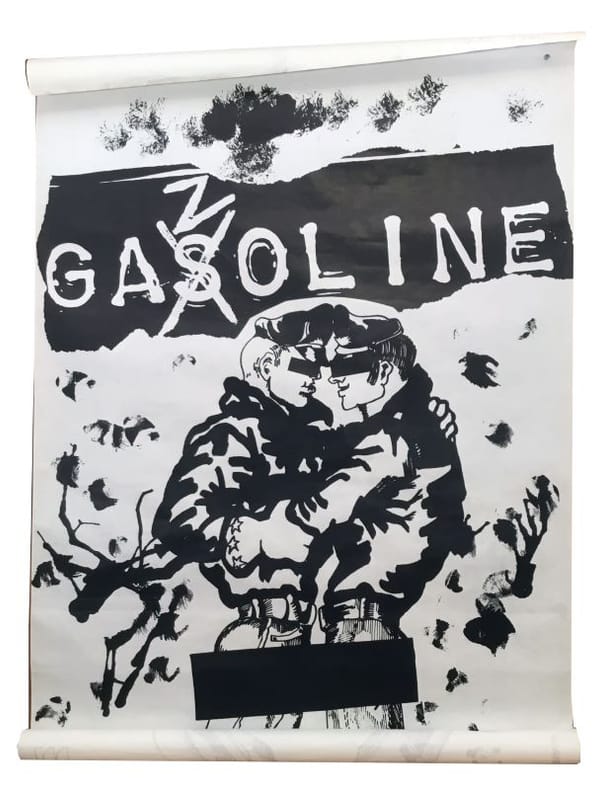
‎GAZOLINE‎

‎1977 Affiche originale 1977 1200x780mmGroupe de punk rock français formé en 1977, composé entre autres d'Alain Kan et de Fred Chichin. Son nom est un hommage au mouvement féministe Gazolines, fondé par Maud Molyneux, Patrick Bertaux et Paquita Paquin.(104354)‎

Référence libraire : 104354

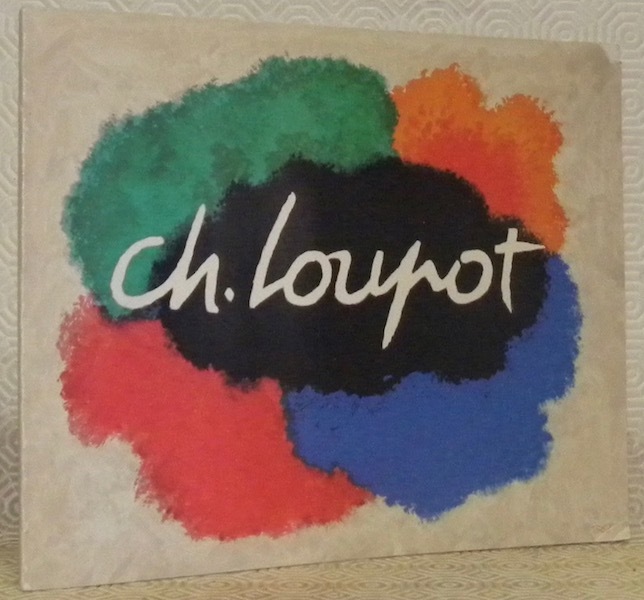
‎GAËTAN-PICON, Geneviève. - WEILL, Alain‎

‎Charles Loupot. Musée de l’Affiche, 18 rue de Paradis, Paris 10°.‎

‎La Tour-de-Peilz, sans date, vers 1979 210x250mm, broché. Format à l’italienne. Petite déchirure sur le coin supérieur de la couverture supérieure et manque la page de titre, autrement bel exemplaire.‎

‎planches en couleurs et n/b, Pour un paiement via PayPal, veuillez nous en faire la demande et nous vous enverrons une facture PayPal‎

Référence libraire : 80106

Livre Rare Book

Bouquinerie du Varis
Russy Switzerland Suiza Suíça Suisse
[Livres de Bouquinerie du Varis]

19,11 € Acheter

‎GEFFROY & CORIANDRE George‎

‎(Le Génie de la montagne in La Gazette du bon ton n°3, 1924-25 - 7ème année. )‎

‎- Lucien Vogel éditeur, Paris 1924-1925, 18x24,5cm, deux doubles feuillets. - Extrait original tiré de La Gazette du bon ton, illustré de huit dessins en couleurs de Geffroy. On y joint un double feuillet de texte concernant la mode d'hiver chez différents créateurs (Lanvin, Poiret, Vionnet et Worth). Célèbre revue de mode fondée en 1912 par Lucien Vogel, La Gazette du bon ton a paru jusqu'en 1925 avec une interruption durant la Guerre de 1915 à 1920, pour cause de mobilisation de son rédacteur en chef. Elle se constitue de 69 livraisons tirées à seulement 2000 exemplaires et est illustrée notamment de 573 planches en couleurs et de 148 croquis représentant des modèles de grands couturiers. Dès leur parution, ces luxueuses publications « s'adressent aux bibliophiles et aux mondains esthètes » (Françoise Tétart-Vittu « La Gazette du bon ton » in Dictionnaire de la mode, 2016). Imprimées sur beau papier vergé, elles utilisent une police typographique spécialement créée pour la revue par Georges Peignot, le caractère Cochin, repris en 1946 par Christian Dior. Les estampes sont réalisées grâce à la technique du pochoir métallique, rehaussées en couleurs et pour certaines soulignées à l'or ou au palladium. L'aventure commence en 1912 lorsque Lucien Vogel, homme du monde et de la mode - il a déjà participé à la revue Femina - décide de fonder avec sa femme Cosette de Brunhoff (sœur de Jean, le père de Babar) La Gazette du bon ton dont le sous-titre est alors « Art, modes et frivolités ». Georges Charensol rapporte les propos du rédacteur en chef : « En 1910, observe-t-il, il n'existait aucun journal de mode véritablement artistique et représentatif de l'esprit de son époque. Je songeais donc à faire un magazine de luxe avec des artistes véritablement modernes [...] J'étais certain du succès car pour la mode aucun pays ne peut rivaliser avec la France. » (« Un grand éditeur d'art. Lucien Vogel » in Les Nouvelles littéraires, n°133, mai 1925). Le succès de la revue est immédiat, non seulement en France, mais aussi aux Etats-Unis et en Amérique du Sud. À l'origine, Vogel réunit donc un groupe de sept artistes : André-Édouard Marty et Pierre Brissaud, suivis de Georges Lepape et Dammicourt ; et enfin ses amis de l'École des beaux-arts que sont George Barbier, Bernard Boutet de Monvel, ou Charles Martin. D'autres talents viennent rapidement rejoindre l'équipée : Guy Arnoux, Léon Bakst, Benito, Boutet de Monvel, Umberto Brunelleschi, Chas Laborde, Jean-Gabriel Domergue, Raoul Dufy, Édouard Halouze, Alexandre Iacovleff, Jean Émile Laboureur, Charles Loupot, Charles Martin, Maggie Salcedo. Ces artistes, inconnus pour la plupart lorsque Lucien Vogel fait appel à eux, deviendront par la suite des figures artistiques emblématiques et recherchées. Ce sont ces mêmes illustrateurs qui réalisent les dessins des publicités de la Gazette. Les planches mettent en lumière et subliment les robes de sept créateurs de l'époque : Lanvin, Doeuillet, Paquin, Poiret, Worth, Vionnet et Doucet. Les couturiers fournissent pour chaque numéro des modèles exclusifs. Néanmoins, certaines des illustrations ne figurent aucun modèle réel, mais seulement l'idée que l'illustrateur se fait de la mode du jour. La Gazette du bon ton est une étape décisive dans l'histoire de la mode. Alliant l'exigence esthétique et l'unité plastique, elle réunit pour la première fois les grands talents du monde des arts, des lettres et de la mode et impose, par cette alchimie, une toute nouvelle image de la femme, élancée, indépendante et audacieuse, également portée par la nouvelle génération de couturiers Coco Chanel, Jean Patou, Marcel Rochas... Reprise en 1920 par Condé Montrose Nast, La Gazette du bon ton inspirera largement la nouvelle composition et les choix esthétiques du « petit journal mourant » que Nast avait racheté quelques années auparavant : le magazine Vogue. Très bel exemplaire. [ENGLISH DESCRIPTION ON DEMAND]‎

‎Geiger, Mizzi‎

‎Spanischer Zirkus. Münchner Carneval im Tattersall Leopoldstr. 93.‎

‎München, Oscar Consee A.G. Kunstanstalt, 1928. Farb. lithogr. Plakat (120 x 85,5 cm).‎

‎Einige tlw. hinterlegte Randeinrisse. Linke untere Ecke m. kl. Nummer. Seitliche Ränder durchg. hinterlegt (rechts dadurch schmaler gebräunter Streifen).‎

Référence libraire : 65885

‎Geiger, Rupprecht‎

‎Rupprecht Geiger. Malerei, Graphitzeichnung. 1967. [Plakat, Original-Farbsiebdruck / poster, original color screenprint].‎

‎o.J. (Rupprecht Geiger, geboren am 26. Januar 1908 in München; gestorben am 6. Dezember 2009 ebenda. Deutscher Architekt, abstrakter Maler und Bildhauer. 1965 bis 1976 Professor für Malerei an der Staatlichen Kunstakademie Düsseldorf).‎

‎Plakat zur Ausstellung in der Städtischen Kunsthalle Düsseldorf vom 4.8.-10.9.1967. Original-Siebdruck von Rupprecht Geiger auf Papier 150g/qm. Druck durch Mankopf-Siebdruck, Düsseldorf. Werkverzeichnis Julia Geiger Seite 186. Maße Blatt/Abbildung: 83,8 x 59,4 cm. Das empfindliche Blatt mit leichten Kratzern, vielen kleinen Knickstellen, im unteren Bereich mit hinterlegtem Einriss (7 cm). Insgesamt aber gutes Exemplar. Poster for the exhibition in the Städtische Kunsthalle Düsseldorf from August 4th to September 10th, 1967. Original screen print by Rupprecht Geiger on 150g/m² paper. Printed by Mankopf-Siebdruck, Düsseldorf. Catalogue raisonné Julia Geiger page 186. Dimensions sheet/image: 83.8 x 59.4 cm. The delicate sheet has slight scratches, many small creases, and a backed tear (7 cm) in the lower area. Overall, though, a good copy.‎

Référence libraire : 15874DB

Antiquariat.de

Antiquariat Lenzen
DE - Düsseldorf
[Livres de Antiquariat Lenzen]

180,00 € Acheter

‎Geiger, Rupprecht‎

‎Rupprecht Geiger. Retrospektive. 1985. [Signiertes Plakat, Original-Farbsiebdruck / signed poster, original color screenprint].‎

‎o.J. (Rupprecht Geiger, geboren am 26. Januar 1908 in München; gestorben am 6. Dezember 2009 ebenda. Deutscher Architekt, abstrakter Maler und Bildhauer. 1965 bis 1976 Professor für Malerei an der Staatlichen Kunstakademie Düsseldorf).‎

‎Plakat zur Ausstellung in der Düsseldorfer Kunsthalle vom 22. Juni.-21. Juli.1985. Original-Siebdruck nach Entwurf von Rupprecht Geiger auf Papier 115g/qm. Druck durch Laube, München. Unterhalb der Abbildung unten rechts von Rupprecht Geiger in Blei signiert. Werkverzeichnis Julia Geiger Seite 2020. Maße Blatt/Abbildung: 84,1 x 59,4 cm. Das empfindliche Blatt mit kleinen Knickstellen, im oberen Bereich mit hinterlegtem Einriss (ca. 8 cm). Insgesamt aber gutes Exemplar. Poster for the exhibition in the Düsseldorf Kunsthalle from June 22nd to July 21st, 1985. Original screen print based on a design by Rupprecht Geiger on 115g/m² paper. Printed by Laube, Munich. Signed in lead by Rupprecht Geiger below the image, bottom right. Catalogue raisonné Julia Geiger page 2020. Dimensions sheet/image: 84.1 x 59.4 cm. The delicate sheet has small creases, with a backed tear in the upper area (approx. 8 cm). Overall, though, a good copy.‎

Référence libraire : 15875DB

Antiquariat.de

Antiquariat Lenzen
DE - Düsseldorf
[Livres de Antiquariat Lenzen]

380,00 € Acheter

‎Geis, Josef‎

‎??Jugend? Fest [Jugendfest] im Theatersaal der Luitpoldbetriebe?.‎

‎München, G. Hirth Verlag, 1930. Farb. Plakat, im Druck signiert ?Geis 30? (?Linoldruck?; 118 x 85 cm).‎

‎Die Luitpoldbetriebe waren ein Varieté mit Café und Bar in Würzburg. - Der in München tätige Maler, Illustrator, Karikaturist u. Grafiker Joseph Nikolaus Geis (1892-1952) war Mitarbeiter der Zeitschriften ?Jugend?, ?Simplicissimus?, der ?Fliegenden Blätter? und der ?Meggendorfer Blätter?. Er erlangte Bekanntheit für Werbeplakate (Zoo München), Veranstaltungsplakate und politische Plakate für die SPD. - Einige (meist geklebte u. dadurch gebräunte) Randeinrisse. Rechter Rand durchg. hinterlegt (dadurch im weißen Rand auch hier gebräunt). Linke untere Ecke m. zwei kl. handschriftl. Nummern. Einige auch längere Knickspuren.‎

Référence libraire : 65769

‎Geldmacher, Klaus‎

‎licht- und ton-objekte. 1969. [Plakat, Farboffset / poster, offset print].‎

‎o.J. Klaus Geldmacher, geboren am 25. Januar 1940 in Frankfurt am Main, deutscher Objektkünstler.‎

‎Plakat zur Ausstellung der Galerie Der Spiegel, Köln, Richartzstraße 10. Ausstellung vom 28.2 - 4.4.1969. Maße Blatt: 82,0 x 55,5 cm. Blatt mit leichten Gebrauchsspuren, in der Mitte kaum sichtbare Knickspuren, Ecken mit Nadellöchern, rückseitig wenig fleckig, ansonsten gutes bis sehr gutes Exemplar. Poster to the exhibition at the Galerie Der Spiegel, Köln, Richartzstraße 10. Ausstellung from 28.2 - 4.4.1969. Measure sheet: 82,0 x 55,5 cm. Poster with light traces of use, nearly not visible kinks, corners with pinholes, backside lightly spotted, otherwise nearly fine condition.‎

Référence libraire : 9942DB

Antiquariat.de

Antiquariat Lenzen
DE - Düsseldorf
[Livres de Antiquariat Lenzen]

60,00 € Acheter

‎GENE KELLY - DEBBIE REYNOLDS - DONALD O'CONNORD‎

‎AFFICHE DE CINEMA - CHANTONS SOUS LA PLUIE‎

‎STANLEY DONEN. Non daté. In-12. Broché. Bon état, Couv. convenable, Dos satisfaisant, Intérieur frais. Affiche de cinéma 60 cm x 80 cm.. . . . Classification : 0-Affiches Cinéma‎

‎Classification : 0-Affiches Cinéma‎

Référence libraire : R100000366

Livre Rare Book

Le-livre.fr / Le Village du Livre
Sablons France Francia França France
[Livres de Le-livre.fr / Le Village du Livre]

19,80 € Acheter

‎Gene Vincent‎

‎Affiche Originale US - HOT ROD GANG - Gene Vincent - One Sheet - 1958‎

‎Affiche Originale US - HOT ROD GANG - Gene Vincent - One Sheet - 1958 Authentique affiche de cinéma américaine d'époque pour le film "Hot Rod Gang" (1958). Ce document d'exploitation original met en avant une iconographie typique des années 50, mêlant la culture "Hot Rod" automobile et l'effervescence du Rock 'n' Roll, avec la participation notable de Gene Vincent. Titre original : Hot Rod Gang Production : American-International Picture (AIP), réalisé par Lew Landers. Distribution : John Ashley, Jody Fair, Gene Vincent. Format : US One Sheet réduit Marques d'authentification : Le dos de l'affiche porte le tampon de numérotation officiel du National Screen Service (NSS) : "HOT ROD GANG 1 SH 58/283". Cette nomenclature confirme qu'il s'agit bien du tirage original format "One Sheet" (1 SH) édité pour la sortie en salles en 1958. Dimensions : 39,8 x 58,6 cm État : Bel état de conservation d'usage pour un document d'exploitation de cette période. L'affiche a été conservée pliée, quelques déchirures en marges et au niveau des plis. Voir photos et description pour plus de détails.‎

Référence libraire : boz_006234

Livre Rare Book

L'Art Délivré
Fondettes France Francia França France
[Livres de L'Art Délivré]

70,00 € Acheter

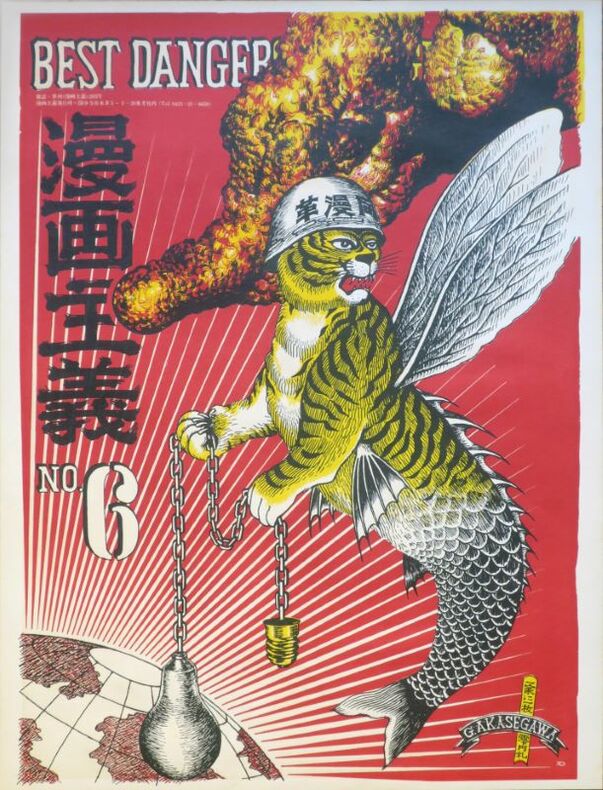
‎GENPEI AKASEGAWA (1937-2014)‎

‎MangashugiManga-ism‎

‎1968 affiche Sans lieu ni date, sans nom d’éditeur (Tokyo, 1968-1969, Mangashugi henshû iinkai), une lithographique originale en couleurs, 530x395mm.Affiche promotionnelle pour la revue « Mangashugi » une variante de la couverture du no.6.Tirage limité à 100 exemplaires. (102928)‎

Référence libraire : 102928

‎GENÊT (Claude)‎

‎PRISUNIC - NUANCES AÉRIENNES.‎

‎Studio Prisunic. ca.1970. Créateur : Claude Genêt. Impression en sérigraphie (petits défauts) Dim: 560 x 740 mm.‎

‎Début des années 60, Jacques GUEDEN Directeur Général des magasins PRISUNIC, nomme Denise FAYOLLE, créatrice, à la Direction du style et de la publicité, pour donner à lensemble des produits manufacturés une qualité esthétique, un style. Laventure « DU BEAU POUR TOUS » peut commencer. Jamais encore un commerce populaire navait affiché cette exigence esthétique et navait eu autant de résonance dans la société française. Denise FAYOLLE et Maïmé ARNODIN engagent des dessinateurs industriels, des typographes, stylistes, photographes. En plus de léquipe permanente, il est demandé à des graphistes ou illustrateurs dintervenir (Roman CIESLEWICZ, Georges LEMOINE, Jean Michel FOLON). Le designer Terence CONRAN (pour les meubles) participera à laventure. Pour la première fois en France, la création dun univers quotidien est réalisée par la même enseigne, une action cohérente globale pour un cadre de vie contemporain. Des centaines d'affiches seront réalisées, mais la plupart disparaîtront après utilisation.‎

Référence libraire : 2989

Livre Rare Book

Librairie Michaël Seksik
France Francia França France
[Livres de Librairie Michaël Seksik]

350,00 € Acheter

‎GENÊT (Claude)‎

‎PRISUNIC - NUANCES AÉRIENNES.‎

‎Studio Prisunic. ca.1970. Créateur : Claude Genêt. Impression en sérigraphie (petits défauts) Dim: 560 x 740 mm.‎

‎Début des années 60, Jacques GUEDEN Directeur Général des magasins PRISUNIC, nomme Denise FAYOLLE, créatrice, à la Direction du style et de la publicité, pour donner à lensemble des produits manufacturés une qualité esthétique, un style. Laventure « DU BEAU POUR TOUS » peut commencer. Jamais encore un commerce populaire navait affiché cette exigence esthétique et navait eu autant de résonance dans la société française. Denise FAYOLLE et Maïmé ARNODIN engagent des dessinateurs industriels, des typographes, stylistes, photographes. En plus de léquipe permanente, il est demandé à des graphistes ou illustrateurs dintervenir (Roman CIESLEWICZ, Georges LEMOINE, Jean Michel FOLON). Le designer Terence CONRAN (pour les meubles) participera à laventure. Pour la première fois en France, la création dun univers quotidien est réalisée par la même enseigne, une action cohérente globale pour un cadre de vie contemporain. Des centaines d'affiches seront réalisées, mais la plupart disparaîtront après utilisation.‎

Référence libraire : 2989

Livre Rare Book

Librairie Michaël Seksik
Paris France Francia França France
[Livres de Librairie Michaël Seksik]

350,00 € Acheter

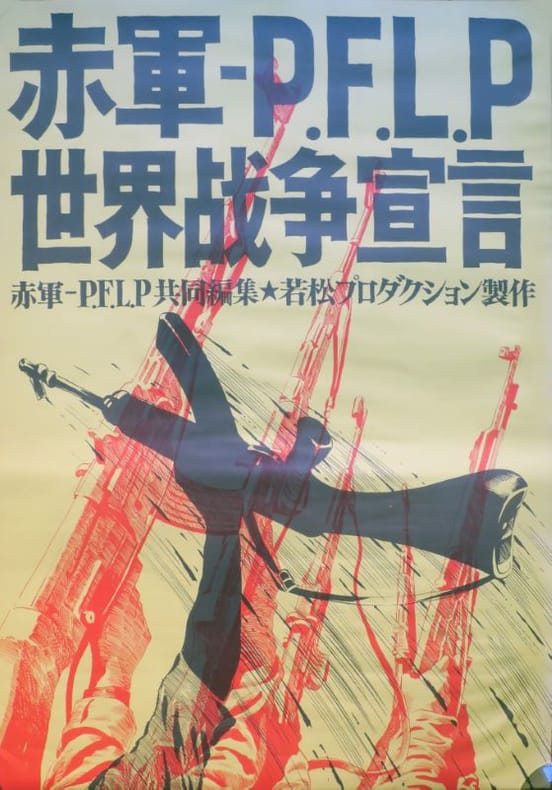
‎GENPEI AKASEGAWA (1937-2014) / WAKAMATSU KÔJI (1936-2012)‎

‎Sekigun P.F.L.P sekai senso sengen‎

‎1971 affiche Armée rouge P.F.L.P Déclaration de guerre internationaleAffiche, sans lieu ni date (Tokyo, 1971), lithographie, 730x515mm, promotionnelle pour un film documentaire de Kôji Wakamatsu, réalisé par Akasegawa. (104483)‎

Référence libraire : 104483

‎GENERAL BOULANGER. . .‎

‎Affiche annon?ant la candidature au Conseil G?n?ral du G?n?ral Boulanger dans 80 circonscriptions. (Impression noire sur fond lilas).‎

‎Une feuille 43x62 cm.‎

‎GEORGES RICHARD CYCLES. FERNEL (Fernand).‎

‎"Cycles".‎

‎1900 Affiche lithographiée entoilée, signée en bas à gauche dans la toile, Paris, Imprimerie Van Gindertaele, (1900), 140.5 x 110 cm.‎

‎Fernand Fernel (1872-1934) présente avec élégance et légèreté une bicyclette de la marque Georges Richard, reconnaissable à son trèfle à quatre feuilles. Marque créée en 1893 à Paris.‎

Référence libraire : 24318

Livre Rare Book

Librairie Chrétien
Paris France Francia França France
[Livres de Librairie Chrétien]

1 000,00 € Acheter

‎Geoffroy, Jean (1853-1924) dit GÉO, . Dessinateur du modèle‎

‎AFFICHE DE LIBRAIRIE POUR LES EDITIONS J.HETZEL & Cie - ETRENNES 1882, illustrée par GÉO, gravée par GILLOT‎

‎paris J.HETZEL & Cie 1882 Une affiche Publicitaire de Librairie imprimée et illustrée en noir par GÉO, gravée par Gillot, format : 38 x 26,5 cm,‎

‎RARIE....en trés bon état (very good condition). en trés bon état‎

Référence libraire : 27795

Livre Rare Book

Librairie Guimard
Nantes France Francia França France
[Livres de Librairie Guimard]

100,00 € Acheter

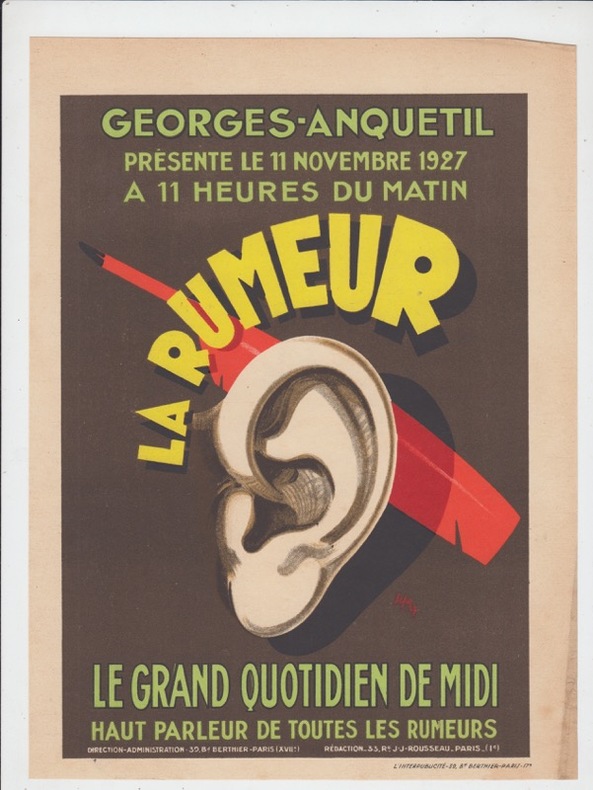
‎Georges-Anquetil , Severo Pozzati Sepo‎

‎Affiche originale signée SEPO : Georges-Anquetil presente le 11 novembre 1927 a 11 heures du matin la Rumeur‎

‎Ancienne affiche en lithographie pour présentation du quotidien "la Rumeur". Georges-Anquetil 11 novembre 1927,bon etat,21x 27 cm,Linen backed original antique 1927 cover created by Sepo for "La Rumeur". The director of La Rumeur was Georges Anquetil in Paris, France. Excellent condition,ready for framing.‎

‎Avocat, publiciste bouillant - et brouillon -, directeur du Courrier français à partir de 1914, éditeur de livres à scandale, Georges Anquetil (1888-?) fut un curieux personnage mais malgré tout un révolutionnaire des mœurs bourgeoises. Il dirigea à partir de 1927, une feuille à scandales, La Rumeur, où, comme dans son Satan conduit le bal, pamphlet, il dénonçait à tour de bras. Remise de 20% pour toutes commandes supérieures à 200 €‎

Référence libraire : 21214

Livre Rare Book

Livres Anciens Komar
Meounes les Montrieux France Francia França France
[Livres de Livres Anciens Komar]

180,00 € Acheter

‎GEORGES A. BORIAS‎

‎L'AFFICHE+ 24 DIAPOSITIVES.‎

‎PUBLICATIONS FILMEES D'ART ET D'HISTOIRE. 1966. In-12. Relié. Etat d'usage, Couv. légèrement passée, Dos satisfaisant, Intérieur frais. Broché de 143 pages avec quelques illustrations en noir et blanc das et hors texte + 24 dipositives dans un étui plastique, réunis dans une reliure toilée rouge avec titres dorés au dos et sur le premier plat.. . . . Classification Dewey : 741.67-Illustrations des affiches‎

‎"Collection ""Initiation artistique"". Classification Dewey : 741.67-Illustrations des affiches"‎

Référence libraire : R260107462

Livre Rare Book

Le-livre.fr / Le Village du Livre
Sablons France Francia França France
[Livres de Le-livre.fr / Le Village du Livre]

49,50 € Acheter

‎GEORGES RICHARD.‎

‎La Société de construction de Cycles et d'Automobiles. La Marque "Georges Richard".‎

‎Paris, Georges Richard (Imprimerie du Commerce, Havre), sans date (circa 1900). 65 x 49,5 cm. Belle gravure publicitaire présentant les modèles automobiles de la marque Georges Richard : dog-car, phaéton, phaéton américain, duc, charrette à 4 places, charrette à cinq places, cab. Dessins de Fernique & fils, gravure Ph.‎

‎Quelques légères traces de froissement et de pliures, sinon bel état de conservation. Georges Richard fut un constructeur automobile innovant, inventeur de la marque de voitures camions et autocars Unic, créé en 1905, qui deviendra plus tard Iveco. Installé à Paris dans les années 1890, il ouvrit un atelier de fabrication et de réparation de bicyclettes. La bicyclette suscitant alors un tel engouement qu’il ouvre avec son frère de nouveaux magasins d’exposition et de vente, puis fonde en 1893, la “Société des Cycles Georges Richard”. Les bicyclettes étaient garanties à vie contre tout vice de construction. Ce qui permettra à la marque de compter parmi leurs clients le service des Armées et celui des Postes et Télégraphes. Le succès obtenu au salon du cycle de 1893 les oblige à s’agrandir encore et la société évoluer en “Société de Construction de cycles et d’Automobiles Georges Richard”.La bicyclette fut dès lors oubliée au profit de l’essor de l’automobile. La marque est représentée par un trèfle à quatre feuilles. - Clients Livre Rare Book : Les frais postaux indiqués sont ceux pour la France métropolitaine et la Corse, pour les autres destinations, merci de contacter la librairie pour connaître le montant des frais d'expédition, merci de votre compréhension. Livre Rare Book Customers : The shipping fees indicated are only for France, if you want international shipping please contact us before placing your order, thank you for your understanding. - Frais de port : -Colissimo France 9,5 € -Colissimo International (Union Européenne + Suisse : 20 €) (Reste du Monde : 40 €)‎

Référence libraire : 2667

Livre Rare Book

Librairie L'Art et la Manière
Boynes France Francia França France
[Livres de Librairie L'Art et la Manière]

280,00 € Acheter

‎Georges MEUNIER - Lithographe de l'oeuvre reproduite‎

‎Maîtres de l'Affiche : Pl. 31. Georges MEUNIER Excursions en Normandie et Bretagne‎

‎paris Imprimerie Chaix 1896 Une Affichette Publicitaire [Fac-similé réduit de l'affiche originale], lithographiée en couleurs, format : 40 x 29 cm, Signé en bas au centre : Georges MEUNIER, Timbre sec dans le coin inférieur droit : "Les Maîtres de l'affiche // Imprimerie Chaix", 1896 [Paris] : Les Maîtres de l'Affiche Editeur,‎

‎Édition : [Fac-similé réduit de l'affiche originale], Note : Source : Affiche originale de l'imprimerie de : CHAIX (ATELIERS CHERET) Paris ......... SUPERBE .................. en trés bon état (very good condition). en trés bon état‎

Référence libraire : 27103

Livre Rare Book

Librairie Guimard
Nantes France Francia França France
[Livres de Librairie Guimard]

100,00 € Acheter

‎George Catlin.‎

‎George Catlin. Affiche éditée à l'occasion de l'exposition "George Catlin, Peintre des Indiens" au Centre Culturel Américaindu 8 novembre au 18 décembre 1963.‎

‎Une grande affiche de dimensions 59 x 85 cm; lithographie de Mourlot. Petites déchirures sans manque sur les marges; un angle coupé; sinon bien faîche. Voir photo.‎

MareMagnum

Sciardet Daniel
Germany Alemania Alemanha Allemagne
[Livres de Sciardet Daniel]

80,00 € Acheter

‎Georges Goursat, dit Sem‎

‎[Personnage non identifié]‎

‎français Lithographie imprimée en couleurs provenant des célèbres albums de SEM, publiés entre 1900 et 1920. 50x32,5 cm.‎

‎Georges Goursat, dit Sem‎

‎[Personnages non identifiés]‎

‎français Lithographie imprimée en couleurs provenant des célèbres albums de SEM, publiés entre 1900 et 1920. 50x32,5 cm.‎

‎Georges Goursat, dit Sem‎

‎[Sans titre]‎

‎français Ensemble de 2 lithographies, l'une en noir, l'autre imprimée en couleurs provenant des célèbres albums de SEM, publiés entre 1900 et 1920. 32,5x50,5 cm.‎

‎Georges Goursat, dit Sem‎

‎[Sans titre]‎

‎français Ensemble de 2 lithographies, l'une en noir, l'autre imprimée en couleurs provenant des célèbres albums de SEM, publiés entre 1900 et 1920. 32,5x50,5 cm.‎

‎Georges Goursat, dit Sem‎

‎C'est aujourd'hui ma fête!‎

‎français Ensemble de 2 lithographies, l'une en noir, l'autre imprimée en couleurs provenant des célèbres albums de SEM, publiés entre 1900 et 1920. 33x50,5 cm.‎

‎Georges Laporte.‎

‎Georges Laporte. Affiche éditée à l'occasion de l'exposition "Georges Laporte Peintures", à la galerie Cambacérès, du 18 février au 2 mars 1967‎

‎Une seule affiche de dimensions 49 x 64 cm; impression offset de l'imprimerie A.D.I.A, Nice. Marge inférieure droite frippée avec petite fente; sinon bon état. Voir photo. Peu fréquente.‎

MareMagnum

Sciardet Daniel
Germany Alemania Alemanha Allemagne
[Livres de Sciardet Daniel]

20,00 € Acheter

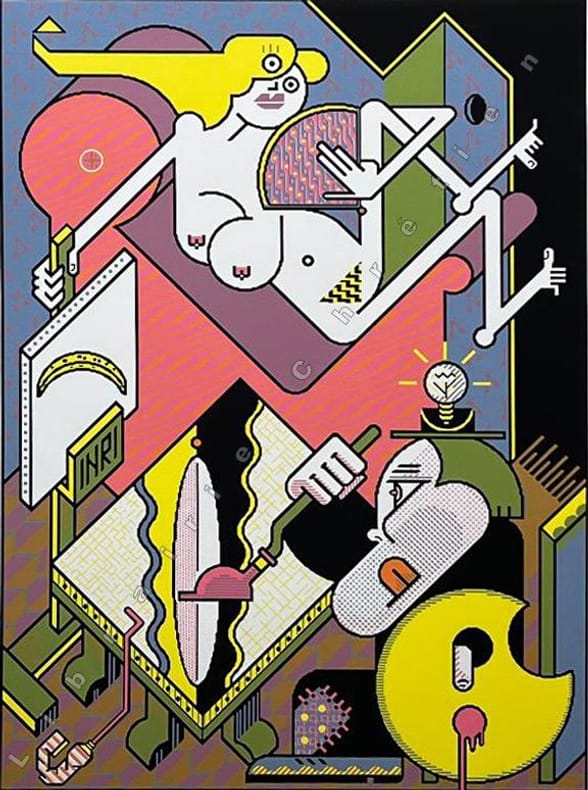
‎GERBAUD (Philippe).‎

‎"Dimanche".‎

‎L'Atelier Eric Seydoux Sérigraphie sur vélin d'Arches, signée en bas à droite à la mine de plomb, numérotée en bas à gauche, cachet sec de l'Atelier en bas à gauche, Paris, L'Atelier Eric Seydoux, 52 x 38 cm. (format à vue), 65 x 50 cm. (format de l'affiche)‎

‎Tirage limité à 130 exemplaires numérotés. Philippe Gerbaud (1950), peintre, illustrateur, illustrateur de bandes dessinées, affichiste, films d'animation réalise une oeuvre dont il est un des initiateurs en France : le Pixel Art et s'inspire du Pop Art en mêlant couleurs vives, pixels et humour.‎

Référence libraire : 24532

Livre Rare Book

Librairie Chrétien
Paris France Francia França France
[Livres de Librairie Chrétien]

450,00 € Acheter

‎Gerber:‎

‎007.‎

‎Sérigraphie Humbert-Droz, 1991. Affiche sérigraphiée grand format, faisant partie d'une série réalisée par des dessinateurs du cru (toutes au format d'environ 70 x 100 cm.) célébrant à leur manière le 700e anniversaire de la Confédération suisse (1991, vous en souvient-il?).‎

‎Suite à un accident immobilisant votre libraire pour quelques semaines, le traitement des commandes est bien assuré, mais momentanément ralenti. Merci de votre patience et de votre compréhension.‎

Référence libraire : 3208

Livre Rare Book

La Bergerie
Le Locle Switzerland Suiza Suíça Suisse
[Livres de La Bergerie]

95,57 € Acheter

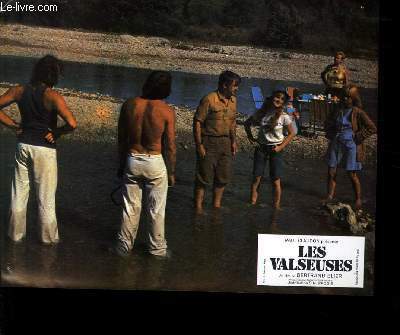
‎GERARD DEPARDIEU MIOU MIOU‎

‎1 LOT DE 3 PHOTOS LES VALSEUSES‎

‎BERTRAND BLIER. 1974. In-12. Broché. Bon état, Couv. convenable, Dos satisfaisant, Intérieur frais. 1 lot de 3 photos en couleurs.. . . . Classification : 0-Affiches Cinéma‎

‎Classification : 0-Affiches Cinéma‎

Référence libraire : R100000514

Livre Rare Book

Le-livre.fr / Le Village du Livre
Sablons France Francia França France
[Livres de Le-livre.fr / Le Village du Livre]

7,00 € Acheter

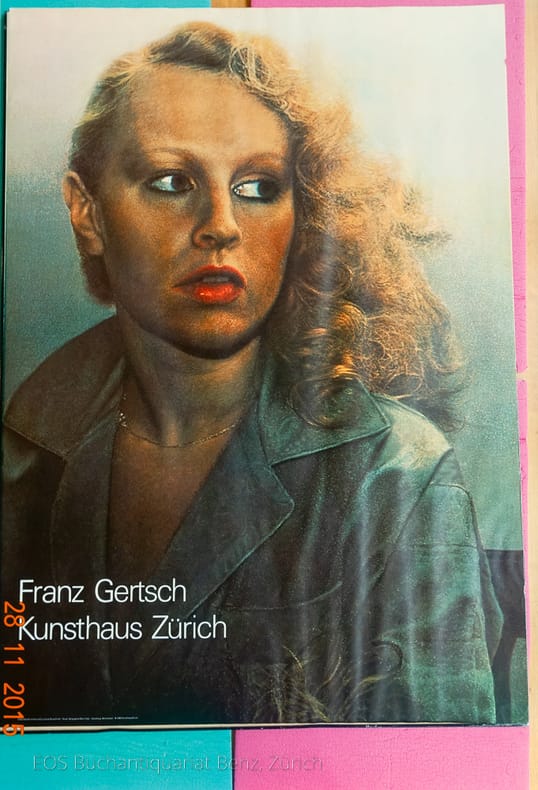
‎Gertsch, Franz (1930–2022).‎

‎Franz Gertsch - Im Kunsthaus Zürich.‎

‎Zürich, Kunsthaus Zürich, 1980. Serigrafie. Blattgrösse: 128 x 90 cm.‎

‎Gut erhaltenes Plakat.‎

Référence libraire : 966DG

Livre Rare Book

EOS Buchantiquariat Benz
CH-8001 Zürich Switzerland Suiza Suíça Suisse
[Livres de EOS Buchantiquariat Benz]

238,92 € Acheter

‎GERIN Octave Jacques‎

‎Précis intégral de publicité‎

‎Précis intégral de publicité avec le concours de E. DAMOUR, Louis SERRE. Mention de deuxième édition. In 8 broché, faux-titre, titre, VIII, 324 pages, illustrations dans le texte. DUNOD 1926. Rousseurs sur le premier plat de couverture.‎

Référence libraire : 12452

Livre Rare Book

Charbonnel
Bar le Duc France Francia França France
[Livres de Charbonnel]

25,00 € Acheter

‎Gerkan, Meinhard von u.a‎

‎Unter großen Dächern. Von Gerkan, Marg und Partner. [Original-Ausstellungsplakat / original exhibition poster.]‎

‎o.J. [2 Warenabbildungen] (Meinhard von Gerkan, geb. 03.01.1935 in Riga, gest. 30.11.2022 in Hamburg, deutscher Architekt. Entwürfe für die Flughä‎

‎Original-Plakat zur Ausstellung in der Berlinischen Galerie, 28.04. - 25.06.1995. Plakatgestaltung von Krämer & Boy, Kiel. Druck in silbrig Grau und Schwarz auf braunem Karton. Blattgröße: 84,2 x 59,5 cm. Sehr guter Zustand. Original exhibition poster by Berlinische Galerie. Poster design by Krämer & Boy, Kiel. Print in silver grey and black on heavier brown paper. Sheet dimensions: 84.2 x 59.5 cm. Fine condition.‎

Référence libraire : 66091CB

Antiquariat.de

Antiquariat Lenzen
DE - Düsseldorf
[Livres de Antiquariat Lenzen]

60,00 € Acheter

‎Gertsch, Franz (1930?2022)‎

‎Bois gravés monumentaux. Cabinet des estampes et musée Rath. Genève. 16 mars - 21 mai 1989.‎

‎1989. Serigrafie. Blattgrösse: 128 x 90 cm. + Wichtig: Für unsere Kunden in der EU erfolgt der Versand alle 14 Tage verzollt ab Deutschland / Postbank-Konto in Deutschland vorhanden +, 967DG‎

‎Gut erhaltenes Plakat.‎

Référence libraire : 967DG

‎Gertsch, Franz (1930?2022)‎

‎Franz Gertsch - Im Kunsthaus Zürich.‎

‎Zürich, Kunsthaus Zürich, 1980. Serigrafie. Blattgrösse: 128 x 90 cm. + Wichtig: Für unsere Kunden in der EU erfolgt der Versand alle 14 Tage verzollt ab Deutschland / Postbank-Konto in Deutschland vorhanden +, 966DG‎

‎Gut erhaltenes Plakat.‎

Référence libraire : 966DG

‎Gerz, Jochen‎

‎Foto/Texte, The French Wall & Stücke. [Plakat / Poster] Kunstverein Braunschweig, 9. April-9. Mai 1976.‎

‎Braunschweig., Kunstverein., 1976. 83,5 x 59 cm., 729E Leichte Knickspur unten links, teilweise leicht fingerfleckig, sonst gutes Exemplar.‎

‎Offsetdruck. Handschriftlich von Jochen Gerz rechts unten im Bild signiert.‎

Référence libraire : 729EB

‎GESGON, Alain.‎

‎Affiches. Préface de Claude Manceron.‎

‎Paris : Club socialiste du livre, 1982. Un album in-4°, broché, rhodoïd.‎

‎TBE. Nom d’un ancien propriétaire au premier feuillet. [21626]‎

Référence libraire : 21626

Livre Rare Book

Librairie DHOUAILLY SAS
Paris France Francia França France
[Livres de Librairie DHOUAILLY SAS]

37,00 € Acheter

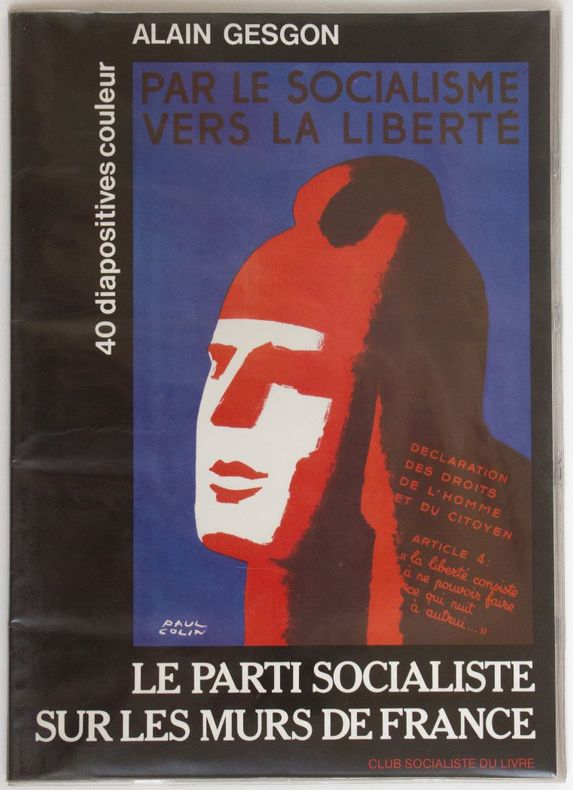
‎Gesgon, Alain - Manceron, Claude (préf.)‎

‎Affiches. Préface de Claude Manceron.‎

‎Sl Club socialiste du livre 1982 in-4 broché Sl, Club socialiste du livre, 1982. 31 x 22,5 cm, in-4, 117 (2) pp., portrait de Jean Jaurès reproduit en frontispice et 45 affiches de la SFIO ou du Parti Socialiste reproduites en couleurs à pleine page, broché sous couverture à rabats imprimée et illustrée en couleurs, rhodoïd.‎

‎Exemplaire enrichi d'un ENVOI autographe signé d'Alain Gesgon à Elisabeth Auclaire dans un grand DESSIN original au feutre couvrant tout le premier feuillet blanc. Petites usures au rhodoïd. Très bon‎

Référence libraire : 4726

Livre Rare Book

Julien Mannoni livres anciens
Paris France Francia França France
[Livres de Julien Mannoni livres anciens]

30,00 € Acheter

‎Gesgon Alain ; Mauroy (Pierre)‎

‎Affiches de Paix. Peace Posters Carteles de Paz‎

‎Fédération Mondiale des Cités Unies 1985 Livre en français, anglais, espagnol. In-4 cartonnage éditeur sous jaquette 33 cm sur 24. 131 pages. plus de 100 affiches reproduites pleine page en couleur. Jaquette frottée. Bon état d’occasion.‎

‎Bon état d’occasion‎

Référence libraire : 99492

Livre Rare Book

Librairie de l'Avenue
Saint-Ouen France Francia França France
[Livres de Librairie de l'Avenue]

27,00 € Acheter

‎GESSNER‎

‎Conrad Gessner 1516-1565. Affiche / Plakat‎

Référence libraire : 122513aaf

Livre Rare Book

Harteveld Rare Books Ltd.
Fribourg Switzerland Suiza Suíça Suisse
[Livres de Harteveld Rare Books Ltd.]

238,92 € Acheter

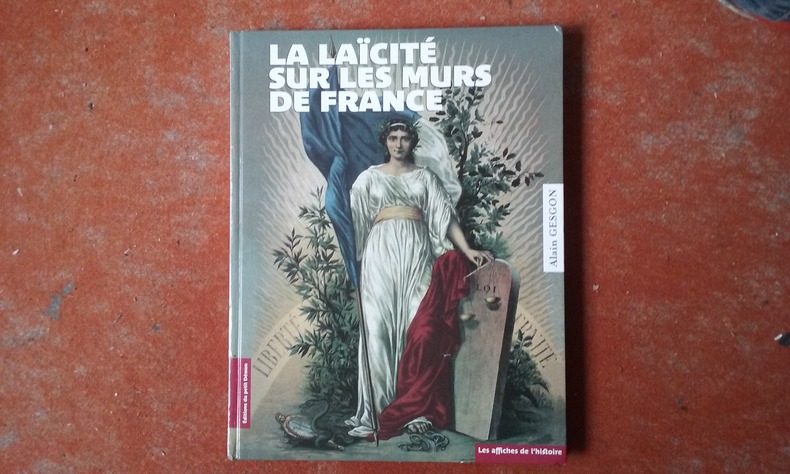
‎GESGON Alain‎

‎La laïcité sur les murs de France‎

‎Rennes, Editions du petit Démon, 2006, in-4 rel. cart. (24,5 x 31,5), 187 p., coll. "Les Affiches de l'histoire", 142 reproduction d'affiches, un dessin original pleine page de l'auteur sur page de garde, très bon état.‎

‎Cet ouvrage retrace, exclusivement par l'image, l'histoire de la laïcité et des relations entre la puissance publique et la religion en France. 142 affiches, reproduites en grand format et en couleurs, permettent de parcourir l'Histoire de 1513 (décret du pape Léon X) à 2005 (centenaire de la loi de séparation des Eglises et de l'Etat) en passant par les placards révolutionnaires (1789-1794), la très anticléricale Lanterne, l'école laïque et le problème récent du voile islamique, sans oublier la propagande catholique.‎

Référence libraire : QWA-12123

Livre Rare Book

Librairie de la Garenne
Clichy-la-Garenne France Francia França France
[Livres de Librairie de la Garenne]

50,00 € Acheter

Nombre de résultats : 10 760 (216 Page(s))

Première page Page précédente 1 ... 126 127 128 [129] 130 131 132 ... 143 154 165 176 187 198 209 ... 216 Page suivante Dernière page