|
|
|
Müller, Olaf (Hrsg.) und Bernd Vincken (Hrsg.)
Europa am Scheideweg. Verleihung des Internationalen Karlspreises zu Aachen 2015 an Martin Schulz. [Herausgegeben von Olaf Müller und Bernd Vincken].
Aachen: Einhard 2015. 284 Seiten. Mit zahlreichen Illustrationen. 8° (17,5-22,5 cm). Illustrierter Orig.-Pappband. [Hardcover / fest gebunden].
Référence libraire : 3122043

|
|
|
Müller, Olaf (Hrsg.) und Bernd Vincken (Hrsg.)
Europa im Herzen. Verleihung des Internationalen Karlspreises zu Aachen 2006 an Jean-Claude Juncker. [Herausgegeben von Olaf Müller und Bernd Vincken].
Aachen: Einhard 2006. 222 Seiten. Mit einigen Illustrationen. 8° (17,5-22,5 cm). Illustrierter Orig.-Pappband. [Hardcover / fest gebunden].
Référence libraire : 3121995

|
|
|
Müller, Oscar
Warum mussten wir nach Versailles? Von der Friedensresolution zum Friedensschluss.
Berlin:, Norddeutsche Buchdruckerei und Verlagsanstalt, 1919. Gr.-8°. 72 S. broschiert (Einband mit kleinen Einrissen, leicht bestossen, S. 3-14 lose, etwas gebräunt).
Référence libraire : 9520AB
|
|
|
Müller, R. (Hrsg.)
Malerisches altes Europa. Romantische Ansichten von Städten u. Schlössern d. guten alten Zeit. M. e. Einführ. v. E. Schramm.
(Gütersloh, Bertelsmann, 1970). 4°. M. zahlr. Abb. 191 S. OLwd. m. Pp.-Schuber. Dieser etwas eingerissen.
Référence libraire : 127831
|
|
|
Müller, Richard - 1874 Tschirnitz/Böhmen - Dresden-Loschwitz 1954
Die Stärkere.
o.J. Radierung, 1918, auf graugrünem Bütten, signiert. 18,7:26,7 cm. Literatur: Günther 91. Eins von 165 Exx. Ganz vorzüglicher, nuancenreicher und breitrandiger Abdruck mit zartem Plattenton. Links unten mit dem Blindstempel der Vereinigung der Kunstverleger. Bei der Darstellung handelt es sich vermutlich um eine Variation des mythologischen Themas ?Rau der Europa durch Zeus in Gestalt eines Tiers?.
Référence libraire : 0467-C

|
|
|
Müller, Robert
Gesammelte Essays. Erste Auflage
Paderborn Igel Verlag Literatur, 1995. 307 S. 8° Oktav Brosch.
Référence libraire : 13535

|
|
|
Müller, Rolf [Hrsg.]
Malerisches altes Europa. romant. Ansichten von Städten u. Schlössern d. guten alten Zeit.
Gütersloh, Bertelsmann; Stuttgart : Europ. Buch- u. Phonoklub; Wien : Buchgemeinschaft Donauland, [1970]. ; 40 cm. 191 S. : überwiegend Ill. (z. T. farb.), m. einer Einführung v. Egon Schramm. OL., verg. Rü.-Tit., O.-Umschl., i. Schuber. Sehr guter Zust.
Référence libraire : 44874AB
|
|
|
Müller, Rolf [Hrsg.]
Malerisches altes Europa. romant. Ansichten von Städten u. Schlössern d. guten alten Zeit.
Gütersloh, Bertelsmann; Stuttgart : Europ. Buch- u. Phonoklub; Wien : Buchgemeinschaft Donauland, [1970]. ; 40 cm. 191 S. : überwiegend Ill. (z. T. farb.), m. einer Einführung v. Egon Schramm. OL., verg. Rü.-Tit., O.-Umschl.(dieser leicht berieb. u. m. kl. Einr./Randläsuren), Deckelill. Guter Zust.
Référence libraire : 42659AB
|
|
|
Müller, Rolf. (Hrsg.)
Malerisches altes Europa. Romantische Ansichten von Städten und Schlössern der guten alten Zeit. Mit einer Einführung von Egon Schramm. Überaus reich illustriert mit teils farbigen Reproduktionen alter Lithos und Stiche.
Gütersloh, Lizenzausgabe für Buchgemeinschaften., 1970. Gr.4°. [27,5 : 39,5 cm]. 191 Seiten. Mit einem Verzeichnis der abgebildeten Orte. Originalleinenband mit goldgeprägter Deckelvignette, goldgeprägtem Rückentitel und farbig illustriertem Schutzumschlag. (Umschlag an Stehkante leicht geändert). - Ansonsten ein sehr gut erhaltenes, sauberes Exemplar in fester Bindung und ohne Eintragungen.
Référence libraire : 53486AB

|
|
|
Müller, Rolf. (Hrsg.)
Malerisches altes Europa. Romantische Ansichten von Städten und Schlössern der guten alten Zeit. Mit einer Einführung von Egon Schramm. Überaus reich illustriert mit teils farbigen Reproduktionen alter Lithos und Stiche.
Gütersloh, Lizenzausgabe für Buchgemeinschaften., 1970. Gr.4°. [27,5 : 39,5 cm]. 191 Seiten. Mit einem Verzeichnis der abgebildeten Orte. Originalleinenband mit goldgeprägter Deckelvignette und goldgeprägtem Rückentitel. - Ein sehr gut erhaltenes, annähernd neuwertiges Exemplar.
Référence libraire : 49579AB

|
|
|
Müller, Sophus
Nordische Altertumskunde nach Funden und Denkmälern aus Dänemark und Schleswig.
Straßburg, Karl J. Trübner, 1897. "Gr.-8° (22,5-25 cm). 472; 324 SS." Halbleder der Zeit mit vergoldetem Rückentitel
Référence libraire : 12264

|
|
|
Müller, Sophus
Urgeschichte Europas. Grundzüge einer prähistorischen Archäologie
Straßburg: Verlag von Karl J. Trübner, 1905. VIII, 204, 48 S. ; 23,5 cm ; Leinen.
Référence libraire : 116337

|
|
|
MÜLLER, T
Schutzklauseln im Europäischen Gemeinschaftsrecht (mit Ausnahme des Agrarrechts). Vorwort von Hans Peter Ipsen.
Hamburg, Fundament-Verlag, 1970. XXIV, 334 S. OPpbd (Stempel auf Titel, Bibliotheks-Rückenschild).
Référence libraire : 3469461
|
|
|
Müller, Wilhelm gen. Griechenmüller
Rom, Römer und Römerinnen. Wilhelm Müller. Müller genannt: ?Griechen-Müller? - [Hrsg. von Wulf Kirsten] 1. Aufl.
Berlin : Rütten und Loening 1991. 399 S. : 31 Abb.., 1 Frontispiz ; 19 cm Top Zustand, Pp., gebundene Ausgabe, Hardcover/Pappeinband
Référence libraire : 30879

|
|
|
Müller-Alfeld, Th
Italien. Von d. Alpen bis Sizilien.
Berlin, Dt. Buch-Gemeinschaft, (1958). 4°. M. 255 (teils blattgr.) Abb. 199 S. OHldr.
Référence libraire : 210084
|
|
|
Müller-Alfeld, Theodor
Das Europa-Reisebuch.
Berlin [u.a.] : Dt. Buchgemeinschaft, 1959. Italien, Balkanländer : Italien mit Sizilien u. Sardinien, Jugoslawien, Griechenland, europäische Türkei. 446 S. Mit 85 zweifarb. Zeichn. von Dietrich Evers u. 28 teils vierfarb. Kt. ... 8°. OHLdr. mit Rückengoldpräg., ill. Einbd u. Lesebändchen.
Référence libraire : 23803
|
|
|
Müller-Alfeld, Theodor
Meisterwerke europäischer Baukunst.
Berlin/Darmstadt/Wien, Dt. Buch-Gemeinschaft, 1960. 4. 251 S., Abb. mit Text. Hldr., verg. Rü.-u. Deck.-Tit. Vord. Deck. leicht lichtrand., sonst sauber u. gut erhalten.
Référence libraire : 51117AB
|
|
|
MÜLLER-ALFELD, THEODOR, WILLY EGGERS, PETER DREESSEN (Hrsg.)
Das Bild Europas. Landschaft und Kultur eines Erdteils.
Berlin, Darmstadt, DBG, 1952. 197 S., 1 Bl. mit zahlr. Fotoabb. Halbleder.
Référence libraire : 3582AB
|
|
|
MÜLLER-ARMACK, Alfred
Auf dem Weg nach Europa. Erinnerungen und Ausblicke.
Stuttgart, Poeschel, 1971. 267 S. OLwd (mit OUmschlag).
Référence libraire : 3169787
|
|
|
Müller-Christensen, Sigrid (Verfasser)
Alte Möbel : vom Mittelalter bis zum Jugendstil. Sigrid Müller-Christensen. 8., erw. Aufl., 37. - 46. Tsd.
München : Bruckmann 1974. 223 S. : 246 Ill. (z. T. farb.) 24,5*18 cm OLeinenband, OSchu.
Référence libraire : 132364

|
|
|
MÜLLER-GRAFF, Peter-Christian; KABAALIOGLU, Haluk (Hrsg.)
'Schriftenreihe des Arbeitskreises Europäische Integration e.V.', Band 76: TURKEY AND THE EUROPEAN UNION. - DIFFERENT DIMENSIONS.
Baden-Baden, Nomos Verlag, 2012. 125 Seiten. - Grüner, kartonierter Originaleinband mit weißem Deckel- und Rückentitel; 8vo.(ca. 22 x 16 cm).
Référence libraire : ml45hljzbvk
|
|
|
Müller-Jena, Herbert
Die Kolonialpolitik des Faschistischen Italien. (= Veröffentlichungen des deutschen Instituts für Außenpolitische Forschung - Band 4).
Essener Verlagsanstalt, Essen 1939. XIII, 478 Seiten mit 8 Karten, Gr.-8°, Original-Leinen, Bibliotheks-Exemplar (ordnungsgemäß entwidmet), Stempel auf Titel und auf Schnitt, insgesamt gutes und innen sauberes Exemplar,
Référence libraire : 304245

|
|
|
Müller-Marein, J
Europa. Städte u. Landschaften aus d. Flugzeug gesehen.
Köln, Buch u. Zeit, (1969). M. zahlr. (teils farb.) Abb. 220 S. OPp. M. Sign. a. Einbd. Leicht beschabt. St. a. Tit.
Référence libraire : 134438
|
|
|
MÜLLER-MAREIN, JOSEF.
Europa. Städte und Landschaften aus dem Flugzeug gesehen.
|
|
|
Müller-Wiener, Martina, Christiane Kothe Karl-Heinz Golzio (Hrsg.) u. a
Al- Andalus und Europa. Zwischen Orient und Okzident. Mit Joachim Gierlichs.
Petersberg: Imhof, 2004. 416 S. Mit zahlr. Abb. Originalhardcover.
Référence libraire : 902077

|
|
|
Müller-Wolff, Susanne
Venedig : eine literarische Einladung. herausgegeben von Susanne Müller-Wolff / Salto ; 228
Berlin : Verlag Klaus Wagenbach Herbst 2017. 140 Seiten : Illustrationen ; 21 cm Gewebe, gebundene Ausgabe, Leinen
Référence libraire : 66192

|
|
|
Müllner, Johann
Erdkunde für Mittelschulen. Ausgabe A für Gymnasien und Realschulen. Hier: 4. Teil - für die 5. Klasse. Mit 35 Abbildungen.
Wien, Tempsky., 1910. 8°. 151 Seiten. Frakturdruck. Grüner Originalleinenband. (Kapitale leicht berieben/bestossen. Innen partiell randfleckig. Besitzvermerk auf Vorsatz). - Ansonsten ein gut erhaltenes, ordentliches Exemplar ohne Eintragungen.
Référence libraire : 41535AB

|
|
|
Müllner, Johann
Erdkunde für Mittelschulen. Ausgabe A für Gymnasien und Realschulen. Hier: 5. Teil - für die 5. Klasse. Mit 24 Abbildungen.
Wien, Tempsky., 1910. 8°. 156 Seiten. Frakturdruck. Grüner Originalleinenband. (Kapitale/Ecken leicht berieben/bestossen. 4,5 cm Schabespur am unteren Deckelrand. Innen wenige Eintragungen, partiell fleckig. Besitzvermerk und handschriftl. Notizen auf Vorsatz und Hinterdeckelinnenseite). - Ansonsten ein gut erhaltenes, ordentliches Exemplar ohne Eintragungen.
Référence libraire : 41536AB

|
|
|
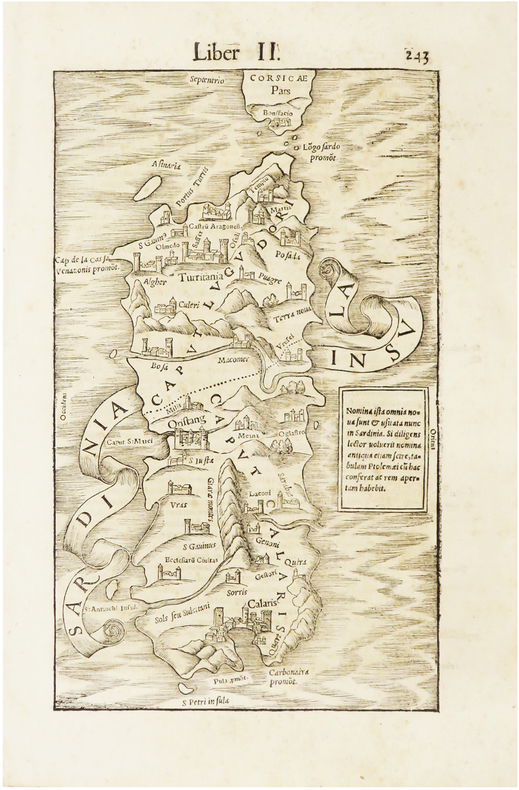
MÜNSTER (Sebastian).
[SARDAIGNE] Sardinia insula.
[Bâle, 1550]. 254 x 153 mm.
Référence libraire : LBW-6654
|
|
|
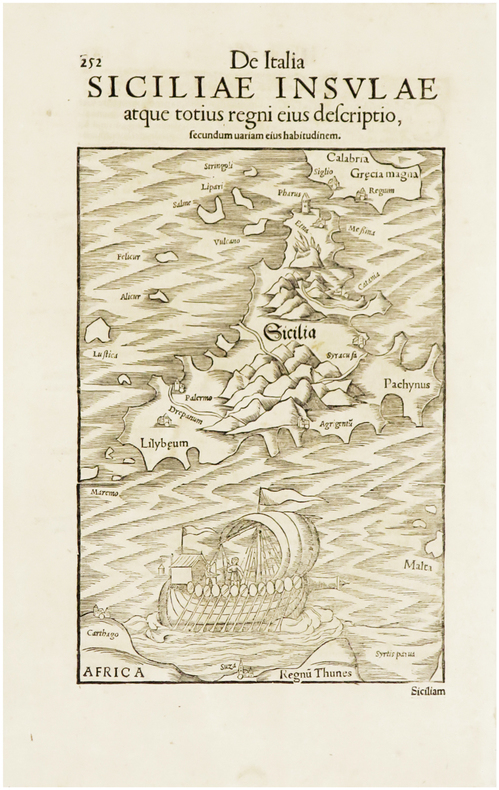
MÜNSTER (Sebastian).
[SICILE] De Italia Siciliæ insulæ atque totius regni eius descriptio.
[Bâle, 1550]. 213 x 148 mm.
Référence libraire : LBW-6659
|
|
|
Münch, Dr. Ernst
Die Heerzüge des christlichen Europas wider die Osmanen, und die Versuche der Griechen zur Freiheit. Erster, zweiter und dritter Theil in EINEM Band.
Basel : Schweighauser, 1823. 220, 263, 300 Seiten. Späterer Leinenband. 18 cm
Référence libraire : 269739

|
|
|
Münch, E
Die Geschichte von Columbia. 2 Bde.
Dresden, Hilscher, 1828. VI, 113; VIII, 111 S. Pp. d. Zt. Einbd. berieben. St. a. Tit. (Allg. hist. Taschenbibl. f. Jedermann 23 u. 25).
Référence libraire : 621360
|
|
|
Münch, Paul
Lebensformen in der frühen Neuzeit.
Frankfurt a. M. Propyläen-Verlag, 1992. 603 S. Mit s/w Textabb. u. 48 s/w Abb. Auf Tafeln. 22 cm. OPp. m. SU.
Référence libraire : 85037

|
|
|
MÜNCH, WERNER & Günter Rinsche [herausgegeben von].
Europa unsere Zukunft. Ein Traum wird Wirklichkeit. [Unter Mitarbeit von Klaus Weigelt]. Mit Beiträgen von: Elmar Brok, Egon Klepsch, Helmut Kohl, Rudolf Luster, Fritz Pirkl, Hans-Gert Pöttering, Ursula Schleicher, Karl von Wogau, Axel N. Zarges.
|
|
|
MÜNCH, WERNER [HRSG].
Unser Europa - Garant freier Völker.
|
|
|
Münchmeyer, W
Die neue norwegische Fischereigrenze vom 12. Juli 1935. Diss.
Hamburg, 1939. 2 Bl., 55 S. Bibl.-Br. m. Sign. St. verso Tit.
Référence libraire : 823981
|
|
|
Mündel, C
Die Vogesen. Ein Handbuch für Touristen. Auf Grundlage von Schickers Vogesenführer. 5., verb. Aufl.
Straßburg, Trübner, 1888. Kl.-8°. M. 13 Ktn., 3 Plänen, 2 Panoramen u. mehr. Holzschn. XVIII S., 1 Bl., 509 S. OLwd. m. goldgepr. Rücken- u. Deckeltitel. M. Rsign. Einbd. minimal fleckig. Name u. St. a. Tit.
Référence libraire : 188038
|
|
|
Münkler, Herfried
Reich - Nation - Europa. Modelle politischer Ordnung. Edition Zeitgeschichte.
Weinheim : Beltz, Athenäum, 1996. 150 S. Originalhardcover.
Référence libraire : 1075518

|
|
|
Münnich, G
Quantitative Geschiebeprofile aus Dänemark u. Nordostdeutschland m. bes. Berücks. Vorpommerns.
Greifswald, 1936. M. 17 Abb. 50 S. OBr. (Abh. a. d. Geolog.-Pal. Inst. d. Univ. Greifswald 15 = Beih. z. Zs. f. Geschiebeforsch.).
Référence libraire : 109183
|
|
|
Müns, Heike (Hrsg.) und Matthias Weber (Hrsg.)
"Durst nach Erkenntnis ..." Forschungen zur Kultur und Geschichte der Deutschen im östlichen Europa. Zwei [2] Jahrzehnte Immanuel-Kant-Stipendium. Herausgegeben von Heike Mühns und Matthias Weber. (= Schriften des Bundesinstituts für Kultur und Geschichte der Deutschen im Östlichen Europa, Band 29).
München: Oldenbourg 2007. 312 Seiten. Mit vereinzelten Abbildungen. Gr. 8° (22,5-25 cm). Illustrierte Orig.-Kartonage. [Softcover / Paperback].
Référence libraire : 102351

|
|
|
Müns, Heike (Hrsg.) und Matthias Weber (Hrsg.)
"Durst nach Erkenntnis ..." Forschungen zur Kultur und Geschichte der Deutschen im östlichen Europa. Zwei [2] Jahrzehnte Immanuel-Kant-Stipendium. Herausgegeben von Heike Mühns und Matthias Weber. (= Schriften des Bundesinstituts für Kultur und Geschichte der Deutschen im Östlichen Europa, Band 29).
München: Oldenbourg 2007. 312 Seiten. Mit vereinzelten Abbildungen. Gr. 8° (22,5-25 cm). Illustrierte Orig.-Kartonage. [Softcover / Paperback].
Référence libraire : 97106

|
|
|
Münster Sebastian (1488 - 1552)
(Aquisgrana)
Tavola tratta dalla Cosmographiae Universalis, edizione in latino, Basilea, metà del XVI secolo.La Cosmographiae Universalis di Sebastian Münster (1488-1552), stampata per la prima volta Basilea nel 1544 dall’editore Heinrich Petri, venne più volte aggiornata e aumentata di nuove carte geografiche e rappresentazioni urbane nelle sue numerose edizioni che arrivano all’inizio del secolo successivo. Münster aveva lavorato a raccogliere informazioni al fine di ottenere un'opera che non deludesse le aspettative e, dopo un'ulteriore pubblicazione in tedesco abbellita da 910 stampe su legno, giunse nel 1550 all'edizione definitiva in latino, illustrata da 970 silografie. Vi furono poi numerose edizioni in diverse lingue, fra cui latino, francese, italiano, inglese e ceco. Dopo la sua morte di Münster (1552), Heinrich Petri prima, e il figlio Sebastian poi, continuarono la pubblicazione dell’opera. La Cosmographia universalis fu uno dei libri più popolari e di successo del XVI secolo, e vide ben 24 edizioni in 100 anni: l'ultima edizione tedesca venne pubblicata nel 1628, molto tempo dopo la morte dell'autore. La Cosmographia conteneva non solo le ultime mappe e vedute di tutte le città più famose, ma anche una serie di notizie enciclopediche di dettagli relative al mondo conosciuto, e sconosciuto. Il particolare successo anche commerciale di quest'opera fu dovuto in parte alle belle incisioni (tra i cui autori si possono citate Hans Holbein il Giovane, Urs Graf, Hans Rudolph Manuel Deutsch, David Kandel). Silografia, in buone condizioni. Plate taken from the Cosmographiae Universalis, Latin edition, Basel, second half of the 16th Century. The Cosmographiae Universalis of Sebastian Münster (1488-1552), printed for the first time in Basel in 1544 by the publisher Heinrich Petri, was updated several times and increased with new maps and urban representations in its many editions until the beginning of the next century. Münster had worked to collect information in order to obtain a work that did not disappoint expectations and, after a further publication in German embellished with 910 woodblock prints, arrived in 1550 to the final edition in Latin, illustrated by 970 woodcuts. There were then numerous editions in different languages, including Latin, French, Italian, English and Czech. After his death in Münster (1552), Heinrich Petri first, and then his son Sebastian, continued the publication of the work. The Cosmographia universalis was one of the most popular and successful books of the 16th century, and saw as many as 24 editions in 100 years: the last German edition was published in 1628, long after the author's death. The Cosmographia contained not only the latest maps and views of all the most famous cities, but also a series of encyclopedic details related to the known, and unknown, world. The particular commercial success of this work was due in part to the beautiful engravings (among whose authors can be mentioned Hans Holbein the Younger, Urs Graf, Hans Rudolph Manuel Deutsch, David Kandel). Woodcut, in good condition.

|
|
|
Münster Sebastian (1488 - 1552)
(Fiandre)
Tavola tratta dalla Cosmographiae Universalis, edizione in tedesco, Basilea, seconda metà del XVI secolo.La Cosmographiae Universalis di Sebastian Münster (1488-1552), stampata per la prima volta Basilea nel 1544 dall’editore Heinrich Petri, venne più volte aggiornata e aumentata di nuove carte geografiche e rappresentazioni urbane nelle sue numerose edizioni che arrivano all’inizio del secolo successivo. Münster aveva lavorato a raccogliere informazioni al fine di ottenere un'opera che non deludesse le aspettative e, dopo un'ulteriore pubblicazione in tedesco abbellita da 910 stampe su legno, giunse nel 1550 all'edizione definitiva in latino, illustrata da 970 silografie. Vi furono poi numerose edizioni in diverse lingue, fra cui latino, francese, italiano, inglese e ceco. Dopo la sua morte di Münster (1552), Heinrich Petri prima, e il figlio Sebastian poi, continuarono la pubblicazione dell’opera. La Cosmographia universalis fu uno dei libri più popolari e di successo del XVI secolo, e vide ben 24 edizioni in 100 anni: l'ultima edizione tedesca venne pubblicata nel 1628, molto tempo dopo la morte dell'autore. La Cosmographia conteneva non solo le ultime mappe e vedute di tutte le città più famose, ma anche una serie di notizie enciclopediche di dettagli relative al mondo conosciuto, e sconosciuto. Il particolare successo anche commerciale di quest'opera fu dovuto in parte alle belle incisioni (tra i cui autori si possono citate Hans Holbein il Giovane, Urs Graf, Hans Rudolph Manuel Deutsch, David Kandel). Silografia, bella coloritura a mano, in buone condizioni. Plate taken from the Cosmographiae Universalis, German edition, Basel, second half of the 16th Century. The Cosmographiae Universalis of Sebastian Münster (1488-1552), printed for the first time in Basel in 1544 by the publisher Heinrich Petri, was updated several times and increased with new maps and urban representations in its many editions until the beginning of the next century. Münster had worked to collect information in order to obtain a work that did not disappoint expectations and, after a further publication in German embellished with 910 woodblock prints, arrived in 1550 to the final edition in Latin, illustrated by 970 woodcuts. There were then numerous editions in different languages, including Latin, French, Italian, English and Czech. After his death in Münster (1552), Heinrich Petri first, and then his son Sebastian, continued the publication of the work. The Cosmographia universalis was one of the most popular and successful books of the 16th century, and saw as many as 24 editions in 100 years: the last German edition was published in 1628, long after the author's death. The Cosmographia contained not only the latest maps and views of all the most famous cities, but also a series of encyclopedic details related to the known, and unknown, world. The particular commercial success of this work was due in part to the beautiful engravings (among whose authors can be mentioned Hans Holbein the Younger, Urs Graf, Hans Rudolph Manuel Deutsch, David Kandel). Woodcut, beautiful hand-coloring, in good condition.

|
|
|
Münster Sebastian (1488 - 1552)
(Haarlem)
Tavola tratta dalla Cosmographiae Universalis, edizione in tedesco, Basilea, seconda metà del XVI secolo.La Cosmographiae Universalis di Sebastian Münster (1488-1552), stampata per la prima volta Basilea nel 1544 dall’editore Heinrich Petri, venne più volte aggiornata e aumentata di nuove carte geografiche e rappresentazioni urbane nelle sue numerose edizioni che arrivano all’inizio del secolo successivo. Münster aveva lavorato a raccogliere informazioni al fine di ottenere un'opera che non deludesse le aspettative e, dopo un'ulteriore pubblicazione in tedesco abbellita da 910 stampe su legno, giunse nel 1550 all'edizione definitiva in latino, illustrata da 970 silografie. Vi furono poi numerose edizioni in diverse lingue, fra cui latino, francese, italiano, inglese e ceco. Dopo la sua morte di Münster (1552), Heinrich Petri prima, e il figlio Sebastian poi, continuarono la pubblicazione dell’opera. La Cosmographia universalis fu uno dei libri più popolari e di successo del XVI secolo, e vide ben 24 edizioni in 100 anni: l'ultima edizione tedesca venne pubblicata nel 1628, molto tempo dopo la morte dell'autore. La Cosmographia conteneva non solo le ultime mappe e vedute di tutte le città più famose, ma anche una serie di notizie enciclopediche di dettagli relative al mondo conosciuto, e sconosciuto. Il particolare successo anche commerciale di quest'opera fu dovuto in parte alle belle incisioni (tra i cui autori si possono citate Hans Holbein il Giovane, Urs Graf, Hans Rudolph Manuel Deutsch, David Kandel). Silografia, bella coloritura a mano, in buone condizioni. Plate taken from the Cosmographiae Universalis, German edition, Basel, second half of the 16th Century. The Cosmographiae Universalis of Sebastian Münster (1488-1552), printed for the first time in Basel in 1544 by the publisher Heinrich Petri, was updated several times and increased with new maps and urban representations in its many editions until the beginning of the next century. Münster had worked to collect information in order to obtain a work that did not disappoint expectations and, after a further publication in German embellished with 910 woodblock prints, arrived in 1550 to the final edition in Latin, illustrated by 970 woodcuts. There were then numerous editions in different languages, including Latin, French, Italian, English and Czech. After his death in Münster (1552), Heinrich Petri first, and then his son Sebastian, continued the publication of the work. The Cosmographia universalis was one of the most popular and successful books of the 16th century, and saw as many as 24 editions in 100 years: the last German edition was published in 1628, long after the author's death. The Cosmographia contained not only the latest maps and views of all the most famous cities, but also a series of encyclopedic details related to the known, and unknown, world. The particular commercial success of this work was due in part to the beautiful engravings (among whose authors can be mentioned Hans Holbein the Younger, Urs Graf, Hans Rudolph Manuel Deutsch, David Kandel). Woodcut, beautiful hand-coloring, in good condition.

|
|
|
Münster Sebastian (1488 - 1552)
Ab contrafehtung Der Statt Gotha
Tavola tratta dalla Cosmographiae Universalis, edizione in tedesco, Basilea, seconda metà del XVI secolo.La Cosmographiae Universalis di Sebastian Münster (1488-1552), stampata per la prima volta Basilea nel 1544 dall’editore Heinrich Petri, venne più volte aggiornata e aumentata di nuove carte geografiche e rappresentazioni urbane nelle sue numerose edizioni che arrivano all’inizio del secolo successivo. Münster aveva lavorato a raccogliere informazioni al fine di ottenere un'opera che non deludesse le aspettative e, dopo un'ulteriore pubblicazione in tedesco abbellita da 910 stampe su legno, giunse nel 1550 all'edizione definitiva in latino, illustrata da 970 silografie. Vi furono poi numerose edizioni in diverse lingue, fra cui latino, francese, italiano, inglese e ceco. Dopo la sua morte di Münster (1552), Heinrich Petri prima, e il figlio Sebastian poi, continuarono la pubblicazione dell’opera. La Cosmographia universalis fu uno dei libri più popolari e di successo del XVI secolo, e vide ben 24 edizioni in 100 anni: l'ultima edizione tedesca venne pubblicata nel 1628, molto tempo dopo la morte dell'autore. La Cosmographia conteneva non solo le ultime mappe e vedute di tutte le città più famose, ma anche una serie di notizie enciclopediche di dettagli relative al mondo conosciuto, e sconosciuto. Il particolare successo anche commerciale di quest'opera fu dovuto in parte alle belle incisioni (tra i cui autori si possono citate Hans Holbein il Giovane, Urs Graf, Hans Rudolph Manuel Deutsch, David Kandel). Silografia, bella coloritura a mano, in buone condizioni. Plate taken from the Cosmographiae Universalis, German edition, Basel, second half of the 16th Century. The Cosmographiae Universalis of Sebastian Münster (1488-1552), printed for the first time in Basel in 1544 by the publisher Heinrich Petri, was updated several times and increased with new maps and urban representations in its many editions until the beginning of the next century. Münster had worked to collect information in order to obtain a work that did not disappoint expectations and, after a further publication in German embellished with 910 woodblock prints, arrived in 1550 to the final edition in Latin, illustrated by 970 woodcuts. There were then numerous editions in different languages, including Latin, French, Italian, English and Czech. After his death in Münster (1552), Heinrich Petri first, and then his son Sebastian, continued the publication of the work. The Cosmographia universalis was one of the most popular and successful books of the 16th century, and saw as many as 24 editions in 100 years: the last German edition was published in 1628, long after the author's death. The Cosmographia contained not only the latest maps and views of all the most famous cities, but also a series of encyclopedic details related to the known, and unknown, world. The particular commercial success of this work was due in part to the beautiful engravings (among whose authors can be mentioned Hans Holbein the Younger, Urs Graf, Hans Rudolph Manuel Deutsch, David Kandel). Woodcut, beautiful hand-coloring, in good condition.

|
|
|
Münster Sebastian (1488 - 1552)
Amberga
Tavola tratta dalla Cosmographiae Universalis, edizione in tedesco, Basilea, seconda metà del XVI secolo.La Cosmographiae Universalis di Sebastian Münster (1488-1552), stampata per la prima volta Basilea nel 1544 dall’editore Heinrich Petri, venne più volte aggiornata e aumentata di nuove carte geografiche e rappresentazioni urbane nelle sue numerose edizioni che arrivano all’inizio del secolo successivo. Münster aveva lavorato a raccogliere informazioni al fine di ottenere un'opera che non deludesse le aspettative e, dopo un'ulteriore pubblicazione in tedesco abbellita da 910 stampe su legno, giunse nel 1550 all'edizione definitiva in latino, illustrata da 970 silografie. Vi furono poi numerose edizioni in diverse lingue, fra cui latino, francese, italiano, inglese e ceco. Dopo la sua morte di Münster (1552), Heinrich Petri prima, e il figlio Sebastian poi, continuarono la pubblicazione dell’opera. La Cosmographia universalis fu uno dei libri più popolari e di successo del XVI secolo, e vide ben 24 edizioni in 100 anni: l'ultima edizione tedesca venne pubblicata nel 1628, molto tempo dopo la morte dell'autore. La Cosmographia conteneva non solo le ultime mappe e vedute di tutte le città più famose, ma anche una serie di notizie enciclopediche di dettagli relative al mondo conosciuto, e sconosciuto. Il particolare successo anche commerciale di quest'opera fu dovuto in parte alle belle incisioni (tra i cui autori si possono citate Hans Holbein il Giovane, Urs Graf, Hans Rudolph Manuel Deutsch, David Kandel). Silografia, bella coloritura a mano, in buone condizioni. Plate taken from the Cosmographiae Universalis, German edition, Basel, second half of the 16th Century. The Cosmographiae Universalis of Sebastian Münster (1488-1552), printed for the first time in Basel in 1544 by the publisher Heinrich Petri, was updated several times and increased with new maps and urban representations in its many editions until the beginning of the next century. Münster had worked to collect information in order to obtain a work that did not disappoint expectations and, after a further publication in German embellished with 910 woodblock prints, arrived in 1550 to the final edition in Latin, illustrated by 970 woodcuts. There were then numerous editions in different languages, including Latin, French, Italian, English and Czech. After his death in Münster (1552), Heinrich Petri first, and then his son Sebastian, continued the publication of the work. The Cosmographia universalis was one of the most popular and successful books of the 16th century, and saw as many as 24 editions in 100 years: the last German edition was published in 1628, long after the author's death. The Cosmographia contained not only the latest maps and views of all the most famous cities, but also a series of encyclopedic details related to the known, and unknown, world. The particular commercial success of this work was due in part to the beautiful engravings (among whose authors can be mentioned Hans Holbein the Younger, Urs Graf, Hans Rudolph Manuel Deutsch, David Kandel). Woodcut, beautiful hand-coloring, in good condition.

|
|
|
Münster Sebastian (1488 - 1552)
Amburgo
Tavola tratta dalla Cosmographiae Universalis, edizione in tedesco, Basilea, seconda metà del XVI secolo.La Cosmographiae Universalis di Sebastian Münster (1488-1552), stampata per la prima volta Basilea nel 1544 dall’editore Heinrich Petri, venne più volte aggiornata e aumentata di nuove carte geografiche e rappresentazioni urbane nelle sue numerose edizioni che arrivano all’inizio del secolo successivo. Münster aveva lavorato a raccogliere informazioni al fine di ottenere un'opera che non deludesse le aspettative e, dopo un'ulteriore pubblicazione in tedesco abbellita da 910 stampe su legno, giunse nel 1550 all'edizione definitiva in latino, illustrata da 970 silografie. Vi furono poi numerose edizioni in diverse lingue, fra cui latino, francese, italiano, inglese e ceco. Dopo la sua morte di Münster (1552), Heinrich Petri prima, e il figlio Sebastian poi, continuarono la pubblicazione dell’opera. La Cosmographia universalis fu uno dei libri più popolari e di successo del XVI secolo, e vide ben 24 edizioni in 100 anni: l'ultima edizione tedesca venne pubblicata nel 1628, molto tempo dopo la morte dell'autore. La Cosmographia conteneva non solo le ultime mappe e vedute di tutte le città più famose, ma anche una serie di notizie enciclopediche di dettagli relative al mondo conosciuto, e sconosciuto. Il particolare successo anche commerciale di quest'opera fu dovuto in parte alle belle incisioni (tra i cui autori si possono citate Hans Holbein il Giovane, Urs Graf, Hans Rudolph Manuel Deutsch, David Kandel). Silografia, bella coloritura a mano, in buone condizioni. Plate taken from the Cosmographiae Universalis, German edition, Basel, second half of the 16th Century. The Cosmographiae Universalis of Sebastian Münster (1488-1552), printed for the first time in Basel in 1544 by the publisher Heinrich Petri, was updated several times and increased with new maps and urban representations in its many editions until the beginning of the next century. Münster had worked to collect information in order to obtain a work that did not disappoint expectations and, after a further publication in German embellished with 910 woodblock prints, arrived in 1550 to the final edition in Latin, illustrated by 970 woodcuts. There were then numerous editions in different languages, including Latin, French, Italian, English and Czech. After his death in Münster (1552), Heinrich Petri first, and then his son Sebastian, continued the publication of the work. The Cosmographia universalis was one of the most popular and successful books of the 16th century, and saw as many as 24 editions in 100 years: the last German edition was published in 1628, long after the author's death. The Cosmographia contained not only the latest maps and views of all the most famous cities, but also a series of encyclopedic details related to the known, and unknown, world. The particular commercial success of this work was due in part to the beautiful engravings (among whose authors can be mentioned Hans Holbein the Younger, Urs Graf, Hans Rudolph Manuel Deutsch, David Kandel). Woodcut, beautiful hand-coloring, in good condition.

|
|
|
Münster Sebastian (1488 - 1552)
Amsterdam
Tavola tratta dalla Cosmographiae Universalis, edizione in tedesco, Basilea, seconda metà del XVI secolo.La Cosmographiae Universalis di Sebastian Münster (1488-1552), stampata per la prima volta Basilea nel 1544 dall’editore Heinrich Petri, venne più volte aggiornata e aumentata di nuove carte geografiche e rappresentazioni urbane nelle sue numerose edizioni che arrivano all’inizio del secolo successivo. Münster aveva lavorato a raccogliere informazioni al fine di ottenere un'opera che non deludesse le aspettative e, dopo un'ulteriore pubblicazione in tedesco abbellita da 910 stampe su legno, giunse nel 1550 all'edizione definitiva in latino, illustrata da 970 silografie. Vi furono poi numerose edizioni in diverse lingue, fra cui latino, francese, italiano, inglese e ceco. Dopo la sua morte di Münster (1552), Heinrich Petri prima, e il figlio Sebastian poi, continuarono la pubblicazione dell’opera. La Cosmographia universalis fu uno dei libri più popolari e di successo del XVI secolo, e vide ben 24 edizioni in 100 anni: l'ultima edizione tedesca venne pubblicata nel 1628, molto tempo dopo la morte dell'autore. La Cosmographia conteneva non solo le ultime mappe e vedute di tutte le città più famose, ma anche una serie di notizie enciclopediche di dettagli relative al mondo conosciuto, e sconosciuto. Il particolare successo anche commerciale di quest'opera fu dovuto in parte alle belle incisioni (tra i cui autori si possono citate Hans Holbein il Giovane, Urs Graf, Hans Rudolph Manuel Deutsch, David Kandel). Silografia, bella coloritura a mano, in buone condizioni. Plate taken from the Cosmographiae Universalis, German edition, Basel, second half of the 16th Century. The Cosmographiae Universalis of Sebastian Münster (1488-1552), printed for the first time in Basel in 1544 by the publisher Heinrich Petri, was updated several times and increased with new maps and urban representations in its many editions until the beginning of the next century. Münster had worked to collect information in order to obtain a work that did not disappoint expectations and, after a further publication in German embellished with 910 woodblock prints, arrived in 1550 to the final edition in Latin, illustrated by 970 woodcuts. There were then numerous editions in different languages, including Latin, French, Italian, English and Czech. After his death in Münster (1552), Heinrich Petri first, and then his son Sebastian, continued the publication of the work. The Cosmographia universalis was one of the most popular and successful books of the 16th century, and saw as many as 24 editions in 100 years: the last German edition was published in 1628, long after the author's death. The Cosmographia contained not only the latest maps and views of all the most famous cities, but also a series of encyclopedic details related to the known, and unknown, world. The particular commercial success of this work was due in part to the beautiful engravings (among whose authors can be mentioned Hans Holbein the Younger, Urs Graf, Hans Rudolph Manuel Deutsch, David Kandel). Woodcut, beautiful hand-coloring, in good condition.

|
|
|
Münster Sebastian (1488 - 1552)
Basiliensis civitatis…
Tavola tratta dalla Cosmographiae Universalis, edizione in latino, Basilea, metà del XVI secolo.La Cosmographiae Universalis di Sebastian Münster (1488-1552), stampata per la prima volta Basilea nel 1544 dall’editore Heinrich Petri, venne più volte aggiornata e aumentata di nuove carte geografiche e rappresentazioni urbane nelle sue numerose edizioni che arrivano all’inizio del secolo successivo. Münster aveva lavorato a raccogliere informazioni al fine di ottenere un'opera che non deludesse le aspettative e, dopo un'ulteriore pubblicazione in tedesco abbellita da 910 stampe su legno, giunse nel 1550 all'edizione definitiva in latino, illustrata da 970 silografie. Vi furono poi numerose edizioni in diverse lingue, fra cui latino, francese, italiano, inglese e ceco. Dopo la sua morte di Münster (1552), Heinrich Petri prima, e il figlio Sebastian poi, continuarono la pubblicazione dell’opera. La Cosmographia universalis fu uno dei libri più popolari e di successo del XVI secolo, e vide ben 24 edizioni in 100 anni: l'ultima edizione tedesca venne pubblicata nel 1628, molto tempo dopo la morte dell'autore. La Cosmographia conteneva non solo le ultime mappe e vedute di tutte le città più famose, ma anche una serie di notizie enciclopediche di dettagli relative al mondo conosciuto, e sconosciuto. Il particolare successo anche commerciale di quest'opera fu dovuto in parte alle belle incisioni (tra i cui autori si possono citate Hans Holbein il Giovane, Urs Graf, Hans Rudolph Manuel Deutsch, David Kandel). Silografia, in buone condizioni. Plate taken from the Cosmographiae Universalis, Latin edition, Basel, second half of the 16th Century. The Cosmographiae Universalis of Sebastian Münster (1488-1552), printed for the first time in Basel in 1544 by the publisher Heinrich Petri, was updated several times and increased with new maps and urban representations in its many editions until the beginning of the next century. Münster had worked to collect information in order to obtain a work that did not disappoint expectations and, after a further publication in German embellished with 910 woodblock prints, arrived in 1550 to the final edition in Latin, illustrated by 970 woodcuts. There were then numerous editions in different languages, including Latin, French, Italian, English and Czech. After his death in Münster (1552), Heinrich Petri first, and then his son Sebastian, continued the publication of the work. The Cosmographia universalis was one of the most popular and successful books of the 16th century, and saw as many as 24 editions in 100 years: the last German edition was published in 1628, long after the author's death. The Cosmographia contained not only the latest maps and views of all the most famous cities, but also a series of encyclopedic details related to the known, and unknown, world. The particular commercial success of this work was due in part to the beautiful engravings (among whose authors can be mentioned Hans Holbein the Younger, Urs Graf, Hans Rudolph Manuel Deutsch, David Kandel). Woodcut, in good condition.

|
|
|
Münster Sebastian (1488 - 1552)
Bende Stett Basel…
Tavola tratta dalla Cosmographiae Universalis, edizione in tedesco, Basilea, seconda metà del XVI secolo.La Cosmographiae Universalis di Sebastian Münster (1488-1552), stampata per la prima volta Basilea nel 1544 dall’editore Heinrich Petri, venne più volte aggiornata e aumentata di nuove carte geografiche e rappresentazioni urbane nelle sue numerose edizioni che arrivano all’inizio del secolo successivo. Münster aveva lavorato a raccogliere informazioni al fine di ottenere un'opera che non deludesse le aspettative e, dopo un'ulteriore pubblicazione in tedesco abbellita da 910 stampe su legno, giunse nel 1550 all'edizione definitiva in latino, illustrata da 970 silografie. Vi furono poi numerose edizioni in diverse lingue, fra cui latino, francese, italiano, inglese e ceco. Dopo la sua morte di Münster (1552), Heinrich Petri prima, e il figlio Sebastian poi, continuarono la pubblicazione dell’opera. La Cosmographia universalis fu uno dei libri più popolari e di successo del XVI secolo, e vide ben 24 edizioni in 100 anni: l'ultima edizione tedesca venne pubblicata nel 1628, molto tempo dopo la morte dell'autore. La Cosmographia conteneva non solo le ultime mappe e vedute di tutte le città più famose, ma anche una serie di notizie enciclopediche di dettagli relative al mondo conosciuto, e sconosciuto. Il particolare successo anche commerciale di quest'opera fu dovuto in parte alle belle incisioni (tra i cui autori si possono citate Hans Holbein il Giovane, Urs Graf, Hans Rudolph Manuel Deutsch, David Kandel). Silografia, bella coloritura a mano, in buone condizioni. Plate taken from the Cosmographiae Universalis, German edition, Basel, second half of the 16th Century. The Cosmographiae Universalis of Sebastian Münster (1488-1552), printed for the first time in Basel in 1544 by the publisher Heinrich Petri, was updated several times and increased with new maps and urban representations in its many editions until the beginning of the next century. Münster had worked to collect information in order to obtain a work that did not disappoint expectations and, after a further publication in German embellished with 910 woodblock prints, arrived in 1550 to the final edition in Latin, illustrated by 970 woodcuts. There were then numerous editions in different languages, including Latin, French, Italian, English and Czech. After his death in Münster (1552), Heinrich Petri first, and then his son Sebastian, continued the publication of the work. The Cosmographia universalis was one of the most popular and successful books of the 16th century, and saw as many as 24 editions in 100 years: the last German edition was published in 1628, long after the author's death. The Cosmographia contained not only the latest maps and views of all the most famous cities, but also a series of encyclopedic details related to the known, and unknown, world. The particular commercial success of this work was due in part to the beautiful engravings (among whose authors can be mentioned Hans Holbein the Younger, Urs Graf, Hans Rudolph Manuel Deutsch, David Kandel). Woodcut, beautiful hand-coloring, in good condition.

|
|
|

 Recevoir par e-mail
 Télécharger en PDF
 Flux RSS
 Lien permanent


