|
|
|
MUZEJ KNEZA PAVLA, BEOGRAD.
Izlojva Turskih slika i publikatsiya. Muzej Kneza Pavla. [Exhibition catalogue]. 14 April - 30 April, Beograd 1937.
Very Good Serbian Paperback. Roy. 8vo. (23 x 16 cm). In Serbian. 2 b/w portraits, 17, [18] p., ix numerous b/w plates. Izlojva Turskih slika i publikatsiya. Muzej Kneza Pavla. [Exhibition catalogue]. 14 April - 30 April, Beograd 1937. Extremely rare. Exhibition catalogue of Turkish / Ottoman masterpieces.
|
|
|
MUḤAMMAD ESʿAD EFENDİ Şeyhulislam of the Ottoman Empire (d 1166 AH / 1753 AD)
KitÄb Laḥjat al-LughÄt Book of the Pronunciation of Tongues. Early Mühendishane press printing Istanbul.
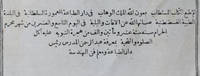
<p>.Istanbul Ãœsküdar: Imperial Press DÄr al-ṬibÄÊ¿a al-Ê¿Ä€mira 1801.<br />Folio over 12–15 in.<br />KitÄb Laḥjat al-LughÄt<br />Tri-lingual Dictionary Turkish–Arabic–Persian<br />First edition. An early Ottoman printed dictionary produced at the Imperial Press of Muhendishane established by imperial decree following the closure of the Ä°brahim Müteferrika press. Printed under the supervision of Ê¿Abd al-RaḥmÄn al-Mudarris head administrator of the Ãœsküdar printing house.<br />Contemporary French binding in yellowish-brown morocco richly gilt in Ottoman Turkish decorative style with original folding envelope flap. Gilt panels and tooling spine and flap partially worn.<br />Collation:<br />2 pp. imperial decree and justification for the establishment of the press signed by Ê¿Abd al-RaḥmÄn al-Mudarris<br />7 pp. index<br />851 pp. text<br />Upper left corners of the imperial decree index and first six pages with early professional restoration slightly affecting the first letters of the opening lines on some pages. Light water staining throughout as commonly encountered in early Ottoman imprints. The upper half of the colophon leaf is neatly adhered to the rear cover. Otherwise complete with the text internally clean crisp and fully legible.<br />Binding shows wear: minor losses to spine and flap covers lightly rubbed. Overall good condition with notable bibliographical integrity.<br />Provenance / Reference:<br />An identical copy recorded in the Atabey Sale Sotheby's 28 May 2002 Lot 844.</p><p>Rare and important: among the earliest products of the post-Müteferrika Ottoman state press representing a major milestone in Ottoman lexicography and multilingual scholarship.</p><p>Muḥammad EsÊ¿ad Efendi was a prominent Ottoman jurist Ê¿Älim religious authority and statesman who served as Åžeyhülislâm the highest religious office in the Ottoman Empire during the mid-18th century.<br />Educated in the classical Ottoman madrasa system he rose through the ranks of the Ê¿ilmiyye learned hierarchy serving in various judicial and scholarly posts before attaining the office of Åžeyhülislâm where he exercised authority over Islamic law SharÄ«Ê¿a legal opinions fatwÄs and religious appointments throughout the Empire.<br />EsÊ¿ad Efendi was known for his legal scholarship administrative prudence and engagement with intellectual life at a time when the Ottoman state was navigating institutional consolidation and reform. He authored and supervised works in Islamic jurisprudence theology and language and his name appears on several important Ottoman scholarly and administrative publications of the period.<br />He died in 1166 AH / 1753 AD leaving a legacy as one of the notable religious jurists of the 18th-century Ottoman Empire.</p> the Imperial press, Muhendishane hardcover
Référence libraire : 000449
|
|
|
Myriam Harry
Djelaleddine Roumi Poète et Danseur Mystique
Paris. 17 5 cm x 25 5 cm. 1947. Broché. 219 pages. Paris Éditions Flammarion 1947 édition originale numérotée. Broché 17 5 cm x 25 5 cm 219 pages. Texte de Myriam Harry - Bon état. Il est joint une lettre manuscrite de l'autrice où elle remercie un critique littéraire (non identifié) pour son article sur cet ouvrage
Référence libraire : 100074714

|
|
|
M{EHMET] ZEKÂÎ KONRAPA.
Bolu tarihi.
Very Good English Paperback. Pbo. Roy. 8vo. (24 x 17 cm). In Turkish. 744, [4] p., ills., portrait. Bolu tarihi.
|
|
|
MÂHIR IZ.
Yillarin izi.
Fine English Paperback. Demy 8vo. (21 x 15 cm). In Turkish. 554 p. Yillarin izi. MEMOIRS Turkish intellectual.
|
|
|
Méry Joseph
La guerre du Nizam
Hachette et Cie Reliure 1870 In-12 (11 x 18 cm), demi chagrin à coins, dorures aux fers sur le dos à cinq nerfs, gardes couleur, 363 pages ; bords et coins frottés, charnière supérieure fendue, quelques rousseurs, bon état général par ailleurs. Livraison a domicile (La Poste) ou en Mondial Relay sur simple demande.
Référence libraire : gl1301

|
|
|
MéRY, Joseph
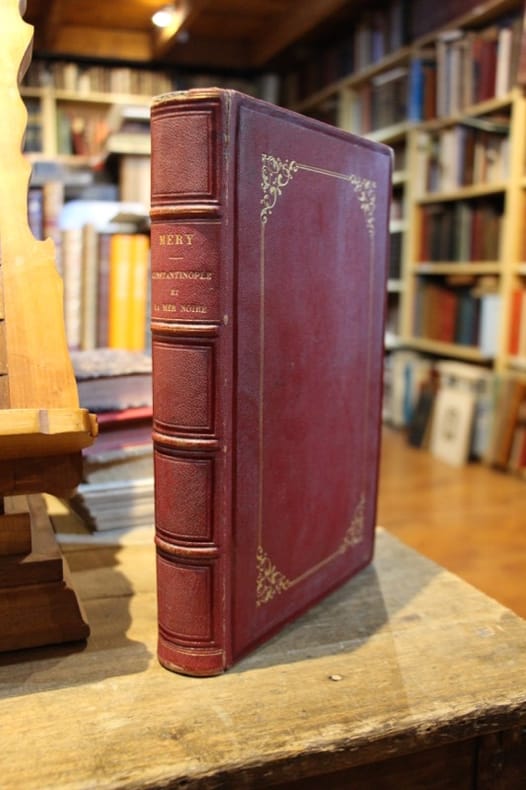
Constantinople et la Mer Noire . Illustrations de MM. Rouargue frères
Paris, Belin-Leprieur et Morizot 1855 In-4 26,5 x 17 cm. Reliure plein chagrin cerise, dos à nerfs ornés d’un filet doré, caissons ornés d’un double cadre à froid, plats en cadrés d’un double filet à écoinçons, dorés, tranches dorées, XI-487 pp., 21 gravures à pleine hors texte sous serpentes, dont 6 coloriées, table des matières, placement des gravures. Reliure légèrement frottée avec accroc en tête dos, faibles rousseurs marginales, planches d’une grande fraîcheur, gouttière régulière.
Référence libraire : 111244
|
|
|
MÎNÂ URGAN, (1915-2000).
[HARLEQUINS IN SHAKESPEARE PLAYS] Elizabeth devri tiyatrosunda soytarilar (Doçentlik tezi). [i.e. Harlequins in the Era of Elizabeth I of England Theatre].
Very Good Turkish Original wrappers. Cr. 8vo. (20 x 14 cm). In Turkish. [4], 403 p. First edition of Urgan's thesis through which she became an associate professor. A comprehensive study of harlequins in Shakespeare's plays by an internationally renowned English language professor. Mina Urgan (1916-2000) was a Turkish (with Armenian origin) academic, translator, author and socialist politician. After graduating from the Department of French Philology at Istanbul University, Mina Urgan, who completed her doctorate in English Language and Literature at the same university, continued her post-doctoral education. She started her career as an associate professor with her thesis "Harlequins in the Era of Elizabeth 1 of England Theatre", which she completed in 1949, and through which she received the title of Professor in 1960. OCLC 1128311793, 1030079607.
|
|
|
MÎR HAMZA NIGÂRÎ.
Divan-i Seyyid Nigârî. Prep by A. Azmi Bilgin, Dr. Necdet Yilmaz.
As New As New English Original bdg. Dust wrapper. Mint. 4to. (28 x 22 cm). In Turkish. [xv], 369 p. prep by: A. Azmi Bilgin; Verse takhrij, dictionary and index by: Dr. Necdet Yilmaz. Divan-i Seyyid Nigârî. Prep by A. Azmi Bilgin, Dr. Necdet Yilmaz.
|
|
|
MÎR HAMZA NIGÂRÎ.
Divan-i Seyyid Nigârî. Prep. by A. Azmi Bilgin, Dr. Necdet Yilmaz.
As New As New English Original bdg. Dust wrapper. Mint. 4to. (28 x 22 cm). In Turkish. [xv], 369 p. Prepared by A. Azmi Bilgin; Verse takhrij, dictionary and index by: Dr. Necdet Yilmaz. Divan-i Seyyid Nigârî. Prep. by A. Azmi Bilgin, Dr. Necdet Yilmaz. Poems in romanized Ottoman Turkish (mixed with Azerbaijani Turkish); introduction material in Turkish. Includes glossary.
|
|
|
MÎZANCI MURAD BEY.
Mîzanci Murad Bey'in II. Mesrutiyet Dönemi hâtiralari (Hürriyet vâdisinde bir pençe-i istibdâd, Enkaz-i istibdâd içinde zügürdün tesellisi, Tatli emeller aci hakîkatler). Translated by Celile Eren Argit.
Fine Turkish Paperback. Cr. 8vo. (20 x 14 cm). In Turkish. 384 p. Mîzanci Murad Bey'in II. Mesrutiyet Dönemi hâtiralari (Hürriyet vâdisinde bir pençe-i istibdâd, Enkaz-i istibdâd içinde zügürdün tesellisi, Tatli emeller aci hakîkatler).
|
|
|
Mûcîdi (Composed by) GUISEPPE DONIZETTI [PACHA], (1788-1856).
[FATHER of the MODERN MUSIC and MUSIKA-YI HUMÂYÛN / FIRST ANTHEM of the OTTOMAN EMPIRE in the WESTERN STYLE] [SHEET MUSIC] Marche Imperiale Ottomane.= Devlet-i Âliyye-i Osmaniyye marsi. Arrangee pour piano par G[iovanni] Avolio, (1849-1936).
Very Good Turkish, Ottoman (1500-1928) Paperback. Folio. (33 x24cm). In Ottoman script and French. [3], [1] p. Ottoman stamped in period. The Ottoman Empire used anthems since its foundation in the late 13th century, but did not use a specific imperial or national anthem until the 19th century. During the reign of Mahmud II, when the military and imperial band were re-organized along Western lines, Giuseppe Donizetti was invited to head the process. Donizetti Pasha, as he was known in the Ottoman Empire, composed the first Western-style imperial anthem, the Mahmudiye Marsi. Like in many other monarchies of its time, the anthem of the Ottoman Empire was an imperial anthem, not a national one. Hence it paid homage to a specific ruler and a new anthem was composed at each imperial succession. However, in 1844, with the Tanzimat reforms, the Mecidiye Marsi was recognized as the first official Ottoman national anthem. The first official Ottoman national flag (which was in essence identical to the present-day Turkish flag) was also adopted in 1844. Giuseppe Donizetti was an Italian musician. From 1828 he was Instructor General of the Imperial Ottoman Music at the court of Sultan Mahmud II (1808-39). His younger brother was the famous opera composer Gaetano Donizetti. He studied music first with his uncle, Carini Donizetti, and, later, he was a pupil of Simone Mayr. After enlisting in Napoleon's army (1808), he served there as band leader. He took part in the campaigns against Austria and in Spain, and followed Napoleon to Elba. He was present at the Battle of Waterloo. After the fall of Napoleon, he continued his career as a bandmaster in the Savoy army. Giuseppe Donizetti Pasha, as he was called in the Ottoman Empire, played a significant role in the introduction of European music to the Ottoman military. Apart from overseeing the training of the European-style military bands of Mahmud's modern army, he taught music at the palace to the members of the Ottoman royal family, the princes and the ladies of the harem, is believed to have composed the first national anthem of the Ottoman Empire, supported the annual Italian opera season in Pera, organised concerts and operatic performances at court, and played host to a number of eminent virtuosi who visited Istanbul at the time, such as Franz Liszt, Parish Alvars and Leopold de Meyer. Although the elder Donizetti was born in Bergamo, Italy, Constantinople became a second home for him, and he lived there until his death in 1856. He is buried in the vaults of the St. Esprit Cathedral, near the Beyoglu district of Istanbul, in Pera. Giovanni Avolio, (1849-1936) was an Italian conductor and composer. According to the sheet musical paper, this first anthem was composed in 1831 by Donizetti and arranged by Avolio into piano in 1918. J. D. Andria is one of the best known music publishers among the Ottoman Empire mionrities. According to he documents in hand, it can be estimated that he began musical score publication in the year of 1904. Andria dealt with music publication at the address of Beyoglu, Istiklal Street (Near Agha Mosque) at 68 no. Andria also published four pieces of Turkish marche parties for piano as far as we know; besides his big sized west music works, which were published in general by him. Donizetti's 'Marche' is one of them as well besides Halit Recep Arman's, Miilok's, and Orente's ones. It is known when publishing life of Andria ended. (Source: Musical publications from Ottoman Empire up today, 1876-1986.; BÜLENT ALANER).
|
|
|
MÜBAHAT S. KÜTÜKOGLU.
Osmanli - Ingiliz iktisadî münasebetleri. 2 volumes set. Vol. 1: (1580-1838). Vol. 2: (1838-1850).
Very Good English Paperback. Pbo. Roy. 8vo. (24 x 17 cm). In Turkish. 2 volumes set: ([xi], 152 p.; [xiii], 151 p.), 15 folding plts. Osmanli - Ingiliz iktisadî münasebetleri. 2 volumes set: Vol. 1: (1580-1838). Vol. 2: (1838-1850). A precious study on Turkish / Ottoman - British economic relations from 16th to 19th centuries.
|
|
|
MÜBAHAT S. KÜTÜKOGLU.
Osmanli belgelerinin dili (Diplomatik).
New New English Original bdg. Dust wrapper. 4to. (34 x 23 cm). In Turkish. [xxxv], [1], 616 p. b/w and color documents. A precious study on Ottoman diplomatica and its method with documents. Osmanli belgelerinin dili (Diplomatik).
|
|
|
MÜBIN MANYASIG.
Turkish cradle of mythology and history.
Very Good English Paperback. Pbo. 12mo. (16 x 12 cm). In English. 96 p., 4 b/w plates, 1 folding map. Turkish cradle of mythology and history.
|
|
|
MÜCAHIT KÜÇÜKSARI.
Osmanli dönemi Arap sairlerinden Ibrâhîm Es-Sefercelânî ve siirleri.
New Turkish Paperback. Demy 8vo. (21 x 14 cm). In Turkish. 270 p. Osmanli dönemi Arap sairlerinden Ibrâhîm Es-Sefercelânî ve siirleri. Poems and biography of Safardjelani (a poet who was Arabic rooted) in the Ottoman period.
|
|
|
MÜCELLIDOGLU ALI ÇANKAYA.
Son asir Türk tarihinin önemli olaylari ile birlikte yeni mülkiye târihi ve mülkiyeliler (Mülkiye seref kitabi). 8 volumes full set: Vol. I: Mülkiye târihi 1859-1968. Vol. II: Mülkiye târihinin devami 1859-1968. Vol. III: 1860 (1276 r.) - 1908 (1324 r.) [Atîk] Mekteb-i Fünûn-i Mülkiyye, Mekteb-i Mülkiyye-i Sâhâne me'zunlari. Vol. IV: Mekteb-i Mülkiyye me'zunlari 1909-1923. Vol. V: Mülkiye Mektebi, Siyasal Bilgiler Okulu me'zunlari 1924-1949. Vol. VI: 1. Kisim me'zunlari 1950-1960. Vol. VII: 2. Kisim me'zunlari 1969-1970. Vol. VIII: Endeksler, istatistikler ve ekler 1970-1971.
Very Good English Paperback. Pbo. Roy. 8vo. (24 x 17 cm). In Turkish. B/w ills. and color plts. 8 volumes set: [xL], 810 p., 9 plts.; 812-1283 pp., [viii] p.; 1200 p., [xvi] p., 6 plts.; 1201-1794 pp., [vi] p., 13 plts.; 1795-3196 pp., [vi] p.; 17 plts.; 3197-4112 pp., [ii] p., 6 plts.; 4113-4780 pp., [ii] p.; 348 p., 11 plts.). Son asir Türk tarihinin önemli olaylari ile birlikte yeni mülkiye târihi ve mülkiyeliler (Mülkiye seref kitabi). 8 volumes full set: Vol. I: Mülkiye târihi 1859-1968. Vol. II: Mülkiye târihinin devami 1859-1968. Vol. III: 1860 (1276 r.) - 1908 (1324 r.) [Atîk] Mekteb-i Fünûn-i Mülkiyye, Mekteb-i Mülkiyye-i Sâhâne me'zunlari. Vol. IV: Mekteb-i Mülkiyye me'zunlari 1909-1923. Vol. V: Mülkiye Mektebi, Siyasal Bilgiler Okulu me'zunlari 1924-1949. Vol. VI: 1. Kisim me'zunlari 1950-1960. Vol. VII: 2. Kisim me'zunlari 1969-1970. Vol. VIII: Endeksler, istatistikler ve ekler 1970-1971. 'Mülkiyeliler' means class of high-level civil persons in the Ottoman Empire, and 'Mekteb-i Mülkiye' was their school.
|
|
|
MÜFIDE FERID [TEK], (1892-1971).
[DREAM OF PANTURKISM BY TURKISH WOMAN OF LETTERS] Aydemir.
Very Good Turkish, Ottoman (1500-1928) Contemporary burgundy cloth. Fading and foxing on boards, stains on pages. Overall a good copy. Cr. 8vo. (19 x 13 cm). In Ottoman script (Old Turkish with Arabic letters). 184 p. Extremely rare first edition of this last utopian work, printed before the proclamation of the Republic in 1923, by the Turkish / Ottoman Women Magazine publishing house, including an enthusiastic call for the political unity of the Turks outside Anatolia. Müfide Ferid Tek was one of the first female representatives of the Turkism and Turanism movement in the novel genre and she would later support the Turkish War of Independence (1919-1922) with her literary works. Özege 1343.; 10 copies worldwide located in OCLC: 314528178 (5 copies), 1030064092 (1 copy), 49367479 (4 copies). (Utopias from the Middle East 4).
|
|
|
MÜFIT YENER.
Topkapi Fukaraperver Cemiyeti 100 yasinda, 1908-2008.
New Turkish Paperback. Roy. 8vo. (22 x 16 cm). In Turkish. 67 p., color and b/w ills. Topkapi Fukaraperver Cemiyeti 100 yasinda, 1908-2008.
|
|
|
MÜHENDIS HÂLID ZIYÂ [TÜRKKAN], (Turkish cartographer, engineer), (1886-1966).
[FIRST MODERN CADASTRAL WORK - EARLY REPUBLICAN MAP-MAKER] Ilim nokta-i nazarindan kadastro ne idi, nedir, ne olacakdir?
Very Good Turkish, Ottoman (1500-1928) Modern full leather bdg. in an Ottoman style. Cr. 8vo. (20 x 14 cm). In Ottoman script. [2], 169 p., [33] b/w plates (according to Özege, plates should be 17). Halid Ziya was born in Izmir, Tire. He went to Istanbul and continued to Hendese-i Mülkiye and Engineer Mekteb-i Âlîsi for seven years. After starting with "Aydin Province Umur-i Nafia Third Class Engineering", Halid Ziya Bey, who continued to work as a deputy chief engineer on 14 March 1910, left Aydin and returned to Istanbul after continuing this duty for about six and a half months. As a teacher, he taught Accounting, Algebra, Geometry, and Topography at Halkali Ziraat Mekteb-i Âlîsi and Darussafaka. Halid Ziya Bey, who was appointed as a teacher of Hendese and Cosmography in Kabatas High School, started to practice the profession of engineering and cadastral, which was his main specialty in 1327. After the First World War, the Istanbul Government started its activities in order to capture and neutralize Halid Ziya Bey and his friends. Upon the harsh measures taken, Halid Ziya Bey had to live as a fugitive in the Hasirci Mountains of Eskisehir for a while with the armed force attached to him. Halid Ziya Bey, who was involved in the movement in Anatolia until the end of the National Liberation Struggle, returned to his engineering duty after the proclamation of the Republic and was included in the cadastral works again. In 1925, Halid Ziya Bey was appointed as the Head of the Science Committee of the new cadastre organization. He wrote 5 books on cadastre, photogrammetry, trigonometry, and cadastral tools in 1928 and 1929. In addition, as a result of personal work in 1928, the road between the provincial division of the Republic of Turkey with cities, has prepared a comprehensive map to show up in the forest and mining. (Source: Kadastro ne idi, nedir, ne olacaktir, Kadioglu - Yildirir. From Preface.). Signed and inscribed by Halid Ziya. Cannot be found any printed copy in OCLC. For online resource: 850854947.; Özege 8749. First Edition. Extremely rare.
|
|
|
MÜKRIMIN HALIL [YINANÇ].
Düsturnamei Enverî. Medhal. Bu medhal eserin tenkidi ile Aydin Ogullari'nin tarihini ve Osmanli hanedaninin mebadisi hakkinda malûmati ihtiva etmektedir.
Fine Turkish Paperback. Roy. 8vo. (24 x 17 cm). In Turkish. 98, [1] p. Düsturnamei Enverî. Medhal. Bu medhal eserin tenkidi ile Aydin Ogullari'nin tarihini ve Osmanli hanedaninin mebadisi hakkinda malûmati ihtiva etmektedir.
|
|
|
MÜMTAZ SAGLAM, HALIL AKDENIZ.
Art Collection of the Central Bank of the Republic of Turkey. Vol. 1: A collection of art works showing the development of Torkish painting in the Western sense. Vol. 2: A collection of art works exhibiting modern approaches in post-1950 Turkish art.= Türkiye Cumhuriyeti Merkez Bankasi Sanat Koleksiyonu. Cilt 1: Batili anlamda Türk resim sanatinin gelisme asamalari ve koleksiyondan örnekler. Cilt 2: Türk sanatinda 1950 sonrasi çagdas yaklasimlar ve koleksiyondan örnekler.
New New English Original bdg. Dust wrapper. In publisher's special box. 4to. (301 p.; 290 p.), color ills. Art Collection of the Central Bank of the Republic of Turkey. Vol. 1: A collection of art works showing the development of Torkish painting in the Western sense. Vol. 2: A collection of art works exhibiting modern approaches in post-1950 Turkish art.= Türkiye Cumhuriyeti Merkez Bankasi Sanat Koleksiyonu. Cilt 1: Batili anlamda Türk resim sanatinin gelisme asamalari ve koleksiyondan örnekler. Cilt 2: Türk sanatinda 1950 sonrasi çagdas yaklasimlar ve koleksiyondan örnekler.
|
|
|
MÜNEVVER TEKCAN.
Bayram Han'in Türkçe divani.
Fine English Paperback., Fine., 23 x 16 cm, 380 p., facsimile in Ottoman Turkish. "Bayram Han'in Türkçe divani, MÜNEVVER TEKCAN, Bulut Yayinlari, Istanbul, 2005"
|
|
|
MÜNIM MUSTAFA.
Cepheden cepheye, 1914-1918: Ihtiyat zabiti bulundugum sirada Cihan Harbinde Kanal ve Çanakkale cephelerine ait hatiralarim.
Very Good Turkish Paperback. Cr. 8vo. (20 x 14 cm). In Turkish. 150 p. Cepheden cepheye, 1914-1918: Ihtiyat zabiti bulundugum sirada Cihan Harbinde Kanal ve Çanakkale cephelerine ait hatiralarim. Memoirs of an Ottoman officer during WW 1 in Gallipoli and Palestine.
|
|
|
MÜNIR HAYRI EGELI, (Turkish author, director, and sculptor), (1903-1970).
Typescript letter signed 'Münir Hayri Egeli' as the director of publication, to Turkish poetess Halide Nusret Zorlutuna, (1901-1984).
Very Good Turkish Original TLS by Münir Hayri Egeli sent to Turkish poetess Halide Nusret Zorlutuna, (1901-1984). 25x17 cm. In Turkish (with Latin letters). 1 p. 15 lines. Signed as 'director of the publication' of Turkey Child Protection Agency. Lithographed view 'Child Palace' in Ankara city cross the letterhead. Dated 'Ankara, 24 - 8 - 1939'. Egeli says how upset is that they could not publish Zorlutuna's novel. Letter sent to Zorlutuna's address in Kadiköy. He studied cinema at Atatürk's request and made a film about him, and he is a versatile artist who has written novels, librettos, and drama.
|
|
|
MÜNIR RASCHID ÖYMEN, (Turkish pedagogue and one of the earliest educators of Republican Turkey), (?-1997).
Typescript letter signed 'Münir Rasid Öymen' addressed to Prof. Carl Brinkmann, (1885-1954).
Very Good German Original TLS by Münir Rasid Öymen with autograph signature. 29x23 cm. In German. 1 p. Full. Typescript letter signed 'Münir Rasid Öymen'. ritten on a paper 'Extra Strong' watermarked. Öymen was a Turkish pedagogue and one of the earliest educators of Republican Turkey. One of 'Öymen family' of Turkey. Sent to Prof. Brinkmann due to 55th Sociology Congress held in Istanbul in 1952. Carl Brinkmann, (1885-1954), was a German sociologist and economist, focusing on socioeconomics and the history of political economy.
|
|
|
MÜNIR SÜLEYMAN ÇAPANOGLU.
Türkiye'de sosyalizm hareketleri ve Sosyalist Hilmi.
Very Good Turkish Paperback. Cr. 8vo. (20 x 14 cm). In Turkish. 96 p., b/w ills. A precious study on socialism in Turkey and the Ottoman Empire and Socialist Hilmi (Istirâkçi Hilmi Hüseyin [1855-1922]). First Edition. Türkiye'de sosyalizm hareketleri ve Sosyalist Hilmi.
|
|
|
MÜNIR SÜREYYA BEY.
Ermeni meselesinin siyasî tarihçesi, 1877-1914.
As New English Original bdg. Imitation leather bound. Mint. Large Roy. 8vo. (24.5 x 17 cm). In Turkish. [xvii], 1079 p. B/w documents. Ermeni meselesinin siyasî tarihçesi, 1877-1914.
|
|
|
MÜRSEL ÖZÜRK.
Chaîne d'Ahmed Yesevî, Hadji Bektash Velî et Yunus Emre. [Separatum].
Very Good French Paperback. Roy. 8vo. (24 x 16 cm). In French. 769-775 pp. Chaîne d'Ahmed Yesevî, Hadji Bektash Velî et Yunus Emre. [Separatum].
|
|
|
MÜSLÜM AKALIN.
Urfa mutasarrifi Sehit Nusret Bey'in Nemrut Mustafa Pasa divan-i harbindeki savunmasi.
Fine Turkish Paperback. Cr. 8vo. (20 x 14 cm). In Turkish. 72 p., b/w ills. Urfa mutasarrifi Sehit Nusret Bey'in Nemrut Mustafa Pasa divan-i harbindeki savunmasi.
|
|
|
MÜSLÜM YILMAZ.
Besiktasli Yahyâ Efendi. Hayati, tasavvufî sahsiyeti ve divâni.
New English Paperback. Pbo. Demy 8vo. (21 x 14 cm). In Turkish. 226 p. Besiktasli Yahyâ Efendi. Hayati, tasavvufî sahsiyeti ve divâni. TURKISH LITERATURE Classical Ottoman literature Divan poetry Poet Biography Sufism Tasavvuf.
|
|
|
MÜSLÜM YÜCEL.
Osmanli-Türk romaninda Kürt imgesi.
New English Paperback. Pbo. Mint. Demy 8vo. (22 x 15 cm). In Turkish. [xxxiv], 698, [4] p. Kurdish image in Ottoman and Turkish novels. Osmanli-Türk romaninda Kürt imgesi.
|
|
|
MÜSTAK BABA.
Müstak Baba. (Divan). Prep. by Mehmed Kemal Dündogdu.
Fine Turkish Paperback. Cr. 8vo. (20 x 14 cm). In Turkish. [v], 369 p. Müstak Baba. (Divan). Prep. by Mehmed Kemal Dündogdu. TURKISH LITERATURE Traditional Ottoman literature Divan poetry Tasavvuf Sufism Biography.
|
|
|
MÜSTAKIMZÂDE SÜLEYMAN SAADETTIN EFENDI.
Tuhfe-i hattâtîn. Prep. by Mustafa Koç.
New English Original bdg. 4to. (31 x 19 cm). In Turkish. 840 p. Tuhfe-i hattâtîn. Prep. by Mustafa Koç. First Edition is 1928 published by Ibnülemin Mahmud Kemal. A comprehensive study of Ottoman - Turkish calligraphers. TURKISH AND ISLAMIC ART Calligraphy Reference History of art Calligrapher.
|
|
|
MÜTERCIM ÂSIM EFENDI.
Kâmûsu'l-muhît. El-Okyânûsu'l-basît fî tercemeti'l-Kâmûsu'l-muhît. Prep. by Eyyüp Tanriverdi, Mustafa Koç. 6 volumes set.
New English Original bdg. HC. Roy. 8vo. (24 x 17 cm). In Turkish. 6 volumes set: (1082 p., 1034 p., 954 p., 986 p., 972 p., 1058 p.). Turkish transcription of manuscripts Süleymaniye Yazma Eser Kütüphanesi, Hamidiye Kolleksiyonu No. 1377-1378-1379. Oversize and very heavy set. Kâmûsu'l-muhît. El-Okyânûsu'l-basît fî tercemeti'l-Kâmûsu'l-muhît. Prep. by Eyyüp Tanriverdi, Mustafa Koç. 6 volumes set.
|
|
|
MÜZEHHER YAMAÇ.
Fransiz arsiv belgelerinde Yakin Dogu'da Ermeni sorunu.
New Turkish Paperback. Roy. 8vo .(23 x 16 cm) In Turkish and documents in French. 238 p. Fransiz arsiv belgelerinde Yakin Dogu'da Ermeni sorunu. Armenian question in the Near East based on French archival documents.
|
|
|
MÜZEYYEN ÜNAL.
Izmit antik su sistemleri ve Pasasuyu.
New English Paperback. Pbo. 4to. (30 x 22 cm). In Turkish. 88 p., 13 folding plans of aqueducts and 2 of them Izmit's city plan. Izmit antik su sistemleri ve Pasasuyu. Ancient Niceai water systems.
|
|
|
N
Guide abrégé du Dôme du Rocher et de al-Haram Al-sharifo
JERUSALEM, conseil suprème des Biens Dédiés (Wakfs) Musulmans - 1965 - In-12 - nombreuses illustrations Nb PPé Ce guide est un résumé de l'ouvrage de Aref El-aref, Ex-Maire de Jérusalem
|
|
|
N
Nouvelles des missions du Levant, extraites des lettres édifiantes et curieuses
LIMOGES, Martial Ardant Frères Ed. - In-12 - Reliure romantique - 1 & 4 plats ornés de motifs floraux en relief entourés d'un écoinçon doré - 1 Plat orné d'une vignette représentant un château avec des personnages - coiffe usagée -frontispice - 212 pages
|
|
|
N
Nouvelles des missions du Levant, extraites des lettres édifiantes et curieuses
LIMOGES, Martial Ardant Frères Ed. - In-12 - Reliure romantique - 1 & 4 plats ornés de motifs floraux en relief entourés d'un écoinçon doré - 1 Plat orné d'une vignette représentant un château avec des personnages - coiffe usagée -frontispice - 212 pages
Référence libraire : 6807
|
|
|
N. A.
[JAPAN / MIDDLE EAST] Nichi-To shinzen eiyu no kinen = Türk Nippon dostlugunun sonrasiz hâtirasi Ertugrul =
Very Good Japanese Original cloth bdg. Demy 8vo. (22,5 x 16 cm). In Japanese and Turkish. 45, 59 p., 74 unnumbered pages of plates and ills. with tissue papers. Scarce Japanese and Turkish bilingual book published by the Embassy of the Republic of Turkey in Tokyo, during Hüsrev Gerede's (1886-1962) embassy in the 47th commemoration year of the sinking of the Ottoman frigate Ertugrul. This richly illustrated book includes a detailed historical account of the accident and sinking, with a map showing the cruise line that Ertugrul followed after she left Yokohama to return to Turkey, and the area of Kashinozaki Lighthouse, where she sank. Another map shows the area and its surrounding where the monument was erected in memory of Ertugrul. In addition to the 74 pages of plates showing presidents and dynasties of both countries, ministers in their cabinets, Ambassadors, as well as Ertugrul's making process, journey, and traditional commemoration ceremonies in Japan; a plan of the Martyrdom was added. The book was printed separately as paperback and hardcover, and the copy we have is a hard copy. Ertugrul, launched in 1863, was a sailing frigate of the Ottoman Navy. While returning from a goodwill voyage to Japan in 1890, she encountered a typhoon off the coast of Wakayama Prefecture, subsequently drifted into a reef, and sank. The shipwreck resulted in the loss of more than 500 sailors and officers, including Rear Admiral Ali Osman Pasha. Only 69 sailors and officers survived and returned home later aboard two Japanese corvettes. The event is still commemorated as a foundation stone of Japanese-Turkish friendship. OCLC shows only two printed copies in three libraries worldwide 633837567, 25341022, 28679707.
|
|
|
N. A.
Bestions of Diyarbakir. [Brochure].
New English Paperback. Brochure - pamphlet - leaflet. Cr. 8vo. (21 x 10 cm). In English. [6] p., ills. Bestions of Diyarbakir. [Brochure].
|
|
|
N. A.
Bridges of Diyarbakir. [Brochure].
New English Paperback. Brochure - pamphlet - leaflet. Cr. 8vo. (21 x 10 cm). In English. [6] p., ills. Bridges of Diyarbakir. [Brochure].
|
|
|
N. A.
Cahit Sitki Taranci Museum. [Brochure].
New English Paperback. Brochure - pamphlet - leaflet. Cr. 8vo. (21 x 10 cm). In English. [6] p., ills. Cahit Sitki Taranci Museum. [Brochure].
|
|
|
N. A.
Chemins de fer de Bozanti - Alep - Nissibine et prolongements. Livret de la Marche des trains a dater du 26 Mai 1932. Ligne: Haalep - Nissibine - Telziouane & Embranchement Derbesiye - Mardine. Ligne: Halep - Adana & Embranchement Toprak Kale - Alexandrette.= Bozanti - Halep - Nasibin ve temdidatidemiryollari katarlarin hareket cuzdani. 26 Mayis 1932 tarihinden müteberdir. Halep -Nasibin - Telzivan hati ve Derbesiye - Mardin sube hati. Halep - Adana hati ve Toprakkale - Iskenderun sube hati.
Very Good French Paperback. Roy. 8vo. (23 x 17 cm). In French and Turkish. 24 p. Chemins de fer de Bozanti - Alep - Nissibine et prolongements. Livret de la Marche des trains a dater du 26 Mai 1932. Ligne: Haalep - Nissibine - Telziouane & Embranchement Derbesiye - Mardine. Ligne: Halep - Adana & Embranchement Toprak Kale - Alexandrette.= Bozanti - Halep - Nasibin ve temdidatidemiryollari katarlarin hareket cuzdani. 26 Mayis 1932 tarihinden müteberdir. Halep -Nasibin - Telzivan hati ve Derbesiye - Mardin sube hati. Halep - Adana hati ve Toprakkale - Iskenderun sube hati. First and Only Edition. Scarce.
|
|
|
N. A.
Churchs of Diyarbakir. [Brochure].
New English Paperback. Brochure - pamphlet - leaflet. Cr. 8vo. (21 x 10 cm). In English. [6] p., ills. Churchs of Diyarbakir. [Brochure].
|
|
|
N. A.
Citadel. [Brochure].
New English Paperback. Brochure - pamphlet - leaflet. Cr. 8vo. (21 x 10 cm). In English. [6] p., ills. Citadel. [Brochure].
|
|
|
N. A.
Correspondance diplomatique echangee entre le gouvernement Imperial Ottoman et l'ammassade Imperiale de Russie a Constantinople. Relativement a l'indemite a payer aux sujets Russes pour les dommages subis par eux pendant la Guerre de 1877. Reclamation en paiement d'interets moratoires de indemnitaires de la Guerre Russo-Turque a la charge du gouvernement Imperial Ottoman. Considerations concernant le differend survenu entre le giurvenement Imperial Otoman et le gourvenement Imperial de Russie. Relativement a l'indemnite a payer aux sujets Russes pour les dommages subis par eux pendant la Guerre de 1877.
Very Good French In contemporary red cloth bdg. 3 in 1. 4to (28 x 20 cm). In French. 85, 56, 14 p. 66 protocol documents and Turkish - Russian correspondence. Diplomatic correspondence exchanges between the Imperial Ottoman government and the Imperial Russian Embassy in Constantinople. Considerations concerning the dispute between the Ottoman Empire government and the Russian Empire. With regard to the indemnity to be paid to the Russian subjects for the damage suffered by them during the War of 1877. And includes
|
|
|
N. A.
Diyarbakir mosques. [Brochure].
New English Paperback. Brochure - pamphlet - leaflet. Cr. 8vo. (21 x 10 cm). In English. [6] p., ills. Diyarbakir mosques. [Brochure].
|
|
|
N. A.
Diyarbakir Ulu mosque. [Brochure].
New English Paperback. Brochure - pamphlet - leaflet. Cr. 8vo. (21 x 10 cm). In English. [6] p., ills. Diyarbakir Ulu mosque. [Brochure].
|
|
|

 Recevoir par e-mail
 Télécharger en PDF
 Flux RSS
 Lien permanent


