|
Layard, Arthur \(Music Emil Sauer\)
An Alphabet of Musical Bogeys
Lawrence and Bullen 1899. 1st Edition. . Book Book Hardcover. Very Good/No Jacket. Lawrence and Bullen 1899. 1st Edition . Very Good/No Jacket. 26 verses and 26 full page illustrations. Folio. Mainly cream board cover is grubby rubbed at corenrs thread showing on edges of spine. Fold over sheet of music inside front cover. Full page competition coupon closing date January 15th 1900 bound in before title page. Fascinating. Lawrence and Bullen hardcover
Référence libraire : 8722
|
|
|
Layer, Adolf
Eine Jugend in Augsburg - Leopold Mozart 1719 - 1737. Herausgegeben von der Deutschen Mozartgesellschaft. Mit 20 Abbildungen im Text und einer Zeittafel.
Augsburg, Die Brigg., (um 1980). 8°. 104 Seiten. Mit einem Namenverzeichnis. Gemustertes Originalpappbändchen. - Ein sehr gut erhaltenes, annähernd neuwertiges Exemplar ohne Eintragungen.
Référence libraire : 3742BB

|
|
|
Layland, W.:
Irish National melodies transcribed for the pianoforte. No. 2. My loding is on the cold ground
6 S. Flachdruck.
|
|
|
Layriz, F. (Hrsg.)
Kern des deutschen Kirchenlieds von Luther bis auf Gellert.
Nördlingen, Beck, 1844. XXXII, 572 S. Hldr. Rücken leicht angerissen u. m. Kleberest. Einbd. bestoßen u. berieben. Durchg. (teils auch stärker) gebräunt u. braunfl. M. mehr. St.
Référence libraire : 168315
|
|
|
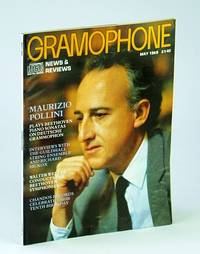
Layton, Robert; Fanning, David; Pollini, Maurizio; et al
Gramophone Magazine May 1989 - Maurizio Pollino Cover Photo
Great Britain: General Gramophone Publications Ltd. 1989. Magazine. Good. Paperback. First Edition. 4to - over 9¾" - 12" tall. Pages 1691-1840. Features: Maurizio Pollini plays Beethoven piano sonatas on Deutsche Grammopphon; Interviews with the Guildhall String Ensemble and Richard Hickox; Walter Weller conducts the Beethoven Symphonies; Chandos Records celebrate their tenth birthday; and more. Average wear. Unmarked. Binding intact. A sound copy. General Gramophone Publications Ltd. Paperback
Référence libraire : 336H0653
|
|
|
LAYTON, Robert
Sibelius
NY: Schirmer 1993. Bound in black cloth over red boards stamped in gold in matching red dust jacket. A first edition of this 247 pp. book on the composer. Part of the publisher's Master Musicians series. Some pencil notes in Appendix B -- List of Works expounds on some of the information there. . First Edition. Hard Cover. Near Fine/Near Fine. Schirmer Hardcover
Référence libraire : 8001878
|
|
|
Layton, Robert
Sibelius
Large octavo in red illus paper wraps; xi, 210 p. illus., facsim., music, ports. 20 cm. Bibliography: p. 195-201. Signed and inscribed by the author on title page. || The Master musicians series. || Classical music composers: Sibelius, Jean, 1865-1957.
|
|
|
Layton, Robert (ed.)
A Companion to the Concerto
Book has been withdrawn from a library and has the usual stamps, stickers, etc. Binding is solid and text/interior is free of marking of any kind. Dust jacket is protected in clear cover and has been taped to boards, 369 pages, lots music.
|
|
|
LAZE CHRISOTPHE (illustrations) - Collectif
Chantent les marins ! Les plus belles chansons de mer - traditions de la marine
JEAN PAUL GISSEROT. 1996. In-4. Broché. Bon état, Couv. convenable, Dos satisfaisant, Intérieur frais. 32 pages. Nombreuses illustrations en noir et blanc dans le texte - partitions + paroles. . . . Classification Dewey : 781.599-Musique militaire
Référence libraire : RO20254296

|
|
|
Lazar Zachary
Sympathie pour le démon
JC Lattès 2009 357 pages 13cmx20 5cmx2 2cm. 2009. Broché. 357 pages.
Référence libraire : 100104171

|
|
|
Lazarus, Gustav, Komponist (1861-1920).
Eigenh. Portraitpostkarte mit U. Berlin, 10. XII. 1912.
1 S. 8vo. Mit eh. Adresse. An die Redaktion der Kleinen Presse in Frankfurt über zwei Musikstücke: "Am 27. Nov. bot ich Ihnen nebst Rückporto 2 Weihnachtsgesänge an. Bisher ohne Ihre gütige Nachricht, wäre ich um ein Wort, bzw. sonst Rücksendung der 2 Lieder sehr dankbar. Mit der Bitte, die Mühewaltung zu vergeben [...]". - Auf der Bildseite ein Kniestück des Komponisten in seiner Funktion als Direktor des Berliner Konservatoriums. - Auf Trägerpapier montiert. Der Träger mit biographischen Notizen von alter Sammlerhand.
|
|
|
Lazarus, Gustav, Musiker und Komponist (1861-1920).
Eigenh. Brief mit U. Berlin, 3. V. 1898.
2 SS. 8vo. An einen namentlich nicht genannten Adressaten: "Ihr werther Brief vom 30. pto ist mir zugekommen & sehe ich Ihren eventl. freundlichen Vorschlägen gerne entgegen. Eine 1 aktige Oper von mir 'Mandanika', Text von Jul. Freund ist momentan im Drucke & hoffe ich, dass die erste Aufführung in k. Saison stattfindet. Fällt dieselbe günstig aus, so werde ich in der angenehmen Lage sein können, einen bestimmten Betrag für alle Rechte an den eventl. von Ihnen gütigst zu liefernden Text zu zalen, einstweilen jedoch möchte ich den erg. Vorschlag machen, die Tantiemen zu theilen, (2/3 & 1/3) denn die Arbeit für den Componisten ist am Ende doch eine unendlich viel größere & mühevollere, als die für den Dichter. Ueber diese Angelegenheit können wir noch später correspondieren & ich hege die feste Ueberzeugung, dass dieselbe zu beiderseitigen Zufriedenheit gelöst werden wird […]". - Lazarus wurde er 1887 Lehrer am Scharwenka-Konservatorium in Berlin, dessen Leitung er 1889 übernahm. Er unterrichtete Klavier, Theorie und Chorgesang. Er besaß nicht nur als Pädagoge einen hervorragenden Ruf, sondern war auch ein bekannter Klaviervirtuose. Konzertreisen führten ihn bis nach Konstantinopel. Die Oper "Mandanika" (konzipiert nach einer indischen Sage) wurde 1899 in Elberfeld uraufgeführt.

|
|
|
Lazarus; Bellison, Simeon (Revised by)
Lazarus Method for Clarinet - Part II (Two)
Pages 142 - 275. This listing consists of part 2 (only) of the three part work. Above-average wear. Hinges taped. Some markings. A worthy working copy. Book

|
|
|
Lazzari Arturo
'L''età di Brecht. L''idea di un teatro come testimonianza di impegno civile e politico in vent''anni di critica teatrale.'
Rizzoli, Milano, 1977 – In-8, bross., pp. X + 338. Fioriture ai tagli.
|
|
|
Lazzari Eugenio
L'ideologia massonica nella vita e nella musica di Mozart
br. Wolfgang Amadeus Mozart fu certamente membro della Libera Muratoria e la sua concezione della vita e dei rapporti umani, che si trasfuse nelle sue opere immortali, rispecchia lo spirito e i valori universali basati sulla libertà, l'uguaglianza e la fratellanza: principi fondamentali della Massoneria. Eugenio Lazzari in questo volume ricostruisce la figura e le opere del più grande musicista di tutti i tempi, dal punto di vista artistico, culturale ed esoterico.

|
|
|
Lazzari Gianni; Galante Emilio
Il flauto traverso
ill.

|
|
|
Lazzari, Gianni
Il flauto traverso.

|
|
|
Lazzari, Silvio, Komponist (1857-1944).
Eigenh. Brief mit U. Paris, 14. XII. 1898.
4 SS. 8vo. An einen namentlich nicht genannten Freund: "Sie erlauben wohl, dass ich Sie so anspreche, denn nur gestützt auf die Ueberzeugung, dass auch Sie mich als Ihren Freund ansehen, kann ich mir gestatten, Sie um Rat und Beistand zu ersuchen in der wichtigsten Angelegenheit die es für einen Tonsetzer gibt: d. h. in der Wahl eines Opernstoffes. Schon in Prag theilte ich Ihnen meine Verlegenheit diesbez. mit, seitdem habe ich unablässig nach etwas für mein Temperament passendes gesucht, ohne etwas 'originales' auftreiben zu können. So muss ich mich dann, wenn ich meine Zeit nicht vertrödeln will, an schon bestehenden Stoffen halten und möchte mir, bevor ich die Wahl treffe, Ihre Meinung einholen. Bitte sprechen Sie mir offen Ihre Bedenken aus, es ist besser, dass ich dieselben vorher, als post festum höre. Folgende dramatische Werke und Stoffe habe ich in Erwägung gezogen: 1. Die versunkene Glocke / 2. Till Eulenspiegel / 3. Jakuntala / 4. Hero und Leander / 5. Der Kaufmann von Venedig. No 1 zöge mich besonders an, allein man sagt mir, dass Hauptmann ein schwer zugänglicher Mann sei und dann hat das Werk so viel Erfolg gehabt ohne Musik, dass es vielleicht gefährlich ist, sich dran zu wagen. No 2 hat den Nachtheil, episch zu sein. Die Charakteristik Tills entwickelt sich langsam, nach und nach und dürfte dramatisch schwer zu gestalten sein. Natürlich würde ich da nicht den deutschen Till wählen, der nur eine Art Spassvogel ist, sondern den vlämischen, den Vater des deutschen, welcher eine grosse Rolle spielte im Befreiungskampfe der Niederlande gegen Philipp II. und dem Herzog von Alba. Was No 3 und 4 betrifft, so sind es schon bestehende Opernstoffe, so viel ich weiss. Am liebsten hätte ich, wie schon gesagt, einen originalen Stoff gehabt, aber woher? Es ist ein Kreuz! […]". - Lazzari erhielt seit 1863 Violin-Unterricht; bereits mit acht Jahren trat er in den Bozener Sinfoniekonzerten auf. Im März 1882 ging er nach Paris und trat 1883/84 in die Klasse Guirauds am Konservatorium ein. Am 17. März 1888 brachte die Société Nationale Lazzaris Streichquartett zur Aufführung, das der Wiederbelebung der Kammermusik. in Frankreich den Weg ebnete. Vergeblich versuchte er jedoch, sein erstes Bühnenwerk, Armor, in der Monnaie in Brüssel zur Auff. zu bringen. 1898 besuchte er Humperdinck am Rhein, ging dann nach München und Prag, wo Angelo Neumann auf Anraten des Dirigenten F. Schalk Armor annahm und erfolgreich aufführte (vgl. MGG VIII, 403f.).

|
|
|
Lazzari, Sylvio, French composer (1857-1944).
Autograph letter signed. Bière, 29. VIII. 1896.
8vo. 1 page. To the cellist and conductor Achille Kerrion (1868-1939), whose success as a director of the orchestra of the 1896 "Exposition du théâtre et de la musique" is discussed even in the most isolated valleys of Switzerland, asking him to play at least a single one of his pieces after learning that he is performing works by Théodor Dubois (1837-1924) and Paul Hillemacher (1852-1933): "Puisque dans les vallons les plus reculés de la Suisse on ne parle plus que des succès du jeune et brillant chef d'orchestre de l'Exposition du Théatre - j'ai nommé Achille Kerrion - et puisque j'ai lu aussi que vous mettez votre talent au service des grands honneurs tels que Dubois, Hillemacher etc., en les festivalant [!], ne pouvriez-vous pas au moins jouer un morceau d'un nommé Lazzari, qui fait aussi un peu de musique dans les moments perdus? Que dites-vous de cette proposition, cher ami? [...]".
|
|
|
Lazzari, Sylvio, French composer (1857-1944).
Autograph letter signed. N. p. o. d.
12mo. 1 p. Charming letter to a close friend named Léo, thanking him for a box in the theatre for Lazzari's visiting parents. While Lazzari agrees to introduce Léo to his parents, he cautions that they are overwhelmed by Paris and that their French is "even more basic" than Lazzari's: "Merci mille fois, j'accepte avec grand plaisir ta loge pour lundi soir. Quant à mes parents, je vous les présenterais bien, mais je crois que ce n'est guère intéressant pour vous. Mon cher, ce qu'ils sont épatés de Paris, et coiffés de leur bru [?] - c'est amusant à voir. Et si tu entendais leur français, c'est encore plus base que le mien. Enfin je suis content de les avoir ici et content de leur pouvoir offrir ta loge". - Born in Bolzano, South Tyrol, Lazzari came to Paris in 1882 to study at the Conservatory under Ernest Guiraud and César Franck. Encouraged by Ernest Chausson and Franck, Lazzari settled in France permanently and obtained French citizenship in 1896. He held several official positions, including president of the Wagner Society (from 1894) and choirmaster at the Opéra de Monte-Carlo. - Minor browning. With collector's notes in pencil.
|
|
|
Lazzari, Sylvio, French composer (1857-1944).
Autograph postcard signed. Chambourg-sur-Indre, 31. VII. 1921.
Oblong 12mo. 1 p. With autograph address. To a Madame Poulalion, informing her about the summer plans of the French composer Aristide Hignard (1822-98): "Chère Madame, je ne suis pas en correspondance avec M. Hignard; mais je sais qu'il doit venir à Paris vers le 15 août. Pourquoi, étant pressée, ne lui écriviez vous pas directement, ne serait-ce que pour lui dire que vous attendez sa visite dès son arrivé à Paris. Car je sais qu'il a l'intention s'aller passer les jours de chaleur en Bretagne. Mes meilleurs souvenirs pour vous et M. Poulalion [...]". - Born in Bolzano, South Tyrol, Lazzari came to Paris in 1882 to study at the Conservatory under Ernest Guiraud and César Franck. Encouraged by Ernest Chausson and Franck, Lazzari settled permanently in France and obtained French citizenship in 1896. He held several official positions, including president of the Wagner Society (from 1894) and choirmaster at the Opéra de Monte-Carlo. - On postcard with a photograph of "Château de Chavigny-Chambourg". Chafed in the upper right corner due to the removal of the stamp.
|
|
|
LAZZARI, Virgilio (1887-1953)
Inscribed Photograph Signed
This Italian operatic bass toured worldwide for nearly half a century often appearing at the Metropolitan Opera and the Chicago Civic Opera. IPS Daguerre heavy stock 8" X 10" n.p. 1926 January 1. Near fine. Informal half-length profile portrait in shirt and tie inscribed and signed in thick white ink vertically in a dark portion at upper left "To Mr. John G. Leiser / Sincerely / Virgilio Lazzari / 1-1-26." Leiser was a noted Chicago pianist and music educator. Unusual and most attractive. unknown
Référence libraire : 13923

|
|
|
Lazzari, Virgilio, Bassist (1887-1953).
Albumblatt mit eigenh. U. O. O. u. D.
1 S. 170 x 115 mm.

|
|
|
Lazzari.
Solfeggi parlati. Esercizi difficili scritti nel setticlavio.
<br/> TITOLO: Solfeggi parlati. Esercizi difficili scritti nel setticlavio. <br/> AUTORE: Lazzari.<br/> CURATORE: Ediz.riveduta e ampliata.<br/> EDITORE: Ediz.Carisch<br/> DATA ED.: 1985,<br/>
|
|
|
LAZZARINI, Alessandro
De vario tintinnabulorum usu apud veteres hebraeos et ethnicos, volumen I et II
In-8°, 2 volumi in uno, XXXIV, (2), pp. 240, 2 carte di tav. ripiegate, pp241-575 (1), legatura in mezza pelle con titolo al dorso in oro. Intonso.Professore di liturgia nell’Università Gregoriana, il Lazzarini compose quest’opera per diletto, ma ne risultò comunque un trattato di grande completezza ed erudizione, andando a ricercare chi fosse stato il primo inventore ad usare i Tintinnabula e quale uso si facesse di essi nei vestiti e nelle liturgie presso i popoli più antichi. In-8 °, 2 volumes in one, XXXIV, (2), pp. 240, 2 folded leafs; pp241-575 (1), half leather binding with title at the spine in gold. Uncut. Professor of liturgy at the Gregorian University, Lazzarini composed this work for pleasure, but it still resulted in a treatise of great completeness and erudition, going to look for who was the first inventor to use the Tintinnabula and what use was made of them in clothes and liturgies among the most ancient peoples.
|
|
|
LE BAYON J. - Musique de Th. DECKER
Ar Hent Bethleem (En route pour Bethleem)
VANNES, Imp. Lafolye - 1912 - In-8 broché -Col. Théatre Populaire Breton de Ste-Anne-d'Auray - Couverture illustrée - Bilingue français-breton - 173 pages - Bon ex.- On joint une carte de visite manuscrite de l'abbé Louis CADIC, chanoine honoraire, 1 er Chapelain de la Basilique de Sainte-Anne :"vous prie d'agréer, en son nom, au nom de Mr LE BAYON et de leurs collaborateurs du théatre polpulaire breton, l'hommaged'un exemplaire du nouveau mystère qu'ils viennent de représenter avec un grand succes. Ils ont espérer que vous leur ferez l'honneur d'assister à l'une de leurs prochaines représentations qui auront lieu : ...."
Référence libraire : 2310
|
|
|
LE BAYON J. - Musique de Th. DECKER
Ar Hent Bethleem (En route pour Bethleem)
VANNES, Imp. Lafolye - 1912 - In-8 broché -Col. Théatre Populaire Breton de Ste-Anne-d'Auray - Couverture illustrée - Bilingue français-breton - 173 pages
Référence libraire : 16781
|
|
|
LE CLERC, Léon & LEFEBVRE, René
Chansons populaires du pays normand.
1 Rouen, Lecerf, sd, in-4° relié demi-percaline bordeaux, dos lisse passé, exemplaire sur simili japon, cachet.
Référence libraire : 3043
|
|
|
Le Duc
Chansons et lettres patoises bressanes, bugeysiennes et dombistes avec une étude sur le patois du pays de Gex
Marseille, Laffitte Reprints 1978 Réimpression en fac similé de l’édition de Bourg-en-Bresse, 1881. In-12 reliure simili cuir 21,7 cm sur 13,5. 456 pages. Bon état d’occasion.
Référence libraire : 4900

|
|
|
Le Bihor Jean Marie
Chansons de la voile "sans voiles"
1935 in8. 1935. Broché.
Référence libraire : 100116355

|
|
|
LE ROUX, Maurice.
Claudio Monteverdi. Préface de Roland-Manuel. Collection Les grands musiciens.
Paris, Editions du Coudrier 1951, 195x140mm, 184pages, broché. Bel exemplaire.
Référence libraire : 11617

|
|
|
Le Roux Maurice ; Roland-Manuel (préface)
Claudio Monteverdi
Éditions du Coudrier, coll. « Les Grands Musiciens », n° 2 1951 In-12 broché 19,5 cm sur 14. 191 pages. Bon état d’occasion.
Référence libraire : 121148
|
|
|
LE BEL Hermann
Compendium Musicale ad usum Clericorum
CHANCHE / VALYN. 1878. In-4. Relié demi-cuir. Etat d'usage, Couv. défraîchie, Dos satisfaisant, Quelques rousseurs. 378 pages. Nombreuses partitions. Quelques illustrations en noir et blanc, dans le texte. Un tableau synoptique dépliant. Demi-veau rouge. Coins et coupes des plats frottés. Légers manques de cuir en coiffes.. . . . Classification Dewey : 780-Musique
Référence libraire : RO80068896

|
|
|
LE CARPENTIER A.
Cours pratique de piano élémentaire et progressif jusqu'au degré de force des études de Cramer. Portrait de l'auteur en frontispice.
1900 Paris, Mackar & Noël, sans date (vers 1900), volume in-4 relié demi percaline rouge, 63 pages + 10 de catalogue, dos lisse, titre doré, bon état.
Référence libraire : 3900
|
|
|
LE DIBERDER ALAIN, PFLIEGER SYLVIE
CRISE ET MUTATION DU DOMAINE MUSICAL
La Documentation française. 1987. In-8. Broché. Etat d'usage, Couv. légèrement passée, Dos satisfaisant, Intérieur bon état. 162 pages. Ouvrage de bibliothèque avec étiquette sur le dos et tampons et annotations en page de titre. Couverture recouverte d'une feuille plastique transparente et autocollante.. . . . Classification Dewey : 780-Musique
Référence libraire : RO40082397 ISBN : 2110018747
|
|
|
LE COUPPEY FELIX
DE L'ENSEIGNEMENT DU PIANO : CONSEILS AUX ELEVES ET AUX JEUNES PROFESSEURS.
J. HAMELLE. 1937. In-12. Broché. Etat d'usage, Livré sans Couverture, Dos abîmé, Intérieur acceptable. 145 pages. LIVRE SANS COUVERTURE ET EN L'ETAT.. . . . Classification Dewey : 780-Musique
Référence libraire : ROD0106289
|
|
|
LE CHARME ENVOUTANT DE LA MUSIQUE TROPICALE
DISQUE VINYLE 33T HAWAI ILE D'AMOUR, LES PLUS BEAU TANGOS DU MONDE, LA FETE AUX ANTILLES,SUCCES D'HIER ET D'AUJOURD'HUI, AU PIED DU TEMPLE AU SOLEIL,VOIX DE VELOURS ET GUITARE D'AMOUR,FERIA A LA MEXICAINE, MELODIES RYTHMES ET CHA-CHA-CHA,VIVA LA FIESTA...
SELECTION READER'S DIGEST. non daté. In-12. Broché. Bon état, Couv. convenable, Dos satisfaisant, Intérieur frais. Coffret en couleurs comportant neuf disques.. . . . Classification : 410-33 Tours
Référence libraire : R130008767
|
|
|
Le Carpentier Ad.
Grammaire musicale divisée en 2 parties contenant les principes de la musique par demandes et réponses
E. Gérard et cie. Non daté. In-8. Broché. Etat d'usage, Couv. défraîchie, Dos abîmé, Déchirures. Partiellement désolifarisé. Dos partiellement arraché. Déchirures sur les plats et rares dans le texte, n'altérant pas la lecture. Rares rousseurs.. . . . Classification Dewey : 780-Musique
Référence libraire : RO30323452

|
|
|
Le Carpentier Adolphe
Grammaire musicale contenant les principes de la musique par demandes et réponses
E. Gérard et Cie. Non daté. In-8. Broché. Etat passable, 1er plat abîmé, Dos abîmé, Intérieur acceptable. 26 + 8 pages.. . . . Classification Dewey : 780-Musique
Référence libraire : RO80250475

|
|
|
LE GOARNIG Katell
HOMMAGE-PEINT A WOLFGANG AMADEUS MOZART
1991 Les Vents d 'ouest 1991 Katell Le Goaring. HOMMAGE-PEINT A WOLFGANG AMADEUS MOZART . Les vents d'ouest ,1991 ,in4° en feuilles sous chemise et emboitage. 25 reproductions de tableaux de K Le Goarig. Tiré à 225 exemplaires numérotés. France et pays limitrophes :Les envois de moins de 0,500 kg sont expédiés par voie postale. Les autres par transporteur . Si vous désirez néanmoins la Poste, merci de nous contacter .
Référence libraire : M164396
|
|
|
LE ROUX MAURICE - DELVINCOURT CLAUDE (preface)
Introduction a la musique contemporaine- techniques & sincerite, domaine de la melodie: langages & mouvements, domaine du rythme: metrique & rythmique, domaine de l'harmonie: verite acoustique & intellectuelle, la synthese & les differentes tendances
GAS. 1947. In-12. Broché. Etat d'usage, Couv. convenable, Dos satisfaisant, Quelques rousseurs. 128 pages - quelques extraits de partitions - signature en page de faux titre. . . . Classification Dewey : 780-Musique
Référence libraire : RO20272775

|
|
|
Le Roux (Maurice)
Introduction à la musique contemporaine
GAS 1947 Préfacé par Claude Delvincourt. In-12 broché 19 cm sur 14. 127 pages. Bon état d’occasion.
Référence libraire : 90002
|
|
|
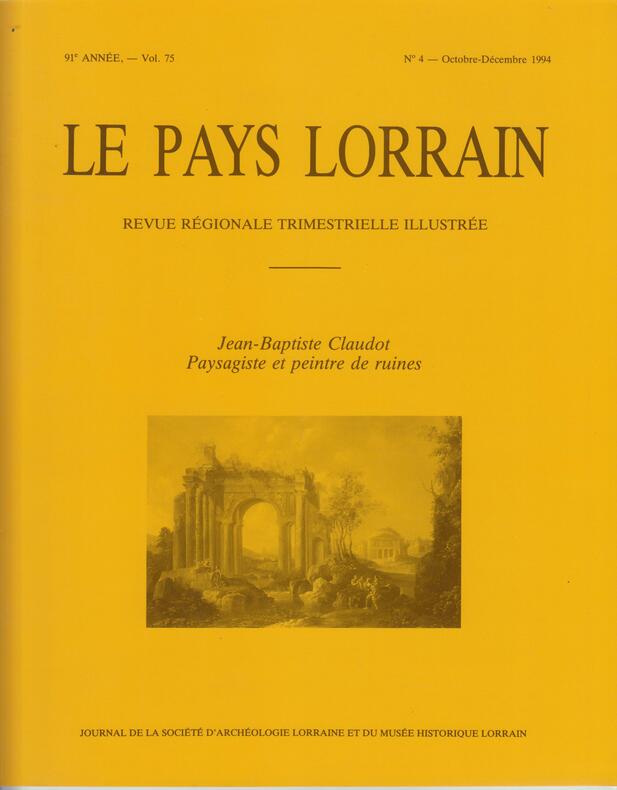
LE PAYS LORRAIN N°4 / Octobre-décembre 1994.
JEAN-BAPTISTE CLAUDOT : paysagiste et peintre de ruines.
Nancy : Société d'archéologie lorraine / Musée historique, 1994. Revue 27,5x22cm, couverture illustrée en noir, 336 pages illustrées en noir.
Référence libraire : SPN-937
|
|
|
LE POINT
L AVENTURE DE LA MUSIQUE AU XXEME SIECLE - LVIII
SOUILLAC. 1961. In-8. Broché. Bon état, Couv. convenable, Dos satisfaisant, Intérieur frais. 48 pages augmentees de nombreuses illustrations, phrases musicales et facs-simile en noir et blanc dans et hors texte - jaquette en bon etat - ENVOI DE L AUTEUR - 2 PHOTOS DISPONIBLES -. Avec Jaquette. . . Classification Dewey : 780-Musique
Référence libraire : RO40268107
|
|
|
LE GUENNANT AUG.
L'OFFICE LITURGIQUE PAROISSIAL DE L'ORGANISTE ACCOMPAGNATEUR - SERIE A : Messes et Vepres des principales Fetes.
LES EIDTIONS MUSICALES H. HERELLE. NON DATE. In-Folio. Broché. Bon état, Couv. convenable, Dos satisfaisant, Intérieur frais. 31 pages agrafées de partition. Tampon sur le 1er plat.. . . . Classification Dewey : 782.3-Musique lithurgique
Référence libraire : R320076537
|
|
|
Le Guenant Aug.
L'Office liturgique paroissial de l'organiste accompagnateur Série A Messes et Vêpres des principales fêtes
Librairie musicale et religieuse H. Hérelle &Cie. non daté. In-4. Broché. Bon état, Couv. convenable, Dos satisfaisant, Intérieur frais. 34 pages de partitions de musique avec les paroles des chants.. . . . Classification Dewey : 782.3-Musique lithurgique
Référence libraire : R260233750
|
|
|
Le Guenant Aug.
L'office liturgique paroissial de l'organiste accompagnateur Série B Vespéral
Librairie musicale et religieuse H. Hérelle &Cie. non daté. In-4. Broché. Bon état, Couv. convenable, Dos satisfaisant, Intérieur frais. 13 pages augmentées de partitions de musiques avec les paroles des chants.. . . . Classification Dewey : 782.3-Musique lithurgique
Référence libraire : R260233751
|
|
|
LE BORDAYS Christiane
La musique espagnole.
Couverture souple. Broché. 128 pages.
Référence libraire : 127211

|
|
|
LE BRETON (Auguste)
La môme Piaf
Hachette 1980, in-8 broché, 370 p. (bel état ; non réédité) Première édition ; cahier photos. L'auteur du Clan des Siciliens a eu la bonne fortune de recevoir les confidences de Ginette Richer qui est restée pendant douze ans près d'Edith Piaf, d'où un portrait unique.
Référence libraire : 54025
|
|
|
Le Roy René Classens Henri
La flûte classique - VOL. 1
Philippo L. et M. Combre in4. Sans date. Agrafé. partition
Référence libraire : 100093167

|
|

 Recevoir par e-mail
 Télécharger en PDF
 Flux RSS
 Lien permanent


