|
Shaw, George, MD, FRS, and Nodder, Frederick Polydore
Plate 750. The Pagre Sparus Sparus Pagrus
London:: G. Shaw and F.P. & E. Nodder 1790-1813. First edition. Fine in original bright hand-coloring. A Fine and rare original hand-colored copperplate engraving by Frederick Polydore Nodder and/or his son Richard Polydore Nodder from The Naturalist's Miscellany. Octavo 6 x 9.5 inches 15.24 x 24.13 cm. Includes the original text in both English and Latin by George Shaw MD FRS. The Naturalist's Miscellany distinguished by the refined hand-colored copperplate engravings and astute naturalists' observations was aptly named as a diverse naturalists' compendium of the birds mammals reptiles insects fish and crustacean identified by seventeenth and eighteenth century naturalists spanning the globe particularly around the South Seas. Many of nature's most fascinating and unusual creatures were discovered during this period several of which were introduced through The Naturalist's Miscellany. Doctor George Shaw 1751-1813 Fellow of the Royal Society cofounder of the Linnaean Society as well as Zoologist of the British Museum contributed the text. Publication of the Naturalist's Miscellany ceased with his death in 1813. Upon the death of the artist FP Nodder 1770-1800 his wife Elizabeth and their son Richard Polydore Nodder 1793-1820 contributed artistically and editorially to the publication. Indeed a family affair both Frederick Polydore Nodder and his son Richard produced every one of the plates. A gifted and distinguished naturalist Frederick P. Nodder was the preferred Botanical Painter to Her Majesty Queen Charlotte. His early skills as botanical and animal draughtsman and engraver were honed from his association with Sir Joseph Banks who employed Nodder to complete and engrave the drawings from the sketchbooks of the late Sydney Parkinson. Parkinson accompanied Banks as botanical draughtsman aboard Captain James Cook's The Endeavor in 1771. Parkinson died on the return of this South Seas Voyage. These engravings along with the natural history collections of the British Museum were the basis for the mastery of the Naturalist's Miscellany. Frederick's son Richard P. Nodder a gifted animal painter in his own right was distinguished as botanic painter to King George III. At the time of its creation The Naturalist's Miscellany was highly coveted as a definitive natural history offering and as was the custom the work was issued in installments between 1790 and 1813. Each volume was dedicated by permission and dutifully inscribed to the most devoted patrons and contributors of the natural historical pursuits of eighteenth and early nineteenth century Britain: Queen Charlotte Sir Joseph Banks Thomas Pennant Esq. The Universities of Oxford and Cambridge The Trustees of the British Museum to name a few. Andrews1986 Blunt 151Coats 25 Sitwell FBB 142 Wood 482. Copyright: Lowry-James Rare Prints & Books 1/09. Matted in Rag Board G. Shaw and F.P. & E. Nodder, unknown
Référence libraire : 5501

|
|
|
Shaw, George, MD, FRS, and Nodder, Frederick Polydore
Plate 755. The Fasciated Sparus Sparus Fasciatus
London:: G. Shaw and F.P. & E. Nodder 1790-1813. First edition. Fine in original bright hand-coloring. A Fine and rare original hand-colored copperplate engraving by Frederick Polydore Nodder and/or his son Richard Polydore Nodder from The Naturalist's Miscellany. Octavo 6 x 9.5 inches 15.24 x 24.13 cm. Includes the original text in both English and Latin by George Shaw MD FRS. The Naturalist's Miscellany distinguished by the refined hand-colored copperplate engravings and astute naturalists' observations was aptly named as a diverse naturalists' compendium of the birds mammals reptiles insects fish and crustacean identified by seventeenth and eighteenth century naturalists spanning the globe particularly around the South Seas. Many of nature's most fascinating and unusual creatures were discovered during this period several of which were introduced through The Naturalist's Miscellany. Doctor George Shaw 1751-1813 Fellow of the Royal Society cofounder of the Linnaean Society as well as Zoologist of the British Museum contributed the text. Publication of the Naturalist's Miscellany ceased with his death in 1813. Upon the death of the artist FP Nodder 1770-1800 his wife Elizabeth and their son Richard Polydore Nodder 1793-1820 contributed artistically and editorially to the publication. Indeed a family affair both Frederick Polydore Nodder and his son Richard produced every one of the plates. A gifted and distinguished naturalist Frederick P. Nodder was the preferred Botanical Painter to Her Majesty Queen Charlotte. His early skills as botanical and animal draughtsman and engraver were honed from his association with Sir Joseph Banks who employed Nodder to complete and engrave the drawings from the sketchbooks of the late Sydney Parkinson. Parkinson accompanied Banks as botanical draughtsman aboard Captain James Cook's The Endeavor in 1771. Parkinson died on the return of this South Seas Voyage. These engravings along with the natural history collections of the British Museum were the basis for the mastery of the Naturalist's Miscellany. Frederick's son Richard P. Nodder a gifted animal painter in his own right was distinguished as botanic painter to King George III. At the time of its creation The Naturalist's Miscellany was highly coveted as a definitive natural history offering and as was the custom the work was issued in installments between 1790 and 1813. Each volume was dedicated by permission and dutifully inscribed to the most devoted patrons and contributors of the natural historical pursuits of eighteenth and early nineteenth century Britain: Queen Charlotte Sir Joseph Banks Thomas Pennant Esq. The Universities of Oxford and Cambridge The Trustees of the British Museum to name a few. Andrews1986 Blunt 151Coats 25 Sitwell FBB 142 Wood 482. Copyright: Lowry-James Rare Prints & Books 1/09. Matted in Rag Board G. Shaw and F.P. & E. Nodder, unknown
Référence libraire : 5507

|
|
|
Shaw, George, MD, FRS, and Nodder, Frederick Polydore
Plate 758. Scarabæus Auratus The Golden Beetle
London:: G. Shaw and F.P. & E. Nodder 1790-1813. First edition. Fine in original bright hand-coloring. A Fine and rare original hand-colored copperplate engraving by Frederick Polydore Nodder and/or his son Richard Polydore Nodder from The Naturalist's Miscellany. Octavo 6 x 9.5 inches 15.24 x 24.13 cm. Includes the original text in both English and Latin by George Shaw MD FRS. The Naturalist's Miscellany distinguished by the refined hand-colored copperplate engravings and astute naturalists' observations was aptly named as a diverse naturalists' compendium of the birds mammals reptiles insects fish and crustacean identified by seventeenth and eighteenth century naturalists spanning the globe particularly around the South Seas. Many of nature's most fascinating and unusual creatures were discovered during this period several of which were introduced through The Naturalist's Miscellany. Doctor George Shaw 1751-1813 Fellow of the Royal Society cofounder of the Linnaean Society as well as Zoologist of the British Museum contributed the text. Publication of the Naturalist's Miscellany ceased with his death in 1813. Upon the death of the artist FP Nodder 1770-1800 his wife Elizabeth and their son Richard Polydore Nodder 1793-1820 contributed artistically and editorially to the publication. Indeed a family affair both Frederick Polydore Nodder and his son Richard produced every one of the plates. A gifted and distinguished naturalist Frederick P. Nodder was the preferred Botanical Painter to Her Majesty Queen Charlotte. His early skills as botanical and animal draughtsman and engraver were honed from his association with Sir Joseph Banks who employed Nodder to complete and engrave the drawings from the sketchbooks of the late Sydney Parkinson. Parkinson accompanied Banks as botanical draughtsman aboard Captain James Cook's The Endeavor in 1771. Parkinson died on the return of this South Seas Voyage. These engravings along with the natural history collections of the British Museum were the basis for the mastery of the Naturalist's Miscellany. Frederick's son Richard P. Nodder a gifted animal painter in his own right was distinguished as botanic painter to King George III. At the time of its creation The Naturalist's Miscellany was highly coveted as a definitive natural history offering and as was the custom the work was issued in installments between 1790 and 1813. Each volume was dedicated by permission and dutifully inscribed to the most devoted patrons and contributors of the natural historical pursuits of eighteenth and early nineteenth century Britain: Queen Charlotte Sir Joseph Banks Thomas Pennant Esq. The Universities of Oxford and Cambridge The Trustees of the British Museum to name a few. Andrews1986 Blunt 151Coats 25 Sitwell FBB 142 Wood 482. Copyright: Lowry-James Rare Prints & Books 1/09. G. Shaw and F.P. & E. Nodder, unknown
Référence libraire : 5496

|
|
|
Shaw, George, MD, FRS, and Nodder, Frederick Polydore
Plate 759. The Guttulated Labrus Labrus Guttulatus.
London:: G. Shaw and F.P. & E. Nodder 1790-1813. First edition. Fine in original bright hand-coloring. A Fine and rare original hand-colored copperplate engraving by Frederick Polydore Nodder and/or his son Richard Polydore Nodder from The Naturalist's Miscellany. Octavo 6 x 9.5 inches 15.24 x 24.13 cm. Includes the original text in both English and Latin by George Shaw MD FRS. The Naturalist's Miscellany distinguished by the refined hand-colored copperplate engravings and astute naturalists' observations was aptly named as a diverse naturalists' compendium of the birds mammals reptiles insects fish and crustacean identified by seventeenth and eighteenth century naturalists spanning the globe particularly around the South Seas. Many of nature's most fascinating and unusual creatures were discovered during this period several of which were introduced through The Naturalist's Miscellany. Doctor George Shaw 1751-1813 Fellow of the Royal Society cofounder of the Linnaean Society as well as Zoologist of the British Museum contributed the text. Publication of the Naturalist's Miscellany ceased with his death in 1813. Upon the death of the artist FP Nodder 1770-1800 his wife Elizabeth and their son Richard Polydore Nodder 1793-1820 contributed artistically and editorially to the publication. Indeed a family affair both Frederick Polydore Nodder and his son Richard produced every one of the plates. A gifted and distinguished naturalist Frederick P. Nodder was the preferred Botanical Painter to Her Majesty Queen Charlotte. His early skills as botanical and animal draughtsman and engraver were honed from his association with Sir Joseph Banks who employed Nodder to complete and engrave the drawings from the sketchbooks of the late Sydney Parkinson. Parkinson accompanied Banks as botanical draughtsman aboard Captain James Cook's The Endeavor in 1771. Parkinson died on the return of this South Seas Voyage. These engravings along with the natural history collections of the British Museum were the basis for the mastery of the Naturalist's Miscellany. Frederick's son Richard P. Nodder a gifted animal painter in his own right was distinguished as botanic painter to King George III. At the time of its creation The Naturalist's Miscellany was highly coveted as a definitive natural history offering and as was the custom the work was issued in installments between 1790 and 1813. Each volume was dedicated by permission and dutifully inscribed to the most devoted patrons and contributors of the natural historical pursuits of eighteenth and early nineteenth century Britain: Queen Charlotte Sir Joseph Banks Thomas Pennant Esq. The Universities of Oxford and Cambridge The Trustees of the British Museum to name a few. Andrews1986 Blunt 151Coats 25 Sitwell FBB 142 Wood 482. Copyright: Lowry-James Rare Prints & Books 1/09. Matted in Rag Board G. Shaw and F.P. & E. Nodder, unknown
Référence libraire : 5508

|
|
|
Shaw, George, MD, FRS, and Nodder, Frederick Polydore
Plate 762. The Brasilian Labrus. Labrus Brasiliensis.
London:: G. Shaw and F.P. & E. Nodder 1790-1813. First edition. Fine in original bright hand-coloring. A Fine and rare original hand-colored copperplate engraving by Frederick Polydore Nodder and/or his son Richard Polydore Nodder from The Naturalist's Miscellany. Octavo 6 x 9.5 inches 15.24 x 24.13 cm. Includes the original text in both English and Latin by George Shaw MD FRS. The Naturalist's Miscellany distinguished by the refined hand-colored copperplate engravings and astute naturalists' observations was aptly named as a diverse naturalists' compendium of the birds mammals reptiles insects fish and crustacean identified by seventeenth and eighteenth century naturalists spanning the globe particularly around the South Seas. Many of nature's most fascinating and unusual creatures were discovered during this period several of which were introduced through The Naturalist's Miscellany. Doctor George Shaw 1751-1813 Fellow of the Royal Society cofounder of the Linnaean Society as well as Zoologist of the British Museum contributed the text. Publication of the Naturalist's Miscellany ceased with his death in 1813. Upon the death of the artist FP Nodder 1770-1800 his wife Elizabeth and their son Richard Polydore Nodder 1793-1820 contributed artistically and editorially to the publication. Indeed a family affair both Frederick Polydore Nodder and his son Richard produced every one of the plates. A gifted and distinguished naturalist Frederick P. Nodder was the preferred Botanical Painter to Her Majesty Queen Charlotte. His early skills as botanical and animal draughtsman and engraver were honed from his association with Sir Joseph Banks who employed Nodder to complete and engrave the drawings from the sketchbooks of the late Sydney Parkinson. Parkinson accompanied Banks as botanical draughtsman aboard Captain James Cook's The Endeavor in 1771. Parkinson died on the return of this South Seas Voyage. These engravings along with the natural history collections of the British Museum were the basis for the mastery of the Naturalist's Miscellany. Frederick's son Richard P. Nodder a gifted animal painter in his own right was distinguished as botanic painter to King George III. At the time of its creation The Naturalist's Miscellany was highly coveted as a definitive natural history offering and as was the custom the work was issued in installments between 1790 and 1813. Each volume was dedicated by permission and dutifully inscribed to the most devoted patrons and contributors of the natural historical pursuits of eighteenth and early nineteenth century Britain: Queen Charlotte Sir Joseph Banks Thomas Pennant Esq. The Universities of Oxford and Cambridge The Trustees of the British Museum to name a few. Andrews1986 Blunt 151Coats 25 Sitwell FBB 142 Wood 482. Copyright: Lowry-James Rare Prints & Books 1/09. Matted in Rag Board G. Shaw and F.P. & E. Nodder, unknown
Référence libraire : 5510

|
|
|
Shaw, George, MD, FRS, and Nodder, Frederick Polydore
Plate 778. Apua Bodian Bodianus Apua
London:: G. Shaw and F.P. & E. Nodder 1790-1813. First edition. Fine in original bright hand-coloring. A Fine and rare original hand-colored copperplate engraving by Frederick Polydore Nodder and/or his son Richard Polydore Nodder from The Naturalist's Miscellany. Octavo 6 x 9.5 inches 15.24 x 24.13 cm. Includes the original text in both English and Latin by George Shaw MD FRS. The Naturalist's Miscellany distinguished by the refined hand-colored copperplate engravings and astute naturalists' observations was aptly named as a diverse naturalists' compendium of the birds mammals reptiles insects fish and crustacean identified by seventeenth and eighteenth century naturalists spanning the globe particularly around the South Seas. Many of nature's most fascinating and unusual creatures were discovered during this period several of which were introduced through The Naturalist's Miscellany. Doctor George Shaw 1751-1813 Fellow of the Royal Society cofounder of the Linnaean Society as well as Zoologist of the British Museum contributed the text. Publication of the Naturalist's Miscellany ceased with his death in 1813. Upon the death of the artist FP Nodder 1770-1800 his wife Elizabeth and their son Richard Polydore Nodder 1793-1820 contributed artistically and editorially to the publication. Indeed a family affair both Frederick Polydore Nodder and his son Richard produced every one of the plates. A gifted and distinguished naturalist Frederick P. Nodder was the preferred Botanical Painter to Her Majesty Queen Charlotte. His early skills as botanical and animal draughtsman and engraver were honed from his association with Sir Joseph Banks who employed Nodder to complete and engrave the drawings from the sketchbooks of the late Sydney Parkinson. Parkinson accompanied Banks as botanical draughtsman aboard Captain James Cook's The Endeavor in 1771. Parkinson died on the return of this South Seas Voyage. These engravings along with the natural history collections of the British Museum were the basis for the mastery of the Naturalist's Miscellany. Frederick's son Richard P. Nodder a gifted animal painter in his own right was distinguished as botanic painter to King George III. At the time of its creation The Naturalist's Miscellany was highly coveted as a definitive natural history offering and as was the custom the work was issued in installments between 1790 and 1813. Each volume was dedicated by permission and dutifully inscribed to the most devoted patrons and contributors of the natural historical pursuits of eighteenth and early nineteenth century Britain: Queen Charlotte Sir Joseph Banks Thomas Pennant Esq. The Universities of Oxford and Cambridge The Trustees of the British Museum to name a few. Andrews1986 Blunt 151Coats 25 Sitwell FBB 142 Wood 482. Copyright: Lowry-James Rare Prints & Books 1/09. Matted in Rag Board G. Shaw and F.P. & E. Nodder, unknown
Référence libraire : 5502

|
|
|
Shaw, George, MD, FRS, and Nodder, Frederick Polydore
Plate 781. The Pied Roller. Coracias Varia.
London:: George Shaw and E. Nodder 1809. First edition. Fine condition with original bright hand-coloring. . A Fine and rare original hand-colored copperplate engraving by Frederick Polydore Nodder and/or his son Richard Polydore Nodder from The Naturalist's Miscellany. Octavo 6 x 9.5 inches 15.24 x 24.13 cm. Includes the original text in both English and Latin by George Shaw MD FRS. The Naturalist's Miscellany distinguished by the refined hand-colored copperplate engravings and astute naturalists' observations was aptly named as a diverse naturalists' compendium of the birds mammals reptiles insects fish and crustacean identified by seventeenth and eighteenth century naturalists spanning the globe particularly around the South Seas. Many of nature's most fascinating and unusual creatures were discovered during this period several of which were introduced through The Naturalist's Miscellany. Doctor George Shaw 1751-1813 Fellow of the Royal Society cofounder of the Linnaean Society as well as Zoologist of the British Museum contributed the text. Publication of the Naturalist's Miscellany ceased with his death in 1813. Upon the death of the artist FP Nodder 1770-1800 his wife Elizabeth and their son Richard Polydore Nodder 1793-1820 contributed artistically and editorially to the publication. Indeed a family affair both Frederick Polydore Nodder and his son Richard produced every one of the plates. A gifted and distinguished naturalist Frederick P. Nodder was the preferred Botanical Painter to Her Majesty Queen Charlotte. His early skills as botanical and animal draughtsman and engraver were honed from his association with Sir Joseph Banks who employed Nodder to complete and engrave the drawings from the sketchbooks of the late Sydney Parkinson. Parkinson accompanied Banks as botanical draughtsman aboard Captain James Cook's The Endeavor in 1771. Parkinson died on the return of this South Seas Voyage. These engravings along with the natural history collections of the British Museum were the basis for the mastery of the Naturalist's Miscellany. Frederick's son Richard P. Nodder a gifted animal painter in his own right was distinguished as botanic painter to King George III. At the time of its creation The Naturalist's Miscellany was highly coveted as a definitive natural history offering and as was the custom the work was issued in installments between 1790 and 1813. Each volume was dedicated by permission and dutifully inscribed to the most devoted patrons and contributors of the natural historical pursuits of eighteenth and early nineteenth century Britain: Queen Charlotte Sir Joseph Banks Thomas Pennant Esq. The Universities of Oxford and Cambridge The Trustees of the British Museum to name a few. Andrews1986 Blunt 151Coats 25 Sitwell FBB 142 Wood 482. Copyright: Lowry-James Rare Prints & Books 1/09. George Shaw and E. Nodder, unknown
Référence libraire : 3197

|
|
|
Shaw, George, MD, FRS, and Nodder, Frederick Polydore
Plate 809. The White-beaked Hornbill Buceros Albirostris.
London:: George Shaw and E. Nodder 1809. First edition. Fine condition with original bright hand-coloring. . A Fine and rare original hand-colored copperplate engraving by Frederick Polydore Nodder and/or his son Richard Polydore Nodder from The Naturalist's Miscellany. Octavo 6 x 9.5 inches 15.24 x 24.13 cm. Includes the original text in both English and Latin by George Shaw MD FRS. The Naturalist's Miscellany distinguished by the refined hand-colored copperplate engravings and astute naturalists' observations was aptly named as a diverse naturalists' compendium of the birds mammals reptiles insects fish and crustacean identified by seventeenth and eighteenth century naturalists spanning the globe particularly around the South Seas. Many of nature's most fascinating and unusual creatures were discovered during this period several of which were introduced through The Naturalist's Miscellany. Doctor George Shaw 1751-1813 Fellow of the Royal Society cofounder of the Linnaean Society as well as Zoologist of the British Museum contributed the text. Publication of the Naturalist's Miscellany ceased with his death in 1813. Upon the death of the artist FP Nodder 1770-1800 his wife Elizabeth and their son Richard Polydore Nodder 1793-1820 contributed artistically and editorially to the publication. Indeed a family affair both Frederick Polydore Nodder and his son Richard produced every one of the plates. A gifted and distinguished naturalist Frederick P. Nodder was the preferred Botanical Painter to Her Majesty Queen Charlotte. His early skills as botanical and animal draughtsman and engraver were honed from his association with Sir Joseph Banks who employed Nodder to complete and engrave the drawings from the sketchbooks of the late Sydney Parkinson. Parkinson accompanied Banks as botanical draughtsman aboard Captain James Cook's The Endeavor in 1771. Parkinson died on the return of this South Seas Voyage. These engravings along with the natural history collections of the British Museum were the basis for the mastery of the Naturalist's Miscellany. Frederick's son Richard P. Nodder a gifted animal painter in his own right was distinguished as botanic painter to King George III. At the time of its creation The Naturalist's Miscellany was highly coveted as a definitive natural history offering and as was the custom the work was issued in installments between 1790 and 1813. Each volume was dedicated by permission and dutifully inscribed to the most devoted patrons and contributors of the natural historical pursuits of eighteenth and early nineteenth century Britain: Queen Charlotte Sir Joseph Banks Thomas Pennant Esq. The Universities of Oxford and Cambridge The Trustees of the British Museum to name a few. Andrews1986 Blunt 151Coats 25 Sitwell FBB 142 Wood 482. Copyright: Lowry-James Rare Prints & Books 1/09. George Shaw and E. Nodder, unknown
Référence libraire : 3191

|
|
|
Shaw, George, MD, FRS, and Nodder, Frederick Polydore
Plate 817. The Purple-breasted Chatterer. Ampelis Cotinga.
London:: George Shaw and E. Nodder 1809. First edition. Fine condition with original bright hand-coloring. . A Fine and rare original hand-colored copperplate engraving by Frederick Polydore Nodder and/or his son Richard Polydore Nodder from The Naturalist's Miscellany. Octavo 6 x 9.5 inches 15.24 x 24.13 cm. Includes the original text in both English and Latin by George Shaw MD FRS. The Naturalist's Miscellany distinguished by the refined hand-colored copperplate engravings and astute naturalists' observations was aptly named as a diverse naturalists' compendium of the birds mammals reptiles insects fish and crustacean identified by seventeenth and eighteenth century naturalists spanning the globe particularly around the South Seas. Many of nature's most fascinating and unusual creatures were discovered during this period several of which were introduced through The Naturalist's Miscellany. Doctor George Shaw 1751-1813 Fellow of the Royal Society cofounder of the Linnaean Society as well as Zoologist of the British Museum contributed the text. Publication of the Naturalist's Miscellany ceased with his death in 1813. Upon the death of the artist FP Nodder 1770-1800 his wife Elizabeth and their son Richard Polydore Nodder 1793-1820 contributed artistically and editorially to the publication. Indeed a family affair both Frederick Polydore Nodder and his son Richard produced every one of the plates. A gifted and distinguished naturalist Frederick P. Nodder was the preferred Botanical Painter to Her Majesty Queen Charlotte. His early skills as botanical and animal draughtsman and engraver were honed from his association with Sir Joseph Banks who employed Nodder to complete and engrave the drawings from the sketchbooks of the late Sydney Parkinson. Parkinson accompanied Banks as botanical draughtsman aboard Captain James Cook's The Endeavor in 1771. Parkinson died on the return of this South Seas Voyage. These engravings along with the natural history collections of the British Museum were the basis for the mastery of the Naturalist's Miscellany. Frederick's son Richard P. Nodder a gifted animal painter in his own right was distinguished as botanic painter to King George III. At the time of its creation The Naturalist's Miscellany was highly coveted as a definitive natural history offering and as was the custom the work was issued in installments between 1790 and 1813. Each volume was dedicated by permission and dutifully inscribed to the most devoted patrons and contributors of the natural historical pursuits of eighteenth and early nineteenth century Britain: Queen Charlotte Sir Joseph Banks Thomas Pennant Esq. The Universities of Oxford and Cambridge The Trustees of the British Museum to name a few. Andrews1986 Blunt 151Coats 25 Sitwell FBB 142 Wood 482. Copyright: Lowry-James Rare Prints & Books 1/09. George Shaw and E. Nodder, unknown
Référence libraire : 3196

|
|
|
Shaw, George, MD, FRS, and Nodder, Frederick Polydore
Plate 821. The Superb Chatterer. Ampelis Superba
London:: George Shaw and E. Nodder 1809. First edition. Fine condition with original bright hand-coloring. . A Fine and rare original hand-colored copperplate engraving by Frederick Polydore Nodder and/or his son Richard Polydore Nodder from The Naturalist's Miscellany. Octavo 6 x 9.5 inches 15.24 x 24.13 cm. Includes the original text in both English and Latin by George Shaw MD FRS. The Naturalist's Miscellany distinguished by the refined hand-colored copperplate engravings and astute naturalists' observations was aptly named as a diverse naturalists' compendium of the birds mammals reptiles insects fish and crustacean identified by seventeenth and eighteenth century naturalists spanning the globe particularly around the South Seas. Many of nature's most fascinating and unusual creatures were discovered during this period several of which were introduced through The Naturalist's Miscellany. Doctor George Shaw 1751-1813 Fellow of the Royal Society cofounder of the Linnaean Society as well as Zoologist of the British Museum contributed the text. Publication of the Naturalist's Miscellany ceased with his death in 1813. Upon the death of the artist FP Nodder 1770-1800 his wife Elizabeth and their son Richard Polydore Nodder 1793-1820 contributed artistically and editorially to the publication. Indeed a family affair both Frederick Polydore Nodder and his son Richard produced every one of the plates. A gifted and distinguished naturalist Frederick P. Nodder was the preferred Botanical Painter to Her Majesty Queen Charlotte. His early skills as botanical and animal draughtsman and engraver were honed from his association with Sir Joseph Banks who employed Nodder to complete and engrave the drawings from the sketchbooks of the late Sydney Parkinson. Parkinson accompanied Banks as botanical draughtsman aboard Captain James Cook's The Endeavor in 1771. Parkinson died on the return of this South Seas Voyage. These engravings along with the natural history collections of the British Museum were the basis for the mastery of the Naturalist's Miscellany. Frederick's son Richard P. Nodder a gifted animal painter in his own right was distinguished as botanic painter to King George III. At the time of its creation The Naturalist's Miscellany was highly coveted as a definitive natural history offering and as was the custom the work was issued in installments between 1790 and 1813. Each volume was dedicated by permission and dutifully inscribed to the most devoted patrons and contributors of the natural historical pursuits of eighteenth and early nineteenth century Britain: Queen Charlotte Sir Joseph Banks Thomas Pennant Esq. The Universities of Oxford and Cambridge The Trustees of the British Museum to name a few. Andrews1986 Blunt 151Coats 25 Sitwell FBB 142 Wood 482. Copyright: Lowry-James Rare Prints & Books 1/09. George Shaw and E. Nodder, unknown
Référence libraire : 3195

|
|
|
Shaw, George, MD, FRS, and Nodder, Frederick Polydore
Plate 89. The Single-striped Lizard Lacerta Unistriata
London:: G. Shaw and F.P. & E. Nodder 1790-1813. First edition. Fine in original bright hand-coloring. A Fine and rare original hand-colored copperplate engraving by Frederick Polydore Nodder and/or his son Richard Polydore Nodder from The Naturalist's Miscellany. Octavo 6 x 9.5 inches 15.24 x 24.13 cm. Includes the original text in both English and Latin by George Shaw MD FRS. The Naturalist's Miscellany distinguished by the refined hand-colored copperplate engravings and astute naturalists' observations was aptly named as a diverse naturalists' compendium of the birds mammals reptiles insects fish and crustacean identified by seventeenth and eighteenth century naturalists spanning the globe particularly around the South Seas. Many of nature's most fascinating and unusual creatures were discovered during this period several of which were introduced through The Naturalist's Miscellany. Doctor George Shaw 1751-1813 Fellow of the Royal Society cofounder of the Linnaean Society as well as Zoologist of the British Museum contributed the text. Publication of the Naturalist's Miscellany ceased with his death in 1813. Upon the death of the artist FP Nodder 1770-1800 his wife Elizabeth and their son Richard Polydore Nodder 1793-1820 contributed artistically and editorially to the publication. Indeed a family affair both Frederick Polydore Nodder and his son Richard produced every one of the plates. A gifted and distinguished naturalist Frederick P. Nodder was the preferred Botanical Painter to Her Majesty Queen Charlotte. His early skills as botanical and animal draughtsman and engraver were honed from his association with Sir Joseph Banks who employed Nodder to complete and engrave the drawings from the sketchbooks of the late Sydney Parkinson. Parkinson accompanied Banks as botanical draughtsman aboard Captain James Cook's The Endeavor in 1771. Parkinson died on the return of this South Seas Voyage. These engravings along with the natural history collections of the British Museum were the basis for the mastery of the Naturalist's Miscellany. Frederick's son Richard P. Nodder a gifted animal painter in his own right was distinguished as botanic painter to King George III. At the time of its creation The Naturalist's Miscellany was highly coveted as a definitive natural history offering and as was the custom the work was issued in installments between 1790 and 1813. Each volume was dedicated by permission and dutifully inscribed to the most devoted patrons and contributors of the natural historical pursuits of eighteenth and early nineteenth century Britain: Queen Charlotte Sir Joseph Banks Thomas Pennant Esq. The Universities of Oxford and Cambridge The Trustees of the British Museum to name a few. Andrews1986 Blunt 151Coats 25 Sitwell FBB 142 Wood 482. Copyright: Lowry-James Rare Prints & Books 1/09. G. Shaw and F.P. & E. Nodder, unknown
Référence libraire : 5499

|
|
|
Shaw, George, MD, FRS, and Nodder, Frederick Polydore
Plate 97 The Wandering Silurus
London:: G. Shaw and F.P. & E. Nodder 1790-1813. First edition. Fine in original bright hand-coloring. A Fine and rare original hand-colored copperplate engraving by Frederick Polydore Nodder and/or his son Richard Polydore Nodder from The Naturalist's Miscellany. Octavo 6 x 9.5 inches 15.24 x 24.13 cm. Includes the original text in both English and Latin by George Shaw MD FRS. The Naturalist's Miscellany distinguished by the refined hand-colored copperplate engravings and astute naturalists' observations was aptly named as a diverse naturalists' compendium of the birds mammals reptiles insects fish and crustacean identified by seventeenth and eighteenth century naturalists spanning the globe particularly around the South Seas. Many of nature's most fascinating and unusual creatures were discovered during this period several of which were introduced through The Naturalist's Miscellany. Doctor George Shaw 1751-1813 Fellow of the Royal Society cofounder of the Linnaean Society as well as Zoologist of the British Museum contributed the text. Publication of the Naturalist's Miscellany ceased with his death in 1813. Upon the death of the artist FP Nodder 1770-1800 his wife Elizabeth and their son Richard Polydore Nodder 1793-1820 contributed artistically and editorially to the publication. Indeed a family affair both Frederick Polydore Nodder and his son Richard produced every one of the plates. A gifted and distinguished naturalist Frederick P. Nodder was the preferred Botanical Painter to Her Majesty Queen Charlotte. His early skills as botanical and animal draughtsman and engraver were honed from his association with Sir Joseph Banks who employed Nodder to complete and engrave the drawings from the sketchbooks of the late Sydney Parkinson. Parkinson accompanied Banks as botanical draughtsman aboard Captain James Cook's The Endeavor in 1771. Parkinson died on the return of this South Seas Voyage. These engravings along with the natural history collections of the British Museum were the basis for the mastery of the Naturalist's Miscellany. Frederick's son Richard P. Nodder a gifted animal painter in his own right was distinguished as botanic painter to King George III. At the time of its creation The Naturalist's Miscellany was highly coveted as a definitive natural history offering and as was the custom the work was issued in installments between 1790 and 1813. Each volume was dedicated by permission and dutifully inscribed to the most devoted patrons and contributors of the natural historical pursuits of eighteenth and early nineteenth century Britain: Queen Charlotte Sir Joseph Banks Thomas Pennant Esq. The Universities of Oxford and Cambridge The Trustees of the British Museum to name a few. Andrews1986 Blunt 151Coats 25 Sitwell FBB 142 Wood 482. Copyright: Lowry-James Rare Prints & Books 1/09. Matted in Rag Board G. Shaw and F.P. & E. Nodder, unknown
Référence libraire : 2172

|
|
|
Shaw, J.J.
The Haemoflagellates of Sloths (London School of Hygiene and Tropical Medicine, Memoir 13)
Hardcover without dust jacket. First edition with gilt lettering to front board and to spine. Former library copy with stamps to page block head and also to copyright page. Watermark to FEP and backing tape applied to gutters of initial 3 pages and to REP. Small surface tear to rear pastedown. Contents are clean throughout, spine is tight and binding is sound. AD Used
|
|
|
Shaw, Simeon
Nature Displayed in the Heavens and on the Earth according to the latest observations and discoveries
London Dublin Edinburgh & New York: Printed for Sir Richard Phillips 1823. Six volumes small octavo pp 588; 600 15; 584 10 uncut a few pages unopened a little age-toning and marking one gathering 347-350 in Volume IV detached and gatherings towards the rear of the volume becoming a bit weak and loose Volume VI has extra bis pages 343 - 354; very well illustrated with 197 engraved or wood engraved plates of which 31 are folding and 50 coloured plates of which 2 are folding and 1 folding table; bound in the original pink boards a bit worn chipped and marked original printed paper labels on the spines the upper cover of Volume V detached otherwise firm and tight a neat signature on each front endpaper. Apparently lacking one plate in Volume 1 Relative Sizes of the Planets though there is no sign of this ever having been bound in. There are several extra plates to those listed and our copy would seem to agree with the set at auction at Christie's in 2006 which contained 246 of 248 plates. A work of considerable charm and interest and despite some faults as mentioned a remarkable set in original unsophisticated state. Simeon Ackroyd Shaw 1785 - 1859 was a 19th-century English scientific writer industrial historian and teacher. He spent his working life in the Staffordshire Potteries now the city of Stoke-on-Trent England. Shaw originated in Lancashire and as a young man he arrived in the Potteries to work on the Potteries Gazette and Newcastle-under-Lyme Advertiser newspaper. After some 20 years of newspaper and printing work living in Wolstanton he then went into teaching. He ran several teaching academies in the district. His first book was this 6-volume work which was based on his obviously very comprehensive series of popular short lectures on everything from natural species to meteorites. First Edition. Boards. Good. Printed for Sir Richard Phillips Hardcover
Référence libraire : 018730
|
|
|
Shaw, Vero .
"Bayard" Langhaarige Bernhardiner "Barry". St. Bernard
London:: Cassell Petter Galpin & Co. 1880. First edition. Fine. A Fine original Chromolithograph. Octavo 10.75 x 8.75 inches. Matted in archival board sized to 14 x 16 inches suitable for framing. In the fine tradition of classic animal portraiture this formal portrait of one of Great Britain's prized canine breeds is set in its traditional British Scottish or Welsh landscape or interior. Finely produced by Vincent Brooks Day & Son Lithographers to the Queen in London c. 1880. Matted in Rag Board Cassell, Petter, Galpin & Co., unknown
Référence libraire : 4968

|
|
|
Shaw, Vero .
Bedlington Terrier & Dandie Dinmont Terrier. "Georgie & Doctor" Property of Dr. Lamond Hemming & Mr. James Locke.
London:: Cassell Petter Galpin & Co. 1880. First edition. Fine. A Fine original Chromolithograph. Octavo 10.75 x 8.75 inches. Matted in archival board sized to 14 x 16 inches suitable for framing. In the fine tradition of classic animal portraiture this formal portrait of one of Great Britain's prized canine breeds is set in its traditional British Scottish or Welsh landscape or interior. Finely produced by Vincent Brooks Day & Son Lithographers to the Queen in London c. 1880. Matted in Rag Board Cassell, Petter, Galpin & Co., unknown
Référence libraire : 4962

|
|
|
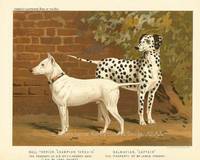
Shaw, Vero .
Bull Terrier & Dalmatian. "Champion Tarquin & Captain" property of Sir Wm E.H Verner bart & Mr. James Fawdry
London:: Cassell Petter Galpin & Co. 1880. First edition. Fine. A Fine original Chromolithograph. Octavo 10.75 x 8.75 inches. Matted in archival board sized to 14 x 16 inches suitable for framing. In the fine tradition of classic animal portraiture this formal portrait of one of Great Britain's prized canine breeds is set in its traditional British Scottish or Welsh landscape or interior. Finely produced by Vincent Brooks Day & Son Lithographers to the Queen in London c. 1880. Matted in Rag Board Cassell, Petter, Galpin & Co., unknown
Référence libraire : 4964
|
|
|
Shaw, Vero .
Deerhound. "Spey" property of Mr. Thomas Morse.
London:: Cassell Petter Galpin & Co. 1880. First edition. Fine. A Fine original Chromolithograph. Octavo 10.75 x 8.75 inches. Matted in archival board sized to 14 x 16 inches suitable for framing. In the fine tradition of classic animal portraiture this formal portrait of one of Great Britain's prized canine breeds is set in its traditional British Scottish or Welsh landscape or interior. Finely produced by Vincent Brooks Day & Son Lithographers to the Queen in London c. 1880. Matted in Rag Board Cassell, Petter, Galpin & Co., unknown
Référence libraire : 4954

|
|
|
Shaw, Vero .
Fox Terriers. "Bristles Bloom & Buffet" property of Mr. S.E. Shirley Mr. F. Burbidge & Mr. W.J. Hyde.
London:: Cassell Petter Galpin & Co. 1880. First edition. Fine. A Fine original Chromolithograph. Octavo 10.75 x 8.75 inches. Matted in archival board sized to 14 x 16 inches suitable for framing. In the fine tradition of classic animal portraiture this formal portrait of one of Great Britain's prized canine breeds is set in its traditional British Scottish or Welsh landscape or interior. Finely produced by Vincent Brooks Day & Son Lithographers to the Queen in London c. 1880. Matted in Rag Board Cassell, Petter, Galpin & Co., unknown
Référence libraire : 4956

|
|
|
Shaw, Vero .
Foxhound Archer.
London:: Cassell Petter Galpin & Co. 1880. First edition. Fine. A Fine original Chromolithograph. Octavo 10.75 x 8.75 inches. Matted in archival board sized to 14 x 16 inches suitable for framing. In the fine tradition of classic animal portraiture this formal portrait of one of Great Britain's prized canine breeds is set in its traditional British Scottish or Welsh landscape or interior. Finely produced by Vincent Brooks Day & Son Lithographers to the Queen in London c. 1880. Matted in Rag Board Cassell, Petter, Galpin & Co., unknown
Référence libraire : 4955

|
|
|
Shaw, Vero .
Greyhound. "Lauderdale" The property of Mr. Tom Sharples.
London:: Cassell Petter Galpin & Co. 1880. First edition. Fine. A Fine original Chromolithograph. Octavo 10.75 x 8.75 inches. Matted in archival board sized to 14 x 16 inches suitable for framing. In the fine tradition of classic animal portraiture this formal portrait of one of Great Britain's prized canine breeds is set in its traditional British Scottish or Welsh landscape or interior. Finely produced by Vincent Brooks Day & Son Lithographers to the Queen in London c. 1880. Matted in Rag Board Cassell, Petter, Galpin & Co., unknown
Référence libraire : 4957

|
|
|
Shaw, Vero .
Irish Terrier. "Champion Sporter" The property of Mr. George R. Krehl.
London:: Cassell Petter Galpin & Co. 1880. First edition. Fine. A Fine original Chromolithograph. Octavo 10.75 x 8.75 inches. Matted in archival board sized to 14 x 16 inches suitable for framing. In the fine tradition of classic animal portraiture this formal portrait of one of Great Britain's prized canine breeds is set in its traditional British Scottish or Welsh landscape or interior. Finely produced by Vincent Brooks Day & Son Lithographers to the Queen in London c. 1880. Matted in Rag Board Cassell, Petter, Galpin & Co., unknown
Référence libraire : 4961

|
|
|
Shaw, Vero .
Irish Water Spaniel "Captain". The property of Mr. Hugh Beaver
London:: Cassell Petter Galpin & Co. 1880. First edition. Fine. A Fine original Chromolithograph. Octavo 10.75 x 8.75 inches. Matted in archival board sized to 14 x 16 inches suitable for framing. In the fine tradition of classic animal portraiture this formal portrait of one of Great Britain's prized canine breeds is set in its traditional British Scottish or Welsh landscape or interior. Finely produced by Vincent Brooks Day & Son Lithographers to the Queen in London c. 1880. Matted in Rag Board Cassell, Petter, Galpin & Co., unknown
Référence libraire : 4979

|
|
|
Shaw, Vero .
Mastiff "Wolsey". The property of Mr. F.G. Banbury
London:: Cassell Petter Galpin & Co. 1880. First edition. Fine. A Fine original Chromolithograph. Octavo 10.75 x 8.75 inches. Matted in archival board sized to 14 x 16 inches suitable for framing. In the fine tradition of classic animal portraiture this formal portrait of one of Great Britain's prized canine breeds is set in its traditional British Scottish or Welsh landscape or interior. Finely produced by Vincent Brooks Day & Son Lithographers to the Queen in London c. 1880. Matted in Rag Board Cassell, Petter, Galpin & Co., unknown
Référence libraire : 4969

|
|
|
Shaw, Vero .
Pomeranian Dog & Maltese. "Charley & Hugh" The property of Mr. James Fawdry & Lady Giffard.
London:: Cassell Petter Galpin & Co. 1880. First edition. Fine. A Fine original Chromolithograph. Octavo 10.75 x 8.75 inches. Matted in archival board sized to 14 x 16 inches suitable for framing. In the fine tradition of classic animal portraiture this formal portrait of one of Great Britain's prized canine breeds is set in its traditional British Scottish or Welsh landscape or interior. Finely produced by Vincent Brooks Day & Son Lithographers to the Queen in London c. 1880. Matted in Rag Board Cassell, Petter, Galpin & Co., unknown
Référence libraire : 4958

|
|
|
Shaw, Vero .
Skye Terriers: "Sam" The Property of Mr. Mark Gretton & "Perkie" The Property of Mr. James Locke.
London:: Cassell Petter Galpin & Co. 1880. First edition. Fine. A Fine original Chromolithograph. Octavo 10.75 x 8.75 inches. Matted in archival board sized to 14 x 16 inches suitable for framing. In the fine tradition of classic animal portraiture this formal portrait of one of Great Britain's prized canine breeds is set in its traditional British Scottish or Welsh landscape or interior. Finely produced by Vincent Brooks Day & Son Lithographers to the Queen in London c. 1880. Matted in Rag Board Cassell, Petter, Galpin & Co., unknown
Référence libraire : 4960

|
|
|
Shaw, Vero .
St Bernard "Abbess". The property of Mr. Fred Gresham
London:: Cassell Petter Galpin & Co. 1880. First edition. Fine. A Fine original Chromolithograph. Octavo 10.75 x 8.75 inches. Matted in archival board sized to 14 x 16 inches suitable for framing. In the fine tradition of classic animal portraiture this formal portrait of one of Great Britain's prized canine breeds is set in its traditional British Scottish or Welsh landscape or interior. Finely produced by Vincent Brooks Day & Son Lithographers to the Queen in London c. 1880. Matted in Rag Board Cassell, Petter, Galpin & Co., unknown
Référence libraire : 4967

|
|
|
Sheen, Monsignor Fulton J.; Griswold, Harriet Ford; Frazier, George; Hartwell, Dickson; Crandall, Norma; Mardus, Elaine Bassler; Barcella, Ernest; Custer, Captain Ben Scott; McLaughlin, Mignon; Temple, Willard H.; Taylor, Matt; et al
Collier's - The National Weekly Magazine, January 29, 1949 - Child Actress Margaret O'Brien / Frank Woolworth
74 pages. Features: Sex and Love of God; I Had Polio; Princess Margaret O'Brien of Hollywood; The House That Dimes Built - How Frank Woolworth parlayed a gift of gab into an American institution; Animals are the Craziest People; They Call Him Mr. Baffle - Leslie L. (Biff) Biffle, Secretary of the Senate; Down in the Arctic - Jack Kastner, Sir Robert Stirling-Hamilton, Ben Custer, Charles Wilcox and Jerome Scalise crash their plane in the Arctic; French Boxer Marcel Cerdan; Interesting back page opinion piece considers China's move to communism. Short Stories: The Loves of Martin; The Man of the House; Three Little Girls Wore Blue; The River; Martha and Her Dream Man; Ringside Maiden (part 5 of 8). Nice ads for: Studebaker Trucks (inside front cover), Zenith Televisions, Good Year Tires, RCA Victor audio products, Hudson cars (nice full-page color), Papst Blue Ribbon - one -page color ad featuring Mr. and Mrs. F. Warren Pershing,Vitalis (featuring Buddy O'Connor, General Motors GM - two-page color, Herbert Tareyton cigarettes - featuring color photo of Mrs. William E. Benjamin II, Spam (in color), Back cover color photo ad for Camel cigarettes. Average wear. Unmarked. A sound vintage copy. Book

|
|
|
Sheldon Campbell:
LIFEBOATS TO ARARAT
Near fine/Vg (unclipped dj lightly rubbed at edges, clean green cloth with bright gilt titles on spine, no marks or inscriptions, a very good clean tight copy in near fine condition) octavo 240pp. First edition. Describing the life of the modern zoo, the work and world of the keeper, the vet, the researcher, the curator and many more. Packed with stories of animal lore and incidents from major zoos the world over. Foreword by Gerald Durrell. With 24pp illustrations, 8 in full colour.
|
|
|
Sheldrake, Rupert
Dogs that know when their owners are coming home : and other unexplained powers of animals
352pp. 25 cm. Hardcover Very good condition good
|
|
|
Shelton, Lola
WITCH'S COLT
New York: Dodd Mead & Co. 1958. Pictorial hardcover library binding usual library markings. Writing on front endpapers hinges good - lined with same color pencil on front endpaper. Front pocket removed. Smudges but overall clean. 183 pages. Author an avid fan of the western saddle horse was born in Oklahoma's Indian Territory and has written extensively for horse periodcials. Twins on a ranch help out as their father recovers from a war injury and try to help save the family farm and it's horses from being sold. Size: 8vo - over 7¾" - 9¾" tall. Illus. by Savitt Sam. 1st. Hardcover. Good/No Jacket. Dodd Mead & Co. Hardcover
Référence libraire : 10243
|
|
|
Shephard, M.
Aviculture in Australia. Keeping and breeding aviary birds.
1989 Victoria, Black Cockatoo Press, 1989 : In-4 Carré, Cartonnage d'éditeurs. ix, 380 pp., 66 photos couleurs hors-texte, 9 illustrations, 30 figures et 84 tableaux in-texte, un ouvrage très complet sur l'élevage des oiseaux de cage et de volière Jaquette Etat du neuf, Couv. remarquable, Dos impeccable, Intérieur frais.
Référence libraire : VD32804

|
|
|
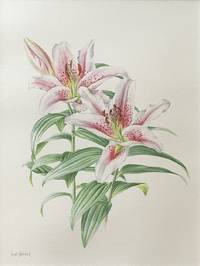
Sherlock, Siriol
Siriol Sherlock 'STARGAZER' LILY watercolour
1998. Painting. Illus. by Siriol Sherlock. Very Good. Framed. Signed by THE ARTIST. Original. An original watercolour study of a 'Stargazer' lily by Siriol Sherlock signed lower. Image 370 x 275 mm frame 590 x 490 mm. Double acid-free mounts. Solid hardwood frame with a limed finish. The painting in very good condition bright and unmarked. Provenance: label to back "watercolour 'Stargazer Lily' 1998 £375." Painted at a time when Siriol was exhibiting regularly at Royal Horticultural Society exhibitions at which she won multiple gold and silver-gilt medals. Biography: Siriol Sherlock GM 1993 94 95 99 Winner of four Gold Medals. Silver Gilt Medals 199598. She showed at the Hunt in 1995. One time member of the Royal Horticultural Society Picture Committee 1997-2005. Her work is in many collections including that of Shirley Sherwood and many books including Contemporary Botanical Artists. Please contact us if you would like to view any of our artwork in person. The shipping cost on this painting within the UK is likely to be in the region of £20. unknown
Référence libraire : 038483
|
|
|
SHERRING PRATT, HENRY.
MANUAL OF THE COMMON INVERTEBRATE ANIMALS ( EXCLUSIVE OF INSECT).
, London, Mcgraw - Hill book Company, 1935., Bound, red cloth, gilt title on spine, 15,5x23,5cm, 854pp, illustrated b/w.
Référence libraire : 9413
|
|
|
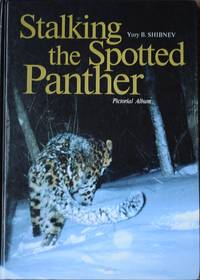
Shibnev, Yury B
Stalking the Spotted Panther Pictorial Album
Khabarovsk: Priamurskiye Vedomosti Publishing House 2000. Glossy Pictorial Hard Cover. Near Fine/No Jacket. 103pp. Filled with spectacular color photos - many full-page. Part of the Russian Far East World of Nature Series. . Selling online since 1999. Quick shipping; Secure packing! Priamurskiye Vedomosti Publishing House hardcover
Référence libraire : Biblio322 ISBN : 5800300127 9785800300123
|
|
|
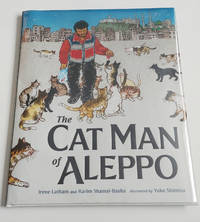
Shimizu, Yuko (Illus); Lathem, Irene & Shamsi-Basha, Karim (Auths)
Cat Man of Aleppo Caldecott Honor
New York: G P Putnam & Sons 2020 Pictorial boards in matching dust jacket original price intact $17.99. The story of Mohammad Alaa Aljaleel who began rescuing cats abandoned by their fleeing families amid Syria's civil war. A touching story with captivating artwork. Caldecott Honor. First Printing. Pictorial Boards. Fine/Fine. Illus. by Yuko Shimizu. 4to. G P Putnam & Sons unknown
Référence libraire : 008770 ISBN : 1984813781 9781984813787
|
|
|
Shipley, A. E.
More Minor Horrors
Hardcover (no jacket; illustration on each board). xiv, 163pp; 49 illustrations in-text. Minor wear and one or two marks on exterior. Pages are clean and all text and images are clear - very good for age. TS Used
|
|
|
Shirihai, Hadoram
The Complete Guide to Antarctic Wildlife: Birds and Marine Mammals of the Antarctic Continent and the Southern Ocean (Second Edition)
Hardcover with printed boards, no dust jacket, in very good condition. Spine ends are bumped, otherwise in an unread condition. LW Used
|
|
|
Shirley-Smith, B.M. (preface)
Sutton Courtenay Study Centre Field Study Guide for Secondary School Pupils
Paperback in very good condition. Light edge and shelfwear to covers and small penned annotation to contents page. All other pages clean and unmarked. AD Used
|
|
|
Shorten Monica
Merveilles de la vie animale
Nathan Fernand Broché In-8, (18x22 cm), format à l'italienne, couverture illustrée, non paginé, sans date, illustrations en couleurs de Erna Pinner ; dos frotté, petites usures sur les plats, assez bon état par ailleurs. Livraison a domicile (La Poste) ou en Mondial Relay sur simple demande.
Référence libraire : nf2

|
|
|
Shoumatoff, Nicholas; Shoumatoff, Nina
The Alps: Europe's Mountain Heart
Ann Arbor MI: University of Michigan Press 2004. Hard Cover. Near Fine/Near Fine. A clean unmarked book with a tight binding. 265 pages. Full green cloth boards. Slight edge wear to dust jacket. Inscribed by Tonia Shoumatoff daughter of the late authors. Keywords: Climbing Mountains Alpine Geography Geology Climate Vegetatin Folk Art Customs University of Michigan Press hardcover
Référence libraire : 141299 ISBN : 0472111116 9780472111114

|
|
|
Showley, Roger M.; Eplett, Robert A.
Balboa Park : A Millennium History
A clean, unmarked book with a tight binding. Slight edge wear. Full blue cloth boards. Inscribed by author. 9 5/8"w x 11 1/4"h. 224 pages.

|
|
|
Shriner, Charles A.
THE BIRDS OF NEW JERSEY
Boards rubbed at extremities. Endpapers browned, frail and detached but present. Else internally clean and with binding tight; 8vo - 8" to 9" tall; 212 pages
|
|
|
Shurtleff, Bertrand
AWOL MUSTERS OUT
Indianapolis - New York: Bobbs-Merrill Company Inc. 1946. Blue hardcover cloth binding with gilt titles clean square and tight. Bumped corners. Clean and tight interior. 284 pages Author a former football star from Brown University who was also a professional wrestler. He acted in a few movies and toward the end of his life lectured at civic clubs and schools. 2nd in the Awol series about a heroic and lovable Doberman Pinscher. This title has the dog honorable discharged from the service with his master George Stanhope to the mysterious continent of Australia. Size: 8vo - over 7¾ - 9¾" tall 1st Printing. Illus. by Thorne Diana. 1st Edition. Hardcover. Very Good/No Jacket. Bobbs-Merrill Company, Inc. Hardcover
Référence libraire : 012621
|
|
|
Shurtleff, Bertrand
AWOL MUSTERS OUT
Indianapolis - New York: Bobbs-Merrill Company Inc. 1946. Blue hardcover cloth binding with gilt titles clean square and tight. Bumped corners. A little water staining on endpapers previous owner name fep. Clean and tight interior. 284 pages yellowing. Front of DJ rubbed and part of picture of Doberman head rubbed out. Shelfwear. Price-clipped. Protected from further damage in clean Brodart. Author a former football star from Brown University who was also a professional wrestler. He acted in a few movies and toward the end of his life lectured at civic clubs and schools. 2nd in the Awol series about a heroic and lovable Doberman Pinscher. This title has the dog honorable discharged from the service with his master George Stanhope to the mysterious continent of Australia. Size: 8vo - over 7¾ - 9¾" tall 1st Printing. Illus. by Thorne Diana. 1st Edition. Hardcover. Good/Fair. Bobbs-Merrill Company, Inc. Hardcover
Référence libraire : 012217
|
|
|
Shurtleff, Bertrand
AWOL THE COURIER
Indianapolis - New York: Bobbs-Merrill Company Inc. 1951. Green hardcover cloth binding with gold imprint square and tight very lightly soiled slightly bumped corners. Foxing to interior. DJ has chips and tears rubbed along edges protected from further damage in clean Brodart jacket. Price has been clipped out bottom RH corner of front flap. Some staining to endpapers. 272 pages. 4th in the AWOL series about a Doberman War Dog. Written by a former football star from Brown University who was also a professional wrestler. He acted in a few movies and toward the end of his life lectured at civic clubs and schools. This title reunites Awol with Colonel Harper who had known the dog in WWII but nw finds the dog in South Korea. Scarce title in the series. Size: 8vo - over 7¾ - 9¾" tall 1st Printing. Illus. by Thorne Diana. 1st Edition. Hardcover. Near Very Good/Good. Bobbs-Merrill Company, Inc. Hardcover
Référence libraire : 012127
|
|
|
SIEBERT G. u. LANG K - KUNTZ A
G. Siebert u. K. Lang: Energiewechsel (und) A. Kuntz: Das Autonome Nervensystem (2 Teile in einem Heft). Handbuch der Zoologie. Eine Naturgeschichte der Stämme des Tierreiches. 8. Band / 11. Lieferung.
Walter de Gruyter & Co. Berlin 1962. 2 Teile. 23 Seiten u. 42 Seiten. Mit Abbildungen. Breitrandiges Exemplar. Originalbroschur. (Eingangsstempel auf dem Einband). 30x22 cm
Référence libraire : 138301
|
|
|
SIELMANN H
LE MONDE FABULEUX DES ANIMAUX
Paris 1972. In-12 cartonnage éditeur illustré de 80 pages. Photos. Très bon état
|
|
|
SIELMANN H
LE MONDE FABULEUX DES ANIMAUX
Paris 1972. In-12 Paris 1972. In-12 cartonnage éditeur illustré de 80 pages. Photos. Très bon état
Référence libraire : 41289
|
|
|
Sielmann Heinz, Frédéric de Requeville, Vallée Nicole
À la rencontre des dragons et des oiseaux de paradis (Chasseurs d'images)
F. Nathan 1975 In-4 relié. 191 pages. Bon état d’occasion.
Référence libraire : 67674
|
|

 Recevoir par e-mail
 Télécharger en PDF
 Flux RSS
 Lien permanent


