|
American School
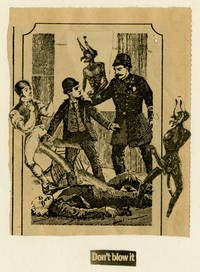
Don't Blow It
1880. Newsprint collage on paper 3 2/4 x 2 1/2 inches 95 x 63 mm. Uniform age tone. The scene is set with a policeman interrupting three men a footballer a man in a bowler and an unconscious gentleman who resembles Alexander Hamilton in flagrante with exposed phalluses while two devils one with a phallus look on. The title below reads "Don't Blow It." The police uniform is extremely similar to those of the Maryland US police of the mid 1800s. unknown
Référence libraire : 1418
|
|
|
American School
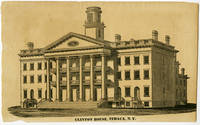
Clinton House Ithaca NY
Philadelphia: Wilmer Atkinson 1831. Wood engraving on cream wove paper 5 3/8 x 8 3/4 inches 145 x 222 mm right margin trimmed. General age tone uneven margins and some minor skinning at the sheet edges. An image removed from an edition of the Farm Journal. The Clinton House was built in 1828-1829 as an upscale hotel and Ithaca's first professional office building with 150 rooms an immense undertaking for the then 4000-person population of Ithaca. It was named for DeWitt Clinton governor of New York from 1817 to 1822 and again from 1824 to 1827. Upon its opening Clinton House was reputed to be "the most imposing hotel" between New York and Buffalo. At least four U.S. presidents have stayed in its rooms as well as numerous film actors from Ithaca's brief heyday as a center for the film industry.<br /> -A Guide Book To Cornell University and Ithaca. Silver Burdett & Company 1904. Wilmer Atkinson unknown
Référence libraire : 1424
|
|
|
Flemish School, 18th century
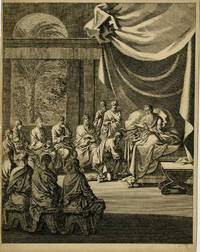
Jacob blesses his sons
Engraving on light wove paper with a large Amsterdam Coat of Arms watermark 9 5/16 x 7 1/2 inches 236 x 190 mm narrow margins. Scattered light areas of discoloration handling creases and pencil notations on the verso. unknown
Référence libraire : 1435
|
|
|
English School
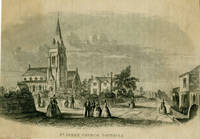
St. Jude's Church South Sea
1850. Engraving on cream wove paper 4 x 5 5/8 inches 102 x 143 mm margins trimmed. Uniform toning and some adhesive residue on the verso. unknown
Référence libraire : 1422
|
|
|
Russian School
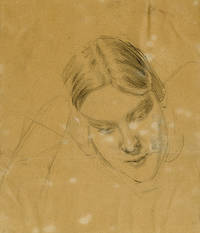
Study of a woman in repose
1920. Pencil on cream wove paper 9 1/4 x 7 7/8 inches 235 x 200 mm. Overall toning with multiple spots of white discoloration throughout and a spray of foxing across the image area on the verso. Horizontal crease across the lower quadrant of the sheet. Handling creases and adhesive residue at each of the corners on the verso. The following inscription appears in pencil in english on the verso "Tarkhanov Russian School Active Paris 1920-1930 Ex. Walter Schatzky. unknown
Référence libraire : 1430
|
|
|
English School
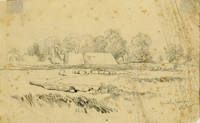
Bentley Green 23rd June
1850. Pencil on tissue-thin wove paper 4 1/2 x 7 1/4 inches 115 x 185 mm. Scattered foxing horizontal creases and general toning. The name "Groves" or "Grovel" appears in graphite in the area of the field to the right and below the house structures. unknown
Référence libraire : 1427
|
|
|
European School, late 18th century
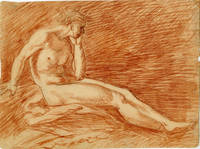
Life study of a male nude in repose
Red chalk with primo pensiero in graphite on cream laid paper 8 1/2 x 11 1/2 inches 215 x 293 mm. Scattered light handling wear and multiple small vertical edge tears several of which have been repaired with non-archival tape on the verso. Notations in pencil on the verso including the name "Dennery. unknown
Référence libraire : 1436
|
|
|
French School, 19th century
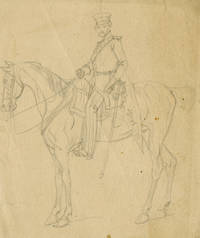
Cavalryman on horseback
1890. Pencil on cream laid paper 8 1/2 x 7 1/4 inches 215 x 185 mm. Toning over-all with paper tape remnants and notations in pencil on the verso. unknown
Référence libraire : 1405
|
|
|
French School, early 19th century
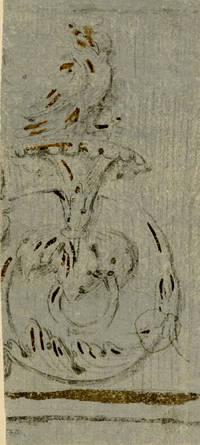
Study of an architectural ornament with an owl and a trumpet-shaped bloom
1800. Graphite and pen and ink on bluish-gray laid paper 4 1/4 x 2 inches 118 x 50 mm. The ink is slightly attenuated and there is uniform age tone. The bottom two corners are adhered to a paper mount with archival adhesive. On the verso there is some gray ink wash spatter and several light pin-point sized spots of discoloration otherwise in good condition. unknown
Référence libraire : 1410
|
|
|
Russian School, 19th century
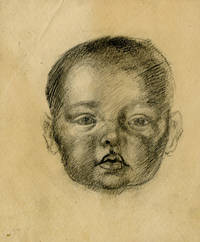
Portrait of an infant
1910. Pencil on cream laid paper 5 1/2 x 4 5/8 inches 140 x 118 mm. In fair condition with a dog-eared left-top corner age tone and some staining in purple ink on the verso does not show through to recto. There are pencil sketches of geometric patterns on the verso as well as the inscription "Tarkhanov Russian School active 1910-1930. unknown
Référence libraire : 1419
|
|
|
Rajasthani School, 19th century
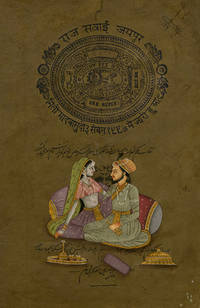
Shah Jahan taking tea with a concubine
1890. Ink and gouache with gold heightening on brown laid paper with a Jaipur Court Fee tax stamp in black ink 13 3/8 x 8 3/4 inches 340 x 222 mm. Toning handling creases and minor scattered surface soiling throughout. Scattered coeval Hindi inscriptions in ink on the recto and verso. The first revenue stamps in India were issued in the mid-nineteenth century during the Raj and they are still being issued to this day. Apart from issues for the whole of India many princely states provinces and other states also had or still have their own revenue stamp issues. <br /> <br /> Before independence Indian revenue stamps were closely modeled on similar designs from Great Britain as is the case with this carriage motif stamp from Jaipur. The stamps were issued to denote various denominations including rupees and annas. An anna or Änna was a currency unit formerly used in British India equal to 1â„16 of a rupee. It was subdivided into four old Paisa or twelve pies thus there were 192 pies in a rupee. When the rupee was decimalized and subdivided into 100 new paise one anna was therefore equivalent to 6.25 paise. This particular stamp was used as evidence of court taxes remitted for property dealings. unknown
Référence libraire : 1333
|
|
|
American School, 19th century
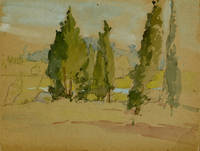
Pine trees in a river valley with the Blue Ridge Mountains in the distance
1905. Watercolor on board with black crayon 8 1/2 x 11 inches 215 x 280 mm. Minor age tone and a dog-eared lower right corner. Notations in pencil on the verso. An unfinished but spirited plein-air composition of what appears to be the Shenandoah or Potomac River valley with the Blue Ridge Mountains in the distance. unknown
Référence libraire : 1403
|
|
|
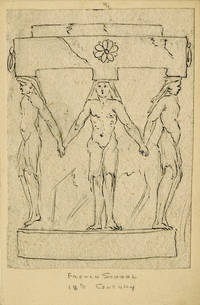
French School 18th century
Design for a plinth with three male figures and a daisy motif
Pen and black ink on handmade buff wove paper 4 1/2 x 3 1/4 inches 115 x 81 mm. Two drips of translucent candle wax on the verso scattered light surface soiling. Adhered at two corners to a paper mount. With pencil insciptions on the verso. unknown
Référence libraire : 1404
|
|
|
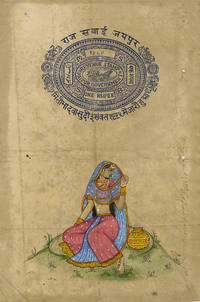
Rajasthani School, 19th century
Nur Jahan seated with a painted spice jar
1895. Ink and gouache with gold heightening on fibrous brown laid paper with a Jaipur Court Fee tax stamp in purple ink 13 3/8 x 8 3/4 inches 340 x 222 mm. Toning handling creases and minor scattered surface soiling throughout. A typed and signed court order dated 1891 in reference to a landlord/tenant dispute appears on the verso as well as the purple blindstamp of the Treasury of Jaipur. There are scattered coeval Hindi inscriptions in ink on the recto. The following text appears typed on the verso:<br /> <br /> "Maloom order of 2nd July 1891 and 5 party No. b applied to the P.I.B. Department for redress.<br /> <br /> The P.W. Member opined that party No. b is entitled to live in the quarters which had been continually occupied by them and party No.a should not interfere with the other party in respect of the quarters which should be restored to the latter. <br /> <br /> Resolution No.34. <br /> <br /> Resolved that the proposal of the P.W.Member be accepted.<br /> <br /> TRUE COPY<br /> <br /> Registrar<br /> <br /> Mahakma Khas Jaipur."<br /> <br /> <br /> The first revenue stamps in India were issued in the mid-nineteenth century during the Raj and they are still being issued to this day. Apart from issues for the whole of India many princely states provinces and other states also had or still have their own revenue stamp issues. <br /> <br /> Before independence Indian revenue stamps were closely modeled on similar designs from Great Britain as is the case with this carriage motif stamp from Jaipur. The stamps were issued to denote various denominations including rupees and annas. An anna or Änna was a currency unit formerly used in British India equal to 1â„16 of a rupee. It was subdivided into four old Paisa or twelve pies thus there were 192 pies in a rupee. When the rupee was decimalized and subdivided into 100 new paise one anna was therefore equivalent to 6.25 paise. This particular stamp was used as evidence of court taxes remitted for property dealings. unknown
Référence libraire : 1336
|
|
|
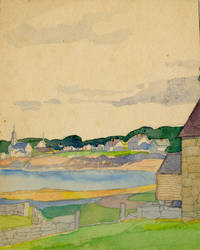
American School, 19th century
Chapel and houses along a lake; New England landscape
1905. Watercolor and pencil on buff wove watercolor paper 10 x 8 inches 255 x 203 mm. In good condition with overall minor toning. Some watercolor paint splatters on the verso contemporaneous with the painting itself. unknown
Référence libraire : 1415
|
|
|
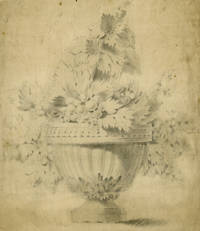
French School, 18th century
Still life with an ornamental urn filled with grapes and flora
1790. Pencil on cream laid paper 10 x 8 3/4 inches 254 x 222 mm. Uniform age tone scattered surface soiling and handling wear. One pea-sized area of skinning in the top-center sheet area. Repaired 3-inch horizontal edge tear at the right sheet edge mended on the verso with 19th century paper tape. Light horizontal fold across the sheet center and paper tape remnants on the verso. unknown
Référence libraire : 1406
|
|
|
Rajasthani School, 19th century
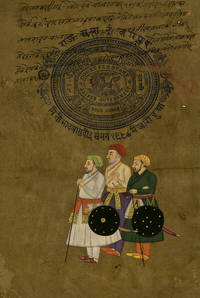
Three hunters; two with a spear and dagger and the third unarmed
1890. Ink and gouache with gold heightening on brown laid paper with a Jaipur Court Fee tax stamp in black ink 12 5/8 x 8 9/16 inches 320 x 217 mm. Toning handling creases and minor scattered surface soiling throughout. Scattered coeval Hindi inscriptions in ink on the recto and verso. The first revenue stamps in India were issued in the mid-nineteenth century during the Raj and they are still being issued to this day. Apart from issues for the whole of India many princely states provinces and other states also had or still have their own revenue stamp issues. <br /> <br /> Before independence Indian revenue stamps were closely modeled on similar designs from Great Britain as is the case with this carriage motif stamp from Jaipur. The stamps were issued to denote various denominations including rupees and annas. An anna or Änna was a currency unit formerly used in British India equal to 1â„16 of a rupee. It was subdivided into four old Paisa or twelve pies thus there were 192 pies in a rupee. When the rupee was decimalized and subdivided into 100 new paise one anna was therefore equivalent to 6.25 paise. This particular stamp was used as evidence of court taxes remitted for property dealings. unknown
Référence libraire : 1334
|
|
|
Rajasthani School, 19th century
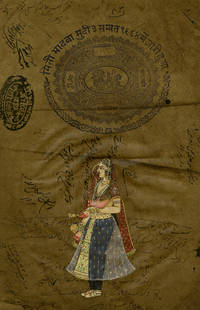
Rajput Ragamala miniature of a woman with a bell and rattle
1890. Ink and gouache with gold heightening on fibrous brown laid paper with a Jaipur Court Fee tax stamp in gray ink and the 1889 Jaipur State Council stamp in black ink 13 1/4 x 8 3/4 inches 335 x 222 mm. Toning handling creases and minor scattered surface soiling throughout. There are scattered coeval Hindi inscriptions in ink on the recto. "A ragamala translated from Sanskrit as "garland of ragas" is a series of paintings depicting a range of musical melodies known as ragas. Its root word raga means color mood and delight and the depiction of these moods was a favored subject in later Indian court paintings. The celebration of music in painting is a distinctly Indian preoccupation. Ragamalas were first identified as a specific painting genre in the second half of the fifteenth century but their ancestry can be traced to the fifth- to seventh-century Brihaddeshi treatise which states: "A raga is called by the learned that kind of composition which is adorned with musical notes . . . which have the effect of coloring the hearts of men." Often the mood or raga is also written as poetry on the margins of the painting. These works thus evocatively express the intersections of painting poetry and music in Indian court art." <br /> <br /> -The Metropolitan Museum of Art Exhibition Overview Ragamala: Picturing Sound December 2014.<br /> <br /> The first revenue stamps in India were issued in the mid-nineteenth century during the Raj and they are still being issued to this day. Apart from issues for the whole of India many princely states provinces and other states also had or still have their own revenue stamp issues. Before independence Indian revenue stamps were closely modeled on similar designs from Great Britain as is the case with this carriage motif stamp from Jaipur. The stamps were issued to denote various denominations including rupees and annas. An anna or Änna was a currency unit formerly used in British India equal to 1â„16 of a rupee. It was subdivided into four old Paisa or twelve pies thus there were 192 pies in a rupee. When the rupee was decimalized and subdivided into 100 new paise one anna was therefore equivalent to 6.25 paise. This particular stamp was used as evidence of court taxes remitted for property dealings. unknown
Référence libraire : 1337
|
|
|
English School, 18th century
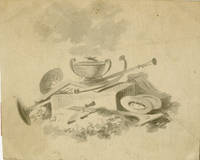
Still life with a Herald's trumpet a Neoclassical urn a Mason's square and a protractor
1790. Ink and wash in gray ink on cream laid paper 4 1/2 x 5 1/2 inches 115 x 140 mm. Scattered light surface soiling and areas of residue from a former mount on the verso. Scattered inscriptions in pencil on the verso. All condition issues are consistent with age. A classic Grand Tour composition. unknown
Référence libraire : 1409
|
|
|
Rajasthani School, 19th century
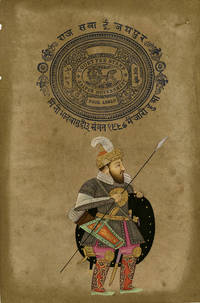
Shah Jahan in a shirt of mail and plate of armor
1890. Ink and gouache with gold heightening on fibrous brown laid paper with a Jaipur Court Fee tax stamp in black ink 13 3/8 x 8 3/4 inches 340 x 222 mm. Toning handling creases and minor scattered surface soiling throughout. Scattered coeval Hindi inscriptions in ink on the verso as well as the embossed blindstamp of the Treasury of Jaipur. The first revenue stamps in India were issued in the mid-nineteenth century during the Raj and they are still being issued to this day. Apart from issues for the whole of India many princely states provinces and other states also had or still have their own revenue stamp issues. <br /> <br /> Before independence Indian revenue stamps were closely modeled on similar designs from Great Britain as is the case with this carriage motif stamp from Jaipur. The stamps were issued to denote various denominations including rupees and annas. An anna or Änna was a currency unit formerly used in British India equal to 1â„16 of a rupee. It was subdivided into four old Paisa or twelve pies thus there were 192 pies in a rupee. When the rupee was decimalized and subdivided into 100 new paise one anna was therefore equivalent to 6.25 paise. This particular stamp was used as evidence of court taxes remitted for property dealings. unknown
Référence libraire : 1335
|
|
|
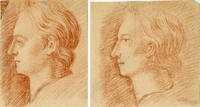
English School, 18th century
A pair of portraits in profile 2 works
1790. Red crayon on cream laid paper 3 3/4 x 4 inches 95 x 102 mm ; 3 3/4 x 3 1/8 inches 95 x 80 mm. Each with scattered early repairs done with non-archival tape on the verso; the smaller of the two drawings has a repaired corner upper-right with in-drawing in red crayon. Condition issues are all consistent with age and the versos remain largely uneffected. A lovely duo. unknown
Référence libraire : 1411
|
|
|
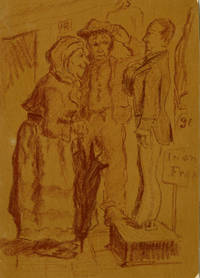
French School, 19th century
Rural couple examining a traveling carnival display featuring a costumed figure
1860. Red crayon on brown light-wove paper 6 3/4 x 4 3/4 inches 172 x 121 mm. Light toning and extremely minor small losses at the very extreme top right and left corners 1/8-inch. unknown
Référence libraire : 1402
|
|
|
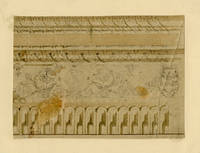
French School, 19th century
Architectural study of a frieze for a theater with a lyre and trumpets
1850. Pencil and brush and brownish-gray ink on cream laid paper adhered to an archival paper mount at each corner 3 3/4 x 5 1/8 inches 95 x 130 mm. Significant condition issues include staining repaired tears surface soiling and a detatached but intact lower right corner. unknown
Référence libraire : 1400
|
|
|
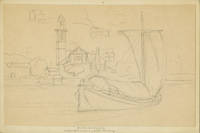
English School, 19th century
Canal boat with a belfry in the background Brouges
1890. Pencil on cream wove paper 5 1/2 x 8 5/8 inches 140 x 218 mm. In good condition with uniform toning and a partial sketch of boats on the verso. Adhered lightly to cardstock at three corners. unknown
Référence libraire : 1416
|
|
|
English School 19th century
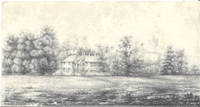
Worplesdon Lodge
1860. Pencil on cream-colored oak tag 10 1/4 x 5 3/8 inches 260 x 136 mm. Scattered light gray discoloration throughout rubbing with some small areas of associated loss in the lower left image area at the sheet edge. Inscriptions in pencil on the verso including an illegible signature. This charming landscape features the structure now known as the Worplesdon Place Hotel near Guildford Surrey. The house is of notable historical significance and it is registered to have been built in about 1845 by Sir William Bovill. Initially called Worplesdone Lodge the grand manse served as a private residence for the next 100 years and was owned by several notable people. In the 1950s it became a hotel and still operates in this manner today. Here we see the house soon after its completion with St. Mary the Virgin Church seen on the hill in the distance. unknown
Référence libraire : 1389
|
|
|
Rajasthani School, 19th century
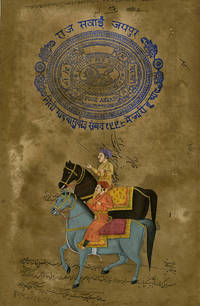
Two Rajput noblemen on horseback
1890. Ink and gouache with gold heightening on fibrous brown laid paper with a Jaipur Court Fee tax stamp in blue ink on the recto as well as the Jaipur City Council blindstamp 13 1/4 x 8 1/2 inches 335 x 215 mm. Toning handling creases and minor scattered surface soiling throughout. There are scattered coeval inscriptions in ink on the recto and verso. The first revenue stamps in India were issued in the mid-nineteenth century during the Raj and they are still being issued to this day. Apart from issues for the whole of India many princely states provinces and other states also had or still have their own revenue stamp issues. Before independence Indian revenue stamps were closely modeled on similar designs from Great Britain as is the case with this carriage motif stamp from Jaipur. <br /> <br /> The stamps were issued to denote various denominations including rupees and annas. An anna or Änna was a currency unit formerly used in British India equal to 1â„16 of a rupee. It was subdivided into four old Paisa or twelve pies thus there were 192 pies in a rupee. When the rupee was decimalized and subdivided into 100 new paise one anna was therefore equivalent to 6.25 paise. This particular stamp was used as evidence of court taxes remitted for property dealings. unknown
Référence libraire : 1343
|
|
|
Rajasthani School, 19th century
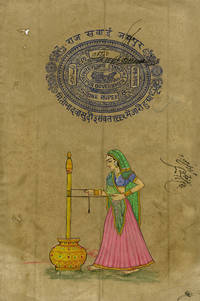
A woman in jewels and a gossamer sari churns butter for ghee
1890. Ink and gouache with gold heightening on fibrous brown laid paper with a Jaipur Court Fee tax stamp in purple ink on the recto 13 1/4 x 8 7/8 inches 336 x 226 mm. Toning handling creases and minor scattered surface soiling throughout. There are scattered coeval inscriptions in ink on the recto and verso. A traditional Indian butter churn is operated by rapidly pulling a rope which turns a paddled spindle. The paddles churn cows milk inside a large jar until milk solids form. Ghee is made from cow milk butter which is treated with low heat until the water evaporates leaving behind milk solids. The solids are skimmed off or strained if needed. Ghee is a staple food on the Indian subcontinent and as a cooking oil it is the most widely used food in India apart from wheat and rice. Because of its exalted status at Hindu weddings ghee is expensive and in high demand. Male wedding guests are expected to compete with each other to see who can eat the most of it; consuming two pounds or more at a sitting is considered a proof of virility. <br /> <br /> On the stamp:<br /> <br /> The first revenue stamps in India were issued in the mid-nineteenth century during the Raj and they are still being issued to this day. Apart from issues for the whole of India many princely states provinces and other states also had or still have their own revenue stamp issues. Before independence Indian revenue stamps were closely modeled on similar designs from Great Britain as is the case with this carriage motif stamp from Jaipur. The stamps were issued to denote various denominations including rupees and annas. An anna or Änna was a currency unit formerly used in British India equal to 1â„16 of a rupee. It was subdivided into four old Paisa or twelve pies thus there were 192 pies in a rupee. When the rupee was decimalized and subdivided into 100 new paise one anna was therefore equivalent to 6.25 paise. This particular stamp was used as evidence of court taxes remitted for property dealings. unknown
Référence libraire : 1341
|
|
|
Rajasthani School, 19th century
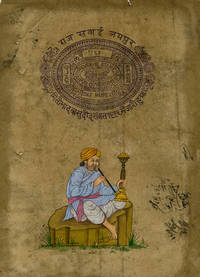
Turbaned man seated smoking a hookah
1890. Ink and gouache with yellow heightening on fibrous brown laid paper with a Jaipur Court Fee tax stamp in purple ink on the recto and the Jaipur State Council Stamp dated June 5 1894 and the 1889 Jaipur State Council stamp in black ink on the verso 12 1/2 x 9 inches 318 x 230 mm. Toning handling creases and minor scattered surface soiling throughout. There are scattered coeval Hindi inscriptions in ink on the recto. The first revenue stamps in India were issued in the mid-nineteenth century during the Raj and they are still being issued to this day. Apart from issues for the whole of India many princely states provinces and other states also had or still have their own revenue stamp issues. Before independence Indian revenue stamps were closely modeled on similar designs from Great Britain as is the case with this carriage motif stamp from Jaipur. <br /> <br /> The stamps were issued to denote various denominations including rupees and annas. An anna or Änna was a currency unit formerly used in British India equal to 1â„16 of a rupee. It was subdivided into four old Paisa or twelve pies thus there were 192 pies in a rupee. When the rupee was decimalized and subdivided into 100 new paise one anna was therefore equivalent to 6.25 paise. This particular stamp was used as evidence of court taxes remitted for property dealings. unknown
Référence libraire : 1339
|
|
|
Rajasthani School, 19th century
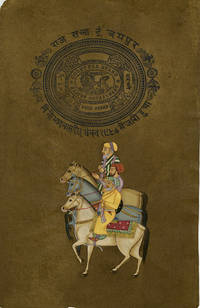
Three Rajput noblemen on horseback
1890. Ink and gouache with gold heightening on fibrous brown laid paper with a Jaipur Court Fee tax stamp in black ink on the recto as well as the Jaipur City Council blindstamp 13 5/8 x 8 7/8 inches 345 x 226 mm. Toning handling creases and minor scattered surface soiling throughout. There are scattered coeval inscriptions in ink on the recto and verso. The first revenue stamps in India were issued in the mid-nineteenth century during the Raj and they are still being issued to this day. Apart from issues for the whole of India many princely states provinces and other states also had or still have their own revenue stamp issues. Before independence Indian revenue stamps were closely modeled on similar designs from Great Britain as is the case with this carriage motif stamp from Jaipur. <br /> <br /> The stamps were issued to denote various denominations including rupees and annas. An anna or Änna was a currency unit formerly used in British India equal to 1â„16 of a rupee. It was subdivided into four old Paisa or twelve pies thus there were 192 pies in a rupee. When the rupee was decimalized and subdivided into 100 new paise one anna was therefore equivalent to 6.25 paise. This particular stamp was used as evidence of court taxes remitted for property dealings. unknown
Référence libraire : 1342
|
|
|
English School, 19th century
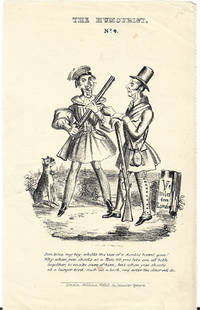
The Humorist No. 4
London: William Follit 1850. Lithograph on lightweight cream wove paper 9 5/8 x 6 inches 244 x 152 mm full margins. In good condition with uniform age tone. Text reads:<br /> THE HUMORIST N° 4.<br /> V Miles from London:<br /> Simkins my boy what's the use of a double barrel gun Why when you shoots at a Tom-tit you lets em of both together to make sure of him but when you shoots at a larger bird such as a lark one after the other will do. William Follit unknown
Référence libraire : 1478
|
|
|
Rajasthani School, 19th century
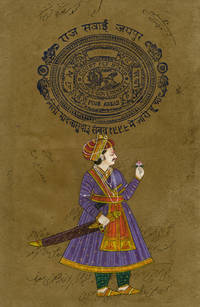
A Rajput prince with a sword and dagger holding a lotus blossom
1890. Ink and gouache with gold heightening on fibrous brown laid paper with a Jaipur Court Fee tax stamp in purple ink on the recto 12 1/2 x 9 inches 318 x 230 mm. Toning handling creases and minor scattered surface soiling throughout. There are scattered coeval inscriptions in ink on the recto and verso. The first revenue stamps in India were issued in the mid-nineteenth century during the Raj and they are still being issued to this day. Apart from issues for the whole of India many princely states provinces and other states also had or still have their own revenue stamp issues. Before independence Indian revenue stamps were closely modeled on similar designs from Great Britain as is the case with this carriage motif stamp from Jaipur. <br /> <br /> The stamps were issued to denote various denominations including rupees and annas. An anna or Änna was a currency unit formerly used in British India equal to 1â„16 of a rupee. It was subdivided into four old Paisa or twelve pies thus there were 192 pies in a rupee. When the rupee was decimalized and subdivided into 100 new paise one anna was therefore equivalent to 6.25 paise. This particular stamp was used as evidence of court taxes remitted for property dealings. unknown
Référence libraire : 1340
|
|
|
Rajasthani School, 19th century
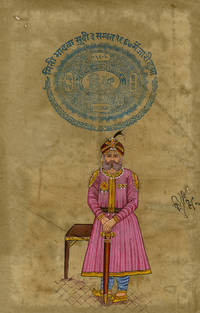
Raja Mahan Singh Mirpuri
1890. Ink and gouache with yellow heightening on fibrous brown laid paper with a Jaipur Court Fee tax stamp in blue ink 13 1/2 x 8 3/4 inches 343 x 222 mm. Toning handling creases and minor scattered surface soiling throughout. There are scattered coeval Hindi inscriptions in ink on the recto. Raja Mahan Singh Mirpuri 1810 - 1844 was a famous general in the Sikh Khalsa Army. He was conferred by Maharaja Ranjit Singh the title of Raja for his conquests of Haripur Nowshera and Peshawar. The town of Mansehra derives its name from him. Singh was murdered by his own soldiers in 1844 when mutiny broke out in the Sikh Khalsa Army. His death was avenged by his son Chhattar Singh who was himself killed soon after.<br /> <br /> The first revenue stamps in India were issued in the mid-nineteenth century during the Raj and they are still being issued to this day. Apart from issues for the whole of India many princely states provinces and other states also had or still have their own revenue stamp issues. Before independence Indian revenue stamps were closely modeled on similar designs from Great Britain as is the case with this carriage motif stamp from Jaipur. The stamps were issued to denote various denominations including rupees and annas. An anna or Änna was a currency unit formerly used in British India equal to 1â„16 of a rupee. It was subdivided into four old Paisa or twelve pies thus there were 192 pies in a rupee. When the rupee was decimalized and subdivided into 100 new paise one anna was therefore equivalent to 6.25 paise. This particular stamp was used as evidence of court taxes remitted for property dealings. unknown
Référence libraire : 1338
|
|
|
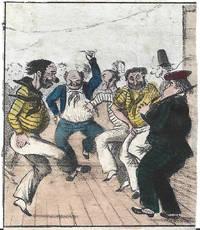
English school, 19th century
Piping All Hands
1850. Lithograph with hand coloring in watercolor on cream laid paper 3 1/2 x 3 inches 90 x 75 mm trimmed to the plate. In good condition with uniform toning and edge wear. There is some adhesive residue on the verso with associated discoloration. Members of a Scottish naval regimen in their slops and kerchiefs performing an informal highland dance while a piper in traditional Black Watch tartan plays on. unknown
Référence libraire : 1479
|
|
|
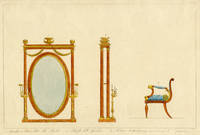
Italian School, late 18th century
Designs for a Reniassance style mirror and arm chair with a feathered cushion
Engraving with hand coloring in watercolor on cream wove paper 11 x 8 inches 280 x 203 mm full margins. Light band of toning along the right sheet edge well outside of image area. Otherwise in good condition with fresh color. unknown
Référence libraire : 937
|
|
|
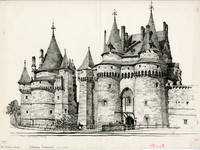
French School, 20th century
The Château-Vitré
Lithograph on heavy weight wove paper 12 3/8 x 16 3/8 inches 313 x 416 mm full margins. Titled and signed illegibly in pencil lower margins. With scattered notations in red pencil and graphite on the recto in the margins and on the verso. Ink stamp on the verso. Soft vertical fold in the center-sheet otherwise in good condition. unknown
Référence libraire : 933
|
|
|
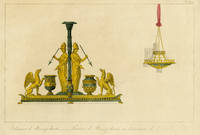
Italian School, late 18th century
Disegno per calamaio in bronzo dorato con ornamenti in cristallo design for gilt bronze inkwell with crystal ornaments
Engraving with hand coloring in watercolor on cream wove paper 11 x 8 inches 280 x 203 mm full margins. Light band of toning along the right sheet edge well outside of image area. Otherwise in good condition with fresh color. unknown
Référence libraire : 936
|
|
|
American School, 19th century
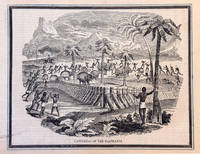
Capturing Elephants from Gleason's Pictorial Drawing Room Companion
Boston: Frederick Gleason 1851. Engraving with hand-drawn borders on cream wove paper laid down to board. 7 3/4 x 10 inches 197 x 255 mm trimmed margins lacking text. Scattered light soiling and toning with a dog-eared lower left corner. An illustration from the June 21 & 28 1851 edition of Gleason's Pictorial Drawing Room Companion. The Pictorial featured artists such as Winslow Homer and authors such as: Giddings H. Ballou Susan H. Blaisdell Alice Carey Sylvanus Cobb Jr. Sophronia Currier Mrs. S.P. Doughty Francis A. Durivage Aglaus Forrester Mrs. H.C. Gardner Joseph Holt Ingraham Grace Lee Mary A. Lowell Mary L. Meany Ellen Alice Moriarty Arthur Morton Frances P. Pepperell Mary E. Robinson M.V. St. Leon Frederick Ward Saunders Sue M. Scott Maurice Silingsby Frederick Stanhope Horace B. Staniford John Thornberry Winnie Woodfern and Joseph Wolf. <br /> <br /> The accompanying text added below for context. <br /> <br /> Mr. Stebbings June and Mr. Nutter of Boston who undertook the voyage to Ceylon for the purpose of procuring elephants for Mr. Barnum's Traveling Menagerie have furnished us with some curious descriptions of their adventures in the interior of the island. On their arrival at Point de Galle early in October last they were disappointed in their expectations of procuring tame elephants either from the government authorities or from the temples which own large numbers of them. They then proceeded to Columbo the maritime capital of Ceylon on the western coast and afterwards to the city of Kany in the interior but without succeeding in their object. Very heavy rains had fallen just before their arrival and the elephants were required to assist in mending the roads. In this dilemma the elephant seekers determined to go into the jungles among the wild herds and endeavor to capture a ship load of the animals. This was considered a dangerous undertaking as the rainy season had just set in and the country necessary to be traversed was a dense tropical wilderness with no other roads than the foot-paths from one native village to another. Ceylon is divided nearly into two equal parts by a range of mountains running north and south which divide the periodical rains so that the rainy season changes from one side of the island to the other and the elephants follow it. Mr. June captured the greatest number of his elephants in the northern part of the island near the town of Anarajahpoora. The first process toward capturing the elephants is accurately represented in the engraving below. The natives having ascertained the spots most frequented by the herds construct in the neighborhood a kraal or pen. This is shaped like three sides of a square having an aperture on the fourth side for the entrance of the elephants from each side of which extends a long palisade slanting outwards like the mouth of a funnel. The kraal is made of heavy upright posts planted at a short distance from each other and lashed together by withes. To make them more secure they are stayed by slanting posts set against them on the outside. When the kraal is finished the natives surround a heard and by shouts and the firing of muskets alarm the animals who are urged forward toward the entrance and at last are all secured within the enclosure. In capturing these animals the natives evince much skill and tact. Our artist had thrown much life and spirit into this scene. Another way of taking elephants is sometimes practised. The animals during the heat of the day will sometimes rest himself against a tree and take an hour's doze with great satisfaction. Some of the natives are daring enough at this time to creep through the jungle till they reach his very feet. Provided with a rope the other end of which is made fast to a tree the hind leg of the animal is touched gently and being very sensitive he lifts his foot to shake off the supposed fly and a noose is instantly slipped under. This is repeated with the other foot and the elephant waking up finds himself caught. -Gleason's Pictorial Drawing Room Companion June 21 & 28 1851. Frederick Gleason unknown
Référence libraire : 1380
|
|
|
English School, 19th century
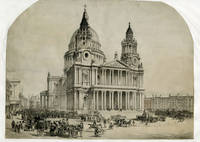
North View of St. Paul's Cathedral London
London: Tallis & Co 1851. Lithograph on cream wove paper 11 3/4 x 15 3/4 inches 297 x 398 mm with vaulted margins at the top sheet edge. Significant toning and some edge wear. Laid down to archival paper. From a group of views of London England printed by Tallis & Co. in commemoration of the Great Exhibition of 1851. Tallis & Co unknown
Référence libraire : 953
|
|
|
English School, early 19th century
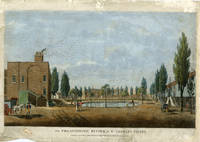
The Philanthropic Reform in St. George's Field
London: James Whittle & Richard Holmes Laurie 1814. Engraving with hand coloring in watercolor on wove paper 11 1/2 x 17 1/4 inches 290 x 437 mm. Condition issues include significant creasing toning surface soiling and multiple paper tape repairs on the verso. Hand coloring is extensive and well saturated. James Whittle & Richard Holmes Laurie unknown
Référence libraire : 956
|
|
|
English School, early 19th century
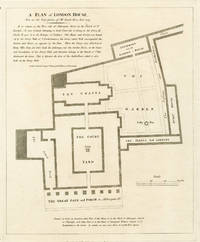
A plan of London House now in the Possession of Mr. Jacob Ilive December 1747
London: Robert Wilkinson 1814. Copperplate engraving on watermarked Smith wove paper 12 1/4 x 9 3/4 inches 310 x 245 mm full margins. There is some minor marginal toning and handling wear that is consistent with age otherwise in very good condition. Robert Wilkinson unknown
Référence libraire : 948
|
|
|
English School, 19th century (attributed to Dale)
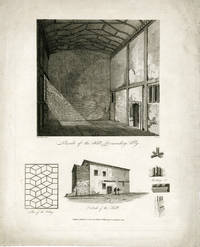
Hall of Bermondsey Abbey
London: Robert Wilkinson 1820. Copperplate engraving on buff wove paper 13 x 9 3/4 inches 330 x 247 mm full margins. In good condition with some minor toning and surface soiling consistent with age. Robert Wilkinson unknown
Référence libraire : 955
|
|
|
English School, early 19th century
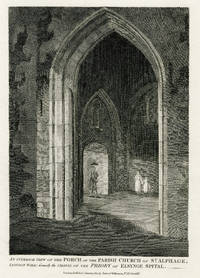
An Interior View of the Porch of the Parish Church St. Alphage; An interior view of the porch of the parish church of St Alphage London Wall: formerly the chapel of the priory of Elsynge Spital
London: Robert Wilkinson 1815. Etching and engraving on wove paper with an "1809" watermark 13 1/2 x 10 inches 342 x 252 mm full margins. In very good condition with some age related toning and light spots of discoloration in the lower sheet quadrant. Damaged in the Blitz and largely demolished in the 1960s what remains of St Mary Elsing includes these doorways which still stand looking back towards London Wall. The ruins include tall arches which once formed the base of the tower. There is also a low wall with an arched recess which may have been used to house a tomb. Robert Wilkinson unknown
Référence libraire : 952
|
|
|
HARCOURT SCHOOL PUBLISHERS
Harcourt Social Studies: Reader 6-pack Below-Level Grade 3 We Live in Communities
paperback. Good. Access codes and supplements are not guaranteed with used items. May be an ex-library book. paperback
Référence libraire : 0153528052.G ISBN : 0153528052 9780153528057

|
|
|
Mughal School, 18th century
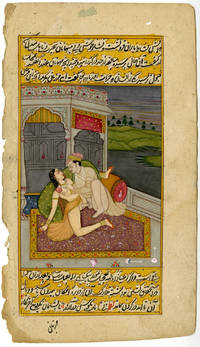
Emperor Jahangir in his harem in flagrante delicto
1750. Gouache and ink with gold heightening on cream laid paper 9 1/8 x 5 1/4 inches 232 x 133 mm the full sheet. Some scattered light surface soiling along with age related toning and some handling creases minor edge tears and losses and scattered inscriptions. Extensive inscriptions in red and black ink on the verso. The color is exceptionally fresh rich and saturated. Mirza Nur-ud-Din Muhammad Salim 30 August 1569 - 28 October 1627 known by his imperial name Jahangir "Conqueror of the World' was the fourth Mughal Emperor who ruled from 1605 until his death in 1627. He was the third and only surviving son of Akbar and his chief empress Mariam-uz-Zamani born to them in the year 1569. He was named after the Indian Sufi saint Salim Chishti. <br /> <br /> -Singh Pashaura; Fenech Louis E. eds. 2014. The Oxford handbook of Sikh studies. Oxford University Press. p. 647. ISBN 978-0-19-969930-8. unknown
Référence libraire : 920 ISBN : 0199699305 9780199699308
|
|
|
Mughal School, 18th century
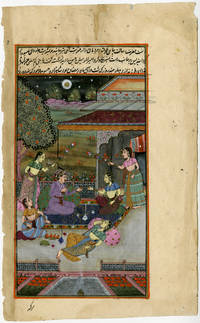
Emperor Jahangir taking tea in his harem
1750. Gouache and ink with heightening in gold on lightweight brown laid paper 10 x 6 1/4 inches 254 x 159 mm the full sheet. Some scattered light areas of discoloration and age related toning small edge losses and scattered handling tear along the left sheet edge well outside of the image area. Extensive hand inscriptions in black and red ink on the verso. Colors are exceptionally bright and fresh with good saturation. Mirza Nur-ud-Din Muhammad Salim 30 August 1569 - 28 October 1627 known by his imperial name Jahangir "Conqueror of the World' was the fourth Mughal Emperor who ruled from 1605 until his death in 1627. He was the third and only surviving son of Akbar and his chief empress Mariam-uz-Zamani born to them in the year 1569. He was named after the Indian Sufi saint Salim Chishti. <br /> <br /> -Singh Pashaura; Fenech Louis E. eds. 2014. The Oxford handbook of Sikh studies. Oxford University Press. p. 647. ISBN 978-0-19-969930-8. unknown
Référence libraire : 917 ISBN : 0199699305 9780199699308
|
|
|
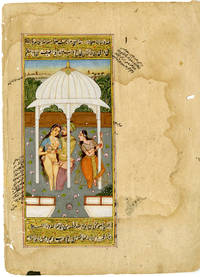
Mughal School, 17th century
Emperor Jahangir in his harem in flagrante delicto surrounded by lotus blossoms
1690. Gouache and ink with gold heightening on cream laid paper 8 1/2 x 6 1/4 inches 210 x 160 mm the full sheet. Some scattered light surface soiling along with age related toning and some handling creases minor edge tears and losses and scattered insect damage and inscriptions. Extensive inscriptions in red and black ink on the verso. The color is exceptionally fresh rich and saturated. An illuminated page from a book likely in reference to palace life during Emperor Jahangir's reign over the Mughal Empire. Mirza Nur-ud-Din Muhammad Salim 30 August 1569 - 28 October 1627 known by his imperial name Jahangir "Conqueror of the World' was the fourth Mughal Emperor who ruled from 1605 until his death in 1627. He was the third and only surviving son of Akbar and his chief empress Mariam-uz-Zamani born to them in the year 1569. He was named after the Indian Sufi saint Salim Chishti. -Singh Pashaura; Fenech Louis E. eds. 2014. The Oxford handbook of Sikh studies. Oxford University Press. p. 647. ISBN 978-0-19-969930-8. unknown
Référence libraire : 926 ISBN : 0199699305 9780199699308
|
|
|
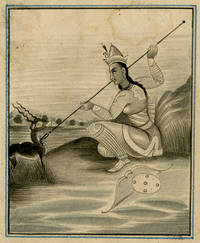
Mughal School, 19th century
Empress Nur Jahan hunting an Indian Gazelle
1890. Pencil and black ink on cream laid paper with a border drawn in light blue ink 6 x 5 1/8 inches 153 x 130 mm. Scattered light surface soiling and multiple soft horizontal folds. Nur Jahan was fond of hunting and often went on hunting tours with her husband and was known for her boldness in hunting ferocious tigers. She is reported to have slain four tigers with six bullets during one hunt. According to Sir Syed Ahmad Khan this feat inspired a poet to declaim a spontaneous couplet in her honor: "Though Nur Jahan be in form a woman In the ranks of men she's a tiger-slayer" - Unknown Poet <br /> <br /> Banks Findly Ellison 11 February 1993. Nur Jahan: Empress of Mughal India. Oxford UK: Nur Jahan : Empress of Mughal India. ISBN 9780195074888. unknown
Référence libraire : 1332 ISBN : 0195074882 9780195074888
|
|
|
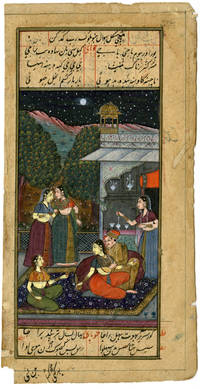
Mughal School, 17th century
Emperor Jahangir reclining in his harem
1690. Gouache and ink with gold heightening on lightweight cream laid paper 10 3/4 x 5 3/8 inches 274 x 137 mm the full sheet. Some scattered light surface soiling along with age related toning and some handling creases minor edge tears and losses and scattered inscriptions. Extensive inscriptions in red and black ink on the verso and in the margins on the recto. The color is exceptionally fresh rich and saturated. Mirza Nur-ud-Din Muhammad Salim 30 August 1569 - 28 October 1627 known by his imperial name Jahangir "Conqueror of the World' was the fourth Mughal Emperor who ruled from 1605 until his death in 1627. He was the third and only surviving son of Akbar and his chief empress Mariam-uz-Zamani born to them in the year 1569. He was named after the Indian Sufi saint Salim Chishti. <br /> <br /> -Singh Pashaura; Fenech Louis E. eds. 2014. The Oxford handbook of Sikh studies. Oxford University Press. p. 647. ISBN 978-0-19-969930-8. unknown
Référence libraire : 921 ISBN : 0199699305 9780199699308
|
|
|
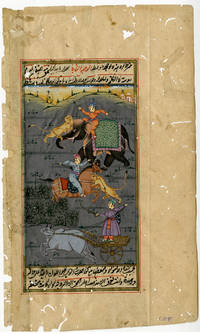
Mughal School, 17th century
Tiger Hunt near the Jahangir Maha Agra
1690. Gouache and ink with heightening in gold on lightweight brown laid paper 10 1/4 x 6 1/8 inches 260 x 156 mm the full sheet. Extensive insect damage in the unpainted areas primarily in the margins. Extensive hand inscriptions in black and red ink on the verso. Colors are exceptionally bright and fresh with good saturation. Mirza Nur-ud-Din Muhammad Salim 30 August 1569 - 28 October 1627 known by his imperial name Jahangir "Conqueror of the World' was the fourth Mughal Emperor who ruled from 1605 until his death in 1627. He was the third and only surviving son of Akbar and his chief empress Mariam-uz-Zamani born to them in the year 1569. He was named after the Indian Sufi saint Salim Chishti. <br /> <br /> -Singh Pashaura; Fenech Louis E. eds. 2014. The Oxford handbook of Sikh studies. Oxford University Press. p. 647. ISBN 978-0-19-969930-8. unknown
Référence libraire : 913 ISBN : 0199699305 9780199699308
|
|
|
Mughal School, 18th century
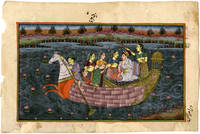
Emperor Jangahir on a pleasure boat with his harem attendees surrounded by lotus blossoms
1750. Gouache and ink with gold heightening on lightweight cream laid paper 6 x 86 inches 137 x 274 mm the full sheet. Some scattered light surface soiling along with age related toning and some handling creases minor edge tears and losses repairs verso and scattered inscriptions in ink and graphite. Extensive inscriptions in red and black ink on the verso and in the margins on the recto. The color is exceptionally fresh rich and saturated. Mirza Nur-ud-Din Muhammad Salim 30 August 1569 - 28 October 1627 known by his imperial name Jahangir "Conqueror of the World' was the fourth Mughal Emperor who ruled from 1605 until his death in 1627. He was the third and only surviving son of Akbar and his chief empress Mariam-uz-Zamani born to them in the year 1569. He was named after the Indian Sufi saint Salim Chishti. <br /> <br /> -Singh Pashaura; Fenech Louis E. eds. 2014. The Oxford handbook of Sikh studies. Oxford University Press. p. 647. ISBN 978-0-19-969930-8. unknown
Référence libraire : 925 ISBN : 0199699305 9780199699308
|
|

 Recevoir par e-mail
 Télécharger en PDF
 Flux RSS
 Lien permanent


