Louis ARAGONBiblio.com

51 résultats
1948réf. 92155Paris: Gallimard 1948. Fine. Gallimard Paris 1948 11.50 x 18 cm reliure de l'éditeur First edition one of 1040 numbered copies printed on Navarre alfa paper. Publisher's paper-covered boards after Paul Bonet's original design. Endpapers fully shaded throughout as often encountered. Gallimard hardcover
1986réf. 92107Paris: Gallimard 1986. Fine. Gallimard Paris 1986 14.50 x 21.50 cm broché First edition one of 41 numbered copies on Rives pure rag vellum the only deluxe paper issue after 31 copies on Holland paper. A very fine copy. Introduction and notes by Edouard Ruiz. Gallimard hardcover
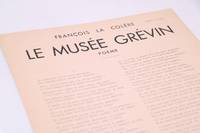
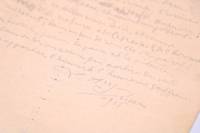
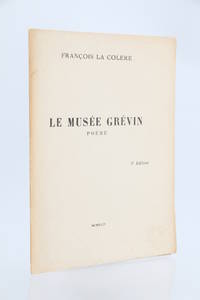
1943réf. 91945s. l. Paris Paris: n. p. Éditions de Minuit 1943. Fine. n. p. Éditions de Minuit s. l. Paris Paris s. d. 1943 21.20 x 27 cm une feuille dépliante ENGLISH DESCRIPTION ON DEMAND Rare édition originale de ce chef-d'uvre de la littérature de la Résistance publié dans le secret atelier parisien des éditions de Minuit sous forme de placard dépliant de six pages un des quelques exemplaires de luxe sur papier couché rose comportant la mention ""Prix 10 francs"" en tête du premier feuillet. L'édition en volume parue chez la bibliothèque française a sans douté été publiée simultanément en zone sud. Exemplaire dans un état de fraicheur exceptionnel. Le Musée Grévin considéré dès sa parution comme « Les Châtiments de 1943 » Les étoiles déc. 1943 n° 14 restera avec Liberté de Paul éluard « un des chefs-d'uvre de la littérature clandestine ». Dans L'Intelligence en guerre parue dès 1945 Louis Parrot écrira à son propos : « ce poème traversé d'images éblouissantes est en même temps qu'une condamnation sans appel des traîtres une prière un acte de foi envers leurs malheureuses victimes. Il peint en termes vengeurs les misérables qui les livrèrent aux bourreaux et évoque le visage de tant de femmes françaises torturées. » Cette oeuvre majeure de la résistance est en effet une des toutes premières évocations publiques et la première littéraire du camp d'Auschwitz : « Aux confins de Pologne existe une géhenne dont le nom siffle et souffle une affreuse chanson. Ausschwitz ! Ausschwitz ! Ausschwitz ! sic ô syllabes sanglantes ! Ici l'on vit ici l'on meurt à petit feu. On appelle cela l'exécution lente. Une part de nos curs y périt peu à peu ». En 1949 sur l'exemplaire offert à ses amis Germaine et Eugène Henaff Aragon affirmera dans une note manuscrite que l'édition de la bibliothèque française fut imprimée deux mois avant celle des éditions de Minuit. Mais le poète écrira sur le même exemplaire que : « dans le voyage où Elsa et moi apportions à Paris . le manuscrit de ce poème . destiné à Vercors pour les éditions clandestines . une fouille des voyageurs faillit empêcher jamais la parution de ce manuscrit. ». Aragon précise d'ailleurs que venant d'apprendre « la mort de Maïe Politzer et de Danielle Casanova » mortes à Auschwitz les 6 mars et 9 mai 1943 il acheva dans le train son poème avec « les deux strophes en octosyllabes de la page 11 » Collection du Musée national de la Résistance. Les bibliographes s'accordent ajourd'hui sur la vraissemblable simulatnéité - approximative - de la parution en zone Sud à la Bibliothèque Francaise et en zone nord chez Minuit du plus important brulot poétique de la seconde guerre avec Poésie et vérité d'Eluard qui comprend son fameux poème : Liberté. bibliographes se trouvent aujourd'hui dans l'incapacité de définir une chronologie fiable pour les différents tirages de Minuit. Cependant la variété des tirages de Minuit - avec ou sans mention d'éditeur avec ou sans prix sur papier blanc courant ou papier rose couché - rendent impossible l'édification d'une chronologie de ces éditions clandestines. Toutefois les rares exemplaires de la Bibliothèque Francaise dont l qui constituent avec certitude l'édition originale de la zone Sud sont susceptibles d'apporter un éclairage essentiel. En effet la couverture jaune de cette édition qui fut réalisée selon Aragon « dans un petit stock de papier mural pour salle de bain trouvé à Lyon » affiche en pied ""prix 10 Francs"" soit le même prix que celui imprimé en tête des papiers roses de Minuit. Cette concordance des prix nous incite à considérer la période de publication des quelques exemplaires de luxe sur papier rose à l'aune de celle de la bibliothèque Française et donc à considérer égaelement comme édition originale le tirage courant présentant la même composition typographique. La date de fin de rédaction imprimée en fin du poème ""aout-septembre 1943"" est presque simultanée à l'impression. On peut d'ailleurs confirmer avec pré n. p. [Éditions de Minuit] unknown
1915réf. 92341n. l. 1915. Fine. Aragon's Earliest Known Poem: The Birth of a Poet Soon to be Buried Beneath the Shells of the Great War n. l. 31 mars 1915 15.3 x 19.7 cm Un feuillet Autograph poem by Louis Aragon signed and dated 31 March 1915. Fourteen lines written in pencil on a single leaf with unpublished autograph calculations on the verso. Published in 2008 by Michel Apel-Muller in Le Continent Aragon special issue of LHumanité 2008 p. 17 and reissued under the title Poème in Le Rayonnement international dAragon Strasbourg coll. Recherches croisées Aragon / Elsa Triolet no. 16 2018 p. 251. Numerous traces of handling with vertical and horizontal folds that have caused minor paper losses without affecting the text. A precious fragment of literary history this sonnet published only in 2008 is the earliest known poem by Aragon according to its discoverer Michel Apel-Muller. Aragon wrote this lyrical reverie inspired by Baudelaires Parisian tableaux and by the Parnassian poets at the age of eighteen. He gifted it to his schoolfriend and inspiration for his novel Anicet Pierre Maison who succumbed to the Spanish flu in 1918 after fighting in the war. The Seine The pontoons draw away toward the hill That bounds the horizon with a bluish silhouette. The river bends at the foot of the quivering slope Of April reborn amid the hawthorn. In the red reflection of the setting sun Rises the factory black smoking and alive. The smoke and the sky are tinged with sanguine; A house stands and smiles at the passer-by. How life rises from this valley and how The work of nature and the labour of man Unite in a tone of evening rust! One senses amid the peace and the silence The song of birds that will rise from the vale To bring love to human suffering. translation our own Absent from accounts of Aragons life up to Philippe Forests most recent biography the sonnet was given to Pierre Maison this schoolfriend who had enlisted ahead of his call-up and who like Apollinaire succumbed to the Spanish flu in 1918. Aragon portrayed him in Anicet before burying the painful memory by assuming the characters identity in the famous phrase Anicet is me. Before André Breton and Drieu La Rochelle it was with Pierre Maison that he shared a profound intellectual friendship. Paradoxically this newly discovered princeps sonnet by Aragon comes accompanied by a rare wealth of context. The verses can be read in the light of a letter itself long unpublished addressed to Pierre Maison a few months later. This sprawling letter reveals that this poetic landscape of the Seine is in fact a memory: I thought of our good old discussions of days gone by. The memory came back to me as I was defending Wagner from the day we had gone down the Seine together talking about The Flying Dutchman Do you remember The weather was fine but the sun had something indefinably sad about it and the new spring resembled an autumn. When we stopped on the bank past Javel the sun was already low though it was not yet five oclock sic. Its rays already weakened and horizontal came from behind the distant hill where the houses along the Seine cling the river vanishing swiftly around a bend. Despite the dark green mass of the trees on the opposite bank bent over the flowing water everything seemed covered with an imperceptible tinge of rust: one might have said sic it was the dusty grip of the great city so near at hand upon the countryside. rise. And behind in an evening haze the hills of Meudon rose tier upon tier their woods concealing arbours and open-air taverns. This bleak landscape animated only by the movement of the Seine still lives on intensely in my memory. Aragon makes an almost literal reference to the poem which had captured on the spot this aesthetic emotion of the young student during an escapade among a band of high-spirited companions soon to be separated by the war: Aragon reminded me in unknown
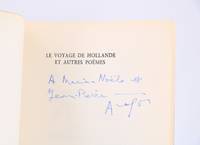
1965réf. 92375Paris: Seghers 1965. Fine. Seghers Paris 1965 12.8 x 19 cm Broché New edition.A very good copy.Signed presentation copy inscribed by Louis Aragon to his friends Marie-Noëlle and Jean-Pierre Lecointre. Seghers unknown
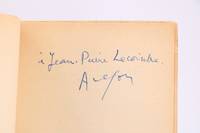
1954réf. 92374Paris: Gallimard 1954. Fine. Gallimard Paris 1954 12 x 18.7 cm Broché First edition on ordinary paper. A pleasant copy despite two small areas of sunning at the head and foot of the spine. Signed presentation copy inscribed by Louis Aragon to Jean-Pierre Lecointre. Gallimard unknown
1959réf. 92377Paris: Gallimard 1959. Fine. Gallimard Paris 1959 18.7 x 23.7 cm Broché First edition one of 105 numbered copies on wove paper the only large-paper copies after 35 on Holland paper.Press clippings laid in having left a slight offset on the colophon page at the end of the volume.A pleasing copy.Signed presentation inscription from Louis Aragon to Jean-Pierre Lecointre further enhanced by Elsa Triolet's autograph signature. Gallimard unknown
1954réf. 91778Paris: Gallimard 1954. Fine. Gallimard Paris 1954 12 x 19 cm Broché First edition one of the press review copies. Precious signed autograph inscription by Eugène Guillevic: ""à Tristan Tzara ces trente et un sonnets qu'il n'aime pas avec espoir quand-même et affection. Guillevic."" Gallimard unknown
1944réf. 91075Paris: Éditions de Minuit 1944. Fine. Éditions de Minuit Paris 1944 11.3 x 16.8 cm Broché First public edition of this text by Jean Cassou written under the pseudonym Jean Noir one of 50 numbered copies on Madagascar paper from the deluxe issue.A fine copy. Éditions de Minuit unknown
1944réf. 91064Paris: Éditions de Minuit 1944. Fine. Éditions de Minuit Paris 1944 11.7 x 16.7 cm Broché First public edition of this text written under the pseudonym François la Colère one of 50 numbered copies on Madagascar paper the deluxe issue. Rare and fine copy. Éditions de Minuit unknown
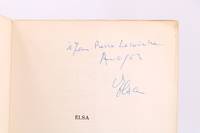
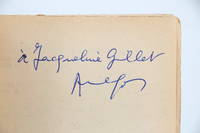
1949réf. 87699Paris: La bibliothèque française 1949. Fine. La bibliothèque française Paris 1949-1951 11.50 x 18.50 cm 6 volumes brochés First edition on ordinary paper for each of the volumes. Complete set in 6 volumes. Handsome copy despite small corner lacks of no consequence to the boards considering the poor quality of this paper. On the first volume autograph inscription signed by Louis Aragon to Jacqueline Gillet enriched with the manuscript signatures of Yves Robert and Daniel Delorme. La bibliothèque française hardcover
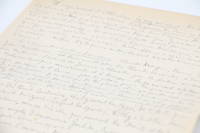
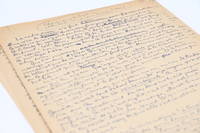
1950réf. 872201950. Fine. It has to be said that we are publishing here this masterpiece deliberately ignored by those who write literary history and which makes existentialist teeth grind or simply spoilt teeth as an example sure that it will not be in vain. s. d. circa 1950 21 x 30 cm une page sur un feuillet Autograph manuscript by Louis Aragon one page in blue ink on a leaf. Precious study by Louis Aragon accompanying the serial publication in Les Lettres Françaises of Marceline Desbordes-Valmore's novel L'Atelier d'un peintre 1833. Aragon rehabilitates the female poet-novelist canceled from the history of literature and snubbed by Existentialists placing her in the tradition of socialist realism. Autograph manuscript by Louis Aragon one page in blue ink on one leaf. Numerous crossed out words and rewritings. Slight rusting due to a paper clip slight shadows of an ink transfer from another page. Published in Les Lettres Françaises episode 16 23 February 1950. In 1949 Aragon chose to publish 'L'Atelier d'un peintre' serially with his own comments. The Cold War made socialist realism the official literary genre for Communist cultural policy: 'For Aragon reading Marceline Desbordes-Valmore is above all reading the history of a generation of a people. More precisely he made Marceline an incarnation of the unfinished Republic of a world still under construction and one that was tending towards freedom. To understand Marceline Aragon invites us to 'date her writings' and not be content to confine her to a single period of her life but to try to find an explanation for her stances which were as different as the regimes during the gestation of the Republic in the nineteenth century'. Aghbarian Lina 'Aragon éditeur de Marceline Desbordes-Valmore' Recherches croisées Aragon - Elsa Triolet no. 14. Of all his comments accompanying 'L'Atelier d'un peintre' this is one of his most polemical: Aragon opposes the Surrealists by contesting Lautréamont's distate of the Romantics with whom Desbordes-Valmore was associated. The writer criticizes the hasty rejection of her work which nevertheless has counterparts in modern literature: 'The Atelier that Aragon reopens with the publication of this novel to rework it to reveal it to give it a second life closer to his own concerns after having disentangled it from its time and emptied it of its Romantic religiosity to lay bare its richness which lies in the feminist cause defended by Marceline Desbordes-Valmore . . For her Ondine the literary character was a transposition of the missing child her son the son of Henri de Latouche her lover. Ondine is thus three times hybrid androgynous real and imaginary daughter and mother at the same time and Léonard her inverted double the one she would have liked to be in order to succeed in the forbidden world of painting. Aragon doubles androgyny with homosexuality as seen in Yorick's phrase 'Talma doubles my existence'. Among other allusions he refers to Henri Miller's Sexus an allusion is made about this work in this manuscript Aragon cultivates the theme of duality on which the whole novel is built. Without abandoning the imaginary world of the novel he seeks to bring out the realistic side of this romantic novel hidden in the shadow of the lyrical novel. In a word Aragon reverses the order of the foreground and background: the romanticism of Marceline Desbordes-Valmore's novel becomes secondary and the historical background takes precedence' ibid. 'We have now come to the night scene in the Place Vendôme which is one of the most intense the most beautiful minutes of the novel of the other century. I know that not everyone will agree. It's come to my attention that there are people who are superbly distracted from L'Atelier d'un peintre and find it wrong that we should publish a story in which there is absolutely nothing of what THEY are looking for in novels and it's possible that those who c unknown
1948réf. 872391948. Fine. ""Nose in the air arms flying with nonchalance with joy as Willy Ronis says. black shoes a large hat a wasp waist skirt in the wind and not the slightest idea what all this could be for but all the sunshine of late April in the veil. and like Paris absurdly inimitable."" s. d. avril 1948 21 x 30 cm 4 pages sur 4 feuillets Exceptional complete autograph manuscript by Louis Aragon. 4 pages in pencil on 4 leaves numbered in his hand. Discrete trace of rust discharge on the first leaf and on the verso of the last. Horizontal fold across all leaves. The article would be published under the title ""L'Art de prendre une photo pour Les Lettres Françaises"" Regards May 14 1948. Aragon accompanies the great Willy Ronis during a photographic session for a fashion portrait for Les Lettres Françaises. Following in Ronis's footsteps as he directs his spinning model the writer takes us through four pages across an enchanting Paris where popular life and worldly elegance intermingle. ""The aim was to illustrate Le Nez au vent by Louis Chéronnet. The column's theme was: The Elegance of Paris is moving westward and more specifically focused on avenue Montaigne"" begins Aragon in his chronicle. For the duration of a day the writer documents with fascination the photographer's work in one of his favorite settings: the streets of Paris. Several tableaux unfold in succession in the Montorgueil quarter at the milliner's in Ronis's studio on avenue Montaigne at the Théâtre des Champs-Elysées. The key word for both Aragon and Ronis is movement. Photography is not static nor are Aragon's impressions. We jump like the model in the photographer's shots from one place to another. The portrait of the elegant woman expands under the writer's pen to her surroundings to the bubbling life of Paris that stops for an instant to contemplate the model's silhouette animated by the photographer's instructions. Sixty years later Ronis would remember that memorable day: ""Aragon had a very beautiful regard for photography. He knew what an image was. Elsa too. He had me work when he founded and directed Les Lettres françaises. I did several reports for him. The first small report was in 1947 or 48 a report on fashion on avenue Montaigne. Aragon came with me we had chosen a model. I was a bit intimidated by Aragon it was my first contact with him. I wanted to get the maximum from my model I was working very hard because I was nervous. Seeing me work amused him so much that he didn't write the report about the model but about me working. I had seen him quite many times afterward we used the familiar form with each other."" Willy Ronis interview in Libération September 14 2009 Their militant paths crossed on numerous occasions - Ronis contributed through his photographs to witness the social revolts that shook the 1930s while Aragon devoted many articles to them. In 1949 the photographer would follow the commemorative day of the Oradour-sur-Glane tragedy in which nearly 400 artists participated at Aragon's initiative. He would also be the author of beautiful portraits of the Aragon-Triolet couple. Excerpts from the manuscript: Willy Ronis had arranged to meet me at 10:30 at the corner of rue Tiquetonne and rue Montorgueil. Apparently he was photographing athletes there. Ah! it was that restaurant where in the past we used to go eat with Vaillant-Couturier and there were Action Française types who would shoot daggers at us with their eyes. Instead of athletes Willy was there in his velvet jacket with his spectacles taking shots left and right at the counter of a couple of lovers. Sweet the lovers. The little one especially. Perhaps it's a sport. . There is nothing more solemn than Caroline Reboux. It is the temple of hats. If he lived in our times this is where Aristotle would write. Caroline Reboux herself made the bonnets for Nana and Eugénie de Montijo; at her place Bel-Ami would twist h unknown
1948réf. 871601948. Fine. ""Pour moi l'amitié des assasins n'est pas l'amitié . tant pis si l'on me juge esclave et qu'on me juge sans coeur !"" For me the friendship of assassins is not friendship . too bad if I am judged a slave and judged heartless! s. d. 1948 21 x 30 cm 8 pages et demi sur 9 feuillets Exceptional autograph manuscript by Louis Aragon entitled ""Chronique de la pluie et du beau temps pour Europe mai"". 8 and a half pages in blue ink on 9 uniformly browned leaves. Numerous deletions and rewritings. Published in Europe no 29 May 1948 and does not appear in the book collecting these chronicles E.F.R. 1979. Superb nine-page militant profession of faith published in the anti-fascist literary review Europe. Aragon finds himself courted after the war in the name of ""friendship"" and ""freedom"" by various reviews but categorically refuses to publish alongside writers with Pétainist tendencies. The writer delivers his impressions after a radio interview in Belgium and meditates on ""two abstract monsters: freedom and friendship"" perverted at will in this early Cold War period when Sovietism becomes - to his great dismay - the new fascism. Very attached to the unified discourse advocated by communism which he calls ""national truth"" this notion serves as the guiding thread of his chronicle. Aragon writes in the midst of the Kravchenko affair and remains convinced by Sovietism which remains for him the great victor over Nazism. As a great literary witness to the suffering endured during the Occupation he is alarmed by the editorial choices of reviews seeking to obtain contributions from him: one shamelessly publishes a text by Montherlant totally oblivious to the Parisian martyrs during the war while the other affectionately justifies the allegiances of many French people to Marshal Pétain. It is also the occasion for a long and beautiful analysis of the idea of nation by Aragon who is unquestionably the national poet of this century. We find there in his inspired tirades the Aragonian ideal of healthy emulation among nations turned toward progress. Beautiful pages by Aragon in the midst of the crystallization of the Eastern and Western blocs. Aragon's ambition is to honor the memory of the Resistance by choosing to ""trust words when they are used for peace"". ""La Nation qui me paraît aujourd'hui encore être le groupe le plus étendu qui puisse se porter garant d'une vérité . la radio peut et doit transmettre à son public la vérité nationale . 'Qu'entendez-vous concrètement par vérité nationale ' Me demande-t-il comme il m'aurait sûrement demandé : qu'entendez-vous en disant qu'il fait grand jour en plein midi si je l'avais dit. C'est là le mécanisme des interviews. J'ai donc pris deux exemples concrets pour expliquer à quoi sert le maniement des abstractions. Deux cas récents où j'ai eu à me mesurer avec deux monstres abstraits : la liberté et l'amitié. La liberté d'abord. On sait comment les pires ennemis de la liberté font usage d'un livre qui s'appelle : J'ai choisi la liberté donnant le bénéfice d'un préjugé favorable de ce mot à tous ceux qui trahissent leur pays quand c'est pour choisir le système capitaliste . . Une revue qui s'édite à Montréal m'avait récemment écrit pour me demander ma collaboration. Son directeur littéraire faisait appel à l'homme libre l'italique est sienne que je suis. Cette façon de distinguer par la typographie en moi la possibilité d'être parfois un homme libre parfois non m'avait un peu inquiété. J'ai voulu voir sa revue . Mon Dieu le fait que ce numéro s'ouvre par un texte de M. de Montherlant me laisse libre de ne pas parler du contexte. On sait et j'imagine que M. Victor Barbeau de Montréal n'ignore pas que M. de Montherlant est sur la liste des écrivains avec lesquels les membres du Comité National des Ecrivains se refusent à collaborer. Ce qui doit sans doute m'expliquer pourquoi M. Barbeau s'adresse en moi à l'homme libre : c'est- unknown
1944réf. 87421s. l. Aurillac: Les Editions de MinuitComité national des écrivains 1944. Fine. Les Editions de Minuit Comité national des écrivains s. l. Aurillac circa aout 1944 13.50 x 19 cm broché First deluxe edition of this masterpiece of Resistance literature one of 100 numbered copies on coated paper the only deluxe copies. A small fold at the foot of the first cover also affecting the following leaves minute foxing in the right margin of the first cover. First published probably simultaneously in the northern zone as a leaflet by ""Les éditions de Minuit"" and in the southern zone as a handmade brochure the cover was wallpaper inaugurating the famous ""Bibliothèque française"" this long poem would subsequently appear for the first time in volume form in October 1943 before it was decided to finally produce a deluxe edition sold for 100 francs instead of 10 francs for the ordinary edition ""intended to honor the financial contributions of Resistance bibliophiles."" Le Musée Grévin considered upon its publication as ""Les Châtiments of 1943"" Les étoiles Dec. 1943 no. 14 would remain with Paul Éluard's Liberté ""one of the masterpieces of clandestine literature."" In L'Intelligence en guerre published in 1945 Louis Parrot would write about it: « ce poème traversé d'images éblouissantes est en même temps qu'une condamnation sans appel des traîtres une prière un acte de fois envers leurs malheureuses victimes. Il peint en termes vengeurs les misérables qui les livrèrent aux bourreaux et évoque le visage de tant de femmes françaises torturées. » This pivotal poem is indeed one of the very first public evocations and the first literary one of the Auschwitz camp: « Aux confins de Pologne existe une géhenne dont le nom siffle et souffle une affreuse chanson. Ausschwitz ! Ausschwitz ! Ausschwitz ! ô syllabes sanglantes ! Ici l'on vit ici l'on meurt à petit feu. On appelle cela l'exécution lente. Une part de nos curs y périt peu à peu ». Exceptional copy printed on fine paper a true act of war whose perilous operation to procure luxury paper in a France where the Nazis controlled printing paper production through the Comité d'organisation des industries arts et commerces du livre COIACL can only be imagined. Les Editions de MinuitComité national des écrivains unknown
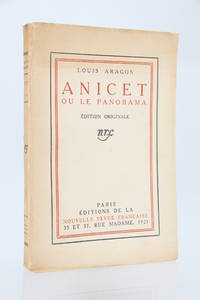
1921réf. 87382Paris: Nrf 1921. Fine. Nrf Paris 1921 13 x 19 cm broché First edition one of 940 numbered copies on wove paper the only deluxe copies with 120 reimposed. Spine and boards very slightly sunned as often some minor foxing. Nrf hardcover
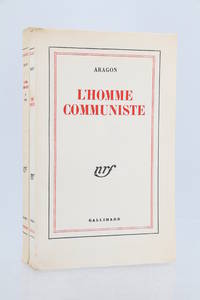
1945réf. 83581Paris: La Bibliothèque Française 1945. Fine. La Bibliothèque Française Paris 1945 14.50 x 21 cm broché First edition one of 535 numbered copies the only deluxe copies. Spine slightly sunned small marginal tears to boards a full-margined copy. La Bibliothèque Française hardcover
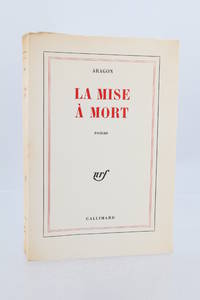
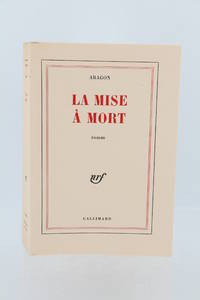
1965réf. 83583Paris: Gallimard 1965. Fine. Gallimard Paris 1965 14 x 20.50 cm broché First edition one of 145 numbered copies on pur fil paper the only deluxe copies after 50 on Holland paper. Spine lightly sunned final endpaper shadowed due to the presence of press clippings otherwise handsome copy. Gallimard unknown
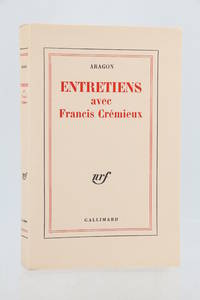
1964réf. 84241Paris: Gallimard 1964. Fine. Gallimard Paris 1964 12 x 19 cm broché First edition one of 43 numbered copies on Holland paper deluxe copies. Very fine copy. Gallimard unknown
1965réf. 84238Paris: Gallimard 1965. Fine. Gallimard Paris 1965 14 x 20.50 cm broché First edition one of 50 numbered copies on Holland vellum paper deluxe issue. A very fine copy. Gallimard hardcover
1946réf. 84242Paris: Gallimard 1946. Fine. Gallimard Paris 1946-1953 12 x 19 cm 2 volumes brochés First edition one of 55 numbered copies on vellum for each volume deluxe copies. Spines very lightly sunned without detriment handsome set. Gallimard hardcover
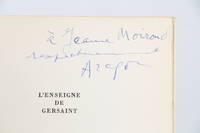
1946réf. 84233Neuchâtel & Paris: Ides et Calendes 1946. Fine. Ides et Calendes Neuchâtel & Paris 1946 16.50 x 22.50 cm broché First edition one of the numbered copies on vellum the only issue with 60 Ingres. The work illustrated with plates by Watteau. Handsome copy. Signed autograph inscription from Louis Aragon to Jeanne Moirond. Ides et Calendes hardcover
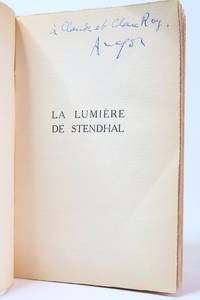
1954réf. 74307Paris: Denoël 1954. Fine. Denoël Paris 1954 12 x 19 cm broché First edition one of the review copies. A crease affecting the upper corner of the rear cover and the final leaves an annotation by the recipient in pink ink at the top of the colophon page. A pleasing copy complete with the publishers announcement slip. Inscribed and signed by Louis Aragon to his friends Claude and Claire Roy. Denoël unknown
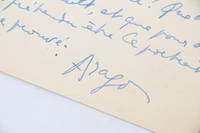
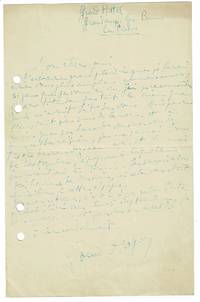
1914réf. 75566Grandcamp-les-Bains Grandcamp-Maisy 1914. Fine. Grandcamp-les-Bains Grandcamp-Maisy s. d. ca 1914-1920 13.50 x 21 cm une page sur un feuillet remplié Autograph letter signed addressed to a correspondent whom we have not been able to identify. Written from the Grand Hôtel de Grandcamp-les-Bains Calvados in blue ink on a folded sheet of white paper. A transverse fold inherent to the posting of the letter and four small perforations affecting the text but not impeding its reading. The mention of Grandcamp-les-Bains - where Aragon seems to have been only once during the summer of his seventeenth year - and the signature - of an early form - lead us to think that the letter could have been written in the summer of 1914. Philippe Forest in his biography of Aragon confirms that it was indeed at Grandcamp-les-Bains where his family had rented fifty rooms in a large seaside hotel to accommodate family and friends that the future poet learned the news of mobilization. The handwriting less rounded than on manuscripts prior to the 1920s however seems to us later and we are therefore not in a position to confirm the date of 1914. unknown
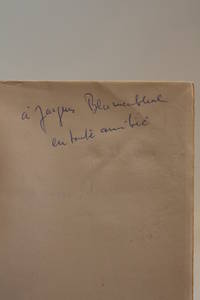
1967réf. 74631Paris: Gallimard 1967. Fine. Gallimard Paris 1967 14.50 x 21 cm broché First edition one of 160 numbered copies on pur fil the only deluxe copies with 60 on Holland paper. Handsome copy despite some worming to the spine. Unsigned autograph inscription from Louis Aragon to Jacques Blumenthal. Gallimard unknown