(Field, Sara Bard) Hagemeyer, JohanBiblio.com
1 632 résultats
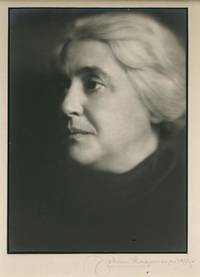
1927réf. 225931Carmel Calif 1927. Vintage gelatin silver print bust portrait in profile. Signed and dated in pencil "Johan Hagemeyer 1927" on the mount. 1 vols. 22 x 16.5 cm. 8-3/4 x 6-1/2 inches. Matted. Fine. Docketed on verso of mount in pencil "#3. Vintage gelatin silver print bust portrait in profile. Signed and dated in pencil "Johan Hagemeyer 1927" on the mount. 1 vols. 22 x 16.5 cm. 8-3/4 x 6-1/2 inches. Magnificent portrait of the great suffragist reformer activist free-thinker and poet Sara Bard Field 1882-1974. Field was also the passionate lover of the anarchist C.E.S. Wood and the couple lived together in a celebrated "free union" first in San Francisco then in Los Gatos "where they built a house . that became a gathering place for Bay area writers artists and political activists" American National Biography; and where the famous Bay area photographer Johan Hagemeyer 1884-1962 made this fine indelible portrait in the year her first volume of poems appeared THE PALE WOMAN. According to THE BANCROFT LIBRARY'S on line "Guide to the Johan Hagemeyer Photograph Collection": "In late 1916 just prior to Hagemeyer's return to California - and despite having had little photographic experience - Hagemeyer visited Stieglitz's 291 salon in New York City. The two developed an immediate rapport and the meeting proved to be decisive for Hagemeyer. "We talked" Hagemeyer later recalled "and he practically by way of speaking made me follow photography. I had already gone overboard for it" OHT 22. "Back in California Hagemeyer first apprenticed with a Berkeley-based commercial portrait photographer named McCullagh. Soon afterwards he moved south to Pasadena and in early 1918 met Edward Weston already by then an accomplished photographer based in Tropico now Glendale. The two took an immediate liking to each other and formed a friendship and working partnership that was of mutual benefit: Weston opened his home and studio to the upstart Hagemeyer and Hagemeyer introduced the relatively unschooled Weston to new worlds of intellectual and aesthetic learning. The two would have a profound influence on each others' artistic development for years to come. Arch. see essays by Lorenz and Schaefer "Hagemeyer's talent developed rapidly and by the early 1920s he was exhibiting his work in many important photographic salons and garnering much popular and critical acclaim. After moving to San Francisco at the end of World War One Hagemeyer soon discovered the intellectual and artistic colony of Carmel-by-the-Sea. In 1923 he established his first studio in Carmel and would remain anchored there for over 20 years. In 1924 he established the town's first art gallery - based out of his studio - where he exhibited the works of local painters sculptors and photographers and hosted very popular musical performances. Shortly thereafter Hagemeyer opened a second studio in San Francisco whose clientele could be rivaled by that of Carmel only during the smaller town's summer vacation season. In 1927 he was appointed staff photographer of the artistic/literary magazine The San Franciscan . unknown
1927réf. 225931Carmel Calif 1927. Vintage gelatin silver print bust portrait in profile. Signed and dated in pencil "Johan Hagemeyer 1927" on the mount. 1 vols. 22 x 16.5 cm. 8-3/4 x 6-1/2 inches. Matted. Fine. Docketed on verso of mount in pencil "#3. Vintage gelatin silver print bust portrait in profile. Signed and dated in pencil "Johan Hagemeyer 1927" on the mount. 1 vols. 22 x 16.5 cm. 8-3/4 x 6-1/2 inches. Magnificent portrait of the great suffragist reformer activist free-thinker and poet Sara Bard Field 1882-1974. Field was also the passionate lover of the anarchist C.E.S. Wood and the couple lived together in a celebrated "free union" first in San Francisco then in Los Gatos "where they built a house . that became a gathering place for Bay area writers artists and political activists" American National Biography; and where the famous Bay area photographer Johan Hagemeyer 1884-1962 made this fine indelible portrait in the year her first volume of poems appeared THE PALE WOMAN. According to THE BANCROFT LIBRARY'S on line "Guide to the Johan Hagemeyer Photograph Collection": "In late 1916 just prior to Hagemeyer's return to California - and despite having had little photographic experience - Hagemeyer visited Stieglitz's 291 salon in New York City. The two developed an immediate rapport and the meeting proved to be decisive for Hagemeyer. "We talked" Hagemeyer later recalled "and he practically by way of speaking made me follow photography. I had already gone overboard for it" OHT 22. "Back in California Hagemeyer first apprenticed with a Berkeley-based commercial portrait photographer named McCullagh. Soon afterwards he moved south to Pasadena and in early 1918 met Edward Weston already by then an accomplished photographer based in Tropico now Glendale. The two took an immediate liking to each other and formed a friendship and working partnership that was of mutual benefit: Weston opened his home and studio to the upstart Hagemeyer and Hagemeyer introduced the relatively unschooled Weston to new worlds of intellectual and aesthetic learning. The two would have a profound influence on each others' artistic development for years to come. Arch. see essays by Lorenz and Schaefer "Hagemeyer's talent developed rapidly and by the early 1920s he was exhibiting his work in many important photographic salons and garnering much popular and critical acclaim. After moving to San Francisco at the end of World War One Hagemeyer soon discovered the intellectual and artistic colony of Carmel-by-the-Sea. In 1923 he established his first studio in Carmel and would remain anchored there for over 20 years. In 1924 he established the town's first art gallery - based out of his studio - where he exhibited the works of local painters sculptors and photographers and hosted very popular musical performances. Shortly thereafter Hagemeyer opened a second studio in San Francisco whose clientele could be rivaled by that of Carmel only during the smaller town's summer vacation season. In 1927 he was appointed staff photographer of the artistic/literary magazine The San Franciscan . unknown books
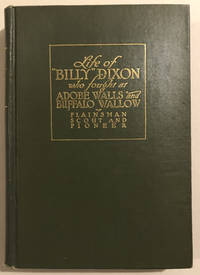
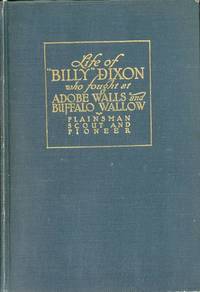
1914réf. 53297Guthrie Oklahoma: Co-Operative Publishing Co. 1914. 1914. First Edition. 8vo. Green Cloth 320 pp. Frontis. Preface Illustrations from old photographs. "A narrative in which is described many things relating to the early Southwest with an account of the fight between Indians and buffalo hunters at Adobe Walls and the desperate engagement at Buffalo Wallow for which Congress voted the Medal of Honor to the survivors." Born in West Virginia in 1850 Billy Dixon lived in Missouri from 1862 until 1865 when he took a job with a freight contractor as a bull-whacker and mule-skinner in Kansas. He freighted throughout western Kansas and Nebraska and eastern Colorado for 4 years. In 1869 Dixon joined a hunting and trapping venture in the Saline River Valley northwest of Fort Hays. Billy's excellent marksmanship soon led him to the highly profitable trade in buffalo hides. He invested in a supply store and did quite well until his partner "sold out" and took off with the proceeds during Billy's absence. He hunted the Texas Panhandle in the early and mid 1870's. Billy Dixon was one of 28 men and 1 woman who fought off a large party of hostile Indians in the second Battle of Adobe Walls. He scouted for Gen. Nelson Miles in 1874 when carrying dispatches to Fort Supply Dixon and 5 others were attacked by Indians. Billy Dixon received the Congressional Medal of Honor for his part in the action. Still scouting for General Miles Dixon was present at the rescue of the Germaine sisters from the Cheyenne in November 1874. Dixon saved the Nolan Expedition in 1877 by leading them to water while in pursuit of hostile Comanches on the Staked Plains. Dixon returned to civilian life in 1883. He worked on the Turkey Trot Ranch before homesteading at the site of the original Adobe Walls. Eventually he homesteaded again in Cimarron County Oklahoma where he died in 1913. An excellent biography. An exceptionally clean fine bright copy with only the slightest of rubbing to spine ends and corners. Rare especially in this condition. Protected in a custom clamshell box with title author and year of publication in gilt on leather label on spine. Co-Operative Publishing Co., 1914. hardcover
1914réf. 53354Guthrie Oklahoma: Co-Operative Publishing Co. 1914. 1914. First Edition. 8vo. Inked inscription on the front free fly leaf "To E. A. Brininstool With Kindest regards and best wishes of the author. Olive K. Dixon Miami Texas Jan. 4 - 1924." Green Cloth 320 pp. Frontis. Preface Illustrations from old photographs. "A narrative in which is described many things relating to the early Southwest with an account of the fight between Indians and buffalo hunters at Adobe Walls and the desperate engagement at Buffalo Wallow for which Congress voted the Medal of Honor to the survivors." Born in West Virginia in 1850 Billy Dixon lived in Missouri from 1862 until 1865 when he took a job with a freight contractor as a bull-whacker and mule-skinner in Kansas. He freighted throughout western Kansas and Nebraska and eastern Colorado for 4 years. In 1869 Dixon joined a hunting and trapping venture in the Saline River Valley northwest of Fort Hays. Billy's excellent marksmanship soon led him to the highly profitable trade in buffalo hides. He invested in a supply store and did quite well until his partner "sold out" and took off with the proceeds during Billy's absence. He hunted the Texas Panhandle in the early and mid 1870's. Billy Dixon was one of 28 men and 1 woman who fought off a large party of hostile Indians in the second Battle of Adobe Walls. He scouted for Gen. Nelson Miles in 1874 when carrying dispatches to Fort Supply Dixon and 5 others were attacked by Indians. Billy Dixon received the Congressional Medal of Honor for his part in the action. Still scouting for General Miles Dixon was present at the rescue of the Germaine sisters from the Cheyenne in November 1874. Dixon saved the Nolan Expedition in 1877 by leading them to water while in pursuit of hostile Comanches on the Staked Plains. Dixon returned to civilian life in 1883. He worked on the Turkey Trot Ranch before homesteading at the site of the original Adobe Walls. Eventually he homesteaded again in Cimarron County Oklahoma where he died in 1913. An excellent biography. An exceptionally clean fine bright copy with only the slightest of rubbing to spine ends and corners. A 2 1/2" x 3 1/2" photograph of Hugh Dixon on the front pastedown sheet and another on a fly leaf of Olive Dixon dated 1932. Pencilled notations by either Brininstool or Dixon at four locations. Rare especially in this condition. Protected in a custom cloth clamshell case with titles in gilt on front cover and leather label on spine. Co-Operative Publishing Co., 1914. hardcover
1782réf. 72171782 Genève, Société typographique, puis Barde & Manget, 1782 - 1782 ; 12 volumes in-4, dos en veau havane , pièces de titre en maroquin rouge, plats de veau glacé porphyre, encadrements et décors dorés, roulettes intérieures, tranches rouges (reliure d'époque).Tome 1 La politique Tome 2 Julie ou la nouvelle Héloise 1780Tome 3 Julie ou la nouvelle Heloise tome 2 1780Tome 4 Emile ou de l'education tome 1 1780Tome 5 Emile ou de l'éducation tome 2 1780Tome 6 Emile 1780Tome 7 Mélanges 1782Tome 8 Theatre Poesie . Pièces sur la musique 1782Tome 9 Dictionnaire de musique 1782 Tome 10 Confessions , Reverie du promeneur solitaire 1782Tome 11 Confessions tome 2 1782Tome 12 Pieces sur des sujets divers , receuil de lettres sur la philosophie , la morale et la politique 1782Certainement la plus importante des éditions collectives de Rousseau, en partie originale Elle comporte pour la première fois Les Confessions et de nombreuses autres premières éditions : Les Trois dialogues ou Rousseau jugé de Jean-Jacques, L’introduction nécessaire aux Rêveries, les Considérations sur le gouvernement de Pologne, Les amours de Milord Edouard Bomston (Nouvelle Héloïse), L’Engagement téméraire, Émile et Sophie ou Les Solitaires, Lettres sur la botanique, Fragments pour un dictionnaire des termes d’usage en botanique.L’illustration, en premier tirage, se compose d’un portrait de Jean-Jacques Rousseau d’après La Tour gravé par Saint-Aubin, de 12 fleurons de titre de Choffard, Le Barbier et Moreau gravés par Choffard, Dambrun et Leveau, et de 37 figures hors texte par Moreau le Jeune (30) et Le Barbier (7) gravées par Choffard, Dambrun, de Launay aîné, de Launay jeune, Duclos, Duflot, Halbou, Ingouf, Le Mire, Leveau, Martini, Romanet, Saint-Aubin, Simonet et Trière.Quelques épidermures perdues sur quelques charnières, bel exemplaire cependant, dans une jolie reliure décorative du XVIIIème siècle.
1807réf. 014368New York: Printed and Sold By Collins and Perkins 1807. Contemporary calf new calf spine and leather spine label One-word ink correction on p. 62 not on errata leaf. Lightly browned; a little soiling especially on lower corners and occasional minor stains; small repairs in one blank outer margins and two blank upper corners. Collation: 239 1 pp. Nineteen wood-engraved text illustrations.First textbook of midwifery by an American physician. Bard prepared this book for prospective midwives who could not afford an adequate formal education. His text "embodied the standard obstetric teaching of his day leaning heavily on the authority of Smellie Baudelocque Perfect and Denman and quoting selectively from their case reports. . . . He described well the mechanism of labor and presented an excellent picture of pre-eclampsia"Speert Obstetrics and gynecology in America: a history 126-27. Bard was one of the leading New York physicians of his time. His favorite branch of medicine was midwifery. . . . Perhaps no physician in this country has ever enjoyed a larger share of practice in this department or acquired a higher reputation as an accoucheur" Kelly and Burrage Dictionary of American medical biography p. 60. Garrison-Morton 6163.1; Austin 116; Norman 120. See Cutter and Viets Short history of midwifery pp. 160-64 213-14; Kelly and Burrage pp. 58-60; Thoms Chapters in American obstetrics pp. 26-34 the title page is reproduced on p. 29. First Edition. Hard Cover. Very Good. Printed and Sold By Collins and Perkins Hardcover
réf. BIB-29595213Original Hardcover. Publisher: John Wiley & Sons Utg. 2007 Original Hardcover 7720 p. This book is brand new. Language: Engelska We have this book in our store house - please allow for a couple of extra days for delivery. hardcover