27 résultats
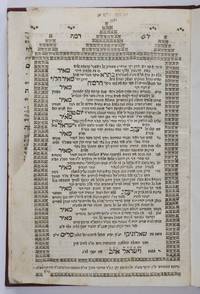
1715réf. H32635Amsterdam: Netanel Fo'ah 1715. Hardcover. Very good. Quarto 10.5 x 8.75 inches bound in modern buckram gilt stamped very good title page to the first title with old writing on it and some repairs and restoration to lower outer corner; the next few pages have some neat restoration to their lower outer corners too; the last few pages of the last treatise also have some restoration and repair to lower outer corners. Two of these commentaries are by Shlomo ibn Aderet 1235-1310 a medieval rabbi and a student of Nahmanides the author of the third treatise in this volume. From his biography on wikipedia: "He was a master in the study of the Talmud and was not opposed to the Kabbala. Aderet was very active as a rabbi and as an author. Under his auspices and through his recommendation part of the commentary on the Mishnah by Maimonides was translated from the Arabic into Hebrew. His Talmudic lectures were attended by throngs of disciples many of whom came from distant places. Questions in great number dealing with ritual with the most varied topics of the Halakah and with religious philosophy were addressed to him from Spain Portugal Italy France Germany and even from Asia Minor. His responsa show evidence of wide reading keen intelligence and systematic thought. They also afford a clear insight into the communal life of the time portraying Aderet's contemporaries and are of value for the study not only of rabbinical procedure but also of the intellectual development of the age in which he lived. Only half of these responsa have been published as they number three thousand." Aderet's second commentary in this book is on Hullin is the third tractate of the Mishnah in the Order of Kodashim and deals with the laws of ritual slaughter of animals and birds for meat in ordinary or non-consecrated use as opposed to sacred use and with the Jewish dietary laws in general such as the laws governing the prohibition of mixing of meat fleishig and dairy milchig products. While it is included in the Seder Kodashim it mainly discusses non-consecrated things and things used as the ordinary human food particularly meats; it is therefore sometimes called "Shehitat Hullin" "Slaughtering of Non-Consecrated Animals". It comprises twelve chapters dealing with the laws for the slaughtering of animals and birds for meat for ordinary as opposed to sacred use with other rules relating to the eating of meat and with the dietary laws in general. Moshe ben Nachman known as Nahmanides lived 1194-1270. He was a leading medieval Jewish scholar Catalan rabbi philosopher physician kabbalist and biblical commentator. He was raised studied and lived for most of his life in Girona Catalonia. He is also considered to be an important figure in the re-establishment of the Jewish community in Jerusalem following its destruction by the Crusaders in 1099. Nahmanides' commentary is on Bava Batra the third of a series of three tractates in Seder Nezikin "Order of Damages" that deal with civil laws. It addresses relations between neighbors presumptions of ownership and deeds and laws of sales and inheritance. Bava Batra stands out from its surrounding tractates in that the vast majority of its laws are not explicitly biblical in origin but rather rabbinic ordinances based on the sages' understanding of human nature societal conventions and the need to establish limits and guidelines to regulate business relationships. All of these were issued by the same publisher each has its own title page. Title pages are not dated but the date generally assigned to this publication by Worldcat is 1715. Netanel Fo'ah hardcover
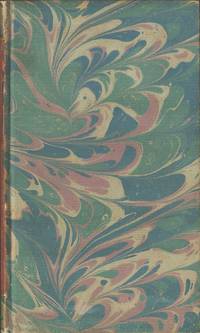
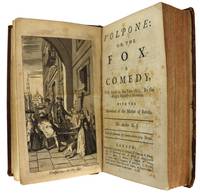
1732réf. 006985London: J. Walthoe & 14 Others 1732. Perhaps the best-known play by the second-greatest playwright of the Elizabethan stage.This is a Near Fine copy of an early edition; very scarce.Marbled paper-covered boards with titling in gilt on a leather spine label. Clean text; 96 pages complete. Light toning throughout but textblock remains sharpand clear. The spine label has some tiny chips at the edges which do not intrude into the title. . Early Edition. Hard Cover. Near Fine/No Jacket. 12mo - over 6¾" - 7¾" tall. J. Walthoe & 14 Others Hardcover
1791réf. 006995London: John Bell British Library 1791. This comedy written by the second greatest playwriht of the Elizabethan stage remains popular today. Here is the adaptation is by the most prominent actor-manager of the 18th century. "Adapted for Theatrica Representation As Performed at the Theatre-Royal Covent-Garden. Regulated from the Prompt-Book by Permission of the Managers." Disbound; complete text lacking its covers. Frontis portrait of "Mr. Lee Lewis as Capt. Boradil" Cast List 112 pages. Very bright and clear. Early Printing. Disbound. Near Fine/No Jacket. 16mo - over 5¾" - 6¾" tall. John Bell, British Library Paperback
1716réf. 005568London: Stationers' Syndycate 1716. After Shakespeare Ben Jonson 1572-1637 is often considered the greatest Elizabethan playwright. This late-career satire was much indebted lifted from Aristophanes and first performed in 1625; it was first published in 1631. This is a Very Good Plus copy of an early printing from the so-called "Booksellers' Edition" the work of a London syndicate of publishers. Scarce to RARE as are all of Jonson's early works. Disbound; removed from a larger volume most likely Walthoe's 6-volume edition with leather remains on the spine.The play is complete consisting of pages 139-248 of the original book. The text which includes an engraved plate and headpiece is nicely preserved very clear with light toning. . Early Printing. Disbound. Very Good Plus/No Jacket. 8vo - over 7¾" - 9¾" tall. Stationers' Syndycate Paperback
1717réf. 005586London: J. Walthoe and Ten others 1717. Ben Jonson 1572-1637 stands second only to his friend Will as the major dramatists of the Elizabethan stage. Initially reprinted in 1716 from the edition of 1692; this is a Good only copy of a presumed Second Printing from a year later. Not common. Containing the plays "Sejanus his Fal;" "Volpone; or the Fox;" "Epicaone; or The Silent Woman;" and "The Alchemist. A Comedy." Two of these plays remain in constant reperatory today. Full leather binding; stamped smooth calf; five raised bands on the spine with titling and decorations in gilt. Clean text; frontis engravings; 448 pages; lightly toned. Unfortunately this copy has suffered a separation of the covers and the spine is heavily rubbed; all is present however. Please note the condition issues; Quercus must offer this as a Binding Copy in need of restoration or repair. A worthy candidate for a rebind. Second Printing. Disbound. Good/No Jacket. 8vo - over 7¾" - 9¾" tall. J. Walthoe [and Ten others] Paperback
1795réf. 861051795. BEN SADDI Nathan DODSLEY Robert. The Chronicles of the Kings of England from William the Conqueror to the Year MDCCXCV. Worcester: Isaiah Thomas 1795. 196pp. Full contemporary leather red morocco spine label. Previous ownership signatures wear to boards toning else very good. Evans 28579. ESTC W37796. Written in mock-Biblical style this satirical history of England was first published in London in 1740 and proved popular on both sides of the Atlantic. The first American printing was in Newport in 1744 done by Ann Franklin 1696-1763 Benjamin Franklin's sister-in-law. The work is usually attributed to Robert Dodsley 1703-1764 a London publisher and satirical playwright though the authorship of the extension of the history through 1795 is unknown. The choice of a Jewish pseudonym was meant to convey the tone of ancient Jewish historians. unknown
1738réf. GBB-0030J. Wilcox London 1738. First edition; earliest English translation of the Siddur. Contemporary speckled calf rebacked. Age wear; rebacked. Edition/issue: First edition; earliest English translation of the Siddur. Binding/format: Contemporary speckled calf rebacked. Condition: Age wear; rebacked. Provenance/association: Rabbi Irving Frederick Reichert / Michael Freedman Collection. Completeness: Leaf F8 present often lacking. J. Wilcox, London unknown
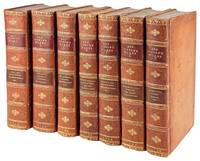
1756réf. 49136London: D. Midwinter et al. 1756. Very Good. London: D. Midwinter et al 1756. First Whalley Edition. Seven octavo volumes 20.5cm; contemporary sprinkled calf rebacked in the late 19th with endpapers replaced spines in six gilt-tooled compartments red and brown gilt spine titles; twelve leaves of plates by Louis Du Guernier including portrait frontispiece at head of Vol. I collated three volumes bound without final blanks else presumed complete. Boards rubbed and a bit dried at margins Vol. IV with fairly extensive but relevant and rather charming marginalia; a Very Good and sound set overall. The first edition of the complete works of Ben Jonson edited by Peter Whalley 1722-1791. The subscriber's list bound at the head of Vol. I seems a bit anemic though it does include the famed actor David Garrick. Provenance: 19th century armorial ex libris of the Lord Viscount Dillon to front pastedown of each volume except the first which has been crudely removed. Modern ownership pressure stamps of D.H. Krivit to front free endpapers. ESTC T83079. D. Midwinter et al. unknown
1722réf. 55261Offenbach Germany: Israel Ken 1722. Second edition. This is the copy of the Rabbi David Paul-Bernard Drach 1791-1868 who converted to Catholicism in 1823 and managed the library of the Propaganda Fide in Rome. The front endpaper has a note that is signed and dated by Drach: "Etudie et annote ce volume; supplee lets mots ronges par les vers et corrige les fautes typographiques." Notes to margins. Introductory note by Drach lauding the book: "Le calendrier juif dont les calculs sont d'une exactitude admirable etait deja en usage du temps de Rabbie Gamliel pas consequents a l'epoque ou le Verbe eternel caro factum est et habitavit in nobis." 8vo. 40 in Hebrew letters numbered leaves i.e. 80pp. re-cased in later vellum with leather strips. Engraved title page. Fascinating work on the Jewish calendar its estimation calculation of the New Moon methods of chronology et.al. Also contains a few pages on the Christian calendar. This work is one of the most profusely illustrated works of Hebraica and Judaica with charts ephemerides sketches and illustrations throughout. One volvell attached. In Hebrew. First ten leaves with one inch holes from bookworms. The rest of the volome with minor circular bookworm hole. Some loss of text on first ten leaves. "The volvelles as well as hand diagrams and tables were some of the tools used not just for calculating and identifying pivotal dates and worshipping times for Jews but also for ascertaining Christan holidays. This knowledge was a critical aid for protecting Jews from the danger posed by their having different worshipping times and habits from the dominant culture. The headings on the wheel denote the arrival of the new moon which marks the start of the Jewish month and the cycle of the sun. Whereas calendars appear in general to be a "convenient way to coordinate human movements with natural time" as Elisheva Carlebach points out the Sefer 'Evronot demonstrates that the methods for doing so are culturally and historically shaped. The wheel computing information with each push of a finger demands interaction from the reader in order to yield knowledge not just to use but to live by." Ref: brevigrapher.interactive book. Furst I 99 & 360 Steinschneider 4988.4. Israel Ken unknown
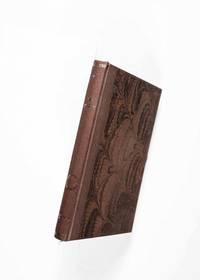
1768réf. 49937Fiyorda Furth: Hayim Ben Tzevi Hirsh 1768. Second edition. Hardcover. g to vg. Square octavo. 54 leaves. Rebound in modern brown cloth over marbled paper boards decorated with gilt. Decorative woodcut border on the title page. The scarce second edition of Rabbi Aaron ben Mordecai of Rödelheim's born ca.1695 Yiddish translation of the two known Targumim of the biblical book of Esther. The first of the Aramaic Targumim Aramaic Translations or paraphrases of the books of the bible is more common and well known while the second targum is noted for its embellishments on the Biblical account with considerable additional apocryphal material not always evidently related to the Esther story. The Yiddish text here is printed throughout in the traditional Vaybertaytsh script. This is the Rabbi Aharon's most notable work and the first addition was originally published in 1718 in Frankfurt. Binding with light rubbing to extremities. Back board lightly bumped along the side edge. Interior with some chipping/fraying to the edges of the first two leaves resulting in some minimal loss of text. Pages throughout with some sporadic soling or dampstaining. Some chipping and fraying to the final leaf as well. Binding in very good interior in good condition overall. Quite scarce. Hebrew title: ספר מצח ×הרן על מגילות ×סתר ×ª×¨×’×•× ×¨×שון ×•×ª×¨×’×•× שני Author: ×הרון בן מרדכי של ×¨×•×“×œ×™×™× Publication: ×הרון בן מרדכי מטריביטש Alternate transliterations: Sefer Mezach Aharon Bibliographic references: Vinograd Furth 387 Bought at the Parke-Bernet Galleries auction from the Michael Zagayski collection May 12th 1970. Catalog of sale no. 3046 #68 page 36. Original typed slip with auction information laid in at the front cover of the book. Hayim Ben Tzevi Hirsh hardcover
1779réf. 48502Livorno: Carlo Giorgi 1779. First edition. Hardcover. g to near fine. Octavo. 4 80 leaves double-sided. Rebound in modern brown cloth over brown decorative paper boards. Title page with decorative woodcut borders. This the first printed edition of Medieval Italian Rabbi Isaiah ben Mali of Trani's ca.1180 - 1250 work collecting discussions of 92 different halakhic topics relating to the tractate Ta'anit of the Mishnah which deals with the Jewish laws of fasting. The work was edited by Italian Rabbi Isaac Joseph Nunes Vais d. 1768. A few decorative woodcut head and tailpeices as well as borders to text throughout. Text in Hebrew with some Rashi script mostly printed in a two-column format. Binding with minor rubbing to corners. Interior with light worming to pages throughout resulting in minial text loss. Sporadic water stains throughout mostly in the margins. Orange sticker on the interior front cover. Binding in near fine interior in good condition overall. Hebrew title: ספר המכריע : ×•×”×•× צ״ב פסקי דינין וחדושי מסכת תענית Author: ישעיה בן מ×לי מטר×× ×™. נוניס ו×יס יצחק Publication: ליוורנו Alternate transliteration: Sefer Hamachria Bibliographic references: Vinograd p.382 Livorno Leghorn #154. Carlo Giorgi hardcover
1791réf. 48770Thessaloniki: Mordekhai Nahman ve-David Yisraelig'ah 1791. First edition. Hardcover. g- to vg-. Two volumes large quarto. Vol.1: 2 157. Vol.2: 3 158- 274 1 35. Double-sided leaves. Rebound in modern burgundy mottled faux-leather boards with gilt lettering on the front covers gilt lettering and ruling on the spines. Edges of the book block in red. Title pages bordered with small woodcut motifs. The first printed edition of this commentary on the Talmudic tractate Bava Batra by famed mediaeval Spanish Rabbi Meir Abulafia aka 'The Ramah' c. 1170 - 1244. The work is one of only three surviving parts Tractates Bava Batra Sanhedrin and Kidushin plus the fourth chapter of Tractate Gittin from his larger series of his Talmudic commentaries known as Yad Ramah meaning "Hand of the Ramah" or "The Upraised Hand". The final section of the second volume contains Shiyur Shitah Mekubetset with its own title page a subsequent commentary on the work by Rabbi Bezalel Ashkenazi c. 1520 - c. 1592 and an approbation at the start of the first volume by editor Yosef Elia Halevi. The first volume includes a few illustrated figures and diagrams on leaf 123. Text throughout in Hebrew printed in Rashi script in a two column format. Bindings with minor rubbing bumping and damp staining to the corners. Minor scratches and smudges to the covers. Title page in volume one torn along the left margin. Title page of volume torn along the left margin with no loss of text. Title page of volume 2 with tears worming and staining with some loss of text. Volumes quite clean overall with only minor sporadic staining in the margins. Worming throughout both volumes with some loss of text mostly in the second volume. A few pages throughout the volumes have been repaired with tape. Bindings in very good- interiors in good- to good condition overall. Scarce. Hebrew title: יד רמה Authors: רבי מ×יר הלוי ×בו××œ×¢×¤×™×™× הרמ"ה יוסף ×ליה הלוי בצל×ל בן ××‘×¨×”× ××©×›× ×–×™ Publication: ש××œ×•× ×™×§×™ בדפוס ×”×©×•×ª×¤×™× מרדכי נחמן ודוד ישר×ליג'ה Bibliographic references: Vinograd- Salonica 407. Mordekhai Nahman ve-David Yisraelig'ah hardcover
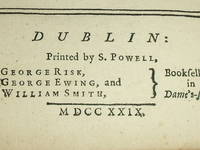
1729réf. 000182Dublin Ireland: S. Powell 1729. Extremely rare set of both volumes. This two volume set shows the ravages of its almost 300 year history. Full calf binding. Volume I: Contains: Volpone; or the Fox; Catiline his Conspiracy; Bartholomew Fair; Sejanus his Fall. Conditions: Disbound: front and rear boards detached; book is split at pages 142/143. Pencilled date 1818 inside front cover with pencilled note 2 vols fep has name and date not sure if it's 1810 or 1870; bookseller's pencilled notations. Volume II: Contains: Epicoene: or the Silent Woman; Every Man in his Humour; Everyman out of his Humour; The Alchemist. Conditions: pencilled price on fep; initials on title page; Disbound: front cover detached; book split at pages 188/189; rear cover is attached. We noted some pencilled brackets line and marginalia on page 189. Full calf bindings have five raised bands on spine worn corners and considerable rubbing. Volume one has half of the title block on spine with gilt titles helpful to know what was there if you choose to restore these rare books the title block is missing from volume two. There are some tanned bands to inside of cover edges and edges of fep; we speculate that this tanning was caused from a brown paper covering at some point in the book's 300 year history. Truly rare books we were not able to locate another two volume set. Thanks for shopping with us! 100% of your purchase benefits charity and supports literacy and lifelong learning. Full-Leather. Fair/No Jacket. 16mo - over 5¾" - 6¾" tall. S. Powell Hardcover
1756réf. 140939597London: Printed for D. Midwinter 1756. First Edition Thus. Very Good. First edition thus complete in 7 volumes. Bound in full contemporary calf with morocco title labels and raised bands to spine. Very Good. Lightly marked with joints worn with several starting to split wear to edges heavier at spine ends. Title label missing on Volume III and partially perished on Volume I. Damage affecting the first 20 or so pages of Volume 7. A handsome set. Printed for D. Midwinter unknown
1740réf. 214172Hamburg Germany: Hermann Heinrich Holle 1740. Hardcover. Fair- Leather has some pieces missing in spine general wear all around pages are darkened with moderate foxing and staining on pages all material present and available for reference. Leather boards with decorative embossments on cover and back gilt text on spine. 1650 pp. Highly decorative text and printing. Bw frontispiece. Text in German; The five versions are printed in parallel columns: Catholic Luther Reform Yiddish Dutch.; The Yiddish is in roman characters; it is highly Germanized. Hermann Heinrich Holle hardcover
1793réf. 19197Lyon: s.n. 1793. FIRST EDITION. Contemporary pastepaper wrappers lined with printing waste rear panel of Vol III detached. In excellent original condition uncut. First edition of this strange work of mystical theology and “astral light.” The author who Brunet calls a madman rambles almost incoherently about the fall of man and the resulting supernatural forces that operate in and around humanity. He claims that Adam’s sin caused faith to be at odds with reason and the “abuse” of reason further distances humans from God. His focus is on the different degrees of light in the universe—natural magical astral supernatural celestial and divine—and how to harness them for good. He encourages the pious to reject materiality and “gross bodies” and seek truth in the magnetism and light abounding within the spirit realm. Amidst this intangible theosophizing he interjects some radical dogmatic opinions including the non-existence of hell and the immaculate conception of Mary. Dutoit-Membrini 1721-1793 was a Swiss pastor and founder of the mystical quietist cult of Inner Souls in Lausanne. His life was marked by periods of debilitating sickness after each of which he emerged progressively more committed to Catholic mysticism. He finished this book shortly before his death which may explain its narrative quality. OCLC locates 6 copies in the U.S. NY Public Yale Chicago Harvard Michigan Texas. Quérard Les supercheries littéraires dévoilées II: 449; Brunet Les Fous 62-63; Caillet 3480; Dorbon 1432. s.n. unknown
1732réf. 45803London: J. Walthoe.And sold by W. Feales at Rowe's Head over-against Clement's Inn Gate 1732. Very Good. London: J. Walthoe.And sold by W. Feales at Rowe's Head over-against Clement's Inn Gate 1732. 12mo 17 cm; lacking series title page else complete. Woodcut frontis and section headers. Full contemporary boards in calf leather blind tooled at margins and board edges with gilt decoration and morocco leather label to spine. Boards generally scuffed and rubbed with minor abrasions to covers and rubbing to spine cracking slightly at hinges. Board corners and spine ends bumped. Endsheets offset at margins by leather and glue underneath with brief pencil to pastedown and penned date and name to top of first free endsheet. Lacking the title page though all volume title pages present. Interior toned and foxed throughout as expected. Four volumes bound together including a catalogue of English language plays and dramatic works up to 1732. Jonson's plays were often comedies and satires and influenced comedic drama beyond his era. He is considered to be the second most important Renaissance dramatist right behind Shakespeare to whom he will always be compared. What a fate. ESTC T79993. J. Walthoe...And sold by W. Feales, at Rowe's Head, over-against Clement's Inn Gate unknown
1711réf. 39540Fürth: Itzik Leib 1711. First edition. Wood cover. poor to good-. Folio. 50 leaves. Beige wooden boards. Illustrated title page with imagery of Moshe Aharon Jacobs dream of the ladder and King David playing the harp. Order of Slikhot prayers for forgiveness to be included in the Jewish observance during the month of Elul the month of the High Holidays between Rosh Hashana and Yom Kippur. The book captures the custom of polish Jews Ashkenazi tradition which differs from Sephardi tradition in many ways. While Sephardi Jews include Slikhot throughout the month of Elul Ashkenazi Jews observe Slikhot for the ten days of Rosh Hashana to Yom Kippur. Text in Hebrew. Binding reinforced with brown library tape at spine staining and splintered corners at edges of front cover. Spine frayed at head and tail. Foxing inside front cover. Title page and first leaf detached but present creasing at inner margin affects decoration up to 0.5 inches staining from wax creasing and fraying at lower edge affects text up to 1 inch missing. Sporadic wax stains foxing age-toning and some water stains throughout block. Starting at leaf 49. Last two pages detached but present. Foxing inside back cover which is splintered in the middle of lower half. Back cover separated from block but attached at front joint. Binding in overall poor interior in fair to good- condition. Itzik Leib unknown
1701réf. 33078Fulda 1701. Hardcover. fair. 4to. 185 leaves. Black cloth. Red edges. Illustrated title-page with Moses and Aaron on the sides and David killing Goliath at the bottom. Commentary on selections of the Zohar and other kabbalistic texts by Mordacai Ashkenazi published with the aid of his teacher Abraham Rovigo. These two kabbalists were both secret followers of the messianic claimant Sabbatai Sevi. Despite Sabbatai's conversion to Islam in 1666 and death in 1676 many of his followers continued to believe in him and worked to spread their particular heterodox brand of Judaism in defiance of the rabbinic establishment. As cover for his Sabbatian agenda Ashkenazi claimed that “Eshel Avraham” was simply a new interpretation of the Kabbalah based on his prophetic dreams. Ultimately this book is an important example of the success of the early eighteenth century Sabbatian underground to print books under the nose of the rabbinic authorities before it came out into the open with the printing of Nehemiah Hayon's “Migdal Oz.” Text in Hebrew. Backstrip missing but the book is still intact. Bottom corner chipped. Title-page torn and bottom strengthened. Slight worming to front leaves. Overall in fair condition. Steinschneider 4299:1. Samuel Wiener Bibliotheca Friedlandiana 991. hardcover
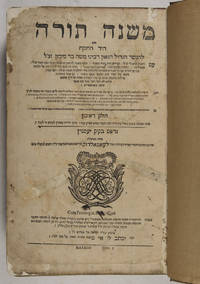
1739réf. 27896Jessnitz Saxony-Anhalt: Bi-defus Yisrael bar Avraham 1739. Hardcover. Good. Four volumes folio published between 1739 and 1742. Woodcut printer's device at titles; woodcut endpieces in first volume. Hebrew text opens from right to left; leaf numbers in Hebrew characters. Hebrew chronograms yield Jewish dates of publication 5499-5502. Brown library buckram scuffed at extremities spines lettered in gilt. Endleaves renewed. A good set. See foliation and condition notes for each volume below. Scarce eighteenth-century edition of this seminal compendium of Jewish law halakhah. Compiled between 1170 and 1180 while Maimonides was living in Egypt the Mishneh Torah is regarded as the author's magnum opus. It is the only Medieval-era work that surveys the full panoply of Jewish observance including those laws that are only applicable when the Jerusalem Temple is in existence. The present edition is the first to contain Judah Rosanes' commentary Mishneh le-melekh. "Mishneh Torah" The Repetition of the Law is an appellation originally applied to the biblical book of Deuteronomy; the subtitle "ha-Yad ha-Hazakah" The Book of the Strong Hand plays on its subdivision into fourteen books: the numerical value fourteen is represented in Hebrew letters as Yud 10 Dalet 4 which forms the word "yad" hand. Maimonides sought to provide a complete statement of the Oral Law so that a person who mastered first the Written Torah and then the Mishneh Torah would be in no need of any other book. Contemporary reaction was mixed with strong and immediate opposition focusing on the absence of sources and the belief that the work appeared to be intended to supersede study of the Talmud itself. Maimonides responded to these criticisms and the Mishneh Torah endures as an influential work in Jewish religious thought. According to several authorities a decision may not be rendered in opposition to a view of Maimonides even where he apparently militated against the sense of a Talmudic passage for in such cases the presumption was that the words of the Talmud were incorrectly interpreted. Likewise: One must follow Maimonides even when the latter opposed his teachers since he surely knew their views and if he decided against them he must have disapproved their interpretation. Vol. 1: 1 title 8 234 102 3 ff. Repairs at title page with very slight loss of text at verso following leaf and the final leaf. Text embrowned often heavily in first half with some light marginal dampstains throughout. Old manuscript entries in Hebrew at title in at least three hands. Vol. 2: 1 title 148 112 2 ff. Marginal repairs to first and last two leaves no loss of text. Moderately dampstained throughout with some mild embrowning. Old manuscript entries in Hebrew at title in at least two hands; three old stamps at title including at least one censor's approbation. Vol. 3: 1 title 221 169 ff. Repairs at bottom margin to title with loss of some text below imprint and at final lines of rabbinic approbations at verso and at bottom margin following leaf with some text loss and obscuration by translucent paper tape. Small marginal repair at final leaf. Light dampstaining in first half; remaining text with mild embrowning. Old manuscript entries in Hebrew at title in at least two hands; two old stamps at title including at least one censor's approbation. Vol. 4: 1 title 135 138-154 157 1 ff. Marginal repairs to title and final leaf no loss of text. Sporadic light embrowning and marginal stains. Old manuscript entry in Hebrew at title. A complete set with only minimal text loss in a few places -- a very usable scholar's copy. References: Vinograd Jessnitz 46; Fürst 2: p. 295; Zenker p. 583 Title in Hebrew: משנה תורה ×”×•× היד החזקה להנשר הגדול ×”×’×ון רבינו משה בר מימון זצ׳׳ל ×¢× השגת הר×ב׳׳ד זצ׳׳ל ופירוש הרב מגיד משנה וכסף משנה להג×ון המשביר רבינו יוסף ק×רו זצ׳׳ל ומגדל עוז והגהות מימונייות ופירוש רבינו עובדי והרב המוסמך מדר׳׳ל ן׳ חביב על הלכות קידוש החדש ×¢× כל הצורות השייכות להלכות ×לו ולהלכות שבת וסוכה ×•×¢× מורה ×ž×§×•× על דברי הרב המגיד וכסף משנה ×’× שתי מפתחות גדולות ורחבות ×חת על סדר ×”×¤×¨×§×™× ×•×חת על דרך ××œ×¤× ביתה ×œ× חסר דבר מכל כפי ×שר נדפס ב××ž×©×˜×¨×“× Rabbi Moses Maimonides the Rambam was a 12th century Jewish philosopher and halachic legal scholar. A highly controversial figure both during his lifetime and after his death he is generally acknowledged as the preeminent Jewish thinker of the Middle Ages. He was born in Córdoba Spain but fled as a child from the Almohad persecution. He eventually settled in Egypt where he served as a rabbi physician and philosopher. His fourteen-volume Mishneh Torah his only work not in Arabic still carries canonical authority particularly within the Yemenite Jewish community as the codification of Talmudic law. His other works include "Kitab al-Siraj" a commentary on the Mishnah "Kitab al-Fara'I" a book on precepts and the celebrated philosophical work "Dalalat al-Ha'irin" known in Hebrew as the "Moreh Nevukhim" The Guide to the Perplexed. In this latter work Maimonides attempted a philosophical/theological reconciliation of the Hebrew Bible and Greek knowledge. This work came to play a central role in all subsequent major controversies over philosophy within the Jewish community during the Middle Ages. Bi-defus Yisrael bar Avraham hardcover
1787réf. 13468Nowydwok: Anton Kriger 1787. First printing. Hardcover. fair. 8vo. 58 leaves. Half leather over marbled paper covered boards marble rubbed off at one of the boards see below. Lacking Title page. Work by renowned German Talmudist and Rabbi Aryeh Löb Ben Hayyim Kats a.k.a. Breslau. his last name is often given as Breslau from his birth place. More on him: See below "Pene Aryeh" Lion's Face a volume of responsa is distinguished by its logical method and reveals a thorough knowledge of the Talmud. Recognizing the latter work as the highest authority the author always applied common sense to the elucidation of Biblical and Talmudic precepts. While respecting the post-Talmudic authors he wrote entirely independently of them and without prejudice. Aside from Talmudic questions the "Pene Aryeh" also contains answers to other matters which bring out the author's thorough knowledge of Hebrew linguistics. The style of the responsa is simple and clear the language being that of the Mishnah with an admixture of pure Hebrew phraseology without rhetorical flourishes. The work on the whole reveals a serious scholarly mind. Source: Jewish Encyclopedia. Front board detached but present with marble completely worn off at front board. Owner's inscription on front endpaper. Backstrip unhinged. First three leaves are loose but present. Moderate rippling and water staining throughout not affecting text. Minor worming on leaves 11-34 with minimal text loss. Pages are browned as expected for books of this kind. In Hebrew. Fair condition. On the author Source: Jewish Encyclopedia: Breslau Aryeh Löb Ben Hayyim. German Talmudist and Rabbi; born in 1741 at Breslau Prussia; died April 22 1809 at Rotterdam Holland. He lived at Lissa Posen and later at Berlin where he was an inmate of the bet ha-midrash of the philanthropist Daniel Jafe. From Berlin he went to Emden Prussia as city and district rabbi. In 1781 he was called as chief rabbi to Rotterdam. Breslau was highly reputed as Talmudist as is shown by his many responsa and by the fact that such celebrated men as Phineas Hurwitz Isaiah Berlin and David Tevele Schiff referred Talmudic questions to him. He was also distinguished by his knowledge of the secular sciences. He enjoyed great popularity in Holland and his reputation was not confined to Jewish circles but many Christian scholars and theologians were also among his friends. He was buried with great ceremony many delegates from the various Jewish communities attending his funeral. His memory is still revered among the Dutch Jews. Bet Eked V.3 page 836 item #397. Anton Kriger hardcover
1789réf. 19810Berlin: Hevrat chinuch ne'arim 1789. First edition. Hardcover. fair. Sm. folio. 2 pp. per leaf there being 64 leaves with Hebrew pagination thus there are 128 pp. Printed in double columns. Brown boards with brown leather spine. This work is extremely rare as OCLC only lists 4 libraries in the entire world that own this work. This is a commentary on the Talmud on the Tractate Baba Metsia the entire orders of Moed Nashim Nezikim and Kodashim. Text is entirely in Hebrew printed in "Rashi Script". Scuffing to boards and yellowing to pages due to age but text is clear and pristine. Boards detached but present. Exterior in fair interior in good condition. Hevrat chinuch ne'arim hardcover
1711réf. 045339Berlin: Meschullam Zalman ben Wolf Fischhof 1711. Second Edition. Hardcover rebound in cloth. Fair Condition. Rebound in plain green cloth early and late leaves chipped at the edges with some repairs occasionally touching the text. Browned throughout. Rare work by the 17th century Cabalist. 28ff. Size: Octavo 8vo. Quantity Available: 1. Shipped Weight: Under 1 kilo. Category: Religion & Theology; Magic Paranormal & Occult. Inventory No: 045339. Meschullam Zalman ben Wolf Fischhof hardcover
1756réf. 1701250012D. Midwinter; W. Innys and J. Richardson; J. Knapton; T. Wotton; et al 1756-01-01. Hardcover. Acceptable. Five octavo volumes of seven. Lacking Volumes III and IV. Contemporary leather backed marbled boards raised bands red leather spine label. Wear to edges minor chipping and rubbing to spines. Dampstaining to boards. Armorial bookplate of Francis Perrott. Marginal dampstaining in each volumes affecting text in Volume II VI and VII with Volume VI being mostly completely dampstained. This is an oversized or heavy book that requires additional postage for international delivery outside the US. D. Midwinter; W. Innys and J. Richardson; J. Knapton; T. Wotton; et al hardcover
1791réf. 048405London: John Bell for the British Library 1791. Hardcover Full Leather. Good Condition. Bound up together in sound but worn full leather. Scattered minor foxing browning staining. Each play with a frontis engraving. Size: duodecimo 12mo. Quantity Available: 1. Shipped Weight: Under 1 kilo. Category: Theatre & Plays; Inventory No: 048405. John Bell for the British Library hardcover