Otridge and Son; R Faulder; Vernor and Hood; Cadell and Davies 1799. Hardcover. Acceptable. London 1799; FIVE VOLUMES COMPLETE; marbled paper over leather covered boards; heavy edge and corner wear with board exposed at corners; bottom corner of front board appears chewed; spine edges frayed and chipped; front boards of volumes I IV and V detached but present; rear board of Volume I and front board of volume III hanging by threads; title blocks on back strips mostly missing; 8vo - over 7 3/4" to 9 3/4" tall; marbled end papers; previous owner's name plate on front paste-downs; interior clean and unmarked; individually paginated; Additional shipping charges may need to be requested due to size or weight of book. Otridge and Son; R Faulder; Vernor and Hood; Cadell and Davies hardcover
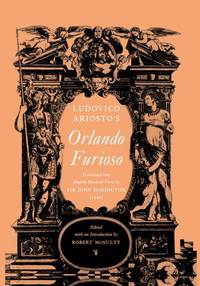
1815. : 7 In part 3 a few pages have some torn pieces but the text is still readable. Volume III & V Binding: Contemporary Half Leather 24mo Height cm: 145 CM Width cm: 9 CM Thickness cm: 65 CM hardcover
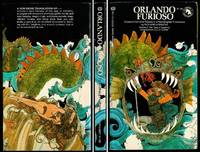
Ballantine 1973 1973. Paperback. Very Good. 6x4x0. Paperback. SCARCE ORIGINAL 1973 PRINTING. Ballantine Adult Fantasy Series. Pages are clean and unmarked: minimal tanning. Covers show very minor shelving wear a small scuff along the top edge of the front cover minute rubbing to corners.; 100% Satisfaction Guaranteed! Ships same or next business day! Ballantine, 1973 paperback
Riferimento per il libraio : 142403280017 ISBN : 0330238140 9780330238144
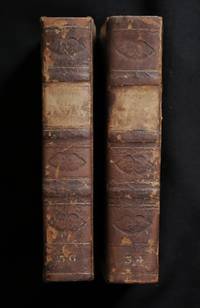
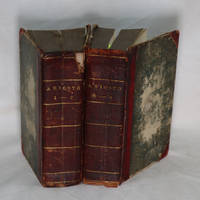
<p>Tomes 1-2 & Tomes 3 - 4. bound as two books. Red calf spine with marbled boards. Gilt title and banding. Dimensions are for one book.</p><p>Four books encapsulated into two volumes. The interior of all four books is good and clean. The 19th century bindings have seen better days. F.B.A. debated whether to have these two volumes rebound into four books that said the economy of time suggested these volumes are first offered in their acquired condition.</p><p><strong><em>Orlando furioso</em></strong> <em>The Frenzy of Orlando</em> is an Italian epic poem by Ludovico Ariosto which has exerted a wide influence on later culture. The earliest version appeared in 1516 although the poem was not published in its complete form until 1532. <em>Orlando furioso</em> is a continuation of Matteo Maria Boiardo's unfinished romance <em>Orlando innamorato</em> <em>Orlando in Love</em> published posthumously in 1495. In its historical setting and characters it shares some features with the Old French <em>Chanson de Roland</em> of the eleventh century which tells of the death of Roland. The story is also a chivalric romance which stemmed from a tradition beginning in the late Middle Ages and continuing in popularity in the 16th century and well into the 17th.</p><p>Orlando is the Christian knight known in French and subsequently English as Roland. The story takes place against the background of the war between Charlemagne's Christian paladins and the Saracen army that has invaded Europe and is attempting to overthrow the Christian empire. The poem is about war and love and the romantic ideal of chivalry. It mixes realism and fantasy humor and tragedy.The stage is the entire world plus a trip to the Moon. The large cast of characters features Christians and Saracens soldiers and sorcerers and fantastic creatures including a gigantic sea monster called the Orc and a flying horse called the hippogriff. Many themes are interwoven in its complicated episodic structure but the most important are the paladin Orlando's unrequited love for the pagan princess Angelica which drives him mad; the love between the female Christian warrior Bradamante and the Saracen Ruggiero who are supposed to be the ancestors of Ariosto's patrons the House of Este of Ferrara; and the war between Christian and Infidel.</p><p>The poem is divided into forty-six cantos each containing a variable number of eight-line stanzas in <em>ottava rima</em> a rhyme scheme of abababcc. <em>Ottava rima</em> had been used in previous Italian romantic epics including Luigi Pulci's <em>Morgante</em> and Boiardo's <em>Orlando Innamorato</em>. Ariosto's work is 38736 lines long in total making it one of the longest poems in European literature.</p><p><strong>Ludovico Ariosto</strong> 8 September 1474 – 6 July 1533 was an Italian poet. He is best known as the author of the romance epic <em>Orlando Furioso</em> 1516. The poem a continuation of Matteo Maria Boiardo's <em>Orlando Innamorato</em> describes the adventures of Charlemagne Orlando and the Franks as they battle against the Saracens with diversions into many side plots. The poem is transformed into a satire of the chivalric tradition. Ariosto composed the poem in the ottava rima rhyme scheme and introduced narrative commentary throughout the work.</p><p>Ariosto also coined the term "humanism" in Italian <em>umanesimo</em> for choosing to focus upon the strengths and potential of humanity rather than only upon its role as subordinate to God. This led to Renaissance humanism.</p> Gioacchino Avesani. hardcover

 Ricevere i risultati per e-mail
 Scaricare i risultati in PDF
 RSS feed
 Link
Link