|
Donatien Alphonse Fraǹois De Sade, Pierre Klossowski, Jean-Jacques Pauvert
Oeuvres : . Sade. Introduction de Jean-Jacques Pauvert. Justine ou les Malheurs de la vertu. Dialogue entre un pr?tre et un moribond. Eug?nie de Franval. Id?e sur les romans. L'Auteur des eCrimes de l'amoure ÌÊ Villeterque, folliculaire. Suivis d'un Essai sur Sade, par Pierre Klossowski. Nouvelle ?dition. Illustrations de Giani Esposito [Paperback] Donatien Alphonse FranÌ€ois De Sade, Pierre Klossowski, Jean-Jacques Pauvert
Relié bon état. Exemplaire numéroté . Contenu propre .Tranches piquées . 725 pages . 1961. PHOTOS SUR DEMANDE
Riferimento per il libraio : LW2568. ISBN : 268
|
|
|
Donatien Alphonse François de SADE
« Faire noyer vive l'exécrable coquine qui depuis neuf ans (...) suce mon sang... » Lettre autographe à sa femme. Hommages à la Présidente
s. l. [Vincennes] s. d. [circa 1781] | 15.70 x 20.10 cm | une feuille
Riferimento per il libraio : 59108
|
|
|
Donatien Alphonse François de SADE
« si l'on pouvait lire au fond de mon cur, voir tout ce qu'elle y opère cette conduite-là, je crois qu'on renoncerait à l'employer!» Lettre autographe à sa femme. Souffrance et philosophie
S. n. | s. l. 17 août 1780 | 10 x 16 cm | 2 pages sur un feuillet
Riferimento per il libraio : 59110
|
|
|
Donatien Alphonse Francois de SADE
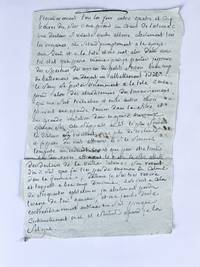
""J'éprouve . un dégoût un abattement total"" Letter from the Marquis de Sade from the Charenton Asylum
Charenton 1801. Fine. ""I experience spasms a sort of shivering a lot of yawning disgust total despondency the blood rushes violently to my head then I feel dizzy spinning which makes me stumble and a thousand other things proving a great tension in the body and a great irritation in the nervous system."" Charenton 1801 15 x 22.80 cm un feuillet composé deux papiers encollés Original autograph letter by the Marquis de Sade consists of 27 lines of relatively tight handwriting. Most likely written to his wife as evidenced by the letter's origin from Sade's family. The letter is physically composed of two glued pieces of paper. On the verso the Marquis wrote 19 lines and scrupulously crossed them out - a few words and letters are still quite visible. Cited in Maurice Lever's biography 'Donatien Alphonse François marquis de Sade' Paris Fayard 1991 p. 631. On March 7 1801 Armand de Sade the Marquis's son received a letter from the Minister of Police Joseph Fouché notifying him that his father had been arrested yesterday and that handwritten pages from the novel 'La nouvelle Justine' Justine or the Misfortunes of Virtue had been found on his person: Nevertheless sensitive to your request for leniency and concerned to preserve the honor of your name I have decided to have your father transferred to the Charenton nursing home.. It should be noted that for Fouché Charenton an insane asylum was nothing more than a nursing home a prison. It should not be forgotten that a large proportion of the population of these asylums did not fit into the social and moral field and psychiatry has long had no other aim than to normalize to make them fit for social life. Contrary to what has been said Sade fits in perfectly. However as soon as he entered Charenton Sade's attitude led to his expulsion to Bicêtre the Bastille of scoundrels but his family succeeded in getting him back into the Charenton asylum. Charenton was not only the Marquis de Sade's last incarceration but also the last place he lived in where he died in 1814. The 19 lines scrupulously crossed out on the back of the leaf reveal a few words or letters; in this respect we can conjecture that it's a coded message which Sade was quite fond of for if censorship had been behind these erasures absolutely everything would have been yet the message clearly shows that almost everything has been conscientiously crossed out apart from a few words or letters. We can still make out a few of them: 'Nécessaire' 'à tous' 'ger' 'ue' 'quel' 'je trouve' 'de'. As for the letter itself it is remarkable for the homogeneity of its message. It is a lengthy complaint describing the physical ailments Sade has suffered. It is an account of the sum total of the symptoms that overwhelm the writer. In a hyperbolic style using among other figures of speech adverbs of intensity si tel très. Sade methodically spells out the violent pains his body is suffering with the whole of this violence constituting a system a structure in which all the parts are linked. In the writer's correspondence it can be said that each time he found himself incarcerated his letters mention uncontrollable physical attacks although we know of no other letter so uniform and systematic.The pain originates in the pit of the stomach radiating out to the periphery: head eyes legs all converging on vertigo loss of balance. .because that's what it's all about: Sade isn't suffering from any illness he's besieged by anguish whose ultimate meaning is vertigo the wavering of a reality from which his freedom to live as he pleases his freedom of movement and his name have been taken away. The loss of these fundamental elements of his existence sends Sade in turmoil. In addition and as regards the formation of these particular symtoms if we consider that the fulfillment of a certain sexual sadism is necessary to him the deprivation of this satisfaction turns this sadistic driv unknown
Riferimento per il libraio : 85841
|
|
|
Donatien Alphonse Francois de SADE
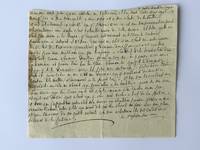
"C'est le chant du cigne.""
1778. Fine. 1778 - 1779 15.5 x 13.5 cm Une feuille ENGLISH DESCRIPTION ON DEMAND Lettre autographe originale du Marquis de Sade écrite depuis la prison de Vincennes le 21 mai 1778 possiblement 1779 le dernier nombre se terminant en paraphe étant difficile à déchiffrer. Cette lettre a été écrite à l'épouse du Marquis de Sade Renée Pélagie le dernier paragraphe est adressé à sa mère la présidente de Montreuil responsable de son emprisonnement par lettre de cachet. La lettre s'achève juste par un paraphe comme souvent avec la correspondance de Sade. La lettre provient directement de la famille descendante de Sade. Une feuille de papier mal découpée en marge haute avec deux pliures au dos. 20 lignes d'une écriture serrée. Lettre dans laquelle Sade requiert son transfert dans une prison plus salubre avec des sorties journalières telle que Saumur ou Doullens. L'auteur évoque ses conditions difficiles et l'altération de sa santé provoquée par sa détention à Vincennes ainsi que l'existence d'un complot dont il serait ""la vache à lait de la police"". Les dernières lignes sont adressées à la présidente de Montreuil sa belle-mère : A vous que j'appelais autrefois ma mère . et se concluent avec cette opprobre : ""Qui m'eut dit que ce serait un jour avec mon sang et avec l'honneur de vos petits enfants que vous achèteriez le vil crédit du tribunal de police."" unknown
Riferimento per il libraio : 91946
|
|
|
Donatien Alphonse Fran�ois de Sade,Hobart Ryland
Adelaide of Brunswick. Translated by Professor Hobart Ryland . from an unpublished manuscript recently discovered among the papers left by the Marquis de Sade
1954T. unknown_binding. Acceptable. in x in x in. Ex-library book usual markings. Pages are clean but cover has general wear and tear and a few stains due to age. But still very usable. unknown
Riferimento per il libraio : mon0000555543
|
|
|
Donatien Alphonse Francois de Sade
Aline Et Valcour ou le Roman Philosophique Vol. 4: Écrit à la Bastille un An Avant la Révolution de France Classic Reprint French Edition
hardcover. Good. Access codes and supplements are not guaranteed with used items. May be an ex-library book. hardcover
Riferimento per il libraio : 0364246995.G ISBN : 0364246995 9780364246993

|
|
|
Donatien Alphonse Francois de SADE
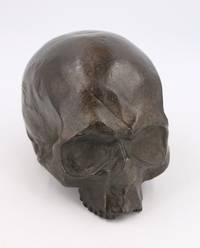
Bronze Cast of the Marquis de Sade's Skull
s. l.: S. n. 2012. Fine. S. n. s. l. 2012 20 x 13.50 cm autre Bronze cast of the Marquis de Sades skull by the master founder Avangini. One of a unique numbered edition of 99 bearing a reproduction of Sades signature this one No. 30. Also included is a certificate of authenticity signed by the Comtesse de Sade with the familys wax seal. Provenance: family archives. On Friday 2nd December 1814 Donatien Alphonse François Marquis de Sade died at the Charenton asylum at the age of 74. Despite his final wishes the Marquis had a religious burial in the cemetery at Charenton. In an ironic twist of fate Sade would not stay in the bosom of the Church for long even after death for a few years later his tomb was profaned in the name of science by the asylums doctor Dr. L. J. Ramon. Having studied the enigmatic Marquis skull he passed it on to his German colleague Johann Spurzheim a student of the famous Franz Joseph Gall the founder of phrenology very new and very popular at the time. Spurzheim made a cast today in the Anthropological Lab of the Musée de lHomme in Paris of the precious skull and exhibited the original during his European conferences. He then lost it apparently in Germany or America. What greater freedom could someone who had spent the best years of his life behind bars have hoped for The museum also preserves the notes from the very partial phrenological analysis of the Marquis de Sades cerebral structure carried out by Spurzheims assistant which was nothing less than a new posthumous trial culminating in another guilty verdict this time without appeal: Born from the most shameful passions and marked by feelings of opprobrium and ignominy a world-view so monstrous if it were not the brainchild of a lunatic would render its creator unworthy of being called a man and would blacken his reputation for good. We however prefer the more honest description provided by Dr Ramon in his Notes on M. de Sade: Sades skull nonetheless had not been in my possession many days before I examined it from the phrenological point of view something I was very taken with at the time as well as magnetism. What did this examination show me A well-developed crown Theosophy goodwill; marked projection behind and underneath the ears a conflict point similarly developed organs in the skull of du Guesclin; mid-sized cerebellum an elongated distance between one mastoid part of the temporal bone and another indicating excesses in physical love. In a word just as I was unable to discover in Sade as he walked along seriously and I would even say almost in a patrician way the author of Justine and Juliette my inspection of his head would have made me absolve him altogether of the charge of producing such works: his skull was in all respects comparable to that of a Church Father. A tangible testimony to the impenetrable secret of the Marquis and his intolerable freedom. This bronze skull the only replica of the occiput that so mysteriously disappeared seems to respond to the Shakespearean question with a sarcastic reformulation: To be free or not to be! S. n. unknown
Riferimento per il libraio : 91763
|
|
|
Donatien A de Sade Chantal Wicki Stefan Zweifel, Michael Pfister Stefan Zweifel, Michael Pfister
Justine und Juliette 10 Bde. Bd.10 Donatien A de Sade Chantal Wicki Stefan Zweifel Michael Pfister Stefan Zweifel Michael Pfister Belletristik Erzählende Literatur literarisch Erotik Sex BDSM Gewalt Traum
Matthes & Seitz Berlin Verlag 2002. 2002. Hardcover. 135 x 195 mm. Erste vollständige deutsche Übersetzung von Sades 10-bändigem Doppelroman Justine und Juliette In Justine und Juliette treibt Sade seine atheistisch-materialistische Philosophie auf die Spitze und vervollkommnet sein Weltverständnis das auf kosmologischer Ebene die ewige Bewegung der Materie auf der politischen die permanente Revolution der Gesellschaft und in individuell-moralischer Hinsicht die treibende Kraft der menschlichen Triebe zum Zentrum hat; alles in allem ein beinahe unentwirrbares Gespinst von Ratio und Eros dem der Leser auch heute noch mehr oder minder ratlos gegenübersteht; eine Umwertung aller Werte die nicht bei der Gesellschaft sondern beim Individuum ansetzt. de Sade Donatien Alphonse François Donatien Alphonse François de Sade 1740 in Paris geboren schrieb pornografische wie philosophische Romane die heute zweifelsohne zur Weltliteratur zählen. Zur Zeit der Französischen Revolution war er in der Bastille inhaftiert wo er eines seiner bekanntesten Werke Die 120 Tage von Sodom schrieb. Aufgrund seiner sexuellen Ausschweifungen wurde er als geisteskrank eingestuft und befand sich bis zu seinem Tod 1814 im Irrenhaus Charenton-le-Pont. Zweifel Stefan Stefan Zweifel geboren 1967 in Zürich studierte Philosophie und Ägyptologie. Er arbeitet als Übersetzer Blaise Cendrars Jean-Jacques Rousseau Raymond Roussel Moderator Schweizer Literaturclub bis 2014 und Kurator zu Dada Surrealismus und Situationismus. Bis 2004 war als Herausgeber der dreisprachigen Kulturzeitschrift Gazetta tätig. Er schreibt regelmäßig Beiträge für die Neue Zürcher Zeitung und verschiedene Literaturzeitschriften. Pfister Michael Michael Pfister 1967 in Zürich geboren arbeitet als Übersetzer Moderator Universitätsdozent und Gymnasiallehrer. Klossowski Pierre Pierre Klossowski geboren 1905 in Paris war ein französischer Schriftsteller Übersetzer und Maler. Er verfasste zahlreiche Abhandlungen u. a. über Marquis de Sade und Friedrich Nietzsche und fünf Erzählungen. Mit seinen Schriften beeinflusste er zahlreiche französische Denker wie etwa Jacques Derrida Gilles Deleuze Jean-François Lyotard und Michel Foucault. Klossowski übersetzte zahlreiche Werke aus dem Deutschen und Lateinischen ins Französische arbeitete an mehreren Filmen und illustrierte als Maler zahlreiche Szenen seiner Werke. In den 1930er-Jahren war er inhaltlich an George Batailles Magazin Acéphale beteiligt. Er starb 2001 in Paris. Bataille Georges Georges Bataille 1897 in Billom Puy-de-Dôme geboren war von 1922 bis 1942 als Bibliothekar an der Bibliothèque Nationale tätig in der er Walter Benjamins Manuskripte versteckte und so vor der Vernichtung rettete. Von Nietzsche und Sade aber auch von Kojèves Hegel beeinflusst zugleich in stetiger Auseinandersetzung mit Bretons Surrealismus wie auch mit Sartres Existenzialismus verfasste er ein in seiner Bandbreite einmaliges Werk. Er starb 1962 in Paris. Ein großer Teil seines Werks ist bei Matthes & Seitz Berlin erschienen. Detailangaben zum Buch - Justine und Juliette 10 Bde. Bd.10 EAN ISBN-13: 9783882218350 ISBN ISBN-10: 3882218355 Gebundene Ausgabe Erscheinungsjahr: 2002 Herausgeber: Matthes & Seitz Berlin 404 Seiten Sprache: ger/Deutsch ISBN/EAN: 3882218355 ISBN: 3-88221-835-5 978-3-88221-835-0 Autor des Buches: sade marquis sade donatien marquis sad stefan zweifel pierre klossowski Titel des Buches: pierre klossowski mattheus wicki juliett justine und juliette bde justin Daten vom Verlag: Autor/in: Donatien Alphonse François de Sade Titel: Justine und Juliette X Verlag: Matthes & Seitz Berlin 350 Seiten Erscheinungsjahr: 2001 Übersetzer/in: Stefan Zweifel; Michael Pfister Französisch Sprache: Deutsch Belletristik/Erzählende Literatur; Belletristik: allgemein und literarisch; Erotik; Sex; BDSM; Gewalt; Traum Illustrationen: Chantal Wicki Mitarbeit: Stefan Zweifel Michael Pfister Übersetzer: Stefan Zweifel Michael Pfister Sprache: deutsch Maße: 135 x 195 mm Literatur BDSM Erotik Gewalt Belletristik Erzählende Literatur Sex Traum ISBN-10: 3-88221-835-5 / 3882218355 ISBN-13: 978-3-88221-835-0 / 9783882218350 Justine und Juliette 10 Bde. Bd.10 Donatien A de Sade Chantal Wicki Stefan Zweifel Michael Pfister Stefan Zweifel Michael Pfister Belletristik Erzählende Literatur literarisch Erotik Sex BDSM Gewalt Traum <br/><br/>Belletristik Erzählende Literatur literarisch Erotik Sex BDSM Gewalt Traum Justine und Juliette 10 Bde. Bd.10 Donatien A de Sade Chantal Wicki Stefan Zweifel Michael Pfister Stefan Zweifel Michael Pfister Erste vollständige deutsche Übersetzung von Sades 10-bändigem Doppelroman Justine und Juliette In Justine und Juliette treibt Sade seine atheistisch-materialistische Philosophie auf die Spitze und vervollkommnet sein Weltverständnis das auf kosmologischer Ebene die ewige Bewegung der Materie auf der politischen die permanente Revolution der Gesellschaft und in individuell-moralischer Hinsicht die treibende Kraft der menschlichen Triebe zum Zentrum hat; alles in allem ein beinahe unentwirrbares Gespinst von Ratio und Eros dem der Leser auch heute noch mehr oder minder ratlos gegenübersteht; eine Umwertung aller Werte die nicht bei der Gesellschaft sondern beim Individuum ansetzt. de Sade Donatien Alphonse François Donatien Alphonse François de Sade 1740 in Paris geboren schrieb pornografische wie philosophische Romane die heute zweifelsohne zur Weltliteratur zählen. Zur Zeit der Französischen Revolution war er in der Bastille inhaftiert wo er eines seiner bekanntesten Werke Die 120 Tage von Sodom schrieb. Aufgrund seiner sexuellen Ausschweifungen wurde er als geisteskrank eingestuft und befand sich bis zu seinem Tod 1814 im Irrenhaus Charenton-le-Pont. Zweifel Stefan Stefan Zweifel geboren 1967 in Zürich studierte Philosophie und Ägyptologie. Er arbeitet als Übersetzer Blaise Cendrars Jean-Jacques Rousseau Raymond Roussel Moderator Schweizer Literaturclub bis 2014 und Kurator zu Dada Surrealismus und Situationismus. Bis 2004 war als Herausgeber der dreisprachigen Kulturzeitschrift Gazetta tätig. Er schreibt regelmäßig Beiträge für die Neue Zürcher Zeitung und verschiedene Literaturzeitschriften. Pfister Michael Michael Pfister 1967 in Zürich geboren arbeitet als Übersetzer Moderator Universitätsdozent und Gymnasiallehrer. Klossowski Pierre Pierre Klossowski geboren 1905 in Paris war ein französischer Schriftsteller Übersetzer und Maler. Er verfasste zahlreiche Abhandlungen u. a. über Marquis de Sade und Friedrich Nietzsche und fünf Erzählungen. Mit seinen Schriften beeinflusste er zahlreiche französische Denker wie etwa Jacques Derrida Gilles Deleuze Jean-François Lyotard und Michel Foucault. Klossowski übersetzte zahlreiche Werke aus dem Deutschen und Lateinischen ins Französische arbeitete an mehreren Filmen und illustrierte als Maler zahlreiche Szenen seiner Werke. In den 1930er-Jahren war er inhaltlich an George Batailles Magazin Acéphale beteiligt. Er starb 2001 in Paris. Bataille Georges Georges Bataille 1897 in Billom Puy-de-Dôme geboren war von 1922 bis 1942 als Bibliothekar an der Bibliothèque Nationale tätig in der er Walter Benjamins Manuskripte versteckte und so vor der Vernichtung rettete. Von Nietzsche und Sade aber auch von Kojèves Hegel beeinflusst zugleich in stetiger Auseinandersetzung mit Bretons Surrealismus wie auch mit Sartres Existenzialismus verfasste er ein in seiner Bandbreite einmaliges Werk. Er starb 1962 in Paris. Ein großer Teil seines Werks ist bei Matthes & Seitz Berlin erschienen. Detailangaben zum Buch - Justine und Juliette 10 Bde. Bd.10 EAN ISBN-13: 9783882218350 ISBN ISBN-10: 3882218355 Gebundene Ausgabe Erscheinungsjahr: 2002 Herausgeber: Matthes & Seitz Berlin 404 Seiten Sprache: ger/Deutsch ISBN/EAN: 3882218355 ISBN: 3-88221-835-5 978-3-88221-835-0 Autor des Buches: sade marquis sade donatien marquis sad stefan zweifel pierre klossowski Titel des Buches: pierre klossowski mattheus wicki juliett justine und juliette bde justin Daten vom Verlag: Autor/in: Donatien Alphonse François de Sade Titel: Justine und Juliette X Verlag: Matthes & Seitz Berlin 350 Seiten Erscheinungsjahr: 2001 Übersetzer/in: Stefan Zweifel; Michael Pfister Französisch Sprache: Deutsch Belletristik Erzählende Literatur literarisch Erotik Sex BDSM Gewalt Traum Illustrationen: Chantal Wicki Mitarbeit: Stefan Zweifel Michael Pfister Übersetzer: Stefan Zweifel Michael Pfister Sprache: deutsch Maße: 135 x 195 mm Literatur BDSM Erotik Gewalt Belletristik Erzählende Literatur Sex Traum ISBN-10: 3-88221-835-5 / 3882218355 ISBN-13: 978-3-88221-835-0 / 9783882218350 Matthes & Seitz Berlin Verlag hardcover
Riferimento per il libraio : BN43117 ISBN : 3882218355 9783882218350
|
|
|
Donatien Alphonse Francois de Sade
Justine und Juliette IV Donatien Alphonse François de Sade
Matthes & Seitz Berlin. Hardcover. Justine und Juliette IV <br/><br/>Justine und Juliette IV Donatien Alphonse François de Sade Matthes & Seitz Berlin hardcover
Riferimento per il libraio : BN261262 ISBN : 3882217928 9783882217926
|
|
|
Donatien Alphonse Francois de Sade
Justine und Juliette V Donatien Alphonse François de Sade
Matthes & Seitz Berlin. Hardcover. Justine und Juliette V <br/><br/>Justine und Juliette V Donatien Alphonse François de Sade Matthes & Seitz Berlin hardcover
Riferimento per il libraio : BN261084 ISBN : 3882217995 9783882217995
|
|
|
Donatien Alphonse Francois de Sade
Justine und Juliette VIII Donatien Alphonse François de Sade
Matthes & Seitz Berlin. Hardcover. Justine und Juliette VIII <br/><br/>Justine und Juliette VIII Donatien Alphonse François de Sade Matthes & Seitz Berlin hardcover
Riferimento per il libraio : BN261246 ISBN : 3882218169 9783882218169
|
|
|
Donatien Alphonse Francois de Sade
Justine und Juliette VI Donatien Alphonse François de Sade
Justine und Juliette VI <br/><br/>Justine und Juliette VI Donatien Alphonse François de Sade unknown
Riferimento per il libraio : BN282496 ISBN : 3882218053 9783882218053
|
|
|
Donatien Alphonse Francois de Sade
La Nouvelle Justine ou les Malheurs de la Vertu Suivie de l'Histoire de Juliette Sa S ur Vol. 6
paperback. Good. Access codes and supplements are not guaranteed with used items. May be an ex-library book. paperback
Riferimento per il libraio : 0366970364.G ISBN : 0366970364 9780366970360
|
|
|
Donatien Alphonse Francois de SADE - Jacques HEROLD
La vanille et la manille
Paris: Collection Drosera 1950. Fine. Collection Drosera Paris 1950 20.50 x 29.50 cm en feuilles Edition illustrated with 5 original etchings of Jacques Herold one of 100 numbered copies on Arches paper one draw after 1 Japan 3 colored paper and 15 Roma Netherlands. Handwritten signature of Jacques Herold to the justification of the draw. Some slight marginal minor bites on some sheets first guard partially shaded. Collection Drosera unknown
Riferimento per il libraio : 54808

|
|
|
Donatien Alphonse Francois de de Sade
Les 120 Journees de Sodome ou l'Ecole du libertinage
like new. unknown
Riferimento per il libraio : 39814564 ISBN : 1711970247 9781711970240

|
|
|
Donatien Alphonse Francois de SADE
Les antiquaires. The Antiquarians Unique and complete autograph manuscript
Charenton asylum: S. n. 1808. Fine. S. n. Charenton asylum août 1808 17.50 x 21.50 cm broché sous chemise et étui The complete original manuscript of one of Sade's first works ruled in pencil throughout comprising 40 leaves written recto and verso. This manuscript like the other extant items from the Marquis was dictated to a scribe and corrected by Sade himself. Contemporary green paper wrappers with a small lack to middle of spine. Ink title partly erased to upper cover: 9/ Net et corrigé en août 1808 bon brouillon. Les Antiquaires. Comédie en prose en 1 acte Copied and corrected August 1808 a good draft. The Antiquaries. A prose comedy in 1 Act. This title is repeated on the verso of the upper cover. Numerous manuscript corrections annotations and deletions in Sade's hand principally adding blocking and rich in both stage and acting directions. Written in 1776 and re-copied at Charenton in 1808 and most likely augmented at the time with various topical references notably including an allusion to Napoleon of whom he was hoping in vain to receive permission to leave the asylum at Charenton as a free man p.94 Les Antiquaires is one of the first theatrical pieces written by the Marquis and therefore one of his first literary works overall written eight years before the Dialogue entre un prêtre et un moribond Dialogue Between a Priest and a Dying Man. Though the precise dating of these pieces is made difficult due to the lack of the original manuscripts several clues have allowed bibliographers to date the initial composition of this piece to 1776 possibly with a corrected version during the Revolution and a few final changes at the time of this last edit which is today the only extant manuscript of this play. These clues include the status of the Jewish and English characters the style of the dialogues and Sade's correspondence with theatres; the strongest clue being biographical in nature. Les Antiquaires can essentially be considered the true theatrical version of Sade's Voyage en Italie with which it shows a sustained intertextuality. The play is about an antiquary in the 18th century sense of the term which is to say a learned devotee of Classical culture who wants to marry off his daughter to a friend with the same passion who nonetheless finds a way of convincing him to let her marry her young lover. Whether it be in the learned dialogues of the antiquaries or in their eccentric parody by the young lover imitating them Sade draws upon his own experience and observations from his travels which he expands or twists according to the viewpoint of his various characters. Hence the description of Mount Etna by the lover Delcour is a parody of Sade's detailed description of the Pietra Malla volcano and the made-up subterranean tunnel linking Etna to America is directly inspired by the tunnel of the Crypta Neapolitana described by Sade in his Voyage. The Marquis would reach back to this same experience of volcanoes in one of the most famous scenes in his Histoire de Juliette. Barely returned from his latest grand tour and almost at the same time as writing his passionate and detailed account of the experience Sade was thus also writing a satirical version of his own work until his problems with the military authorities. The work is at the same time a social critique of pointless erudition and a self-mockery of his own passion for history and of his zeal to see everything his insatiable curiosity cf. Maurice Lever preface to Voyage en Italie. This virulent satire is paradoxically twinned with a very erudite display of the author's knowledge of the latest architectural discoveries and the major contemporary questions in the field. This was in fact the element criticized by the two heads of theatres to whom Sade sent the play for consideration most likely during 1791 or 1792: The work is well-written. It shows the author's spirit and depth of knowledge but it's too serious too scientific S. n. unknown
Riferimento per il libraio : 58602

|
|
|
Donatien Alphonse Francois de SADE - Jacques HEROLD
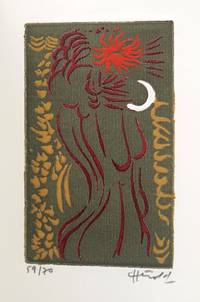
Lettre au citoyen Gaufridy
Saint Pierre Kapelle Saint-Pierre-Capelle: Lettera amorosa 1972. Fine. Lettera amorosa Saint Pierre Kapelle Saint-Pierre-Capelle 1972 9 x 13 cm en feuilles First edition printed in 56 copies ours being one of the 43 numbered copies on Holland paper. Handsome copy. Rare booklet illustrated with a frontispiece by Jacques Hérold which he signed and justified. Lettera amorosa unknown
Riferimento per il libraio : 85863
|
|
|
Donatien Alphonse Francois de SADE
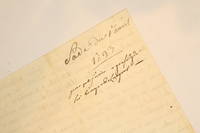
Lettre autographe inédite signée du Marquis de Sade alors en liberté au commencement de la Terreur Unpublished autograph letter signed by the Marquis de Sade then at liberty at the beginning of the Terror
1793. Fine. 1er avril 1793 15.60 x 20 cm une page sur un feuillet Unpublished autograph letter signed and dated written in black ink and addressed to a notary. On the verso probably in the hand of a secretary the inscription ""Sade du 1er avril 1793""; below this inscription a short sentence in the Marquis's hand: ""so that I may write to Gaufridy to send him money"". Some transverse folds from the original folding for posting. Lengthy letter addressed to a notary while the Marquis freed on April 2 1790 by the abolition of royal warrants is at liberty and attempting to put his affairs in order. After the Revolution his sons emigrated and he did not follow them. His name nevertheless appears on the list of persons who left France due to the revolutionary troubles: ""I hope that with all this I will manage to have my name erased from that fatal list of émigrés."" Anxious not to be considered a ci-devant Marquis in this period preceding the Terror he insists on the persecution of which he claims to be a victim despite his good will: ""It is an unparalleled atrocity that such a trick should have been played on me who have not left Paris since the revolution and who since that time have not ceased to give the most unequivocal proofs of my patriotism"". In this letter Sade also denounces the complexity of the workings of the French administration after the Revolution: ""I have just sent M. Lions the appropriate certificate of residence and I have attached a petition to the district which he tells me is . essential."" Impecunious he begs his lawyer ""to excite the zeal of those who owe him and to urge them to pay as much money as they collect immediately to M. Gauffridi sic"" and does not hesitate to show himself obliging in order to achieve his ends: ""spare no effort then I beseech you . always preserve for me your care and your friendship . I embrace and greet you with all my heart."" Sade's efforts would prove futile; in December 1793 he was imprisoned at the Madelonnettes before being admitted through the good offices of his friend Mme Quenet to the Coignard de Picpus establishment a nursing home sheltering wealthy suspects. Interesting unpublished letter showing the unfortunate Marquis at bay during one of his rare moments of freedom. unknown
Riferimento per il libraio : 73394
|
|
|
Donatien Alphonse Francois de SADE - ANONYME
Liste du Théâtre français et du Théâtre italien
1790. Fine. s. d. circa 1790 16 x 20.10 cm 3 pages sur un double feuillet List of 38 plays 15 plays performed at the Théâtre-Français and 23 at the Comédie-Italienne probably written by one of the Marquis's secretaries. Annotations erasures deletions and corrections in the Marquis de Sade's hand. This list corresponds to theatrical plays performed from 1783 to 1785 at the Théâtre français present-day Théâtre de l'Odéon and at the Théâtre italien known today as the Opéra-Comique or Salle Favart. The Marquis was in the habit of having the Almanach des spectacles sent to him each year in order to keep informed of current events on the Parisian stage. Thus in a letter of December 1784 to his wife Renée-Pélagie he requests: ""Liste d'objets dont j'ai besoin. . Deux almanachs . des spectacles. Les comédies ou tragédies nouvelles de l'année de l'un et l'autre spectacles. J'en ai d'autant plus besoin cette année que j'ai prodigieusement travaillé dans l'un et l'autre genre et que je ne puis me passer de ce qui paraît pour m'instruire et vérifier."" ""List of objects I need. . Two almanacs . of spectacles. The new comedies or tragedies of the year from both theaters. I need them all the more this year as I have worked prodigiously in both genres and I cannot do without what appears to educate myself and verify."". All the plays listed in this inventory appear in the theatrical almanacs reproduced by Sylvie Dangeville in her work Le Théâtre change et représente Honoré Champion Paris 1999. Anxious to maintain a link with the outside world the Marquis ordered enormous quantities of works notably brochures of freshly published theatrical plays. Thus in 1775 in a letter to the Widow Duchesne a famous Parisian bookseller-publisher he requests: ""Pour l'intelligence du billet ci-joint Madame Duchesne est priée de jeter les yeux sur l'Almanach des Spectacles article pièces nouvelles et en conséquence elle voudra bien remettre au présent porteur tout ce qui a été imprimé à l'un ou l'autre spectacle savoir du Théâtre français depuis l'Hôtellerie ou le faux ami et du Théâtre italien depuis l'Amitié au village l'un et l'autre inclusivement si elles sont imprimées ou exclusivement si elles ne le sont pas jusqu'à l'époque de la clôture des spectacles. Le porteur n'a qu'un louis ; si les pièces montaient à une somme plus forte Madame Duchesne enverrait d'abord pour cette somme et ferait dire celle qu'il faudrait envoyer le lendemain pour avoir le total."" ""For the understanding of the enclosed note Madame Duchesne is requested to cast her eyes on the Almanach des Spectacles article 'new plays' and consequently she will kindly give to the present bearer everything that has been printed at one or the other theater namely from the Théâtre français since 'l'Hôtellerie ou le faux ami' and from the Théâtre italien since 'l'Amitié au village' both inclusively if they are printed or exclusively if they are not up to the time of the theaters' closure. The bearer has only one louis; if the plays amounted to a greater sum Madame Duchesne would send first for this sum and would have announced the amount that would need to be sent the next day to have the total."". The ""note"" referred to at the beginning of the letter is very likely the list we are offering; the two titles to which the Marquis refers appear in it. Rare and precious list cataloguing the works read by the Marquis at the beginning of his incarceration at the Bastille starting point of his prolific literary production. Provenance: family archives. unknown
Riferimento per il libraio : 59474

|
|
|
Donatien Alphonse Francois de Sade
Los Crímenes del Amor
Paperback. New. New Book; Fast Shipping from UK; Not signed; Not First Edition; N/A paperback
Riferimento per il libraio : ria9791041934751_inp ISBN : 9791041934758 9791041934

|
|
|
Donatien Alphonse Francois de Sade Noelle Chatelet
Sade: Systeme de L'Agression: Choix de Textes Philosophiques
Paris: Aubier-Montaigne 1972. Price HAS BEEN REDUCED by 10% until Monday June 29 weekend SALE item 246 pp. paperback light wear to covers else text clean & binding tight. - If you are reading this this item is actually physically in our stock and ready for shipment once ordered. We are not bookjackers. Buyer is responsible for any additional duties taxes or fees required by recipient's country. Paris: Aubier-Montaigne paperback
Riferimento per il libraio : ZB1265401 ISBN : 0626010004 9780626010003
|
|
|
Donatien Alphonse Francois de Sade
Zoloë Classic Reprint
hardcover. Good. Access codes and supplements are not guaranteed with used items. May be an ex-library book. hardcover
Riferimento per il libraio : 026077880X.G ISBN : 026077880X 9780260778802

|
|
|
Donatien Alphonse Francois de SADE
« Faire noyer vive l'exécrable coquine qui depuis neuf ans . suce mon sang. » Autograph letter to his wife. Tributes to the President
s. l. Vincennes 1781. Fine. s. l. Vincennes s. d. circa 1781 15.70 x 20.10 cm une feuille SADE Donatien Alphonse François Marquis de Autograph letter to his wife. Hommages à la Présidente: Faire noyer vive l'exécrable coquine qui depuis neuf ans . suce mon sang. N. p. Vincennes Castle n. d. circa 1781 157 x 201 mm 6 3/16 x 7 15/16 single leaf The more I think about it however the more I think you have to have quite a nerve to dare write to a poor suffering unfortunate. Autograph letter unsigned from the Marquis de Sade to his wife. One page closely written in ink on 31 lines. This letter was written during Sade's imprisonment at Vincennes probably in April 1781 if one is to believe the occasional indicators of date referenced by the writer. Sade mentions the end of his exile from Marseilles referring to the decision of the court in Aix-en-Provence to overturn his conviction for debauchery and libertinage on the 14 July 1778 but which nonetheless banned him from living in or visiting Marseilles for three years. Sade also mentions one of the defining episodes of his life his flight to Italy between January and November 1776: they may as well have killed me straight off as left me in that foreign country where I was. Sade also mentions the amazing favor that befell him of moving house which is to say his potential transfer to the fort at Montélimar. In April 1781 Madame de Sade through the good offices of her friend Madame de Sorans got authorization from the King for her husband to be transferred to the prison there. Sade explains in the letter: I think you have to have quite a nerve to dare write to a poor suffering unfortunate who has been beset these nine years.telling him to thank ever so humbly the woman who obtained for him the amazing favor of moving house. Sade is here no doubt referring to the famous Madame de Sorans a lady of Louis XVI's sister's bedchamber and a friend of his wife's who out of a spirit of adventure accepted the task of petitioning the King in his favor. It was to Commissioner Le Noir referenced in this letter that Renée-Pélagie left the task of breaking the news to the prisoner: Ah I see now what this nice little visit by M. Lenoir means I'm used to seeing him in the middle of my incarcerations. Despite the fact that as Pauvert points out in Sade vivant this change of house occupied the Marquis' thoughts to a large extent he was never actually moved preferring to stay in the gaols of the keep at Vincennes. At this point Sade had been imprisoned for several years and this letter full of movement reveals his thirst for freedom. This letter was written when Madame de Sade withdrew to the convent at Sainte-Aure. If she saw this act as a liberation from the yoke of her marriage the Marquis for his part was obsessed by the idea of his own liberation and mentions a potential date: October 1783. His long incarceration which began in 1777 would last till April 1790 when lettres de cachet were abolished. Madame de Sade's visits were not reauthorized by the prison authorities until 13 July 1781 after four years and five months of separation. Several important themes in Sade's correspondence already appear in this letter from his first years in prison. First of all his hatred for his mother-in-law the Présidente de Montreuil an execrable wretch who drinks my blood.disgraces her children who has not yet done scattering her horrific deeds and platitudes and whom he would like to drown alive. The Marquis also complains of his poor physical health: my head spins and in my condition I hardly need any more misery using very Sadean epithets to express his despair. A poor suffering unfortunate who has been beset these nine years; what have I done what have I done dear Lord to suffer for twelve years. Provenance: family archives. unknown
Riferimento per il libraio : 59108

|
|
|
Donatien Alphonse Francois de SADE
« si l'on pouvait lire au fond de mon cur voir tout ce qu'elle y opère cette conduite-là je crois qu'on renoncerait à l'employer ! » Autograph letter to his wife. Suffering and philosophy
s. l.: S. n. 1780. Fine. S. n. s. l. 17 août 1780 10 x 16 cm 2 pages sur un feuillet Handwritten letter to his wife. Sufferance and philosophy: Punish as much as you like but do not kill me: I did not deserve it . Ah! If you could read to the bottom of my heart see everything that happens there I think you would give up using it!August 17 1780 10 x 16 cm loose leaves Handwritten letter from the Marquis de Sade addressed to his wife. One recto-verso leaf written in fine tight writing. It has the partial date at the top ce jeudi 17 this Thursday 17th. Two slight signs of folding. The end of the letter was mutilated at the time probably by the prison administration which destroyed the Marquis' licentious correspondence. So several months later in March 1781 his wife wrote to him: My dear you really must change your style so that your letters can reach me whole. If you give the truth it offends turns against you. If you give any untruths they say: this is an incorrigible man always with the same head that ferments ungrateful false etc. In any case your style can only harm you. So change it. The letter was found as it was when in 1948 the Marquis' trunk that had been sealed by the family since 1814 was open and it was published in this reduced form in the correspondence of the Marquis de Sade. Provenance: family archives. This letter was written on 17 August 1780 during the Marquis' incarceration in Vincennes Prison. Following the umpteenth altercation with the prison guard the right to go for a walk was taken away from him on 27 June and was not reinstated until 9 March the following year. The Marquis' physical and mental health is strongly affected by not being able to go out and he constantly begs Renée-Pélagie for the right to be quickly reinstated: I urge you to let me get some fresh air: I absolutely cannot take it any longer. The suffering caused by these deprivations is a pretext for setting up a mechanism of guilt and blackmail with his wife: There three days that I have felt an awful dizziness with blood rushing to my head so much so that I do not know how I have not fainted. One of these days they will find me dead and you will be responsible after having warned you as I do and having asked you for the help which I need to avoid it. Here the Marquis is intentionally pulling on Renée-Pélagie's heartstrings really putting her Christian values to the test and giving her the role of grand inquisitor: You can grant me what I ask for whilst keeping on your signal the same strength. We note as in Tancrède's letter a new appearance of signal which masks completely different semantics. An essential component of the Marquis' prison mindset this encoded language like the fantasised interpretations of his correspondents' letters feeds the theories of researchers philosophers mathematicians. and poet biographers. As such Gilbert Lely estimates that far from being symptomatic of psychosis the return to signals is his psyche's defence reaction a subconscious struggle against despair where without the help of such a distraction his motivation could have declined. Missing from his correspondence during his eleven years of freedom these enigmatic semantic depths a real challenge to semiological judgement Lever p.637 reappear in his Charenton diary. This letter is also an opportunity for the Marquis to deploy his rhetorical panel confronting the sadistic antonyms in the same sentence. Pleasure is synonymous with abominable revolting cemeteryand garden are superimposed I suffer is conjugated as I enjoy and softness stands alongside darkness. The mastered practice of this eloquence exercise is united with the depths of Sadian thought: sufferance and pleasure are closely mixed simultaneously endured inflicted and desired. Through these associations we glimpse the sensitive Manicheism of the Marquis's philosophical thought which reaches its climax at the S. n. unknown
Riferimento per il libraio : 59110

|
|
|
Donatien Francois Marquis de Sade
Justine German Edition
paperback. Good. Access codes and supplements are not guaranteed with used items. May be an ex-library book. paperback
Riferimento per il libraio : 3741282383.G ISBN : 3741282383 9783741282386

|
|
|
Donatien-Alphonse-Francois, marquis de SADE
Long and powerful letter from the Marquis de Sade just after his release from the hospice of Charenton. He shouts with rage the injustice done to him by his in-laws these “monsters†and mourns the loss of his precious manuscripts – including The 120 Days of Sodom – during the storming of the Bastille the previous year.
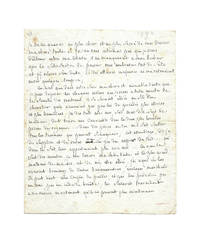
<p><strong>SADE </strong><strong>Donatien-Alphonse-François marquis de 1740-1814</strong></p><p>Autograph letter signed "de Sade" to his aunt Gabrielle-Eléonore de Sade N.p 22nd April 1790 3 pp. in-8vo</p><p><strong>Long and powerful letter from the Marquis de Sade just after his release from the hospice of Charenton. He shouts with rage the injustice done to him by his in-laws these "<em>monsters</em>" and mourns the loss of his precious manuscripts – including <em>The 120 Days of Sodom</em> – during the storming of the Bastille the previous year.</strong></p><p><strong><em>"</em></strong><em>M</em><strong><em>y room was searched and I lost everything. precious works the fruit of fifteen years' work I have saved nothing. and all this through the fault of those wretched rascals whom I hope God will one day avenge me"</em></strong></p><p><em>" Je manquerais au plus cher et au plus sacré de mes devoirs ma chère tante si je ne vous informais pas que <strong>je viens d'obtenir enfin ma liberté </strong>; il ne manquerait à mon bonheur que la satisfaction de pouvoir vous embrasser tout de suite et j'y volerai sans doute si des affaires majeures ne me retenaient encore quelque temps ici.</em><em><br />Ce n'est que dans votre sein ma chère et aimable tante que je puis déposer les chagrins violents que je reçois à toutes minutes de ma famille de Montreuil ; ils se seraient alliés au fils d'un charretier qu'ils n'auraient pas pour lui de procédés plus atroces et plus humiliants. J'ai des torts avec eux soit mais <strong>dix-sept</strong></em> ans <strong><em>de malheur dont treize ans consécutifs dans les deux plus horribles prisons du royaume… dans des prisons où l'on m'a fait souffrir tous les tourments qui peuvent s'imaginer</em></strong><em> <strong>cet assemblage dis-je de supplices et de revers n'a-t-il pas dû expier ses torts…</strong> <strong>qui dans le fait leur appartenaient plus qu'à moi</strong>. <strong>Ces gens-là sont des monstres</strong> je vous l'assure ma chère tante et le plus grand malheur de ma vie est de m'y être allié ; j'ai acquis en les épousant beaucoup de cousins banqueroutiers quelques marchands du Pont Neuf un couple de pendus et pas une protection pas un ami pas un individu honnête ; <strong>les scélérats travaillent à me ruiner maintenant qu'ils ne peuvent plus m'enfermer</strong>. Ils veulent me séparer d'avec ma femme et comme dans les commencements de mon mariage ils me facilitaient exprès des déplacements sur la dot il faut maintenant que mon bien réponde de ces déplacements et cela me ruine. Il va me rester à peine de quoi vivre et moi qui ne m'étais marié que pour trouver une société dans ma maison quand je vieillirais me voilà délaissé abandonné isolé et réduit au triste destin dans lequel mon malheureux père a fini ses jours de toutes les positions de la vieillesse celle que je redoutais le plus dans le monde.</em><em><br />Par un de ces plats coquins là excepté mes enfants dont je n'ai qu'à me louer pas un dis-je ne m'a seulement tendu la main quand je suis sorti de prison. <strong>Je me suis trouvé au milieu de Paris avec un louis dans ma poche sans savoir où aller manger et dormir</strong> sans savoir qui me donnerait un écu quand mon louis serait fini et ne recevant que des vilaines gens que j'implorais que des rebuffades et de mauvais compliments ; <strong>porte fermée chez tous et principalement chez ma femme ce qui est le comble de l'horreur </strong>; non non ma chère tante jamais on n'a vu de procédés pareils je vous le répète ou n'en imagina jamais de semblables.</em><strong><em><br />J'avais quelques meubles un peu de linge beaucoup de livres et plus de quinze volumes d'ouvrages manuscrits de ma composition fruits des travaux de ma solitude ; par une négligence ou plutôt une incompréhensible méchanceté ces vilaines gens m'ont laissé prendre tout cela au siège de la Bastille. Ils venaient de peur que je n'eusse ma liberté à cette époque de m'en faire sortir pour aller dans une autre prison. Ils n'ont jamais voulu que je prisse mes effets avec moi ; ils ont fait mettre le scellé sur la porte huit jours après est venu le siège ma chambre a été enfoncée et j'ai tout perdu… des ouvrages précieux le fruit du travail de quinze ans je n'ai rien sauvé… et tout cela par la faute de ces misérables coquins dont j'espère que Dieu me vengera un jour.</em></strong><em><br />Pardon ma chère et bonne tante vous que j'ai toujours adorée mille et mille pardons de vous ennuyer si longuement de moi mais j'ai tant de chagrin dans le cœur qu'il m'est impossible de ne pas le confier à une aussi bonne et si chère amie que vous. Je vous supplie de m'écrire de me parler de votre santé de me dire si vous m'aimez encore un peu et d'être bien persuadée que vous n'avez au monde personne qui vous soit plus tendrement et plus respectueusement attachée que moi.</em><em><br />Je vous prie de me rappeler dans le souvenir de celle de mes tantes et de mes cousines que j'ai le bonheur de conserver encor sans oublier Madame de Raousset avec laquelle je vous prie de me raccommoder s'il lui restait encore quelque chose sur le cœur contre moi. </em><em><br />Je vous assure ma chère tante de mon profond respect de Sade. "</em></p><p>Written from 1782 on the manuscript of<em>The 120 Days of Sodom</em> was entirely assembled by Sade in his cell at the Bastille. Every evening between 22 October and 28 November 1785; he copied his drafts on thirty-five pieces of paper eleven centimeters wide which glued end-to-end formed a roll twelve meters long and written on each side. Protected by a leather case the manuscript was hidden between two stones of his cell.
On July 2 1789 twelve days before the storming of the Bastille Sade revolted:</p><p>"<em>He sat at his window yesterday at noon and shouted with all his rage and was heard from the whole neighborhood and passers-by that the prisoners of the Bastille were being slaughtered that the prisoners of the Bastille would be murdered and that they had to come to their rescue"</em> reports the Marquis de Launay governor of the Bastille. He obtained the immediate transfer of Sade to the asylum in Charenton. Sade was released the following year on 2 April 1790.</p>
Riferimento per il libraio : Sade1
|
|
|
Donatien-Alphonse-Francois de Sade
Werke 2-3 : Justine oder Die Leiden der Tugend / Juliette oder Die Wonnen des Lasters 1 Donatien-Alphonse-François de Sade
Könemann 1995. 1995. Werke 2-3 : Justine oder Die Leiden der Tugend / Juliette oder Die Wonnen des Lasters 1 <br/><br/>Werke 2-3 : Justine oder Die Leiden der Tugend / Juliette oder Die Wonnen des Lasters 1 Donatien-Alphonse-François de Sade Könemann unknown
Riferimento per il libraio : BN136621 ISBN : 3895080853 9783895080852
|
|
|
Dubout [, Albert] (Ill) - sade
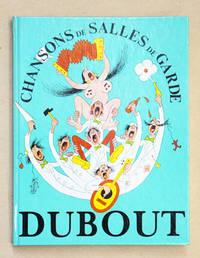
Chansons de salles de garde.
o.O. Editions Michèle Trinckvel 1981. 4° 203 S. zahlr. farb. Abb. Kart. Min berieben tadell. Text: franz. 010 o.O., Editions Michèle Trinckvel, 1981 unknown
Riferimento per il libraio : 95392
|
|
|
Dubout [, Albert] (Ill) - Sade
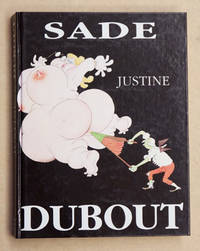
Justine.
o.O. Editions Michèle Trinckvel 1992. 4° 321 S. zahlr. farb. Abb. Kart. Min berieben tadell. Text: franz. Dieses Buch befindet sich in unserem Aussenlager; sollten Sie dieses im Laden abholen wollen bitten wir Sie um vorgängige Nachricht. 010 o.O., Editions Michèle Trinckvel, 1992 unknown
Riferimento per il libraio : 95391
|
|
|
DUEHREN Eugène (Dr) (pseudon. d'Iwan Bloch)
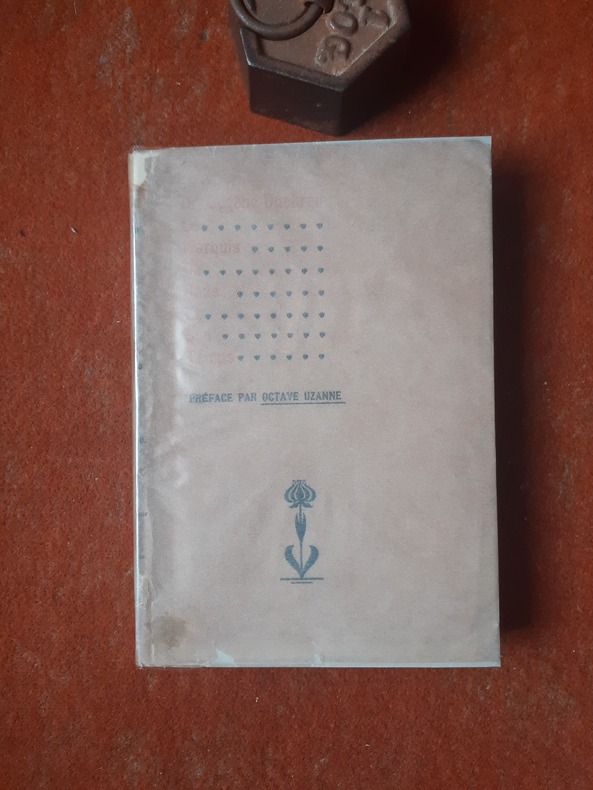
Le Marquis de Sade et son temps - Etudes relatives à l'histoire de la civilisation et des moeurs du XVIIIe siècle - Avec une préface : "L'idée de Sadisme et l'érotologie scientifique" par Octave Uzanne
Berlin, H. Bardorf / Paris, A. Michalon, 1901, in-8 br. (15 x 21,5), XXXIII-501p., 1ère édition française, traduit de l'allemand par le Dr A. Weber-Riga, dos comportant des manques papier en tête et en pied, brochage néanmoins solide pour cet exemplaire très propre intérieurement, sous couverture plastifiée de protection, assez bon état.
Riferimento per il libraio : QWA-17558
|
|
|
DUEHREN Eugène
Le Marquis De Sade et Son Temps, &tudes Relatives à L'histoire De La Civilisation et Des Moeurs Du XVIIIème Siècle
Berlin et Paris Barsdorf et Michalon 1901 In-12 carré traduit de l'Allemand par le Dr A. Weber-Riga. Avec une préface : l'idée de sadisme et l'Érotologie scientifique. Couverture restaurée, sans gardes ni faux-titre ,XXVIII- 501 pp
Riferimento per il libraio : 27090
|
|
|
Dufourmantelle, Anne
Blind Date. Sexe et Philosophie
Mm 110x210 Brossura originale, 221 pagine. Ottima copia mai letta. Spedizione in 24 ore dalla conferma dell'ordine.
|
|
|
DUPE
PLAIDOYERS POUR LES MAUDITS
Un ouvrage de 218 pages, format 165 x 240 mm, illustré, broché couverture couleurs, publié en 1978, Editions Alain Lefeuvre, collection "Plaidoyer"
Riferimento per il libraio : LFA-126733525
|
|
|
Dühren, Eugen
Der Marquis de Sade und seine Zeit. Ein Beitrag zur Kultur- und Sittengeschichte des 18. Jahrhunderts. Mit besonderer Beziehung auf die Lehre von der Psychopathia Sexualis.
Berlin, Hermann Barsdorf Verlag, 1927. 9.Aufl. XII., 538 S. 8°, OLn. (Rückentitel abgeblättert)
Riferimento per il libraio : 24394
|
|
|
DÜHREN, Eugen (d.i. Iwan Bloch)
Der Marquis de Sade und seine Zeit. Ein Beitrag zur Kultur- und Sittengeschichte des 18. Jahrhunderts. Nachdruck mit einem Vorwort von E(itel) F(riedrich) Ziehlke. -
Hanau/Main: Karl Schustek (c 1970). X,496 Ss., 1 Bl. 8°. Schwarze Pp. mit hellgrauem Rückentitel u. illustr. Umschl. (kl. Umschlag-Randeinrisse hinterlegt).
Riferimento per il libraio : 82799

|
|
|
Dühren, Eugen [i.e. Iwan Bloch]
Der Marquis de Sade und seine Zeit. Ein Beitrag zur Kultur- und Sittengeschichte des 18. Jahrhunderts. Mit besonderer Beziehung auf die Lehre von der Psychopathia Sexualis. 9. Auflage.
Berlin, Barsdorf, 1927. 8°, XII, 538 Seiten. Orig.Leinen mit Goldprägung.
Riferimento per il libraio : 8845
|
|
|
Dühren, Eugen d.i. Iwan Bloch
Neue Forschungen über den Marquis de Sade und seine Zeit. ( NACHDRUCK / Reprint ). mit besonderer Berücksichtigung der Sexualphilosophie de Sade's auf Grund des neuentdeckten Original-Manuskriptes seines Hauptwerkes "Die 120 Tage von Sodom" ; mit mehreren bisher unveröffentlichten Briefen und Fragmenten.
Berlin: Max Harrwitz, 1904. XXXII, 488 S. 19,5 cm; kart.
Riferimento per il libraio : 1244264

|
|
|
EEKHOUD, Georges
MES COMMUNIONS. Eaux-fortes et dessins de Frans de Geetere
Paris, "Collection des chefs-d'œuvre" La Connaissance, 1925. 1 volume in-12 broché, 329 pp. + fnch., couverture illustrée rempliée imprimée en noir et rouge. Edition illustrée de 5 eaux-fortes hors-texte et dessins en noir dans le texte par FRANS DE GEETERE. Tirage à 750 exemplaires. Celui-ci 1 des 640 sur vélin de Rives enrichi d'une suite à part des dessins in-texte.
Riferimento per il libraio : 1283
|
|
|
Einleitung Klaus Vierneisel, Kataloggestaltung Pavel Schmidt
Sadedas. Galerie Gruppe Art Contact, Karlsruhe 27. Mai bis 24. Juni 1989. Galerie Fred Jahn, München 7. Juli bis 5. August 1989. Galerie Klein, Bonn 25. August bis 27. September 1989.
Autoren und Anderland Verlag, München 1989. Hartkarton Tadellos
Riferimento per il libraio : 023698

|
|
|
ELUARD (Paul). PARROT (Louis). MASSON (André). KLOSSOWSKI (Piperre). SOLIER (René de). TORTEL (Jean). BELAVAL (Yvon). (SADE). PAULHAN (Jean). ROY (Claude). FRAENKEL (Michael). IBN HAZM. AVELINE (Claude). BOUSQUET (Joë). TORTEL (Pierre). NELLI (René).
Cahiers du Sud. N°285. 2ème semestre 1947.
Marseille, directeur: Jean Ballard. Un volume de 180 pages. Exemplaire en bon état.
Riferimento per il libraio : 46852

|
|
|
Erotika - Sade, Marquis de
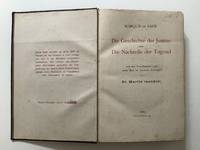
Die Geschichte der Justine oder Die Nachteile der Tugend.
1906. Band 2 von 2 O.O. Privatdruck 1906. 245 : 17 cm. 2 Blatt 419 Seiten. Weinroter flexibler Original-Leder-Band. Erste deutsche Ausgabe. Eines von 550 in der Maschine numerierten Exemplaren mit der ausdrücklichen Verpflichtung gegenüber den Subskribenten niemals einen Nachdruck zu veranstalten. Titel in Rot und Schwarz gedruckt. Der Name des Übersetzers ist ein Pseudonym für Richard Fiedler. "Heute gehört dieser Band zu den großen literarischen Seltenheiten" Stern-Szana 105 bemerkte dies schon vor über 100 Jahren. - Unbeschnitten. - Hayn-Got. IX 518. Bereits der Druck dieses Werkes gestaltete sich schwierig es mußte in verschiedenen Druckereien gedruckt werden. Hieraus resultiert auch das unterschiedliche Druckbild. Nach Erscheinen hatte das Werk eine wahre Odyssee durch Europa zu meistern immer auf der Flucht vor den Pornographiejägern. Sehr viele Exemplare haben das wohl nicht überlebt. Die dt. Erstausgabe von Justine und Juliette ungleich seltener als etwa die "120 Tage von Sodom". - Schnitt un Titelblatt etws stockfleckig. unknown
Riferimento per il libraio : 14242AB
|
|
|
Eulenburg, Albert; Kent, Harold [Translator]; Michaels, Richard [Foreword]
Sadism and Masochism: Algolagnia - The Psycholgy, Neurology and Physiology of Sadistic Love and Masochism
188 pages. Bibliography. Black and white illustrations and reproductions of photos. English translation of the 1902 German first edition. "A physiological, psychological and neurological study of the phenomena of sadism and masochism. Explores the factors that contribute to algolagnia and discusses its history through the ages. Includes explanations of the actual implements and devises used in algolagnia, as well as descriptions that serve to define the practices of sadism and masochism. A complete bibliography allows for further research." - dust jacket. Clean and unmarked with light wear. Binding tight. Dust jacket now preserved in archival-grade Brodart. A high-quality copy. Book

|
|
|
Expert : Soizic Audouard
De la bibliothèque Tristan Tzara.
Paris Drouot, étude Loudmer. 1989 In-4 Cartonnage, jaquette illustrée Edition originales
Riferimento per il libraio : 007561
|
|
|
FABRE Jean
Idées Sur Le Roman De Madame De Lafayette Au Marquis De Sade
Paris Editions Klincksieck 1979 16x23 319 pages - le bord supérieur de la couverture est endommagé par une petite déchirure et une légère marque de coup - annotations au crayon de papier et de couleur
Riferimento per il libraio : 30Ab
|
|
|
FABRE Jean
Idées Sur Le Roman De Madame De Lafayette Au Marquis De Sade
Paris Editions Klincksieck 1979 16x23 319 pages - le bord supérieur de la couverture est endommagé par une petite déchirure et une légère marque de coup - annotations au crayon de papier et de couleur
Riferimento per il libraio : 30Ab
|
|
|
FAUVILLE Henri
La Coste, Sade en Provence
Aix-en-Provence, Edisud, 1984, in-8 br. (16 x 24), 252 p., préface de Michel Vovelle, 21 photographies, 10 plans, bon état.
Riferimento per il libraio : QWA-19200

|
|
|
Ferrier, Sade'
Shaken
paperback. Good. Access codes and supplements are not guaranteed with used items. May be an ex-library book. paperback
Riferimento per il libraio : 1609574699.G ISBN : 1609574699 9781609574697

|
|
|
FINAS (Lucette).
Le bruit d'Iris.
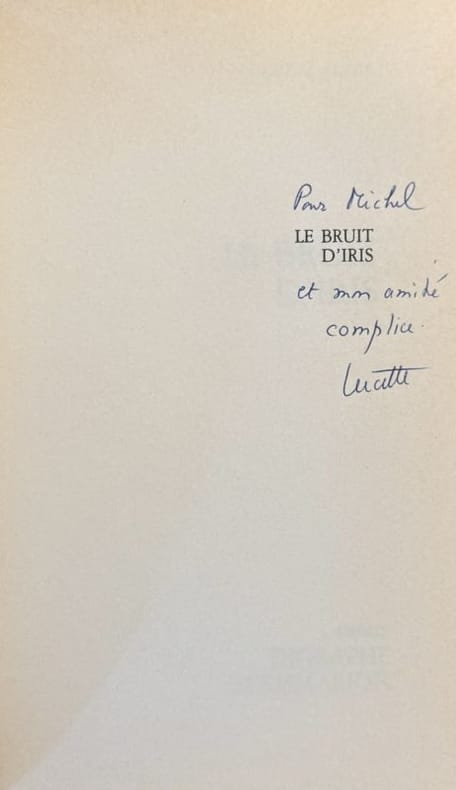
Paris Flammarion, coll. "Digraphe" 1979 1 vol. broché in-8, broché, couverture illustrée, 322 pp. Edition originale en service de presse avec un envoi de l'auteur à un poète et critique. Recueil d'études sur Sade, Nerval, Villiers, Mallarmé, Claudel, Bataille, Sarraute, Derrida, Cixous et Deguy. Bon état.
Riferimento per il libraio : 120820
|
|
|
FINAS (Lucette).
Le bruit d'Iris.
Paris Flammarion, coll. "Digraphe" 1979 1 vol. broché in-8, broché, couverture illustrée, 322 pp. Edition originale en service de presse avec un envoi de l'auteur à un poète et critique. Recueil d'études sur Sade, Nerval, Villiers, Mallarmé, Claudel, Bataille, Sarraute, Derrida, Cixous et Deguy. Bon état.
Riferimento per il libraio : 120820
|
|

 Ricevere i risultati per e-mail
 Scaricare i risultati in PDF
 RSS feed
 Link
Link


