|
|
|
CECILE & JOMARD Edme-François & BALTARD (sculpsit)
DESCRIPTION DE L'EGYPTE. Syout (Lycopolis). Plan, coupe, élévation et détails d'un hypogée, Vues de deux hypogées. (ANTIQUITES, volume IV, planche 46)
- Imprimerie Impériale, Paris 1809-1829, 54x71cm, une feuille. - Original, unshaved, full-page etching from the "Imperial edition" of the Description de l'Égypte, or 'Recueil des observations et recherches faites en Égypte pendant l'expédition française, publié par les ordres de Sa Majesté l'Empereur Napoléon le Grand [A Collection of the observations and research carried out in Egypt during the French expedition, published on the orders of his Majesty the Emperor Napoleon the Great]'. Produced between February 1802 and 1830 on the orders of Naopleon Bonaparte and published between 1809 and 1828, 1,000 copies were printed and distributed to institutions, on vergé paper with an 'Égypte ancienne et moderne' watermark, visible when held up to the light. Light marginal spotting not touching image, otherwise in very fresh, fine condition. An engraving from the Description de l'Egypte, one of the masterpieces of French printing and the birth of a new field: Egyptology. A gigantic survey of Egypt at the time of Bonaparte's conquests in 1798 and 1799, the work is divided into 13 volumes of engravings making up 892 plates, of which 72 colored, as well as presenting the splendors of the Egypt of the Pharaohs in 9 volumes. The other volumes discuss natural history and present a fascinating portrait of Coptic and Islamic Egypt as it was seen by Bonaparte's Eastern Armies. The 'Egyptian campaign', militarily a disaster, demonstrates, through the engravings of the Description d'Egypte, the scientific success it nonetheless became thanks to the 167 expert members of the Commission of the Sciences and Arts of the Institut d'Egypte [Egyptian Institute] who followed Napoleon's army. The Institut gathered together in Egypt the mathematician Monge, the chemist Berthollet, the naturalist Geoffroy Saint-Hilaire as well as numerous artists, engineers, architects and doctors. They were tasked with re-discovering modern and ancient Egypt and displaying its natural treasures as well as the know-how of its inhabitants. This edition, the so-called "Imperial" edition of the plates for the Description de l'Egypte was printed in four large formats, two of which were specially created for it and christened "Moyen-Egypte" and "Grand-Egypte". A special press was built to print it, the process extending over 20 years, from 1809 to 1829. The "Imperial" edition proved so popular that a second edition, this time in black and white and without the "Egypte ancienne et moderne" watermark - known as the "Royal Edition" - was published during the Restoration by the printing house of C.-L.-F. Panckoucke (Paris). The engravings of the Description d'Egypte owe a great deal to Baron Dominique-Vivant Denon, illustrator, diplomat, collector and later Director of the Musée Napoléon (the Louvre). His exploration of the South of Egypt gave Bonaparte the idea of sending the experts of the Institut there, thus creating a faithful and complete portrait of the area. This was the research gathered together from 1802 in the mammoth Description de L'Egypte. Denon embarked on this story of archeological exploration at the age of 51, reaching first Alexandria and then Cairo before exploring Upper Egypt. Along with the members of the Institut d'Egypte, the Natural History Museum's painter H.J. Redouté (brother of Pierre-Joseph Redouté, author of Roses), the mineralogist Dolomiue, and the draughtsman Joly, Denon then explored the Nile Delta and Lower Egypt. When, however, he joined the 21st Light Infantry Regiment as it marched across Upper Egypt in pursuit of the retreating Mameluks in November 1798, he found himself the only civilian. In the very midst of the battle itself, he reeled off sketches of the works of art that peppered his path right up to the threshold of the Sudan. He said that he had crossed "a country that is, apart from its name, entirely unknown to Europeans, and therefore everything was worth describing" (Voyages dans la Basse et la Haute Egypte pendant le

|
|
|
CECILE & JOMARD Edme-François & LANCRET & PHELIPPEAUX (sculpsit)
DESCRIPTION DE L'EGYPTE. Ile de Philae. Bas-reliefs et autres sculptures du temple de l'ouest, Détails de hiéroglyphes du même temple. (ANTIQUITES, volume I, planche 23)
- Imprimerie Impériale, Paris 1809-1829, 54x71cm, une feuille. - Original, unshaved, full-page etching from the "Imperial edition" of the Description de l'Égypte, or 'Recueil des observations et recherches faites en Égypte pendant l'expédition française, publié par les ordres de Sa Majesté l'Empereur Napoléon le Grand [A Collection of the observations and research carried out in Egypt during the French expedition, published on the orders of his Majesty the Emperor Napoleon the Great]'. Produced between February 1802 and 1830 on the orders of Naopleon Bonaparte and published between 1809 and 1828, 1,000 copies were printed and distributed to institutions, on vergé paper with an 'Égypte ancienne et moderne' watermark, visible when held up to the light. Light marginal spotting not touching image, otherwise in very fresh, fine condition. An engraving from the Description de l'Egypte, one of the masterpieces of French printing and the birth of a new field: Egyptology. A gigantic survey of Egypt at the time of Bonaparte's conquests in 1798 and 1799, the work is divided into 13 volumes of engravings making up 892 plates, of which 72 colored, as well as presenting the splendors of the Egypt of the Pharaohs in 9 volumes. The other volumes discuss natural history and present a fascinating portrait of Coptic and Islamic Egypt as it was seen by Bonaparte's Eastern Armies. The 'Egyptian campaign', militarily a disaster, demonstrates, through the engravings of the Description d'Egypte, the scientific success it nonetheless became thanks to the 167 expert members of the Commission of the Sciences and Arts of the Institut d'Egypte [Egyptian Institute] who followed Napoleon's army. The Institut gathered together in Egypt the mathematician Monge, the chemist Berthollet, the naturalist Geoffroy Saint-Hilaire as well as numerous artists, engineers, architects and doctors. They were tasked with re-discovering modern and ancient Egypt and displaying its natural treasures as well as the know-how of its inhabitants. This edition, the so-called "Imperial" edition of the plates for the Description de l'Egypte was printed in four large formats, two of which were specially created for it and christened "Moyen-Egypte" and "Grand-Egypte". A special press was built to print it, the process extending over 20 years, from 1809 to 1829. The "Imperial" edition proved so popular that a second edition, this time in black and white and without the "Egypte ancienne et moderne" watermark - known as the "Royal Edition" - was published during the Restoration by the printing house of C.-L.-F. Panckoucke (Paris). The engravings of the Description d'Egypte owe a great deal to Baron Dominique-Vivant Denon, illustrator, diplomat, collector and later Director of the Musée Napoléon (the Louvre). His exploration of the South of Egypt gave Bonaparte the idea of sending the experts of the Institut there, thus creating a faithful and complete portrait of the area. This was the research gathered together from 1802 in the mammoth Description de L'Egypte. Denon embarked on this story of archeological exploration at the age of 51, reaching first Alexandria and then Cairo before exploring Upper Egypt. Along with the members of the Institut d'Egypte, the Natural History Museum's painter H.J. Redouté (brother of Pierre-Joseph Redouté, author of Roses), the mineralogist Dolomiue, and the draughtsman Joly, Denon then explored the Nile Delta and Lower Egypt. When, however, he joined the 21st Light Infantry Regiment as it marched across Upper Egypt in pursuit of the retreating Mameluks in November 1798, he found himself the only civilian. In the very midst of the battle itself, he reeled off sketches of the works of art that peppered his path right up to the threshold of the Sudan. He said that he had crossed "a country that is, apart from its name, entirely unknown to Europeans, and therefore everything was worth describing" (Voyages dans la Basse et la Haute Egypte pendant le

|
|
|
CECILE & LIENARD (sculpsit)
DESCRIPTION DE L'EGYPTE. Thèbes. Karnak Vue du Palais prise de l'intérieur de la cour. (ANTIQUITES, volume III, planche 19)
- Imprimerie Impériale, Paris 1809-1829, 71x54cm, une feuille. - Original, unshaved, full-page etching from the "Imperial edition" of the Description de l'Égypte, or 'Recueil des observations et recherches faites en Égypte pendant l'expédition française, publié par les ordres de Sa Majesté l'Empereur Napoléon le Grand [A Collection of the observations and research carried out in Egypt during the French expedition, published on the orders of his Majesty the Emperor Napoleon the Great]'. Produced between February 1802 and 1830 on the orders of Naopleon Bonaparte and published between 1809 and 1828, 1,000 copies were printed and distributed to institutions, on vergé paper with an 'Égypte ancienne et moderne' watermark, visible when held up to the light. Light marginal spotting not touching image, otherwise in very fresh, fine condition. An engraving from the Description de l'Egypte, one of the masterpieces of French printing and the birth of a new field: Egyptology. A gigantic survey of Egypt at the time of Bonaparte's conquests in 1798 and 1799, the work is divided into 13 volumes of engravings making up 892 plates, of which 72 colored, as well as presenting the splendors of the Egypt of the Pharaohs in 9 volumes. The other volumes discuss natural history and present a fascinating portrait of Coptic and Islamic Egypt as it was seen by Bonaparte's Eastern Armies. The 'Egyptian campaign', militarily a disaster, demonstrates, through the engravings of the Description d'Egypte, the scientific success it nonetheless became thanks to the 167 expert members of the Commission of the Sciences and Arts of the Institut d'Egypte [Egyptian Institute] who followed Napoleon's army. The Institut gathered together in Egypt the mathematician Monge, the chemist Berthollet, the naturalist Geoffroy Saint-Hilaire as well as numerous artists, engineers, architects and doctors. They were tasked with re-discovering modern and ancient Egypt and displaying its natural treasures as well as the know-how of its inhabitants. This edition, the so-called "Imperial" edition of the plates for the Description de l'Egypte was printed in four large formats, two of which were specially created for it and christened "Moyen-Egypte" and "Grand-Egypte". A special press was built to print it, the process extending over 20 years, from 1809 to 1829. The "Imperial" edition proved so popular that a second edition, this time in black and white and without the "Egypte ancienne et moderne" watermark - known as the "Royal Edition" - was published during the Restoration by the printing house of C.-L.-F. Panckoucke (Paris). The engravings of the Description d'Egypte owe a great deal to Baron Dominique-Vivant Denon, illustrator, diplomat, collector and later Director of the Musée Napoléon (the Louvre). His exploration of the South of Egypt gave Bonaparte the idea of sending the experts of the Institut there, thus creating a faithful and complete portrait of the area. This was the research gathered together from 1802 in the mammoth Description de L'Egypte. Denon embarked on this story of archeological exploration at the age of 51, reaching first Alexandria and then Cairo before exploring Upper Egypt. Along with the members of the Institut d'Egypte, the Natural History Museum's painter H.J. Redouté (brother of Pierre-Joseph Redouté, author of Roses), the mineralogist Dolomiue, and the draughtsman Joly, Denon then explored the Nile Delta and Lower Egypt. When, however, he joined the 21st Light Infantry Regiment as it marched across Upper Egypt in pursuit of the retreating Mameluks in November 1798, he found himself the only civilian. In the very midst of the battle itself, he reeled off sketches of the works of art that peppered his path right up to the threshold of the Sudan. He said that he had crossed "a country that is, apart from its name, entirely unknown to Europeans, and therefore everything was worth describing" (Voyages dans la Basse et la Haute Egypte pendant le

|
|
|
CECILE & REVILLE (sculpsit) & DUHAMEL
DESCRIPTION DE L'EGYPTE. Antinoë. Vue du portique du théâtre. (ANTIQUITES, volume IV, planche 55)
- Imprimerie Impériale, Paris 1809-1829, 70x51,5cm, une feuille. - Original, unshaved, full-page etching from the "Imperial edition" of the Description de l'Égypte, or 'Recueil des observations et recherches faites en Égypte pendant l'expédition française, publié par les ordres de Sa Majesté l'Empereur Napoléon le Grand [A Collection of the observations and research carried out in Egypt during the French expedition, published on the orders of his Majesty the Emperor Napoleon the Great]'. Produced between February 1802 and 1830 on the orders of Naopleon Bonaparte and published between 1809 and 1828, 1,000 copies were printed and distributed to institutions, on vergé paper with an 'Égypte ancienne et moderne' watermark, visible when held up to the light. Light marginal spotting not touching image, otherwise in very fresh, fine condition. An engraving from the Description de l'Egypte, one of the masterpieces of French printing and the birth of a new field: Egyptology. A gigantic survey of Egypt at the time of Bonaparte's conquests in 1798 and 1799, the work is divided into 13 volumes of engravings making up 892 plates, of which 72 colored, as well as presenting the splendors of the Egypt of the Pharaohs in 9 volumes. The other volumes discuss natural history and present a fascinating portrait of Coptic and Islamic Egypt as it was seen by Bonaparte's Eastern Armies. The 'Egyptian campaign', militarily a disaster, demonstrates, through the engravings of the Description d'Egypte, the scientific success it nonetheless became thanks to the 167 expert members of the Commission of the Sciences and Arts of the Institut d'Egypte [Egyptian Institute] who followed Napoleon's army. The Institut gathered together in Egypt the mathematician Monge, the chemist Berthollet, the naturalist Geoffroy Saint-Hilaire as well as numerous artists, engineers, architects and doctors. They were tasked with re-discovering modern and ancient Egypt and displaying its natural treasures as well as the know-how of its inhabitants. This edition, the so-called "Imperial" edition of the plates for the Description de l'Egypte was printed in four large formats, two of which were specially created for it and christened "Moyen-Egypte" and "Grand-Egypte". A special press was built to print it, the process extending over 20 years, from 1809 to 1829. The "Imperial" edition proved so popular that a second edition, this time in black and white and without the "Egypte ancienne et moderne" watermark - known as the "Royal Edition" - was published during the Restoration by the printing house of C.-L.-F. Panckoucke (Paris). The engravings of the Description d'Egypte owe a great deal to Baron Dominique-Vivant Denon, illustrator, diplomat, collector and later Director of the Musée Napoléon (the Louvre). His exploration of the South of Egypt gave Bonaparte the idea of sending the experts of the Institut there, thus creating a faithful and complete portrait of the area. This was the research gathered together from 1802 in the mammoth Description de L'Egypte. Denon embarked on this story of archeological exploration at the age of 51, reaching first Alexandria and then Cairo before exploring Upper Egypt. Along with the members of the Institut d'Egypte, the Natural History Museum's painter H.J. Redouté (brother of Pierre-Joseph Redouté, author of Roses), the mineralogist Dolomiue, and the draughtsman Joly, Denon then explored the Nile Delta and Lower Egypt. When, however, he joined the 21st Light Infantry Regiment as it marched across Upper Egypt in pursuit of the retreating Mameluks in November 1798, he found himself the only civilian. In the very midst of the battle itself, he reeled off sketches of the works of art that peppered his path right up to the threshold of the Sudan. He said that he had crossed "a country that is, apart from its name, entirely unknown to Europeans, and therefore everything was worth describing" (Voyages dans la Basse et la Haute Egypte pendant

|
|
|
CERCI ZEYDAN.
Medeniyet-i Islâmiye tarihi. 5 volumes set. Prep. by Zeki Magamez.
Very Good English Paperback. Pbo. 4to. (29 x 21 cm). In Ottoman script. 5 volumes set (239, [1] p.; 211, [4] p.; 434 p.; 388, [4] p.; 285 p.), b/w ills. First Edition. History of Islamic civilization. Özege 12652. Medeniyet-i Islâmiye tarihi. 5 volumes set. Prep. by Zeki Magamez.
|
|
|
CERF, Muriel.
Hiéroglyphes de nos fins dernières.
in-8, 300 p., broché, couverture illustrée plastif Bon état. [AZ-3]
|
|
|
Cerulli Enrico
Somalia scritti vari editi ed inediti II: Diritto. Etnografia. Linguistica. Come viveva una tribù Hawiyya.
In 4° (24,2x16,8 cm); (10), 392, (2) pp. e 60 c. di tav., varie a colori. Brossura editoriale con titolo impresso in rosso e nero al piatto anteriore. Prima edizione del secondo volume di questo che rappresenta uno degli studi più ampi sul territorio somalo scritti fino ad allora. L'opera, composta di tre volumi, uscì a più riprese, fra il 1957 ed il 1964. Il volume è una delle opere principali del noto diplomatico e linguista italiano, Enrico Cerulli (Napoli, 15 febbraio 1898 – Roma, 19 settembre 1988), specializzato in lingue semitiche. Cerulli è celebre anche per le traduzioni in latino e antico francese del Kitab al-Mi?raj (Libro del Mi?raj), famoso testo islamico in arabo, concernente l'ascesa al cielo di Maometto dalla Mecca a Gerusalemme e il suo viaggio in una sola notte che influenzò anche la Divina Commedia di Dante. Tra il 1939 ed il 1940 fu mandato dal governo italiano, nel corno d'Africa per ricoprire la carica di funzionario coloniale, divenendo governatore dello Scioa e dell'Harar. Alla fine della Seconda Guerra Mondiale il restaurato governo somalo, chiese all'ONU che Cerulli venisse consegnato per essere incriminato come criminale di guerra ma venne solo sentito come testimone per il periodo della dominazione fascista. In seguito il governo somalo lasciò cadere la condanna ma stabilì l'espulsione definitiva di Cerulli dal proprio territorio nonostante gli enormi contributi di Cerulli per la conoscenza della storia e della cultura somala, contributo, riconosciuto dagli stessi studiosi somali che si avvalsero, ampiamente, dei testi di Cerulli. Esemplare in buone-ottime condizioni di conservazione. Molto raro.

|
|
|
Cerulli Enrico
Somalia scritti vari editi ed inediti III: La poesia dei somali; La tribù somala; Lingua somola in caratteri arabi ed altri saggi.
In 4° (24,2x16,8 cm); (8), 230, (2) pp. e 64 c. di tav., varie a colori. Brossura editoriale con titolo impresso in rosso e nero al piatto anteriore. Prima edizione del terzo volume di questo che rappresenta uno degli studi più ampi sul territorio somalo scritti fino ad allora. L'opera, composta di tre volumi, uscì a più riprese, fra il 1957 ed il 1964. Il volume è una delle opere principali del noto diplomatico e linguista italiano, Enrico Cerulli (Napoli, 15 febbraio 1898 – Roma, 19 settembre 1988), specializzato in lingue semitiche. Cerulli è celebre anche per le traduzioni in latino e antico francese del Kitab al-Mi?raj (Libro del Mi?raj), famoso testo islamico in arabo, concernente l'ascesa al cielo di Maometto dalla Mecca a Gerusalemme e il suo viaggio in una sola notte che influenzò anche la Divina Commedia di Dante. Tra il 1939 ed il 1940 fu mandato dal governo italiano, nel corno d'Africa per ricoprire la carica di funzionario coloniale, divenendo governatore dello Scioa e dell'Harar. Alla fine della Seconda Guerra Mondiale il restaurato governo somalo, chiese all'ONU che Cerulli venisse consegnato per essere incriminato come criminale di guerra ma venne solo sentito come testimone per il periodo della dominazione fascista. In seguito il governo somalo lasciò cadere la condanna ma stabilì l'espulsione definitiva di Cerulli dal proprio territorio nonostante gli enormi contributi di Cerulli per la conoscenza della storia e della cultura somala, contributo, riconosciuto dagli stessi studiosi somali che si avvalsero, ampiamente, dei testi di Cerulli. Esemplare in buone-ottime condizioni di conservazione. Molto raro.

|
|
|
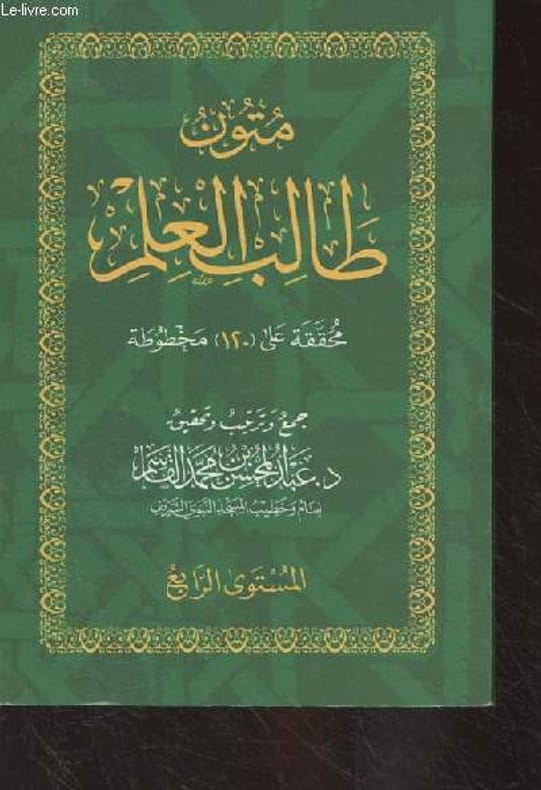
Cf photo
Livre en arabe (cf photo)
Cf photo. Non daté. In-24. Broché. Bon état, Couv. convenable, Dos satisfaisant, Intérieur frais. 120 pages environ. Livre en arabe.. . . . Classification Dewey : 492.7-Arabe
Referentie van de boekhandelaar : R300303350
|
|
|
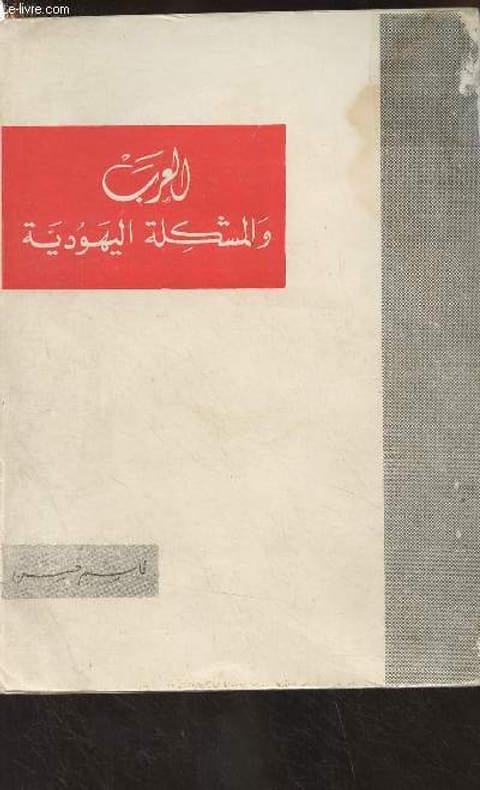
Cf photo
Livre en arabe (cf photo) Les arabes et le problème juif (?)
Cf photo. Non daté. In-12. Broché. Etat d'usage, Couv. légèrement passée, Dos abîmé, Intérieur acceptable. 200 pages environ. Traces de mouillures. Agrafes rouillées. Scotch collé en coiffe de tête, mors légèrement fendus en coiffe de pied. 1er page tachée.. . . . Classification Dewey : 492.7-Arabe
Referentie van de boekhandelaar : R300303718
|
|
|
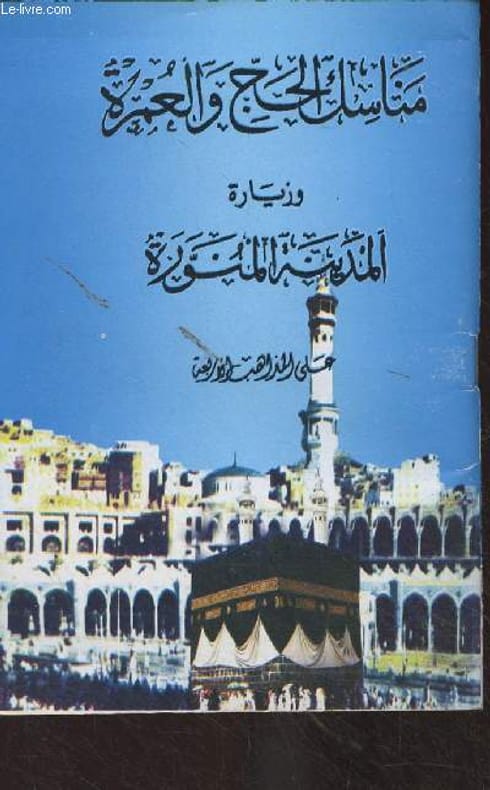
Cf. photo
Livre en arabe (cf. photo)
Cf photo. Non daté. In-12. Broché. Bon état, Couv. convenable, Dos satisfaisant, Intérieur frais. 70 pages environ. Texte en arabe. Avec deux autocollants en supplément.. . . . Classification Dewey : 492.7-Arabe
Referentie van de boekhandelaar : R300303088
|
|
|
Ch. ROUSSEL
La justice en Algérie. Les tribunaux indigènes. Extrait de la Revue des Deux Mondes
Extrait de La Revue des deux mondes | s. l. [Paris] 1876 | 15.50 x 25 cm | agrafé
Referentie van de boekhandelaar : 18594
|
|
|
CHAUVIN Victor
Bibliographie des ouvrages arabes ou relatifs aux Arabes publiés en Europe chrétienne de 1810 à 1885.
Liège: H. Vaillant-Carmanne, 1892-1922 12 volumes in-8, cxvii-72 pp., ix-239 pp, iv-151 pp., iv-228 pp., xii-296 pp., iv-204 pp., iv-192 pp., iv-219 pp., iv-136 pp., iv-146 pp., iv-255 pp., viii-468 pp., brochés, beaux exemplaires non coupés.
Referentie van de boekhandelaar : 13976017
|
|
|
Charles SÉDILLOT
Campagne de Constantine de 1837
Crochard & Cie | Paris 1838 | 13 x 21.50 cm | relié
Referentie van de boekhandelaar : 40347
|
|
|
CHAVARDES Maurice et Marilène
Ce jour là, 29 mai 1453 : La chute de Constantinople.
Paris, Robert Laffont, 1963. 16 x 24, 219 pp., quelques illustrations en N/B, broché, bon état.
Referentie van de boekhandelaar : 84481
|
|
|
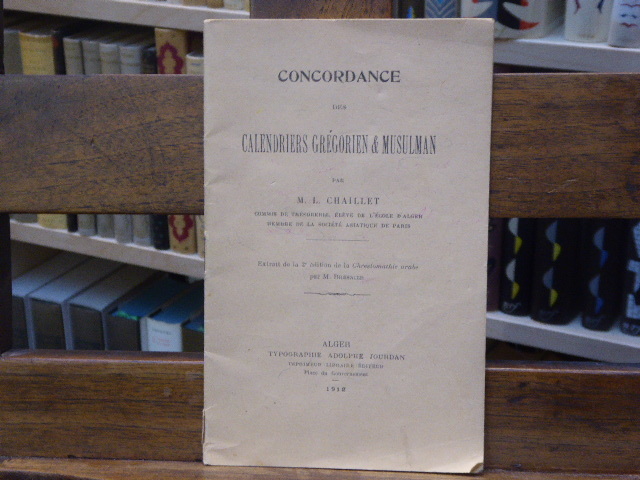
CHAILLET M.L.
Concordance des calendriers grégorien & musulman.
Typographie Adolphe Jourdan Alger 1912 Plaquette in-12 ( 190 X 120 mm ) de 19 pages, agrafée sous couverture imprimée.
Referentie van de boekhandelaar : 62586
|
|
|
CHARLIN (sculpsit) - Michel Ange LANCRET
DESCRIPTION DE L'EGYPTE. Thèbes. Karnak. Coupe, détail et bas-reliefs intérieurs de la porte du sud. (ANTIQUITES, volume III, planche 53)
Imprimerie Impériale | Paris 1809-1829 | 71 x 54 cm | une feuille
Referentie van de boekhandelaar : 23385
|
|
|
Charles-Louis BALZAC - CECILE (delineavit) - HULK (sculpsit)
DESCRIPTION DE L'EGYPTE. Thèbes. Karnak. Statues de granit noir trouvées dans l'enceinte du sud, vue du colosse placé à l'entrée de la salle hypostyle du palais. (ANTIQUITES, volume III, planche 48)
Imprimerie Impériale | Paris 1809-1829 | 71 x 54 cm | une feuille
Referentie van de boekhandelaar : 23388
|
|
|
Charles-Louis BALZAC - Louis-Pierre BALTARD
DESCRIPTION DE L'EGYPTE. Thèbes. Karnak. Vue de deux colosses situés au devant de l'un des pylônes des propylées, trois fragments de colosses trouvées dans l'enceinte du sud. (ANTIQUITES, volume III, planche 45)
Imprimerie Impériale | Paris 1809-1829 | 71 x 54 cm | une feuille
Referentie van de boekhandelaar : 23391
|
|
|
Charles-Louis BALZAC - Edme-François JOMARD - Louis-Pierre BALTARD
DESCRIPTION DE L'EGYPTE. Heptanomide. Vues de Gebel Abou Fedah et des environs, épures de chapiteaux tracées dans les hypogées de Gebel Abou Fedah, plans et détails de Gebel Cheykh el Harydy. (ANTIQUITES, volume IV, planche 62)
Imprimerie Impériale | Paris 1809-1829 | 70 x 51.50 cm | une feuille
Referentie van de boekhandelaar : 23446
|
|
|
Charles-Louis BALZAC - CECILE (delineavit) - CONTE (delineavit)
DESCRIPTION DE L'EGYPTE. Egypte Moyenne. Vue de Beny-Soueyf & Vue de Myt-Rahyneh et de plusieurs points des bords du Nil. (ETAT MODERNE, volume I, planche 9)
Imprimerie Impériale | Paris 1809-1829 | 53.50 x 70 cm | une feuille
Referentie van de boekhandelaar : 25427
|
|
|
CHARLES
DESCRIPTION DE L'EGYPTE. Mammifères. Bélier à large queue, Moufflon à manchettes. (Histoire Naturelle, planche 7)
Imprimerie Impériale | Paris 1809-1829 | 53.50 x 70 cm | une feuille
Referentie van de boekhandelaar : 25495
|
|
|
Charles-Louis BALZAC - BALTARD (sculpsit)
DESCRIPTION DE L'EGYPTE. Erment (Hermonthis). Vue du temple prise au nord-ouest. (ANTIQUITES, volume I, planche 93)
Imprimerie Impériale | Paris 1809-1829 | 71 x 54 cm | une feuille
Referentie van de boekhandelaar : 25834
|
|
|
CHABROL - Jean-Baptiste Prosper JOLLOIS - CHARLIN (sculpsit)
DESCRIPTION DE L'EGYPTE. Erment (Hermonthis). Bas-reliefs de l'intérieur et de l'extérieur du temple. (ANTIQUITES, volume I, planche 95)
Imprimerie Impériale | Paris 1809-1829 | 54 x 71 cm | une feuille
Referentie van de boekhandelaar : 25836
|
|
|
Charles-Louis BALZAC - Edme-François JOMARD - PHELIPPEAUX (sculpsit)
DESCRIPTION DE L'EGYPTE. Esné (Latopolis). Bas-reliefs du portique. (ANTIQUITES, volume I, planche 82)
Imprimerie Impériale | Paris 1809-1829 | 54 x 71 cm | une feuille
Referentie van de boekhandelaar : 25844
|
|
|
CHABROL - Jean-Baptiste Prosper JOLLOIS - DEVILLIERS
DESCRIPTION DE L'EGYPTE. Environs d'Esné (Latopolis). Plan, coupe, élévation et détails du temple au nord d'Esné. (ANTIQUITES, volume I, planche 85)
Imprimerie Impériale | Paris 1809-1829 | 71 x 54 cm | une feuille
Referentie van de boekhandelaar : 25849
|
|
|
Charles-Louis BALZAC - LANDELLE (sculpsit)
DESCRIPTION DE L'EGYPTE. Edfou (Apollinopolis magna). Frises et autres sculptures du petit temple.
Imprimerie Impériale | Paris 1809-1829 | 54 x 71 cm | une feuille
Referentie van de boekhandelaar : 25852
|
|
|
CHABROL - Edme-François JOMARD - Charles-Louis BALZAC
DESCRIPTION DE L'EGYPTE. El Kab (Elethyia). Bas-reliefs des grottes, Fragments de statues trouvées dans les ruines de la ville. (ANTIQUITES, volume I, planche 69)
Imprimerie Impériale | Paris 1809-1829 | 71 x 54 cm | une feuille
Referentie van de boekhandelaar : 25859
|
|
|
Charles-Louis BALZAC - BERTHAULT (sculpsit)
DESCRIPTION DE L'EGYPTE. Selseleh (Silsilis). Vue des grottes taillées à l'entrée des anciennes carrières. (ANTIQUITES, volume I, planche 47)
Imprimerie Impériale | Paris 1809-1829 | 71 x 54 cm | une feuille
Referentie van de boekhandelaar : 25898
|
|
|
Charles-Louis BALZAC - BERTHAULT (sculpsit)
DESCRIPTION DE L'EGYPTE. Ile d'Eléphantine. Vue du temple du sud. (ANTIQUITES, volume I, planche 34)
Imprimerie Impériale | Paris 1809-1829 | 71 x 54 cm | une feuille
Referentie van de boekhandelaar : 25931
|
|
|
CHABROL - Claude-Joseph POMEL - LOUVET (sculpsit)
DESCRIPTION DE L'EGYPTE. Ile d'Eléphantine. Coupes et bas-reliefs du temple du sud. (ANTIQUITES, volume I, planche 36)
Imprimerie Impériale | Paris 1809-1829 | 71 x 54 cm | une feuille
Referentie van de boekhandelaar : 25951
|
|
|
CHABROL - DUTERTRE (delineavit) - Edme-François JOMARD
DESCRIPTION DE L'EGYPTE. Thèbes. Medynet-Abou. Bas-relief sculpté sur la face extérieure du palais exposée au nord, Bas-relief de la galerie-sud du péristyle du palais, Fragments trouvés sous le premier pylône des propylées du temple. (ANTIQUITES, volume II, planche 9)
Imprimerie Impériale | Paris 1809-1829 | 53.50 x 71 cm | une feuille
Referentie van de boekhandelaar : 26026
|
|
|
CHABROL - Charles-Louis BALZAC - Jean-Baptiste Prosper JOLLOIS
DESCRIPTION DE L'EGYPTE. Thèbes. Bybân el Molouk. Bas-reliefs sculptés et peints dans les cinquième et quatrième tombeaux des rois à l'ouest, Bas-reliefs du cinquième tombeau à l'est. (ANTIQUITES, volume II, planche 84)
Imprimerie Impériale | Paris 1809-1829 | 71 x 53.50 cm | une feuille
Referentie van de boekhandelaar : 26091
|
|
|
Charles-Louis BALZAC - Edme-François JOMARD - POMEL (sculpsit)
DESCRIPTION DE L'EGYPTE. Environs de Babylone. Le Kaire [Le Caire]. Détails de quatre faces et d'un obélisque trouvé au Kaire. (ANTIQUITES, volume V, planche 21)
Imprimerie Impériale | Paris 1809-1829 | 53.50 x 71 cm | une feuille
Referentie van de boekhandelaar : 26196
|
|
|
Charles-Louis BALZAC - Edme-François JOMARD - POMEL (sculpsit)
DESCRIPTION DE L'EGYPTE. Environs de Babylone. Le Kaire [Le Caire]. Détails des quatre faces d'un obélisque trouvé au Kaire. (ANTIQUITES, volume V, planche 22)
Imprimerie Impériale | Paris 1809-1829 | 53.50 x 71 cm | une feuille
Referentie van de boekhandelaar : 26197
|
|
|
Charles-Louis BALZAC - Gratien LE PÈRE - Edme-François JOMARD
DESCRIPTION DE L'EGYPTE. Alexandrie. Vue, profils et détails de la grande colonne appelée communément Colonne de Pompée. (ANTIQUITES, volume V, planche 34)
Imprimerie Impériale | Paris 1809-1829 | 71 x 53.50 cm | une feuille
Referentie van de boekhandelaar : 26204
|
|
|
Charles-Louis BALZAC - BALTARD (sculpsit) - GIRAUD (sculpsit)
DESCRIPTION DE L'EGYPTE. Alexandrie. Plan et coupe d'un stade situé au sud-ouest de la Colonne dite de Pompée, Vue intérieure d'une ancienne basilique, vulgairement nommée Mosquée de St Athanase. (ANTIQUITES, volume V, planche 39)
Imprimerie Impériale | Paris 1809-1829 | 53.50 x 71 cm | une feuille
Referentie van de boekhandelaar : 26215
|
|
|
Charles-Louis BALZAC - BERTHAULT (sculpsit)
DESCRIPTION DE L'EGYPTE. Alexandrie. Vue du pont de l'aqueduc sur le canal d'Alexandrie, Vue du débarquement de l'Armée française en Égypte à la tour dite du Marabou. (ETAT MODERNE, volume II, planche 99)
Imprimerie Impériale | Paris 1809-1829 | 53.50 x 71 cm | une feuille
Referentie van de boekhandelaar : 26308
|
|
|
Charles-Louis BALZAC - DUTERTRE (delineavit) - REDOUTE (delineavit)
DESCRIPTION DE L'EGYPTE. Vases, meubles et instruments. Tentes de mamelouk, Boiserie de fenêtre, Berceau, Chassemouche, Planchers en mosaïque, Carreaux en faïence, Coffret en nacre, Écritoire et détails, Serrure en bois, Cuillers en écaille, ornées d'ambre, de corail et de nacre. (ETAT MODERNE, volume II, planche GG)
Imprimerie Impériale | Paris 1809-1829 | 53.50 x 71 cm | une feuille
Referentie van de boekhandelaar : 26384
|
|
|
CHABROL - Jean-Baptiste Prosper JOLLOIS - DEVILLIERS
DESCRIPTION DE L'EGYPTE. Denderah (Tentyris). Frise de la partie postérieure du portique, Corniche de la première salle de l'appartement du zodiaque, Frise et corniche du grand temple. (ANTIQUITES, volume IV, planche 23)
Imprimerie Impériale | Paris 1809-1829 | 71 x 54 cm | une feuille
Referentie van de boekhandelaar : 26496
|
|
|
CHABROL - Edme-François JOMARD - PLEE (sculpsit)
DESCRIPTION DE L'EGYPTE. Denderah (Tentyris). Plan, coupe et détail de la porte du nord. (ANTIQUITES, volume IV, planche 5)
Imprimerie Impériale | Paris 1809-1829 | 54 x 71 cm | une feuille
Referentie van de boekhandelaar : 26507
|
|
|
CHABROL - DUTERTRE (delineavit) - Edme-François JOMARD
DESCRIPTION DE L'EGYPTE. Thèbes. Medynet-Abou. Bas-relief sculpté sur la face extérieure du palais exposée au nord, Bas-relief de la galerie-sud du péristyle du palais, Fragments trouvés sous le premier pylône des propylées du temple. (ANTIQUITES, volume II, planche 9)
Imprimerie Impériale | Paris 1809-1829 | 53.50 x 71 cm | une feuille
Referentie van de boekhandelaar : 32871
|
|
|
CHABROL - COQUET
DESCRIPTION DE L'EGYPTE. Qâou el Kebyreh (Antaeopolis). Plan, coupe, élévation et détails du portique du temple. Plan des restes de l'édifice de l'Ouest. (ANTIQUITES, volume IV, planche 41)
Imprimerie Impériale | Paris 1809-1829 | 71 x 54 cm | une feuille
Referentie van de boekhandelaar : 35402
|
|
|
Charles-Louis BALZAC - CHABROL - Edme-François JOMARD
DESCRIPTION DE L'EGYPTE. Edfou (Apollinopolis magna). Frises et autres sculptures du petit temple. (ANTIQUITES, volume I, planche 63)
Imprimerie Impériale | Paris 1809-1829 | 71 x 54 cm | une feuille
Referentie van de boekhandelaar : 35620
|
|
|
Charles LÉVÊQUE
Exploration scientifique de l'Algérie. La société berbère. Extrait de la Revue des Deux Mondes
Extrait de La Revue des deux mondes | s. l. [Paris] s. d. [1873] | 15.50 x 25 cm | agrafé
Referentie van de boekhandelaar : 14348
|
|
|
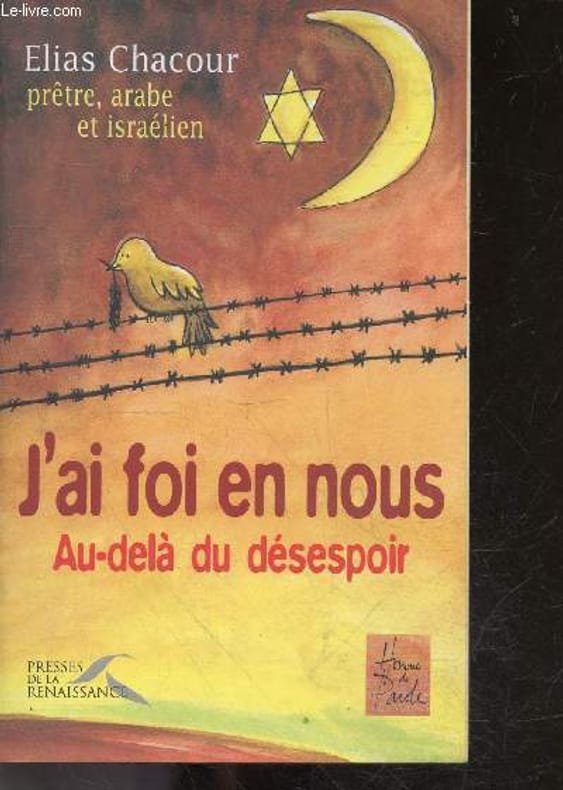
CHACOUR ELIAS : pretre, arabe et israelien
J'ai foi en nous - au dela du desespoir
PRESSES DE LA RENAISSANCE / HOMME DE PAROLE. 2002. In-8. Broché. Bon état, Couv. convenable, Dos satisfaisant, Quelques rousseurs. 203 pages. . . . Classification Dewey : 840.092-XXI ème siècle
Referentie van de boekhandelaar : RO20251504
|
|
|
CHAWKI ATT ALLAH ELJAMIL
Kadiate Roudissiaa [texte en arabe, text in arabic]
Al-Qahirah [Cairo], 1977 495pp.with map and some illustrations out-of-text, hardback (blue cloth, spine in blue leather with engilded title), 24cm., VG, [text entirely in arabic], [study dealing with the Rhodesia-affair]
Referentie van de boekhandelaar : C59791
|
|
|
Charles LOUANDRE
La statistique et l'archéologie en Afrique. Extrait de la Revue des Deux Mondes
Extrait de La Revue des deux mondes | s. l. [Paris] s. d. [1852] | 15.50 x 25 cm | agrafé
Referentie van de boekhandelaar : 14538
|
|
|
Charles ROUSSEL
La naturalisation des étrangers en Algérie. Extrait de la Revue des Deux Mondes
Extrait de La Revue des deux mondes | s. l. [Paris] 1875 | 15.50 x 25 cm | agrafé
Referentie van de boekhandelaar : 18691
|
|
|
Charles Hubert LAVOLLÉE
La réforme judiciaire en Egypte. Extrait de la Revue des Deux Mondes
Extrait de La Revue des deux mondes | s. l. [Paris] 1875 | 15.50 x 25 cm | agrafé
Referentie van de boekhandelaar : 18738
|
|
|

 De zoekresultaten per email ontvangen
 Zoekresultaten downloaden als PDF
 RSS feed
 Permanente link


