|
|
|
Gorriti, Juana Manuela; GimÈnez Pastor, Arturo
El pozo del Yocci [Spanish Series]: Facultad de filosofÌa y letras de la Universidad de Buenos Aires. Instituto de literatura argentina ;seccion de documetos. Ser. 4a:
Octavo in original printed wraps; [171]-236 p. 22 cm. Text in Spanish // Scarce // Latin American women writers; 19th century
|
|
|
GORSSE y FOREST, Lindau.
Franz Hallers. Comedia dramática en cuatro actos.
Madrid, La Novela Teatral, 1918. 4to.; 36 pp. sin numerar. Cubiertas originales de Tovar.

|
|
|
GOSCINNY - UDERZO
ASTERIX GLADIADOR
Barcelona, Bruguera, 1968. Colección Pilote. Guión de Goscinny. Ilustraciones de Uderzo. Traducción de Jaime Perich. 48 p. Folio. Cartoné editorial con algunas rozaduras. Lomo levantado y con leve pérdida. Buen ejemplar. 1ª edición. Primera edición. 1st edition. First edition
|
|
|
Gossart, Ernest
L'etablissement du regime espagnol dans les Pays-Bas et l'insurrection par Ernest Gossart. (Espagnols et Flamands au 16e Siecle).
Bruxelles: Lamertin 1905. XII, 331 Seiten. Gr. 8° (22,5-25 cm). Orig.-Broschur. [Softcover / Paperback].
书商的参考编号 : 3086664

|
|
|
Gottlieb, Adolph ; IVAM Centre Julio Gonzañle
Adolph Gottlieb : una retrospectiva
Oblong quarto in glossy black color-illus wraps; 137 p. : ill. (some col.) ; 27 x 28 cm. ; bibliographical references (p. 106-137). Catalog of an exhibition held at IVAM Centre Julio Gonz·lez, Feb. 1-Apr. 22, 2001.Text in Spanish and English. // Abstract expressionism -- Exhibitions. Gottlieb, Adolph, 1903-1974 -- Exhibitions. / Includes bibliographical references (p. 106-137).
|
|
|
GOUTAS Nejma / KLARIC Laurent / PESESSE Damin / GUILLERMIN Patricia (sous la direction de)
A la recherche des identités gravettiennes : actualités, questionnements, perspectives. Actes de la table ronde sur le gravettien en France et dans les pays limitrophes, Aix-en-Provence, 6-8 octobre 2008
Société Préhistorique Française Mémoire LII 2011 Société Préhistorique Française, Mémoire LII, 2011, 395 p., broché, environ 30x21cm. Dos un peu aplati vers le premier plat, bon état pour le reste et intérieur bien propre.
书商的参考编号 : 115605

|
|
|
Goujet, Claude-Pierre; Du Pin, Louis-Ellies; Marsollier, Jacques; Dellon, Charles; Morellet, Andre; Marteau, Pierre; Le Clerc, Joseph-Victor
HISTOIRE DES INQUISITIONS, OU LON RAPPORTE L'ORIGINE & LE PROGRES DE CES TRIBUNAUX, LEURS VARIATIONS, LA FORME DE LEUR JURISDICTION, & LEXTRAIT DU MANUEL DES INQUISITEURS. NOUVELLE EDITION. VOL 2 ONLY.
Period Half Leather with raised bands. Only second volume, 12mo, 513 pages, Includes period engravings. In French. SUBJECT (S) : Inquisition -- Histoire -- Ouvrages avant 1800. Tiree des Memoires historiques de Louis-Ellies Du Pin, de lHistoire de lInquisition de Jacques Marsollier et du Voyage de Charles Dellon, avec un discours sur quelques auteurs qui ont traite de lInquisition, par labbe Claude-Pierre Goujet. Le Manuel des inquisiteurs est de à labbe Morellet. Fausse adresse. Publie a Paris, dapres Weller. Other Titles: Histoire des inquisitions, ou lon rapporte lorigine et le progres de ces tribunaux, leurs variations et la forme de leur juridiction. OCLC lists 2 copies worldwide (RENNES1-BU DROIT �CO GESTION, SCD PARIS 1) . Bumped cover corners and edges. Very good condition. (Sef-18-7)
|
|
|
GOWER, John (c. 1330-1408).
Fortuna de la "Confessio Amantis" en la Peninsula Ibérica: el testimonio portugués. Estudio, edición paleográfica y edición crítica por Manuela Faccon, del prólogo y los libros primero, segundo, tercero y cuarto del Mss II-3088 de la Real Biblioteca de Madrid, ["Oubras" de João Barroso (1430), traducción en prosa portuguesa. de la "Confessio Amantis" de John Gower].
Zaragoza, 2010. 4to.; 504 pp., 1 h. Cubiertas originales.

|
|
|
Goya, Francisco de - Jose Gudiol
Goya 1746 - 1828. Biography, Analytical Study and Catalogue Of His Paintings. Part I (Text)
Barcelona, Ediciones Poligrafa, 1985 Hardcover with dustjacket, 414 pages, 30 x 25 cm, English, Fine condition. .
书商的参考编号 : 70335
|
|
|
GOYA Francisco / MICKO Miroslav ( texte de )
LES CAPRICES
Paris Editions Cercle d'Art 1960 in 4 (27,5x21,5) 1 volume reliure toilée de l'éditeur sous jaquette illustrée, 29 pages, suivies des reproductions horrs-texte (légendées en regard) des 80 planches des ''Caprices'' de Goya, et de 16 pages (titres,commentaires de Goya et notes). Bel exemplaire ( Photographies sur demande / We can send pictures of this book on simple request )
书商的参考编号 : 36991
|
|
|
Goytisolo Juan
Paysages de guerre sur fond de Tchétchénie
Circé 1997 90 pages 11 6x0 8x19 2cm. 1997. Broché. 90 pages.
书商的参考编号 : 100119376

|
|
|
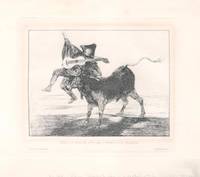
Goya y Lucientes, Francisco Jose de (Spanish, 1746-1828).
Aveugle enieve sur les cornes d’un taureau circa 1804.
Paris: Gazette des Beaux-Arts 1867. Etching aquatint and drypoint on laid watermark paper. 21 x 29 cm sheet. Printed by Delatre Paris. From the first edition with lettering. Very Good light staining in margins.Ref.: Harris 25; Delteil 24. Paris: Gazette des Beaux-Arts, 1867. unknown
书商的参考编号 : 76-0141
|
|
|
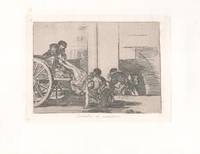
Goya y Lucientes, Francisco Jose de (Spanish, 1746-1828).
Carretades al Cementerio Plate 64 from Los Desastres de la Guerra 1808-1823. from the Third Edition made in the Calcografia for Real Academia in 1903.
Madrid: Real Academia 1903. Etching aquatint and drypoint on wove paper. 23.5 x 33 cm sheet. Limited edition to 100. Very Good light specks of foxing in the margins.Ref.: Harris 184; Delteil 183. Madrid: Real Academia, 1903. unknown
书商的参考编号 : 76-0143
|
|
|
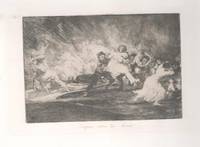
Goya y Lucientes, Francisco Jose de (Spanish, 1746-1828).
Escapan Entre la Llamas Plate 41 from Los Desastres de la Guerra 1808-1823. from the Third Edition made in the Calcografia for Real Academia in 1903.
Madrid: Real Academia 1903. Etching aquatint and drypoint on wove paper. 24 x 33 cm sheet. Limited edition to 100. Very Good light specks of foxing in the margins.Ref.: Harris 161; Delteil 160. Madrid: Real Academia, 1903. unknown
书商的参考编号 : 76-0144
|
|
|
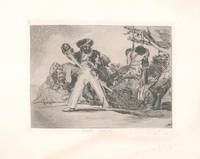
Goya y Lucientes, Francisco Jose de (Spanish, 1746-1828).
Fuerte Cosa Es! Plate 31 from Los Desastres de la Guerra 1808-1823. probably from the Fourth Edition.
Madrid: Real Academia circa 1906. Etching aquatint and drypoint on laid paper. 23.5 x 32 cm sheet. Very Good light toning in the margins.Ref.: Harris 151; Delteil 160. Madrid: Real Academia, [circa 1906]. unknown
书商的参考编号 : 76-0145
|
|
|
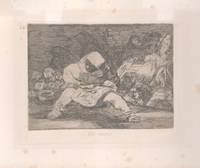
Goya y Lucientes, Francisco Jose de (Spanish, 1746-1828).
Que locura! Plate 68 from Los Desastres de la Guerra 1808-1823. from the Third Edition made in the Calcografia for Real Academia in 1903.
Madrid: Real Academia 1903. Etching aquatint and drypoint on wove paper. 23.5 x 33 cm sheet. Limited edition to 100. Good light specks of foxing throughout.Ref.: Harris 188; Delteil 187. Madrid: Real Academia, 1903. unknown
书商的参考编号 : 76-0142
|
|
|
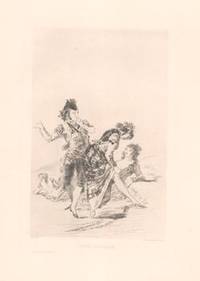
Goya y Lucientes, Francisco Jose de (After, Spanish, 1746-1828); Jules Jacquemard (1837-1880).
Scene espagnole d’apes Goya.
Paris: Gazette des Beaux Arts circa 1860s. Etching on shield watermarked laid paper. 37 x 27 cm sheet. Very Good light specks of foxing in left margin. Paris: Gazette des Beaux Arts, [circa 1860s]. unknown
书商的参考编号 : 76-0148
|
|
|
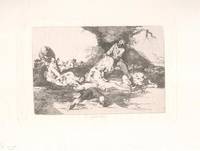
Goya y Lucientes, Francisco Jose de (Spanish, 1746-1828).
Se Aprovechan Plate 16 from Los Desastres de la Guerra 1808-1823. probably from the Fourth Edition.
Madrid: Real Academia circa 1906. Etching aquatint and drypoint on laid paper. 23.5 x 32 cm sheet. Very Good.Ref.: Harris 136; Delteil 135. Madrid: Real Academia, [circa 1906]. unknown
书商的参考编号 : 76-0146
|
|
|
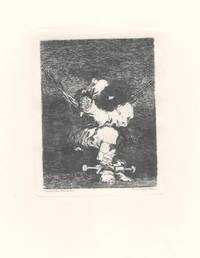
Goya y Lucientes, Francisco Jose de (Spanish, 1746-1828).
The Little Prisoner or Tan barbara la seguridad come el delito The custody is as barbarous as the crime 1867.
Paris: Gazette des Beaux Arts Vol. XXII page 196 1867. Etching and burin on laid paper. 26 x 17 cm sheet. First Edition Posthumous impression with letters masked. Printed by Delatre Pars. Very Good.Ref.: Harris 26; Delteil 312. Paris: Gazette des Beaux Arts, Vol. XXII, page 196, 1867. unknown
书商的参考编号 : 76-0147
|
|
|
GOYA Y Lucientes Francisco de (Fuente de Todos 1746 - Bordeaux 1828)
Al Conde Palatino
Opera tratta dai "Los Caprichos", per la prima volta pubblicati nel 1799. Prova della quarta edizione di dodici, stampata dalla calcografia di Madrid, circa 1870. Aquaforte, acquatinta brunita e puntasecca, in perfetto stato di conservazione. La serie chiamata Los Caprichos, è composta da ottanta incisioni, la cui prima edizione [l’unica a non essere pubblicata postuma] venne alla luce ne 1799. Curata in fase d’edizione dallo stesso artista, la serie fu commercializzata e dopo poco tempo ritirata dal mercato. Infatti, a causa dei numerosi soggetti che ironizzavano sulla società spagnola di fine secolo, il Goya subì una censura. L’interpretazione dei soggetti rappresentati su queste lastre, sempre enigmatiche, è spesso controversa. Etching with burnished aquatint and engraving, 1799. From the fourth edition of twelve of the so-called "Los Caprichos" series, edited by the Madrid Calcografia [circa 1870].A very good impression, with good contrast, printed on contemporary paper, customary margins, in very good conditions. The series called Los Caprichos, consists of eighty etchings. This first edition of 1799, the only one not to be published posthumously, is imprinted on soft laid pape. Cured in phase edition by the same artist, the series was marketed and before long withdrawn from the market. In fact, because of the many subjects that mocked the Spanish society of the century, Goya suffered censorship. The interpretation of the subjects represented on these plates, always enigmatic, is often controversial. Harris 68, Delteil 70

|
|
|
GOYA Y Lucientes Francisco de (Fuente de Todos 1746 - Bordeaux 1828)
Al Conde Palatino
Opera tratta dai Los Caprichos, per la prima volta pubblicati nel 1799.Prova della quarta edizione di dodici, stampata dalla calcografia di Madrid, circa 1870.Acquaforte, acquatinta brunita e puntasecca, in perfetto stato di conservazione.La serie chiamata Los Caprichos, è composta da ottanta incisioni, la cui prima edizione [l’unica a non essere pubblicata postuma] venne alla luce ne 1799. Curata in fase d’edizione dallo stesso artista, la serie fu commercializzata e dopo poco tempo ritirata dal mercato.Infatti, a causa dei numerosi soggetti che ironizzavano sulla società spagnola di fine secolo, il Goya subì una censura. L’interpretazione dei soggetti rappresentati su queste lastre, sempre enigmatiche, è spesso controversa. Etching with burnished aquatint and engraving, 1799.From the fourth edition of twelve of the so-called Los Caprichos series, edited by the Madrid Calcografia [circa 1870].A very good impression, with good contrast, printed on contemporary paper, usual wide margins, in very good conditions.The series called Los Caprichos, consists of eighty etchings. This first edition of 1799, the only one not to be published posthumously, is imprinted on soft laid pape.Cured in phase edition by the same artist, the series was marketed and before long withdrawn from the market. In fact, because of the many subjects that mocked the Spanish society of the century, Goya suffered censorship.The interpretation of the subjects represented on these plates, always enigmatic, is often controversial. Harris 68, Delteil 70.

|
|
|
GOYA Y Lucientes Francisco de (Fuente de Todos 1746 - Bordeaux 1828)
Aquarda que te unten
Opera tratta dai "Los Caprichos", per la prima volta pubblicati nel 1799. Prova della quarta edizione di dodici, stampata dalla calcografia di Madrid, circa 1870. Aquaforte, acquatinta brunita e puntasecca, in perfetto stato di conservazione. La serie chiamata Los Caprichos, è composta da ottanta incisioni, la cui prima edizione [l’unica a non essere pubblicata postuma] venne alla luce ne 1799. Curata in fase d’edizione dallo stesso artista, la serie fu commercializzata e dopo poco tempo ritirata dal mercato. Infatti, a causa dei numerosi soggetti che ironizzavano sulla società spagnola di fine secolo, il Goya subì una censura. L’interpretazione dei soggetti rappresentati su queste lastre, sempre enigmatiche, è spesso controversa. Etching with burnished aquatint and engraving, 1799. From the fourth edition of twelve of the so-called "Los Caprichos" series, edited by the Madrid Calcografia [circa 1870].A very good impression, with good contrast, printed on contemporary paper, customary margins, in very good conditions. The series called Los Caprichos, consists of eighty etchings. This first edition of 1799, the only one not to be published posthumously, is imprinted on soft laid pape. Cured in phase edition by the same artist, the series was marketed and before long withdrawn from the market. In fact, because of the many subjects that mocked the Spanish society of the century, Goya suffered censorship. The interpretation of the subjects represented on these plates, always enigmatic, is often controversial. Harris 102, Delteil 104.

|
|
|
GOYA Y Lucientes Francisco de (Fuente de Todos 1746 - Bordeaux 1828)
Autoritratto
Opera tratta dai "Los Caprichos", per la prima volta pubblicati nel 1799. Prova della quinta edizione di dodici, stampata dalla calcografia di Madrid, circa 1883. Acquaforte, acquatinta brunita e puntasecca, in perfetto stato di conservazione. La serie chiamata Los Caprichos è composta da ottanta incisioni, la cui prima edizione [l’unica a non essere pubblicata postuma] venne alla luce nel 1799. Curata in fase d’edizione dallo stesso artista, la serie fu commercializzata e dopo poco tempo ritirata dal mercato. Infatti, a causa dei numerosi soggetti che ironizzavano sulla società spagnola di fine secolo, il Goya subì una censura. L’interpretazione dei soggetti rappresentati su queste lastre, sempre enigmatiche, è spesso controversa Plate 1: portrait of the artist wearing hat, bust-length to left; Fifth Edition c.1883 impression. 1799 Etching, aquatint, drypoint and burinFrom the fifth edition of twelve of the so-called "Los Caprichos" series, edited by the Madrid Calcografia [circa 1883].A very good impression, with good contrast, printed on contemporary paper, customary margins, in very good conditions. The series called Los Caprichos, consists of eighty etchings. This first edition of 1799, the only one not to be published posthumously, is imprinted on soft laid pape. Cured in phase edition by the same artist, the series was marketed and before long withdrawn from the market. In fact, because of the many subjects that mocked the Spanish society of the century, Goya suffered censorship. The interpretation of the subjects represented on these plates, always enigmatic, is often controversial. Harris 36, Delteil 38.

|
|
|
GOYA Y Lucientes Francisco de (Fuente de Todos 1746 - Bordeaux 1828)
Bellos Consejos
Acquaforte, acquatinta brunita e bulino, 1799. Dalla rara prima edizione di dodici della serie detta Los Caprichos, tavola 15. Magnifica prova, particolarmente nitida, impressa su carta vergata coeva, con usuali ampli margini, piccoli strappi di carta alle estremità dei margini, per il resto in perfetto stato di conservazione. La serie chiamata Los Caprichos, è composta da ottanta incisioni. Questa prima edizione del 1799, l’unica a non essere pubblicata postuma, è impressa su soffice carta vergata di gran qualità ed è stampata usando un delicato inchiostro seppia. Curata in fase d’edizione dallo stesso artista, la serie fu commercializzata e dopo poco tempo ritirata dal mercato. Infatti, a causa dei numerosi soggetti che ironizzavano sulla società spagnola di fine secolo, il Goya subì una censura. Per questo ne sono stimati solo circa 300 esemplari. L’interpretazione dei soggetti rappresentati su queste lastre, sempre enigmatiche, è spesso controversa - First edition -Etching, burnished aquatint and engraving, 1799. From the rare first edition (of twelve) of Los Caprichos, plate 15. A very fine impression, showing a good contrast, on contemporary paper, with usual wide margins, small tears at left white margin, otherwise in perfect condition. The series called Los Caprichos, consists of eighty etchings. This first edition of 1799, the only one not to be published posthumously, is imprinted on soft laid paper of great quality and is printed using a delicate sepia ink. Cured in phase edition by the same artist, the series was marketed and before long withdrawn from the market. In fact, because of the many subjects that mocked the Spanish society of the century, Goya suffered censorship. For this it is estimated only about 300 copies. The interpretation of the subjects represented on these plates, always enigmatic, is often controversial. The title can be translated into: Pretty teachings. Harris 50, Delteil 52.

|
|
|
GOYA Y Lucientes Francisco de (Fuente de Todos 1746 - Bordeaux 1828)
Chiton
Opera tratta dai "Los Caprichos", per la prima volta pubblicati nel 1799. Prova della quarta edizione di dodici, stampata dalla calcografia di Madrid, circa 1870. Aquaforte, acquatinta brunita e puntasecca, in perfetto stato di conservazione. La serie chiamata Los Caprichos, è composta da ottanta incisioni, la cui prima edizione [l’unica a non essere pubblicata postuma] venne alla luce ne 1799. Curata in fase d’edizione dallo stesso artista, la serie fu commercializzata e dopo poco tempo ritirata dal mercato. Infatti, a causa dei numerosi soggetti che ironizzavano sulla società spagnola di fine secolo, il Goya subì una censura. L’interpretazione dei soggetti rappresentati su queste lastre, sempre enigmatiche, è spesso controversa Etching with burnished aquatint and engraving, 1799. From the fourth edition of twelve of the so-called "Los Caprichos" series, edited by the Madrid Calcografia [circa 1870].A very good impression, with good contrast, printed on contemporary paper, customary margins, in very good conditions. The series called Los Caprichos, consists of eighty etchings. This first edition of 1799, the only one not to be published posthumously, is imprinted on soft laid pape. Cured in phase edition by the same artist, the series was marketed and before long withdrawn from the market. In fact, because of the many subjects that mocked the Spanish society of the century, Goya suffered censorship. The interpretation of the subjects represented on these plates, always enigmatic, is often controversial. Harris 63, Delteil 65.

|
|
|
GOYA Y Lucientes Francisco de (Fuente de Todos 1746 - Bordeaux 1828)
Despacha, que dispièrtan
Opera tratta dai "Los Caprichos", per la prima volta pubblicati nel 1799. Prova della quarta edizione di dodici, stampata dalla calcografia di Madrid, circa 1870. Aquaforte, acquatinta brunita e puntasecca, in perfetto stato di conservazione. La serie chiamata Los Caprichos, è composta da ottanta incisioni, la cui prima edizione [l’unica a non essere pubblicata postuma] venne alla luce ne 1799. Curata in fase d’edizione dallo stesso artista, la serie fu commercializzata e dopo poco tempo ritirata dal mercato. Infatti, a causa dei numerosi soggetti che ironizzavano sulla società spagnola di fine secolo, il Goya subì una censura. L’interpretazione dei soggetti rappresentati su queste lastre, sempre enigmatiche, è spesso controversa. Etching with burnished aquatint and engraving, 1799. From the fourth edition of twelve of the so-called "Los Caprichos" series, edited by the Madrid Calcografia [circa 1870].A very good impression, with good contrast, printed on contemporary paper, customary margins, in very good conditions. The series called Los Caprichos, consists of eighty etchings. This first edition of 1799, the only one not to be published posthumously, is imprinted on soft laid pape. Cured in phase edition by the same artist, the series was marketed and before long withdrawn from the market. In fact, because of the many subjects that mocked the Spanish society of the century, Goya suffered censorship. The interpretation of the subjects represented on these plates, always enigmatic, is often controversial. Harris 113, Delteil 115.

|
|
|
GOYA Y Lucientes Francisco de (Fuente de Todos 1746 - Bordeaux 1828)
El Vergognoso
Acquaforte, acquatinta brunita e bulino, 1799.Dalla rara prima edizione di dodici della serie detta Los Caprichos, tavola 54.Magnifica prova, particolarmente nitida, impressa su carta vergata coeva, con usuali ampli margini, in perfetto stato di conservazione.La serie chiamata Los Caprichos, è composta da ottanta incisioni. Questa prima edizione del 1799, l’unica a non essere pubblicata postuma, è impressa su soffice carta vergata di gran qualità ed è stampata usando un delicato inchiostro seppia. Curata in fase d’edizione dallo stesso artista, la serie fu commercializzata e dopo poco tempo ritirata dal mercato. Infatti, a causa dei numerosi soggetti che ironizzavano sulla società spagnola di fine secolo, il Goya subì una censura. Per questo ne sono stimati solo circa 300 esemplari. L’interpretazione dei soggetti rappresentati su queste lastre, sempre enigmatiche, è spesso controversa In questo soggetto Goya affronta il tema del mondo alla rovescia. Nella scena ci sono tre personaggi, il centro dell'attenzione è l'uomo che sta mangiando, e che cerca di evitare tutti gli sguardi, vergognandosi dei tratti osceni del suo viso. L'artista ha chiaramente indicato il suo pensiero disegnando la cintura di un paio di pantaloni sopra la testa del personaggio. I nasi sono una presenza notevole sul viso, e nel linguaggio popolare "nasi" è un chiaro eufemismo sessuale. Il modo in cui il viso è costruito, in modo che sopracciglia, occhi e naso evochino l'apparato genitale maschile, rafforzerebbe lo stesso senso. Altri commenti insinuano che la figura, nel piano superiore, con i suoi grandi pugni serrati, stia commettendo sodomia con la figura che tiene il vaso da cui mangia l'uomo vergognoso. L'anno 1799 è uno dei momenti chiave nella vita e nel lavoro di Francisco de Goya. Oltre ad essere nominato primo pittore da camera di Goya, a godere di un crescente prestigio come ritrattista e ad inaugurare la cappella di San Antonio de la Florida, che aveva decorato, il 6 febbraio il Diario de Madrid pubblicò un annuncio in cui venivano messe in vendita le ottanta stampe che compongono la serie dei Caprichos. Bellissimo esemplare. Al verso timbro di collezione HENRI MARIE PETIET (Saint-Prix, Seine-et-Oise, 1894-1980), editore, libraio e mercante di stampe a Parigi (Lugt 5031). - The rare first edition -Etching, burnished aquatint and engraving, 1799.From the rare first edition (of twelve) of Los Caprichos, plate 54.A very fine impression, showing a good contrast, on contemporary paper, with usual wide margins, perfect condition.The series called Los Caprichos, consists of eighty etchings. This first edition of 1799, the only one not to be published posthumously, is imprinted on soft laid paper of great quality and is printed using a delicate sepia ink. Cured in phase edition by the same artist, the series was marketed and before long withdrawn from the market. In fact, because of the many subjects that mocked the Spanish society of the century, Goya suffered censorship. For this it is estimated only about 300 copies. The interpretation of the subjects represented on these plates, always enigmatic, is often controversial. In this print Goya approaches the theme of the world upside down. In the scene there are three characters, being the focus of attention the man who is eating, and tries to avoid all eyes, ashamed of the obscene features of his face. The artist has clearly indicated his thinking by drawing above the character's head the waistband of a pair of pants. The noses take on a notable presence on the face, and in popular language "noses" is a clear sexual euphemism. The way the face is constructed, so that eyebrows, eyes and nose evoke the male genital apparatus, would reinforce the same sense. Other comments insinuate that the figure, in the upper plane, with his large clenched fists, is committing sodomy with the figure holding the vessel from which the shameful man eats. The year 1799 is one of the key moments in the life and work of Francisco de Goya. In addition to being named first chamber painter, enjoying a growing prestige as a portrait painter and the inauguration of the chapel of San Antonio de la Florida, which he had decorated, on February 6 the announcement of the sale of the eighty prints that form the series of the Caprichos was published in the Diario de Madrid. Here, Goya focuses his social criticism on the bestiality of a deformed man whose head emerges from his breeches. Among the slight variations between the print and the preparatory drawing, the most striking is that, in the former, he wears his trousers, but in the latter, he does not. As a result, the latter came to be known as The satire of man’s lechery. Moreover, this is the only drawing in the series to mix red-ink wash with pen. Valentín Carderera’s handwritten commentaries on the Caprichos, which are in both the Biblioteca Nacional and the Museo del Prado, further clarify this subject. The first reads: Men with large noses also tend to have large arrows [here, “arrow” is a euphemism for penis] and fat gandumbas [testicles]. As they are often sodomites, this one is depicted with his breeches on his head, with his pudenda hanging out as he lies on top of a poor devil and pulls up his skirts. The second commentary completes the information: There are men whose face is the most indecent part of their body, and it would be good if those whose face is that disgraceful and ridiculous would stick it in their breeches. Example from the HENRI MARIE PETIET (Saint-Prix, Seine-et-Oise, 1894-1980) collection (Lugt 5031). Harris 1964, 89.

|
|
|
GOYA Y Lucientes Francisco de (Fuente de Todos 1746 - Bordeaux 1828)
El Vergognoso
Opera tratta dai Los Caprichos, per la prima volta pubblicati nel 1799.Prova della quarta edizione di dodici, stampata dalla calcografia di Madrid, circa 1870.Acquaforte, acquatinta brunita e puntasecca, in perfetto stato di conservazione.La serie chiamata Los Caprichos, è composta da ottanta incisioni, la cui prima edizione [l’unica a non essere pubblicata postuma] venne alla luce ne 1799. Curata in fase d’edizione dallo stesso artista, la serie fu commercializzata e dopo poco tempo ritirata dal mercato.Infatti, a causa dei numerosi soggetti che ironizzavano sulla società spagnola di fine secolo, il Goya subì una censura. L’interpretazione dei soggetti rappresentati su queste lastre, sempre enigmatiche, è spesso controversa. In questo soggetto Goya affronta il tema del mondo alla rovescia. Nella scena ci sono tre personaggi, il centro dell'attenzione è l'uomo che sta mangiando, e che cerca di evitare tutti gli sguardi, vergognandosi dei tratti osceni del suo viso. L'artista ha chiaramente indicato il suo pensiero disegnando la cintura di un paio di pantaloni sopra la testa del personaggio. I nasi assumono una presenza notevole sul viso, e nel linguaggio popolare "nasi" è un chiaro eufemismo sessuale. Il modo in cui il viso è costruito, in modo che sopracciglia, occhi e naso evochino l'apparato genitale maschile, rafforzerebbe lo stesso senso. Altri commenti insinuano che la figura, nel piano superiore, con i suoi grandi pugni serrati, stia commettendo sodomia con la figura che tiene il vaso da cui mangia l'uomo vergognoso. L'anno 1799 è uno dei momenti chiave nella vita e nel lavoro di Francisco de Goya. Oltre ad essere nominato primo pittore da camera di Goya, a godere di un crescente prestigio come ritrattista e ad inaugurare la cappella di San Antonio de la Florida, che aveva decorato, il 6 febbraio il Diario de Madrid pubblicò un annuncio in cui venivano messe in vendita le ottanta stampe che compongono la serie dei Caprichos. Etching with burnished aquatint and engraving, 1799.From the fourth edition of twelve of the so-called Los Caprichos series, edited by the Madrid Calcografia [circa 1870].A very good impression, with good contrast, printed on contemporary paper, usual wide margins, in very good conditions.The series called Los Caprichos, consists of eighty etchings. This first edition of 1799, the only one not to be published posthumously, is imprinted on soft laid pape.Cured in phase edition by the same artist, the series was marketed and before long withdrawn from the market. In fact, because of the many subjects that mocked the Spanish society of the century, Goya suffered censorship.The interpretation of the subjects represented on these plates, always enigmatic, is often controversial. In this print Goya approaches the theme of the world upside down. In the scene there are three characters, being the focus of attention the man who is eating, and tries to avoid all eyes, ashamed of the obscene features of his face. The artist has clearly indicated his thinking by drawing above the character's head the waistband of a pair of pants. The noses take on a notable presence on the face, and in popular language "noses" is a clear sexual euphemism. The way the face is constructed, so that eyebrows, eyes and nose evoke the male genital apparatus, would reinforce the same sense. Other comments insinuate that the figure, in the upper plane, with his large clenched fists, is committing sodomy with the figure holding the vessel from which the shameful man eats. The year 1799 is one of the key moments in the life and work of Francisco de Goya. In addition to being named first chamber painter, enjoying a growing prestige as a portrait painter and the inauguration of the chapel of San Antonio de la Florida, which he had decorated, on February 6 the announcement of the sale of the eighty prints that form the series of the Caprichos was published in the Diario de Madrid. Here, Goya focuses his social criticism on the bestiality of a deformed man whose head emerges from his breeches. Among the slight variations between the print and the preparatory drawing, the most striking is that, in the former, he wears his trousers, but in the latter, he does not. As a result, the latter came to be known as The satire of man’s lechery. Moreover, this is the only drawing in the series to mix red-ink wash with pen. Valentín Carderera’s handwritten commentaries on the Caprichos, which are in both the Biblioteca Nacional and the Museo del Prado, further clarify this subject. The first reads: Men with large noses also tend to have large arrows [here, “arrow” is a euphemism for penis] and fat gandumbas [testicles]. As they are often sodomites, this one is depicted with his breeches on his head, with his pudenda hanging out as he lies on top of a poor devil and pulls up his skirts. The second commentary completes the information: There are men whose face is the most indecent part of their body, and it would be good if those whose face is that disgraceful and ridiculous would stick it in their breeches. Example fomr the HENRI MARIE PETIET (Saint-Prix, Seine-et-Oise, 1894-1980) collection (Lugt 5031). Harris 89; Delteil 91.

|
|
|
GOYA Y Lucientes Francisco de (Fuente de Todos 1746 - Bordeaux 1828)
Estan calientes
Opera tratta dai "Los Caprichos", per la prima volta pubblicati nel 1799. Prova della quarta edizione di dodici, stampata dalla calcografia di Madrid, circa 1870. Aquaforte, acquatinta brunita e puntasecca, in perfetto stato di conservazione. La serie chiamata Los Caprichos, è composta da ottanta incisioni, la cui prima edizione [l’unica a non essere pubblicata postuma] venne alla luce ne 1799. Curata in fase d’edizione dallo stesso artista, la serie fu commercializzata e dopo poco tempo ritirata dal mercato. Infatti, a causa dei numerosi soggetti che ironizzavano sulla società spagnola di fine secolo, il Goya subì una censura. L’interpretazione dei soggetti rappresentati su queste lastre, sempre enigmatiche, è spesso controversa Etching with burnished aquatint and engraving, 1799. From the fourth edition of twelve of the so-called "Los Caprichos" series, edited by the Madrid Calcografia [circa 1870].A very good impression, with good contrast, printed on contemporary paper, customary margins, in very good conditions. The series called Los Caprichos, consists of eighty etchings. This first edition of 1799, the only one not to be published posthumously, is imprinted on soft laid pape. Cured in phase edition by the same artist, the series was marketed and before long withdrawn from the market. In fact, because of the many subjects that mocked the Spanish society of the century, Goya suffered censorship. The interpretation of the subjects represented on these plates, always enigmatic, is often controversial. Harris 48, Delteil 50

|
|
|
GOYA Y Lucientes Francisco de (Fuente de Todos 1746 - Bordeaux 1828)
Està Um..pues, Como digo..eh! Cuidado! Si nò…
Opera tratta dai "Los Caprichos", per la prima volta pubblicati nel 1799. Prova della quarta edizione di dodici, stampata dalla calcografia di Madrid, circa 1870. Aquaforte, acquatinta brunita e puntasecca, in perfetto stato di conservazione. La serie chiamata Los Caprichos, è composta da ottanta incisioni, la cui prima edizione [l’unica a non essere pubblicata postuma] venne alla luce ne 1799. Curata in fase d’edizione dallo stesso artista, la serie fu commercializzata e dopo poco tempo ritirata dal mercato. Infatti, a causa dei numerosi soggetti che ironizzavano sulla società spagnola di fine secolo, il Goya subì una censura. L’interpretazione dei soggetti rappresentati su queste lastre, sempre enigmatiche, è spesso controversa. Etching with burnished aquatint and engraving, 1799. From the fourth edition of twelve of the so-called "Los Caprichos" series, edited by the Madrid Calcografia [circa 1870].A very good impression, with good contrast, printed on contemporary paper, customary margins, in very good conditions. The series called Los Caprichos, consists of eighty etchings. This first edition of 1799, the only one not to be published posthumously, is imprinted on soft laid pape. Cured in phase edition by the same artist, the series was marketed and before long withdrawn from the market. In fact, because of the many subjects that mocked the Spanish society of the century, Goya suffered censorship. The interpretation of the subjects represented on these plates, always enigmatic, is often controversial. Harris 111

|
|
|
GOYA Y Lucientes Francisco de (Fuente de Todos 1746 - Bordeaux 1828)
Hasta la muerte
Opera tratta dai "Los Caprichos", per la prima volta pubblicati nel 1799. Prova della quarta edizione di dodici, stampata dalla calcografia di Madrid (circa 1870).Acquaforte, acquatinta brunita e puntasecca, in perfetto stato di conservazione. La serie chiamata Los Caprichos è composta da ottanta incisioni, la cui prima edizione [l’unica a non essere pubblicata postuma] venne alla luce nel 1799. Curata in fase d’edizione dallo stesso artista, la serie fu commercializzata e dopo poco tempo ritirata dal mercato. Infatti, a causa dei numerosi soggetti che ironizzavano sulla società spagnola di fine secolo, il Goya subì una censura. L’interpretazione dei soggetti rappresentati su queste lastre, sempre enigmatiche, è spesso controversa. Plate 55: old woman prettifying herself at mirror, maid and two male servants watching; from an album of the fourth edition. 1799 Etching, burnished aquatint and drypoint.From the fourth edition of twelve of the so-called "Los Caprichos" series, edited by the Madrid Calcografia.A very good impression, with good contrast, printed on contemporary paper, customary margins, in very good conditions. The series called Los Caprichos, consists of eighty etchings. This first edition of 1799, the only one not to be published posthumously, is imprinted on soft laid pape. Cured in phase edition by the same artist, the series was marketed and before long withdrawn from the market. In fact, because of the many subjects that mocked the Spanish society of the century, Goya suffered censorship. The interpretation of the subjects represented on these plates, always enigmatic, is often controversial. Harris 90; Delteil 92.

|
|
|
GOYA Y Lucientes Francisco de (Fuente de Todos 1746 - Bordeaux 1828)
No grites, tonta
Opera tratta dai "Los Caprichos", per la prima volta pubblicati nel 1799. Prova della quarta edizione di dodici, stampata dalla calcografia di Madrid, circa 1870. Aquaforte, acquatinta brunita e puntasecca, in perfetto stato di conservazione. La serie chiamata Los Caprichos, è composta da ottanta incisioni, la cui prima edizione [l’unica a non essere pubblicata postuma] venne alla luce ne 1799. Curata in fase d’edizione dallo stesso artista, la serie fu commercializzata e dopo poco tempo ritirata dal mercato. Infatti, a causa dei numerosi soggetti che ironizzavano sulla società spagnola di fine secolo, il Goya subì una censura. L’interpretazione dei soggetti rappresentati su queste lastre, sempre enigmatiche, è spesso controversa Etching with burnished aquatint and engraving, 1799. From the fourth edition of twelve of the so-called "Los Caprichos" series, edited by the Madrid Calcografia [circa 1870].A very good impression, with good contrast, printed on contemporary paper, customary margins, in very good conditions. The series called Los Caprichos, consists of eighty etchings. This first edition of 1799, the only one not to be published posthumously, is imprinted on soft laid pape. Cured in phase edition by the same artist, the series was marketed and before long withdrawn from the market. In fact, because of the many subjects that mocked the Spanish society of the century, Goya suffered censorship. The interpretation of the subjects represented on these plates, always enigmatic, is often controversial. Harris 109, Delteil 111.

|
|
|
GOYA Y Lucientes Francisco de (Fuente de Todos 1746 - Bordeaux 1828)
Obsequio à el maestro
Opera tratta dai "Los Caprichos", per la prima volta pubblicati nel 1799. Prova della quarta edizione di dodici, stampata dalla calcografia di Madrid, circa 1870. Aquaforte, acquatinta brunita e puntasecca, in perfetto stato di conservazione. La serie chiamata Los Caprichos, è composta da ottanta incisioni, la cui prima edizione [l’unica a non essere pubblicata postuma] venne alla luce ne 1799. Curata in fase d’edizione dallo stesso artista, la serie fu commercializzata e dopo poco tempo ritirata dal mercato. Infatti, a causa dei numerosi soggetti che ironizzavano sulla società spagnola di fine secolo, il Goya subì una censura. L’interpretazione dei soggetti rappresentati su queste lastre, sempre enigmatiche, è spesso controversa. Etching with burnished aquatint and engraving, 1799. From the fourth edition of twelve of the so-called "Los Caprichos" series, edited by the Madrid Calcografia [circa 1870].A very good impression, with good contrast, printed on contemporary paper, customary margins, in very good conditions. The series called Los Caprichos, consists of eighty etchings. This first edition of 1799, the only one not to be published posthumously, is imprinted on soft laid pape. Cured in phase edition by the same artist, the series was marketed and before long withdrawn from the market. In fact, because of the many subjects that mocked the Spanish society of the century, Goya suffered censorship. The interpretation of the subjects represented on these plates, always enigmatic, is often controversial. Harris 82, Delteil 84.

|
|
|
GOYA Y Lucientes Francisco de (Fuente de Todos 1746 - Bordeaux 1828)
Porque esconderlos?
Opera tratta dai "Los Caprichos", per la prima volta pubblicati nel 1799. Prova della quarta edizione di dodici, stampata dalla calcografia di Madrid, circa 1870. Aquaforte, acquatinta brunita e puntasecca, in perfetto stato di conservazione. La serie chiamata Los Caprichos, è composta da ottanta incisioni, la cui prima edizione [l’unica a non essere pubblicata postuma] venne alla luce ne 1799. Curata in fase d’edizione dallo stesso artista, la serie fu commercializzata e dopo poco tempo ritirata dal mercato. Infatti, a causa dei numerosi soggetti che ironizzavano sulla società spagnola di fine secolo, il Goya subì una censura. L’interpretazione dei soggetti rappresentati su queste lastre, sempre enigmatiche, è spesso controversa. Etching with burnished aquatint and engraving, 1799. From the fourth edition of twelve of the so-called "Los Caprichos" series, edited by the Madrid Calcografia [circa 1870].A very good impression, with good contrast, printed on contemporary paper, customary margins, in very good conditions. The series called Los Caprichos, consists of eighty etchings. This first edition of 1799, the only one not to be published posthumously, is imprinted on soft laid pape. Cured in phase edition by the same artist, the series was marketed and before long withdrawn from the market. In fact, because of the many subjects that mocked the Spanish society of the century, Goya suffered censorship. The interpretation of the subjects represented on these plates, always enigmatic, is often controversial. Harris 65

|
|
|
GOYA Y Lucientes Francisco de (Fuente de Todos 1746 - Bordeaux 1828)
Qual la descañonan!
Opera tratta dai "Los Caprichos", per la prima volta pubblicati nel 1799. Prova della quarta edizione di dodici, stampata dalla calcografia di Madrid, circa 1870. Aquaforte, acquatinta brunita e puntasecca, in perfetto stato di conservazione. La serie chiamata Los Caprichos, è composta da ottanta incisioni, la cui prima edizione [l’unica a non essere pubblicata postuma] venne alla luce ne 1799. Curata in fase d’edizione dallo stesso artista, la serie fu commercializzata e dopo poco tempo ritirata dal mercato. Infatti, a causa dei numerosi soggetti che ironizzavano sulla società spagnola di fine secolo, il Goya subì una censura. L’interpretazione dei soggetti rappresentati su queste lastre, sempre enigmatiche, è spesso controversa. Etching with burnished aquatint and engraving, 1799. From the fourth edition of twelve of the so-called "Los Caprichos" series, edited by the Madrid Calcografia [circa 1870].A very good impression, with good contrast, printed on contemporary paper, customary margins, in very good conditions. The series called Los Caprichos, consists of eighty etchings. This first edition of 1799, the only one not to be published posthumously, is imprinted on soft laid pape. Cured in phase edition by the same artist, the series was marketed and before long withdrawn from the market. In fact, because of the many subjects that mocked the Spanish society of the century, Goya suffered censorship. The interpretation of the subjects represented on these plates, always enigmatic, is often controversial. Harris 56, Delteil 78.

|
|
|
GOYA Y Lucientes Francisco de (Fuente de Todos 1746 - Bordeaux 1828)
Subir y bajar
Opera tratta dai "Los Caprichos", per la prima volta pubblicati nel 1799. Prova della seconda edizione di dodici, stampata dalla calcografia di Madrid. Acquaforte, acquatinta brunita e puntasecca, in perfetto stato di conservazione. La serie chiamata Los Caprichos è composta da ottanta incisioni, la cui prima edizione [l’unica a non essere pubblicata postuma] venne alla luce nel 1799. Curata in fase d’edizione dallo stesso artista, la serie fu commercializzata e dopo poco tempo ritirata dal mercato. Infatti, a causa dei numerosi soggetti che ironizzavano sulla società spagnola di fine secolo, il Goya subì una censura. L’interpretazione dei soggetti rappresentati su queste lastre, sempre enigmatiche, è spesso controversa. Plate 56: figures falling through air, including satyr; from a bound album of the second edition impressions. 1799 Etching and burnished aquatint.From the second edition of twelve of the so-called "Los Caprichos" series, edited by the Madrid Calcografia.A very good impression, with good contrast, printed on contemporary paper, customary margins, in very good conditions. The series called Los Caprichos, consists of eighty etchings. This first edition of 1799, the only one not to be published posthumously, is imprinted on soft laid pape. Cured in phase edition by the same artist, the series was marketed and before long withdrawn from the market. In fact, because of the many subjects that mocked the Spanish society of the century, Goya suffered censorship. The interpretation of the subjects represented on these plates, always enigmatic, is often controversial. Harris 91; Delteil 93.

|
|
|
GOYA Y Lucientes Francisco de (Fuente de Todos 1746 - Bordeaux 1828)
Tan barbara la seguridad como el delito (Il prigioniero)
Acquaforte e bulino, circa 1810/15. Il titolo dell’opera è tratto da una scrittura a mano in una prova di stampa dell’opera che Goya include nell’album dei “Disastri della guerra” che donò al suo amico Ceán Bermúdez e che ora è conservato al British Museum di Londra. Il disegno preparatorio dell’opera è conservato al Prado di Madrid. Esemplare nel terzo stato di quattro, inserito nella Gazette des Beaux-Arts (1867); si tratta della prima vera edizione dell’opera, conosciuta altrimenti solo attraverso due prove di stampa. "A seated prisoner raises his clasped hands, both fastened with chains, in a gesture of supplication. We cannot see his features since his face is hidden beneath his long, dark hair. His feet are fastened in large shackles. Both the chains and the shackles are of considerable size, underlining their importance in any interpretation of the print. In fact, just as the title of the etching shows, the painter is comparing the excessive zeal employed in preventing the prisoner from escaping to the brutality of the crime he is accused of. It is possible that the way in which the prisoner is secured in this work by Goya was habitual at the time, an idea which is supported by certain passages of Forensic Discourses (Discursos forenses), by Juan Meléndez Valdés (Ribera del Fresno, Badajoz, 1754- Montpellier, 1814), whose portrait Goya painted in 1797. This book, published in Madrid in 1821, speaks of the cumbersome chains and shackles used to hold one María Vicente, put to death on the 23rd April 1798. Goya could well have known of her story: "But it is said that Doña María Vicente must have been treated, as the noblewoman that she is, in a very different manner, and not locked in shackles; and even thus fettered it was the judge's responsibility to examine their state and quality beforehand, to order them put on correctly". The painter has made extensive use of the etching technique here, building up the background with short, horizontal lines, whilst leaving large areas on the prisoner's clothing untouched and white, underlining his innocence. This etching would have been made at the same time as two others: The custody of a prisoner does not call for torture and If he is guilty, let him die quickly. In these images, Goya openly expresses his repulsion of the way in which prisoners were treated, as well as his opposition to the death penalty, echoing the ideas of Cesare Beccaria (Milan, 1738- Milan, 1794). In the pages of the work entitled Dei deliti e delle pene, published between 1763 and 1764, the Milanese talks of the need to modify the penal system, to lessen the severity of punishments and to seek out mechanisms for preventing crime. It is possible that these etchings also contributed to the debate on the abolition of torture which was being discussed in the Courts of Cádiz. Goya reiterates this same topic in some of the prints in his Disasters of War series, such as no. 15, And it can't be helped, no. 31, That's tough!, no. 32, Why?, no. 34, On account of a knife, no. 35, One can't tell why and no. 36, Not in this case either. Despite the gritty subject matter, the figure depicted in this etching possesses great dignity, recalling some earlier precedents which Goya may have been familiar with. One of these is an anonymous print based on Interior of a Prison (16th century, Museum of Fine Arts, Boston), by Giulio Romano (Rome, 1499-Mantua, 1596). When he was making this print, Goya may also have had in mind the disturbing, gloomy ambience of the prisons of Giambattista Piranesi (Mogliano Veneto, Treviso, 1720- Roma, 1778)." (cfr. https://fundaciongoyaenaragon.es/eng/obra/tan-barbara-la-seguridad-como-el-delito/712). Tomás Harris ritiene che la matrice di rame si trovi in una collezione privata di Parigi. Bibliografia Harris 26 III/IV; Delteil 31. Etching and engraving, circa 1810/15. The title of this work is taken from the handwritten title of a state proof that Goya included in the album of his Disasters of War prints which he gave to his friend Ceán Bermúdez and which is now in the British Museum, London. The preparatory drawing for this etching is in the Prado Museum, Madrid. Example of the third state of four, form the Gazette des Beaux-Arts (1867), firts edition of this work, before known only for proof states. "A seated prisoner raises his clasped hands, both fastened with chains, in a gesture of supplication. We cannot see his features since his face is hidden beneath his long, dark hair. His feet are fastened in large shackles. Both the chains and the shackles are of considerable size, underlining their importance in any interpretation of the print. In fact, just as the title of the etching shows, the painter is comparing the excessive zeal employed in preventing the prisoner from escaping to the brutality of the crime he is accused of. It is possible that the way in which the prisoner is secured in this work by Goya was habitual at the time, an idea which is supported by certain passages of Forensic Discourses (Discursos forenses), by Juan Meléndez Valdés (Ribera del Fresno, Badajoz, 1754- Montpellier, 1814), whose portrait Goya painted in 1797. This book, published in Madrid in 1821, speaks of the cumbersome chains and shackles used to hold one María Vicente, put to death on the 23rd April 1798. Goya could well have known of her story: "But it is said that Doña María Vicente must have been treated, as the noblewoman that she is, in a very different manner, and not locked in shackles; and even thus fettered it was the judge's responsibility to examine their state and quality beforehand, to order them put on correctly". The painter has made extensive use of the etching technique here, building up the background with short, horizontal lines, whilst leaving large areas on the prisoner's clothing untouched and white, underlining his innocence. This etching would have been made at the same time as two others: The custody of a prisoner does not call for torture and If he is guilty, let him die quickly. In these images, Goya openly expresses his repulsion of the way in which prisoners were treated, as well as his opposition to the death penalty, echoing the ideas of Cesare Beccaria (Milan, 1738- Milan, 1794). In the pages of the work entitled Dei deliti e delle pene, published between 1763 and 1764, the Milanese talks of the need to modify the penal system, to lessen the severity of punishments and to seek out mechanisms for preventing crime. It is possible that these etchings also contributed to the debate on the abolition of torture which was being discussed in the Courts of Cádiz. Goya reiterates this same topic in some of the prints in his Disasters of War series, such as no. 15, And it can't be helped, no. 31, That's tough!, no. 32, Why?, no. 34, On account of a knife, no. 35, One can't tell why and no. 36, Not in this case either. Despite the gritty subject matter, the figure depicted in this etching possesses great dignity, recalling some earlier precedents which Goya may have been familiar with. One of these is an anonymous print based on Interior of a Prison (16th century, Museum of Fine Arts, Boston), by Giulio Romano (Rome, 1499-Mantua, 1596). When he was making this print, Goya may also have had in mind the disturbing, gloomy ambience of the prisons of Giambattista Piranesi (Mogliano Veneto, Treviso, 1720- Roma, 1778)." (cf. https://fundaciongoyaenaragon.es/eng/obra/tan-barbara-la-seguridad-como-el-delito/712). Tomás Harris believes that the plate for this etching may be in a private collection in Paris. Literature Harris 26 III/IV; Delteil 31. Harris 26, III/IV; Delteil 31.

|
|
|
GOYA Y Lucientes Francisco de (Fuente de Todos 1746 - Bordeaux 1828)
Y aun no se van!
Opera tratta dai "Los Caprichos", per la prima volta pubblicati nel 1799. Prova della quarta edizione di dodici, stampata dalla calcografia di Madrid, circa 1870. Aquaforte, acquatinta brunita e puntasecca, in perfetto stato di conservazione. La serie chiamata Los Caprichos, è composta da ottanta incisioni, la cui prima edizione [l’unica a non essere pubblicata postuma] venne alla luce ne 1799. Curata in fase d’edizione dallo stesso artista, la serie fu commercializzata e dopo poco tempo ritirata dal mercato. Infatti, a causa dei numerosi soggetti che ironizzavano sulla società spagnola di fine secolo, il Goya subì una censura. L’interpretazione dei soggetti rappresentati su queste lastre, sempre enigmatiche, è spesso controversa. Etching with burnished aquatint and engraving, 1799. From the fourth edition of twelve of the so-called "Los Caprichos" series, edited by the Madrid Calcografia [circa 1870].A very good impression, with good contrast, printed on contemporary paper, customary margins, in very good conditions. The series called Los Caprichos, consists of eighty etchings. This first edition of 1799, the only one not to be published posthumously, is imprinted on soft laid pape. Cured in phase edition by the same artist, the series was marketed and before long withdrawn from the market. In fact, because of the many subjects that mocked the Spanish society of the century, Goya suffered censorship. The interpretation of the subjects represented on these plates, always enigmatic, is often controversial. Harris 94, Delteil 96.

|
|
|
GOYA Y Lucientes Francisco de (Fuente de Todos 1746 - Bordeaux 1828)
Ysele quema la Casa
Opera tratta dai "Los Caprichos", per la prima volta pubblicati nel 1799. Prova della quarta edizione di dodici, stampata dalla calcografia di Madrid, circa 1870. Aquaforte, acquatinta brunita e puntasecca, in perfetto stato di conservazione. La serie chiamata Los Caprichos, è composta da ottanta incisioni, la cui prima edizione [l’unica a non essere pubblicata postuma] venne alla luce ne 1799. Curata in fase d’edizione dallo stesso artista, la serie fu commercializzata e dopo poco tempo ritirata dal mercato. Infatti, a causa dei numerosi soggetti che ironizzavano sulla società spagnola di fine secolo, il Goya subì una censura. L’interpretazione dei soggetti rappresentati su queste lastre, sempre enigmatiche, è spesso controversa. Etching with burnished aquatint and engraving, 1799. From the fourth edition of twelve of the so-called "Los Caprichos" series, edited by the Madrid Calcografia [circa 1870].A very good impression, with good contrast, printed on contemporary paper, customary margins, in very good conditions. The series called Los Caprichos, consists of eighty etchings. This first edition of 1799, the only one not to be published posthumously, is imprinted on soft laid pape. Cured in phase edition by the same artist, the series was marketed and before long withdrawn from the market. In fact, because of the many subjects that mocked the Spanish society of the century, Goya suffered censorship. The interpretation of the subjects represented on these plates, always enigmatic, is often controversial. Harris 53, Delteil 55.

|
|
|
Goya, Francisco - Gassier, Pierre
Drawings. The Complete Albums.
New York und Washington, Praeger Publishers, 1973. 4°. 30 x 22 cm. 656 Seiten. Original-Leinenband.
书商的参考编号 : 64494CB

|
|
|
Goya, Francisco ? Lachental, Francois [Hrsg]
Francisco Goya. Leben und Werk. Von Pierre Gassier und Juliet Wilson. Herausgegeben von Francois Lachenal. Vorwort von Enrique Lafuente Ferrari.
Berlin, Propyläen-Verlag, 1971. 4°. 34 cm. 399 Seiten. Original-Leinenband mit Original-Schutzumschlag.
书商的参考编号 : 56367BB

|
|
|
Goya, Francisco de - Gassier, Pierre
Die Zeichnungen.
Berlin, Propyläen Verlag, 1975. 4°. 29,5 x 22 cm. 581 Seiten. Original-Leinenband mit Original-Schutzumschlag.
书商的参考编号 : 66241CB

|
|
|
Goya, Francisco de - Gassier, Pierre
The drawings of Goya. The sketches, studies and individual drawings.
London, Harper & Row Verlag, 1975. 4°. 30 x 22 cm. 581 Seiten. Original-Leinenband mit Original-Schutzumschlag.
书商的参考编号 : 4490FB ???????? : 6011469
|
|
|
Goya, Francisco de - Mayer, August L
Francisco de Goya. [Werkverzeichnis / catalogue raisonne].
München, Bruckmann, 1923. 4°. 27 x 21 cm. XI, 273, 261 Seiten. Original-Halbleinenband mit goldgeprägtem Deckel- und Rückentitel.
书商的参考编号 : 66495CB
|
|
|
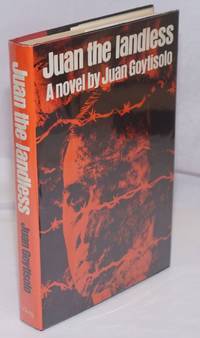
Goytisolo Juan translated from the Spanish by Helen R. Lane
Juan the Landless a novel
New York: The Viking Press 1977. Hardcover. 268p. very good first US edition quarter-cloth boards in unclipped dj. The Viking Press hardcover books
书商的参考编号 : 248244 ???????? : 0670410047 9780670410040
|
|
|
Goytisolo Juan translated from the Spanish by Helen R. Lane
Juan the Landless a novel
New York: The Viking Press 1977. Hardcover. 268p. very good first US edition quarter-cloth boards in unclipped dj with sunned spine. The Viking Press hardcover books
书商的参考编号 : 12125 ???????? : 0670410047 9780670410040
|
|
|
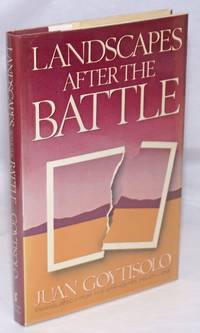
Goytisolo Juan translated from the Spanish by Helen Lane
Landscapes After the Battle
New York: Seaver Books 1982. Hardcover. 159p. very good first US edition first printing stated in quarter-cloth boards and bright price-clipped dj. Told from the perspective of a Spanish exile in Paris Goytisolo continues his assault on the conventional boundaries of bourgeois society and western sexual categories. Seaver Books hardcover books
书商的参考编号 : 53638 ???????? : 0805003932 9780805003932
|
|
|
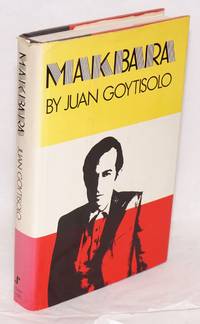
Goytisolo Juan translated from the Spanish by Helen R. Lane
Makbara
New York: Seaver Books 1981. Hardcover. 270p. very good first US edition first printing stated in quarter-cloth boards in dj. Novel set in North African cemeteries where young couples meet to have sex. Spain's greatest modern novelist according to some. Seaver Books hardcover books
书商的参考编号 : 64129 ???????? : 0394518039 9780394518039
|
|
|
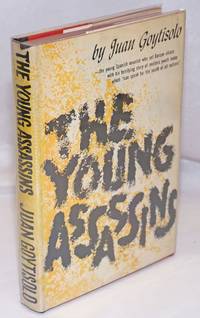
Goytisolo Juan translated from the Spanish by John Rust
The Young Assassins
New York: Knopf 1959. Hardcover. viii 273p/. note on the characters lightly-worn first US edition stated in red boards with black cloth spine decorated in gilt topstain purple unclipped lightly-edgeworn but bright dj. The author's first novel and his first appearance in the US. A story of bored bourgie kids in postwar Madrid who decide to assassinate a Fascist politician. Goytisolo was bisexual. Knopf hardcover books
书商的参考编号 : 247946
|
|
|
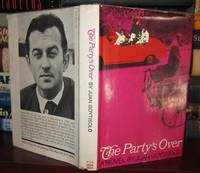
Goytisolo, Juan Translated From The Spanish Jose Yglesias
THE PARTY'S OVER : Four Attempts to Define a Love Story
New York: Grove Press 1966. First Edition; First Printing. Hardcover. Very Good in a Very Good dust jacket. 3/4 inch chip to spine heel some light edge wear. Stated First Printing. Grove Press hardcover
书商的参考编号 : 32395
|
|
|

 ?????????
 ?????PDF???
 RSS feed
 ??
??


