|
Buhayer, Constantine
Culture Smart! Greece: A Quick Guide to Customs And Etiquette
Culture Smart! provides essential information on attitudes, beliefs and behavior in different countries, ensuring that you arrive at your destination aware of basic manners, common courtesies, and sensitive issues. These concise guides tell you what to expect, how to behave, and how to establish a rapport with your hosts. This inside knowledge will enable you to steer clear of embarrassing gaffes and mistakes, feel confident in unfamiliar situations, and develop trust, friendships, and successful business relationships. Book
|
|
|
BUHLER Curt F.
On the Horace printed in Rome by Wendelinus de Wila or Bartholomaeus Guldinbeck. NEAR FINE COPY
Roy. 8vo., First Edition thus, with full-page facsimile in the text; original printed wrappers, sewed as issued, a near fine copy. This study of the undated Horace printed with the de Wila-Guldinbeck type 1: 108R (Proctor 3559) brings to light important points relating to the early history of printing in Rome. The study is based partly on the Pierpont Morgan copy. Offprinted from Bibliofilia, vol. XXXVII. VERY SCARCE.
|
|
|
BUIJS Michel
Clause Combining in Ancient Greek Narrative Discourse : The Distribution of Subclauses and Participial Clauses in Xenophon's "Hellenica" & "Anabasis"
vi + 242pp., 25cm., text in English, Doctoral Dissertation (Universiteit Leiden, the Netherlands), softcover, stamp at verso of title page, text is clean and bright, good condition, K113353
|
|
|
BUIJS Michel
Clause Combining in Ancient Greek Narrative Discourse : The Distribution of Subclauses and Participial Clauses in Xenophon's "Hellenica" & "Anabasis"
Leiden, 2003 vi + 242pp., 25cm., text in English, Doctoral Dissertation (Universiteit Leiden, the Netherlands), softcover, stamp at verso of title page, text is clean and bright, good condition, K113353
Riferimento per il libraio : K113353
|
|
|
Buirton, Diana; Beth Cohen, Norman Austin, George Dimock, Thomas Gould Et Al.
THE ODYSSEY AND ANCIENT ART An Epic in Word and Image
Minor corner creasing to last few pages. Edgewear with minor colour loss to wraps. Spine a bit sunned and creased. Scholar's name to inner cover (Jenifer Neils). ; 214 pages
|
|
|
BUISMAN,J.R.
Mythen en allegorieën in Plato's kennis- en zijnsleer.
Amst., Paris, 1932.
Riferimento per il libraio : 47691
|
|
|
Bukowski, Charles
Vromikos Kosmos / Hot Water Music
Athens: To Vima 2012 Book. Fine. Soft cover. Re-issue. A collection of short stories by Charles Bukowski published in 1983. The collection deals largely with: drinking women gambling and writing. It is an important collection that establishes Bukowski's minimalist style and his thematic oeuvre Translated into Greek by and Loukas TheodorakopoulosEphe Kalliphatides and Giorgos Blanas 268p.No copies of this edition found in Worldcat - only 2 copies issued by Apopeira Athena 1988 . To Vima paperback
Riferimento per il libraio : 044471 ISBN : 9605031191 9789605031190
|
|
|
Bulfinch, Thomas
THE TROJAN WAR With Introductory Notes on the Grecian Divinities. Adapted from the Age of Fable
Book is fine. Slipcase included is NF. ; 54 pages
|
|
|
Bulfinch, Thomas.
THE AGE OF FABLE; or, Stories of Gods and Heroes. Introductory Essay by Dudley Fitts. Illustrated by Joe Mugnaini.
Folio. 230p. + Illustrations Original full cloth binding. XLIb.
|
|
|
Bulgakov, Michael
O Maitr Kai he Margarita : Tomos A
Translated into Greek by Tina Karageorgi & Giouli Giannakopoulos. Reissue of the translation originally published by Ekdoseis Themeliio in 1991.[ Vol 1 of 2 volume set - will NOT be sold separately] [Only ONE copy found in WprldCat] Book
|
|
|
Bulgakov, Michael
O Maitr Kai he Margarita : Tomos B
Translated into Greek by Tina Karageorgi & Giouli Giannakopoulos. Reissue of the translation originally published by Ekdoseis Themeliio in 1991. [ Vol 2 of 2 volume set - will NOT be sold separately] [Only ONE copy found in WprldCat] Book
|
|
|
Bull, Peter
Life is a Cucumber : Some Not Frightfully "Belles Lettres"
More scenes from Paxos by an English actor who built a house there. His efforts to be humorous sometimes degenerate into downright silliness, but this is relieved by his genuine affection for the people of the Ionian islands. Other humorous essays are about his career as a film and stage actor. 209p. Book
|
|
|
BULLE,H.
Der schoene Mensch im Altertum. Eine Geschichte des Koerperideals bei Aegyptern, Orientalen u. Griechen. 320 Tafeln, 210 Abbildungen im Text. 2. ganz neu bearbeitete Auflage.
München, Leipzig, G. Hirt's Verlag, 1912.
Riferimento per il libraio : 157621
|
|
|
BULLE,H.
Geleisestrassen des Altertums. Mit einem Anhang über die Bronzebleche von Gurina.
München, 1948.
Riferimento per il libraio : 85868
|
|
|
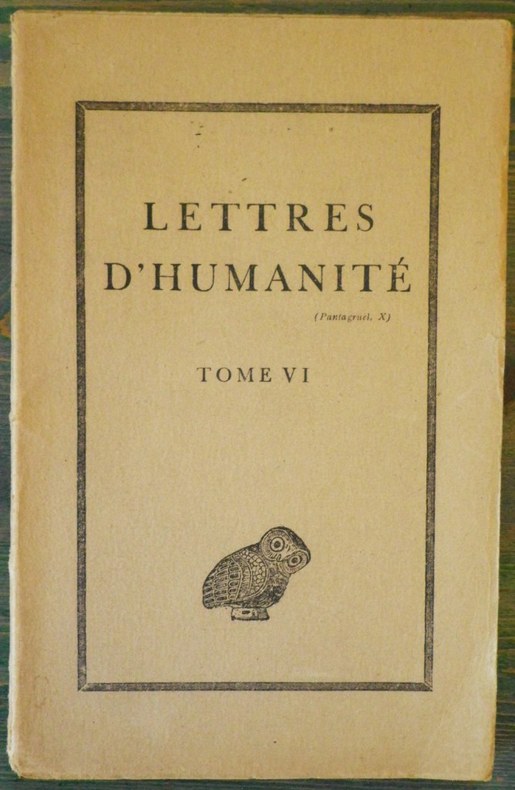
BULLETIN DE L'ASSOCIATION GUILLAUME BUDÉ.
Lettres d'Humanité Tome VI.
P., Les Belles Lettres, Guillaume Budé, 1947, 1 vol. in-8 br. de 260 pp.
Riferimento per il libraio : 4321
|
|
|
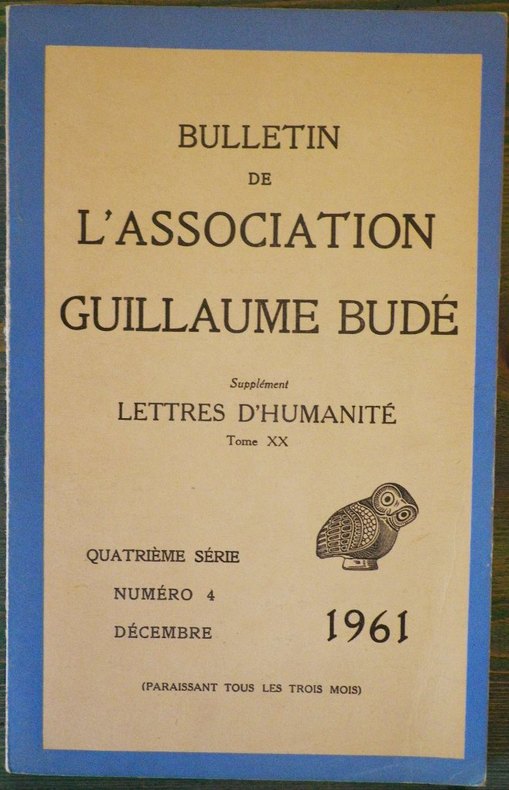
BULLETIN DE L'ASSOCIATION GUILLAUME BUDÉ.
Supplément Lettres d'Humanité Tome XX.
P., Les Belles Lettres, Guillaume Budé, 1961, 1 vol. in-8 br. de 158 pp (chiffrées de 435 à 593).
Riferimento per il libraio : 4322
|
|
|
Bultrighini, Umberto
PAUSANIA E LE TRADIZIONI DEMOCRATICHE Argo Ed Elide
Spine slant. Some rubbing and creasing to spine with a bit of colour loss. Some creasing to corners of wraps. Scholar's name to ffep (Christian Habicht). ; Saggi E Materiali Universitari 14; 286 pages
|
|
|
Bumazhnov Dmitrij
Der Mensch als Gottes Bild im christlichen Ägypten: Studien zu Gen 1 26 in zwei koptischen Quellen des 4.-5. Jahrhunderts (Studien und Texte zu Antike ... Texts in Antiquity and Christianity Band 34)
Mohr Siebeck 2006 271 pages 15 6x1 4x22 8cm. 2006. Broché. 271 pages. Cet ouvrage académique de Dmitrij Bumazhnov examine le concept de l'homme comme image de Dieu en s'appuyant sur deux sources coptes du IVe-Ve siècle : l'homélie 'De anima et corpore' et la 'Vie d'Aphu de Pemdje'. L'étude analyse une tradition monastique égyptienne distincte de l'influence d'Origène et se concentre sur l'interprétation de Genèse 1:26 dans ce contexte
Riferimento per il libraio : 100146821

|
|
|
Bundy, Elroy L
STUDIA PINDARICA
Scholar's bookplate to inner cover (G. P. Goold). Foxing to top of textblock. ; Study of the Eleventh Olympian Ode and the first Isthmian ode. ; Campus 358; 138 pages
|
|
|
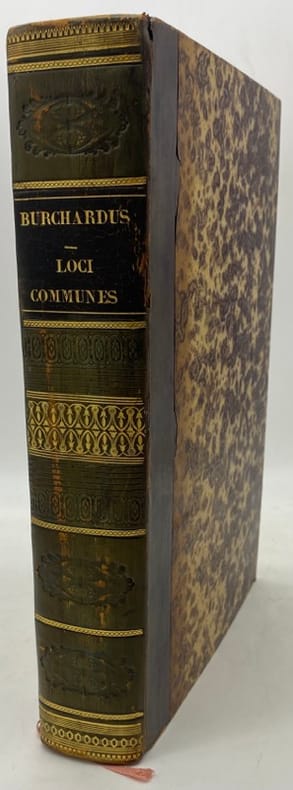
BURCHARD DE WORMS
Loci communes. congesti cum ex / Decretorum libris, tum conciliis / et orthodoxorum patrum decretis, atque / etiam diversarum nationum synodis. in quibus totum ecclesiasti- / cum munus, & veteres Ecclesiarum observationes / breviter & dilucide compre- / henduntur (..)
Cologne, Johann Birckmann, 1560 in-folio, [6] [sur 20] ff. n. ch. (titre avec vignette de libraire, dédicace, table des chapitres), 240 ff., texte sur deux colonnes, signatures **, puis A-Z, puis Aa-Rr, avec un tableau dépliant (f. 113, arbre de consanguinité), il manque le Prologue dans les pièces liminaires, demi-veau prune, dos lisse orné de filets et guirlandes dorés, ainsi que de larges fleurons à froid, pièce de titre noire, tranches marbrées (rel. du XIXe siècle). Dos passé, un mors supérieur fendillé.
Riferimento per il libraio : 188484
|
|
|
Burck, Erich
VOM MENSCHENBILD IN DER RÖMISCHEN LITERATUR Ausgewählte Schriften.
Library stamps to inner cover- no other markings. Minor shelfwear otherwise. ; Mit einem Nachwort von Hans Diller & Hrsg. Von Eckard Lefèvre; German Edition; 594 pages
|
|
|
BURCK,E.
Die Frau in der griechisch-römischen Antike.
München, 1969.
Riferimento per il libraio : 59839
|
|
|
BURCK,E.
Römische Liebesdichtung.
Kiel, Hirt, 1961.
Riferimento per il libraio : 53758
|
|
|
BURCKHARDT,J.
Der Cicerone. Eine Anleitung zum Genuss der Kunstwerke Italiens. 7. verb. & verm. Aufl. 1. Theil: antike Kunst.
Lpz., Seemann, 1898.
Riferimento per il libraio : 104783
|
|
|
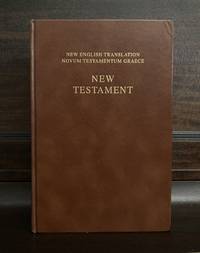
Burer, Michael H; Harris III, W Hall; Wallace, Daniel B (Eds English text and notes) & Nestle-Aland (Greek text and critical app
New English Translation Novum Testamentum Graece New Testament
Deutsche Bibelgesellschaft NET Bible Press. 27th Edition. Hardcover. Very Good. :: Greek - English diglot. :: Edition of the New Testament featuring the Greek text of NA with apparatus and the English text of the NET BIBLE with customized notes to help facilitate the study of the New Testament by students and pastors everywhere. ::<br /> <br /> Bound in publisher's tan bonded leather front board bears title in gold. Title and publisher lettered in gold upon spine. Octavo 9 1/2 x 6 1/4 inches; 242 x 160 millimeters. 887 pages. <br /> <br /> Condition: Very Good-. Upper right corner of front board bumped. Bonded leather has rubbed in several places exposing the boards. Prior owner's name written at the bottom corner of the front free endpaper. Pages are clean. I would say this is a good reading and study copy but not a fine gift copy. Deutsche Bibelgesellschaft NET Bible Press hardcover
Riferimento per il libraio : 616 ISBN : 0737500603 9780737500608
|
|
|
Burgert.-
Weisser aus Milch. Textauswahl Konrad Bauer.
Berlin, Burgert Handpresse, 1974. 4°. 21 S. Mit 8 (dv. 6 farb.) Illustr. von Hans-Joachim Burgert. Orig.-Broschur in chinesischer Heftung.
Riferimento per il libraio : 23581AB
|
|
|
Burgert.-
Weisser aus Milch. Textauswahl Konrad Bauer.
2., erweiterte Auflage. Berlin, Burgert Handpresse, 1980. 4°. 23 (1) S. Mit 9 (dv. 6 farb.) Illustr. von Hans-Joachim Burgert. Orig.-Broschur in chinesischer Heftung.
Riferimento per il libraio : 23582AB
|
|
|
Burgess, Jonathan S.
THE DEATH AND AFTERLIFE OF ACHILLES
Achilles’ death? By an arrow shot through the vulnerable heel of the otherwise invincible mythic hero? Was as well known in antiquity as the rest of the history of the Trojan War. However, this important event was not described directly in either of the great Homeric epics, the Iliad or the Odyssey. Noted classics scholar Jonathan S. Burgess traces the story of Achilles as represented in other ancient sources in order to offer a deeper understanding of the death and afterlife of the celebrated Greek warrior. Through close readings of additional literary sources and analysis of ancient artwork, such as vase paintings, Burgess uncovers rich accounts of Achilles’ death as well as alternative versions of his afterlife. Taking a neoanalytical approach, Burgess is able to trace the influence of these parallel cultural sources on Homer’s composition of the Iliad. With his keen, original analysis of hitherto untapped literary, iconographical, and archaeological sources, Burgess adds greatly to our understanding of this archetypal mythic hero. ; 208 pages
|
|
|
Burgess, Jonathan S.
THE TRADITION OF THE TROJAN WAR IN HOMER AND THE EPIC CYCLE
Some spotting to boards. Very light shelfwear to DJ. Dustjacket is protected in plastic sleeve. ; Although the Iliad and Odyssey narrate only relatively small portions of the Trojan War and its aftermath, for centuries these works have overshadowed other, more comprehensive narratives of the conflict, particularly the poems known as the Epic Cycle. In The Tradition of the Trojan War in Homer and the Epic Cycle, Jonathan Burgess challenges Homer's authority on the war's history and the legends surrounding it, placing the Iliad and Odyssey in the larger, often overlooked context of the entire body of Greek epic poetry of the Archaic Age. He traces the development and transmission of the Cyclic poems in ancient Greek culture, comparing them to later Homeric poems and finding that they were far more influential than has previously been thought. ; 320 pages
|
|
|
Burian, Jan & Ladislav Vidman (Eds. )
ANTIQUITAS GRAECO-ROMANA AC TEMPORA NOSTRA Acta Congressus Internationalis Habiti Brunae Diebus 12-16 Mensis Aprilis MCMLXVI
Small tear to rear joint. Some shelfwear. ; Ceskoslovenská Akademie Ved; 585 pages
|
|
|
Burke, John & Roger Scott (Eds. )
BYZANTINE MACEDONIA Identity, Image, and History: Papers from the Melbourne Conference, July 1995
Still wrapped in plastic. ; Hese nineteen papers are invaluable to anyone interested in the Macedonian heritage or in the economy, administration, history and representation of Macedonia during the course of the Byzantine empire. ; Byzantina Australiensia; 231 pages; Angeliki Laiou: Thessaloniki and Macedonia in the Byzantine Period; Johannes Koder: Macedonians and Macedonia in Byzantine Spatial Thinking; Ioannis Tarnanidis: The Macedonians of the Byzantine Period; Johannes Irmscher: The Image of Macedonia As Found in Byzantine Historians; Andreas Schminck: The Beginnings and Origins of the 'Macedonian' Dynasty; Dion Smythe: Macedonians in Eleventh- and Twelfth-Century Byzantine Historiography; Apostolos Karpozilos: Macedonia as Reflected in the Epistolography of the Fourteenth Century; Martha Grigoriou-Ioannidou: The "kaq' huaV glwssa" in the Mauros' and Kuober's Episode (Miracula S. Demetrii 291) ; Dionyssia Missiou: The Importance of Macedonia During the Byzantine Era; Athanasios Karathanasis: Philip and Alexander of Macedon in the Literature of the Palaiologan Era; J. H. W. G. Liebeschuetz: The Government of the Late Roman City with Special Reference to Thessaloniki; Alkmene Stavridou-Zafraka: The Development of the Theme Organisation in Macedonia; Gerhard Podskalsky: Two Archbishops of Achrida (Ochrid) and Their Significance for Macedonia's Secular and Church History: Theophylaktos and Demetrios Chomatenos; Demetrios Constantelos: Classical Greek Heritage in the Epistles of Theophylaktos of Achrida; Rosemary Morris: The Athonites and Their Neighbours in Macedonia in the Tenth and Eleventh Centuries; Triantafyllitsa Maniati-Kokkini: Clergy and Laity 'Opponents' in Claims for Privileges and Land from the Twelfth to the Fourteenth Century; Michael Jeffreys Manuel Komnenos' Macedonian Military Camps: A Glamorous Alternative Court?; V. Nerantzi-Varmazi Western Macedonia in the Twelfth and Thirteenth Centuries; Angeliki Laiou: The Economy of Byzantine Macedonia in the Palaiologan Period
|
|
|
Burke, John (edited by) with Ursula Betka, Penelope Buckley, Kathleen Hay, Roger Scott & Andrew Stephenson
BYZANTINE NARRATIVE Papers in Honour of Roger Scott
Bumping to top and bottom of spine; 41 papers, 650 pages including 105 illustrations. CONTENTS: Narrative in Historians, Chronicles & Fiction: Margaret Mullett Novelisation in Byzantium: Narrative after the Revival of Fiction; Roger Scott Narrating Justinian: From Malalas to Manasses; Ingela Nilsson To Narrate the Events of the Past: On Byzantine Historians, and Historians on Byzantium; Brian Croke Tradition and Originality in Photius' Historical Reading; Bronwen Neil Narrating the Trials and Death in Exile of Pope Martin I and Maximus the Confessor; Elizabeth McCartney The Use of Metaphor in Michael Psellos' Chronographia; Penelope Buckley War and Peace in the Alexiad; Theoni Sklavos Moralising History: The Synopsis Historiarum of John Skylitzes; Emma Strugnell The Representation of Augustae in John Skylitzes' Synopsis Historiarum; John Burke The Madrid Skylitzes as an Audio-Visual Experiment; Andrew Gillett The Goths and the Bees in Jordanes: A Narrative of No Return; Eamon H. R. Kelly From 'Fallen Woman' to Theotokos: Music, Women's Voices and Byzantine Narratives of Gender Identity; Nick Nicholas How the Entertaining Tale of Quadrupeds became a Tale: Grafting Narrative; Vicky Panayotopoulou-Doulavera Lamenting the Fall or Disguising a Manifesto? The Poem Conquest of Constantinople; Dean Sakel A Probable Solution to the Problem of the Chronicle of the Turkish Sultans. NARRATIVE IN BYZANTINE ART: Felicity Harley The Narration of Christ's Passion in Early Christian Art; Matthew Martin Observations on the Paintings of the Exodus Chapel, Bagawat Necropolis, Kharga Oasis, Egypt; Julia Kelly The Column of Arcadius: Reflections of a Roman Narrative Tradition; Debbie Del Frate Biblical Narrative in the Mosaics of Bishop Theodore's Cathedral, Aquileia; Balsa Djuric Plato, Plutarch and the Sibyl in the Fresco Decoration of the Episcopal Church of the Virgin Ljeviska in Prizren; Nira Stone Narrativity in Armenian Manuscript Illustration; Joan Barclay Lloyd Sources for the Story of the Creation in the Mosaics of Sicily and Venice; Ursula Betka Icon and Narrative: Memorializing Saint Francis in Assisi; Margaret Manion Authentication, Theology and Narrative in the Gospel Book of Theophanes; Nancy P. Sevcenko Spiritual Progression in the Canon Tables of the Melbourne Gospels. CHRISTIAN NARRATIVE AND ESCHATOLOGY: Eric Osborn Clement of Alexandria - From Prophecy to Plato; John Wortley The 'Sacred Remains' of Constantine and Helena; Bill Leadbetter A Byzantine Narrative of the Future and the Antecedents of the Last World Emperor; Michael Champion Kosmas Indikopleustes and Narratives in Sixth-century Liturgy and History; Annamma Varghese Kaiserkritik in Two Kontakia of Romanos; Andrei Timotin Byzantine Visionary Accounts of the Other World: A Reconsideration; Peter A. L. Hill A Ninth Century Passion Harmony. ARCHITECTURE, ARCHAEOLOGY, ECONOMY AND TA EXOTIKA: Geoffrey Nathan 'Pothos tes Philoktistou': Anicia Juliana's Architectural Narratology; Nigel Westbrook Spoliation and Imitation: Continuity and Radical Disjunction in Byzantine Palatine Architecture; Hartmut Ziche Historians and the Economy: Zosimos and Prokopios on Fifth- and Sixth- Century Economic Development; Tamara Lewit Stories in the Ground: Settlement Remains and Archaeology as Narrative in the Fourth- to Sixth-century Eastern Mediterranean; Timothy E. Gregory Narrative of the Byzantine Landscape; Jialing Xu Narratives of the Roman-Byzantine World in Ancient Chinese Sources Chen Zhi-Qiang Narrative Materials about the Byzantines in Chinese Sources; Robert Mihajlovski Three Byzantine Lead Seals from Devolgrad (Ancient Audaristos) near Stobi; Bob Priestley The Varangian Guard; Australian Association for Byzantine Studies. Byzantina Australiensia 16; 650 pages
|
|
|
Burke, John (edited by) with Ursula Betka, Penelope Buckley, Kathleen Hay, Roger Scott & Andrew Stephenson
BYZANTINE NARRATIVE Papers in Honour of Roger Scott
Still wrapped in plastic. ; 41 papers, 650 pages including 105 illustrations. CONTENTS: Narrative in Historians, Chronicles & Fiction: Margaret Mullett Novelisation in Byzantium: Narrative after the Revival of Fiction; Roger Scott Narrating Justinian: From Malalas to Manasses; Ingela Nilsson To Narrate the Events of the Past: On Byzantine Historians, and Historians on Byzantium; Brian Croke Tradition and Originality in Photius' Historical Reading; Bronwen Neil Narrating the Trials and Death in Exile of Pope Martin I and Maximus the Confessor; Elizabeth McCartney The Use of Metaphor in Michael Psellos' Chronographia; Penelope Buckley War and Peace in the Alexiad; Theoni Sklavos Moralising History: The Synopsis Historiarum of John Skylitzes; Emma Strugnell The Representation of Augustae in John Skylitzes' Synopsis Historiarum; John Burke The Madrid Skylitzes as an Audio-Visual Experiment; Andrew Gillett The Goths and the Bees in Jordanes: A Narrative of No Return; Eamon H. R. Kelly From 'Fallen Woman' to Theotokos: Music, Women's Voices and Byzantine Narratives of Gender Identity; Nick Nicholas How the Entertaining Tale of Quadrupeds became a Tale: Grafting Narrative; Vicky Panayotopoulou-Doulavera Lamenting the Fall or Disguising a Manifesto? The Poem Conquest of Constantinople; Dean Sakel A Probable Solution to the Problem of the Chronicle of the Turkish Sultans. NARRATIVE IN BYZANTINE ART: Felicity Harley The Narration of Christ's Passion in Early Christian Art; Matthew Martin Observations on the Paintings of the Exodus Chapel, Bagawat Necropolis, Kharga Oasis, Egypt; Julia Kelly The Column of Arcadius: Reflections of a Roman Narrative Tradition; Debbie Del Frate Biblical Narrative in the Mosaics of Bishop Theodore's Cathedral, Aquileia; Balsa Djuric Plato, Plutarch and the Sibyl in the Fresco Decoration of the Episcopal Church of the Virgin Ljeviska in Prizren; Nira Stone Narrativity in Armenian Manuscript Illustration; Joan Barclay Lloyd Sources for the Story of the Creation in the Mosaics of Sicily and Venice; Ursula Betka Icon and Narrative: Memorializing Saint Francis in Assisi; Margaret Manion Authentication, Theology and Narrative in the Gospel Book of Theophanes; Nancy P. Sevcenko Spiritual Progression in the Canon Tables of the Melbourne Gospels. CHRISTIAN NARRATIVE AND ESCHATOLOGY: Eric Osborn Clement of Alexandria - From Prophecy to Plato; John Wortley The 'Sacred Remains' of Constantine and Helena; Bill Leadbetter A Byzantine Narrative of the Future and the Antecedents of the Last World Emperor; Michael Champion Kosmas Indikopleustes and Narratives in Sixth-century Liturgy and History; Annamma Varghese Kaiserkritik in Two Kontakia of Romanos; Andrei Timotin Byzantine Visionary Accounts of the Other World: A Reconsideration; Peter A. L. Hill A Ninth Century Passion Harmony. ARCHITECTURE, ARCHAEOLOGY, ECONOMY AND TA EXOTIKA: Geoffrey Nathan 'Pothos tes Philoktistou': Anicia Juliana's Architectural Narratology; Nigel Westbrook Spoliation and Imitation: Continuity and Radical Disjunction in Byzantine Palatine Architecture; Hartmut Ziche Historians and the Economy: Zosimos and Prokopios on Fifth- and Sixth- Century Economic Development; Tamara Lewit Stories in the Ground: Settlement Remains and Archaeology as Narrative in the Fourth- to Sixth-century Eastern Mediterranean; Timothy E. Gregory Narrative of the Byzantine Landscape; Jialing Xu Narratives of the Roman-Byzantine World in Ancient Chinese Sources Chen Zhi-Qiang Narrative Materials about the Byzantines in Chinese Sources; Robert Mihajlovski Three Byzantine Lead Seals from Devolgrad (Ancient Audaristos) near Stobi; Bob Priestley The Varangian Guard; Australian Association for Byzantine Studies. Byzantina Australiensia 16; 650 pages
|
|
|
Burkert, Walter
BABYLON, MEMPHIS, PERSEPOLIS Eastern Contexts of Greek Culture
Very minor shelfwear. ; At the distant beginning of Western civilization, according to European tradition, Greece stands as an insular, isolated, near-miracle of burgeoning culture. This book traverses the ancient world's three great centers of cultural exchange--Babylonian Nineveh, Egyptian Memphis, and Iranian Persepolis--to situate classical Greece in its proper historical place, at the Western margin of a more comprehensive Near Eastern-Aegean cultural community that emerged in the Bronze Age and expanded westward in the first millennium B. C. In concise and inviting fashion, Walter Burkert lays out the essential evidence for this ongoing reinterpretation of Greek culture. In particular, he points to the critical role of the development of writing in the ancient Near East, from the achievement of cuneiform in the Bronze Age to the rise of the alphabet after 1000 B. C. From the invention and diffusion of alphabetic writing, a series of cultural encounters between "Oriental" and Greek followed. Burkert details how the Assyrian influences of Phoenician and Anatolian intermediaries, the emerging fascination with Egypt, and the Persian conquests in Ionia make themselves felt in the poetry of Homer and his gods, in the mythic foundations of Greek cults, and in the first steps toward philosophy. A journey through the fluid borderlines of the Near East and Europe, with new and shifting perspectives on the cultural exchanges these produced, this book offers a clear view of the multicultural field upon which the Greek heritage that formed Western civilization first appeared. ; 192 pages
|
|
|
Burkert, Walter
GRIECHISCHE RELIGION DER ARCHAISCHEN UND KLASSISCHEN EPOCHE
Scholar's bookplate to ffep (G. P. Goold). Foxing/dustsoiling to top of textblock. Laminate lifting in places from DJ. A couple of tears and yellowing to DJ. ; Die Religionen Der Menschheit ; Bd. 15; 508 pages
|
|
|
Burkert, Walter; Peter Bing (Trans. )
SAVAGE ENERGIES Lessons of Myth and Ritual in Ancient Greece
DJ spine sunned. ; We often think of classical Greek society as a model of rationality and order. Yet as Walter Burkert demonstrates in these influential essays on the history of Greek religion, there were archaic, savage forces surging beneath the outwardly calm face of classical Greece, whose potentially violent and destructive energies, Burkert argues, were harnessed to constructive ends through the interlinked uses of myth and ritual. For example, in a much-cited essay on the Athenian religious festival of the Arrephoria, Burkert uncovers deep connections between this strange nocturnal ritual, in which two virgin girls carried sacred offerings into a cave and later returned with something given to them there, and tribal puberty initiations by linking the festival with the myth of the daughters of Kekrops. Other chapters explore the origins of tragedy in blood sacrifice; the role of myth in the ritual of the new fire on Lemnos; the ties between violence, the Athenian courts, and the annual purification of the divine image; and how failed political propaganda entered the realm of myth at the time of the Persian Wars. ; 0.63 x 9.32 x 6.3 Inches; 152 pages
|
|
|
Burn, A.R.& Burn, Mary
The Living Past of Greece : A Time Traveller's Tour of Historic and Prehistoric Places
The whole of Greece, as every traveller and archaeologist knows, is alive with history and prehistory. Mr and Mrs Burn select over seventy of the most important and interesting places, islands and buildings, relate what happened there in the past, and describe in detail what now remains. Some of these sites are well known, others less so; but all have been chosen not only for their historical interest and beauty, but also because remains still exist, usually above foundation level, bringing the past to life. Inevitably, the greater part of this book is devoted to prehistoric and classical places, sites of a civilisation ancestral to our own; but attention is also given to the great (and some small) churches and monasteries of Christian Greece and to the major Frankish castles of mediaeval times. A lively outline of Greek history provides an introduction and puts the whole in perspective, and each site is illustrated by a specially-drawn plan or map and, in many cases, a photograph. The authors' enthusiasm for the country and its past is vividly conveyed in their writing, making The Living Past of Greece an invaluable companion for the traveller already there or for the reader and potential traveller at home. Book
|
|
|
Burnet, Jean R. (editor)
Looking into My Sister's Eyes : An Exploration in Women's History
245 pages. A collection of thirteen papers given at a conference held at the University of Toronto in May 1985. Brings out the history of women in several ethnic groups. As a pioneering enterprise in this area, it has indicated the richness of the field. A beginning has been made; much remains to be done. Discusses: The Upper-Class British Woman; Italian Women; Finnish Domestics; British Girls; Jewish Women; Polish Women; Greek Women; Macedonian Women; Armenian Women Refugees; Ukrainian Women; Working Chinese Women; Ontario Mennonite Women. Moderate quantity of markings to contents. Average wear. Binding sound. Book
|
|
|
Burnet, Jean R. (editor) [Polyzoi, Eleoussa, Petroff, Lillian, Kaprielian, Isabel ]
Looking into My Sister's Eyes : An Exploration in Women's History
A collection of thirteen papers given at a conference held at the University of Toronto in May 1985. covering the varied experiences of immigrant women in Canada, As a pioneering enterprise in this area, it has indicated the richness of the field. A beginning has been made; much remains to be done. Includes : Polyzoi, Eleoussa " Greek immigrant women from Asia Minor in pre-war Toronto - the Formative Years" pp.107-124 ; Petroff, Lillian "Contributors to ethnic cohesion : Macedonian women in Toronto to 1940" pp125-138; Kaprielian, Isabel "Creating and sustaining an ethnocultural heritage in Ontario: the case of Armenian women refugees. pp 139-153. 245p. bibliographies. Book
|
|
|
Burnett, Anne Pippin
CATASTROPHE SURVIVED Euripides' Plays of Mixed Reversal
Some pencil marginalia to a few pages. Former owner's name on ffep in pencil. Some adhesive residue to top of spine and front board. Else VG. ; 244 pages
|
|
|
Burnett, Anne Pippin
REVENGE IN ATTIC AND LATER TRAGEDY
Very light shelfwear to DJ. Remainder mark to top of the textblock. ; Sather Classical Lectures; 1.12 x 9.25 x 6.25 Inches; 384 pages; Modern readings of ancient Athenian drama tend to view it as a presentation of social or moral problems, as if ancient drama showed the same realism seen on the present-day stage. Such views are belied by the plays themselves, in which supremely violent actions occur in a legendary time and place distinct both from reality and from the ethics of ordinary life. Offering fresh readings of Attic tragedy, Anne Pippin Burnett urges readers to peel away twentieth-century attitudes toward vengeance and reconsider the revenge tragedies of ancient Athens in their own context. After a consideration of how our view of Elizabethan drama has obscured an accurate view of the ancient tragedies, Burnett reviews early Greek notions of vengeance as expressed in the Odyssey, Heracles' tales, Pindar's odes, Attic judicial processes, and the legend of Harmodius and Aristogeiton. Then, setting aside post-Platonic and Judeo-Christian notions of criminality, she provides new interpretations of all the Attic tragedies in which revenge is a central theme: Aeschylus' Libation Bearers, Sophocles' Ajax, Electra, and Tereus, and Euripides' Children of Heracles, Hecuba, Medea, Electra, and Orestes. Burnett shows that for the ancients, revenge meant a redress of imbalances in both human and divine worlds, achieved through human actions. The vengeful heroines thus appear in a new light. Electra, Hecuba, Medea, and others cease to be the picture of depravity in dramas that are grotesque and sensational, and are instead representative human figures who respond with grandeur to the outsize demands of necessity and supernatural powers.
|
|
|
Burnett, Anne Pippin
THE ART OF BACCHYLIDES
Very light edgewear to DJ else fine. ; Martin Classical Lectures 29; 224 pages; Anne Burnett shows us the art of Bacchylides in the context of Greek lyric traditions. She discusses the beginnings of choral poetry and the functions of the choral myth; she describes the purposes of the victory song in particular and the practices of Bacchylides and Pindar as they fulfilled their victory commissions. In analyzing individual poems Burnett's approach is two-fold, for each ode is seen as a choral performance reflecting archaic cult practice, while it is also studied as the expression of a particular poetic vision and sensibility. Thus the formal elements of the Bacchylidean victory songs are recognized as the response of a chorus which must give semi-religious praise to a noble athlete or prize-winning prince in times of increasing democracy. At the same time an artistry and an ethic peculiar to Bacchylides are discovered in the manipulation of fictions and mythic materials.
|
|
|
Burnett, Anne Pippin
THE ART OF BACCHYLIDES
Scholars' name to ffep (Mark Golden). Else book is fine. Very light shelfwear to DJ. ; Martin Classical Lectures 29; 224 pages; Anne Burnett shows us the art of Bacchylides in the context of Greek lyric traditions. She discusses the beginnings of choral poetry and the functions of the choral myth; she describes the purposes of the victory song in particular and the practices of Bacchylides and Pindar as they fulfilled their victory commissions. In analyzing individual poems Burnett's approach is two-fold, for each ode is seen as a choral performance reflecting archaic cult practice, while it is also studied as the expression of a particular poetic vision and sensibility. Thus the formal elements of the Bacchylidean victory songs are recognized as the response of a chorus which must give semi-religious praise to a noble athlete or prize-winning prince in times of increasing democracy. At the same time an artistry and an ethic peculiar to Bacchylides are discovered in the manipulation of fictions and mythic materials.
|
|
|
Burnett, Anne Pippin
THE ART OF BACCHYLIDES
Scholar's bookplate to inner cover (G. P. Goold). Foxing to top of textblock. Very light shelfwear to DJ with 1 tiny chip ; Martin Classical Lectures 29; 224 pages; Anne Burnett shows us the art of Bacchylides in the context of Greek lyric traditions. She discusses the beginnings of choral poetry and the functions of the choral myth; she describes the purposes of the victory song in particular and the practices of Bacchylides and Pindar as they fulfilled their victory commissions. In analyzing individual poems Burnett's approach is two-fold, for each ode is seen as a choral performance reflecting archaic cult practice, while it is also studied as the expression of a particular poetic vision and sensibility. Thus the formal elements of the Bacchylidean victory songs are recognized as the response of a chorus which must give semi-religious praise to a noble athlete or prize-winning prince in times of increasing democracy. At the same time an artistry and an ethic peculiar to Bacchylides are discovered in the manipulation of fictions and mythic materials.
|
|
|
Burnett, Anne Pippin
THREE ARCHAIC POETS Archilochus, Alcaeus, Sappho
Ex-library copy with usual stamps, call numbers and pocket. Small sticker stain to front board. Sticker damage to front pastedown. Corners a bit rounded. Lettering to spine a bit rubbed. ; 328 pages; Toward the beginning of the seventh century B. C. There was a flowering of "personal" poetry marked by a passion and a candor that are in striking contrast to the epic tradition. Burnett presents a convincing new interpretation of the three most important poets of the period.
|
|
|
Burnett, Anne Pippin
THREE ARCHAIC POETS Archilochus, Alcaeus, Sappho
Minor shelfwear to book and DJ. Scholar's bookplate to ffep (Philippa Goold). Light edgewear to DJ. ; 328 pages; Toward the beginning of the seventh century B. C. There was a flowering of "personal" poetry marked by a passion and a candor that are in striking contrast to the epic tradition. Burnett presents a convincing new interpretation of the three most important poets of the period.
|
|
|
BURNOUF J. L.
METHODE POUR ETUDIER LA LANGUE GRECQUE
Imprimerie et Librairie Classiques de Jules Delalain et Cie, Paris. 1852. In-8 Carré. Relié. Etat passable. Plats abîmés. Dos fané. Rousseurs. 336 pages. Papier muet encollé sur le dos, le consolidant. Etiquette de code sur la couverture. Quelques tampons de bibliothèque. Couverture tachée. Manques en surface du 1er plat. 50e édition. Ouvrage adopté par le Conseil de l'Instruction publique.

|
|
|
BURNOUF J. L.
METHODE POUR ETUDIER LA LANGUE GRECQUE
Imprimerie et Librairie Classiques de Jules Delalain et Cie, Paris. 1857. In-8 Carré. Relié. Etat passable. Plats abîmés. Dos abîmé. Quelques rousseurs. 336 pages. Dos manquant avec une étiquette de code en coiffe de pied. Plats tachés et très frottés. Tranche tachées. Par J.L. Burnouf, Membre de l'Institut, Professeur d'Eloquence au Collège de France, Inspecteur Général des Etudes. Ouvrage adopté par le Conseil de l'Instruction Publique.
|
|
|
BURNOUF J. L.
METHODE POUR ETUDIER LA LANGUE GRECQUE
Imprimerie et Librairie Classiques de Jules Delalain et Cie, Paris. 1841. In-8 Carré. Relié. Etat d'usage. Couv. défraîchie. Dos abîmé. Quelques rousseurs. 334 pages. Etiquette de code sur la couverture. Quelques tampons de bibliothèque. Couverture muette. Plats très frottés. Quelques taches d'encre dans le texte (altérant légèrement la lecture) et sur la tranche. 36e édition revue. Par J.L. Burnouf, Lecteur et Prof. Royal au Collège de France, Inspecteur Général des Etudes. Ouvrage adopté par l'Université.
|
|
|
BURNOUF J. L.
METHODE POUR ETUDIER LA LANGUE GRECQUE
JULES DELALAIN - 54° EDITION. 1825. In-8. Cartonné. Etat d'usage, Plats abîmés, Dos satisfaisant, Intérieur frais. 336 pages. Ouvrage en grec et en français. Dos toilé gris. Ecritures sur les premières pages, à l'encre.. . . . Classification Dewey : 480-Langues helléniques. Grec
Riferimento per il libraio : RO30055733
|
|

 Ricevere i risultati per e-mail
 Scaricare i risultati in PDF
 RSS feed
 Link
Link


