|
Science Fiction, Katherine MacLean
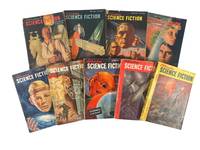
1951 Archive of "Astounding Science Fiction" Magazine Featuring Katherine MacLean Sylvia Jacobs and Frank M. Robinson
1951. Magazines and PeriodicalsLiteratureSci-fi Astounding Science Fiction archive of nine issues. New York: Street & Smith Publications April–December 1951. Nine issues. Original color illustrated wraps. A consecutive nine-issue run of Astounding Science Fiction under the editorship of John W. Campbell Jr. one of the most influential figures of mid-century speculative fiction. These issues capture a transition from the bombastic optimism of the 1940s into a more psychologically complex technologically literate and philosophically curious era. Representing a range of emerging and established voices including multiple women authors and a growing diversity of themes this 1951 run reflects a maturing genre grappling with Cold War tension nuclear science interplanetary ethics and artificial intelligence.<br /> 1 Astounding Science Fiction Vol. XLVII No. 2. April 1951. Features the novelette “A Stitch in Time†by Sylvia Jacobs one of the few women published in Astounding at the time alongside H. Beam Piper’s “Temple Trouble.†The issue also includes short fiction by Jack Williamson Fredric Brown Oliver Saari and Raymond Z. Gallun. The inclusion of Jacobs is significant given the male-dominated nature of the magazine and genre during this period.<br /> <br /> 2 Astounding Science Fiction Vol. XLVII No. 3. May 1951. Highlights include Walter M. Miller Jr.’s early novelette “Izzard and the Membrane†which anticipates themes of religion and memory later explored in A Canticle for Leibowitz. Also includes “Galactic Gadgeteers†by Harry Stine and “Key Decision†by H.B. Fyfe. The short story “Success Story†by Julian Chain adds a satirical corporate edge. <br /> <br /> 3 Astounding Science Fiction Vol. XLVII No. 4. June 1951. Features Isaac Asimov’s powerful psychological novelette “Breeds There a Man.†one of his more existential works on identity and paranoia. Paired with Eric Frank Russell’s satirical “.And Then There Were None.†Other contributors include Roy L. Clough Jr. Edward Grendon and J.A. Meyer. <br /> <br /> 4 Astounding Science Fiction Vol. XLVII No. 5. July 1951. Notable for contributions by two women: Katherine MacLean’s “Feedback†a hard science fiction tale infused with psychological realism and “Windfall†by Catherine C. de Camp. Also includes work by James H. Schmitz Jack Williamson Gordon R. Dickson and Dean McLaughlin. MacLean’s inclusion marks a growing though still rare female presence in the field. <br /> <br /> 5 Astounding Science Fiction Vol. XLVII No. 6. August 1951. Novelettes include “The Soul-Empty Ones†by Walter M. Miller Jr. and “City of the Phoenix†by M.C. Pease. Short stories by Clifford D. Simak “Courtesy†Gordon R. Dickson “The Monkey Wrench†and Dave Dryfoos. Miller’s return and Simak’s humanist tone anchor the issue’s deeper themes.<br /> <br /> 6 Astounding Science Fiction Vol. XLVIII No. 1. September 1951. Includes H. Beam Piper’s “Day of the Moron†a critique of nuclear facility oversight and societal competence. Alan E. Nourse’s “The Universe Between†brings early exploration of interdimensional travel. <br /> <br /> 7 Astounding Science Fiction Vol. XLVIII No. 2. October 1951. Debuts Hal Clement’s Iceworld Part One an essential work of “hard†science fiction that examines alien physiology and ethics. Also includes “Thinking Machine†by H.B. Fyfe and short stories by Lester del Rey Eric Frank Russell and Ralph Williams. <br /> <br /> 8 Astounding Science Fiction Vol. XLVIII No. 3. November 1951. Second installment of Clement’s Iceworld paired with the novelette “Implode and Peddle†by H.B. Fyfe and “To Explain Mrs. Thompson†by Philip Latham. The lead short novel “The Hunting Season†is by Frank M. Robinson a significant figure in LGBTQ science fiction history. <br /> <br /> 9 Astounding Science Fiction Vol. XLVIII No. 4. December 1951. Concludes Iceworld. Features “Dune Roller†by J.C. May and “The Edge of Forever†by Chad Oliver one of the few non-white contributors to the magazine in this era. Oliver an anthropologist brought sociocultural insight to his speculative work. Also includes stories by Irving E. Cox Jr. and an atomic energy article by Corbin Allardice and Edward R. Trapnell.<br /> <br /> Moderate edgewear and spine wear consistent with age. Minor chipping to covers on April and June issues. Overall good to very good condition. A richly representative nine-issue run of Astounding Science Fiction from 1951 showcasing pivotal works by Isaac Asimov Hal Clement Walter M. Miller Jr. and notable contributions from female authors. A key snapshot of the genre's intellectual and cultural evolution during the early Cold War. unknown
书商的参考编号 : 21831
|
|
|
Science Fiction, Isaac Asimov
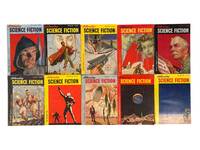
1952 Archive of "Astounding Science Fiction" Magazine Featuring Isaac Asimov and Walter Miller
Magazines and PeriodicalsLiteratureSci-fi Astounding Science Fiction archive of ten issues. New York: Street & Smith Publications January–December 1952. Original illustrated wraps. This full-year run of Astounding Science Fiction captures the magazine under the long-standing editorship of John W. Campbell Jr. who shepherded the Golden Age of science fiction with an emphasis on rationalism engineering ethos and human problem-solving. These 1952 issues feature pivotal contributions by influential genre authors such as Isaac Asimov Walter M. Miller Jr. Jack Vance Gordon R. Dickson and Eric Frank Russell. While Campbell’s editorial direction leaned heavily toward hard science narratives this archive also reflects early intersections with Cold War anxiety postwar technocratic idealism and philosophical experimentation that would lay groundwork for New Wave science fiction. The presence of few female writers or authors of color highlights the period’s gender and racial homogeneity within major genre magazines.<br /> <br /> 1 Astounding Science Fiction Vol. XLVIII No. 5. January 1952. Features “Telex†by Jack Vance short novel and “That Share of Glory†by C.M. Kornbluth a tale of cultural diplomacy through a monastic order in space now recognized as a Cold War allegory.<br /> <br /> 2 Astounding Science Fiction Vol. XLVIII No. 6. February 1952. Includes “Firewater†by William Tenn Philip Klass a social satire featuring alien contact and Cold War power dynamics and early work by Gordon R. Dickson and James Blish.<br /> <br /> 3 Astounding Science Fiction Vol. XLIX No. 1. March 1952. Debut of Gunner Cade by Cyril Judd C.M. Kornbluth & Judith Merril an unusual pseudonymous collaboration; also includes Jack Williamson’s “Man Down†and stories by H.B. Fyfe and Matthew M. Cammen.<br /> <br /> 4 Astounding Science Fiction Vol. XLIX No. 2. April 1952. Features “Dumb Waiter†by A Canticle for Leibowitz author Walter M. Miller Jr. and stories by Raymond F. Jones and Julian Chain. Serial installment of Gunner Cade continues.<br /> <br /> 5 Astounding Science Fiction Vol. XLIX No. 3. May 1952. Concludes Gunner Cade and includes “Blood’s a Rover†by Chad Oliver an anthropologist whose fiction often tackled cross-cultural and racial themes though under the genre’s dominant lens.<br /> <br /> 6 Astounding Science Fiction Vol. XLIX No. 4. June 1952. Highlights “Blood Bank†by Walter M. Miller Jr. and “The Specter General†by Theodore Cogswell a militarized satire of decaying empires frequently anthologized for its wit and genre-defying tone.<br /> <br /> 7 Astounding Science Fiction Vol. L No. 1. September 1952. Contains “Frontier of the Dark†by A. Bertram Chandler with commentary on leadership and isolation and “Improbable Profession†by Leonard Lockhard a pen name of F. Orlin Tremaine reflecting on the writing life.<br /> <br /> 8 Astounding Science Fiction Vol. L No. 2. October 1952. Isaac Asimov’s The Currents of Space Part One a planetary romance engaging with themes of colonization and class appears alongside a Walter M. Miller Jr. short story and additional work by Edwin James and Dean McLaughlin.<br /> <br /> 9 Astounding Science Fiction Vol. L No. 3. November 1952. Asimov’s serial continues; Eric Frank Russell contributes “Last Blast†and Algis Budrys’s “The High Purpose†explores social stratification and ideological conformity.<br /> <br /> 10 Astounding Science Fiction Vol. L No. 4. December 1952. Conclusion of The Currents of Space. Features “The Impacted Man†by Robert Sheckley—known for his later surrealism—and work by Mack Reynolds Fredric Brown and Randall Garrett.<br /> <br /> Light toning and edge wear consistent with age; some issues show minor spine creasing rubbing or corner bumps. Interiors generally clean and legible. Overall very good condition. This complete annual set captures the editorial consolidation of Campbell’s vision the emergence of authors who would become luminaries in American science fiction and the subtle cultural shifts that preceded the genre’s later expansion into broader more inclusive territory. unknown
书商的参考编号 : 21799
|
|
|
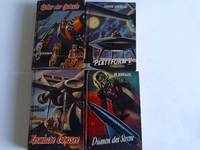
Science Fiction
4 Bände
Bewin Verlag/B. Winterbach KG Menden um 1960. 239/253/240/254 S. Pappbände gering bestossen. - gute Exemplare/Enthalten: W. Brown: Retter der Galxis/James Spencer: Plattform V/Gerd Sandow/U. Biegel: Dämon der Sterne - unknown
书商的参考编号 : 2d7586
|
|
|
Science Fiction - Die Terranauten
5 Bände
Bastei Lübbe Verlag Bergisch Gladbach 1982-86. Zusammen ca. 780 S. kartoniert. - gute Exemplare/enthalten: Andreas weiler. Der schwarze herrscher/Monument der Titanen/Die Bio-Sklaven/Robert Quint: Planetenmuster/Zeitfenster - unknown
书商的参考编号 : 2h12673

|
|
|
Science Fiction, Astounding Stories 1937
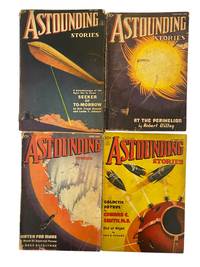
Archive of Early "Astounding Stories" Sci-Fi Pulp Magazine Featuring Early Female Sci-Fi Writer Leslie F. Stone 1937
1937. LiteratureSci-fi Four-issue archive of Astounding Stories published by Street & Smith during a pivotal year in American science fiction. These 1937 issues each contain original content and are distinguished by visually arresting pulp cover art and contributions from some of the genre’s early luminaries. Together they offer insight into science fiction’s evolution prior to its "Golden Age" highlighting key works by underrecognized women writers and reflecting contemporary concerns about gender race and modernity.<br /> <br /> 1 Astounding Stories Volume XVIII Number 6. February 1937. Includes "At the Perihelion" by Robert Willey "The Saga of Pelican West" by Eric Frank Russell and short fiction by Stanton A. Coblentz and Jack Williamson. Features a science article by John W. Campbell Jr. titled "Other Eyes Watching." Issue contains early science journalism exploring the structure of the solar system. <br /> 2 Astounding Stories Volume XIX Number 2. April 1937. Lead novel is "Water for Mars" by Ross Rocklynne with additional fiction by P. Schuyler Miller and A. Macfadyen Jr. Stories include "The Endless Chain" "The Eye of Madness" and "Winter on the Planet." Notable for thematic emphasis on protoplasmic disintegration and sentient planetary life mirroring fears of biological destabilization during the interwar years. <br /> <br /> 3 Astounding Stories Volume XIX Number 5. July 1937. Features "Seeker of To-Morrow" by Eric Frank Russell and Leslie T. Johnson as well as "The Great Ones" by Leslie F. Stone one of the few known women writing speculative fiction in this era. Stone's story engages with themes of biological balance and evolutionary survival subtly confronting male-dominated narratives of scientific supremacy. Her inclusion in this issue marks a rare acknowledgment of female speculative authorship in 1930s pulp culture. Very scarce. <br /> <br /> 4 Astounding Stories Volume XX Number 2. October 1937. Contains Part II of "Galactic Patrol" by E.E. Smith and "Out of Night" by Don A. Stuart John W. Campbell plus "Stardust Gods" by Dow Elstar and Robert S. McCready. While dominated by space opera tropes the issue reflects growing interest in interplanetary mythology and militarized masculinity. <br /> <br /> An early archive of Astounding Stories in the pre-Campbell editorship period showcasing early contributions to the sci-fi genre and a significant seldom-seen appearance by a pioneering woman author. Light chipping paper brittleness and spine wear present across issues with many exhibiting partial separation of front wrapper. Interiors complete bindings fragile. Overall condition ranges from fair to good. A scarce early pulp magazine archive highlighting the early emergence of a notable female writer within the male-dominated pulp science fiction field of the 1930s. unknown
书商的参考编号 : 22377
|
|
|
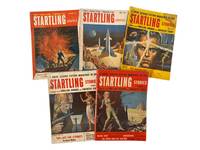
Science Fiction, Startling Stories
Archive of Early "Startling Stories" Sci-Fi Pulp Magazine Featuring Early Female Sci-Fi Writers Margaret St. Clair Judith Merril and Miriam Allen deFord 1954-55
1954. Magazines and PeriodicalsLiteratureSci-fi Five-issue pulp magazine archive of Startling Stories published by Better Publications and Standard Magazines 1954-55. The run includes work by notable authors such as Margaret St. Clair Judith Merril Richard Matheson Bryce Walton and Philip K. Dick. This period of Startling reflects pulp science fiction’s evolving engagement with gender Cold War anxiety and postwar domesticity. Stories by women such as Margaret St. Clair Judith Merril and Miriam Allen deFord present unusual agency and narrative complexity for female characters within the male-dominated SF field of the era.<br /> <br /> 1 Startling Stories Vol. 32 No. 1 Summer 1954. Features “The Spiral of the Ages†by Fletcher Pratt a time-travel romance structured around male agency. Noteworthy contributions include “Finders Keepers†by Margaret St. Clair and “Stormy Weather†by Judith Merril—both rare instances of women-authored SF in a mainstream pulp. Merril’s protagonist must telepathically track her missing son a complex female-centered narrative. St. Clair’s story like much of her work blends domesticity with technological tension. <br /> 2 Startling Stories Vol. 32 No. 2 Fall 1954. Includes the full-length novel “Spacemen Lost†by George O. Smith and “Simple Psiman†by F.L. Wallace. Margaret St. Clair’s “The Marriage Manual†returns with a satirical inversion of gendered advice culture: “If you can’t beat the opposition join them.†A rare example of feminist satire in a 1950s SF pulp. <br /> <br /> 3 Startling Stories Vol. 33 No. 1 Spring 1955. Includes Bryce Walton’s “Too Late for Eternity†an aging-themed space opera with paternalist overtones and a novelet by William Morrison. Notable for short fiction by Philip K. Dick “Nanny†and Richard Matheson “Miss Stardust†the latter offering a proto-feminist beauty allegory. The issue's range also includes stories by Arthur Porges Roger Dee and Winston Marks. <br /> <br /> 4 Startling Stories Vol. 33 No. 2 Summer 1955. Contains three novelettes: “An Apple for the Teacher†by Robert F. Young “White Spot†by Murray Leinster and “Awakening†by Bryce Walton. “An Apple for the Teacher†is of particular note for its female educator protagonist whose students transcend earthly expectations. Also includes “Time Out for Redheads†by Miriam Allen deFord a prolific feminist and mystery writer whose tale involves female agency in matters of love and identity. Other contributors include Leslie Waltham and Gordon R. Dickson.<br /> 5 Startling Stories Vol. 33 No. 3 Fall 1955. Features “The Naked Sky†by James E. Gunn and “Jungle Doctor†by Robert F. Young. Margaret St. Clair contributes “Lazarus†a short about bodily resurrection and consent characteristic of her nuanced feminist themes. Leslie Waltham’s “I Like a Happy Ending†offers psychological depth rarely given to women characters in pulp fiction. Includes seven short stories showcasing an unusual number of female-centered narratives.<br /> <br /> All issues exhibit moderate pulp toning and light edgewear with intact bindings and no major losses. Overall good condition. A compelling five-issue sequence within 1950s science fiction pulp culture including significant contributions by women writers. unknown
书商的参考编号 : 22383
|
|
|
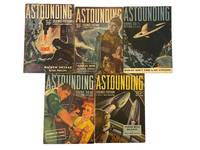
Science Fiction, Astounding Science-Fiction
Archive of Early "Astounding Science-Fiction" Sci-Fi Pulp Magazine Featuring Theodore Sturgeon and Clifford Simak 1939
1939. Sci-fi Archive of five issues of Astounding Science-Fiction published by Street & Smith in 1939 under editor John W. Campbell. With serialized novels novelettes short stories and scientific essays this run exemplifies the genre's pivot toward "hard science fiction" and includes early works by future giants such as Theodore Sturgeon and Clifford D. Simak. Archive includes 5 issues all from 1939:<br /> <br /> 1 Astounding Science-Fiction Volume XXII Number 5. January 1939. Features “The Blue-Men of Yrano†by Warner Van Lorne and “Maiden Voyage†by Vic Phillips. Also includes short fiction by L. Sprague de Camp Malcolm Jameson Arthur J. Burks and Norman L. Knight. De Camp’s “The Incorrigible†introduces a comic protagonist modeled after musical archetypes and the issue’s science article compares photographic and telescopic observation methods. Thematically these stories center on masculine innovation and colonial contact. Cover by John Frew. <br /> 2 Astounding Science-Fiction Volume XXIII Number 1. March 1939. Notable for “Cloak of Aesir†by Don A. Stuart pseudonym of John W. Campbell a moody tale about alien-human tension and technologically mediated emotion typical of Campbell's cerebral tone. Also includes “Children of the ‘Betsy B’†by Malcolm Jameson with its rare child protagonist who rebels against societal roles—an embryonic trace of later youth-focused narratives. Other contributors include H.L. Gold and Clifford D. Simak “Cosmic Engineers†Part 2. Cover by Graves Gladney. <br /> 3 Astounding Science-Fiction Volume XXIII Number 2. April 1939. Features “Worlds Don’t Care†by Nat Schachner a plague narrative with planetary exile themes and “Revolt†by A.M. Phillips. Includes short fiction by Eando Binder and Harry Walton. Binder’s “Rope Trick†subtly inverts working-class resilience into science fiction allegory offering class-conscious perspectives through pulp metaphors. Simak’s “Cosmic Engineers†serial concludes in this issue.<br /> <br /> 4 Astounding Science-Fiction Volume XXIII Number 4. June 1939. Clifford D. Simak contributes “Hermit of Mars†a story featuring human-alien conflict over emotional intelligence and war trauma. Also includes “The Morons†by Harl Vincent and “When the Future Dies†by Nat Schachner both of which reflect contemporary anxieties about technological overreach and dehumanization. L. Sprague de Camp’s science feature “Design for Life†offers speculative biology commentary. Cover by Graves Gladney. <br /> 5 Astounding Science-Fiction Volume XXIV Number 1. September 1939. Features “Forces Must Balance†by Manly Wade Wellman exploring political equilibrium via spacefaring allegory. Also includes “Masson’s Secret†by Raymond Z. Gallun and “Ether Breather†by Theodore Sturgeon—his debut in Astounding and a key precursor to his later explorations of queerness and consciousness. “Atmospherics†by Victor Valding anthropomorphizes sensory perception. Cover by Rogers. <br /> <br /> Overall good to very good condition across issues with typical pulp toning modest edgewear and some spine wear. Interiors complete. A compelling five-issue run from 1939 showcasing formative voices in the genre’s hard science tradition and a notable early contribution by Theodore Sturgeon. unknown
书商的参考编号 : 22381
|
|
|
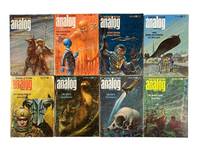
Science Fiction, Alice Sheldon
Archive of "Analog Science Fiction and Fact" Magazine Featuring Alice Sheldon James Tiptree Jr. and Betsy Curtis
LiteratureSci-fi Analog Science Fiction and Fact archive of eight issues. New York: Condé Nast Publications 1968. Eight issues each in original color-illustrated wrappers. A robust run from 1968 one of the most politically charged and transitional years in American science fiction during which Analog continued to anchor the genre’s hard-science wing under longtime editor John W. Campbell Jr. Notable in this sequence are contributions by James Tiptree Jr. the pseudonym of Alice Sheldon one of the most influential women in the field and Betsy Curtis one of the few female contributors of the era. Also present are works by authors such as Lawrence A. Perkins and Michael Karageorge whose presence signaled an opening—however modest—to a wider range of cultural voices. Archive includes:<br /> <br /> 1 Analog Science Fiction and Fact Vol. LXXX No. 6 February 1968. Features the first part of Harry Harrison’s serial The Horse Barbarians with a novelette by Poul Anderson and short fiction by Jack Wodhams and W. Macfarlane. Includes G. Harry Stine’s article To Make a “Star Trek†reflecting on science fiction’s growing entanglement with televised media.<br /> <br /> 2 Analog Science Fiction and Fact Vol. LXXXI No. 1 March 1968. Notable for Birth of a Salesman by James Tiptree Jr.—one of the early appearances of Alice Sheldon’s pen name in a major science fiction publication. Additional fiction by Piers Anthony Christopher Anvil and Verge Foray. Harrison’s The Horse Barbarians continues.<br /> <br /> 3 Analog Science Fiction and Fact Vol. LXXXI No. 2 April 1968. Concludes Harrison’s Horse Barbarians serial and includes Herbert Jacob Bernstein’s “Phantasamaplasmagoria†a surreal scientific meditation. Additional stories by Jack Wodhams and D. L. Hughes. Cover by Kelly Freas.<br /> <br /> 4 Analog Science Fiction and Fact Vol. LXXXI No. 5 July 1968. Dean McLaughlin’s short novel Hawk Among the Sparrows headlines this issue alongside stories by Joe Poyer and R. C. FitzPatrick. Includes Icarus and Einstein by physicist Robert S. Richardson. <br /> <br /> 5 Analog Science Fiction and Fact Vol. LXXXI No. 6 August 1968. Bruce Daniels contributes The Baalim Problem with Bob Shaw and Jack Wodhams rounding out the fiction. G. Harry Stine’s How the Soviets Did It in Space reflects Cold War anxieties.<br /> <br /> 6 Analog Science Fiction and Fact Vol. LXXXII No. 1 September 1968. James Schmitz’s serial The Tuvela begins accompanied by short work from Michael Chandler and Harry Harrison. Margaret L. Silbar is notably absent but Wallace West’s science article Steamer Time attempts to blend history with futurism. <br /> <br /> 7 Analog Science Fiction and Fact Vol. LXXXII No. 2 October 1968. Concludes Schmitz’s Tuvela with The Steiger Effect by Betsy Curtis a rare woman-authored short story in Analog. Additional fiction from Christopher Anvil and Lawrence A. Perkins plus science articles by William T. Powers and John H. Pomeroy. <br /> <br /> 8 Analog Science Fiction and Fact Vol. LXXXII No. 3 November 1968. Includes The Infinity Sense by Verge Foray and a novelette by John T. Phillifent. Michael Karageorge’s The Alien Enemy joins work by W. Macfarlane and Edward C. Walterscheid The Shots Felt ‘Round the World.<br /> <br /> This archive represents a dynamic year for Analog marked by the increasing presence—if still marginal—of women and diverse voices within the magazine’s traditionally technocratic male-dominated pages. Alice Sheldon James Tiptree Jr. and Betsy Curtis’s contributions are especially significant in charting the gendered boundaries of Cold War science fiction. Light wear consistent with age overall very good condition. An intellectually rich archive of feminist science fiction race and representation in genre publishing and the evolution of techno-political discourse in popular print. unknown
书商的参考编号 : 21895
|
|
|
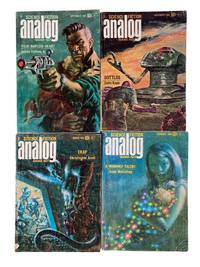
Science Fiction, Anne McCaffrey
Archive of "Analog Science Fiction and Fact" Magazine Featuring Anne McCaffrey and Alice Sheldon James Tiptree Jr.
Magazines and PeriodicalsLiteratureSci-fi Analog Science Fiction and Fact archive of four issues. New York: Condé Nast Publications 1969. Four issues each in color-illustrated wrappers. A compelling four-issue archive from one of the most influential science fiction magazines of the 20th century published under editor John W. Campbell Jr. a key architect of the genre’s so-called “Golden Age.†These issues from 1969 offer a transitional glimpse into the evolving cultural landscape of science fiction on the eve of the 1970s featuring early or notable contributions by women writers and stories exploring speculative biology social engineering and metaphysics. Especially significant are appearances by Anne McCaffrey and James Tiptree Jr. Alice Sheldon two of the most important women writers working in midcentury science fiction—both of whom challenged traditional genre boundaries and gender norms. Archive includes:<br /> <br /> 1 Analog Science Fiction and Fact Vol. LXXXII No. 6 February 1969. This issue includes Anne McCaffrey’s short novel A Womanly Talent a stand-alone tale with psychic themes that anticipates the empathic character development for which McCaffrey would later be renowned. Her inclusion was notable during a time when women authors were still relatively rare in Campbell’s pages. Additional stories by Mack Reynolds Robin Scott and J.R. Pierce. <br /> <br /> 2 Analog Science Fiction and Fact Vol. LXXXIII No. 1 March 1969. Featuring a novella Trap by Christopher Anvil accompanied by shorter works by Harry Harrison and R.E. Allen. Contents reflect ongoing thematic preoccupations of the era—cold war paranoia collective intelligence and moral relativism. <br /> <br /> 3 Analog Science Fiction and Fact Vol. LXXXIV No. 1 September 1969. This issue features Alice Sheldon writing under her best known pseudonym James Tiptree Jr. Her novelette Your Haploid Heart is a deeply unsettling and allegorically rich meditation on sexual difference and xenobiology. Sheldon’s work was groundbreaking in its complex treatment of gendered otherness and remains widely studied in queer and feminist science fiction scholarship. Also includes work by Herbert Jacob Bernstein and Jack Wodhams. <br /> 4 Analog Science Fiction and Fact Vol. LXXXIV No. 3 November 1969. Includes the novelette Gottlos by British author Colin Kapp as well as Weapon of the Ages by W. Macfarlane and Shapes to Come by Edward Wellen. This issue exemplifies Campbell’s editorial preference for stories emphasizing engineering plausibility and technological extrapolation.<br /> <br /> All four issues edited by John W. Campbell with covers by Kelly Freas or Vincent DiFate. Minor wear consistent with age but overall very good condition. This set is a notable primary source for tracking speculative fiction’s gradual inclusion of more complex gendered narratives and for the study of women writers working under constraint in a male-dominated publishing ecosystem. Scarce with content of this significance and condition. unknown
书商的参考编号 : 21892
|
|
|
Science Fiction, Margaret L. Silbar
Archive of "Analog Science Fiction and Fact" Magazine Featuring Margaret L. Silbar and Others
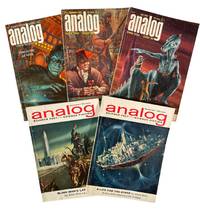
Magazines and PeriodicalsLiteratureSci-fi Analog Science Fiction and Fact archive of five issues. New York: Condé Nast Publications 1962–1967. Five issues each with original color-illustrated wrappers. A representative archive from the mid-1960s run of Analog the leading hard science fiction magazine edited by John W. Campbell Jr. These issues showcase the genre’s deep enthusiasm for technology and serialized world-building. Particularly notable within this group is the inclusion of work by Margaret L. Silbar one of the few women writing science articles for Analog during this period as well as recurring stories by prolific socialist futurist Mack Reynolds a rare example of a leftist voice under Campbell’s otherwise conservative-leaning editorial regime. Archive includes:<br /> <br /> 1 Analog Science Fiction and Fact Vol. LXX No. 1 September 1962. Featuring the first installment of James Blish’s two-part serial A Life for the Stars which helped solidify his Cities in Flight universe as a cornerstone of American space opera. Also includes short fiction by Leonard Lockhard and Christopher Anvil as well as Mack Reynolds’s Good Indian continuing his ongoing exploration of Cold War geopolitics through speculative futures. Article: The First Science by Joseph F. Goodavage. <br /> <br /> 2 Analog Science Fiction and Fact Vol. LXX No. 4 December 1962. This issue features the novelette Blind Man’s Lantern by Allen Kim Lang one of the few named Asian American authors published in the magazine at the time. Also includes short fiction by Mack Reynolds Subversive and Tom Godwin with the second installment of H. Beam Piper’s serial Space Viking. Alfred Pfanstiehl contributes the science article Intelligent Noise. <br /> <br /> 3 Analog Science Fiction and Fact Vol. LXXV No. 5 July 1965. Includes short fiction by Scott Nichols and Lawrence A. Perkins along with Christopher Anvil’s In the Light of Further Data. Of note is the novelette The Adventure of the Extraterrestrial by Mack Reynolds an allegorical tale critiquing American xenophobia. Poul Anderson’s serial Trader Team also appears. <br /> 4 Analog Science Fiction and Fact Vol. LXXVI No. 1 September 1965. Mack Reynolds headlines with the first part of Space Pioneer alongside Walter Bupp’s novelette Psi for Sale and stories by Michael Karageorge and Ben Bova. Includes Test in Orbit a speculative satire by Bova addressing automation and machine intelligence. Science article by Lyle R. Hamilton.<br /> <br /> 5 Analog Science Fiction and Fact Vol. LXXVIII No. 6 February 1967. Of particular significance is Margaret L. Silbar’s article The Quark Story an early attempt to present cutting-edge particle physics to a general science fiction readership—rare scientific authorship by a woman in Analog. Also includes fiction by Joe Poyer Jack Wodhams and a concluding serial installment by Mack Reynolds Amazon Planet.<br /> <br /> An insightful five-issue collection spanning Campbell’s editorial dominance at Analog featuring work by underrecognized voices including Margaret L. Silbar and Allen Kim Lang and thematically reflecting the shifting political and technological anxieties of Cold War-era science fiction. An excellent collection of midcentury genre literature women in science writing and American techno-political imagination. unknown
书商的参考编号 : 21894
|
|
|
Science Fiction, Miriam Allen DeFord
Archive of 1968 "Galaxy Science Fiction" Magazines Featuring Miriam DeFord Ellison Silverberg and Lisa Braun
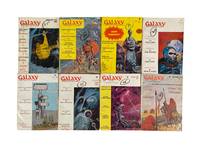
1968. Magazines and PeriodicalsLiteratureSci-fi Galaxy Science Fiction Magazine archive of eight issues. New York: Galaxy Publishing Corporation February–December 1968. Original illustrated wraps. A run of Galaxy Magazine spanning Vol. 26 No. 3 through Vol. 27 No. 5 without Vol. 27 No. 3 published during Frederik Pohl’s editorial tenure. This archive captures a transitional period in American science fiction reflecting the genre’s evolving dialogue with Cold War politics social upheaval and literary experimentation. Includes major contributions by foundational figures—Harlan Ellison Fritz Leiber Robert Silverberg and Damon Knight—as well as important work by women and authors from marginalized communities notably Miriam Allen DeFord and Lisa Braun. Pohl’s editorial direction helped advance socially conscious science fiction and these issues reflect that mission with stories of systemic critique technological anxiety and social transformation.<br /> <br /> 1 Galaxy Science Fiction Vol. 26 No. 3. February 1968. Includes “Street of Dreams Feet of Clay†by Robert Sheckley “A Tragedy of Errors†by Poul Anderson and “Total Environment†by Brian W. Aldiss. Notable for “The Planet Slummers†by Terry Carr and Alexei Panshin—satirical fiction critiquing social stratification—and Fritz Leiber’s “Crazy Annaoj†a surreal tale probing personal and collective madness. Robert Bloch and R.A. Lafferty round out a powerhouse lineup.<br /> <br /> 2 Galaxy Science Fiction Vol. 26 No. 4. April 1968. Features “Goblin Reservation†Part I by Clifford D. Simak and “Touch of the Moon†by Ross Rocklynne. H.L. Gold’s “The Riches of Embarrassment†appears alongside Larry Niven’s “The Deceivers.†This issue reflects the magazine’s turn toward speculative narratives grappling with technocracy mythology and alienation.<br /> <br /> 3 Galaxy Science Fiction Vol. 26 No. 5. June 1968. Includes the highly acclaimed “The Beast That Shouted Love†by Harlan Ellison—one of his most influential stories later reprinted in numerous anthologies and recognized for its innovative structure and philosophical depth. Also features Mack Reynolds’s “How We Banned the Bombs†continuing his explorations of socialist alternatives and Harry Harrison’s “Waiting Place.â€<br /> <br /> 4 Galaxy Science Fiction Vol. 26 No. 6. July 1968. Presents “A Specter is Haunting Texas†serialized by Fritz Leiber—an influential work of speculative satire exploring nationalism and bodily autonomy. Also includes “There Is a Tide†by Larry Niven and “Dreamer Schemer†by Brian W. Aldiss. Notably this issue’s contents push into more literary and politically charged territory.<br /> <br /> 5 Galaxy Science Fiction Vol. 27 No. 1. August 1968. Highlights include “Among the Bad Baboons†by Mack Reynolds and Damon Knight’s “The Star Below.†Robert Silverberg contributes “Going Down Smooth†a psychologically dense piece reflecting the maturing complexity of his late-1960s work.<br /> <br /> 6 Galaxy Science Fiction Vol. 27 No. 2. September 1968. Features “Nightwings†by Robert Silverberg a Nebula-winning novelette later expanded into a novel examining societal decline and rebirth. Notable for Lisa Braun’s essay “The Wonders We Owe DeGaulle†one of few non-fiction contributions by a woman in this era of Galaxy. Also includes James E. Gunn’s “The Listeners†a first-contact narrative that anticipates modern SETI literature.<br /> <br /> 7 Galaxy Science Fiction Vol. 27 No. 4. November 1968. Contains Robert Silverberg’s “Perris Way†Gordon R. Dickson’s “Building on the Line†and Miriam Allen DeFord’s “Keep Moving.†DeFord a pioneering female voice in genre and true-crime literature uses speculative fiction to explore individual displacement. Contributions from Brian W. Aldiss and K.M. O’Donnell further underscore Galaxy’s international and stylistic range.<br /> <br /> 8 Galaxy Science Fiction Vol. 27 No. 5. December 1968. Features “The Sharing of Flesh†by Poul Anderson “Subway to the Stars†by Raymond F. Jones and “A Life Postponed†by John Wyndham. “One Station of the Way†by Fritz Leiber and “Sweet Dreams Melissa†by Stephen Goldin reflect New Wave trends—blending poetic style with psychological and existential themes.<br /> <br /> All issues show light to moderate wear consistent with age. Overall very good condition. This eight-issue run highlights Galaxy’s late-1960s reinvention under Pohl and situates it firmly within the New Wave movement. These issues blend sharp sociopolitical commentary with literary ambition and include notable early works from authors later central to speculative fiction’s academic canon. unknown
书商的参考编号 : 21775
|
|
|
Science Fiction, Katherine MacLean
Archive of Early "Galaxy Science Fiction" Magazine Featuring Katherine Maclean Asimov and Evelyn E. Smith 1950-55
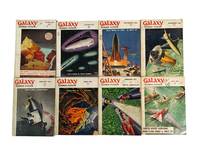
1950. Magazines and PeriodicalsLiteratureSci-fi Galaxy Science Fiction Magazine archive of eight issues. New York: World Editions / Galaxy Publishing Corporation October 1950–July 1955. Original illustrated wraps. This early archive from Galaxy Science Fiction spans from the magazine’s inaugural issue Vol. 1 No. 1 through the mid-1950s a period when editor H.L. Gold redefined the genre’s focus from technological spectacle to psychological social and political themes. These issues feature major contributions by foundational figures of speculative fiction—Isaac Asimov Clifford D. Simak Damon Knight Theodore Sturgeon Robert Sheckley and Philip K. Dick—as well as noteworthy entries by women authors including Katherine MacLean Elisabeth R. Lewis and Evelyn E. Smith. This run documents the Golden Age’s shift into the literary and socially conscious mode that would define Galaxy’s lasting influence on science fiction in print and visual media.<br /> <br /> 1 Galaxy Science Fiction Vol. 1 No. 1. October 1950. Debut issue. Features “Time Quarry†serial by Clifford D. Simak and “Darwinian Pool Room†by Isaac Asimov alongside early work by Fritz Leiber Richard Matheson and Fredric Brown. Katherine MacLean’s “Contagion†explores disease as metaphor and the limits of human adaptability positioning her as one of the first women to contribute hard science fiction rooted in biology and social systems.<br /> <br /> 2 Galaxy Science Fiction Vol. 3 No. 1. October 1951. Includes Isaac Asimov’s “The C-Chute†a meditation on power and cowardice under duress and the conclusion of Robert Heinlein’s "The Puppet Masters" a classic Cold War paranoia tale about alien invasion and mind control.<br /> <br /> 3 Galaxy Science Fiction Vol. 4 No. 6. September 1952. Presents “The Altruist†by James H. Schmitz “Delay in Transit†by F.L. Wallace and stories by Evelyn E. Smith “Tea Tray in the Sky†and Katherine MacLean “The Snowball Effectâ€. MacLean’s piece satirizes bureaucratic overreach via a seemingly benign knitting club—an early gender-conscious critique of technocracy.<br /> <br /> 4 Galaxy Science Fiction Vol. 5 No. 2. November 1952. Includes “The Martian Way†by Isaac Asimov one of his most politically pointed works defending scientific autonomy against anti-intellectualism. Robert Sheckley’s “Warrior Race†and C.M. Kornbluth’s “The Altar at Midnight†reflect Cold War anxieties and moral disillusionment.<br /> <br /> 5 Galaxy Science Fiction Vol. 5 No. 5. February 1953. Highlights “Four in One†by Damon Knight “Watchbird†by Robert Sheckley and a short story by Elisabeth R. Lewis—“Know Thy Neighborâ€â€”making her one of the few women published in the magazine at this time. Includes the conclusion of Simak’s “Ring Around the Sun.â€<br /> <br /> 6 Galaxy Science Fiction Vol. 6 No. 3. June 1953. Features “Tangle Hold†by F.L. Wallace “First Lady†by J.T. McIntosh and “Colony†by Philip K. Dick an early example of Dick’s lifelong interest in identity and simulated reality. James H. Schmitz’s “We Don’t Want Any Trouble†continues his exploration of nontraditional protagonists.<br /> <br /> 7 Galaxy Science Fiction Vol. 7 No. 5A. February 1954. Includes James Blish’s “Beep†a landmark story of linguistic paradox and information theory along with entries by Roger Dee Arthur Sellings and Kenneth Harmon. Notably forward-thinking in its engagement with communication and nonlinear time.<br /> <br /> 8 Galaxy Science Fiction Vol. 10 No. 4. July 1955. Features Frederik Pohl’s “The Mapmakers†Robert Sheckley’s “Deadhead†and “Preferred Risk†serial by Edson McCann. L. Sprague de Camp contributes “Property of Venus†typifying Galaxy’s blend of humor and cosmological speculation.<br /> <br /> All issues show light to moderate wear consistent with age. Overall very good condition. This archive not only captures the editorial vision that made Galaxy a critical and popular force in American speculative literature but also documents the contributions of women authors during a male-dominated era. Galaxy’s social realism and psychological nuance profoundly influenced subsequent science fiction across media—from New Wave literature to television series like The Twilight Zone and Star Trek. unknown
书商的参考编号 : 21777
|
|
|
Science Fiction, Katherine MacLean
Archive of "Astounding Science Fiction" Magazine Featuring Judith Merril Katherine MacLean and L. Ron Hubbard 1949-50
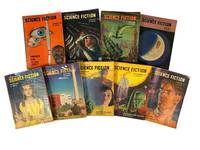
1949. Magazines and PeriodicalsLiteratureSci-fi Astounding Science Fiction archive of nine issues. New York: Street & Smith Publications January 1949–March 1950. Original illustrated wraps. This substantial postwar archive from Astounding Science Fiction showcases the maturation of the Golden Age under the editorial leadership of John W. Campbell Jr. with major works from canonical authors such as Isaac Asimov L. Ron Hubbard Theodore Sturgeon L. Sprague de Camp Poul Anderson Arthur C. Clarke Clifford D. Simak and James H. Schmitz. Of particular significance are contributions from early women science fiction authors Judith Merril C.L. Moore writing as Lewis Padgett Katherine MacLean and Wilmar H. Shiras—whose stories challenged gender norms and psychological realism in a male-dominated field. The run exemplifies the thematic evolution of science fiction from space adventure to sociopolitical allegory identity and emerging technological anxieties.<br /> <br /> 1 Astounding Science Fiction Vol. XLII No. 5. January 1949. Includes “Private Eye†by Lewis Padgett the joint pseudonym of Henry Kuttner and C.L. Moore a story noted for its noir-inflected satire of predictive justice. Features Isaac Asimov’s “The Red Queen’s Race†a clever exploration of temporal paradox and evolutionary theory. Judith Merril one of the genre’s foremost early female editors and writers contributes “Death Is the Penalty†a psychological short story of guilt and execution in a near-future society. Cover by Rogers.<br /> <br /> 2 Astounding Science Fiction Vol. XLII No. 6. February 1949. Introduces “Seetee Shock†by Will Stewart pseud. Jack Williamson a politically resonant serial imagining anti-matter colonies resisting Earth’s imperial control. Features “The Prisoner in the Skull†by Lewis Padgett and a short story by Eric Frank Russell. Noteworthy for presenting a story by Christopher Youd later John Christopher an emerging voice in British sci-fi.<br /> <br /> 3 Astounding Science Fiction Vol. XLIII No. 3. May 1949. Features Isaac Asimov’s “Mother Earth†a planetary colonization narrative infused with Cold War metaphor. Also includes “Prophecy†by Poul Anderson and early work by Hal Clement “Needle†a biologically grounded serial that introduced xenobiology as a serious subfield in science fiction. Anderson’s rigorous style and Clement’s hard-science realism embody Astounding’s editorial ethos.<br /> <br /> 4 Astounding Science Fiction Vol. XLIII No. 4. June 1949. Includes “Minority Report†by Theodore Sturgeon—preceding Philip K. Dick’s more famous treatment of the same theme by over a decade. Sturgeon’s version centers on group mind psychology and state surveillance. Also features A.E. van Vogt and John Gergen with Paul Anderson co-authoring “Entity†and Hal Clement’s conclusion to Needle.<br /> <br /> 5 Astounding Science Fiction Vol. XLIII No. 5. July 1949. Notable for “Agent of Vega†by James H. Schmitz an influential early space opera involving a female telepath and a galactic intelligence service. Clifford D. Simak’s “Eternity Lost†explores cosmic melancholy while L. Sprague de Camp’s “The Animal-Cracker Plot†offers satirical commentary on alien diplomacy.<br /> <br /> 6 Astounding Science Fiction Vol. XLIV No. 1. September 1949. Contains “The Double-Dyed Villains†by Poul Anderson and “Hide and Seek†by Arthur C. Clarke an early example of Clarke’s deep-space psychological minimalism. Also includes de Camp’s “The Queen of Zamba†concluding a serial that would become part of his Viagens Interplanetarias sequence.<br /> <br /> 7 Astounding Science Fiction Vol. XLIV No. 3. November 1949. Highlights Part I of Isaac Asimov’s serial “…And Now You Don’t†part of his epic Foundation trilogy and Part I of “Gulf†by Robert A. Heinlein an intelligence supremacy narrative published during his politically charged postwar period. Theodore Sturgeon’s “What Dead Men Tell†combines noir and metaphysical horror. Also features Lester del Rey and A.E. van Vogt.<br /> <br /> 8 Astounding Science Fiction Vol. XLIV No. 6. February 1950. Includes “Promised Land†by Lawrence O’Donnell another Kuttner/Moore pseudonym and “And Be Merry…†by Katherine MacLean whose scientifically literate emotionally resonant fiction helped open the door for later feminist sci-fi. L. Ron Hubbard’s “To the Stars†begins here a controversial but foundational space opera with psychological undertones.<br /> <br /> 9 Astounding Science Fiction Vol. XLV No. 1. March 1950. Features Part II of Hubbard’s To the Stars and “New Foundations†by Wilmar H. Shiras a quiet masterpiece of mutant intelligence and postwar trauma often cited as a proto-X-Men narrative. Shiras is now recognized as a key early figure in bringing realism and psychological interiority to the genre.<br /> <br /> All issues show moderate age toning and some edgewear with occasional chips or creases at spines and extremities. Interiors clean and complete. Overall good to very good condition. This archive offers a snapshot of Astounding’s transitional moment between the early Golden Age and the coming New Wave preserving major contributions by both canonical male figures and pioneering women in the field. unknown
书商的参考编号 : 21801
|
|
|
Science Fiction
AUTHOR'S CHOICE MONTHLY
Eugene Oregon: Pulphouse. Very Good. Softbound. The issues in this lot of 25 titles are all soft-bound in gray wrappers with black and color printing. A few covers show some light foxing to the spines. The bindings are solid. The contents are bright and clean. This lot includes #'s 1 through 27 lacking numbers 8 & 9 for a total of 25. Very nice fresh group published in the 1980s and 1990s. Authors include: Robinson Wagner Lansdale Brennert Bishop Landis Wilhelm Goulart Friesner Effinger etc. . Pulphouse paperback
书商的参考编号 : 79723
|
|
|
Science Fiction - Ballard, J. G
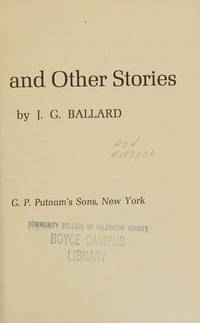
Chronopolis and Other Stories
G. P. Putnam 1971. hardcover. New. 8x6x1. B.C.E. ~ Dust cover has some minor shelf wear. ~ New inside and Out! Clean & Crisp Pages. Email for more info/pics G. P. Putnam hardcover
书商的参考编号 : 241224034 ???????? : 0399101411 9780399101410
|
|
|
Science Fiction - Ballard, J. G.
Chronopolis and Other Stories
hardcover. Good. Access codes and supplements are not guaranteed with used items. May be an ex-library book. hardcover
书商的参考编号 : 0399101411.G ???????? : 0399101411 9780399101410
|
|
|
Science Fiction - Sturgeon Theodore und Wulf Bergner
Das Milliarden-Gehirn
München : Heyne. Paperback. Good. Ammareal gives back up to 15% of this item's net price to charity organizations. München : Heyne, paperback
书商的参考编号 : G-151-682
|
|
|
Science Fiction - Cooper, Edmund
Die Herren des Kosmos
München Wilhelm Heyne 1970. paperback. gebraucht akzeptabel Sammlerstück mit starken Gebrauchspuren . München, Wilhelm Heyne, paperback
书商的参考编号 : 96641
|
|
|
Science Fiction, Robert Heinlein
Early Archive of "Astounding Science Fiction" Magazine Featuring Simak Hubbard and Robert Heinlein
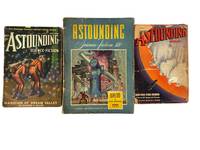
Magazines and PeriodicalsLiteratureSci-fi Astounding Science Fiction archive of three issues. New York: Street & Smith Publications 1937–1942. Three issues with color-illustrated wrappers. A significant three-issue archive from the formative years of Astounding Science Fiction the flagship pulp magazine that defined mid-20th-century science fiction under editor John W. Campbell Jr. These issues—dating from 1937 1938 and 1942—capture the emergence of hard science fiction and its consolidation as a genre grounded in technological rigor speculative futurism and serialized world-building. Notable for early appearances by many of the key architects of the Golden Age these issues exemplify Astounding’s unique editorial voice and influence as well as its role in shaping American popular conceptions of science progress and modernity. Archive includes:<br /> <br /> 1 Astounding Science Fiction Volume XIX No. 2 April 1937. Published under the earlier "Astounding Stories" banner this issue features Ross Rocklynne’s novella Water for Mars described as “a great novel of supernal forces†alongside stories by P. Schuyler Miller Nelson S. Bond and Ray Cummings. Additional science features include John W. Campbell Jr.’s Beyond the Life Line and Battell Loomis’s A Talking Hill a speculative exploration of the Great Pyramid. <br /> <br /> 2 Astounding Science Fiction Volume XXII No. 2 October 1938. Marking the magazine’s transitional moment as Astounding Science-Fiction this issue includes L. Ron Hubbard’s serialized novel The Tramp part two alongside early work by Clifford D. Simak “Hunger Death†Raymond Z. Gallun “Magician of Dream Valley†and Eando Binder “Orestes Revoltsâ€. With Peter van Dresser’s article “Why Rockets Don’t Fly†the issue demonstrates Campbell’s programmatic blending of scientific speculation and narrative fiction. <br /> <br /> 3 Astounding Science Fiction Volume XXIX No. 6 August 1942. A landmark issue containing the first appearance of Waldo by Anson MacDonald a pseudonym for Robert A. Heinlein. The novella introduced the concept of remote manipulator arms—“Waldoesâ€â€”which would enter the scientific and technical lexicon. Additional contributions include Hal Clement’s Impediment Cleve Cartmill’s The Link and Lewis Padgett’s Deadlock. The article “Bombing is a Fine Art†by Willy Ley presents a technical perspective on aerial warfare at the height of World War II.<br /> <br /> This trio highlights the early pulp-to-prestige transition ushered in by Astounding Science Fiction cementing its role in launching the careers of Heinlein Hubbard Clement Simak and others. All issues with significant creasing and chipping. April 1937 issue with loss to top left corner of front wrapper front wrapper separated. In overall fair condition. A fascinating primary source for scholars of speculative fiction Cold War futurism and American literary science fiction’s institutional evolution. Scarce in any condition. unknown
书商的参考编号 : 21858
|
|
|
Science Fiction, Isaac Asimov
Galaxy Science Fiction" Magazine Archive 1957 Featuring Isaac Asimov Sturgeon and Evelyn E. Smith
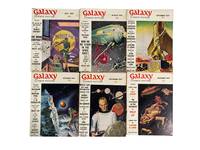
1957. Magazines and PeriodicalsLiteratureSci-fi Galaxy Science Fiction Magazine archive of six issues. New York: Galaxy Publishing Corporation July–December 1957. First editions. Original illustrated wraps. This six-issue consecutive archive of Galaxy Science Fiction—a leading mid-century American science fiction magazine edited by H.L. Gold—features appearances by major figures in the sci-fi genre including Isaac Asimov Frederik Pohl C.M. Kornbluth and Theodore Sturgeon. Notable contributions from Evelyn E. Smith a pioneering woman author in a male-dominated field and from social satirist William Tenn pseudonym of Philip Klass mark the archive’s relevance to the emerging intersections of identity technology and social critique in postwar speculative fiction.<br /> <br /> 1 Galaxy Science Fiction Vol. 14 No. 3. July 1957. Includes “The Deaths of Ben Baxter†by Robert Sheckley “A World Called Maanerek†by Poul Anderson and “Help! I Am Dr. Morris Goldpepper†by Avram Davidson. Science essays by Willy Ley. Cover by Gaughan. Themes of identity consciousness and alienation figure prominently with Anderson’s novelette offering an allegorical exploration of colonialism and social order.<br /> <br /> 2 Galaxy Science Fiction Vol. 14 No. 4. August 1957. Features “Time Waits for Winthrop†by William Tenn Philip Klass “If Money†by Daniel F. Galouye and “The Man Outside†by Evelyn E. Smith. Smith one of the few women regularly published in 1950s sci-fi magazines contributes a tale that subtly challenges domestic gender roles and societal conformity. Willy Ley’s “Our Missile Arsenal†reflects the public’s Cold War-era obsession with space and national defense.<br /> <br /> 3 Galaxy Science Fiction Vol. 14 No. 5. September 1957. Includes “The Pod in the Barrier†by Theodore Sturgeon “Shadow World†by Clifford D. Simak and “The Dark Star†by William Tenn. This issue balances psychological inquiry with space-bound metaphors reflecting Sturgeon’s influential blend of speculative fiction and humanism.<br /> <br /> 4 Galaxy Science Fiction Vol. 14 No. 6. October 1957. Debuts Wolfbane Part 1 by Frederik Pohl and C.M. Kornbluth—a biting satire of conformity and surveillance societies that anticipated the themes of later dystopian cyberpunk. Also features “Double Indemnity†by Robert Sheckley and “Ideas Die Hard†by Isaac Asimov the latter representing Asimov’s early interrogation of technocratic culture. Gordon R. Dickson’s “Robots Are Nice†toys with anthropomorphism and ethics in AI.<br /> <br /> 5 Galaxy Science Fiction Vol. 15 No. 1. November 1957. Concludes Wolfbane Part 2 by Pohl and Kornbluth. Includes “Morning After†by Robert Sheckley and “Break a Leg†by Jim Harmon. Short stories “You Were Right Joe†by J.T. McIntosh and “Gray Flannel Armor†by Finn O’Donnevan offer critiques of postwar masculinity and capitalist ennui. Ley’s essay “On With the Dodo Hunt!†suggests science fiction’s expanding intersection with evolutionary science.<br /> <br /> 6 Galaxy Science Fiction Vol. 15 No. 2. December 1957. Includes “Galley Slave†by Isaac Asimov one of the early stories in his Robot series that explores civil liberties and labor ethics in an automated world. “Carbon Copy†by Clifford D. Simak and “What’s He Doing in There†by Fritz Leiber offer metaphysical and philosophical themes. Willy Ley’s “The Spaceship in the Basement†closes the year with optimistic technological speculation.<br /> <br /> All issues show light to moderate wear consistent with age. Overall very good condition. Together these six consecutive issues document the Golden Age’s shift toward psychologically and socially complex narratives showcasing Galaxy’s centrality in shaping modern science fiction as a literary and cultural force. unknown
书商的参考编号 : 21774
|
|
|
Science Fiction - Clement, Hal
Iceworld
Gnome Press 1953-01-01. Hardcover. Good. . Stated first edition. Dust Jacket is in a removable clear plastic Brodart protector shows moderate wear and tear chipping and creasing. Name and address of former owner on the top corner of the front free endpaper. Pages are lightly tanned and clean. Gnome Press hardcover
书商的参考编号 : mon0003574545
|
|
|
Science Fiction, Jack Finney
Jack Finney's Iconic Science Fiction Thriller The Body Snatchers
1955. The Body Snatchers Jack Finney. First edition. Dell Publishing Company: New York 1955. Soft cover Measures 4.5 x 6.5 inches. 191 pages. Science fiction novel originally serialized in Collier's Magazine in 1954 and published the following year before being adapted for for film in 1956 1978 1993 and 2007 respectively. Unlike the film versions the novel ends optimistically with the aliens leaving on their own after deciding they can't tolerate the resistance they're meeting in the human population. Slight scuffing to spine and edges. Small crease at corner of front cover. Overall good condition. unknown
书商的参考编号 : 18171

|
|
|
SCIENCE FICTION - Scheer, KH
Korps der Verzweifelten.
Wilhelm - Heyne 1964. paperback. gebraucht akzeptabel . 1781 x 1140 x 140 Wilhelm - Heyne, paperback
书商的参考编号 : 37644
|
|
|
Science Fiction. Rottensteiner Franz
Quarber Merkur. 113.
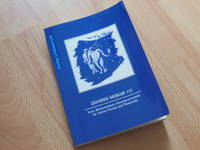
Giessen: Lindenstruth; 2012. 296 S. Ill. OKt. Vorderdeckel etw. aufgebogen. Dennoch ordentlich und gut. Mit Beiträgen von Jennifer Lang Erzählstrukturen und Motive der fantastischen und Science-Fiction-Literatur in Oswald Levetts Zeitreiseroman Verirrt in den Zeiten Martin Alexander SieberTraum ohne Träume Depersonalisation als unheimliches Phänomen Michael K. Iwoleit Transformationen und magische Gegenwelten. Einige Anmerkungen zu den Erzählungen von Lucius Shepard Richard-Philipp Fahrbach H.P. Lovecraft: Leben Werk Mythos - "I Am Providence" Hans Langsteiner Die Versöhnungsfabrik. Anmerkungen zu zwei neueren Philip K. Dick Verfilmungen Boris Strugatzki Der Morgen eines Protagonisten Martin Hartwig Interview mit Boris Strugatzki Michael K. Hageböck Mittelerdes mediävistische Morphologie. Zwei Interviews uvm. 2012 unknown
书商的参考编号 : 115632AB ???????? : 3934273920 9783934273924
|
|
|
Science Fiction, Robert A. Heinlein
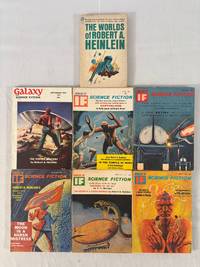
Robert A. Heinlein Science Fiction Archive Including “The Moon Is a Harsh Mistress†First appearance a year before the First edition
Mid-century pulp science fiction archive centering on Robert A. Heinlein’s serialized first printing of “The Moon Is a Harsh Mistress†and Cold War-era narratives of space-age paranoia postwar individualism and futuristic political allegory. This archive offers a vivid look into the speculative anxieties and technological optimism of the 1950s and 1960s as imagined by some of the most influential voices in American science fiction. Robert A. Heinlein’s serialized novel The Moon Is a Harsh Mistress a seminal libertarian narrative is represented here across multiple consecutive issues of Worlds of If magazine providing a nearly complete run of its first appearance in print. These pulps highlight the role of genre fiction in constructing narratives of rebellion authoritarianism and the limits of state control—core themes in American Cold War identity. Other major writers represented including John Brunner and Poul Anderson contributed to the racial geopolitical and gendered contours of American futurism during a moment of global unrest and rapidly advancing technology. Archive includes:<br /> <br /> 1Heinlein Robert A. “The Puppet Masters.†Galaxy Science Fiction Vol. 2 No. 1. New York: Galaxy Publishing September 1951. A Cold War allegory of alien infiltration “The Puppet Masters†visualizes paranoia through body-snatching extraterrestrials—an early and potent example of anti-Communist subtext in sci-fi. Very good condition with bright cover. <br /> <br /> 2 Heinlein Robert A. “The Moon Is a Harsh Mistress.†Worlds of If Vol. 15 No. 6. New York: Galaxy Publishing December 1965. The first installment of Heinlein’s most overtly political novel introducing themes of AI consciousness penal colonies and libertarian revolt. Cover depicts Luna’s underground world. Minor edge wear very good. This came out a year before the first edition first printing of June 1966. <br /> <br /> 3 Heinlein Robert A. The Worlds of Robert A. Heinlein. New York: Ace Books 1966. A reprint collection of Heinlein’s short fiction exploring personal agency space colonization and post-nuclear dystopia. The collection includes stories first published in the 1940s and 1950s reflecting both Heinlein’s evolving libertarian politics and the genre’s response to atomic-age anxieties. Very good condition.<br /> <br /> 4 Heinlein Robert A. “The Moon Is a Harsh Mistress.†Worlds of If Vol. 16 No. 3. New York: Galaxy Publishing January 1966 published out of order. This issue includes the third segment of the novel emphasizing lunar independence and collective identity. Also features “The Moonrakers†by Poul Anderson. Mild spine wear very good overall.<br /> <br /> 5 Heinlein Robert A. “The Moon Is a Harsh Mistress.†Worlds of If Vol. 16 No. 1. New York: Galaxy Publishing February 1966. Second installment of the serialized novel featuring Heinlein’s growing critique of Earth-centric authoritarianism. Minor toning very good.<br /> <br /> 6 Brunner John. “The Long Way to Earth.†Worlds of If Vol. 16 No. 2. New York: Galaxy Publishing March 1966. Brunner’s serialized novel is paired with shorter works from Keith Laumer and Heinlein. His tale reflects on alienation exile and homecoming mirroring 1960s countercultural themes. Minor creasing very good condition<br /> <br /> 7Laumer Keith and Brown Rosel G. Earthblood. Worlds of If Vol. 16 No. 4. New York: Galaxy Publishing April 1966. A collaboration between two of science fiction’s most action-driven writers Earthblood explores interstellar race relations and power struggles in a crumbling empire. This issue also includes stories by Heinlein and Fred Saberhagen. Light wear to spine overall very good.<br /> All volumes retain their original illustrated covers with visual themes emphasizing atomic power space technology and human-alien hybridity. The archive’s convergence around Heinlein’s serialized lunar epic makes it a rare and cohesive grouping ideal for scholars of American libertarianism in popular fiction Cold War sci-fi allegory and serialized storytelling in pulp periodicals. Light general wear across volumes including minor edge rubbing and spine creasing. No missing pages or internal markings. Overall very good condition across the archive. unknown
书商的参考编号 : 21912
|
|
|
Science Fiction, Heinlein
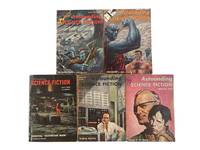
Robert A. Heinlein and Robert Silverberg Mid-Century Pulp Science Fiction Archive 1950-57
Science Fiction Astounding Science Fiction five-issue archive from the golden age of pulp spanning 1950 to 1957 with a strong emphasis on the genre’s transition from space opera into Cold War-era speculation cybernetic anxiety and philosophical futurism. Contributors include major figures such as Robert A. Heinlein Robert Silverberg and Christopher Anvil whose serialized works reflect the complex interplay of science paranoia and political ideology in postwar American consciousness. The archive offers a striking visual and thematic cross-section of a genre in transformation—where early atomic-age optimism collided with deeper social psychological and existential uncertainties.<br /> <br /> 1 Heinlein Robert A. “Shooting ‘Destination Moon.’†Astounding Science Fiction Vol. XLV No. 5. New York: Street & Smith Publications July 1950.<br /> An extended essay by Heinlein on the making of George Pal’s landmark technicolor film Destination Moon 1950 co-written by Heinlein himself and a foundational work in cinematic hard science fiction. The essay outlines the integration of plausible engineering and physics into the film's depiction of a lunar mission reinforcing Heinlein’s authority as a science-forward futurist. The painted cover shows astronauts deploying equipment on a rocky moonscape. Very good with light edge wear.<br /> <br /> 2 Heinlein Robert A. “Citizen of the Galaxy.†Astounding Science Fiction Vol. LX No. 1. September 1957.<br /> Serialized installment of Heinlein’s coming-of-age space opera exploring slavery identity and political intrigue across multiple alien societies. The cover by Kelly Freas features a weathered eye-patched guardian figure and a gaunt haunted youth—foregrounding themes of survival and guardianship in an intergalactic setting. Mild toning very good.<br /> <br /> 3 Anvil Christopher. “The Gentle Earth.†Astounding Science Fiction Vol. LX No. 3. November 1957.<br /> A lesser-known but provocative story envisioning an Earth pacified to the point of weakness threatened by a more violent alien species. Anvil’s work critiques utopianism and explores martial necessity within a soft technological society. The cover art featuring an amphibious alien armed with a trident conjures pulp terror amid swirling waves and broken cityscapes. Slight spine wear very good.<br /> <br /> 4 Silverberg Robert. “Precedent.†Astounding Science Fiction Vol. LX No. 4. December 1957.<br /> Early Silverberg tale on interplanetary law and post-imperial justice dramatizing questions of colonial sovereignty and the application of Earth’s legal code to alien societies. The arresting cover features a giant blue-skinned humanoid clenching a weapon glowering over defeated humans—an inversion of postwar dominance metaphors. Very good with some edge creasing.<br /> <br /> 5 "Thinking Machine." Astounding Science Fiction Vol. LX No. 2. October 1957.<br /> Anonymous or pseudonymous lead story emblematic of the genre’s growing interest in artificial intelligence and mechanized decision-making. The cover art shows a white-coated scientist contemplating a wall-sized bank of blinking servers and data reels—early visual language of the computer age. A landmark issue anticipating the rise of AI fiction. Cover art by Freas. Minor edge wear very good.<br /> <br /> All issues retain their original illustrated covers and are complete with internal pages clean and legible. Visually the archive charts the aesthetic evolution of pulp illustration from bold space exploration and action motifs to more cerebral and introspective imagery. Themes across the issues range from libertarian individualism and human-alien ethics to machine autonomy and technocratic unease mirroring Cold War cultural tensions and a rapidly mechanizing society. An excellent coherent group centered on Astounding’s role in mid-century science fiction's transition toward complexity and modernity—ideal for collections focusing on postwar genre studies serialized fiction or early American interpretations of AI and galactic governance. Overall very good condition. unknown
书商的参考编号 : 21934
|
|
|
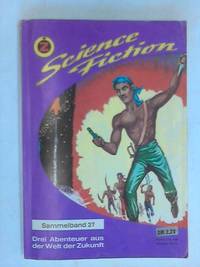
Science Fiction
Sammelband 27: Drei Abenteuer aus der Welt der Zukunft
Zauberkreis-Verlag Rastatt um 1950. Zusammen ca. 180 S. kartoniert. - gutes Exemplar/ Enthaltene Titel sind: Aufstand der Centauri/ Die Nacht der Sonnenwölfe/ Van Doorens Stern - unknown
书商的参考编号 : 1n5237
|
|
|
SCIENCE FICTION.
Science Fiction. 127 magazines published in the UK between 1946 & 1964.
Paperback. 1946. Included are: Astounding Science Fiction 55 issues; Galaxy Science Fiction 25; New World Science Fiction 13; New Worlds Fiction of the Future 8; Nebula Science Fiction 7; Various other titles 19. Paper covers condition varies from very poor to good. Additional postage applies not sold subject to return. . paperback
书商的参考编号 : HALL512033
|
|
|
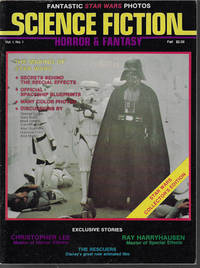
Science Fiction, Horror & Fantasy Magazine (Christopher Lee; Ray Harryhausen)
SCIENCE FICTION HORROR & FANTASY Magazine: #1; Fall 1977 Star Wars; The Rescuers
LA: D. W. Enterprises 1977. Vol. 1 No. 1. Includes articles on Star Wars Disney's The Rescuers Christopher Lee and Ray Harryhausen. Light rubbing and minor stress and corner wear. Single Issue Magazine. Good to Very Good-. D. W. Enterprises
书商的参考编号 : PO1796
|
|
|
Science Fiction - Van Vogt, A. E.
The House That Stood Still
Greenberg Publisher 1950. First Edition. Hardcover. Very Good. May have limited writing in cover pages. Pages are unmarked. ~ ThriftBooks: Read More Spend Less.Dust jacket in good condition. First edition. SIGNED by the author. Minor shelf and handling wear overall a clean solid copy with minimal signs of use. Secure packaging for safe delivery.Dust jacket quality is not guaranteed. Greenberg Publisher hardcover
书商的参考编号 : 1750677618
|
|
|
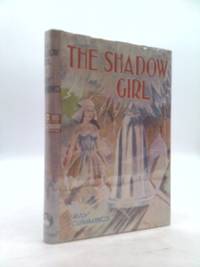
Science Fiction - Cummings, Ray
The Shadow Girl
Gerald G. Swan 1946T. hardcover. Very Good. . dj in mylar sleeve shows minor wear. pages clean. Gerald G. Swan hardcover
书商的参考编号 : mon0003726124
|
|
|
Science Fiction - Cummings, Ray
The Shadow Girl
Gerald G. Swan 1946. Hardcover. Good. Pages can have notes/highlighting. Spine may show signs of wear. ~ ThriftBooks: Read More Spend Less.Dust jacket in good condition. Shelf and handling wear to cover and binding with general signs of previous use. The binding suffers moderate loosening due to age and wear but remains secure and in-tact; the pages are clean and unmarked. Secure packaging for safe delivery.Dust jacket quality is not guaranteed. Gerald G. Swan hardcover
书商的参考编号 : 1243266896
|
|
|
SCIENCE FICTION
9e congr?s national de la science-fiction fran?aise. Limoges 16-22 mai 1977.
Broch?. 34 pages. 22x27cm.
|
|
|
Science Fiction and Adventure Library
Destination: Amalthela
Rubbing and wear to cover corners and edges
|
|
|
Science-Fiction Plus Magazine
1953: December Issue of Science-Fiction Plus Magazine with Robot Cover Art By Michael Fischer & drawings By Virgil Finlay & Frank R. Paul
Good Condition. unknown
书商的参考编号 : 74572
|
|
|
Science-Fiction. - Fantasy. - Schmidtke, Werner G.
Das phantastische Abenteuer in 70 Jahren deutscher Heftgeschichte.
Graff; oJ. um 1980. ca. 240 S. zahlr. Abb. Okt. Guter Zustand. 1980 unknown
书商的参考编号 : 115866AB

|
|
|
Science-Fiction - Zelazny, Roger
Die Aschenbrücke
München Wilhelm Heyne 1978. paperback. gebraucht gut ALTERSBEDINGTE GEBRAUCHSSPUREN!!!. München, Wilhelm Heyne, paperback
书商的参考编号 : 80647
|
|
|
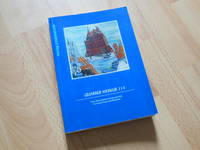
Science-Fiction. - Rottensteiner, Franz
Quarber Merkur. 114.
Giessen: Lindenstruth; 2013. 307 S. Ill. Okt. Guter Zustand. Mit Beiträgen ua. von Jonas Etten Arkadien im Raum-Zeit-Labyrinth. Eine chronotopische Analyse der Traumland-Erzählungen von H.P. Lovecraft Richard-Philiipp Fahrbach Intermedialität des Schreckens: Parameter des Grauens bei H.P. Lovecraft Teil 2 Martin Alexander Sieber Der Fall Maupassant Wolfgang Both Die kommunistischen Utopien des Walter Müller Sebastian Pranz Ein letztes Interview mit Boris Strugatzki uvm. 2013 unknown
书商的参考编号 : 115631AB ???????? : 3934273939 9783934273931
|
|
|
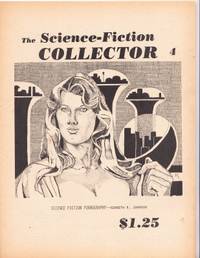
SCIENCE-FICTION COLLECTOR, (ed. Grant Thiessen)
The Science-Fiction Collector no 4
Pandora's Books: Manitoba Canada 1977. Magazine. No 4 Science Fiction Pornography by Kenneth R. Johnson. Fifteen issues published in total 1976-1981 - from no 9 renamed MEGAVORE: THE JOURNAL OF POPULAR FICTION for the next five and reverting to SCIENCE-FICTION COLLECTOR for the final two. Each issue contained articles and bibliographic listings for mostly vintage paperbacks paperback publishers often obscure and genre authors such as E. C. Tubb Jack Williamson and Jack Vance. A treasure trove of information for the vintage paperback collector though I guess 40 years later much of the information might be more easily accessible via the Internet. Maybe. See Tymn and Ashley eds Science Fiction Fantasy and Weird Fiction Magazines p. 837. Pages browning cheap newspapera near fine NF copy. Pandora's Books: Manitoba, Canada unknown
书商的参考编号 : 55471
|
|
|
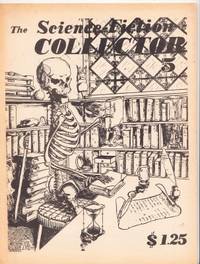
SCIENCE-FICTION COLLECTOR, (ed. Grant Thiessen)
The Science-Fiction Collector no 5
Pandora's Books: Manitoba Canada 1977. Magazine. No 5. Fifteen issues published in total 1976-1981 - from no 9 renamed MEGAVORE: THE JOURNAL OF POPULAR FICTION for the next five and reverting to SCIENCE-FICTION COLLECTOR for the final two. Each issue contained articles and bibliographic listings for mostly vintage paperbacks paperback publishers often obscure and genre authors such as E. C. Tubb Jack Williamson and Jack Vance. A treasure trove of information for the vintage paperback collector though I guess 40 years later much of the information might be more easily accessible via the Internet. Maybe. See Tymn and Ashley eds Science Fiction Fantasy and Weird Fiction Magazines p. 837. Pages browning cheap newspapera near fine NF copy. Pandora's Books: Manitoba, Canada unknown
书商的参考编号 : 55472
|
|
|
SCIENCE-FICTION COLLECTOR, (ed. Grant Thiessen)
The Science-Fiction Collector first eight issues published
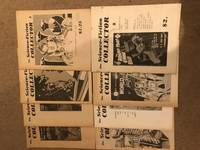
James Grant Books Calgary Canada 1980. First edition. Magazines. First eight issues 1976-1980. Canadian bibliographic sf magazine from bookseller Grant Thiessen: the first eight issues published as SCIENCE-FICTION COLLECTOR. With no 9 it became MEGAVORE: A JOURNAL OF POPULAR FICTION for five issues then back to SCIENCE FICTION COLLECTOR for no 14 and 15. This is a complete run of the first eight iissues. See Tymn and Ashley eds Science Fiction Fantasy and Weird Fiction Magazines p. 837. Pages on most issues browning cheap pulp paper a near fine NF set though brown marks to front cover of no 8. James Grant Books, Calgary, Canada unknown
书商的参考编号 : 55437
|
|
|
SCIENCE-FICTION COLLECTOR, (ed. Grant Thiessen)
The Science-Fiction Collector no 6
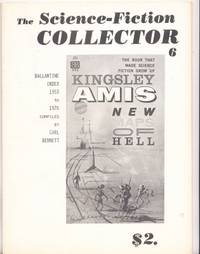
Pandora's Books: Manitoba Canada 1978. Magazine. No 6 includes a Ballantine Books index. Fifteen issues published in total 1976-1981 - from no 9 renamed MEGAVORE: THE JOURNAL OF POPULAR FICTION for the next five and reverting to SCIENCE-FICTION COLLECTOR for the final two. Each issue contained articles and bibliographic listings for mostly vintage paperbacks paperback publishers often obscure and genre authors such as E. C. Tubb Jack Williamson and Jack Vance. A treasure trove of information for the vintage paperback collector though I guess 40 years later much of the information might be more easily accessible via the Internet. Maybe. See Tymn and Ashley eds Science Fiction Fantasy and Weird Fiction Magazines p. 837. Fine copy published it seems on better paper than the other issues. Pandora's Books: Manitoba, Canada unknown
书商的参考编号 : 55473
|
|
|
SCIENCE-FICTION COLLECTOR, (ed. Grant Thiessen)
The Science-Fiction Collector no 7
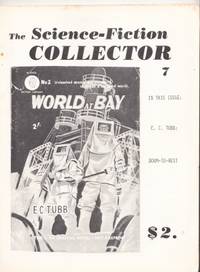
Pandora's Books: Manitoba Canada 1979. Magazine. No 7 July 1979. Mostly about E. C. Tubb. Fifteen issues published in total 1976-1981 - from no 9 renamed MEGAVORE: THE JOURNAL OF POPULAR FICTION for the next five and reverting to SCIENCE-FICTION COLLECTOR for the final two. Each issue contained articles and bibliographic listings for mostly vintage paperbacks paperback publishers often obscure and genre authors such as E. C. Tubb Jack Williamson and Jack Vance. A treasure trove of information for the vintage paperback collector though I guess 40 years later much of the information might be more easily accessible via the Internet. Maybe. See Tymn and Ashley eds Science Fiction Fantasy and Weird Fiction Magazines p. 837. Near fin NF copy. Pandora's Books: Manitoba, Canada unknown
书商的参考编号 : 55588
|
|
|
SCIENCE-FICTION COLLECTOR, (ed. Grant Thiessen)
The Science-Fiction Collector no 3
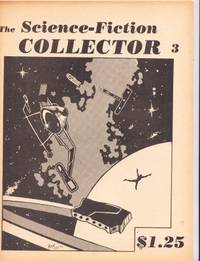
James Grant Books Calgary Canada 1977. Magazine. Third issue indexes to Galaxy novels and the Health Knowledge magazines. Fifteen issues published in total 1976-1981 - from no 9 renamed MEGAVORE: THE JOURNAL OF POPULAR FICTION for the next five and reverting to SCIENCE-FICTION COLLECTOR for the final two. Each issue contained articles and bibliographic listings for mostly vintage paperbacks paperback publishers often obscure and genre authors such as E. C. Tubb Jack Williamson and Jack Vance. A treasure trove of information for the vintage paperback collector though I guess 40 years later much of the information might be more easily accessible via the Internet. Maybe. See Tymn and Ashley eds Science Fiction Fantasy and Weird Fiction Magazines p. 837. Pages browning cheap newspapera near fine NF copy. James Grant Books, Calgary, Canada unknown
书商的参考编号 : 47065
|
|
|
SCIENCE-FICTION COLLECTOR, (ed. Grant Thiessen)
The Science-Fiction Collector no 1
James Grant Books Calgary Canada 1976. Magazine. First issue Ace Book Index. Fifteen issues published in total 1976-1981 - from no 9 renamed MEGAVORE: THE JOURNAL OF POPULAR FICTION for the next five and reverting to SCIENCE-FICTION COLLECTOR for the final two. Each issue contained articles and bibliographic listings for mostly vintage paperbacks paperback publishers often obscure and genre authors such as E. C. Tubb Jack Williamson and Jack Vance. A treasure trove of information for the vintage paperback collector though I guess 40 years later much of the information might be more easily accessible via the Internet. Maybe. See Tymn and Ashley eds Science Fiction Fantasy and Weird Fiction Magazines p. 837. Pages browning cheap newspaper a VG copy. James Grant Books, Calgary, Canada unknown
书商的参考编号 : 47063

|
|
|
SCIENCE-FICTION COLLECTOR, (ed. Grant Thiessen)
The Science-Fiction Collector no 2
James Grant Books Calgary Canada 1976. Magazine. Second issue includes indexes to a number of obscure paperback publishers. Fifteen issues published in total 1976-1981 - from no 9 renamed MEGAVORE: THE JOURNAL OF POPULAR FICTION for the next five and reverting to SCIENCE-FICTION COLLECTOR for the final two. Each issue contained articles and bibliographic listings for mostly vintage paperbacks paperback publishers often obscure and genre authors such as E. C. Tubb Jack Williamson and Jack Vance. A treasure trove of information for the vintage paperback collector though I guess 40 years later much of the information might be more easily accessible via the Internet. Maybe. See Tymn and Ashley eds Science Fiction Fantasy and Weird Fiction Magazines p. 837. Pages browning cheap newspapera near fine NF copy. James Grant Books, Calgary, Canada unknown
书商的参考编号 : 47064

|
|
|
Scithers, George, Editor (with Isaac Asimov)
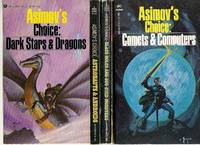
"ASIMOV'S CHOICE" ANTHOLOGIES: Astronauts & Androids / Black Holes & Bug-Eyed Monsters / Comets & Computers / Dark Stars & Dragons
New York: Dale Book #s 005 007 & 066 Magnum Books # 93550 1st Editions 1977-1978 ----------4 paperbacks anthologies of stories first published in Isaac Asimov Science Fiction Magazine. All books indicate Dale Books a subsidiary of Davis Publications as the publisher and in addition Comets & Computers indicates Magnum Books the Canadian distributor. All books are first edition paperback originals. A & A has cover creases and stains some dog-eared pages edgewear and is good. B & B has spine and reading creases edgewear store stamp inside and is good-VG. The other 2 books have minor if any shelfwear and are unread near fine copies. First Edition. Mass Market Paperback. Very Good. Note: our prices on Biblio are the LOWEST of any of the sites on which we list our books. New York: Dale Book #s 005, 007 & 066, Magnum Books # 93550 1st Editions 1977-1978 paperback
书商的参考编号 : 009861
|
|
|
Scithers, George H., editor. L. E. Modesitt, signed; Barry Longyear and others, contributors.
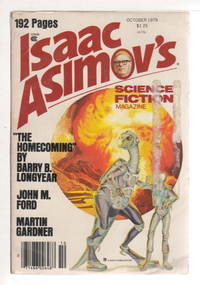
ISAAC ASIMOV'S SCIENCE FICTION MAGAZINE October 1979. Volume 3 Number 10.
New York:: Davis Publications 1979. SIGNED first edition -. Very good a few remnants of label on front cover lower corner bumped. First printing. Includes 'The Homecoming' by Barry Longyear contributions by John M. Ford Somtow Sucharitkul and others. SIGNED by L. E. Modesitt at his story "Iron Man Plastic Ships." Illustrated. Cover art by George Barr. Ads reviews and letters to the editor. 192 pp. Davis Publications, unknown
书商的参考编号 : 86814
|
|
|
Scithers, George H., editor.
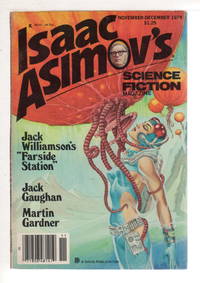
ISAAC ASIMOV'S SCIENCE FICTION MAGAZINE November - December 1978. Volume 2 Number 6.
New York:: Davis Publications 1978. First edition -. Near fine usual toning to pages cover bright no mailing label. First appearance in print of these works. Features stories by Jack Williamson "Farside Station' and Jack Gaughan "One More Time". Also includes contributions from Barry B. Longyear Isaac Asimov Phyllis Eisenstein John M. Ford Garry R. Osgood Edward Wellen Glen M. Bever Barry N. Malzberg Bill Pronzini and more. Illustrated. Cover art by George Barr. 192 pp plus ads. From the collection of Ken Krueger 1926-2009 publisher and founder of San Diego's comic con among other things. Davis Publications, unknown
书商的参考编号 : 85937
|
|
|
Scithers, George H., editor. FPaul Wilson and Larry Niven, contributors. F. Pa
ISAAC ASIMOV'S SCIENCE FICTION MAGAZINE February 1979. Volume 3 Number 2.
New York:: Davis Publications 1979. First edition -. Near fine light toning to the pages. First printing. Includes contributions from Barry B. Longyear F.Paul Wilson Noah Ward Larry Niven and others. editorial by Asimov and more. Illustrated. Cover art by Jack Gaughan. Ads reviews and letters to the editor. 194 pp. From the collection of Ken Krueger 1926-2009 publisher and founder of San Diego's comic con among other things with his inventory slip laid in . Davis Publications, unknown
书商的参考编号 : 85322
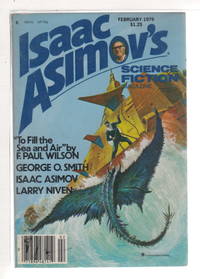
|
|

 ?????????
 ?????PDF???
 RSS feed
 ??
??


