|
Hokusai, Katsushika
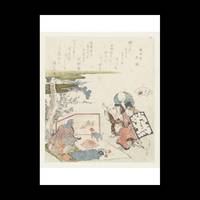
Freshwater mussel Photo Rag Bright White Premium Quality A2
Contentum Ltd. Loose sheet. New. High-quality art print based on an original work from the Rijksmuseum. Created in the 19th century 1821. Professionally printed on premium fine-art paper Photo Rag Bright White premium quality in size A2. The artwork is printed with a white border museum-style presentation. Contentum Ltd. unknown
Bookseller reference : 1839407
|
|
|
Hokusai, Katsushika
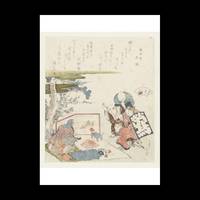
Freshwater mussel Museum Etching Museum Quality A2
Contentum Ltd. Loose sheet. New. High-quality art print based on an original work from the Rijksmuseum. Created in the 19th century 1821. Professionally printed on premium fine-art paper Museum Etching museum quality in size A2. The artwork is printed with a white border museum-style presentation. Contentum Ltd. unknown
Bookseller reference : 1839408
|
|
|
HOKUSAI, Katsushika
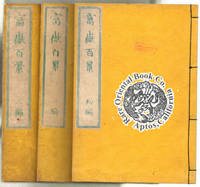
FUGAKU HYAKKEI: THE HUNDRED VIEWS OF MT. FUJI. Color Woodblock Printed On Washi
Tokyo 1877 Hayashi. Black stitched stiff wrs.vol.3 only woodblock printed very good clean covers firmly boundvery excellent registry very good impression colors:Sumi black & grey 16.1 x 24 cm. Meiji 10th. year =1877. . . . . FUGAKU HYAKKEI: 100 VIEWS OF MT. FUJI . . . HOKUSAI'S MOST FAMOUS BOOK ON JAPAN'S SACRED SYMBOL . . . COLOR WOODBLOCK-PRINTED ON HAND-MAID WASHI PAPER . . . HIS GREATEST CLASSIC ! . THE ARTIST: KATSUSHIKA Hokusai 1760-1849: Hokusai's most famous work in book form illustrating a profusion of views of Mt. Fuji from all perspectives. . Hokusai was Japan's most famous Edo period illustrator of Japanese genre landscape scenery and of the daily lives and occupations of the commoners. His works are full of cheerfulness humor optimism and he had a knack of capturing the true nature of his time people and life style. He was affectionately called the "MAD MAN ON DRAWING" by the Japanese. His works continue to fascinate the world over ! . This book was also the prototype for his great color woodblock print series of multiple views of Mt. Fuji. . A delightful and impressive work considered a classic for nearly 200 years. . This monograph is devoted to Japan's most sacred Mt. Fuji in all its glory portrayed in various seasons and as seen by common folk as they go about their daily lives and daily occupations and along the Tokaido highway. . THE INTRODUCTION: The introduction was written by Hokusai on the first two pages of each volume. . THE COMPLETE SET OF 3 VOLUMES: The collation is: 252525 double folded leaves or 150 pages in all with illustrations of Mt. Fuji on 144 pages 6 pages of Japanese text. . The history of the various editions and volume count are complex the work was originally issued complete in two volumes which included all pages found in the 3 volume set. The set of 3 volumes is no different than those bound in 2 volumes it is simply a matter of combining pages into two or three bindings. The binding format was a choice made by publishers & their binders. The usual format is 3 volumes numbered 1 2 & 3. There are 3 volumes bound into a single binding and other variants contents by and large is the same. . THE SUBJECT: MT. FUJI JAPAN'S MOST SACRED SYMBOL: . The work is marvelous it shows Mt. Fuji portrayed in the daily life of the common people. . In the spring time how ordinary Japanese sat outdoors and viewed the cherry blossoms with Mt. Fuji in the background. Mt. Fuji was always present in daily life as a background. . The composition artistry and skill of Hokusai is without parallel. The book illustrates his unique talent and drawing skills. His artistry pictured Mt. Fuji in myriad scenes early morning evening rain and cloudy days. The mystical quality of Mt. Fuji demonstrates the great respect Hokusai felt showing the great grandeur of the sacred mountain. . Hokusai used acute visual composition concepts insight and visionary-like "Avant-garde" talent to impress viewers to identify with the splendor of Mt. Fuji. . Hokusai is still hailed as Japan's greatest artist of the 19th century. His woodblock printed books and printed command solid prices. . THE EDITIONS: There were two main editions: the FIRST EDITION published in 1834-5 was bound in pink stiff stitched covers commonly called "FALCON FEATHERS." All later editions are reprints with various dates bound in yellow blue purple green black and several other variants. Contents remains the same it would be a matter of quality of impression. The later editions do not always have a colophon or date. Some editions do show publisher's information and date. Other copies may have been rebound omitting the colophon. . There is no 'standard' relationship between date and color of binding however we have had many editions and copies information below reflects this history: . In 1875 Meiji 8th year reprint bound in either yellow covers with green printed title slips or blue covers with red printed title slips. . In 1877 Meiji 10th year reprint in black covers with red printed title slips. . A late final reprint in 1940 with yellow covers. . All of the above were woodblock printed editions on Washi hand-made paper. The contents is identical regardless of edition. The volume size varied by a few centimeters mostly a difference of the top or bottom margins. . The quality of the reprints are determined by the freshness of the impression and registry. As the original woodblocks wore down and warped they were replaced with new blocks. Some later editions were printed from very worn poor quality original blocks others from a mixed variety of old and new blocks quality varies in each copy. . Please visit our website to see the editions currently in stock. Photos posted to our website may not reflect the exact copies in stock but are 'generic' examples of the contents. . NOTE: Not all copies are identical contents each have specific and unique condition and different cover colors all about the same size. . SIZE: Depending on edition the First Edition was typically bound 15.5 x 22.5 cm. The Meiji editions were about 15.3 x 24.2 cm. with a very minor difference in size dependent on which publisher printed & bound their copies. There are minor size differences by edition the images remain the same size it was strictly a matter of larger margins in later editions. . For the most part this set was uniformly bound each with title slips. The Meiji title slips were red Kanji on a red bordered white Washi paper. . THE ENGLISH TRANSLATION OF FUGAKU HYAKKEI: There was a complete English translation of the 3 volume set and each of its pages. Please visit our website and search for F.V. Dickins 1960 edition which may be in stock. See below for more details. . CONDITION NOTE: General: Unless otherwise stated bound in the original publisher's stitched stiff yellow or other color covers with green or red printed title slip. . The registry and impressions are excellent most likely early pulls off the woodblocks. . We may have different dated editions each copy has been described not all are in the same condition dates also vary. Please inquire about any particular copy for more details. Photos posted to our site are 'generic' and represent general examples of the contents & illustrations. Please review photos posted to our website. . The 1877 edition has a small mend at the last page the colophon in vol. 3 else very clean nice. . Color photos of a generic example are posted to our website copies vary please read the individual copy notes for subtle differences. . SPECIFIC COPY DETAILS: . Copy 6. This is an early edition with soft Washi paper and excellent registry and imression clearly an early pull off the woodblocks. . Bound in the publisher's variant orange color with the green printed title slip. The covers have the typical soil common for a famous book by a Hokusai a famous artist which is nearly 200 years old. The covers have the usual vertical minor wrinkles & bends. The pages show the usual touch of lower right corner 'thumbing.' . Some old minor and bit of tiny worming in top margin & top text from beginning to page 15; a similar small hole in the upper plates beginning from the front through to page 16; a similar small hole in the heel below the lower margin from page 7-13 of no impact to the image other two also of little impact to the image. Else the book is solidly bound without issues. Cover title in green ink. . There is a boksellers advertisement inside the front and back covers. Copy 7: Exceptionally bright & clean example a tiny bit of dustiness to the covers else excellent. Cover title slip in green ind.Contents are pristine. Cover . Copoy 8: Similar to above but with English written on the front covers:"Peole In Landscape" & Mabel D. Ely." Else the front & back covers have some minor dustiness typical signs of wear and feint marks contents remains pristine. Dated Meiji 8th year 1875. Copy 9: Excellent black covers very clean & solid with red ink printed title slip. Contents prestine. Dated Meiji 10th. year 1877. . REFERENCES: . DICKINS TRANSLATION: TWO EDITIONS: WITH ENGLISH TRANSLATION & ILLUSTRATIONS: a. F.V. Dickins.: FUGAKU HIYAKU-KEI: sic OR A HUNDRED VIEWS OF FUJISAMA FUJI BY HOKUSAI. London in 1880. This book contained 3 original woodblock illustrated volumes of Hokusai's book FUGAKU HYAKKEI. . b. A 1960 reprint of the above. H. Kerlen: CATALOGUE OF PRE-MEIJI JAPANESE BOOKS & MAPS . for more bibliographic details item #396 pp.163-166. BROWN Louise N.: BLOCK PRINTING AND BOOK ILLUSTRATION IN JAPAN p.183 she cites two entries. Henry Smith II: HOKUSAI ONE HUNDRED VIEWS OF MT. FUJI pp.21-22 outline of the editions. K. Toda: THE RYERSON COLLECTION OF JAPANESE AND CHINESE . ILLUSTRATED BOOKS p.263. L. Dawes: CATALOGUE OF JAPANESE ILLUSTRATED BOOKS p.47. FORRER Matthi. comp. et al.: HOKUSAI AND HIS SCHOOL: Paintings Drawings And Illustrated Books. See item 110 and associated photos. RIJKSMUSEUM: HOKUSAI AND HIS SCHOOL: Japanese Prints c. 1800-1840. see pp. 58-59 #87 & photos. Jack Hillier: no. 241 p.278. --. : HOKUSAI: no. 110 --. : THE ART OF JAPANESE BOOK ILLUSTRATION p.213-225 . plates 195-208 Kraft: VOL.3 NO. 185-=195; VOL. 4 NO.36 R. Keyes: EHON: The Artist and the Book in Japan: pp.218-223 i.e. exhibit #54 color plates: figures 54.1-54.5. KSM: Kaiga 7-18-1 Forrer: 170-177 . !! NOT LISTED IN: C. Mitchell: THE ILLUSTRATED BOOKS OF THE NANGA MARUYAMA SHIJO AND OTHER RELATED SCHOOLS OF JAPAN. . . unknown
Bookseller reference : 84211709
|
|
|
HOKUSAI, Katsushika
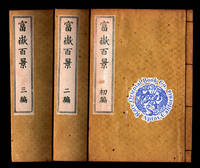
FUGAKU HYAKKEI: THE HUNDRED VIEWS OF MT. FUJI. Complete 3 Volume Set Woodbloc
Tokyo 1948 Oshima. Yellow stitched stiff wrs. 3 vol. set woodblock printed on hand-made paper very goodcleanbright set contents very clean white clear impressions in tones of grey Sumi black stiff buff paper Chitsu case. R A R E . . . AN IDENTICAL TO THE FIRST EDITION 1948 REPRINT . . . FUGAKU HYAKKEI: 100 VIEWS OF MT. FUJI . . . HOKUSAI'S MOST FAMOUS BOOK ON JAPAN'S SACRED SYMBOL . . . COLOR WOODBLOCK-PRINTED ON HAND-MAID WASHI PAPER . . . HIS GREATEST CLASSIC ! . THE ARTIST: KATSUSHIKA Hokusai 1760-1849: Hokusai's most famous work in book form illustrating a profusion of views of Mt. Fuji from all perspectives. . Hokusai was Japan's most famous Edo period illustrator of Japanese genre landscape scenery and of the daily lives and occupations of the commoners. His works are full of cheerfulness humor optimism and he had a knack of capturing the true nature of his time people and life style. He was affectionately called the "MAD MAN ON DRAWING" by the Japanese. His works continue to fascinate the world over ! . This book was also the prototype for his great color woodblock print series of multiple views of Mt. Fuji. . A delightful and impressive work considered a classic for nearly 200 years. . This monograph is devoted to Japan's most sacred Mt. Fuji in all its glory portrayed in various seasons and as seen by common folk as they go about their daily lives and daily occupations and along the Tokaido highway. . THE INTRODUCTION: The introduction was written by Hokusai on the first two pages of each volume. . THE COMPLETE SET OF 3 VOLUMES: The collation is: 252525 double folded leaves or 150 pages in all with illustrations of Mt. Fuji on 144 pages 6 pages of Japanese text. . The history of the various editions and volume count are complex the work was originally issued complete in two volumes which included all pages found in the 3 volume set. The set of 3 volumes is no different than those bound in 2 volumes it is simply a matter of combining pages into two or three bindings. The binding format was a choice made by publishers & their binders. The usual format is 3 volumes numbered 1 2 & 3. There are 3 volumes bound into a single binding and other variants contents by and large is the same. . THE SUBJECT: MT. FUJI JAPAN'S MOST SACRED SYMBOL: . The work is marvelous it shows Mt. Fuji portrayed in the daily life of the common people. . In the spring time how ordinary Japanese sat outdoors and viewed the cherry blossoms with Mt. Fuji in the background. Mt. Fuji was always present in daily life as a background. . The composition artistry and skill of Hokusai is without parallel. The book illustrates his unique talent and drawing skills. His artistry pictured Mt. Fuji in myriad scenes early morning evening rain and cloudy days. The mystical quality of Mt. Fuji demonstrates the great respect Hokusai felt showing the great grandeur of the sacred mountain. . Hokusai used acute visual composition concepts insight and visionary-like "Avant-garde" talent to impress viewers to identify with the splendor of Mt. Fuji. . Hokusai is still hailed as Japan's greatest artist of the 19th century. His woodblock printed books and printed command solid prices. . THIS IS THE 1948 EXACT REPRINT OF THE 1830'S FIRST EDITION: . This is an exact reprint of the First Edition complete with matching yellow covers green printed title slips and brown thread string bindings. . What differs is that in volume 3 where the usual illustrations end begins a section of 19 double-folded leaves of text by the xxxxxxx Ohshima Torimizu and the recent colophon indicating the publishing details. . This the latest final exact reprint edition matching the First Edition in all ways. . The work was woodblock printed on Washi hand-made paper. The registry & impression are excellent. The volume size varied by a few centimeters mostly a difference of the top or bottom margins. . Color photos are posted to our website. . CONDITION: This is an excellent copy fresh no bends to the cover hinges contents pristine immaculate so near the original that without the recent colophon and Oshim's comments one less versed in these things could easily think of this set being the original edition! . The set comes in a stiff paper folding Chitsu case printed in red & black on the front cover and black titles on the spine witih a string tie. . This five-part-folding Chitsu has been restored & mended from the inside to strengthen the folding hinge areas. The paper is 'toned' as usual for n immediate post-World War Two example. . REFERENCES: . There are no references to this edition in the traditional resources below which focus on 19th century editions or machine reprints. . DICKINS TRANSLATION: TWO EDITIONS: WITH ENGLISH TRANSLATION & ILLUSTRATIONS: a. F.V. Dickins.: FUGAKU HIYAKU-KEI: sic OR A HUNDRED VIEWS OF FUJISAMA FUJI BY HOKUSAI. London in 1880. This book contained 3 original woodblock illustrated volumes of Hokusai's book FUGAKU HYAKKEI. . b. A 1960 reprint of the above photo lithographed edition. H. Kerlen: CATALOGUE OF PRE-MEIJI JAPANESE BOOKS & MAPS . for more bibliographic details item #396 pp.163-166. BROWN Louise N.: BLOCK PRINTING AND BOOK ILLUSTRATION IN JAPAN p.183 she cites two entries. Henry Smith II: HOKUSAI ONE HUNDRED VIEWS OF MT. FUJI pp.21-22 outline of the editions. K. Toda: THE RYERSON COLLECTION OF JAPANESE AND CHINESE . ILLUSTRATED BOOKS p.263. L. Dawes: CATALOGUE OF JAPANESE ILLUSTRATED BOOKS p.47. FORRER Matthi. comp. et al.: HOKUSAI AND HIS SCHOOL: Paintings Drawings And Illustrated Books. See item 110 and associated photos and pp.170-177. RIJKSMUSEUM: HOKUSAI AND HIS SCHOOL: Japanese Prints c. 1800-1840. see pp. 58-59 #87 & photos. Jack Hillier: no. 241 p.278. --. : HOKUSAI: no. 110 --. : THE ART OF JAPANESE BOOK ILLUSTRATION p.213-225 . plates 195-208 Kraft: VOL.3 NO. 185-=195; VOL. 4 NO.36 R. Keyes: EHON: The Artist and the Book in Japan: pp.218-223 i.e. exhibit #54 color plates: figures 54.1-54.5. KSM: Kaiga 7-18-1 . !! NOT LISTED IN: C. Mitchell: THE ILLUSTRATED BOOKS OF THE NANGA MARUYAMA SHIJO AND OTHER RELATED SCHOOLS OF JAPAN. . . unknown
Bookseller reference : 44008501
|
|
|
HOKUSAI, Katsushika
FUGAKU HYAKKEI: THE HUNDRED VIEWS OF MT. FUJI. Color Woodblock Printed On Washi
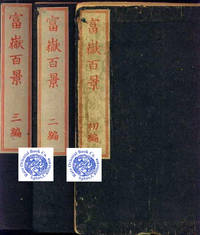
Edo 1875 Suharaya. Yellow stitched wrappersvol.3 only title slip very bright & clean copy woodblock printed the contents excellent impressions & registry colors grey Sumi & black exceptionally cleanfirm and solid example. RARE . . . . FUGAKU HYAKKEI: 100 VIEWS OF MT. FUJI . . . HOKUSAI'S MOST FAMOUS BOOK ON JAPAN'S SACRED SYMBOL . . . COLOR WOODBLOCK-PRINTED ON HAND-MAID WASHI PAPER . . . HIS GREATEST CLASSIC ! . THE ARTIST: KATSUSHIKA Hokusai 1760-1849: Hokusai's most famous work in book form illustrating a profusion of views of Mt. Fuji from all perspectives. . Hokusai was Japan's most famous Edo period illustrator of Japanese genre landscape scenery and of the daily lives and occupations of the commoners. His works are full of cheerfulness humor optimism and he had a knack of capturing the true nature of his time people and life style. He was affectionately called the "MAD MAN ON DRAWING" by the Japanese. His works continue to fascinate the world over ! . This book was also the prototype for his great color woodblock print series of multiple views of Mt. Fuji. . A delightful and impressive work considered a classic for nearly 200 years. . This monograph is devoted to Japan's most sacred Mt. Fuji in all its glory portrayed in various seasons and as seen by common folk as they go about their daily lives and daily occupations and along the Tokaido highway. . THE INTRODUCTION: The introduction was written by Hokusai on the first two pages of each volume. . THE COMPLETE SET OF 3 VOLUMES: The collation is: 252525 double folded leaves or 150 pages in all with illustrations of Mt. Fuji on 144 pages 6 pages of Japanese text. . The history of the various editions and volume count are complex the work was originally issued complete in two volumes which included all pages found in the 3 volume set. The set of 3 volumes is no different than those bound in 2 volumes it is simply a matter of combining pages into two or three bindings. The binding format was a choice made by publishers & their binders. The usual format is 3 volumes numbered 1 2 & 3. There are 3 volumes bound into a single binding and other variants contents by and large is the same. . THE SUBJECT: MT. FUJI JAPAN'S MOST SACRED SYMBOL: . The work is marvelous it shows Mt. Fuji portrayed in the daily life of the common people. . In the spring time how ordinary Japanese sat outdoors and viewed the cherry blossoms with Mt. Fuji in the background. Mt. Fuji was always present in daily life as a background. . The composition artistry and skill of Hokusai is without parallel. The book illustrates his unique talent and drawing skills. His artistry pictured Mt. Fuji in myriad scenes early morning evening rain and cloudy days. The mystical quality of Mt. Fuji demonstrates the great respect Hokusai felt showing the great grandeur of the sacred mountain. . Hokusai used acute visual composition concepts insight and visionary-like "Avant-garde" talent to impress viewers to identify with the splendor of Mt. Fuji. . Hokusai is still hailed as Japan's greatest artist of the 19th century. His woodblock printed books and printed command solid prices. . THE EDITIONS: There were two main editions: the FIRST EDITION published in 1834-5 was bound in pink stiff stitched covers commonly called "FALCON FEATHERS." All later editions are reprints with various dates bound in yellow blue purple green black and several other variants. Contents remains the same it would be a matter of quality of impression. The later editions do not always have a colophon or date. Some editions do show publisher's information and date. Other copies may have been rebound omitting the colophon. . There is no 'standard' relationship between date and color of binding however we have had many editions and copies information below reflects this history: . In 1875 Meiji 8th year reprint bound in either yellow covers with green printed title slips or blue covers with red printed title slips. . In 1877 Meiji 10th year reprint in black covers with red printed title slips. . A late final reprint in 1940 with yellow covers. . All of the above were woodblock printed editions on Washi hand-made paper. The contents is identical regardless of edition. The volume size varied by a few centimeters mostly a difference of the top or bottom margins. . The quality of the reprints are determined by the freshness of the impression and registry. As the original woodblocks wore down and warped they were replaced with new blocks. Some later editions were printed from very worn poor quality original blocks others from a mixed variety of old and new blocks quality varies in each copy. . Please visit our website to see the editions currently in stock. Photos posted to our website may not reflect the exact copies in stock but are 'generic' examples of the contents. . NOTE: Not all copies are identical contents each have specific and unique condition and different cover colors all about the same size. . SIZE: Depending on edition the First Edition was typically bound 15.5 x 22.5 cm. The Meiji editions were about 15.3 x 24.2 cm. with a very minor difference in size dependent on which publisher printed & bound their copies. There are minor size differences by edition the images remain the same size it was strictly a matter of larger margins in later editions. . For the most part this set was uniformly bound each with title slips. The Meiji title slips were red Kanji on a red bordered white Washi paper. . THE ENGLISH TRANSLATION OF FUGAKU HYAKKEI: There was a complete English translation of the 3 volume set and each of its pages. Please visit our website and search for F.V. Dickins 1960 edition which may be in stock. See below for more details. . CONDITION NOTE: General: Unless otherwise stated bound in the original publisher's stitched stiff yellow or other color covers with green or red printed title slip. . The registry and impressions are excellent most likely early pulls off the woodblocks. . We may have different dated editions each copy has been described not all are in the same condition dates also vary. Please inquire about any particular copy for more details. Photos posted to our site are 'generic' and represent general examples of the contents & illustrations. Please review photos posted to our website. . The 1877 edition has a small mend at the last page the colophon in vol. 3 else very clean nice. . Color photos of a generic example are posted to our website copies vary please read the individual copy notes for subtle differences. . SPECIFIC COPY DETAILS: . Copy 6. This is an early edition with soft Washi paper and excellent registry and imression clearly an early pull off the woodblocks. . Bound in the publisher's variant orange color with the green printed title slip. The covers have the typical soil common for a famous book by a Hokusai a famous artist which is nearly 200 years old. The covers have the usual vertical minor wrinkles & bends. The pages show the usual touch of lower right corner 'thumbing.' . Some old minor and bit of tiny worming in top margin & top text from beginning to page 15; a similar small hole in the upper plates beginning from the front through to page 16; a similar small hole in the heel below the lower margin from page 7-13 of no impact to the image other two also of little impact to the image. Else the book is solidly bound without issues. Cover title in green ink. . There is a boksellers advertisement inside the front and back covers. Copy 7: Exceptionally bright & clean example a tiny bit of dustiness to the covers else excellent. Cover title slip in green ind.Contents are pristine. Cover . Copoy 8: Similar to above but with English written on the front covers:"Peole In Landscape" & Mabel D. Ely." Else the front & back covers have some minor dustiness typical signs of wear and feint marks contents remains pristine. Dated Meiji 8th year 1875. Copy 9: Excellent black covers very clean & solid with red ink printed title slip. Contents prestine. Dated Meiji 10th. year 1877. . REFERENCES: . DICKINS TRANSLATION: TWO EDITIONS: WITH ENGLISH TRANSLATION & ILLUSTRATIONS: a. F.V. Dickins.: FUGAKU HIYAKU-KEI: sic OR A HUNDRED VIEWS OF FUJISAMA FUJI BY HOKUSAI. London in 1880. This book contained 3 original woodblock illustrated volumes of Hokusai's book FUGAKU HYAKKEI. . b. A 1960 reprint of the above. H. Kerlen: CATALOGUE OF PRE-MEIJI JAPANESE BOOKS & MAPS . for more bibliographic details item #396 pp.163-166. BROWN Louise N.: BLOCK PRINTING AND BOOK ILLUSTRATION IN JAPAN p.183 she cites two entries. Henry Smith II: HOKUSAI ONE HUNDRED VIEWS OF MT. FUJI pp.21-22 outline of the editions. K. Toda: THE RYERSON COLLECTION OF JAPANESE AND CHINESE . ILLUSTRATED BOOKS p.263. L. Dawes: CATALOGUE OF JAPANESE ILLUSTRATED BOOKS p.47. FORRER Matthi. comp. et al.: HOKUSAI AND HIS SCHOOL: Paintings Drawings And Illustrated Books. See item 110 and associated photos. RIJKSMUSEUM: HOKUSAI AND HIS SCHOOL: Japanese Prints c. 1800-1840. see pp. 58-59 #87 & photos. Jack Hillier: no. 241 p.278. --. : HOKUSAI: no. 110 --. : THE ART OF JAPANESE BOOK ILLUSTRATION p.213-225 . plates 195-208 Kraft: VOL.3 NO. 185-=195; VOL. 4 NO.36 R. Keyes: EHON: The Artist and the Book in Japan: pp.218-223 i.e. exhibit #54 color plates: figures 54.1-54.5. KSM: Kaiga 7-18-1 Forrer: 170-177 . !! NOT LISTED IN: C. Mitchell: THE ILLUSTRATED BOOKS OF THE NANGA MARUYAMA SHIJO AND OTHER RELATED SCHOOLS OF JAPAN. . . unknown
Bookseller reference : 84211707
|
|
|
HOKUSAI, Katsushika
FUGAKU HYAKKEI: THE HUNDRED VIEWS OF MT. FUJI. Color Woodblock Printed On Washi
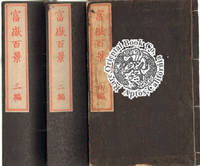
Nagoya 1875 Katano. Yellow stitched wrappers vol.3 only title slip covers slightly dusty/former owner's name else contents excellent impressions & registrycolors grey Sumi & black bright firm and solid example. RARE . . . . FUGAKU HYAKKEI: 100 VIEWS OF MT. FUJI . . . HOKUSAI'S MOST FAMOUS BOOK ON JAPAN'S SACRED SYMBOL . . . COLOR WOODBLOCK-PRINTED ON HAND-MAID WASHI PAPER . . . HIS GREATEST CLASSIC ! . THE ARTIST: KATSUSHIKA Hokusai 1760-1849: Hokusai's most famous work in book form illustrating a profusion of views of Mt. Fuji from all perspectives. . Hokusai was Japan's most famous Edo period illustrator of Japanese genre landscape scenery and of the daily lives and occupations of the commoners. His works are full of cheerfulness humor optimism and he had a knack of capturing the true nature of his time people and life style. He was affectionately called the "MAD MAN ON DRAWING" by the Japanese. His works continue to fascinate the world over ! . This book was also the prototype for his great color woodblock print series of multiple views of Mt. Fuji. . A delightful and impressive work considered a classic for nearly 200 years. . This monograph is devoted to Japan's most sacred Mt. Fuji in all its glory portrayed in various seasons and as seen by common folk as they go about their daily lives and daily occupations and along the Tokaido highway. . THE INTRODUCTION: The introduction was written by Hokusai on the first two pages of each volume. . THE COMPLETE SET OF 3 VOLUMES: The collation is: 252525 double folded leaves or 150 pages in all with illustrations of Mt. Fuji on 144 pages 6 pages of Japanese text. . The history of the various editions and volume count are complex the work was originally issued complete in two volumes which included all pages found in the 3 volume set. The set of 3 volumes is no different than those bound in 2 volumes it is simply a matter of combining pages into two or three bindings. The binding format was a choice made by publishers & their binders. The usual format is 3 volumes numbered 1 2 & 3. There are 3 volumes bound into a single binding and other variants contents by and large is the same. . THE SUBJECT: MT. FUJI JAPAN'S MOST SACRED SYMBOL: . The work is marvelous it shows Mt. Fuji portrayed in the daily life of the common people. . In the spring time how ordinary Japanese sat outdoors and viewed the cherry blossoms with Mt. Fuji in the background. Mt. Fuji was always present in daily life as a background. . The composition artistry and skill of Hokusai is without parallel. The book illustrates his unique talent and drawing skills. His artistry pictured Mt. Fuji in myriad scenes early morning evening rain and cloudy days. The mystical quality of Mt. Fuji demonstrates the great respect Hokusai felt showing the great grandeur of the sacred mountain. . Hokusai used acute visual composition concepts insight and visionary-like "Avant-garde" talent to impress viewers to identify with the splendor of Mt. Fuji. . Hokusai is still hailed as Japan's greatest artist of the 19th century. His woodblock printed books and printed command solid prices. . THE EDITIONS: There were two main editions: the FIRST EDITION published in 1834-5 was bound in pink stiff stitched covers commonly called "FALCON FEATHERS." All later editions are reprints with various dates bound in yellow blue purple green black and several other variants. Contents remains the same it would be a matter of quality of impression. The later editions do not always have a colophon or date. Some editions do show publisher's information and date. Other copies may have been rebound omitting the colophon. . There is no 'standard' relationship between date and color of binding however we have had many editions and copies information below reflects this history: . In 1875 Meiji 8th year reprint bound in either yellow covers with green printed title slips or blue covers with red printed title slips. . In 1877 Meiji 10th year reprint in black covers with red printed title slips. . A late final reprint in 1940 with yellow covers. . All of the above were woodblock printed editions on Washi hand-made paper. The contents is identical regardless of edition. The volume size varied by a few centimeters mostly a difference of the top or bottom margins. . The quality of the reprints are determined by the freshness of the impression and registry. As the original woodblocks wore down and warped they were replaced with new blocks. Some later editions were printed from very worn poor quality original blocks others from a mixed variety of old and new blocks quality varies in each copy. . Please visit our website to see the editions currently in stock. Photos posted to our website may not reflect the exact copies in stock but are 'generic' examples of the contents. . NOTE: Not all copies are identical contents each have specific and unique condition and different cover colors all about the same size. . SIZE: Depending on edition the First Edition was typically bound 15.5 x 22.5 cm. The Meiji editions were about 15.3 x 24.2 cm. with a very minor difference in size dependent on which publisher printed & bound their copies. There are minor size differences by edition the images remain the same size it was strictly a matter of larger margins in later editions. . For the most part this set was uniformly bound each with title slips. The Meiji title slips were red Kanji on a red bordered white Washi paper. . THE ENGLISH TRANSLATION OF FUGAKU HYAKKEI: There was a complete English translation of the 3 volume set and each of its pages. Please visit our website and search for F.V. Dickins 1960 edition which may be in stock. See below for more details. . CONDITION NOTE: General: Unless otherwise stated bound in the original publisher's stitched stiff yellow or other color covers with green or red printed title slip. . The registry and impressions are excellent most likely early pulls off the woodblocks. . We may have different dated editions each copy has been described not all are in the same condition dates also vary. Please inquire about any particular copy for more details. Photos posted to our site are 'generic' and represent general examples of the contents & illustrations. Please review photos posted to our website. . The 1877 edition has a small mend at the last page the colophon in vol. 3 else very clean nice. . Color photos of a generic example are posted to our website copies vary please read the individual copy notes for subtle differences. . SPECIFIC COPY DETAILS: . Copy 6. This is an early edition with soft Washi paper and excellent registry and imression clearly an early pull off the woodblocks. . Bound in the publisher's variant orange color with the green printed title slip. The covers have the typical soil common for a famous book by a Hokusai a famous artist which is nearly 200 years old. The covers have the usual vertical minor wrinkles & bends. The pages show the usual touch of lower right corner 'thumbing.' . Some old minor and bit of tiny worming in top margin & top text from beginning to page 15; a similar small hole in the upper plates beginning from the front through to page 16; a similar small hole in the heel below the lower margin from page 7-13 of no impact to the image other two also of little impact to the image. Else the book is solidly bound without issues. Cover title in green ink. . There is a boksellers advertisement inside the front and back covers. Copy 7: Exceptionally bright & clean example a tiny bit of dustiness to the covers else excellent. Cover title slip in green ind.Contents are pristine. Cover . Copoy 8: Similar to above but with English written on the front covers:"Peole In Landscape" & Mabel D. Ely." Else the front & back covers have some minor dustiness typical signs of wear and feint marks contents remains pristine. Dated Meiji 8th year 1875. Copy 9: Excellent black covers very clean & solid with red ink printed title slip. Contents prestine. Dated Meiji 10th. year 1877. . REFERENCES: . DICKINS TRANSLATION: TWO EDITIONS: WITH ENGLISH TRANSLATION & ILLUSTRATIONS: a. F.V. Dickins.: FUGAKU HIYAKU-KEI: sic OR A HUNDRED VIEWS OF FUJISAMA FUJI BY HOKUSAI. London in 1880. This book contained 3 original woodblock illustrated volumes of Hokusai's book FUGAKU HYAKKEI. . b. A 1960 reprint of the above. H. Kerlen: CATALOGUE OF PRE-MEIJI JAPANESE BOOKS & MAPS . for more bibliographic details item #396 pp.163-166. BROWN Louise N.: BLOCK PRINTING AND BOOK ILLUSTRATION IN JAPAN p.183 she cites two entries. Henry Smith II: HOKUSAI ONE HUNDRED VIEWS OF MT. FUJI pp.21-22 outline of the editions. K. Toda: THE RYERSON COLLECTION OF JAPANESE AND CHINESE . ILLUSTRATED BOOKS p.263. L. Dawes: CATALOGUE OF JAPANESE ILLUSTRATED BOOKS p.47. FORRER Matthi. comp. et al.: HOKUSAI AND HIS SCHOOL: Paintings Drawings And Illustrated Books. See item 110 and associated photos. RIJKSMUSEUM: HOKUSAI AND HIS SCHOOL: Japanese Prints c. 1800-1840. see pp. 58-59 #87 & photos. Jack Hillier: no. 241 p.278. --. : HOKUSAI: no. 110 --. : THE ART OF JAPANESE BOOK ILLUSTRATION p.213-225 . plates 195-208 Kraft: VOL.3 NO. 185-=195; VOL. 4 NO.36 R. Keyes: EHON: The Artist and the Book in Japan: pp.218-223 i.e. exhibit #54 color plates: figures 54.1-54.5. KSM: Kaiga 7-18-1 Forrer: 170-177 . !! NOT LISTED IN: C. Mitchell: THE ILLUSTRATED BOOKS OF THE NANGA MARUYAMA SHIJO AND OTHER RELATED SCHOOLS OF JAPAN. . . unknown
Bookseller reference : 84211708
|
|
|
HOKUSAI, Katsushika
FUGAKU HYAKKEI: THE HUNDRED VIEWS OF MT. FUJI. Color Woodblock Printed On Washi
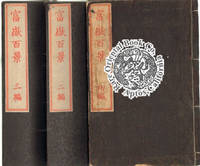
Nagoya 1875 Katano. Yellow stitched wrs.3 vol. settitle slips vol.1: covers very clean red stamp; vols. 2 3 a bit dusty all contents very cleanexcellent registry/impression bright examples firm in Chitsu board folding box. RARE ! . . . . FUGAKU HYAKKEI: 100 VIEWS OF MT. FUJI . . . HOKUSAI'S MOST FAMOUS BOOK ON JAPAN'S SACRED SYMBOL . . . COLOR WOODBLOCK-PRINTED ON HAND-MAID WASHI PAPER . . . HIS GREATEST CLASSIC ! . THE ARTIST: KATSUSHIKA Hokusai 1760-1849: Hokusai's most famous work in book form illustrating a profusion of views of Mt. Fuji from all perspectives. . Hokusai was Japan's most famous Edo period illustrator of Japanese genre landscape scenery and of the daily lives and occupations of the commoners. His works are full of cheerfulness humor optimism and he had a knack of capturing the true nature of his time people and life style. He was affectionately called the "MAD MAN ON DRAWING" by the Japanese. His works continue to fascinate the world over ! . This book was also the prototype for his great color woodblock print series of multiple views of Mt. Fuji. . A delightful and impressive work considered a classic for nearly 200 years. . This monograph is devoted to Japan's most sacred Mt. Fuji in all its glory portrayed in various seasons and as seen by common folk as they go about their daily lives and daily occupations and along the Tokaido highway. . THE INTRODUCTION: The introduction was written by Hokusai on the first two pages of each volume. . THE COMPLETE SET OF 3 VOLUMES: The collation is: 252525 double folded leaves or 150 pages in all with illustrations of Mt. Fuji on 144 pages 6 pages of Japanese text. . The history of the various editions and volume count are complex the work was originally issued complete in two volumes which included all pages found in the 3 volume set. The set of 3 volumes is no different than those bound in 2 volumes it is simply a matter of combining pages into two or three bindings. The binding format was a choice made by publishers & their binders. The usual format is 3 volumes numbered 1 2 & 3. There are 3 volumes bound into a single binding and other variants contents by and large is the same. . THE SUBJECT: MT. FUJI JAPAN'S MOST SACRED SYMBOL: . The work is marvelous it shows Mt. Fuji portrayed in the daily life of the common people. . In the spring time how ordinary Japanese sat outdoors and viewed the cherry blossoms with Mt. Fuji in the background. Mt. Fuji was always present in daily life as a background. . The composition artistry and skill of Hokusai is without parallel. The book illustrates his unique talent and drawing skills. His artistry pictured Mt. Fuji in myriad scenes early morning evening rain and cloudy days. The mystical quality of Mt. Fuji demonstrates the great respect Hokusai felt showing the great grandeur of the sacred mountain. . Hokusai used acute visual composition concepts insight and visionary-like "Avant-garde" talent to impress viewers to identify with the splendor of Mt. Fuji. . Hokusai is still hailed as Japan's greatest artist of the 19th century. His woodblock printed books and printed command solid prices. . THE EDITIONS: There were two main editions: the FIRST EDITION published in 1834-5 was bound in pink stiff stitched covers commonly called "FALCON FEATHERS." All later editions are reprints with various dates bound in yellow blue purple green black and several other variants. Contents remains the same it would be a matter of quality of impression. The later editions do not always have a colophon or date. Some editions do show publisher's information and date. Other copies may have been rebound omitting the colophon. . There is no 'standard' relationship between date and color of binding however we have had many editions and copies information below reflects this history: . In 1875 Meiji 8th year reprint bound in either yellow covers with green printed title slips or blue covers with red printed title slips. . In 1877 Meiji 10th year reprint in black covers with red printed title slips. . A late final reprint in 1940 with yellow covers. . All of the above were woodblock printed editions on Washi hand-made paper. The contents is identical regardless of edition. The volume size varied by a few centimeters mostly a difference of the top or bottom margins. . The quality of the reprints are determined by the freshness of the impression and registry. As the original woodblocks wore down and warped they were replaced with new blocks. Some later editions were printed from very worn poor quality original blocks others from a mixed variety of old and new blocks quality varies in each copy. . Please visit our website to see the editions currently in stock. Photos posted to our website may not reflect the exact copies in stock but are 'generic' examples of the contents. . NOTE: Not all copies are identical contents each have specific and unique condition and different cover colors all about the same size. . SIZE: Depending on edition the First Edition was typically bound 15.5 x 22.5 cm. The Meiji editions were about 15.3 x 24.2 cm. with a very minor difference in size dependent on which publisher printed & bound their copies. There are minor size differences by edition the images remain the same size it was strictly a matter of larger margins in later editions. . For the most part this set was uniformly bound each with title slips. The Meiji title slips were red Kanji on a red bordered white Washi paper. . THE ENGLISH TRANSLATION OF FUGAKU HYAKKEI: There was a complete English translation of the 3 volume set and each of its pages. Please visit our website and search for F.V. Dickins 1960 edition which may be in stock. See below for more details. . CONDITION NOTE: General: Unless otherwise stated bound in the original publisher's stitched stiff yellow or other color covers with green or red printed title slip. . The registry and impressions are excellent most likely early pulls off the woodblocks. . We may have different dated editions each copy has been described not all are in the same condition dates also vary. Please inquire about any particular copy for more details. Photos posted to our site are 'generic' and represent general examples of the contents & illustrations. Please review photos posted to our website. . The 1877 edition has a small mend at the last page the colophon in vol. 3 else very clean nice. . Color photos of a generic example are posted to our website copies vary please read the individual copy notes for subtle differences. . SPECIFIC COPY DETAILS: . Copy 6. This is an early edition with soft Washi paper and excellent registry and imression clearly an early pull off the woodblocks. . Bound in the publisher's variant orange color with the green printed title slip. The covers have the typical soil common for a famous book by a Hokusai a famous artist which is nearly 200 years old. The covers have the usual vertical minor wrinkles & bends. The pages show the usual touch of lower right corner 'thumbing.' . Some old minor and bit of tiny worming in top margin & top text from beginning to page 15; a similar small hole in the upper plates beginning from the front through to page 16; a similar small hole in the heel below the lower margin from page 7-13 of no impact to the image other two also of little impact to the image. Else the book is solidly bound without issues. Cover title in green ink. . There is a boksellers advertisement inside the front and back covers. Copy 7: Exceptionally bright & clean example a tiny bit of dustiness to the covers else excellent. Cover title slip in green ind.Contents are pristine. Cover . Copoy 8: Similar to above but with English written on the front covers:"Peole In Landscape" & Mabel D. Ely." Else the front & back covers have some minor dustiness typical signs of wear and feint marks contents remains pristine. Dated Meiji 8th year 1875. Copy 9: Excellent black covers very clean & solid with red ink printed title slip. Contents prestine. Dated Meiji 10th. year 1877. . REFERENCES: . DICKINS TRANSLATION: TWO EDITIONS: WITH ENGLISH TRANSLATION & ILLUSTRATIONS: a. F.V. Dickins.: FUGAKU HIYAKU-KEI: sic OR A HUNDRED VIEWS OF FUJISAMA FUJI BY HOKUSAI. London in 1880. This book contained 3 original woodblock illustrated volumes of Hokusai's book FUGAKU HYAKKEI. . b. A 1960 reprint of the above. H. Kerlen: CATALOGUE OF PRE-MEIJI JAPANESE BOOKS & MAPS . for more bibliographic details item #396 pp.163-166. BROWN Louise N.: BLOCK PRINTING AND BOOK ILLUSTRATION IN JAPAN p.183 she cites two entries. Henry Smith II: HOKUSAI ONE HUNDRED VIEWS OF MT. FUJI pp.21-22 outline of the editions. K. Toda: THE RYERSON COLLECTION OF JAPANESE AND CHINESE . ILLUSTRATED BOOKS p.263. L. Dawes: CATALOGUE OF JAPANESE ILLUSTRATED BOOKS p.47. FORRER Matthi. comp. et al.: HOKUSAI AND HIS SCHOOL: Paintings Drawings And Illustrated Books. See item 110 and associated photos. RIJKSMUSEUM: HOKUSAI AND HIS SCHOOL: Japanese Prints c. 1800-1840. see pp. 58-59 #87 & photos. Jack Hillier: no. 241 p.278. --. : HOKUSAI: no. 110 --. : THE ART OF JAPANESE BOOK ILLUSTRATION p.213-225 . plates 195-208 Kraft: VOL.3 NO. 185-=195; VOL. 4 NO.36 R. Keyes: EHON: The Artist and the Book in Japan: pp.218-223 i.e. exhibit #54 color plates: figures 54.1-54.5. KSM: Kaiga 7-18-1 Forrer: 170-177 . !! NOT LISTED IN: C. Mitchell: THE ILLUSTRATED BOOKS OF THE NANGA MARUYAMA SHIJO AND OTHER RELATED SCHOOLS OF JAPAN. . . unknown
Bookseller reference : 84211701
|
|
|
HOKUSAI, Katsushika
FUGAKU HYAKKEI: THE HUNDRED VIEWS OF MT. FUJI. Color Woodblock Printed On Washi
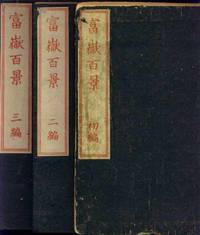
Tokyo 1836-7 Eirakuya. Orange stitched stiff wrs.vol. 3 only woodblock printed very goodcover edges & corners bit scuffed contents clean excellent impressions and registry colors: grey Sumi blackfirm solidly bound16.5 x 2.8 cm. . . . . FUGAKU HYAKKEI: 100 VIEWS OF MT. FUJI . . . HOKUSAI'S MOST FAMOUS BOOK ON JAPAN'S SACRED SYMBOL . . . COLOR WOODBLOCK-PRINTED ON HAND-MAID WASHI PAPER . . . HIS GREATEST CLASSIC ! . THE ARTIST: KATSUSHIKA Hokusai 1760-1849: Hokusai's most famous work in book form illustrating a profusion of views of Mt. Fuji from all perspectives. . Hokusai was Japan's most famous Edo period illustrator of Japanese genre landscape scenery and of the daily lives and occupations of the commoners. His works are full of cheerfulness humor optimism and he had a knack of capturing the true nature of his time people and life style. He was affectionately called the "MAD MAN ON DRAWING" by the Japanese. His works continue to fascinate the world over ! . This book was also the prototype for his great color woodblock print series of multiple views of Mt. Fuji. . A delightful and impressive work considered a classic for nearly 200 years. . This monograph is devoted to Japan's most sacred Mt. Fuji in all its glory portrayed in various seasons and as seen by common folk as they go about their daily lives and daily occupations and along the Tokaido highway. . THE INTRODUCTION: The introduction was written by Hokusai on the first two pages of each volume. . THE COMPLETE SET OF 3 VOLUMES: The collation is: 252525 double folded leaves or 150 pages in all with illustrations of Mt. Fuji on 144 pages 6 pages of Japanese text. . The history of the various editions and volume count are complex the work was originally issued complete in two volumes which included all pages found in the 3 volume set. The set of 3 volumes is no different than those bound in 2 volumes it is simply a matter of combining pages into two or three bindings. The binding format was a choice made by publishers & their binders. The usual format is 3 volumes numbered 1 2 & 3. There are 3 volumes bound into a single binding and other variants contents by and large is the same. . THE SUBJECT: MT. FUJI JAPAN'S MOST SACRED SYMBOL: . The work is marvelous it shows Mt. Fuji portrayed in the daily life of the common people. . In the spring time how ordinary Japanese sat outdoors and viewed the cherry blossoms with Mt. Fuji in the background. Mt. Fuji was always present in daily life as a background. . The composition artistry and skill of Hokusai is without parallel. The book illustrates his unique talent and drawing skills. His artistry pictured Mt. Fuji in myriad scenes early morning evening rain and cloudy days. The mystical quality of Mt. Fuji demonstrates the great respect Hokusai felt showing the great grandeur of the sacred mountain. . Hokusai used acute visual composition concepts insight and visionary-like "Avant-garde" talent to impress viewers to identify with the splendor of Mt. Fuji. . Hokusai is still hailed as Japan's greatest artist of the 19th century. His woodblock printed books and printed command solid prices. . THE EDITIONS: There were two main editions: the FIRST EDITION published in 1834-5 was bound in pink stiff stitched covers commonly called "FALCON FEATHERS." All later editions are reprints with various dates bound in yellow blue purple green black and several other variants. Contents remains the same it would be a matter of quality of impression. The later editions do not always have a colophon or date. Some editions do show publisher's information and date. Other copies may have been rebound omitting the colophon. . There is no 'standard' relationship between date and color of binding however we have had many editions and copies information below reflects this history: . In 1875 Meiji 8th year reprint bound in either yellow covers with green printed title slips or blue covers with red printed title slips. . In 1877 Meiji 10th year reprint in black covers with red printed title slips. . A late final reprint in 1940 with yellow covers. . All of the above were woodblock printed editions on Washi hand-made paper. The contents is identical regardless of edition. The volume size varied by a few centimeters mostly a difference of the top or bottom margins. . The quality of the reprints are determined by the freshness of the impression and registry. As the original woodblocks wore down and warped they were replaced with new blocks. Some later editions were printed from very worn poor quality original blocks others from a mixed variety of old and new blocks quality varies in each copy. . Please visit our website to see the editions currently in stock. Photos posted to our website may not reflect the exact copies in stock but are 'generic' examples of the contents. . NOTE: Not all copies are identical contents each have specific and unique condition and different cover colors all about the same size. . SIZE: Depending on edition the First Edition was typically bound 15.5 x 22.5 cm. The Meiji editions were about 15.3 x 24.2 cm. with a very minor difference in size dependent on which publisher printed & bound their copies. There are minor size differences by edition the images remain the same size it was strictly a matter of larger margins in later editions. . For the most part this set was uniformly bound each with title slips. The Meiji title slips were red Kanji on a red bordered white Washi paper. . THE ENGLISH TRANSLATION OF FUGAKU HYAKKEI: There was a complete English translation of the 3 volume set and each of its pages. Please visit our website and search for F.V. Dickins 1960 edition which may be in stock. See below for more details. . CONDITION NOTE: General: Unless otherwise stated bound in the original publisher's stitched stiff yellow or other color covers with green or red printed title slip. . The registry and impressions are excellent most likely early pulls off the woodblocks. . We may have different dated editions each copy has been described not all are in the same condition dates also vary. Please inquire about any particular copy for more details. Photos posted to our site are 'generic' and represent general examples of the contents & illustrations. Please review photos posted to our website. . The 1877 edition has a small mend at the last page the colophon in vol. 3 else very clean nice. . Color photos of a generic example are posted to our website copies vary please read the individual copy notes for subtle differences. . SPECIFIC COPY DETAILS: . Copy 6. This is an early edition with soft Washi paper and excellent registry and imression clearly an early pull off the woodblocks. . Bound in the publisher's variant orange color with the green printed title slip. The covers have the typical soil common for a famous book by a Hokusai a famous artist which is nearly 200 years old. The covers have the usual vertical minor wrinkles & bends. The pages show the usual touch of lower right corner 'thumbing.' . Some old minor and bit of tiny worming in top margin & top text from beginning to page 15; a similar small hole in the upper plates beginning from the front through to page 16; a similar small hole in the heel below the lower margin from page 7-13 of no impact to the image other two also of little impact to the image. Else the book is solidly bound without issues. Cover title in green ink. . There is a boksellers advertisement inside the front and back covers. Copy 7: Exceptionally bright & clean example a tiny bit of dustiness to the covers else excellent. Cover title slip in green ind.Contents are pristine. Cover . Copoy 8: Similar to above but with English written on the front covers:"Peole In Landscape" & Mabel D. Ely." Else the front & back covers have some minor dustiness typical signs of wear and feint marks contents remains pristine. Dated Meiji 8th year 1875. Copy 9: Excellent black covers very clean & solid with red ink printed title slip. Contents prestine. Dated Meiji 10th. year 1877. . REFERENCES: . DICKINS TRANSLATION: TWO EDITIONS: WITH ENGLISH TRANSLATION & ILLUSTRATIONS: a. F.V. Dickins.: FUGAKU HIYAKU-KEI: sic OR A HUNDRED VIEWS OF FUJISAMA FUJI BY HOKUSAI. London in 1880. This book contained 3 original woodblock illustrated volumes of Hokusai's book FUGAKU HYAKKEI. . b. A 1960 reprint of the above. H. Kerlen: CATALOGUE OF PRE-MEIJI JAPANESE BOOKS & MAPS . for more bibliographic details item #396 pp.163-166. BROWN Louise N.: BLOCK PRINTING AND BOOK ILLUSTRATION IN JAPAN p.183 she cites two entries. Henry Smith II: HOKUSAI ONE HUNDRED VIEWS OF MT. FUJI pp.21-22 outline of the editions. K. Toda: THE RYERSON COLLECTION OF JAPANESE AND CHINESE . ILLUSTRATED BOOKS p.263. L. Dawes: CATALOGUE OF JAPANESE ILLUSTRATED BOOKS p.47. FORRER Matthi. comp. et al.: HOKUSAI AND HIS SCHOOL: Paintings Drawings And Illustrated Books. See item 110 and associated photos. RIJKSMUSEUM: HOKUSAI AND HIS SCHOOL: Japanese Prints c. 1800-1840. see pp. 58-59 #87 & photos. Jack Hillier: no. 241 p.278. --. : HOKUSAI: no. 110 --. : THE ART OF JAPANESE BOOK ILLUSTRATION p.213-225 . plates 195-208 Kraft: VOL.3 NO. 185-=195; VOL. 4 NO.36 R. Keyes: EHON: The Artist and the Book in Japan: pp.218-223 i.e. exhibit #54 color plates: figures 54.1-54.5. KSM: Kaiga 7-18-1 Forrer: 170-177 . !! NOT LISTED IN: C. Mitchell: THE ILLUSTRATED BOOKS OF THE NANGA MARUYAMA SHIJO AND OTHER RELATED SCHOOLS OF JAPAN. . . unknown
Bookseller reference : 84211706
|
|
|
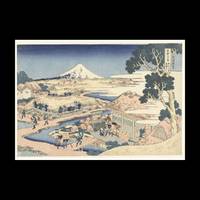
Hokusai, Katsushika
Fuji from the Katakura tea plantation in Suruga Province Photo Matt Fibre A2
Contentum Ltd. Loose sheet. New. High-quality art print based on an original work from the Rijksmuseum. Created in the 19th century 1831. Professionally printed on premium fine-art paper Photo Matt Fibre in size A2. The artwork is printed with a white border museum-style presentation. Contentum Ltd. unknown
Bookseller reference : 1937377
|
|
|
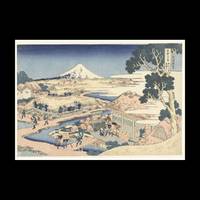
Hokusai, Katsushika
Fuji from the Katakura tea plantation in Suruga Province Photo Rag Bright White Premium Quality A2
Contentum Ltd. Loose sheet. New. High-quality art print based on an original work from the Rijksmuseum. Created in the 19th century 1831. Professionally printed on premium fine-art paper Photo Rag Bright White premium quality in size A2. The artwork is printed with a white border museum-style presentation. Contentum Ltd. unknown
Bookseller reference : 1937378
|
|
|
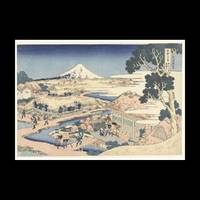
Hokusai, Katsushika
Fuji from the Katakura tea plantation in Suruga Province Museum Etching Museum Quality A3
Contentum Ltd. Loose sheet. New. High-quality art print based on an original work from the Rijksmuseum. Created in the 19th century 1831. Professionally printed on premium fine-art paper Museum Etching museum quality in size A3. The artwork is printed with a white border museum-style presentation. Contentum Ltd. unknown
Bookseller reference : 1937376
|
|
|
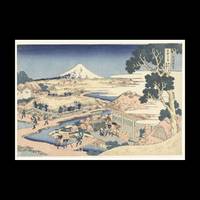
Hokusai, Katsushika
Fuji from the Katakura tea plantation in Suruga Province Museum Etching Museum Quality A2
Contentum Ltd. Loose sheet. New. High-quality art print based on an original work from the Rijksmuseum. Created in the 19th century 1831. Professionally printed on premium fine-art paper Museum Etching museum quality in size A2. The artwork is printed with a white border museum-style presentation. Contentum Ltd. unknown
Bookseller reference : 1937379
|
|
|
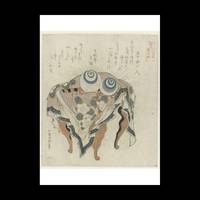
Hokusai, Katsushika
Fujiwara clan: the pearls of ebb and flood and the Fujiwara scythe Museum Etching Museum Quality A2
Contentum Ltd. Loose sheet. New. High-quality art print based on an original work from the Rijksmuseum. Created in the 19th century 1822. Professionally printed on premium fine-art paper Museum Etching museum quality in size A2. The artwork is printed with a white border museum-style presentation. Contentum Ltd. unknown
Bookseller reference : 1839733
|
|
|
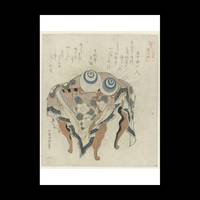
Hokusai, Katsushika
Fujiwara clan: the pearls of ebb and flood and the Fujiwara scythe Photo Rag Bright White Premium Quality A2
Contentum Ltd. Loose sheet. New. High-quality art print based on an original work from the Rijksmuseum. Created in the 19th century 1822. Professionally printed on premium fine-art paper Photo Rag Bright White premium quality in size A2. The artwork is printed with a white border museum-style presentation. Contentum Ltd. unknown
Bookseller reference : 1839732
|
|
|
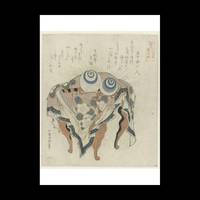
Hokusai, Katsushika
Fujiwara clan: the pearls of ebb and flood and the Fujiwara scythe Photo Matt Fibre A2
Contentum Ltd. Loose sheet. New. High-quality art print based on an original work from the Rijksmuseum. Created in the 19th century 1822. Professionally printed on premium fine-art paper Photo Matt Fibre in size A2. The artwork is printed with a white border museum-style presentation. Contentum Ltd. unknown
Bookseller reference : 1839731
|
|
|
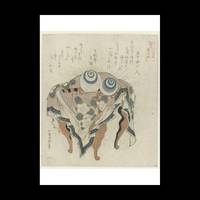
Hokusai, Katsushika
Fujiwara clan: the pearls of ebb and flood and the Fujiwara scythe Museum Etching Museum Quality A3
Contentum Ltd. Loose sheet. New. High-quality art print based on an original work from the Rijksmuseum. Created in the 19th century 1822. Professionally printed on premium fine-art paper Museum Etching museum quality in size A3. The artwork is printed with a white border museum-style presentation. Contentum Ltd. unknown
Bookseller reference : 1839730
|
|
|
HOKUSAI, Katsushika
FUKUJU SOH: THE ADONIS PLANT. An Erotic Color Illustrated Woodblock Printed Boo
Japan circa 1868. Gold brocade green cloth covers clean accordion folded all edge silver gilt album: 17 x 25 cm. 12 double-page prints opens to 34 x 25 cm. Oban size with illustrated introductory page. EXCEPTIONALLY RARE EXAMPLE ! . . . . ONE OF HOKUSAI'S MOST FASCINATING EROTIC BOOKS . . . PROFUSELY COLOR ILLUSTRATED WOODBLOCK BOOKS . . . REVEALING ALL ASPECTS OF CARNAL LOVE-MAKING . . KATSUSHIKA HOKUSAI 1760-1849: . Hokusai was one of Japan's most celebrated loved and famous painters and woodblock print artist of the Edo period. He was fondly and commonly known as the "Mad Man on Painting." . The original was work printed around the late 1810's it was unsigned several variant editions are known most copies were lost or now unaccounted for. It is part of Hokusai's erotic trilogy. . This posthumous edition has been fashioned after the period original. It was meticulously woodblock carved and color-printed with utmost professional skill by the best artisans of the time. It has impeccable color impression and registry. . The book was printed in some twenty-odd different colors each color printed by a different woodblock. . An interesting proof of age is found on page six the rape scene. The girl's red under-Kimono was printed from a color made from finely ground iron oxide. The red has now turned to an iron-red patina with a dark purple hue. This common color was used at the beginning of the Meiji period 1868-1912 for most solid reds. Humidity content determines the amount of time it takes to give this patina on the average about 100-135 years for this reaction to change the properties of the iron forcing it to oxidize and change into a marvelous color and affect see scans posted to our website. . Although the book has a title slip it was intentionally left blank due to the subject being designated as "contraband" and banned by the Shogun as well as in the early Meiji era 1868. . ABOUT JAPANESE EROTIC ART: . A truly magnificent and unusual example of early Meiji polychrome printing. Most of the Shun Pon erotic books commonly call "Erotic Pictures of Spring" of this period show small images drawn from a distance with room decorations food bedding flowing robes furniture and outside scenery. . Shunga & Shunpon Erotic pictures & books reflect the "awakening" of human sexual desire after a long winter's sleep. Sex became an "art" used to stimulate enhance and evocative of love making. . THE CONTENTS: The work starts out with a double-page showing sliding Fusuma doors an invitation to voyeurism. The doors are subtly decorated giving no clue to the true nature of the contents useful for coercing young virgins to have a look.also the reason for no title slip. Each of the subsequent 12 double pages are devoted to the real subject of this book. The joy art & pleasure of love-making. . From the beginning of recorded time the Japanese were not a prudish people. In fact they held strong beliefs in and worship of inanimate sexual objects such as trees rocks and other things that showed a natural resemblance to the genitalia. These objects were collected & placed in shrines. Later some were carved from wood and stone and placed in special "fertility shrines" in Japan. Barren women often visited these shrines offering prayers to the Gods for fertility and evoked charms. Stories passed down over the centuries that some of the Monks or keepers of these fertility shrines or their priests were willing "assistants" of these "Gods" and gladly inseminated such vulnerable women. . The Japanese had an affinity with the natural expression of passion and lust. Rape of women alone along a pathway or in their own room was not uncommon. While some may truly object others feigned objection while in ecstasy see page #6. The book therefore beings when with point in mind. . Page one shows a very young woman. She has mounted an unseen suitor while she sits upon his gigantic penis her eyes are closed in the throes of ecstasy her lips are red with excitement and a very pale but obvious pink flush envelops her face. On the floor is the usual package of Chirishi or toilet paper used to wipe the aftermath. . The male's organ is huge and the veins are blue and popping her very excited vulva takes on the color of deep red and faint purple displaying the maximum color of excitement. While fully clothed her Kimono is open just enough to accomplish the act of love. To the Japanese partially clothed women with their genitals exposed was more erotic than a full nude.after all they did mixed public bathing for centuries. . Page two shows a couple. She is almost nude with just her red under Kimono draped over her stomach while he exposes his organ as he enters her from the "X" angle he cradles her from behind while holding her left breast. She pulls him from behind the neck to be close enough to share a tongue kiss rarely shown in Japanese prints. He inserts his tongue into her willing mouth as she holds his cheek fast. Her long and flowing hair is still tied with a black ribbon at the bottom suggesting that she is some kind of royal person. She also shows a pink flush to her mouth and vaginal lips. . Page three shows newlyweds. The woman still wears the traditional head gear of a bride. She holds a package of Chirishi in her lips ready for the flood of love juices that are already flowing out. The man enters her from the top while she willingly spreads her legs wide open. . Page four shows the woman on top in a contortion revealing the organs involved in love-making. . Page five shows the influence from an earlier Utamaro classic erotic work. The woman is on the bottom pulling the covers over her lover's bare back-side while they are making love in the winter. Her wooden platform pillow is ready as the are hidden from view by a small folding screen to keep cool the draft out. Her vermilion-red under Kimono is tangled with her outer Kimono. . Page six shows a ruffian raping a young girl. He is likely a common coolie all he wears is a "Fundoshi" or loin cloth which was easily moved to reveal his huge and erect penis. He has tumbled this innocent girl by pulling her foot from under her; then with his other hand inserts his organ into her. She is pushing his cheek away and attempting to pull his hand off her foot. What is ironical is that her face is flushed pink and her face shows no frown of rejection but her eyes are almost closed as she secretly anticipates the oncoming pleasure. For sure she must resist being innocent young coquettish and demure in an attempt to save face. It is important to note at this time that there exists a most similar print by Utamaro showing this very scene. Surely Hokusai was so impressed that as a tribute to Utamaro he utilized this stunning image in his own work the old adage "Copying is the greatest compliment." See more below regarding page six. . Page seven shows an unabashed nude couple enjoying a fully the pleasure of love-making sans restraints. In fact this must the a second or third time of love-making as noted the voluminous as the amount of expended Chirishi. It has been thrown about the room. It is known in Japan that after the first round of love-making if the man can wipe up love juices promptly enough a new erection can be achieved. The the drying of vulva will give the next round of love-making a new and more pleasurable sensation. . In this view the man enters from the rear while holding her fast his right foot is set and placed for maximum traction! . Page eight shows a couple engaged in love-making. The woman on top but with her back side facing him. Vis-a-vis each other to observe each other thus increasing the erotic passion. A tiny bit of silver color has accented her Kimono highly usual in any woodblock print. Of special note her toes are curled down in a fit of ecstasy! An exhibition of Hokusai humor ! . Page nine shows one of the most fascinating of all prints in this series. In the traditional "sixty-nine" position he has his tongue in her very excited and swollen purple-red vulva. She tries with difficulty to contain his very large penis with a dark pink-purple flush. Again this woman curls her toes in painful-erotic-ecstasy. Her expression shows her eyebrows in a frown as she enjoys the agony and ecstasy of wonderful carnal pleasures. . Page ten shows a mature couple nude she holds the tie-died head band in her mount to silence her cries of joy while she embraces her lover's neck. The spectacular view of the genitals fully engaged is stunning. The penis has its veins popping out while the lips of her vulva are flushed bright red the love juices flowing out. Her breasts are pointed downward revealing that she has given birth previously. Her her toes are curled in a passionate dream of pleasure. The pair both display a pink flush to their faces with very bright red lips. It is not common to see this in men. . Page eleven shows a couple preparing to make love. The man is on top displays a very large and erect penis while he sucks on her upturned breast. She is being manipulated to move her left leg up so he can then enter her open and eager waiting vulva. She clutches a handful of Chirishi in preparation for the flood of love juices. Her eyebrows are shaved with a faint pink flush just above her eyes has emerged from the excitement. . Page twelve shows a most unusual scene in the world of Shunpon. While lesbianism is not unusual in Japan openly depicting girls at such play are. This shows two ordinary nude women likely bored or abandoned by their male suitors have taken to the mutual pleasure of dildo play. One wears a huge and black penis tied about her waist. The other reveals her open and moist vagina clutches the penis while holding a few sheets of Chirishi. The other opens a tiny container with some sort of stimulating potion or lubricant. This will either be applied to the dildo or her partner's vagina. It seems clear the two girls have already shared this joy before. The girl grasping the dildo penis has already applied it to her partner and is now awaiting her turn to be "penetrated." . ATTRIBUTION: . The erotic book begins as usual without artist's name or title. By stylistic analysis and compared with many other signed Hokusai works its easy to understand who the artist was. . It is a long-standing tradition of most famous Japanese artists of the 17-19th centuries to create and discretely distribute banned erotic books and prints against Shogun laws. . Erotic books and prints were a quick cash resource for hard pressed artists regardless of how famous they were. Most all famous artists drew painted and provided artwork for woodblock-printed erotica. These earned immediate cash and the Shogun had a nearly impossible time proving guilt with unsigned materials. . ABOUT SHUNPON/BON & SHUNGA: Books of this erotic subject quality nature and rarity are seldom found on the open market. Shun=spring; Ga=picture; Pon/Bon=book. . Superbly colored in pastels prior to the very garish and bright advent and use of aniline dyes imported from Europe. Because Hokusai had lived during the life-time of Utamaro 1754-1806 he was influenced by this great master. . The most vivid example of this influence is found in number six above the rape scene. The original inspiration for this print was done by Utamaro in his most celebrated erotic album: UTA MAKURA: PILLOW OF SONG dated 1788. . Of this print Dr. Lane stated: "Utamaro's masterpieces.most impressive .series of twelve prints .this is one of the most dramatic scenes: a plebeian maiden being attacked by a middle-aged laborer and putting up stiff resistance" See Lane below. . The original Utamaro shows the exact same action with nearly identical composition; the man suppresses the girl by holding her left leg while she pushes his cheek away with her right hand.clearly Hokusai was so impressed with this superb composition and subject that he "borrowed" it in his own masterpiece. Note how even the man's "Fundoshi" loin cloth is in the exact format draped over his stiff penis. This is no coincidence ! This series and a few similar prints illustrated are found in Evans see below. . A RARE stunning and fantastic book of color erotica by Japan's master painter. . CONDITION: The over all condition is quite good with very minor amount of the usual period foxing. By and large this does not greatly detract from the over all images. Some images are in fine condition. On page #11 the print is about 5 mm. shorter at the bottom again this does not greatly affect the image. A small faint amount of transfer from the black is evident with a common result of books being folded and closed. . Overall the work is quite lovely and the viewer is exceptionally impressed by the fascinating and high quality of the subject images and drama. Please review photos posted to our website. . REFERENCE: . LANE Richard: IMAGES OF THE FLOATING WORLD p.140 plate 140 for a similar example. . --. EROTIC THEME IN JAPANESE PAINTING: THE EARLY SHUNGA SCROLL. . --. GREETINGS FROM EROS ! HOKUSAI AND THE EROTIC CALENDAR-PRINT. Japanese Title: HATSU HARU NO IRO GOYOMI. EVANS Tom.: SHUNGA: The Art of Love in Japan p.249 for text he text see illustrations: 6.83 6.85 and 6.86; 6.88 is an exact match for our number 9 above. BEURDELEY Michel. et al.: EROTIC ART OF JAPAN: The Pillow Poem. GICHNER Lawrence E.:EROTIC ASPECTS OF JAPANESE CULTURE. ILLING Richard.: JAPANESE EROTIC ART: And the Life of the Courtesan. UHLENBECK Chris. ed. et al.:JAPANESE EROTIC FANTASIES: Sexual Imagery of the Edo Period. WINZINGER Franz.: MEISTERWERKE DER EROTISCHEN KUNST JAPANS. MASTERWORKS OF JAPANESE EROTIC ART. RAWSON Philip.: ORIENTAL EROTIC ART. GROSBOIS Charles.: SHUNGA IMAGES OF SPRING: Essay on Erotic Elements in Japanese Art. DOUGLAS Nik. et al.: THE PILLOW BOOK: The Erotic Sentiment and the Paintings of India Nepal China & Japan. SHIBUI Kiyoshi.: UKIYO-E NAISI. BIBLIOGRAPHY OF JAPANESE EROTIC ILLUSTRATED WOODBLOCK PRINTED BOOKS. Modern Reading: UKIYO-E NAISHI . . unknown
Bookseller reference : 23014201
|
|
|
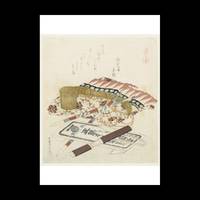
Hokusai, Katsushika
Goods from Arima Photo Matt Fibre A2
Contentum Ltd. Loose sheet. New. High-quality art print based on an original work from the Rijksmuseum. Created in the 19th century 1822. Professionally printed on premium fine-art paper Photo Matt Fibre in size A2. The artwork is printed with a white border museum-style presentation. Contentum Ltd. unknown
Bookseller reference : 1839666
|
|
|
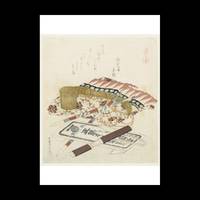
Hokusai, Katsushika
Goods from Arima Photo Rag Bright White Premium Quality A2
Contentum Ltd. Loose sheet. New. High-quality art print based on an original work from the Rijksmuseum. Created in the 19th century 1822. Professionally printed on premium fine-art paper Photo Rag Bright White premium quality in size A2. The artwork is printed with a white border museum-style presentation. Contentum Ltd. unknown
Bookseller reference : 1839667
|
|
|
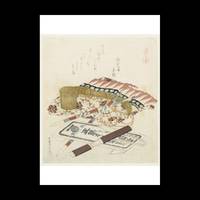
Hokusai, Katsushika
Goods from Arima Museum Etching Museum Quality A3
Contentum Ltd. Loose sheet. New. High-quality art print based on an original work from the Rijksmuseum. Created in the 19th century 1822. Professionally printed on premium fine-art paper Museum Etching museum quality in size A3. The artwork is printed with a white border museum-style presentation. Contentum Ltd. unknown
Bookseller reference : 1839665
|
|
|
Hokusai, Katsushika
Goods from Arima Museum Etching Museum Quality A2
Contentum Ltd. Loose sheet. New. High-quality art print based on an original work from the Rijksmuseum. Created in the 19th century 1822. Professionally printed on premium fine-art paper Museum Etching museum quality in size A2. The artwork is printed with a white border museum-style presentation. Contentum Ltd. unknown
Bookseller reference : 1839668
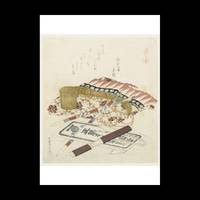
|
|
|
Hokusai, Katsushika & B G Voronova
Grafika Hokusai
Moscow: Iskusstvo 1975. This is a very good two volume hardcover set housed in the publisher's plain card slipcase. The book is bound in a typical Russian way: two hardcover books bound together in a portfolio. Text in Russian. Text volume 102 pages. Plate volume 158 plates in black & white with some color. Plate list. 11" high X 13" wide. Large heavy book foreign postage will be extra. This book will be securely wrapped and packed in a sturdy box and shipped with tracking. . Hard Cover. Very Good. Iskusstvo Hardcover
Bookseller reference : 014125
|
|
|
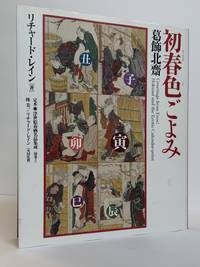
Hokusai, Katsushika [Artist], Lane, Richard [Author]
GREETINGS FROM EROS! HOKUSAI ND THE EROTIC CALENDAR-PRINT
Japan: Kawade Shobo 2000. Softcover. Octavo unpaginated. In Very Good Condition with a Very Good dust jacket. Spine red with black and white lettering. Dust jacket protected with a mylar covering. General shelf wear. Shelved in Case 11. 1407770. Shelved Dupont Bookstore. Kawade Shobo unknown
Bookseller reference : 1407770 ISBN : 4309910386 9784309910383
|
|
|
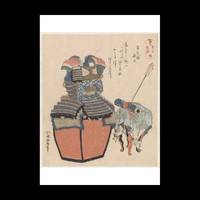
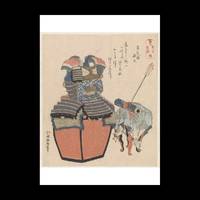
Hokusai, Katsushika
Harness of the Tachibana family with roller painting Photo Matt Fibre A2
Contentum Ltd. Loose sheet. New. High-quality art print based on an original work from the Rijksmuseum. Created in the 19th century 1890. Professionally printed on premium fine-art paper Photo Matt Fibre in size A2. The artwork is printed with a white border museum-style presentation. Contentum Ltd. unknown
Bookseller reference : 2012796
|
|
|
Hokusai, Katsushika
Harness of the Tachibana family with roller painting Museum Etching Museum Quality A3
Contentum Ltd. Loose sheet. New. High-quality art print based on an original work from the Rijksmuseum. Created in the 19th century 1890. Professionally printed on premium fine-art paper Museum Etching museum quality in size A3. The artwork is printed with a white border museum-style presentation. Contentum Ltd. unknown
Bookseller reference : 2012795
|
|
|
Hokusai, Katsushika
Harness of the Tachibana family with roller painting Photo Rag Bright White Premium Quality A2
Contentum Ltd. Loose sheet. New. High-quality art print based on an original work from the Rijksmuseum. Created in the 19th century 1890. Professionally printed on premium fine-art paper Photo Rag Bright White premium quality in size A2. The artwork is printed with a white border museum-style presentation. Contentum Ltd. unknown
Bookseller reference : 2012797
|
|
|
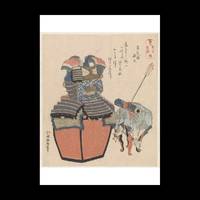
Hokusai, Katsushika
Harness of the Tachibana family with roller painting Museum Etching Museum Quality A2
Contentum Ltd. Loose sheet. New. High-quality art print based on an original work from the Rijksmuseum. Created in the 19th century 1890. Professionally printed on premium fine-art paper Museum Etching museum quality in size A2. The artwork is printed with a white border museum-style presentation. Contentum Ltd. unknown
Bookseller reference : 2012798
|
|
|
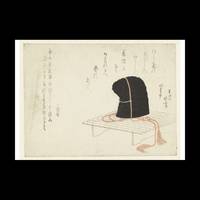
Hokusai, Katsushika
Head cover of Japanese courting Photo Matt Fibre A2
Contentum Ltd. Loose sheet. New. High-quality art print based on an original work from the Rijksmuseum. Created in the 18th century 1799. Professionally printed on premium fine-art paper Photo Matt Fibre in size A2. The artwork is printed with a white border museum-style presentation. Contentum Ltd. unknown
Bookseller reference : 2014553
|
|
|
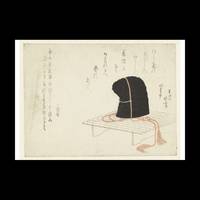
Hokusai, Katsushika
Head cover of Japanese courting Photo Rag Bright White Premium Quality A2
Contentum Ltd. Loose sheet. New. High-quality art print based on an original work from the Rijksmuseum. Created in the 18th century 1799. Professionally printed on premium fine-art paper Photo Rag Bright White premium quality in size A2. The artwork is printed with a white border museum-style presentation. Contentum Ltd. unknown
Bookseller reference : 2014554
|
|
|
Hokusai, Katsushika
Head cover of Japanese courting Museum Etching Museum Quality A3
Contentum Ltd. Loose sheet. New. High-quality art print based on an original work from the Rijksmuseum. Created in the 18th century 1799. Professionally printed on premium fine-art paper Museum Etching museum quality in size A3. The artwork is printed with a white border museum-style presentation. Contentum Ltd. unknown
Bookseller reference : 2014552
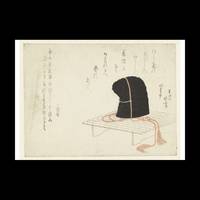
|
|
|
Hokusai, Katsushika
Head cover of Japanese courting Museum Etching Museum Quality A2
Contentum Ltd. Loose sheet. New. High-quality art print based on an original work from the Rijksmuseum. Created in the 18th century 1799. Professionally printed on premium fine-art paper Museum Etching museum quality in size A2. The artwork is printed with a white border museum-style presentation. Contentum Ltd. unknown
Bookseller reference : 2014555
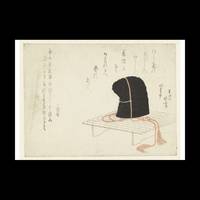
|
|
|
Hokusai, Katsushika; Helene Bayou (editor)
HOKUSAI 1760-1849: "L'AFFOLE DE SON ART" -- D'EDMOND DE GONCOURT a NORBERT LAGANE Hokusai 1760-1849: "Mad about His Art" -- from Edmond De Goncourt to Norbert Lagane
RMN. New. 2008. Hardcover. 271185406X . FREE UPGRADE to Courier/Priority Shipping Upon Request - IN STOCK AND IMMEDIATELY AVAILABLE FOR SHIPMENT - Flawless copy brand new pristine never opened -- Text in French. 248 pp. With 238 col. Ills. 29 x 23 cm. -- with a bonus offer-- . RMN hardcover
Bookseller reference : 73439 ISBN : 271185406X 9782711854066
|
|
|
Hokusai, Katsushika [artist]
HOKUSAI MANGA VOLUME IV
Nagoya: Eirukuya Toushirou Meiji Era 1868-1912. Saddle-stitched. Octavo unpaginated. In Fair condition. Fukurotoji style binding in cream wrap. Binding cord broken to two places. Significant creasing and wear to covers. Prominent brown and water staining to both covers. Missing title paper. Worming to bottom corner of covers and pages. Large closed tear to back endpaper. Water staining and toning throughout. Shelved Room E. 1410441. Special Collections. Eirukuya Toushirou unknown
Bookseller reference : 1410441
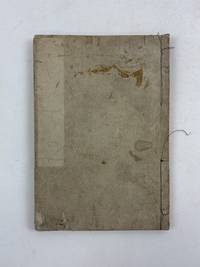
|
|
|
Hokusai, Katsushika
Hokusai Manga
hardcover. Good. Access codes and supplements are not guaranteed with used items. May be an ex-library book. hardcover
Bookseller reference : 0500294615.G ISBN : 0500294615 9780500294611
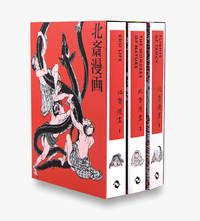
|
|
|
HOKUSAI, Katsushika
HOKUSAI MANGA. Vol. 06
Nagoya 1875 Kitano. Green stitched covers very good 29 double folded sheets 56 full page illus. in black Sumi and pink & gray shadesgood registry/impression15.8 x 22.6 cm. bit of nibbling on rear cover & margin corners cleansolid. . . . THIS ISSUE IS DEVOTED TO JAPANESE MARTIAL ARTS: . . . ARCHERY HORSES/EQUESTRIAN FITTINGS WEAPONS KENDO . . . NAGINADA SAMURAI SWORDS PRACTICE TANIGASHIMA RIFLE . . . JUJITSU & OTHERS . THE RAREST VOLUME IN THE SET OF 15. A MONOGRAPH ON JAPANESE MARTIAL ARTS. . SUBJECTS OF THIS VOLUME OF THE MANGA: This issue is focused on Zen and Samurai arts sword practice use of the Naginada swords & other hand weapons the Tanigashima rifle imported by the Portuguese to Japan 1549 archery war horses with all of the various and associated fittings with these martial arts. . With excellent illustrations of all facets of the above including Samurai fighting skills swordsmanship Kendo sword practice Naginada the long pole horsemanship & grooming saddles hunting skills Gods of the Samurai with a host of other fascinating genre illustrations by the "Mad Man On Drawing." This volume is one of the most desirable & RAREST of the 15 volume set. Highly collectable excellent reference work. . CONDITION: Please read the description for each copy copies differ. General description: The book is bound in the original publisher's blind-stamped stitched stiff wrappers with red title slip. The impression & registry are excellent colors vivid. . Not all copies came with the border-printed title page. . Please note we may have more than one copy in stock. Please review images posted to our website note: cover.jpg is the 1816 edition; spine.jpg is the 1875 edition. . NAGOYA 1816 FIRST EDITION: The book is bound in the original green stitched covers well worn scuffed and lower right page corners thumbed title slip worn per the photo above cited. . The contents are firm and solid with excellent impression & registry pages are very clean with out worming or significent blemish. An above average example of the RARE FIRST EDITION NAGOYA 1875 EDITION: The work is solidly bound in the original green stiff blind-stamped and stitched wrappers. . The front and rear covers are quite nice a few small scuffs on the edges and corners the back cover and several page corners are a bit 'nibbled' in the margins graphics are not affected The paper is 'toned' as usual for an item nearly 150 years old. . The woodblock illustrations are clear with excellent registry. All pages are clean a feint bit of very minor leading edge stain barely visible on a few page margins again images are not affected. By and large a very good plus example better than the average. Please review photos posted to our website. . BIBLIOGRAPHY: . MICHENER James A.: THE HOKUSAI SKETCH-BOOKS: SELECTIONS FROM THE MANGA. Toda Kenji: DESCRIPTIVE CATALOGUE OF JAPANESE AND CHINESE ILLUSTRATED BOOKS IN THE RYERSON LIBRARY OF THE ART INSTITUTE OF CHICAGO p.254-5. J. Hillier: ART OF HOKUSAI IN BOOK ILLUSTRATION pp.96-112. D. Chibbett: A DESCRIPTIVE CATALOGUE OF THE PRE-1868 JAPANESE BOOKS.p.33 item #85. H. Kerlin: CATALOGUE OF PRE-MEIJI JAPANESE BOOKS & MAPS IN PUBLIC COLLECTIONS IN THE NETHERLANDS p.226-239 item #546 for most all editions & variants. J.S. Edgren: CATALOGUE OF THE NORDENSKIOLD COLLECTION OF JAPANESE BOOKS IN THE ROYAL LIBRARY : p.285 #874 HICKMAN B. ed.: JAPANESE CRAFTS: MATERIALS AND THEIR APPLICATIONS. Selected early papers from the Japan Society of London. Written 1892 and 1915: p.33 #83. . . unknown
Bookseller reference : 88007302
|
|
|
Hokusai, Katsushika
Hokusai Manga
Thames & Hudson 2020-10-27. Illustrated. hardcover. Used: Good. 4.30x2.80x6.00. Buy with confidence. Excellent Customer Service & Return policy. Thames & Hudson hardcover
Bookseller reference : SONG0500294615 ISBN : 0500294615 9780500294611
|
|
|
HOKUSAI, Katsushika
HOKUSAI MANGA. Vol. 04
Nagoya 1875 Katano. White stiff wrs.29 double pages = 56 woodblock platescovers worn dusty stained soiled brushed title slipcolors:blackpink Sumigood registry/impression contents clean a solid copy. . . . . HOKUSAI'S FAMOUS MANGA: . . . CARICATURES OF EDO PERIOD GENRE & DAILY LIFE . . . A DELIGHTFUL LOOK AT COMMONERS ! . GENERAL SUBJECTS OF THE MANGA: People fauna flora landscape the past grotesque technology architecture landscape animals birds costume folk customs daily life of the commoners occupations furniture and all other genres. Many of the drawings and designs found their way into Netsuke Ojime and other Japanese art work. . Many of these drawings were used as the basis for Netsuke Inro and Ojimi carvers. This is a miscellany of various subjects drawn in his own unique style evoking a chuckle from the reader. . SUBJECT OF THIS ISSUE: This issue contains a Great Demon chasing off a kind of "Oni" devil. various mythological Gods: Tengu Kaze-no-Kami thunder god Heavenly Dragon Samurai warriors equestrian soldier arms armor swords & other weapons. . Four pages two double-pages of various kinds of birds: hawk ducks crane chicken sparrows cormorants owl crow &c. . Sixteen pages 8 double-page drawings of myriad plants: flowers water chestnuts palm root vegetables bamboo rose taro fern fruit trees pines wintry snowy-covered trees Momiji Japanese maple cactus &c. Also various kinds of landscapes: mountains water architecture: bridges walls gates villages pagodas shrines residences fences &c. . Japanese vessels: common junk tubs sampans sailing boats cargo boats wooden-bucket for the impoverished fishermen. . Swimmers: a double-page showing many swimmers some chase & catch fish using cloth bags with air to stay afloat a horse riding man 'swim' swimmers using a pole to pull them selves down to the depths diving for coral & seaweed a man in a large glass diving bell & others. . Old scholars & deities: various views of named Gods a scroll artist some with long pipes fans fishing and a host of others. Followed by a double-page of Chinese Gods or famous deities. . Drawing of thunder & lightning over a small village two Buddhist Monks engulfed in fire . Double-page of various animals: goat mouse cat snake horse rabbit buffalo monkey tiger pig tiger chickens &c. . A delightful work loaded with great drawings & art showing all aspects of life of the common people occupations pass times genre costume customs and so many wonderful others. . JAPAN'S MOST FAMOUS ARTIST: KATSUSHIKA Hokusai 1760-1849 was lovingly called "Mad Man on Drawing." He was the best portrayer of Edo period 1604-1868 life culture art customs and impressions of Japan and Japanese life. He remains the most respected and skilled artist of his time. His sense of humor capturing the true nature of the commoners their life style furniture weapons farming activities architecture and pastimes. Few artist of period focused on these people and their plight in life. . CONDITION: Please read the description for each copy copies differ. General description: The book is bound in the original publisher's blind-stamped stitched stiff wrappers with red title slip. The impression & registry are excellent colors vivid. . Not all copies came with the border-printed title page. . Color photos are posted to our website. . The book is bound in the publisher's blind-stamped stitched wrappers. There is some of the usual but minor corner & edge wear. There are 3 tiny pin holes in the lower margin of the last 3 pages not effect on images otherwise the work is exceptionally clean outside and inside solidly & firmly bound. . Images and impression far above average by and large a better than average copy. Please review photos posted to our website. . Color photos are posted to our website. . BIBLIOGRAPHY: . MICHENER James A.: THE HOKUSAI SKETCH-BOOKS: SELECTIONS FROM THE MANGA. Toda Kenji: DESCRIPTIVE CATALOGUE OF JAPANESE AND CHINESE ILLUSTRATED BOOKS IN THE RYERSON LIBRARY OF THE ART INSTITUTE OF CHICAGO p.254-5. J. Hillier: ART OF HOKUSAI IN BOOK ILLUSTRATION pp.96-112. D. Chibbett: A DESCRIPTIVE CATALOGUE OF THE PRE-1868 JAPANESE BOOKS.p.33 item #85. H. Kerlin: CATALOGUE OF PRE-MEIJI JAPANESE BOOKS & MAPS IN PUBLIC COLLECTIONS IN THE NETHERLANDS p.226-239 item #546 for most all editions & variants. J.S. Edgren: CATALOGUE OF THE NORDENSKIOLD COLLECTION OF JAPANESE BOOKS IN THE ROYAL LIBRARY : p.285 #874 HICKMAN B. ed.: JAPANESE CRAFTS: MATERIALS AND THEIR APPLICATIONS. Selected early papers from the Japan Society of London. Written 1892 and 1915: p.33 #83. . . unknown
Bookseller reference : 91077303
|
|
|
HOKUSAI, Katsushika
HOKUSAI MANGA. Vol. 05
Nagoya 1875 Katano. Black stitched wrs.very goodcolored woodcuts 16 x 23 cm.covers a bit scuffed/chipped contents clean a bit of thumbing else a solid example 16 x 23 cm. excellent impression & registry firmly bound 38 plates. . . . . HOKUSAI'S FAMOUS MANGA: . . . CARICATURES OF EDO PERIOD GENRE & DAILY LIFE . . . A DELIGHTFUL LOOK AT COMMONERS ! . . GENERAL SUBJECTS OF THE MANGA: People fauna flora landscape the past grotesque ghosts technology architecture clothing customs activities scenery wildlife all aspects of daily life of common people. . SUBJECTS OF THIS VOLUME: This excellent example shows a wide variety of Japanese Chinese and Buddhist heroes and famous individuals. The architecture of Shinto shrine Torii entrance gate temple architecture roof styles great brass bell tower & Buddhist bells & deities famous scholars & their books goblins ghosts ghouls monsters Oni devil Sumo wrestlers Mt. Fuji scenery Samurai with swords court figures great waves temple guardians legendary characters "Daiken" Buddhist priest & others. . A delightful work loaded with great drawings & art showing all aspects of life of the common people occupations pass times genre costume & customs. . JAPAN'S MOST FAMOUS ARTIST: KATSUSHIKA Hokusai 1760-1849 was lovingly called "Mad Man on Drawing." He was the best portrayer of Edo period 1604-1868 life culture art customs and impressions of Japan and Japanese life. He remains the most respected and skilled artist of his time. His sense of humor capturing the true nature of the commoners their life style furniture weapons farming activities architecture and pastimes. Few artist of period focused on these people and their plight in life. . The book is color woodblock printed in black white pastel pink gray colors with 29 double-pages = 58 pages of illustrations. . CONDITION: Please read the description for each copy copies differ. . General description: The book is bound in the original publisher's blind-stamped stitched stiff wrappers with red title slip. The impression & registry are excellent colors vivid. . Not all copies came with the border-printed title page. . BIBLIOGRAPHY: . MICHENER James A.: THE HOKUSAI SKETCH-BOOKS: SELECTIONS FROM THE MANGA. Toda Kenji: DESCRIPTIVE CATALOGUE OF JAPANESE AND CHINESE ILLUSTRATED BOOKS IN THE RYERSON LIBRARY OF THE ART INSTITUTE OF CHICAGO p.254-5. J. Hillier: ART OF HOKUSAI IN BOOK ILLUSTRATION pp.96-112. D. Chibbett: A DESCRIPTIVE CATALOGUE OF THE PRE-1868 JAPANESE BOOKS.p.33 item #85. H. Kerlin: CATALOGUE OF PRE-MEIJI JAPANESE BOOKS & MAPS IN PUBLIC COLLECTIONS IN THE NETHERLANDS p.226-239 item #546 for most all editions & variants. J.S. Edgren: CATALOGUE OF THE NORDENSKIOLD COLLECTION OF JAPANESE BOOKS IN THE ROYAL LIBRARY : p.285 #874 HICKMAN B. ed.: JAPANESE CRAFTS: MATERIALS AND THEIR APPLICATIONS. Selected early papers from the Japan Society of London. Written 1892 and 1915: p.33 #83. . . unknown
Bookseller reference : 84356904
|
|
|
HOKUSAI, Katsushika
HOKUSAI MANGA. Vol. 11
Nagoya 1875 Katano. Pink stitched wrs. 29 double leaves= 58 p. woodblock plates colors: Suimi black pink & white upper left corner & lower edge bit nibbled contents clean very good impression & registry solid covers a bit dusty. . . . . HOKUSAI'S FAMOUS MANGA: . . . CARICATURES OF EDO PERIOD GENRE DAILY LIFE . . . A DELIGHTFUL LOOK AT SAMURAI MILITARY & COMMONERS . . . WITH A SPECIAL GROUP OF WESTERN WEAPONS: GUNS CANNON . . . TANIGASHIMA RIFLE PISTOL CROSS BOW &c . . . & SUMO WRESTLERS . GENERAL SUBJECTS OF THE MANGA: People fauna flora landscape the past grotesque ghosts technology architecture clothing customs activities scenery wildlife all aspects of daily life of common people. . A charming work with characters portraits Sumo wrestlers people going about daily activities games play time landscape scenery hunting with a rifle cannon & other arms pistol archery equipment shrines Gods &c. . SUBJECTS IN THIS VOLUME: . PEOPLE: The Emperor courtiers men & women of class commoners: men and women at daily activities: playing the Shamisen 3 string guitar singing acting. Woman farting on a sleeping man human antics a man surprised by a snake. Samurai coolies men women and a pilgrim out for a walk with a dog and child. Three men pant a giant's leg and foot. A heavenly Apsara floats a man servant attends his master. A Tengu bird-man carry a parcel suspended on a long-nosed man. Buddhist priest. A kite flyer is shocked by the fierce face of his upside-down kite. An old Samurai and his son. Samurai slashing his Katana long sword at two lanterns. Mochi pounding machine two coolies try to lift heavy bails of rice one tumbles backwards. Sumo wrestlers at practice with three referees. Illustrated on 2 double and a single page 5 illustrations in all. . Gymnasts doing various postures foot wrestling could be preparing those who wish to become Sumo wrestlers. Musicians dancers men making strange and bizarre faces typical Hokusai parity. . Three Tanegashima Portuguese rifle bearing hunters wait in ambush one blows a whistle most likely to attract animals or birds. The next page shows various rifle pouches: gunpowder birdshot with the facing page showing another Tanegashima bearing soldier with a support aiming down-range above are various birds of prey. . Another page showing four soldiers using Tanigashima practice shows aiming loading and adding explosive powder. A double-barrel pistol. A large foreign-type cannon firing mounted crossbow. . A double-page showing a horse-mounted Samurai attacking two foot soldiers with his pistol and also carries a Tanigashima rifle both go flying after being hit arrows flying in all directions. The next double-page shows various perspective views of foreign double-barrel pistols each part carefully identified. . Double-page of a Sword Deity shows a multiple-faced icon with eight hands each holding a Wakizashi Katana long Samurai sword seated on a Fu dog. . Three double-pages illustrating about50 individual drawings of various people in caricature showing fishing Daikoku-san God of Wealth Shinto Priest making obeisance before a Taiko drum man carrying a woman on his back Taiko drummers various men women at activities painting screens Tanigashima practice a man pawing a semi nude woman booming a scroll painting drawing a horse and painting a scroll. . Double-vertical page showing five coolies resting under a Buddhist Shrine. Followed by another double-page with a similar Torii gate with several people taking rest three are sword-bearing Samurai. . ANIMALS: Chicken cat dogs Chinese Foo dogs duck giant fish bird caught in a man-made trap . LANDSCAPE/SCENERY: Views of rural village mountains bridge coolies in a rain storm boat riding fisherman out in the swamp fast running rapids with many beams of cut timber flowing down-stream after a flood; two coolies try to hook and pull out the lumber. Farmers & coolies with a woman resting in the forest. Fantastic rock and river scenery with deep crevasses and waterfalls. . NOTE: Not all copies come with the bordered title page. . CONDITION: In general bound in the publisher's original stiff stitched wrappers with red title slip. Not all editions have the printed title page with the red deer design border. . The book is entirely woodblock printed in gray Sumi pink and black colors. . Please carefully read the description of each separate copy not all are identical however contents remains the exact same. Please visit our website and review the posted photog aphs. . BIBLIOGRAPHY: . MICHENER James A.: THE HOKUSAI SKETCH-BOOKS: SELECTIONS FROM THE MANGA. Toda Kenji: DESCRIPTIVE CATALOGUE OF JAPANESE AND CHINESE ILLUSTRATED BOOKS IN THE RYERSON LIBRARY OF THE ART INSTITUTE OF CHICAGO p.254-5. J. Hillier: ART OF HOKUSAI IN BOOK ILLUSTRATION pp.96-112. D. Chibbett: A DESCRIPTIVE CATALOGUE OF THE PRE-1868 JAPANESE BOOKS.p.33 item #85. H. Kerlin: CATALOGUE OF PRE-MEIJI JAPANESE BOOKS & MAPS IN PUBLIC COLLECTIONS IN THE NETHERLANDS p.226-239 item #546 for most all editions & variants. J.S. Edgren: CATALOGUE OF THE NORDENSKIOLD COLLECTION OF JAPANESE BOOKS IN THE ROYAL LIBRARY : p.285 #874 HICKMAN B. ed.: JAPANESE CRAFTS: MATERIALS AND THEIR APPLICATIONS. Selected early papers from the Japan Society of London. Written 1892 and 1915: p.33 #83. . . unknown
Bookseller reference : 92015302
|
|
|
HOKUSAI, Katsushika
HOKUSAI MANGA. Vol. 11
Nagoya 1878 Katano. Orange stitched wrs.29 double folded leaves=58 color woodblock plates: Sumi pink white & black excellent impression & registrycovers & contents very fine 16.4 x 24.6 cm. a firm bright & exceptional example. . . . . HOKUSAI'S FAMOUS MANGA: . . . CARICATURES OF EDO PERIOD GENRE DAILY LIFE . . . A DELIGHTFUL LOOK AT SAMURAI MILITARY & COMMONERS . . . WITH A SPECIAL GROUP OF WESTERN WEAPONS: GUNS CANNON . . . TANIGASHIMA RIFLE PISTOL CROSS BOW &c . . . & SUMO WRESTLERS . GENERAL SUBJECTS OF THE MANGA: People fauna flora landscape the past grotesque ghosts technology architecture clothing customs activities scenery wildlife all aspects of daily life of common people. . A charming work with characters portraits Sumo wrestlers people going about daily activities games play time landscape scenery hunting with a rifle cannon & other arms pistol archery equipment shrines Gods &c. . SUBJECTS IN THIS VOLUME: . PEOPLE: The Emperor courtiers men & women of class commoners: men and women at daily activities: playing the Shamisen 3 string guitar singing acting. Woman farting on a sleeping man human antics a man surprised by a snake. Samurai coolies men women and a pilgrim out for a walk with a dog and child. Three men pant a giant's leg and foot. A heavenly Apsara floats a man servant attends his master. A Tengu bird-man carry a parcel suspended on a long-nosed man. Buddhist priest. A kite flyer is shocked by the fierce face of his upside-down kite. An old Samurai and his son. Samurai slashing his Katana long sword at two lanterns. Mochi pounding machine two coolies try to lift heavy bails of rice one tumbles backwards. Sumo wrestlers at practice with three referees. Illustrated on 2 double and a single page 5 illustrations in all. . Gymnasts doing various postures foot wrestling could be preparing those who wish to become Sumo wrestlers. Musicians dancers men making strange and bizarre faces typical Hokusai parity. . Three Tanegashima Portuguese rifle bearing hunters wait in ambush one blows a whistle most likely to attract animals or birds. The next page shows various rifle pouches: gunpowder birdshot with the facing page showing another Tanegashima bearing soldier with a support aiming down-range above are various birds of prey. . Another page showing four soldiers using Tanigashima practice shows aiming loading and adding explosive powder. A double-barrel pistol. A large foreign-type cannon firing mounted crossbow. . A double-page showing a horse-mounted Samurai attacking two foot soldiers with his pistol and also carries a Tanigashima rifle both go flying after being hit arrows flying in all directions. The next double-page shows various perspective views of foreign double-barrel pistols each part carefully identified. . Double-page of a Sword Deity shows a multiple-faced icon with eight hands each holding a Wakizashi Katana long Samurai sword seated on a Fu dog. . Three double-pages illustrating about50 individual drawings of various people in caricature showing fishing Daikoku-san God of Wealth Shinto Priest making obeisance before a Taiko drum man carrying a woman on his back Taiko drummers various men women at activities painting screens Tanigashima practice a man pawing a semi nude woman booming a scroll painting drawing a horse and painting a scroll. . Double-vertical page showing five coolies resting under a Buddhist Shrine. Followed by another double-page with a similar Torii gate with several people taking rest three are sword-bearing Samurai. . ANIMALS: Chicken cat dogs Chinese Foo dogs duck giant fish bird caught in a man-made trap . LANDSCAPE/SCENERY: Views of rural village mountains bridge coolies in a rain storm boat riding fisherman out in the swamp fast running rapids with many beams of cut timber flowing down-stream after a flood; two coolies try to hook and pull out the lumber. Farmers & coolies with a woman resting in the forest. Fantastic rock and river scenery with deep crevasses and waterfalls. . NOTE: Not all copies come with the bordered title page. . CONDITION: In general bound in the publisher's original stiff stitched wrappers with red title slip. Not all editions have the printed title page with the red deer design border. . The book is entirely woodblock printed in gray Sumi pink and black colors. . Please carefully read the description of each separate copy not all are identical however contents remains the exact same. Please visit our website and review the posted photog aphs. . BIBLIOGRAPHY: . MICHENER James A.: THE HOKUSAI SKETCH-BOOKS: SELECTIONS FROM THE MANGA. Toda Kenji: DESCRIPTIVE CATALOGUE OF JAPANESE AND CHINESE ILLUSTRATED BOOKS IN THE RYERSON LIBRARY OF THE ART INSTITUTE OF CHICAGO p.254-5. J. Hillier: ART OF HOKUSAI IN BOOK ILLUSTRATION pp.96-112. D. Chibbett: A DESCRIPTIVE CATALOGUE OF THE PRE-1868 JAPANESE BOOKS.p.33 item #85. H. Kerlin: CATALOGUE OF PRE-MEIJI JAPANESE BOOKS & MAPS IN PUBLIC COLLECTIONS IN THE NETHERLANDS p.226-239 item #546 for most all editions & variants. J.S. Edgren: CATALOGUE OF THE NORDENSKIOLD COLLECTION OF JAPANESE BOOKS IN THE ROYAL LIBRARY : p.285 #874 HICKMAN B. ed.: JAPANESE CRAFTS: MATERIALS AND THEIR APPLICATIONS. Selected early papers from the Japan Society of London. Written 1892 and 1915: p.33 #83. . . unknown
Bookseller reference : 92015303
|
|
|
HOKUSAI, Katsushika
HOKUSAI MANGA. Vol. 05
Nagoya 1875 Katano. Black stitched wrappers very good. pastel-colored woodcuts 16 x 23 cm.covers & corner margins a bit nibbledcontents cleanexcellent impression & registry else good example blind stamped covers. . . . . HOKUSAI'S FAMOUS MANGA: . . . CARICATURES OF EDO PERIOD GENRE & DAILY LIFE . . . A DELIGHTFUL LOOK AT COMMONERS ! . . GENERAL SUBJECTS OF THE MANGA: People fauna flora landscape the past grotesque ghosts technology architecture clothing customs activities scenery wildlife all aspects of daily life of common people. . SUBJECTS OF THIS VOLUME: This excellent example shows a wide variety of Japanese Chinese and Buddhist heroes and famous individuals. The architecture of Shinto shrine Torii entrance gate temple architecture roof styles great brass bell tower & Buddhist bells & deities famous scholars & their books goblins ghosts ghouls monsters Oni devil Sumo wrestlers Mt. Fuji scenery Samurai with swords court figures great waves temple guardians legendary characters "Daiken" Buddhist priest & others. . A delightful work loaded with great drawings & art showing all aspects of life of the common people occupations pass times genre costume & customs. . JAPAN'S MOST FAMOUS ARTIST: KATSUSHIKA Hokusai 1760-1849 was lovingly called "Mad Man on Drawing." He was the best portrayer of Edo period 1604-1868 life culture art customs and impressions of Japan and Japanese life. He remains the most respected and skilled artist of his time. His sense of humor capturing the true nature of the commoners their life style furniture weapons farming activities architecture and pastimes. Few artist of period focused on these people and their plight in life. . The book is color woodblock printed in black white pastel pink gray colors with 29 double-pages = 58 pages of illustrations. . CONDITION: Please read the description for each copy copies differ. . General description: The book is bound in the original publisher's blind-stamped stitched stiff wrappers with red title slip. The impression & registry are excellent colors vivid. . Not all copies came with the border-printed title page. . BIBLIOGRAPHY: . MICHENER James A.: THE HOKUSAI SKETCH-BOOKS: SELECTIONS FROM THE MANGA. Toda Kenji: DESCRIPTIVE CATALOGUE OF JAPANESE AND CHINESE ILLUSTRATED BOOKS IN THE RYERSON LIBRARY OF THE ART INSTITUTE OF CHICAGO p.254-5. J. Hillier: ART OF HOKUSAI IN BOOK ILLUSTRATION pp.96-112. D. Chibbett: A DESCRIPTIVE CATALOGUE OF THE PRE-1868 JAPANESE BOOKS.p.33 item #85. H. Kerlin: CATALOGUE OF PRE-MEIJI JAPANESE BOOKS & MAPS IN PUBLIC COLLECTIONS IN THE NETHERLANDS p.226-239 item #546 for most all editions & variants. J.S. Edgren: CATALOGUE OF THE NORDENSKIOLD COLLECTION OF JAPANESE BOOKS IN THE ROYAL LIBRARY : p.285 #874 HICKMAN B. ed.: JAPANESE CRAFTS: MATERIALS AND THEIR APPLICATIONS. Selected early papers from the Japan Society of London. Written 1892 and 1915: p.33 #83. . . unknown
Bookseller reference : 84356905
|
|
|
HOKUSAI, Katsushika
HOKUSAI MANGA. Vol. 11
Nagoya 1878 Katano. Pink stitched wrs. 29 double leaves= 58p. color woodblock plates:black white pink & Sumi dusty covers & bit thumbedcontents cleansolidexcellent registry & impression 15.8 x 22.5 cm. very good solid example. . . . . HOKUSAI'S FAMOUS MANGA: . . . CARICATURES OF EDO PERIOD GENRE DAILY LIFE . . . A DELIGHTFUL LOOK AT SAMURAI MILITARY & COMMONERS . . . WITH A SPECIAL GROUP OF WESTERN WEAPONS: GUNS CANNON . . . TANIGASHIMA RIFLE PISTOL CROSS BOW &c . . . & SUMO WRESTLERS . GENERAL SUBJECTS OF THE MANGA: People fauna flora landscape the past grotesque ghosts technology architecture clothing customs activities scenery wildlife all aspects of daily life of common people. . A charming work with characters portraits Sumo wrestlers people going about daily activities games play time landscape scenery hunting with a rifle cannon & other arms pistol archery equipment shrines Gods &c. . SUBJECTS IN THIS VOLUME: . PEOPLE: The Emperor courtiers men & women of class commoners: men and women at daily activities: playing the Shamisen 3 string guitar singing acting. Woman farting on a sleeping man human antics a man surprised by a snake. Samurai coolies men women and a pilgrim out for a walk with a dog and child. Three men pant a giant's leg and foot. A heavenly Apsara floats a man servant attends his master. A Tengu bird-man carry a parcel suspended on a long-nosed man. Buddhist priest. A kite flyer is shocked by the fierce face of his upside-down kite. An old Samurai and his son. Samurai slashing his Katana long sword at two lanterns. Mochi pounding machine two coolies try to lift heavy bails of rice one tumbles backwards. Sumo wrestlers at practice with three referees. Illustrated on 2 double and a single page 5 illustrations in all. . Gymnasts doing various postures foot wrestling could be preparing those who wish to become Sumo wrestlers. Musicians dancers men making strange and bizarre faces typical Hokusai parity. . Three Tanegashima Portuguese rifle bearing hunters wait in ambush one blows a whistle most likely to attract animals or birds. The next page shows various rifle pouches: gunpowder birdshot with the facing page showing another Tanegashima bearing soldier with a support aiming down-range above are various birds of prey. . Another page showing four soldiers using Tanigashima practice shows aiming loading and adding explosive powder. A double-barrel pistol. A large foreign-type cannon firing mounted crossbow. . A double-page showing a horse-mounted Samurai attacking two foot soldiers with his pistol and also carries a Tanigashima rifle both go flying after being hit arrows flying in all directions. The next double-page shows various perspective views of foreign double-barrel pistols each part carefully identified. . Double-page of a Sword Deity shows a multiple-faced icon with eight hands each holding a Wakizashi Katana long Samurai sword seated on a Fu dog. . Three double-pages illustrating about50 individual drawings of various people in caricature showing fishing Daikoku-san God of Wealth Shinto Priest making obeisance before a Taiko drum man carrying a woman on his back Taiko drummers various men women at activities painting screens Tanigashima practice a man pawing a semi nude woman booming a scroll painting drawing a horse and painting a scroll. . Double-vertical page showing five coolies resting under a Buddhist Shrine. Followed by another double-page with a similar Torii gate with several people taking rest three are sword-bearing Samurai. . ANIMALS: Chicken cat dogs Chinese Foo dogs duck giant fish bird caught in a man-made trap . LANDSCAPE/SCENERY: Views of rural village mountains bridge coolies in a rain storm boat riding fisherman out in the swamp fast running rapids with many beams of cut timber flowing down-stream after a flood; two coolies try to hook and pull out the lumber. Farmers & coolies with a woman resting in the forest. Fantastic rock and river scenery with deep crevasses and waterfalls. . NOTE: Not all copies come with the bordered title page. . CONDITION: In general bound in the publisher's original stiff stitched wrappers with red title slip. Not all editions have the printed title page with the red deer design border. . The book is entirely woodblock printed in gray Sumi pink and black colors. . Please carefully read the description of each separate copy not all are identical however contents remains the exact same. Please visit our website and review the posted photog aphs. . BIBLIOGRAPHY: . MICHENER James A.: THE HOKUSAI SKETCH-BOOKS: SELECTIONS FROM THE MANGA. Toda Kenji: DESCRIPTIVE CATALOGUE OF JAPANESE AND CHINESE ILLUSTRATED BOOKS IN THE RYERSON LIBRARY OF THE ART INSTITUTE OF CHICAGO p.254-5. J. Hillier: ART OF HOKUSAI IN BOOK ILLUSTRATION pp.96-112. D. Chibbett: A DESCRIPTIVE CATALOGUE OF THE PRE-1868 JAPANESE BOOKS.p.33 item #85. H. Kerlin: CATALOGUE OF PRE-MEIJI JAPANESE BOOKS & MAPS IN PUBLIC COLLECTIONS IN THE NETHERLANDS p.226-239 item #546 for most all editions & variants. J.S. Edgren: CATALOGUE OF THE NORDENSKIOLD COLLECTION OF JAPANESE BOOKS IN THE ROYAL LIBRARY : p.285 #874 HICKMAN B. ed.: JAPANESE CRAFTS: MATERIALS AND THEIR APPLICATIONS. Selected early papers from the Japan Society of London. Written 1892 and 1915: p.33 #83. . . unknown
Bookseller reference : 92015305
|
|
|
HOKUSAI, Katsushika
HOKUSAI MANGA. Vol. 04
Nagoya 1875Katano. White stiff wrs. very good 29 double =56 page woodblock illustrationsbit dusty coverspinkgrey Sumi & blackcontents cleanvery good registry & impression firm & solidly bound 15.6 x 22.5 cm.a complete nice copy. . . . . HOKUSAI'S FAMOUS MANGA: . . . CARICATURES OF EDO PERIOD GENRE & DAILY LIFE . . . A DELIGHTFUL LOOK AT COMMONERS ! . GENERAL SUBJECTS OF THE MANGA: People fauna flora landscape the past grotesque technology architecture landscape animals birds costume folk customs daily life of the commoners occupations furniture and all other genres. Many of the drawings and designs found their way into Netsuke Ojime and other Japanese art work. . Many of these drawings were used as the basis for Netsuke Inro and Ojimi carvers. This is a miscellany of various subjects drawn in his own unique style evoking a chuckle from the reader. . SUBJECT OF THIS ISSUE: This issue contains a Great Demon chasing off a kind of "Oni" devil. various mythological Gods: Tengu Kaze-no-Kami thunder god Heavenly Dragon Samurai warriors equestrian soldier arms armor swords & other weapons. . Four pages two double-pages of various kinds of birds: hawk ducks crane chicken sparrows cormorants owl crow &c. . Sixteen pages 8 double-page drawings of myriad plants: flowers water chestnuts palm root vegetables bamboo rose taro fern fruit trees pines wintry snowy-covered trees Momiji Japanese maple cactus &c. Also various kinds of landscapes: mountains water architecture: bridges walls gates villages pagodas shrines residences fences &c. . Japanese vessels: common junk tubs sampans sailing boats cargo boats wooden-bucket for the impoverished fishermen. . Swimmers: a double-page showing many swimmers some chase & catch fish using cloth bags with air to stay afloat a horse riding man 'swim' swimmers using a pole to pull them selves down to the depths diving for coral & seaweed a man in a large glass diving bell & others. . Old scholars & deities: various views of named Gods a scroll artist some with long pipes fans fishing and a host of others. Followed by a double-page of Chinese Gods or famous deities. . Drawing of thunder & lightning over a small village two Buddhist Monks engulfed in fire . Double-page of various animals: goat mouse cat snake horse rabbit buffalo monkey tiger pig tiger chickens &c. . A delightful work loaded with great drawings & art showing all aspects of life of the common people occupations pass times genre costume customs and so many wonderful others. . JAPAN'S MOST FAMOUS ARTIST: KATSUSHIKA Hokusai 1760-1849 was lovingly called "Mad Man on Drawing." He was the best portrayer of Edo period 1604-1868 life culture art customs and impressions of Japan and Japanese life. He remains the most respected and skilled artist of his time. His sense of humor capturing the true nature of the commoners their life style furniture weapons farming activities architecture and pastimes. Few artist of period focused on these people and their plight in life. . CONDITION: Please read the description for each copy copies differ. General description: The book is bound in the original publisher's blind-stamped stitched stiff wrappers with red title slip. The impression & registry are excellent colors vivid. . Not all copies came with the border-printed title page. . Color photos are posted to our website. . The book is bound in the publisher's blind-stamped stitched wrappers. There is some of the usual but minor corner & edge wear. There are 3 tiny pin holes in the lower margin of the last 3 pages not effect on images otherwise the work is exceptionally clean outside and inside solidly & firmly bound. . Images and impression far above average by and large a better than average copy. Please review photos posted to our website. . Color photos are posted to our website. . BIBLIOGRAPHY: . MICHENER James A.: THE HOKUSAI SKETCH-BOOKS: SELECTIONS FROM THE MANGA. Toda Kenji: DESCRIPTIVE CATALOGUE OF JAPANESE AND CHINESE ILLUSTRATED BOOKS IN THE RYERSON LIBRARY OF THE ART INSTITUTE OF CHICAGO p.254-5. J. Hillier: ART OF HOKUSAI IN BOOK ILLUSTRATION pp.96-112. D. Chibbett: A DESCRIPTIVE CATALOGUE OF THE PRE-1868 JAPANESE BOOKS.p.33 item #85. H. Kerlin: CATALOGUE OF PRE-MEIJI JAPANESE BOOKS & MAPS IN PUBLIC COLLECTIONS IN THE NETHERLANDS p.226-239 item #546 for most all editions & variants. J.S. Edgren: CATALOGUE OF THE NORDENSKIOLD COLLECTION OF JAPANESE BOOKS IN THE ROYAL LIBRARY : p.285 #874 HICKMAN B. ed.: JAPANESE CRAFTS: MATERIALS AND THEIR APPLICATIONS. Selected early papers from the Japan Society of London. Written 1892 and 1915: p.33 #83. . . unknown
Bookseller reference : 91077302
|
|
|
HOKUSAI, Katsushika
HOKUSAI MANGA. Vol. 03
Nagoya 1875 Kitano. Ochre stitched wrs.very goodcolored 19 double folded pages = 38 pages of woodcut illustrations 16 x 23 cm. covers edges & corners a bit scuffed contents cleanexcellent impression & registry firm & solid example. . . . . HOKUSAI'S FAMOUS MANGA . . . CARICATURES OF EDO 1604-1868 PERIOD GENRE . . . CUSTOMS DAILY LIFE MEN WOMEN SAMURAI MONKS . . . A DELIGHTFUL LOOK AT COMMONERS! . GENERAL SUBJECTS OF THE MANGA: People fauna flora landscape the past grotesque ghosts technology architecture clothing customs activities sceenery wildlife all aspects of daily life of common people. . A charming work with characters portraits Sumo wrestlers people going about daily activities games play time landscape scenery hunting with a rifle cannon & other arms pistol archery equipment shrines Gods &c. This delightful issue is full of fascinating drawings genre illustrations of the common people at work play and enjoying life. . Illustrations of deities Gods rock landscapes. . CONTENTS OF THIS ISSUE: Rice culture: the process of rice production harvesting bailing & 'reaping' wooden machines cooking making Mochi . Sumo wrestlers various "Kata" ways of holding throwing practice exercise & traditional attire. . Dancers the various "steps" and movements. . Gold Mountain gold mine shaft workers mining ore hauling washing sifting &c. . Botany: winter trees various & myriad plant leaves. . Deities their way of life activities horses & horse grooming. . Bazaar people: double page illustrations of people with "Rokuroku-kubi" extremely long necks arms & legs. "Tengu" half bird-man six arm/legged people half wolf-people a man with a hole in his stomach midget one-armed legged person emaciated person & others. . An example of Hokusai's study of western perspective in art his graphic illustration of foreign buildings. . Various kinds of birds animals cats chicken and all kinds of people: itinerant bonze Buddhist priest a cooper barrel maker men & women. . Martial arts: Tanigashima Portuguese rifle shooter archer sword-bearing samurai & soldier with a Naginada pole sword. . Sketching examples from various things architecture bridges fan scrolls & books baskets landscape fences table trees silk tied cords &c. &c. . Double-page of two Kaze-no-Kami Wind God making Kaminari thunder: Wind God with five drums and the second Wind God with a large sack of air exploding. . Various mythological Gods: Tengu bird-man wielding a sword two flying women ghosts a strange animal god Sea Dragon mermaid various strange animals: mink seal lizard frog three-horned half turtle dog & sea horse. . Double-page of various patterns including one similar to the blind-stamped covers of this same book. Typically used in textile weaving paper-making and designs found throughout Japan on packaging in Temples Shrines furniture boxes and many others. . Two double-pages of various birds each named including hawk crow chicken ducks sparrows owl crane & many others. . Double-page of various vegetables fruits and edible roots each named. . Last double-page of various "Oni" devils such as one two three eyed examples some with horns strange hands and feet. With a large Deity all created from Hokusai's fertile and creative mind. . Many of these drawings were used as the basis for Netsuke Inro and Ojimi carvers. This is a miscellany of various subjects drawn in his own style demanding a chuckle from the reader. . CONDITION: The book is bound in the publisher's blind-stamped stitched wrappers with red title slip. . There is some of the usual but minor corner & edge wear. There are 3 tiny pin holes in the lower margin of the last 3 pages not effect on images otherwise the work is exceptionally clean outside and inside solidly & firmly bound. . Images and impression far above average by and large a better than average copy. Please review photos posted to our website. . Not all copies came with the border-printed title page. . BIBLIOGRAPHY: . MICHENER James A.: THE HOKUSAI SKETCH-BOOKS: SELECTIONS FROM THE MANGA. Toda Kenji: DESCRIPTIVE CATALOGUE OF JAPANESE AND CHINESE ILLUSTRATED BOOKS IN THE RYERSON LIBRARY OF THE ART INSTITUTE OF CHICAGO p.254-5. J. Hillier: ART OF HOKUSAI IN BOOK ILLUSTRATION pp.96-112. D. Chibbett: A DESCRIPTIVE CATALOGUE OF THE PRE-1868 JAPANESE BOOKS.p.33 item #85. H. Kerlin: CATALOGUE OF PRE-MEIJI JAPANESE BOOKS & MAPS IN PUBLIC COLLECTIONS IN THE NETHERLANDS p.226-239 item #546 for most all editions & variants. J.S. Edgren: CATALOGUE OF THE NORDENSKIOLD COLLECTION OF JAPANESE BOOKS IN THE ROYAL LIBRARY : p.285 #874 HICKMAN B. ed.: JAPANESE CRAFTS: MATERIALS AND THEIR APPLICATIONS. Selected early papers from the Japan Society of London. Written 1892 and 1915: p.33 #83. . . unknown
Bookseller reference : 84187404
|
|
|
HOKUSAI, Katsushika
HOKUSAI MANGA. Vol. 08
Nagoya 1875 Tohekido. Orange stitched wrs. 29 color double-folded leaves=56p. woodblock plates 15.8 x 22.6 cm. black Sumi pink colors covers brilliantly clean contents very cleanedges a few tiny brown spotsno title pageas is. . . . . HOKUSAI'S FAMOUS MANGA: . . . CARICATURES OF EDO PERIOD GENRE & DAILY LIFE . . . A DELIGHTFUL LOOK AT COMMONERS ! . . GENERAL SUBJECTS OF THE MANGA: People fauna flora landscape the past grotesque ghosts technology architecture clothing customs activities scenery wildlife all aspects of daily life of common people. . SUBJECTS OF THIS VOLUME: This excellent example shows a wide variety of Japanese Chinese and Buddhist heroes and famous individuals. The architecture of Shinto shrine Torii entrance gate temple architecture roof styles great brass bell tower & Buddhist bells & deities famous scholars & their books goblins ghosts ghouls monsters Oni devil Sumo wrestlers Mt. Fuji scenery Samurai with swords court figures great waves temple guardians legendary characters "Daiken" Buddhist priest & others. . A delightful work loaded with great drawings & art showing all aspects of life of the common people occupations pass times genre costume & customs. . JAPAN'S MOST FAMOUS ARTIST: KATSUSHIKA Hokusai 1760-1849 was lovingly called "Mad Man on Drawing." He was the best portrayer of Edo period 1604-1868 life culture art customs and impressions of Japan and Japanese life. He remains the most respected and skilled artist of his time. His sense of humor capturing the true nature of the commoners their life style furniture weapons farming activities architecture and pastimes. Few artist of period focused on these people and their plight in life. . The book is color woodblock printed in black white pastel pink gray colors with 29 double-pages = 58 pages of illustrations. Printed by KATANO Toshiro Aiwa Owari provin e. . Color photos are posted to our website. . CONDITION: Please read the description for each copy copies differ. . General description: The book is bound in the original publisher's blind-stamped stitched stiff wrappers with red title slip. The impression & registry are excellent colors vivid. . Not all copies came with the border-printed title page. . THE 1875 EDITION: . MEIJI 8 YEAR 1875 EDITION: copy 4 This edition varies in cover color contents remain the same. . This example has exceptionally clean covers & contents. There are a bit of the usual buy very minor tiny bit of wear to the extremities edges & corners of the covers. . There are some very small and minor light brown spots on the leading page edges these do not encroach on the left margin or affect images whatsoever. . Far and above the average example with the most superb impression and registry clearly an early pull off the woodblocks. This edition does not have the green border title page. . Seldom found in such fresh condition. . ANOTHER MEIJI 8 YEAR EDITION: copy 5 Bound in orange covers with a dark oval area in the center on both front & back covers typical of book over 100 years old when the ochre iron-based color pigment oxidizes and the color changes after about 100 years. This is a normal change and not considered a flaw. This example has the title page. . BIBLIOGRAPHY: . MICHENER James A.: THE HOKUSAI SKETCH-BOOKS: SELECTIONS FROM THE MANGA. Toda Kenji: DESCRIPTIVE CATALOGUE OF JAPANESE AND CHINESE ILLUSTRATED BOOKS IN THE RYERSON LIBRARY OF THE ART INSTITUTE OF CHICAGO p.254-5. J. Hillier: ART OF HOKUSAI IN BOOK ILLUSTRATION pp.96-112. D. Chibbett: A DESCRIPTIVE CATALOGUE OF THE PRE-1868 JAPANESE BOOKS.p.33 item #85. H. Kerlin: CATALOGUE OF PRE-MEIJI JAPANESE BOOKS & MAPS IN PUBLIC COLLECTIONS IN THE NETHERLANDS p.226-239 item #546 for most all editions & variants. J.S. Edgren: CATALOGUE OF THE NORDENSKIOLD COLLECTION OF JAPANESE BOOKS IN THE ROYAL LIBRARY : p.285 #874 HICKMAN B. ed.: JAPANESE CRAFTS: MATERIALS AND THEIR APPLICATIONS. Selected early papers from the Japan Society of London. Written 1892 and 1915: p.33 #83. . . unknown
Bookseller reference : 85002004
|
|
|
HOKUSAI, Katsushika
HOKUSAI MANGA. Vol. 12
Nagoya 1875 Kitano. Blue stitched wrs. 29 double-folded leaves=58 pages58 plates some double-pagewoodblock colors: Sumi grey black and pink 15.8 x 22.8 cm. exceptionally clean covers & contents excellent registry and impression. . . . . HOKUSAI'S FAMOUS MANGA: . . . CARICATURES OF EDO PERIOD GENRE & DAILY LIFE . . . A DELIGHTFUL LOOK AT COMMONERS ! . . This wonderfully illustrated volume is full of demons long-necked ghosts dragons wild serpents large figures Gods active people at work dancing people enjoying themselves playing games. All aspects of Edo period life 1604-1868 humorous faces deities women bizarre people . One woman has a pen tied to her nose another balances objects by his nose a person shocked by lightening entertainers with chopstick in his nose-to-mouth arrangement making bizarre faces people with extraordinary long limbs nude bathers the giant octopus & more fun. Hokusai's sense of humor is great! . SUBJECTS OF THE MANGA: People fauna flora landscape the past grotesque technical architecture forerunners: . Illustrations of landscapes people animals such as flying fox camel mice ox boar cat etc. . SUBJECTS OF THE MANGA: People fauna flora landscape the past grotesque technical architecture forerunners. . CONDITION: Please read the description for each copy copies differ. General description: The book is bound in the original publisher's blind-stamped stitched stiff wrappers with red title slip. The impression & registry are excellent colors vivid. . Not all copies came with the border-printed title page. . BIBLIOGRAPHY: . MICHENER James A.: THE HOKUSAI SKETCH-BOOKS: SELECTIONS FROM THE MANGA. Toda Kenji: DESCRIPTIVE CATALOGUE OF JAPANESE AND CHINESE ILLUSTRATED BOOKS IN THE RYERSON LIBRARY OF THE ART INSTITUTE OF CHICAGO p.254-5. J. Hillier: ART OF HOKUSAI IN BOOK ILLUSTRATION pp.96-112. D. Chibbett: A DESCRIPTIVE CATALOGUE OF THE PRE-1868 JAPANESE BOOKS.p.33 item #85. H. Kerlin: CATALOGUE OF PRE-MEIJI JAPANESE BOOKS & MAPS IN PUBLIC COLLECTIONS IN THE NETHERLANDS p.226-239 item #546 for most all editions & variants. J.S. Edgren: CATALOGUE OF THE NORDENSKIOLD COLLECTION OF JAPANESE BOOKS IN THE ROYAL LIBRARY : p.285 #874 HICKMAN B. ed.: JAPANESE CRAFTS: MATERIALS AND THEIR APPLICATIONS. Selected early papers from the Japan Society of London. Written 1892 and 1915: p.33 #83. . . unknown
Bookseller reference : 87024502
|
|
|
HOKUSAI, Katsushika
HOKUSAI MANGA. Vol. 08
Nagoya 1875 Tohekido. Orange stitched wrs. 29 colored double-folded leaves=56p. woodblock plates 15.8 x 22.6 cm. black Sumi pink colors covers usual darkened oxidation contents clean excellent registry & impression title page. . . . . HOKUSAI'S FAMOUS MANGA: . . . CARICATURES OF EDO PERIOD GENRE & DAILY LIFE . . . A DELIGHTFUL LOOK AT COMMONERS ! . . GENERAL SUBJECTS OF THE MANGA: People fauna flora landscape the past grotesque ghosts technology architecture clothing customs activities scenery wildlife all aspects of daily life of common people. . SUBJECTS OF THIS VOLUME: This excellent example shows a wide variety of Japanese Chinese and Buddhist heroes and famous individuals. The architecture of Shinto shrine Torii entrance gate temple architecture roof styles great brass bell tower & Buddhist bells & deities famous scholars & their books goblins ghosts ghouls monsters Oni devil Sumo wrestlers Mt. Fuji scenery Samurai with swords court figures great waves temple guardians legendary characters "Daiken" Buddhist priest & others. . A delightful work loaded with great drawings & art showing all aspects of life of the common people occupations pass times genre costume & customs. . JAPAN'S MOST FAMOUS ARTIST: KATSUSHIKA Hokusai 1760-1849 was lovingly called "Mad Man on Drawing." He was the best portrayer of Edo period 1604-1868 life culture art customs and impressions of Japan and Japanese life. He remains the most respected and skilled artist of his time. His sense of humor capturing the true nature of the commoners their life style furniture weapons farming activities architecture and pastimes. Few artist of period focused on these people and their plight in life. . The book is color woodblock printed in black white pastel pink gray colors with 29 double-pages = 58 pages of illustrations. Printed by KATANO Toshiro Aiwa Owari provin e. . Color photos are posted to our website. . CONDITION: Please read the description for each copy copies differ. . General description: The book is bound in the original publisher's blind-stamped stitched stiff wrappers with red title slip. The impression & registry are excellent colors vivid. . Not all copies came with the border-printed title page. . THE 1875 EDITION: . MEIJI 8 YEAR 1875 EDITION: copy 4 This edition varies in cover color contents remain the same. . This example has exceptionally clean covers & contents. There are a bit of the usual buy very minor tiny bit of wear to the extremities edges & corners of the covers. . There are some very small and minor light brown spots on the leading page edges these do not encroach on the left margin or affect images whatsoever. . Far and above the average example with the most superb impression and registry clearly an early pull off the woodblocks. This edition does not have the green border title page. . Seldom found in such fresh condition. . ANOTHER MEIJI 8 YEAR EDITION: copy 5 Bound in orange covers with a dark oval area in the center on both front & back covers typical of book over 100 years old when the ochre iron-based color pigment oxidizes and the color changes after about 100 years. This is a normal change and not considered a flaw. This example has the title page. . BIBLIOGRAPHY: . MICHENER James A.: THE HOKUSAI SKETCH-BOOKS: SELECTIONS FROM THE MANGA. Toda Kenji: DESCRIPTIVE CATALOGUE OF JAPANESE AND CHINESE ILLUSTRATED BOOKS IN THE RYERSON LIBRARY OF THE ART INSTITUTE OF CHICAGO p.254-5. J. Hillier: ART OF HOKUSAI IN BOOK ILLUSTRATION pp.96-112. D. Chibbett: A DESCRIPTIVE CATALOGUE OF THE PRE-1868 JAPANESE BOOKS.p.33 item #85. H. Kerlin: CATALOGUE OF PRE-MEIJI JAPANESE BOOKS & MAPS IN PUBLIC COLLECTIONS IN THE NETHERLANDS p.226-239 item #546 for most all editions & variants. J.S. Edgren: CATALOGUE OF THE NORDENSKIOLD COLLECTION OF JAPANESE BOOKS IN THE ROYAL LIBRARY : p.285 #874 HICKMAN B. ed.: JAPANESE CRAFTS: MATERIALS AND THEIR APPLICATIONS. Selected early papers from the Japan Society of London. Written 1892 and 1915: p.33 #83. . . unknown
Bookseller reference : 85002005
|
|
|
HOKUSAI, Katsushika
HOKUSAI MANGA. Vol. 10
Nagoya 1878 Kitano. Blue stitched wrs.very cleancolored 19 double-folded pages= 36 pages of woodblock illustrations in Sumi grey pink black 15.8 x 22.7 exceptionally clean bright covers & contents excellent impression and registry. . . . . HOKUSAI'S FAMOUS MANGA: . . . CARICATURES OF EDO 1604-1868 PERIOD GENRE . . . ILLUSTRATING ACTIVITIES OF DAILY LIFE HUMOR . . . THE ODD AND UNUSUAL THINGS OF NATURE . . . PEOPLE OF ALL WALKS OF LIFE INSIGHT TO COMMONERS . . . BUDDHIST MONKS COURTIERS SAMURAI WARRIORS GODS . . . DEITIES MYTHOLOGICAL ANIMALS GHOSTS GHOULS & DEVILS . . . WITH MANLY COMIC CARICATURES . GENERAL SUBJECTS OF THE MANGA SERIES: People fauna flora landscape the past grotesque ghosts technology architecture clothing customs activities scenery wildlife all aspects of daily life of common people Gods Demons & the supernatural. . CONTENTS OF THIS VOLUME: A wide variety of Hokusai's drawing skills illustrating his grand sense of humor poking fun his unique and charming style of showing people and things at their surprising realistic and often unbelievably strange situation. . People: Japanese Goddess Deities Buddhist monks women men sword-swallowing & other acrobats Samurai warriors swords & armor comic faces bizarre people doing strange antics with long arms & legs long head ghosts ghouls devils scholars & literati. . Scenery landscape natural surroundings bridges sampans &c. . Animals: frog horse mice goat monkey crane mythological animals objects of worship & fear and others. . CONDITION:CONDITION: Please read the description for each copy copies differ. General description: The book is bound in the original publisher's blind-stamped stitched stiff wrappers with red title slip. The impression & registry are excellent colors vivid. . Not all copies came with the border-printed title page. . Please visit our website to review our listings see color photographs . In general: . Binding Covers: The book is bound in the original publisher's stiff stitched wrappers with blind-stamped pattern red title slips. . Contents: The contents are clean free from any old worming or other blemishes. The impression and registry are excellent as is the color. . BIBLIOGRAPHY: . MICHENER James A.: THE HOKUSAI SKETCH-BOOKS: SELECTIONS FROM THE MANGA. Toda Kenji: DESCRIPTIVE CATALOGUE OF JAPANESE AND CHINESE ILLUSTRATED BOOKS IN THE RYERSON LIBRARY OF THE ART INSTITUTE OF CHICAGO p.254-5. J. Hillier: ART OF HOKUSAI IN BOOK ILLUSTRATION pp.96-112. D. Chibbett: A DESCRIPTIVE CATALOGUE OF THE PRE-1868 JAPANESE BOOKS.p.33 item #85. H. Kerlin: CATALOGUE OF PRE-MEIJI JAPANESE BOOKS & MAPS IN PUBLIC COLLECTIONS IN THE NETHERLANDS p.226-239 item #546 for most all editions & variants. J.S. Edgren: CATALOGUE OF THE NORDENSKIOLD COLLECTION OF JAPANESE BOOKS IN THE ROYAL LIBRARY : p.285 #874 HICKMAN B. ed.: JAPANESE CRAFTS: MATERIALS AND THEIR APPLICATIONS. Selected early papers from the Japan Society of London. Written 1892 and 1915: p.33 #83. . . unknown
Bookseller reference : 91077602
|
|
|
HOKUSAI, Katsushika
HOKUSAI MANGA. Vol. 04
Nagoya 1875 Katano. Buff stitched wrs. 29 double leaves =54 woodblock illustrations Sumi grey pink & black color 15.6 x 22.8 cm. covers a bit dusty a few spots edge wear contents very clean solid excellent impression & registry. . . . . HOKUSAI'S FAMOUS MANGA: . . . CARICATURES OF EDO PERIOD GENRE & DAILY LIFE . . . A DELIGHTFUL LOOK AT COMMONERS ! . GENERAL SUBJECTS OF THE MANGA: People fauna flora landscape the past grotesque technology architecture landscape animals birds costume folk customs daily life of the commoners occupations furniture and all other genres. Many of the drawings and designs found their way into Netsuke Ojime and other Japanese art work. . Many of these drawings were used as the basis for Netsuke Inro and Ojimi carvers. This is a miscellany of various subjects drawn in his own unique style evoking a chuckle from the reader. . SUBJECT OF THIS ISSUE: This issue contains a Great Demon chasing off a kind of "Oni" devil. various mythological Gods: Tengu Kaze-no-Kami thunder god Heavenly Dragon Samurai warriors equestrian soldier arms armor swords & other weapons. . Four pages two double-pages of various kinds of birds: hawk ducks crane chicken sparrows cormorants owl crow &c. . Sixteen pages 8 double-page drawings of myriad plants: flowers water chestnuts palm root vegetables bamboo rose taro fern fruit trees pines wintry snowy-covered trees Momiji Japanese maple cactus &c. Also various kinds of landscapes: mountains water architecture: bridges walls gates villages pagodas shrines residences fences &c. . Japanese vessels: common junk tubs sampans sailing boats cargo boats wooden-bucket for the impoverished fishermen. . Swimmers: a double-page showing many swimmers some chase & catch fish using cloth bags with air to stay afloat a horse riding man 'swim' swimmers using a pole to pull them selves down to the depths diving for coral & seaweed a man in a large glass diving bell & others. . Old scholars & deities: various views of named Gods a scroll artist some with long pipes fans fishing and a host of others. Followed by a double-page of Chinese Gods or famous deities. . Drawing of thunder & lightning over a small village two Buddhist Monks engulfed in fire . Double-page of various animals: goat mouse cat snake horse rabbit buffalo monkey tiger pig tiger chickens &c. . A delightful work loaded with great drawings & art showing all aspects of life of the common people occupations pass times genre costume customs and so many wonderful others. . JAPAN'S MOST FAMOUS ARTIST: KATSUSHIKA Hokusai 1760-1849 was lovingly called "Mad Man on Drawing." He was the best portrayer of Edo period 1604-1868 life culture art customs and impressions of Japan and Japanese life. He remains the most respected and skilled artist of his time. His sense of humor capturing the true nature of the commoners their life style furniture weapons farming activities architecture and pastimes. Few artist of period focused on these people and their plight in life. . CONDITION: Please read the description for each copy copies differ. General description: The book is bound in the original publisher's blind-stamped stitched stiff wrappers with red title slip. The impression & registry are excellent colors vivid. . Not all copies came with the border-printed title page. . Color photos are posted to our website. . The book is bound in the publisher's blind-stamped stitched wrappers. There is some of the usual but minor corner & edge wear. There are 3 tiny pin holes in the lower margin of the last 3 pages not effect on images otherwise the work is exceptionally clean outside and inside solidly & firmly bound. . Images and impression far above average by and large a better than average copy. Please review photos posted to our website. . Color photos are posted to our website. . BIBLIOGRAPHY: . MICHENER James A.: THE HOKUSAI SKETCH-BOOKS: SELECTIONS FROM THE MANGA. Toda Kenji: DESCRIPTIVE CATALOGUE OF JAPANESE AND CHINESE ILLUSTRATED BOOKS IN THE RYERSON LIBRARY OF THE ART INSTITUTE OF CHICAGO p.254-5. J. Hillier: ART OF HOKUSAI IN BOOK ILLUSTRATION pp.96-112. D. Chibbett: A DESCRIPTIVE CATALOGUE OF THE PRE-1868 JAPANESE BOOKS.p.33 item #85. H. Kerlin: CATALOGUE OF PRE-MEIJI JAPANESE BOOKS & MAPS IN PUBLIC COLLECTIONS IN THE NETHERLANDS p.226-239 item #546 for most all editions & variants. J.S. Edgren: CATALOGUE OF THE NORDENSKIOLD COLLECTION OF JAPANESE BOOKS IN THE ROYAL LIBRARY : p.285 #874 HICKMAN B. ed.: JAPANESE CRAFTS: MATERIALS AND THEIR APPLICATIONS. Selected early papers from the Japan Society of London. Written 1892 and 1915: p.33 #83. . . unknown
Bookseller reference : 91077301
|
|
|
HOKUSAI, Katsushika
HOKUSAI MANGA. Vol. 02
Nagoya 1875 Katano. Yellow stitched wrs. 29 double leaves =54 woodblock plates in Sumi grey black & pink colors 16 x 22.8 cm. covers a bit dusty contents excellent registry & impression firm and solid example above average copy. . . . . HOKUSAI'S FAMOUS MANGA: . . . CARICATURES OF EDO PERIOD GENRE & DAILY LIFE . . . A DELIGHTFUL LOOK AT COMMONERS ! . This is the second volume of a 15 volume set. The MANGA is a reflection of caricatures of daily life of commoners in Japan during the 1812-1849 period. . GENERAL SUBJECTS OF THE MANGA: People fauna flora landscape the past grotesque technical architecture forerunners: . Illustrating gods demons spectacular reptiles dragons people at occupations ancient gods bare-breasted women at their toilet characters 32 masks household & cooking utensils ironware stone statuary masonry rocks pottery landscapes fish whales waves bugs birds seasonal flowers &c. . With a zany view on life Hokusai as adept at conveying his sense of humor. An altogether wonderful look at 19th century life in Japan. RARE . SUBJECTS IN THIS VOLUME: People: Various Gods Deities Buddhist Monks Wind god fortune tellers sages scholars dreamers tradesmen umbrella makers food makers: noodles Mochi cakes devils ghouls ghosts Kings & Emperors. . Wide variety of men and women engaged in daily and varied activities pastimes labor relaxation singing dancing kite making cooking reading playing Shamisen & Devil dancing. . Women in many poses and pastimes: semi-nude bare breasted carrying the baby playing the Shamisen weaving & cooking double-page. . Men playing music game of Go-moku checkers reading. relaxing drinking Sake relaxing double-page another double page of all varieties of men and women at all walks of life. Men walking in the ocean surf with wave pattern. . Noh drama and dance masks double-page. . Two old sages and scholars. . Natural history/botany: cherry blossoms pines plum and fruit blossoms trees double page of myriad flowers and plants all named. Wasps dragon fly caterpillar on flowers all kinds of rice stalk use in brooms ropes and baskets. . Birds: phoenix full page of all varieties of birds: crane heron cormorant chicken sparrows and many others. . Animals: Dragon lizard snake full page of wide variety of animals: raccoon dog rabbit squirrel goat horse fox civet Pekinese dog and others. Strange 5-eyed goat strange long nose bear-like creature. A good luck long life tortois . . Fish: double page of many varieties of fish lobster flounder eel snapper bonito next double page of whales grotesque and weird dragon like fish squid large whale and others. . Scenery/landscape: two-double pages of: all manor of stone garden decorations sculptures lanterns gates fences Fu-dogs Buddhist Icons doors stairways bridges walls small shrines & many others. Rock garden unusual rocks rural scenery farm houses rivers fire watch towers rain storms mountains forests ocean shore line wintry snow scenes sea-going sail boats large crashing ocean wave patterns . Technology: wooden water powered mill and irrigation machines. Wheeled items: lumber moving cart child's toy crippled person's 4 wheel cart 2 wheel hauling cart. . Double-page of all manor of ceramic eating vessels cooking stoves cups plates bottles; opposite page sows all manor of iron objects: anchor tea pot axe hoe basins shovel knife hammer chisel braziers &c. . CONDITION: General comments: Please read each individual copy condition details . . The book is bound in the original publisher's blind-stamped stitched yellow stiff wrappers with red title slip. There is some of the usual and typical but minimal dustiness to the covers minor wear to the edges corners. This edition did not come with the bordered title page. . Contents are very clean with excellent impression and registry indicating an early pull off the woodblocks. . There are no worm holes or other distractions bright and clean example far above the average copy. . Color photos are posted to our website. . BIBLIOGRAPHY: . MICHENER James A.: THE HOKUSAI SKETCH-BOOKS: SELECTIONS FROM THE MANGA. Toda Kenji: DESCRIPTIVE CATALOGUE OF JAPANESE AND CHINESE ILLUSTRATED BOOKS IN THE RYERSON LIBRARY OF THE ART INSTITUTE OF CHICAGO p.254-5. J. Hillier: ART OF HOKUSAI IN BOOK ILLUSTRATION pp.96-112. D. Chibbett: A DESCRIPTIVE CATALOGUE OF THE PRE-1868 JAPANESE BOOKS.p.33 item #85. H. Kerlin: CATALOGUE OF PRE-MEIJI JAPANESE BOOKS & MAPS IN PUBLIC COLLECTIONS IN THE NETHERLANDS p.226-239 item #546 for most all editions & variants. J.S. Edgren: CATALOGUE OF THE NORDENSKIOLD COLLECTION OF JAPANESE BOOKS IN THE ROYAL LIBRARY: p.285 #874 HICKMAN B. ed.: JAPANESE CRAFTS: MATERIALS AND THEIR APPLICATIONS. Selected early papers from the Japan Society of London. Written 1892 and 1915: p.33 #83. . . unknown
Bookseller reference : 87024401
|
|

 Receive by email
 Download as PDF document
 RSS feed
 Permanent link


