|
|
|
(Sepoy Mutiny)
Original manuscript diary documenting the service of a British officer during the latter stages of the Sepoy Mutiny
1858. Contains 96 pages of entries composed in both ink and pencil. 8vo. Bound in original paper wraps. Contains 96 pages of entries composed in both ink and pencil. Wraps worn spine perished else very sound. Contains 96 pages of entries composed in both ink and pencil. 8vo. This diary was kept by Lt. Co. James Burnie an East India Army Officer who served in the Mooltani Horse during the Sepoy Mutiny. It follows his movements throughout the Indian countryside as he and his column track down and face the mutineers. His troops march through Patiala Newlee Kiraoli Furreedpoor Barreilly Nawabganj and Tilsee and Shahjahanpur. His entries contain descriptive observations upon the terrain marches war news and details regarding deadly encounters with Sepoy troops. During the campaign Burnie suffers terribly from dysentry and heat stroke. His column often has to hunt for its food while out in the field and at other times after a victory they are able to raid the overcome town for supplies. During the latter part of the diary he includes a ink and wash drawing of Mount Nanda Devi. A rare first hand account of this rebellion that ended the vice grip of power of the East India Company over India.<br /> "The Indian Mutiny also called SEPOY MUTINY 1857-58 was a widespread but unsuccessful rebellion against British rule in India begun by Indian troops sepoys in the service of the British East India Company. It began in Meerut and then spread to Delhi Agra Cawnpore and Lucknow.<br /> The mutiny broke out in the Bengal army because it was only in the military sphere that Indians were organized. The pretext for revolt was the introduction of the new Enfield rifle; to load it the sepoys had to bite off the ends of lubricated cartridges. There appears to be some foundation for the sepoys' belief that the grease used to lubricate the cartridges was a mixture of pigs' and cows' lard; thus to have oral contact with it was an insult to both Muslims and Hindus. Late in April 1857 sepoy troopers at Meerut refused the cartridges; as punishment they were given long prison terms fettered and put in jail. This punishment incensed their comrades who rose on May 10 shot their British officers and marched to Delhi where there were no European troops. There the local sepoy garrison joined the Meerut men and by nightfall the aged pensionary Mughal emperor Bahadur Shah II had been nominally restored to power by a tumultuous soldiery.<br /> <br /> The seizure of Delhi provided a focus and set the pattern for the whole mutiny which then spread throughout northern India. With the exception of the Mughal emperor and his sons and Nana Sahib the adopted son of the deposed Maratha peshwa none of the important Indian princes joined the mutineers.<br /> From the time of the mutineers' seizure of Delhi the British operations to suppress the mutiny were divided into three parts. First came the desperate struggles at Delhi Cawnpore and Lucknow during the summer; then the operations around Lucknow in the winter of 1857-58 directed by Sir Colin Campbell; and finally the 'mopping up' campaigns of Sir Hugh Rose in early 1858. Peace was officially declared on July 8 1858. A grim feature of the mutiny was the ferocity that accompanied it. The mutineers commonly shot their British officers on rising and were responsible for massacres at Delhi Cawnpore and elsewhere. The murder of women and children enraged the British but in fact some British officers began to take severe measures before they knew that any such murders had occurred. In the end the reprisals far outweighed the original excesses. Hundreds of sepoys were shot from cannons in a frenzy of British vengeance though some British officers did protest the bloodshed.<br /> The immediate result of the mutiny was a general housecleaning of the Indian administration. The East India Company was abolished in favor of the direct rule of India by the British government. In concrete terms this did not mean much but it introduced a more personal note into the government and removed the unimaginative commercialism that had lingered in the Court of Directors. The financial crisis caused by the mutiny led to a reorganization of the Indian administration's finances on a modern basis. The Indian army was also extensively reorganized.<br /> <br /> Another significant result of the mutiny was the beginning of the policy of consultation with Indians. The Legislative Council of 1853 had contained only Europeans and had behaved arrogantly as if it had been a full-fledged parliament. It was widely felt that lack of communication with Indian opinion had helped to precipitate the crisis. Accordingly the new council of 1861 was given an Indian-nominated element. The educational and public works programs roads railways telegraphs and irrigation continued with little interruption; in fact some were stimulated by the thought of their value for the transport of troops in a crisis. But insensitive British-imposed social measures that affected Hindu society came to an abrupt end.<br /> <br /> Finally there was the effect of the mutiny on the people of India themselves. Traditional society had made its protest against the incoming alien influences and it had failed; the princes and other natural leaders had either held aloof from the mutiny or had proved for the most part incompetent. From this time all serious hope of a revival of the past or an exclusion of the West diminished. The traditional structure of Indian society began to break down and was eventually superseded by a westernized class system from which emerged a strong middle class with a heightened sense of Indian nationalism." <br /> <br /> Reference:<br /> The Sepoy Mutiny in India 1857-1858.<br /> https://www.onwar.com/aced/chrono/c1800s/yr50/findia1857.htm. unknown
Bookseller reference : 314573

|
|
|
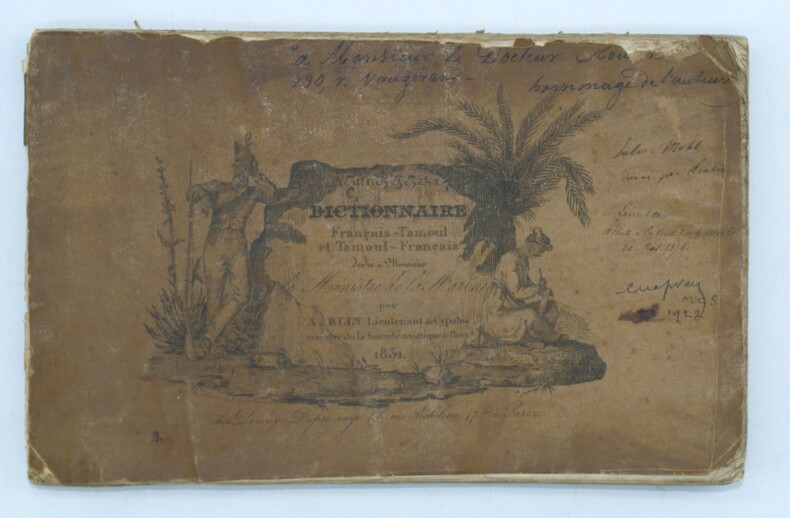
BLIN (A.)
Dictionnaire Français-Tamoul et Tamoul-Français, dédié à Monsieur le Ministre de la Marine par A. Blin lieutenant des Cypahis, membre de la Société asiatique de Paris
Paris, Dondey-Dupré, 1831. In-8 oblong de viij-tableau dépliant-282 pp.; brochage éditeur, dos usé et fragile avec manque, couverture sale, hommage de l’auteur, ex-libris manuscrit de Jules Mohl et mention de l’achat à la vente aux enchères en mai 1865 (n°1265).
Bookseller reference : PHO-1562
|
|
|
Chevalier A.
La Révolte des Cipayes. L' Héritier du Rajah. Adapté de l' anglais par A. Chevalier. Illustré par Clérice
In-4°, pp. 324, bella legatura editoriale in percallina rossa con titolo in oro e illustrazioni policrome al piatto (un ritratto femminile in medaglione in oro, un serto vegetale, ricchi decori fitomorfi). Tagli dorati, illustrazioni xilografiche f.t. di Clérice. Bell'esemplare. Romanzo storico adattato dall'inglese e ambientato in India durante la Rivolta dei Sepoy del 1857. Francese
|
|
|
COLLIER (Richard).
Le Vent du diable.
Presses de la Cité, 1964, in-8°, 384 pp, une carte, 25 portraits, gravures et photos sur 12 pl. hors texte, cart. éditeur, jaquette illustrée, bon état
Bookseller reference : 19256

|
|
|
COLLIER (Richard).
Le Vent du diable.
Presses de la Cité, 1964, in-8°, 384 pp, une carte, 25 portraits, gravures et photos sur 12 pl. hors texte, cart. éditeur, sans la jaquette, bon état
Bookseller reference : 127137
|
|
|
DALRYMPLE William
The Last Mughal. The Fall of a Dynasty, Delhi, 1857. NEAR FINE COPY IN UNCLIPPED DUSTWRAPPER
8vo., First Edition, with numerous coloured and monochrome plates, and coloured pictorial endpapers; burgundy boards, gilt back, a near fine copy in unclipped dustwrapper.
|
|
|
DE VALBEZEN E.
Les Anglais et L'inde ( Nouvelles Études )
Paris Plon 1875 2 volumes In-8 VIII-408 pp et une carte des chemins de fer de l'inde anglaise et un plan de Dehli + 492 pp, un plan de la ville de Lucknow et un plan des retranchements de la garnison anglaise dans cette ville . cachets de bibliothèque, bel aspect de fraicheur des volumes
Bookseller reference : 26059
|
|
|
Edward Mason Wrench (1833-1912) of the 34th Regiment of Foot and 12th Royal Lancers [The Indian Mutiny; Sepoy Mutiny; Indian Reb
Edward Mason Wrench Three hectograph duplicates of manuscripts describing his service and that of his uncle Captain Henry Kirke in the 12th Royal Lancers during the Sepoy Mutiny Indian Rebellion of 1857. With typed transcript and commentary.
Two duplicate letters one dated from Park Lodge Baslow Derbyshire on 23 December 1907 and 'Christmas 1907'; and the other from the same place 'Aug 1909' and 13 September 1909. Third duplicate and typescript without place or date. Wrench was the son of a clergyman and well educated and well connected being presented to the Prince of Wales and staying at Chatsworth in his old age. His obituary in the British Medical Journal 27 April 1912 describes how after service in the Crimea 'he was transferred to the 4th Lancers went to Madras with that regiment in the following month and served with it during the whole of the Indian Mutiny. For his services in India he received the Indian medal and clasp for Central India. He returned to England in 1860 and married in 1861 his cousin the daughter of Mr. William Kirke of Markham Hall Nottinghamshire'. The four items in the present collection are all in good condition on lightly-aged paper. The three duplicates - all closely and neatly written in a vivid and informative style - are among ones produced by Wrench for circulation within his family there being copies in the collection of Wrench papers in Nottingham University Library. They comprise two letters and a narrative account. The typescript by an unnamed individual is not present at Nottingham. None of the four items is in the Imperial War Museum catalogue. ONE: Duplicate of Autograph Letter by Wrench 'Edwd M Wrench M.V.O - F.R.C.S. late asst Sugeon 12 R Lancers'. Dated at beginning 23 December 1907 and at end 'Christmas 1907 - Park Lodge Baslow Derbyshire'. The letter describes the 'Jubilee commemoration' at the Royal Albert Hall and is headed 'My last Parade'. It begins: 'It was indeed well done The dinner to the surviving Veterans who fought in the Indian Mutiny campaign in 1857 given by the proprietors of the London Daily Telegraph a procession of heart stirring episodes from the Inspection by F.M. Lord Roberts on the steps of the Albert Memorial where I found private Meredith of the 24th who was with me in the trenches at the assault on the Redan Sebastopol June 18 1855 to the surging chorus by the thousands in the Albert Hall of Auld Lang Syne near the end of what Lord Curzon in his thrilling speech said was a "ceremony" rather than a festival a speech that made the tears tremble on my eyelids. They overflowed at the solemn sounding of the "last post" recalling to my memory in the words of the poet O Hara a charge of the 12th Lancers I rode with at the battle of Banda .'. He names others present including 'Col Robertson . he was still the bravest of the brave for though 86 he was in velvet Levee dress silk stockings & pumps without a great coat. He told me he was a teetotaller his picturesque appearance attracted Lord Roberts eye and drew a heavy fire on us not of rifles but of snap shot cameras the result of which has been my portrait in such good company scattered by the hundreds of thousands in The Daily Mirror of Decr 24 . I have looked down the barrel of a loaded musket near enough to see a Sepoys yellow eyes taking aim at the butt end and ridden with cannon balls hopping over my head like balls in a cricket ground I cannot compare my perils during the Sepoy Mutiny to many others of the Kirke family'. 2pp. 8vo. TWO: Duplicate of Autograph Letter by Wrench 'Ed M Wrench'. Dated at beginning 'Park Lodge Baslow Aug 1909' and at end 13 September 1909. 3pp. 8vo. The letter begins: 'Having recently discovered that General W A Franks Major-General William Astell Franks 1838-1929 now living at Northland Road Southampton was present when Uncle Henry Kirke died when fleeing from the Mutineers of his Regt. 12 BNI in 1857 I took the liberty of writing to him he very kindly responded to my enquiries & I feel sure the information he has afforded will be interesting adding much to our scanty knowledge of that terrible time.' There follow extended transcriptions from Franks's letters: '. I saw him the day he died . he was on his horse but rolling about on it . he looked at me with a vacant stare & was deadly pale. I could see he was dying. Shortly after he fell off his horse he was the only one of our party that was buried all the rest being left where they fell .'. Of his own activities Wrench notes: 'I had gone to India almost direct from the Crimea in the year previous 1856. I was assistant Surgeon in the 12th Lancers so was never in the same danger as the Officers of the Native Regiments though I had my share of dangers . and had men blown to pieces by shell not a dozen yards from me . We went not as is said to revenge the Mutiny but to protect the loyal natives of which there were many & restore order yet in one battle we killed 500 rebels and looted two Palaces from one at Kabula we took 40 cart loads of gold & silver; my share of which was £750 . 0 . 0 so I have no personal grievance'. He continues with reference to the Battle of Banda and 'hunting rebels in the jungles'. THREE: Narrative account titled 'Cousin Henry Kirkes story of his escape from Mutineers June 1857'. The account begins: 'In 1857 Uncle Henry was commanding the Head Quarters of the 12th Bengal N.I. at Nowgong now spelt Naogaon Aunt Kirke Henry & St George were with him - He greatly distrusted the Sepoys and when he heard of the mutiny at Barrackpoor in April he immediately sent Aunt & St George off to the Hills just in time for they left Meerut only two days before the fatal 10 May'. A gripping account follows filled with incident: '. At the beginning of June Uncle heard that the left wing of his regiment stationed at Jhansi about sixty miles distant had killed the officers and all the Christian women and children there; Uncle forthwith ordered a parade and addressed the men. He told them of the mutiny of their comrades at Jhansi and added "Now I will let any man that wishes go and join the mutineers but let those who are true come and swear by the Colours". The whole 500 cheered and swore they would be true to him and the Colours. Two days afterwards they broke out into open mutiny shot the Regtl. Sergeant Major and made the officers fly for their lives. . The Europeans ten officers two ladies riding on Uncle's charger and a baby that Henry carried in front with a man riding behind him started for Banda. They asked a Brahmin the way he refused unless they gave him a rupee this Henry did when he ran off demanding another and swore by his gods that if given this he would be faithful but having got it he called to some villagers to come and kill the Faringhees for they had lots of money and so they would be rich for life. Some of the officers wished to shoot the man but Henry dissuaded them but presently the ruffian threw his lathi or club at the ladies horse which reared and they fell off. The man ran forward to kill them when Henry shot him through the back of the head he fell on his face. The villagers turned the dead man over and the two rupees fell out of his mouth when Henry heard them say "It is true they are rich for see they have loaded their guns with rupees". .'. 3pp. 8vo. FOUR: Mimeographed typescript titled '"Not to Revenge but to Protect."' 18pp. 8vo. Containing a transcriptions of Item One pp.16-18 and Item Three pp.4-9 and of passages from Item Two pp.13-15 with a commentary by a knowledgeable but unrelated party. Two duplicate letters, one dated from Park Lodge, Baslow, Derbyshire, on 23 December 1907 (and 'Christmas 1907'); and the other unknown
Bookseller reference : 17021
|
|
|
FREDERIX, Pierre (trad. et pres. par).
La Revolte des Cipayes d'après les cahiers du soldat Metcalfe. Recueillis par Sir Francis TUKER, Lieut. General.
in-8°, 222 pages, carte, broche, couv.. Bon exemplaire. [CA-12]
|
|
|
INNES, VC M.
The Sepoy Revolt. A Critical Narrative. Second Edition.
8vo., Second Edition, with a coloured folding map on japon as frontispiece and 6 large folding maps and plans (a number coloured) on japon at end, some light and mainly marginal spotting to text; original red cloth, upper board and backstrip lettered in gilt, crudely recased with new red endpapers, covers moderately age-soiled (but all gilt wholly legible), a good, firm copy. This history of the Mutiny re-examines its origins, development and eventual suppression. The author's conclusions are based on his personal experiences. Published in the same year as the first edition. This edition contains an important author's Preface in which he responds to comment on the original. Topics covered include the policy of Lord Dalhousie, the degree of indigenous disaffection, and the eternally controversial matter of the greased cartridges. VERY SCARCE. Mulholland & Jordan I16 (recording the first edition); Sorsky 553.

|
|
|
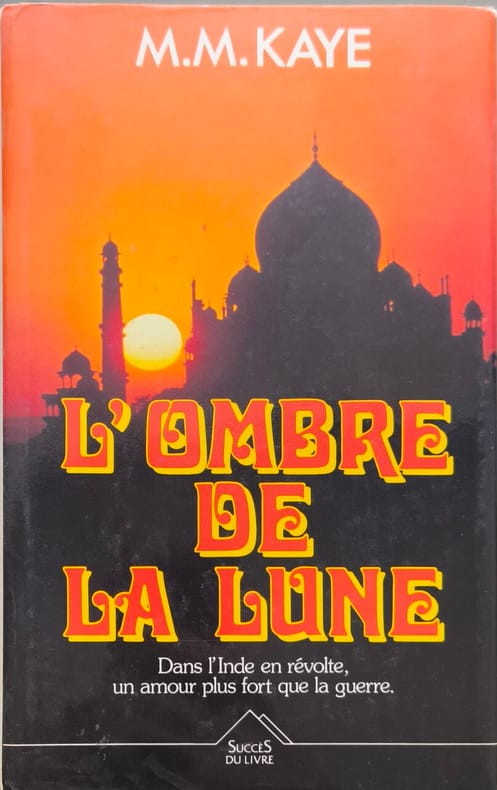
Kaye M.m
L'ombre de la lune
Albin 1991 487 pages in8. 1991. Cartonné jaquette. 487 pages. Ce roman historique de Mary Margaret Kaye se déroule en 1857 pendant la révolte des Cipayes en Inde. Il mêle une histoire d'amour à la description des événements qui ont ébranlé la suprématie britannique en suivant le destin de personnages anglais et indiens
Bookseller reference : 12602
|
|
|
KAYE J.W. / MALLESON G.B.
A HISTORY OF THE SEPOY WAR IN INDIA (1857-1858) - HISTORY OF THE INDIAN MUTINY (1857-1858).
In-8 p. (mm. 222x138), 7 volumi (di cui 1 di Indice), tela edit. rossa (sbiadita ai dorsi). L’opera di Kaye ("Sepoy War"”) è in 3 volumi, pp. XIV,(2),656; XVI,692; XVI,702. Pure in 3 volumi quella di Malleson ("Indian Mutiny", commencing from the close of the second volume of Sir John Kayes History of the Sepoy War), pp. XXXI,575; XXXVI (ma 44),602,(4); XXXIV,(2), 524,(4). I volumi sono corredati f.t. da complessive 15 carte geografiche e piante, più volte ripieg., come da Indice. Il 7° vol., di pp. (4),201, è un “Analytical index” delle due opere (combined in one volume) by Frederic Pincott. Storia della rivolta dei soldati indiani della Compagnia britannica della Indie Orientali (i Sipahi), rivolta limitata all’India del Nord. Dopo la sua brutale repressione, la Compagnia fu abolita e la sovranità sui suoi territori passò alla corona inglese. Solo qualche lieviss. fiorit. margin.; alcuni segni a penna al margine esterno per evidenziare delle frasi, altrim. esempl. ben conservato.

|
|
|
KAYE Sir John William
A History of the Sepoy War in India 1857-1858 [with] History of the Indian Mutiny 1857-1858. [With Analytical Index to both works by Frederic Pincott.] KAYE/MALLESON/PINCOTT ON THE MUTINY. A COMPLETE SET WITH DISTINGUISHED AND RELEVANT PROVENANCE
7 vols., 8vo., Mixed Editions, with folding engraved maps and plans (a number coloured in outline), some light and inoffensive spotting; uniform original red cloth, boards framed in blind, gilt backs, uncut, primrose endpapers, tops lightly dust-soiled, several hinges tender (but all bindings entirely sound), a very good, bright, crisp set. THIS SET WAS FORMERLY IN THE LIBRARY OF MAJOR-GENERAL FREDERICK EDWARD SOTHEBY OF ECTON HALL AND BEARS HIS ENGRAVED ARMORIAL BOOKPLATE ON FRONT PASTE-DOWNS OF ALL VOLUMES. The set comprises Kaye: Vol. I (ninth edition, 1880); Vol. II: (fifth edition, 1888); Vol. III (fourth edition, 1880); Malleson: Vol. I (second edition, 1878); Vol. II (second edition, 1879); Vol. III (first edition, 1888); Pincott (first edition, 1880). Major-General Frederick Edward Sotheby (1837-1909), born in Sewardstone, Essex and only son of Rear Admiral Charles Sotheby, led a distinguished military career. Commissioned in the Rifle Brigade in 1855, he served in the Crimea at the siege and fall of Sebastopol and the storming of the Redan. HE WENT ON TO SERVE THROUGHOUT THE INDIAN MUTINY AND WAS WITH HIS REGIMENT DURING THE CAPTURE OF LUCKNOW AND THE OUDE CAMPAIGN. Later service included the Chinese War (1860) where he was present at the surrender of Pekin, and the Ashanti War (1874) where he fought at Amoaful and Coomassie. Sotheby retirned in 1888 with the rank of Major-General. His family seat at Ecton Hall, Northamptonshire, was renowned for its library, of which the present set doubtless formed a part. 'Malleson's history begins at the close of the second volume of Sir John Kay's history. Malleson defends this action in his preface. Here he states that the third volume of Kaye did not do justice to the actors in the drama of the Mutiny' (Sorsky). Chuadhuri calls Malleson's work 'the most exciting in Mutiny literature'. SCARCE IN ANY EVENT, THIS IS A SPLENDID ASSOCIATION SET WITH DISTINGUISHED AND RELEVANT PROVENANCE. Sorsky, 594.

|
|
|
Lockhart, J. G.
The Sea, Our Heritage
Stories of the Royal Navy's actions. With seven illustrations and five maps. Light blue cloth covers, dark blue title on spine. Foxing on covers and quite heavy on page edges; light wear to cover and spine edges, spine slightly sunned.
|
|
|
McCEARNEY James
La Révolte de Cipayes - Empire des Indes 1957
Jean Picollec, 1999, in-8 br., 277 p., une carte, très bon état.
Bookseller reference : QWA-7577

|
|
|
McCearney, James
La révolte des Cipayes
Jean Picollec 1999 In-8 broché 21 cm sur 14,8. 278 pages. Bon état d’occasion.
Bookseller reference : 100891
|
|
|
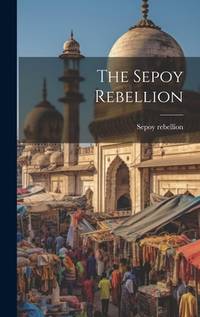
Rebellion, Sepoy
The Sepoy Rebellion
hardcover. Good. Access codes and supplements are not guaranteed with used items. May be an ex-library book. hardcover
Bookseller reference : 1020409002.G ISBN : 1020409002 9781020409004
|
|
|
Sepoy Mutiny
Original manuscript diary documenting the service of a British officer during the latter stages of the Sepoy Mutiny
1858. Contains 96 pages of entries composed in both ink and pencil. 8vo. Bound in original paper wraps. Contains 96 pages of entries composed in both ink and pencil. Wraps worn spine perished else very sound. Contains 96 pages of entries composed in both ink and pencil. 8vo. This diary was kept by Lt. Co. James Burnie an East India Army Officer who served in the Mooltani Horse during the Sepoy Mutiny. It follows his movements throughout the Indian countryside as he and his column track down and face the mutineers. His troops march through Patiala Newlee Kiraoli Furreedpoor Barreilly Nawabganj and Tilsee and Shahjahanpur. His entries contain descriptive observations upon the terrain marches war news and details regarding deadly encounters with Sepoy troops. During the campaign Burnie suffers terribly from dysentry and heat stroke. His column often has to hunt for its food while out in the field and at other times after a victory they are able to raid the overcome town for supplies. During the latter part of the diary he includes a ink and wash drawing of Mount Nanda Devi. A rare first hand account of this rebellion that ended the vice grip of power of the East India Company over India.<br/> "The Indian Mutiny also called SEPOY MUTINY 1857-58 was a widespread but unsuccessful rebellion against British rule in India begun by Indian troops sepoys in the service of the British East India Company. It began in Meerut and then spread to Delhi Agra Cawnpore and Lucknow.<br/> The mutiny broke out in the Bengal army because it was only in the military sphere that Indians were organized. The pretext for revolt was the introduction of the new Enfield rifle; to load it the sepoys had to bite off the ends of lubricated cartridges. There appears to be some foundation for the sepoys' belief that the grease used to lubricate the cartridges was a mixture of pigs' and cows' lard; thus to have oral contact with it was an insult to both Muslims and Hindus. Late in April 1857 sepoy troopers at Meerut refused the cartridges; as punishment they were given long prison terms fettered and put in jail. This punishment incensed their comrades who rose on May 10 shot their British officers and marched to Delhi where there were no European troops. There the local sepoy garrison joined the Meerut men and by nightfall the aged pensionary Mughal emperor Bahadur Shah II had been nominally restored to power by a tumultuous soldiery.<br/><br/> The seizure of Delhi provided a focus and set the pattern for the whole mutiny which then spread throughout northern India. With the exception of the Mughal emperor and his sons and Nana Sahib the adopted son of the deposed Maratha peshwa none of the important Indian princes joined the mutineers.<br/> From the time of the mutineers' seizure of Delhi the British operations to suppress the mutiny were divided into three parts. First came the desperate struggles at Delhi Cawnpore and Lucknow during the summer; then the operations around Lucknow in the winter of 1857-58 directed by Sir Colin Campbell; and finally the 'mopping up' campaigns of Sir Hugh Rose in early 1858. Peace was officially declared on July 8 1858. A grim feature of the mutiny was the ferocity that accompanied it. The mutineers commonly shot their British officers on rising and were responsible for massacres at Delhi Cawnpore and elsewhere. The murder of women and children enraged the British but in fact some British officers began to take severe measures before they knew that any such murders had occurred. In the end the reprisals far outweighed the original excesses. Hundreds of sepoys were shot from cannons in a frenzy of British vengeance though some British officers did protest the bloodshed.<br/> The immediate result of the mutiny was a general housecleaning of the Indian administration. The East India Company was abolished in favor of the direct rule of India by the British government. In concrete terms this did not mean much but it introduced a more personal note into the government and removed the unimaginative commercialism that had lingered in the Court of Directors. The financial crisis caused by the mutiny led to a reorganization of the Indian administration's finances on a modern basis. The Indian army was also extensively reorganized.<br/><br/> Another significant result of the mutiny was the beginning of the policy of consultation with Indians. The Legislative Council of 1853 had contained only Europeans and had behaved arrogantly as if it had been a full-fledged parliament. It was widely felt that lack of communication with Indian opinion had helped to precipitate the crisis. Accordingly the new council of 1861 was given an Indian-nominated element. The educational and public works programs roads railways telegraphs and irrigation continued with little interruption; in fact some were stimulated by the thought of their value for the transport of troops in a crisis. But insensitive British-imposed social measures that affected Hindu society came to an abrupt end.<br/><br/> Finally there was the effect of the mutiny on the people of India themselves. Traditional society had made its protest against the incoming alien influences and it had failed; the princes and other natural leaders had either held aloof from the mutiny or had proved for the most part incompetent. From this time all serious hope of a revival of the past or an exclusion of the West diminished. The traditional structure of Indian society began to break down and was eventually superseded by a westernized class system from which emerged a strong middle class with a heightened sense of Indian nationalism." <br/><br/>Reference:<br/>The Sepoy Mutiny in India 1857-1858.<br/>https://www.onwar.com/aced/chrono/c1800s/yr50/findia1857.htm. unknown books
Bookseller reference : 314573
|
|
|
Thompson, Campbell and Margaret
A Century in Retrospect - The Story [A History] of the Village of Lucknow [Ontario] 1858-1958]
180 pages. Black and white reproductions of photos. Nice vintage ads. "A souvenir book in commenoration of the Centennial Anniversary of 'The Sepoy Town' August 1, 2, 3, 4, 1958." - subtitle. Somewhat above-average wear to green card covers. Minimal light pencil markings to contents. Prior owner's details inside front cover. A sound copy. [Bishop p.1167] Book

|
|
|
THORNHILL Mark
Personal Adventures and Experiences of a Magistrate. during the Rise, Progress, and Suppression of the Indian Mutiny. REMARKABLY BRIGHT, CLEAN COPY IN ORIGINAL CLOTH
8vo., First Edition, with frontispiece, and large folding plan at rear, neat personal name-stamp on title; original green cloth, upper board lettered in gilt and blocked in red, gilt back, uncut, chocolate endpapers, a remarkably well-preserved, bright, clean copy of a scarce work. With a fine nineteenth-century engraved armorial bookplate on front paste-down, and 32pp publisher's catalogue bound in at end. A SCARCE AND IMPORTANT ACCOUNT. Thornhill was the magistrate and collector at Muttra (Mathura) in the Agra division. Malleson made extensive use of the book and states 'of all the books written regarding the Mutiny not one is more interesting'. (Sorsky). It has been suggested that the detailed description of events at Agra, together with the large plan of its fort, may well have influenced Conan Doyle in writing 'The Sign of Four'. VERY SCARCE, ESPECIALLY IN THIS CONDITION. Sorsky 1061.

|
|
|

 Receive by email
 Download as PDF document
 RSS feed
 Permanent link