|
|
|
De JODE Pieter (1572/3-1634)
Adam De Coster
Incisione tratta dalla celebre raccolta Icones principum, virorum, doctorum, pictorum, chalcographorum, di Anton van Dyck, edita per la prima volta ad Anversa verso il 1640. Opera celebre ed importante, vero monumento dell’arte incisoria fiamminga del sec. XVIII, contiene le biografie ed i ritratti degli uomini illustri che Van Dyck aveva conosciuto e con i quali aveva avuto importanti rapporti. L’artista ne eseguì le effigi in numerosi dipinti e disegni che poi decise di pubblicare, affidandone la trasposizione calcografica ai migliori incisori del suo tempo, come Bolswert, Pontius, Vorsterman, de Jode, Hollar, molti dei quali aveva avuto come condiscepoli nell’atelier di Rubens. "Sir Anthony Van Dyck stands out as the solitary great etcher of the school. Portrait etching had scarcely had an existence before his time, and in his work it suddenly appears at the highest point ever reached in the art" (Hind, p. 165). "The plan of this publication took shape after Van Dyck returned from Italy (1626) and before he went to England (1632). He made careful preparatory drawings in chalk and brush for the publication. He directed and revised the work of the engravers, the best of the Rubens circle; he collaborated with his etching needle in some of the plates and himself etched the most beautiful set, mainly portraits of artists. One of the most brilliant in human characterization is the portrait of Peter Brueghel the Younger, son of the great Peasant Brueghel. It is remarkable that the etching appeared in this sketchy form in the book, proving that the master regarded it as finished. All interest is focussed on the wonderful had. The first edition was published in Antwerp in 1635-1636. Yet it was not complete, and the title-page did not appear before the Gillis Hendricx edition of 1645, engraved by Jacob Neels" (Benesch, Artistic and Intellectual Trends, p. 32.) Hofer, Baroque Book Illustrations 132. Acquaforte con ritocchi al bulino, stampata su carta vergata coeva, filigrana del “giullare”, con margini, in ottimo stato di conservazione. Etching and engraving, circa 1645, signed on plate at lower edge. A fine impression, printed on contemporary laid paper, with margins, very good condition. From Icones principum, virorum, doctorum, pictorum, chalcographorum by Anton van Dyck, printed for the first time in Antwerp, 1645. A famous and important work, a real monument of the Flemish engraving art of the XVIII century, containing the biographies and portraits of the famous artists Van Dyck had met and with whom he had worked. Following the success of his portrait paintings and in the tradition of Italian and Flemish portrait series, Van Dyck decided to organise a print publication containing portraits of the most prominent men during his lifetime, divided into three categories: princes, politicians and soldiers (16), statesmen and scholars (12), artists and art connoisseurs (52). The initial idea could have been that Van Dyck would etch the faces (a process possibly learnt from Vorsterman) while others would finish the plates in engraving. Designs were needed for the plates and several drawings and oil sketches (grisailles, sometimes in different versions) have survived. Van Dyck only etched 17 plates himself, while he commissioned others to complete the set, overseen by Lucas Vorsterman I (especially after Van Dyck settled in England in the Spring of 1632). Although this project was started by Van Dyck around 1630, he never saw it completed. The Antwerp publisher Maarten van den Enden may have been involved from the start as eighty early impressions bear Van den Enden's address. They are engraved by Paulus Pontius (30 plates), Lucas Vorsterman I (22), Pieter de Jode II (12), Schelte a Bolswert (7), Robert van Voerst (4), Willem Hondius (2), Willem Jacobsz Delff (1), Cornelis Galle (1), and Nicolaes Lauwers (1). It is known that Van den Enden was in debt to Gillis Hendricx around 1644, the Antwerp publisher who must have obtained Van den Enden's plates which he published in 1645 in the first edition of these plates (containing between 100 and 104 portrait plates). Hendricx continued to publish these plates until his death in 1677 when they were auctioned off by the St Luke guild (keeping the Iconography plates together). It is not clear who bought these plates but they re-appeared around 1720 when they were published by Hendrick and Cornelis Verdussen in Antwerp.

|
|
|
De JODE Pieter (1572/3-1634)
Adriaen de Noel
Incisione tratta dalla celebre raccolta Icones principum, virorum, doctorum, pictorum, chalcographorum, di Anton van Dyck, edita per la prima volta ad Anversa verso il 1640. Opera celebre ed importante, vero monumento dell’arte incisoria fiamminga del sec. XVIII, contiene le biografie ed i ritratti degli uomini illustri che Van Dyck aveva conosciuto e con i quali aveva avuto importanti rapporti. L’artista ne eseguì le effigi in numerosi dipinti e disegni che poi decise di pubblicare, affidandone la trasposizione calcografica ai migliori incisori del suo tempo, come Bolswert, Pontius, Vorsterman, de Jode, Hollar, molti dei quali aveva avuto come condiscepoli nell’atelier di Rubens. Acquaforte con ritocchi al bulino, stampata su carta vergata coeva, filigrana del “giullare” con margini, in ottimo stato di conservazione. Etching and engraving, circa 1645, signed on plate at lower edge. A fine impression, printed on contemporary laid paper, with margins, very good condition. From Icones principum, virorum, doctorum, pictorum, chalcographorum by Anton van Dyck, printed for the first time in Antwerp, 1645. A famous and important work, a real monument of the Flemish engraving art of the XVIII century, containing the biographies and portraits of the famous artists Van Dyck had met and with whom he had worked. Following the success of his portrait paintings and in the tradition of Italian and Flemish portrait series, Van Dyck decided to organise a print publication containing portraits of the most prominent men during his lifetime, divided into three categories: princes, politicians and soldiers (16), statesmen and scholars (12), artists and art connoisseurs (52). The initial idea could have been that Van Dyck would etch the faces (a process possibly learnt from Vorsterman) while others would finish the plates in engraving. Designs were needed for the plates and several drawings and oil sketches (grisailles, sometimes in different versions) have survived. Van Dyck only etched 17 plates himself, while he commissioned others to complete the set, overseen by Lucas Vorsterman I (especially after Van Dyck settled in England in the Spring of 1632). Although this project was started by Van Dyck around 1630, he never saw it completed. The Antwerp publisher Maarten van den Enden may have been involved from the start as eighty early impressions bear Van den Enden's address. They are engraved by Paulus Pontius (30 plates), Lucas Vorsterman I (22), Pieter de Jode II (12), Schelte a Bolswert (7), Robert van Voerst (4), Willem Hondius (2), Willem Jacobsz Delff (1), Cornelis Galle (1), and Nicolaes Lauwers (1). It is known that Van den Enden was in debt to Gillis Hendricx around 1644, the Antwerp publisher who must have obtained Van den Enden's plates which he published in 1645 in the first edition of these plates (containing between 100 and 104 portrait plates). Hendricx continued to publish these plates until his death in 1677 when they were auctioned off by the St Luke guild (keeping the Iconography plates together). It is not clear who bought these plates but they re-appeared around 1720 when they were published by Hendrick and Cornelis Verdussen in Antwerp.

|
|
|
De JODE Pieter (1572/3-1634)
Albert. Dux. Fritland…
Incisione tratta dalla celebre raccolta Icones principum, virorum, doctorum, pictorum, chalcographorum, di Anton van Dyck, edita per la prima volta ad Anversa verso il 1640. Opera celebre ed importante, vero monumento dell’arte incisoria fiamminga del sec. XVIII, contiene le biografie ed i ritratti degli uomini illustri che Van Dyck aveva conosciuto e con i quali aveva avuto importanti rapporti. L’artista ne eseguì le effigi in numerosi dipinti e disegni che poi decise di pubblicare, affidandone la trasposizione calcografica ai migliori incisori del suo tempo, come Bolswert, Pontius, Vorsterman, de Jode, Hollar, molti dei quali aveva avuto come condiscepoli nell’atelier di Rubens. "Sir Anthony Van Dyck stands out as the solitary great etcher of the school. Portrait etching had scarcely had an existence before his time, and in his work it suddenly appears at the highest point ever reached in the art" (Hind, p. 165). "The plan of this publication took shape after Van Dyck returned from Italy (1626) and before he went to England (1632). He made careful preparatory drawings in chalk and brush for the publication. He directed and revised the work of the engravers, the best of the Rubens circle; he collaborated with his etching needle in some of the plates and himself etched the most beautiful set, mainly portraits of artists. One of the most brilliant in human characterization is the portrait of Peter Brueghel the Younger, son of the great Peasant Brueghel. It is remarkable that the etching appeared in this sketchy form in the book, proving that the master regarded it as finished. All interest is focussed on the wonderful had. The first edition was published in Antwerp in 1635-1636. Yet it was not complete, and the title-page did not appear before the Gillis Hendricx edition of 1645, engraved by Jacob Neels" (Benesch, Artistic and Intellectual Trends, p. 32.) Hofer, Baroque Book Illustrations 132. Acquaforte con ritocchi al bulino, stampata su carta vergata coeva, filigrana del “giullare”, con margini, in ottimo stato di conservazione. Etching and engraving, circa 1645, signed on plate at lower edge. A fine impression, printed on contemporary laid paper, with margins, very good condition. From Icones principum, virorum, doctorum, pictorum, chalcographorum by Anton van Dyck, printed for the first time in Antwerp, 1645. A famous and important work, a real monument of the Flemish engraving art of the XVIII century, containing the biographies and portraits of the famous artists Van Dyck had met and with whom he had worked. Following the success of his portrait paintings and in the tradition of Italian and Flemish portrait series, Van Dyck decided to organise a print publication containing portraits of the most prominent men during his lifetime, divided into three categories: princes, politicians and soldiers (16), statesmen and scholars (12), artists and art connoisseurs (52). The initial idea could have been that Van Dyck would etch the faces (a process possibly learnt from Vorsterman) while others would finish the plates in engraving. Designs were needed for the plates and several drawings and oil sketches (grisailles, sometimes in different versions) have survived. Van Dyck only etched 17 plates himself, while he commissioned others to complete the set, overseen by Lucas Vorsterman I (especially after Van Dyck settled in England in the Spring of 1632). Although this project was started by Van Dyck around 1630, he never saw it completed. The Antwerp publisher Maarten van den Enden may have been involved from the start as eighty early impressions bear Van den Enden's address. They are engraved by Paulus Pontius (30 plates), Lucas Vorsterman I (22), Pieter de Jode II (12), Schelte a Bolswert (7), Robert van Voerst (4), Willem Hondius (2), Willem Jacobsz Delff (1), Cornelis Galle (1), and Nicolaes Lauwers (1). It is known that Van den Enden was in debt to Gillis Hendricx around 1644, the Antwerp publisher who must have obtained Van den Enden's plates which he published in 1645 in the first edition of these plates (containing between 100 and 104 portrait plates). Hendricx continued to publish these plates until his death in 1677 when they were auctioned off by the St Luke guild (keeping the Iconography plates together). It is not clear who bought these plates but they re-appeared around 1720 when they were published by Hendrick and Cornelis Verdussen in Antwerp.

|
|
|
De JODE Pieter (1572/3-1634)
Antonius Triest
Incisione tratta dalla celebre raccolta Icones principum, virorum, doctorum, pictorum, chalcographorum, di Anton van Dyck, edita per la prima volta ad Anversa verso il 1640. Opera celebre ed importante, vero monumento dell’arte incisoria fiamminga del sec. XVIII, contiene le biografie ed i ritratti degli uomini illustri che Van Dyck aveva conosciuto e con i quali aveva avuto importanti rapporti. L’artista ne eseguì le effigi in numerosi dipinti e disegni che poi decise di pubblicare, affidandone la trasposizione calcografica ai migliori incisori del suo tempo, come Bolswert, Pontius, Vorsterman, de Jode, Hollar, molti dei quali aveva avuto come condiscepoli nell’atelier di Rubens. "Sir Anthony Van Dyck stands out as the solitary great etcher of the school. Portrait etching had scarcely had an existence before his time, and in his work it suddenly appears at the highest point ever reached in the art" (Hind, p. 165). "The plan of this publication took shape after Van Dyck returned from Italy (1626) and before he went to England (1632). He made careful preparatory drawings in chalk and brush for the publication. He directed and revised the work of the engravers, the best of the Rubens circle; he collaborated with his etching needle in some of the plates and himself etched the most beautiful set, mainly portraits of artists. One of the most brilliant in human characterization is the portrait of Peter Brueghel the Younger, son of the great Peasant Brueghel. It is remarkable that the etching appeared in this sketchy form in the book, proving that the master regarded it as finished. All interest is focussed on the wonderful had. The first edition was published in Antwerp in 1635-1636. Yet it was not complete, and the title-page did not appear before the Gillis Hendricx edition of 1645, engraved by Jacob Neels" (Benesch, Artistic and Intellectual Trends, p. 32.) Hofer, Baroque Book Illustrations 132. Acquaforte con ritocchi al bulino, stampata su carta vergata coeva, filigrana del “giullare”, con margini, in ottimo stato di conservazione. Etching and engraving, circa 1645, signed on plate at lower edge. A fine impression, printed on contemporary laid paper, with margins, very good condition. From Icones principum, virorum, doctorum, pictorum, chalcographorum by Anton van Dyck, printed for the first time in Antwerp, 1645. A famous and important work, a real monument of the Flemish engraving art of the XVIII century, containing the biographies and portraits of the famous artists Van Dyck had met and with whom he had worked. Following the success of his portrait paintings and in the tradition of Italian and Flemish portrait series, Van Dyck decided to organise a print publication containing portraits of the most prominent men during his lifetime, divided into three categories: princes, politicians and soldiers (16), statesmen and scholars (12), artists and art connoisseurs (52). The initial idea could have been that Van Dyck would etch the faces (a process possibly learnt from Vorsterman) while others would finish the plates in engraving. Designs were needed for the plates and several drawings and oil sketches (grisailles, sometimes in different versions) have survived. Van Dyck only etched 17 plates himself, while he commissioned others to complete the set, overseen by Lucas Vorsterman I (especially after Van Dyck settled in England in the Spring of 1632). Although this project was started by Van Dyck around 1630, he never saw it completed. The Antwerp publisher Maarten van den Enden may have been involved from the start as eighty early impressions bear Van den Enden's address. They are engraved by Paulus Pontius (30 plates), Lucas Vorsterman I (22), Pieter de Jode II (12), Schelte a Bolswert (7), Robert van Voerst (4), Willem Hondius (2), Willem Jacobsz Delff (1), Cornelis Galle (1), and Nicolaes Lauwers (1). It is known that Van den Enden was in debt to Gillis Hendricx around 1644, the Antwerp publisher who must have obtained Van den Enden's plates which he published in 1645 in the first edition of these plates (containing between 100 and 104 portrait plates). Hendricx continued to publish these plates until his death in 1677 when they were auctioned off by the St Luke guild (keeping the Iconography plates together). It is not clear who bought these plates but they re-appeared around 1720 when they were published by Hendrick and Cornelis Verdussen in Antwerp.

|
|
|
De JODE Pieter (1572/3-1634)
Henricus Liberti
Incisione tratta dalla celebre raccolta Icones principum, virorum, doctorum, pictorum, chalcographorum, di Anton van Dyck, edita per la prima volta ad Anversa verso il 1640. Opera celebre ed importante, vero monumento dell’arte incisoria fiamminga del sec. XVIII, contiene le biografie ed i ritratti degli uomini illustri che Van Dyck aveva conosciuto e con i quali aveva avuto importanti rapporti. L’artista ne eseguì le effigi in numerosi dipinti e disegni che poi decise di pubblicare, affidandone la trasposizione calcografica ai migliori incisori del suo tempo, come Bolswert, Pontius, Vorsterman, de Jode, Hollar, molti dei quali aveva avuto come condiscepoli nell’atelier di Rubens. "Sir Anthony Van Dyck stands out as the solitary great etcher of the school. Portrait etching had scarcely had an existence before his time, and in his work it suddenly appears at the highest point ever reached in the art" (Hind, p. 165). "The plan of this publication took shape after Van Dyck returned from Italy (1626) and before he went to England (1632). He made careful preparatory drawings in chalk and brush for the publication. He directed and revised the work of the engravers, the best of the Rubens circle; he collaborated with his etching needle in some of the plates and himself etched the most beautiful set, mainly portraits of artists. One of the most brilliant in human characterization is the portrait of Peter Brueghel the Younger, son of the great Peasant Brueghel. It is remarkable that the etching appeared in this sketchy form in the book, proving that the master regarded it as finished. All interest is focussed on the wonderful had. The first edition was published in Antwerp in 1635-1636. Yet it was not complete, and the title-page did not appear before the Gillis Hendricx edition of 1645, engraved by Jacob Neels" (Benesch, Artistic and Intellectual Trends, p. 32.) Hofer, Baroque Book Illustrations 132. Acquaforte con ritocchi al bulino, stampata su carta vergata coeva, filigrana del “giullare”, con margini, in ottimo stato di conservazione. Etching and engraving, circa 1645, signed on plate at lower edge. A fine impression, printed on contemporary laid paper, with margins, very good condition. From Icones principum, virorum, doctorum, pictorum, chalcographorum by Anton van Dyck, printed for the first time in Antwerp, 1645. A famous and important work, a real monument of the Flemish engraving art of the XVIII century, containing the biographies and portraits of the famous artists Van Dyck had met and with whom he had worked. Following the success of his portrait paintings and in the tradition of Italian and Flemish portrait series, Van Dyck decided to organise a print publication containing portraits of the most prominent men during his lifetime, divided into three categories: princes, politicians and soldiers (16), statesmen and scholars (12), artists and art connoisseurs (52). The initial idea could have been that Van Dyck would etch the faces (a process possibly learnt from Vorsterman) while others would finish the plates in engraving. Designs were needed for the plates and several drawings and oil sketches (grisailles, sometimes in different versions) have survived. Van Dyck only etched 17 plates himself, while he commissioned others to complete the set, overseen by Lucas Vorsterman I (especially after Van Dyck settled in England in the Spring of 1632). Although this project was started by Van Dyck around 1630, he never saw it completed. The Antwerp publisher Maarten van den Enden may have been involved from the start as eighty early impressions bear Van den Enden's address. They are engraved by Paulus Pontius (30 plates), Lucas Vorsterman I (22), Pieter de Jode II (12), Schelte a Bolswert (7), Robert van Voerst (4), Willem Hondius (2), Willem Jacobsz Delff (1), Cornelis Galle (1), and Nicolaes Lauwers (1). It is known that Van den Enden was in debt to Gillis Hendricx around 1644, the Antwerp publisher who must have obtained Van den Enden's plates which he published in 1645 in the first edition of these plates (containing between 100 and 104 portrait plates). Hendricx continued to publish these plates until his death in 1677 when they were auctioned off by the St Luke guild (keeping the Iconography plates together). It is not clear who bought these plates but they re-appeared around 1720 when they were published by Hendrick and Cornelis Verdussen in Antwerp.

|
|
|
De JODE Pieter (1572/3-1634)
Iohannes Snellincx
Incisione tratta dalla celebre raccolta Icones principum, virorum, doctorum, pictorum, chalcographorum, di Anton van Dyck, edita per la prima volta ad Anversa verso il 1640. Opera celebre ed importante, vero monumento dell’arte incisoria fiamminga del sec. XVIII, contiene le biografie ed i ritratti degli uomini illustri che Van Dyck aveva conosciuto e con i quali aveva avuto importanti rapporti. L’artista ne eseguì le effigi in numerosi dipinti e disegni che poi decise di pubblicare, affidandone la trasposizione calcografica ai migliori incisori del suo tempo, come Bolswert, Pontius, Vorsterman, de Jode, Hollar, molti dei quali aveva avuto come condiscepoli nell’atelier di Rubens. "Sir Anthony Van Dyck stands out as the solitary great etcher of the school. Portrait etching had scarcely had an existence before his time, and in his work it suddenly appears at the highest point ever reached in the art" (Hind, p. 165). "The plan of this publication took shape after Van Dyck returned from Italy (1626) and before he went to England (1632). He made careful preparatory drawings in chalk and brush for the publication. He directed and revised the work of the engravers, the best of the Rubens circle; he collaborated with his etching needle in some of the plates and himself etched the most beautiful set, mainly portraits of artists. One of the most brilliant in human characterization is the portrait of Peter Brueghel the Younger, son of the great Peasant Brueghel. It is remarkable that the etching appeared in this sketchy form in the book, proving that the master regarded it as finished. All interest is focussed on the wonderful had. The first edition was published in Antwerp in 1635-1636. Yet it was not complete, and the title-page did not appear before the Gillis Hendricx edition of 1645, engraved by Jacob Neels" (Benesch, Artistic and Intellectual Trends, p. 32.) Hofer, Baroque Book Illustrations 132. Acquaforte con ritocchi al bulino, stampata su carta vergata coeva, filigrana del “giullare”, con margini, in ottimo stato di conservazione. Etching and engraving, circa 1645, signed on plate at lower edge. A fine impression, printed on contemporary laid paper, with margins, very good condition. From Icones principum, virorum, doctorum, pictorum, chalcographorum by Anton van Dyck, printed for the first time in Antwerp, 1645. A famous and important work, a real monument of the Flemish engraving art of the XVIII century, containing the biographies and portraits of the famous artists Van Dyck had met and with whom he had worked. Following the success of his portrait paintings and in the tradition of Italian and Flemish portrait series, Van Dyck decided to organise a print publication containing portraits of the most prominent men during his lifetime, divided into three categories: princes, politicians and soldiers (16), statesmen and scholars (12), artists and art connoisseurs (52). The initial idea could have been that Van Dyck would etch the faces (a process possibly learnt from Vorsterman) while others would finish the plates in engraving. Designs were needed for the plates and several drawings and oil sketches (grisailles, sometimes in different versions) have survived. Van Dyck only etched 17 plates himself, while he commissioned others to complete the set, overseen by Lucas Vorsterman I (especially after Van Dyck settled in England in the Spring of 1632). Although this project was started by Van Dyck around 1630, he never saw it completed. The Antwerp publisher Maarten van den Enden may have been involved from the start as eighty early impressions bear Van den Enden's address. They are engraved by Paulus Pontius (30 plates), Lucas Vorsterman I (22), Pieter de Jode II (12), Schelte a Bolswert (7), Robert van Voerst (4), Willem Hondius (2), Willem Jacobsz Delff (1), Cornelis Galle (1), and Nicolaes Lauwers (1). It is known that Van den Enden was in debt to Gillis Hendricx around 1644, the Antwerp publisher who must have obtained Van den Enden's plates which he published in 1645 in the first edition of these plates (containing between 100 and 104 portrait plates). Hendricx continued to publish these plates until his death in 1677 when they were auctioned off by the St Luke guild (keeping the Iconography plates together). It is not clear who bought these plates but they re-appeared around 1720 when they were published by Hendrick and Cornelis Verdussen in Antwerp.

|
|
|
De Sainte-Maure, Charles de (1664-1690):
Portrait. Brustbild nach viertelrechts in einem achteckigen Rahmen und zweizeiliger Bildunterschrift. Kupferstich von Balthazar Moncornet (ca. 1600-1668).
Format (Platte): 225 x 180 mm, bis an die Plattenkante beschnitten. *Charles de Sainte-Maure, Marquis de Salles, Baron von Montausier (1664-1690) war ein französischer Feldmarschall und Gouverneur des Grand Dauphins). - Sauber und gut erhalten. Graphiken de
|
|
|
Debussy, Claude (1862-1918):
Französischer Komponist.
Paris, A. Noyer, o.J. Reproduktion einer Photographie von Nadar (Portrait). Format: Postkarte.
書籍販売業者の参照番号
: 68AG
|
|
|
DEBLAYE, Catherine
Qui sont-ils ? Mystificateurs ou messagers ? Maddly Bamy, Patrick Drouot, Maguy Lebrun, Anne et Daniel Meurois-Givaudan, Christian Tal Schaller
1993 Editions Amrita - 1993 - In-8, broché - 395 p. - Cahier de reproduction photographique hors-texte en milieu d'ouvrage
書籍販売業者の参照番号
: 110541
|
|
|
Debussy, Claude (1862-1918)
Französischer Komponist.
Paris, A. Noyer, o.J. Reproduktion einer Photographie von Nadar (Portrait). Format: Postkarte. + Wichtig: Für unsere Kunden in der EU erfolgt der Versand alle 14 Tage verzollt ab Deutschland / Postbank-Konto in Deutschland vorhanden +
書籍販売業者の参照番号
: 68AG
|
|
|
Decazes und Glücksberg, Élie (1780-1860) Herzog:
Porträt. Brustfigur. Lithographie von Dupré.
Blattgröße ca. 50 x 33 cm - Bildgröße ca. 22 x 20 cm. *Élie, Herzog von Decazes (seit 1820) und von Glücksberg (Glücksbjerg, seit 1818), französischer Politiker, geb. 28. 9. 1780, gest. 25. 10. 1860; ging 1814 von der Seite Napoleons I. auf die der Bourbonen über und wurde 1815 Polizeiminister, 1818 Innenminister und 1819 Ministerpräsident; nach der Ermordung des Thronerben (Herzog Charles Ferdinand von Berry), musste er zurücktreten. Decazes genoss das besondere Vertrauen König Ludwigs XVIII. Durch Heirat mit dem dänischen Königshaus verwandt, erhielt er von Friedrich VI. von Dänemark den Titel eines Herzogs von Glücksberg. Decazes förderte den Steinkohlenabbau im Département Aveyron und gründete 1828 die später nach ihm benannte Stadt Decazeville, wo er sich seit 1848 dem Aufbau der Hüttenwerke widmete. - Großes vollrandiges Bildnis, sauber und sehr gut erhalten. Graphiken fr
|
|
|
DECKER, Gabriel
Otto Prechtler.
[Wien], J. Rauh [1845]. Lithographie. Ca. 43 x 30, 2 cm. (Blattgr.). Blassfleckig.Im unteren Rand mit mehrz. handschrift. privater Widmung (datiert "Wien im Mai (1)888").
書籍販売業者の参照番号
: 0439-22

|
|
|
Deforges (Régine)
Faces
Anako 2001 In-4 relié 28,9 cm sur 22. 133 pages. Photographies de Hien Lam Duc. Très bon état d’occasion.
書籍販売業者の参照番号
: 8174 ISBN : 290775470
|
|
|
Degier, Dieterich (1500-1570):
Portrait. Brustbild nach viertellinks. Kupferstich. Ohne Angabe des Stechers. Unten mit der Bezeichnung: " Dieterich Degier, ward geboren zu Bezga am Rhein 1500. Starb zu Nürnberg 1570".
Format: 98 x 80 mm (mit kleinem Rändchen um die Plattenkante). *Dieterich Degier (1500-1570) war ein Nürnberger Bürger. - sauber und gut erhalten. Graphiken de
|
|
|
Degmair, Georg Andreas (1740-1816):
Halbporträt von vorn mit Buch in der rechten Hand. Kupferstich in Schabkunsttechnik (Mezzotinto) von J.W. Kauffer nach Fr.J. Degle. Mit typographischer Bezeichnung im weißen Unterrand.
Bildformat (Plattengröße): 38 x 24,5 cm (mit kleinem Rand). *Bezeichnet: "Georg Andreas Degmair, Pastor bey St. Anna, des evangelischen Predigtamts Senior". - Georg Andreas, geb. 14.10.1740 Augsburg, 13.9.1816 Augsburg. Ab 1759 Studium der Theologie in Jena, 1761-1763 in Tübingen. 1767 Ordination in Augsburg, im gleichen Jahr Diakon an der Barfüßerkirche, ab 1770 Diakon und 1780-1816 in Nachfolge seines Vaters Pfarrer bei St. Anna und bis 1813 Senior ministerii, als anstelle der Senioren- die Dekanswürde eingeführt wurde. - Sehr gut erhalten. - Graphiken de
|
|
|
Dehmel, Richard (1863-1920):
Deutscher Lyriker.
Radierung von Willy Jaeckel. Bildgrösse: 13 x 11 cm. Blattgrösse: 32,2 x 23,7 cm.
書籍販売業者の参照番号
: 970AG
|
|
|
Dehmel, Richard (1863-1920)
Deutscher Lyriker.
o.J. Radierung von Willy Jaeckel. Bildgrösse: 13 x 11 cm. Blattgrösse: 32,2 x 23,7 cm. + Wichtig: Für unsere Kunden in der EU erfolgt der Versand alle 14 Tage verzollt ab Deutschland / Postbank-Konto in Deutschland vorhanden +
書籍販売業者の参照番号
: 970AG
|
|
|
Dehne, August (1830-1917):
Portrait. Brustfigur nach viertelrechts. Lithographie von Ignaz Eigner aus der seltenen Porträtfolge "Das Parlament".
Format (Bildbereich): 200 x 170 mm. Blattgröße: 415 x 295 mm. *August Dehne war ein oberösterreichischer Reichratsabgeordneter. - Minimal gebräunt, sonst sehr gut erhalten. Graphiken de
|
|
|
Dejazet, Pauline Virginie (1798-1875):
Kostümbild in der Rolle als Cadet Buteux in: Les Chansons de Desaugiers. Ganzfigur. Handkolorierter Kupferstich von Maleuvre.
Bildformat: 153 x 107 mm. Blattgröße: 217 x 140 mm. *Pauline Virginie Dejazet (1798-1875) war eine berühmte französische Schauspielerin. Sie stand bereits mit 5 Jahren auf der Bühne. 1834 ging sie an das Theatre du Palais Royale. 1859 übernahm sie die Leitung des Theatre des Folies-Dramatiques. Karl Moritz von Beurmann sagte über sie: „Sie ist die Königin der Vaudevilles, die Grisette par excellence, die reizendste und liebenswürdigste Sünderin von Paris, die geistreichste und witzigste Salondame der Hauptstadt.“ - Aus der Kupferstichfolge: "Petite galerie dramatique", die 1796-1843 in Paris erschien. - Sauber und sehr gut erhalten. Graphiken de
|
|
|
Dejazet, Pauline Virginie (1798-1875):
Kostümbild in der Rolle als Christine in: Croix d`Or. Ganzfigur. Handkolorierter Kupferstich von Maleuvre.
Bildformat: 153 x 107 mm. Blattgröße: 217 x 140 mm. *Pauline Virginie Dejazet (1798-1875) war eine berühmte französische Schauspielerin. Sie stand bereits mit 5 Jahren auf der Bühne. 1834 ging sie an das Theatre du Palais Royale. 1859 übernahm sie die Leitung des Theatre des Folies-Dramatiques. Karl Moritz von Beurmann sagte über sie: „Sie ist die Königin der Vaudevilles, die Grisette par excellence, die reizendste und liebenswürdigste Sünderin von Paris, die geistreichste und witzigste Salondame der Hauptstadt.“ - Aus der Kupferstichfolge: "Petite galerie dramatique", die 1796-1843 in Paris erschien. - Sauber und sehr gut erhalten. Graphiken de
|
|
|
Dejazet, Pauline Virginie (1798-1875):
Kostümbild in der Rolle als La chercheuse d`esprit in: Madame Favart. Ganzfigur. Handkolorierter Kupferstich von Maleuvre.
Bildformat: 153 x 107 mm. Blattgröße: 217 x 140 mm. *Pauline Virginie Dejazet (1798-1875) war eine berühmte französische Schauspielerin. Sie stand bereits mit 5 Jahren auf der Bühne. 1834 ging sie an das Theatre du Palais Royale. 1859 übernahm sie die Leitung des Theatre des Folies-Dramatiques. Karl Moritz von Beurmann sagte über sie: „Sie ist die Königin der Vaudevilles, die Grisette par excellence, die reizendste und liebenswürdigste Sünderin von Paris, die geistreichste und witzigste Salondame der Hauptstadt.“ - Aus der Kupferstichfolge: "Petite galerie dramatique", die 1796-1843 in Paris erschien. - Sauber und sehr gut erhalten. Graphiken de
|
|
|
Dejazet, Pauline Virginie (1798-1875):
Kostümbild in der Rolle als Mlle Dangeville (Mse de Nesles) im gleichnamigen Stück. Ganzfigur. Handkolorierter Kupferstich von Maleuvre.
Bildformat: 153 x 107 mm. Blattgröße: 217 x 140 mm. *Pauline Virginie Dejazet (1798-1875) war eine berühmte französische Schauspielerin. Sie stand bereits mit 5 Jahren auf der Bühne. 1834 ging sie an das Theatre du Palais Royale. 1859 übernahm sie die Leitung des Theatre des Folies-Dramatiques. Karl Moritz von Beurmann sagte über sie: „Sie ist die Königin der Vaudevilles, die Grisette par excellence, die reizendste und liebenswürdigste Sünderin von Paris, die geistreichste und witzigste Salondame der Hauptstadt.“ - Aus der Kupferstichfolge: "Petite galerie dramatique", die 1796-1843 in Paris erschien. - mit 2 kleineren Flecken und leichtem Wasserrand an der rechten unteren Ecke. Insgesamt gut erhalten. Graphiken de
|
|
|
Dejazet, Pauline Virginie (1798-1875):
Kostümbild in der Rolle als Perichole im gleichnamigen Stück. Ganzfigur. Handkolorierter Kupferstich von Maleuvre.
Bildformat: 153 x 107 mm. Blattgröße: 217 x 140 mm. *Pauline Virginie Dejazet (1798-1875) war eine berühmte französische Schauspielerin. Sie stand bereits mit 5 Jahren auf der Bühne. 1834 ging sie an das Theatre du Palais Royale. 1859 übernahm sie die Leitung des Theatre des Folies-Dramatiques. Karl Moritz von Beurmann sagte über sie: „Sie ist die Königin der Vaudevilles, die Grisette par excellence, die reizendste und liebenswürdigste Sünderin von Paris, die geistreichste und witzigste Salondame der Hauptstadt.“ - Aus der Kupferstichfolge: "Petite galerie dramatique", die 1796-1843 in Paris erschien. - Sauber und sehr gut erhalten. Graphiken de
|
|
|
Dejazet, Pauline Virginie (1798-1875):
Kostümbild in der Rolle als Theresina in: Judith et Holopherne. Ganzfigur. Handkolorierter Kupferstich von Maleuvre.
Bildformat: 153 x 107 mm. Blattgröße: 217 x 140 mm. *Pauline Virginie Dejazet (1798-1875) war eine berühmte französische Schauspielerin. Sie stand bereits mit 5 Jahren auf der Bühne. 1834 ging sie an das Theatre du Palais Royale. 1859 übernahm sie die Leitung des Theatre des Folies-Dramatiques. Karl Moritz von Beurmann sagte über sie: „Sie ist die Königin der Vaudevilles, die Grisette par excellence, die reizendste und liebenswürdigste Sünderin von Paris, die geistreichste und witzigste Salondame der Hauptstadt.“ - Aus der Kupferstichfolge: "Petite galerie dramatique", die 1796-1843 in Paris erschien. - Sauber und sehr gut erhalten. Graphiken de
|
|
|
Delibes, Clément Philibert Léo (1836-1891):
Französischer Komponist.
(Paris), "Figur du Jour", o.J. (um 1880). Holzschnitt von Alfred le Petit. Blattgrösse: 30 x 24 cm.
書籍販売業者の参照番号
: 959AG

|
|
|
Delibes, Clément Philibert Léo (1836-1891):
Französischer Komponist.
Berlin, Herm. Leiser, o.J. (um 1890). Photographie. Format: Postkarte.
書籍販売業者の参照番号
: 71AG
|
|
|
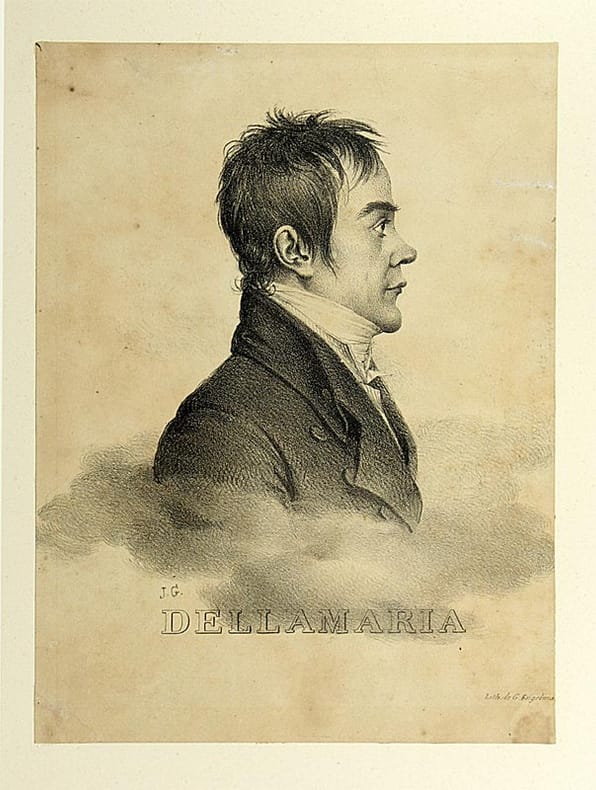
Della Maria, Pierre-Antoine-Dominique (1769-1800):
Französischer Komponist.
O.J. (um 1820). Lithographie von Gottfried Engelmann nach J.G. Bild- und Blattgrösse: 23 x 17 cm.
書籍販売業者の参照番号
: 870AG
|
|
|
DELLICOUR, M.F.
LES PROPOS D' UN COLONIAL BELGE.
, Bruxelles, M. Weissenbruch, s.d., Broche, couverture d' editeur illustre en couleur, 17x24,5cm, 249pp.
書籍販売業者の参照番号
: 4391
|
|
|
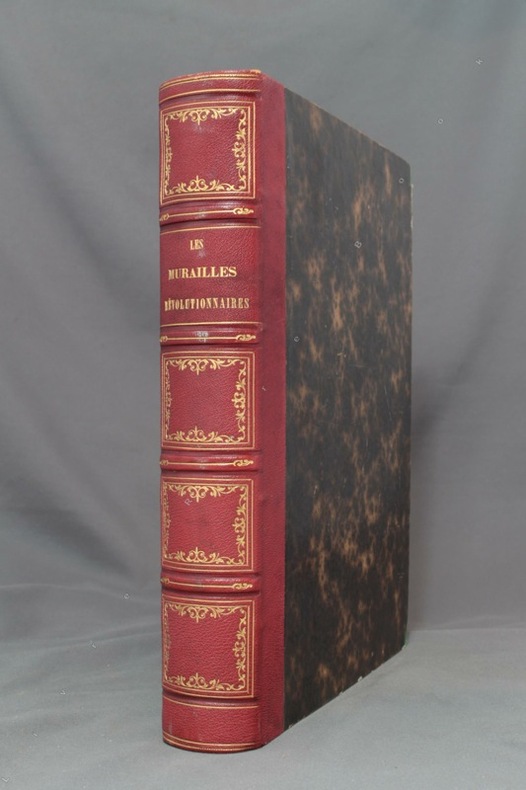
DELVAU Alfred:
Les murailles révolutionnaires. Collection complète des professions de foi, affiches, décrets, bulletins de la république, fac-simile de signatures. (Paris et les départements).
Paris, Chez J. Bry (Aîné), 1852. 1 vol. in-4 de 656 pages, demi-maroquin rouge, dos à nerfs orné. Infimes manques de papier au second plat, rousseurs aux premiers et derniers feuillets.
書籍販売業者の参照番号
: 1850
|
|
|
DELFF Willem Jakobsz
Michael Mirevelt
Très beau portrait d'après Van Dick de ce peintre hollandais. Leblanc, 34. En feuille Très bon 26 x 19 cm
書籍販売業者の参照番号
: 11549

|
|
|
DELPECH
Portraits
Delpech Sl Fort in-8 ( 270x190 mm ) plein evau vert bouteille glacé. Titre doré sur dos lisse orné de fers et guirlandes dorés. Filets et roullettes dorés sur les plats ornés d'un décor à froid à la cathédrale.Coiffes, mors et coupes frottés.165 portraits. Lithographies de Delpech.Charles VIII à Victor Hugo.
書籍販売業者の参照番号
: 685591

|
|
|
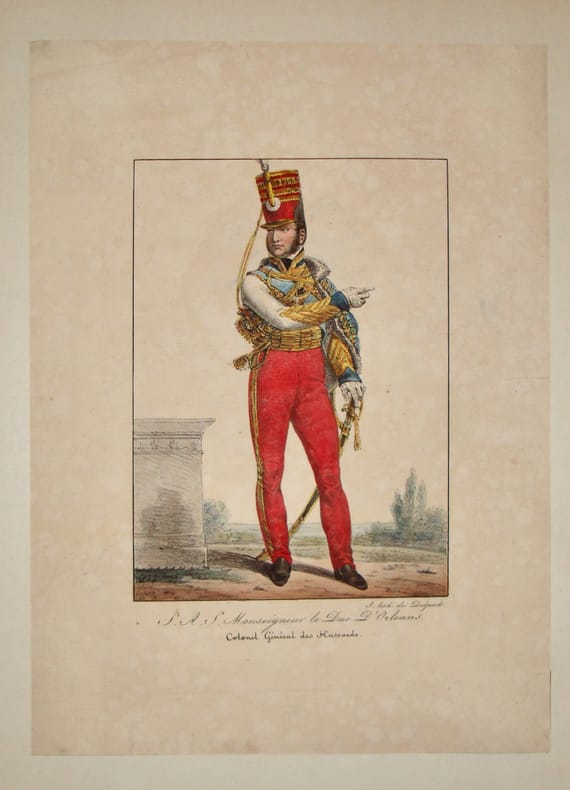
Delpech
S. A. S. Monseigneur le Duc D' Orléans Colonel Général des Hussards
Très belle lithographie rehaussée. En feuille. Déchirure dans la marge de droite. Très bon Paris 27 x 44 cm
書籍販売業者の参照番号
: 14580
|
|
|
DELAYE, Théophile-Jean
SCENES ET TYPES DE L'AFRIQUE DU NORD
LES GRANDES EDITIONS FRANCAISES - PARIS / S.D. (Circa 1930)DELAYE (Jean-Théophile)Scènes et Types de l'Afrique du Nord Paris, Grandes Edit. Paris. Sd in-8 sous portefeuille à rabats et à lacets. Illustré de 24 planches de portraits de J.T. Delaye. complet , rare
書籍販売業者の参照番号
: 3764
|
|
|
Del Sole, Giovanni Battista (ca. 1649-1719):
Portrait. Bildnis des Malers Del Sole in Halbfigur nach links, den Blick dem Bertrachter zugewandt. Kupferstich von von P.A. Pazzi nach Gio Dom Campiglia.
Format (Platte): 275 x 180 mm. Blattgröße: 410 x 280 mm. *Del Sole war ein italienischer Maler des Barock. - Die weißen Außenränder etwas angestaubt, zwei kleine Einrisse am rechten Außenrand. Graphiken de
|
|
|
Delambre, Jean-Baptiste Joseph
PORTRAIT Jean-Baptiste Joseph Delambre. (1749 in Amiens - 1822 Paris, französischer Astronom). Schulterstück im Dreiviertelprofil. Stahlstich.
[Ca 1850]. 4 x 4 cm. Blattmaß 5 x 4,5 cm. Feinkartonpassepartout.
書籍販売業者の参照番号
: 60925

|
|
|
DELAROCHE, Paul
Napoleon. Fontainebleau 31. Maerz 1814.
Triest G. L. Leybold [um 1845]. Stahlstich. 15, 7 x 11 cm (Darstellungsgr.). Unter Passepartout. Ränder leicht gebräunt, mit Läsuren, sonst sehr gut erhalten.
書籍販売業者の参照番号
: 1940-24

|
|
|
Delaroche, Paul (1797-1856):
Porträt. Dreiviertelfigur stehend vor einer Staffelei. Lithographie, "dessine d`après nature par Baugniet".
Format (Bildbereich): 38,5 x 29,8 cm. Blattgröße: 59 x 44 cm. *Paul Delaroche (geb. 17. Juli 1797 in Paris; † 4. November 1856 ebenda) war ein französischer Historienmaler des akademischen Realismus. Graphiken de
|
|
|
Delibes, Clément Philibert Léo (1836-1891)
Französischer Komponist.
(Paris), "Figur du Jour", o.J. (um 1880). Holzschnitt von Alfred le Petit. Blattgrösse: 30 x 24 cm. + Wichtig: Für unsere Kunden in der EU erfolgt der Versand alle 14 Tage verzollt ab Deutschland / Postbank-Konto in Deutschland vorhanden +, 959AG
書籍販売業者の参照番号
: 959AG

|
|
|
Delibes, Clément Philibert Léo (1836-1891)
Französischer Komponist.
Berlin, Herm. Leiser, o.J. (um 1890). Photographie. Format: Postkarte. + Wichtig: Für unsere Kunden in der EU erfolgt der Versand alle 14 Tage verzollt ab Deutschland / Postbank-Konto in Deutschland vorhanden +
書籍販売業者の参照番号
: 71AG
|
|
|
Delille, Jacques
PORTRAIT Jacques Delille. (1738 Clermont-Ferrand - 1813 Paris, französischer Dichter u. Übersetzer). Schulterstück im Dreiviertelprofil. Stahlstich.
[Ca 1845]. 4 x 4 cm. (Blattgröße 5 x 4,5 cm). Feinkartonpassepartout.
書籍販売業者の参照番号
: 61044

|
|
|
Delille, Jacques (1738-1813):
Portrait. Brustfigur. Farbaquatinta von Pierre Michel Alix.
Format (Platte): 405 x 292 mm. Blattgröße: 480 x 363 mm. *Jacques Delille, auch als die Abbe Delille bezeichnet (geboren in Clermont-Ferrand am 22 Juni 1738, gest. im Mai 1813), war ein berühmter französischer Dichter und Übersetzer. - Der Künstler P.M. Alix (1752-1809) war ein französischer Kupferstecher, "lernte bei Le Bas und hinterliess eine Menge Bildnisse berühmter Männer in Rouletten-Manier, in Farben gedruckt" (Nagler I, S. 56). - Gebräunt, in der unteren Ecke mit kleinem Wasserrand. Rechter Außenrand mit (geschlossenem) Einriß bis an den Plattenrand (an dieser Stelle rückseitig mit Klebespuren). Graphiken de
|
|
|
Delille, Jacques (1738-1813):
Porträt. Brustfigur. Lithographie von H. Grevedon.
Blattgröße ca. 50 x 33 cm - Bildgröße ca. 21 x 23 cm. *Jacques Delille, auch als die Abbe Delille bezeichnet (geboren in Clermont-Ferrand am 22 Juni 1738, gest. im Mai 1813), war ein berühmter französischer Dichter und Übersetzer..- Großes vollrandiges Bildnis, sauber und sehr gut erhalten. Graphiken fr
|
|
|
Dell, Johann Anton (geb. 1730):
Portrait. Brustfigur im Profil nach rechts in Oval. Kupferstich von Koller.
Format (Platte): 16,5 x 10 cm. Mit kleinem umlaufenden Rändchen. (Gut erhalten). *Johann Anton Dell (geb. 1730) war ein Zahnarzt in Frankfurt. Graphiken de
|
|
|
Della Maria, Pierre-Antoine-Dominique (1769-1800)
Französischer Komponist.
O.J. (um 1820). Lithographie von Gottfried Engelmann nach J.G. Bild- und Blattgrösse: 23 x 17 cm. + Wichtig: Für unsere Kunden in der EU erfolgt der Versand alle 14 Tage verzollt ab Deutschland / Postbank-Konto in Deutschland vorhanden +, 870A-Gr
書籍販売業者の参照番号
: 870AG

|
|
|
Delmont, Deodat (1582 - 1634):
Halbfigur nach halbrechts. Kupferstich von Vorsterman nach dem Gemälde des Anthonis van Dyck. Unten mit Inschrift: "D. Dedatus Del Mont Antv ...".
Format (Platte): 235 x 150 mm. Blattgröße: 375 x 235 mm. *Blatt aus der berühmten "Iconographia" oder Iconographie, einer Sammelausgabe von ca. 100 der gemalten Bildnisse des Anthonis van Dyck (1599-1641) in Kupferstich. - Wibiral 78, V. - Delmont war Geschichtsmaler, zugleich auch Astronom und Geometer sowie Architekt, befreundet mit Rubens. - Unterrand leicht gebräunt, insgesamt gut erhalten. Graphiken de
|
|
|
DEMOUY P.-M.
Chacun Son Métier
Paris Albin Michel GRAND In-8 124 pp, avec 20 illustrations en noir in-texte, 1ère de couverture illustrée ; dos frotté avec quelques coupures et faibles manques en tête et queue, faibles rousseurs en bordure ed 1ère de couverture.
書籍販売業者の参照番号
: 9869
|
|
|
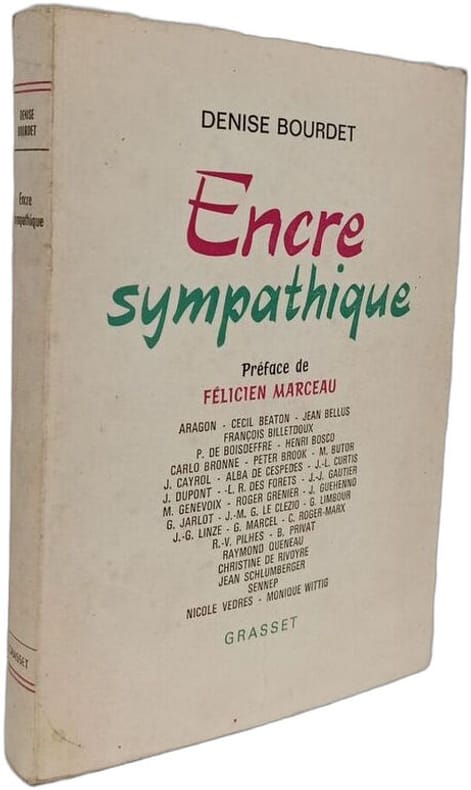
Denise Bourdet
Encre sympathique
Grasset 1966 in8. 1966. Broché. Mémoires de Denise Bourdet évoquant sa vie dans les milieux intellectuels et mondains parisiens avec des portraits de personnalités artistiques et littéraires qu'elle a côtoyées comme Jean Cocteau Paul Morand et François Mauriac
書籍販売業者の参照番号
: 100150082
|
|
|
Deng Ming Dao; Saihung Kwan portraits;
THE WANDERING TAOIST
San Francisco: Harper & Brothers 1983. First Edition First Printing. Hardcover. Octavo 240 pages; VG/VG; spine dark blue pictorial with white lettering; dust jacket protected with a mylar covering price uncut '$14.95'; bookseller sticker to front pastedown; interior clean; shelved Taoism. 1324778. Shelved Dupont Bookstore. Harper & Brothers hardcover books
書籍販売業者の参照番号
: 1324778 ISBN : 0062502255 9780062502254

|
|
|
Denon, Dominique-Vivant (1747-1825):
Portrait. Brustfigur en face. Lithographie von Belliard.
Format (Bildbereich): 21 x 21 cm. Blattgröße: 51 x 33 cm. *Dominique-Vivant Denon (1747-1825) war ein französischer Diplomat, Künstler und Museumsdirektor. Er begleitete Napoleon auf seinem Ägyptenfeldzug. 1802 veröffentlichte er mit großem Erfolg sein Werk "Voyage dans la Basse et la Haute Egypte". - Sauber und gut erhalten. Graphiken fr
|
|
|
Deodatus, Johannes:
Genfer Theologe.
(Anfangs 16. Jh.). Kupferstich. Blattgrösse: 7,7 x 4,5 cm.
書籍販売業者の参照番号
: 1649AG

|
|
|

 検索結果のメールを受信する
 PDFファイルの検索結果をダウンロード
 RSSフィード
 パーマネントリンク


