|
Raphael, Sally Jesse; Proctor, Pam
Sally: Unconventional Success
William Morrow & Co 1990-03-01. Hardcover. New. In shrink wrap. Looks like an interesting title! William Morrow & Co hardcover
Referentie van de boekhandelaar : Q-0688069924 ISBN : 0688069924 9780688069926

|
|
|
Raphael, Sally Jesse; Proctor, Pam
Sally: Unconventional Success
St Martins Pr 1991-11-01. Paperback. New. New. In shrink wrap. Looks like an interesting title! St Martins Pr paperback
Referentie van de boekhandelaar : Q-0312925220 ISBN : 0312925220 9780312925222
|
|
|
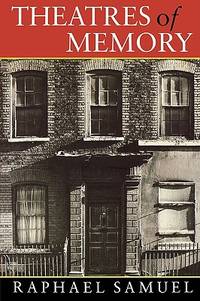
Raphael, Samuel,
Theatres Of Memory
new. unknown
Referentie van de boekhandelaar : 954715-n ISBN : 1859840779 9781859840771
|
|
|
Raphael, Taffy E
Creating an Integrated Approach to Literacy Instruction The Harcourt Brace Literacy Series
paperback. Good. Access codes and supplements are not guaranteed with used items. May be an ex-library book. paperback
Referentie van de boekhandelaar : 0030515548.G ISBN : 0030515548 9780030515545

|
|
|
Raphael, Taffy; Au, Kathryn
QAR Comprehension Lessons: Grades 23: 16 Lessons With Text Passages That Use Question Answer Relationships to Make Reading Strategies Concrete for All Students
Scholastic Teaching Resources Teaching 2011-08-01. Paperback. New. New. In shrink wrap. Looks like an interesting title! Scholastic Teaching Resources (Teaching paperback
Referentie van de boekhandelaar : Q-054526409X ISBN : 054526409X 9780545264099

|
|
|
Raphael, Taffy E; Highfield, Kathy; Au, Kathryn H
QAR Now: A Powerful and Practical Framework That Develops Comprehension and Higher-Level Thinking in All Students Theory and Practice
Theory and Practice 2006-06-01. Paperback. New. New. In shrink wrap. Looks like an interesting title! Theory and Practice paperback
Referentie van de boekhandelaar : Q-0439745837 ISBN : 0439745837 9780439745833

|
|
|
Raphael, Thomas
The Anti-Suit Injunction Updating Supplement Oxford Private International Law
paperback. Good. Access codes and supplements are not guaranteed with used items. May be an ex-library book. paperback
Referentie van de boekhandelaar : 0199588473.G ISBN : 0199588473 9780199588473

|
|
|
Raphael, Thomas
The Anti-suit Injunction
Oxford Univ Pr 2019. Hardcover. New. 2nd edition. 478 pages. 10.00x7.00x1.25 inches. Oxford Univ Pr hardcover
Referentie van de boekhandelaar : x-0198778937 ISBN : 0198778937 9780198778936

|
|
|
Raphael, Thomas
The Anti-suit Injunction Updating Supplement
Oxford Univ Pr 2010. Paperback. New. 100 pages. 9.00x6.10x0.40 inches. Oxford Univ Pr paperback
Referentie van de boekhandelaar : 2-0199588473 ISBN : 0199588473 9780199588473
|
|
|
Raphael, Thomas
The Anti-Suit Injunction Updating Supplement Oxford Private International Law Series
OXFORD UNIVERSITY PRESS 2011-01-29. 1. paperback. Used: Good. 9.21x6.14x0.26. Buy with confidence. Excellent Customer Service & Return policy. OXFORD UNIVERSITY PRESS paperback
Referentie van de boekhandelaar : SONG0199588473 ISBN : 0199588473 9780199588473
|
|
|
Raphael, Thomas
The Anti-Suit Injunction Updating Supplement Oxford Private International Law Series
OXFORD UNIVERSITY PRESS 2011-01-29. 1. paperback. New. 9.21x6.14x0.26. Buy with confidence. Excellent Customer Service & Return policy. OXFORD UNIVERSITY PRESS paperback
Referentie van de boekhandelaar : DADAX0199588473 ISBN : 0199588473 9780199588473
|
|
|
Raphael, Timothy,
The President Electric
like new. unknown
Referentie van de boekhandelaar : 6547912 ISBN : 0472050737 9780472050734

|
|
|
Raphael, Timothy
The President Electric: Ronald Reagan and the Politics of Performance Theater: Theory/Text/Performance
paperback. Good. Access codes and supplements are not guaranteed with used items. May be an ex-library book. paperback
Referentie van de boekhandelaar : 0472050737.G ISBN : 0472050737 9780472050734
|
|
|
Raphael, Timothy
The President Electric: Ronald Reagan and the Politics of Performance Theater: Theory/Text/Performance
University of Michigan Press 2009-10-12. Illustrated. paperback. New. 6.00x0.90x9.00. Buy with confidence. Excellent Customer Service & Return policy. University of Michigan Press paperback
Referentie van de boekhandelaar : DADAX0472050737 ISBN : 0472050737 9780472050734
|
|
|
Raphael, Thomas
Umweltbiotechnologie: Grundlagen Anwendungen und Perspektiven German Edition
paperback. Good. Access codes and supplements are not guaranteed with used items. May be an ex-library book. paperback
Referentie van de boekhandelaar : 3642644260.G ISBN : 3642644260 9783642644269

|
|
|
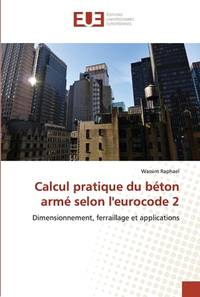
Raphael, Wassim
Calcul pratique du béton armé selon l'eurocode 2: Dimensionnement ferraillage et applications Omn.Univ.Europ. French Edition
paperback. Good. Access codes and supplements are not guaranteed with used items. May be an ex-library book. paperback
Referentie van de boekhandelaar : 3838182480.G ISBN : 3838182480 9783838182483
|
|
|
Raphael, Wesley
Converting The Soul - Color Edition
paperback. Good. Access codes and supplements are not guaranteed with used items. May be an ex-library book. paperback
Referentie van de boekhandelaar : 1304002810.G ISBN : 1304002810 9781304002815

|
|
|
Raphael, Wesley
Converting the Soul: Deuteronmy ~ Making Peace with God's Law
paperback. Good. Access codes and supplements are not guaranteed with used items. May be an ex-library book. paperback
Referentie van de boekhandelaar : 1304493105.G ISBN : 1304493105 9781304493101

|
|
|
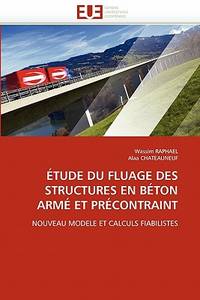
RAPHAEL, Wassim
ÉTUDE DU FLUAGE DES STRUCTURES EN BÉTON ARMÉ ET PRÉCONTRAINT: NOUVEAU MODELE ET CALCULS FIABILISTES Omn.Univ.Europ. French Edition
Omniscriptum 2011-03-13. paperback. New. 5.91x0.55x8.66. Buy with confidence. Excellent Customer Service & Return policy. Omniscriptum paperback
Referentie van de boekhandelaar : DADAX6131542554 ISBN : 6131542554 9786131542558
|
|
|
RAPHAEL, Wassim
ÉTUDE DU FLUAGE DES STRUCTURES EN BÉTON ARMÉ ET PRÉCONTRAINT: NOUVEAU MODELE ET CALCULS FIABILISTES Omn.Univ.Europ. French Edition
paperback. Good. Access codes and supplements are not guaranteed with used items. May be an ex-library book. paperback
Referentie van de boekhandelaar : 6131542554.G ISBN : 6131542554 9786131542558
|
|
|
Raphael,Frederic
A Wild Surmise
Cassell & Co 1961-01-01. Hardcover. Good. 2.5381 in x 20.5584 in x 13.7056 in. Ex-library book usual markings. Hardback/Hardcover. Clean copy in good condition. Cassell & Co hardcover
Referentie van de boekhandelaar : mon0000187078
|
|
|
Raphael,Frederic
Heaven & Earth SIGNED COPY
London: Jonathan Cape. This is a Near Fine Copy of this Book in Publisher's dark green cloth with gilt title lettering to spinein a Near Fine Dust-jacket with NO chips or tears to the outer edges of the dust-wrapper.Not price clipped and this copy has been Inscribed by the Author on the front free endpaper and also signed by him without dedication on the top edge of the Title Page.The Inscription on the ffep reads. For Paul with much love from the author & his January 1985'' The book has a firm binding with no hinge weakness.There is just a little tanning or age toning to the text block edges.Uncommon signed title 8vo 310pp First UK Edition 1st Impression 1985 . Near Fine. Hardcover. First Edition. 1st Printing. 1985. Jonathan Cape hardcover
Referentie van de boekhandelaar : 85118 ISBN : 0224022946 9780224022941

|
|
|
RAPHAEL-
Tat Tvam Asi That Thou Art.
Motilal Banarsidass 1992 India. 23x15. Encuadernación editorial con sobrecubierta tapa dura. 122 pgs. Texto ingles. 688723 Motilal Banarsidass, 1992, India. unknown
Referentie van de boekhandelaar : MP27543H
|
|
|
RAPHAEL- LEYGUES J.
RETOUR DE MER ( OUVRAGE COURONNE PAR L' ACADEMIE FRANCAISE ) SUIVI DE MINUIT A QUATRE
PARIS FIRMIN DIDOT 1946 1 volume petit in-8 broché de 117 pages , un portrait en frontispice , bel envoi autographe à Laurent Eynac ( Ministre de l' Air ) , bon exemplaire . Bon Couverture souple
Referentie van de boekhandelaar : 004003
|
|
|
Raphael. -
La Madone du Grand Duc. Raphael Santi Pinxt. Hél. (héliogravure de) Braun & Cie.
s.d. vers 1900, 27.5x18.4 cm (54.5x40 cm la feuille) Planche tirée en couleur de Madone avec l’Enfant.
Referentie van de boekhandelaar : 92011aaf
|
|
|
Raphael. Gamba Carlo.
Raphaël. traduction française de jean alazard.
Crès, 1932. 1932 In-4 broché. Quelques rousseurs et effrangements.. État correct d’occasion.
Referentie van de boekhandelaar : 56337
|
|
|
RAPHAEL. Raffaello Sanzio d'Urbino 1483 1520
Angels appear to Abraham Apparuerunt ei tres viri et cucurrit Abraham de ostio Tabernaculi sui et adoravit in Terram
Rome 1774. Copper engraving by Ottaviani after drawings by Savorelli and Camporesi printed in light brown coloured ink with contemporary hand-colouring. Neat marginal restoration. A stunning plate from "Logge di Rafaele nel Vaticano": with contemporary colouring of the highest quality from the golden age of the hand-coloured print. The scene in the main panel shows the three angels that appeared to Abraham and told him that he and his wife Sarah will have a son.<br/> <br/>A very fine image from the second part of a work titled "Loggie di Rafaele nel Vaticano" depicting the decorative work executed by Raphael and his assistants between 1518-1519 in the Vatican. They were drawn by Gaetano Savorelli a Roman painter and draughtsman best known for his Raphael drawings and Pietro Camporesi a Roman architect who worked for Pope Clemens XIII and Pius VI on rooms for the Vatican Museum. The first to illustrate the famous frescoes these beautiful plates were probably planned as early as 1760 but were not executed until 1772 to 1776. The plate is remarkable not only as the first important visual record of Raphael's work but also for the quality of the hand-colouring - the work on this image is in our opinion some of the greatest to be produced in Europe during the whole of the eighteenth century: the golden age of the hand-coloured print. They were remarkable not just for their size and magnificent colouring but also because of the influence they had on contemporary taste. The decision was made to "borrow" elements from Raphael's Vatican tapestries and insert them where the original frescoes were in too poor a state to be legible. The finished plates therefore represented an amalgam of design elements presented with a crisp freshness of colour that held enormous appeal and did much to stimulate the taste for the "grotesque" in the Neo-classical period. A year after the death of his principal patron Julius II Raphael succeeded Donato Bramante in 1514 as the official Vatican architect. Having previously adorned the "Stanze" or chambers of Julius on the second floor of the papal apartments in the Vatican palace he was commissioned by Leo X in 1517 to decorate the adjacent Logge. He designed an elaborate cycle of ornamental frescoes for the room's ceiling vaults doors and auxiliary pillars which were executed by his assistants Giulio Romano and Giovanni da Udine. Twelve of the quadrilateral ceiling vaults were adorned with murals of familiar Old Testament scenes and one with a scene from the New Testament while the more decorative frescoes painted on the pilasters by Udine were covered with imaginative compositions of 'grotesque' motifs like foliage fruit and chimerical beasts.<br/> <br/>Cf. Brunet IV 1110 & 1111; cf. Berlin "Kat". 4068 & 4066; "Raphael Invenit: Stampe da Rafaello" 1985 Ottaviano 22; cf. "Raphael: Reproduktions-graphik aus vier Jahrhunderten" Coburg 1984 104 & no. 245. unknown books
Referentie van de boekhandelaar : 20164

|
|
|
RAPHAEL. Raffaello Sanzio d'Urbino 1483 1520
Decorative pilaster with fruit flowers and tendrils
Rome 1772. Copper engraving by Ottaviani after drawings by Savorelli and Camporesi printed in light brown coloured ink with contemporary hand-colouring. Good condition. Trimmed to just within plate mark along lower margin expert repairs to left margin not affecting image area. A highly decorative print from the famous "Loggie di Rafaele nel Vaticano" series with contemporary colouring of the highest quality from the golden age of the hand-coloured print.<br/> <br/>A very fine image from the first part of a work titled "Loggie di Rafaele nel Vaticano" depicting the decorative work executed by Raphael and his assistants between 1518-1519 in the Vatican. This remarkable print one of the first to be published of the decoration of the Logge on the main storey of the Vatican apartments was probably planned as early as 1760 but was not executed until between 1772 and 1776. The project as a whole was carried out by the painter Gaetano Savorelli the draughtsman Ludovico Teseo the architect Pietro Camporesi and the engravers Giovanni Ottaviani and Giovanni Volpato. The plate is remarkable not only as the first important visual record of Raphael's work but also for the quality of the hand-colouring - the work on this image is in our opinion some of the greatest to be produced in Europe during the whole of the eighteenth century: the golden age of the hand-coloured print. The whole series was of importance not just for the size and magnificent colouring of the prints but also because of the influence they had on contemporary taste. The decision was made to "borrow" elements from Raphael's Vatican tapestries and insert them where the original frescoes were in too poor a state to be legible. The finished plates therefore represented an amalgam of design elements presented with a crisp freshness of colour that held enormous appeal and stimulated the taste for the "grotesque" in the neo-classical period.<br/> <br/>Cf. Brunet IV 1110; cf. Berlin Kat. 4068; cf. Lambert Pattern and Design V. & A.: 1983 p. 26; "Raphael Invenit: Stampe da Rafaello" 1985 Ottaviano 4; Raphael: Reproduktions-graphik aus vier Jahrhunderten Coburg: 1984 p. 104. unknown books
Referentie van de boekhandelaar : 17002

|
|
|
RAPHAEL. Raffaello Sanzio d'Urbino 1483 1520
Decorative pilaster with fruit flowers and tendrils
Rome 1772. Copper engraving by Ottaviani after drawings by Savorelli and Camporesi printed in light brown coloured ink with contemporary hand-colouring. Trimmed to platemark left margin. Good condition. A highly decorative print from the famous "Loggie di Rafaele nel Vaticano" series with contemporary colouring of the highest quality from the golden age of the hand-coloured print.<br/> <br/>A very fine image from the first part of a work titled "Loggie di Rafaele nel Vaticano" depicting the decorative work executed by Raphael and his assistants between 1518-1519 in the Vatican. This remarkable print one of the first to be published of the decoration of the Logge on the main storey of the Vatican apartments was probably planned as early as 1760 but was not executed until between 1772 and 1776. The project as a whole was carried out by the painter Gaetano Savorelli the draughtsman Ludovico Teseo the architect Pietro Camporesi and the engravers Giovanni Ottaviani and Giovanni Volpato. The plate is remarkable not only as the first important visual record of Raphael's work but also for the quality of the hand-colouring - the work on this image is in our opinion some of the greatest to be produced in Europe during the whole of the eighteenth century: the golden age of the hand-coloured print. The whole series was of importance not just for the size and magnificent colouring of the prints but also because of the influence they had on contemporary taste. The decision was made to "borrow" elements from Raphael's Vatican tapestries and insert them where the original frescoes were in too poor a state to be legible. The finished plates therefore represented an amalgam of design elements presented with a crisp freshness of colour that held enormous appeal and stimulated the taste for the "grotesque" in the neo-classical period.<br/> <br/>Cf. Brunet IV 1110; cf. Berlin Kat. 4068; cf. Lambert Pattern and Design V. & A.: 1983 p. 26; "Raphael Invenit: Stampe da Rafaello" 1985 Ottaviano 11; Raphael: Reproduktions-graphik aus vier Jahrhunderten Coburg: 1984 p. 104. unknown books
Referentie van de boekhandelaar : 21936

|
|
|
RAPHAEL. Raffaello Sanzio d'Urbino 1483 1520
Decorative pilaster with fruit flowers and tendrils
Rome 1772. Copper engraving by Ottaviani after drawings by Ludovico Teseo printed in black with stunning later professional hand-colouring. Very good condition. A highly decorative print from the famous "Loggie di Rafaele nel Vaticano" series with later professional hand-colouring.<br/> <br/>A very fine image from the first part of a work titled "Loggie di Rafaele nel Vaticano" depicting the decorative work and executed by Raphael and his assistants between 1518-1519 in the Vatican. This remarkable print one of the first to be published of the decoration of the Logge on the main storey of the Vatican apartments was probably planned as early as 1760 but was not executed until between 1772 and 1776. The project as a whole was carried out by the painter Gaetano Savorelli the draughtsman Ludovico Teseo the architect Pietro Camporesi and the engravers Giovanni Ottaviani and Giovanni Volpato. The whole series was remarkable not just for the size and magnificent colouring of the prints but also because of the influence they had on contemporary taste. The decision was made to "borrow" elements from Raphael's Vatican tapestries and insert them where the original frescoes were in too poor a state to be legible. The finished plates therefore represented an amalgam of design elements presented with a crisp freshness of colour that held enormous appeal and stimulated the taste for the "grotesque" in the neo-classical period.<br/> <br/>Cf. Brunet IV 1110; cf. Berlin Kat. 4068; cf. Lambert Pattern and Design V. & A.: 1983 p. 26; "Raphael Invenit: Stampe da Rafaello" 1985 Ottaviano 2; Raphael: Reproduktions-graphik aus vier Jahrhunderten Coburg: 1984 p. 104. unknown books
Referentie van de boekhandelaar : 14588

|
|
|
RAPHAEL. Raffaello Sanzio d'Urbino 1483 1520
Decorative pilaster with fruit flowers and tendrils
Rome 1772. Copper engraving by Ottaviani after drawings by Savorelli and Camporesi printed in light brown coloured ink with contemporary hand-colouring. Good condition. Sight size: 43 x 17 inches. A highly decorative print from the famous "Loggie di Rafaele nel Vaticano" series with contemporary colouring of the highest quality from the golden age of the hand-coloured print.<br/> <br/>A very fine image from the first part of a work titled "Loggie di Rafaele nel Vaticano" depicting the decorative work executed by Raphael and his assistants between 1518-1519 in the Vatican. This remarkable print one of the first to be published of the decoration of the Logge on the main storey of the Vatican apartments was probably planned as early as 1760 but was not executed until between 1772 and 1776. The project as a whole was carried out by the painter Gaetano Savorelli the draughtsman Ludovico Teseo the architect Pietro Camporesi and the engravers Giovanni Ottaviani and Giovanni Volpato. The plate is remarkable not only as the first important visual record of Raphael's work but also for the quality of the hand-colouring - the work on this image is in our opinion some of the greatest to be produced in Europe during the whole of the eighteenth century: the golden age of the hand-coloured print. The whole series was of importance not just for the size and magnificent colouring of the prints but also because of the influence they had on contemporary taste. The decision was made to "borrow" elements from Raphael's Vatican tapestries and insert them where the original frescoes were in too poor a state to be legible. The finished plates therefore represented an amalgam of design elements presented with a crisp freshness of colour that held enormous appeal and stimulated the taste for the "grotesque" in the neo-classical period.<br/> <br/>Cf. Brunet IV 1110; cf. Berlin Kat. 4068; cf. Lambert Pattern and Design V. & A.: 1983 p. 26; "Raphael Invenit: Stampe da Rafaello" 1985 Ottaviano 11; Raphael: Reproduktions-graphik aus vier Jahrhunderten Coburg: 1984 p. 104. unknown books
Referentie van de boekhandelaar : 17012

|
|
|
RAPHAEL. Raffaello Sanzio d'Urbino 1483 1520
Decorative pilaster with fruit flowers and tendrils
Rome 1772. Copper engraving by Ottaviani after drawings by Savorelli and Camporesi printed in light brown coloured ink with contemporary hand-colouring. Good condition. Trimmed to just within plate mark along lower margin expert repair to upper left corner just affecting image area small repairs to right blank margin. A highly decorative print from the famous "Loggie di Rafaele nel Vaticano" series with contemporary colouring of the highest quality from the golden age of the hand-coloured print.<br/> <br/>A very fine image from the first part of a work titled "Loggie di Rafaele nel Vaticano" depicting the decorative work executed by Raphael and his assistants between 1518-1519 in the Vatican. This remarkable print one of the first to be published of the decoration of the Logge on the main storey of the Vatican apartments was probably planned as early as 1760 but was not executed until between 1772 and 1776. The project as a whole was carried out by the painter Gaetano Savorelli the draughtsman Ludovico Teseo the architect Pietro Camporesi and the engravers Giovanni Ottaviani and Giovanni Volpato. The plate is remarkable not only as the first important visual record of Raphael's work but also for the quality of the hand-colouring - the work on this image is in our opinion some of the greatest to be produced in Europe during the whole of the eighteenth century: the golden age of the hand-coloured print. The whole series was of importance not just for the size and magnificent colouring of the prints but also because of the influence they had on contemporary taste. The decision was made to "borrow" elements from Raphael's Vatican tapestries and insert them where the original frescoes were in too poor a state to be legible. The finished plates therefore represented an amalgam of design elements presented with a crisp freshness of colour that held enormous appeal and stimulated the taste for the "grotesque" in the neo-classical period.<br/> <br/>Cf. Brunet IV 1110; cf. Berlin Kat. 4068; cf. Lambert Pattern and Design V. & A.: 1983 p. 26; "Raphael Invenit: Stampe da Rafaello" 1985 Ottaviano 5; Raphael: Reproduktions-graphik aus vier Jahrhunderten Coburg: 1984 p. 104. unknown books
Referentie van de boekhandelaar : 17009

|
|
|
RAPHAEL. Raffaello Sanzio d'Urbino 1483 1520
Decorative pilaster with fruit flowers and tendrils
Rome 1772. Copper engraving by Ottaviani after drawings by Savorelli and Camporesi printed in light brown coloured ink with contemporary hand-colouring. Good condition. Sight size: 43 x 17 1/4 inches. A highly decorative print from the famous "Loggie di Rafaele nel Vaticano" series with contemporary colouring of the highest quality from the golden age of the hand-coloured print.<br/> <br/>A very fine image from the first part of a work titled "Loggie di Rafaele nel Vaticano" depicting the decorative work executed by Raphael and his assistants between 1518-1519 in the Vatican. This remarkable print one of the first to be published of the decoration of the Logge on the main storey of the Vatican apartments was probably planned as early as 1760 but was not executed until between 1772 and 1776. The project as a whole was carried out by the painter Gaetano Savorelli the draughtsman Ludovico Teseo the architect Pietro Camporesi and the engravers Giovanni Ottaviani and Giovanni Volpato. The plate is remarkable not only as the first important visual record of Raphael's work but also for the quality of the hand-colouring - the work on this image is in our opinion some of the greatest to be produced in Europe during the whole of the eighteenth century: the golden age of the hand-coloured print. The whole series was of importance not just for the size and magnificent colouring of the prints but also because of the influence they had on contemporary taste. The decision was made to "borrow" elements from Raphael's Vatican tapestries and insert them where the original frescoes were in too poor a state to be legible. The finished plates therefore represented an amalgam of design elements presented with a crisp freshness of colour that held enormous appeal and stimulated the taste for the "grotesque" in the neo-classical period.<br/> <br/>Cf. Brunet IV 1110; cf. Berlin Kat. 4068; cf. Lambert Pattern and Design V. & A.: 1983 p. 26; "Raphael Invenit: Stampe da Rafaello" 1985 Ottaviano 13;Raphael: Reproduktions-graphik aus vier Jahrhunderten Coburg: 1984 p. 104. unknown books
Referentie van de boekhandelaar : 17014

|
|
|
RAPHAEL. Raffaello Sanzio d'Urbino 1483 1520
Doorway to Vatican Loggia
Rome 1772. Copper engraving by Ottaviani after drawings by Savorelli and Camporesi printed in light brown coloured ink with contemporary hand-colouring. Good condition. Three repaired tears to the left blank margin. Sight size: 31 1/8 x 18 1/4 inches. A highly decorative print from the famous "Loggie di Rafaele nel Vaticano" series with contemporary colouring of the highest quality from the golden age of the hand-coloured print.<br/> <br/>A very fine image from the first part of a work titled "Loggie di Rafaele nel Vaticano" depicting the decorative work executed by Raphael and his assistants between 1518-1519 in the Vatican. This remarkable print one of the first to be published of the decoration of the Logge on the main storey of the Vatican apartments was probably planned as early as 1760 but was not executed until between 1772 and 1776. The project as a whole was carried out by the painter Gaetano Savorelli the draughtsman Ludovico Teseo the architect Pietro Camporesi and the engravers Giovanni Ottaviani and Giovanni Volpato. The plate is remarkable not only as the first important visual record of Raphael's work but also for the quality of the hand-colouring - the work on this image is in our opinion some of the greatest to be produced in Europe during the whole of the eighteenth century: the golden age of the hand-coloured print. The whole series was of importance not just for the size and magnificent colouring of the prints but also because of the influence they had on contemporary taste. The decision was made to "borrow" elements from Raphael's Vatican tapestries and insert them where the original frescoes were in too poor a state to be legible. The finished plates therefore represented an amalgam of design elements presented with a crisp freshness of colour that held enormous appeal and stimulated the taste for the "grotesque" in the neo-classical period.<br/> <br/>Cf. Brunet IV 1110; cf. Berlin Kat. 4068; cf. Lambert Pattern and Design V. & A.: 1983 p. 26; "Raphael Invenit: Stampe da Rafaello" 1985 Ottaviano 17; Raphael: Reproduktions-graphik aus vier Jahrhunderten Coburg: 1984 p. 104. unknown books
Referentie van de boekhandelaar : 17013

|
|
|
RAPHAEL. Raffaello Sanzio d'Urbino 1483 1520
Eve Conceived Cain and his brother Abel Concepit Heva et peperit Cain Frantremque ejus Abel
Rome 1774. Copper engraving by Ottaviani after drawings by Savorelli and Camporesi printed in light brown coloured ink with contemporary hand-colouring. Good condition. Shaved within plate mark expert neat repairs to left margin one just affecting the image area. A stunning plate from "Logge di Rafaele nel Vaticano": with contemporary colouring of the highest quality from the golden age of the hand-coloured print.<br/> <br/>A very fine image from the second part of a work titled "Loggie di Rafaele nel Vaticano" depicting the decorative work executed by Raphael and his assistants between 1518-1519 in the Vatican. They were drawn by Gaetano Savorelli a Roman painter and draughtsman best known for his Raphael drawings and Pietro Camporesi a Roman architect who worked for Pope Clemens XIII and Pius VI on rooms for the Vatican Museum. The first to illustrate the famous frescoes these beautiful plates were probably planned as early as 1760 but were not executed until 1772 to 1776. The plate is remarkable not only as the first important visual record of Raphael's work but also for the quality of the hand-colouring - the work on this image is in our opinion some of the greatest to be produced in Europe during the whole of the eighteenth century: the golden age of the hand-coloured print. They were remarkable not just for their size and magnificent colouring but also because of the influence they had on contemporary taste. The decision was made to "borrow" elements from Raphael's Vatican tapestries and insert them where the original frescoes were in too poor a state to be legible. The finished plates therefore represented an amalgam of design elements presented with a crisp freshness of colour that held enormous appeal and did much to stimulate the taste for the "grotesque" in the Neo-classical period. A year after the death of his principal patron Julius II Raphael succeeded Donato Bramante in 1514 as the official Vatican architect. Having previously adorned the "Stanze" or chambers of Julius on the second floor of the papal apartments in the Vatican palace he was commissioned by Leo X in 1517 to decorate the adjacent Logge. He designed an elaborate cycle of ornamental frescoes for the room's ceiling vaults doors and auxiliary pillars which were executed by his assistants Giulio Romano and Giovanni da Udine. Twelve of the quadrilateral ceiling vaults were adorned with murals of familiar Old Testament scenes and one with a scene from the New Testament while the more decorative frescoes painted on the pilasters by Udine were covered with imaginative compositions of 'grotesque' motifs like foliage fruit and chimerical beasts. The biblical scene depicted shows the infant brothers Cain and Abel vying for their mother's attention. Adam is sowing nearby.<br/> <br/>Cf. Brunet IV 1110 & 1111; cf. Berlin "Kat". 4068 & 4066; "Raphael Invenit: Stampe da Rafaello" 1985 Ottaviano 22; cf. "Raphael: Reproduktions-graphik aus vier Jahrhunderten" Coburg 1984 104 & no. 245. unknown books
Referentie van de boekhandelaar : 17011

|
|
|
RAPHAEL. Raffaello Sanzio d'Urbino 1483 1520
Jacob's Ladder Vidit Jacob in somnis scalam stantem super terram et cacumen illius tangens Coelum: Angelos ascendentes et descendentes: et Dnum innixum scalæ
Rome 1770. Copper engraving on two joined sheets by Ottaviani after drawings by Savorelli and Camporesi printed in light brown coloured ink with contemporary hand-colouring. Neat marginal restoration. A stunning plate from "Logge di Rafaele nel Vaticano": with contemporary colouring of the highest quality from the golden age of the hand-coloured print. The main panel shows Jacob at Luza having a vision of the angels ascending and descending by a ladder which reached from earth to heaven.<br/> <br/>A very fine image from the second part of a work titled "Loggie di Rafaele nel Vaticano" depicting the decorative work executed by Raphael and his assistants between 1518-1519 in the Vatican. They were drawn by Gaetano Savorelli a Roman painter and draughtsman best known for his Raphael drawings and Pietro Camporesi a Roman architect who worked for Pope Clemens XIII and Pius VI on rooms for the Vatican Museum. The first to illustrate the famous frescoes these beautiful plates were probably planned as early as 1760 but were not executed until 1772 to 1776. The plate is remarkable not only as the first important visual record of Raphael's work but also for the quality of the hand-colouring - the work on this image is in our opinion some of the greatest to be produced in Europe during the whole of the eighteenth century: the golden age of the hand-coloured print. They were remarkable not just for their size and magnificent colouring but also because of the influence they had on contemporary taste. The decision was made to "borrow" elements from Raphael's Vatican tapestries and insert them where the original frescoes were in too poor a state to be legible. The finished plates therefore represented an amalgam of design elements presented with a crisp freshness of colour that held enormous appeal and did much to stimulate the taste for the "grotesque" in the Neo-classical period. A year after the death of his principal patron Julius II Raphael succeeded Donato Bramante in 1514 as the official Vatican architect. Having previously adorned the "Stanze" or chambers of Julius on the second floor of the papal apartments in the Vatican palace he was commissioned by Leo X in 1517 to decorate the adjacent Logge. He designed an elaborate cycle of ornamental frescoes for the room's ceiling vaults doors and auxiliary pillars which were executed by his assistants Giulio Romano and Giovanni da Udine. Twelve of the quadrilateral ceiling vaults were adorned with murals of familiar Old Testament scenes and one with a scene from the New Testament while the more decorative frescoes painted on the pilasters by Udine were covered with imaginative compositions of 'grotesque' motifs like foliage fruit and chimerical beasts.<br/> <br/>Cf. Brunet IV 1110 & 1111; cf. Berlin "Kat". 4068 & 4066; "Raphael Invenit: Stampe da Rafaello" 1985 Ottaviano 22; cf. "Raphael: Reproduktions-graphik aus vier Jahrhunderten" Coburg 1984 104 & no. 245. unknown books
Referentie van de boekhandelaar : 20166

|
|
|
RAPHAEL. Raffaello Sanzio d'Urbino 1483 1520
Joseph and His Brothers Vidi consurgere manipulum meum et stare vestrosq: manipulos adorare meum . Et vidi quasi solem et lunam et stallas undecim adorare me
Rome 1774. Copper engraving on two joined sheets by Ottaviani after drawings by Savorelli and Camporesi printed in light brown coloured ink with contemporary hand-colouring. Neat marginal restoration. A stunning plate from "Logge di Rafaele nel Vaticano": with contemporary colouring of the highest quality from the golden age of the hand-coloured print. The main panel shows Joseph telling his brothers of his prophetic dreams "Hear my dream which I dreamed. I thought we were binding sheaves in the field: and my sheaf arose as it were and stood and your sheaves standing about bowed down before my sheaf . I saw in . another dream as it were the sun and the moon and eleven stars worshipping me."<br/> <br/>A very fine image from the second part of a work titled "Loggie di Rafaele nel Vaticano" depicting the decorative work executed by Raphael and his assistants between 1518-1519 in the Vatican. They were drawn by Gaetano Savorelli a Roman painter and draughtsman best known for his Raphael drawings and Pietro Camporesi a Roman architect who worked for Pope Clemens XIII and Pius VI on rooms for the Vatican Museum. The first to illustrate the famous frescoes these beautiful plates were probably planned as early as 1760 but were not executed until 1772 to 1776. The plate is remarkable not only as the first important visual record of Raphael's work but also for the quality of the hand-colouring - the work on this image is in our opinion some of the greatest to be produced in Europe during the whole of the eighteenth century: the golden age of the hand-coloured print. They were remarkable not just for their size and magnificent colouring but also because of the influence they had on contemporary taste. The decision was made to "borrow" elements from Raphael's Vatican tapestries and insert them where the original frescoes were in too poor a state to be legible. The finished plates therefore represented an amalgam of design elements presented with a crisp freshness of colour that held enormous appeal and did much to stimulate the taste for the "grotesque" in the Neo-classical period. A year after the death of his principal patron Julius II Raphael succeeded Donato Bramante in 1514 as the official Vatican architect. Having previously adorned the "Stanze" or chambers of Julius on the second floor of the papal apartments in the Vatican palace he was commissioned by Leo X in 1517 to decorate the adjacent Logge. He designed an elaborate cycle of ornamental frescoes for the room's ceiling vaults doors and auxiliary pillars which were executed by his assistants Giulio Romano and Giovanni da Udine. Twelve of the quadrilateral ceiling vaults were adorned with murals of familiar Old Testament scenes and one with a scene from the New Testament while the more decorative frescoes painted on the pilasters by Udine were covered with imaginative compositions of 'grotesque' motifs like foliage fruit and chimerical beasts.<br/> <br/>Cf. Brunet IV 1110 & 1111; cf. Berlin "Kat". 4068 & 4066; "Raphael Invenit: Stampe da Rafaello" 1985 Ottaviano 22; cf. "Raphael: Reproduktions-graphik aus vier Jahrhunderten" Coburg 1984 104 & no. 245. unknown books
Referentie van de boekhandelaar : 20167

|
|
|
RAPHAEL. Raffaello Sanzio d'Urbino 1483 1520
King David in Triumph Subacta Syria tulit David arma aurea et detula ea in Jerusalem
Rome 1774. Copper engraving on two joined sheets by Ottaviani after drawings by Savorelli and Camporesi printed in light brown coloured ink with contemporary hand-colouring. Neat marginal restoration. A stunning plate from "Logge di Rafaele nel Vaticano": with contemporary colouring of the highest quality from the golden age of the hand-coloured print. The main panel shows King David having subdued Syria returning to Jersusalem with armour made of gold.<br/> <br/>A very fine image from the second part of a work titled "Loggie di Rafaele nel Vaticano" depicting the decorative work executed by Raphael and his assistants between 1518-1519 in the Vatican. They were drawn by Gaetano Savorelli a Roman painter and draughtsman best known for his Raphael drawings and Pietro Camporesi a Roman architect who worked for Pope Clemens XIII and Pius VI on rooms for the Vatican Museum. The first to illustrate the famous frescoes these beautiful plates were probably planned as early as 1760 but were not executed until 1772 to 1776. The plate is remarkable not only as the first important visual record of Raphael's work but also for the quality of the hand-colouring - the work on this image is in our opinion some of the greatest to be produced in Europe during the whole of the eighteenth century: the golden age of the hand-coloured print. They were remarkable not just for their size and magnificent colouring but also because of the influence they had on contemporary taste. The decision was made to "borrow" elements from Raphael's Vatican tapestries and insert them where the original frescoes were in too poor a state to be legible. The finished plates therefore represented an amalgam of design elements presented with a crisp freshness of colour that held enormous appeal and did much to stimulate the taste for the "grotesque" in the Neo-classical period. A year after the death of his principal patron Julius II Raphael succeeded Donato Bramante in 1514 as the official Vatican architect. Having previously adorned the "Stanze" or chambers of Julius on the second floor of the papal apartments in the Vatican palace he was commissioned by Leo X in 1517 to decorate the adjacent Logge. He designed an elaborate cycle of ornamental frescoes for the room's ceiling vaults doors and auxiliary pillars which were executed by his assistants Giulio Romano and Giovanni da Udine. Twelve of the quadrilateral ceiling vaults were adorned with murals of familiar Old Testament scenes and one with a scene from the New Testament while the more decorative frescoes painted on the pilasters by Udine were covered with imaginative compositions of 'grotesque' motifs like foliage fruit and chimerical beasts.<br/> <br/>Cf. Brunet IV 1110 & 1111; cf. Berlin "Kat". 4068 & 4066; "Raphael Invenit: Stampe da Rafaello" 1985 Ottaviano 22; cf. "Raphael: Reproduktions-graphik aus vier Jahrhunderten" Coburg 1984 104 & no. 245. unknown books
Referentie van de boekhandelaar : 20169

|
|
|
RAPHAEL. Raffaello Sanzio d'Urbino 1483 1520
Last Supper Discumbentibus et edentibus Discipulis dixit Jesus unus ex Vobis me proditurus est
Rome 1774. Copper engraving on two joined sheets by Ottaviani after drawings by Savorelli and Camporesi printed in light brown coloured ink with contemporary hand-colouring. Neat marginal restoration. A stunning plate from "Logge di Rafaele nel Vaticano": with contemporary colouring of the highest quality from the golden age of the hand-coloured print. The main panel shows the moment during the Last Supper when Jesus announces that one of the twelve disciples will betray him.<br/> <br/>A very fine image from the second part of a work titled "Loggie di Rafaele nel Vaticano" depicting the decorative work executed by Raphael and his assistants between 1518-1519 in the Vatican. They were drawn by Gaetano Savorelli a Roman painter and draughtsman best known for his Raphael drawings and Pietro Camporesi a Roman architect who worked for Pope Clemens XIII and Pius VI on rooms for the Vatican Museum. The first to illustrate the famous frescoes these beautiful plates were probably planned as early as 1760 but were not executed until 1772 to 1776. The plate is remarkable not only as the first important visual record of Raphael's work but also for the quality of the hand-colouring - the work on this image is in our opinion some of the greatest to be produced in Europe during the whole of the eighteenth century: the golden age of the hand-coloured print. They were remarkable not just for their size and magnificent colouring but also because of the influence they had on contemporary taste. The decision was made to "borrow" elements from Raphael's Vatican tapestries and insert them where the original frescoes were in too poor a state to be legible. The finished plates therefore represented an amalgam of design elements presented with a crisp freshness of colour that held enormous appeal and did much to stimulate the taste for the "grotesque" in the Neo-classical period. A year after the death of his principal patron Julius II Raphael succeeded Donato Bramante in 1514 as the official Vatican architect. Having previously adorned the "Stanze" or chambers of Julius on the second floor of the papal apartments in the Vatican palace he was commissioned by Leo X in 1517 to decorate the adjacent Logge. He designed an elaborate cycle of ornamental frescoes for the room's ceiling vaults doors and auxiliary pillars which were executed by his assistants Giulio Romano and Giovanni da Udine. Twelve of the quadrilateral ceiling vaults were adorned with murals of familiar Old Testament scenes and one with a scene from the New Testament while the more decorative frescoes painted on the pilasters by Udine were covered with imaginative compositions of 'grotesque' motifs like foliage fruit and chimerical beasts.<br/> <br/>Cf. Brunet IV 1110 & 1111; cf. Berlin "Kat". 4068 & 4066; "Raphael Invenit: Stampe da Rafaello" 1985 Ottaviano 22; cf. "Raphael: Reproduktions-graphik aus vier Jahrhunderten" Coburg 1984 104 & no. 245. unknown books
Referentie van de boekhandelaar : 20170

|
|
|
RAPHAEL. Raffaello Sanzio d'Urbino 1483 1520
Loggie di Rafaele nel Vaticano
Rome 1777. Copper engraving by Volpato after a drawing by Camporesi later professional hand-colouring. Good condition. Expert strengthening to verso of right outer blank margin some old light creasing to 3 inches of the sheet. This beautiful perspective view of Raphael's Loggia served as the frontispiece to the celebrated text "Loggie di Rafaele nel Vaticano".<br/> <br/>This arresting print is a general perspective view of Raphael's design for the Loggia at the Vatican with a large profile portrait of Raphael in a medallion over the entrance to the corridor. The plate served as the frontispiece to the first part of the "Logge di Rafaele nel Vaticano" which depicted the decorative work executed by Raphael and his assistants between 1518-1519 in the Vatican. This remarkable print one of the first to be published of the decoration of the Logge on the main storey of the Vatican apartments was probably planned as early as 1760 but was not executed until between 1772 and 1776. The project as a whole was carried out by the painter Gaetano Savorelli the draughtsman Ludovico Teseo the architect Pietro Camporesi and the engravers Giovanni Ottaviani and Giovanni Volpato. The whole series was of importance not just for the size and magnificent colouring of the prints but also because of the influence they had on contemporary taste. The decision was made to "borrow" elements from Raphael's Vatican tapestries and insert them where the original frescoes were in too poor a state to be legible. The finished plates therefore represented an amalgam of design elements presented with a crisp freshness of colour that held enormous appeal and stimulated the taste for the "grotesque" in the neo-classical period.<br/> <br/>Cf. Brunet IV 1110; cf. Berlin Kat. 4068; Lambert Pattern and Design V. & A.: 1983 p. 26; "Raphael Invenit: Stampe da Rafaello" 1985 Volpato 1; Raphael: Reproduktions-graphik aus vier Jahrhunderten Coburg: 1984 p. 104; G. Marini editor Giovanni Volpato 1735-1803 1988 no. 198. unknown books
Referentie van de boekhandelaar : 15684

|
|
|
RAPHAEL. Raffaello Sanzio d'Urbino 1483 1520
Moses Descends from Mount Sinai Descendit de Monte Sinai tenens Tabulas in manibus: Videbantq: Filii Israel cornutam faciem ejus
Rome 1774. Copper engraving on two joined sheets by Ottaviani after drawings by Savorelli and Camporesi printed in light brown coloured ink with contemporary hand-colouring. Neat marginal restoration. A stunning plate from "Logge di Rafaele nel Vaticano": with contemporary colouring of the highest quality from the golden age of the hand-coloured print. The main panel shows Moses coming down from Mount Sinai holding the tablets bearing the ten words of the Covenant his face "horned from the conversation of the Lord". Aaron and the children of Israel seeing the face of Moses "horned" are afraid to come near.<br/> <br/>A very fine image from the second part of a work titled "Loggie di Rafaele nel Vaticano" depicting the decorative work executed by Raphael and his assistants between 1518-1519 in the Vatican. They were drawn by Gaetano Savorelli a Roman painter and draughtsman best known for his Raphael drawings and Pietro Camporesi a Roman architect who worked for Pope Clemens XIII and Pius VI on rooms for the Vatican Museum. The first to illustrate the famous frescoes these beautiful plates were probably planned as early as 1760 but were not executed until 1772 to 1776. The plate is remarkable not only as the first important visual record of Raphael's work but also for the quality of the hand-colouring - the work on this image is in our opinion some of the greatest to be produced in Europe during the whole of the eighteenth century: the golden age of the hand-coloured print. They were remarkable not just for their size and magnificent colouring but also because of the influence they had on contemporary taste. The decision was made to "borrow" elements from Raphael's Vatican tapestries and insert them where the original frescoes were in too poor a state to be legible. The finished plates therefore represented an amalgam of design elements presented with a crisp freshness of colour that held enormous appeal and did much to stimulate the taste for the "grotesque" in the Neo-classical period. A year after the death of his principal patron Julius II Raphael succeeded Donato Bramante in 1514 as the official Vatican architect. Having previously adorned the "Stanze" or chambers of Julius on the second floor of the papal apartments in the Vatican palace he was commissioned by Leo X in 1517 to decorate the adjacent Logge. He designed an elaborate cycle of ornamental frescoes for the room's ceiling vaults doors and auxiliary pillars which were executed by his assistants Giulio Romano and Giovanni da Udine. Twelve of the quadrilateral ceiling vaults were adorned with murals of familiar Old Testament scenes and one with a scene from the New Testament while the more decorative frescoes painted on the pilasters by Udine were covered with imaginative compositions of 'grotesque' motifs like foliage fruit and chimerical beasts.<br/> <br/>Cf. Brunet IV 1110 & 1111; cf. Berlin "Kat". 4068 & 4066; "Raphael Invenit: Stampe da Rafaello" 1985 Ottaviano 22; cf. "Raphael: Reproduktions-graphik aus vier Jahrhunderten" Coburg 1984 104 & no. 245. unknown books
Referentie van de boekhandelaar : 20168

|
|
|
RAPHAEL. Raffaello Sanzio d'Urbino 1483 1520
The Lord appears to Issac Apparvit Isaac Dominus et ait: ne descendas in Aegyptum sed quiesce in terra quam dixero tibi
Rome 1774. Copper engraving on two joined sheets by Ottaviani after drawings by Savorelli and Camporesi printed in light brown coloured ink with contemporary hand-colouring. Neat marginal restoration. A stunning plate from "Logge di Rafaele nel Vaticano": with contemporary colouring of the highest quality from the golden age of the hand-coloured print. In the main panel the Lord appears to Isaac and tells him not to go down into Egypt but to stay in Gerara.<br/> <br/>A very fine image from the second part of a work titled "Loggie di Rafaele nel Vaticano" depicting the decorative work executed by Raphael and his assistants between 1518-1519 in the Vatican. They were drawn by Gaetano Savorelli a Roman painter and draughtsman best known for his Raphael drawings and Pietro Camporesi a Roman architect who worked for Pope Clemens XIII and Pius VI on rooms for the Vatican Museum. The first to illustrate the famous frescoes these beautiful plates were probably planned as early as 1760 but were not executed until 1772 to 1776. The plate is remarkable not only as the first important visual record of Raphael's work but also for the quality of the hand-colouring - the work on this image is in our opinion some of the greatest to be produced in Europe during the whole of the eighteenth century: the golden age of the hand-coloured print. They were remarkable not just for their size and magnificent colouring but also because of the influence they had on contemporary taste. The decision was made to "borrow" elements from Raphael's Vatican tapestries and insert them where the original frescoes were in too poor a state to be legible. The finished plates therefore represented an amalgam of design elements presented with a crisp freshness of colour that held enormous appeal and did much to stimulate the taste for the "grotesque" in the Neo-classical period. A year after the death of his principal patron Julius II Raphael succeeded Donato Bramante in 1514 as the official Vatican architect. Having previously adorned the "Stanze" or chambers of Julius on the second floor of the papal apartments in the Vatican palace he was commissioned by Leo X in 1517 to decorate the adjacent Logge. He designed an elaborate cycle of ornamental frescoes for the room's ceiling vaults doors and auxiliary pillars which were executed by his assistants Giulio Romano and Giovanni da Udine. Twelve of the quadrilateral ceiling vaults were adorned with murals of familiar Old Testament scenes and one with a scene from the New Testament while the more decorative frescoes painted on the pilasters by Udine were covered with imaginative compositions of 'grotesque' motifs like foliage fruit and chimerical beasts.<br/> <br/>Cf. Brunet IV 1110 & 1111; cf. Berlin "Kat". 4068 & 4066; "Raphael Invenit: Stampe da Rafaello" 1985 Ottaviano 22; cf. "Raphael: Reproduktions-graphik aus vier Jahrhunderten" Coburg 1984 104 & no. 245. unknown books
Referentie van de boekhandelaar : 20165

|
|
|
RAPHAEL. Raffaello Sanzio d'Urbino 1483 1520 Nicolas DORIGNY 1648 1746 engraver
Psyches et Amoris nuptiae fabula a Raphaele Sanctio Urbinate Romae in Farnesianis hortis Transtyberim ad veterum aemulationem ac laudem colorum luminibus expressa a. Dorigny. delineata et incisa et a Ioanne Petro Belloriio notis illustrata
Rome: Domenico de' Rossi 1693. Large folio. 10 hand-coloured engraved plates by Dorigny on laid paper each 15 7/8 x 26 inches approximately titles and imprints printed in gold black ink-ruled borders each plate cut to the edge of the image mounted on large sheets of contemporary thick laid paper each 29 3/8 x 40 3/8 inches approximately. Unbound<br/> <br/>A very fine suite of richly hand-coloured plates offering a stunning visual record of one of the best of the decorative interior schemes carried out by Raphael in Rome.<br/> <br/>This wonderful series records Raphael's 'Cupid and Psyche' series of frescoes carried out by him between 1516 and 1518 in the Loggia of Psyche in the villa Farnesina in Rome. The series also comes with a title and an eleventh plate of the ceiling fresco in the adjoining Sala di Galatea executed in 1512: neither the plate nor the title are present here. Originally published by the Rossis the engravings are the work of Nicolas Dorigny 1658-1746 who lived and worked in Rome between about 1690 and 1719. The painter classicist and art historian Giovanni Pietro Bellori 1613-1696 provided the text at the foot of the plates appropriate excerpts from Apuleuis's Golden Ass.<br/> <br/>"Raphael Invenit: Stampe da Rafaello" 1985 Dorigny 37-46; cf. Brunet IV 1111; cf. Berlin Kat 4066. Domenico de' Rossi unknown books
Referentie van de boekhandelaar : 15680

|
|
|
RAPHAEL. Raffaello Sanzio d'Urbino 1483 1520. Giovanni OTTOVIANI & Giovanni VOLPATO engravers
Delle Logge di Rafaele nel Vaticano
Rome 1772. Large folio. 29 3/4 x 17 1/4 inches. 2pp. letterpress text in French "Aux Amateurs des Beaux Arts" with uncoloured engraved head-piece and initial and colophon at foot of second page. One small format folding plate "Ordine tenuto nel disporre le stampe de pilastri delle logge Rafaele." 7 x 19 1/32 inches 34 hand-coloured engraved leaves comprising: 1 general perspective view with title and portrait of Raphael by Volpato after Pietro Camporesi strip attached at lower edge to bring up to size; 2 folding plates of doorways by Ottoviani after Gaetano Savorelli and Camporesi each on two sheets joined 36 x 17 1/4 inches overall; 14 views of pilasters on 28 plates by Ottoviani after Savorelli and Camporesi the first plate of each view cut to edge of image with strip attached to lower edge to bring up to size; general plan "Spaccato per il longe del seconde piano del loggia" on three plates by Ottoviani after Savorelli and Camporesi designed to form a single panoramic image . Lower blank margin of text leaf torn and repaired small tears to folds of the doorway plates. Bound with: RAPHAEL. - Nicolas DORIGNY 1648-1746 engraver. Psyches et Amoris nuptiae fabula a Raphaele Sanctio Urbinate Romae in Farnesianis hortis Transtyberim ad veterum aemulationem ac laudem colorum luminibus expressa a. Dorigny. delineata et incisa et a Ioanne Petro Belloriio notis illustrata. Rome: Domenico de' Rossi 1693 or later. Large folio 29 3/4 x 17 1/4 inches. 10 hand-coloured engraved plates by Dorigny titles and imprints printed in gold. 2 works in one volume. Late 18th-century Roman red morocco gilt contemporary with the first work covers with elaborate border of dog-tooth roll double-fillet and repeated use of a three-flower spray a heart and a rococo drawer-handle tool the same tool massed to form a lozenge shape at the corners and forming a triangular motif mid-way up the long sides with stars birds and small and large flower-spray tools all enclosing a large central lozenge formed from an outline of a simpler variant drawer-handle tool and large flower sprays enclosing a center of massed scrolling foliage with pomegranates and acorns the spine in seventeen sections with raised bands lettered in the second the others with repeat decoration of a central flower spray with smaller sprays at the corners patterned paper pastedowns. Ties lacking light worming to head and foot of spine with resultant small tears and loss modern cloth solander box morocco lettering-piece on the spine. A very fine collection with richly hand-coloured plates of the best of the decorative interior work carried out by Raphael in Rome. The album is hand-coloured and bound in Rome in the fourth quarter of the 18th-century. It is clearly as it was delivered to its original owner perhaps a Grand-Tourist perhaps a local dilettanti and perfectly echoes his wishes: the first part of Ottoviani's excellent work on Raffaello's Logge frescoes that is the part on the pilasters and including Maitre Dorigny's engravings but only the Loggia of Psyche set all hand-coloured and uniform in size. The first work part one of three concentrates on the decorative pilasters executed by Raphael and his assistants as part of a larger scheme of redecoration between 1518-1519 in the Logge on the main storey of the Vatican apartments. The remarkable prints the first to be carried out of the decoration of the Logge were probably planned as early as 1760 but were not executed until 1774 to 1776. The project was carried out by the painter Gaetano Savorelli the draughtsman Ludovico Teseo the architect Pietro Camporesi and the engravers Giovanni Ottaviani and Giovanni Volpato. The plates were remarkable not just for their size and magnificent colouring but also because of the influence they had on contemporary taste. The decision was made to borrow elements from Raphael's Vatican tapestries and insert them where the original frescoes were in too poor a state to be legible. The finished plates therefore represented an amalgam of design elements presented with a crisp freshness of colour that held enormous appeal and did much to stimulate the taste for the grotesque in the neo-classical period. The second work is of Raphael's Cupid and Psyche series of frescoes carried out by Raphael between 1516 and 1518 in the Loggia of Psyche in the villa Farnesina in Rome. The series also comes with a title and an eleventh plate of the ceiling fresco in the adjoining Sala di Galatea executed in 1512: neither the plate nor the title were ever bound in the present collection. Originally published by the Rossis it is the work of Nicolas Dorigny 1658-1746 who lived and worked in Rome between about 1690 and 1719. The painter classicist and art historian Giovanni Pietro Bellori 1613-1696 provided the text at the foot of the plates appropriate excerpts from Apuleuis's Golden Ass. "Raphael Invenit: Stampe da Rafaello" 1985 Volpato 1; Ottaviano 2-19 and Dorigny 37-46. Brunet IV cf.1110 & 1111; Berlin "Kat". Cf.4068 & 4066; "Raphael: Reproduktions-graphik aus vier Jahrhunderten Coburg 1984 p.104 & no.245; "Giovanni Volpato 1735-1803" Bassano del Grappa 1988 173. unknown books
Referentie van de boekhandelaar : 3753

|
|
|
RAPHAEL. Raffaello Sanzio d'Urbino. 1483 1520. Giovanni OTTAVIANI engraver
Seconde Parte delle Logge di Rafaele nel Vaticano che contiene XIII. Volte ed i loro respettivi Quadri
Rome 1776. Large folio. 29 1/4 x 26 3/4 inches. 12 of 13 hand-coloured engraved plates each printed on two joined sheets by Ottaviani after Gaetano Savorelli and Pietro Camporesi. Interleaved with blanks. Bound without the engraved title soft vertical center crease light abrasions in the images some marginal chips and edge tears to a few plates. A very fine set with particularly fine contemporary hand-colouring of the second part of this great work which concentrates on the quadrants above the windows and doors in the Vatican Logge.<br/> <br/>The work was completed in three parts and depicts the decorative work executed by Raphael and his assistants between 1518-1519 in the Logge on the main storey of the Vatican apartments. The remarkable prints the first to be carried out of the decoration of the Logge were probably planned as early as 1760 but were not executed until 1774 to 1776. The project was carried out by the painter Gaetano Savorelli the draughtsman Ludovico Teseo the architect Pietro Camporesi and the engravers Giovanni Ottaviani and Giovanni Volpato. The plates were remarkable not just for their size and magnificent colouring but also because of the influence they had on contemporary taste. The decision was made to borrow elements from Raphael's Vatican tapestries and insert them where the original frescoes were in too poor a state to be legible. The finished plates therefore represented an amalgam of design elements presented with a crisp freshness of colour that held enormous appeal and did much to stimulate taste in the neo-classical period.<br/> <br/>Raphael Invenit: Stame da Rafaello 1985 Ottaviani 18 21-33; cf. Brunet IV 1110; cf. Berlin Kat. 4068; Raphael: Reproduktions-graphik aus vier Jahrhunderten Coburg 1984 p.104. unknown books
Referentie van de boekhandelaar : 27836

|
|
|
RAPHAEL.- TALVACCHIA, Bette:
Raphaël. (Texte en langue française).
Paris, Phaidon, 2007, in-4to, 240 p., richem. ill. avec des peitures et des dessins en couleurs, reliure en toile originale.
Referentie van de boekhandelaar : 84590aaf
|
|
|
Raphael:
Raphael's almanac 1949
London ; Foulsham 1949 Very good softcover. Prophetic messenger and weather guide. 129th year. London ; Foulsham, 1949 paperback
Referentie van de boekhandelaar : 10456
|
|
|
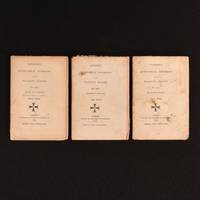
Raphael; [Robert Thomas Cross]
Raphael's Astronomical Ephemeris for 1842 1878 and 1891
London: Printed and Published by the Author; Robert Thomas Cross 1896-1910. Paperback. Very Good. 7.5" by 5". None. Three scarce reprints of Raphael's important ephemeris for various years across the nineneenth century. Three scarce volumes of 'Raphael's Astronomical Ephemeris' reprints of the late nineteenth and early twentieth centuries for the years 1842 1878 and 1891.This series of ephemeris originated by Robert Cross Smith an astrology using the pseudonym 'Raphael' first published in the early nineteenth century though the name was owned by a handful of people during the decades. The 1842 'Ephemeris' was by a Mr. Medhurst whereas both 1878 and 1891 were by Robert Thomas Cross who was still 'Raphael' by the time that these reissues were published. The Raphael ephemeris present a series of tables used in astrology to determine the position of the sun moon and planets. Each of these volumes details their positions for each of the years. Thus these scientific works offer a unique insight into life during these years. The original Raphael Robert Cross Smith was significant for popularising the system of astrological house division known as the Placidean. In the original publisher's paper wraps. Externally generally smart a little edge worn. Wraps are age-toned with spots and handling marks. Wear to the backstrip of 1842. Internally firmly bound. Pages are bright and generally clean with a few spots and pencil marks. Pages of 1842 are unopened to the fore edge. Very Good Printed and Published by the Author; [Robert Thomas Cross] paperback
Referentie van de boekhandelaar : 959P15
|
|
|
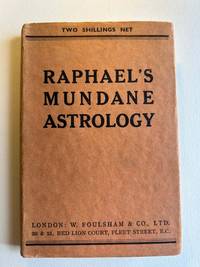
Raphael; [Robert Cross Smith (1795-1832), pseudonym]
Raphael's Mundane Astrology or the Effects of the Planets and Signs Upon the Nations and Countries of the World
London: W. Foulsham and Co. Limited 1910. Later Printing. Hardcover. Very Good in Very Good Dustjacket. Later Printing. Hardcover. Robert Cross Smith 1795-1832 was an English astrologer writing under the pseudonym of "Raphael". He married in 1820 and moved to London where he became interested in astrology. Together with G. W. Graham he published a book on geomancy in 1822. Smith began to edit a periodical entitled The Straggling Astrologer in 1824 but failed to receive enough subscribers and the periodical had to be discontinued after a few issues. He collected the issues of the failed periodical in a volume entitled The Astrologer Of The Nineteenth Century in the same year. From 1827 until his death in 1832 he edited an astrological almanac entitled The Prophetic Messenger. Also published by Smith was The Familiar Astrologer and A Manual of Astrology both in 1828. Smith died on 26 February 1832 in London. His almanac continued to be edited as Raphael's Ephemeris and would become a standard work in British and US American astrology. Raphael's Ephemeris popularized the system of Placidian system of astrological houses in the English-speaking world and in modern western astrology in general. Published posthumously. Scarce in dustjacket. Mild wear to boards bumped corners toning else tight bright and unmarred. Gray cloth with black titling decorations with original orange dustjacket sunned. Small 8vo. 80pp. Illus. b/w charts. W. Foulsham and Co., Limited hardcover
Referentie van de boekhandelaar : 11242
|
|
|
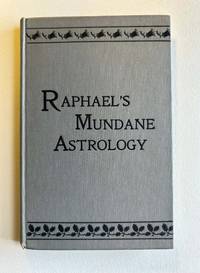
Raphael; [Robert Cross Smith (1795-1832), pseudonym]
Raphael's Mundane Astrology or the Effects of the Planets and Signs Upon the Nations and Countries of the World
London: W. Foulsham and Co. Limited 1910. Later Printing. Hardcover. Later Printing. Hardcover. Robert Cross Smith 1795-1832 was an English astrologer writing under the pseudonym of "Raphael". He married in 1820 and moved to London where he became interested in astrology. Together with G. W. Graham he published a book on geomancy in 1822. Smith began to edit a periodical entitled The Straggling Astrologer in 1824 but failed to receive enough subscribers and the periodical had to be discontinued after a few issues. He collected the issues of the failed periodical in a volume entitled The Astrologer Of The Nineteenth Century in the same year. From 1827 until his death in 1832 he edited an astrological almanac entitled The Prophetic Messenger. Also published by Smith was The Familiar Astrologer and A Manual of Astrology both in 1828. Smith died on 26 February 1832 in London. His almanac continued to be edited as Raphael's Ephemeris and would become a standard work in British and US American astrology. Raphael's Ephemeris popularized the system of Placidian system of astrological houses in the English-speaking world and in modern western astrology in general. Published posthumously. Mild wear to boards evidence of label on tp bumped corners toning else tight bright and unmarred. Gray cloth with black titling decorations. Small 8vo. 80pp. Illus. b/w charts. W. Foulsham and Co., Limited hardcover
Referentie van de boekhandelaar : 11243
|
|

 De zoekresultaten per email ontvangen
 Zoekresultaten downloaden als PDF
 RSS feed
 Permanente link


