|
CARLEGLE (Charles Emile EGLI, dit). CARLEGLE (Charles Emile EGLI, dit).
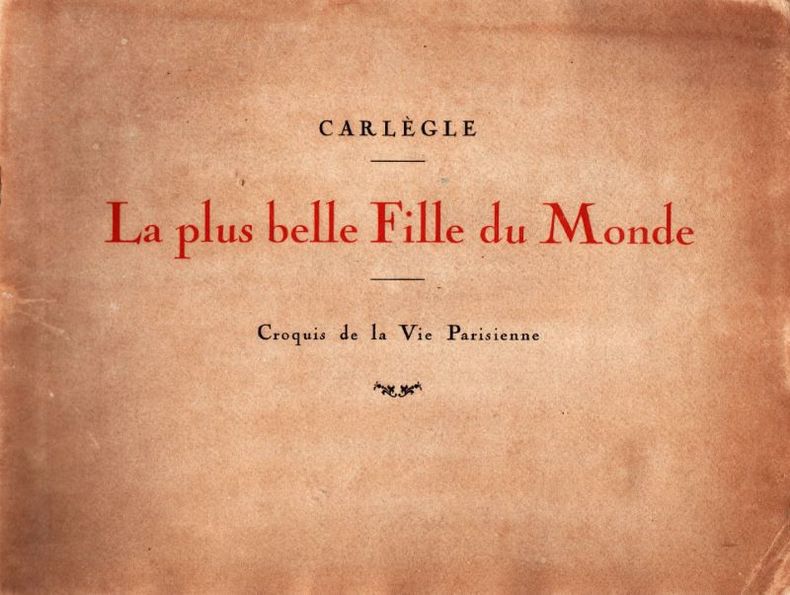
La Plus Belle Fille du monde. Croquis de La Vie Parisienne.
Paris EDITION 1922 1 Illustrations originales de CARLEGLE, Préface de Léo Larguier. Paris, L'Edition, 1922, in-4 oblong, broché, couverture imprimée en noir et en rouge, 28 ff. n. ch., 1922, 17 X 24 cm.
書籍販売業者の参照番号
: 18545
|
|
|
CARLEGLE (EGIL Charles-Emile, dit).
[Xylographie avec rehauts au pochoir] : La Biche aux pieds d'airan [in Les Travaux d'Hercule].
Dimensions : 307 x 233 (marges incluses).
書籍販売業者の参照番号
: 24237

|
|
|
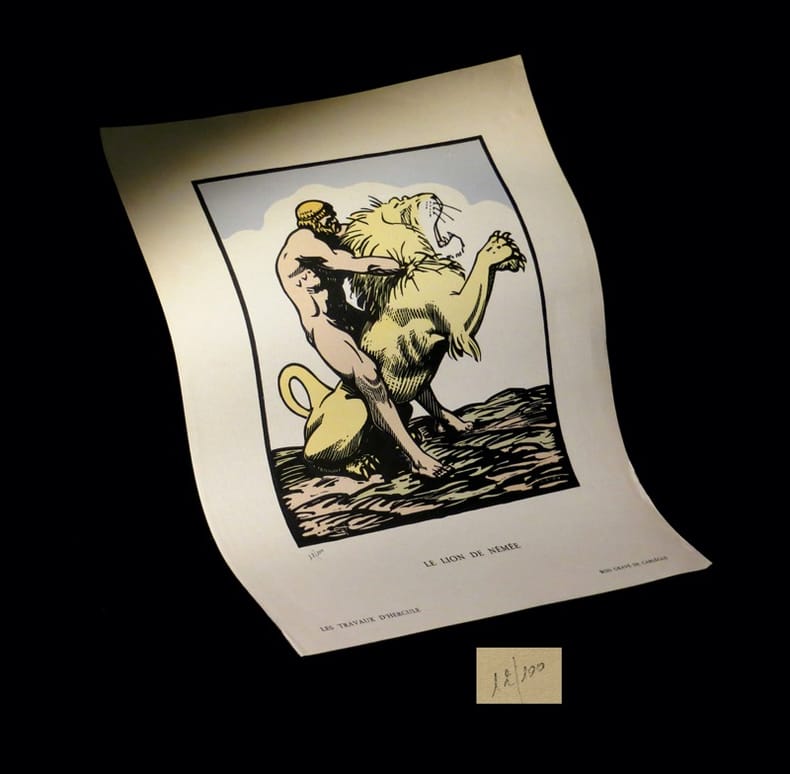
CARLEGLE (EGIL Charles-Emile, dit).
[Xylographie avec rehauts au pochoir] : Le Lion de Némée [in Les Travaux d'Hercule].
Dimensions : 307 x 233 (marges incluses).
書籍販売業者の参照番号
: 24238
|
|
|
CARLEGLE .
C'est un oiseau qui vient de France. Texte et dessins de Carlègle.
P., Société littéraire de France, 1916, In-8 oblong, pleine toile grenat, image en couleurs sur le premier plat, 56 pp.
書籍販売業者の参照番号
: 20925

|
|
|
CARLEGLE FRANCE (Anatole)
Le Génie latin.
P., Emile Chamontin, 1926. Grand in-8, broché, couv. rempliée, 310 pp., bois originaux de Carlègle dans le texte. Un des 375 exemplaires numérotés sur vélin à la forme des papeteries d’Arches, n°69.
書籍販売業者の参照番号
: 553979
|
|
|
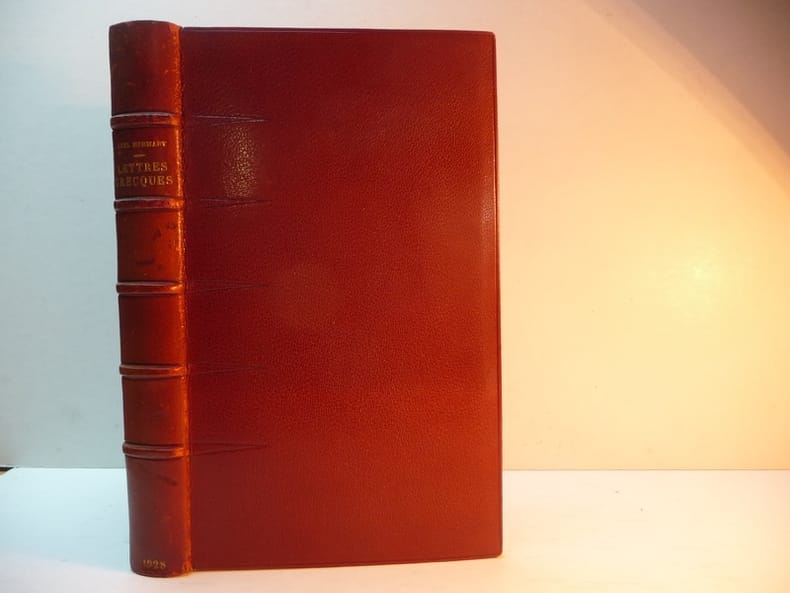
CARLEGLE HERMANT (Abel)
Le nouvel Anacharsis. Promenade au jardin des Lettres grecques.
P., Le Livre, 1928. Grand in-8 reliure post. plein chagrin havane poli, dos à 5 nerfs bordés d'un filet à froid prolongé en pointe sur les plats, auteur et titre doré, filet à froid bordant les plats, roulette et filet dorés aux coupes, contreplats bordés d'une roulette, d'une double ligne de pointillés et de deux filets, le tout doré, doubles gardes de papier marbré, tête dorée, couv. et dos conservés, grands témoins conservés, 250 pp., [3] ff., frontispice, vignettes (Coll. didactique inédite, 5). Un des 30 exemplaires sur Hollande Van Gelder zonen, 3e papier après 10 vieux Japon et 10 Japon impérial.
書籍販売業者の参照番号
: 550456
|
|
|
CARLEGLE LOUYS (Pierre)
Psyché.
P., Mornay, 1935. In-8 broché, couv. rempliées, 229 pp., [1] ff., compositions de Carlègle en couleurs dans le texte. (Les Beaux livres, 11). Exemplaire numéroté sur Rives à la forme.
書籍販売業者の参照番号
: 551073
|
|
|
CARLEGLE.
"Femmes contre Homme et Mer".
Gravure sur Bois, 29 x 39 cm.
書籍販売業者の参照番号
: 20078
|
|
|
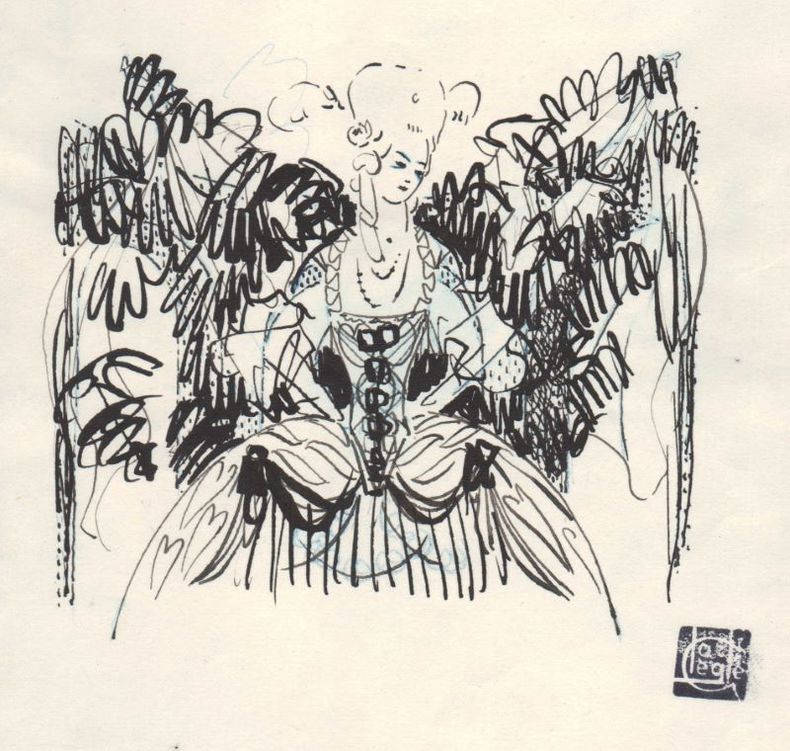
CARLEGLE.
"Les Mains sur les hanches".
1 Encre et crayon bleu, dessin original, cachet de l'artiste en bas à droite, 18.5 x 16.5cm.
書籍販売業者の参照番号
: 11177
|
|
|
CARLEGLE.
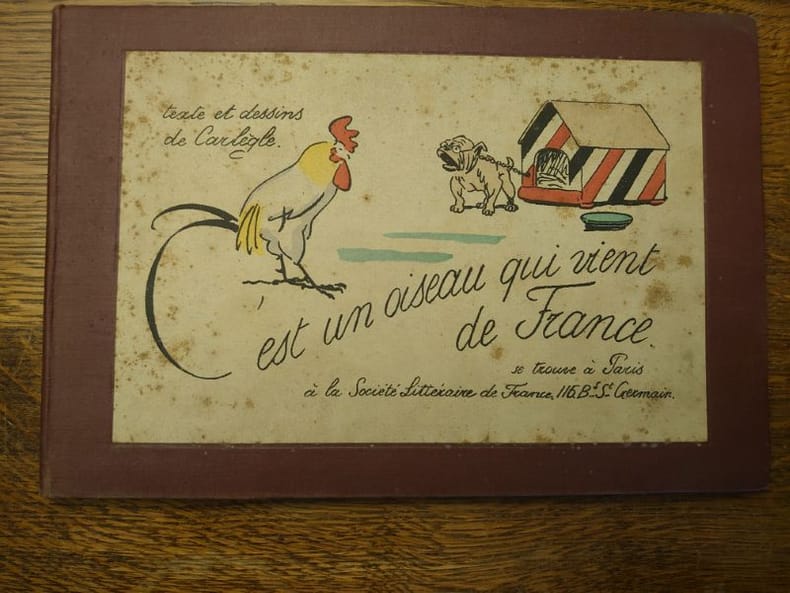
C'est un oiseau qui vient de France.
Paris, Durand, 1916. 28 x 19 cm, (4), 56, (1) pp. Relié cartonnage d'éditeur. Petit in-8 oblong, toile bordeaux éditeur, vignette contrecollée illustrée en couleurs d'un coq qui nargue un dogue allemand attaché à sa niche. Album à colorier accompagné d'une histoire patriotique inventée et dessinée par l'illustrateur Carlègle. Reliure légèrement usée, des rousseurs sur l'étiquette de titre sinon bel exemplaire à l'intérieur très frais.
書籍販売業者の参照番号
: 7247
|
|
|
CARLEGLE.
C'est un oiseau qui vient de France.
Paris, Durand, 1916. 28 x 19 cm, (4), 56, (1) pp. Relié cartonnage d'éditeur. Petit in-8 oblong, toile bordeaux éditeur, vignette contrecollée illustrée en couleurs d'un coq qui nargue un dogue allemand attaché à sa niche. Album à colorier accompagné d'une histoire patriotique inventée et dessinée par l'illustrateur Carlègle. Reliure légèrement usée, des rousseurs sur l'étiquette de titre sinon bel exemplaire à l'intérieur très frais.
書籍販売業者の参照番号
: 7247
|
|
|
CARLEGLE.
C'est un oiseau qui vient de France. Texte et dessins de Carlgle.
Paris Socit Littraire d 1916 In-8 oblong, bradel toile bordeaux, premier plat orn d'un grand dessin reproduit en couleurs sur du papier verg; doublures et gardes de papier gris, tranches lisses (cartonnage de l'diteur).Premier tirage de cet amusant album imprim en noir sur un papier qui supporte les couleurs l'aquarelle: ... Il est recommand aux jeunes amateurs qui voudraient s'amuser colorier ce livre, de n'employer que des teintes franches et vives ainsi qu'on l'a fait pour le dessin de la couverture. Exemplaire en parfait tat, non colori.
書籍販売業者の参照番号
: 34325
|
|
|
CARLEGLE.
La chasse à l'éléphant ou "les Vertus ménagères".
P., Bourrelier-Chimènes, 1931, In-8 oblong, br., 57 pp.
書籍販売業者の参照番号
: 11061

|
|
|
CARLEGLE.
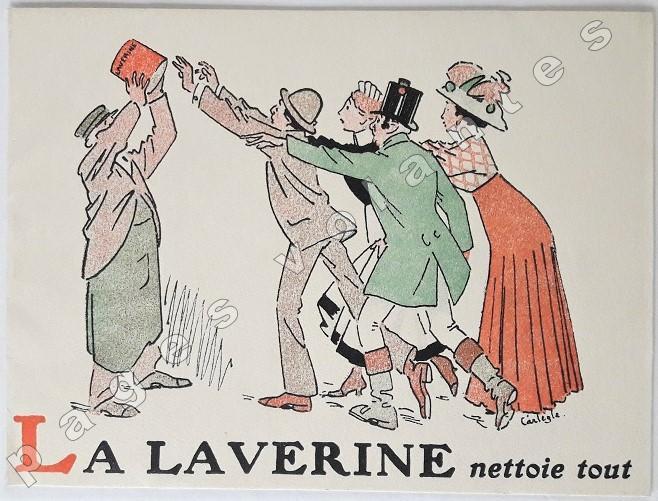
La Laverine nettoie tout.
P., Imprimerie Maréchal, 1925, In-12, agrafé, 8 pp.
書籍販売業者の参照番号
: 12152
|
|
|
CARLEGLE.
La Plus Belle Fille du monde. Croquis de la vie parisienne. Prface de Lo Larguier.
Paris L'Edition 1922 In-8 oblong, broch, couverture imprime.Edition originale, illustre par l'auteur de trs nombreuses compositions reproduites en noir chaque page. Exemplaire sur vlin d'Arches.
書籍販売業者の参照番号
: 21484
|
|
|
CARLEGLE.
La plus belle Fille du Monde. Croquis de la Vie Parisienne. Préface de Léo Larguier.
Paris, L’Edition 1922, 255x335mm, broché. Format oblong. Accrocs sur le haut et le bas du dos. Papier cristal d’origine conservé. Edition originale imprimée sur papier vélin d’Arches. Bel exemplaire.
書籍販売業者の参照番号
: 120979

|
|
|
CARLEGLE. CARLEGLE
C'est un oiseau qui vient de France. Histoire d'un petit coq français chez les boches.
Paris DURAND 1916 1 Paris, Durand, 1916, petit in-8 oblong, toile bordeaux éditeur, vignette contrecollée illustrée en couleurs d'un coq qui nargue un dogue allemand attaché à sa niche, (4), 56, (1) pp.
書籍販売業者の参照番号
: 18365
|
|
|
CARLEGLE. CARLEGLE.
La Chasse à l'éléphant ou "Les Vertus ménagères".
Paris BOURRELIER-CHIMÈNES 1931 1 Paris, Bourrelier-Chimènes, 1931, in-12 à l'italienne, couverture illustrée en couleurs d'un éléphant sur un tabouret, 57 pages. imprimées verso.
書籍販売業者の参照番号
: 11650

|
|
|
CARLEGLE. CARLEGLE.
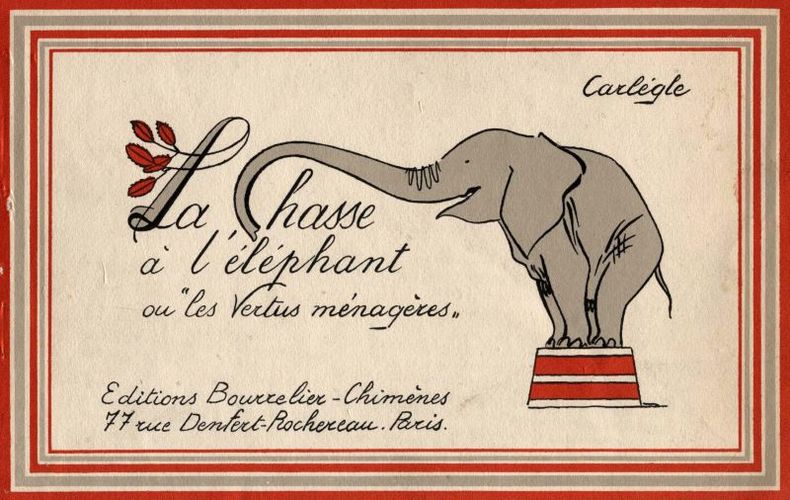
La Chasse à l'éléphant ou "Les Vertus ménagères".
Paris BOURRELIER-CHIMÈNES 1931 1 Paris, Bourrelier-Chimènes, 1931, in-12 à l'italienne, couverture illustrée en couleurs d'un éléphant sur un tabouret, 57 pages. imprimées verso.
書籍販売業者の参照番号
: 23313
|
|
|
CARLEGLE. (EGLY, Charles-Emile, dit).
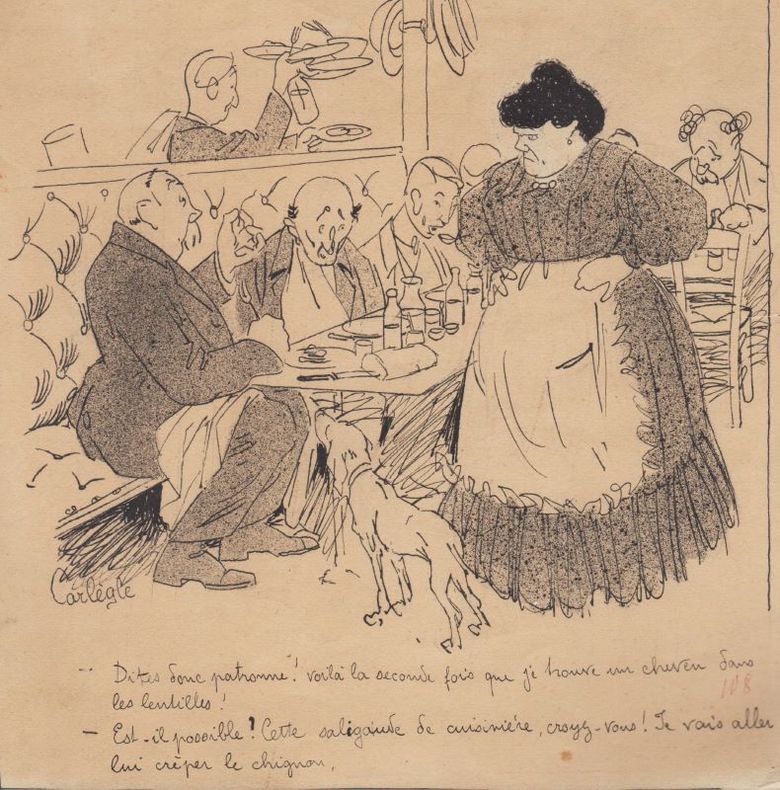
"Crépage de chignon ! "
1851 Dessin à l'encre de Chine, signé en bas à gauche, 1910, 22.5 x 22.5 cm., légende sous le dessin
書籍販売業者の参照番号
: 21218
|
|
|
CARLEGLE. REVUE. MORIN (Louis), FORAIN (Jean-Louis), WILLETTE (Adolphe), DAUMIER (Honoré), CARLEGLE, HEMARD (Joseph), JOBBÉ-DUVAL (Félix)...
Les Humoristes. Bulletin semestriel de la Société des Dessinateurs-Humoristes.
Paris Société des Dessinateurs Humoristes 1924 1 Paris, Société des Dessinateurs Humoristes, 1924 à 1929, 11 Numéros in-12, brochés, sous couverture illustrée.
書籍販売業者の参照番号
: 4927
|
|
|
CARLEGLE.-
C'est un oiseau qui vient de France.-
Texte et dessins de Carlègle. Paris. Société Littéraire de France. 5 novembre 1916. In-8 oblong (278 x 188mm) toile rouge bordeaux de l'éditeur, grande illustration couleur sur papier collée dans une cuvette, 2ff., 56 pages toutes illustrées au trait et en noir. Texte patriotique dans lequel un coq sème la panique chez les allemands. Album destiné au coloriage: Le papier sur lequel cet album est imprimé supporte les couleurs à l'aquarelle. il est recommandé aux jeunes amateurs qui voudraient s'amuser à colorier ce livre, de n'employer que des teintes franches et vives ainsi qu'on l'a fait pour le dessin de la couverture. Couverture un peu défraîchie, très bon état intérieur, exemplaire non colorié.
書籍販売業者の参照番号
: ORD-1827
|
|
|
Carlègle
C'est un oiseau qui vient de France.
Paris, Société littéraire de France, 1916; in-4° à l'italienne, cartonnage de l'éditeur. Édition originale. Joli album à colorier dont le texte et les dessins sont dus à Carlègle.
書籍販売業者の参照番号
: EXE-433
|
|
|
Carlègle
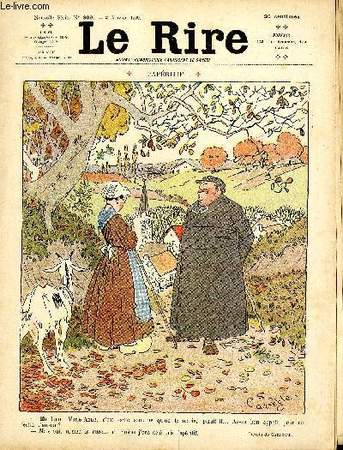
Le rire N°309 de la nouvelle série - L'apéritif.
Tonnelle. 2 Janvier 1909. In-4. Broché. Etat d'usage, Tâchée, Dos satisfaisant, Intérieur acceptable. 12 pages environ, illustré de gravures noir et blanc dans et hors texte Premier et dernier plat de couverture illustré de gravures couleurs par Carlègle et Florès.. . . . Classification Dewey : 70.441-Journaux satiriques anciens
書籍販売業者の参照番号
: ROD0054042
|
|
|
Carlègle
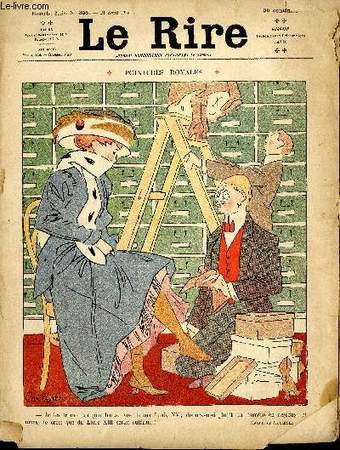
Le rire N°325 de la nouvelle série - Pointures Royales.
Juven. 21 Avril 1909. In-4. Broché. Bon état, Couv. convenable, Dos satisfaisant, Intérieur frais. 12 pages environ, illustré de gravures noir et blanc dans et hors texte. Premier plat et dernier plat de couverture illustré de gravures couleurs par Carlègle et Burret.. . . . Classification Dewey : 70.441-Journaux satiriques anciens
書籍販売業者の参照番号
: ROD0054058
|
|
|
Carlègle - Régnier, Henri de:
Les rencontres de M. de Bréot. Aquarelles de Carlègle.
Paris, André Plicque & Cie. Editeurs. 1928. 4°. 273 p. Avec 3 dessins originaux, 30 illustrations au pochoir, un dessin colorié supplémentaire dans le livre et la suite des illustrations en noir. Broché, couverture rempliée. La suite enveloppée, sous chemise.
書籍販売業者の参照番号
: 51393BB
|
|
|
Carlègle.
La chasse à l’éléphant ou les vertus ménagères.
Paris, Editions Bourrelier-Chimènes 1931, 160x245mm, broché. Couverture illustrée. Exemplaire numéroté sur papier Japon 87 / 300. Très bel exemplaire.
書籍販売業者の参照番号
: 95422

|
|
|
Carlègle. - Cuénoud, Edmond.
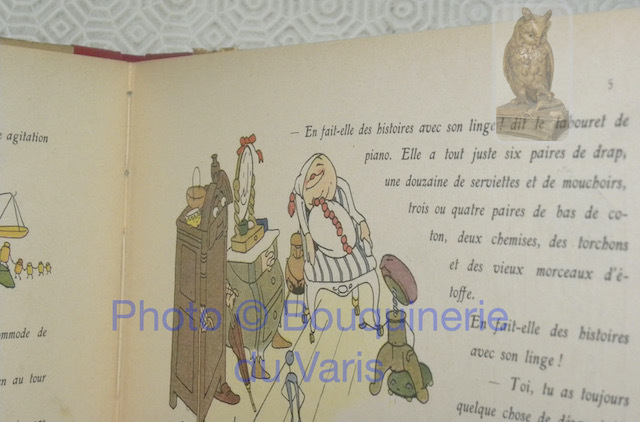
Une histoire qui finit mal. Texte d’Edmond Cuénoud. Dessins de Carlègle. Album Carlègle.
Paris, Office Central de la Librairie Librairie Molière 1905, 193x285mm, 31pages, cartonnage illustré de l’éditeur, dos toilé rouge, plat supérieur taché, usures sur certains bords des plats, intérieur en parfait état, dédicace de l’auteur de l’illustrateur sur la page de garde.
書籍販売業者の参照番号
: 95420
|
|
|
CATTIER Dr.
Des bébés, s'il vous plaît! Essai sur le problème de la dénatalité.
Paris, Plon-Nourrit, 1923. In-8° broché. Dessins au trait dans le texte. Tiré à 112 exemplaires sur vélin à la cuve.
書籍販売業者の参照番号
: EXE00525
|
|
|
Charles MAURRAS
L'allée des philosophes
Couverture souple rempliée. Ornée d'un frontispice gravé sur bois par CARLÈGLE et publiée par la Société littéraire de France. Non coupé et non rogné.
書籍販売業者の参照番号
: 52379
|
|
|
CHARLES MAURRAS
L'ALLEE DES PHILOSOPHES
306 PAGES-IN 8-FRONTISPICE GRAVE SUR BOIS PAR CARLEGLE-EXEMPLAIRE N°494 SUR VELIN-MANQUE EN COIFFE DE TETE-(DG25)
書籍販売業者の参照番号
: ABE-1762549814191

|
|
|
Charles MULLER - Paul REBOUX - Charles Emile CARLEGLE
Rikette aux enfers
Paris: Ernest Flammarion 1914. Fine. Ernest Flammarion Paris 1914 15 x 22 cm broché First edition one of 30 numbered copies on Japan paper deluxe issue. Work illustrated with 90 black and white drawings by Carlègle. As preface a curious ""unpublished text"" by Gustave Flaubert. Very handsome copy as issued retaining its deckled edges. Ernest Flammarion unknown
書籍販売業者の参照番号
: 60831

|
|
|
Charles MÜLLER - Paul REBOUX - Charles Émile CARLÈGLE
Rikette aux enfers
Ernest Flammarion | Paris 1914 | 15 x 22 cm | broché
書籍販売業者の参照番号
: 60831
|
|
|
Charles Émile CARLÈGLE
Le Bon oncle. Costumes d'enfants. (La Gazette du Bon ton, n°1 - Année 1914, Planche II )
Lucien Vogel éditeur | Paris 1914 | 19.50 x 25 cm | une feuille
書籍販売業者の参照番号
: 43225
|
|
|
Charles-Emile CARLEGLE
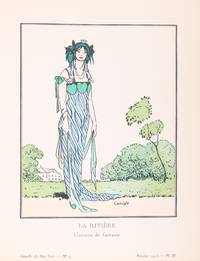
La Rivière. Costume de fantaisie pl.3 La Gazette du Bon ton 1912-1913 n°4
Paris: Lucien Vogel éditeur 1913. Fine. Lucien Vogel éditeur Paris Février 1913 19 x 24.50 cm une feuille Original colour print printed on laid paper and signed in the plate lower right. Original engraving produced for the illustration of La Gazette du Bon Ton one of the most beautiful and influential fashion journals of the 20th century celebrating the talent of French designers and artists at the height of the Art Deco era. A celebrated fashion magazine established in 1912 by Lucien Vogel La Gazette du bon ton appeared until 1925 with a hiatus from 1915 to 1920 due to the war the editor-in-chief having been called up for service. It consisted of 69 issues printed in only 2000 copies each and notably illustrated with 573 color plates and 148 sketches of the models of the great designers. Right from the start this sumptuous publication “was aimed at bibliophiles and fashionable society” Françoise Tétart-Vittu “La Gazette du bon ton” in Dictionnaire de la mode 2016 and was printed on fine vergé paper using a type cut specially for the magazine by Georges Peignot known as Cochin later used in 1946 by Christian Dior. The prints were made using stencils heightened in colors some highlighted in gold or palladium. The story began in 1912 when Lucien Vogel a man of the world involved in fashion he had already been part of the fashion magazine Femina decided with his wife Cosette de Brunhoff – the sister of Jean creator of Babar – to set up the Gazette du bon ton subtitled at the time: “Art fashion frivolities.”  Georges Charensol noted the reasoning of the editor-in-chief: “’In 1910Â’ he observed ‘there was no really artistic fashion magazine nothing representative of the spirit of the time. My dream was therefore to make a luxury magazine with truly modern artistsÂ…I was assured of success because when it comes to fashion no country on earth can compete with France.’” “Un grand éditeur dÂ’art. Lucien Vogel” in Les Nouvelles littéraires no. 133 May 1925. The magazine was immediately successful not only in France but also in the United States and Latin America. At first Vogel put together a team of seven artists: André-Édouard Marty and Pierre Brissaud followed by Georges Lepape and Dammicourt as well as eventually his friends from school and the School of Fine Arts like George Barbier Bernard Boutet de Monvel and Charles Martin. Other talented people soon came flocking to join the team: Guy Arnoux Léon Bakst Benito Boutet de Monvel Umberto Brunelleschi Chas Laborde Jean-Gabriel Domergue Raoul Dufy Édouard Halouze Alexandre Iacovleff Jean Émile Laboureur Charles Loupot Chalres Martin Maggie Salcedo. These artist mostly unknown when Lucien Vogel sought them out later became emblematic and sought-after artistic figures. It was also they who worked on the advertising drawings for the Gazette. The plates put the spotlight on and celebrate dresses by seven designers of the age: Lanvin Doeuillet Paquin Poiret Worth Vionnet and Doucet. The designers provided exclusive models for each issue. Nonetheless some of the illustrations are not based on real models but simply on the illustratorÂ’s conception of the fashion of the day.   The Gazette du bon ton was an important step in the history of fashion. Combining aesthetic demands with the physical whole it brought together – for the first time – the great talents of the artistic literary and fashion worlds; and imposed through this alchemy a completely new image of women: slender independent and daring which was shared by the new generation of designers including Coco Chanel Jean Patou Marcel Rochas and so onÂ… Taken over in 1920 by Condé Montrose Nast the Gazette du bon ton was an important influence on the new layout and aesthetics of that “little dying paper” that Nast had bought a few years earlier: Vogue. Lucien Vogel éditeur unknown
書籍販売業者の参照番号
: 89412
|
|
|
Charles-Emile CARLEGLE
La Rivière. Costume de fantaisie pl.3 La Gazette du Bon ton 1912-1913 n°4
Paris: Lucien Vogel éditeur 1913. Fine. Lucien Vogel éditeur Paris Février 1913 19 x 24.50 cm une feuille Original color print printed on vergé paper signed in the plate. An original print used to illustrate the Gazette du bon ton one of the most attractive and influential 20th century fashion magazines featuring the talents of French artists and other contributors from the burgeoning Art Deco movement. A celebrated fashion magazine established in 1912 by Lucien Vogel La Gazette du bon ton appeared until 1925 with a hiatus from 1915 to 1920 due to the war the editor-in-chief having been called up for service. It consisted of 69 issues printed in only 2000 copies each and notably illustrated with 573 color plates and 148 sketches of the models of the great designers. Right from the start this sumptuous publication was aimed at bibliophiles and fashionable society Françoise Tétart-Vittu La Gazette du bon ton in Dictionnaire de la mode 2016 and was printed on fine vergé paper using a type cut specially for the magazine by Georges Peignot known as Cochin later used in 1946 by Christian Dior. The prints were made using stencils heightened in colors some highlighted in gold or palladium. The story began in 1912 when Lucien Vogel a man of the world involved in fashion he had already been part of the fashion magazine Femina decided with his wife Cosette de Brunhoff the sister of Jean creator of Babar to set up the Gazette du bon ton subtitled at the time: Art fashion frivolities. Georges Charensol noted the reasoning of the editor-in-chief: In 1910 he observed there was no really artistic fashion magazine nothing representative of the spirit of the time. My dream was therefore to make a luxury magazine with truly modern artists
I was assured of success because when it comes to fashion no country on earth can compete with France. Un grand éditeur dart. Lucien Vogel in Les Nouvelles littéraires no. 133 May 1925. The magazine was immediately successful not only in France but also in the United States and Latin America. At first Vogel put together a team of seven artists: André-Édouard Marty and Pierre Brissaud followed by Georges Lepape and Dammicourt as well as eventually his friends from school and the School of Fine Arts like George Barbier Bernard Boutet de Monvel and Charles Martin. Other talented people soon came flocking to join the team: Guy Arnoux Léon Bakst Benito Boutet de Monvel Umberto Brunelleschi Chas Laborde Jean-Gabriel Domergue Raoul Dufy Édouard Halouze Alexandre Iacovleff Jean Émile Laboureur Charles Loupot Chalres Martin Maggie Salcedo. These artist mostly unknown when Lucien Vogel sought them out later became emblematic and sought-after artistic figures. It was also they who worked on the advertising drawings for the Gazette. The plates put the spotlight on and celebrate dresses by seven designers of the age: Lanvin Doeuillet Paquin Poiret Worth Vionnet and Doucet. The designers provided exclusive models for each issue. Nonetheless some of the illustrations are not based on real models but simply on the illustrators conception of the fashion of the day. The Gazette du bon ton was an important step in the history of fashion. Combining aesthetic demands with the physical whole it brought together for the first time the great talents of the artistic literary and fashion worlds; and imposed through this alchemy a completely new image of women: slender independent and daring which was shared by the new generation of designers including Coco Chanel Jean Patou Marcel Rochas and so on
Taken over in 1920 by Condé Montrose Nast the Gazette du bon ton was an important influence on the new layout and aesthetics of that little dying paper that Nast had bought a few years earlier: Vogue. Lucien Vogel éditeur unknown
書籍販売業者の参照番号
: 54503
|
|
|
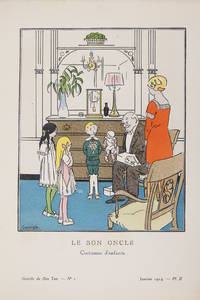
Charles-Emile CARLEGLE
Le Bon Oncle. Costumes d'enfants pl.2 La Gazette du Bon ton 1914 n°1
Paris: Lucien Vogel éditeur 1914. Fine. Lucien Vogel éditeur Paris Janvier 1914 19 x 24.50 cm une feuille Original color print printed on laid paper signed at the bottom left of the plate. Original engraving created for the illustration of La Gazette du bon ton one of the most beautiful and influential fashion magazines of the 20th century celebrating the talent of French creators and artists in the full flowering of Art Deco. This famous fashion magazine founded in 1912 by Lucien Vogel was published until 1925 with an interruption during the War from 1915 to 1920 due to the mobilization of its editor-in-chief. It consists of 69 issues printed in only 2000 copies and is illustrated notably with 573 color plates and 148 sketches representing models by great couturiers. From their publication these luxurious publications ""address bibliophiles and worldly aesthetes"" Françoise Tétart-Vittu ""La Gazette du bon ton"" in Dictionnaire de la mode 2016. Printed on beautiful laid paper they use a typeface specially created for the magazine by Georges Peignot the Cochin character adopted in 1946 by Christian Dior. The prints are made using the metal stencil technique heightened in colors and some highlighted in gold or palladium. The adventure began in 1912 when Lucien Vogel a man of society and fashion - he had already participated in the magazine Femina - decided to found with his wife Cosette de Brunhoff sister of Jean the father of Babar the Gazette du bon ton whose subtitle was then ""Art modes et frivolités"". Georges Charensol reports the words of the editor-in-chief: ""In 1910 he observes there existed no fashion journal truly artistic and representative of the spirit of its time. I was therefore thinking of making a luxury magazine with truly modern artists . I was certain of success because for fashion no country can rival France."" ""Un grand éditeur d'art. Lucien Vogel"" in Les Nouvelles littéraires n°133 May 1925. The success of the magazine was immediate not only in France but also in the United States and South America. Originally Vogel therefore brought together a group of seven artists: André-Édouard Marty and Pierre Brissaud followed by Georges Lepape and Dammicourt; and finally his friends from the École des beaux-arts who were George Barbier Bernard Boutet de Monvel or Charles Martin. Other talents quickly came to join the team: Guy Arnoux Léon Bakst Benito Boutet de Monvel Umberto Brunelleschi Chas Laborde Jean-Gabriel Domergue Raoul Dufy Édouard Halouze Alexandre Iacovleff Jean Émile Laboureur Charles Loupot Charles Martin Maggie Salcedo. These artists mostly unknown when Lucien Vogel called upon them would subsequently become emblematic and sought-after artistic figures. These same illustrators created the drawings for the Gazette's advertisements. The plates highlight and sublimate the dresses of seven creators of the time: Lanvin Doeuillet Paquin Poiret Worth Vionnet and Doucet. The couturiers provided exclusive models for each issue. Nevertheless some of the illustrations featured no real model but only the illustrator's idea of the fashion of the day. La Gazette du bon ton is a decisive stage in the history of fashion. Combining aesthetic demands and plastic unity it brought together for the first time the great talents of the world of arts letters and fashion and imposed through this alchemy a completely new image of woman slender independent and audacious also carried by the new generation of couturiers Coco Chanel Jean Patou Marcel Rochas. Taken over in 1920 by Condé Montrose Nast the Gazette du bon ton would largely inspire the new composition and aesthetic choices of the ""dying little journal"" that Nast had bought a few years earlier: Vogue magazine. Lucien Vogel éditeur unknown
書籍販売業者の参照番号
: 84681
|
|
|
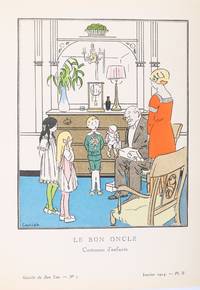
Charles-Emile CARLEGLE
Le Bon Oncle. Costumes d'enfants pl.2 La Gazette du Bon ton 1914 n°1
Paris 1914. Fine. Paris Janvier 1914 19 x 24.50 cm une feuille Original colour print printed on laid paper and signed in the plate lower left. Original engraving produced for the illustration of La Gazette du Bon Ton one of the most beautiful and influential fashion journals of the 20th century celebrating the talent of French designers and artists at the height of the Art Deco era. A celebrated fashion magazine established in 1912 by Lucien Vogel La Gazette du bon ton appeared until 1925 with a hiatus from 1915 to 1920 due to the war the editor-in-chief having been called up for service. It consisted of 69 issues printed in only 2000 copies each and notably illustrated with 573 color plates and 148 sketches of the models of the great designers. Right from the start this sumptuous publication “was aimed at bibliophiles and fashionable society” Françoise Tétart-Vittu “La Gazette du bon ton” in Dictionnaire de la mode 2016 and was printed on fine vergé paper using a type cut specially for the magazine by Georges Peignot known as Cochin later used in 1946 by Christian Dior. The prints were made using stencils heightened in colors some highlighted in gold or palladium. The story began in 1912 when Lucien Vogel a man of the world involved in fashion he had already been part of the fashion magazine Femina decided with his wife Cosette de Brunhoff – the sister of Jean creator of Babar – to set up the Gazette du bon ton subtitled at the time: “Art fashion frivolities.”  Georges Charensol noted the reasoning of the editor-in-chief: “’In 1910’ he observed ‘there was no really artistic fashion magazine nothing representative of the spirit of the time. My dream was therefore to make a luxury magazine with truly modern artists…I was assured of success because when it comes to fashion no country on earth can compete with France.’” “Un grand éditeur d’art. Lucien Vogel” in Les Nouvelles littéraires no. 133 May 1925. The magazine was immediately successful not only in France but also in the United States and Latin America. At first Vogel put together a team of seven artists: André-Édouard Marty and Pierre Brissaud followed by Georges Lepape and Dammicourt as well as eventually his friends from school and the School of Fine Arts like George Barbier Bernard Boutet de Monvel and Charles Martin. Other talented people soon came flocking to join the team: Guy Arnoux Léon Bakst Benito Boutet de Monvel Umberto Brunelleschi Chas Laborde Jean-Gabriel Domergue Raoul Dufy Édouard Halouze Alexandre Iacovleff Jean Émile Laboureur Charles Loupot Chalres Martin Maggie Salcedo. These artist mostly unknown when Lucien Vogel sought them out later became emblematic and sought-after artistic figures. It was also they who worked on the advertising drawings for the Gazette. The plates put the spotlight on and celebrate dresses by seven designers of the age: Lanvin Doeuillet Paquin Poiret Worth Vionnet and Doucet. The designers provided exclusive models for each issue. Nonetheless some of the illustrations are not based on real models but simply on the illustrator’s conception of the fashion of the day.   The Gazette du bon ton was an important step in the history of fashion. Combining aesthetic demands with the physical whole it brought together – for the first time – the great talents of the artistic literary and fashion worlds; and imposed through this alchemy a completely new image of women: slender independent and daring which was shared by the new generation of designers including Coco Chanel Jean Patou Marcel Rochas and so on… Taken over in 1920 by Condé Montrose Nast the Gazette du bon ton was an important influence on the new layout and aesthetics of that “little dying paper” that Nast had bought a few years earlier: Vogue. unknown
書籍販売業者の参照番号
: 89465
|
|
|
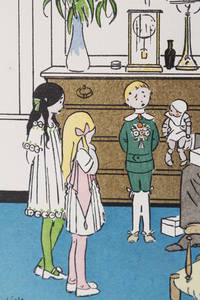
Charles-Emile CARLEGLE
Le Bon Oncle. Costumes d'enfants pl.2 La Gazette du Bon ton 1914 n°1
Paris: Lucien Vogel éditeur 1914. Fine. Lucien Vogel éditeur Paris Janvier 1914 19 x 24.50 cm une feuille Original color print printed on vergé paper signed in the plate. An original print used to illustrate the Gazette du bon ton one of the most attractive and influential 20th century fashion magazines featuring the talents of French artists and other contributors from the burgeoning Art Deco movement. A celebrated fashion magazine established in 1912 by Lucien Vogel La Gazette du bon ton appeared until 1925 with a hiatus from 1915 to 1920 due to the war the editor-in-chief having been called up for service. It consisted of 69 issues printed in only 2000 copies each and notably illustrated with 573 color plates and 148 sketches of the models of the great designers. Right from the start this sumptuous publication was aimed at bibliophiles and fashionable society Françoise Tétart-Vittu La Gazette du bon ton in Dictionnaire de la mode 2016 and was printed on fine vergé paper using a type cut specially for the magazine by Georges Peignot known as Cochin later used in 1946 by Christian Dior. The prints were made using stencils heightened in colors some highlighted in gold or palladium. The story began in 1912 when Lucien Vogel a man of the world involved in fashion he had already been part of the fashion magazine Femina decided with his wife Cosette de Brunhoff the sister of Jean creator of Babar to set up the Gazette du bon ton subtitled at the time: Art fashion frivolities. Georges Charensol noted the reasoning of the editor-in-chief: 'In 1910' he observed there was no really artistic fashion magazine nothing representative of the spirit of the time. My dream was therefore to make a luxury magazine with truly modern artists
I was assured of success because when it comes to fashion no country on earth can compete with France.' Un grand éditeur d'art. Lucien Vogel in Les Nouvelles littéraires no. 133 May 1925. The magazine was immediately successful not only in France but also in the United States and Latin America. At first Vogel put together a team of seven artists: André-Édouard Marty and Pierre Brissaud followed by Georges Lepape and Dammicourt as well as eventually his friends from school and the School of Fine Arts like George Barbier Bernard Boutet de Monvel and Charles Martin. Other talented people soon came flocking to join the team: Guy Arnoux Léon Bakst Benito Boutet de Monvel Umberto Brunelleschi Chas Laborde Jean-Gabriel Domergue Raoul Dufy Édouard Halouze Alexandre Iacovleff Jean Émile Laboureur Charles Loupot Chalres Martin Maggie Salcedo. These artist mostly unknown when Lucien Vogel sought them out later became emblematic and sought-after artistic figures. It was also they who worked on the advertising drawings for the Gazette. The plates put the spotlight on and celebrate dresses by seven designers of the age: Lanvin Doeuillet Paquin Poiret Worth Vionnet and Doucet. The designers provided exclusive models for each issue. Nonetheless some of the illustrations are not based on real models but simply on the illustrator's conception of the fashion of the day. The Gazette du bon ton was an important step in the history of fashion. Combining aesthetic demands with the physical whole it brought together for the first time the great talents of the artistic literary and fashion worlds; and imposed through this alchemy a completely new image of women: slender independent and daring which was shared by the new generation of designers including Coco Chanel Jean Patou Marcel Rochas and so on
Taken over in 1920 by Condé Montrose Nast the Gazette du bon ton was an important influence on the new layout and aesthetics of that little dying paper that Nast had bought a few years earlier: Vogue. Lucien Vogel éditeur unknown
書籍販売業者の参照番号
: 54616
|
|
|
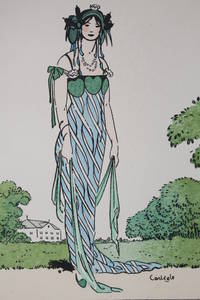
Charles-Emile CARLEGLE - (John REDFERN)
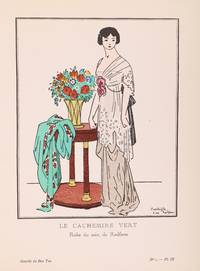
Le Cachemire vert - Robe du soir de Redfern pl.9 La Gazette du Bon ton 1912-1913 n°1
Paris 1912. Fine. Paris 1912-1913 19 x 24.50 cm une feuille Original colour print printed on laid paper and signed in the plate lower right. Original engraving produced for the illustration of La Gazette du Bon Ton one of the most beautiful and influential fashion journals of the 20th century celebrating the talent of French designers and artists at the height of the Art Deco era. A celebrated fashion magazine established in 1912 by Lucien Vogel La Gazette du bon ton appeared until 1925 with a hiatus from 1915 to 1920 due to the war the editor-in-chief having been called up for service. It consisted of 69 issues printed in only 2000 copies each and notably illustrated with 573 color plates and 148 sketches of the models of the great designers. Right from the start this sumptuous publication “was aimed at bibliophiles and fashionable society” Françoise Tétart-Vittu “La Gazette du bon ton” in Dictionnaire de la mode 2016 and was printed on fine vergé paper using a type cut specially for the magazine by Georges Peignot known as Cochin later used in 1946 by Christian Dior. The prints were made using stencils heightened in colors some highlighted in gold or palladium. The story began in 1912 when Lucien Vogel a man of the world involved in fashion he had already been part of the fashion magazine Femina decided with his wife Cosette de Brunhoff – the sister of Jean creator of Babar – to set up the Gazette du bon ton subtitled at the time: “Art fashion frivolities.”  Georges Charensol noted the reasoning of the editor-in-chief: “’In 1910’ he observed ‘there was no really artistic fashion magazine nothing representative of the spirit of the time. My dream was therefore to make a luxury magazine with truly modern artists…I was assured of success because when it comes to fashion no country on earth can compete with France.’” “Un grand éditeur d’art. Lucien Vogel” in Les Nouvelles littéraires no. 133 May 1925. The magazine was immediately successful not only in France but also in the United States and Latin America. At first Vogel put together a team of seven artists: André-Édouard Marty and Pierre Brissaud followed by Georges Lepape and Dammicourt as well as eventually his friends from school and the School of Fine Arts like George Barbier Bernard Boutet de Monvel and Charles Martin. Other talented people soon came flocking to join the team: Guy Arnoux Léon Bakst Benito Boutet de Monvel Umberto Brunelleschi Chas Laborde Jean-Gabriel Domergue Raoul Dufy Édouard Halouze Alexandre Iacovleff Jean Émile Laboureur Charles Loupot Chalres Martin Maggie Salcedo. These artist mostly unknown when Lucien Vogel sought them out later became emblematic and sought-after artistic figures. It was also they who worked on the advertising drawings for the Gazette. The plates put the spotlight on and celebrate dresses by seven designers of the age: Lanvin Doeuillet Paquin Poiret Worth Vionnet and Doucet. The designers provided exclusive models for each issue. Nonetheless some of the illustrations are not based on real models but simply on the illustrator’s conception of the fashion of the day.   The Gazette du bon ton was an important step in the history of fashion. Combining aesthetic demands with the physical whole it brought together – for the first time – the great talents of the artistic literary and fashion worlds; and imposed through this alchemy a completely new image of women: slender independent and daring which was shared by the new generation of designers including Coco Chanel Jean Patou Marcel Rochas and so on… Taken over in 1920 by Condé Montrose Nast the Gazette du bon ton was an important influence on the new layout and aesthetics of that “little dying paper” that Nast had bought a few years earlier: Vogue. unknown
書籍販売業者の参照番号
: 89478
|
|
|
Charles-Emile CARLEGLE - (John REDFERN)
Le Cachemire vert - Robe du soir de Redfern pl.9 La Gazette du Bon ton 1912-1913 n°1
Paris: Lucien Vogel éditeur 1912. Fine. Lucien Vogel éditeur Paris 1912-1913 19 x 24.50 cm une feuille Original color print printed on vergé paper signed in the plate. An original print used to illustrate the Gazette du bon ton one of the most attractive and influential 20th century fashion magazines featuring the talents of French artists and other contributors from the burgeoning Art Deco movement. A celebrated fashion magazine established in 1912 by Lucien Vogel La Gazette du bon ton appeared until 1925 with a hiatus from 1915 to 1920 due to the war the editor-in-chief having been called up for service. It consisted of 69 issues printed in only 2000 copies each and notably illustrated with 573 color plates and 148 sketches of the models of the great designers. Right from the start this sumptuous publication was aimed at bibliophiles and fashionable society Françoise Tétart-Vittu La Gazette du bon ton in Dictionnaire de la mode 2016 and was printed on fine vergé paper using a type cut specially for the magazine by Georges Peignot known as Cochin later used in 1946 by Christian Dior. The prints were made using stencils heightened in colors some highlighted in gold or palladium. The story began in 1912 when Lucien Vogel a man of the world involved in fashion he had already been part of the fashion magazine Femina decided with his wife Cosette de Brunhoff the sister of Jean creator of Babar to set up the Gazette du bon ton subtitled at the time: Art fashion frivolities. Georges Charensol noted the reasoning of the editor-in-chief: 'In 1910' he observed there was no really artistic fashion magazine nothing representative of the spirit of the time. My dream was therefore to make a luxury magazine with truly modern artists
I was assured of success because when it comes to fashion no country on earth can compete with France.' Un grand éditeur d'art. Lucien Vogel in Les Nouvelles littéraires no. 133 May 1925. The magazine was immediately successful not only in France but also in the United States and Latin America. At first Vogel put together a team of seven artists: André-Édouard Marty and Pierre Brissaud followed by Georges Lepape and Dammicourt as well as eventually his friends from school and the School of Fine Arts like George Barbier Bernard Boutet de Monvel and Charles Martin. Other talented people soon came flocking to join the team: Guy Arnoux Léon Bakst Benito Boutet de Monvel Umberto Brunelleschi Chas Laborde Jean-Gabriel Domergue Raoul Dufy Édouard Halouze Alexandre Iacovleff Jean Émile Laboureur Charles Loupot Chalres Martin Maggie Salcedo. These artist mostly unknown when Lucien Vogel sought them out later became emblematic and sought-after artistic figures. It was also they who worked on the advertising drawings for the Gazette. The plates put the spotlight on and celebrate dresses by seven designers of the age: Lanvin Doeuillet Paquin Poiret Worth Vionnet and Doucet. The designers provided exclusive models for each issue. Nonetheless some of the illustrations are not based on real models but simply on the illustrator's conception of the fashion of the day. The Gazette du bon ton was an important step in the history of fashion. Combining aesthetic demands with the physical whole it brought together for the first time the great talents of the artistic literary and fashion worlds; and imposed through this alchemy a completely new image of women: slender independent and daring which was shared by the new generation of designers including Coco Chanel Jean Patou Marcel Rochas and so on
Taken over in 1920 by Condé Montrose Nast the Gazette du bon ton was an important influence on the new layout and aesthetics of that little dying paper that Nast had bought a few years earlier: Vogue. Lucien Vogel éditeur unknown
書籍販売業者の参照番号
: 54480

|
|
|
Charles-Emile CARLEGLE - Georges COURTELINE
Le train de 8h47
Paris: Société littéraire de France 1925. Fine. Société littéraire de France Paris 1925 14.50 x 22.50 cm broché Edition illustrated with original woodcuts by Carlègle one of 49 numbered copies on Japan paper deluxe copies after 1 Japan à la forme. Our copy like the 50 Japan copies is complete with its duplicate suite on China paper of the woodcuts. A small tear reglued at head of spine. Société littéraire de France unknown
書籍販売業者の参照番号
: 65210

|
|
|
Charles-Emile EGLI, dit. CARLEGLE .
C'est un oiseau qui vient de France
Cartonnage d'éditeur rouge-bordeaux illustré en couleurs. Petites salissures sur les plats. Rousseurs sur l'illustration du premier plat. Ex-libris sous forme d'étiquette et étiquette d'éditeur sur le contre-plat. Papier bruni. Bel état du contenu orné des planches illustrées en noir et blanc par CARLEGLE.
書籍販売業者の参照番号
: 62764
|
|
|
Charles-Emile CARLEGLE
La Rivière. Costume de fantaisie (pl.3, La Gazette du Bon ton, 1912-1913 n°4)
Lucien Vogel éditeur | Paris Février 1913 | 19 x 24.50 cm | une feuille
書籍販売業者の参照番号
: 54503
|
|
|
Charles-Emile CARLEGLE
La Rivière. Costume de fantaisie (pl.3, La Gazette du Bon ton, 1912-1913 n°4)
Lucien Vogel éditeur | Paris Février 1913 | 19 x 24.50 cm | une feuille
書籍販売業者の参照番号
: 89412
|
|
|
Charles-Emile CARLEGLE
Le Bon Oncle. Costumes d'enfants (pl.2, La Gazette du Bon ton, 1914 n°1)
Lucien Vogel éditeur | Paris Janvier 1914 | 19 x 24.50 cm | une feuille
書籍販売業者の参照番号
: 54616
|
|
|
Charles-Emile CARLEGLE
Le Bon Oncle. Costumes d'enfants (pl.2, La Gazette du Bon ton, 1914 n°1)
Lucien Vogel éditeur | Paris Janvier 1914 | 19 x 24.50 cm | une feuille
書籍販売業者の参照番号
: 84681
|
|
|
Charles-Emile CARLEGLE
Le Bon Oncle. Costumes d'enfants (pl.2, La Gazette du Bon ton, 1914 n°1)
Paris Janvier 1914 | 19 x 24.50 cm | une feuille
書籍販売業者の参照番号
: 89465
|
|
|
Charles-Emile CARLEGLE
Le Cachemire vert - Robe du soir de Redfern (pl.9, La Gazette du Bon ton, 1912-1913 n°1)
Lucien Vogel éditeur | Paris 1912-1913 | 19 x 24.50 cm | une feuille
書籍販売業者の参照番号
: 54480
|
|
|
Charles-Emile CARLEGLE - Georges COURTELINE
Le train de 8h47
Société littéraire de France | Paris 1925 | 14.50 x 22.50 cm | broché
書籍販売業者の参照番号
: 65210
|
|

 検索結果のメールを受信する
 PDFファイルの検索結果をダウンロード
 RSSフィード
 パーマネントリンク
