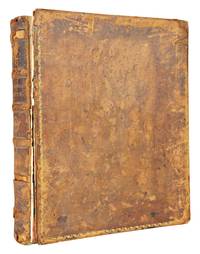
Philadelphia: Samuel F. Bradford and Murray Fairman and Co Circa 1810. First American Edition. Hardcover. Good. Full brown leather binding. AI summary "Plates Vol. VI Ancient and Modern Atlas of Abraham Rees’s The Cyclopaedia 1819–1820 is a dedicated collection of copper-engraved maps focusing on geographic knowledge from the early 19th century. Featuring maps produced under cartographer Aaron Arrowsmith this volume provides a comprehensive visual record of both classical and contemporary world geography. The selection encompasses both ancient and modern geography with the modern maps drawn under the direction of Aaron Arrowsmith England’s leading cartographer of the period.Highlights include two world maps as well as detailed coverage of British Possessions in North America North America the United States and the West Indies."<br><br>CONDITION: Covers endpapers and front flyleaf are fully detached but present. Covers and spine have heavy rubbing and edge wear. Pages have light to mild foxing maps remain fully legible. Text block is square and sound. Full refund if not satisfied. Samuel F. Bradford and Murray, Fairman and Co hardcover
Philadelphia: Samuel F. Bradford 1820. Price HAS BEEN REDUCED by 10% until Monday June 29 SALE item 22 double-page plates actually 21 with Tab. 15 & 16 together on the same sheet plus 38 double-page maps of the modern world and the large folding map of the United States of America for a total of 61 actually 60 plates; contemporary full leather covers worn and dry moderate to heavy foxing to the plates. - If you are reading this this item is actually physically in our stock and ready for shipment once ordered. We are not bookjackers. Buyer is responsible for any additional duties taxes or fees required by recipient's country. Photos available upon request. Philadelphia: Samuel F. Bradford hardcover
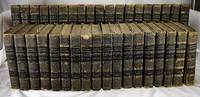
London : Longman Hurst Rees Orme & Brown 1819. Hardcover. Good. Rees' Cyclopedia 37 volume set. Missing volumes 7 and 8. Bound in contemporary navy Russia Leather-backed marbled boards. Good bindings with minor shelf wear/rubbing. All edges marbled. Lacks the plate volumes. Armorial bookplate of John Proctor Anderdon. Anderdon 1760-1846 was a London merchant and noted collector. <br> Abraham Rees 1743-1825 was a British clergyman best known for this his outstanding encyclopedic work The Cyclopaedia. Initially published 1802-1820. Rees' work not only featured theological and humanistic issues but also extensive articles on mathematics and natural sciences. The Cyclopaedia "is the richest work for technology of the period with detailed text and handsome carefully prepared plates." Ferguson Eugene. "Contributions to Bibliography in the History of Technology part II". Technology and Culture 3.2 1962: 169 p. "Rees was convinced that the important progress made during the last decades of the eighteenth century especially in the fields of history geography geology natural history and the physical sciences senu lato required a new type of encyclopedia with the accent on these fields as well as the still relatively undeveloped domains of biography and the history of sciences. The Cyclopaedia thus became one of the first works of its kind to be compiled with the help of 'persons eminently distinguished in these branches of science to which they had devoted their talents.'" Taxon Vol. 35 No. 2 1986 This is an oversized or heavy book that requires additional postage for international delivery outside the US. Encyclopedia London : Longman, Hurst, Rees, Orme & Brown hardcover
Philadelphia : Samuel F. Bradford Murray Fairman and Co. Peter A. Mesier New-York; Blake et Cunningham Boston; Cushing et Appleton Hezekiah Howe Charles Whipple John W. Adams Stephen Patten Fielding Lucas Baltimore; Daniel Rapine Washington; Joseph Milligan Georgetown; John A. Stewart Alexandria; D. Henderson Fredericksburg; Wm. H. Fitzwhylsonn Richmond; Richard Cottom John Hoff William Williams Savannah; Hobby et Bunce Cramer Spear Eichbaum James Palmer 1805. First Edition. Hardcover. Acceptable. 0x0x0. 47 volumes. Includes the 6 plate and atlas volumes. 1st American edition published 1806-1822. A massive set. 4to 28 cm high. Over 1000 engraved plates some folding or double-page Atlas is collated; all 61 double-page maps present 28 x 43 cm. 4 of the maps are browned. Internally generally clean bright and unmarked. Scattered spotting. Printed in two columns. An unsophisticated set. Bound in contemporary 1/4 black leather over marbled boards. A majority of the boards are detached and the leather spines are chipped with loss. All volumes come in modern archival folding boxes. Early signature of G. K. Richardson 1840 on fep of one volume. Previously owned by the National Trust for Historic Preservation. <br><br> Abraham Rees 1743-1825 was a British clergyman best known for this his outstanding encyclopedic work The Cyclopaedia. Initially published 1802-1820 in parts in Great Britain. Rees' work not only featured theological and humanistic issues but also extensive articles on mathematics and natural sciences. The Cyclopaedia "is the richest work for technology of the period with detailed text and handsome carefully prepared plates." Ferguson Eugene. "Contributions to Bibliography in the History of Technology part II". Technology and Culture 3.2 1962: 169 p. "Rees was convinced that the important progress made during the last decades of the eighteenth century especially in the fields of history geography geology natural history and the physical sciences senu lato required a new type of encyclopedia with the accent on these fields as well as the still relatively undeveloped domains of biography and the history of sciences. The Cyclopaedia thus became one of the first works of its kind to be compiled with the help of 'persons eminently distinguished in these branches of science to which they had devoted their talents.'" Taxon Vol. 35 No. 2 1986 452-453. Some of the notable contributors to this work were Charles Bruney on music; Charles Koenig Robert Bakewell and John Farey on geology; John Dalton and Humphry Davy on chemistry; David Mushet on metallurgy; William Pearson on astronomy; James Edward Smith William Wood William Fitt Drake and William Woodville on botany. "Rees Cyclopaedia is one of the first works to interpret correctly William Smith's ideas on strata identification on the basis of fossil organisms." Ibid. The Cyclopaedia included other notable recent scientific breakthroughs such as Robert Fulton's Cast Iron Aqueduct described in his 1796 book which would become his notable steam engine. See also Ferguson E. "Cast-iron Aqueduct in Rees's "cyclopaedia". Technology and Culture 9.4 1968: 597-600. Refs: BMC. vol 21 p. 2871. Sabin 68634. Rink E. Technical Americana 121. Shaw et Shoemaker 19907. Shaw et Shoemaker 9234. <br> International buyers please note that this is an extremely large heavy set. Shipping will be very expensive outside of the United States. Philadelphia : Samuel F. Bradford, Murray, Fairman and Co. Peter A. Mesier, New-York; Blake et Cunningham, Boston; Cushing et Ap hardcover
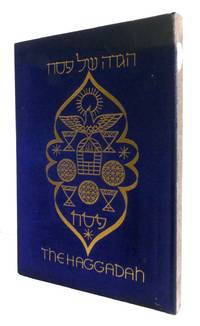
New York: Shulsinger Brothers Linotyping and Publishing Company 1949. First Edition; First Printing. Hardcover. Very Good in velvet boards. Owner personalization on FEP. Illustrations by Siegmund Forst. Shulsinger Brothers Linotyping and Publishing Company hardcover
This ciphering book measures 8" x 12.5". It contains 92 pages of ciphering work. There is also an additional 36 pages of text in a different hand perhaps by a sister copied from Timothy Shay Arthur's <i>Advice to Young Ladies</i> and the American Tract Society's <i>Helps for Every Hour</i>. Quarter-bound with marbled boards. The owner's label reads "Abraham Rex / Philadelphia / 1828." An 8.5" x 4" pencil drawing copied from <i>The Tours of Dr. Syntax</i> is laid in. <br /><br />Ciphering books were prepared as part of the basic mathematical training of relatively well-off American students usually boys. Most like this one contain examples of the Numeration Addition Subtraction Compound Multiplication Reduction Compound Reduction Rule of Three Indirect Proportion Vulgar Fractions Compound Proportions The Double Rule of Three Avoirdupois Weight Troy Weight Long and Land Measure etc. <br /><br />In addition to providing mathematical basics boys venturing into trades or businesses needed advanced or specialized training in mathematics. In this case Abraham's book includes some work that would prepare him for mercantile positions including Tare and Tret calculating weight adjustments for packing and shipping materials Insurance Commissions and Brokerage Compound Interest Rebate or Discount Equation calculating combined payments Barter Loss and Gain Fellowship calculating complicated partnership percentages etc. <br /><br />Abraham was a member of a prominent and prosperous Pennsylvania Dutch family. Online genealogical records show that the Rüx anglicized to Rex family immigrated to the United States sometime prior to 1720 and settled in Germantown north of Philadelphia. The family soon moved westward to Schaefferston in Lancaster County where it proliferated and prospered with members becoming merchants innkeepers informal bankers brokers pharmacists and physicians. <br /><br />For more information about the Rexes of Schaefferstown see Wenger's <i>Delivering the Goods: The Country Storekeeper and Inland Commerce in the Md-Atlantic</i>. An archive of Rex family business papers is held by the Winterthur Library. <br /><br />For more information about ciphering books see Kilpatrick's <i>Rewriting the History of School Mathematics in North America . . . The Central Role of the Cyphering Books</i> Doer's master's thesis: <i>Cipher Books in the Southern Historical Collection of the University of North Carolina</i> and Andries's "Learning Mathematics in North America" at the University of Pennsylvania's Kaplan Collection of Early American Judaica. <br /><br />18th-century American ciphering books are scarce as the overwhelming majority of extant examples date from the early 1800s into the mid-1850s. hardcover books

 Receive by email
 Download as PDF document
 RSS feed
 Permanent link